

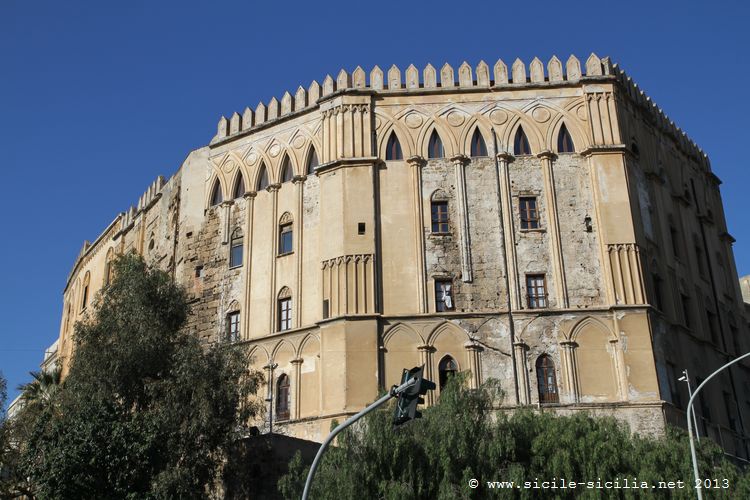
The Norman Palace of Palermo, also known as the Royal Palace, has become the seat of the Regional Assembly of Sicily.
It occupies the highest part of the city, on a site already fortified in Punic and then Roman times, later integrated into Byzantine and Islamic structures. Punic remains have been brought to light beneath the halls of the Duke of Montalto.
It is one of the oldest royal residences in Europe, that of the kings of Sicily, and even an imperial seat with Frederick II and Conrad IV.
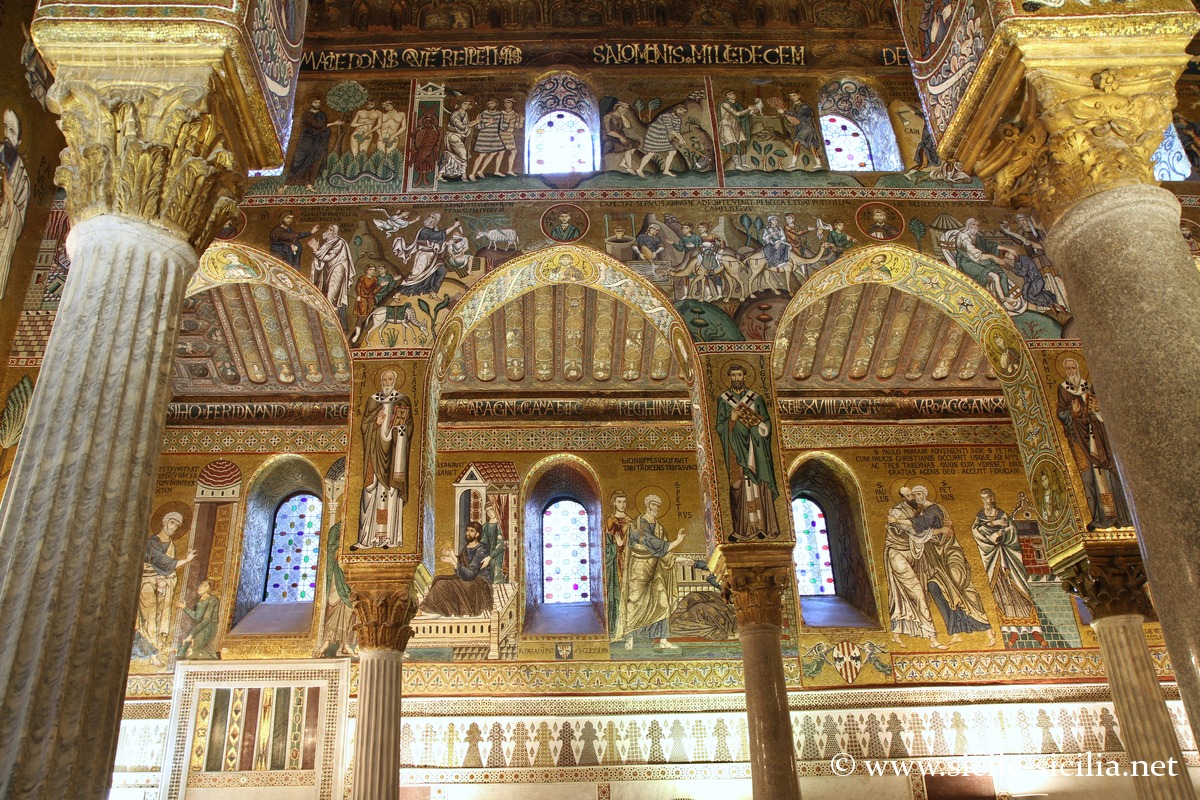
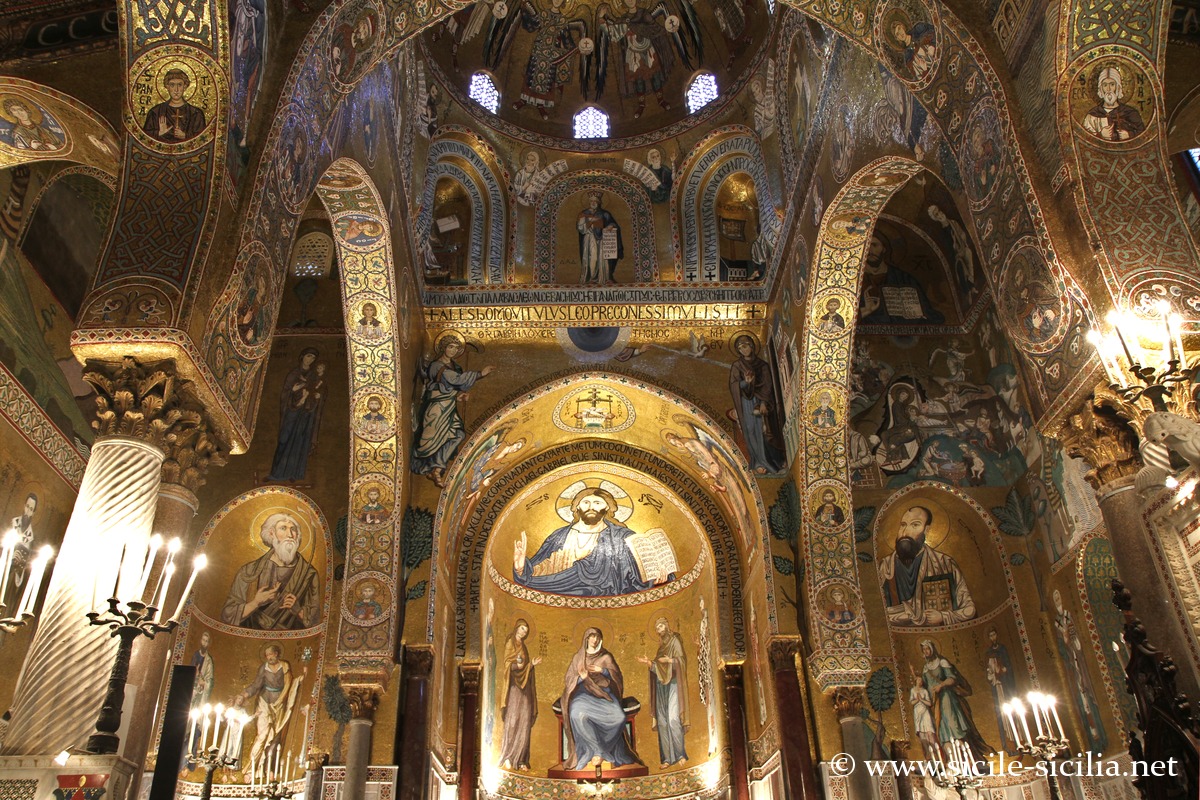
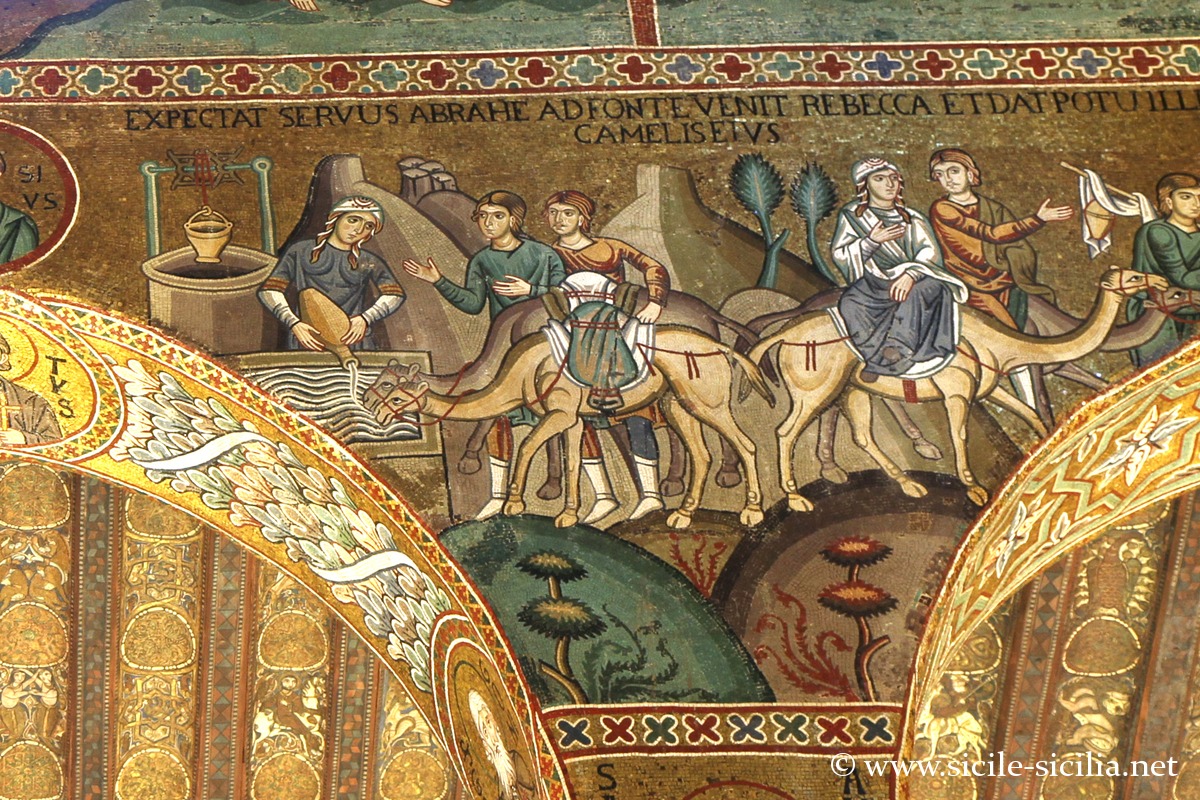
On the first floor is the Palatine Chapel, a masterpiece of Arab-Norman art, dedicated to Saints Peter and Paul and consecrated in 1140, which combines Byzantine mosaics, inlaid marbles, a wooden ceiling with Islamic decoration and an opus sectile floor, representing a biblical and theological iconographic universe unique in the medieval Mediterranean.
An accumulation of eras
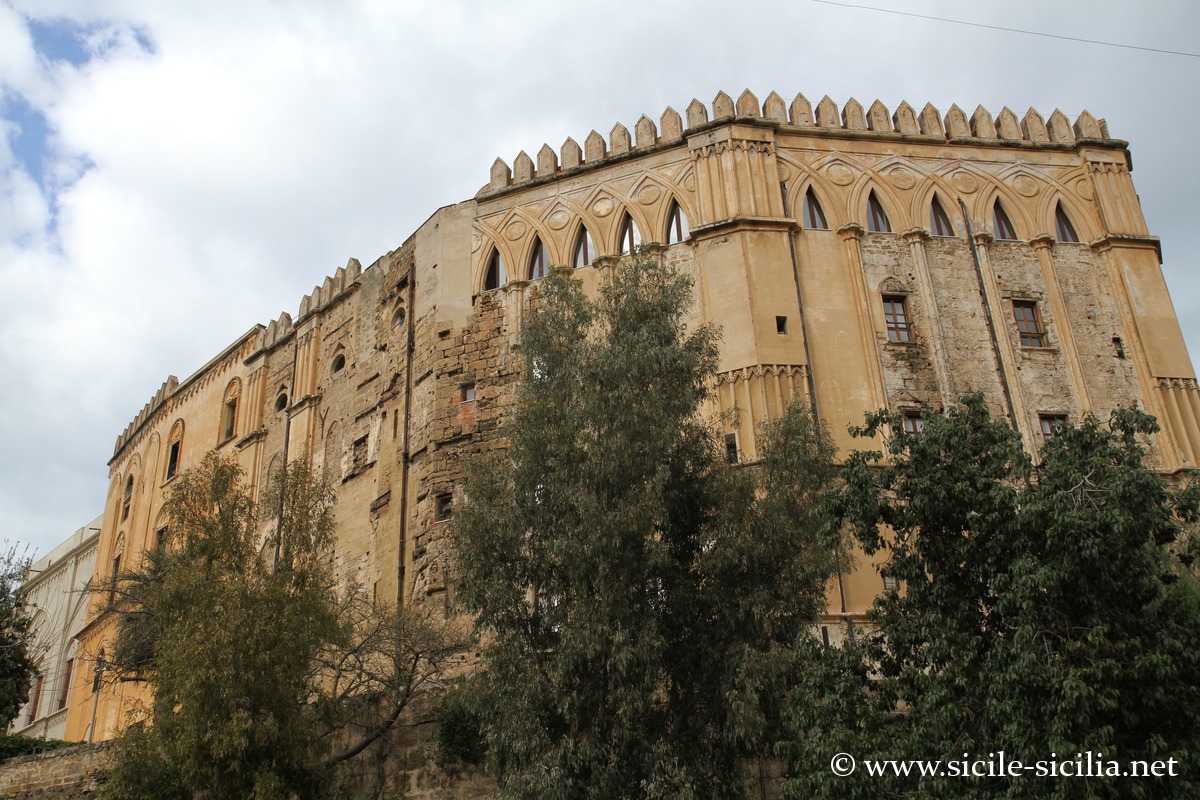
The palace is characterized by a stratification of styles – Norman, Swabian, Aragonese, Spanish and Bourbon – visible in the elevations, the vaulting systems and the materials used. The current structure is thus the result of multiple building and rebuilding campaigns from the 9th to the 15th-17th centuries, integrating defensive, residential and representational elements.
Visiting the palace
Medieval nuclei and Norman towers
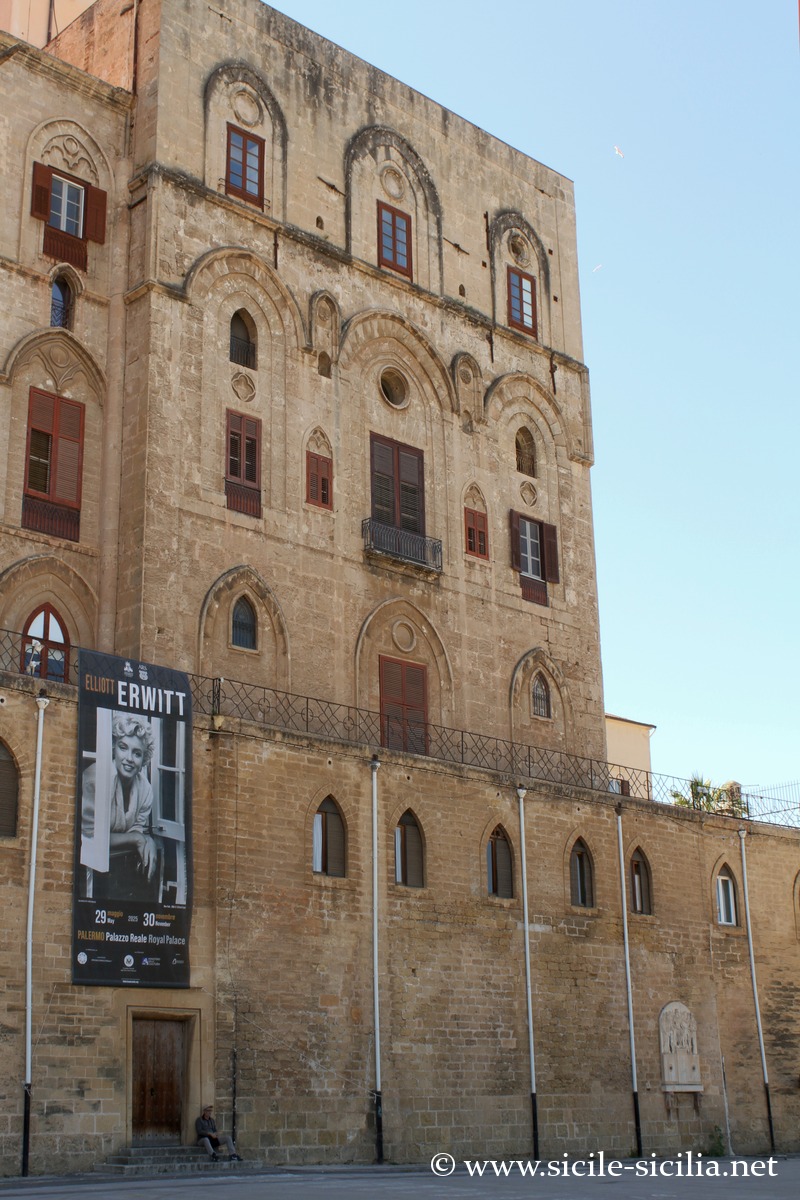
Pisan Tower
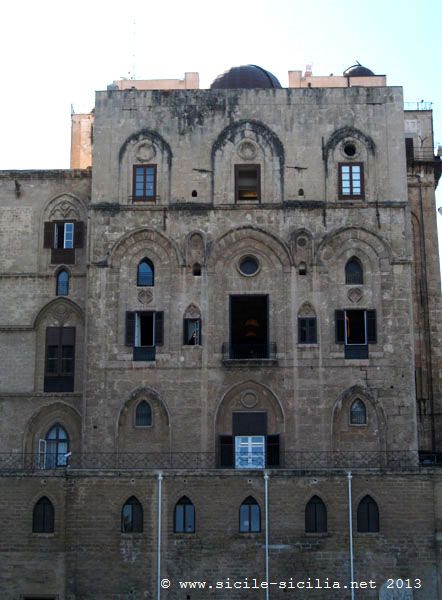
Besides the Palatine Chapel, what remains from the Norman period are the Pisan Tower (Torre Pisana) and the Gioaria Tower, residential and defensive nuclei of the medieval palace, which was organized around a system of towers and building wings.
The Pisan Tower is the only medieval tower preserved almost intact, incorporating the Treasure Room and offering a panoramic view over the Gulf of Palermo, and the Room of King Roger, decorated with mosaics of the Byzantine school, while the Torre della Gioaria houses former service and ceremonial spaces.
Pisan Tower and Room of King Roger
The Treasure Room, located at the base of the Pisan Tower, once held the treasures and artifacts of the Norman court; today, it displays historical pieces related to the royal institution.
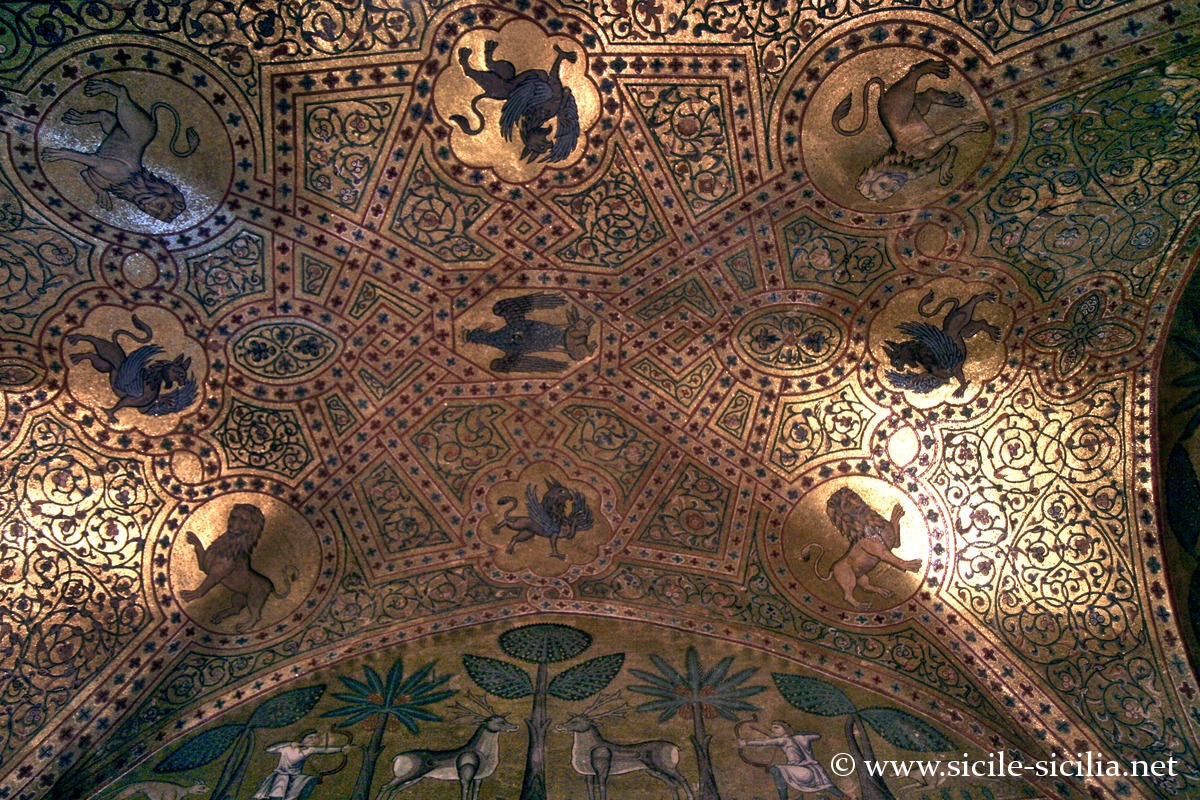
Room of King Roger
The Room of King Roger is located inside the Pisan Tower, decorated with beautiful 12th-century mosaics. These depict hunting scenes and mythical animals, including lions, griffins, deer and exotic birds. They belong to a symbolic court tradition, associating royal power, domination of nature and Islamic and Byzantine visual heritages.
The ceiling is later, with the vault adorned with the Swabian eagle dating from the time of Frederick II Hohenstaufen in the 13th century, in painted wood.
Gioaria Tower and adjoining halls
On the upper floor are the Hall of the Winds (Sala dei Venti), probably a reception space,
The Hall of the Winds, located in the Torre Gioaria, is covered by a painted wooden ceiling from the 18th century with a central compass rose.
Lower levels and ancient structures
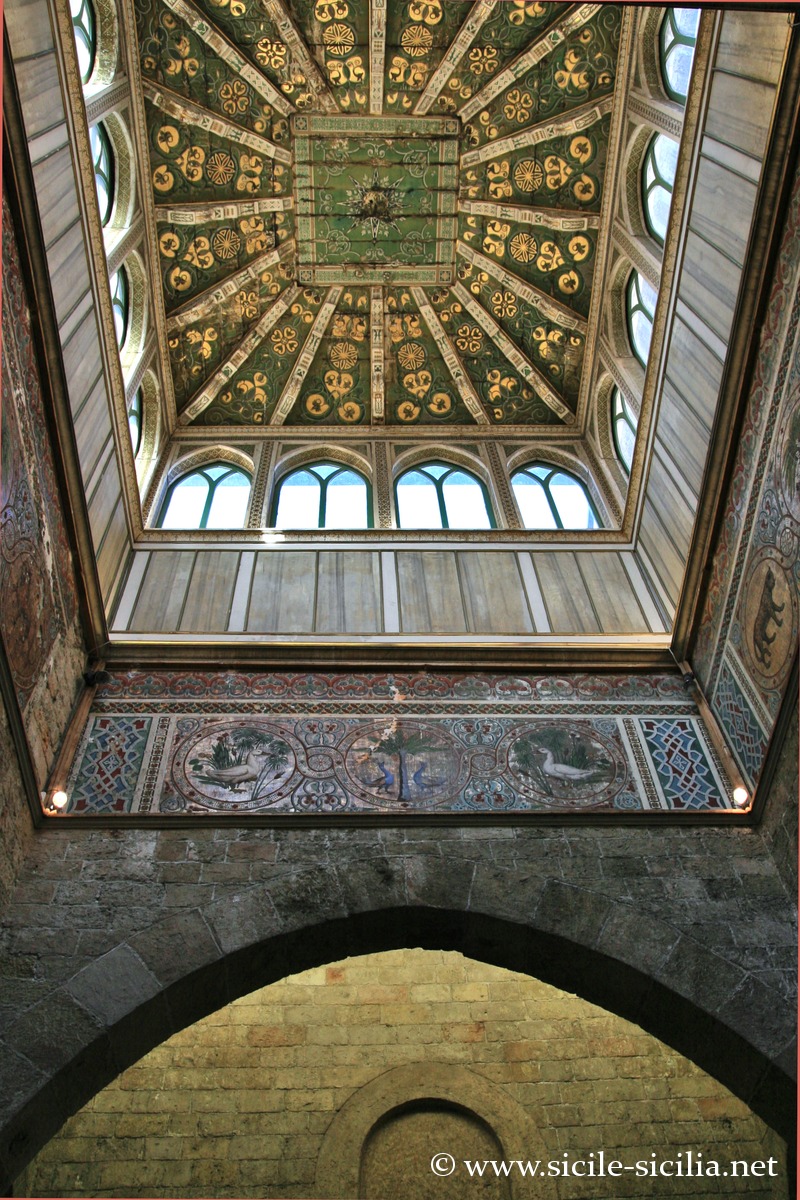
Hall of the Winds
Two side staircases descend toward the so-called “crypt“, in fact a church of Byzantine inspiration, Santa Maria delle Idrisi, preserving volumes and structures earlier than the Norman period, ancient columns and masonry attributed to the Byzantine and Islamic phases.
Later wings and ceremonial halls
On the second floor, the Hall of Hercules is currently the meeting place of the Regional Assembly. This vast hall owes its name to the 19th-century neoclassical frescoes depicting the labors of Hercules, fitted out during the Bourbon period.
There are also several ceremonial halls and administrative spaces remodeled in the 16th and 17th centuries under Spanish rule, including rooms decorated with stuccoes, painted ceilings and viceregal coats of arms, illustrating the continued use of the complex as a center of political power in Sicily.
Among them, the Hall of the Viceroys displays a series of portraits of viceroys and presidents of Sicily, the Pompeian Room and the Sala Cinese are themed decorated spaces (Pompeian style or the European Chinese fashion), and the rooms of the Duca di Montalto, red, yellow and green, reflect the stylistic evolutions of the Baroque and Neoclassical periods of the 17th-19th centuries.
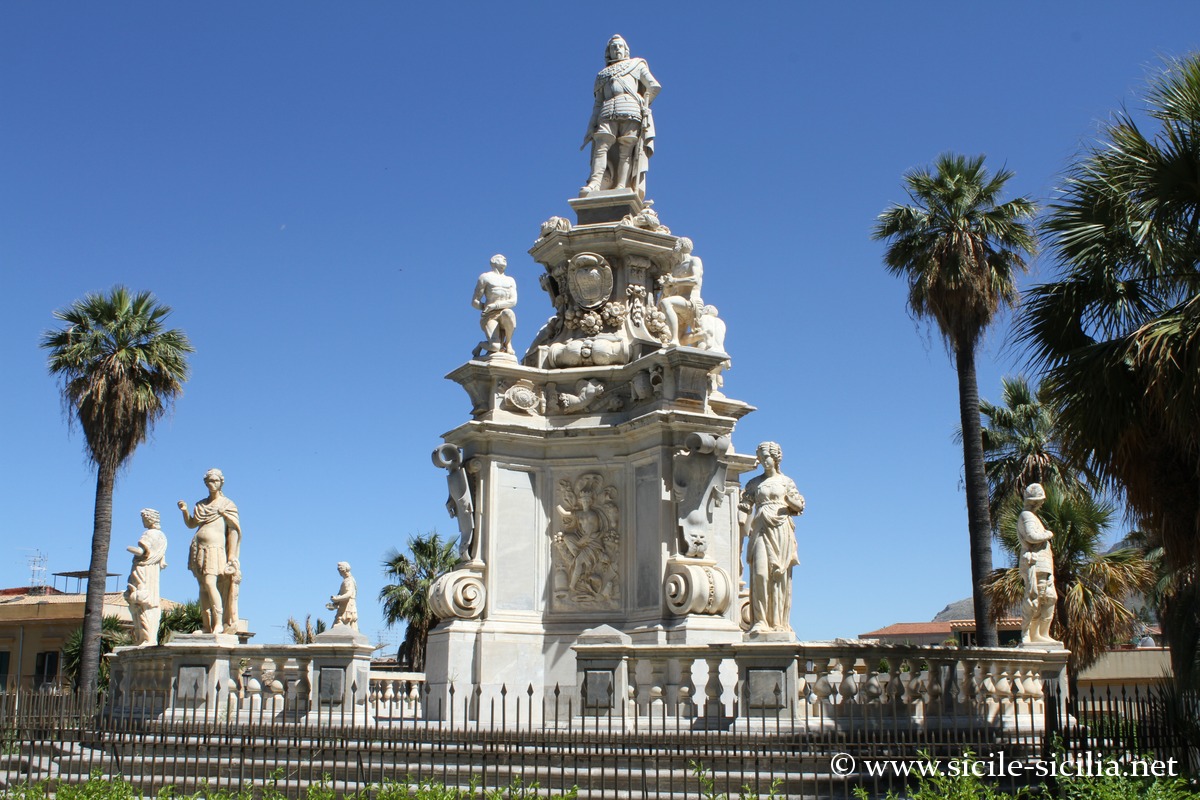
Teatro marmoreo, Piazza del Parlamento
Courtyard and outdoor spaces
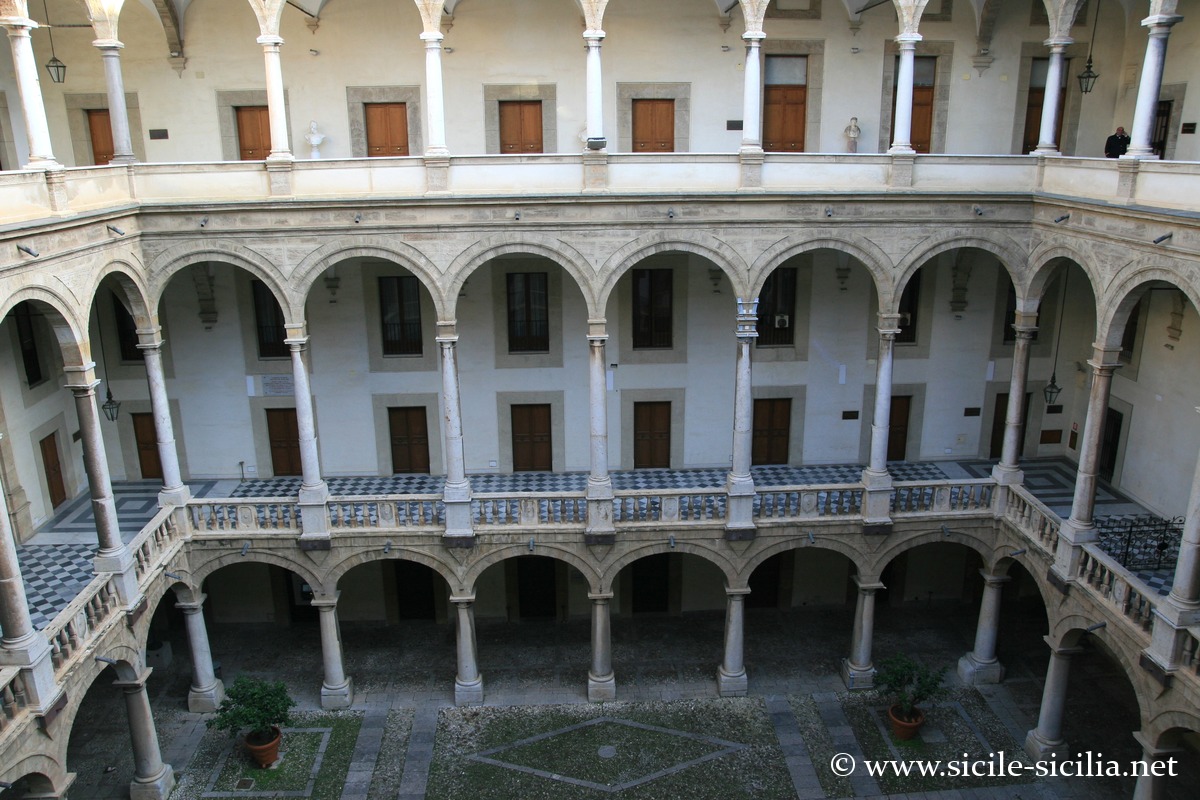
The palace also includes monumental courtyards, such as the Maqueda Courtyard (1595) and the Parliament Courtyard (1584), incorporating fountains, arcades and Mediterranean gardens; these spaces served both for ceremonies and for circulation between the different sectors of the complex.
Piazza del Parlamento
In front of the palace, the Piazza del Parlamento is adorned with the Teatro Marmoreo, a Baroque monument erected in 1662 in honor of Philip IV, with an allegorical sculpted group representing the continents known at the time; this decoration emphasizes the role of the palace as the symbolic and political center of the city.
History of the Norman Palace
The Norman Palace is located at the highest point of the ancient city, on a site where remains of walls from the first Punic colonies have been found in the subsoil.
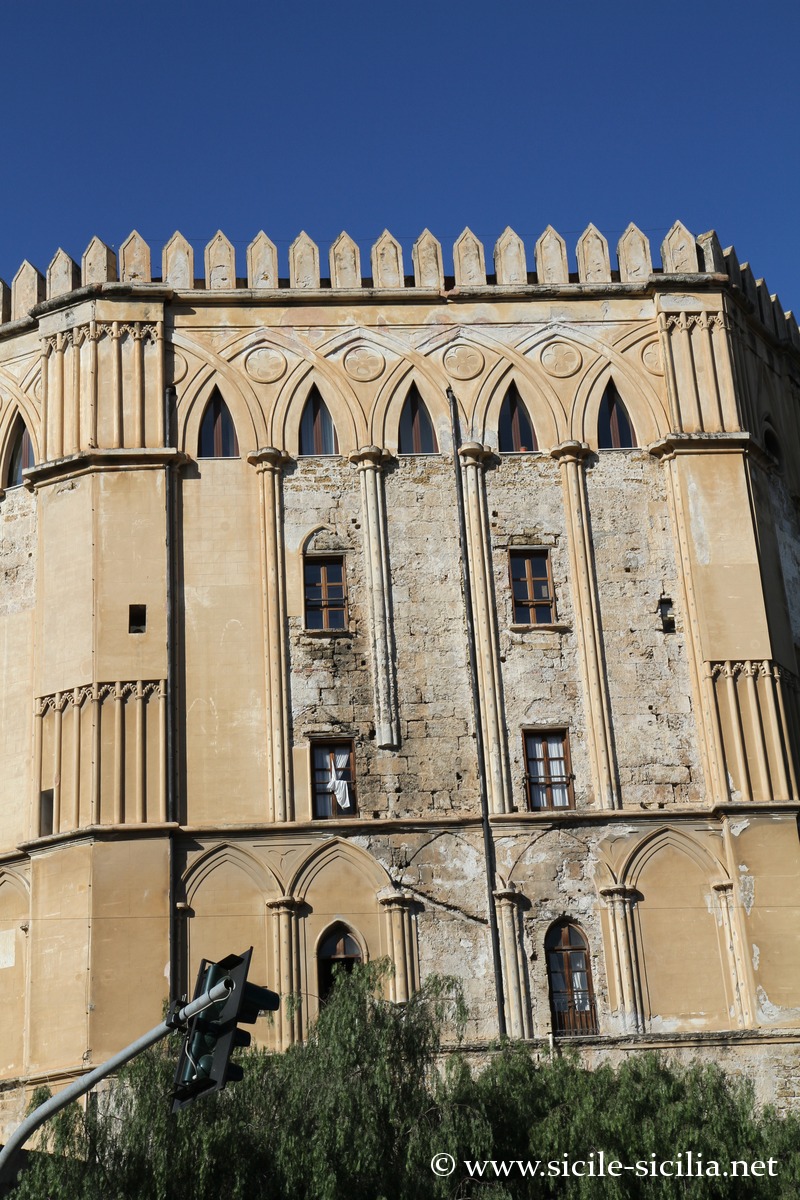
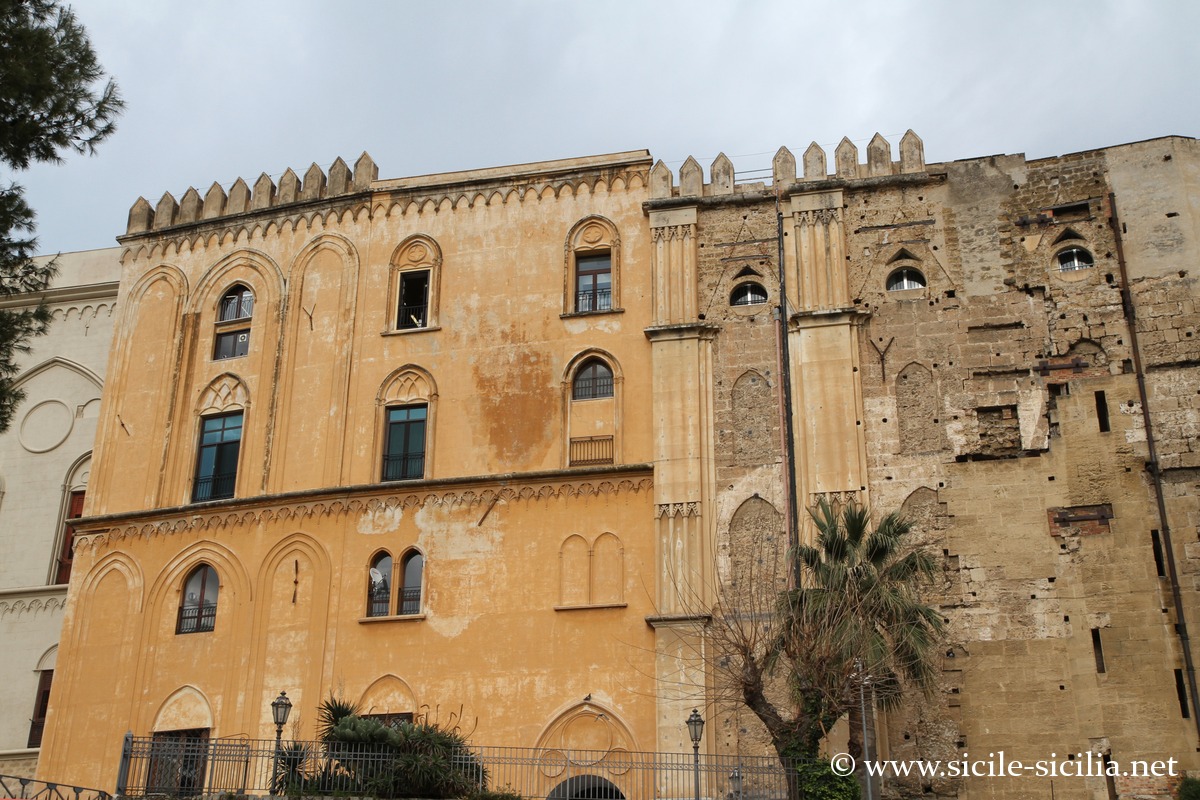
Facade of the Palace
The first building, the Qasr, is attributed to the Arabs, dating back to the 9th century. The Normans completely transformed the old building to make it a residence and a symbol of their power.
It consisted of a set of towers connected by vaults, alternating with gardens. It also housed goldsmiths and weavers (the kiraz). A covered route even connected it to the cathedral.
In 1132, Roger II had the Palatine Chapel built, the jewel of the city.
From the Angevins and the Aragonese, the palace was relatively neglected, until the second half of the 16th century, when the Spanish viceroys chose it as their residence. They carried out major restructurings, notably by creating a system of ramparts.
The Bourbons destroyed towers, created gardens and new halls. The Renaissance facade now overlooks the Piazza del Parlamento.
In 1947, the Norman Palace became the seat of the Sicilian Regional Assembly. It was restored during the 1960s by Rosario La Duca.
Photo gallery

Facade of the Palace 

Norman Palace in Palermo 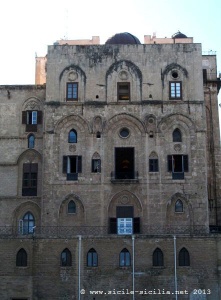

Torre Pisana, Norman Palace, Palermo 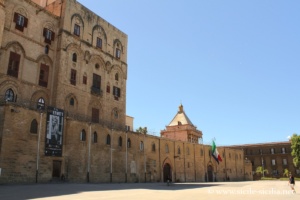
Piazza del Parlamento 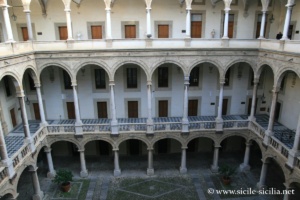
Inner courtyard 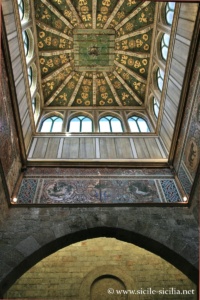

Hall of the Winds 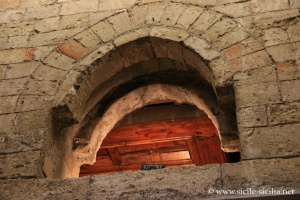
Hall of the Winds 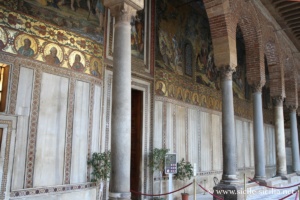
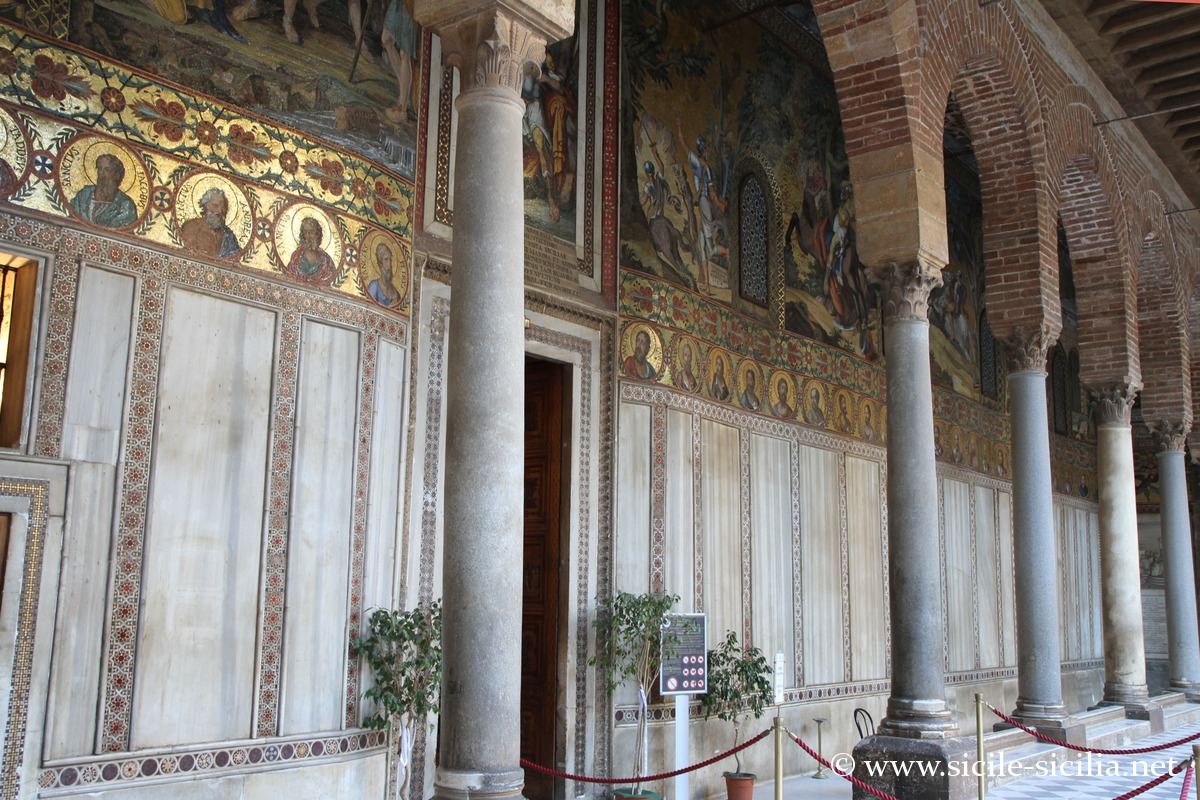
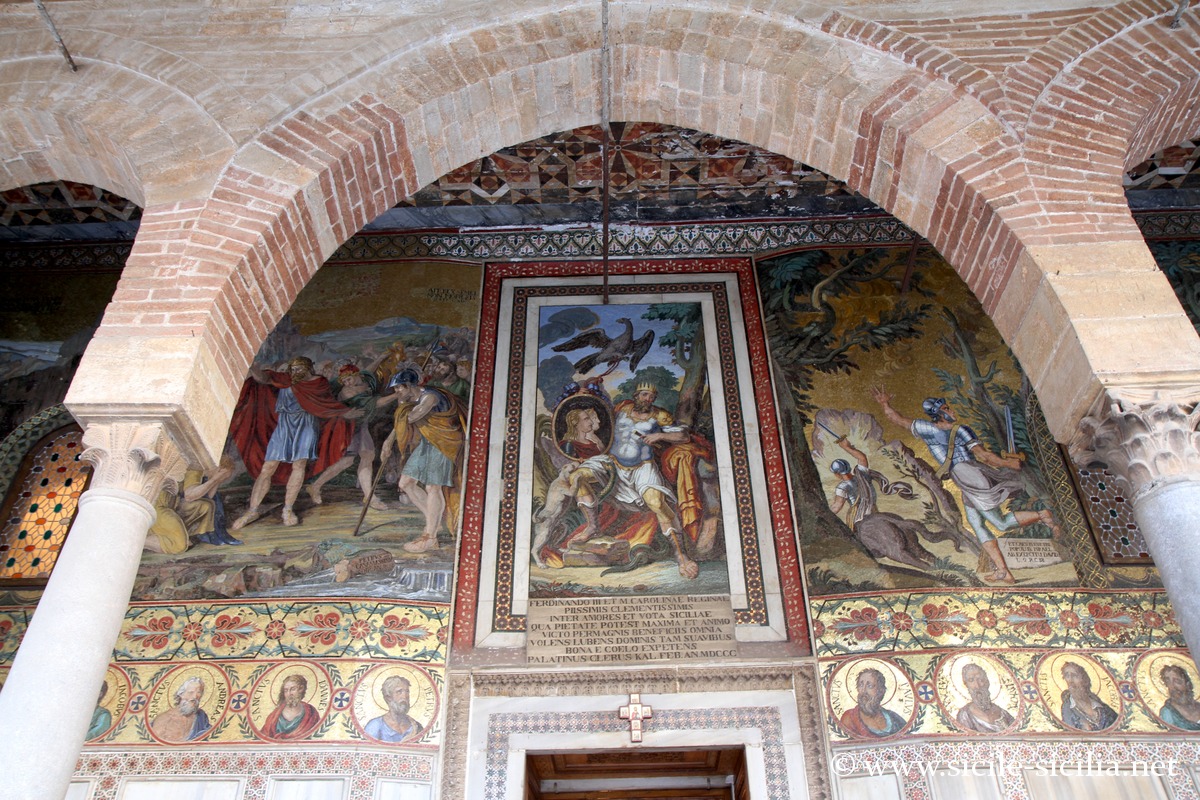
Entrance to the Palatine Chapel 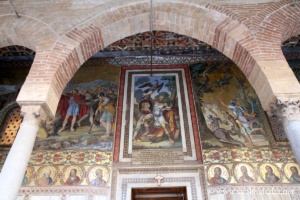
Entrance to the Palatine Chapel 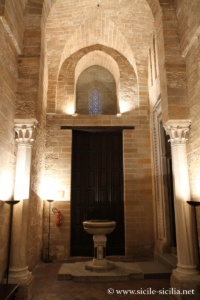
Vestibule of the chapel 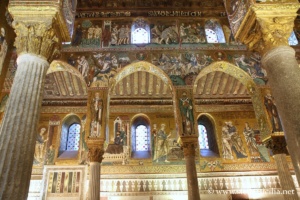
Palatine Chapel 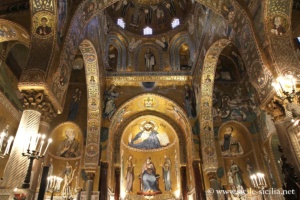
Palatine Chapel 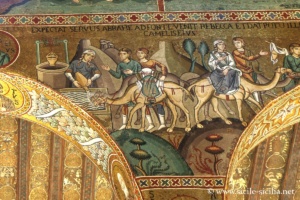
Mosaics of the Palatine Chapel 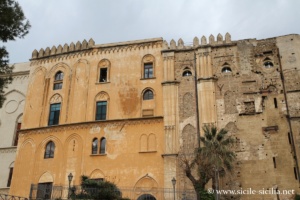
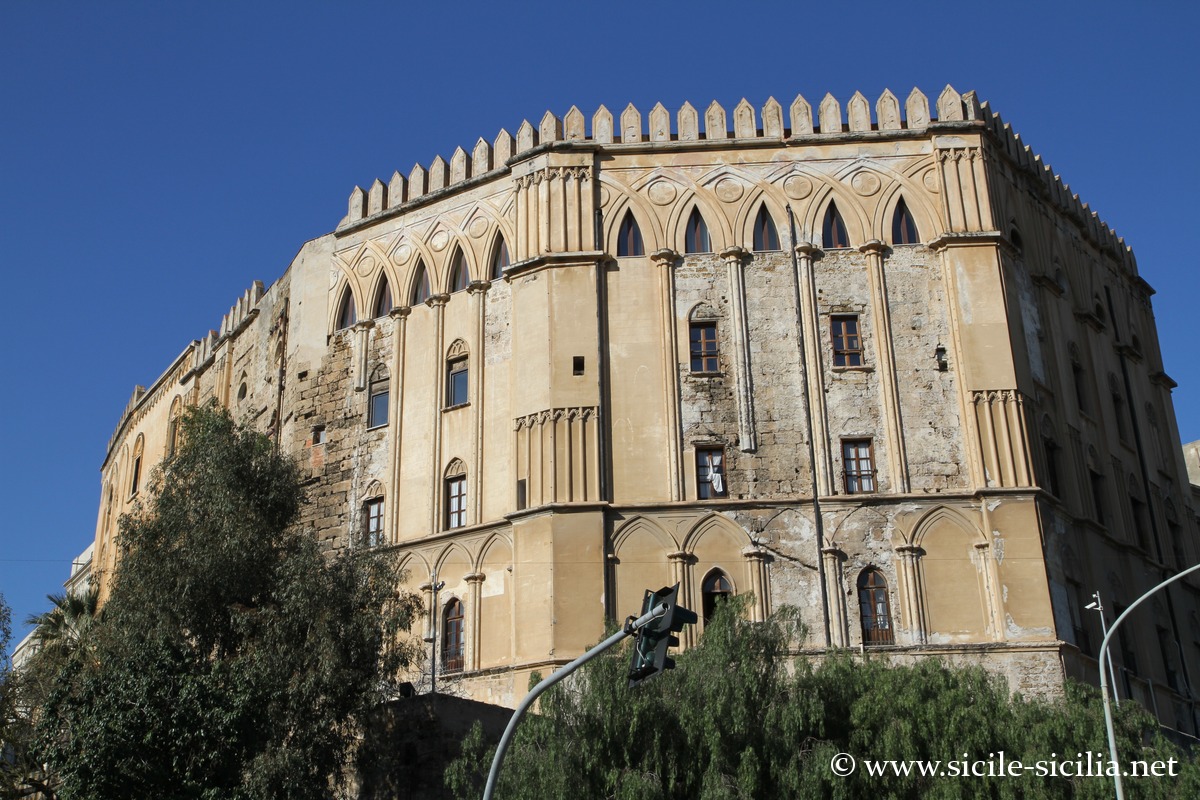
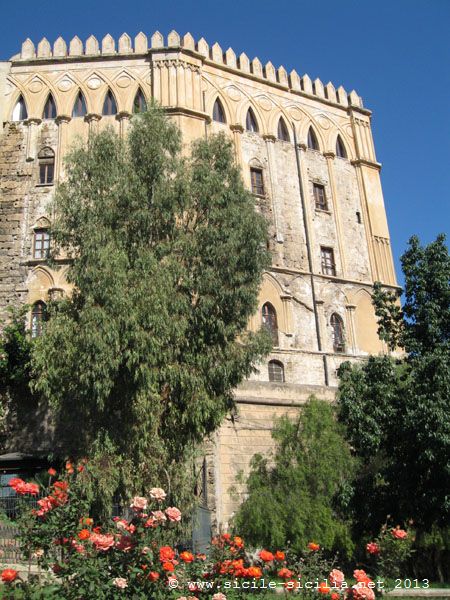
Facade of the palace 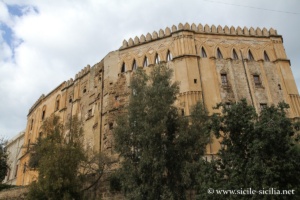
Facade of the palace



Where the Norman Palace is located and map
If you see this after your page is loaded completely, leafletJS files are missing.
Palazzo dei Normanni (Palazzo Reale)
Piazza Indipendenza, 1, 90129 Palermo
Information
| Palazzo dei Normanni (Palazzo Reale) Piazza Indipendenza, 1, 90129 Palermo
Visit suggestionsPowered by GetYourGuide Visit and conditionsConsult the website of the Frederick II Foundation, for any information concerning prices and opening hours and visit conditions (English and Italian)
Sources and external sites
|
FAQ and tips for the visit
- What does the visit to the Norman Palace include?
The visit may include the Palatine Chapel, the Royal Apartments, the preserved medieval towers (Pisan Tower and Torre Gioaria), the gardens and Punic remains, as well as certain temporary exhibitions. Access to the Royal Apartments depends on parliamentary activity. - Tips for preparing the visit and booking
It is advisable to avoid Tuesday and Wednesday if you wish to visit all the Royal Apartments, as the Regional Parliament frequently sits on those days.
Booking is not mandatory but strongly recommended in high season, on weekends and for groups, in order to avoid queues.
It is advisable to start the visit with the Palatine Chapel at opening time to make the most of it, then continue with the Royal Apartments and the medieval towers. - How much time should be allowed for the visit?
For an essential visit (Palatine Chapel and a few halls), allow at least 1 hour. For a complete visit including the Royal Apartments, gardens and exhibitions, allow nearly 2 hours, and with an audioguide and detailed exploration up to 2 hours 30 minutes. - Is the palace suitable for people with reduced mobility?
Accessibility is partial. Certain areas such as the medieval towers have old staircases. Elevators and adapted access exist for certain parts. It is advisable to inquire at the entrance according to specific needs. - Is there an audioguide?
Yes, available in several languages. The audioguide helps to understand the historical and artistic stratification of the Norman Palace and the Palatine Chapel.