
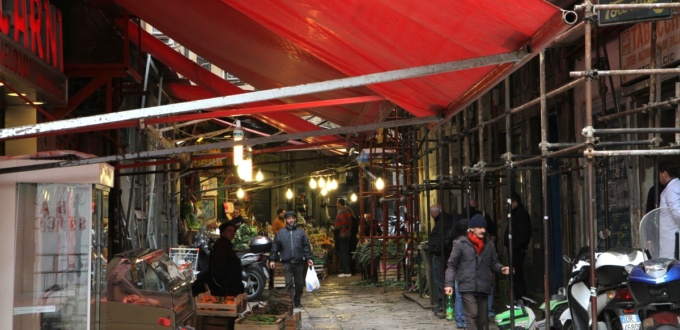
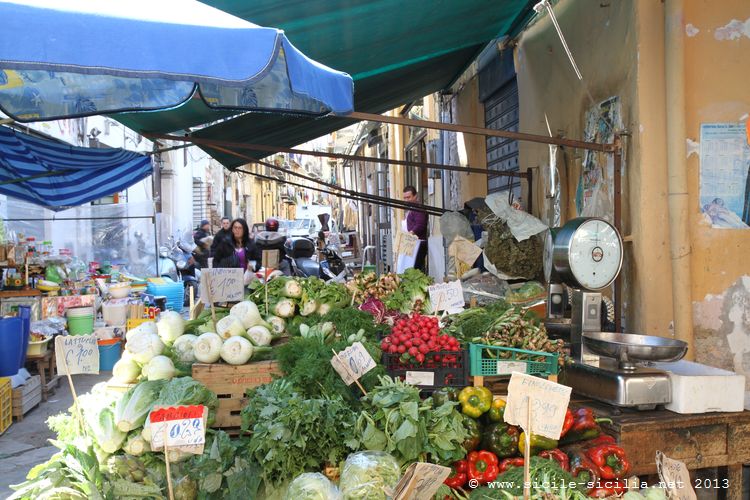
Monte di Pietà, also called Seralcadi, is one of the four historic quarters in the center of Palermo, part of the old town between Via Vittorio Emanuele, Via Maqueda and the old course of the medieval walls. Here is held the marché del Capo, one of the historic markets of the city, near the Porta […]
Tag: Palermo
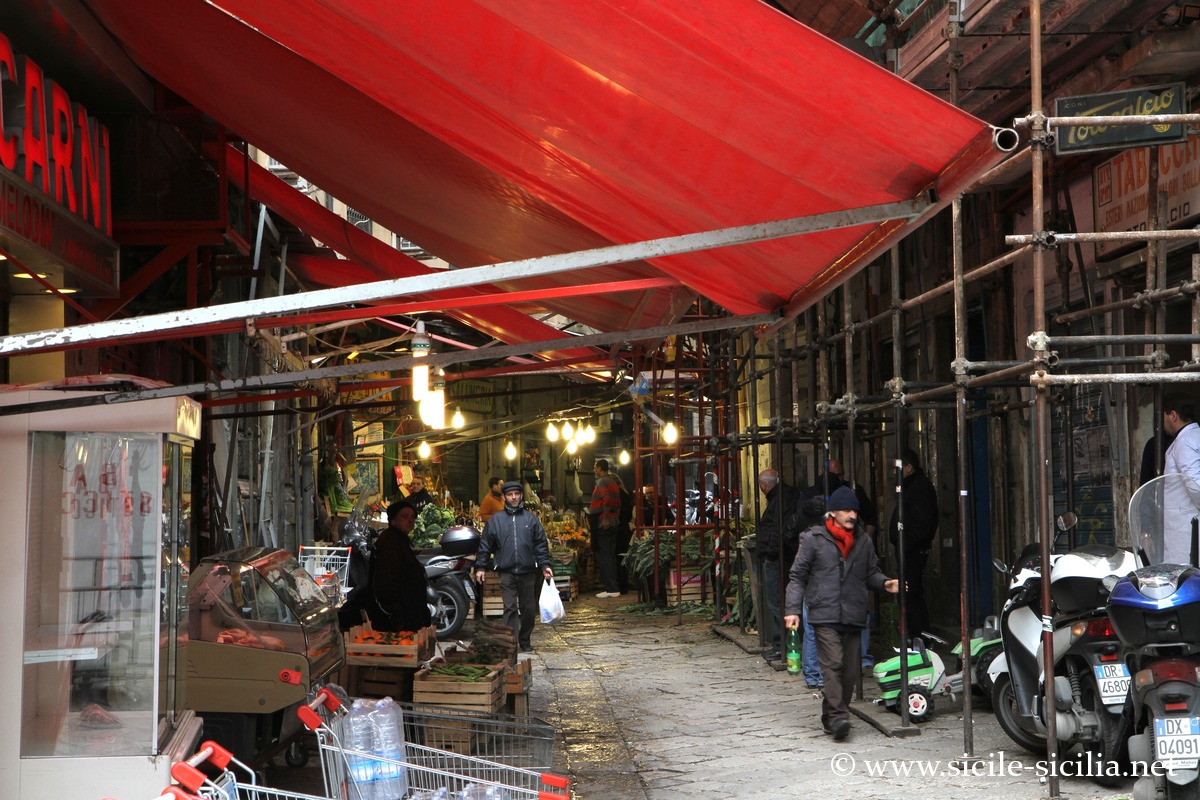
Castellammare or Loggia is one of the four historic districts of Palermo’s city center, near the port, where the historic Vucciria market is held in particular, the most popular along with those of the Ballarò market and the Capo market. Bordered by Via Maqueda, Corso Vittorio Emanuele, Via Cavour and Via Crispi, it is a […]
The Kalsa district is one of the four historic quarters of Palermo; founded in the 9th century under Arab rule, it was a fortified administrative and residential citadel, whose medieval urban layout is still legible today. Situated between Via Maqueda, Via Vittorio Emanuele and the Foro Italico on the seafront, it forms an ancient, dense […]
The Albergheria district is one of the oldest in Palermo, with origins dating back to the Phoenician and later Arab periods, making it an area rich in historical layers visible in its urban layout and ancient buildings. On its western edge lies the Norman Palace with its superb Palatine Chapel, near the Porta Nuova that […]
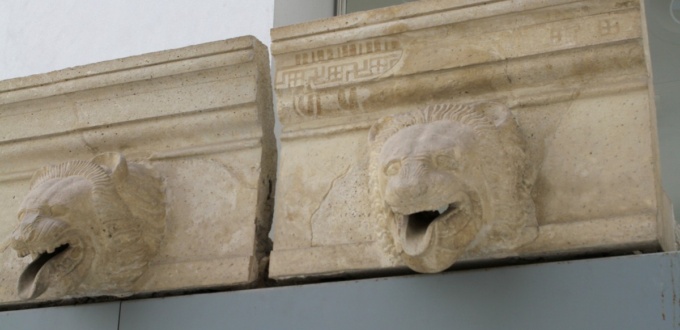

The Antonio Salinas Archaeological Museum is housed in the former convent of the Philippine Fathers, whose Oratory of Saint Ignatius. It is one of the most important archaeological museums in Sicily for Punic, Greek and Roman art. It takes its name from the archaeologist Antonio Salinas who excavated in Sicily after 1873 and bequeathed a […]

Destination
Since time immemorial at the crossroads of civilizations, between East and West, Africa and Europe, Palermo has preserved the imprints of all the cultures that settled there, through language, customs, architecture, and gastronomy. Its thousand-year history, and even more so the atmosphere that prevails there today, contribute to the fascinating charm of this city of […]
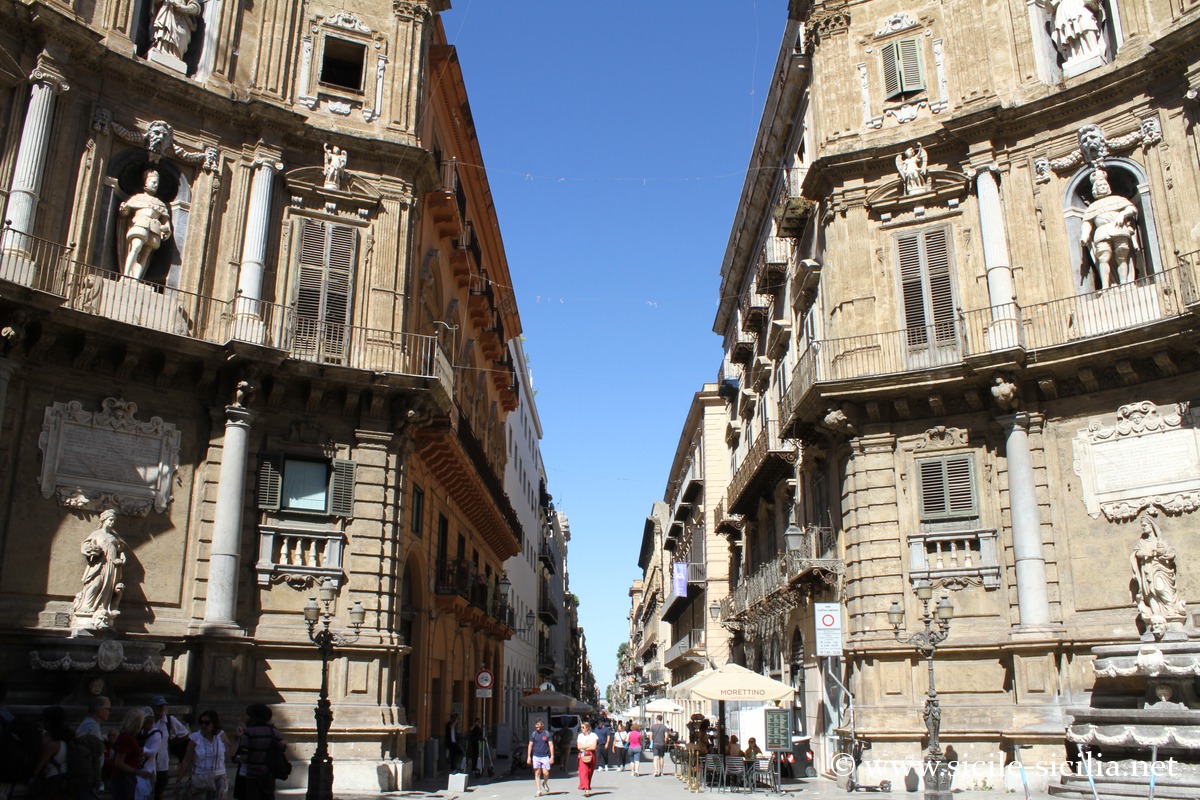
One can explore Palermo according to geographical, historical or architectural themes, so numerous and varied are its riches. But one can just as well simply stroll through it and discover at random places often overlooked by the guides. The heart of the city, the Quattro Canti, is a baroque square at the intersection of the […]
This page presents the main remarkable sites and places of Palermo, among which it is possible to stroll and walk through the streets of the city. Depending on the time you have available, suggestions for visits are then offered for two days or more.→ Read also the general presentation of Palermo. → The itinerary for […]
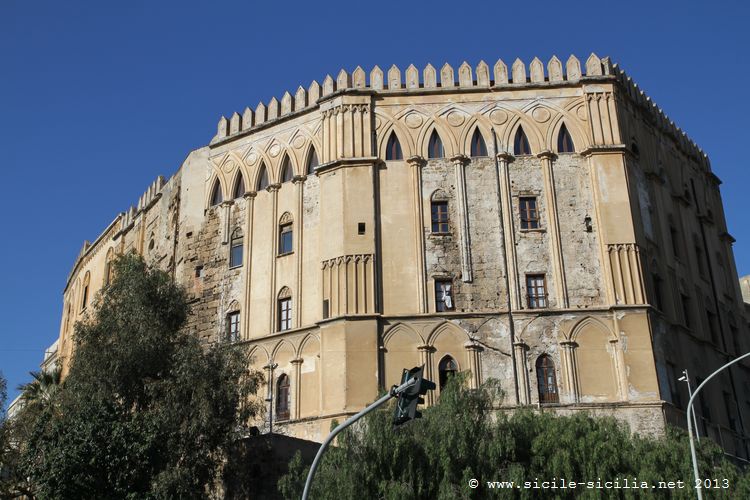

The Norman Palace of Palermo, also known as the Royal Palace, has become the seat of the Regional Assembly of Sicily. It occupies the highest part of the city, on a site already fortified in Punic and then Roman times, later integrated into Byzantine and Islamic structures. Punic remains have been brought to light beneath […]
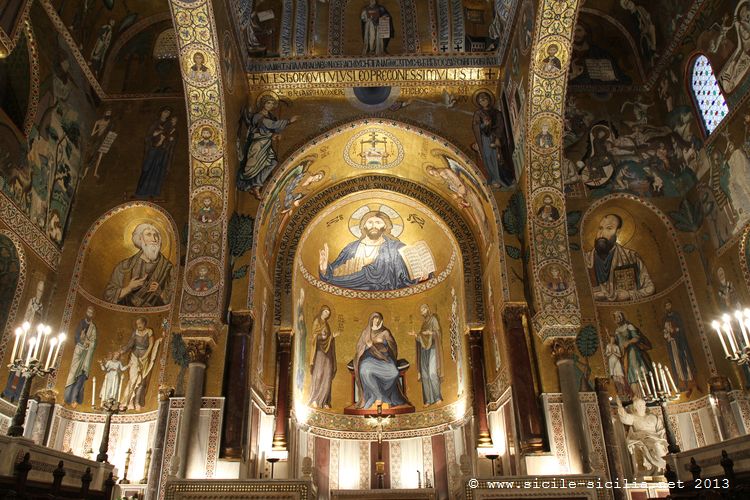
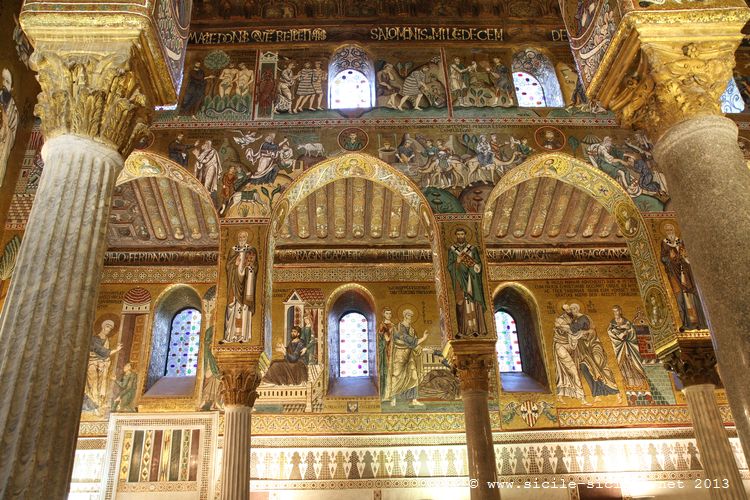
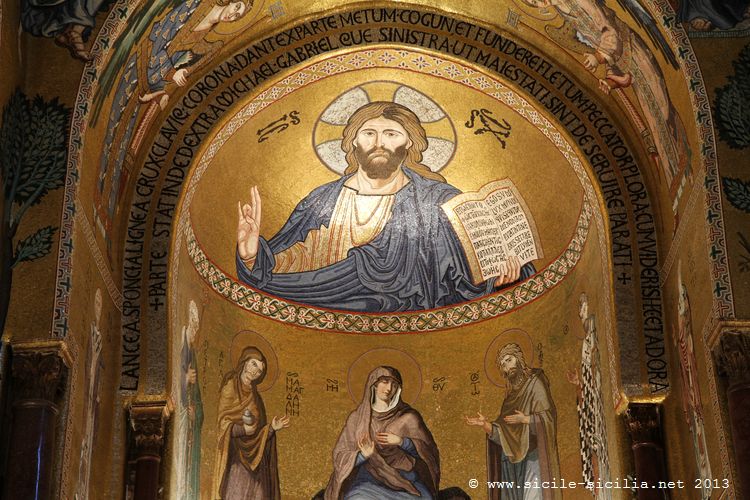
The Palatine Chapel, located on the first floor of the Norman Palace, is the jewel of Palermo with its extraordinary mosaic decoration. It is considered one of the most accomplished examples of 12th-century Arab-Norman-Byzantine stylistic synthesis, reflecting the cultural coexistence in Sicily at that time. It has been inscribed on the UNESCO World Heritage List […]
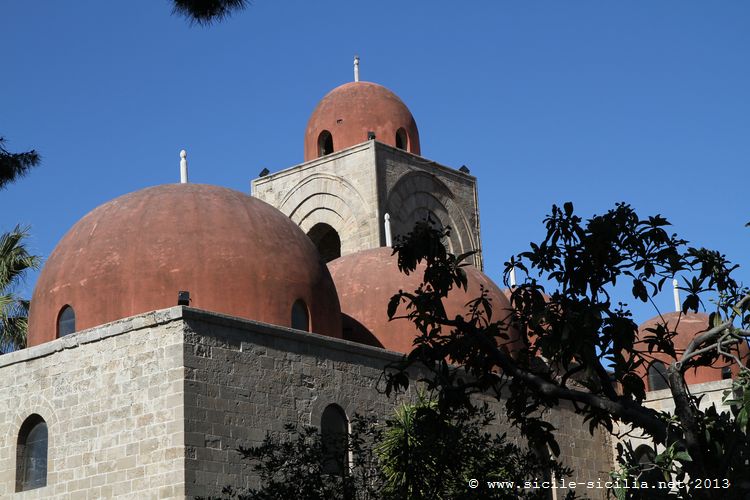

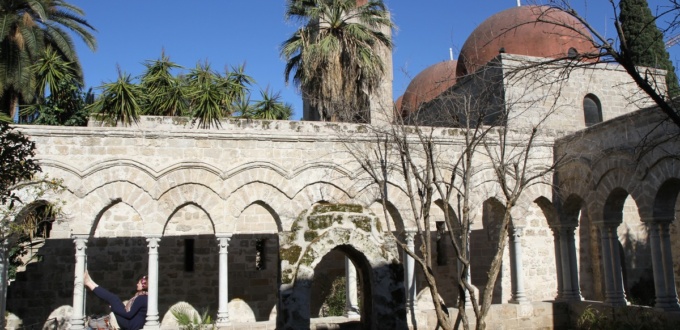
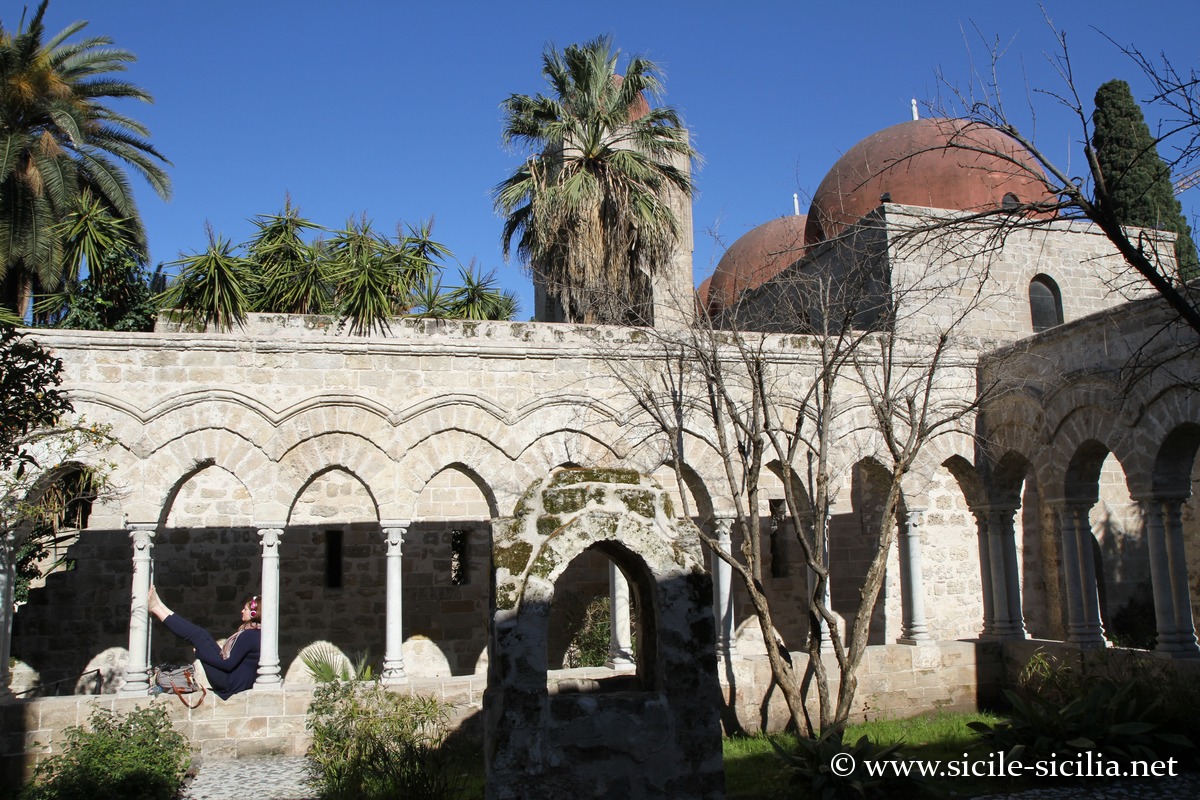
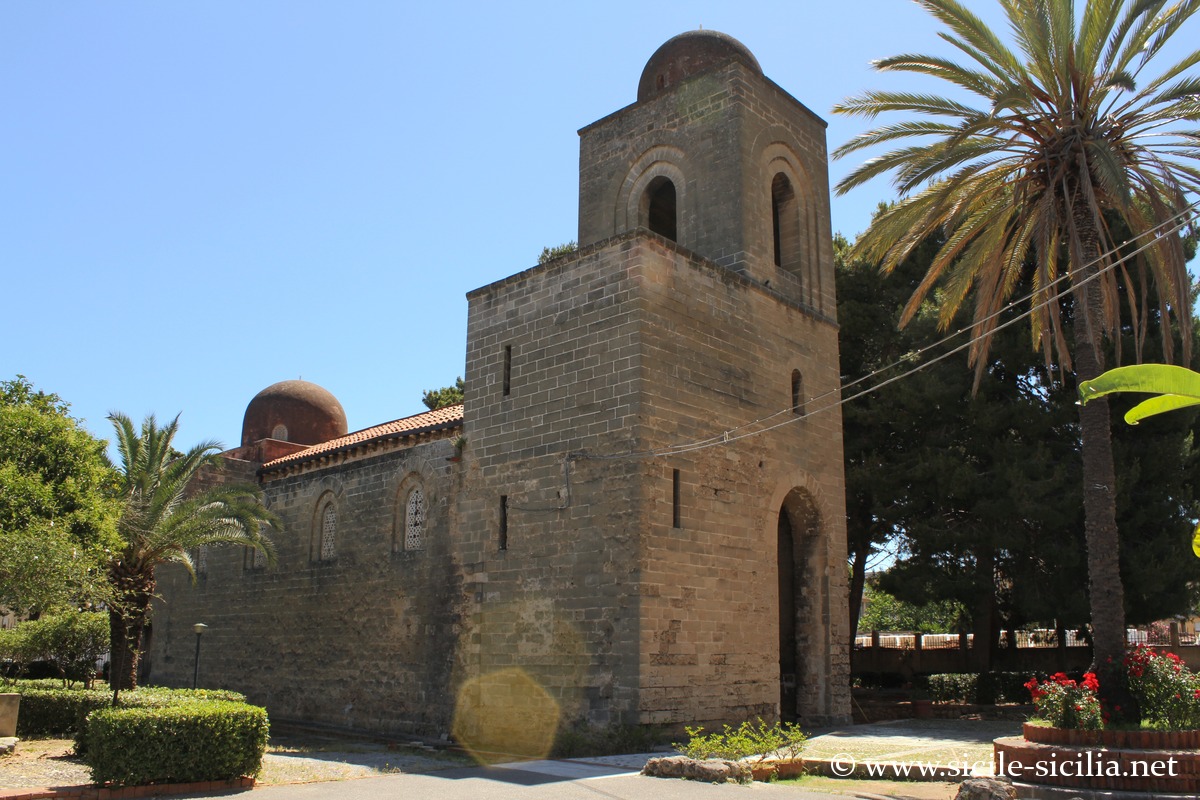
The Church of Saint John of the Hermits (San Giovanni degli Eremiti in Italian), one of the most emblematic monuments of Palermo, a Norman church of medieval origin, marked by the Arab-Norman style of the period. Historical overview In the 6th century, a church already existed there, where previously there had been a pagan place […]
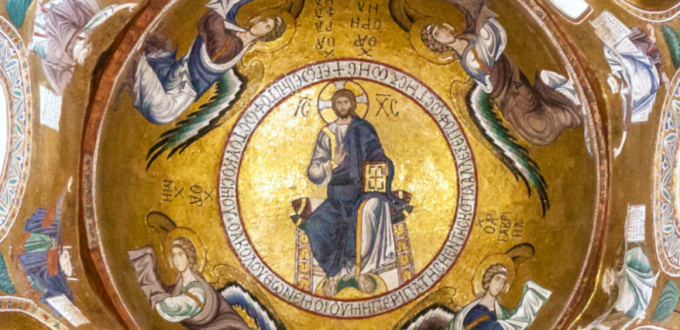
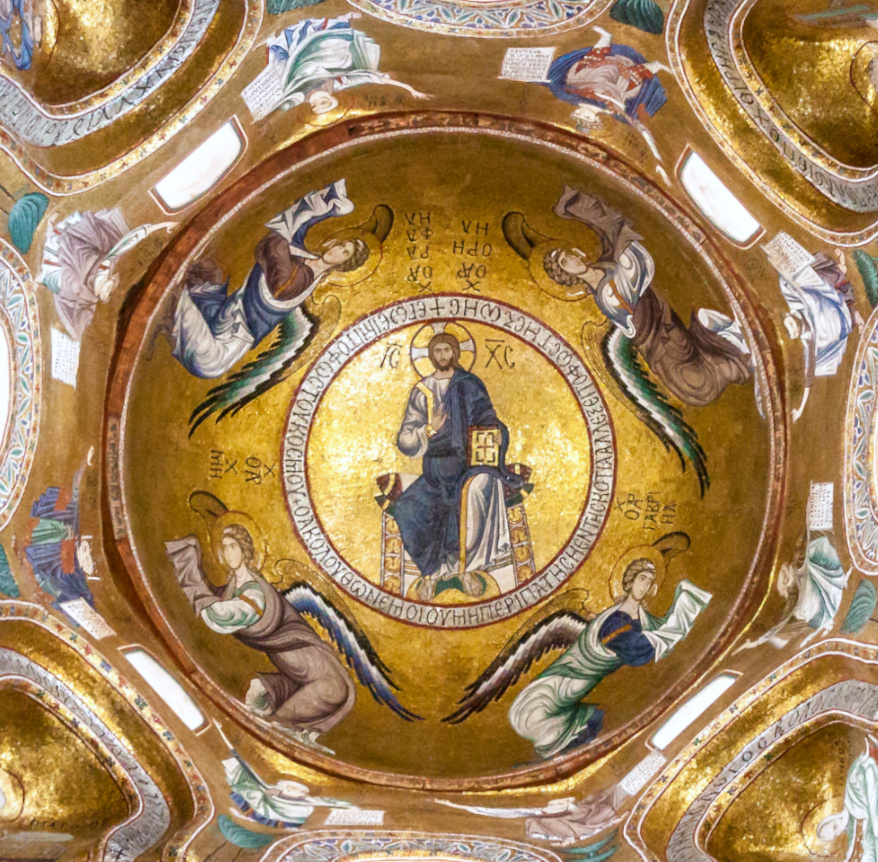
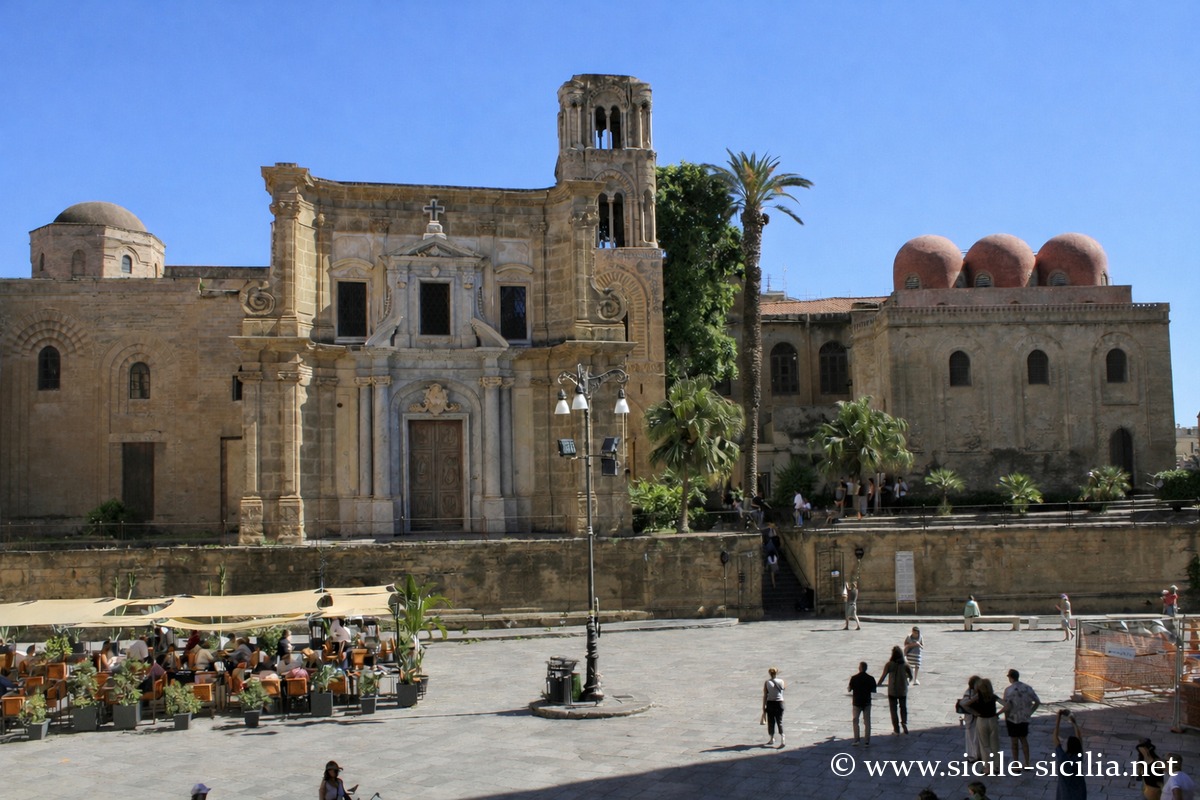
The church of la Martorana, or Santa Maria dell’Ammiraglio, standing on Piazza Bellini, stands out for the splendid Byzantine mosaics and gilding of the interior, dating mainly from the 12th century and representing a major example of Byzantine art with Arab influence in Norman Sicily. Historical overview Dedicated to Eloisa Martorana, who was the founder […]
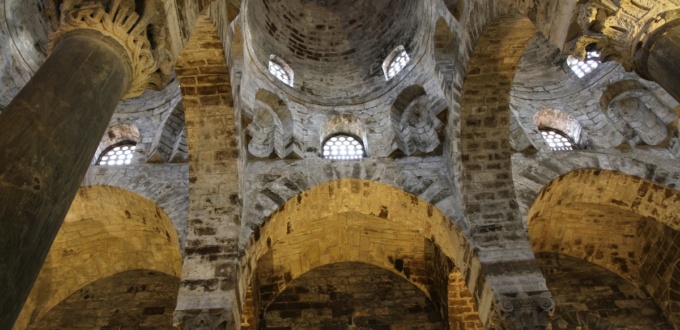
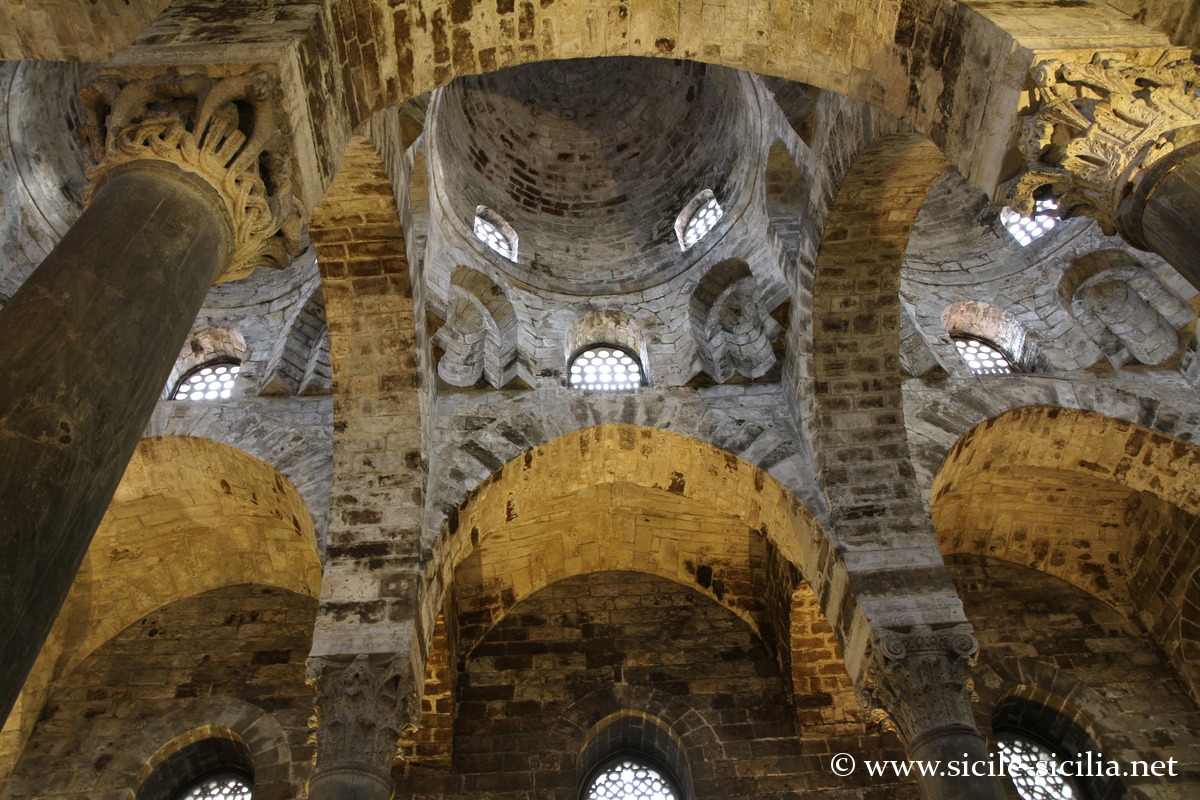
The church of San Cataldo is located on Piazza Bellini. It is one of the city’s examples of Arab-Norman architecture, of parallelepiped shape and covered by its three small red domes aligned. The church is notable for its minimalist exterior and sober interior, contrasting with the ornamental richness of other contemporary churches, such as Palermo […]
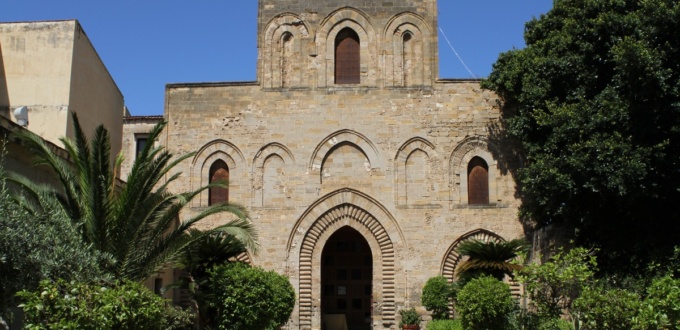
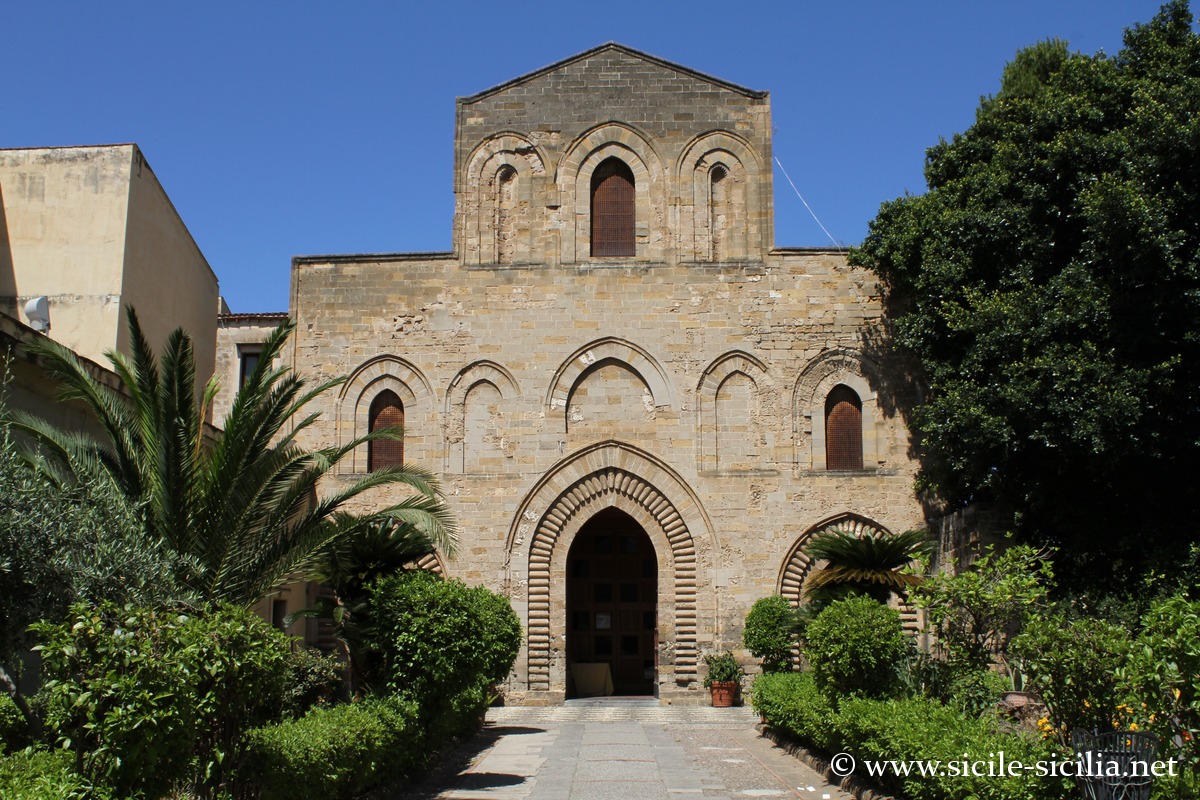
In the Middle Ages this area south of the city was occupied by gardens and orchards. The sanctuary of the Holy Trinity, which was built at the end of the 12th century, probably on the site of a mosque, was one of the last Norman achievements, founded in 1191 shortly after the completion of the […]
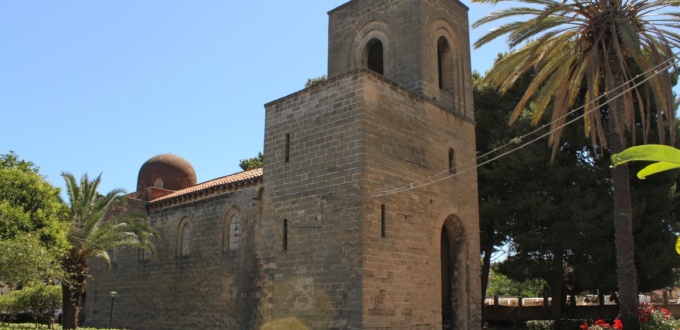
Saint-Jean des Lépreux (San Giovanni dei Lebbrosi in Italian) is perhaps the oldest building in the Arab-Norman style in Palermo. Its foundation is thought to date back to 1071, in the aftermath of the siege of the city, by the Norman brothers Robert Guiscard and Roger of Hauteville. But it is not known on what […]
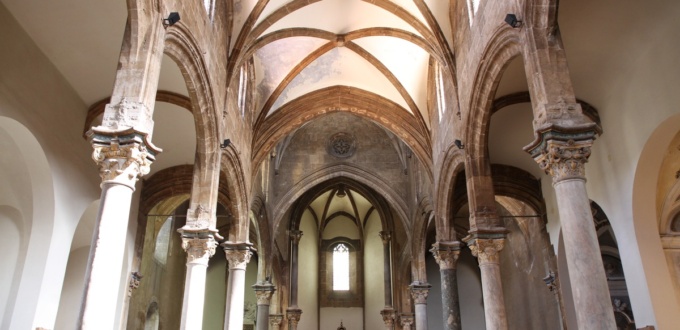
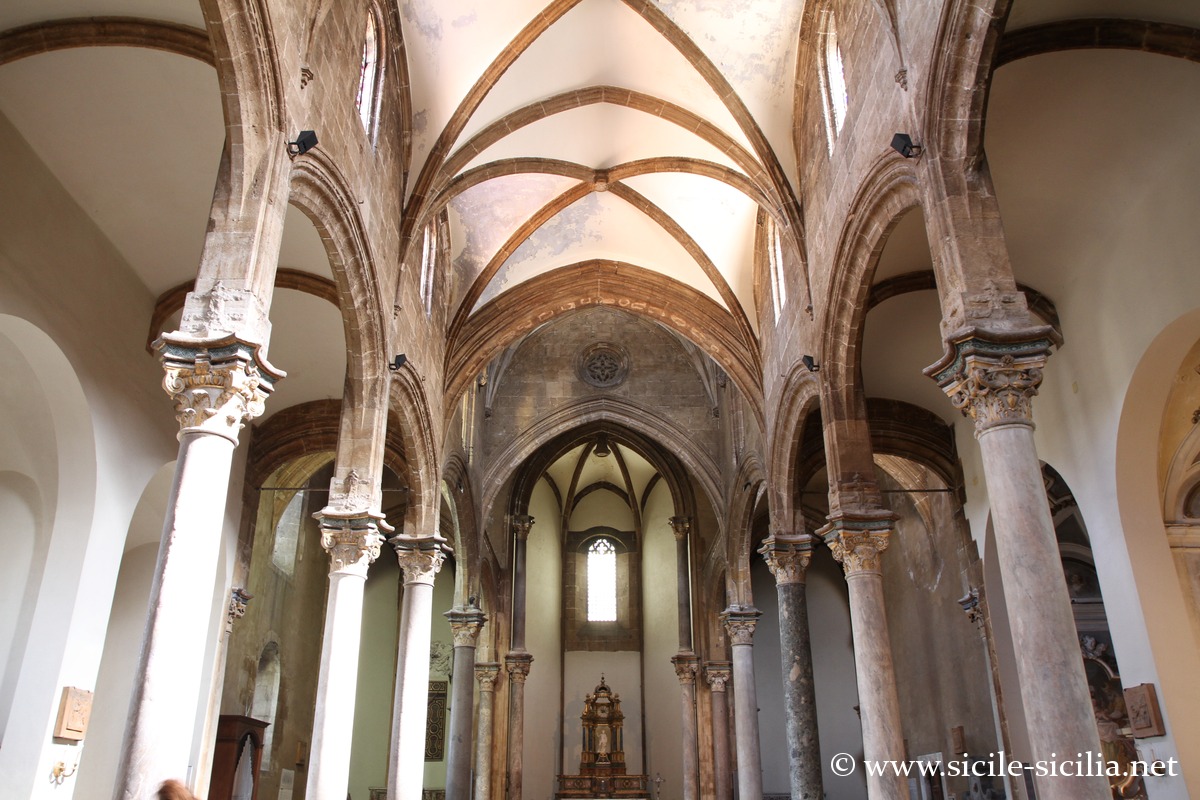
The church of Santa Maria della Catena (Saint Mary of the Chain in English) dates back to the era of Catalan Gothic, located near the port of Cala, the oldest port of Palermo.It was built between 1490 and 1520 by the architect Matteo Carnilivari to replace a small chapel.It is named this way because on […]
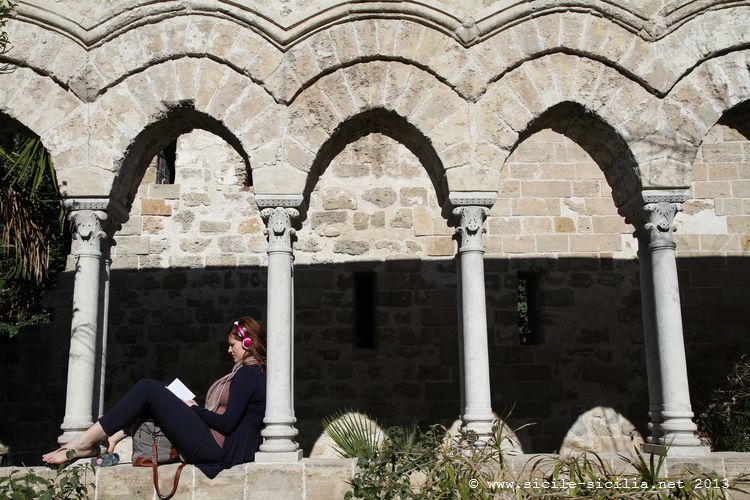
The most beautiful churches in Palermo date from the Norman era, with architecture inspired by Arab constructions, such as the cathedral, San Giovanni degli Eremiti, the Martorana, San Cataldo, or the splendid Palatine Chapel of the Palazzo dei Normanni.
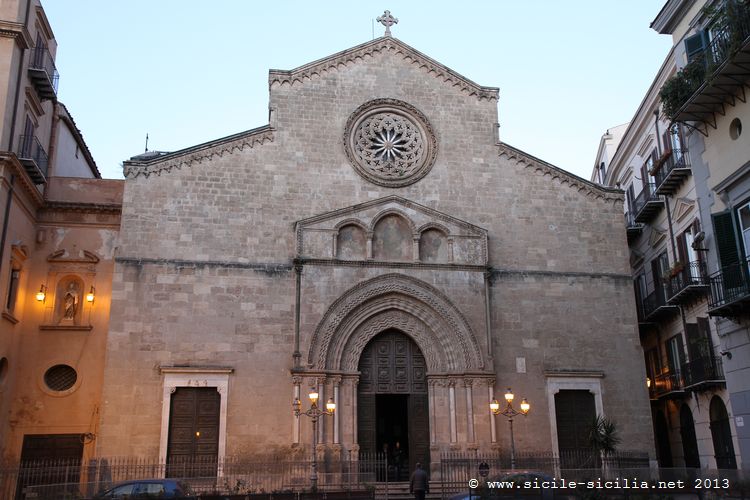
A beautiful Roman-Gothic church, built in the 13th century and remodelled in the 14th, dedicated to Saint Francis of Assisi, in the heart of the Kalsa district. It is one of the first manifestations of Renaissance art in Palermo. Historical elements and exterior First built in 1235, the church of Saint Francis of Assisi was […]
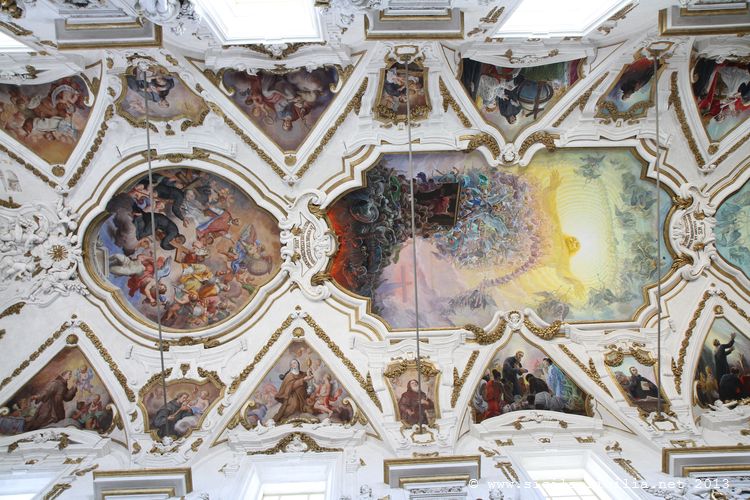
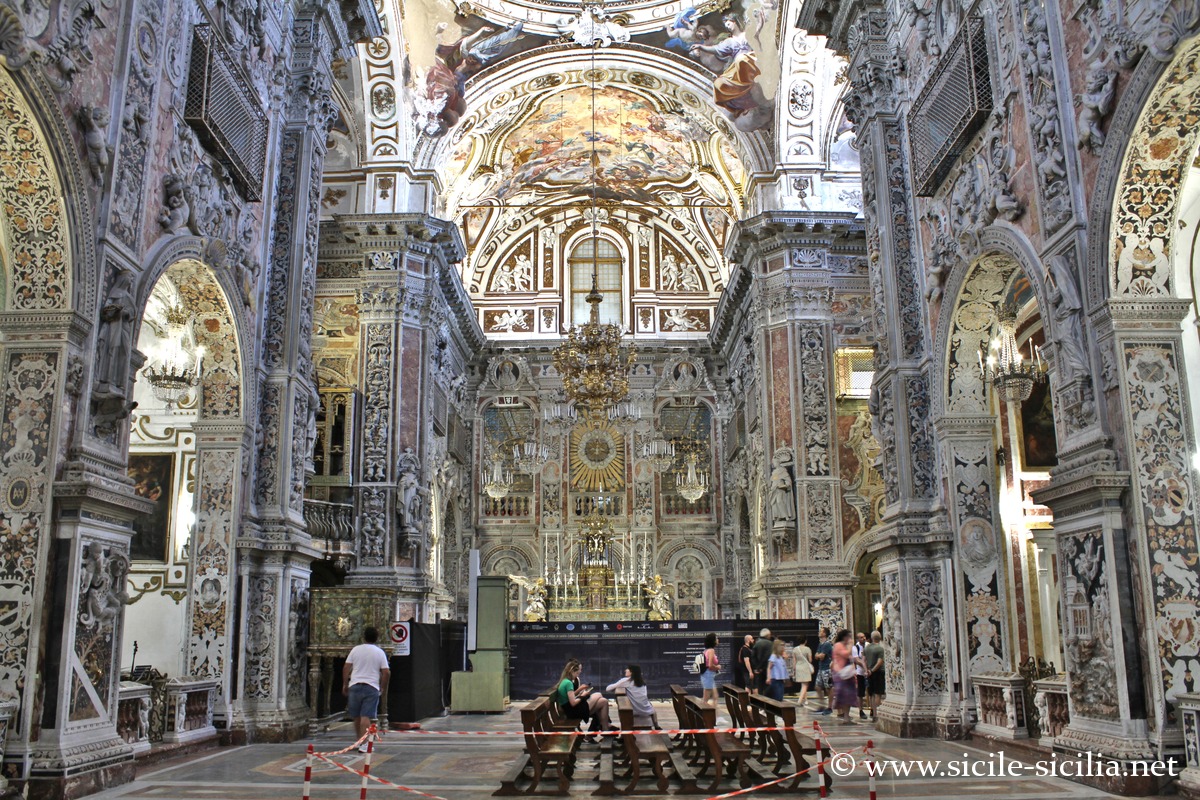
The Church of the Gesù (Chiesa del Gesù in Italian), also called Casa Professa, is the most important Baroque building in Palermo. Built by the Jesuits, it was consecrated in 1564.Its interior decoration, a profusion of Baroque elements, was begun in 1658 and completed at the end of the 18th century. The dome was completed […]
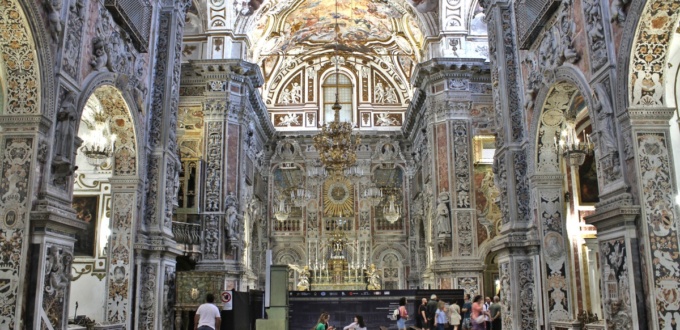
The church of Saint Catherine of Palermo, completed in the 16th century, faces onto two squares: the Piazza Pretoria with its famous fountain, and the Piazza Bellini opposite the Arab-Norman Byzantine churches of San Cataldo and the Martorana.The dome and the choir were added in the mid-18th century and in 1863 respectively.It adjoins a monastery […]
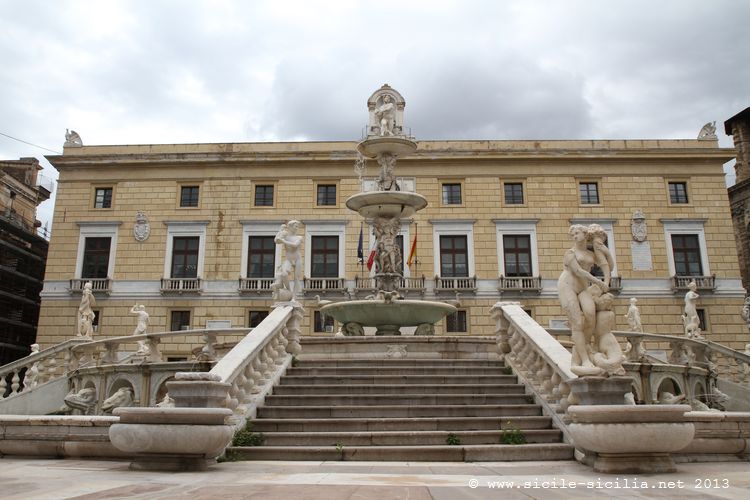
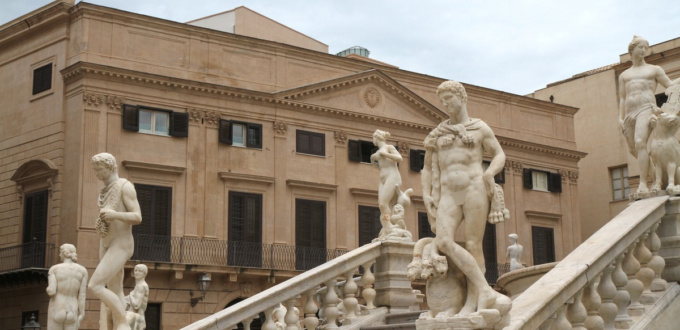
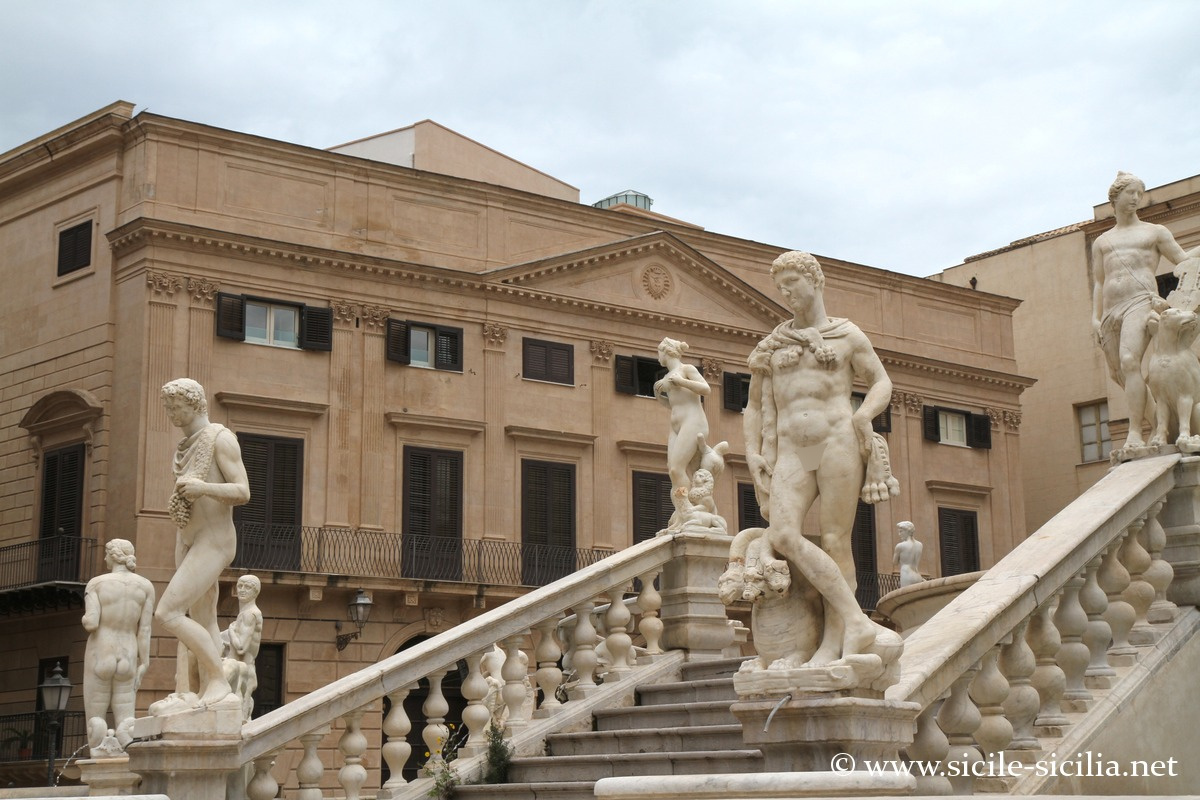
The Piazza Pretoria is also known as the Piazza della Vergogna (“Square of Shame” in English). It is located near the intersection of the Quattro Canti, considered the center of the historic city, at the crossing of via Maqueda and the Cassaro (now via Vittorio Emanuele). In the center stands the city’s most famous fountain, […]
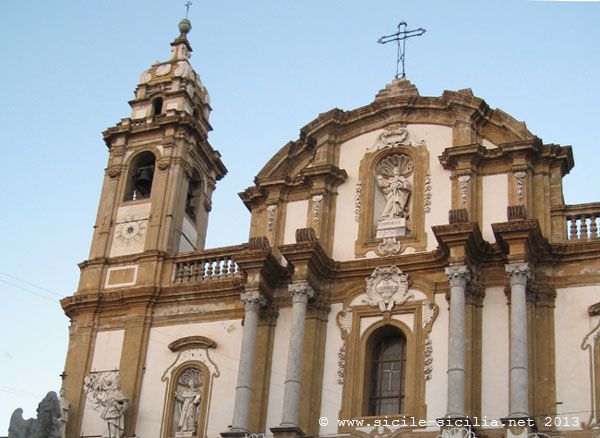
The church of San Domenico, on the square of the same name, is located in the district of La Loggia.It was built in the 14th century and was an important medieval religious center, but was completely rebuilt in 1640, and then the facade in 1726.During the Sicilian revolution of 1848, it served as a meeting […]
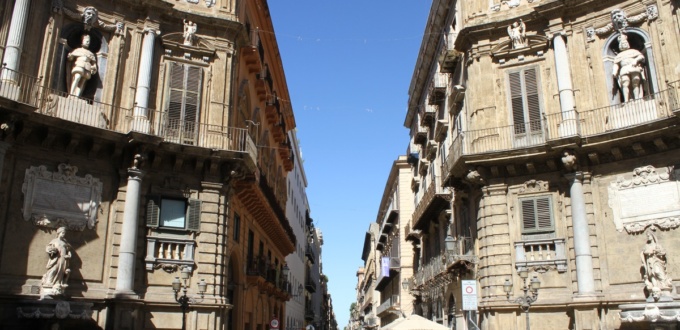
The Quattro Canti (literally Four Songs in English), also known as Piazza Vigliena, or the octagon of the sun or Theater of the Sun, is the square in Palermo located at the intersection of the two main streets that cross the city: via Maqueda and the Cassaro now called Corso Vittorio Emanuele.It is also the […]
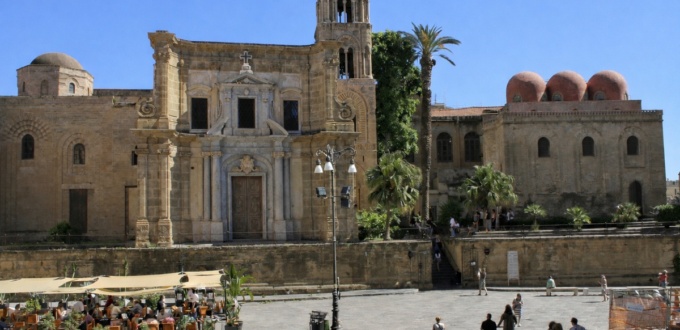
The charming Piazza Bellini is one of the most charming places in Palermo, very close to the Piazza Pretoria in the Kalsa district, a nodal point of the medieval historic centre, located at the intersection of Via Maqueda (created in the 16th century) and several historic urban axes. Buildings around the square Two important churches […]
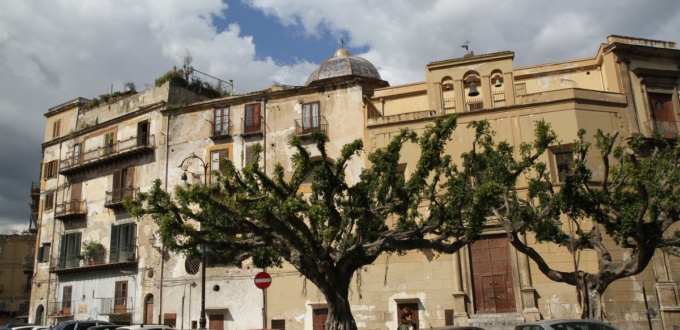
The Piazza Marina is a square in the historic centre of Palermo located in the Kalsa district, on the western edge of the ancient Islamic port district of the Kalsa, between the historic seafront and the city’s medieval aristocratic fabric.In the centre of the square is the small public garden of the Villa Garibaldi designed […]

Presentation The Cistercian monastery and the Church of the Holy Spirit (Santo Spirito in Italian) were built between 1173 and 1178 south of Palermo, near the Oreto river. First inhabited by the monks of Sambucina in Calabria, it came in 1232 under the dependence of the Cistercian abbey of Casamari, near Rome. It is also […]
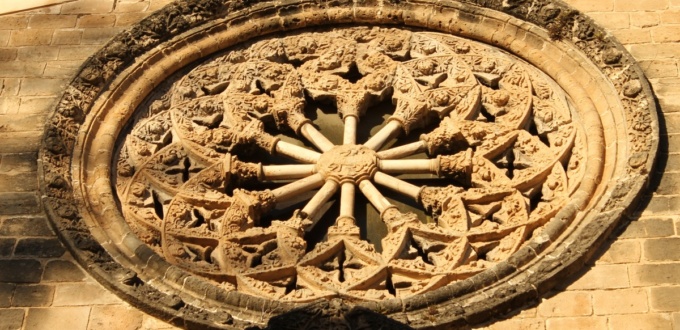
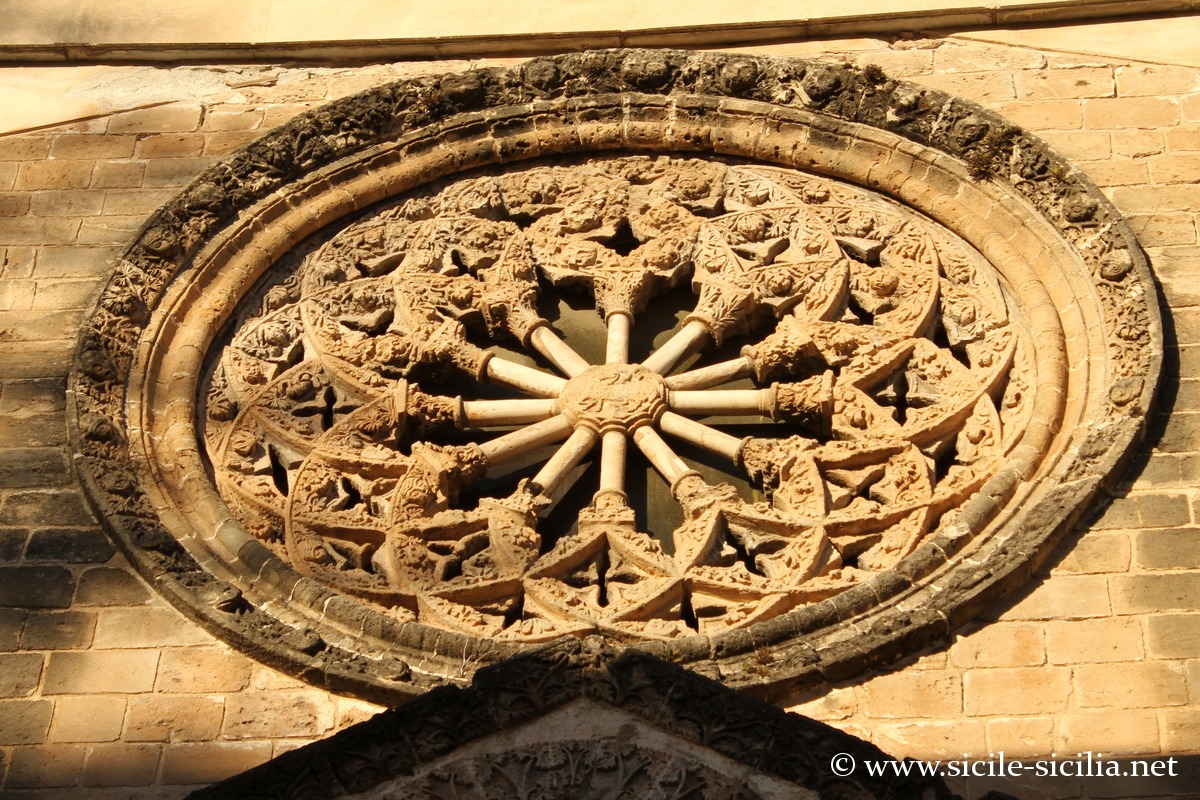
The Church of Saint Augustine (Chiesa di Sant’Agostino), located in the Capo district (Seralcadi), is a building of Sicilian Gothic origin, constructed at the end of the 13th century over an older church, under the influence of the Augustinian order. Presentation and visit The facade of the church is distinguished by a large Gothic rose […]
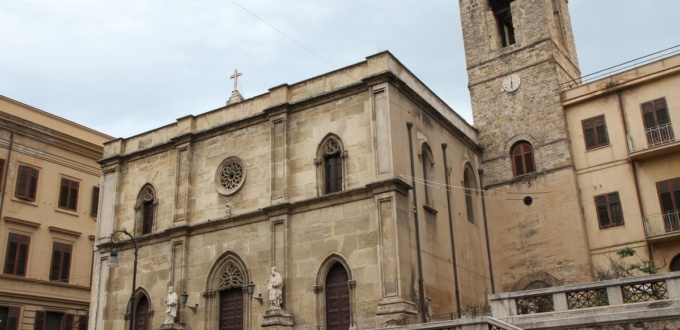
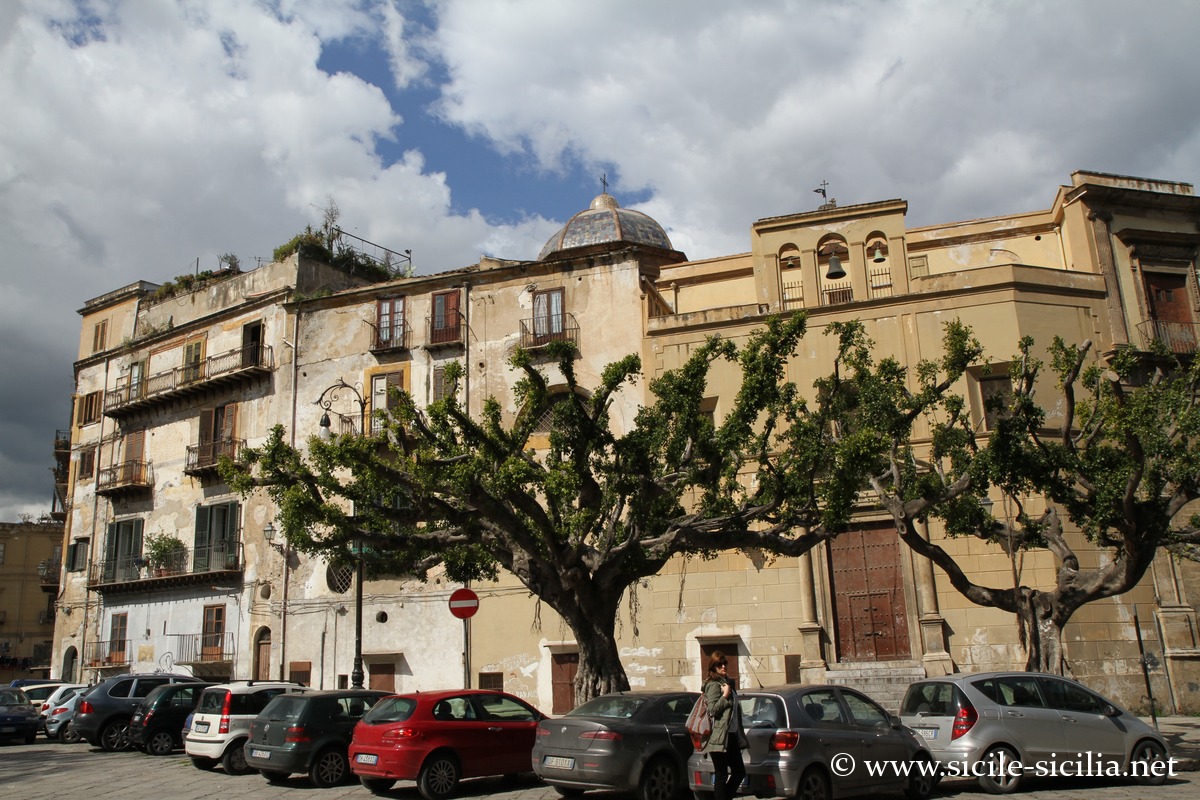
The church of Saint Anthony Abbot (Sant’Antonio Abate) was built around the beginning of the 13th century, on the site of the Muslim gate known as Bab al Bahr (Gate of the Sea). In 1302, the Chiaramonte family added the bell tower, whose base is said to be an ancient tower. Presentation and visit Its […]
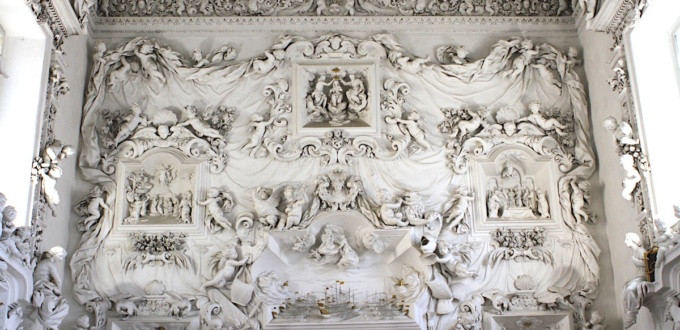
Presentation and visit The Oratory of the Rosary of Santa Cita is one of the most famous Baroque sites in Palermo, with its ornamental richness. It was founded in 1590 by the Company of the Rosary, then transformed between 1673 and 1686. It reflected the wealth and status of the members of the company, with […]
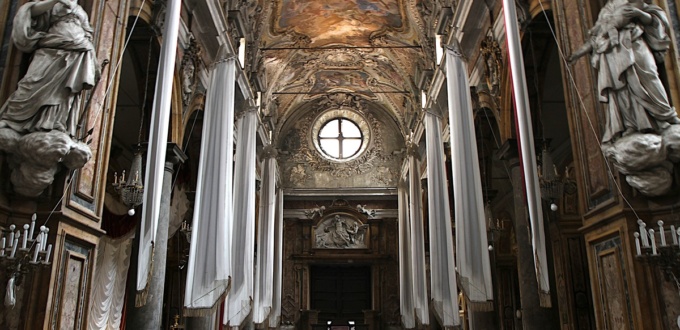
The Church of Saint Matthew (San Matteo al Cassaro) is a typically Baroque building, begun in 1634 for the Confraternity of the Miserenimi, founded by the Franciscan friar Fra Leonardo Galici, with the aim of bringing mercy to the penitents of Purgatory. In the 12th century, there was a church dedicated to the same saint […]
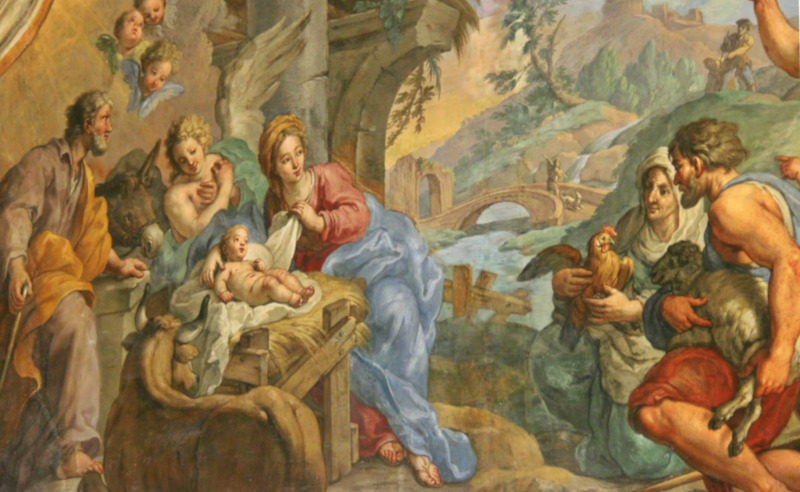
The Archbishop’s Palace of Palermo (palazzo arcivescovile in Italian) is the seat of the archbishopric, located a few metres from the cathedral, to which it is connected by arched bridges. It now houses the Diocesan Museum (museo Diocesano). Archbishop’s Palace of Palermo The palace was commissioned in the mid-15th century by Archbishop Simone Beccadelli of […]
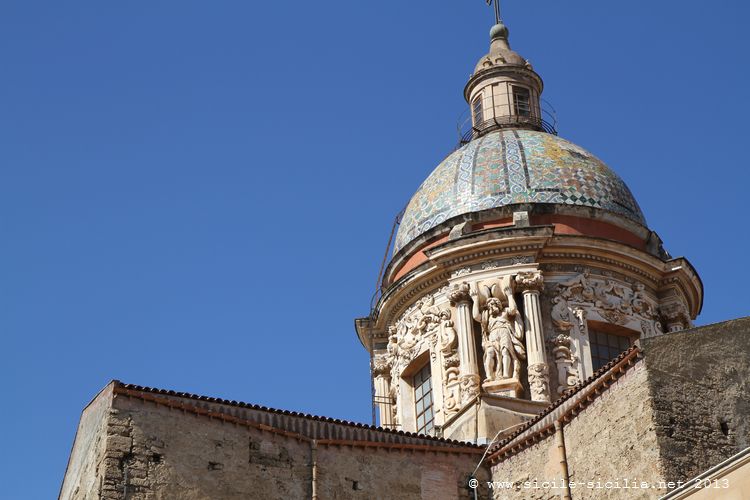
Presentation of around fifteen churches in Palermo, as a complement to the section churches in Palermo, which are of historical or architectural interest, and are worth a visit if you stay some time in the city.These monuments cover several periods, with Norman, Gothic, Baroque buildings, etc.See also the map with the churches at the end […]
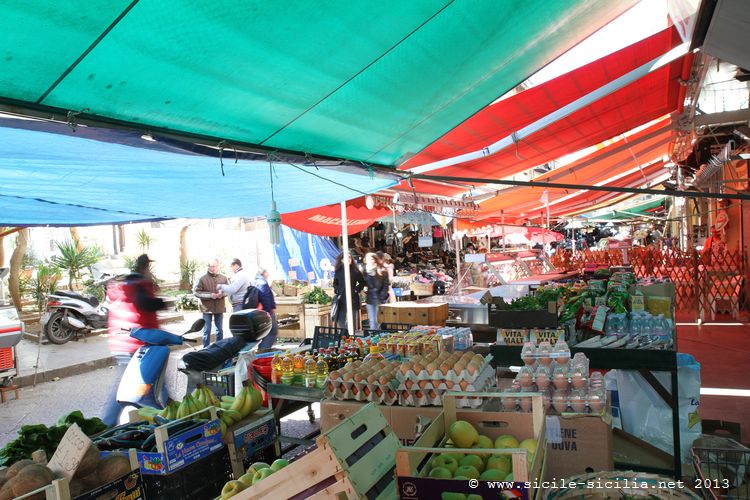
The Albergheria district is one of the oldest in Palermo, with origins dating back to the Phoenician era and later the Arab period, making it an area rich in historical layers visible in its urban layout and ancient buildings. At its western edge lies the Palace of the Normans with its superb Palatine Chapel, and […]
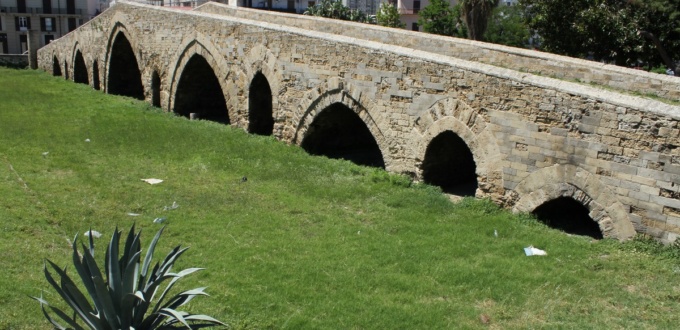
On this page are presented other Arab-Norman buildings that can be discovered in Palermo, after the sites inscribed by UNESCO (see the Arab-Norman sites inscribed by UNESCO), the main ones of which are the Cathedral of Santa Vergine Maria Assunta, the Royal Palace with the Palatine Chapel, the Church of the Martorana, San Cataldo, Saint […]
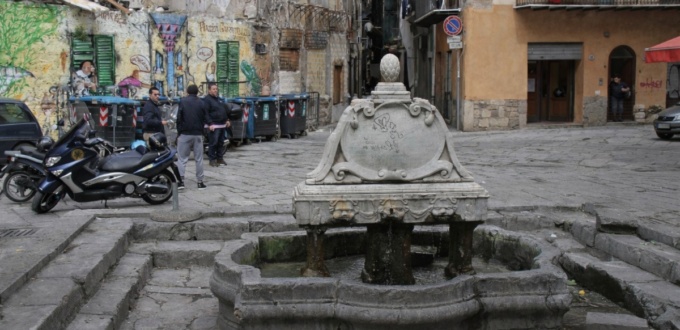
Castellammare or Loggia is one of the four historic districts of central Palermo, near the port, where in particular the historic Vucciria market is held, the most popular along with those of the Ballaro’ market and the Capo market.Bounded by Via Maqueda, Corso Vittorio Emanuele, Via Cavour and Via Crispi, it is a central sector […]
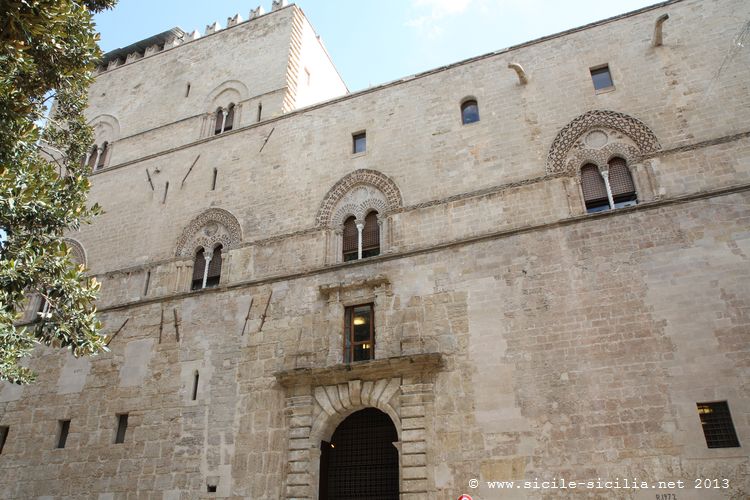
The Chiaramonte Palace (also called Steri, from Hosterium, fortified palace), is located on Piazza Marina.It was built at the beginning of the 14th century, by Manfred Chiaramonte, the powerful count of Modica. The Chiaramonte family, of Franco-Norman origin, left its mark on the entire island in the 14th century. History and description of the palace […]
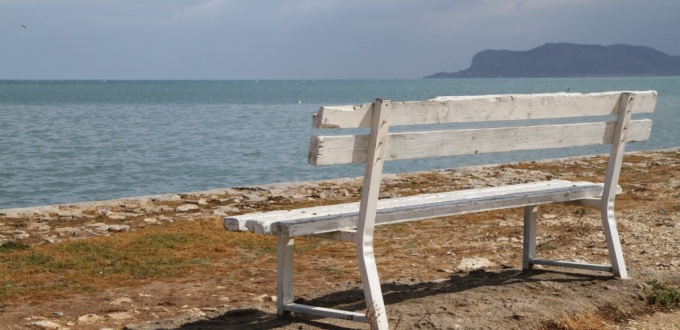
La Cala de Palermo The Cala is a maritime cove that corresponds to the oldest port of the city of Palermo, at the level of the historic centre, where the grand avenue of Via Toledo (or Càssaro) leads. La Cala today Nowadays it is mainly used as a marina, for pleasure boats and nautical clubs, […]
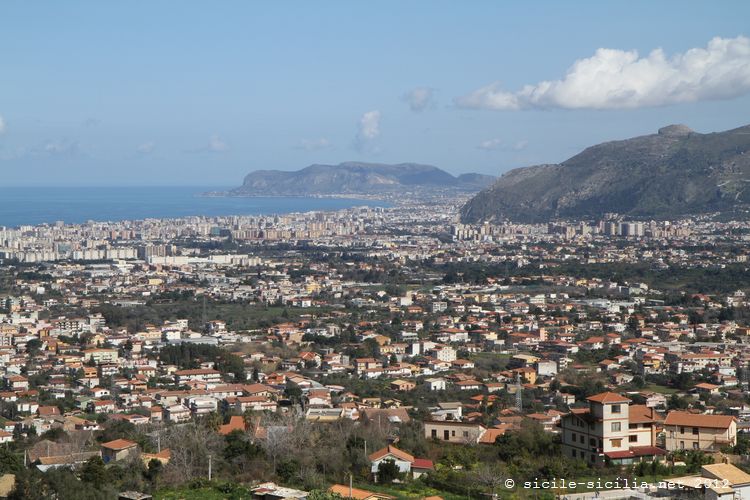
Around Palermo, a few kilometres from the centre, you can discover Mount Pellegrino, the seaside resort of Mondello and, further away, Capo Gallo, Monreale and its Arab-Norman cathedral inland, Bagheria and Mount Catalfano to the south along the coast.
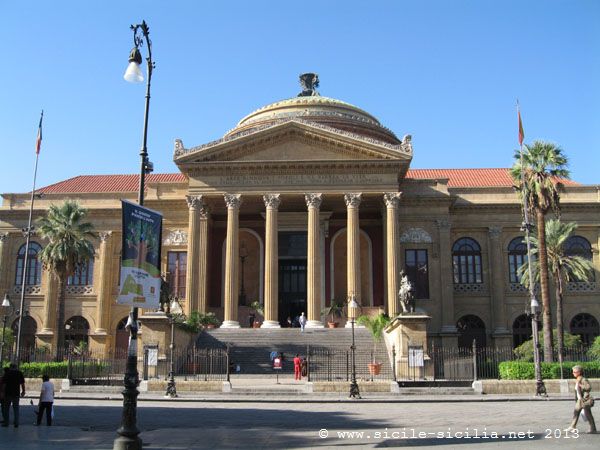
The Teatro Massimo Vittorio Emanuele (Grand Théâtre Victor Emmanuel in French) is an opera house in Palermo, Sicily, architecturally the largest opera hall in Italy.At its inauguration in 1897, it was considered the third largest opera house in Europe, with an area of more than 7,730 m², after the Palais Garnier and the Vienna Opera […]
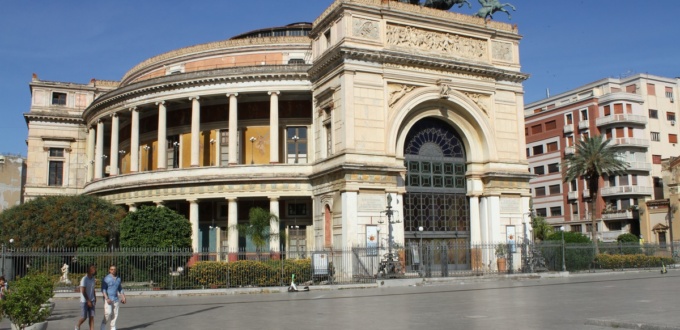
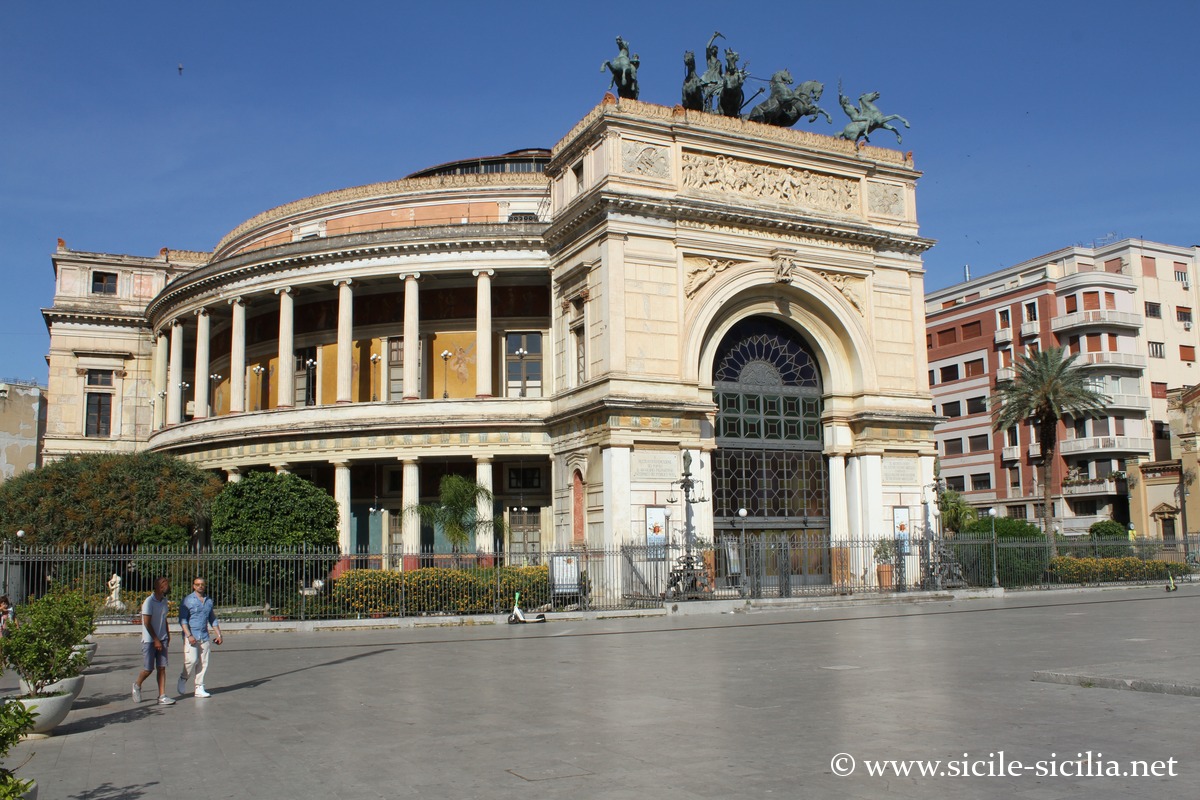
The Teatro Politeama Garibaldi is one of Palermo’s major cultural venues, located on the central Piazza Ruggero Settimo, often simply called Piazza Politeama. It was conceived as a “politeama”, a versatile venue dedicated to various forms of entertainment, distinguished from the more aristocratic Teatro Massimo by its more popular role. It thus hosts operettas, circus, […]