


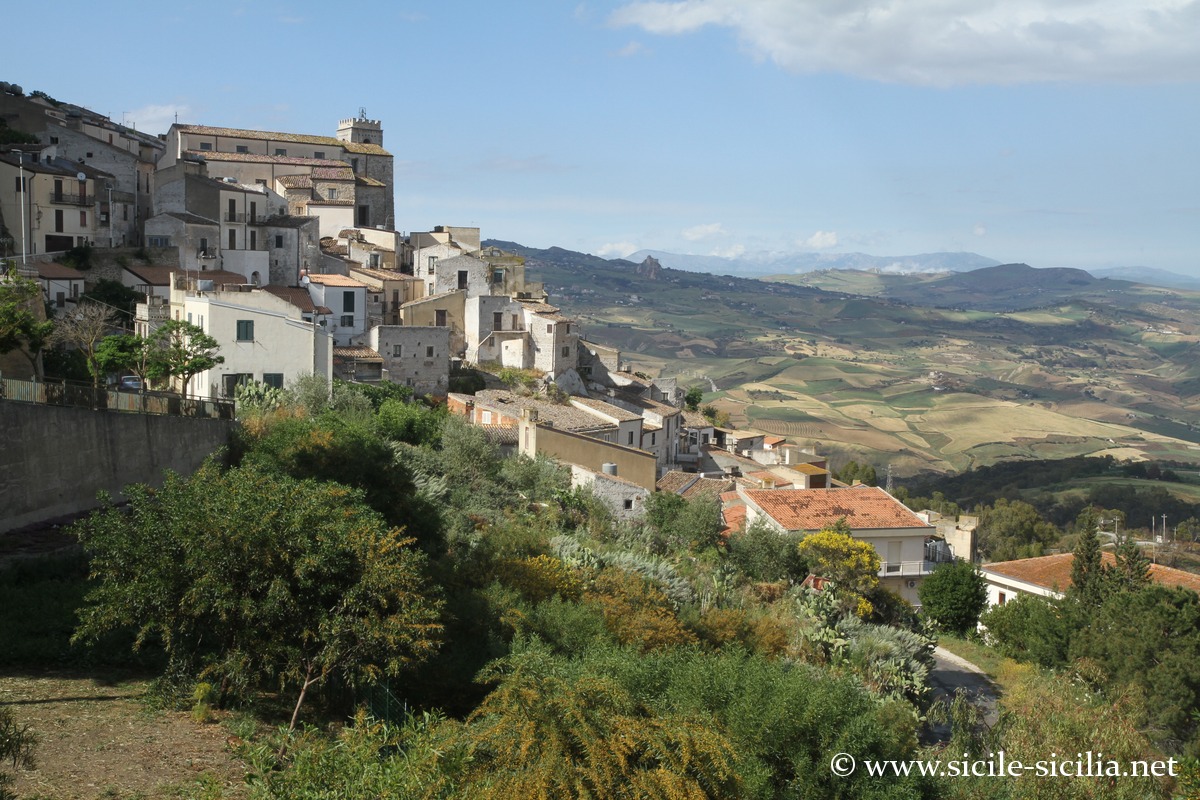
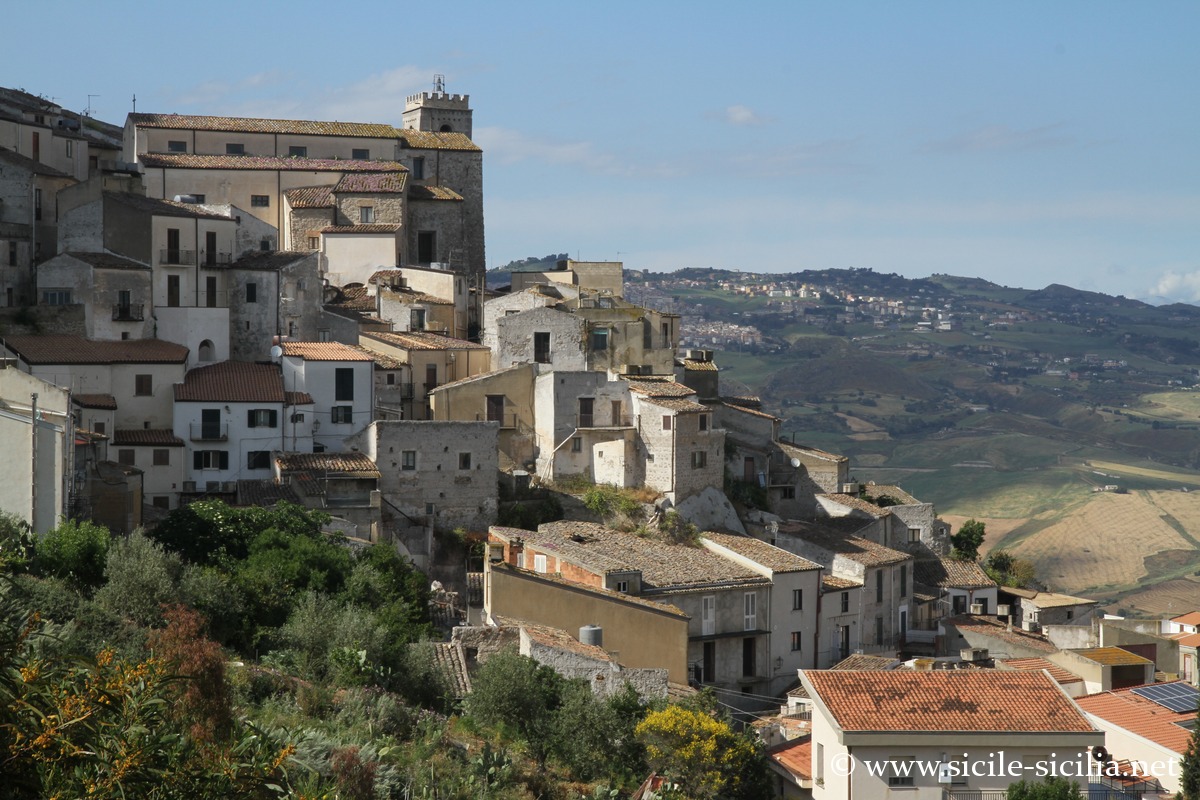
12 kilometres south of Mussomeli and near the beautiful Platani valley, the medieval village of Sutera is listed among “the most beautiful villages in Italy”, benefiting in particular from one of the most beautiful landscapes in Sicily, on a hill, at the foot of an enormous limestone rock.
A medieval village and one of the most beautiful landscapes in Sicily
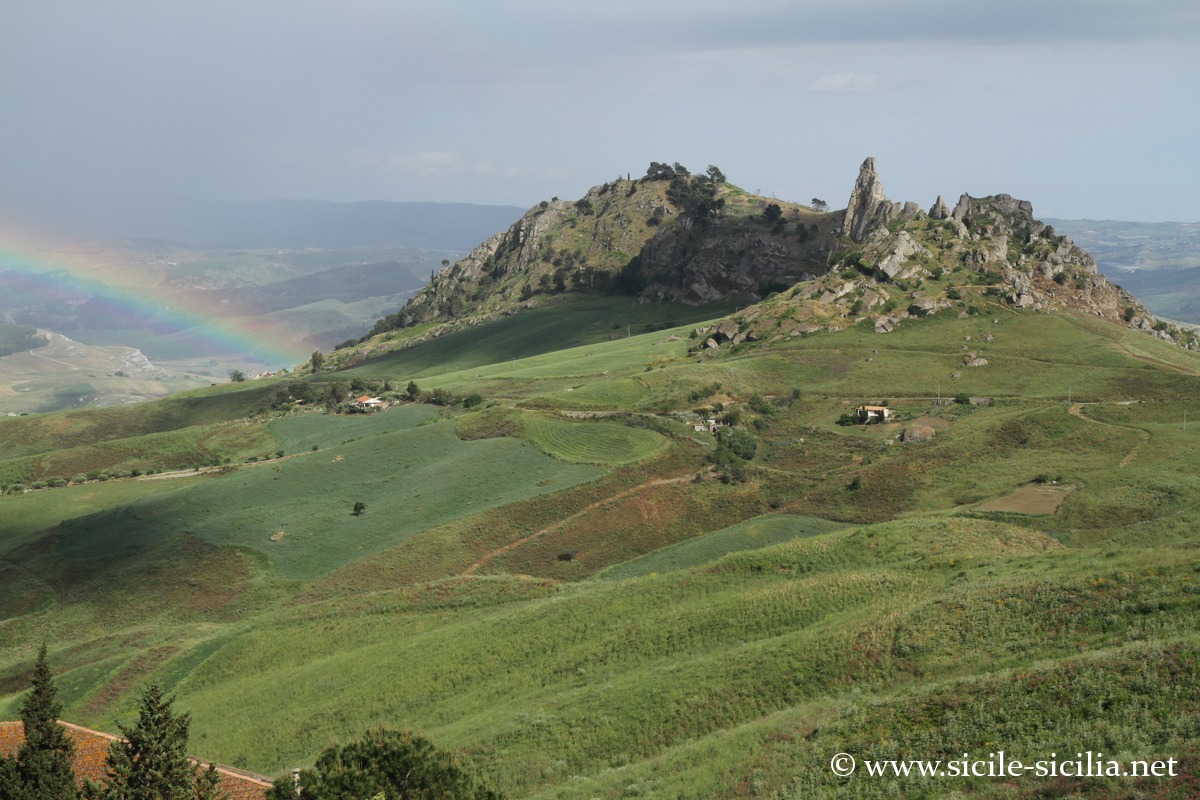
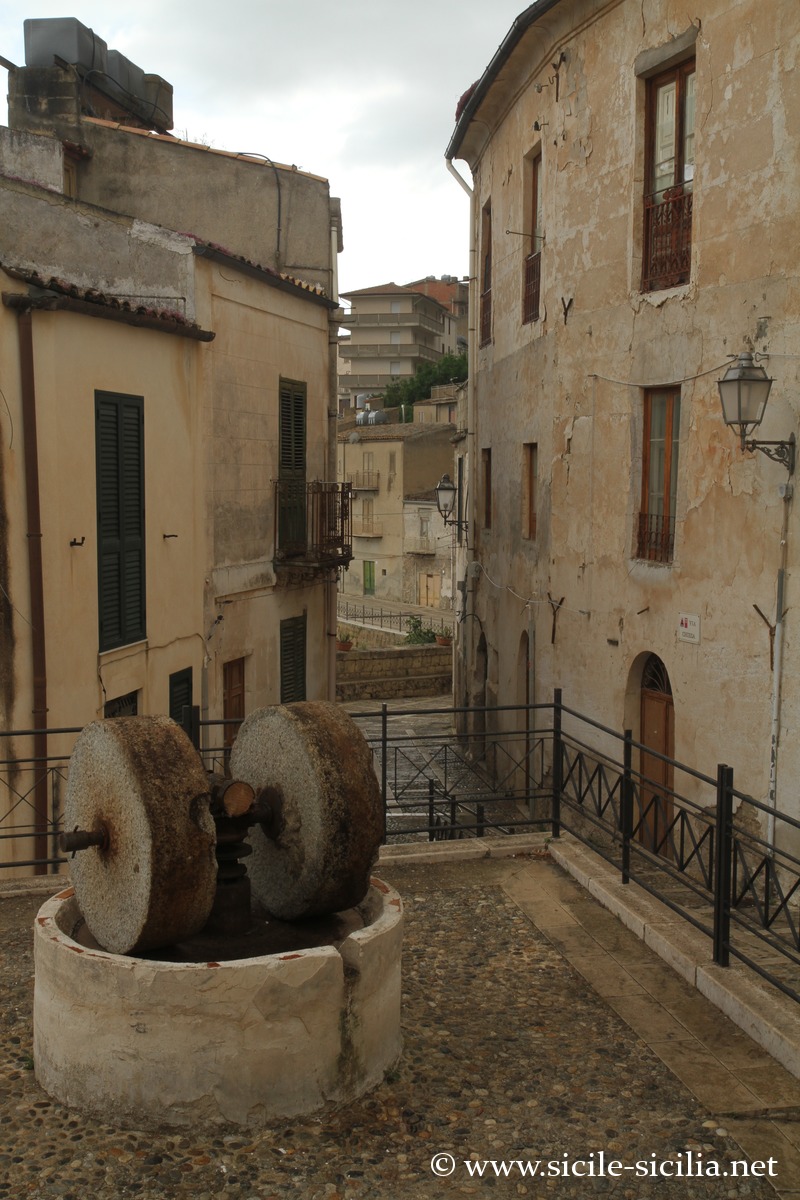
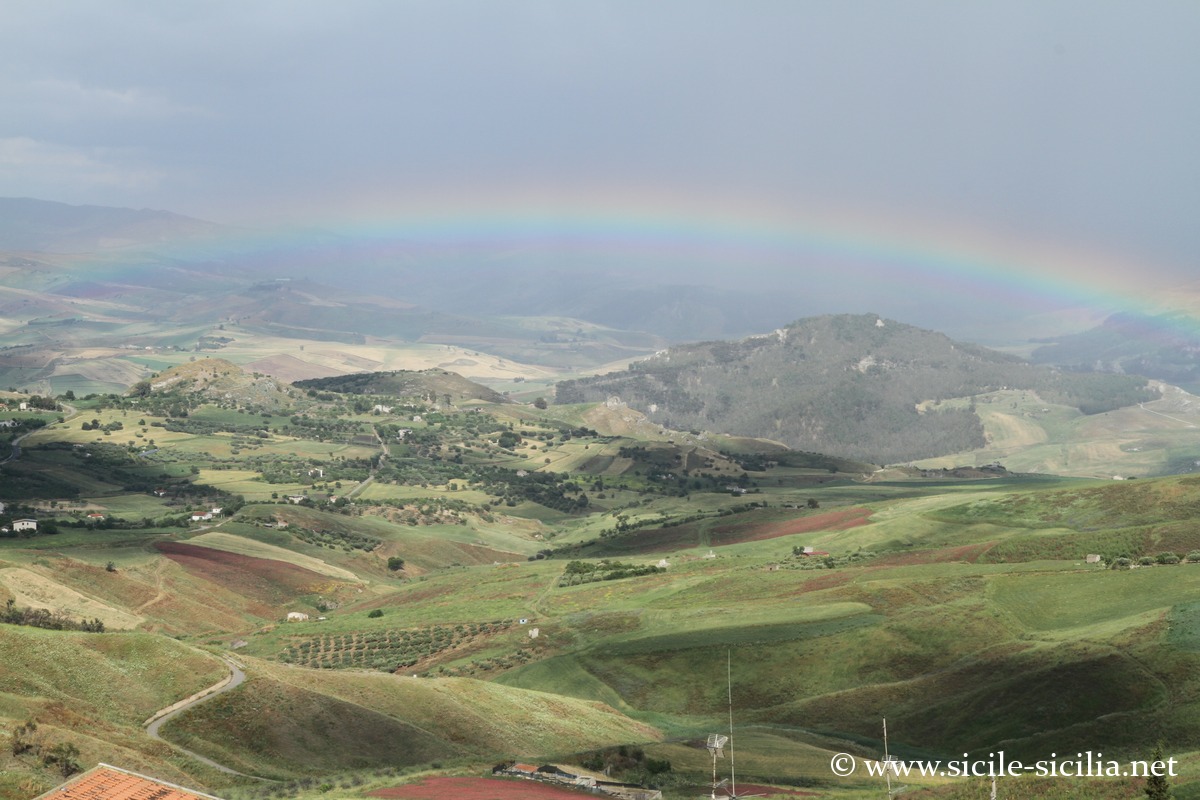
The village is divided into three historic quarters, one of which was founded by the Saracens, a casbah that is brought to life each year by a living nativity scene. It has kept a typical medieval layout, with its old stone houses served by winding alleyways and stairways, its courtyards and its churches. The enormous limestone rock of Mount San Paolino dominates the village with its sanctuary from which one enjoys a superb view; from its summit, in good weather, one can make out up to 22 municipalities, the Madonie, Etna and the sea of Agrigento.
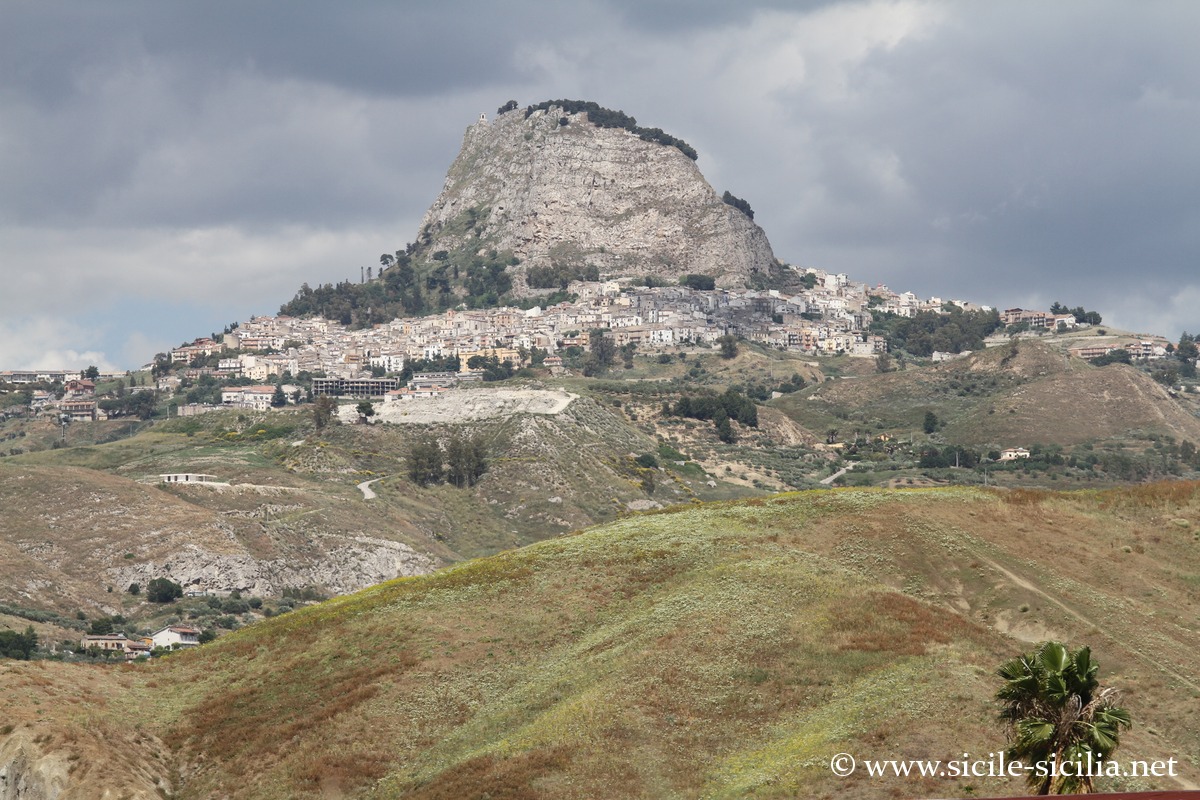
Sutera
The landscape is characterised by cavities and ravines formed by karst phenomena, where the Sican civilisation settled, with traces in some caves of occupation by Basilian monks.
Historical elements
In the surrounding area there were necropolises and a Sican village. According to one hypothesis, around the 6th century BC, there would have been a Greek sanctuary on Mount San Marco to the south, dedicated to the cult of Artemis Soteira.
The name “Sutera” would be of Greek origin, from “Soter” (the Saviour), or from “Soteira” (linked to the divinity Artemis), evoking the protection of the summit or of an ancient pagan cult.
Traces of Byzantine frescoes dating from the 4th and 6th centuries AD have been found there. The Saracens founded the Rabato quarter in 860, which has kept its original urban appearance. The village then grew under the Normans and the Swabians, the latter founding the Giardinello quarter in the 13th century.
Under the Aragonese, the fief was a possession of Chiaramonte, then sold to the royal domain of the Crown of Sicily.
Visiting Sutera: what to see
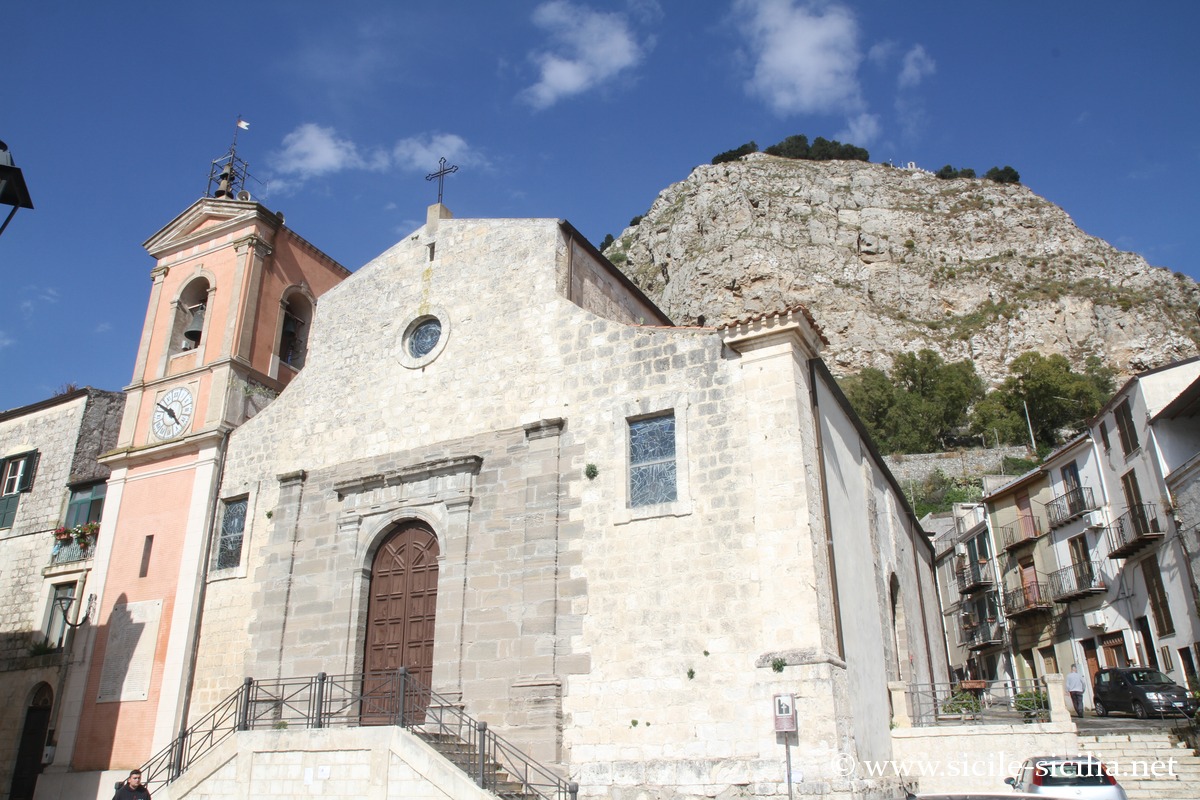
Church of Sant’Agata
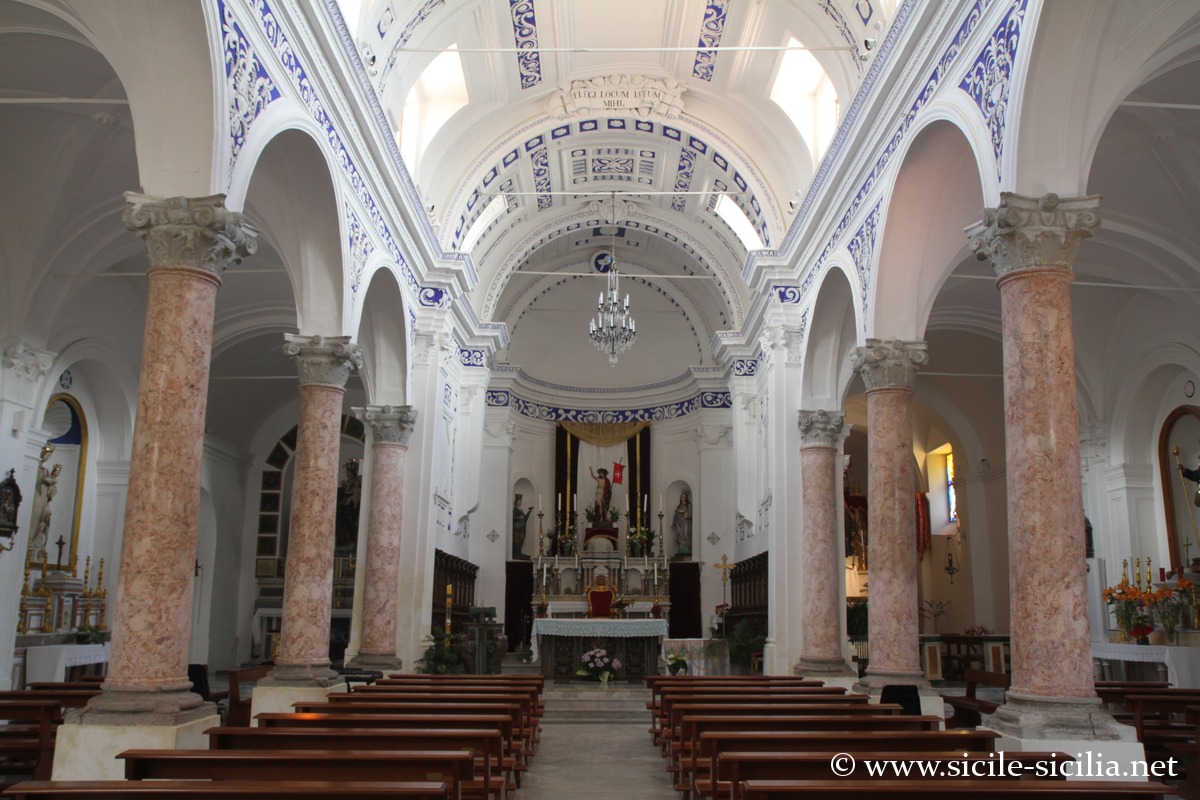
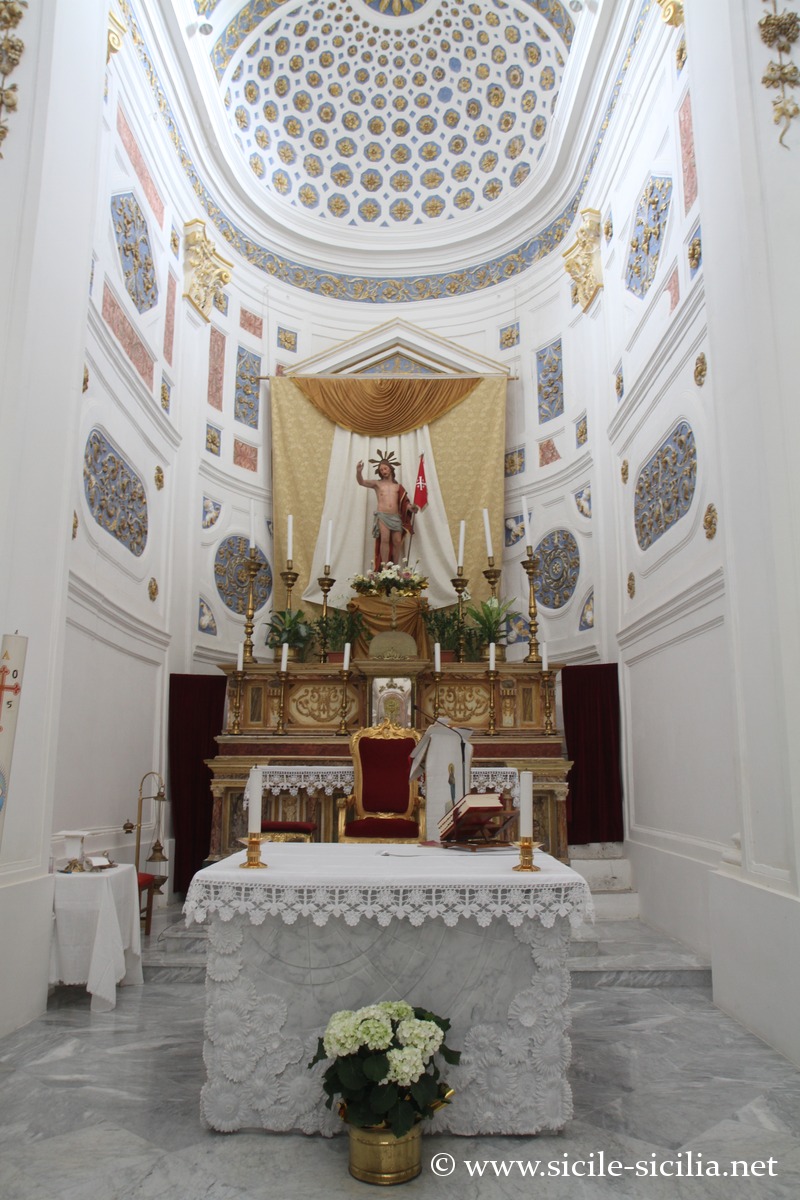
On Piazza Sant’Agata with its lovely view, the austere but elegant church of Sant’Agata dates from the 15th century and contrasts with the style of the small 19th-century town hall. The interior has three naves with a barrel vault and large arcades. During a recent restoration, the vaults regained their original blue “azolo” colour, which had been hidden for decades.
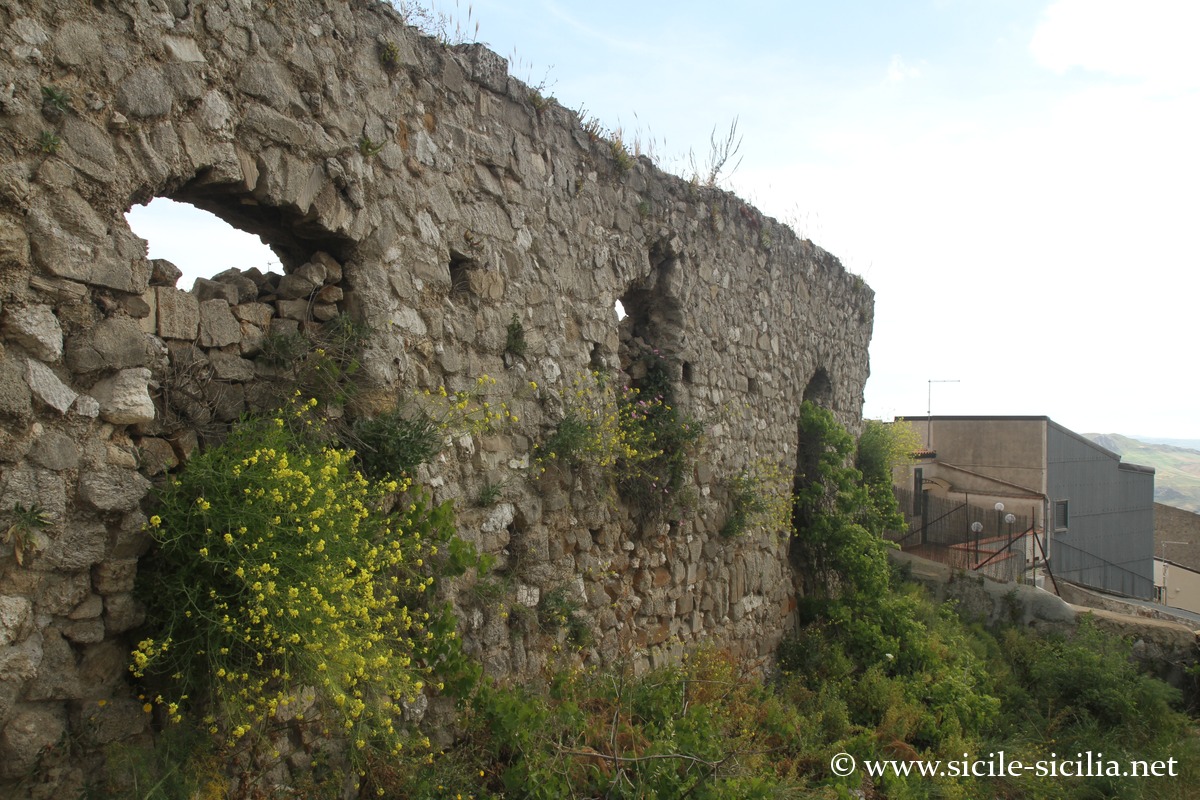
Along Via Roma, one passes the ruins of the 15th-century Palazzo Salamone, then 400 metres further on reaches Piazza Carmine.
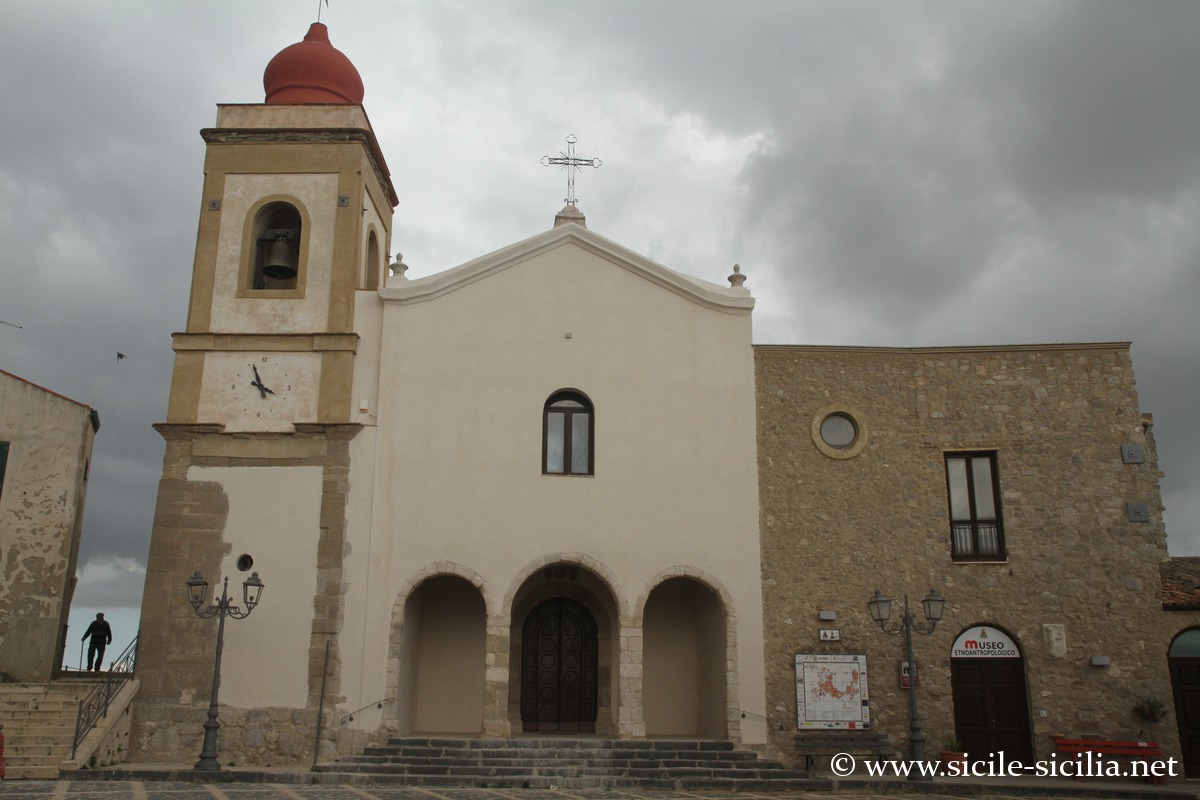
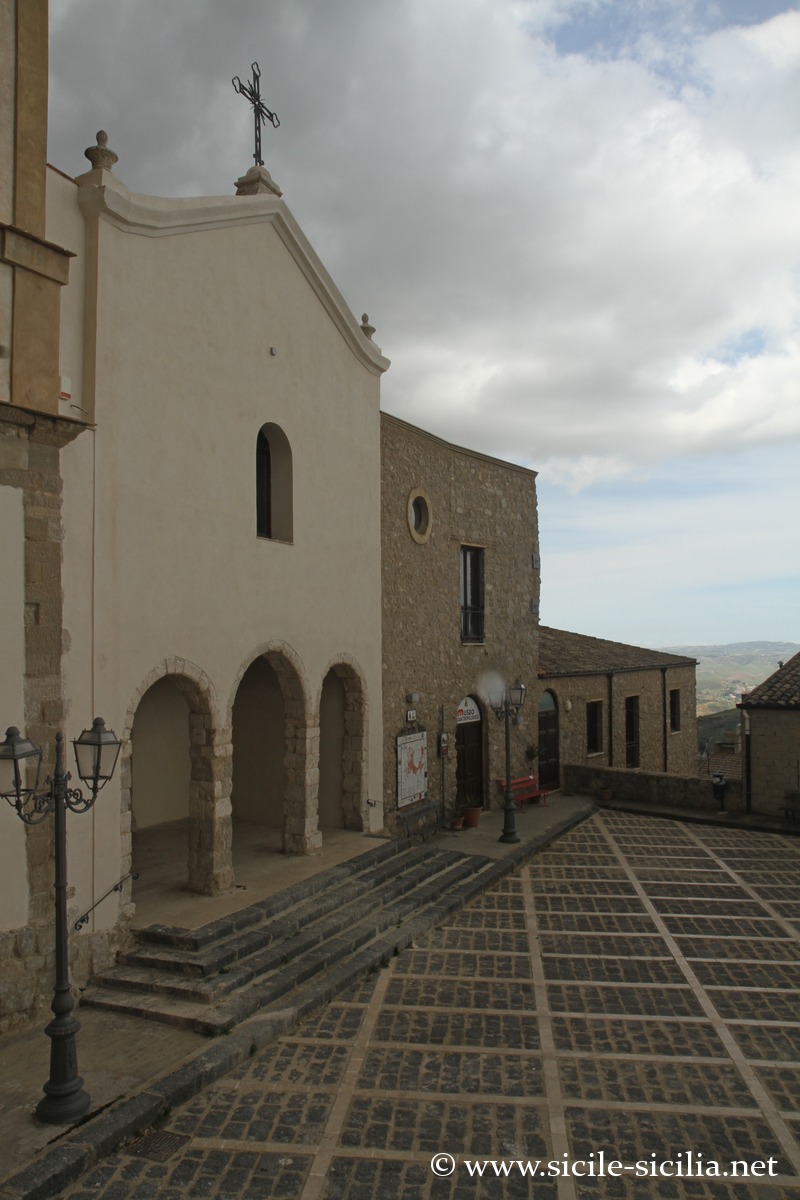
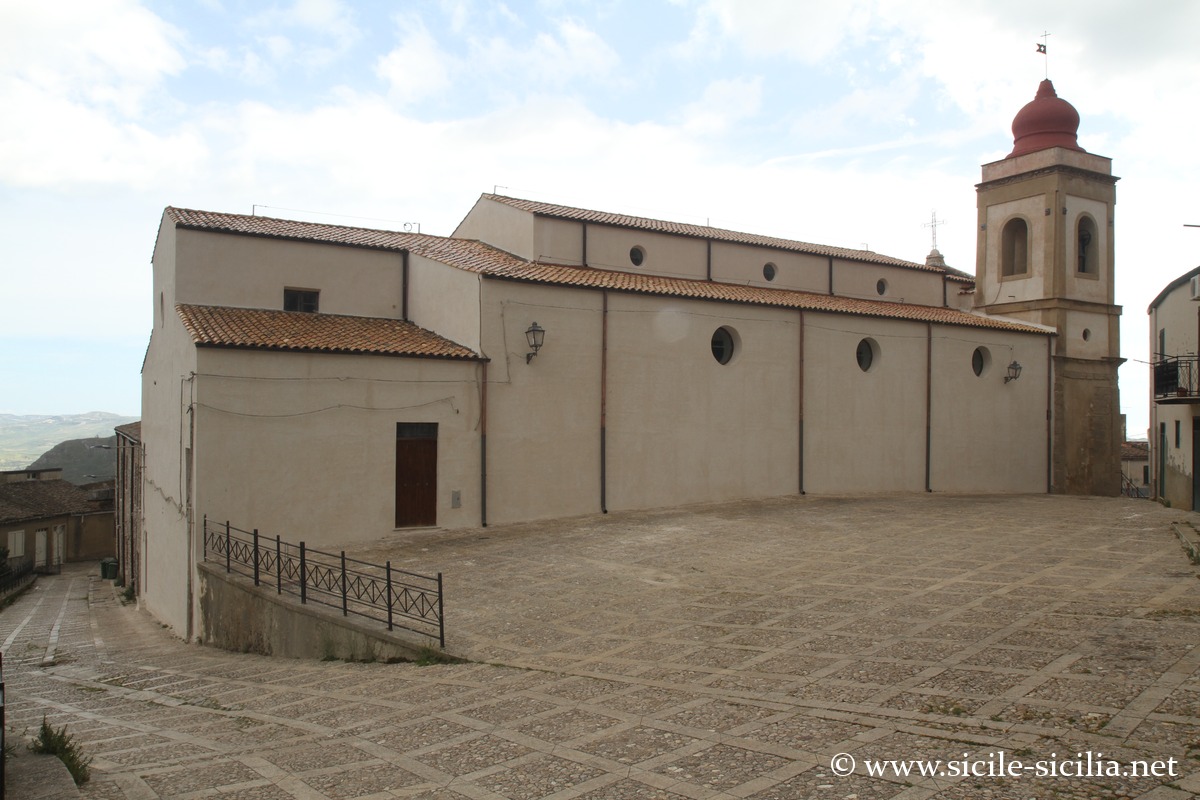
On Piazza Carmine, the church of Maria Santissima del Carmelo has a structure of 12th-century origin and was rebuilt in the 1930s. The church preserves the Madonna del Soccorso, a marble masterpiece by Bartolomeo Berrettaro of Carrara (1503). Its entrance portal, in the ogival style, is flanked by small columns of probable Arab inspiration, probably recovered from the former mosque of the Rabato.
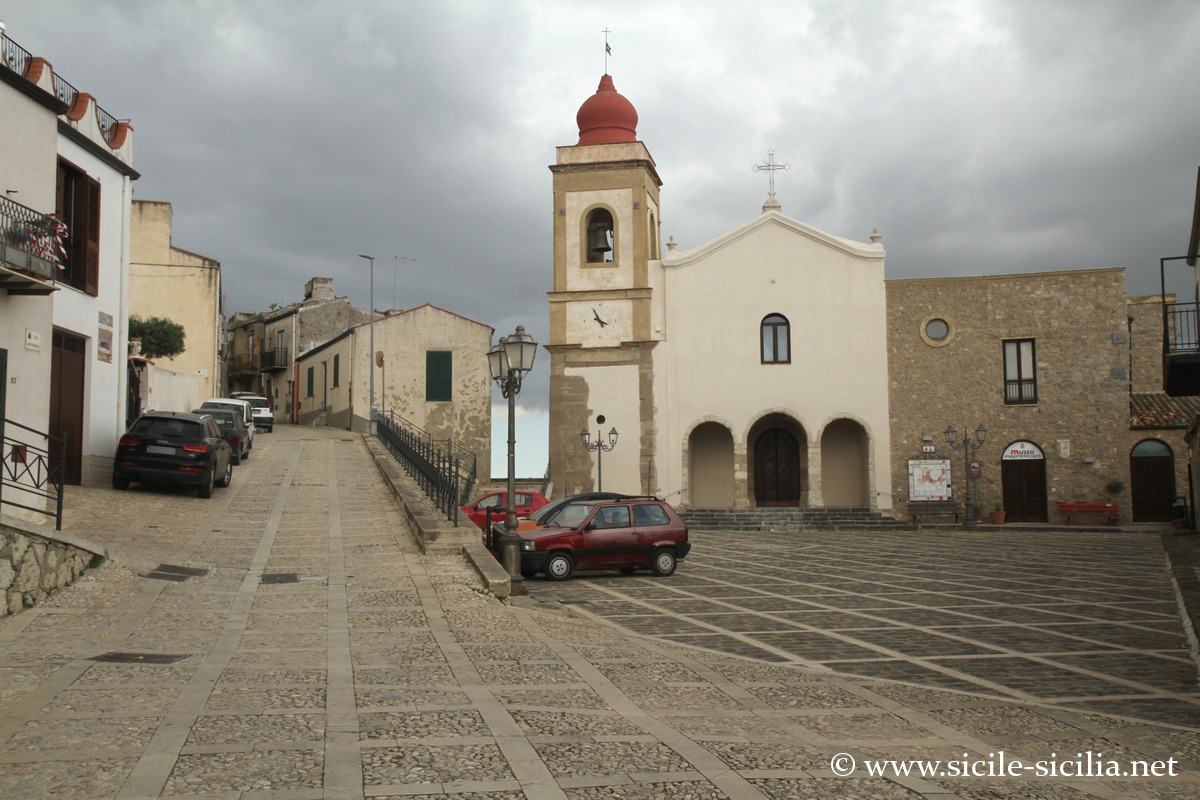
Church of Santa Maria del Carmelo
The small adjacent convent houses the museum of rural life (Museo della Civiltà Contadina), which preserves objects, tools and utensils from traditional peasant life.
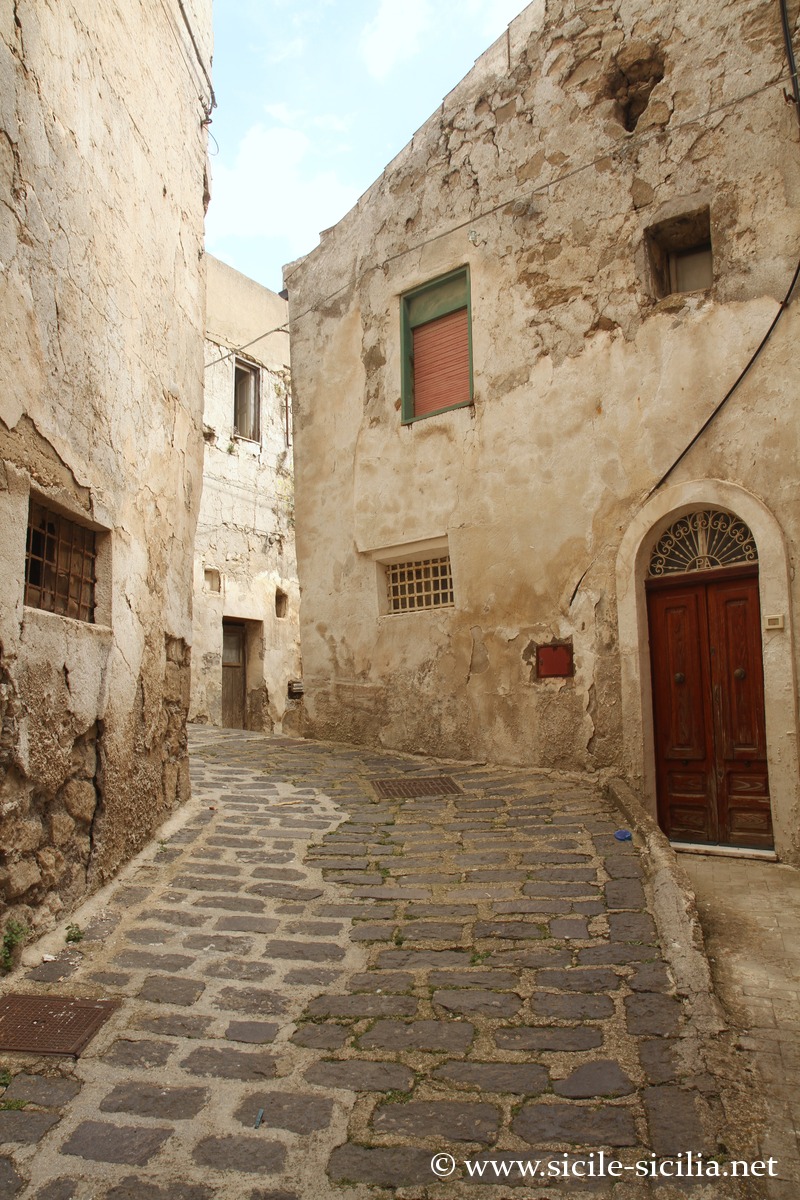
Via Carmine reaches the Rabato quarter, founded by the Saracens around 860 AD, whose appearance it retains with its dammusi crowded against the rock. It is characterised by its adjoining houses covered in white plaster, traversed by its narrow alleyways and its stairways passing from courtyards to terraces.
The church of Santa Maria Assunta was built by the Chiaramonte in 1370 on the mosque dating from around 875. It was renovated in 1585 with a beautiful Renaissance portal and a marble baptismal font. Inside, four mortar niches remain that bear witness to the former mosque.
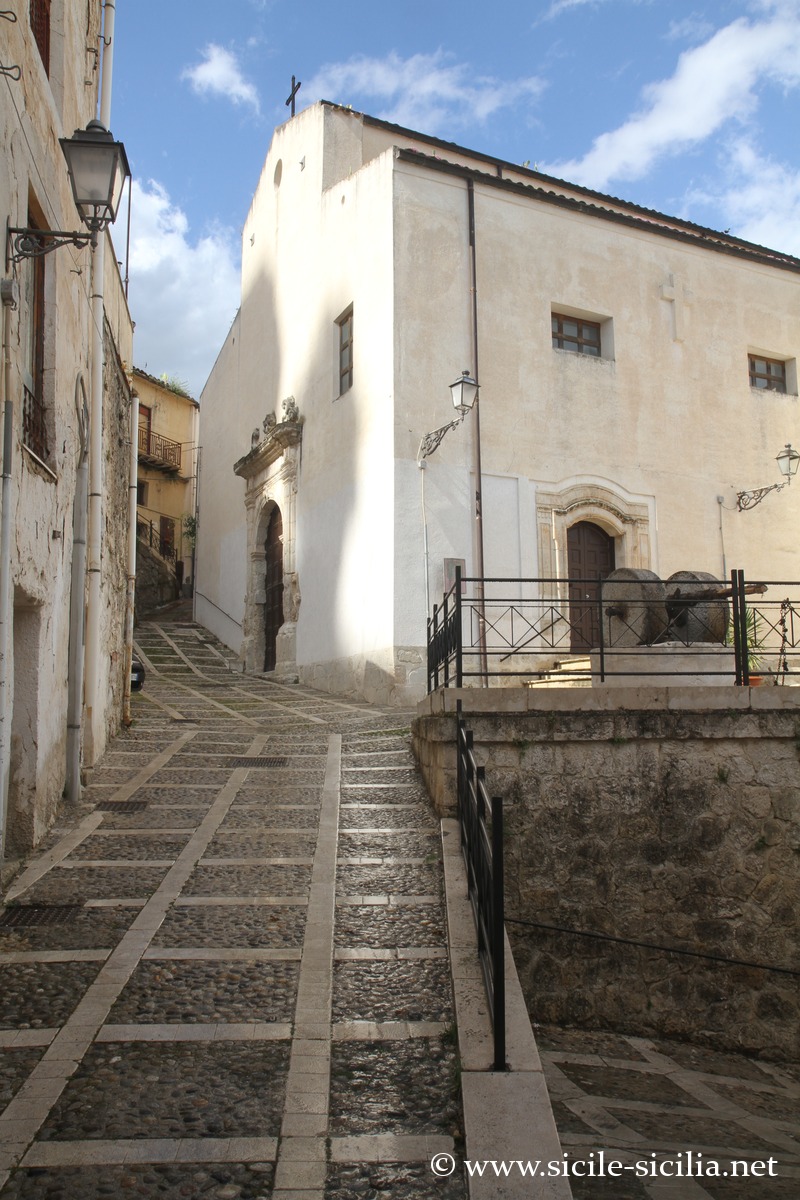
Church of Santa Maria Assunta
Towards Piazza del Carmine, Via San Paolino climbs by a stairway up to Mount San Paolino, reaching an altitude of 812 metres. From its terrace, the view is splendid, from Etna to the sea of Agrigento in good weather.
Giovanni Chiaramonte had the sanctuary of San Paolino erected there in 1370 on the remains of the ancient castle of Byzantine origin. It preserves two precious reliquaries with remains of the bones of saints, those of Saint Paulinus (Paolino in Italian) in a casket from 1498 and those of Saint Onuphrius (Onofrio in Italian) in a Baroque urn from 1649. The adjacent 18th-century convent preserves a canvas of the Virgin enthroned between Saints Damian and Cosmas by Filippo Tancredi.
Outside the village centre
Not far from the village to the south-east, San Marco hill has limestone caves in a ravine, with a chapel preserving frescoes in the Byzantine style representing the four evangelists, the Virgin and Saint Paulinus (4th – 6th centuries). These caves are considered among the oldest dwelling places of the Sican culture in the region, and pre-Hellenic necropolises have been identified there.
About a kilometre to the south, the natural site of the “rocca spaccata” is a fissure in the rock that local legend attributes to the last breath of Christ.
Gallery
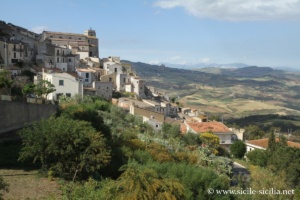

Sutera 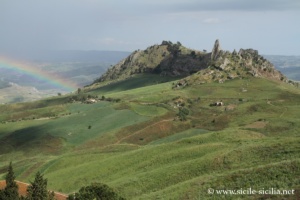
Rocca Spacata, Sutera 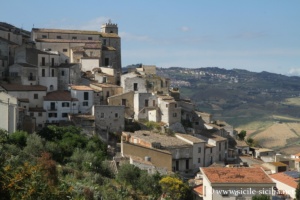
Sutera 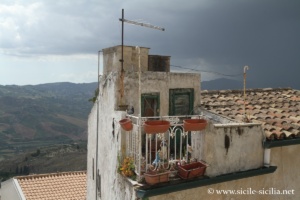
Sutera 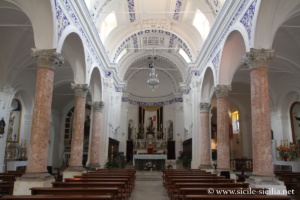
Church of Sant’Agata 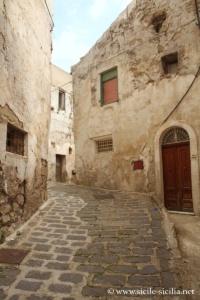

Via Roma, Sutera 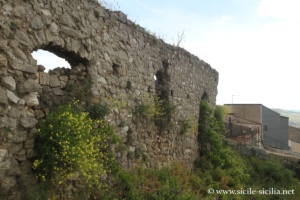
Palazzo Francesco Salamone 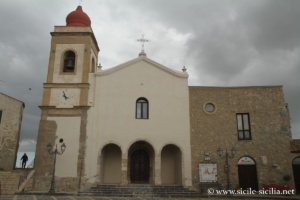
Santa Maria del Carmelo 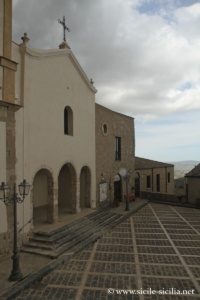
Piazza Carmine and Santa Maria del Carmelo 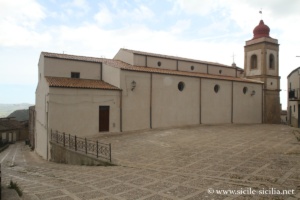
Piazza Carmine and Santa Maria del Carmelo 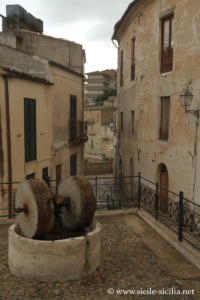
Santa Maria Assunta 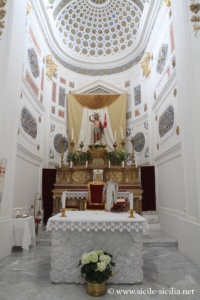
Santa Maria Assunta 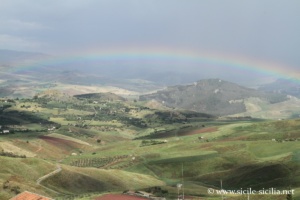
Panorama from Sutera 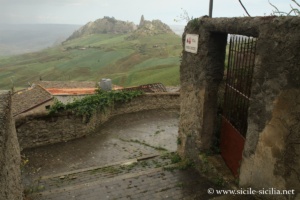
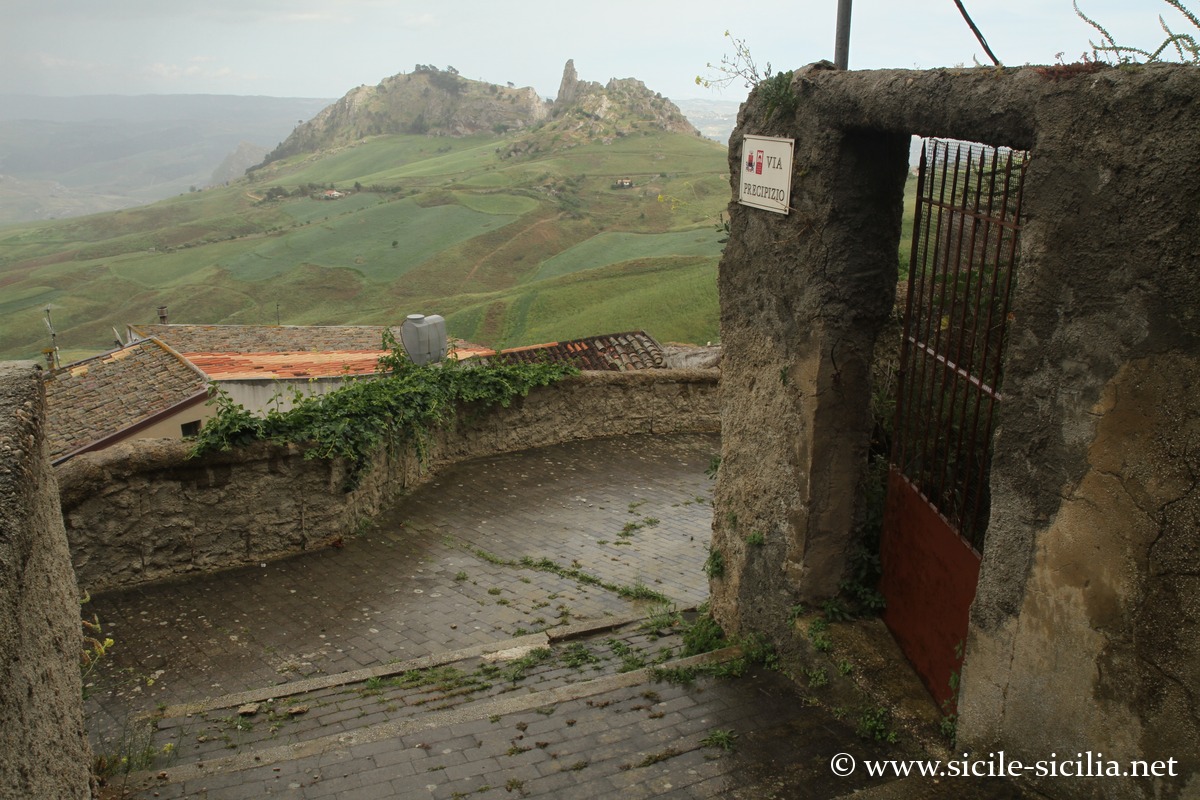
Via Precipizio, Sutera
Where Sutera is located: map
If you see this after your page is loaded completely, leafletJS files are missing.
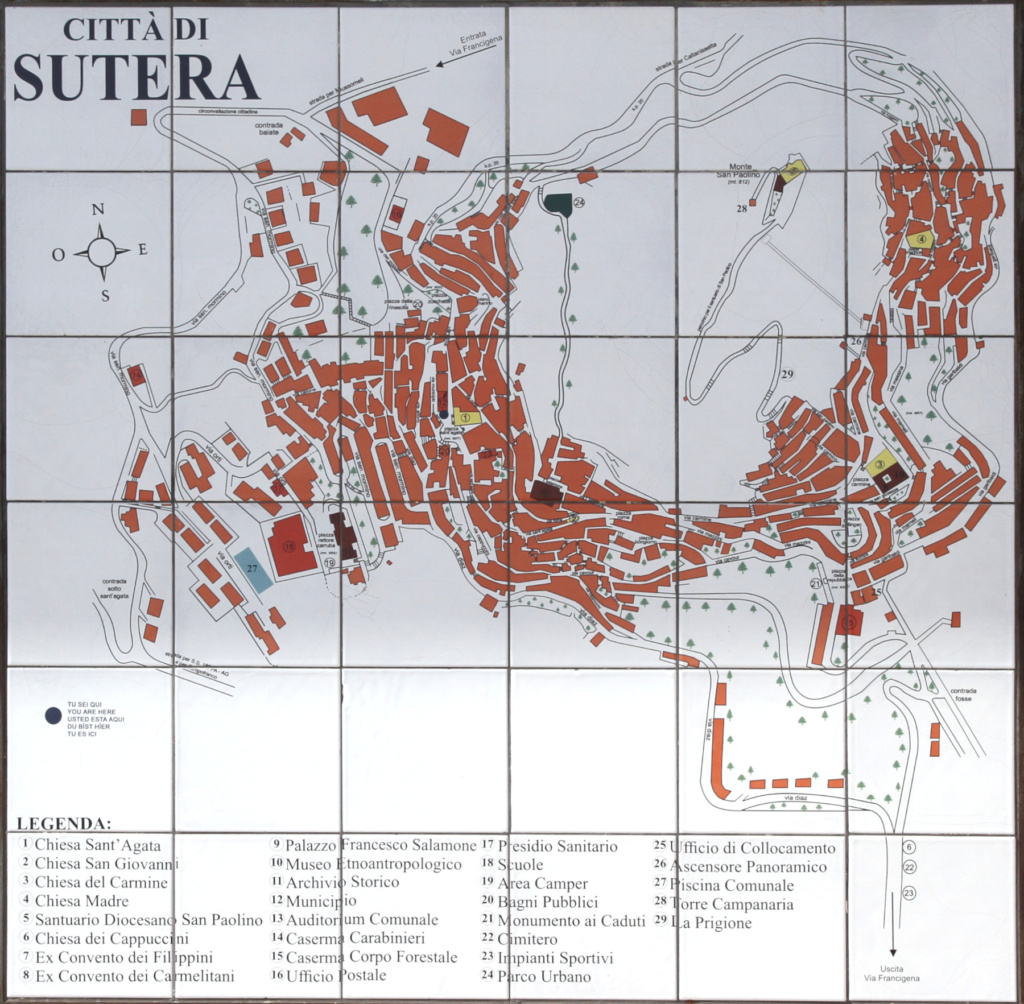

Map of Sutera
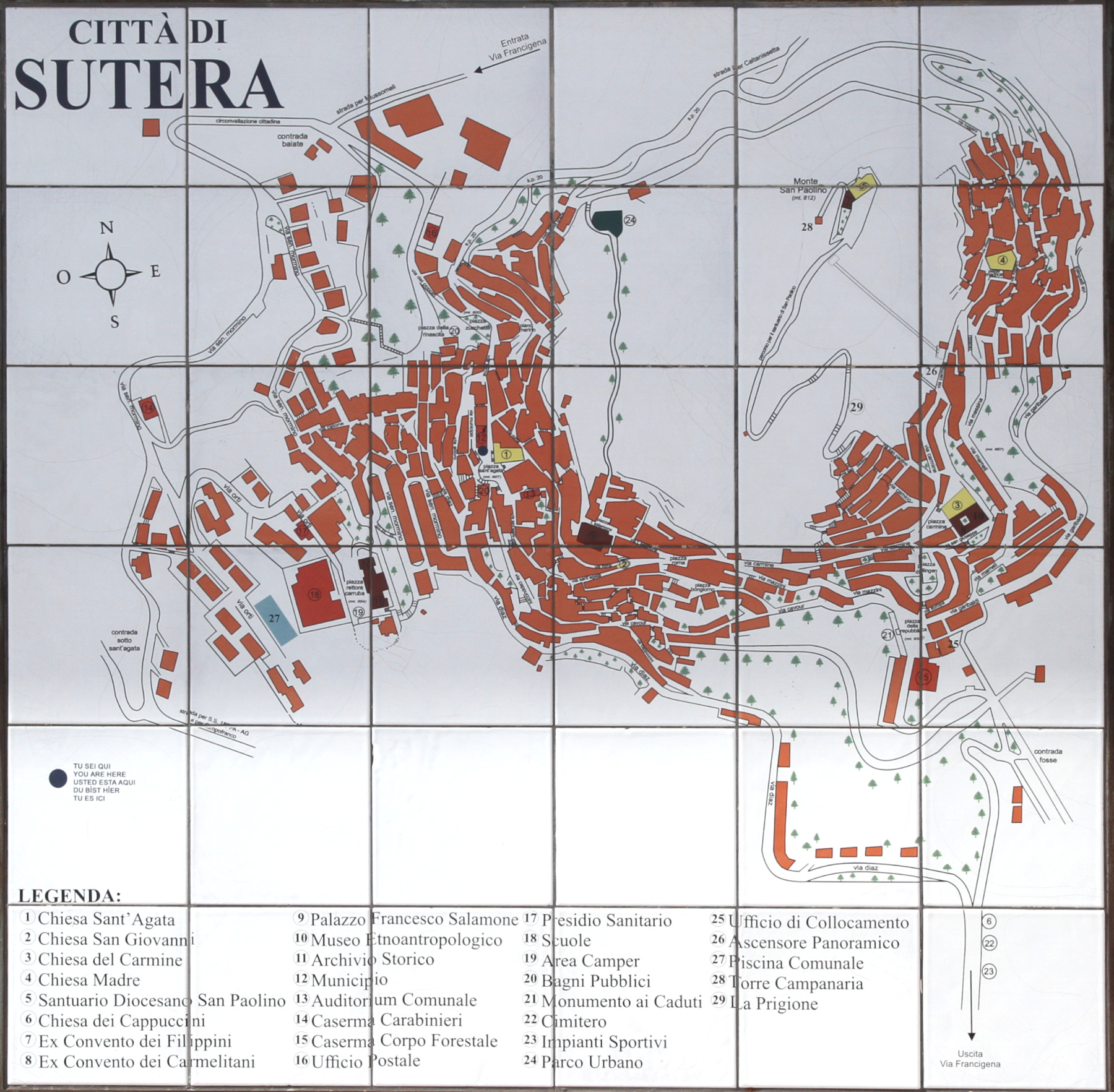
Information
External sites
- Wikipedia page on Sutera : general information
- Tourist sites on Sutera: Sutera on borghipiubelliditalia.it
- The history of Sutera — official website of the municipality, with the history, the origin of the village and its geographical features.
- Sutera – Visit Sicily (pagina ufficiale Regione Siciliana) — an overview of Sutera: its churches, its old centre, its history and its traditions.
- Museo Etno Antropologico – Comune di Sutera — official page of the local museum: rich in details on the material culture, traditions, objects and social history of the village.
Category Sicani Mountains
- Sicani Mountains
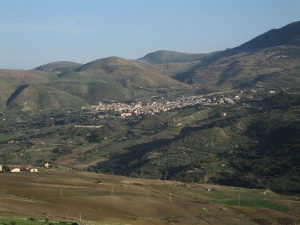
 The Sicani Mountains are a mountain range in the hinterland of western Sicily, ...