
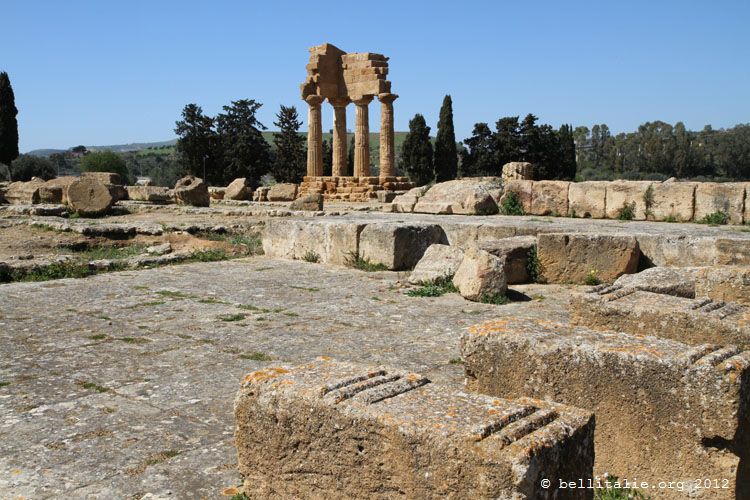
To the west of the Temple of Zeus extends a residential sector, followed by a sacred area up to Gate V, then the sacred area of the Chthonian Deities and finally at the end of the hill an archaic sacred area.
Sector between the Temple of Zeus and Porta V
To the west of the Temple of Zeus extends a residential sector followed by a sacred area that precedes Gate V.
The regular urban layout is crossed by north-south axes that intersect the great east-west artery (plateia) connected to Gate V. From the first half of the 5th century BC date mainly buildings of a sacred or public character, such as meeting halls or porticoes (stoai), while residences date back to the second half of the 5th century BC.
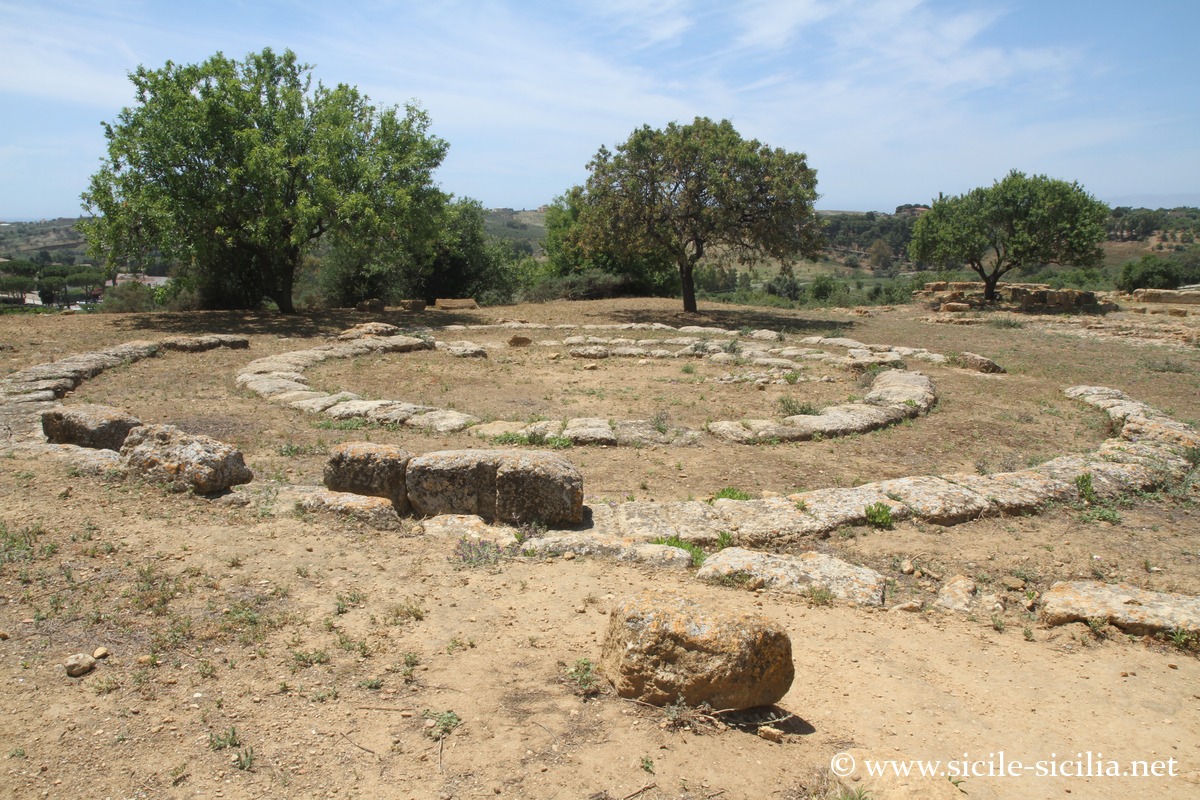
Tholos, western sector
A long construction (stoa) separates this sector from the neighboring sacred complex. This sacred area is delimited by the two arms of a long L-shaped portico, to the west, by Gate V, and to the south by the rocky escarpment along which the line of fortifications ran.
The remains of a small temple (A) can be recognized to the west, of simple form, which appeared around the middle of the 6th century BC. The forecourt dates from the second half of the 5th century. A sacellum was walled up, and the level of the forecourt was raised again and two cubic altars, each in an enclosure, were built.
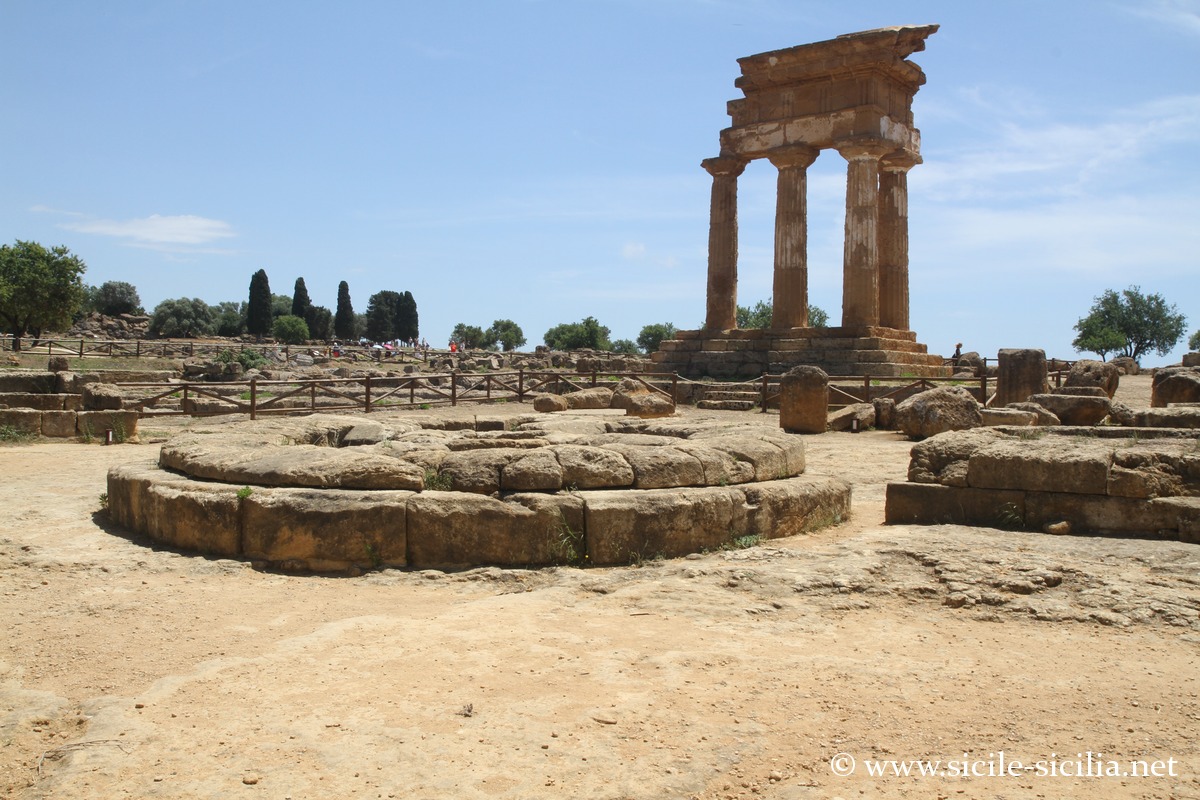
To the north-east of the area, the remains of the L-shaped portico can be seen, erected in the Hellenistic period (second half of the 3rd century BC), and a part of the 2nd century BC whose north arm extends over the ruins of an archaic rectangular building, interpreted as a meeting hall. The construction of the circular building or tholos, perhaps a sacred building with a central altar, also dates back to this latter phase (2nd century BC).
From around the end of the 3rd century BC date a series of small sacred chapels leaning against the external north wall of the portico. This portico, with rooms, basins and fountains, has been interpreted as a place of rest and consumption of sacred meals.
To the west of the zone, the area of Gate V is notable for the imposing collapse of the side walls.
Sanctuary of the Greek Chthonian Deities
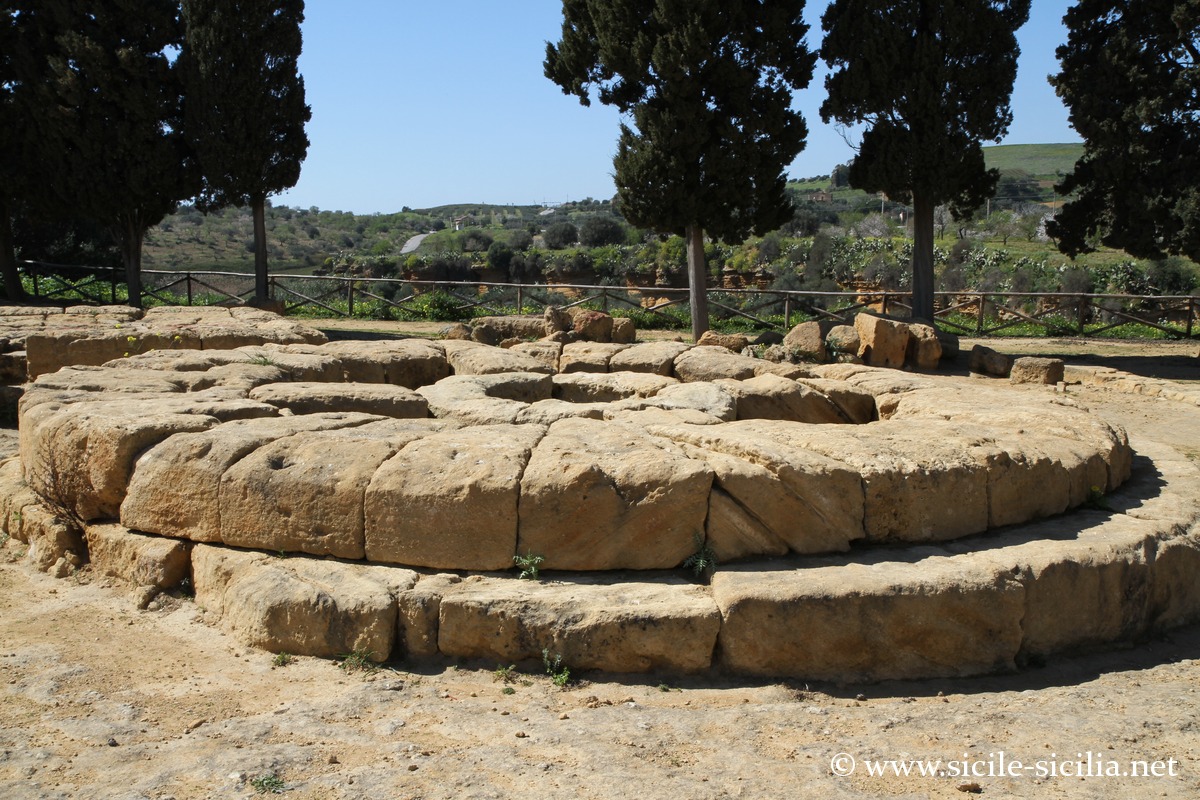
Sanctuary of the Chthonian Deities
It is the most important group of sacred buildings dedicated to the cult of the chthonian deities, Demeter and Kore. It was delimited by a peribolos wall (enclosure), preserved only in the western part. It was in use from the archaic period to the Hellenistic period.
To the middle of the 6th century BC date the two open-air enclosures, equipped with one or more internal altars, intended for ritual manifestations linked to the particular nature of the cult: a rectangular enclosure, with a building with an internal circular altar; an enclosure further south, divided in two, with two internal altars, one circular and the other rectangular.
To the same period, or shortly after, date the numerous circular and quadrangular altars of the area and two small tripartite temples with pronaos, and a third further east.
Temple of the Dioscuri and Temple L
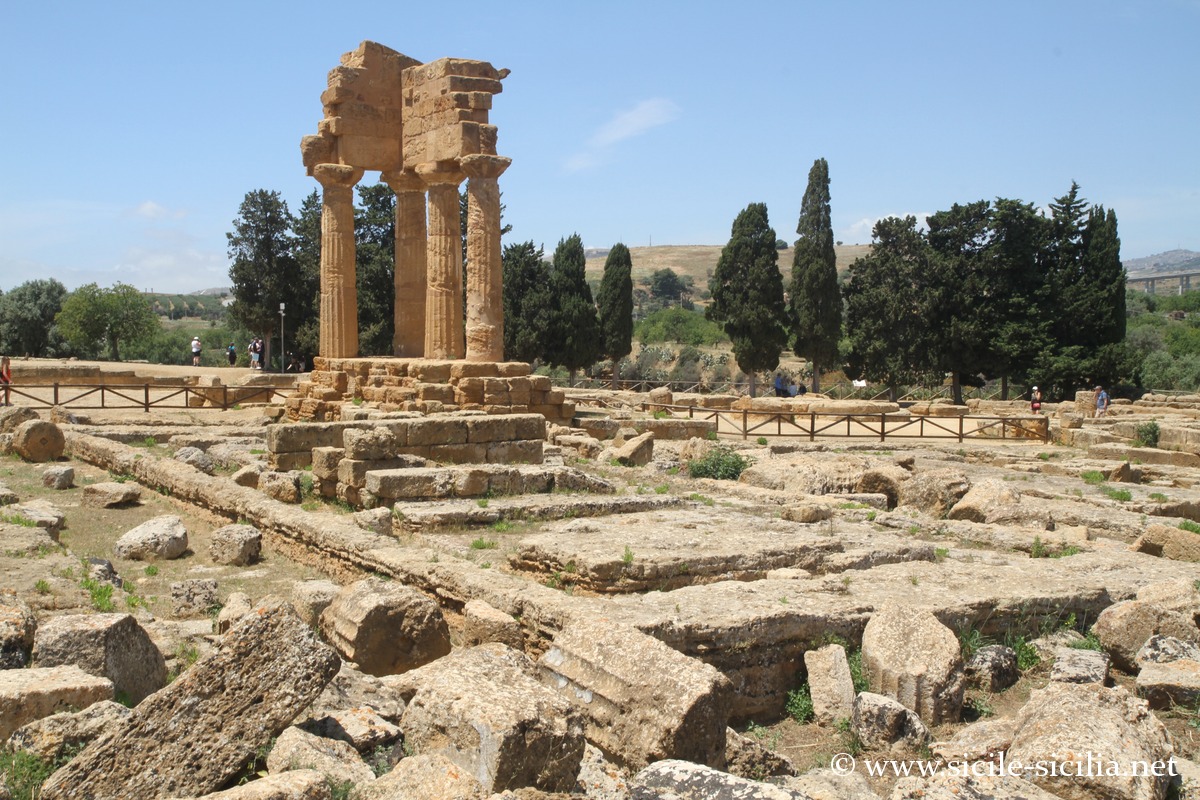
Temple of the Dioscuri
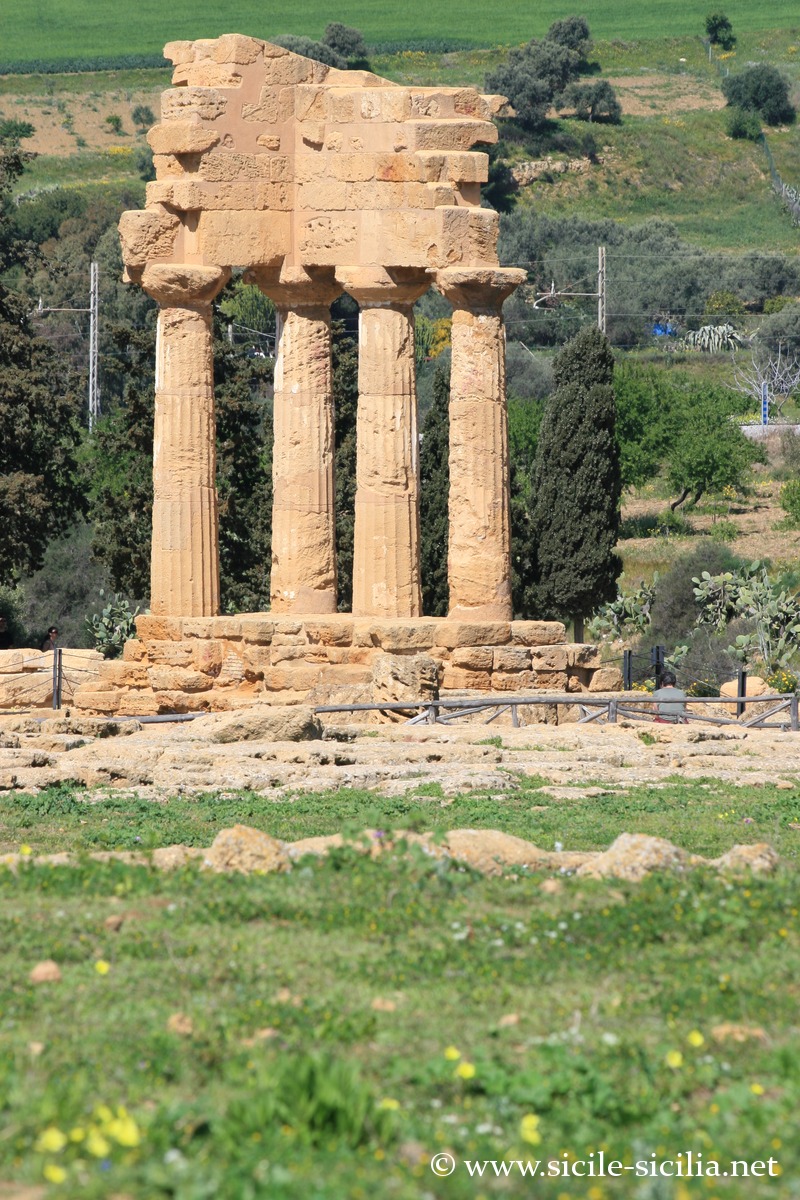
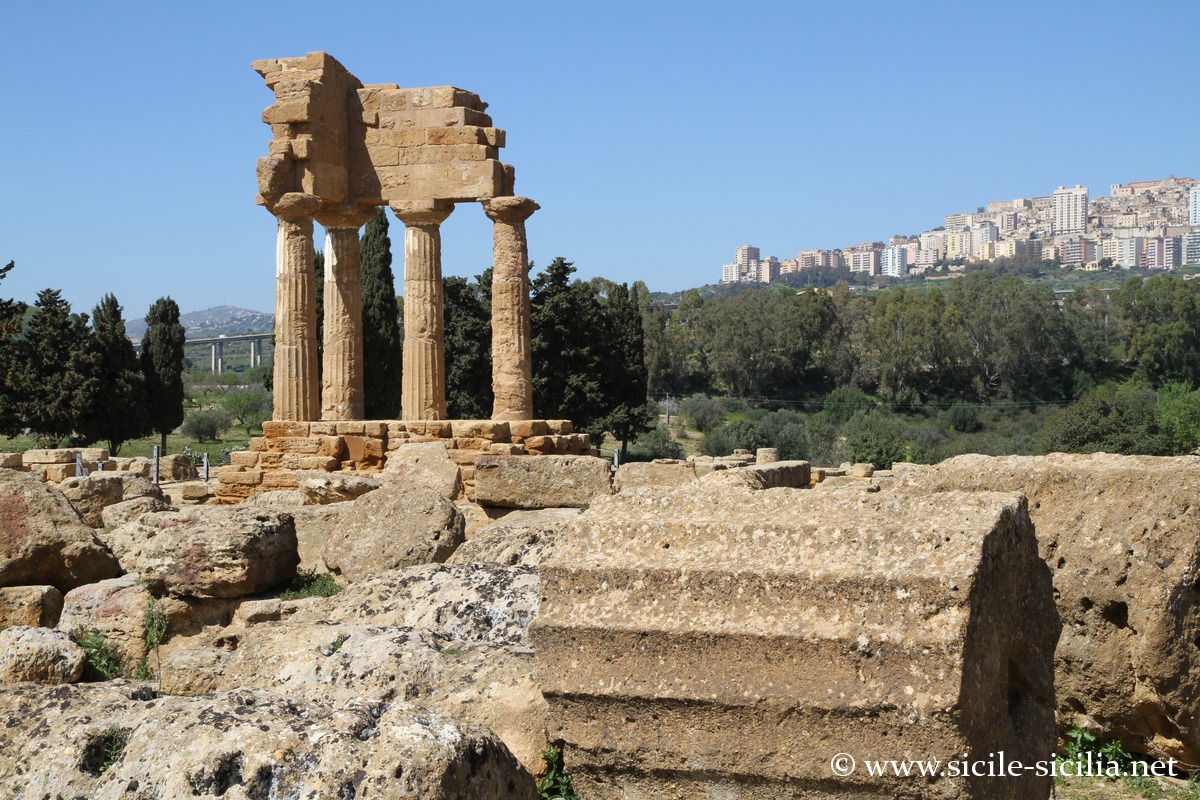
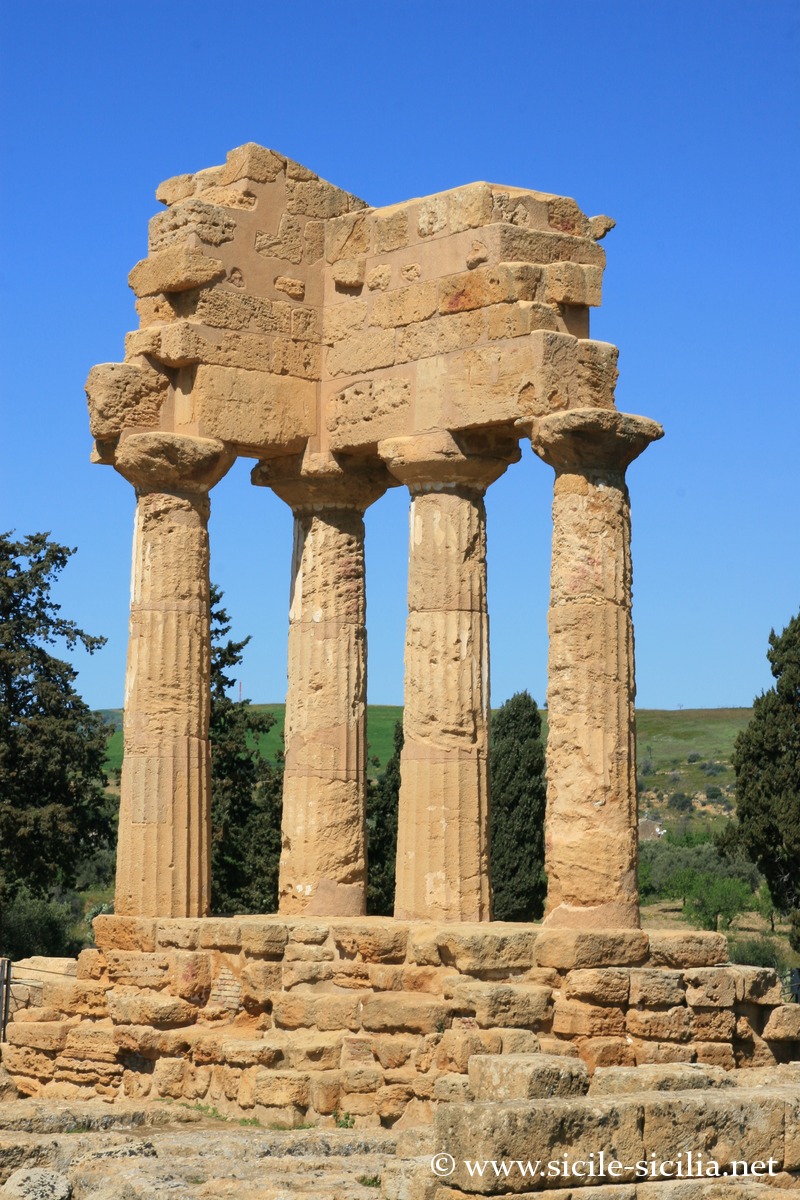
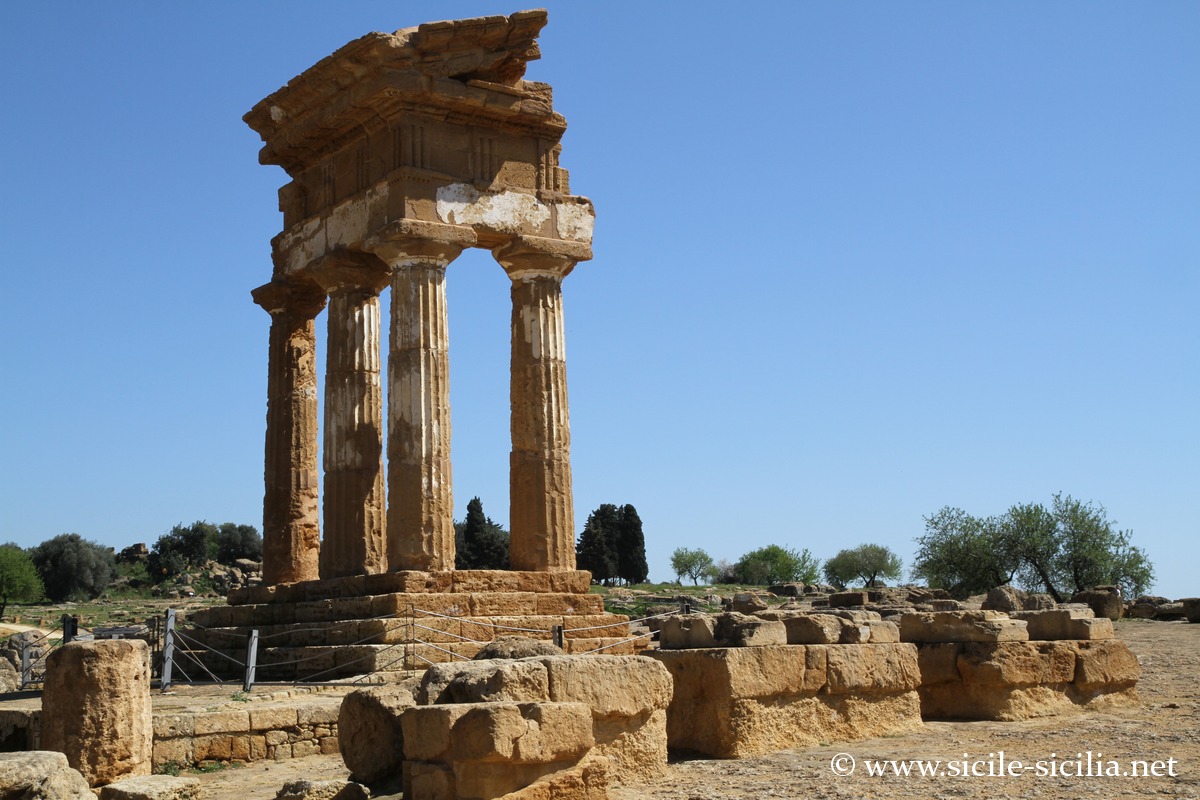
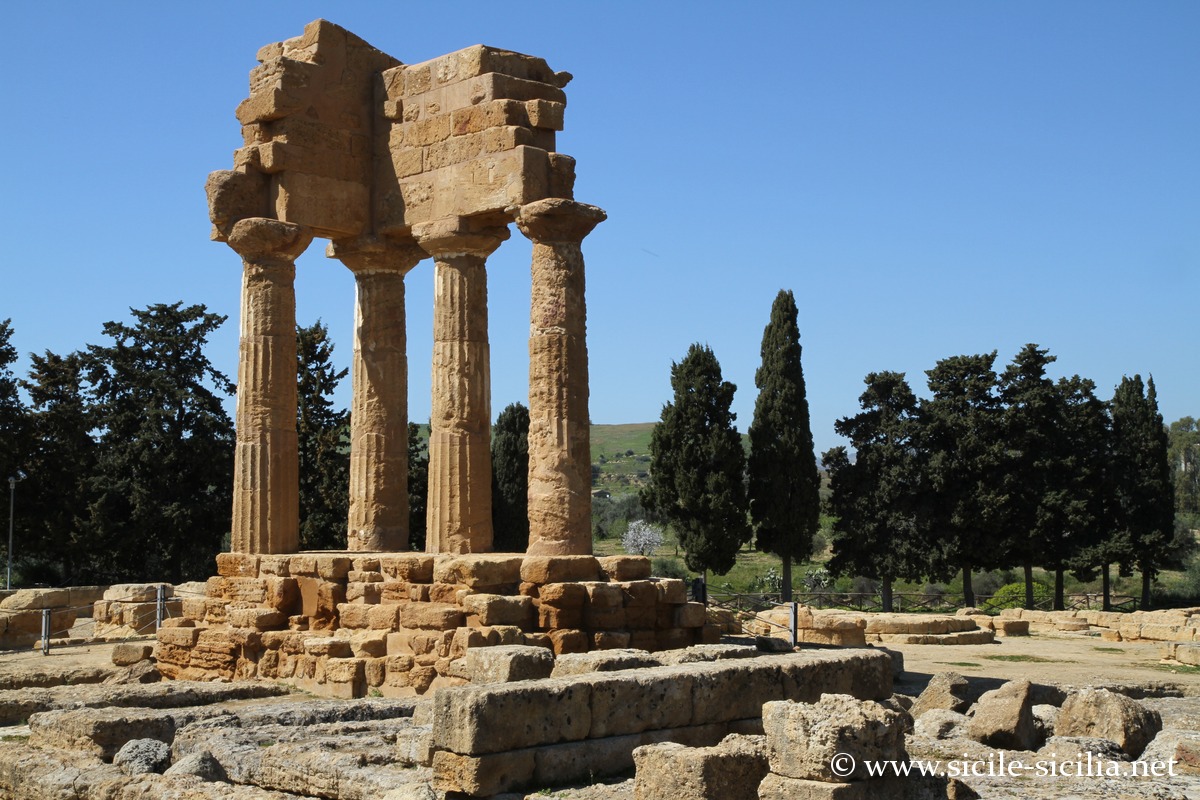
It is assumed that the two temples were dedicated to Demeter and Kore. Around 450 BC, a new peripteral temple was erected in the area, called the Temple of the Dioscuri (or of Castor and Pollux, the sons of Zeus and the queen of Sparta) of which the north-western corner is preserved with a partial reconstruction between 1836 and 1856, of which 4 columns re-erected out of the original 34. It is a Doric temple, hexastyle, with thirteen columns on the long sides, measuring 13.40 × 31 meters.
Certain architectural elements date back to a restoration of the late Hellenistic period, perhaps to the 2nd century BC.
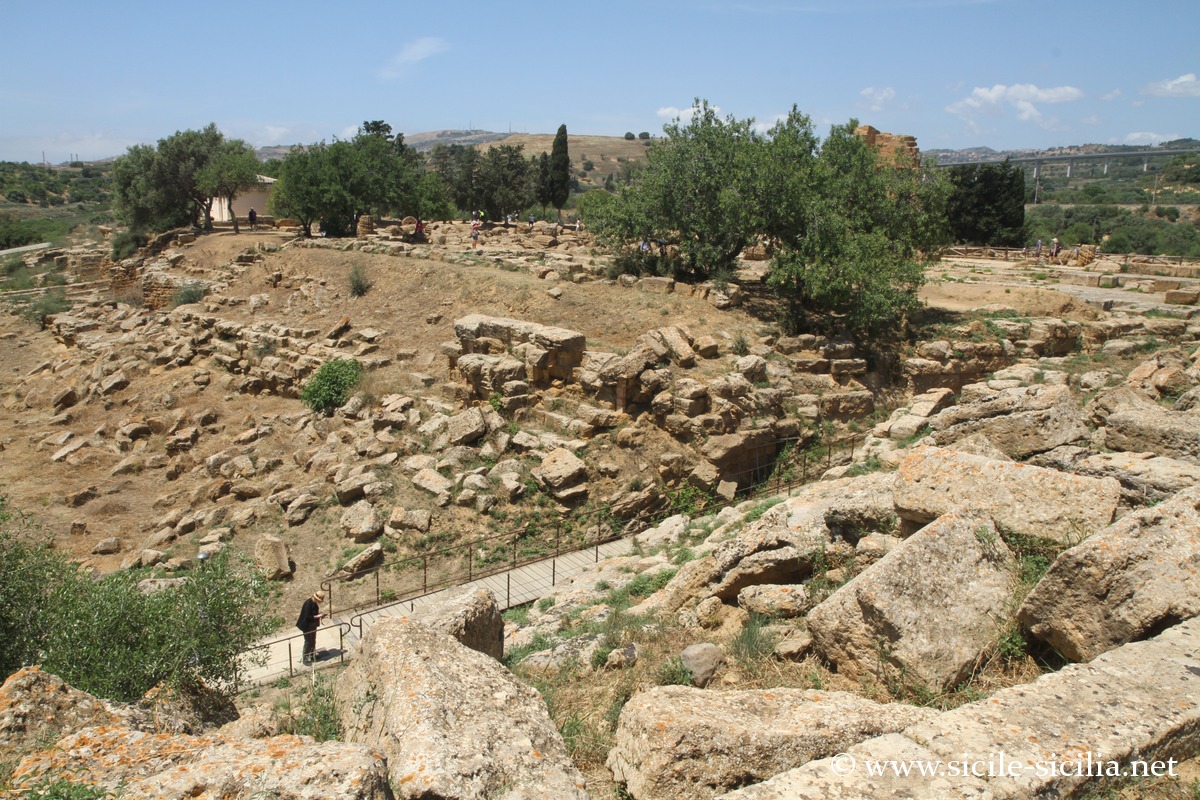
Southern fortifications
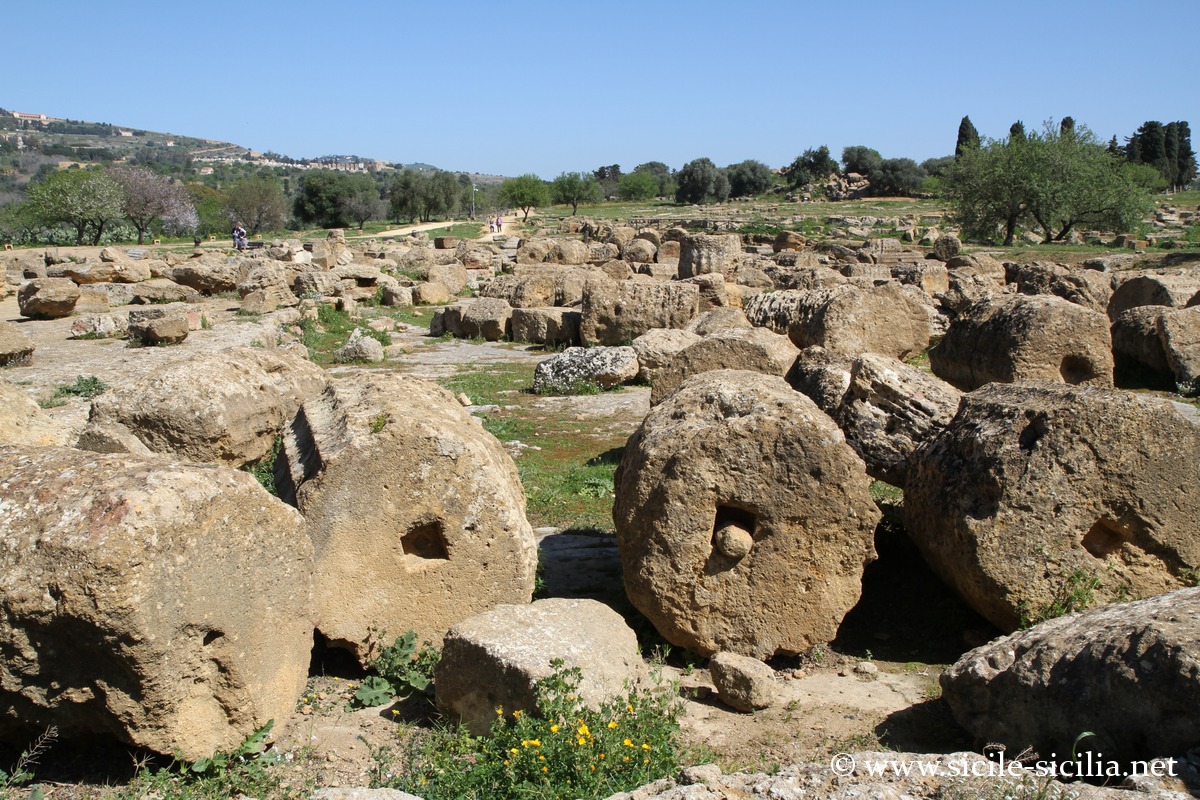
Of the adjacent Temple L, perhaps from the middle of the 5th century BC, little remains with the foundation trench, blocks at the north-eastern corner and numerous scattered column drums, the altar on the eastern side.
Western sacred area
At the western end of the terracing, this area was already in use since the end of the 6th century BC, where a famous small head representing a deity of Rhodian or Cretan manufacture was found, from the end of the 7th century BC, interpreted as a relic brought by the colonists of Gela at the time of the founding of the city.
Only a few remains of this sanctuary can be distinguished, such as an enclosure from the archaic phase, enlarged in the first half of the 4th century BC.
Towards the northern edge, where parts of the line of fortifications remain, the depression identified as the great pool mentioned by Diodorus, the Kolymbethra, can be discovered (see Garden of Kolymbethra).
Beyond the Kolymbethra one can observe the remains of the temple of Vulcan.
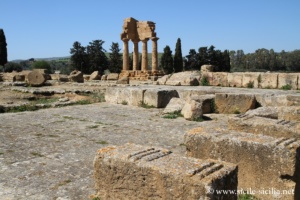
Temple of the Dioscuri and Temple L 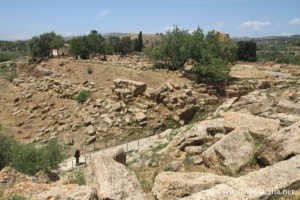
Southern fortifications 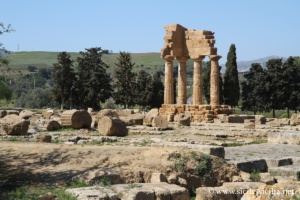
Temple of the Dioscuri 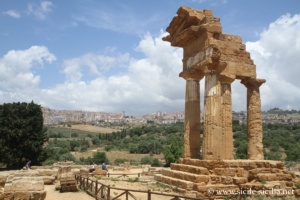
Temple of the Dioscuri 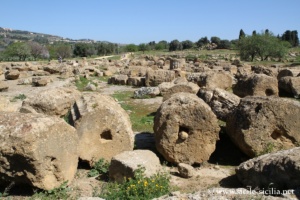
Temple L 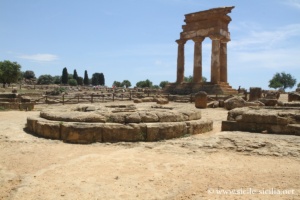
Sanctuary of the Chthonian Deities 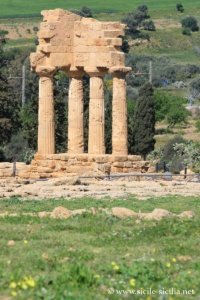
Temple of the Dioscuri 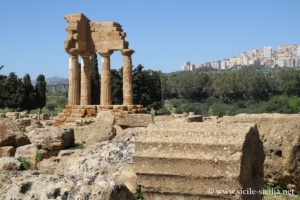
Temple of the Dioscuri 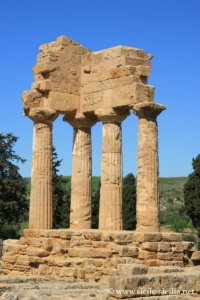
Temple of the Dioscuri 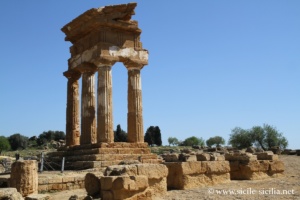
Temple of the Dioscuri 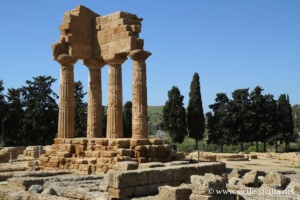
Temple of the Dioscuri 
Temple L and Temple of the Dioscuri
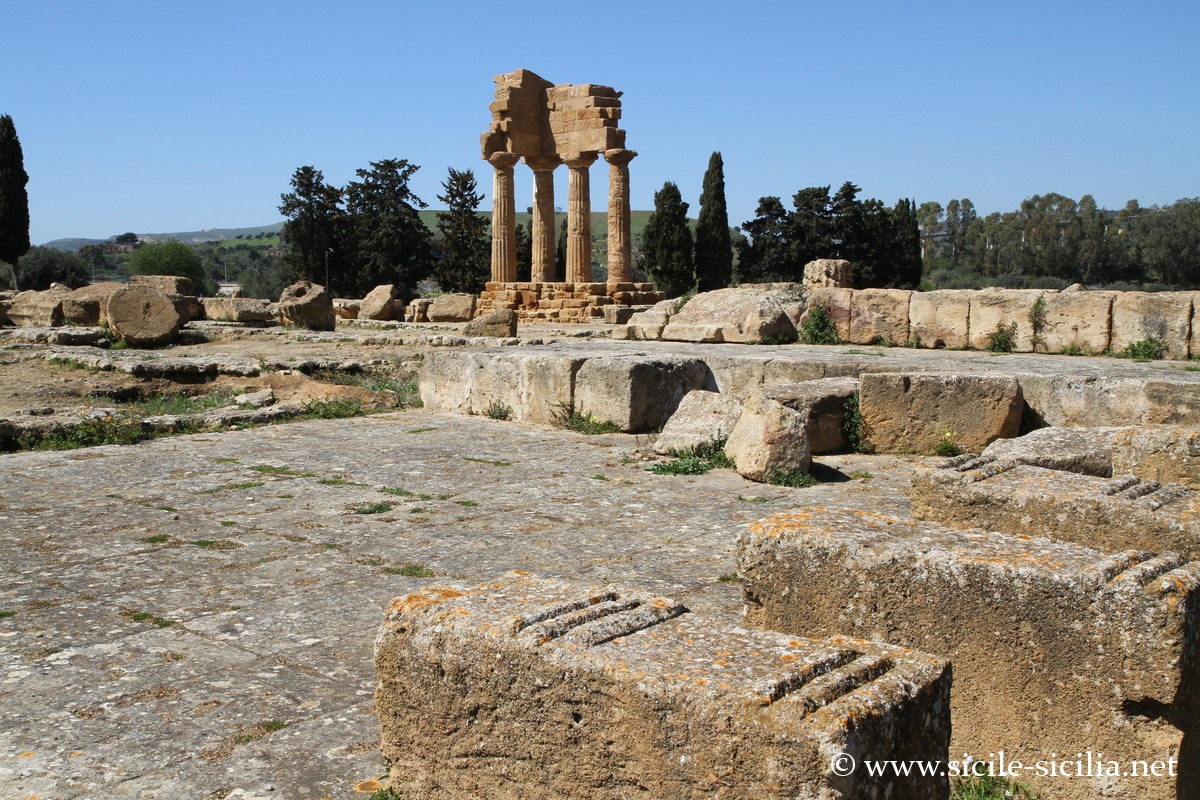

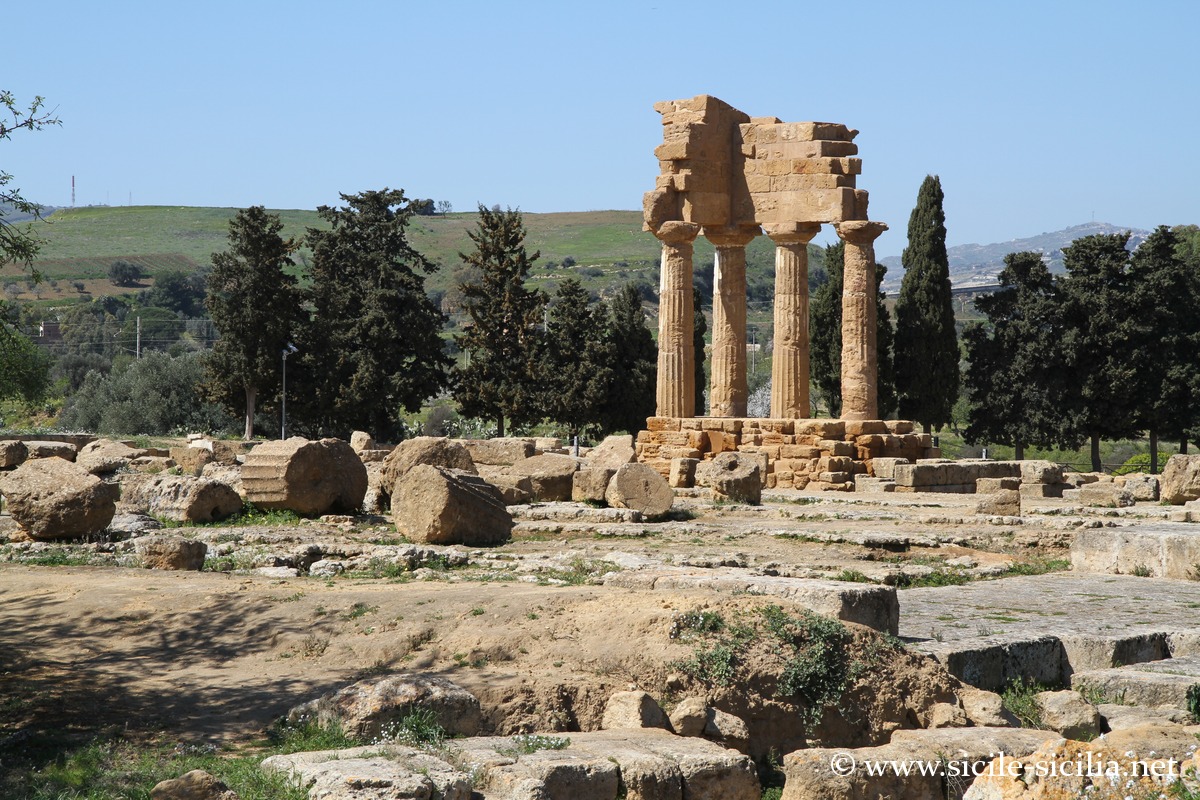
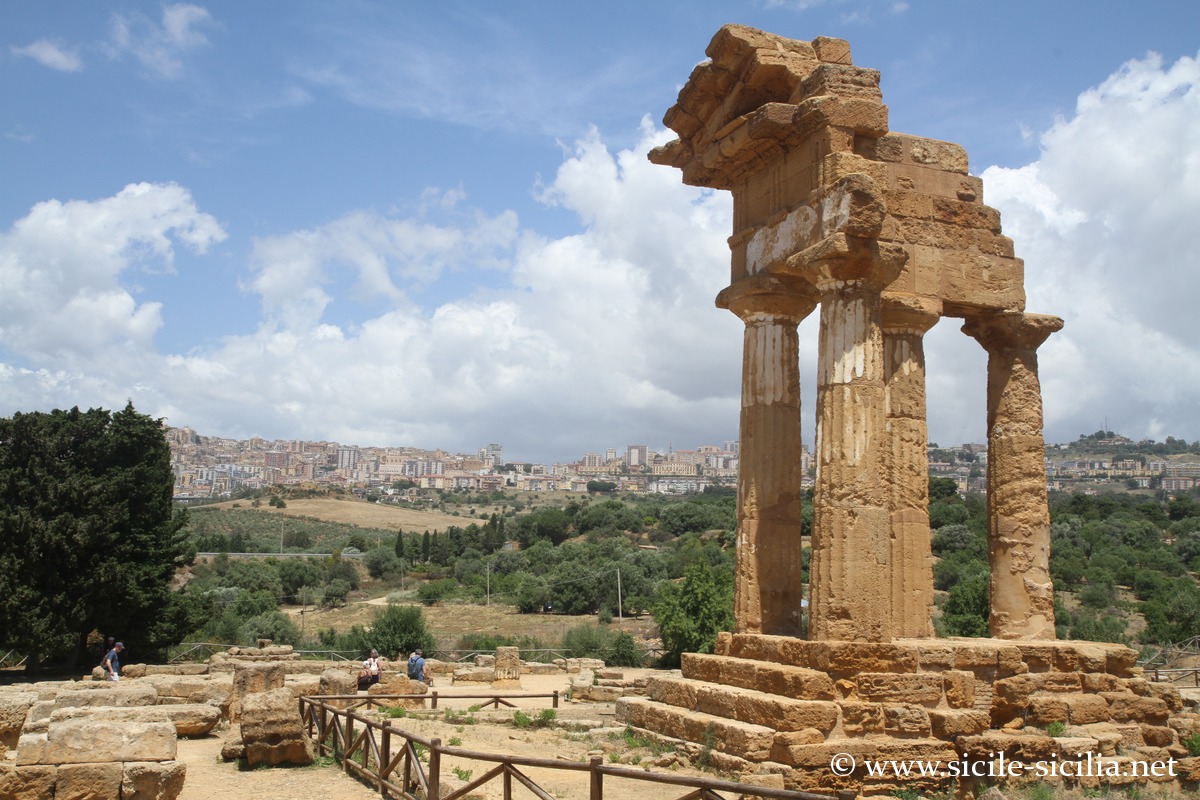

Where is the Temple of the Dioscuri of Agrigento located
If you see this after your page is loaded completely, leafletJS files are missing.
Information
External sites: it.wikipedia.org, www.lavalledeitempli.it
In the Valley of the Temples
- Valley of the Temples of Agrigento
 In antiquity, Agrigento was one of the most powerful Mediterranean cities of ...
- Temple of Concordia in Agrigento
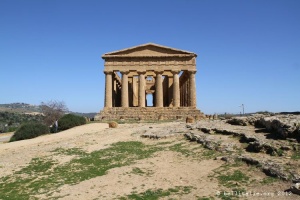 Construit entre 440 et 430 avant J.-C., le Temple de la Concorde, ...
- Temple of Hera or Juno in Agrigento
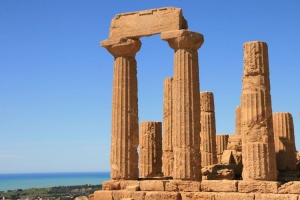 Situated at the end of the ridge, the Temple of Hera, also ...
- Temple of Olympian Zeus in Agrigento
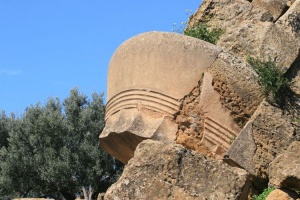 Situé dans la Vallée des Temples d’Agrigente, le Temple de Zeus Olympien, ...
- Temple of Hercules in Agrigento
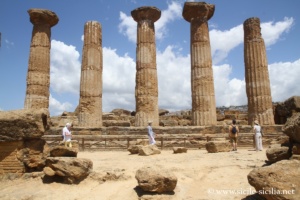 Bien que ses vestiges soient plus modestes que ceux d’autres monuments de ...
- Regional Archaeological Museum of Agrigento and San Nicola
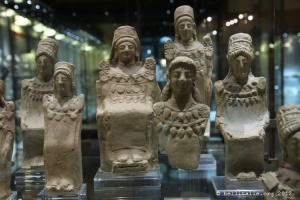 The Regional Archaeological Museum of Agrigento, officially named Museo Archeologico Regionale “Pietro ...
- Kolymbethra Garden in Agrigento
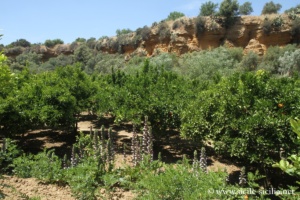 The Kolymbethra Garden lies in the heart of the archaeological park of ...
- Temple of Vulcan at Agrigento
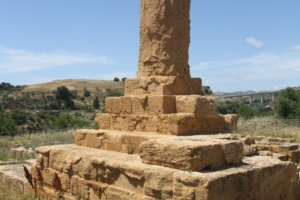 Le Temple de Vulcain occupe la pointe occidentale de l’éperon rocheux qui ...
- Hellenistic-Roman Quarter and Upper Agora
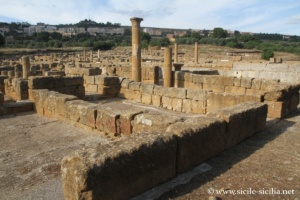 Near the Archaeological Museum of Agrigento are several areas of remains, including ...
- Rupe Atenea and Temple of Demeter
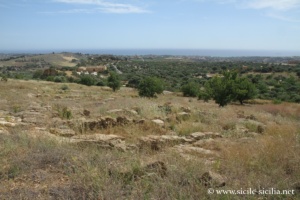 The Rupe Atenea constitutes the highest point and the natural acropolis of ...
- Maps of Agrigento
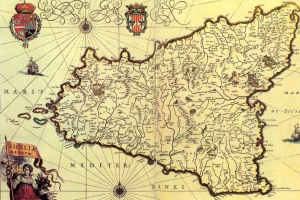 Interactive map of Agrigento, the Valley of the Temples, the ancient sites.
Articles in the Agrigento category
- Agrigento
- Visit to Agrigento and surroundings
- Hotels in Agrigento
- Valley of the Temples of Agrigento
- Regional Archaeological Museum of Agrigento and San Nicola
- Scala dei Turchi
- Torre Salsa Nature Reserve and Heraclea Minoa
- Coastal itinerary west of Agrigento towards Sciacca
- From Licata to Agrigento
- Favara, Racalmuto and Aragona
- Siculiana
- Maps of Agrigento
- Gastronomy and traditions in Agrigento
- Near Agrigento
- Activities in Agrigento, guided tours and excursions