

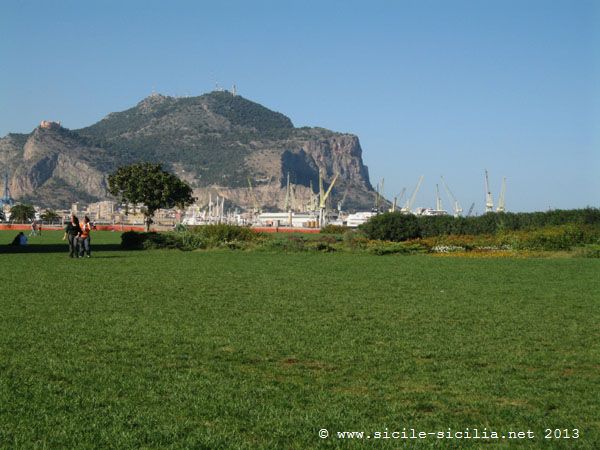
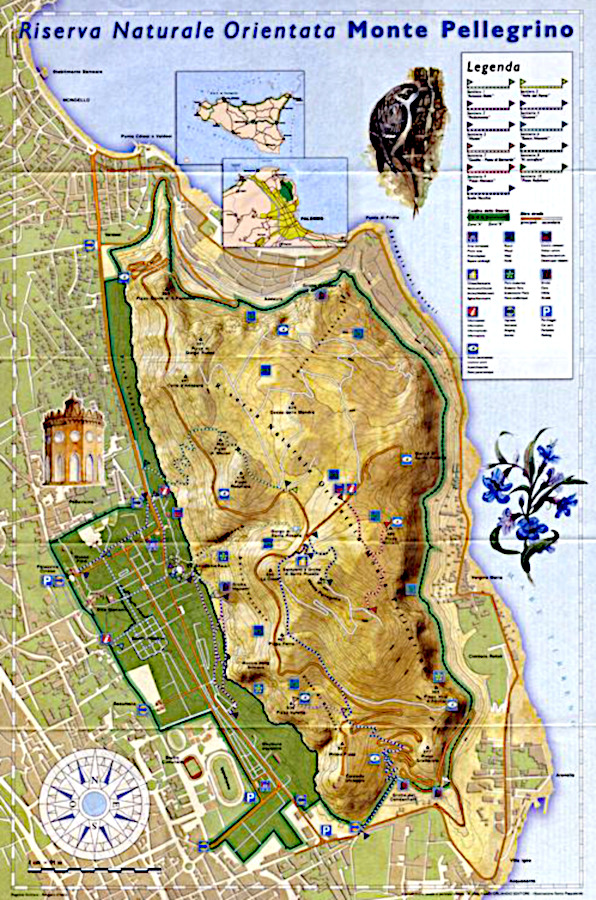
Mount Pellegrino, located in a nature reserve, is part of the life of all Palermitans, commonly referred to as “the Mount”. Its imposing silhouette has been depicted many times by artists from all over the world. It is important not only for its beauty, but also for its sacred character, indeed for being the protector of the city.
Historical overview and visit of Mount Pellegrino
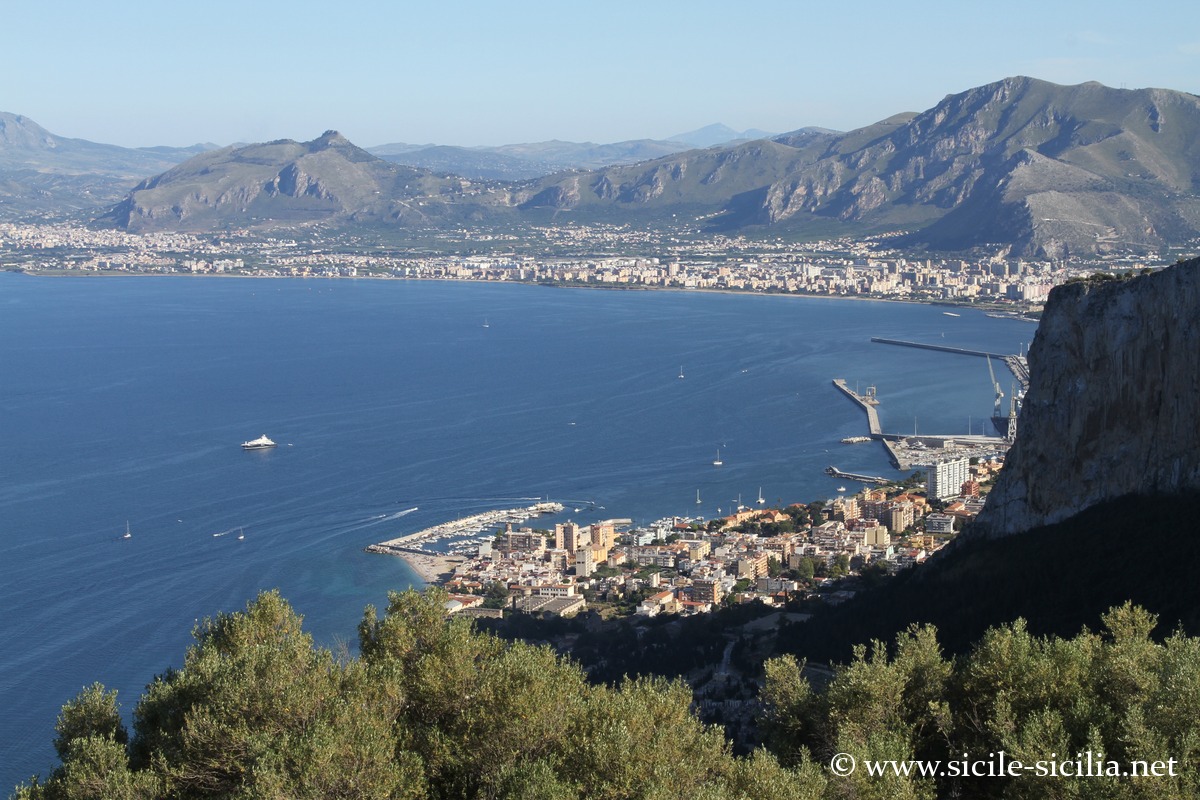
Monte Pellegrino viewpoint
Several sacred sites from various eras were found on Mount Pellegrino, including a Punic altar dedicated to the goddess Tanit.
When the Phoenicians landed on the plain of Palermo and settled there, they called this great rock Panhorm (great rock in English). Later, the Greeks called it Hercta, the Romans Peregrinus, the Arabs Gebel Grin (neighboring mount in English).
In the Byzantine period, the many caves of the massif were inhabited by hermits, who followed the monasticism inspired by Saint Basil.
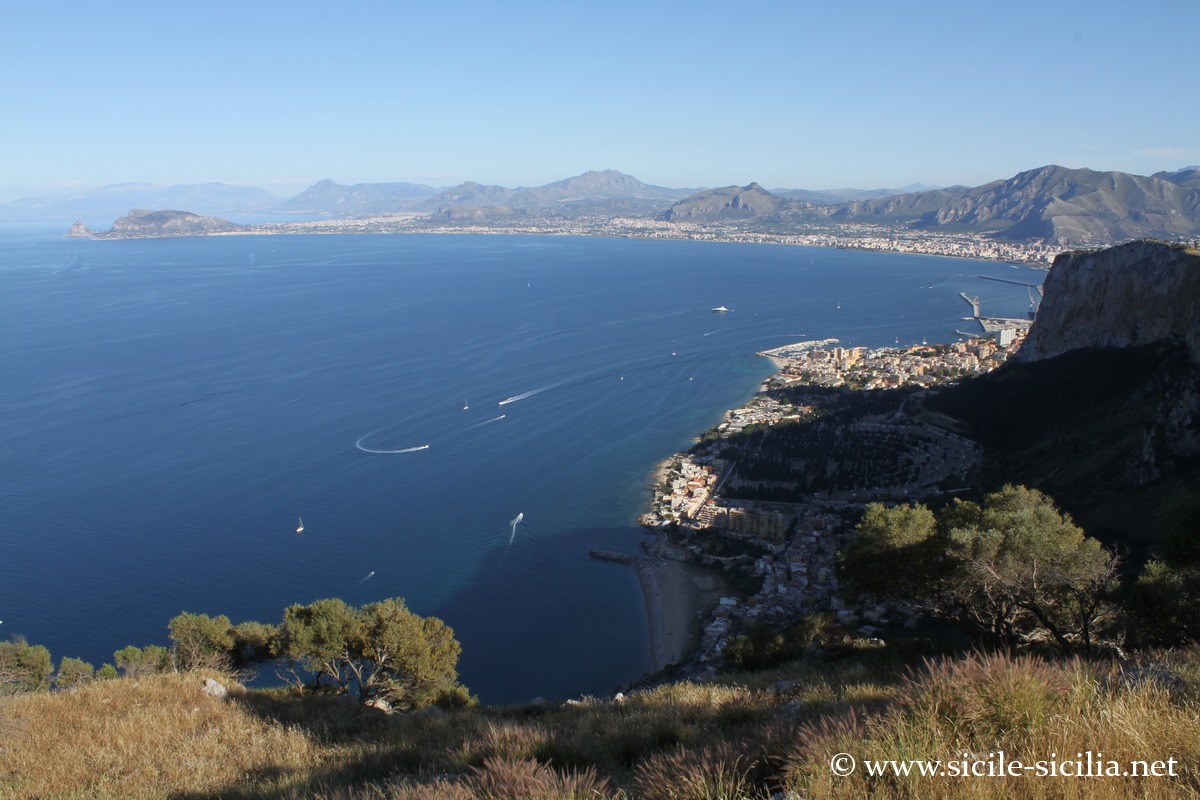
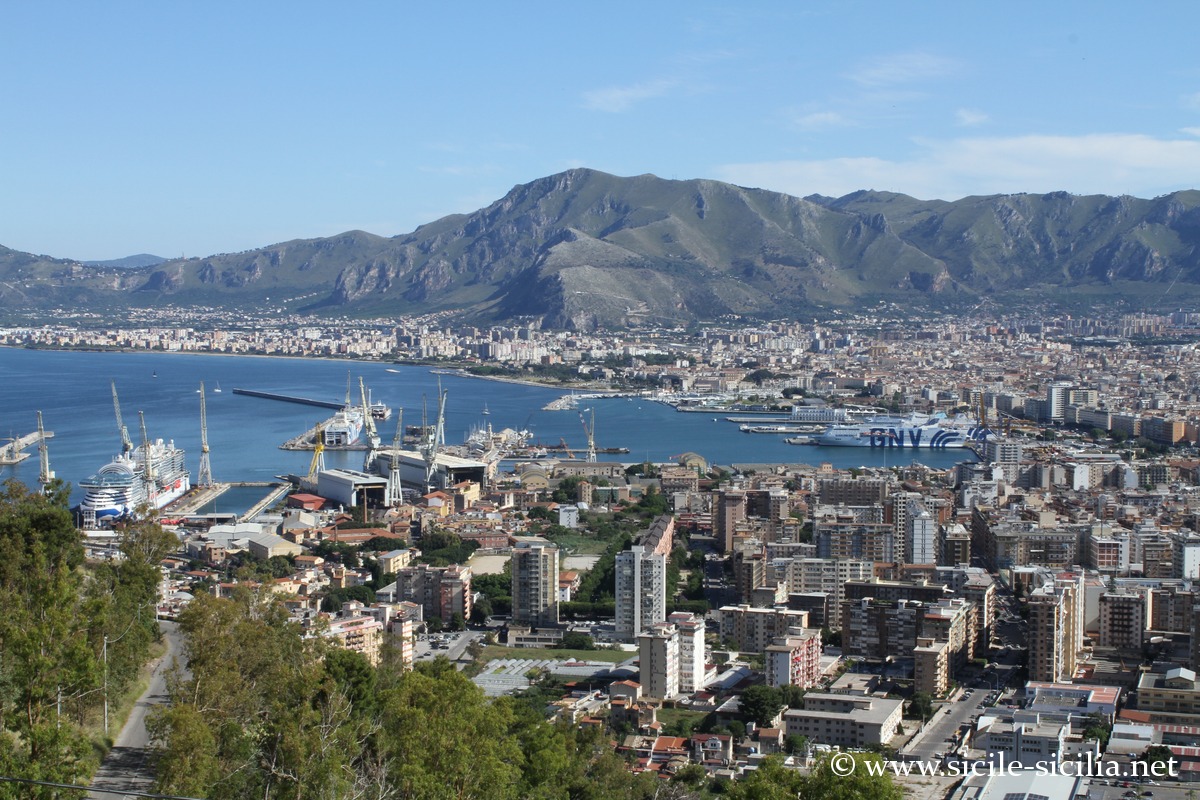
A road crosses the massif, reaching the Sanctuary of Saint Rosalia and the summit with its splendid viewpoint. Whether by road or various paths, one discovers beautiful views of Palermo, the coast, the Gulf of Mondello, and even the neighboring massifs.
In the north of the massif, the Addaura caves have preserved Paleolithic graffiti, including engravings of animals and human figures. On the plateau, a chasm (closed) reaches a depth of 171 meters. As for the Niscemi cave on the western slope, it preserves traces of Paleolithic rock art.
Trails of Mount Pellegrino
The Scala Vecchia is an ancient path that climbs to the Sanctuary of Saint Rosalia, partly made of stairs, passing by votive chapels, with a length of 3.7 km. It is the path traditionally taken by pilgrims.
Other trails cross the massif, with varying levels of difficulty: see www.sicilyhiking.it.
Sanctuary of Saint Rosalia
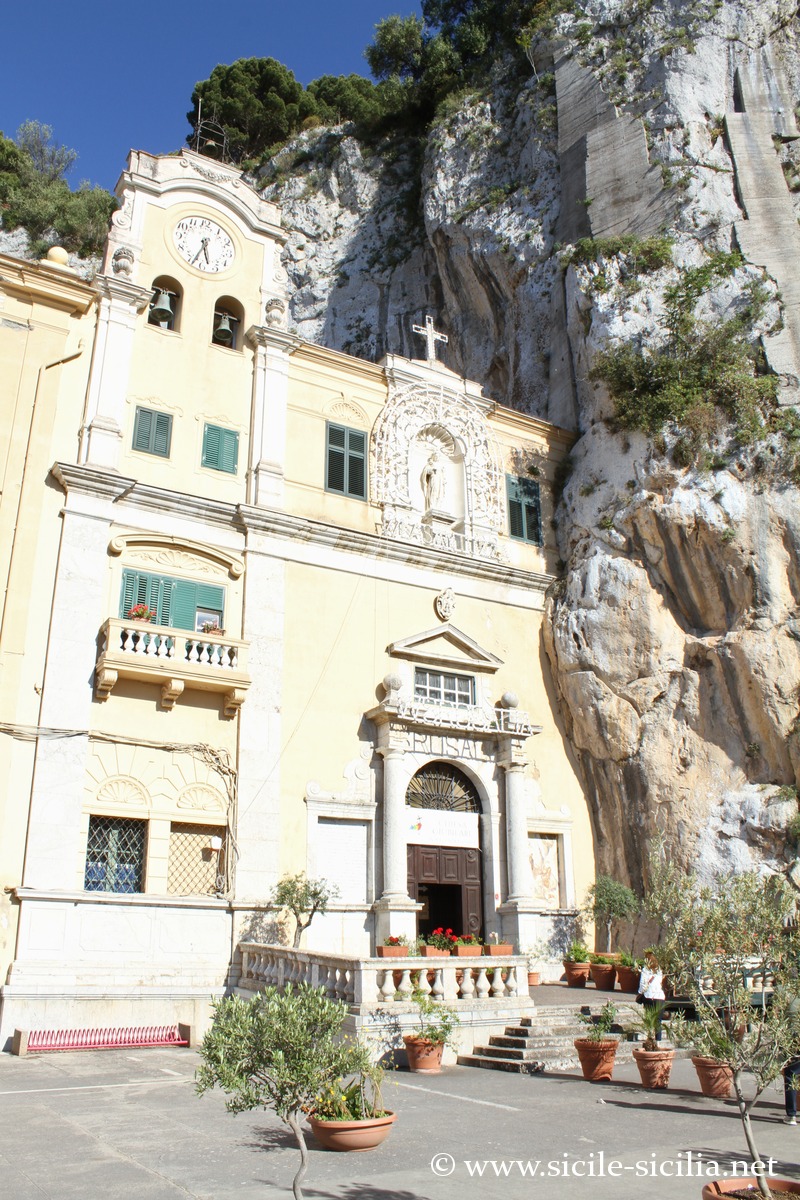
Sanctuary of Saint Rosalia
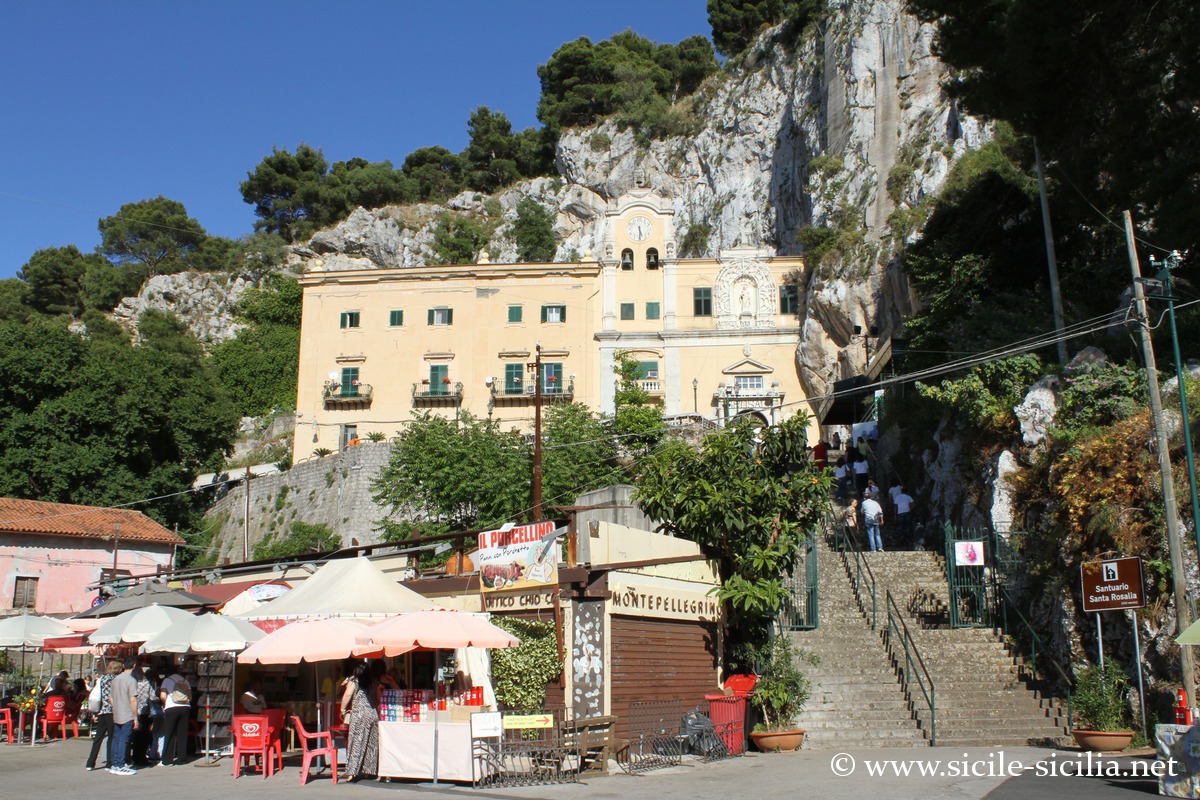
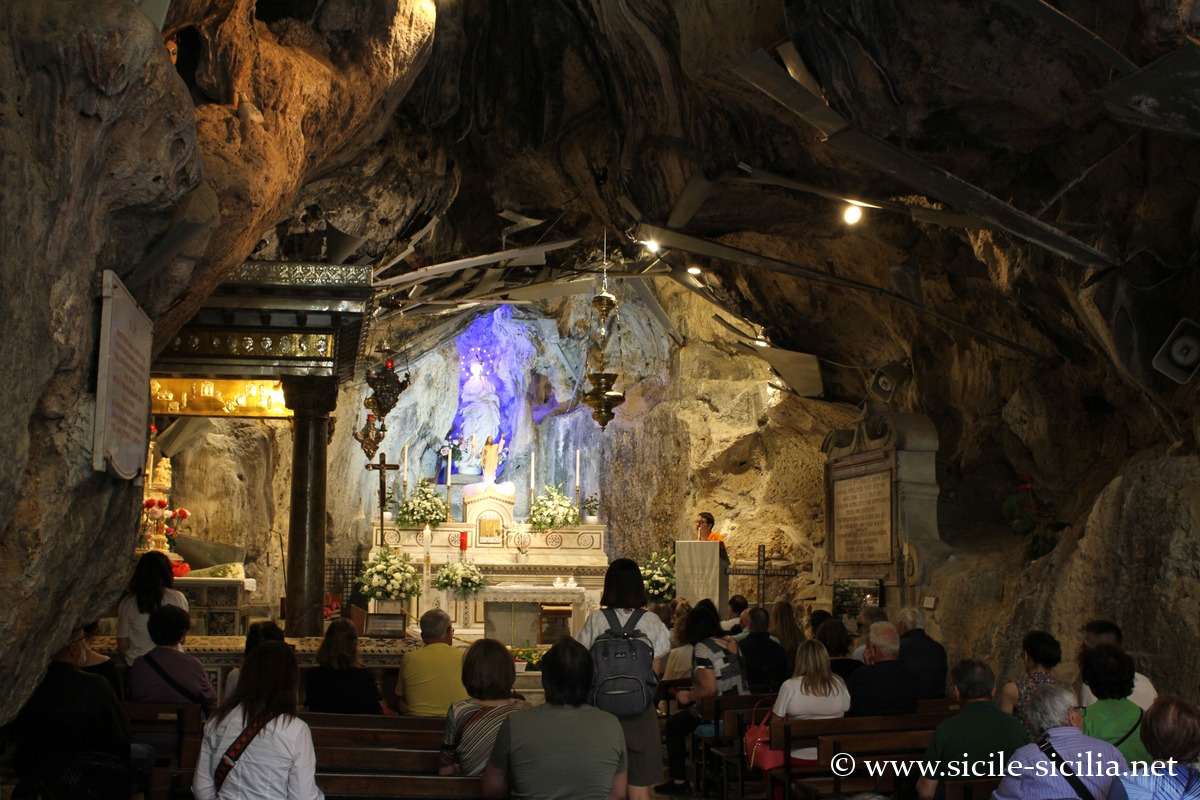
At an altitude of 445 meters, the Sanctuary of Santa Rosalia is said to have been built from July 1625 around the cave where bones attributed to Rosalia, who is said to have lived as a hermit in the 12th century, were found in 1624.
It is the result of the transformation of a small church of Byzantine origin. The cave is indeed a very ancient place of worship, long a sanctuary, and water was channeled there. There is a Christian inscription in Greek dating back to the 7th century AD.
Preceded by a staircase, the 17th-century facade leans against the rock. Once through its portal, one enters an open-air space that precedes the sacred cave, with the statue of Saint Rosalia. One enters the cave through a portico with three arches supported by twisted columns.
Behind the main altar is kept a sacred image of the Immaculate Conception, and at the foot of the left altar, a marble baldachin with a marble statue representing the saint reclining and in ecstasy, made by Gregorio Tedeschi in 1625, which was covered with gilded silver leaf in the 18th century, the Cross in hand.
The treasury room was inaugurated on July 13, 2018. It is accessed by a staircase. It preserves many sacred objects.
A procession with the relics of Rosalia in Palermo is said to have driven away a severe plague in 1624, granting her the status of protector of the city, and which has since been celebrated between July 10 and 15.
Saint Rosalia
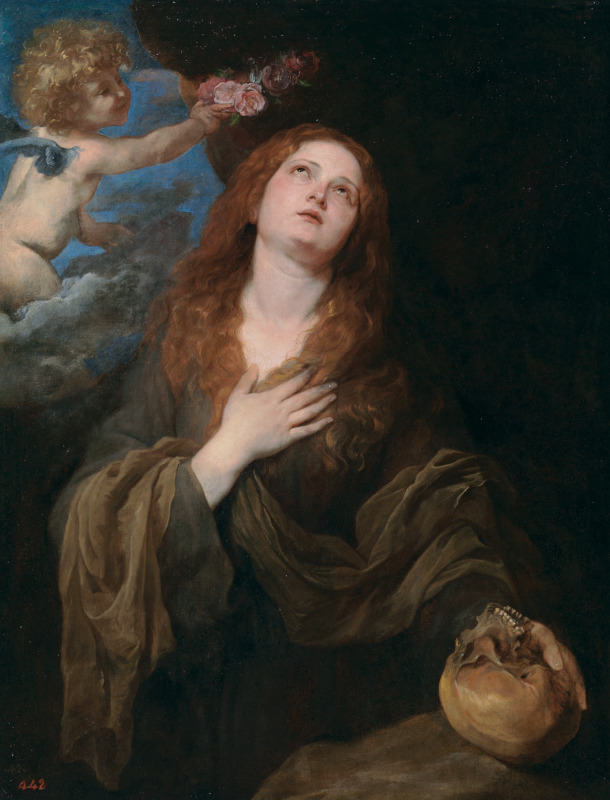
Saint Rosalia (Van Dyck, c. 1625, Prado Museum)
Rosalia was the daughter of Sinibaldo, lord of Quisquina in the Sicani Mountains, and whose mother was a relative of King Roger II of Sicily. After a first hermitage in the mountains of Quisquina, Rosalia is said to have become a lady-in-waiting at the court of Palermo, then decided to withdraw again, into one of the caves of Mount Pellegrino that welcomed nuns.
Very pious, she is said to have voluntarily retired into a dark cave, disdaining the joys of the real world, drinking only water from the spring and feeding on what was found around. She died in 1170, having asked to be buried there.Her fame spread quickly throughout the region. By 1180 a chapel was already dedicated to her, near the current sanctuary.
For centuries her bones were sought without being found, until 1624 during a plague episode, when presumed bones of Rosalia were found in a cave. The relics were carried in procession to Palermo on June 9, 1625 and the plague is said to have miraculously ended.
In her honor, the Virgin Rosalia (nicknamed the Santuzza) was proclaimed Patroness of the city of Palermo, and the cave of Mount Pellegrino was transformed into a sanctuary, becoming a pilgrimage destination.
Viewpoint, caves and other sites
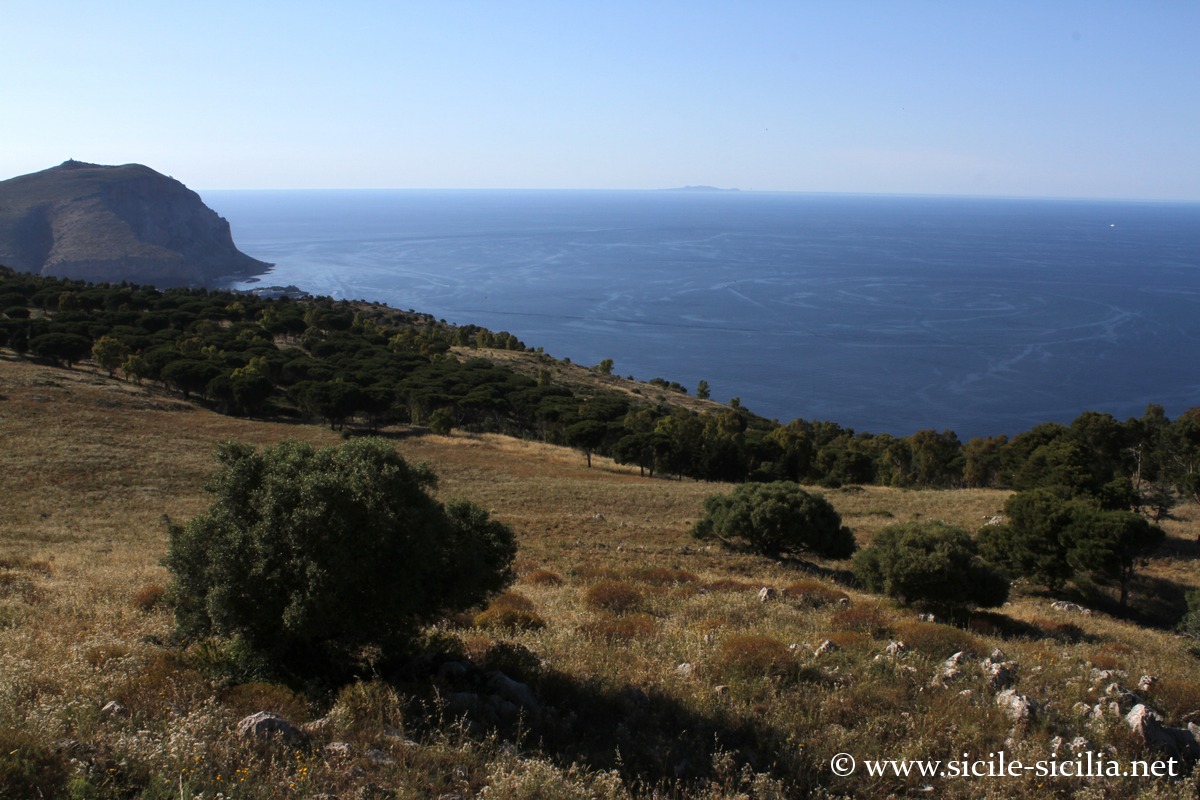
Monte Pellegrino viewpoint, Palermo
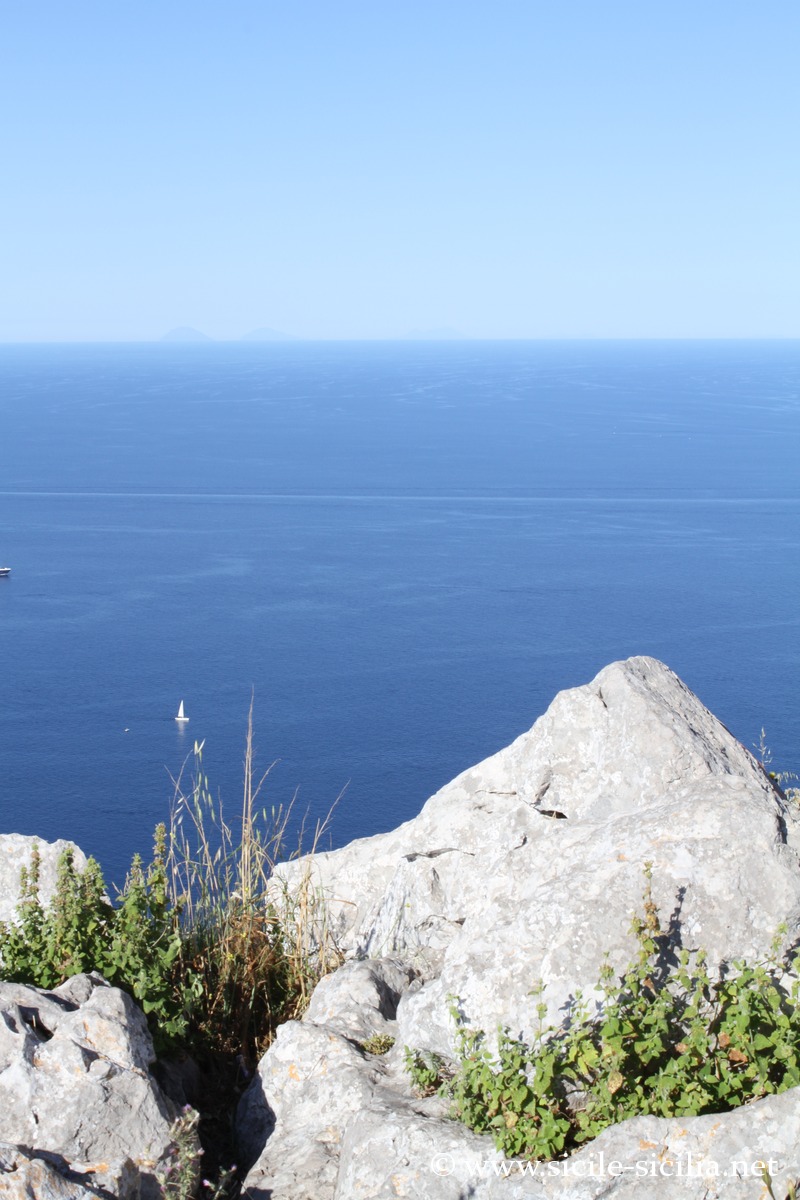
The paved road leads to the viewpoint with its panorama of the coast, the bay of Mondello, and the surrounding mountains.
On the mount is the small artificial pond known as Gorgo Santa Rosalia, a labyrinth, …
Many natural caves dot the massif, above all the Addaura cave in the north of the mount, which preserves Paleolithic graffiti, with engravings of animals and human figures.
On the western slope, near the Favorita park, the Niscemi cave preserves traces of Paleolithic rock art.
On the plateau, a chasm reaches a depth of 171 meters.
Utveggio Castle
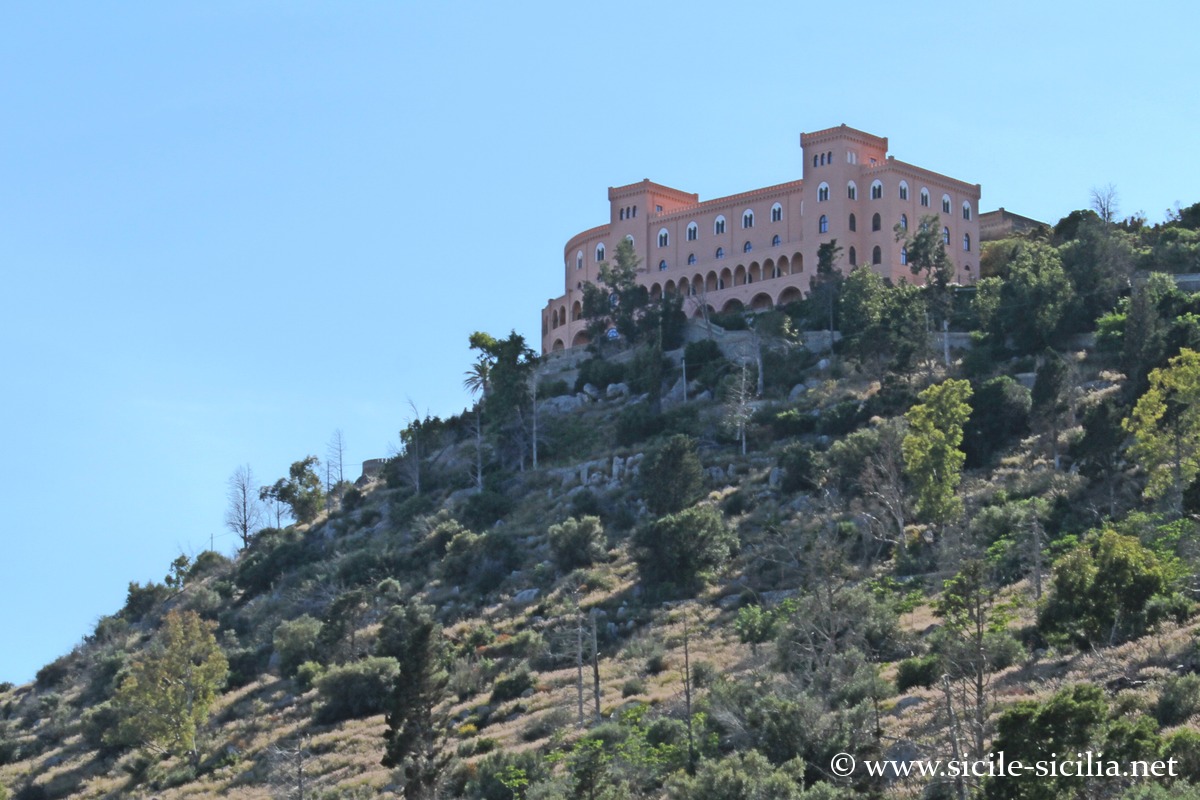
Utveggio Castle
On the southern crest of the massif, Utveggio Castle is an Art Nouveau and Neoclassical-style monument built between 1928 and 1933 to become a luxury hotel. Unfortunately it was almost abandoned at the time of the Second World War. In the 1980s the Region of Sicily recovered and restored it, then installed a management school and a study center, now closed. Its future is uncertain today, after an announcement to make it an administrative training center.
Favorita Park (overview)
The Favorita Park extends at the foot of the western slopes of Monte Pellegrino, within the latter’s nature reserve. Originally laid out as a hunting reserve, it is today the largest green space in Palermo located north of the city, with some monuments such as the Fountain of Hercules, the astonishing Chinese Palace and the Giuseppe Pitrè Ethnographic Museum.
→ Read also: Favorita Park
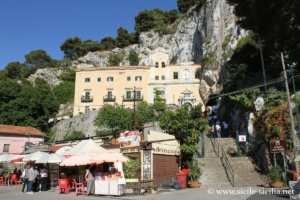

Sanctuary of Saint Rosalia 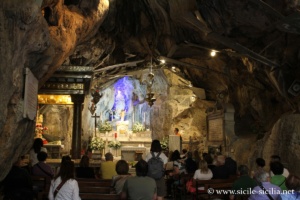
Cave of Saint Rosalia 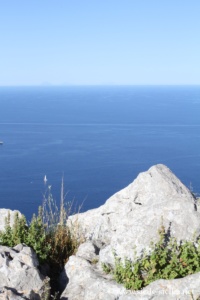

Monte Pellegrino viewpoint 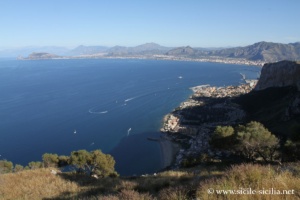
Monte Pellegrino viewpoint 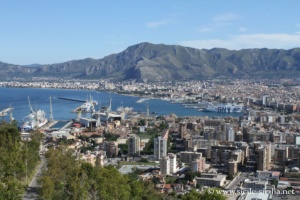
Viewpoint on the road to Monte Pellegrino
Where Mount Pellegrino is located and map
If you see this after your page is loaded completely, leafletJS files are missing.
Information
Sources and external sites
- Mount Pellegrino: www.palermoviva.it, en.wikipedia.org
- Utveggio Castle: en.wikipedia.org
- Trails: www.sicilyhiking.it
- Discovering Mount Pellegrino: www.grotteaddaura.altervista.org
- Sanctuary of Saint Rosalia: santuariosantarosalia.it, cattedrale.palermo.it
- Favorita Park: en.wikipedia.org