
A singular village: Albanian origins and traditions
Like a few other Sicilian villages, such as Palazzo Adriano, Piana degli Albanesi has a significant community of Albanian origin, known as Arbëreshë, a population settled in Sicily more than five centuries ago, with the great immigration of the 15th century to flee before the Turkish advance.
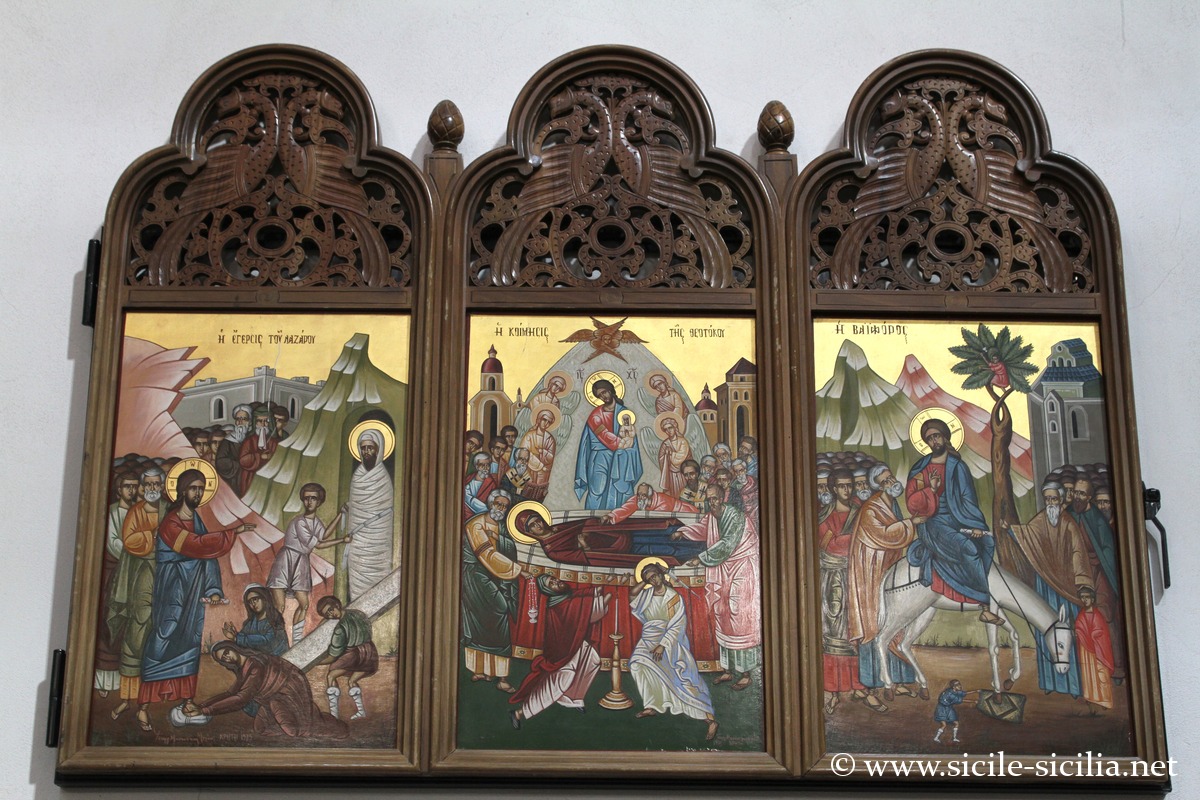
Piana was officially founded in 1488 following an act of land allocation and is therefore home today to one of the oldest and most cohesive Arbëreshë communities in Italy, the most important Italo-Albanian community in Sicily. It is notably the only village where almost all the inhabitants descend from these 15th-century refugees, particularly attached to their heritage, having preserved their language, their culture and their Byzantine religious rite.
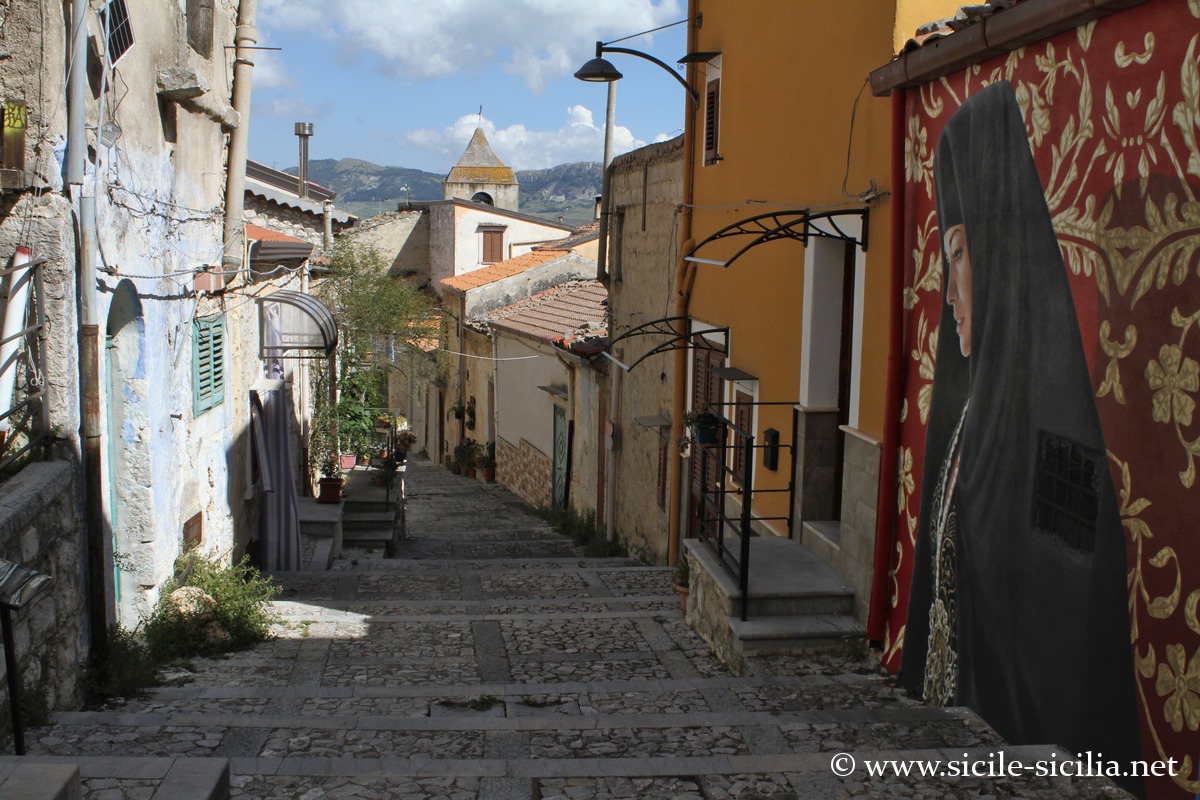
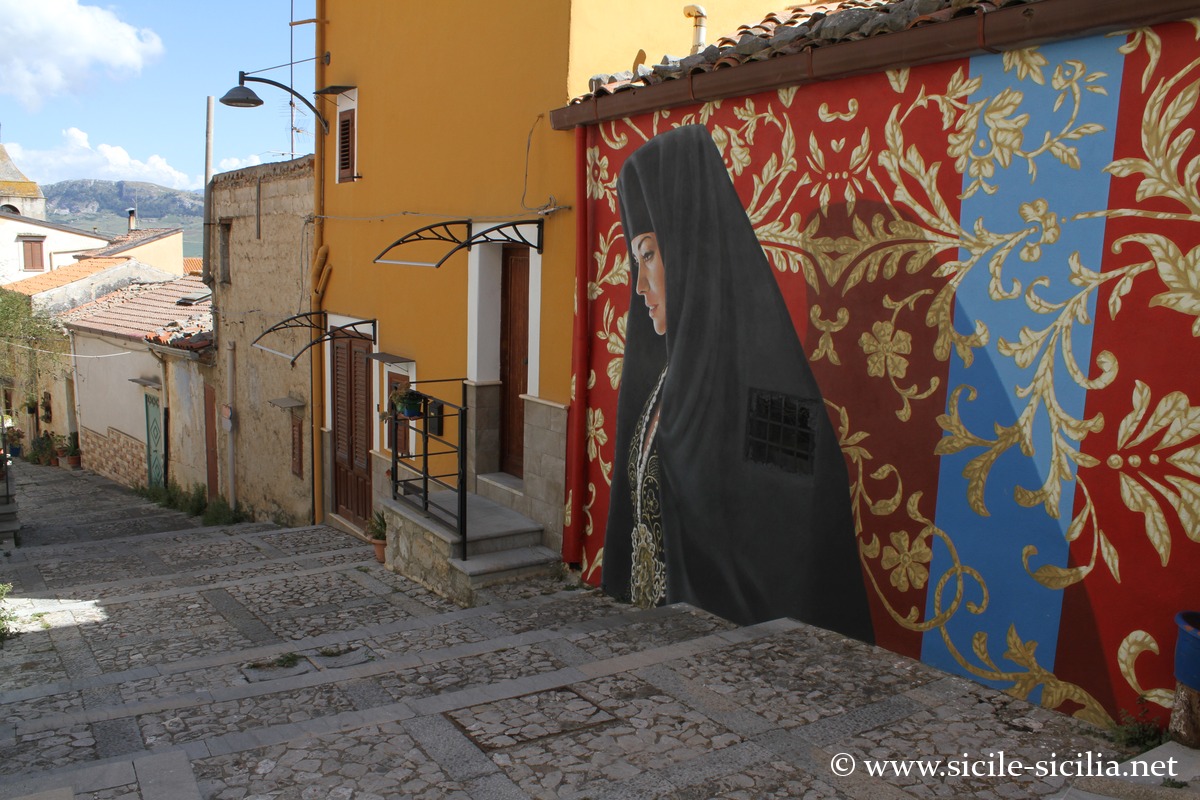
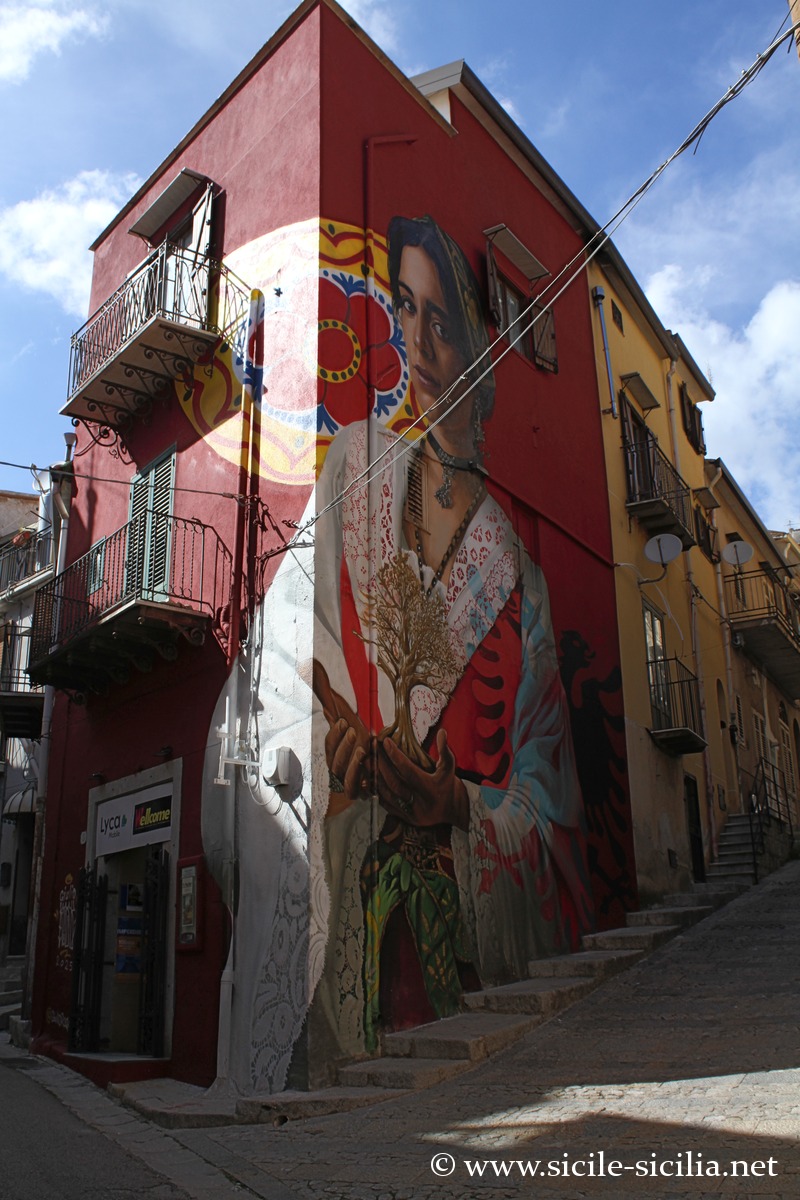
Streets and wall frescoes
Beyond this singularity, Piana’s other treasure is the truffle cheese fondue (Fondu al tartuffo in Italian), which can be enjoyed in various ways, even in a simple panino.
Still on the subject of gastronomy, its canoli, a typical Sicilian pastry filled with ricotta, also attract many Sicilians from the region.
A few kilometres to the west, the Porta della Ginestra memorial recalls the massacre of 1 May 1947, and in the municipality of San Cipirello, the remains of the ancient city of Laitas (or Laatia) overlook Mount Jato, an ancient pre-Roman and Roman city of local importance.
Arbëreshë culture
The traditional language spoken, Arbëresh, descended from the old Albanian Tosk dialect (but rather call it a “language” if you happen to talk with the inhabitants), transmitted over the centuries, is less and less mastered by the younger generations. This language is therefore today closer to the Albanian spoken in Kosovo than in Albania, Kosovo being on the margins of the main linguistic area, and has consequently evolved less.
The Arbëreshë community is also characterised by traditional richly embroidered costumes worn during festivals, as well as liturgical music and a community life marked by specific religious celebrations.
Visiting Piana degli Albanesi
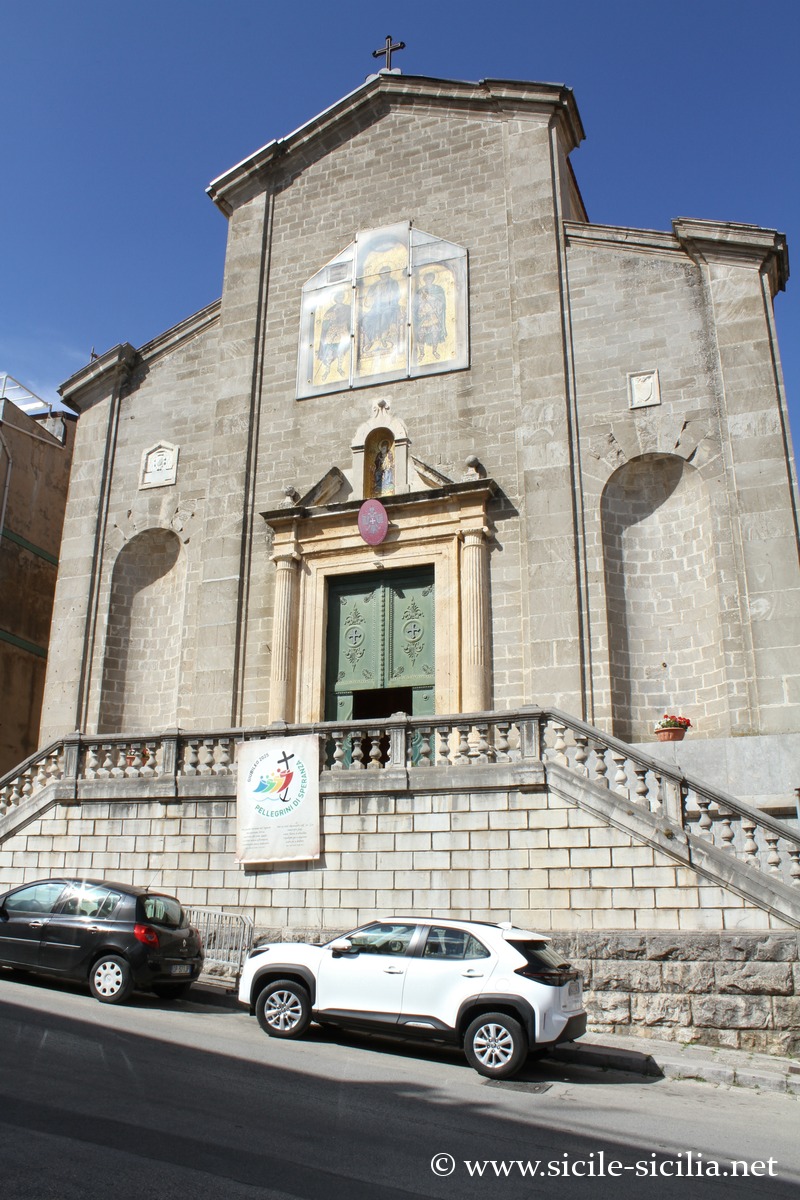
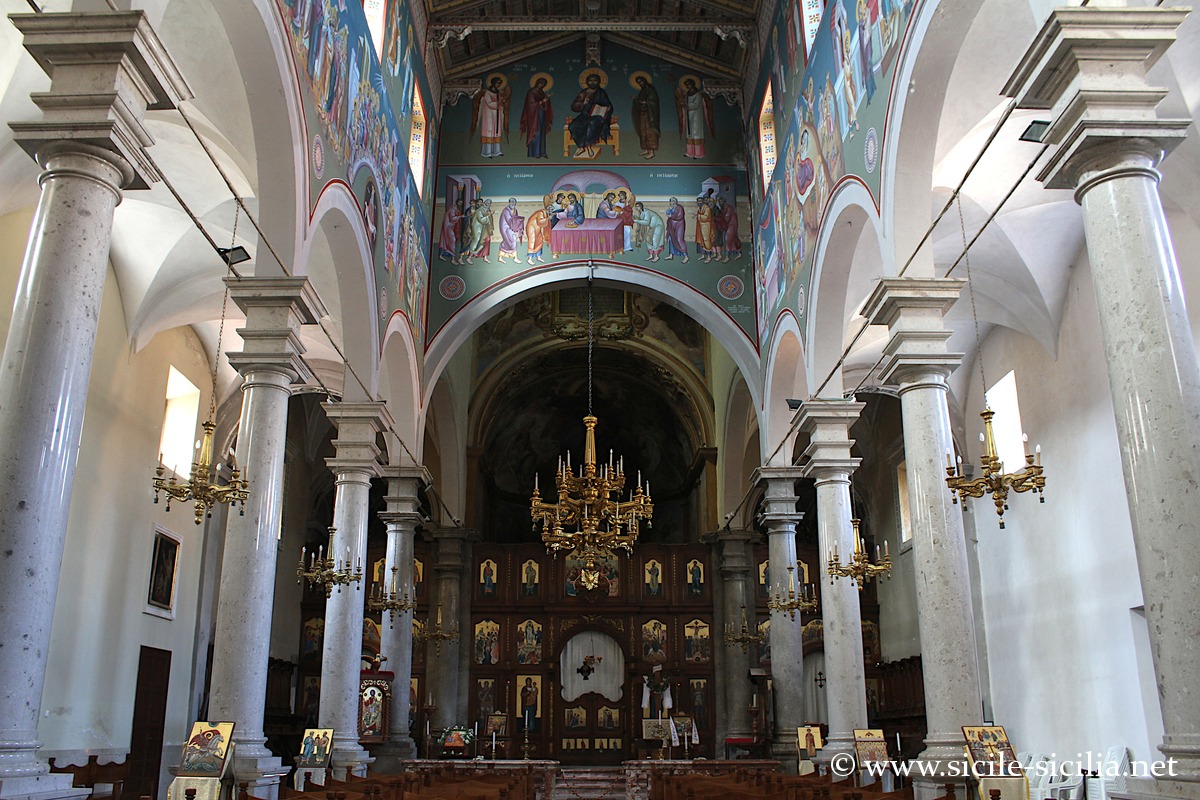
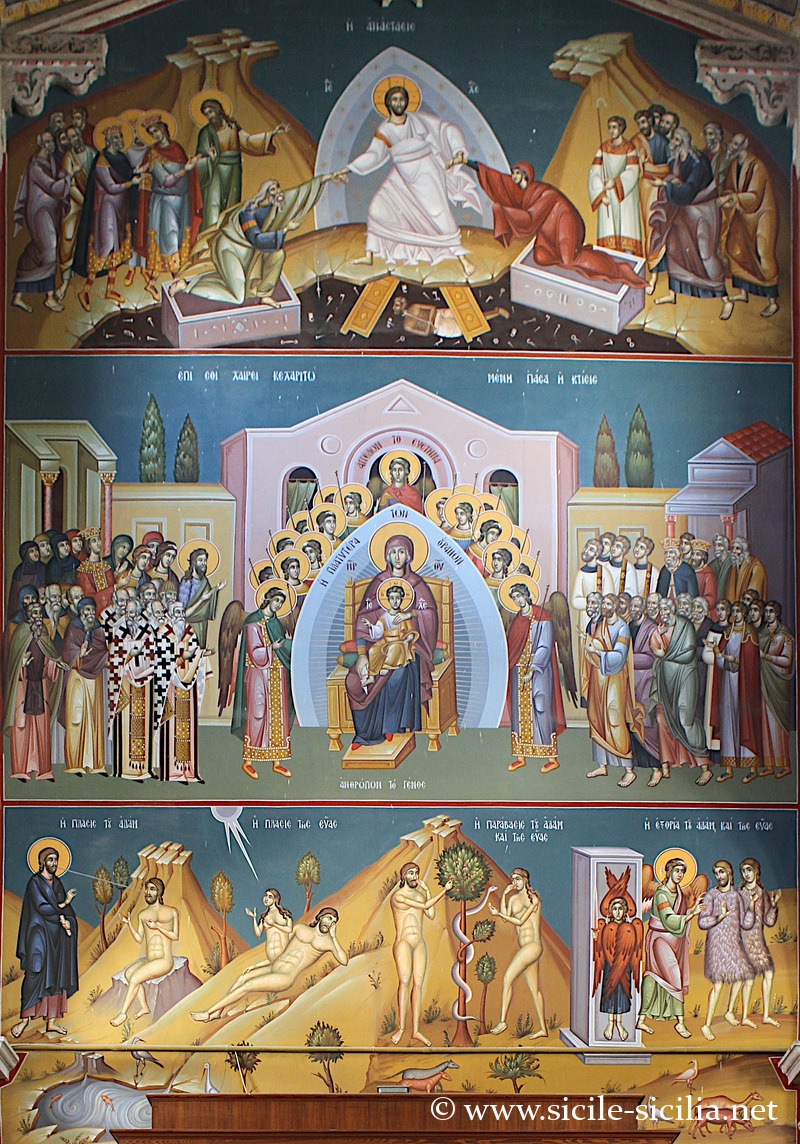
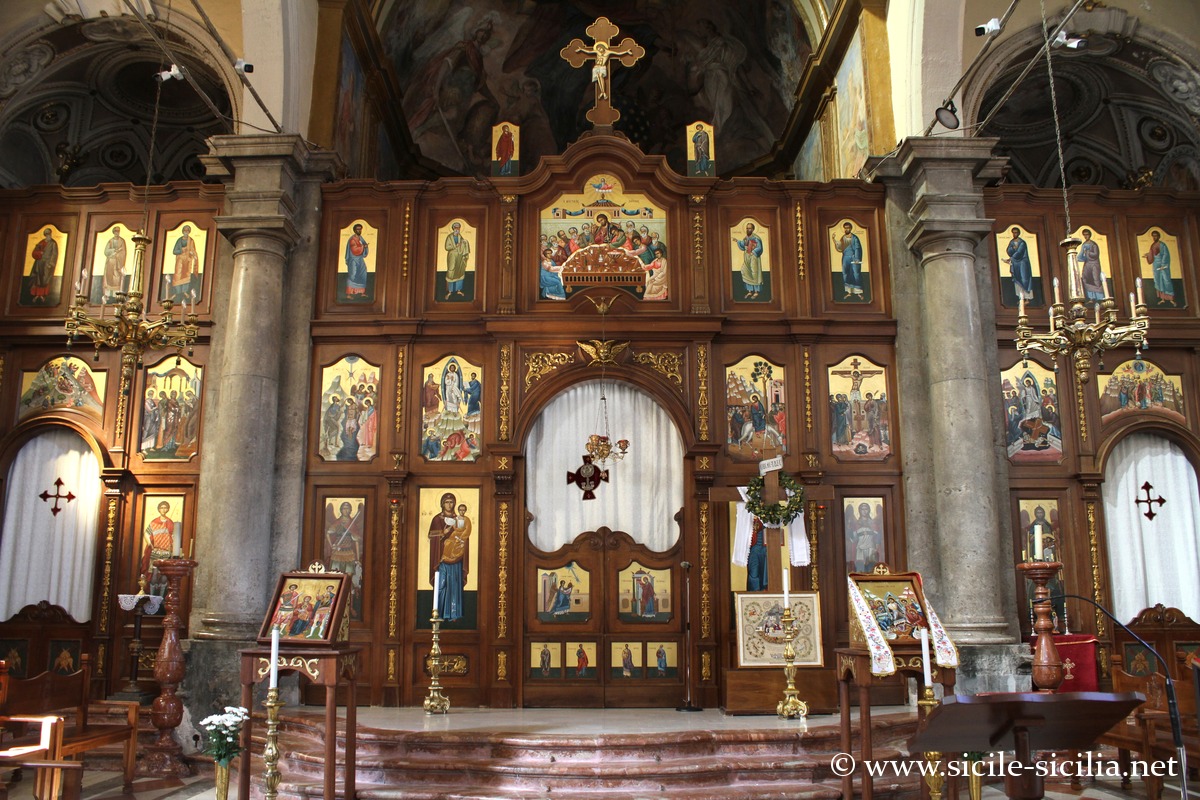
San Demetrio Megalomartire Cathedral
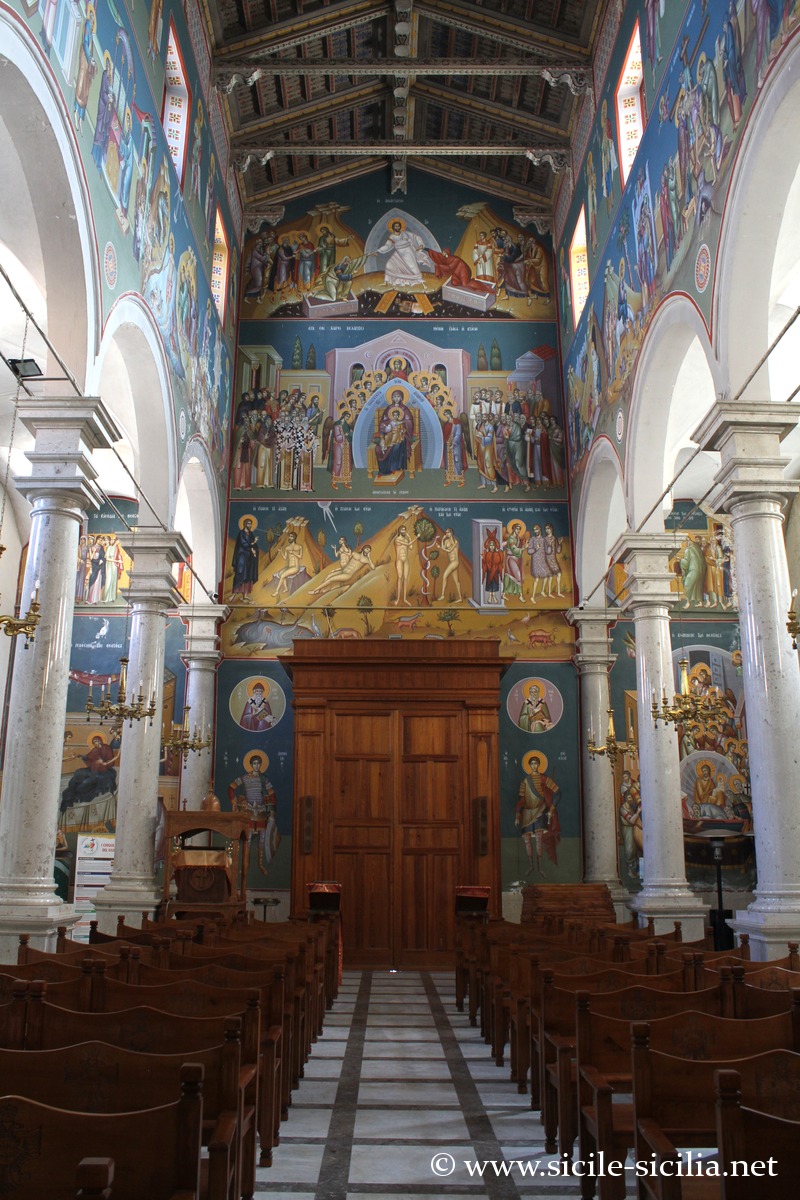
The village of Piana preserves a historical and artistic heritage, many churches decorated with Orthodox works, first and foremost the San Demetrio Cathedral which has a Byzantine origin from the 6th century, the current building dating back to the end of the 15th century and was completed in the 17th century, with frescoes by Pietro Novelli inside (1641-1644) depicting in particular the Exaltation of the Trinity in the centre and Christ ascending to heaven on the right. It is the seat of the Italo-Albanian Eparchy of Piana degli Albanesi.
The Church of Saint Nicholas (Shën Kolli) has sacred icons dating from the 16th century and houses precious icons. The Maria Santissima church dates from the 17th century. The San Vito church was built at the beginning of the 16th century, an example of Baroque art with its staircase and a richly decorated interior.
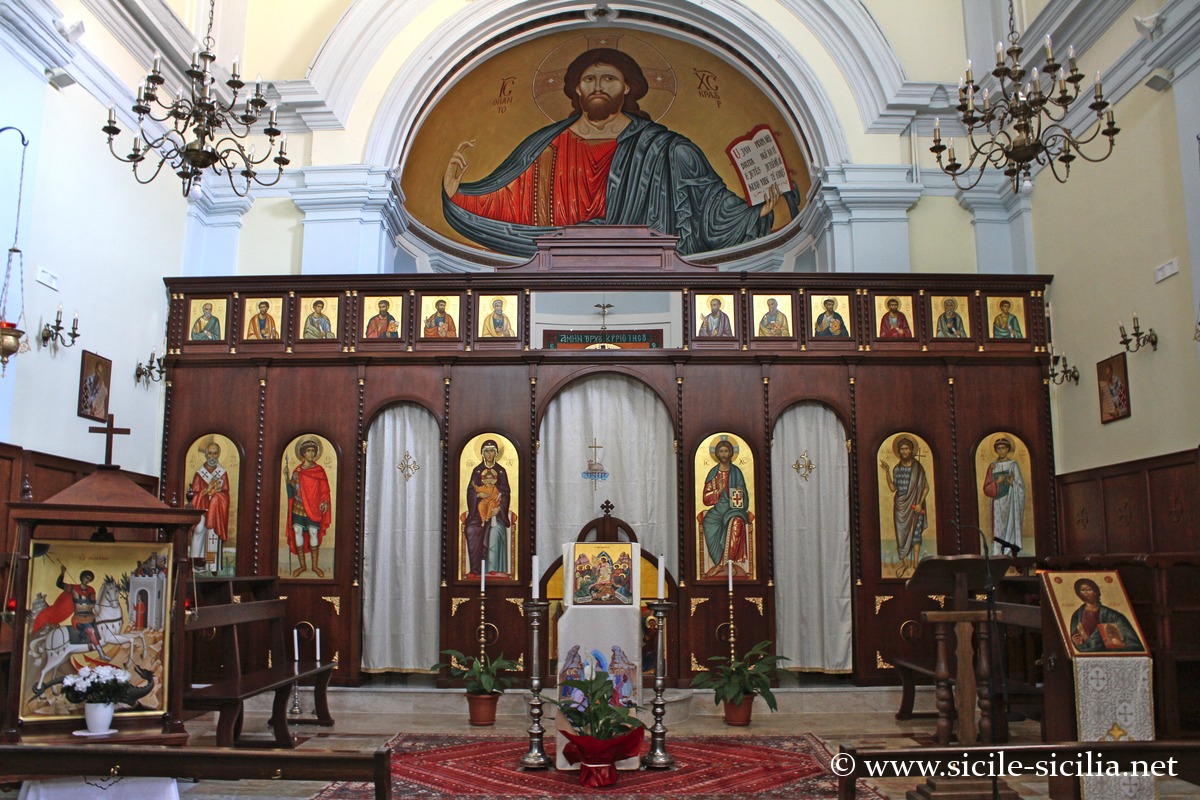
The Church of Saint John (Shën Gjoni) is remarkable for its altar, oriented to the east as per Byzantine tradition, as is the San Giorgio church.
One also discovers Baroque-era palaces and fountains in the historic centre, which preserves neighbourhoods with traditional names (gjitonia) and a Piazza Grande (Qaca e Madhe), which bear witness to late-medieval town planning and Arbëreshë identity.
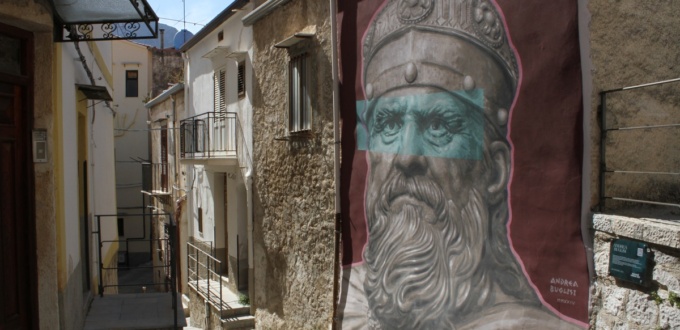
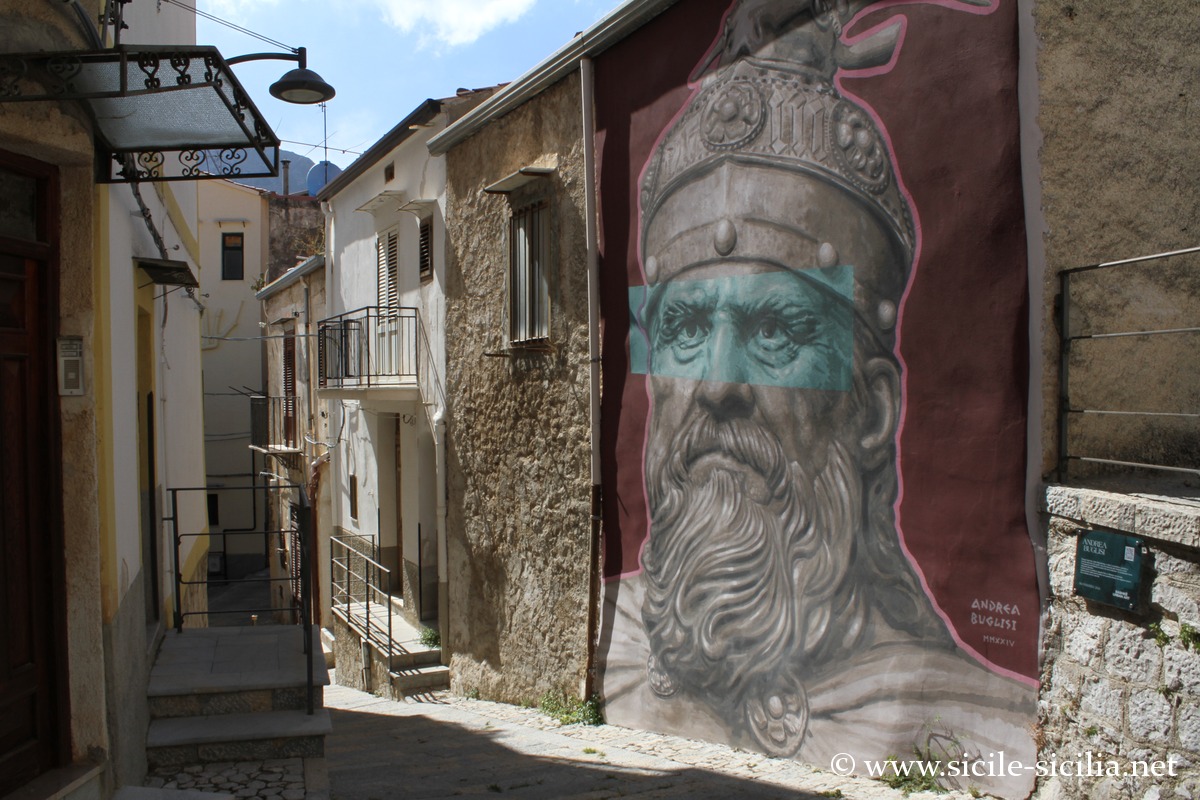
Among the modern cultural aspects of the historic centre, mention should be made of the wall frescoes and street art in the Sheshi neighbourhood, which celebrate Arbëreshë identity and history, created notably since 2023.
The civic museum (Museo Civico di Piana degli Albanesi) presents objects linked to peasant civilisation, traditional hand-embroidered costumes, a herbarium of local flora and a section dedicated to the tragedy of Portella della Ginestra in 1947.
Photo gallery
San Demetrio Megalomartire Cathedral 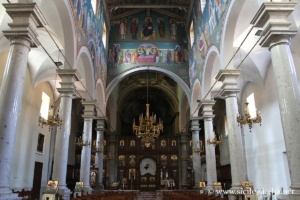
San Demetrio Megalomartire Cathedral 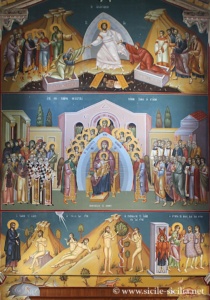

San Demetrio Megalomartire Cathedral 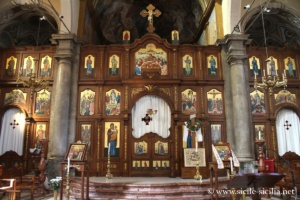

San Demetrio Megalomartire Cathedral 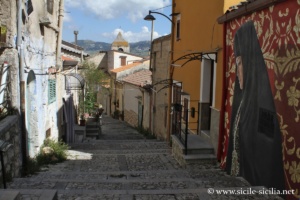
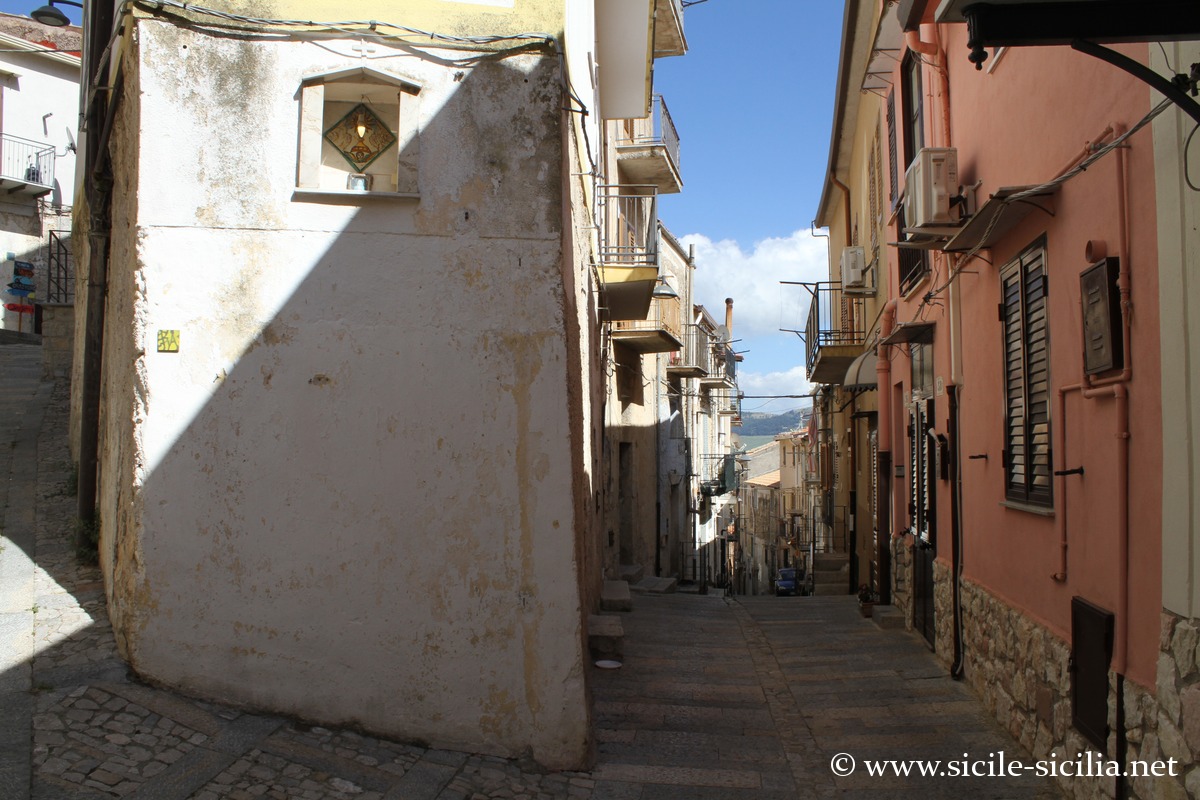
Neighbourhood of Piana degli Albanesi 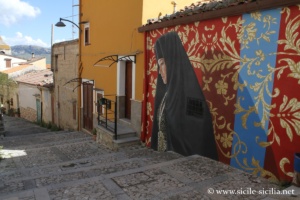
Neighbourhood of Piana degli Albanesi 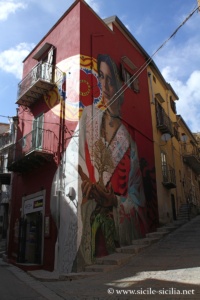

Neighbourhood of Piana degli Albanesi 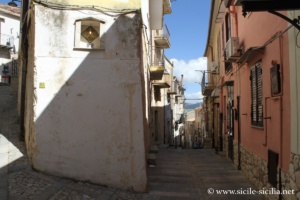
Neighbourhood of Piana degli Albanesi 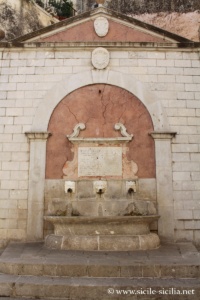
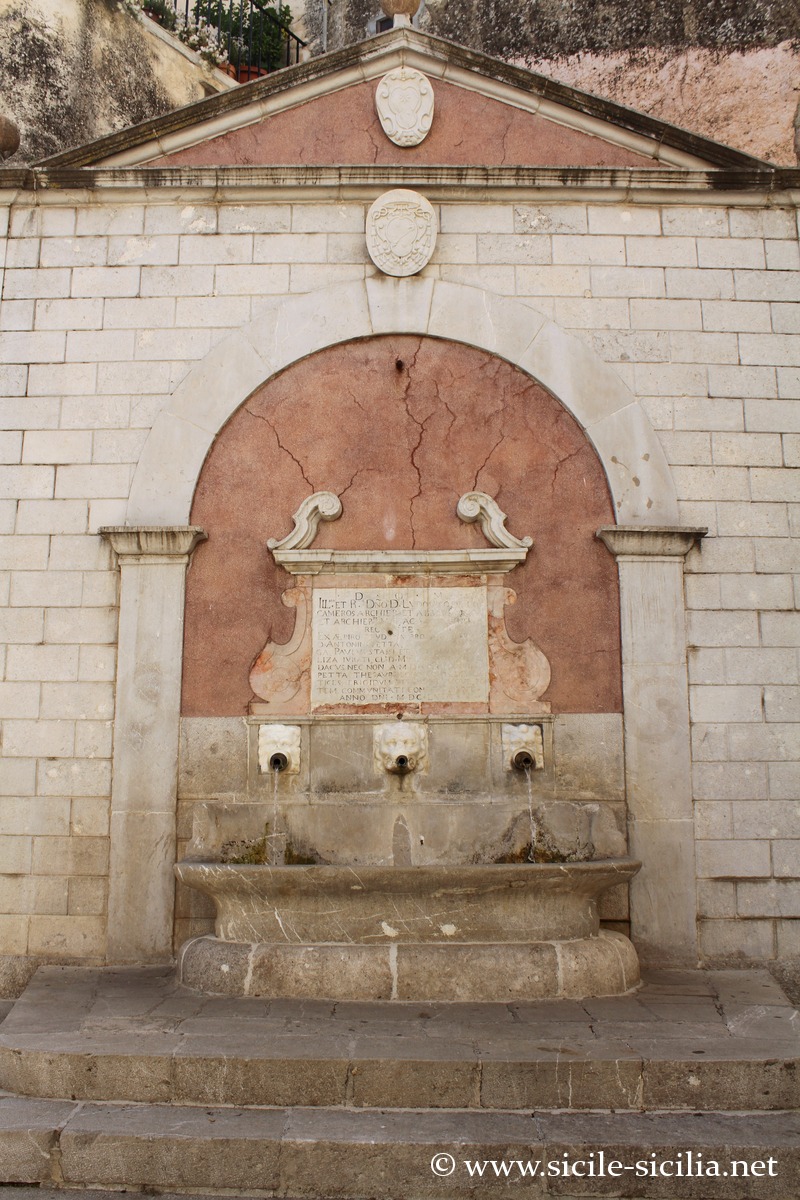
Fontana dei tre cannoli 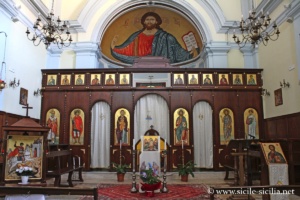
San Giorgio Church 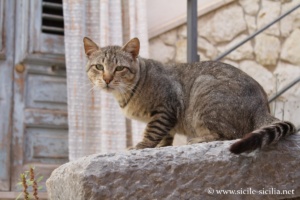
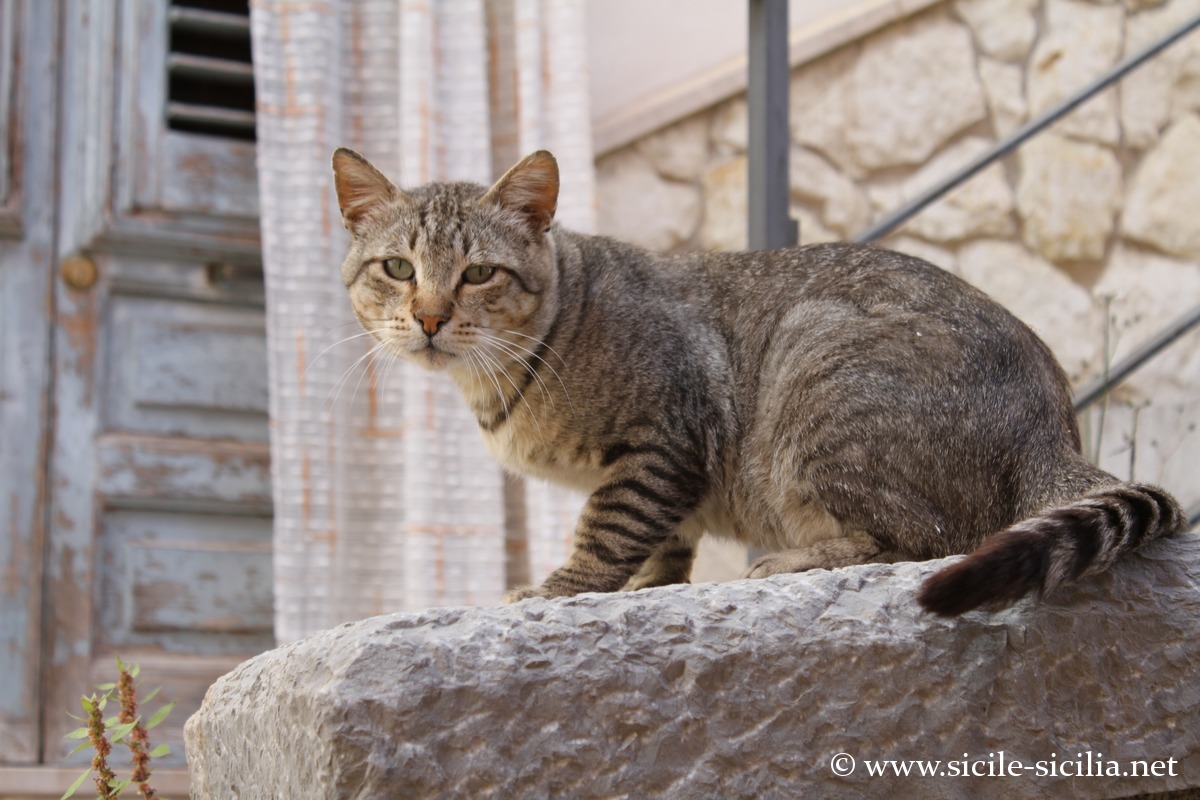
Arbëreshë cat 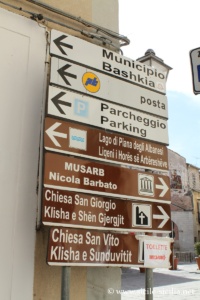
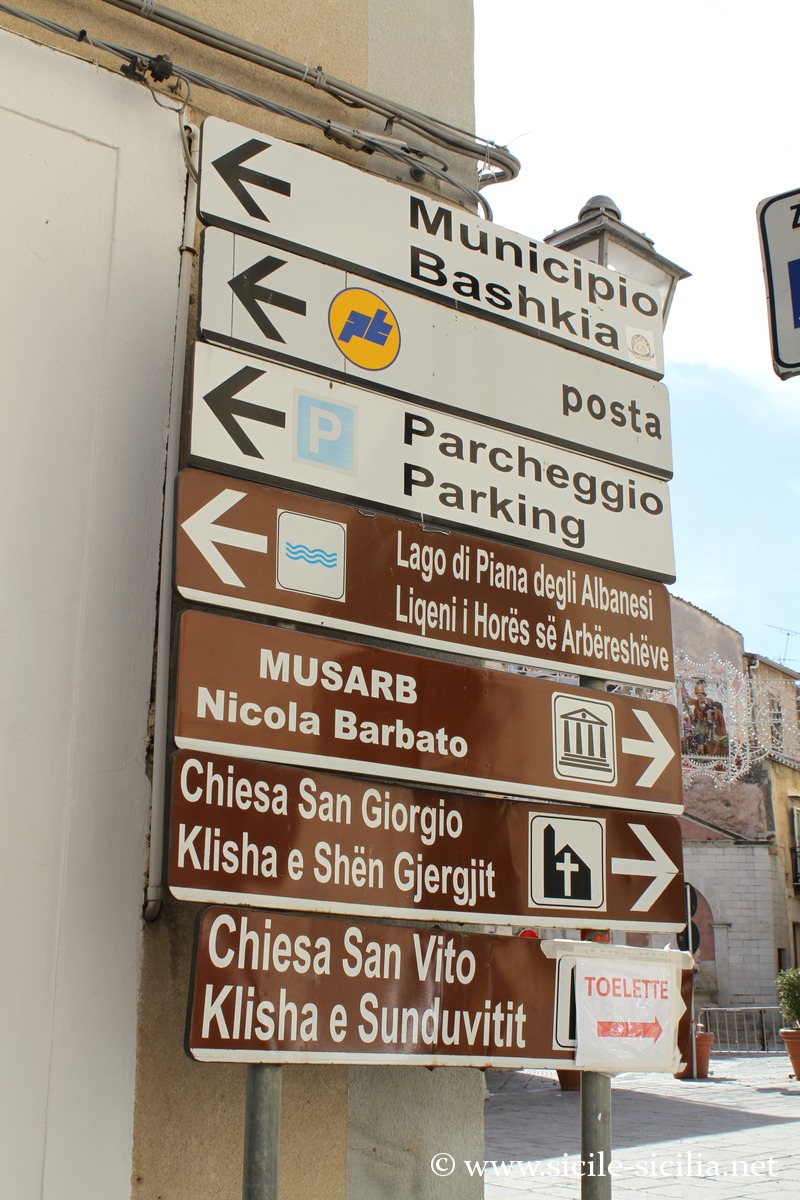
Bilingual Italian-Arbëreshë signs 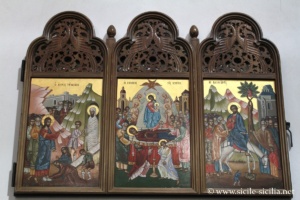
San Demetrio Megalomartire Cathedral
Surroundings
A mountain dominates the village with the Serre della Pizzuta Nature Reserve, whose caves formed in the Mesozoic era of Zubbione and Garrone, with stalactites, stalagmites and small lakes.
The reserve covers about 414 hectares and includes several marked trails, with peaks reaching up to 1,333 m in altitude and notable karst phenomena, home to a rich plant biodiversity, with more than 45 endemic species, forest formations of oak, maple and juniper, and wildlife including birds of prey, wild cats and reptiles
In the Contrada Sant’ Agata area, where an ancient village called Pirama once stood, an early Christian necropolis was discovered. It dates from Late Antiquity and was brought to light in 1988.
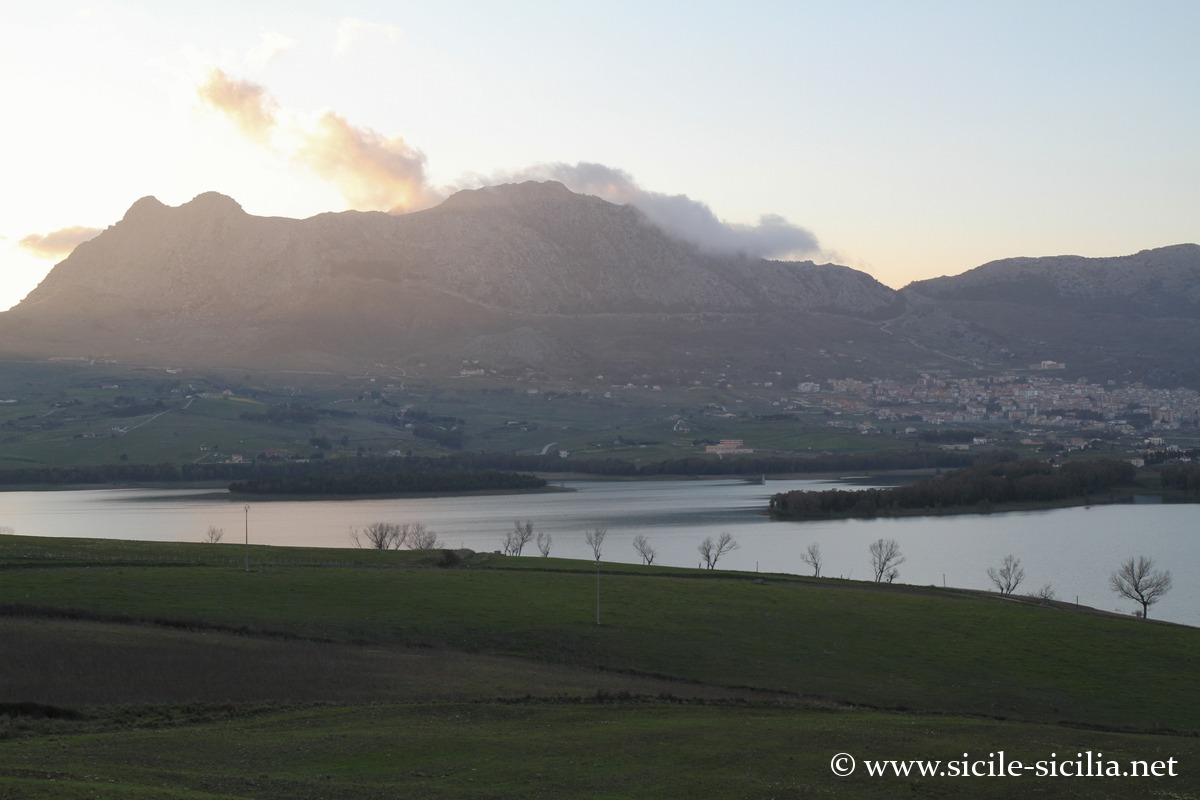
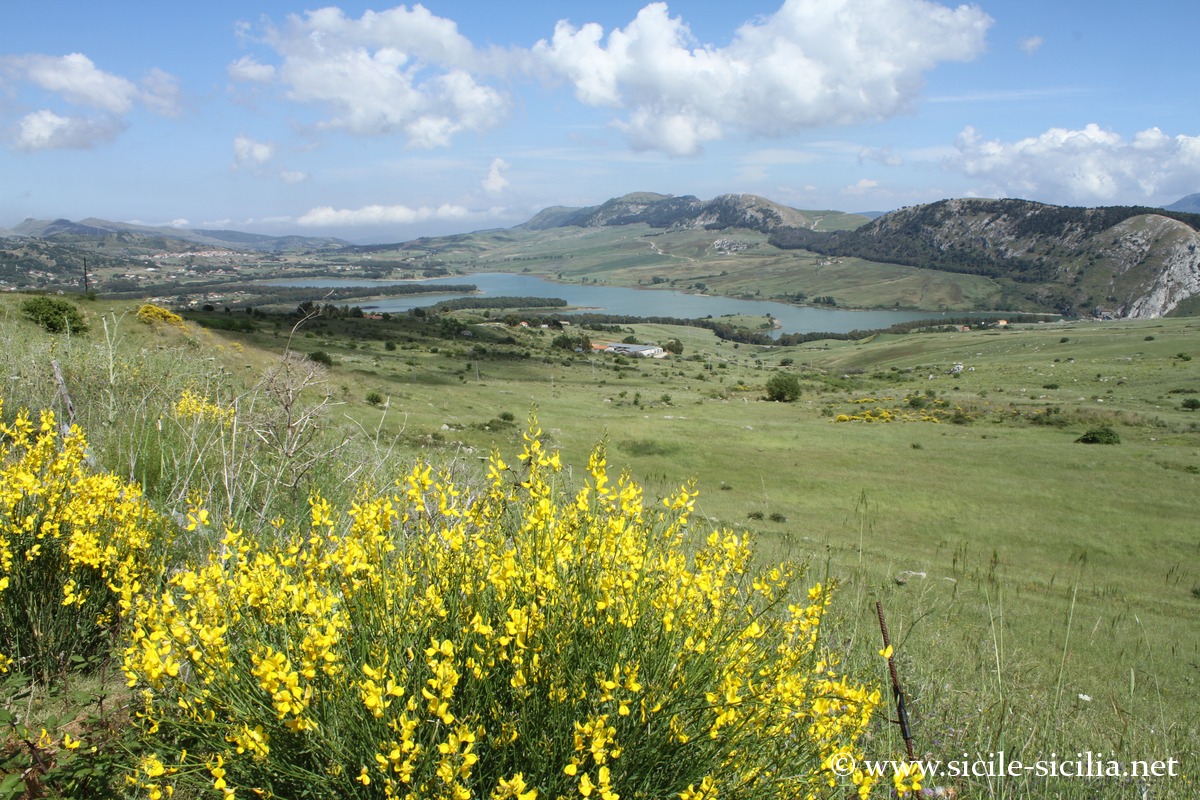
The artificial lake of Piana degli Albanesi is a nature reserve managed by the WWF since 1999, created between 1920 and 1923 for hydroelectric production, surrounded by mountains and considered an important wetland ecosystem.
Lake of Piana degli Albanesi 
Lake of Piana degli Albanesi
Where Piana degli Albanesi is located: map
If you see this after your page is loaded completely, leafletJS files are missing.
Porta della Ginestra Memorial
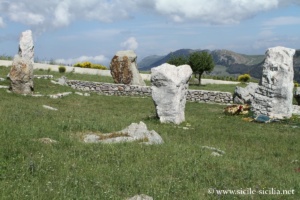
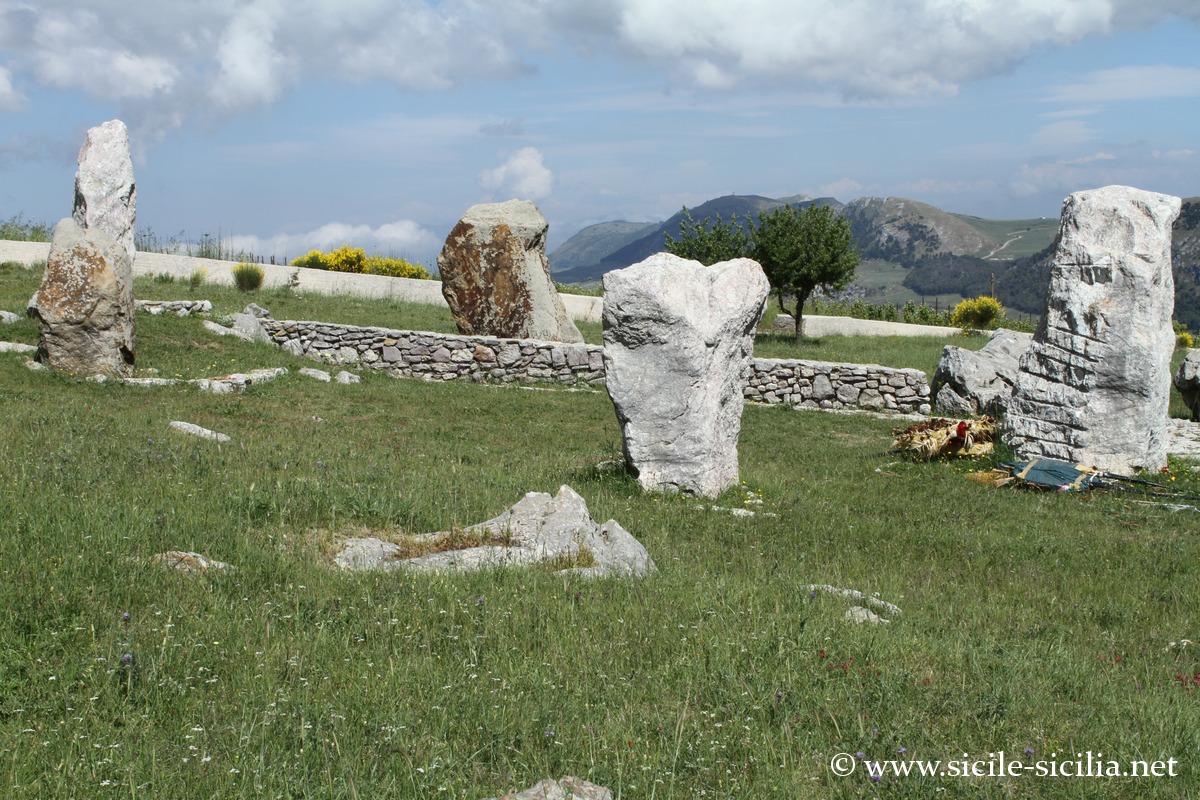
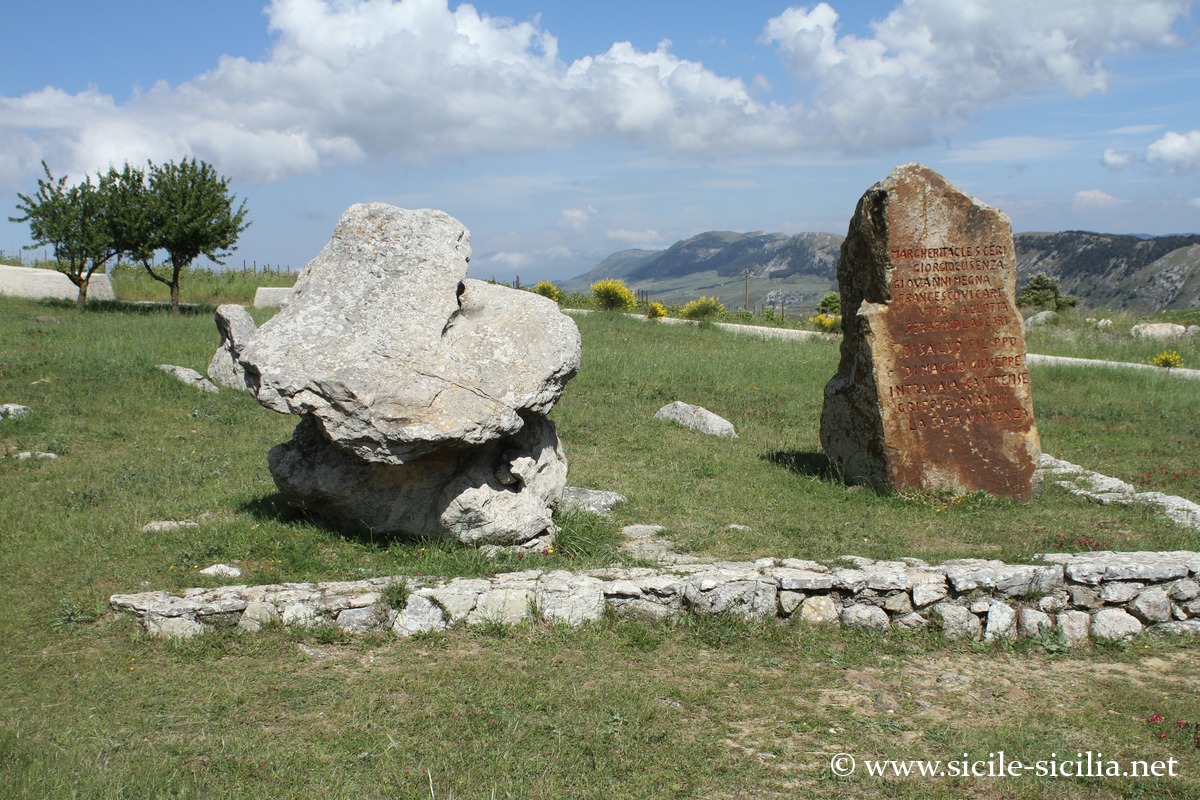
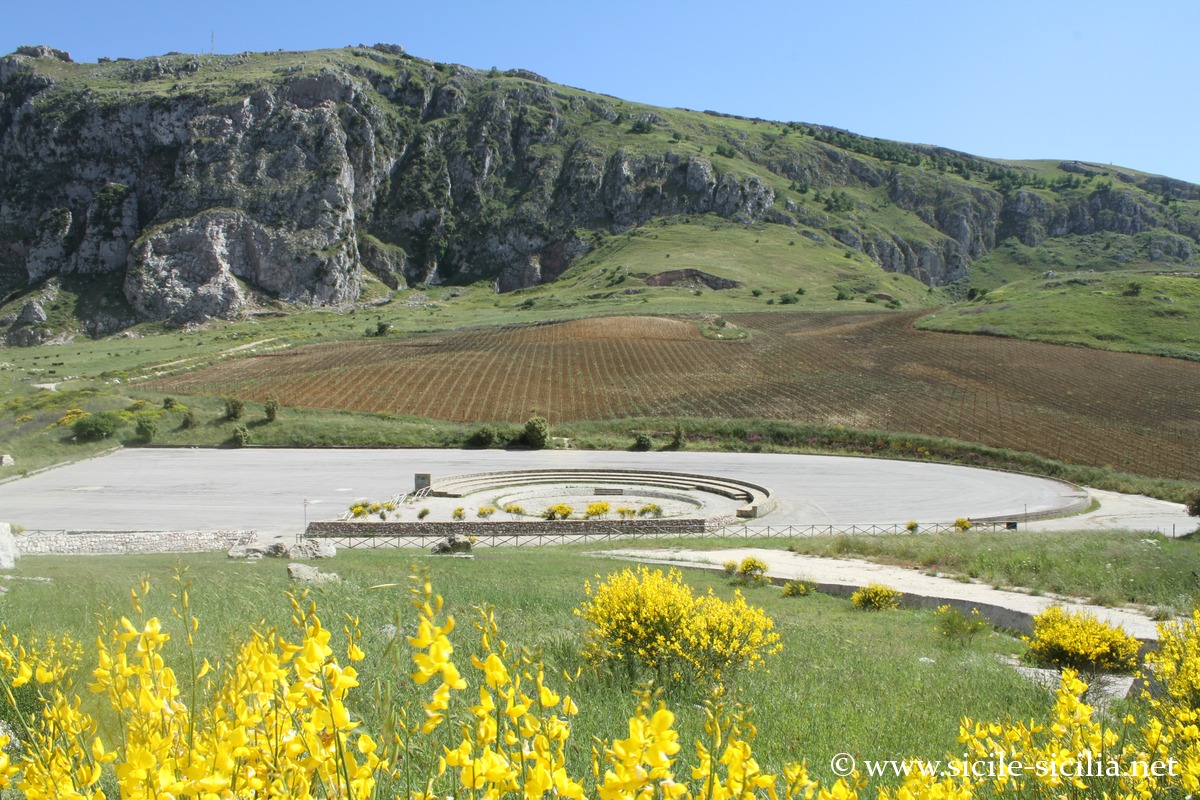
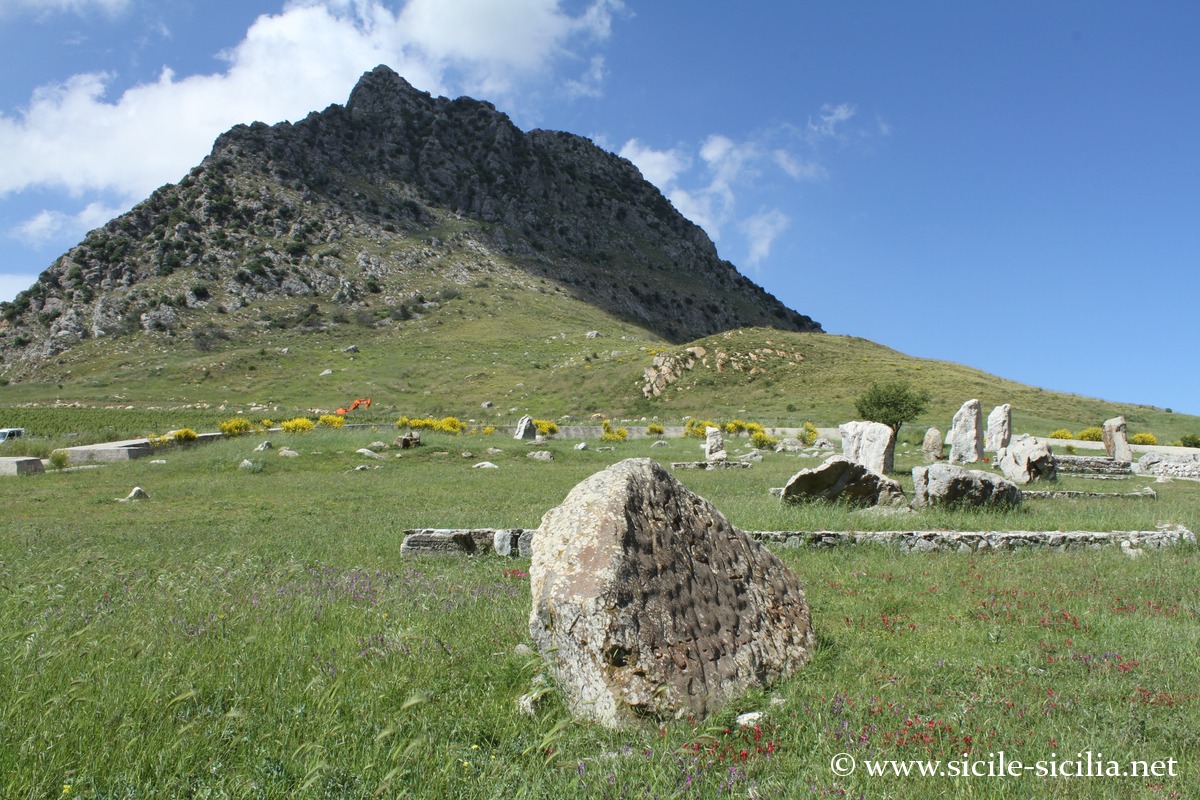
4 km west of Piana, the Portella della Ginestra memorial with its large engraved stones commemorates a violent episode in the political and criminal history of the Italian Republic, with a massacre that took place here on 1 May 1947, where 3,000 peasants had gathered during the Labour Day holiday. A shooting caused 11 deaths and 27 serious injuries. Perpetrated by a criminal and mafia gang led by Salvatore Giuliano, the real motives and intentions are still a subject of controversy, classified among Italian state secrets.
Portella della Ginestra Memorial 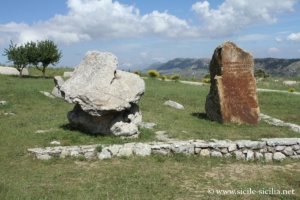
Portella della Ginestra Memorial 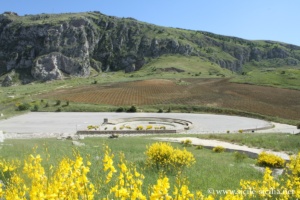
Portella della Ginestra Memorial 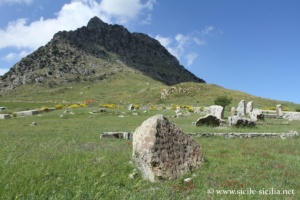
Portella della Ginestra Memorial
Information
External sites
- Piana degli Albanesi: Wikipedia Page, www.visitpiana.com
- Portella della Ginestra massacre: en.wikipedia.org
- Sant’Agata necropolis: www.visitpiana.com/archeologia
Surroundings of Palermo
- Sicani Mountains
 The Sicani Mountains are a mountain range in the hinterland of ...