
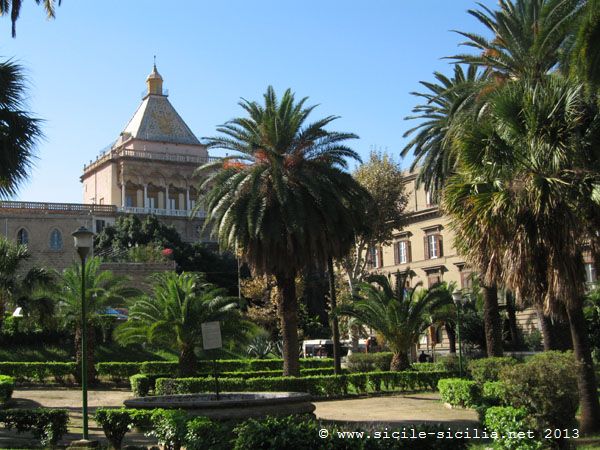
Overview of the main parks and gardens of Palermo, public parks, botanical garden, etc.
Find the map with the parks at the bottom of the page.
Orléans Park
The Orléans Park is the historic garden adjoining the Orléans Palace, today the seat of the presidency of the Sicilian Region. It was created in the early 19th century as a reserve and experimental garden for the Orléans estate and opened to the public in the 1950s. With about 3.5 hectares, it is now home to the only official bird park in Italy, where you can observe many species of exotic and Mediterranean birds, as well as other animals in specially designed spaces. Its vegetation and mature trees offer a green oasis in the heart of the city, around paths, planted areas and aviaries.
Information
Generally open Tuesday to Sunday, 10am-1pm and 3pm-5pm, last entry 30 minutes before closing.
Admission is free.
Official website: www.igiardinidelpalazzoorleans.it
Botanical Garden (overview)
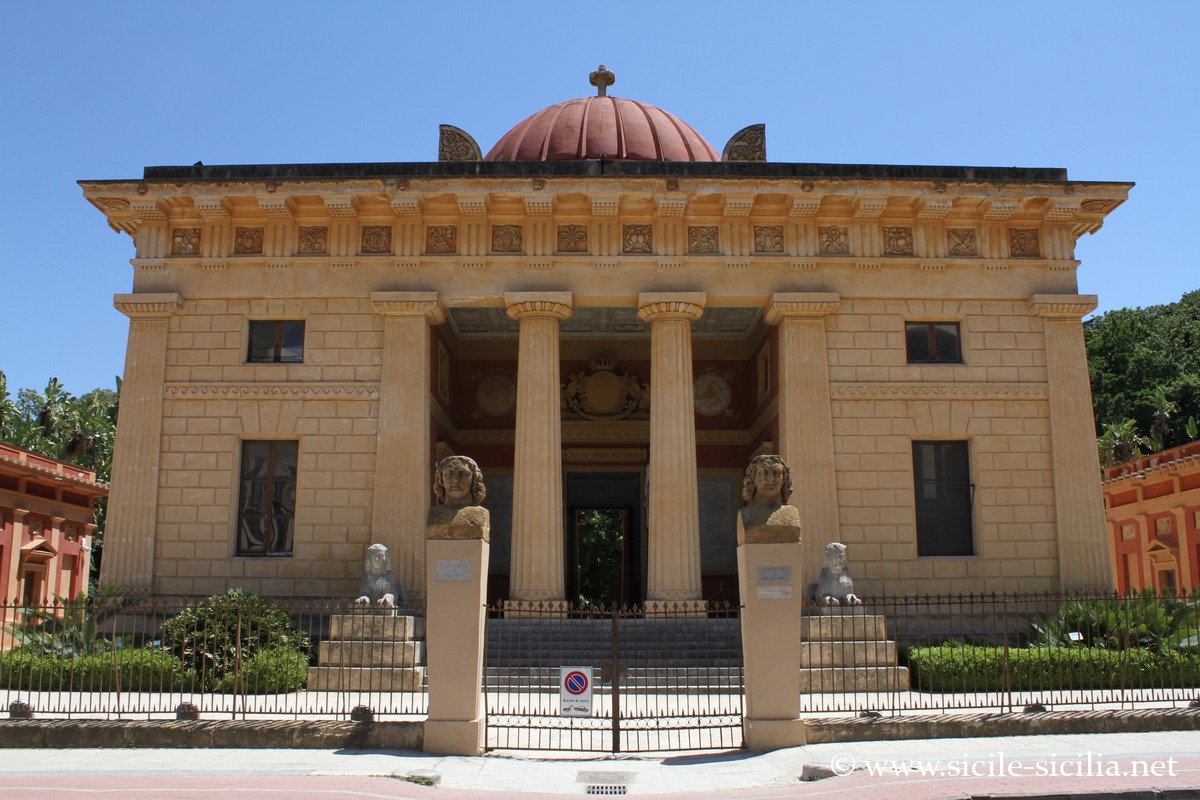
Gymnasium of the botanical garden
The botanical garden of Palermo, created in 1781, is of European interest, both historically and scientifically. It contains nearly ten thousand species, some of which are rare.
The building housing the library and herbaria, in Greek neoclassical style, dates back to the 18th century.
→ Read the page dedicated to the Botanical Garden of Palermo
Information
Orta Botanico
Via Lincoln, 2, 90133 Palermo
Piersanti Mattarella Park (English Garden)
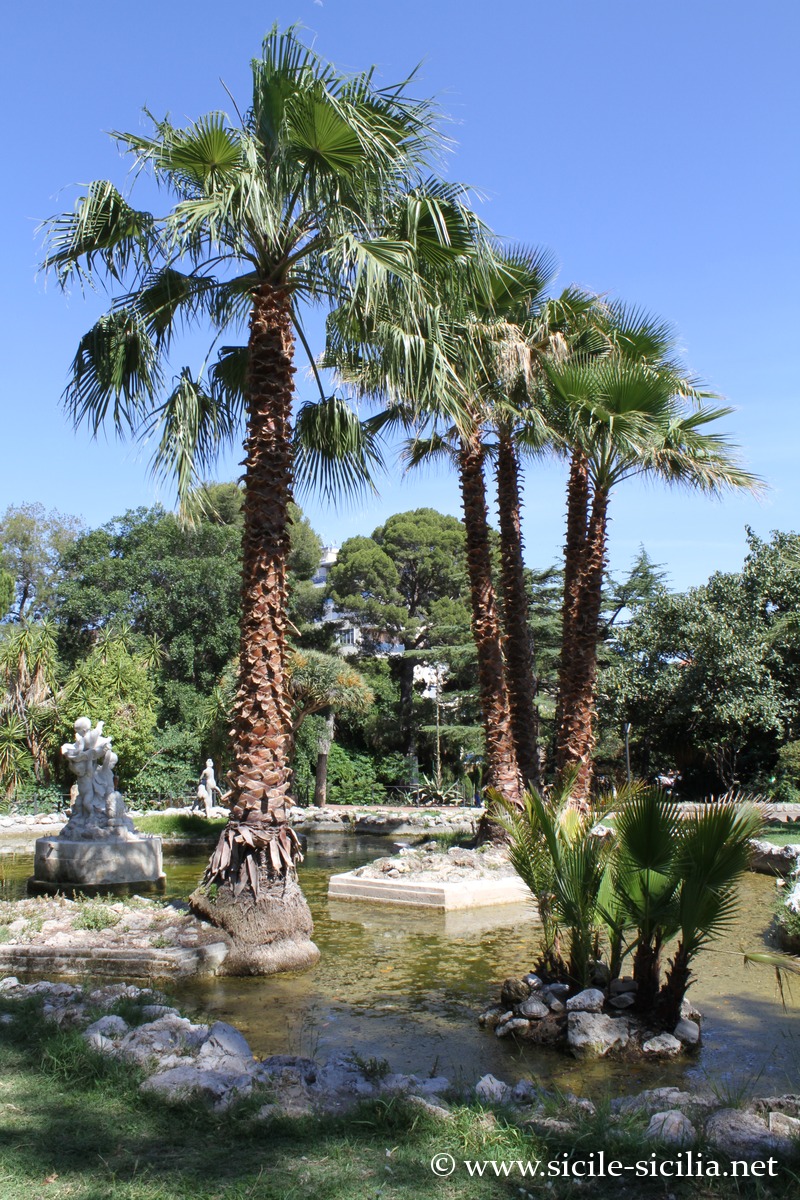
Mattarella Park
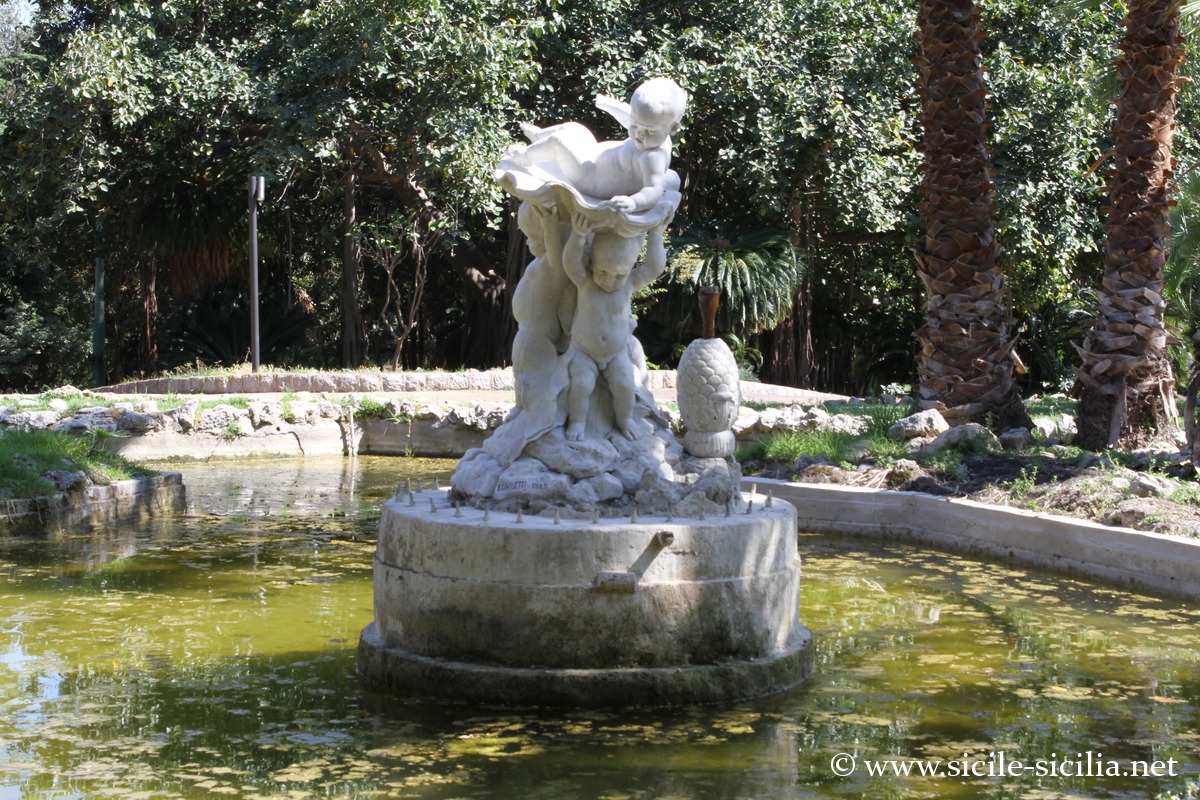
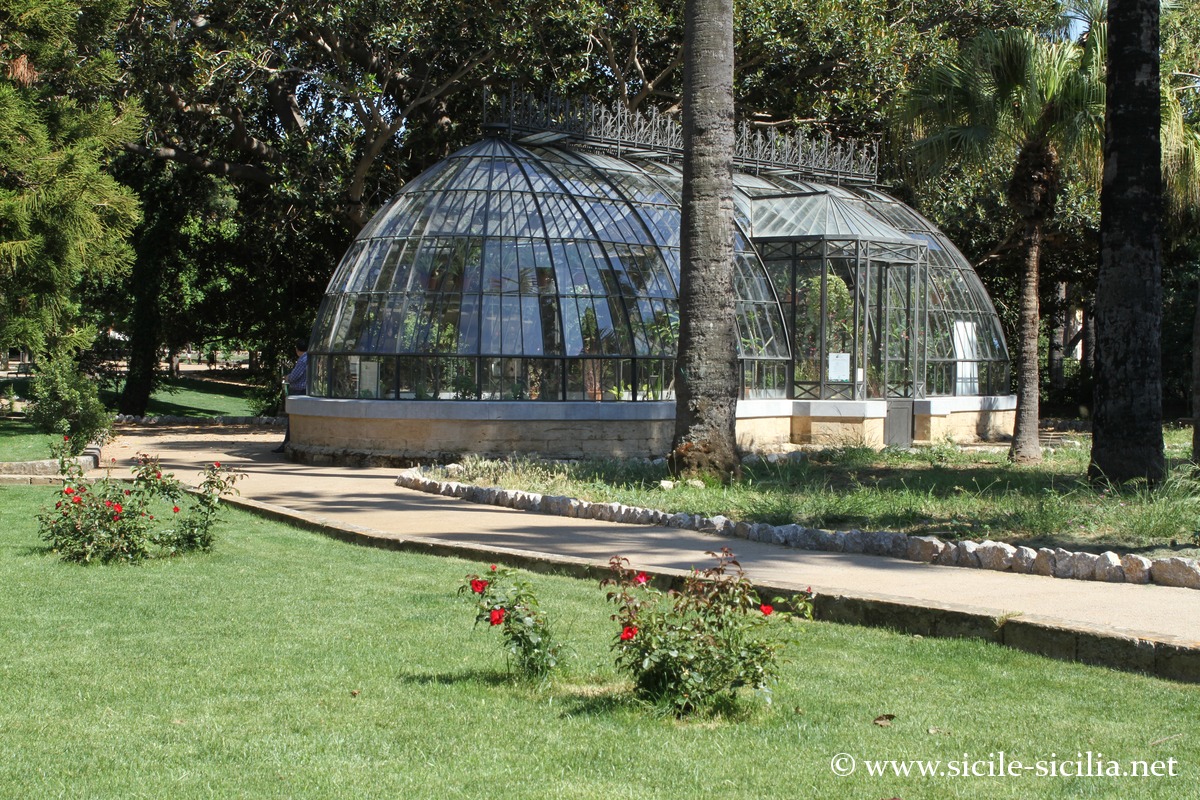
Laid out in the mid-19th century north of the center of Palermo, Mattarella Park is an English-style garden, a style in vogue at the time, which left part of the terrain natural. Plants from several parts of the world were planted. You can walk the small hills and valleys along the avenues or paths, discovering groves or hedges.
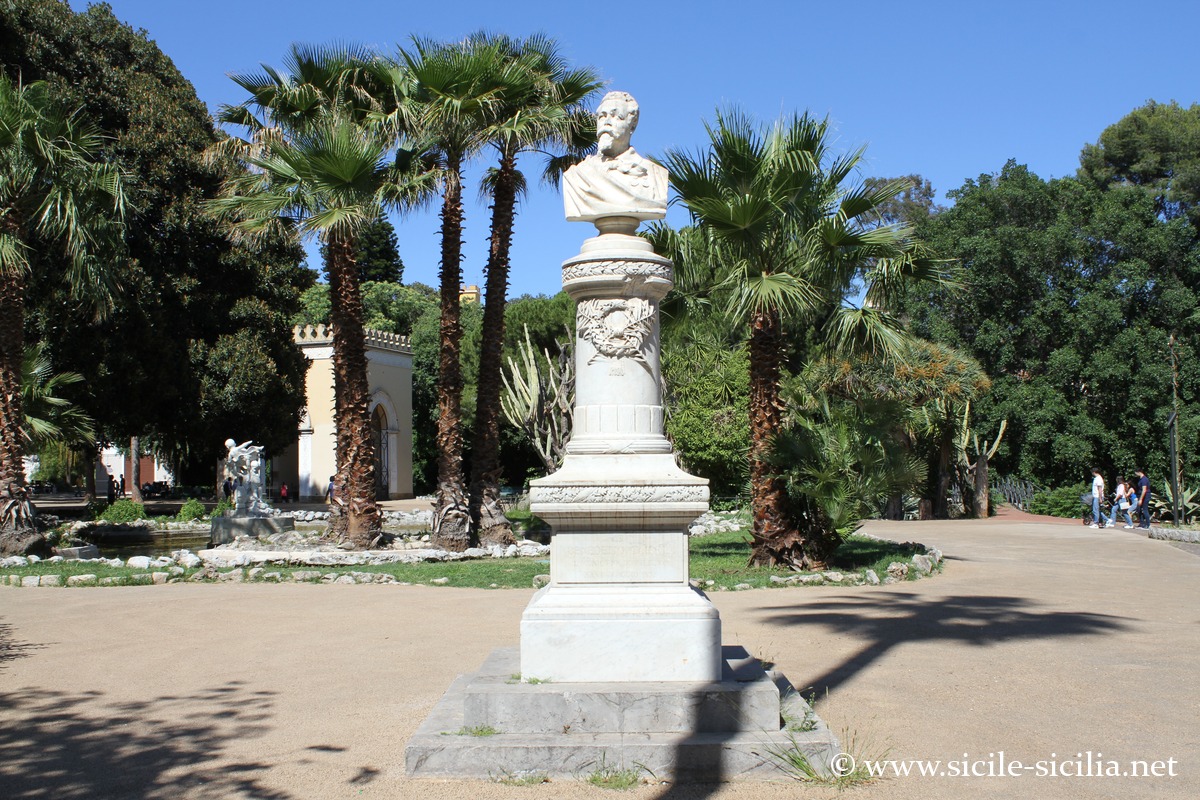
This garden is adorned with marble busts, bronze sculptures, the war memorial, and works created by Sicilian sculptors of the late 19th and early 20th centuries.
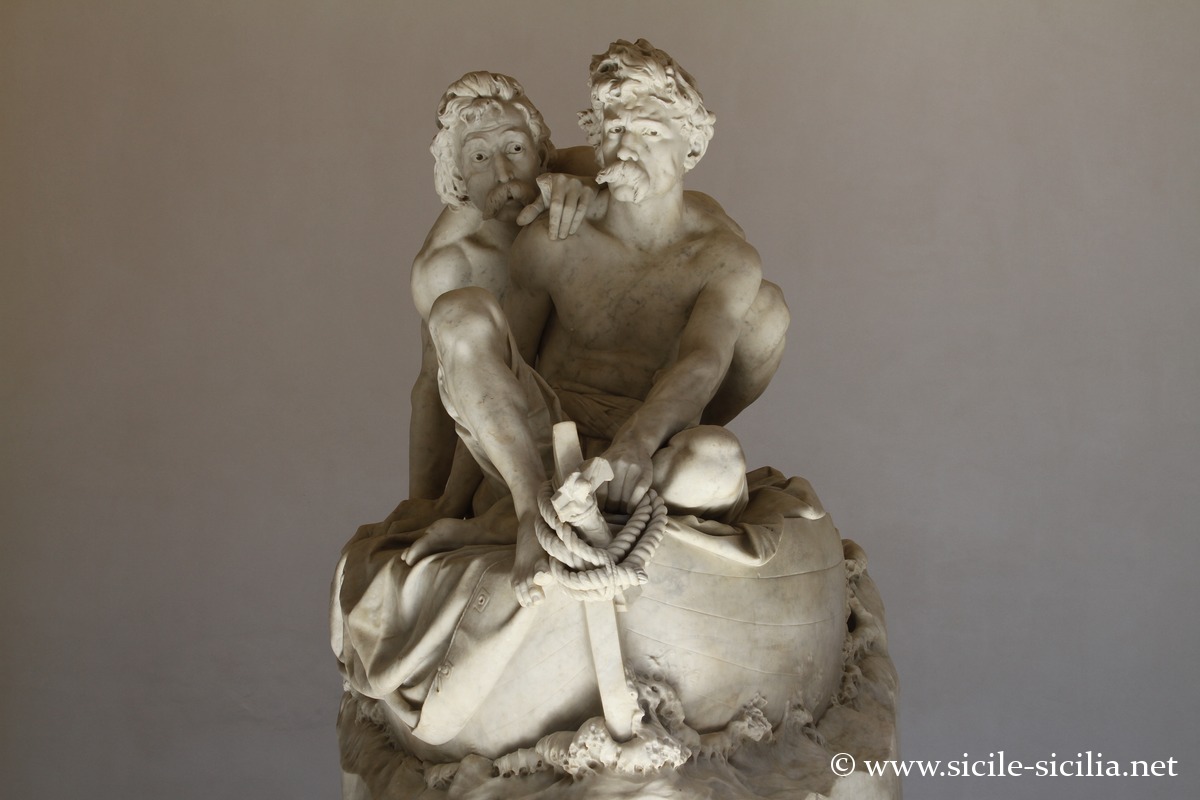
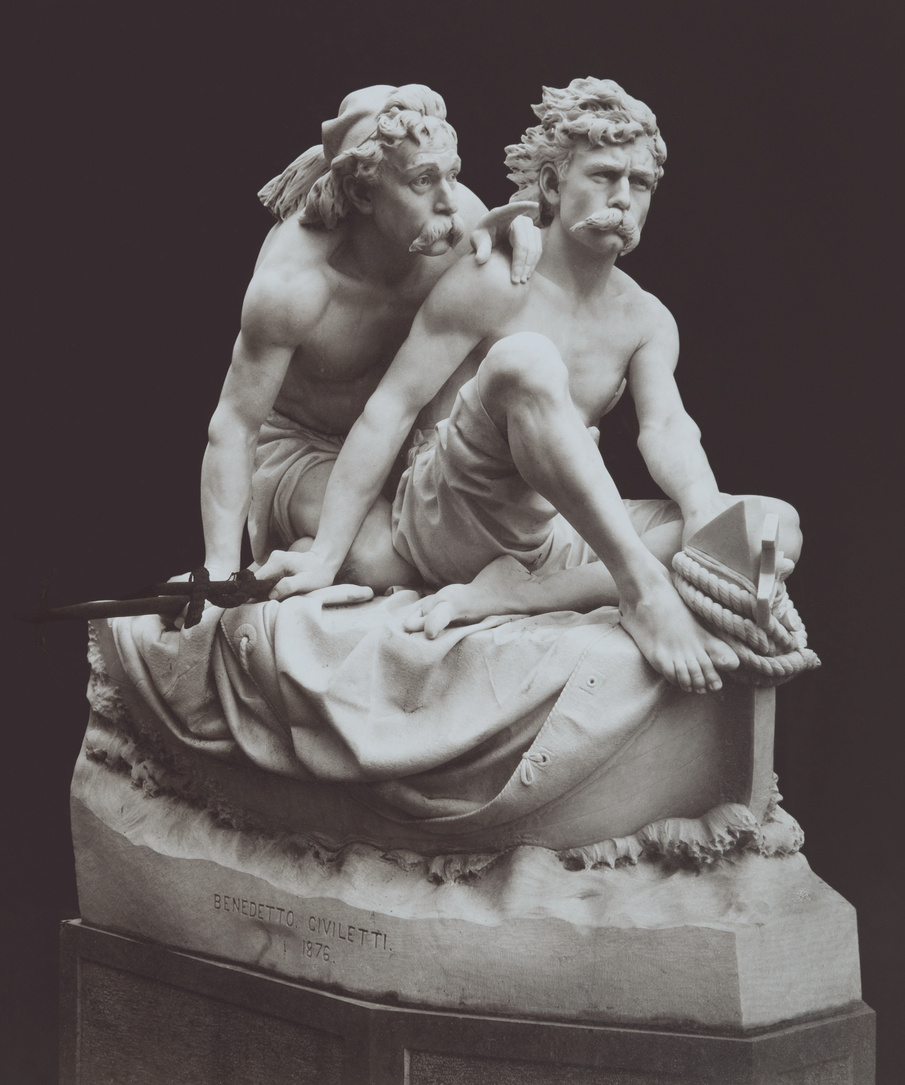
Towards the center of the park, the Saracen castle is a neo-Moorish pavilion preserving the beautiful group of the Canaris brothers, created by Benedetto Civiletti in 1878.
Bust of Cairoli 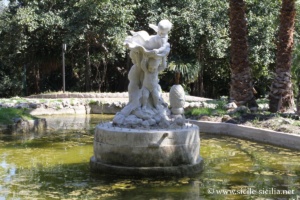
Fountain 

Nymphs’ greenhouse 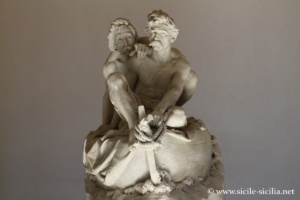
Kanaris at Chios (Benedetto Civiletti, 1878) 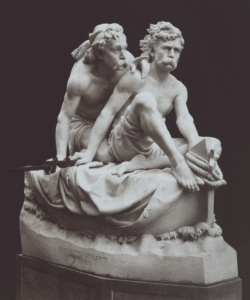

Kanaris at Chios (Benedetto Civiletti, 1878)
Information
Parco Piersanti Mattarella (Giardino Inglese)
Via della Libertà, 90143 Palermo
Garibaldi Garden of Palermo
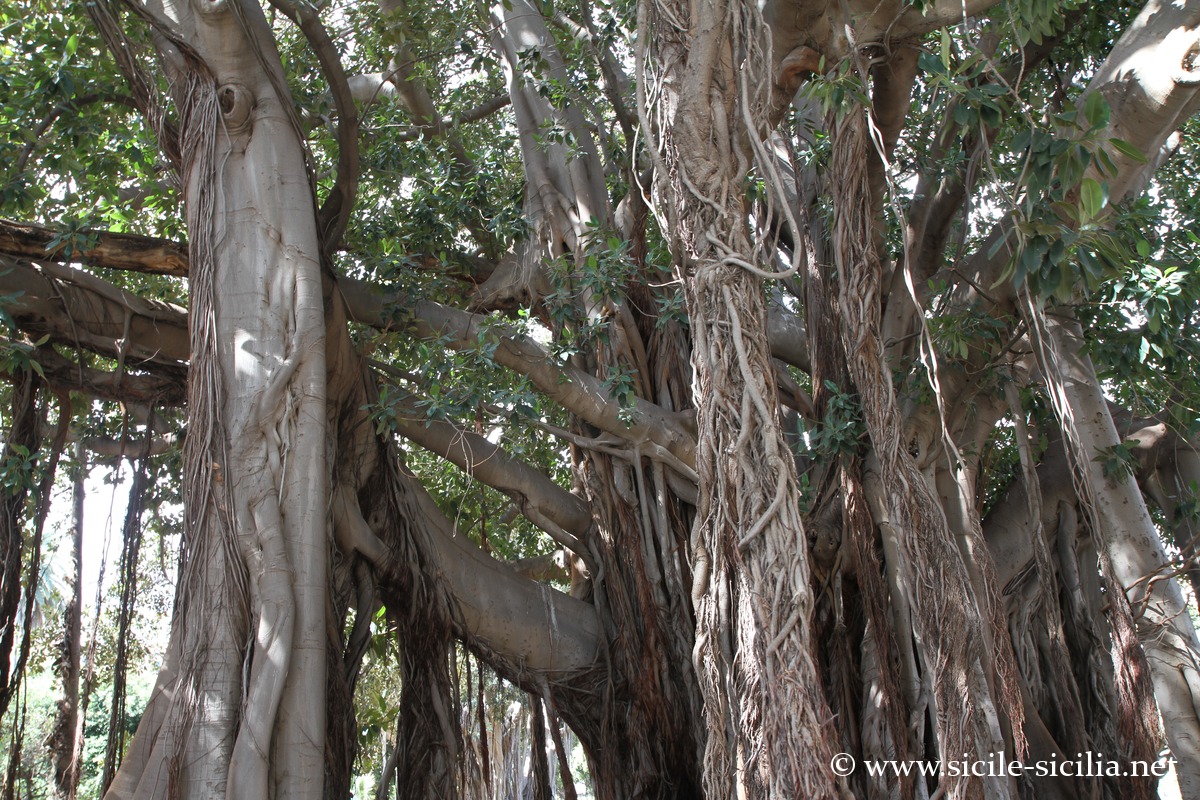
Ficus of the Garibaldi Garden
This small park was laid out in 1863 by Giovan Battista Filippo Basile in the center of Piazza Marina. It replaced an artificial forest that had existed there since the 16th century, called Lo Stradone then Piano della Marina, which served as a ceremonial and military space, but also as a place of public executions during the era of the Spanish Inquisition.
It is square in shape, with cast-iron gates, a pond in the center, of the late “English garden” type, combining symmetrical axes and free vegetation, typical of the 19th century in Italy.
Among the exotic plants that grow there, the Ficus macrophylla stands out, 30 meters tall and with a trunk circumference of more than 21 meters, planted around 1845. It is considered one of the largest and oldest ficus trees in Europe, whose monumental aerial roots are remarkable, having become secondary trunks.
The garden is adorned with sculpted busts of famous figures, especially from the 19th century, which pay tribute to political, intellectual and patriotic figures linked to Italian history, including Giuseppe Garibaldi.
Information
Giardino Garibaldi
Piazza Marina, 53, 90133 Palermo
Villa Giulia in Palermo
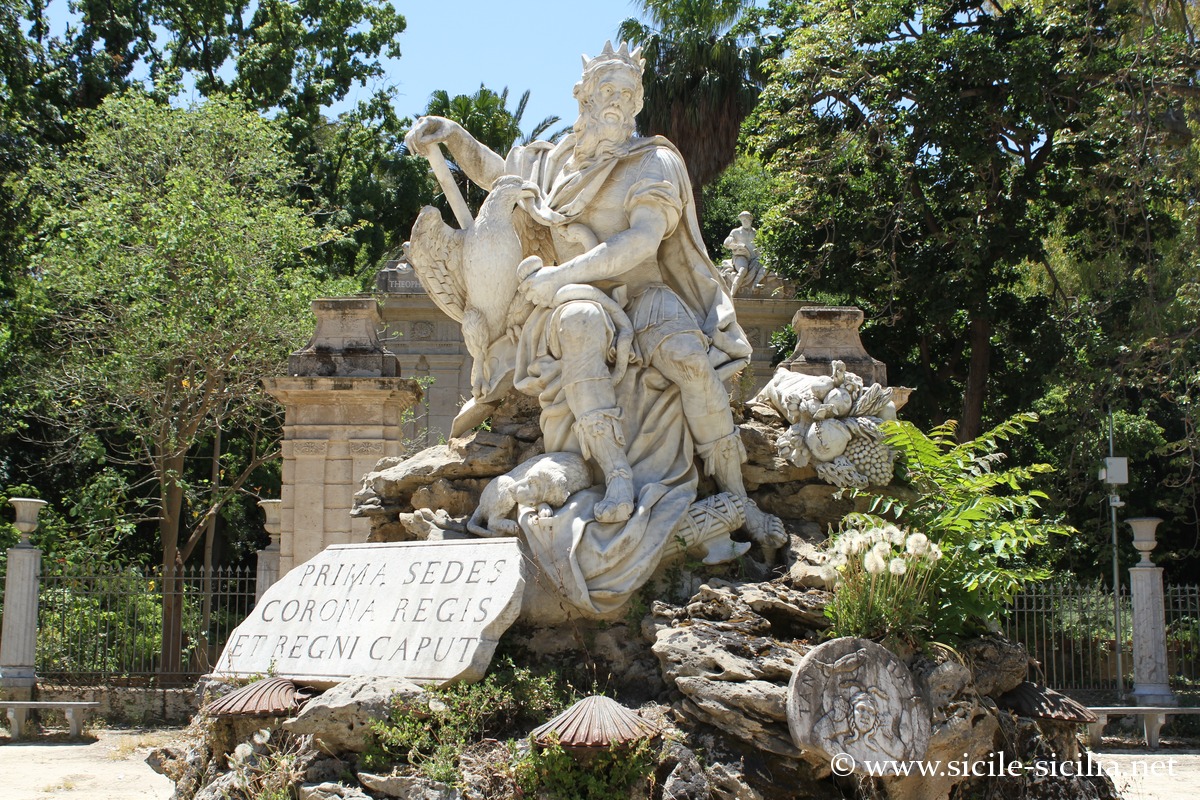
Fountain of the Genius, Villa Giulia
This place in the historic Kalsa district, which was used for executions, was laid out as a public garden in 1777 based on the design of Nicolò Palma, with a precise geometric design, combining squares, diagonals and circles. It was designed to harmoniously connect the royal residences and the aristocratic districts.
The iron fence dates from the mid-19th century, Neoclassical in inspiration, with its gate decorated with the eagle, symbol of the city, and two lions.
The interior is adorned with exedras, vases and sculptures, including the Abundance and Glory by Ignazio Marabitti (1763), made of marble and local stone that evoke classical mythology and the prosperity of Palermo in the Bourbon era.
On one side is the Fountain of the Genius of Palermo, an old crowned man, symbol of the city, on a cliff bearing the symbolic figures of Sicily and the Conca d’Oro, manifesting the protection and fertility of Palermo.
The Pompeian-style pavilions date from 1866, and in the center of the park is the Fountain with Atlas (1780) by Ignazio Marabitti, with a marble dodecahedron that served as a sundial.
Among other curiosities, decorative statues representing the four continents known at the time, avenues lined with cypresses and palms, or a small oratory.
Information
Villa Giulia
Via Lincoln, 90123 Palermo
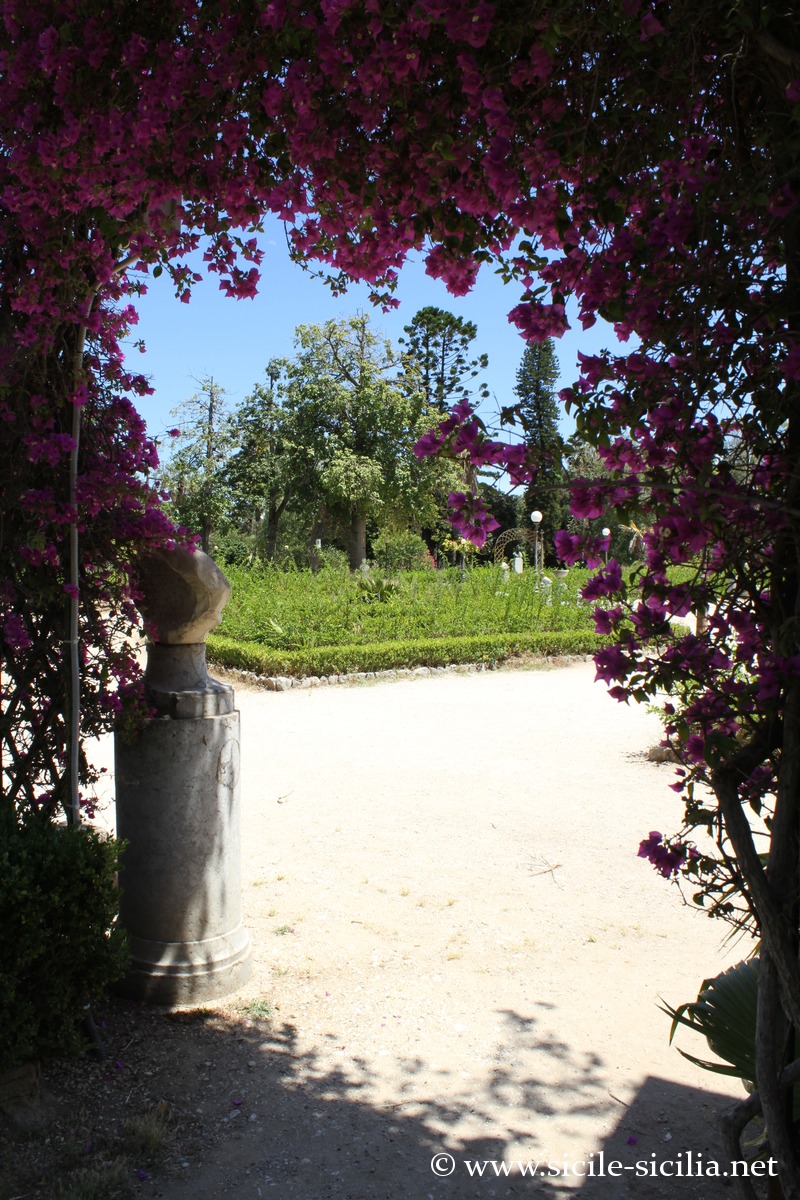
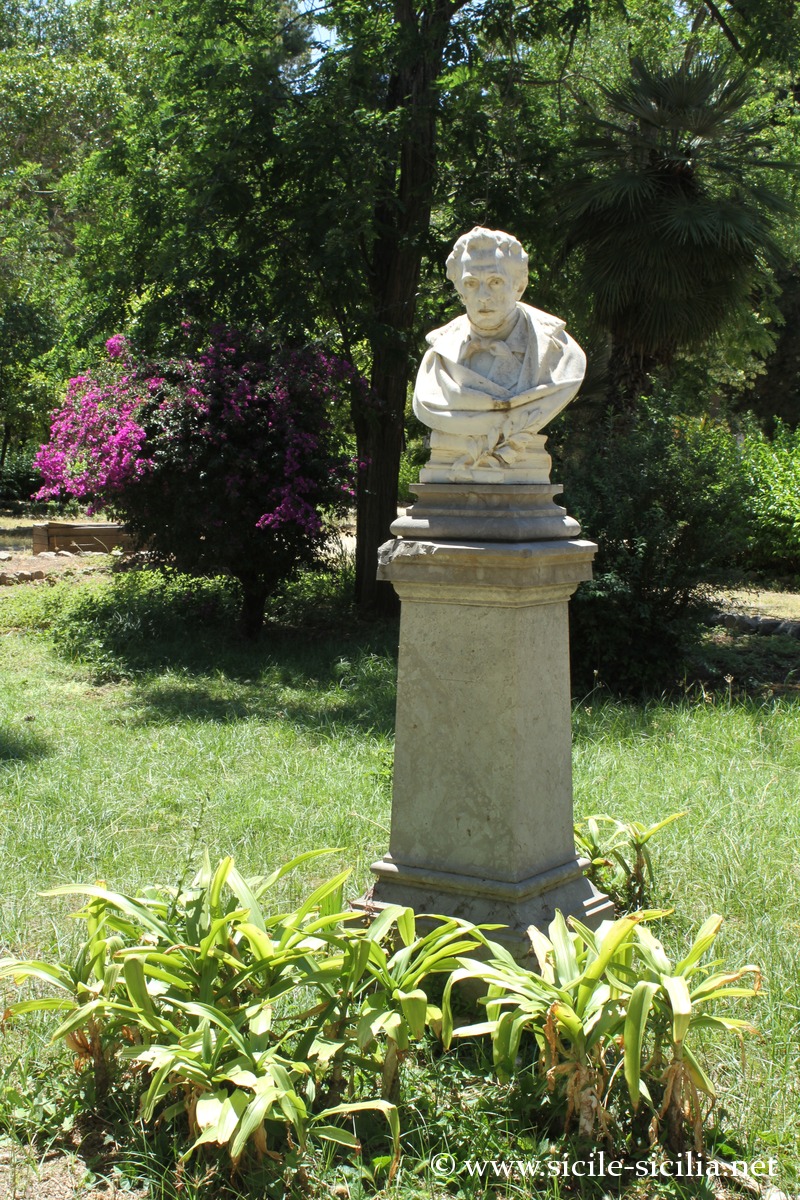
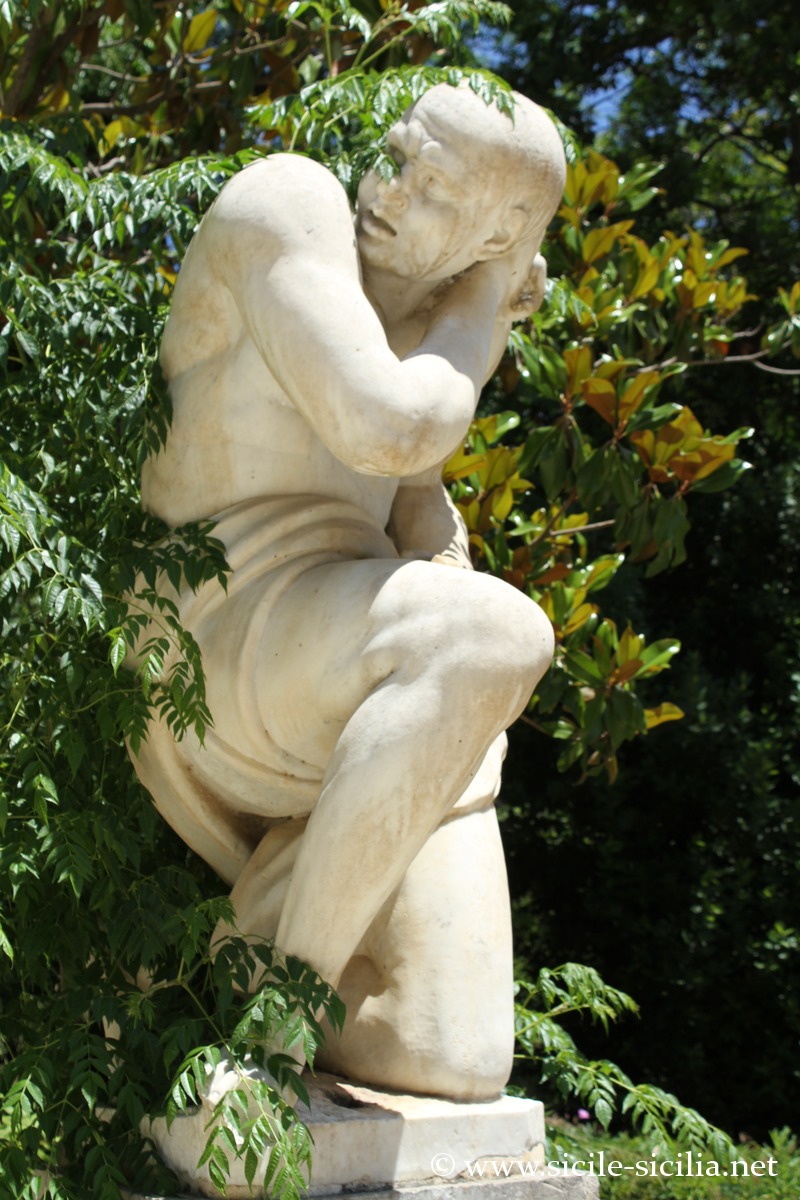
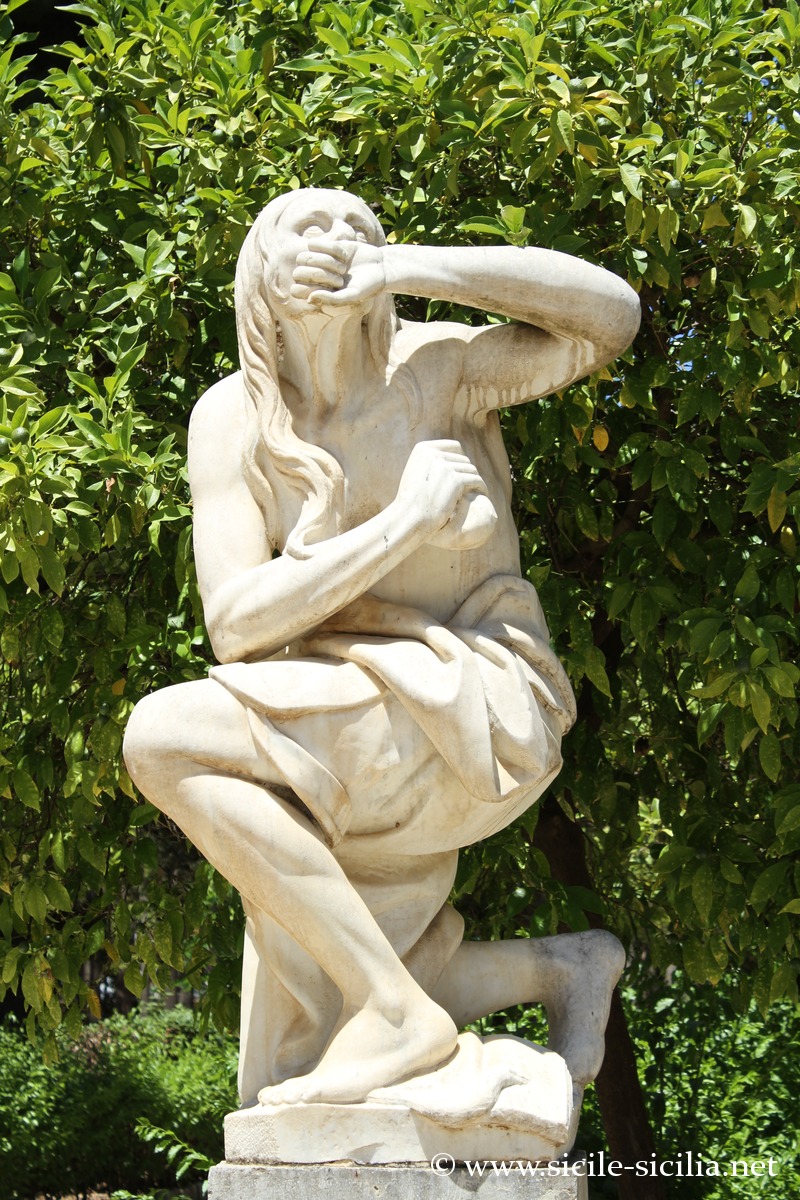
Exedra in the Villa Giulia 

Villa Giulia 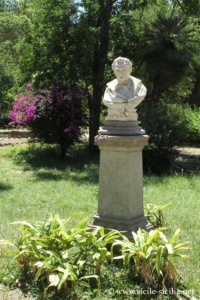
Bust in the Villa Giulia 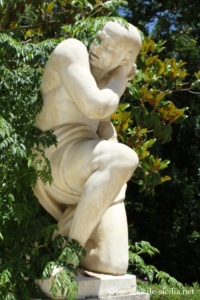
Statue in the Villa Giulia 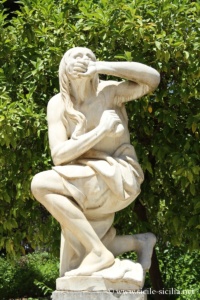
Statue in the Villa Giulia
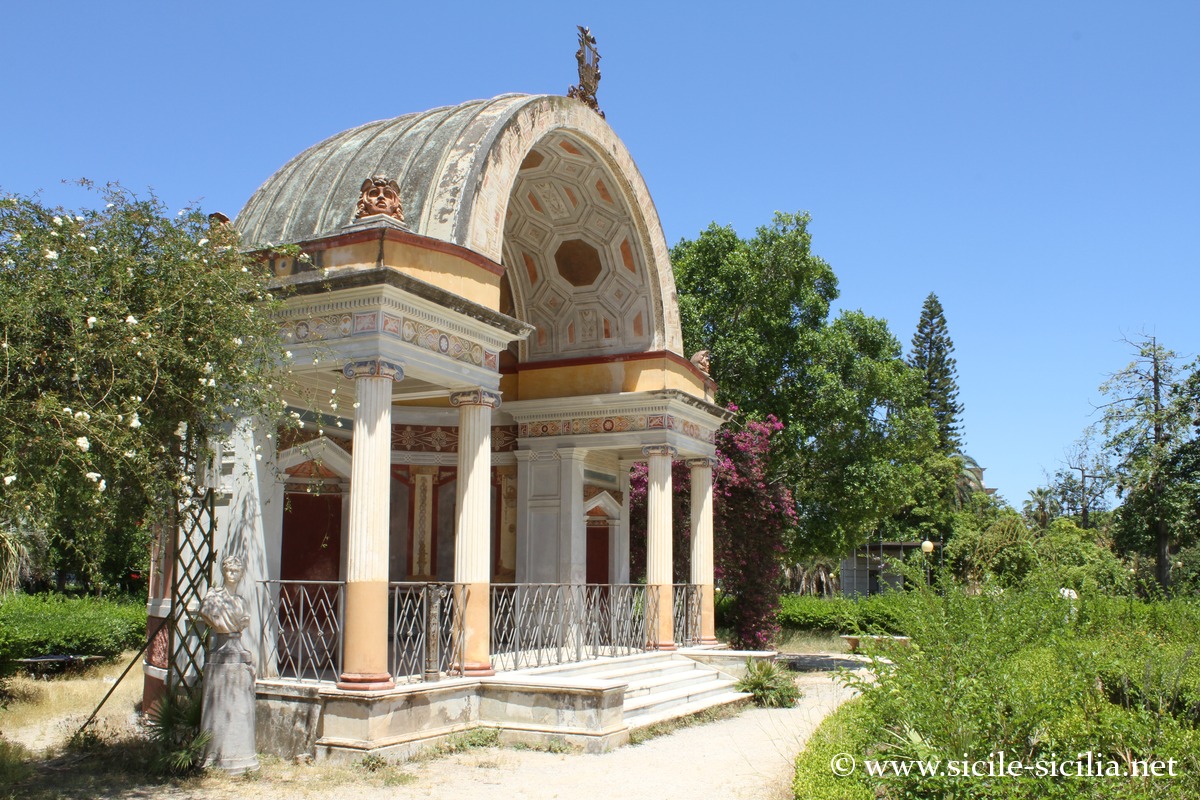
Villa Trabia
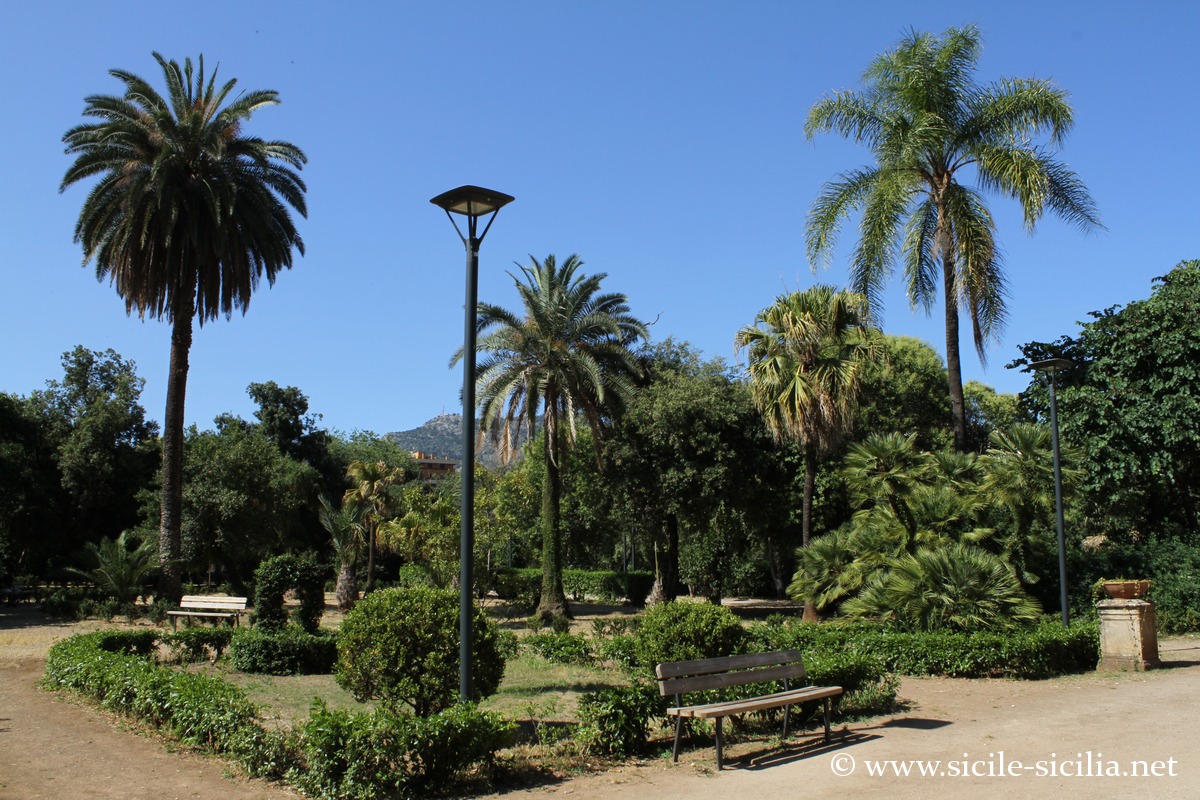
Villa Trabia
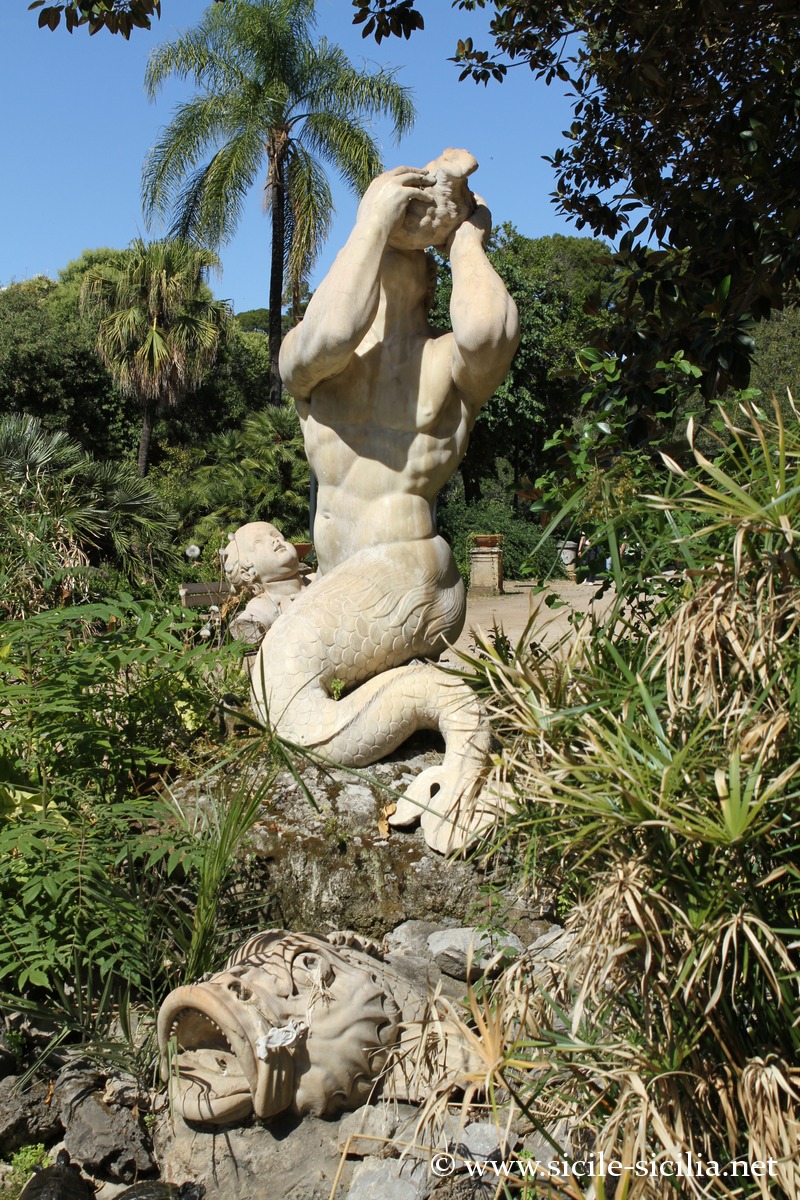
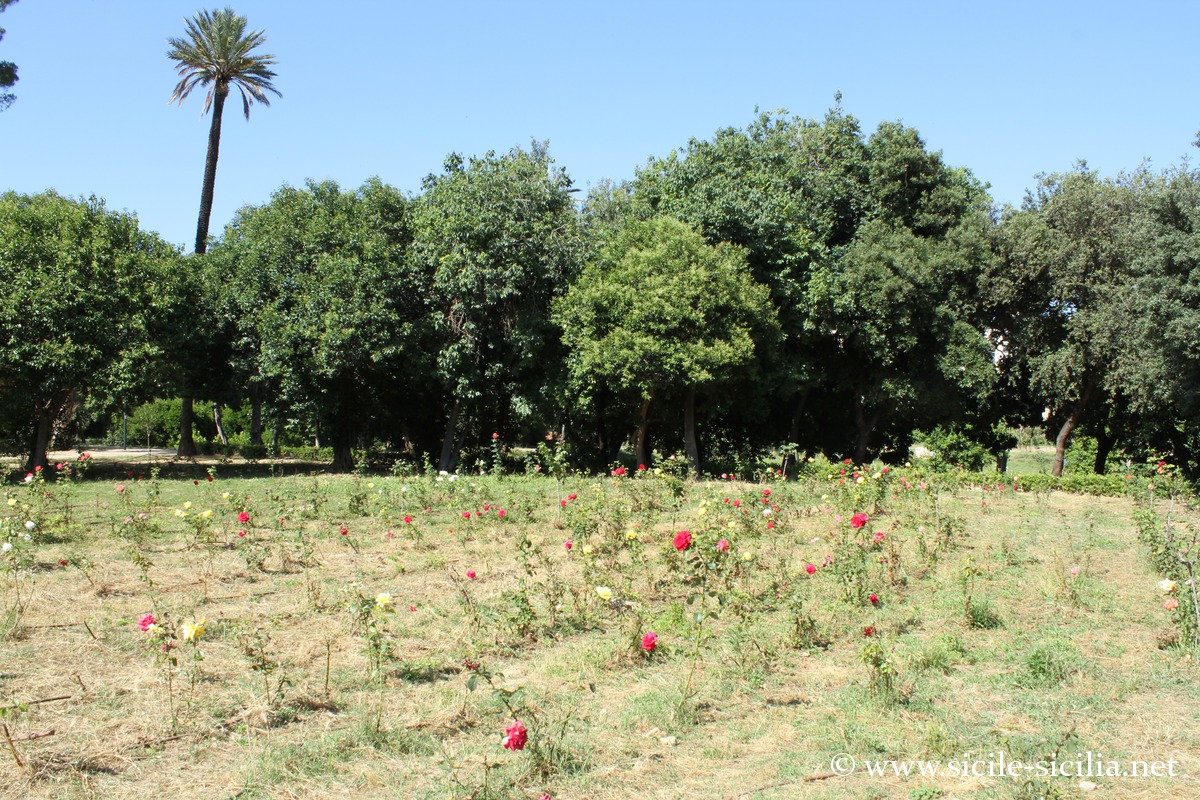
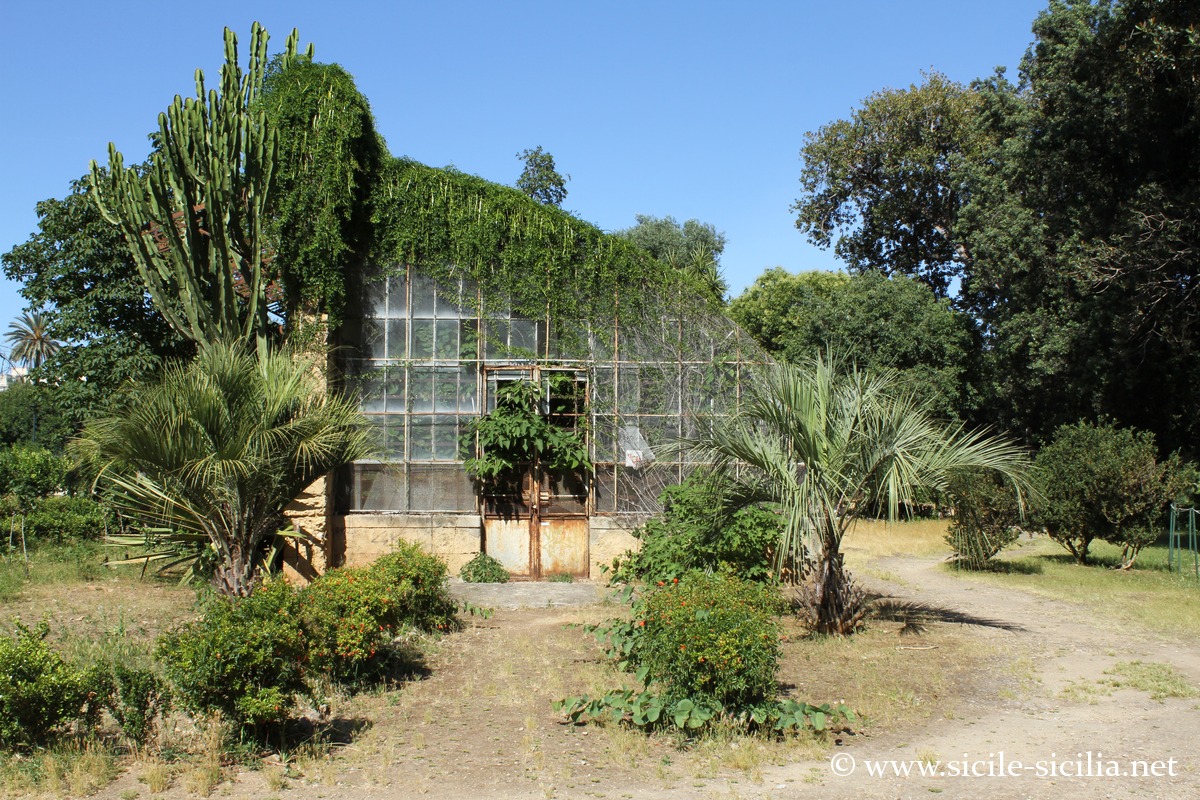
Very close to the Parco Mattarella, the park of the Villa Trabia was mainly laid out in the 19th century by the Lanza di Trabia family according to a romantic and botanical aesthetic. It stands out for its mature and abundant vegetation, mixing Mediterranean and exotic species: palms, monumental ficus trees, pines, araucarias, oleanders, conifers or oaks (about 150 species). The avenues are wide and shaded, the park is pleasant and quite lively, frequented by locals, without being a spectacular monumental garden.
Information
Villa Trabia
Via Antonio Salinas, 3, 90141 Palermo
Foro italico
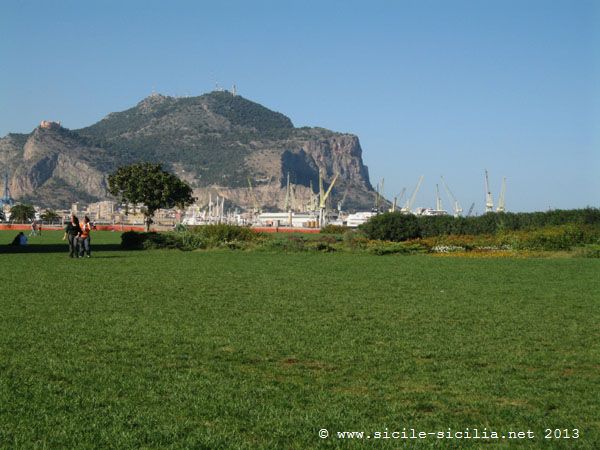
Foro italico in Palermo
The Foro Italico is the promenade space of the Marina on the seafront, a vast green space between the port of the Cala and the Villa Giulia, in the district of Kalsa.
The seafront was laid out from 1582, at the same time as the Porta Felice, by an order of the viceroy Marco Antonio Colonna, after the extension to the port of the Cala of the Via Toledo (or Càssaro).
It was enlarged in the 18th century, when a bastion and then ramparts were demolished. It was called Foro Borbonico until 1848, adorned with the statues of the Bourbon kings. Destroyed during the Second World War, it was redeveloped only from the late 1990s, having previously served as a gypsy camp, then as a site for circuses, and then as an amusement park.
Information
Foro Italico
Foro Italico Umberto I, 90133 Palermo
Garden of the Zisa in Palermo
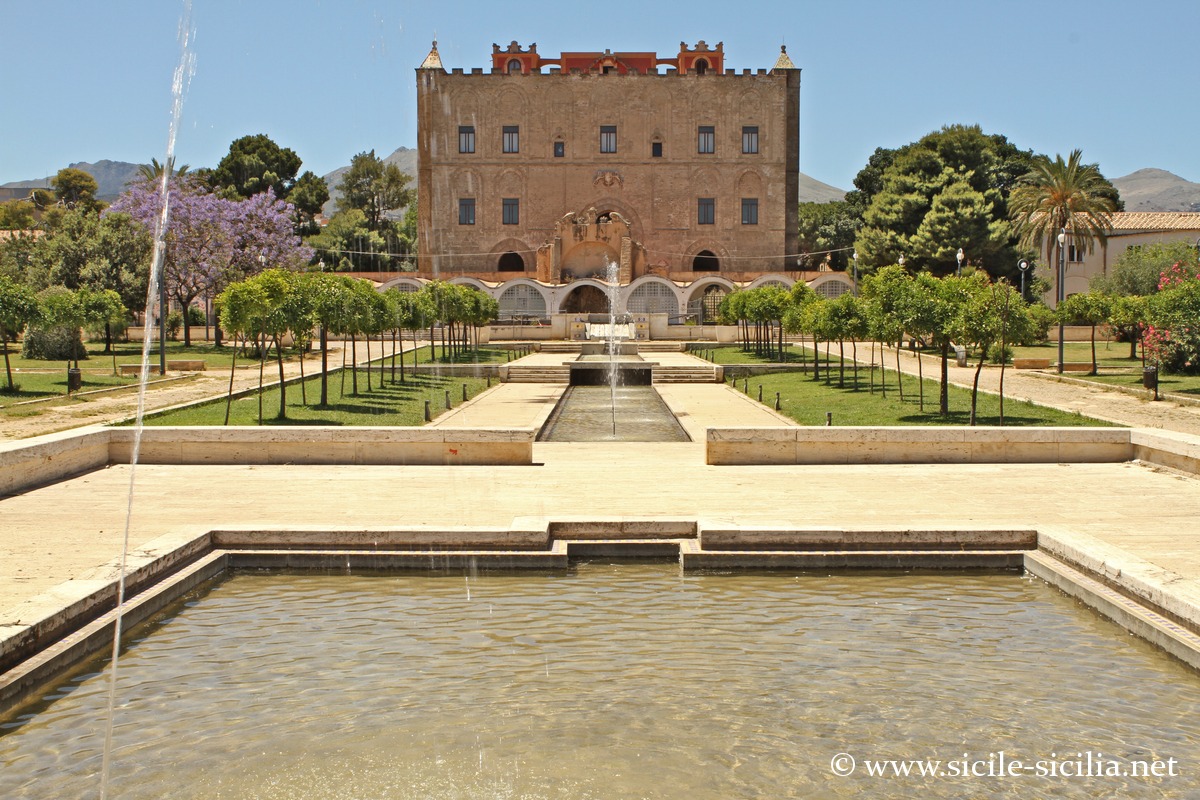
Palace and garden of the Zisa
The garden of the Zisa, inaugurated in 2005, was a hunting park facing the Palace of the Zisa and which covered 30,000 m2.
The green space is crossed by a canal connected to the water reservoirs and to the fountain room inside the palace.
The park mixes Mediterranean plants, or metal structures with Islamic motifs covered with climbing plants.
Some “dammusi” in stone that served as agricultural storage have been restored.
Information
Giardino della Zisa
Via Guglielmo Il Buono, 90138 Palermo
Parco della Favorita
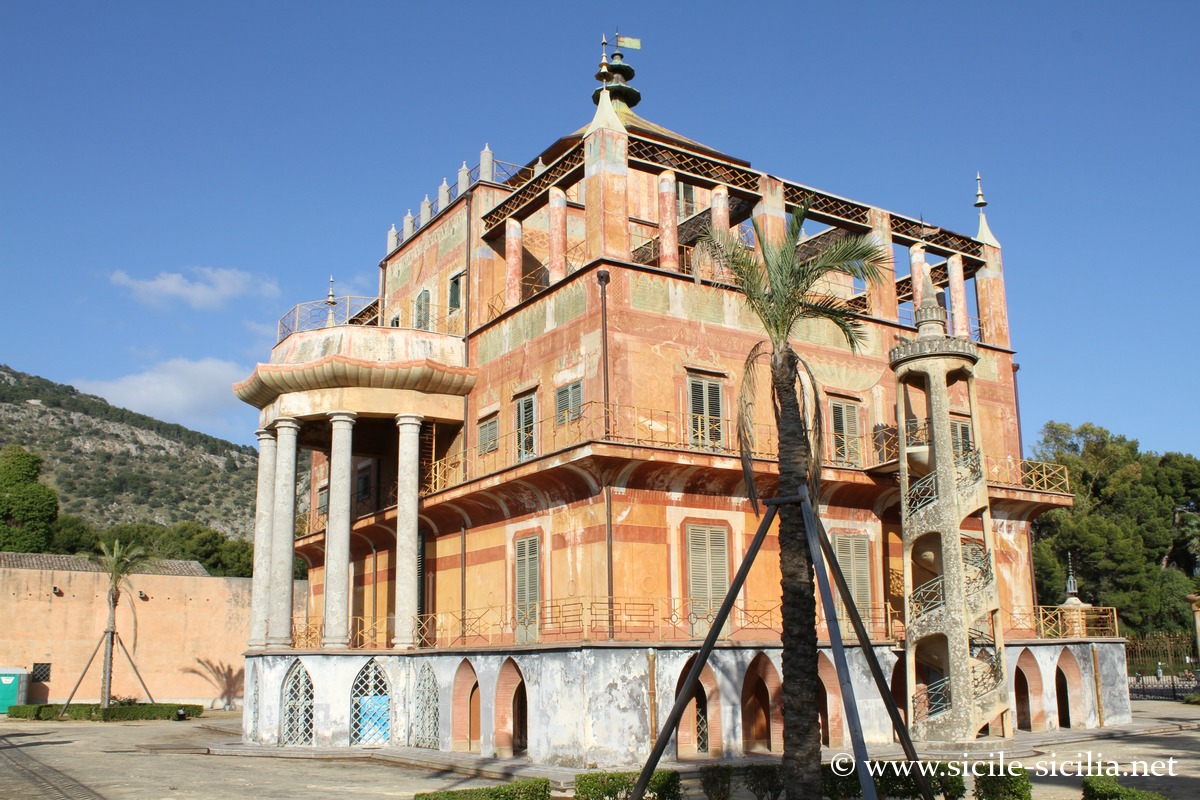
Chinese Palace
The Parco della Favorita extends within the regional nature reserve of Monte Pellegrino, just outside the center of Palermo, at the foot of the slopes of Mount Pellegrino. It is the largest green space in the city with its 400 hectares.
It was created from 1799 by Ferdinand III Bourbon of Sicily as a hunting reserve and for agricultural experiments. Two main avenues cross the park in parallel named Hercules and Diana, now paved and very busy.
The first leads to the Fountain of Hercules of the 19th century in Neoclassical style, with a statue of Hercules. The avenue Pomona (goddess of fruits and gardens) crosses the two large avenues perpendicularly.
King Ferdinand also built there his astonishing Chinese Palace of oriental style, with its roof crowned by a pagoda. Nearby another building houses the Giuseppe Pitrè Ethnographic Museum.
Just at the foot of the massif are the Scuderie Reali (the Royal Stables) converted into an agricultural museum, with towers, and the Niscemi cave with traces of Paleolithic rock art.
The valle del Porco is a very steep path connecting the stables to the sanctuary of Rosalia.
Information
Parco della Favorita
Viale Ercole, 35, 90146 Palermo
Parco Ninni Cassarà
The Parco Ninni Cassarà is a vast urban park inaugurated in 2011, designed as one of the largest green spaces in the city, of nearly 25 hectares, with pedestrian areas, cycle paths, sports areas, an artificial lake and several restored historic buildings.
However, following the detection of asbestos in the ground, it has been closed to the public since 2014 and is the subject of interventions, as well as debates about its reopening.
No credible information regarding its reopening is currently available (as of January 2026).
Map of Palermo with the gardens
If you see this after your page is loaded completely, leafletJS files are missing.