

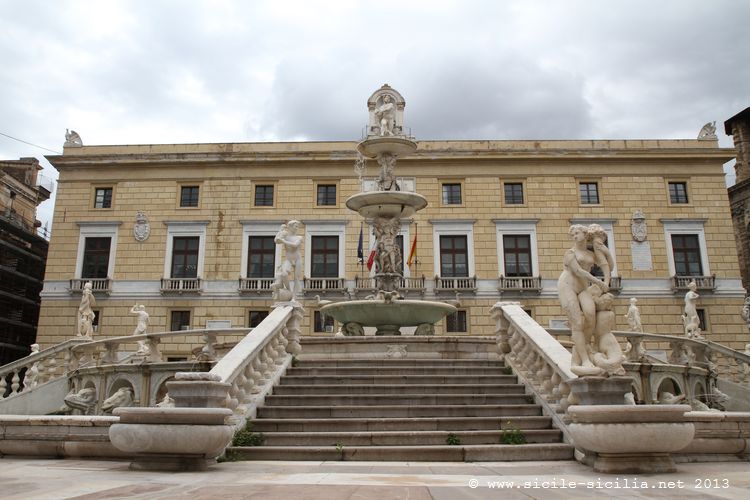
The Piazza Pretoria is also known as the Piazza della Vergogna (“Square of Shame” in English). It is located near the intersection of the Quattro Canti, considered the center of the historic city, at the crossing of via Maqueda and the Cassaro (now via Vittorio Emanuele).
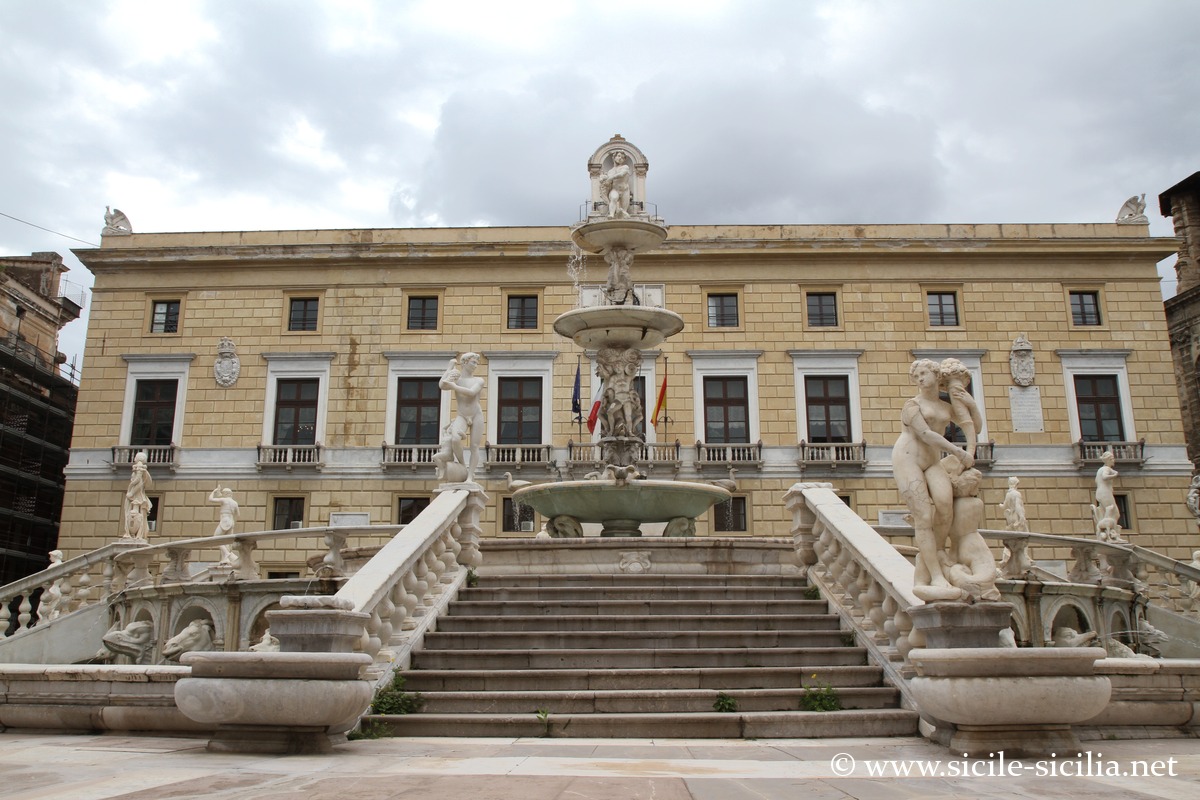
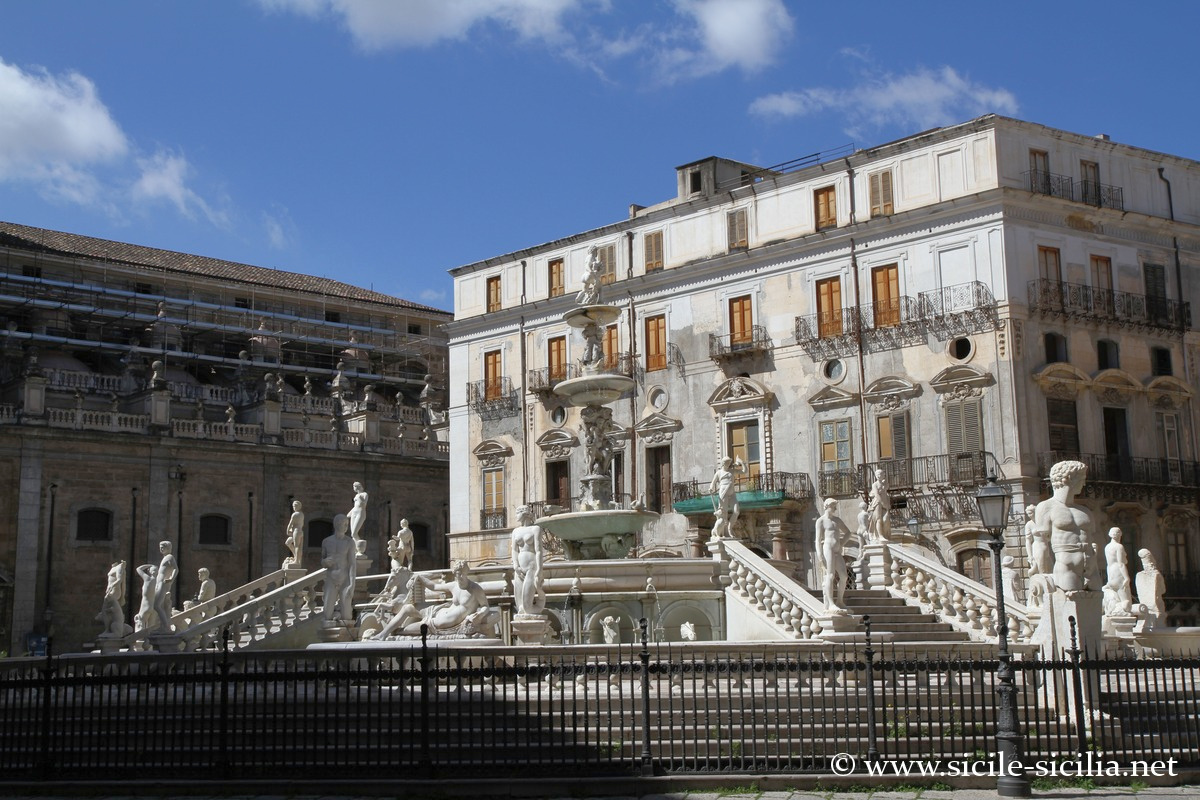
In the center stands the city’s most famous fountain, the Fontana Pretoria, and the facade of the Palazzo delle Aquile (Palace of the Eagles in English) rises there, housing Palermo’s city hall.
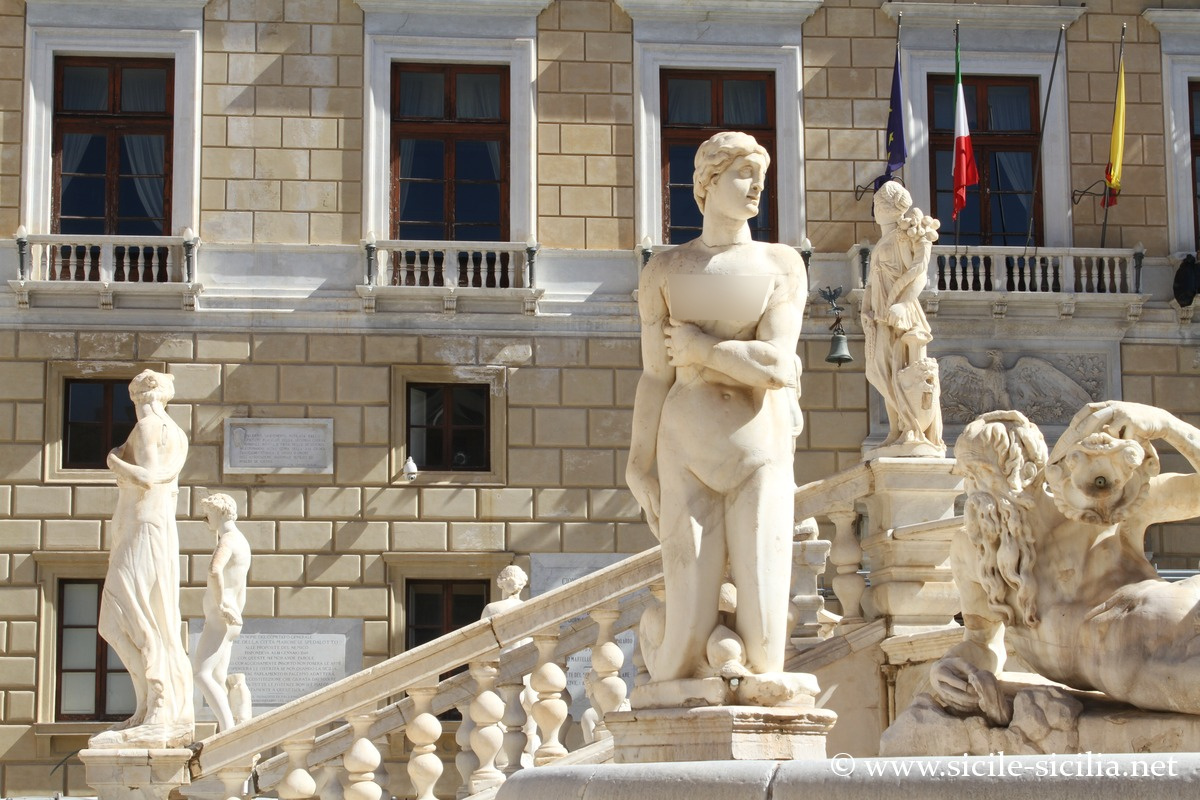
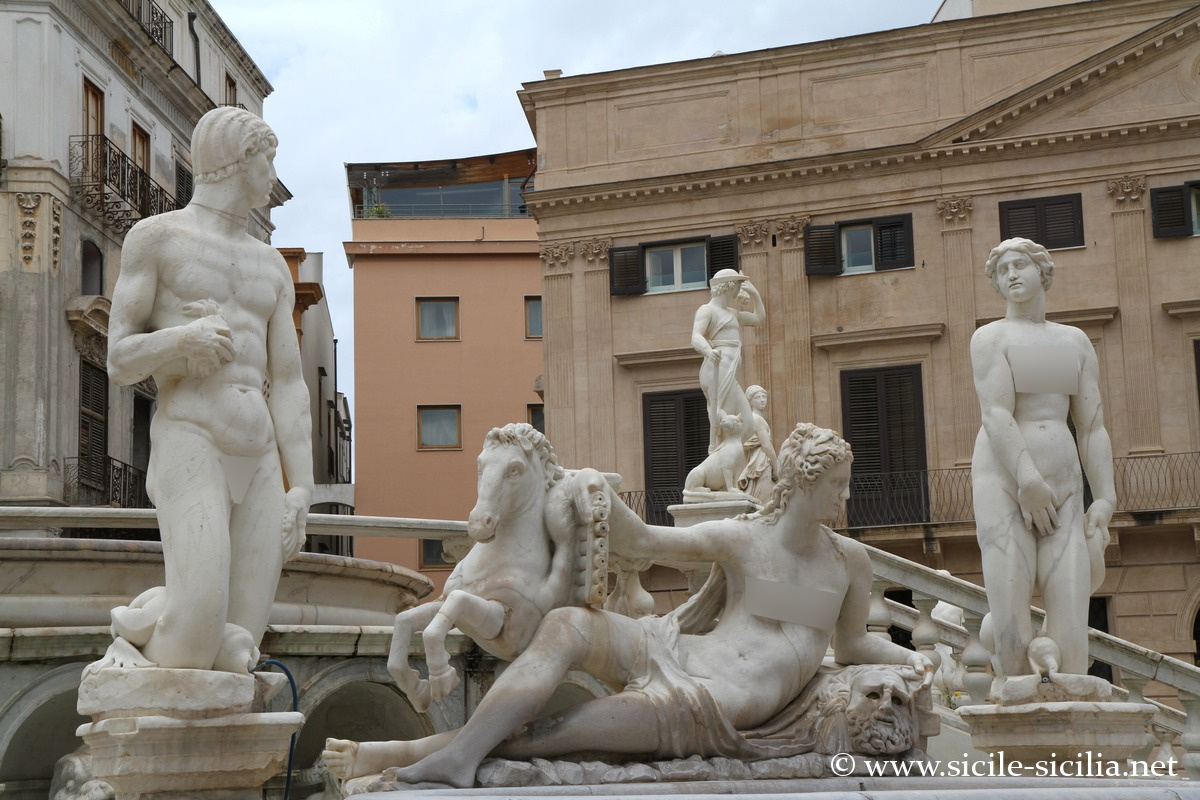
In the 18th and 19th centuries, the square was called by the people of Palermo “Square of Shame,” referring to the city’s corrupt administration, as well as to the nudity of the fountain’s statues.
Historical Overview
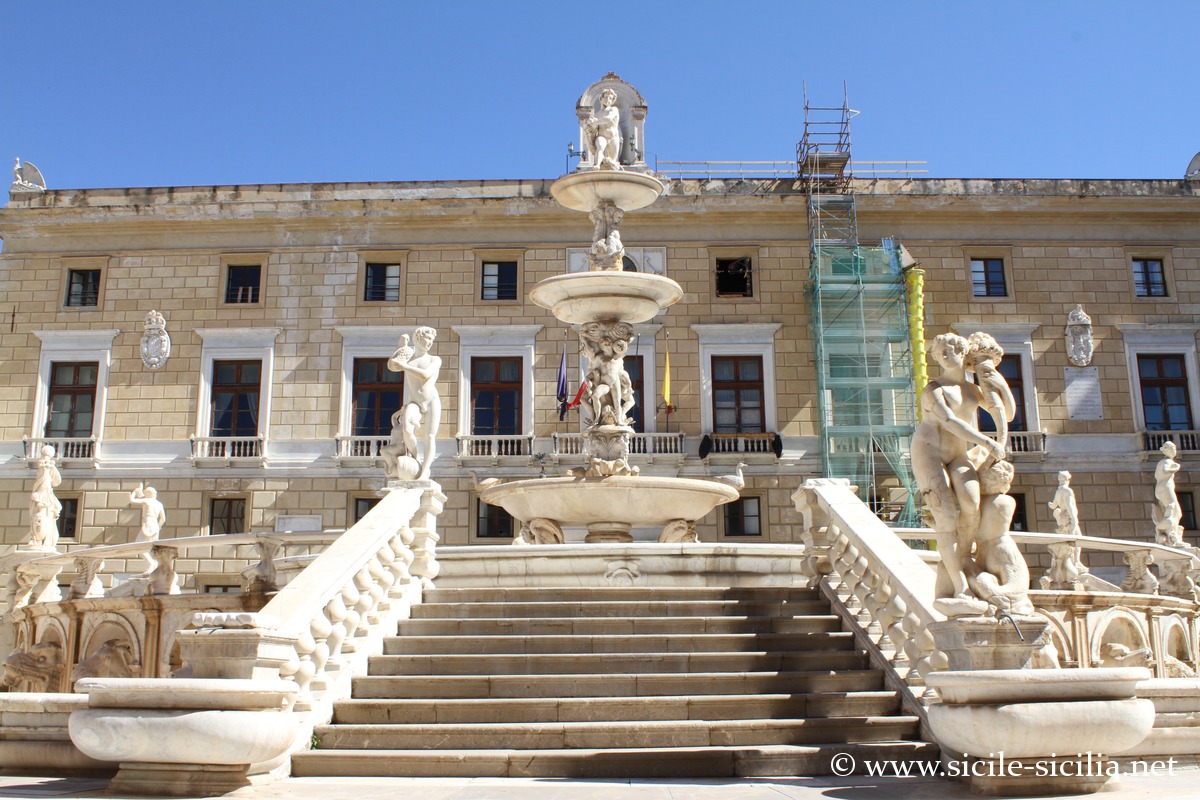
Pretoria Fountain and Square
In 1573, the Senate of Palermo bought a fountain that was originally intended for a private garden in Florence (where the Palazzo San Clemente was later built), with the intention of installing it here.
Its original commissioner, Don Luigi de Toledo, was in fact in great financial difficulty. However, the latter had the good fortune of being the brother of Don Garcia de Toledo, viceroy of Sicily and on good terms with the city senate.
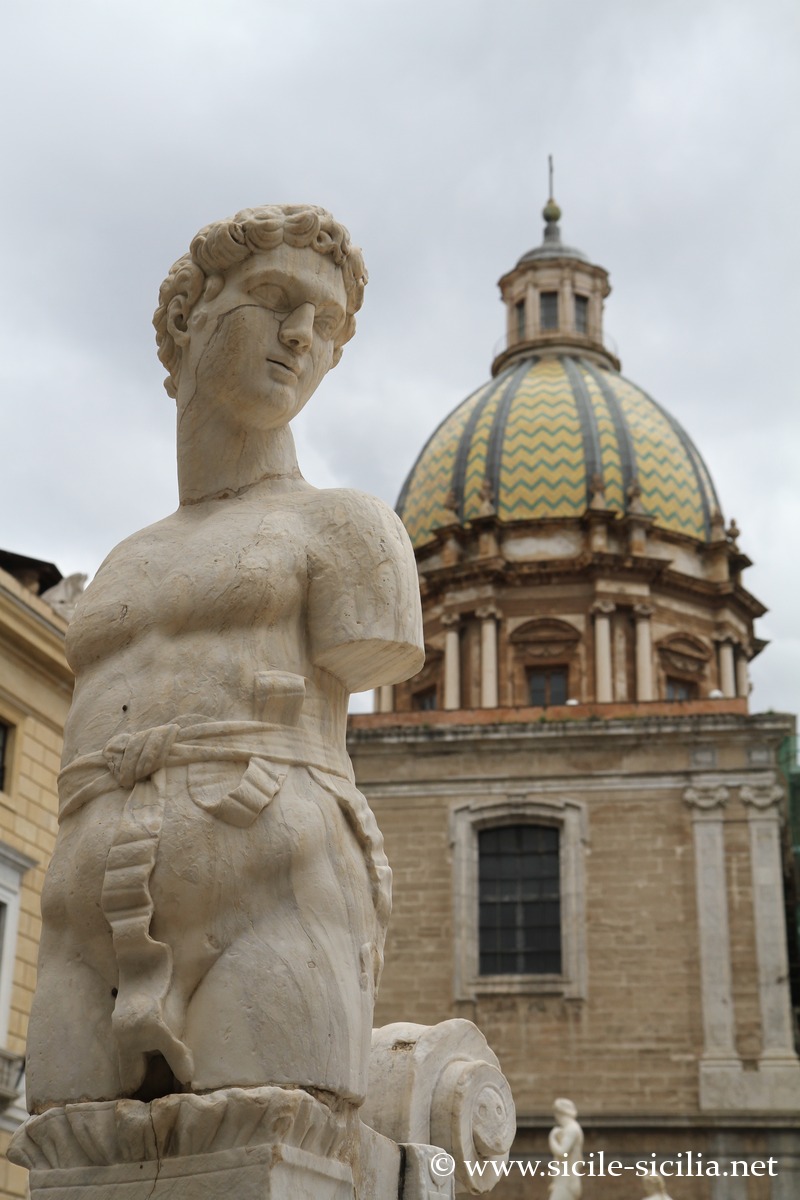
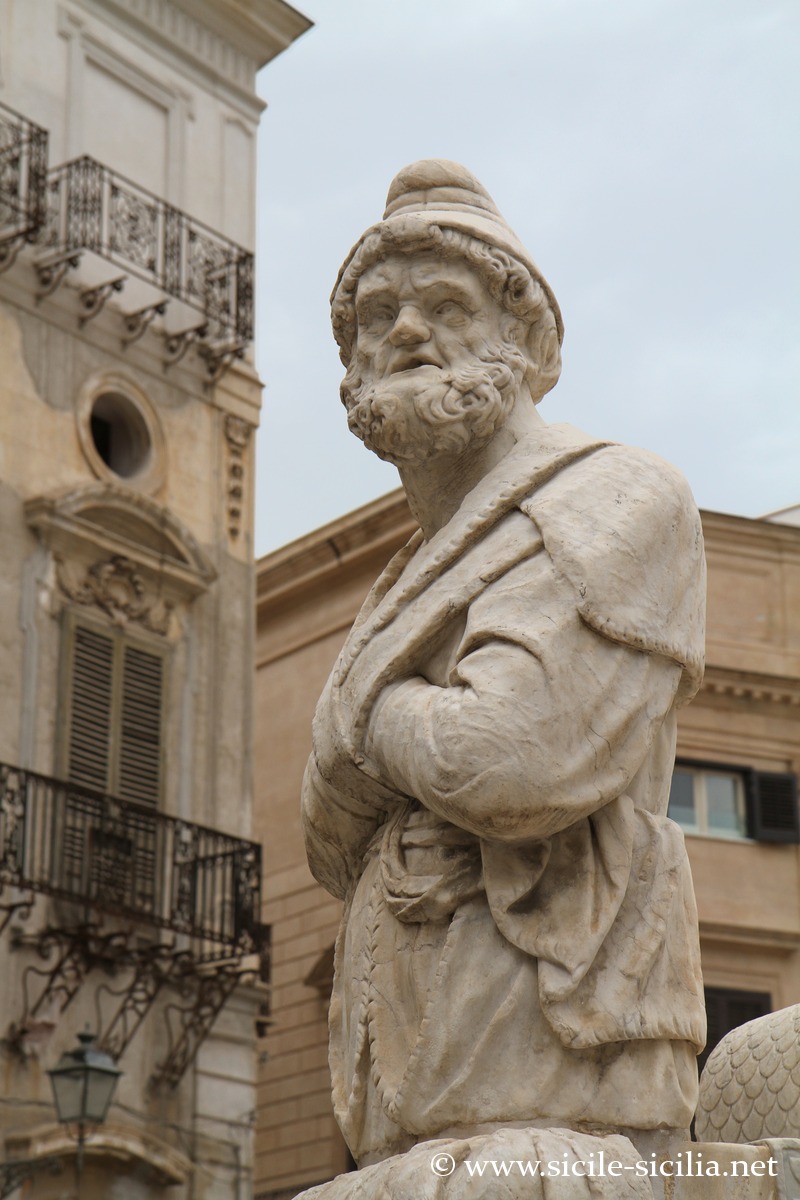
This fountain was intended to be one of the greatest examples of urban Mannerist sculpture in Italy. It was created in 1554 by Francesco Camilliani with its 48 original statues, sculpted in Carrara marble, a noble material of the Tuscan Renaissance.
In order to accommodate this imposing monument, several houses were demolished.
Part of the ensemble arrived in Palermo in May 1574, where it was installed and further adapted to the space of the square with several additions until 1581 by Camillo Camilliani, son of the sculptor Francesco, assisted by Michelangelo Naccherino.
Pretoria Fountain
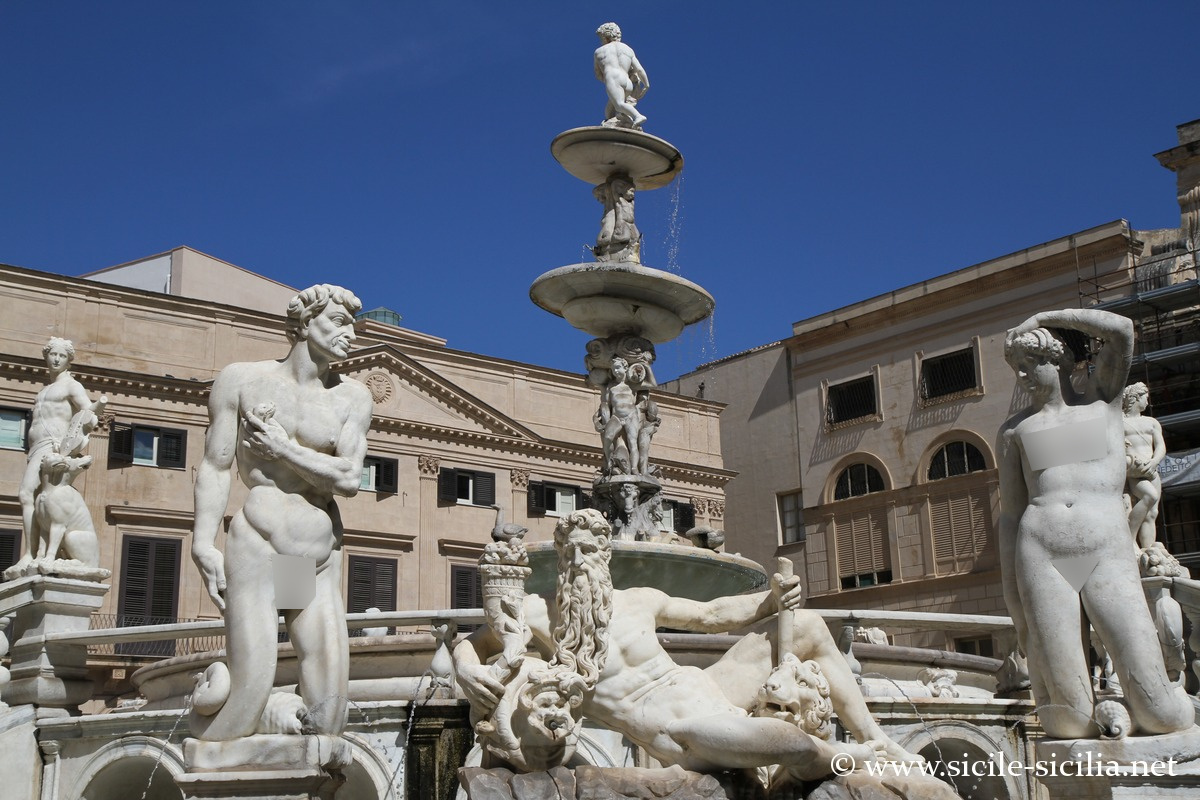
Pretoria Fountain and Square
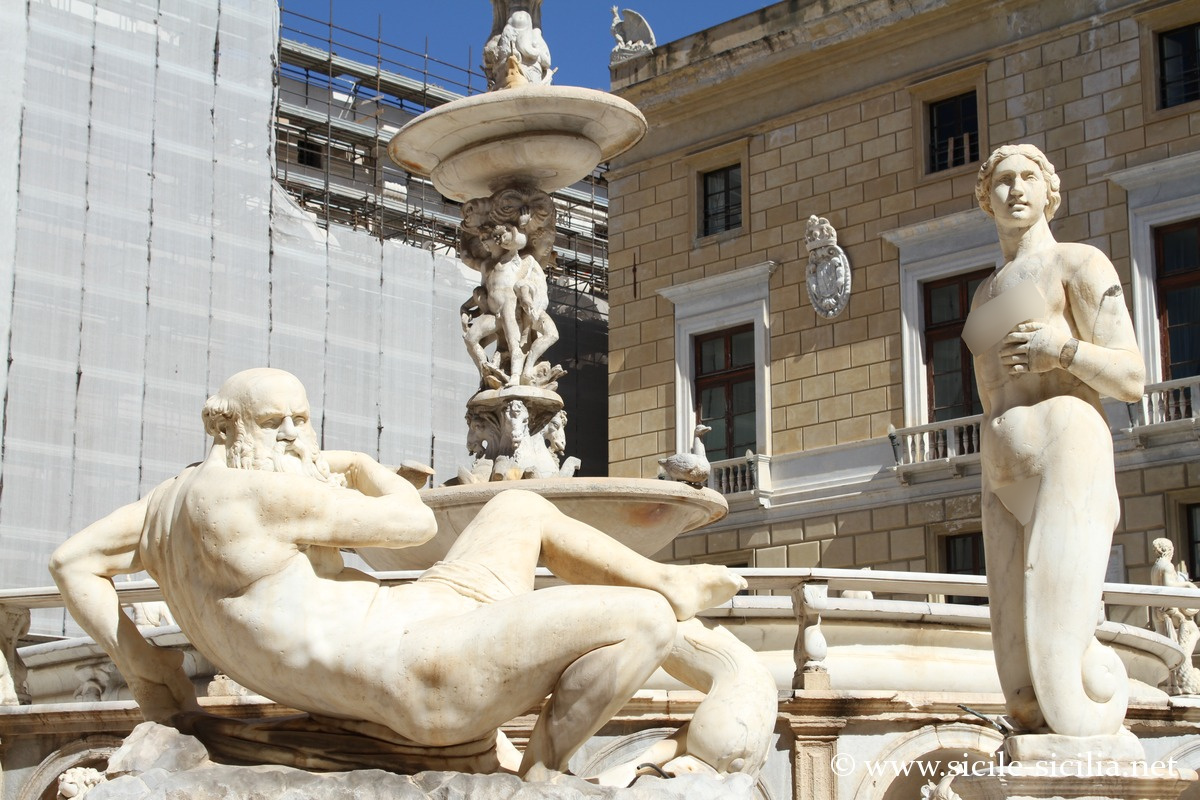
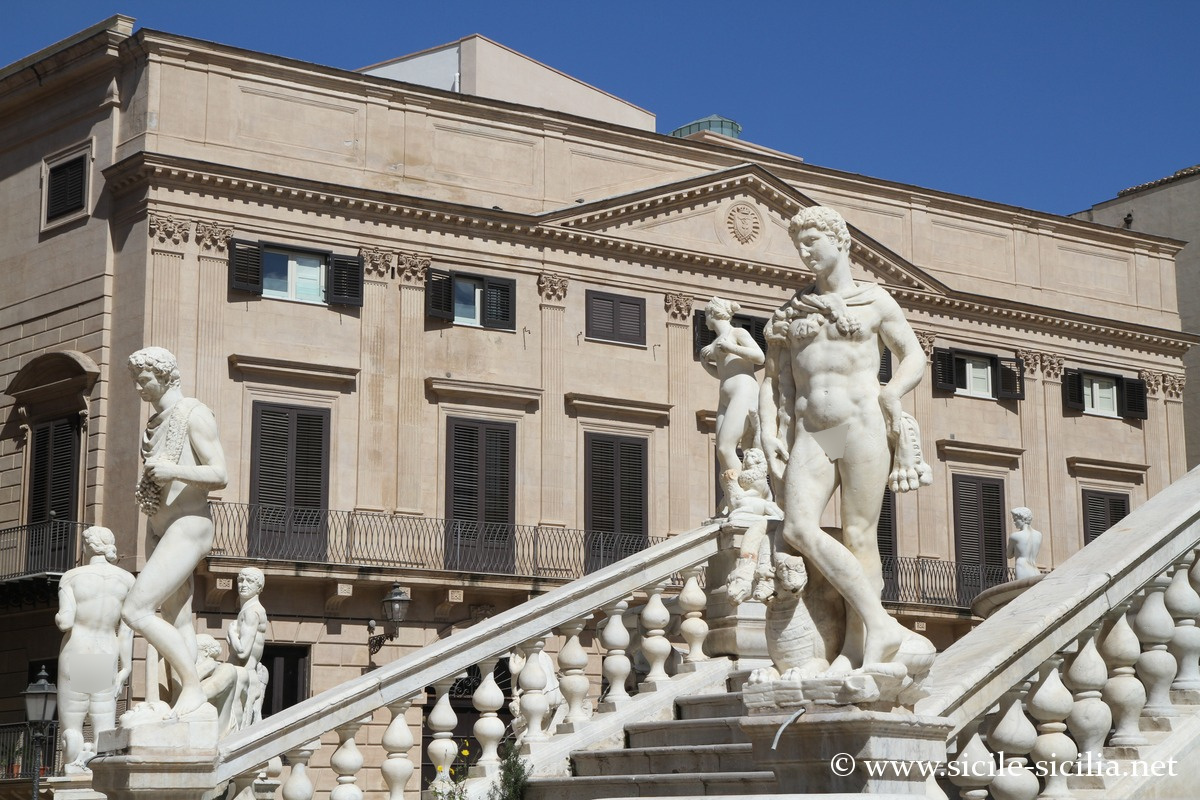
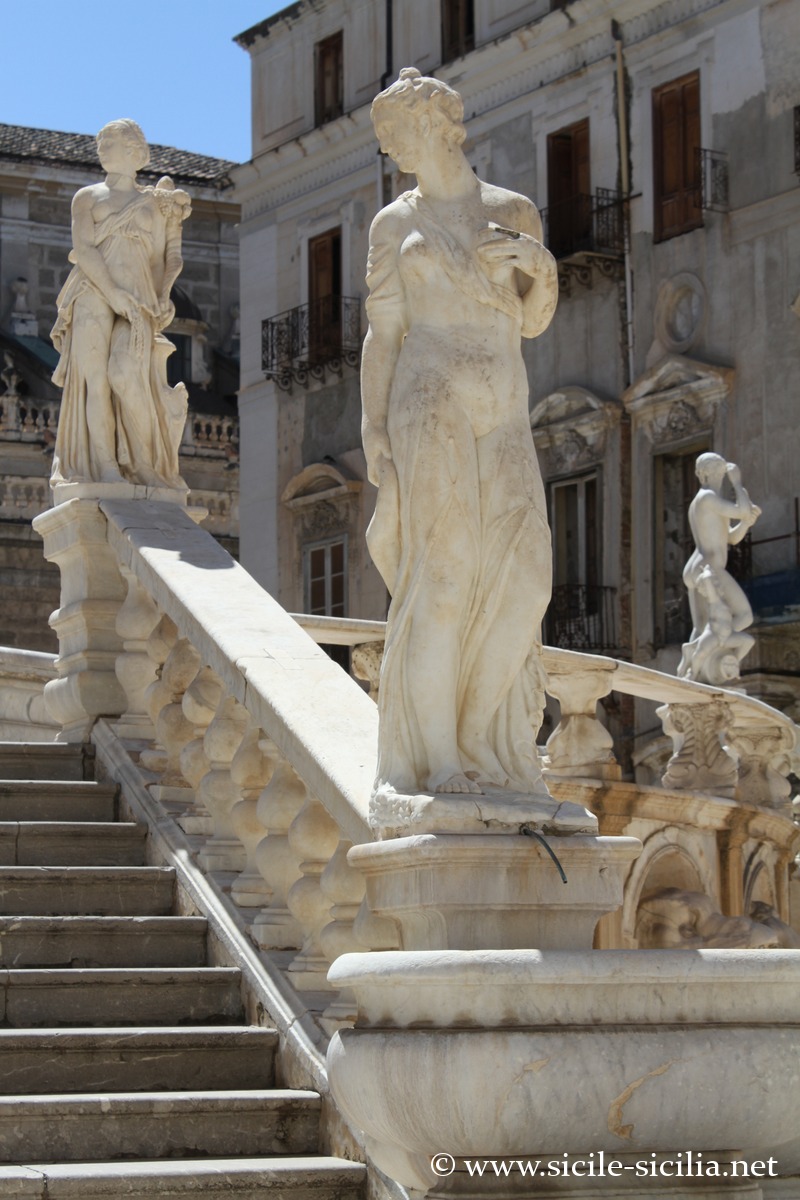
The fountain has an elliptical structure with three levels of concentric basins, framed by balustrades and symmetrical bridges.
It was originally designed for a Florentine garden, becoming a unique piece of the Baroque and Renaissance urban landscape.
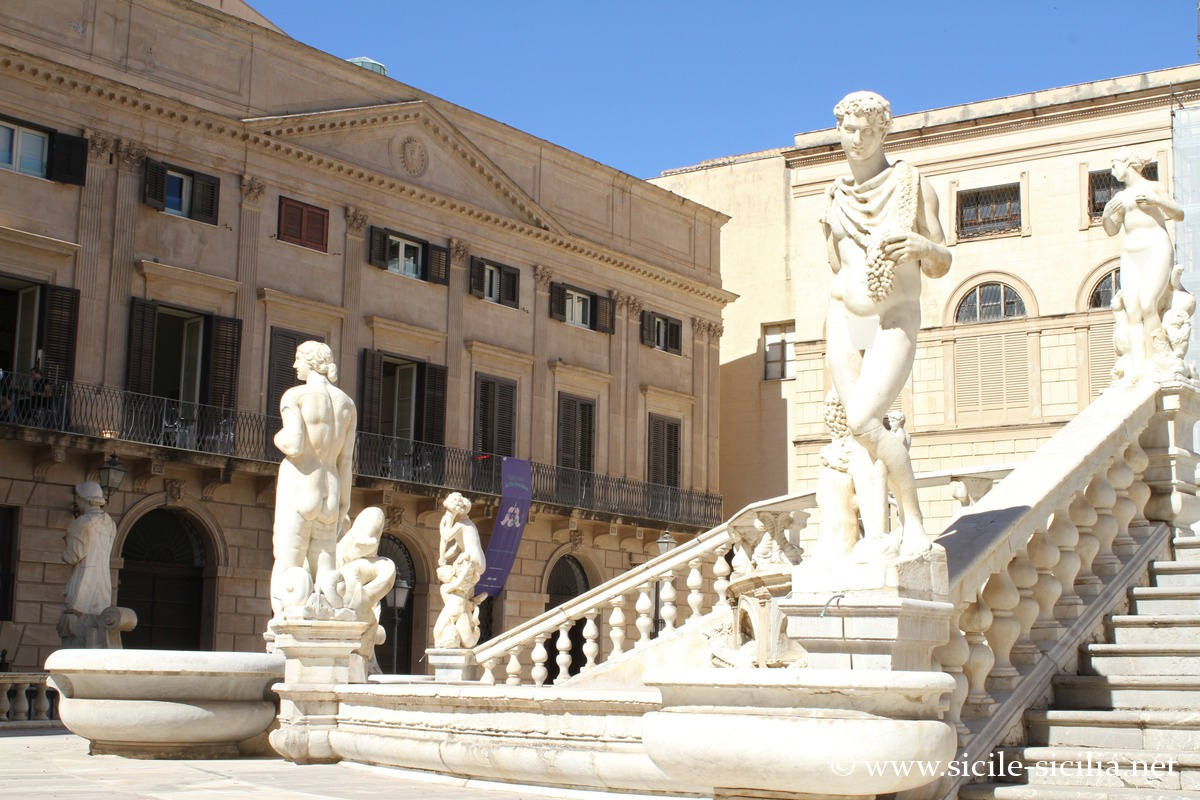
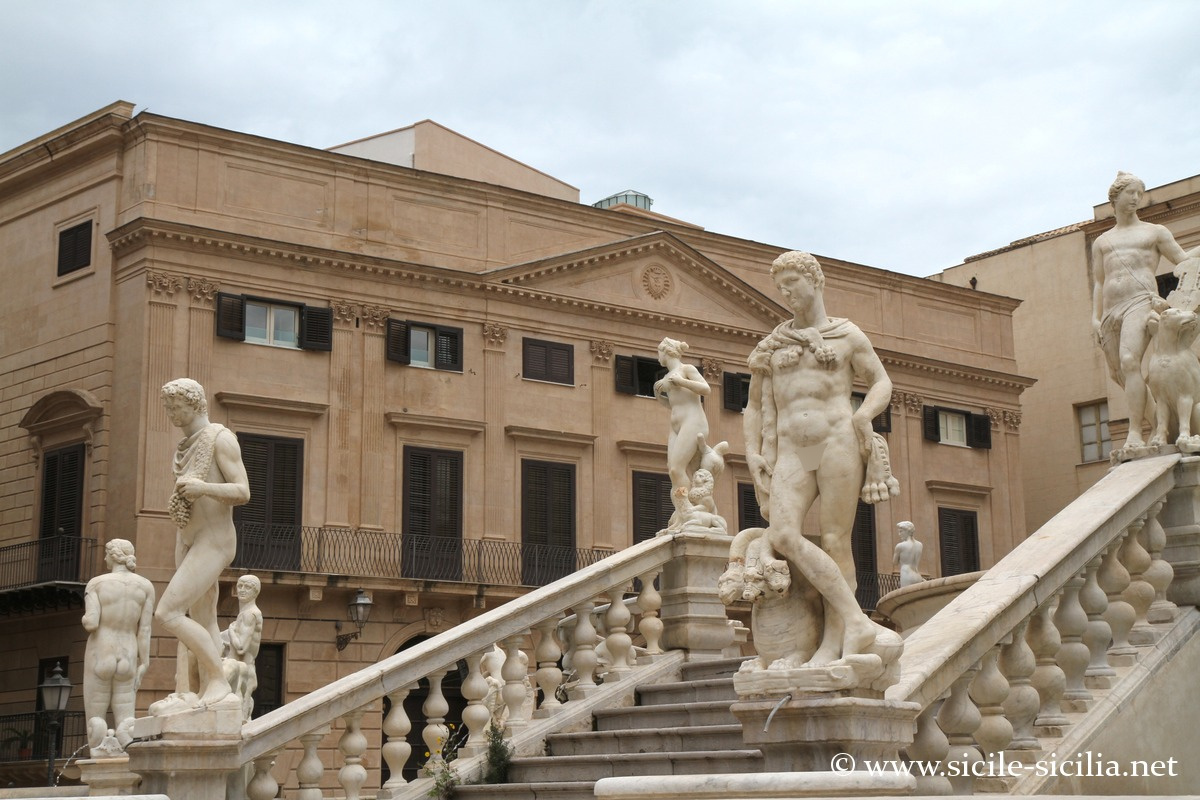
The central basin is surrounded by four stair-bridges that span another ring-shaped basin.
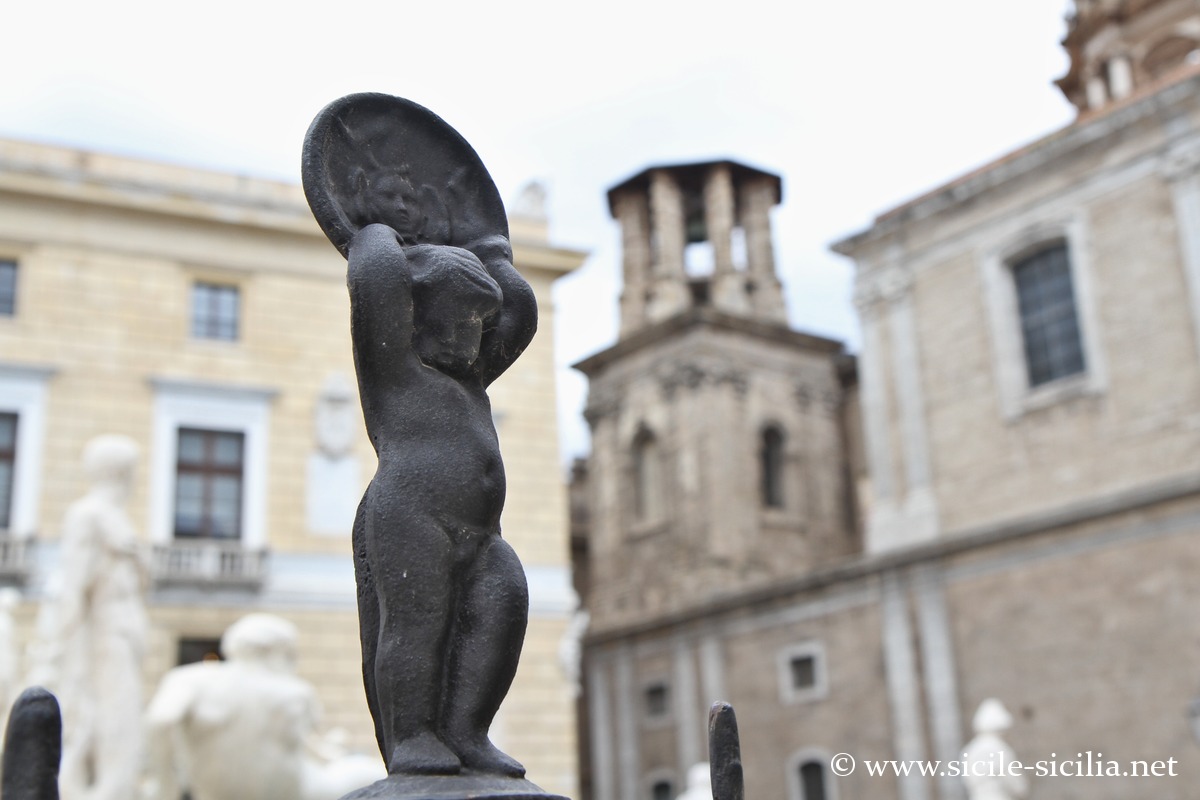
In the center, a pillar has three concentric basins. From the highest, water flows from a statue of a putto or Bacchus, a symbolic figure of abundance and wealth.
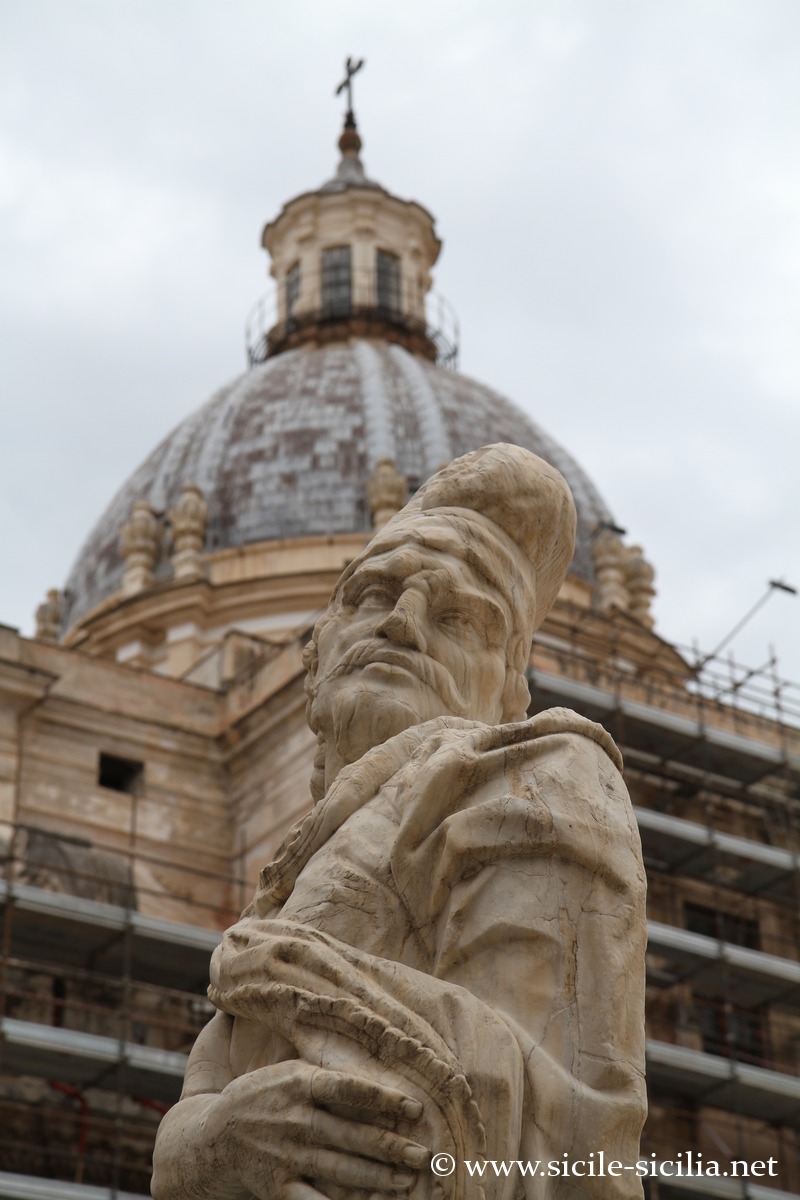
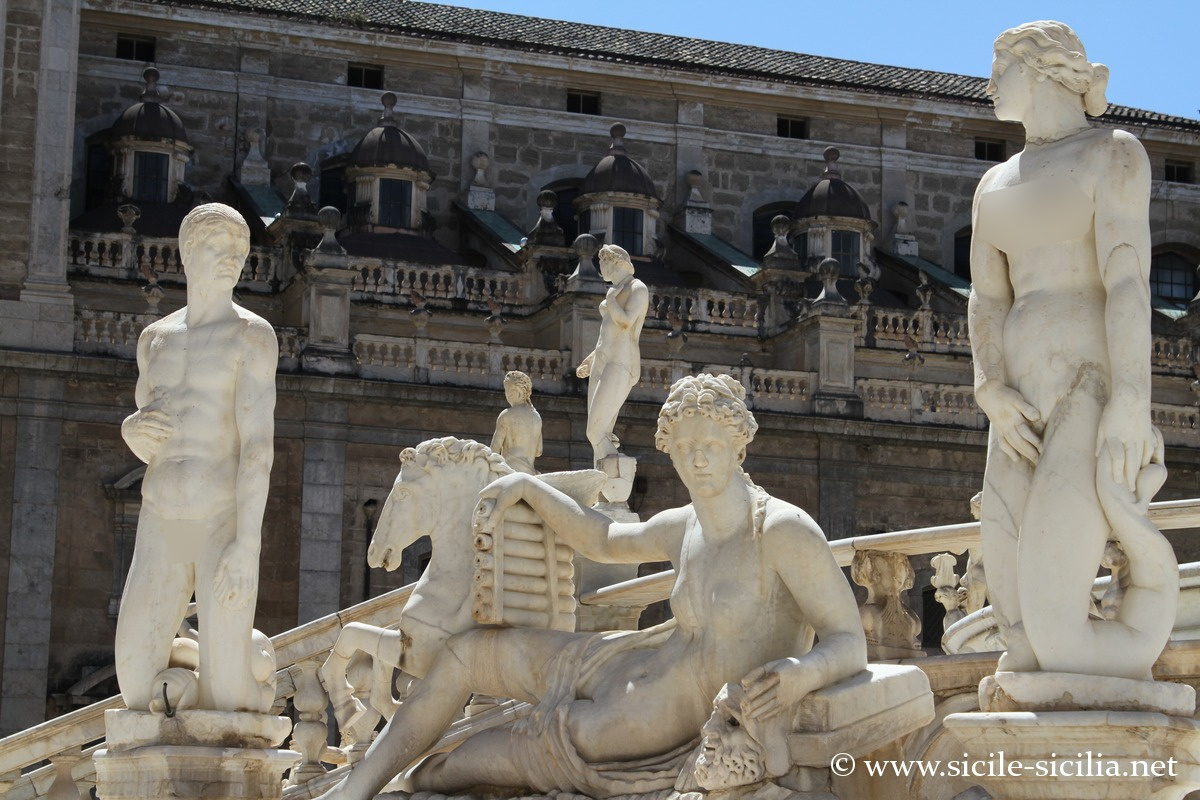
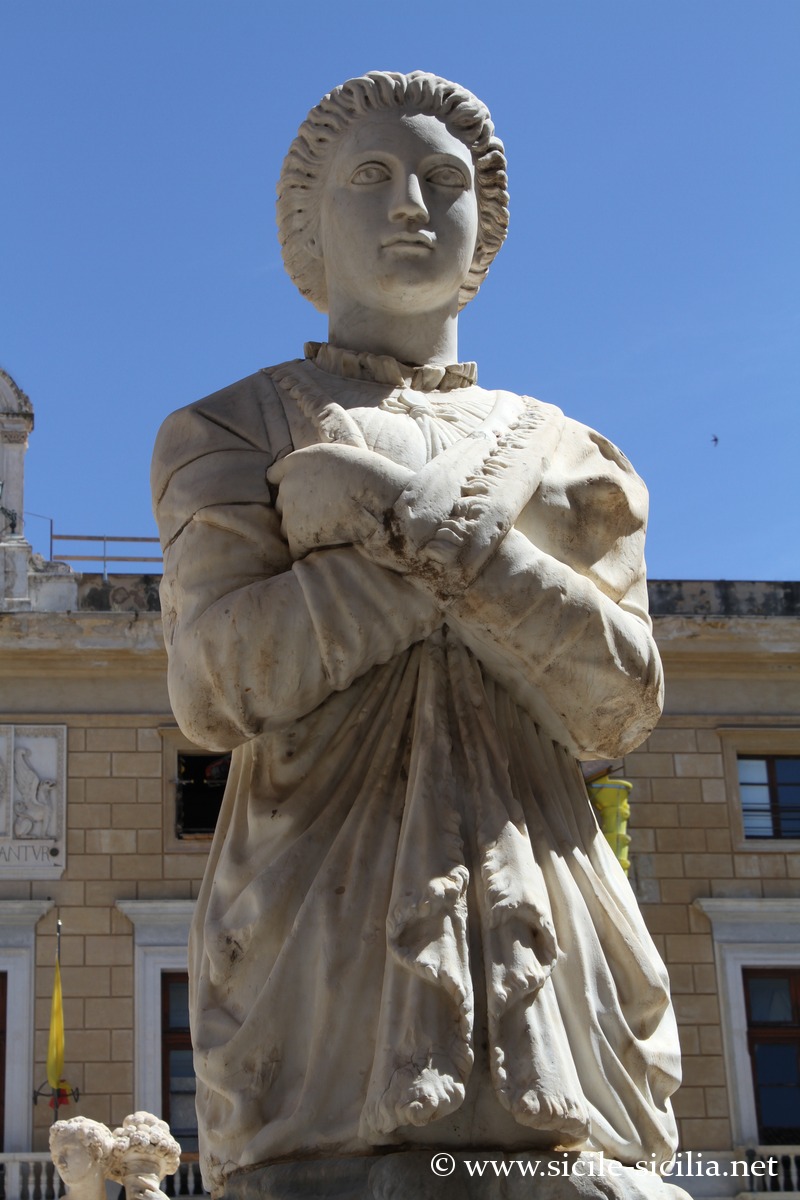
The statues represent the gods of Olympus and the rivers of Palermo (Oreto, Papireto, Maredolce and Gabriele), depicted in the form of a god or a reclining figure, surrounded by tritons, nereids and sirens, symbolizing the fertility and abundance of water in the region.
The lower levels are adorned with animal heads spouting water, mythological figures and sculpted groups that illustrate classical cosmology.
Description of the square
The Pretoria Fountain located in the center is framed by:
- The Palazzo Pretorio (Palazzo delle Aquile), seat of Palermo’s city hall after having been the prefect’s residence, built in the 14th century and restored in the 19th century, the church of Saint Catherine (late 16th century).
It takes its name from the sculpted eagles that adorn the facade. - On the side opposite the Palazzo Pretorio, a large monumental staircase descends toward via Maqueda.
- Church of Saint Catherine: late Baroque, it has one of the most important polychrome marble interiors in Sicily, famous for its decoration and its adjacent convent.
- Palazzo Bonocore: a neoclassical palace transformed over the centuries, today an exhibition venue and museum of Sicilian cultural heritage, with richly decorated halls.
- Palazzo Bordonaro: a historic 16th-century residence, integrated into the urban fabric of the square, recently restored and reincorporated into the cultural and heritage context of the center.
Where the Pretoria Square is located in Palermo
If you see this after your page is loaded completely, leafletJS files are missing.
Photo gallery
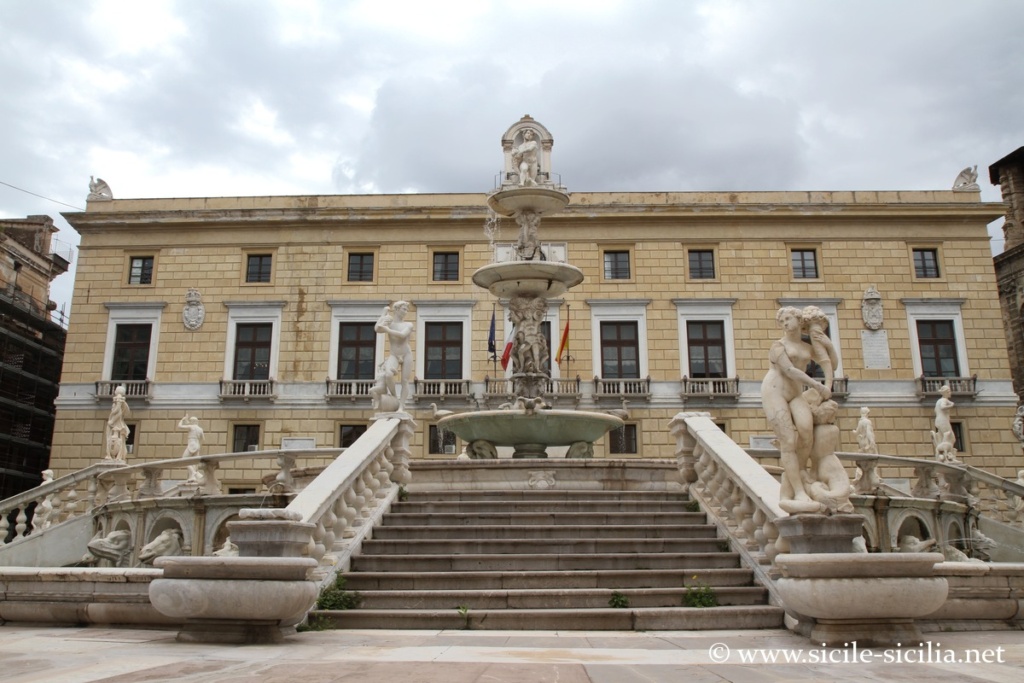
Pretoria Fountain

Pretoria Fountain and Square 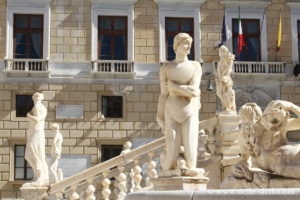
Pretoria Fountain 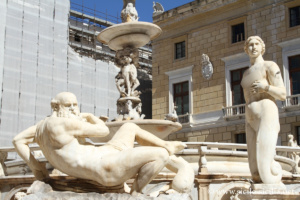
Pretoria Fountain 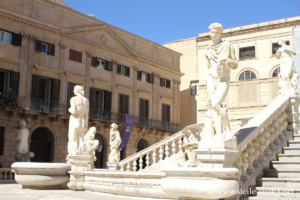
Pretoria Fountain 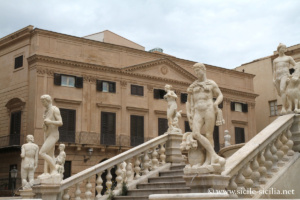
Pretoria Fountain 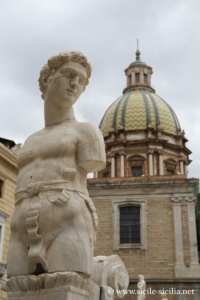

Pretoria Fountain 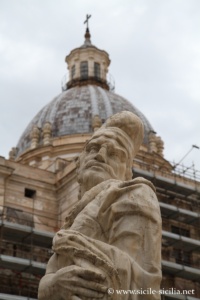
Pretoria Fountain 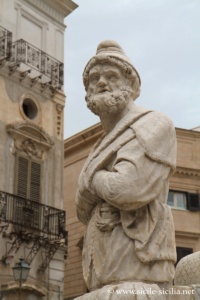
Pretoria Fountain 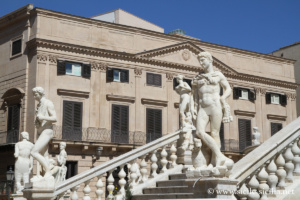
Pretoria Fountain 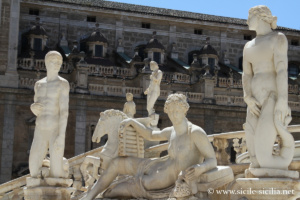
Pretoria Fountain 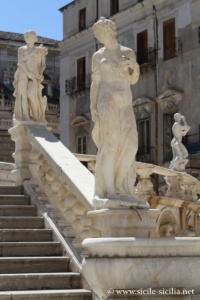
Pretoria Fountain 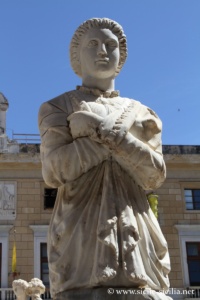
Pretoria Fountain 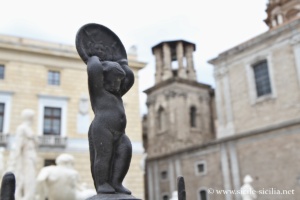
Pretoria Fountain 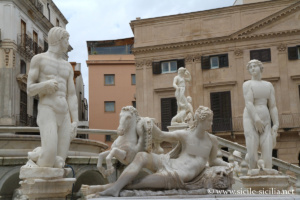
Pretoria Fountain
Information
Visit suggestions
Sources and external sites
- Tourist sites: turismo.comune.palermo.it, www.palermoviva.it
- Wikipedia page: en.wikipedia.org