

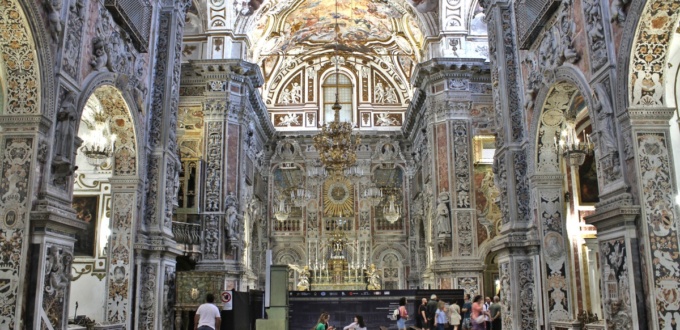
The church of Saint Catherine of Palermo, completed in the 16th century, faces onto two squares: the Piazza Pretoria with its famous fountain, and the Piazza Bellini opposite the Arab-Norman Byzantine churches of San Cataldo and the Martorana.
The dome and the choir were added in the mid-18th century and in 1863 respectively.
It adjoins a monastery founded in 1311 by the testamentary will of Benvenuta Mastrangelo, a Palermitan noblewoman. It became one of the richest and most influential Dominican female convents in Palermo, which explains the exceptional scale and decorative richness of the church, financed largely by the dowries of the nuns from aristocratic families.
Architecture and works
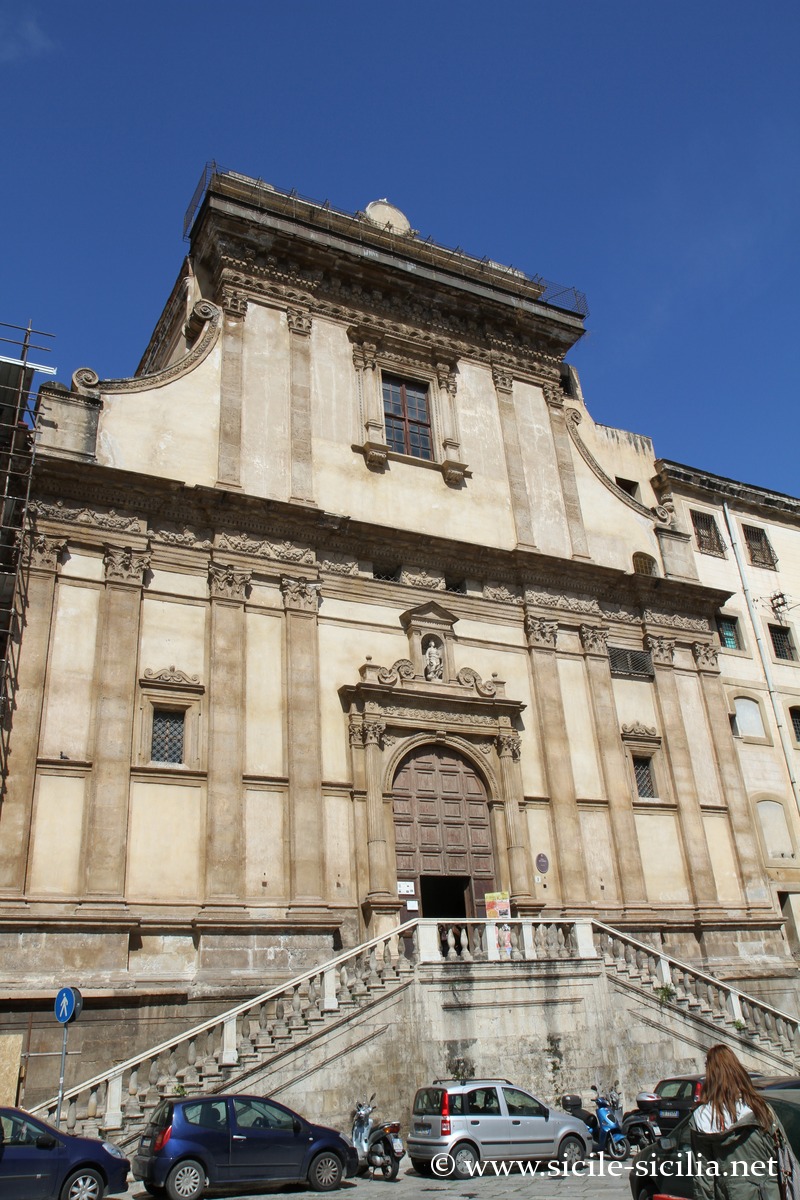
Facade of the church of Saint Catherine of Alexandria
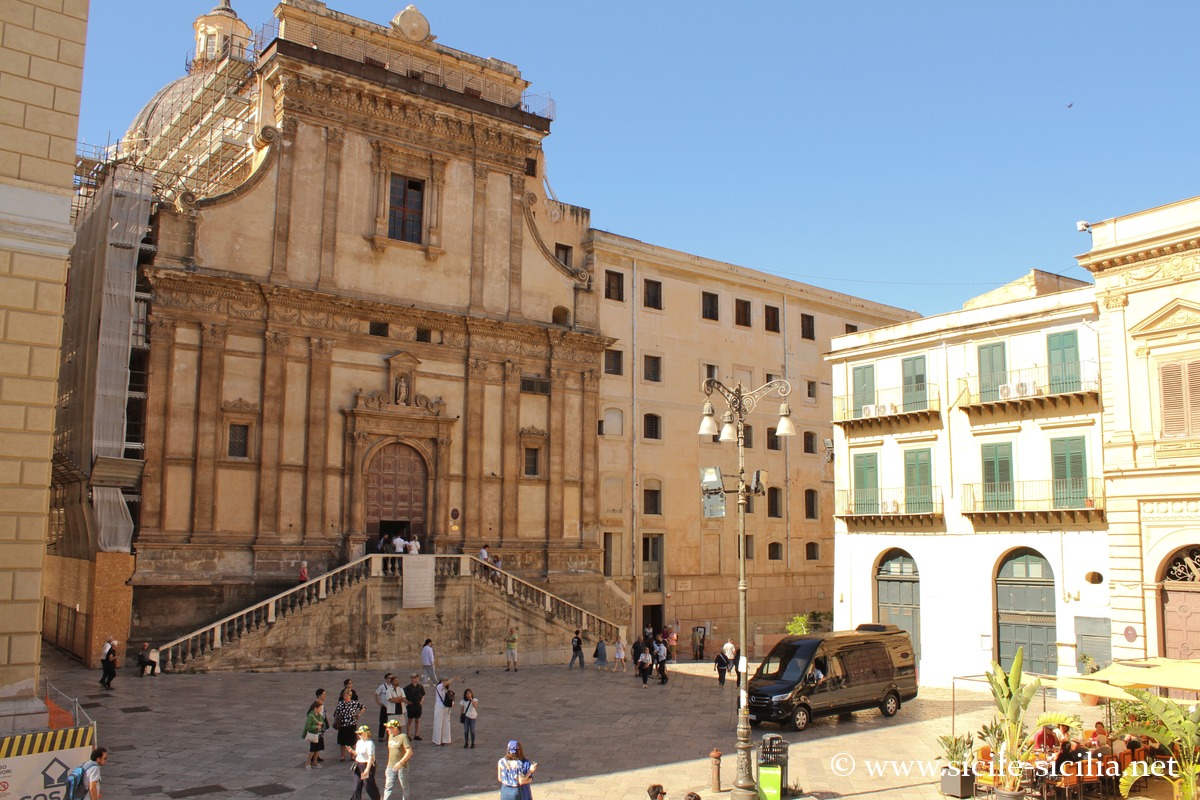
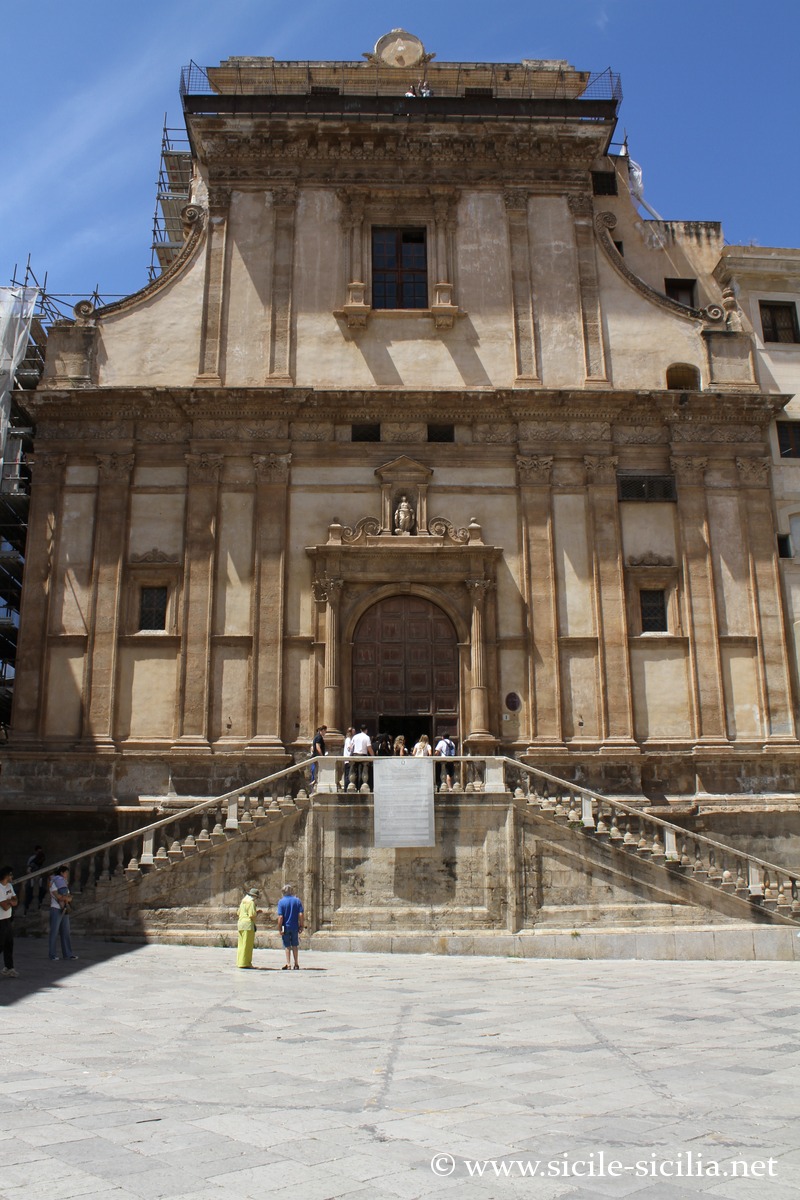
The facade is in the Late Renaissance style, notably featuring a marble statue of Saint Catherine of Alexandria dating from 1685. It is preceded by wide monumental staircases, structured on two levels and displaying a rich sculpted decoration, among Corinthian-capped columns, decorative friezes, niches and a central tympanum.
The church has a single-nave plan, punctuated by three chapels on each side, and crossed by a transept over which a dome rises. This longitudinal organization, typical of the Counter-Reformation, favors liturgical readability and visual participation, while integrating the spaces reserved for the nuns, in accordance with the recommendations of the Council of Trent
The interior is marked by a very rich Baroque decoration, characteristic of the great Palermitan churches of the 18th century: polychrome marbles, stuccoes, frescoes, etc.
On the counter-facade, the nuns’ choir is supported by two powerful twisted columns in red granite.
The walls of the nave hold statues of holy virgins and beatified women from royal lineages, among them Saint Agnes, Saint Catherine of Siena, Saint Catherine de’ Ricci, Blessed Sancia of Majorca, Margaret of Hungary and Joan of Portugal.
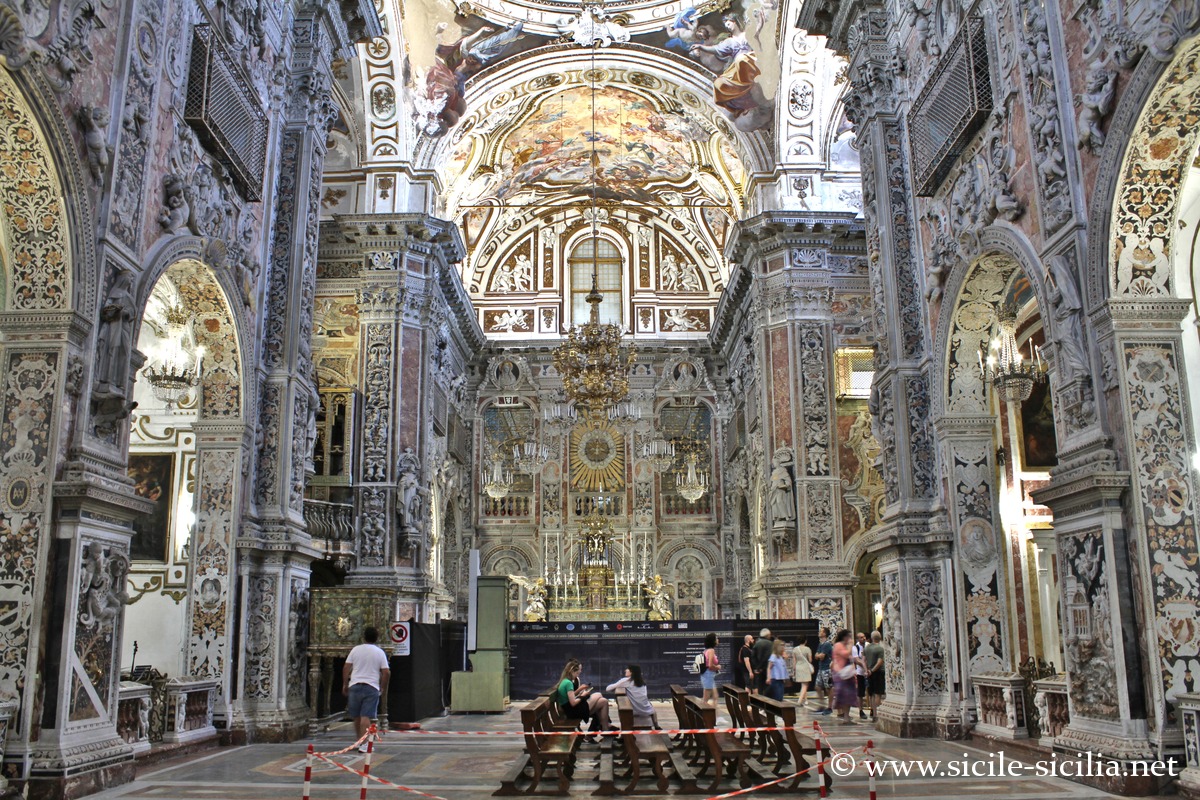
Interior of the church
The frescoes of the choir and the under-choir were made in 1769 by Francesco Sozzi and Alessandro D’Anna.
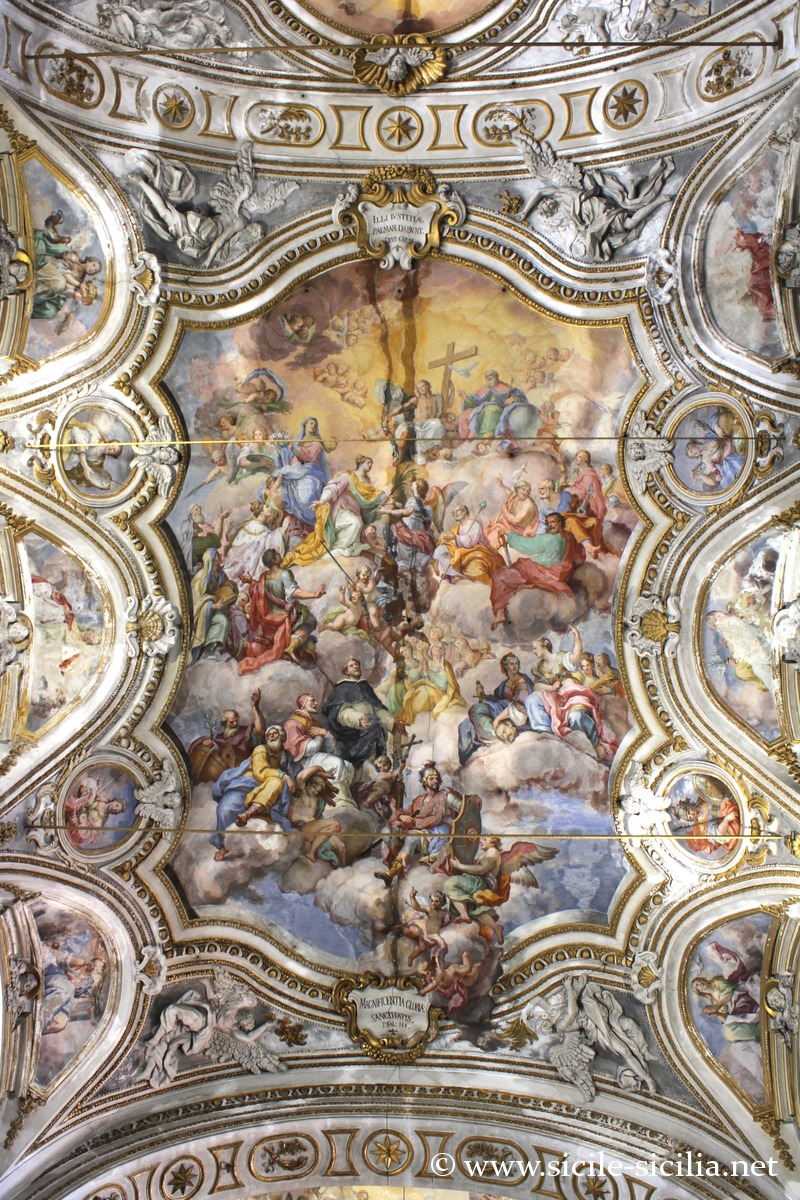
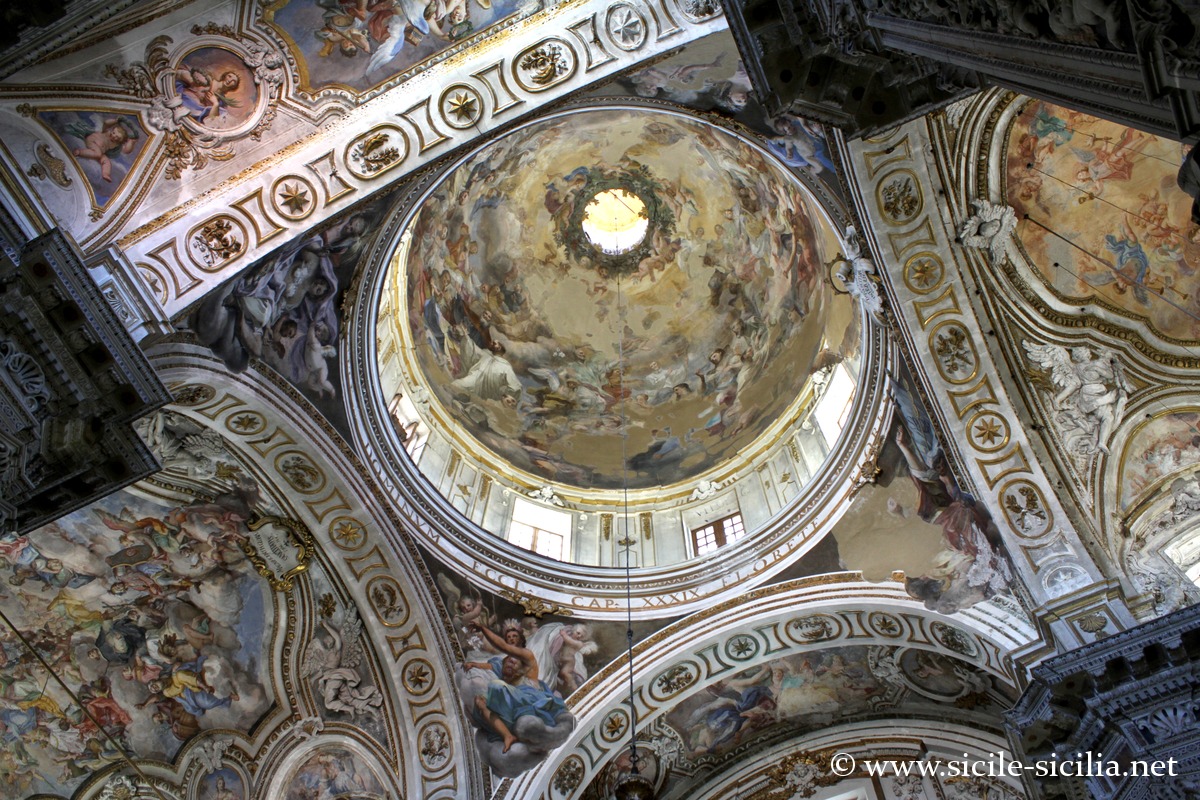
The vault of the nave is dominated by the Triumph of Saint Catherine, a fresco by Filippo Randazzo (1744), while the dome was designed by Francesco Ferrigno (1750) and painted by Vito D’Anna (1751) with the Triumph of the Dominican Order and the Allegories of the four continents in the pendentives.
At the base of the pillars and the walls of the presbytery unfolds a remarkable set of marble marquetry panels and bas-reliefs by Giovanni Battista Ragusa with episodes from the Old Testament (the Story of Jonah and the Sacrifice of Isaac), as well as medallions illustrating the life of Saint Catherine. He also made the statues of the great Dominican saints (Saint Dominic, Saint Peter Martyr, Saint Thomas Aquinas, Saint Vincent Ferrer) placed on the pillars of the dome.
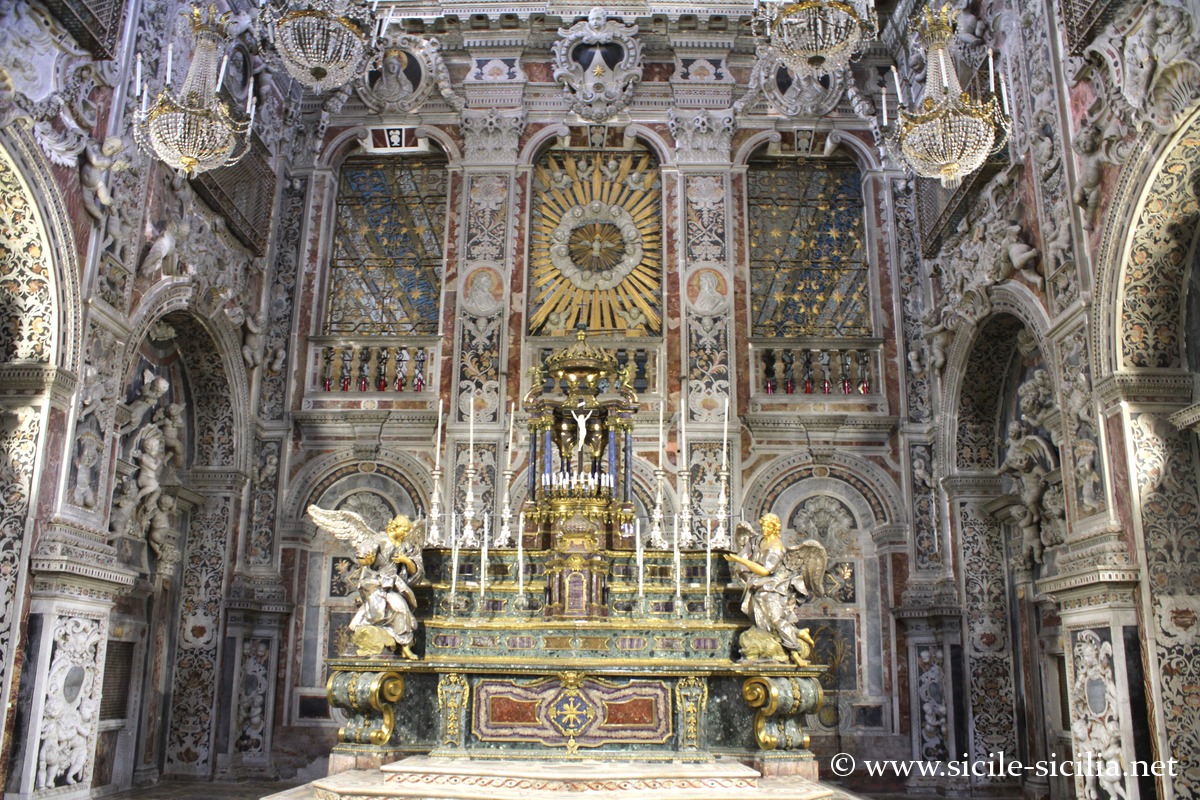
The high altar designed by Andrea Palma, in hardstones, agates and gilded copper, preserves an amethyst tabernacle, gilded wood angels, as well as several noble burials, including that of Count Guglielmo di Santa Flora (1318).
The decorative stuccoes are attributed to Procopio Serpotta.
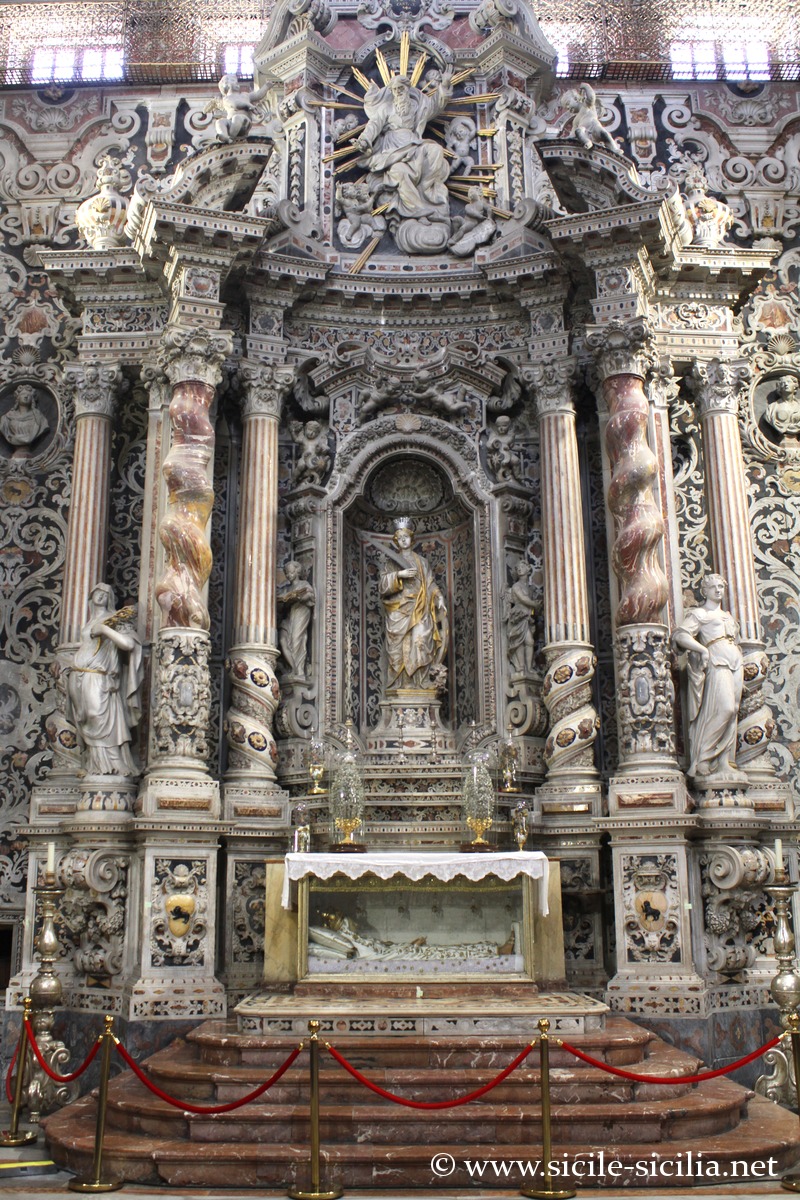
Statue of Saint Catherine of Alexandria (Gagini, 1534)
The side chapels preserve a coherent set of 17th- and 18th-century paintings: Deposition of Christ (school of Ribera), Christological scenes, episodes linked to the Dominican order, works often from the sphere of Pietro Novelli.
The right transept houses the major sculptural work, the marble statue of Saint Catherine of Alexandria, made by Antonello Gagini in 1534. It is placed in a sumptuous Baroque altar designed by the Dominican Andrea Palma, incorporating columns, putti, allegories of Prudence and Fortitude, etc.
The church also preserves two historic organs, one from the 18th century in the transept, the other from the 19th century on the counter-facade.
A major painting was made for this church: the Madonna del Rosario painted by Antoon van Dyck in 1624, now kept at the Palazzo Abatellis.
The monastery of Santa Caterina d’Alessandria
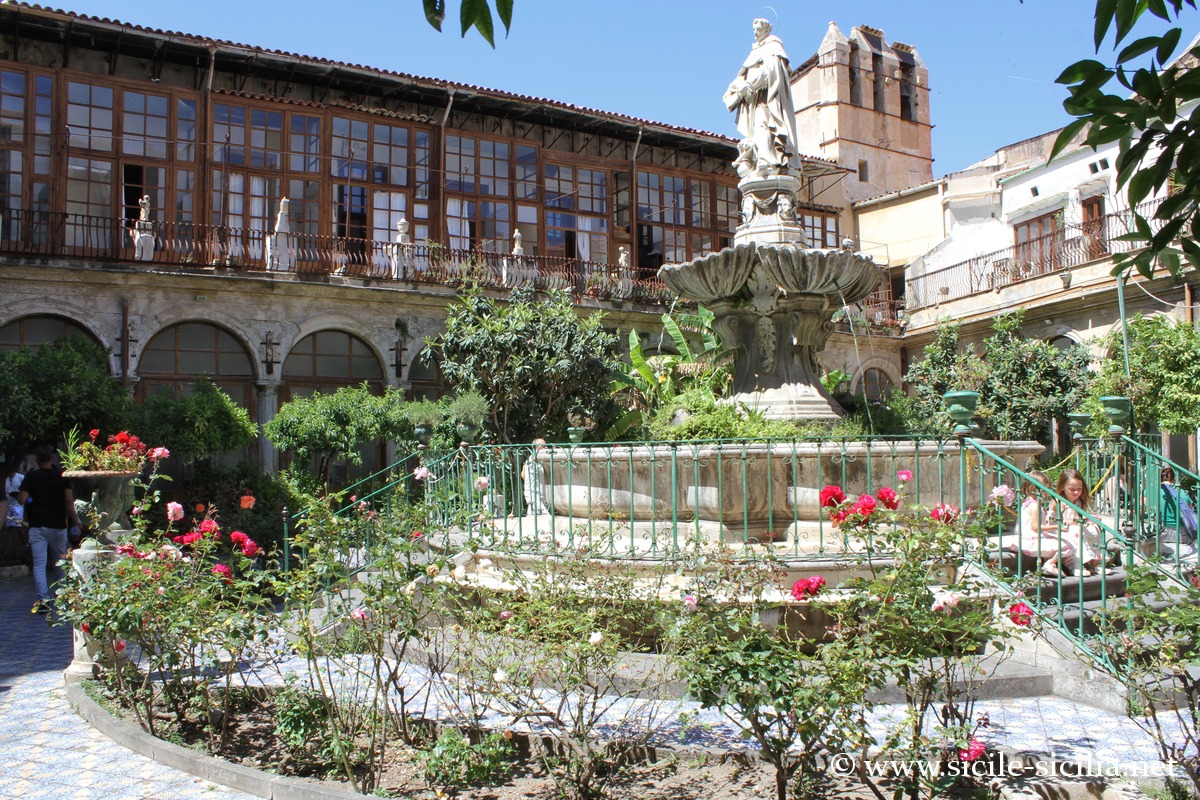
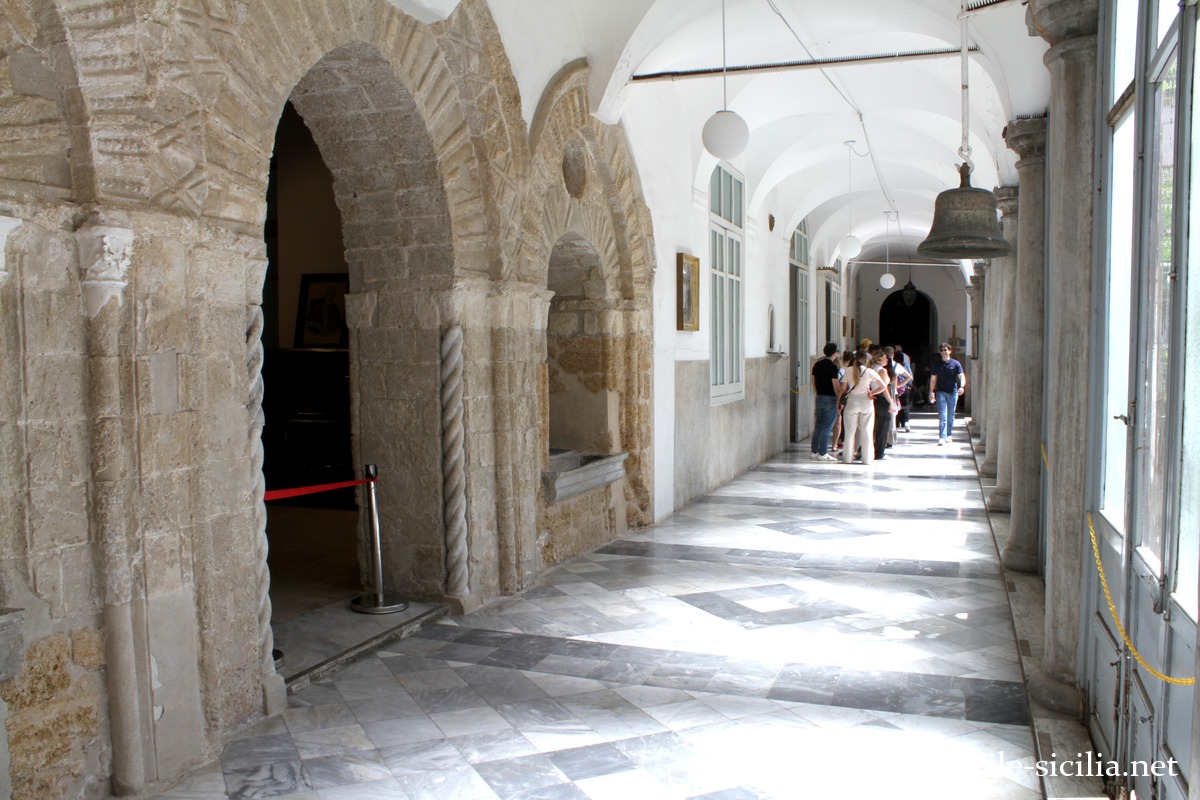
Cloister and fountain
In accordance with the rules of the Counter-Reformation, the complex distinguished an external church, open to the faithful, and an internal church (Great Choir), more sober, where the nuns attended the services without being seen. Part of the earlier medieval structures, linked to the house of Giorgio d’Antiochia, disappeared during the bombings of 1943.
The preserved spaces illustrate the organization of cloistered life: Parlatorio grande for collective meetings under strict control, the richly decorated Prioress’s Room for receiving high-ranking guests, the medieval Chapter Room intended for the governance of the monastery, the community refectory, the large sacristy reserved for the nuns with painted decorations from the 18th century, and the dormitory with austere cells.
The cloister, paved with 18th-century majolicas, is centered on a monumental fountain topped by a statue of Saint Dominic sculpted by Ignazio Marabitti around 1781, an emblematic element of the Dominican identity of the place.
The roofs of the cloisters offer beautiful views over the historic district.
Photo gallery
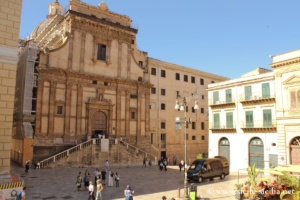

Facade Piazza Bellini 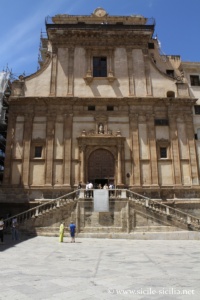

Facade Piazza Bellini 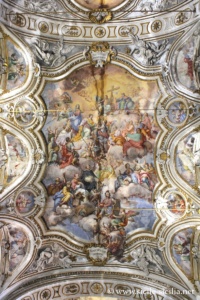
Vault fresco 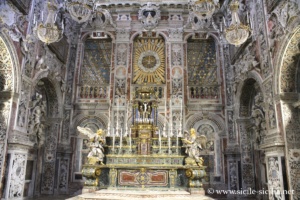
High Altar 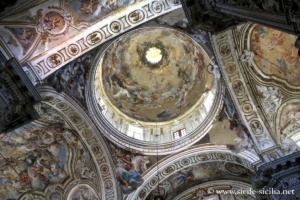
Dome 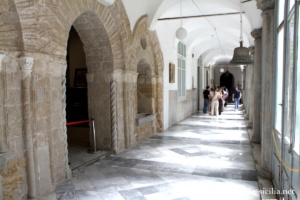
Monastery and cloister
Where Santa Caterina in Palermo is located
If you see this after your page is loaded completely, leafletJS files are missing.
Information
Piazza Bellini, 33, 90133 Palermo
Sources and external sites
- Official site: en.monasterosantacaterina.com
- Tourism portals: www.palermoviva.it, turismo.comune.palermo.it
- Wikipedia page: fr.wikipedia.org