
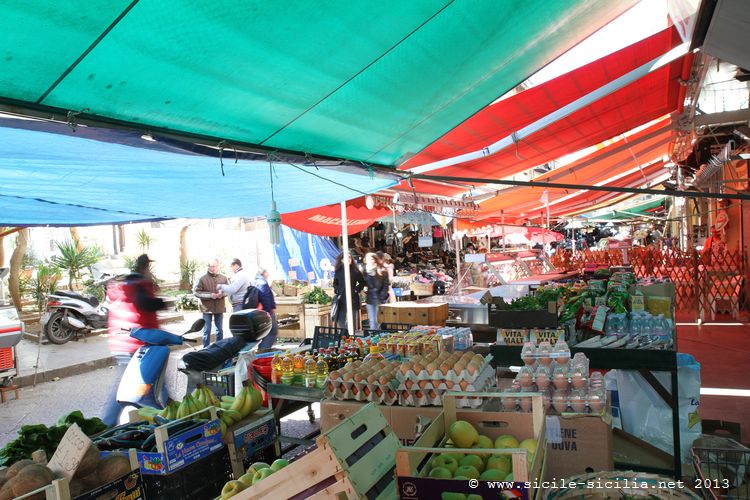
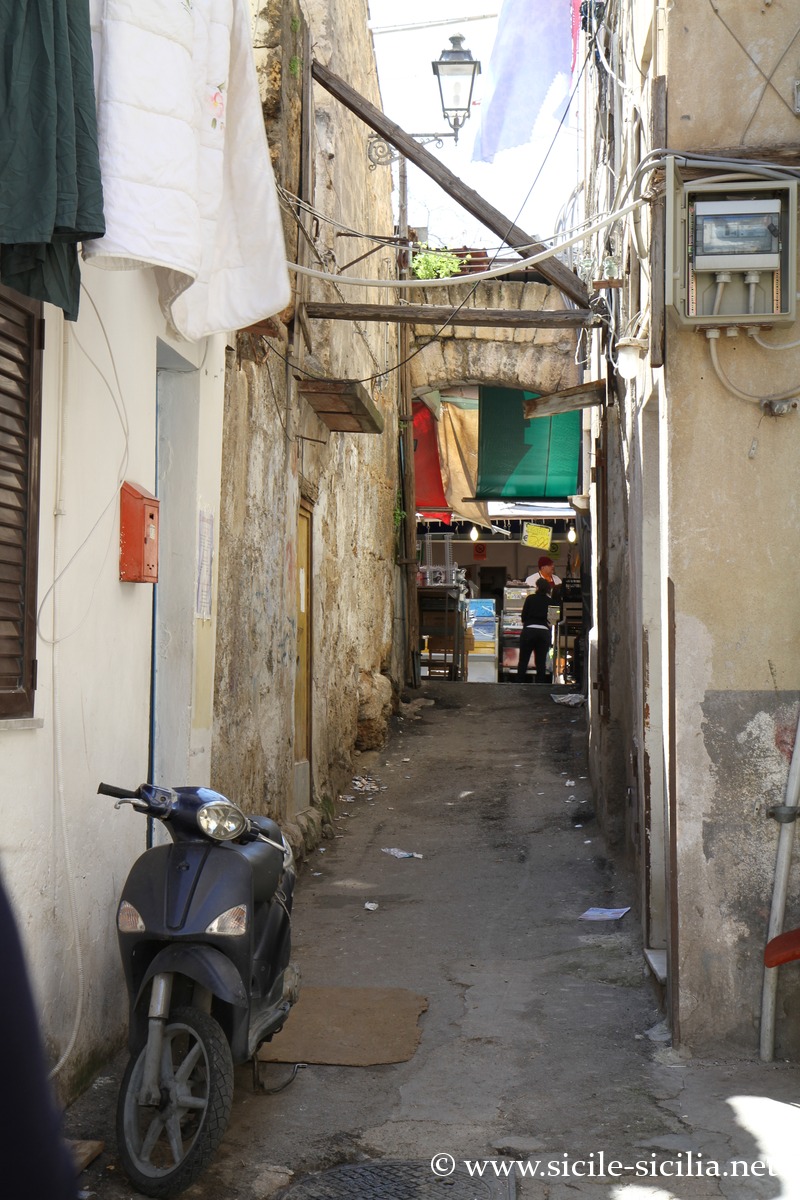
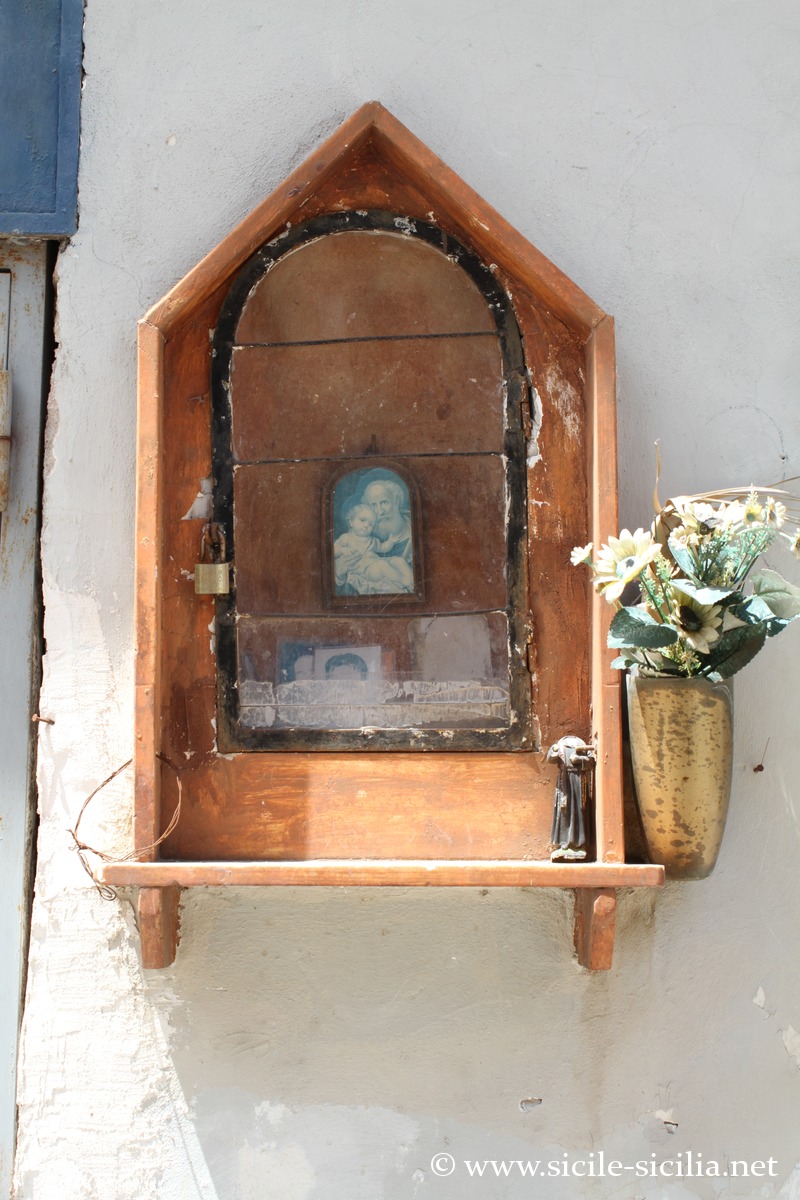
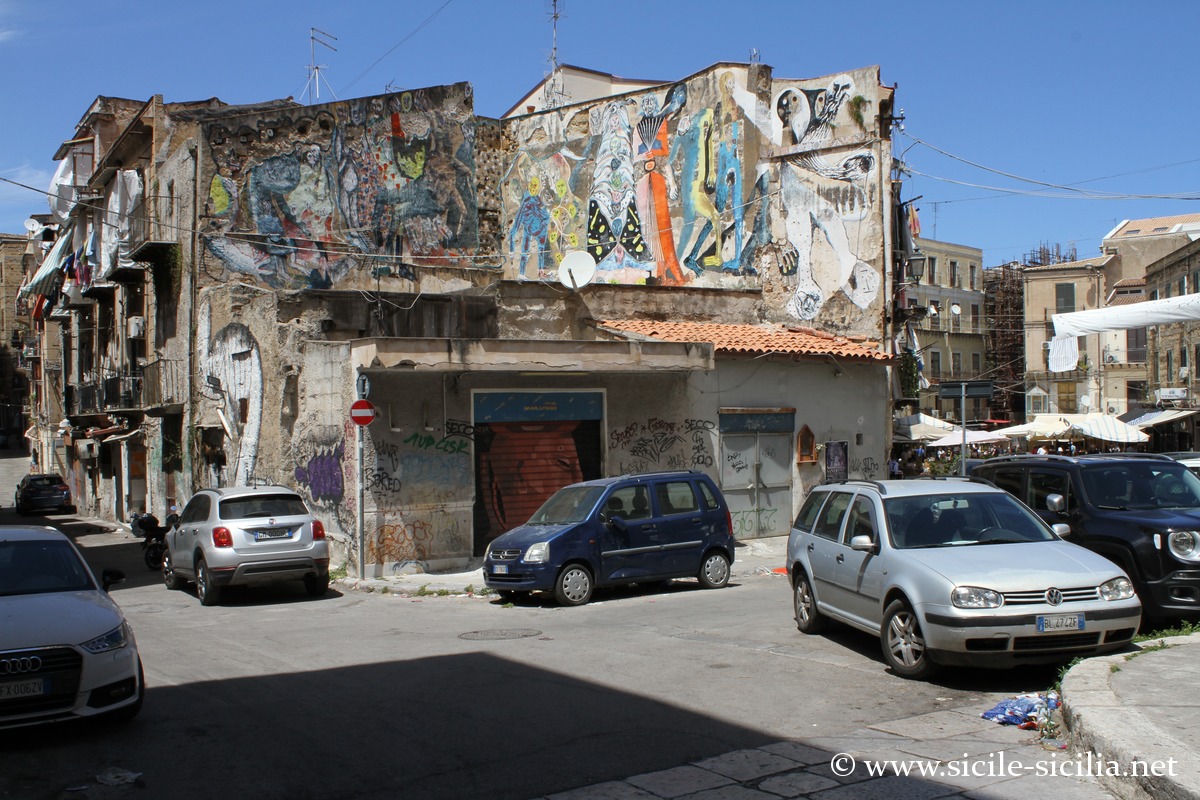
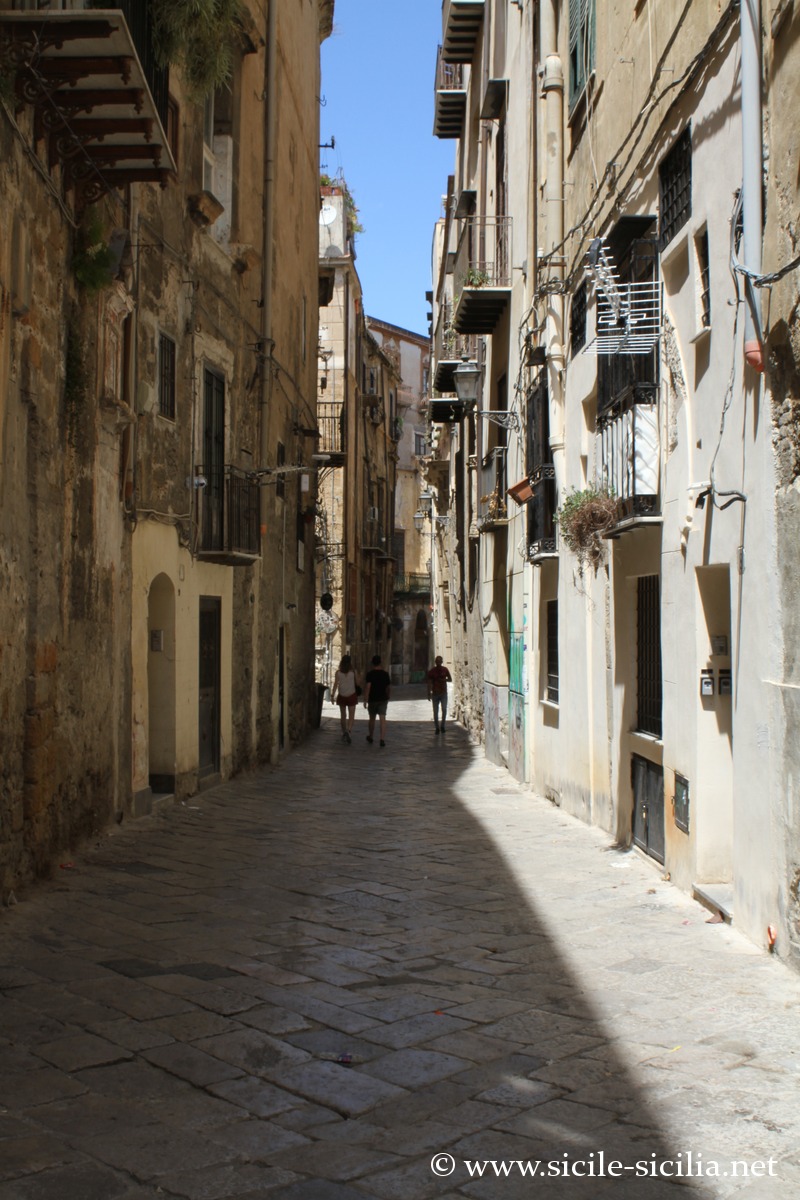
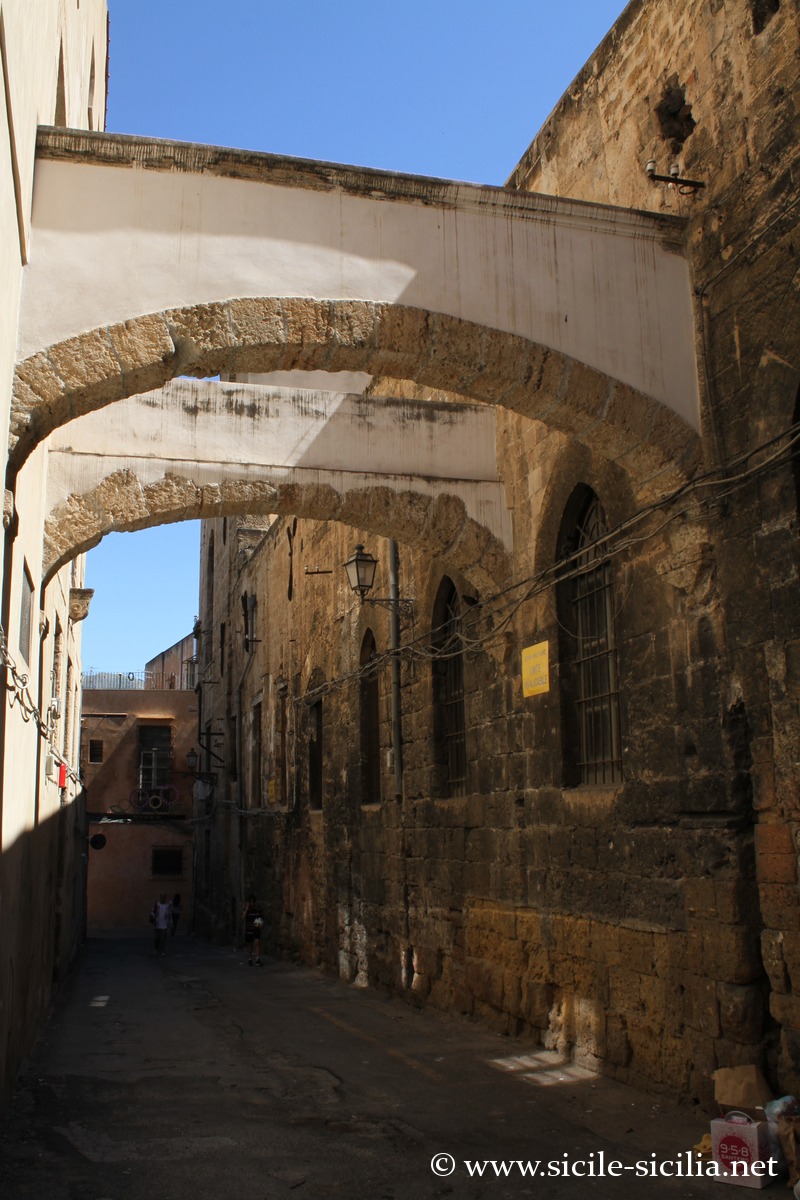
The Albergheria district is one of the oldest in Palermo, with origins dating back to the Phoenician era and later the Arab period, making it an area rich in historical layers visible in its urban layout and ancient buildings.
At its western edge lies the Palace of the Normans with its superb Palatine Chapel, and the Porta Nuova which once cut through the walls.
Other buildings in the district include the Church of the Gesù, one of the most impressive Baroque churches in Sicily; the Palazzo Comitini, an 18th-century Baroque palace located on Via Maqueda; the Palazzo Marchesi, a former Renaissance aristocratic palace, now home to a collection of rare books and a testament to the district’s medieval and Renaissance past.
The Church of San Francesco Saverio, a Baroque church designed by the architect Angelo Italia, a remarkable example of Sicilian Jesuit architecture.
The Oratory of San Giuseppe dei Falegnami is a Baroque building decorated by the Serpotta brothers, located next to the university and featuring refined interior decoration.
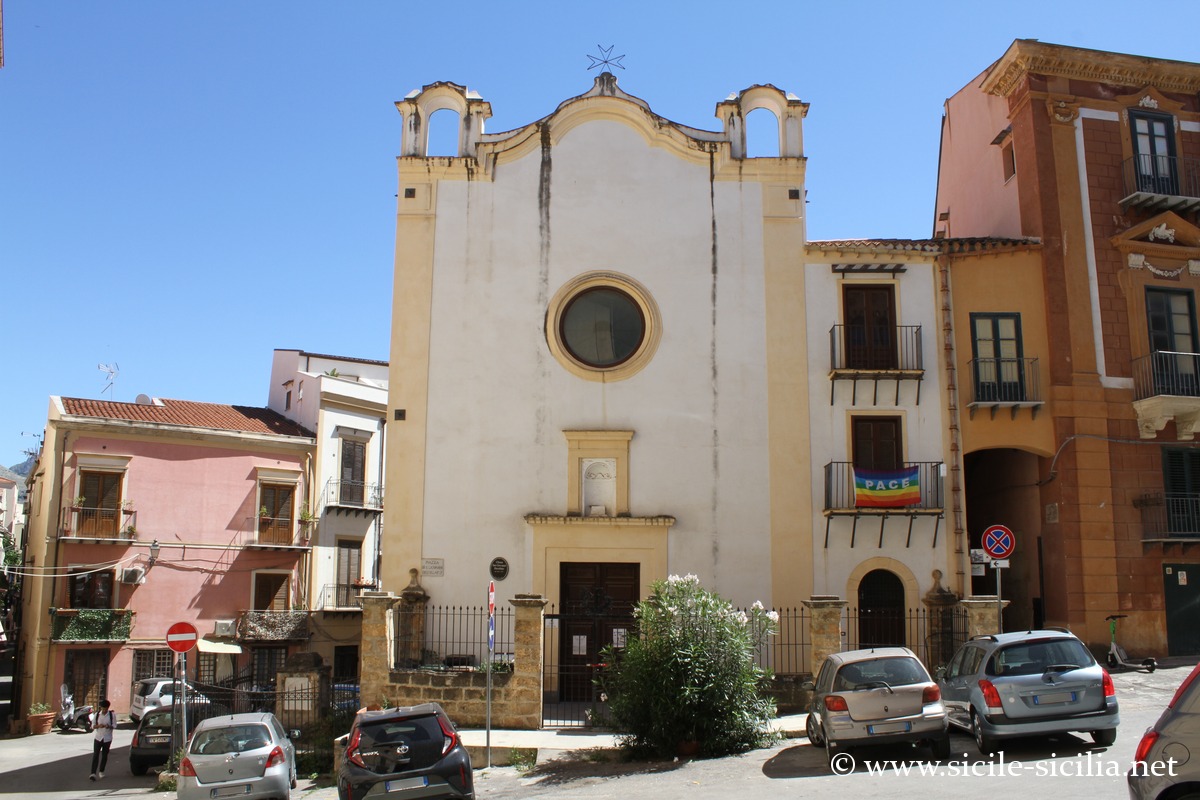
The small Church of San Giovanni dell’Origlione is a Baroque building, now deconsecrated, once linked to an ancient Benedictine monastery.
Ballarò Market
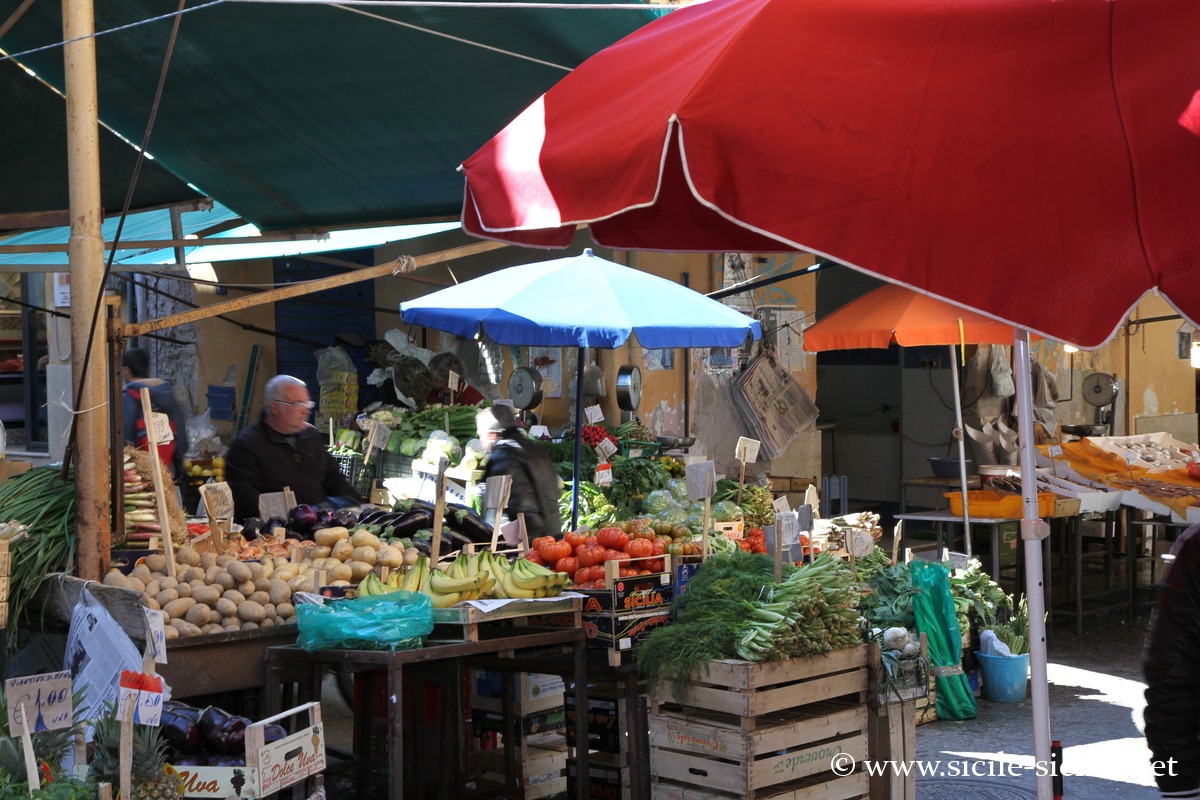
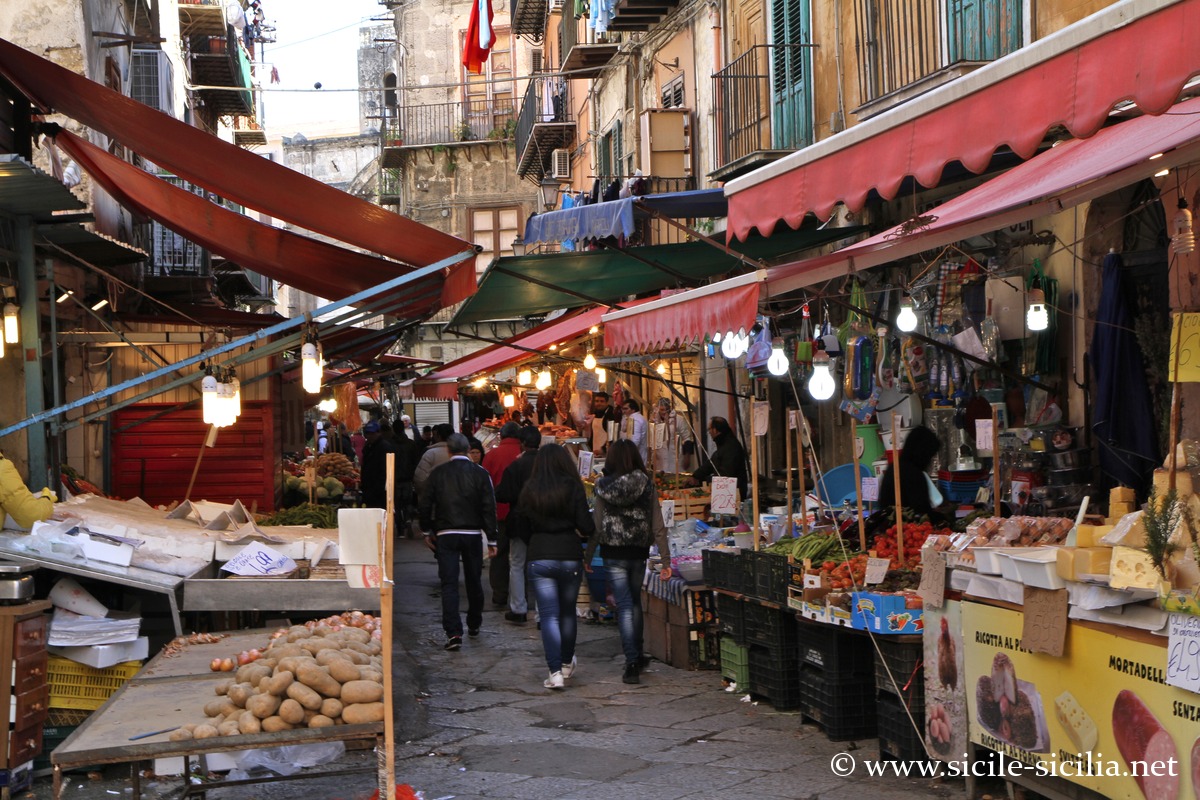
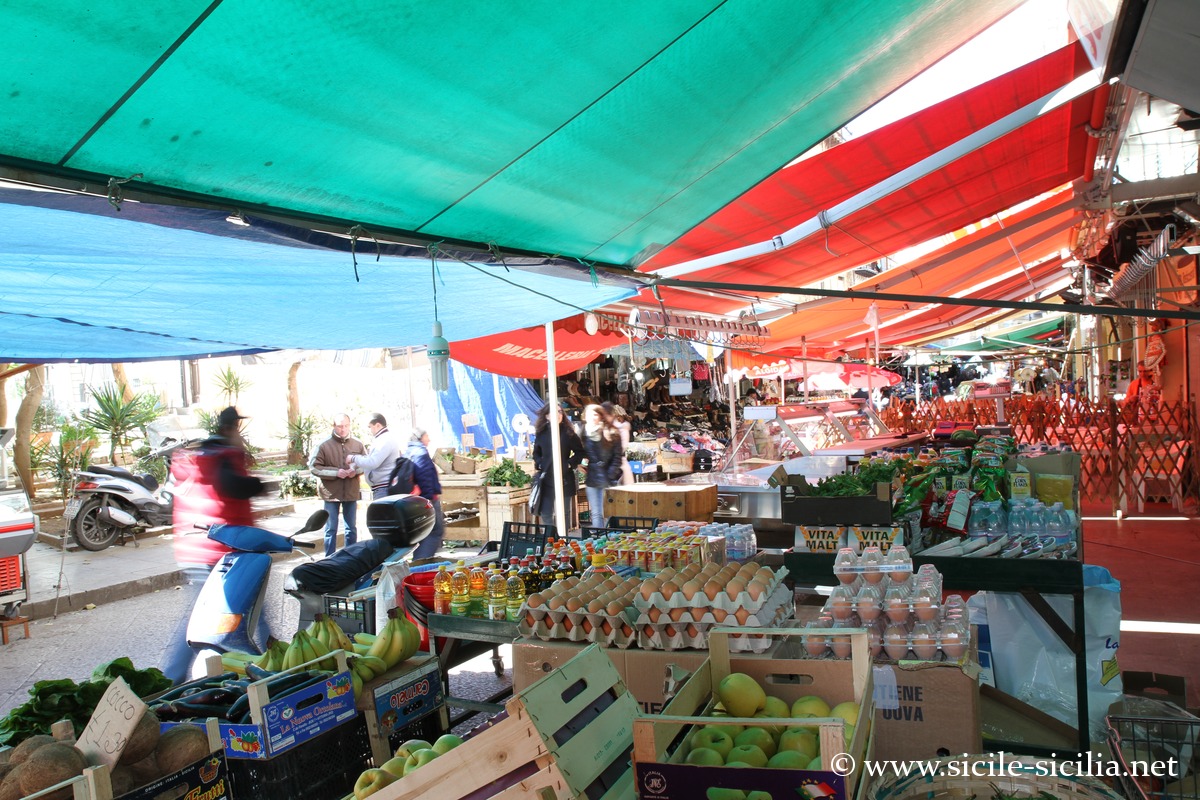
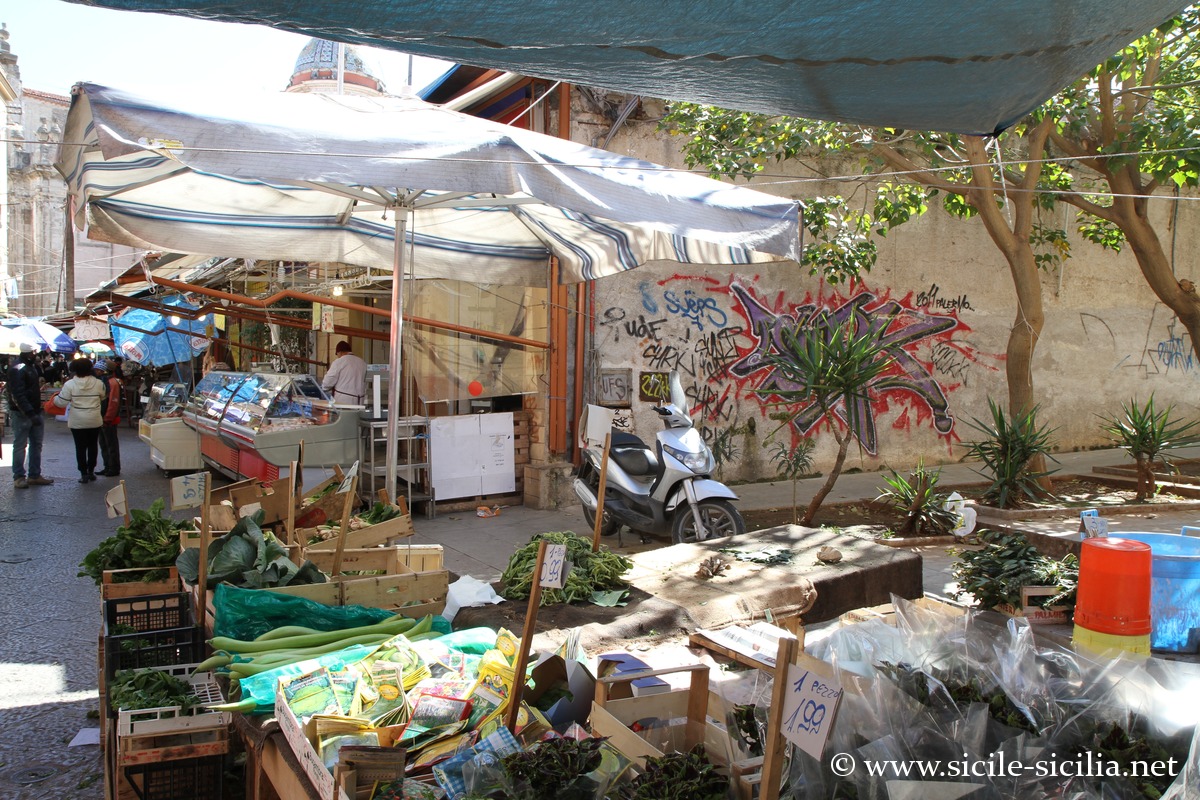
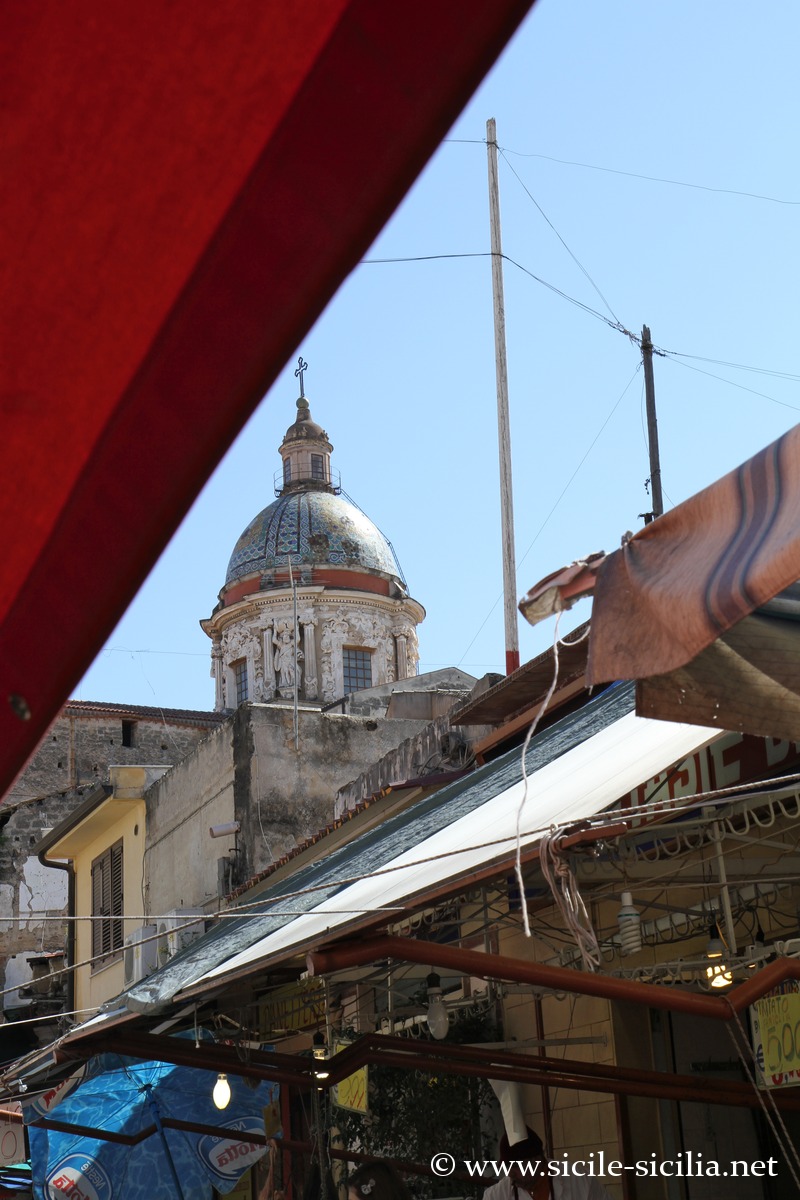
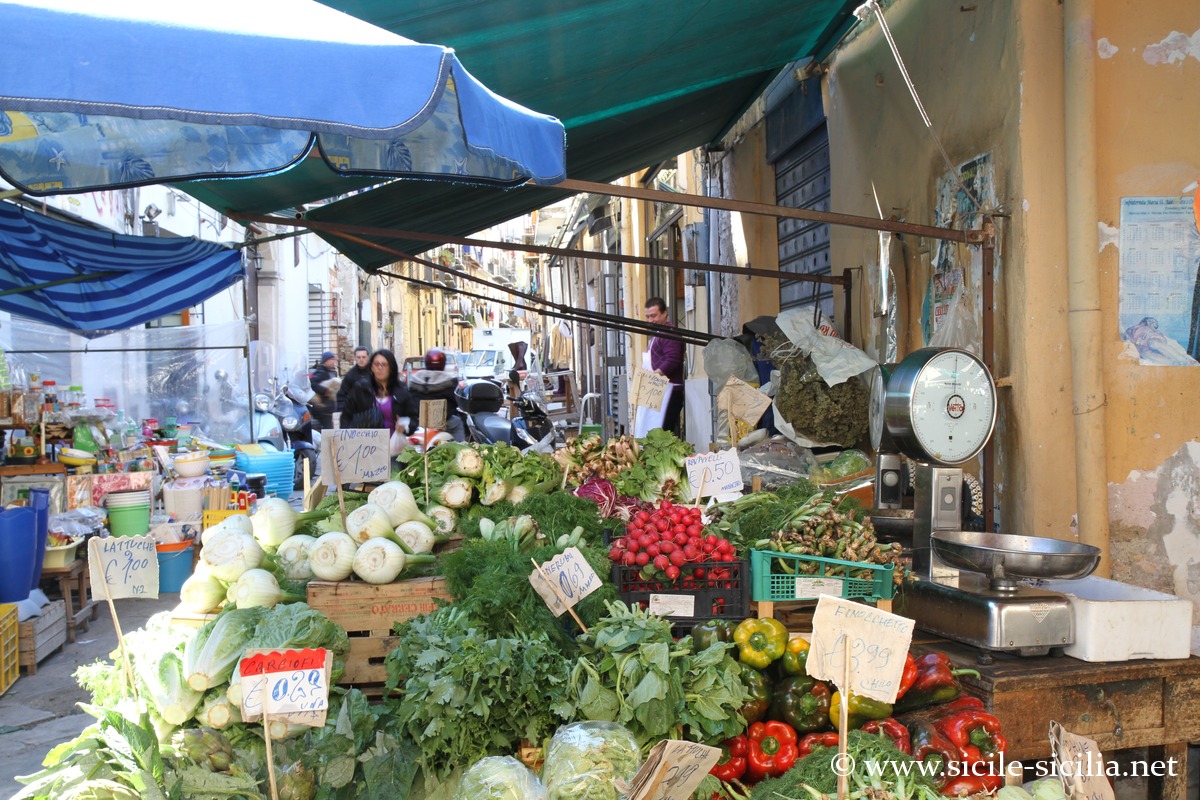
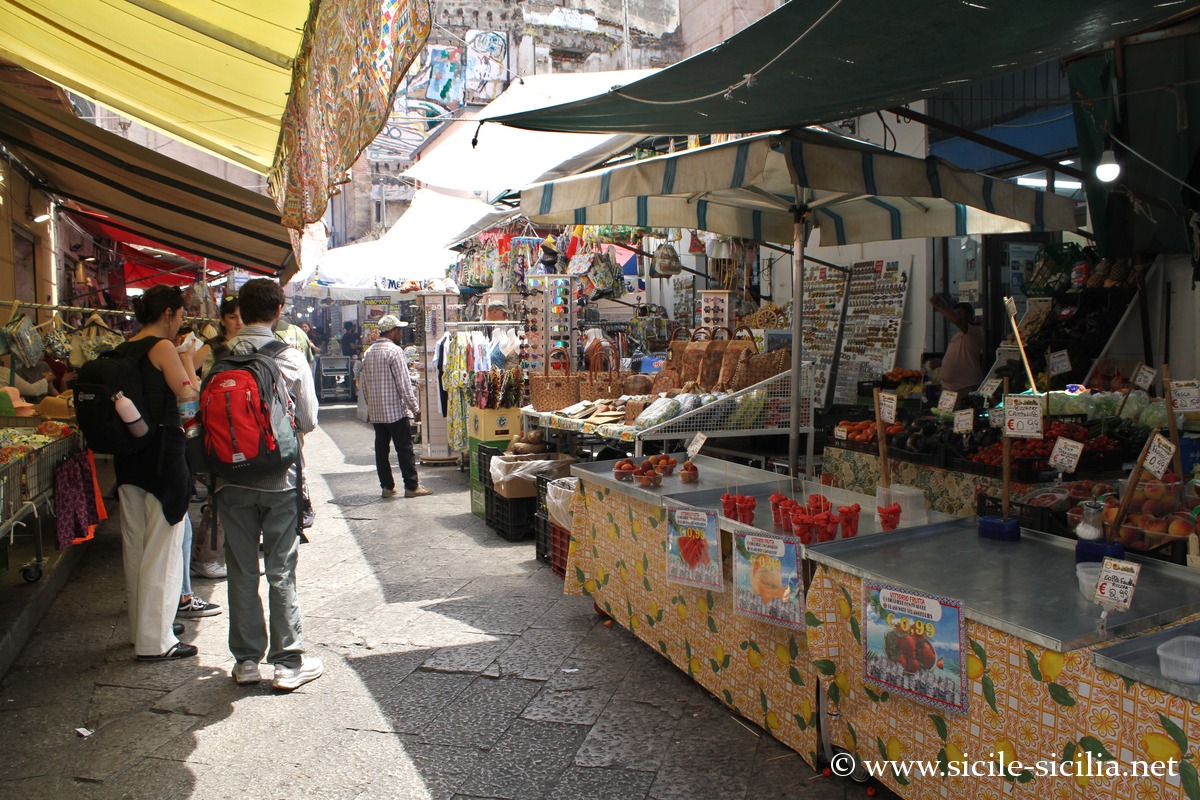
The Ballarò Market (Mercato di Ballarò) is the oldest and one of the liveliest food markets in Palermo, located in the historic Albergheria district behind Piazza Ballarò.
It probably dates back to the 10th century during Arab rule, its name deriving from an Arabic term related to “fairgrounds” or a merchants’ village.
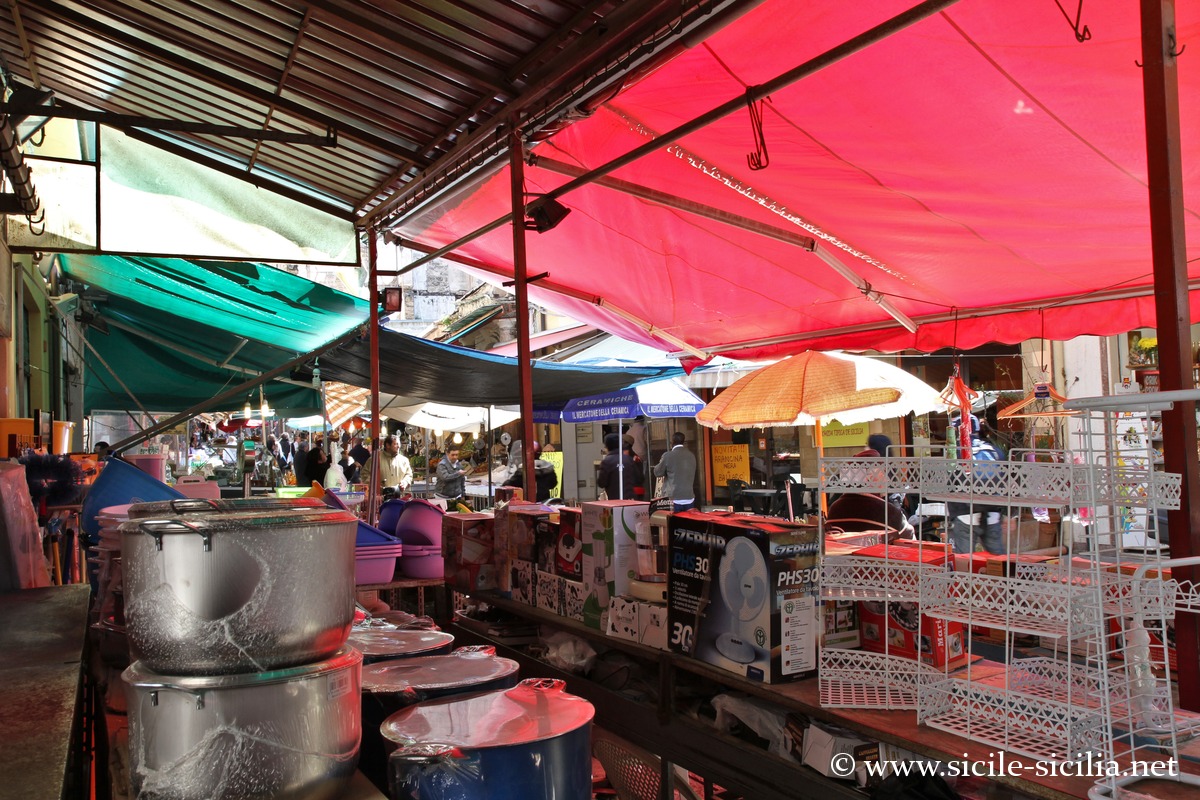
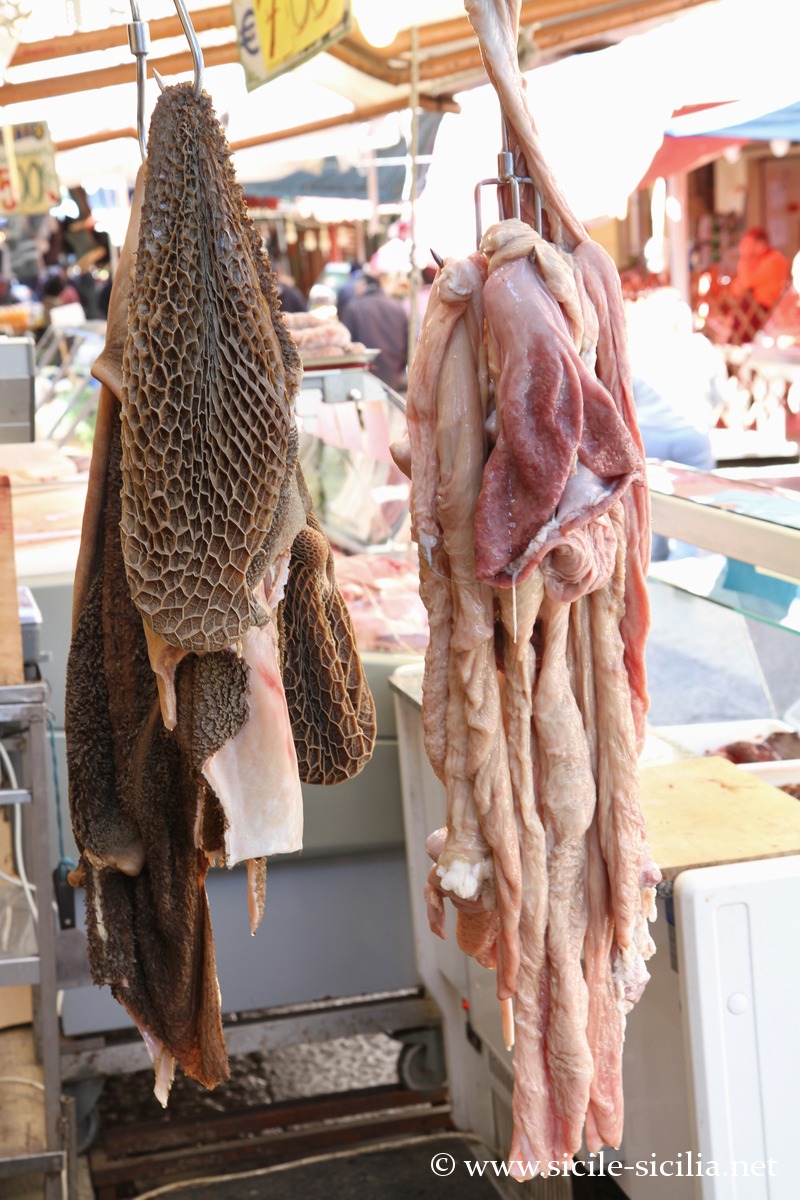
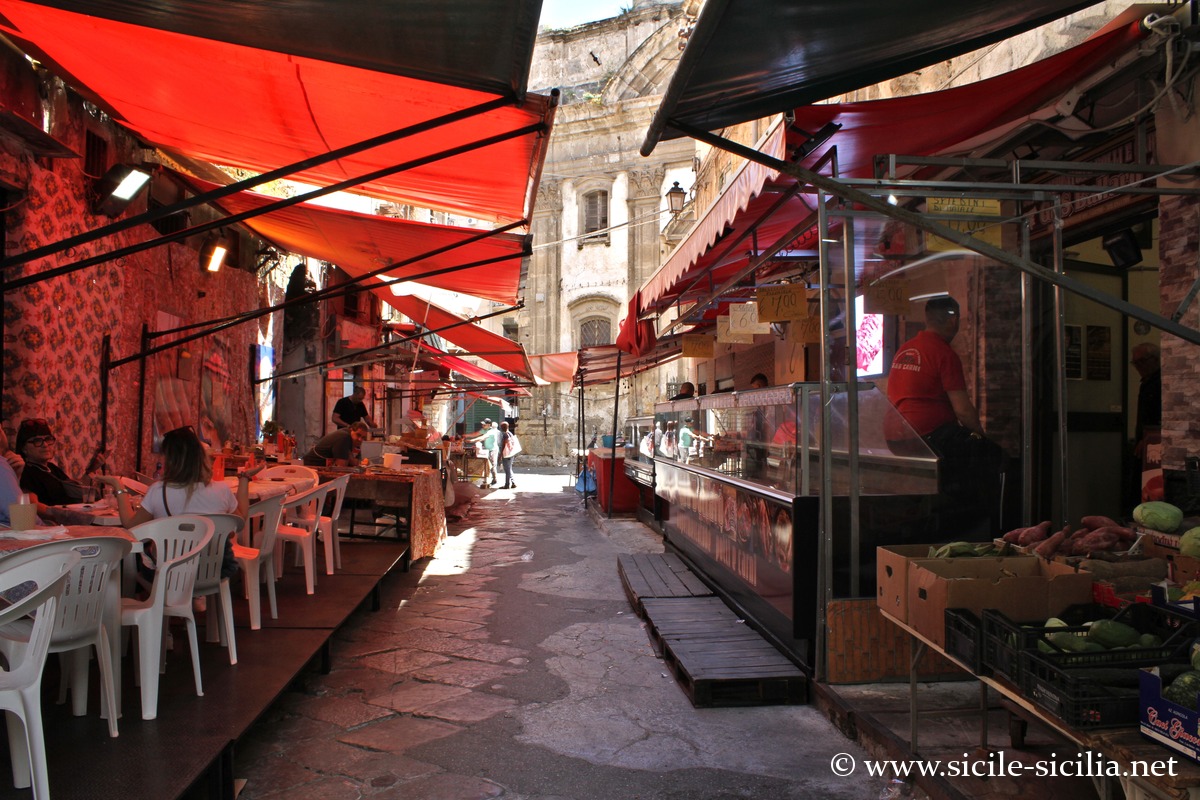
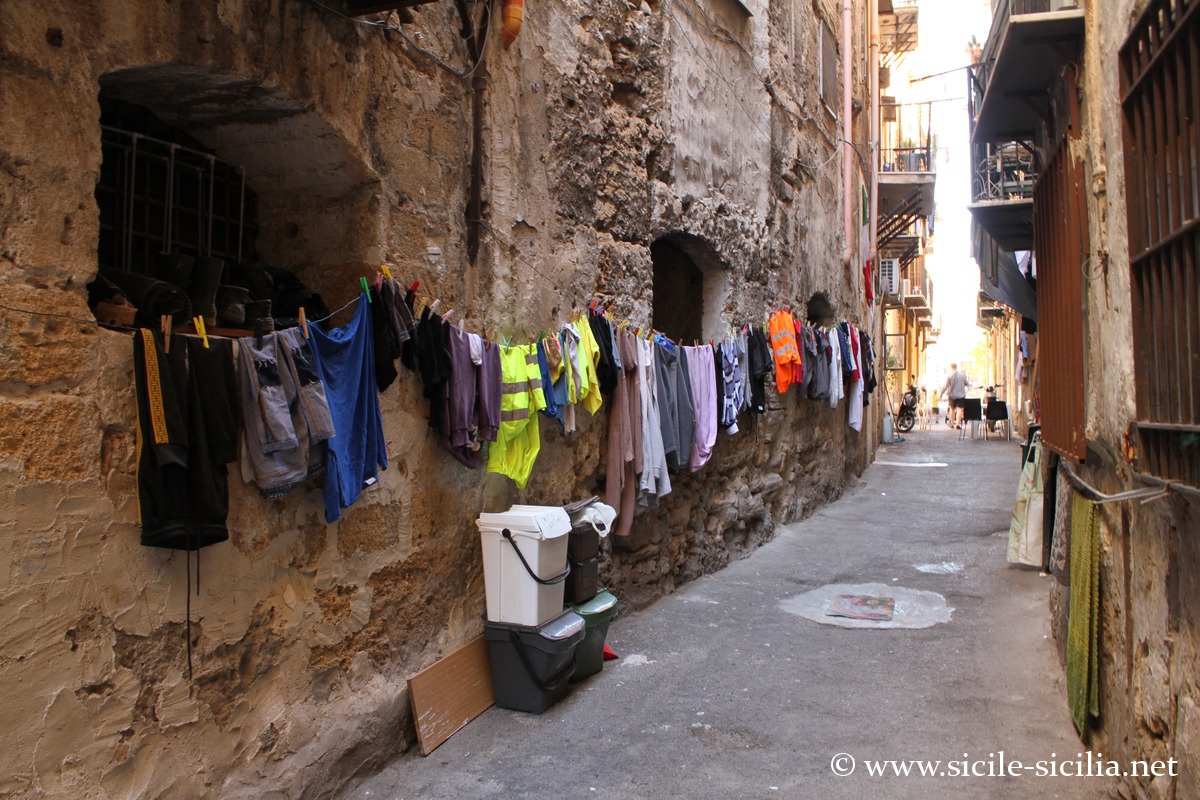
The market stretches from Piazza Casa Professa to the bastions of Corso Tukory towards Porta Sant’Agata, enlivened daily by tightly packed stalls of local producers, reflecting the city’s cultural and social diversity, blending Sicilian traditions with North African or Asian influences, with a convivial and intense atmosphere.. You’ll find an abundance of fresh produce: fruit and vegetables, fish, meat, cheeses, spices, breads, as well as household items.
It is also a hotspot for typical street food, with for example pani câ meusa (spleen sandwich), panelle, arancini and other specialities enjoyed in the alleys.
Where to find Ballarò in Palermo
Ballarò photo gallery
Marché Ballaro’ 
Marché Ballaro’ 
Marché Ballaro’ 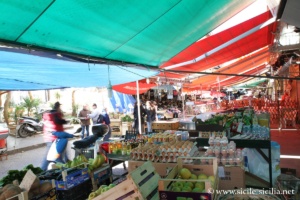
Marché Ballaro’ 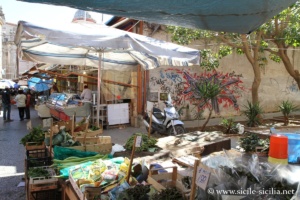

Marché Ballaro’ 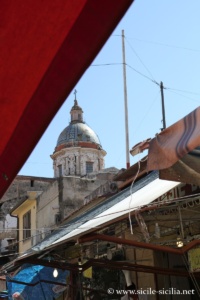

Marché Ballaro’ 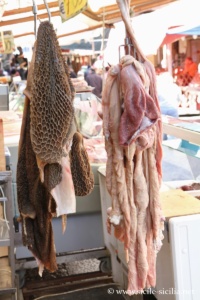
Marché Ballaro’ 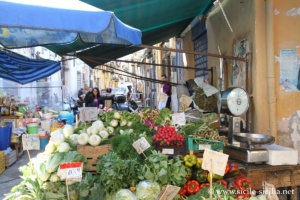
Marché Ballaro’ 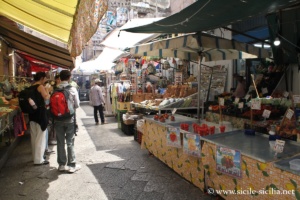
Marché Ballaro’ 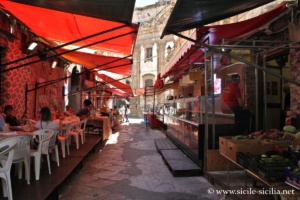
Marché Ballaro’ 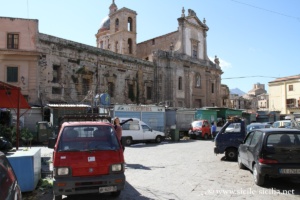
Marché Ballaro’
Ballarò and Albergheria district
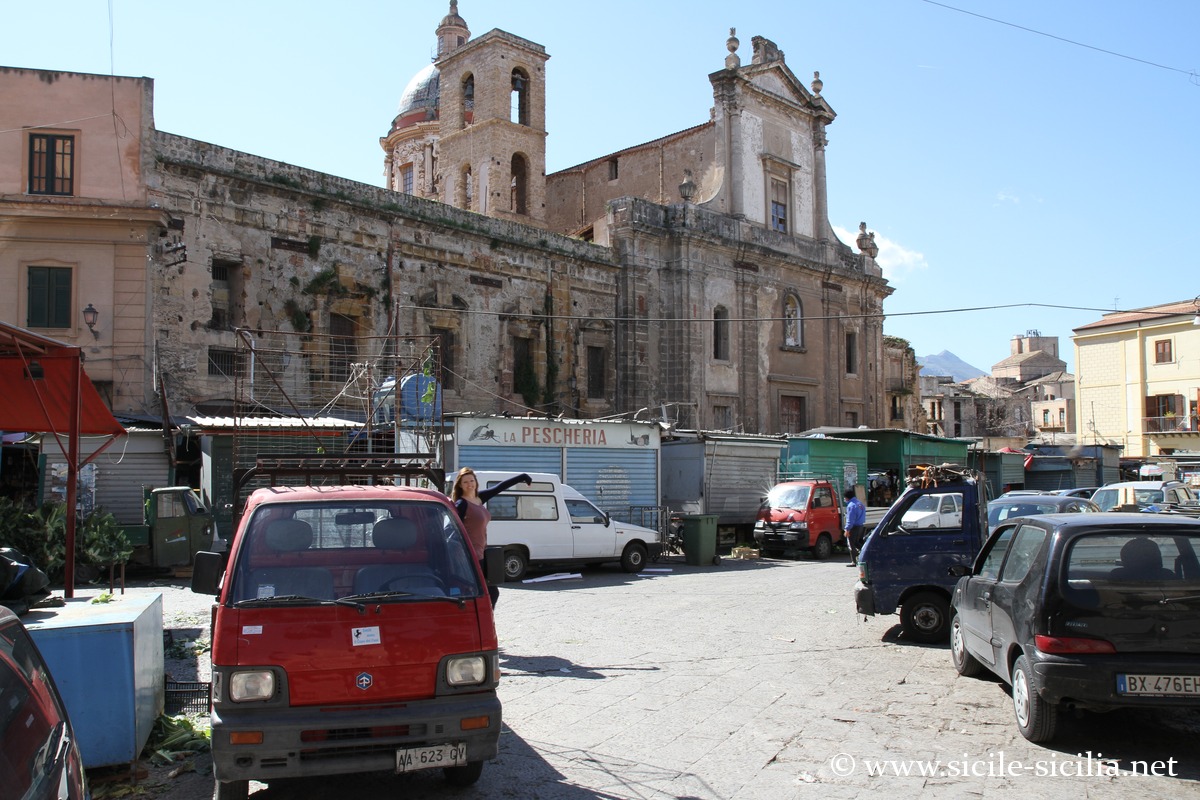
Around Ballarò, you’ll find historic buildings such as the Chiesa del Carmine Maggiore or the Torre di San Nicolò di Bari.
Tower of Saint Nicholas of Bari
Torre di San Nicolo
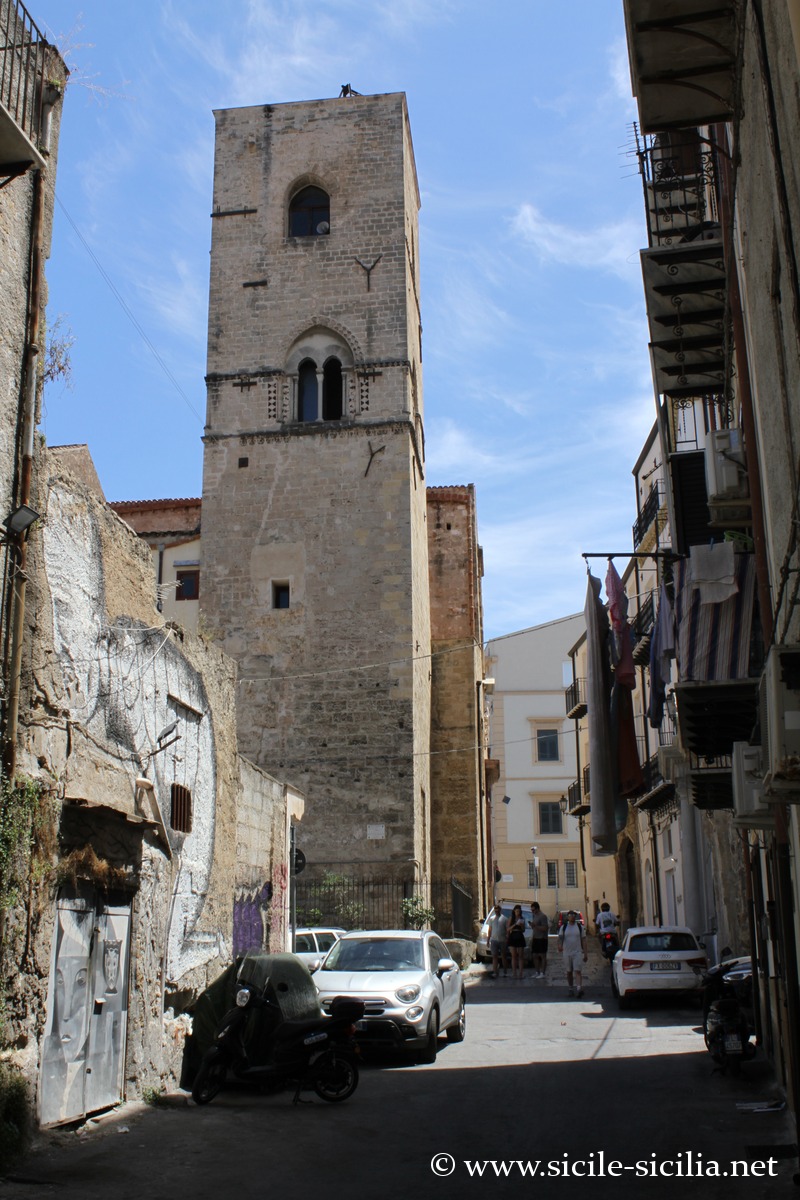
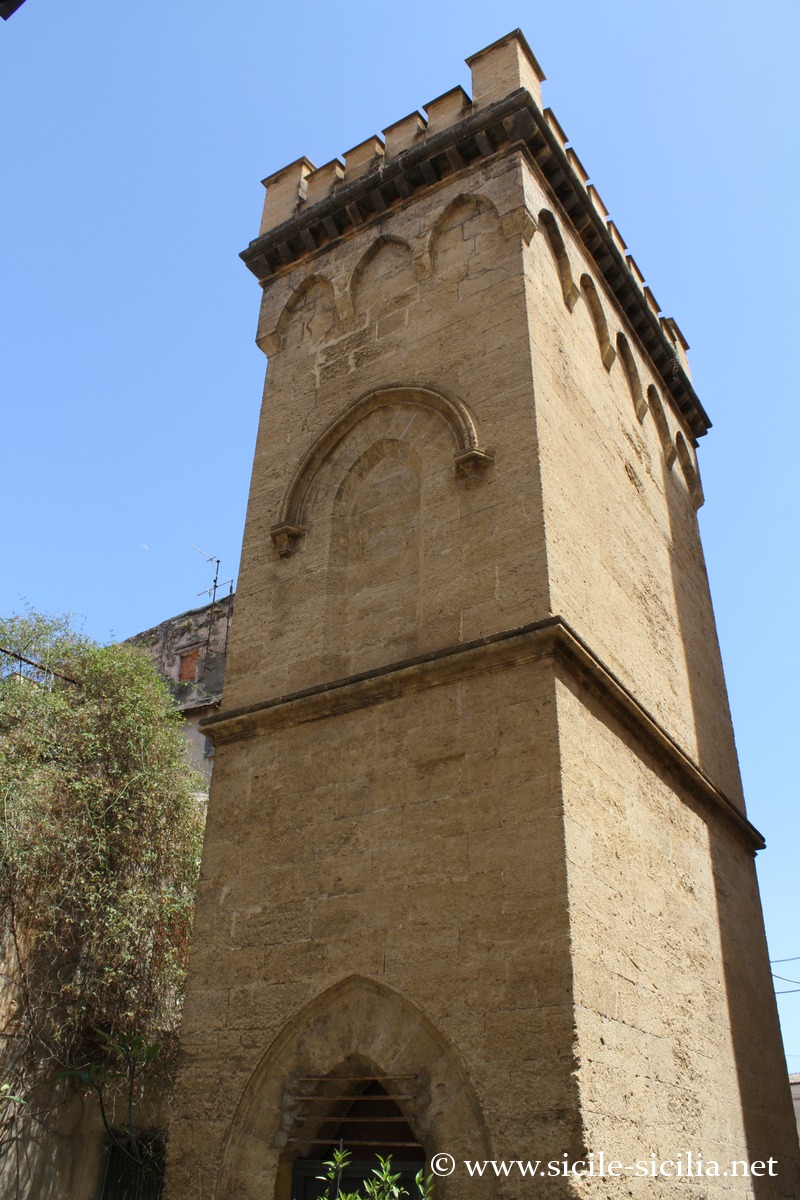
In the district stands the beautiful Tower of Saint Nicholas (Torre di S. Nicolò di Bari all’Albergheria), built in the 13th century to reinforce the walls.
It is attached to the church of San Nicolò all’Albergheria, built of ashlar stone, which formed part of the Cassaro walls in the 14th century.
It consists of four levels connected by a medieval spiral staircase, originally independent of the adjoining church.
In the 16th century, a monumental clock was installed on one of the floors. Occasionally open to the public, it offers from its panoramic terrace a spectacular view over the domes and monuments of Palermo’s historic centre.
Piazza della Vittoria and Villa Bonanno
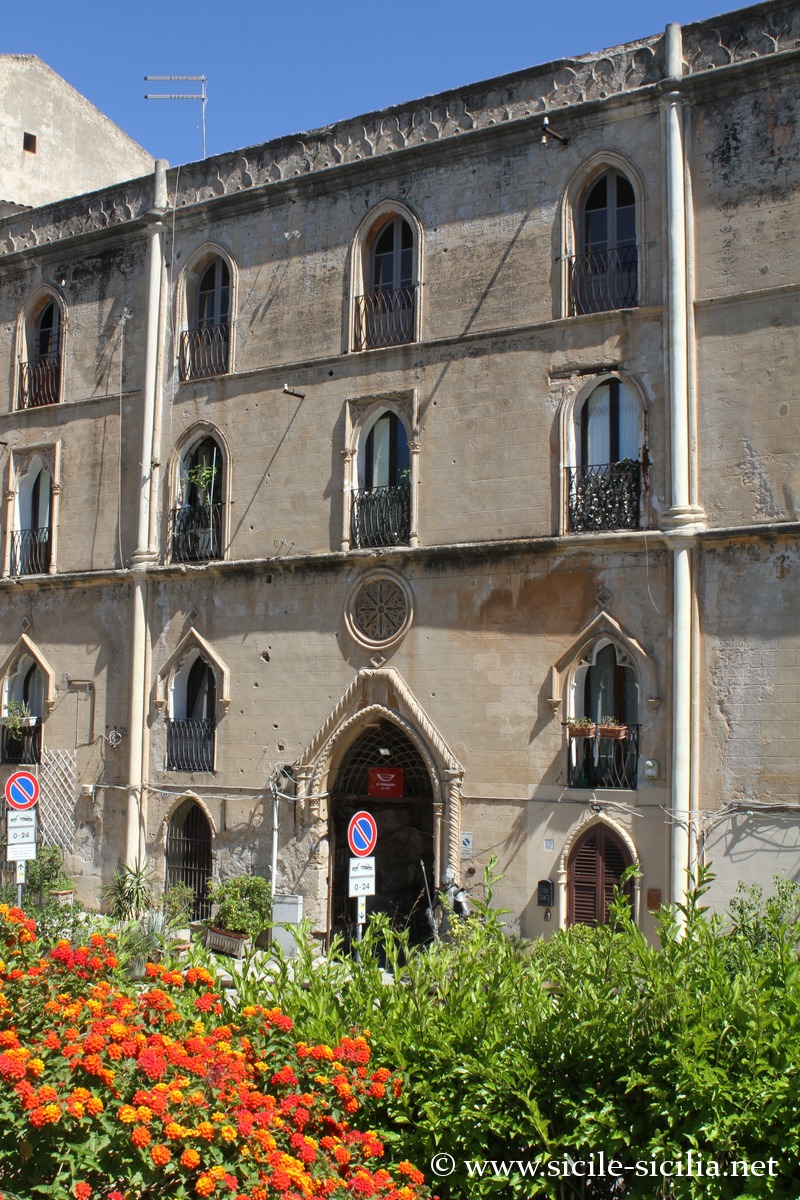
Piazza della Vittoria
The Piazza della Vittoria is located in the Albergheria district along the Cassaro (Corso Vittorio Emanuele), between Palermo Cathedral and the Palace of the Normans. Square in shape, it is largely occupied by the large public garden of Villa Bonanno, created in 1905 on the initiative of mayor Pietro Bonanno, with vast palms, pathways and green spaces. The square’s name recalls the popular uprisings of 1820 against Bourbon rule, hence the term “della Vittoria” (of victory).
Within the park are Roman archaeological remains, including the remains of domus (patrician houses) dating from the 1st–2nd centuries AD with mosaics.
Around the square are several historic buildings: the Palazzo Sclafani from the 14th century nearby, churches such as the Oratory of Saints Helena and Constantine and the Chapel of the Madonna of Solitude, as well as the Palazzo Arcivescovile, below Piazza del Parlamento and the Palace of the Normans.
Towards Piazza San Giovanni Decollato
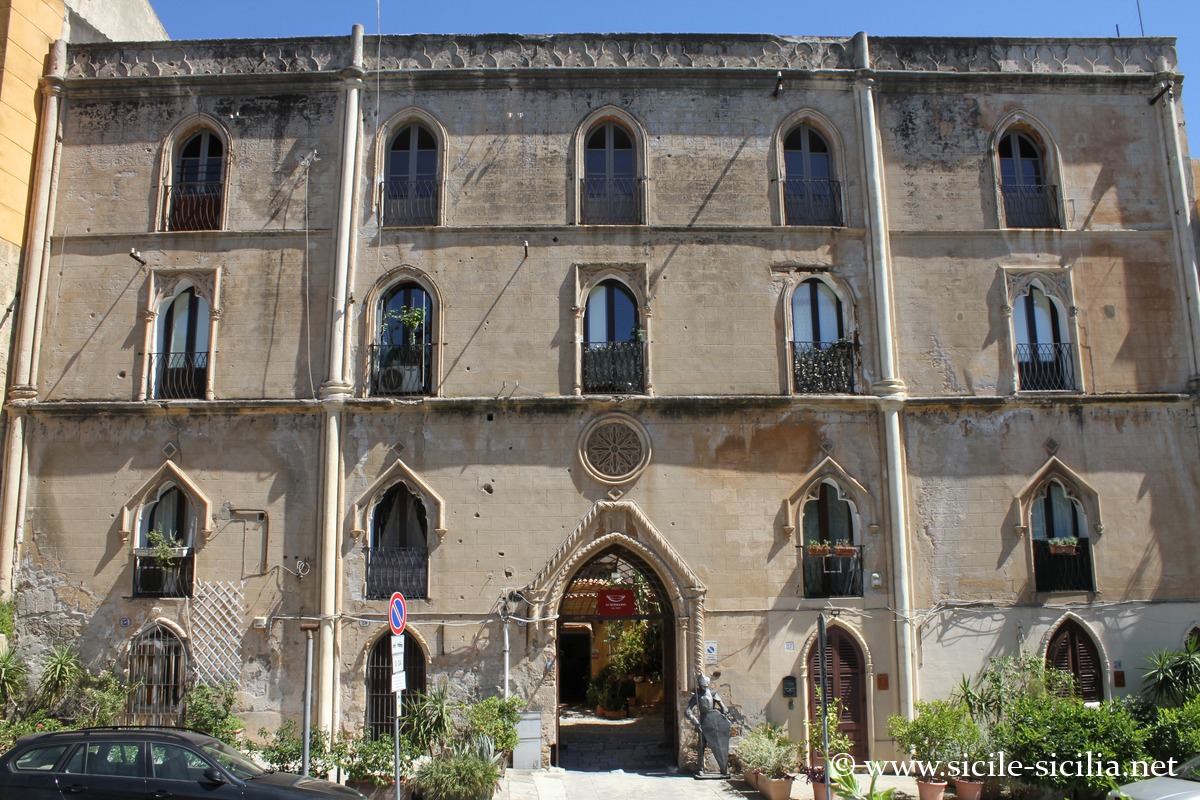
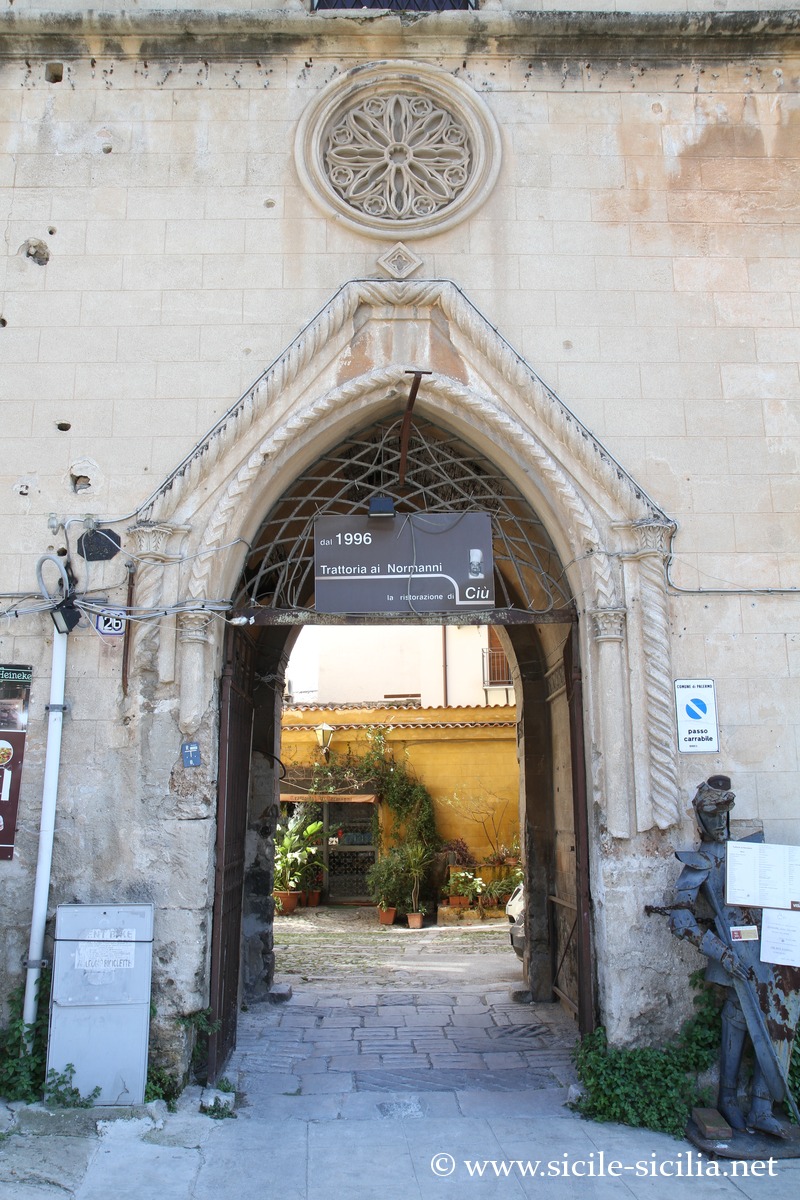
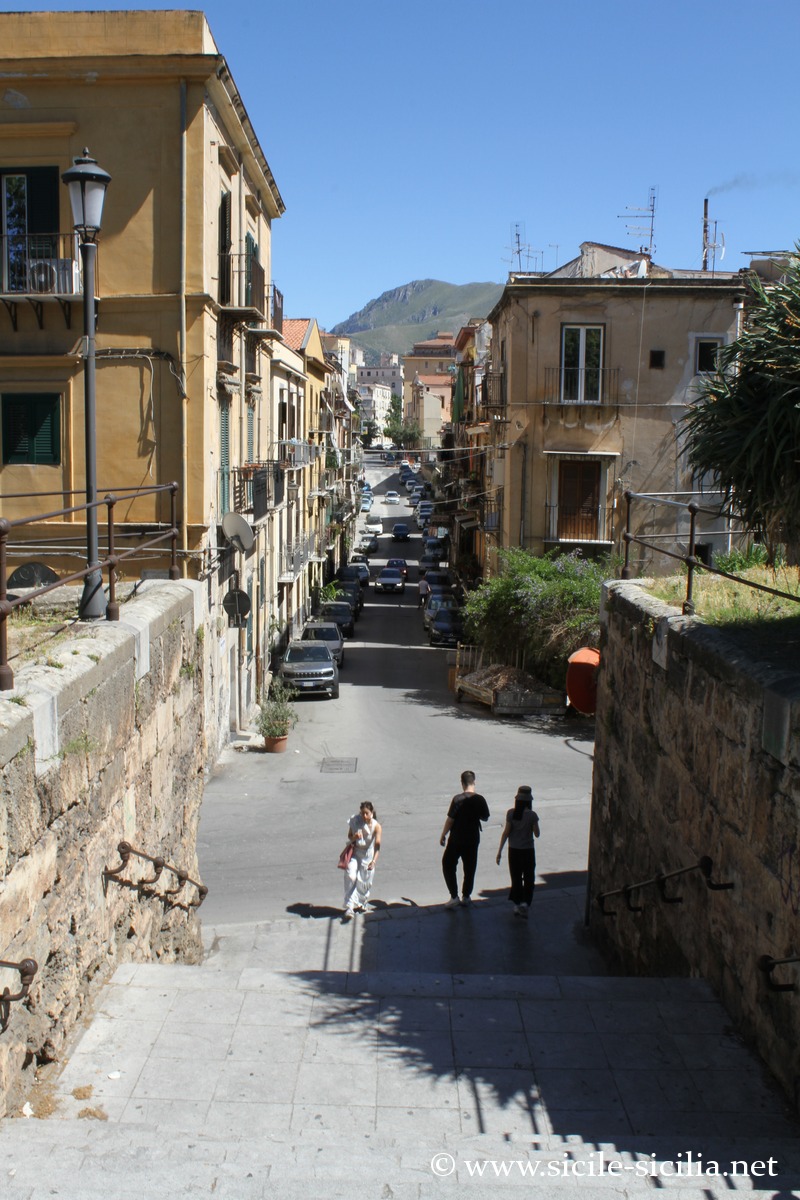
Piazza Bologni
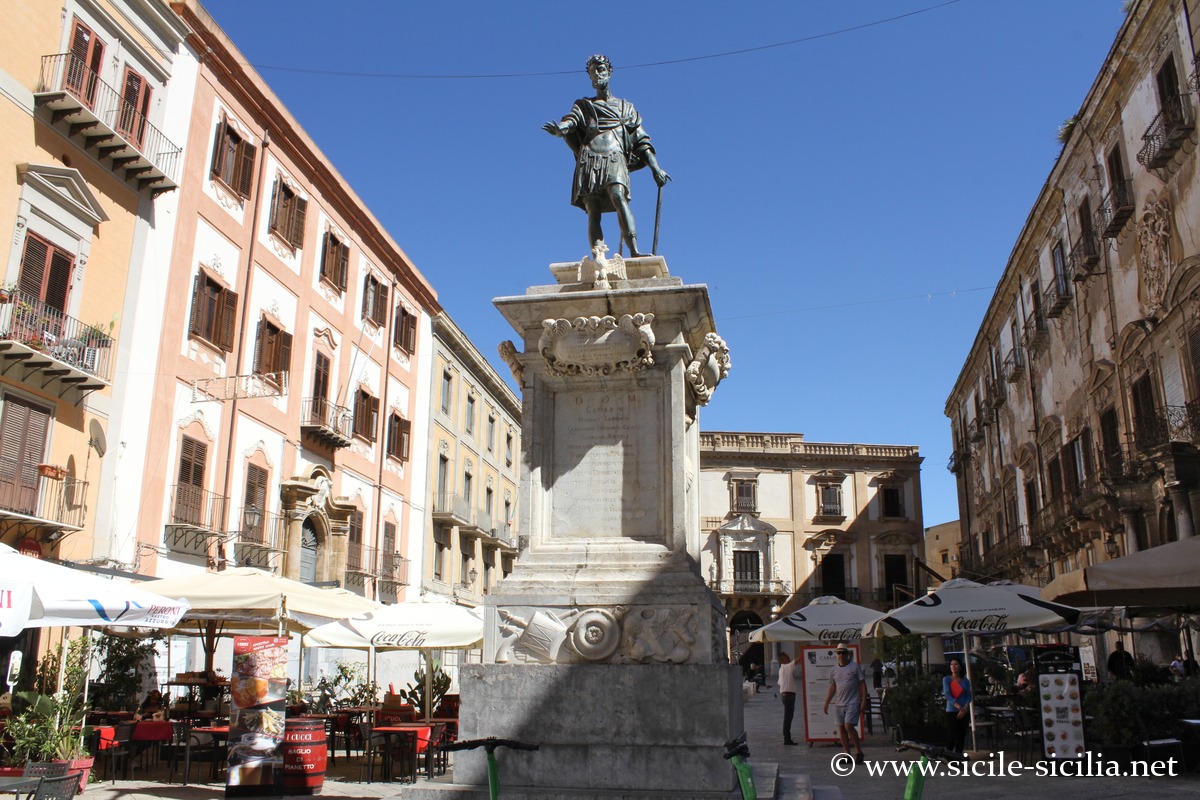
Piazza Bologni
The Piazza Bologni, located right in the centre of the historic Albergheria district, is a large rectangular square created in the 16th century within Palermo’s medieval urban fabric, then called Piano de’ Bologni after the Beccadelli di Bologna family, who had their palace built there.
In the centre of the square stands the bronze statue of Emperor Charles V, created by Scipione Li Volsi in 1631, depicting the emperor swearing loyalty to the privileges of the Kingdom of Sicily after his 1535 campaign.
The square is lined with historic palaces, including the Palazzo Alliata di Villafranca, a vast aristocratic palace dating back to the Renaissance and remodelled in the 17th–18th centuries, as well as the Palazzo Ugo delle Favare in Mannerist style.
On the north side, across the Cassaro (Via Vittorio Emanuele), stands the Palazzo Belmonte-Riso, designed at the end of the 18th century by Venanzio Marvuglia and today home to the Sicilian Museum of Contemporary Art.
Albergheria district gallery
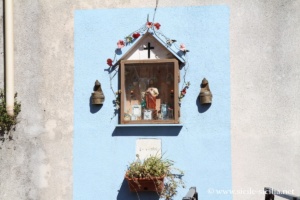
Quartier Ballaro’ 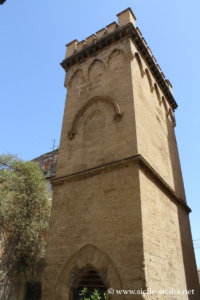
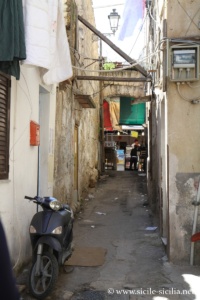
Quartier Ballaro’ 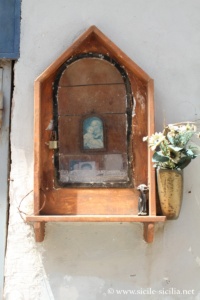
Quartier Ballaro’ 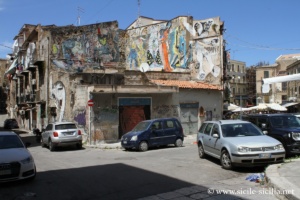
Quartier Ballaro’ 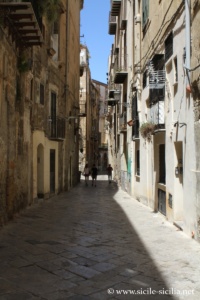
Quartier Ballaro’ 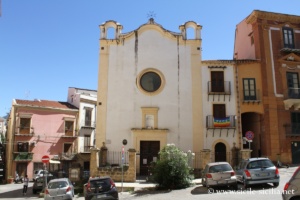
Quartier Albergheria 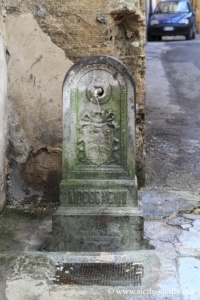
Quartier Albergheria 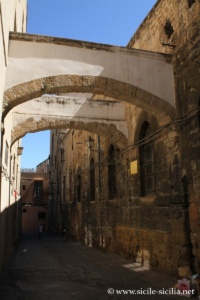
Quartier Albergheria 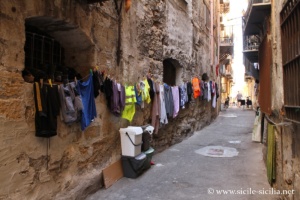
Quartier Albergheria
Information
Suggested tours of Palermo
Sources and external sites
- Ballarò district: turismo.comune.palermo.it, terradamare.org, www.arte.it
Comments in other languages
Market that has become quite touristy in recent years, with plenty of food service on-site or to go