
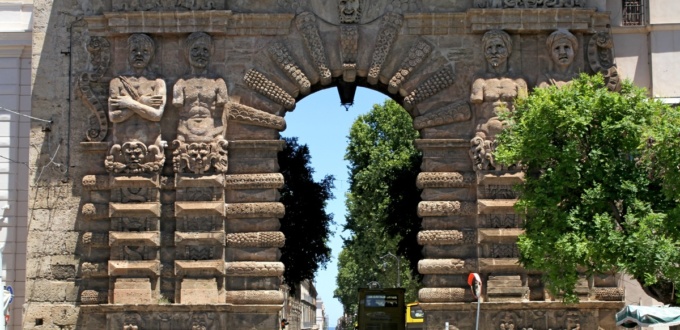
The fortifications of Palermo have a very ancient history, dating back to the Punic-Roman walls that surrounded the Paleapolis and the Neapolis, the first urban nuclei of the city, and exploited the beds of the Kemonia and Papireto rivers as natural moats to improve the defense.
Under Arab rule (9th–11th c.), the city was given a first, wider belt, with several gates (“bab”) such as Bab al-bahr, Bab-as-sudan or Bab-al-hadid, indicating the strategic importance of the site as a Mediterranean crossroads.
With the arrival of the Normans (1072) and the emergence of Palermo as the capital of the Kingdom of Sicily, the city was surrounded by a second, very extensive medieval enceinte, which included main defensive gates such as Porta Sant’Agata, Porta Mazzara and Porta Carini, attested as early as the 12th–13th century.
From the 16th century onward, the rise of firearms led to the construction of bastions and new reinforcing walls, and to the opening of numerous “modern” gates such as Porta Nuova (1583–1669) and Porta Felice (1582–1637), often of a monumental and ceremonial rather than strictly defensive character.
In total, the Palermo walls counted up to 19 different gates at the height of the fortifications of the modern period, several of which were demolished between the 19th and 20th centuries while others were transformed or integrated into the urban fabric.
The remains of these enceintes and gates, spread over a route of about 7 km around the historic center, still bear witness today to the defensive, social and symbolic evolution of Palermo from the Middle Ages to the modern era.
If you see this after your page is loaded completely, leafletJS files are missing.
Visible remains of the medieval walls
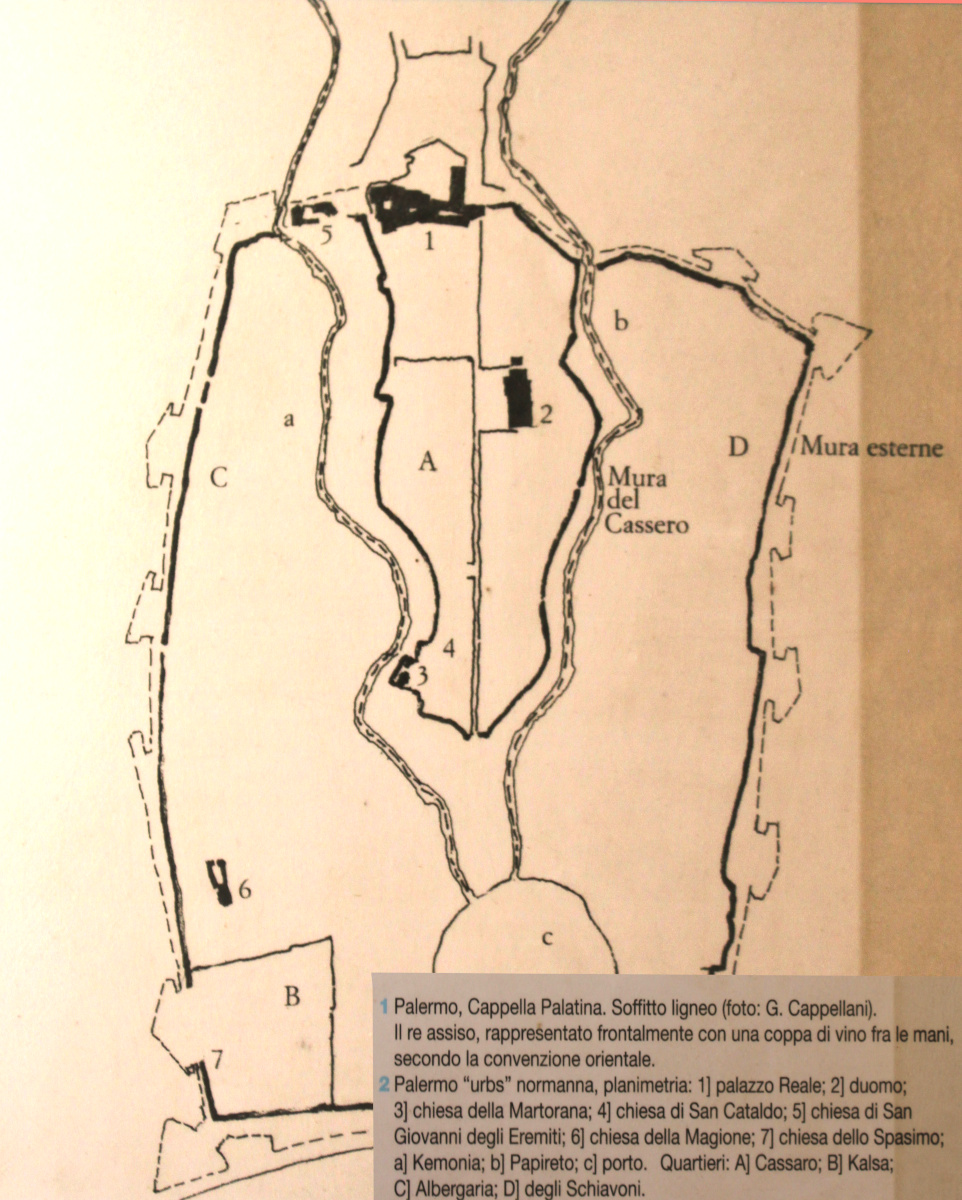
Map of medieval Palermo under the Normans, with the walls and buildings
Around Porta Sant’Agata, portions of the medieval enceinte in which the gate opened still remain today, with fragments of masonry integrated into the surrounding buildings.
The Porta Mazzara, located near San Giovanni degli Eremiti, is surrounded by medieval walls reconstructed or visible in the form of elements integrated into the built fabric. The remains of the wall around this gate give an idea of the defensive structure of the 13th century, particularly along Via delle mura di Montalto.
Porta Nuova
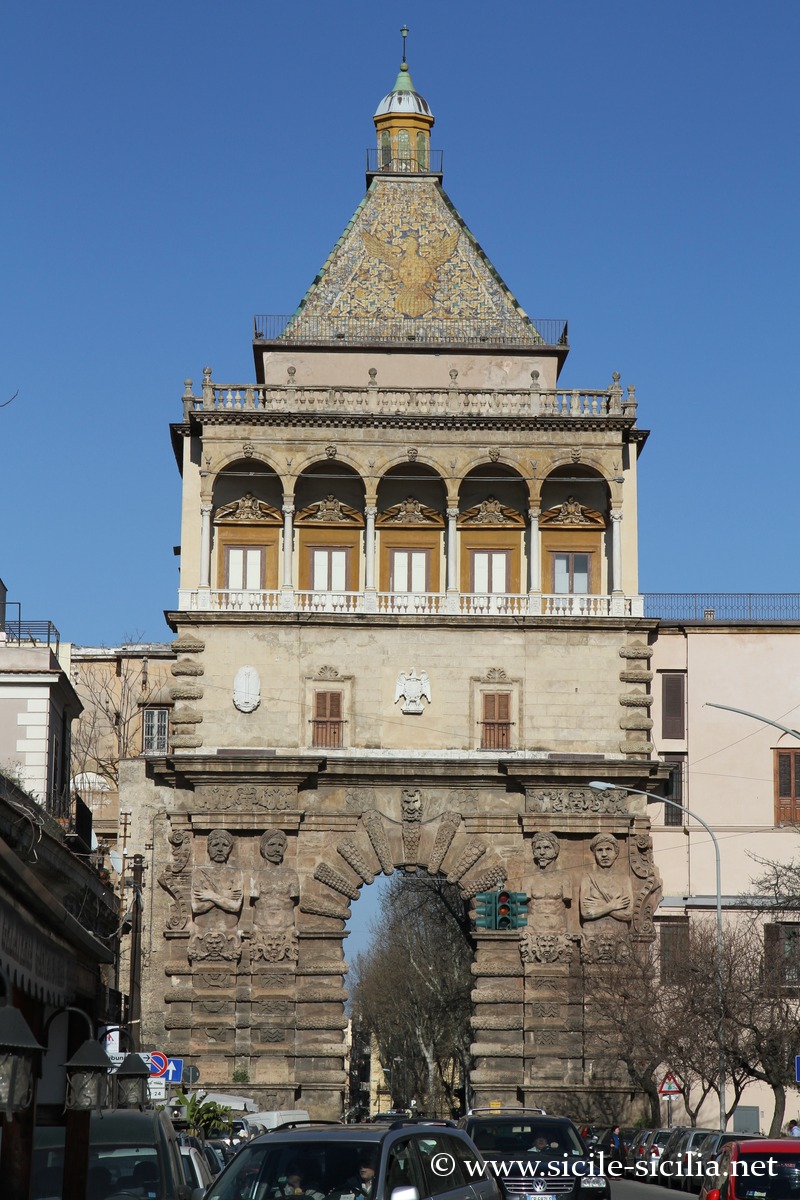
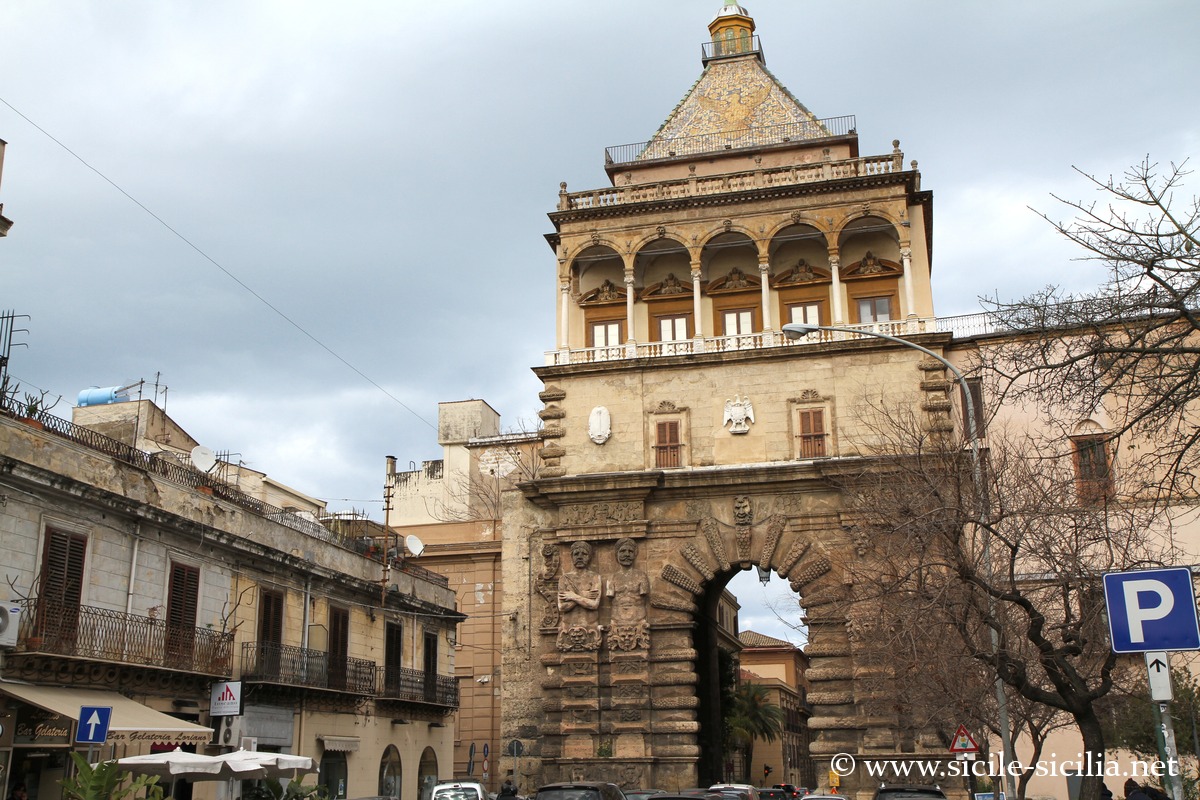
The Porta Nuova (New Gate in English) near the Palace of the Normans, was for a long time the main land entrance to the city of Palermo, from the west. The medieval enceinte has disappeared, but the gate still marks the boundary between the historic center and the modern districts.
It gives access to the city center via Corso Vittorio Emanuele, or Cassaro, the main artery of the city, while the outer road heads towards Monreale.
The old Cassaro is an urban axis founded in Phoenician times and subsequently redeveloped.
Porta Nuova
A gate, named Porta Reale, was commissioned in 1583 by the viceroy Marcantonio Colonna to commemorate the victory of Charles V over the Turkish armed forces during the Tunis expedition in 1535 against the Ottoman Empire.
It was destroyed in 1667, during the explosion of a powder magazine located near the gate. It was rebuilt in 1669, changing its name to Porta Nuova, by the architect Gaspare Guercio with the addition of a pyramidal roof covered with majolica tiles and the image of an eagle.
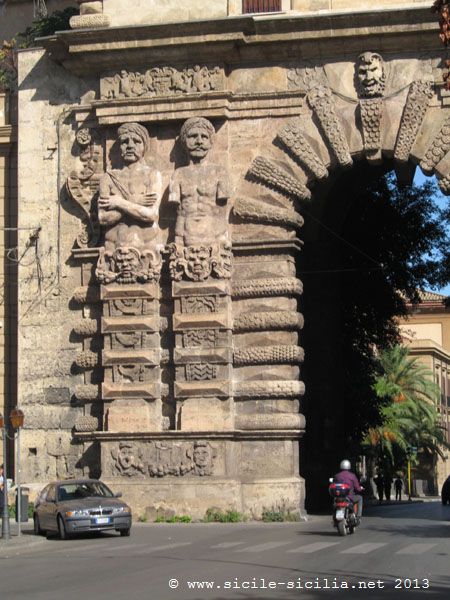
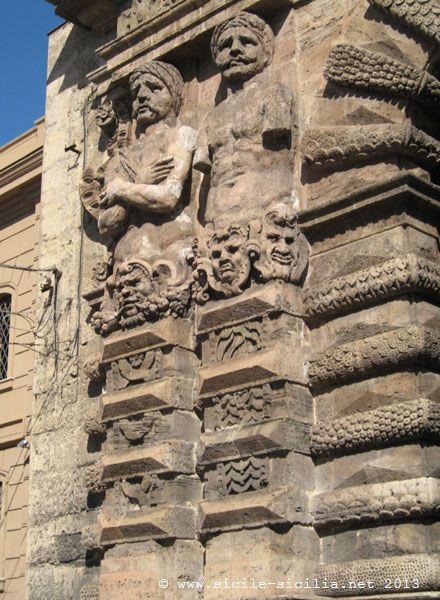
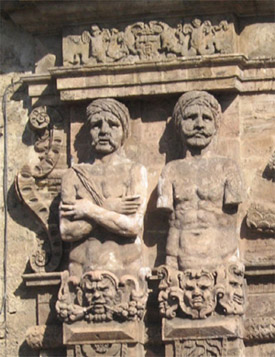
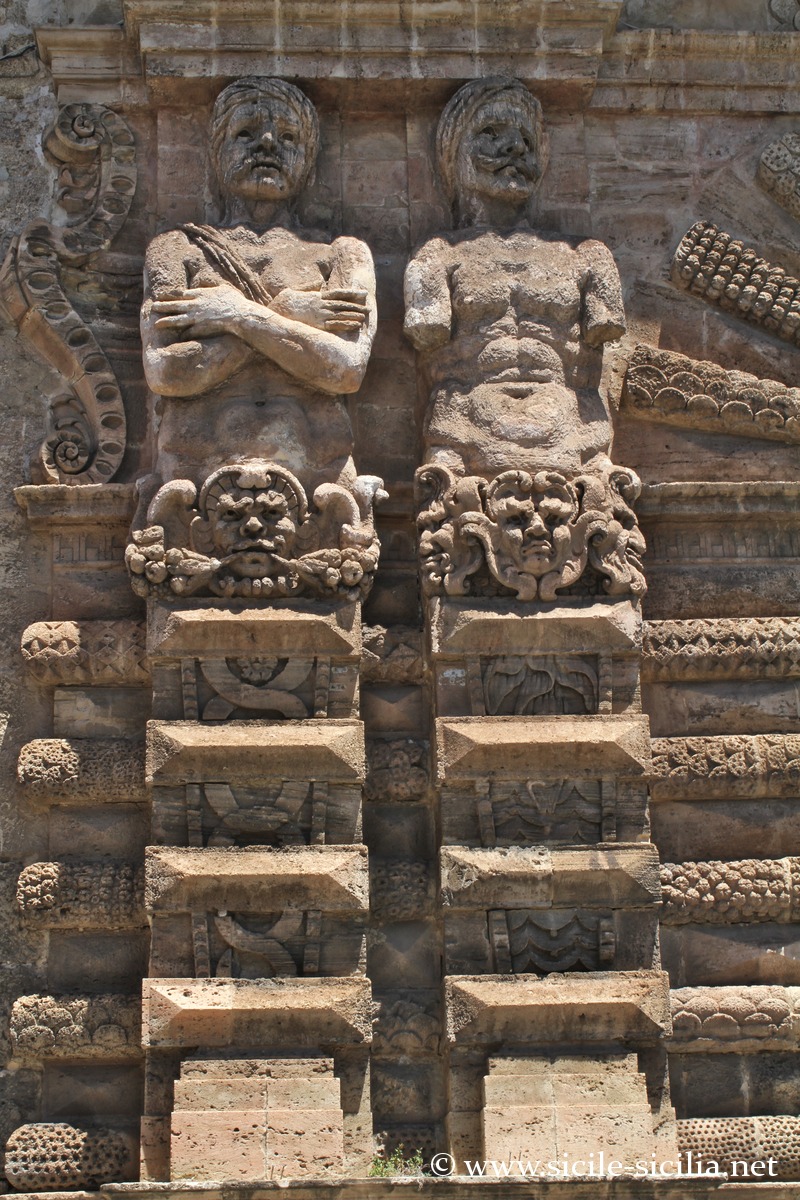
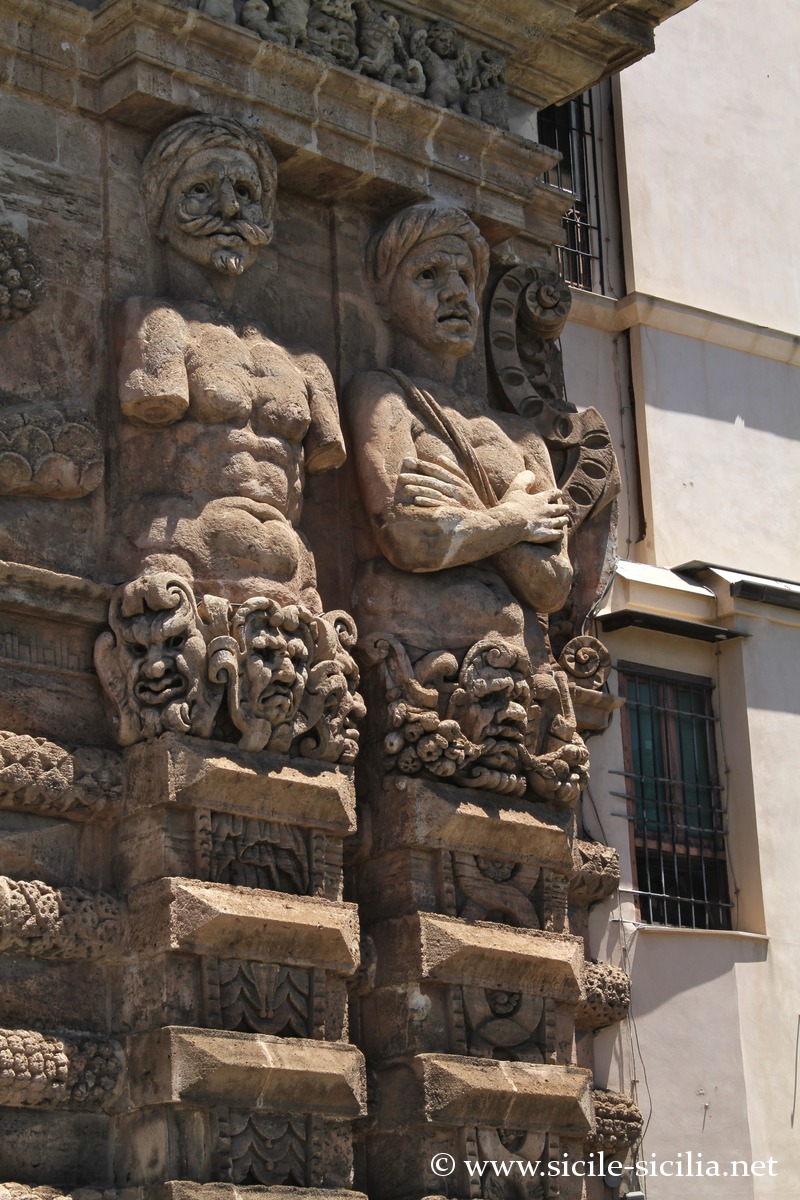
The interior facade has the classic characteristics of Roman-type triumphal arches, while on the outside were sculpted the four great “Moors”, four monumental telamons symbolizing the defeated enemies of the Empire.
The interior facade is characteristic of classic triumphal arches, while the exterior stands out with four great atlantes that represent the Moors defeated by Charles V.
Where is the Porta Nuova of Palermo
Via Vittorio Emanuele, 475, 90134 Palermo PA
Gallery
Porta Nuova 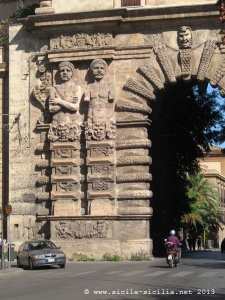
Porta Nuova 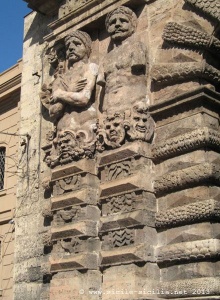

Moors of the Porta Nuova 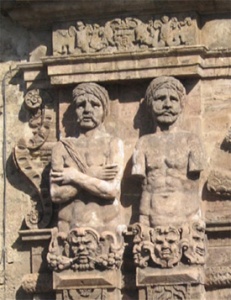

Moors of the Porta Nuova 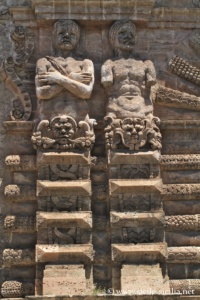

Moors of the Porta Nuova 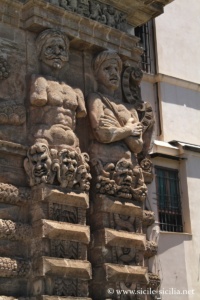
Moors of the Porta Nuova
Sources and external sites
- Wikipedia page
- Tourist portals: www.palermoviva.it, turismo.comune.palermo.it
Porta Felice
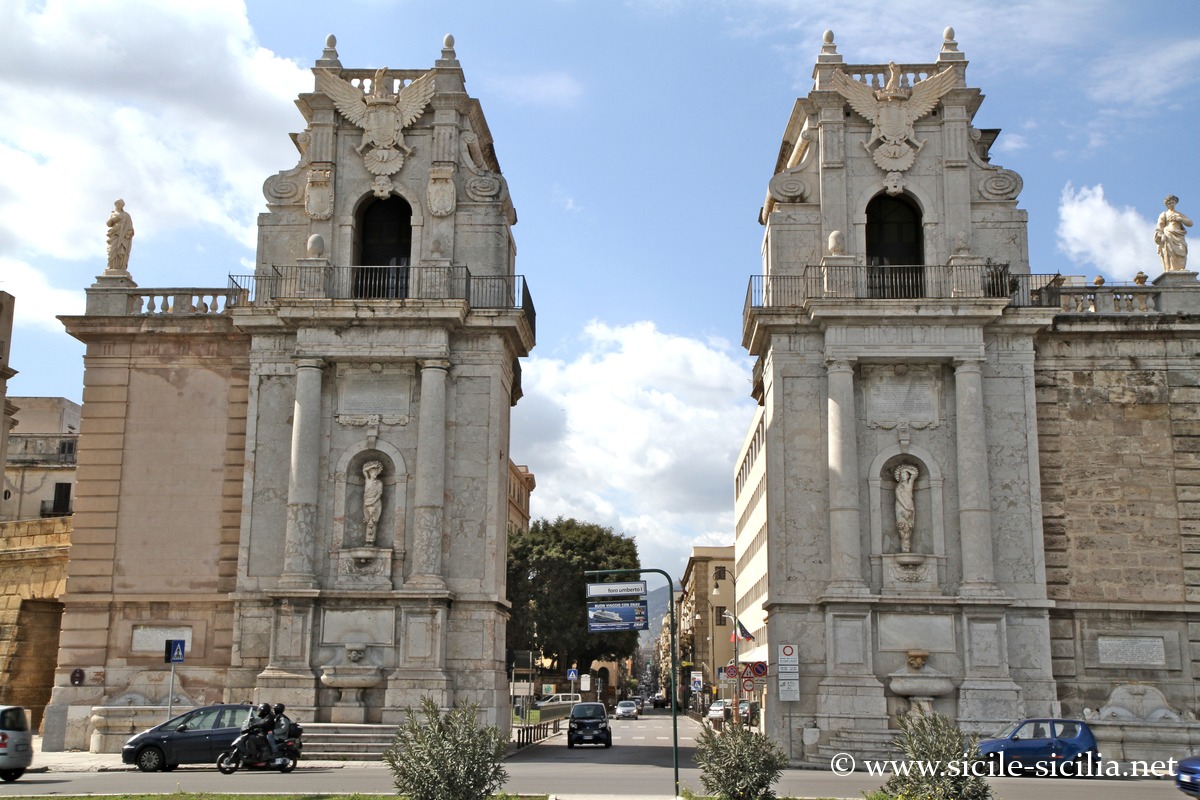
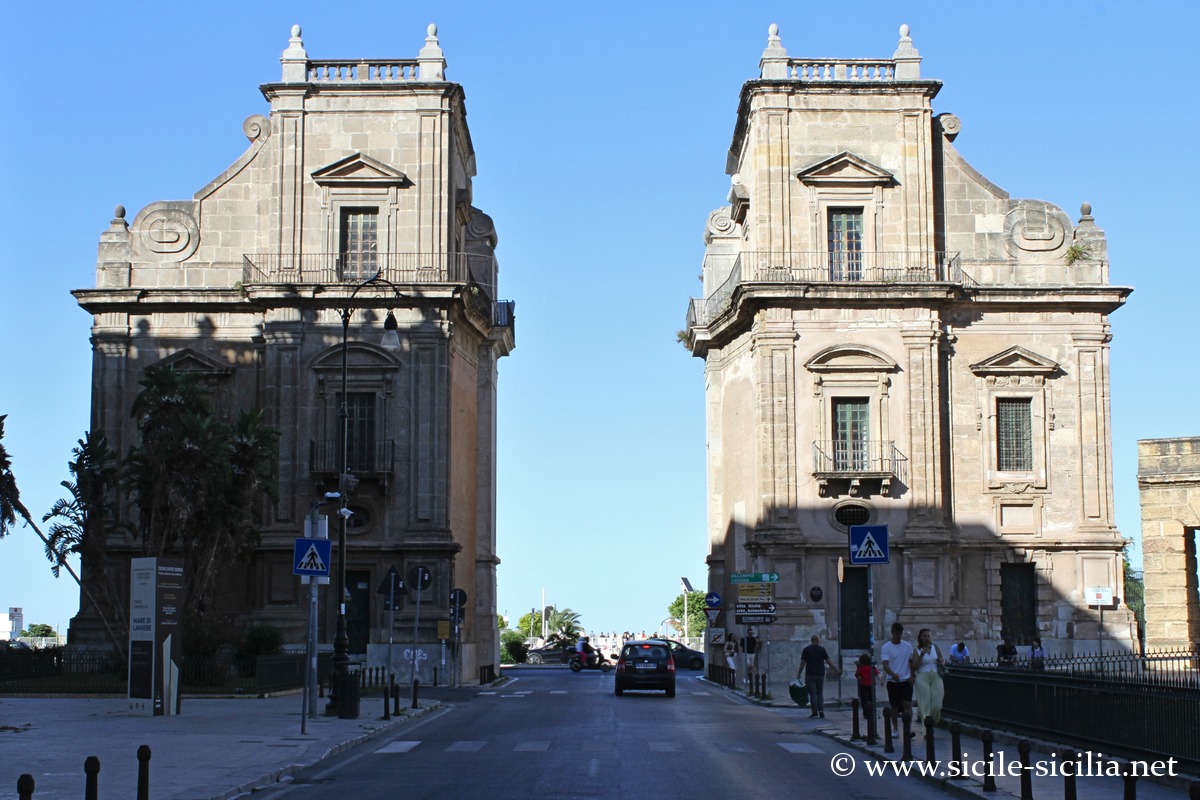
Porta Felice (exterior side)
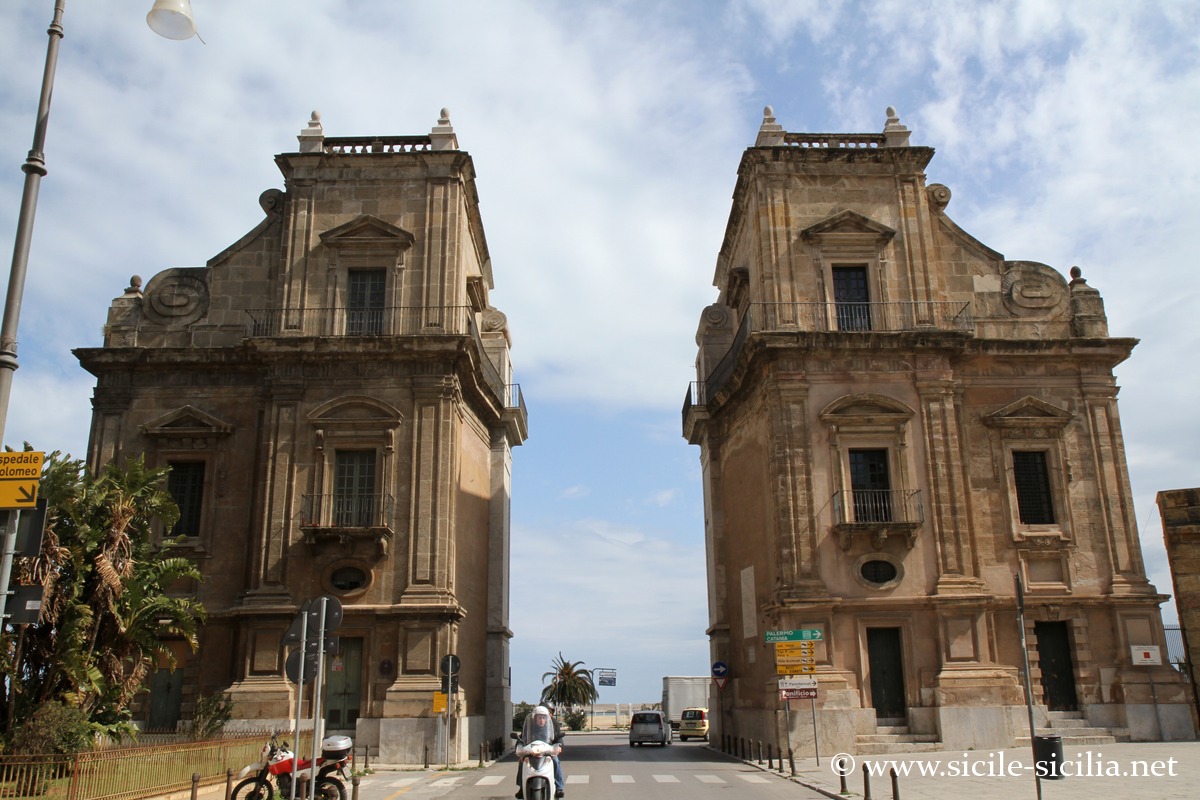
The Porta Felice is located near the harbour of the Cala. It opens onto the Corso Vittorio Emanuele, the Cassaro, the main axis of the city, leading to the Porta Nuova 2 kilometres further on.
It marks the opening of Palermo towards the Tyrrhenian Sea, having a major strategic and commercial function for the city since Antiquity.
It took its name from Felice Orsini, wife of the Spanish viceroy Marcantonio Colonna, who undertook its construction in 1582, after having extended the Cassaro to the sea.
The gate is formed of two massive pillars. The works were only completed in 1637. This is why the façades present different styles: the seaward side being more Renaissance in style, whereas the interior is Baroque in inspiration.
It was never completed, lacking an attic or a crowning.
Where is the Porta Felice
Foro Italico Umberto I, 90133 Palermo
Gallery
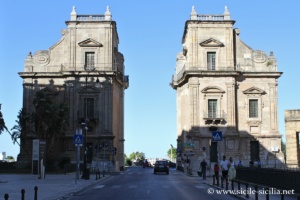

Porta Felice (inner face) 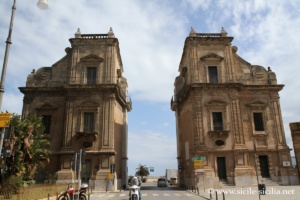
Porta Felice (inner face) 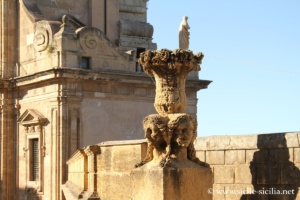
Mura delle Cattive and Porta Felice
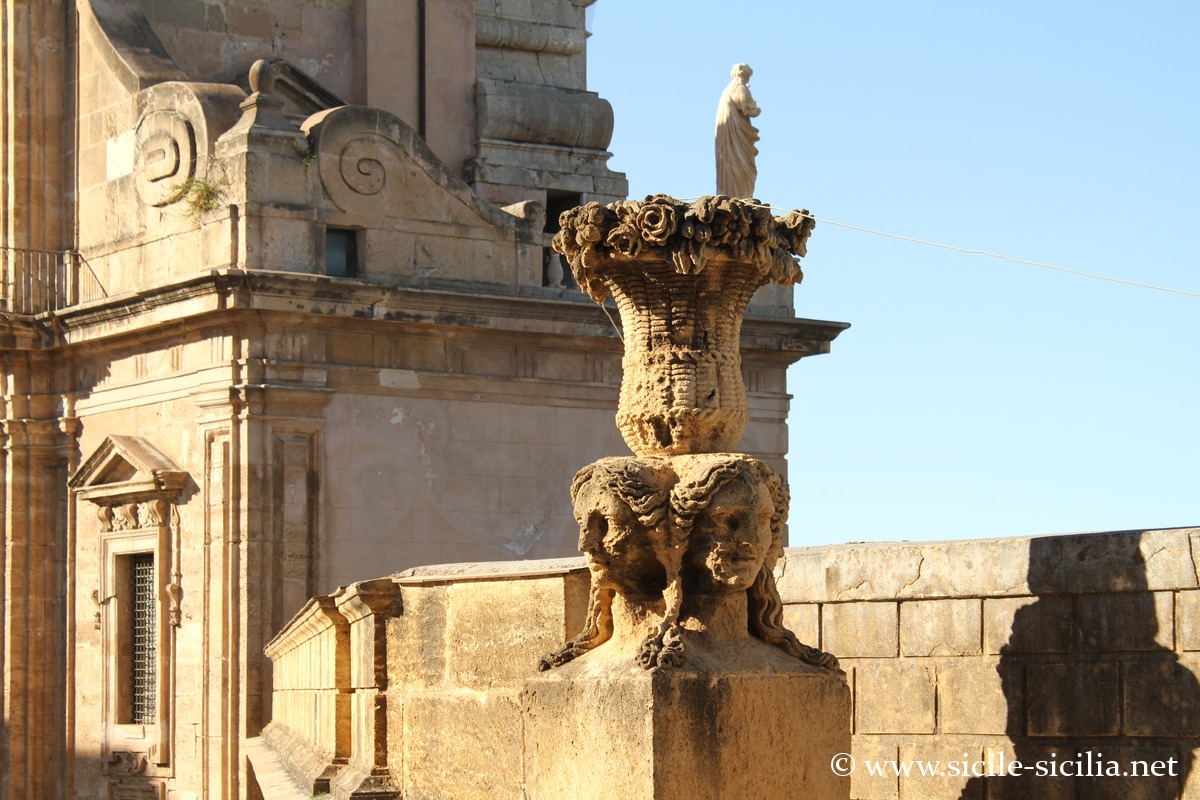
Sources and external sites
Porta Carini
The Porta Carini is located to the north-west of the historic centre, near the Capo market, one of the oldest and most popular markets in Palermo. Of medieval origin (13th century), it constituted one of the main accesses towards the inland roads of Sicily.
It owes its name to the Carini family, linked to the local feudal history. Although remodelled on several occasions, notably rebuilt in the 18th century, it retains a sober and defensive structure, whose central arch is integrated into the modern urban fabric.
In the immediate vicinity is the Capo market, one of the oldest popular markets in Palermo, which gives the area a strong cultural and social interest for the visitor.
V. Porta Carini, 90138 Palermo
Porta Sant’Agata
The Porta Sant’Agata was located in the south-eastern sector of the medieval city, dating back to the Norman period (12th century), and giving access to the secondary port. It took its name from an ancient church dedicated to Saint Agatha.
It is one of the oldest gates of the city that is preserved, with its original tuff arch, with a double pointed opening.
Local tradition associates the gate with an episode from the legendary life of Saint Agatha, who is said to have passed through there on her way to Catania.
Piazza Porta Sant’Agata, 90134 Palermo
Porta Mazzara
The Porta Mazzara was oriented towards the west and opened the city in the direction of Mazara del Vallo. It had above all a military and commercial function and dates back to the 13th century, integrated into the medieval fortifications that surrounded the Albergheria.
It was renovated in 1326 and later integrated into an urban bastion and then partly concealed. There are remains of the arch and masonry elements of the former fortified passage.
Via dei Benedettini, 2, 90134 Palermo
Porta Reale
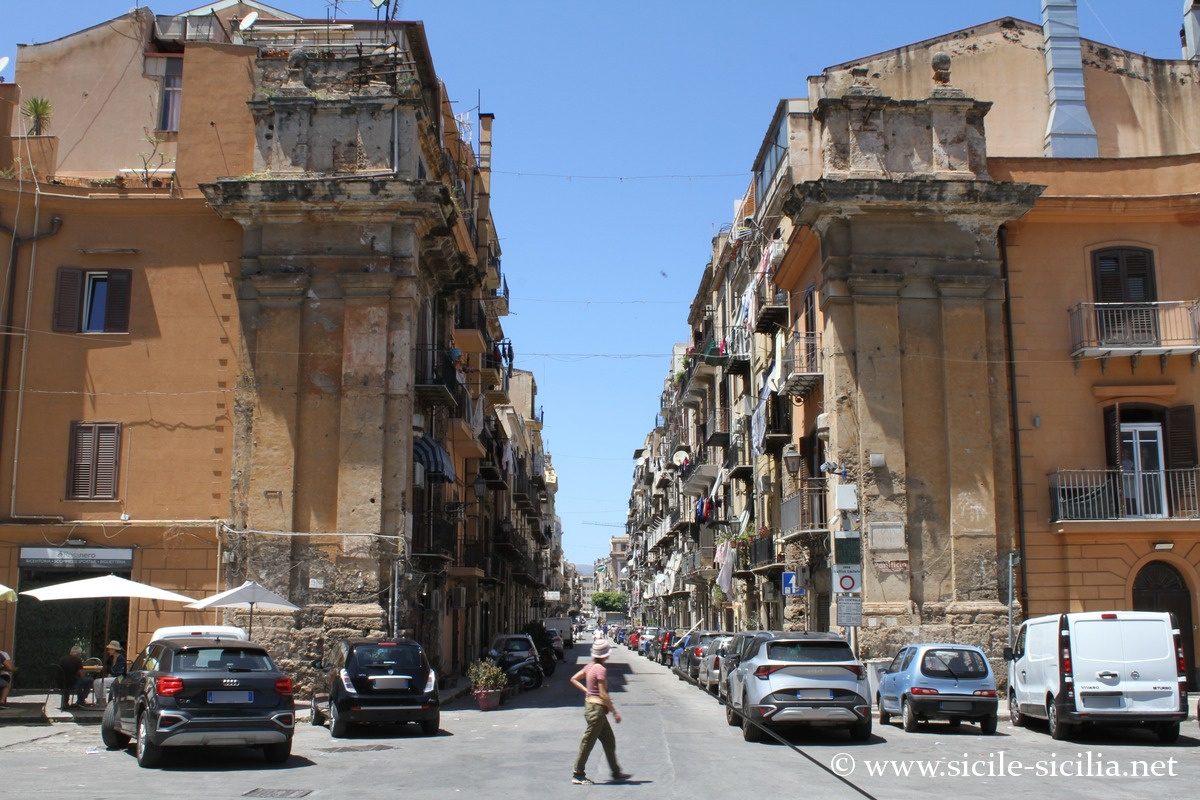
Porta Reale
The Porta Reale, also called Porta Carolina, Porta delle Vittorie or Porta di Santa Teresa, is a historic gate of Palermo located between via Lincoln and via Nicolò Cervello. It was built in 1783–1784 to replace the older Porta delle Vittorie from the Arab period (named after bāb al‐futūḥ), and dedicated to Queen Maria Carolina of Austria‐Lorraine, wife of King Ferdinand I of Bourbon.
Via Nicolò Cervello, 90123 Palermo
Porta dei Greci
The current Porta dei Greci contains the vestiges of an ancient medieval gate located in the Kalsa district, now incorporated into the Palazzo Forcella de Seta.
It dated back to the 14th century, near the church of San Nicolò dei Greci, in a district historically inhabited by eastern merchants.
It was destroyed and then rebuilt in 1553 in a Mannerist style, inserted between the Tuono and di Vega bastions of the Kalsa walls, before being moved towards the coastline in the 18th century following the redeployment of the fortifications.
In the 19th century, the gate was encompassed within the construction of the Palazzo Forcella de Seta. On the sea side, it presents a decoration with projecting bosses, columns with capitals, festoons and human figures sculpted on the architrave.
Via Porta dei Greci, 90133 Palermo
Disappeared or destroyed gates
Several historic gates of Palermo have now disappeared, notably the Porta Sant’Antonino, destroyed during the urban transformations of the 19th and 20th centuries.
Information
Sources
- Gates of Palermo (Wikipedia in Italian)