
Presentation of around fifteen churches in Palermo, as a complement to the section churches in Palermo, which are of historical or architectural interest, and are worth a visit if you stay some time in the city.
These monuments cover several periods, with Norman, Gothic, Baroque buildings, etc.
See also the map with the churches at the end of the page.
Church of Santa Maria Maddalena in Palermo
The originally Norman church of Santa Maria Maddalena (Saint Mary Magdalene) is located near the Porta Nuova, in the heart of the Cassaro district, inside a military camp located in the former Galka, today the headquarters of the Command of the Carabinieri Legion of Sicily, which can only be visited on certain occasions. Since the 1940s, it has been dedicated to the Sicilian carabinieri who fell in war.
It is a small church, of typical Arab-Norman style from the 12th century, built at the wish of Archbishop Gualtiero as a chapel to house the royal tombs during the works on the new cathedral (where they had previously been kept in the Maddalena chapel).
The current facade has a 16th-century portal and preserves a medieval bell tower. Originally a dome crowned the chancel.
The interior recalls that of the church of San Cataldo, with three naves separated by arcades supported by four columns decorated with fine carved capitals. The width of the arcades decreases as they approach the apse, thus suggesting to the eye a greater length of the interior. The apses are separated by small colonnades set into niches.
| Address: Via Vittorio Emanuele, 469, 90134 Palermo External sites: fr.wikipedia.org, www.palermoviva.it |
Chapel of Santa Maria dell’Incoronata
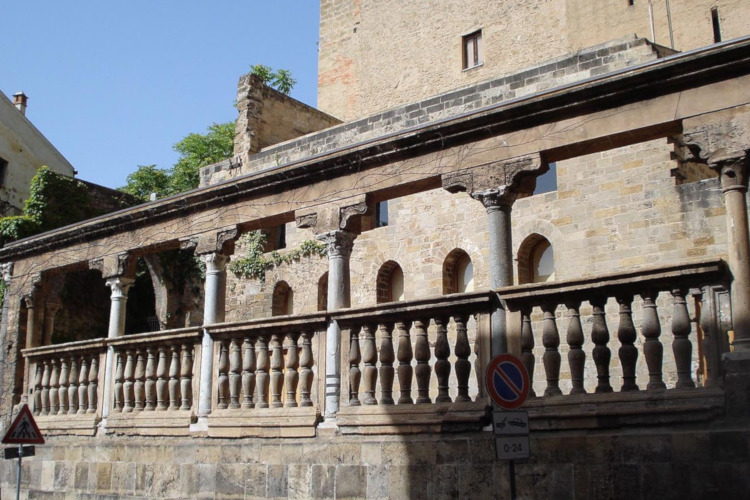
Loggia dell’Incoronazione
The ancient Norman chapel of Santa Maria dell’Incoronata was probably connected to the ancient cathedral of Palermo in the 12th century, before the latter was rebuilt.
Older structures, such as pillars and walls, are visible in the current basement, probably linked to the former mosque.
The exterior portico on the west side, the “Loggia dell’Incoronazione”, was traditionally the place from which the kings showed themselves to the people. It was converted into an oratory at the end of the 16th century.
| Address: Via Giuseppe Arcoleo, 34, 90129 Palermo External sites: turismo.comune.palermo.it, it.wikipedia.org |
Church of Santa Cristina la Vetere
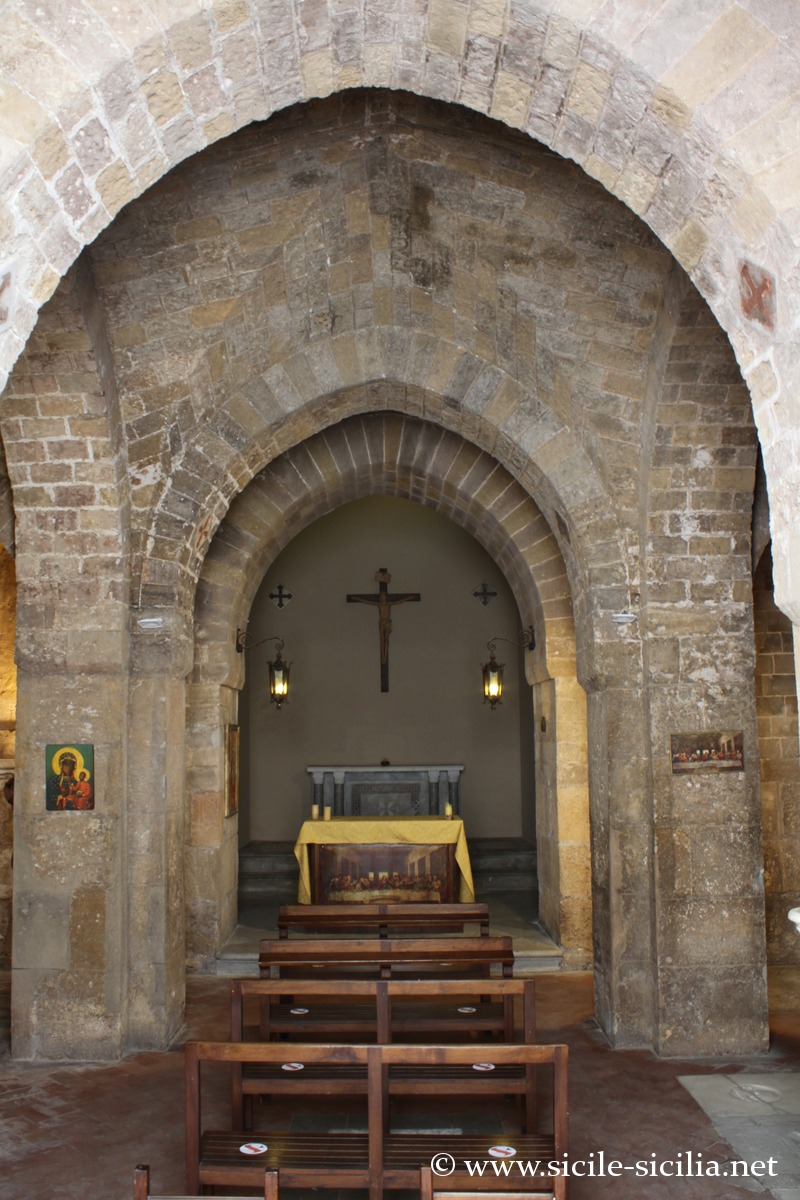
Santa Cristina la Vetere
Separated from the cathedral of Palermo by an alley, the church of Santa Cristina la Vetere is said to have been built between 1171 and 1174 by Archbishop Gualtiero under William II to preserve the remains of Saint Christine (Christine of Tyre, 3rd century), who was the patron saint of Palermo before Saint Rosalia.
Later a convent was erected beside it, then a hospice for pilgrims and an oratory, where care and restoration were offered to travellers.
It is a building of cubic shape, which was originally framed by four open arches of which only one remains, walled up, on the west side. The others have been integrated into masonry. The current entrance, on the south side, is a 16th-century portal.
It is assumed that it was originally the first level of a tower, due to the thickness of the walls, the heavy design and the absence of a central dome.
Inside, sober and without ornaments, four pillars carry pointed arches on which rest the central vault and the small corner vaults. The side vaults are barrel vaults. The combination of barrel vaults and pointed vaults illustrates a phase of stylistic transition, characteristic of Norman Sicily at the end of the 12th century.
In the 16th century, the original apse was destroyed by a fire and then replaced by the current chapel with a rectangular plan. Few medieval decorative elements remain visible, later covered by plaster.
| Chiesa di Santa Cristina La Vetere Cortile Pellegrini, 90134 Palermo External sites: turismo.comune.palermo.it, it.wikipedia.org |
Church of Saint George of the Genoese
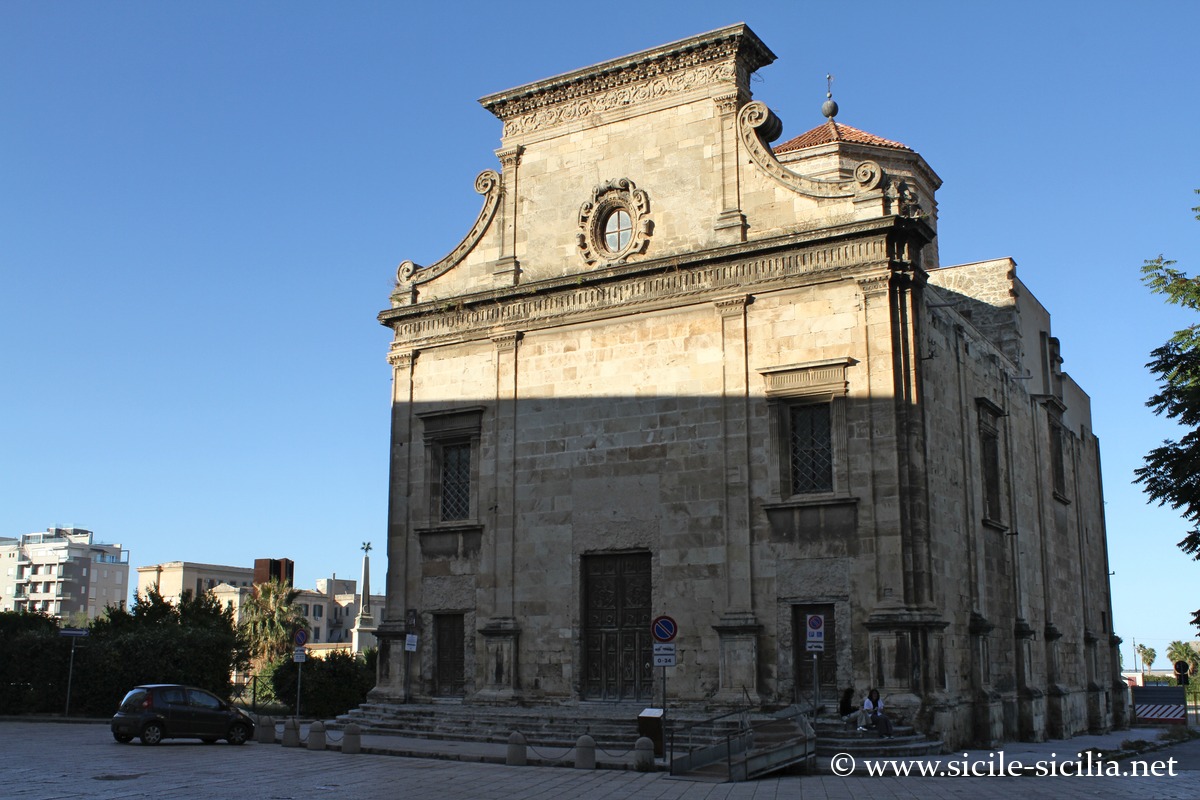
San giorgio dei genovesi
The church of San Giorgio dei Genovesi is located in the historic Loggia district, near the old port of the Cala (today in the area known as the Vucciria) in Palermo. Built between 1575/1576 and 1596 for the dominant Genoese community of merchants and bankers, it replaces an old chapel dedicated to San Luca and symbolises the economic influence of the Genoese in Palermo at the end of the 16th century.
The building, the work of the architect Giorgio di Faccio, is a major example of Palermitan Renaissance architecture, late Renaissance with Tuscan influence. It has a basilican plan with three naves, with Carrara marble columns and side chapels integrated into the walls. The interior is marked by numerous tombstones of wealthy Genoese families. The transept is surmounted by an octagonal tibidario and a dome supported by spherical pendentives.
It notably contains the tomb of the painter Sofonisba Anguissola, one of the most famous Italian artists of the 16th century.
The floor is almost entirely covered with sepulchral slabs of the Genoese families, and several 17th-century canvases and paintings adorn the aedicules and altars: Martyrdom of Saint George, Baptism of Jesus and Annunciazione by Jacopo Palma il Giovane, San Luca ritrae la Vergine by Filippo Paladini, Madonna del Rosario e Santi by Luca Giordano or even Madonna Regina di Genova by Domenico Fiasella.
Beneath the main altar is preserved a marble statue of Santa Rosalia attributed to Giovan Battista Ragusa.
| Address: Piazza S. Giorgio dei Genovesi, 90133 Palermo External sites: en.wikipedia.org, turismo.comune.palermo.it, www.palermoviva.it |
Church of San Giuseppe dei Teatini
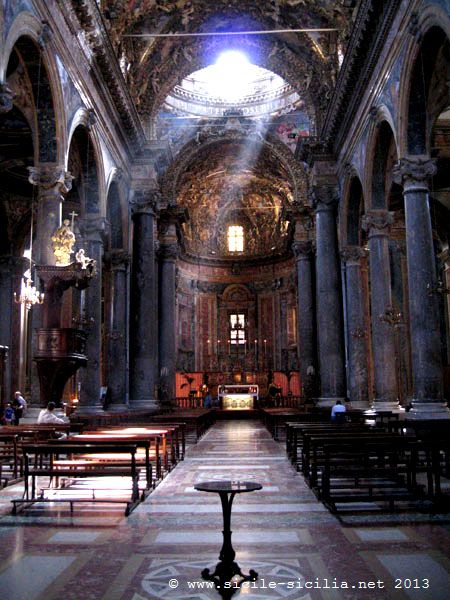
Central nave
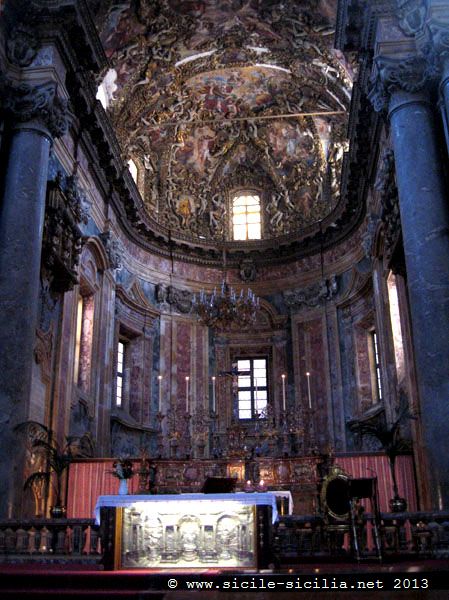
The church of Saint Joseph of the Theatines (San Giuseppe dei Teatini in Italian) was built between 1612 and 1645 by the Genoese Theatine Giacomo Besio. It is one of the major works of Sicilian Baroque in Palermo.
The sober neoclassical facade was not completed until 1844. The niche above the portal houses the statue of Saint Cajetan, founder of the order of the Theatines.
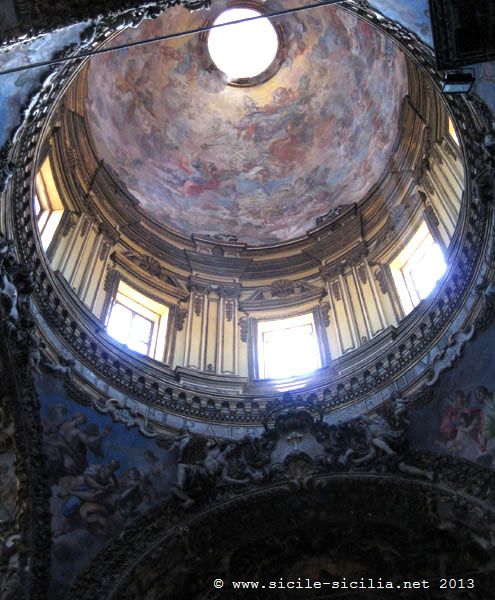
The great slender dome is remarkable, with its covering of blue and yellow majolicas.
The grandiose interior consists of three naves separated by large monolithic marble columns. The arches of the transept support the drum of the dome.
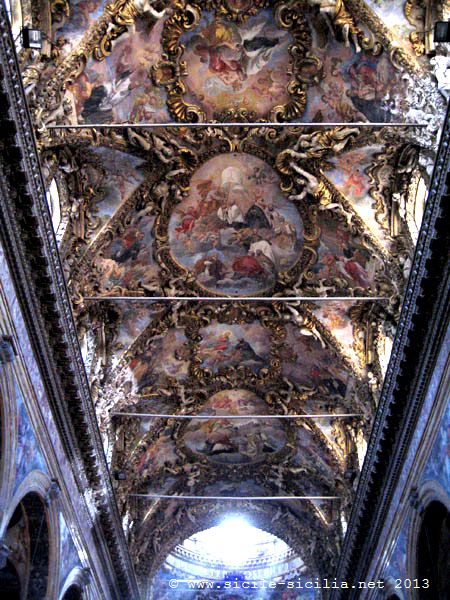
The Baroque ornamentation is abundant and refined, with ceilings adorned with frescoes, walls covered in marble, and the stuccoes of Paolo Corso and Serpotta.
The vault of the central nave is decorated with 17th-century frescoes by Filippo Tancredi, with episodes from the Life of Saint Cajetan. The dome was painted with the Triumph of Saint Andrew Avellino in 1734 by Guglielmo Borremans.
Around the arches one can see the Figures of the Apostles by Velasco and Vincenzo Manno.
One should also note the important wooden crucifix by Fra Umile da Petralia.
On each side of the entrance one can see two beautiful marble holy water stoups supported by stucco angels, from the end of the 18th century.
The crypt preserves remains of an ancient church dedicated to the Virgin of Providence.
| Address: Via Vittorio Emanuele, 311, 90134 Palermo External sites: turismo.comune.palermo.it, www.palermoviva.it, en.wikipedia.org |
-

- San Giuseppe dei Teatini, Palerme
-
- San Giuseppe dei Teatini, Palerme
-
- San Giuseppe dei Teatini, Palermo
-
- San Giuseppe dei Teatini, Palermo
-
- San Giuseppe dei Teatini, Palerme
Church of Carmine Maggiore
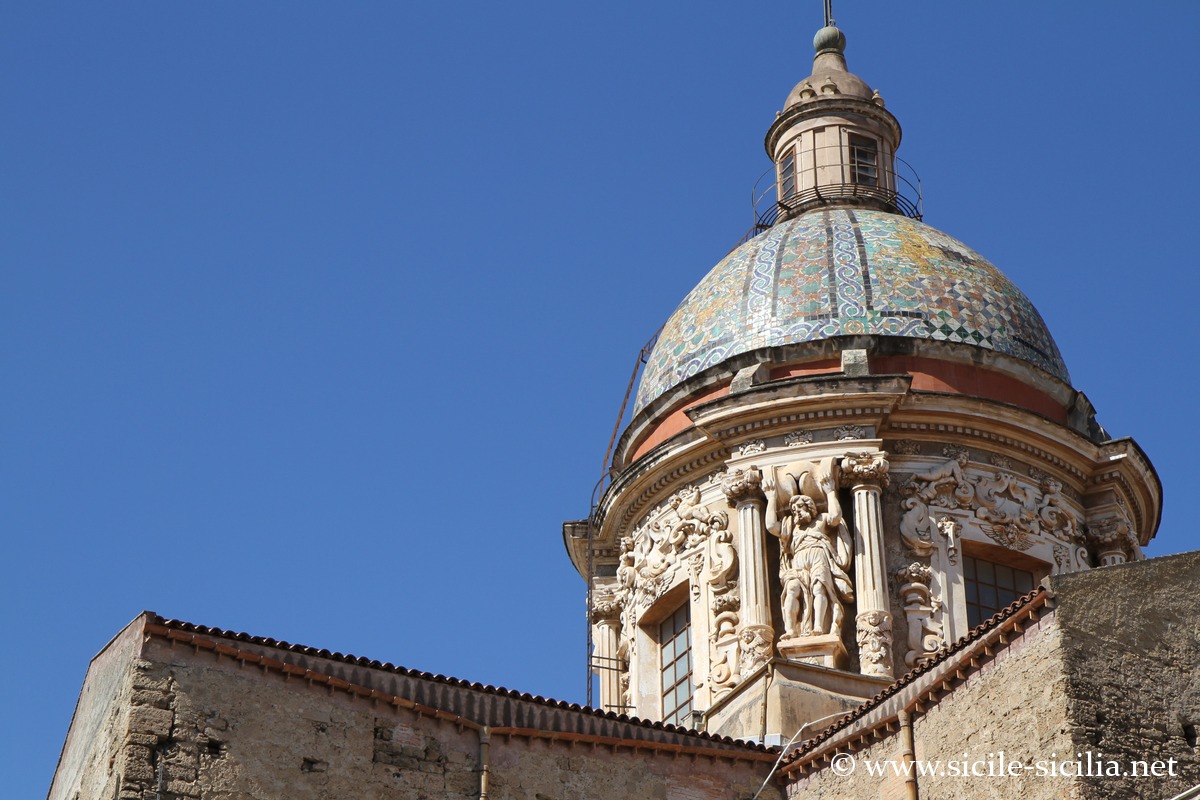
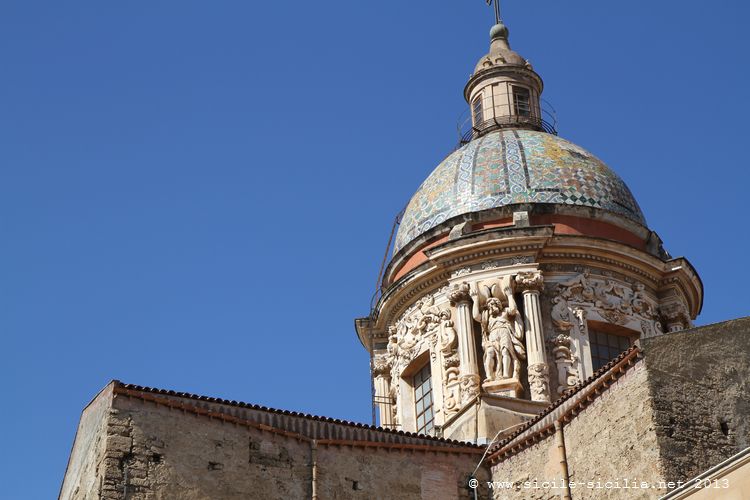
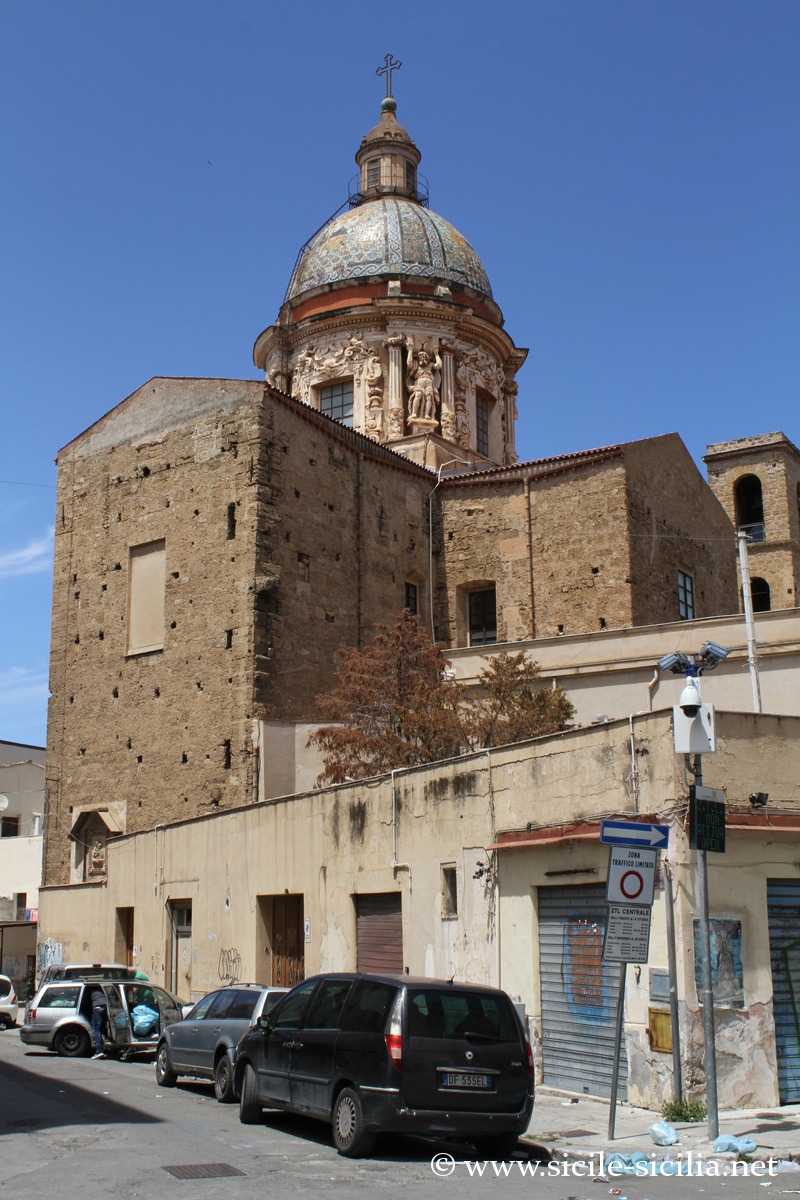
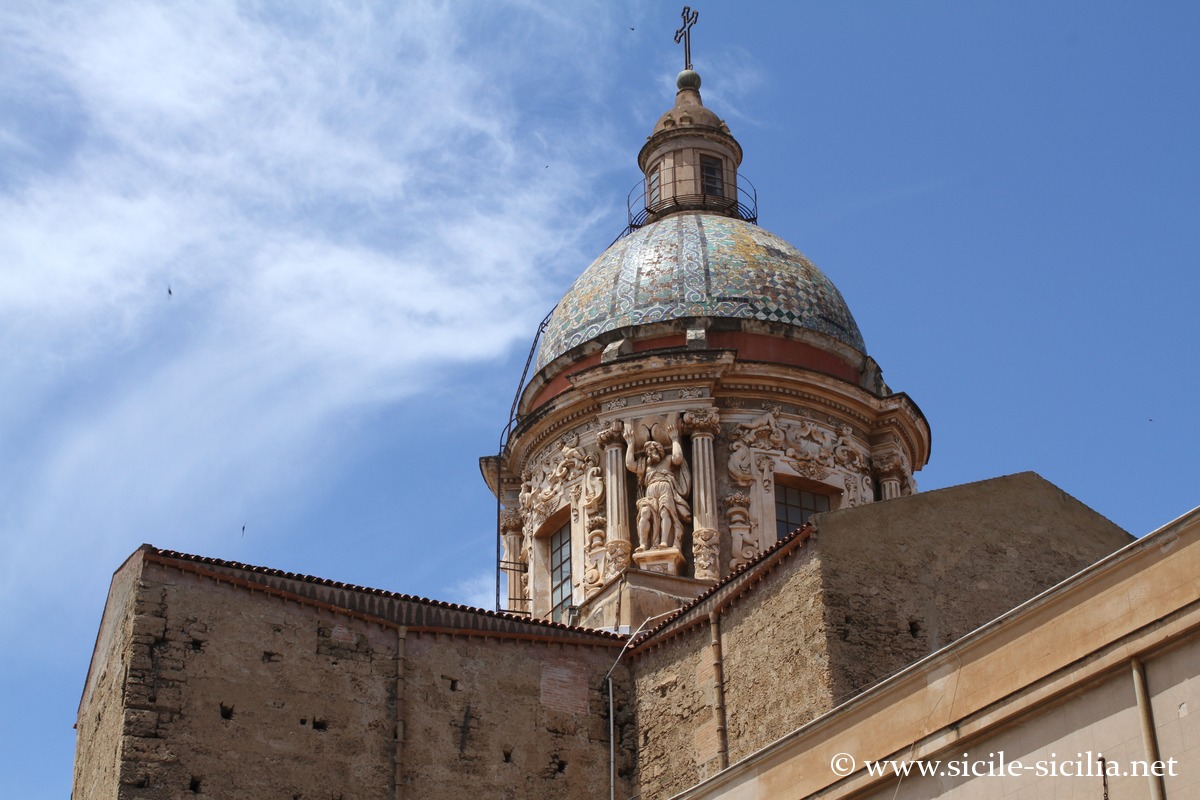
Dome of the church of Carmine Maggiore
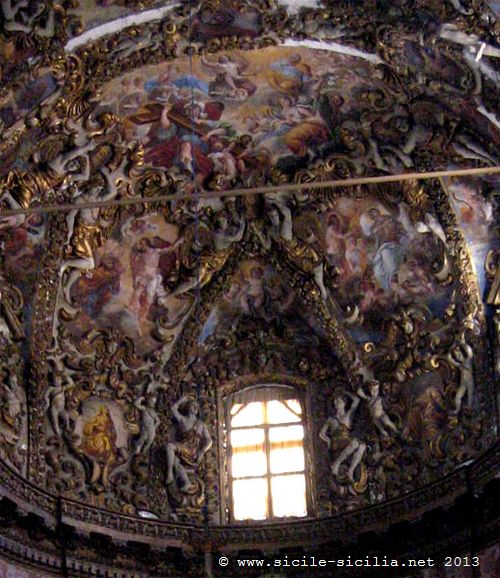
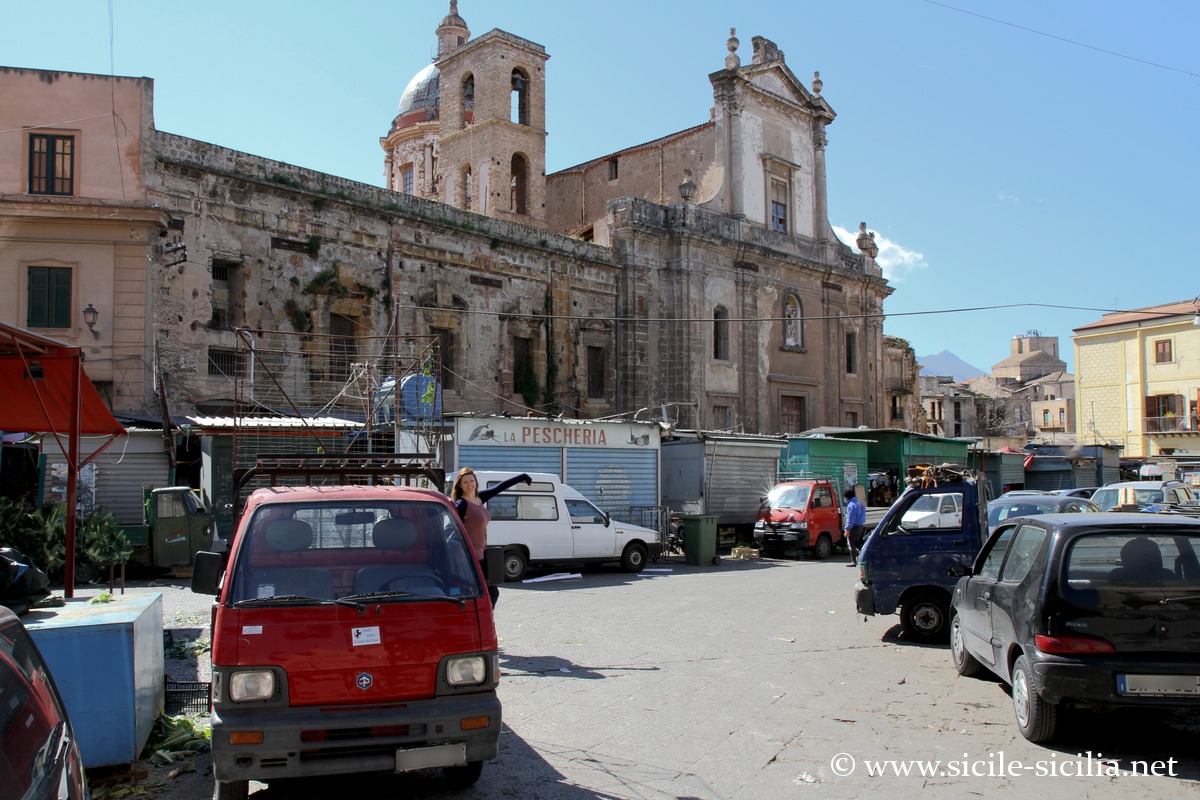
In the popular Ballarò district, the imposing church of Carmine Maggiore, or Santa Maria del Carmine, was built between 1627 and 1667 in Baroque style, where a church had already existed since the 13th century, with the settlement of Carmelite monks who came from Mount Carmel in Palestine around 1235. A monastery already existed here.
Its large dome dates from 1680, covered with majolica ceramics, “carried” by four Atlas statues, which represent Moses, Saint Elijah, Jonah and John the Baptist.
The sober main facade was completed in 1814. Above the central door is the stucco statue of the Madonna del Carmine. It preserves a Baroque style with pilasters, molded cornices and a vertical rhythm that dialogues with the cupola.
The polychrome cupola is one of the major urban landmarks of the district.
The interior with its three naves preserves precious works of art from the Baroque period, separated by twelve monolithic columns of Billiemi stone.
The vault of the central nave is decorated with a large painting by Giovanni Patricolo representing the giving of the scapular to Saint Simon Stock, the central theme of Carmelite spirituality.
The side altars are enriched with Baroque stuccoes made in the 1680s by Giacomo and Giuseppe Serpotta.
The main chapel dedicated to the Virgin of Carmel is the devotional heart of the church: it preserves a venerated image of the Madonna del Carmine and an altar richly decorated with stuccoes and polychrome marbles.
In the immediate vicinity of the church is the oratory of the Carminello, another Carmelite building decorated with Baroque stuccoes, which completes the religious and artistic landscape of the Carmine complex in the Ballarò district.
| Chiesa del Carmine Maggiore Piazza Carmine, 1, 90134 Palermo External sites: fondoambiente.it, en.wikipedia.org, turismo.comune.palermo.it |
Church of Sant Orsola dei Negri
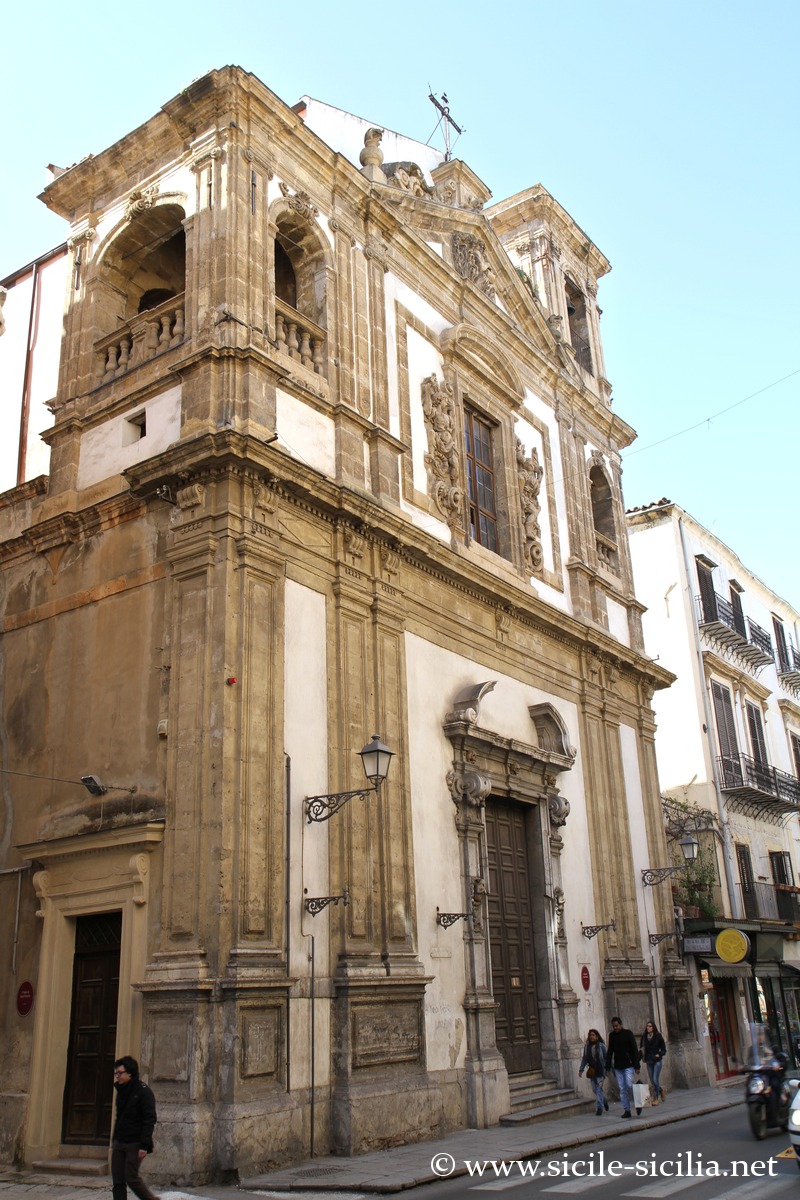
Sant’Orsola
Founded by the Compagnia di Sant’Orsola, a lay confraternity established in 1564 to assist the sick and organize burials in the Albergaria district, the church was opened for worship in 1662. The nickname “dei Negri” comes from the black color of the robes worn by the members of the Confraternity during processions.
The facade, although Baroque, preserves elements inherited from late Mannerism: robust stone pilasters, a portal richly decorated with three sculpted skulls and motifs evoking the purging soul.
It has a single nave with a simple vault, flanked by communicating chapels.
The vault is decorated with 18th-century frescoes signed by Gaspare Serenari representing The Glory of Saint Ursula, Faith and Charity, framed by rich white and gilded stuccoes. The pillars are adorned with ovals with the figures of the patron saints of Palermo (Lucy, Christina, Agatha, Ninfa, Olivia and Rosalie) from the workshop of Pietro Novelli.
Several important works are preserved in the side chapels, including 17th-century canvases by Novelli, or in the chapel of the souls in purgatory, stucco angels by Giacomo Serpotta.
Behind the main altar, a 19th-century work, are several paintings by Giuseppe Patania.
Serpotta’s stucco decoration is distinguished by its expressive treatment of the theme of death and vanity: to the usual naturalistic and festooned motifs are added figures of skeletons, skulls and macabre elements.
Beneath the church, the crypt of the Oratory of Death (Cripta dell’Oratorio della Morte) presents a decoration also by Serpotta with crosses, skulls and figures of skeletons. This space was used by the Compagnia for the burial and preservation of the remains of the district.
| Chiesa di Sant’Orsola dei Negri Via Maqueda, 110, 90133 Palermo External sites: en.wikipedia.org |
Church of Santa Maria dei Miracoli
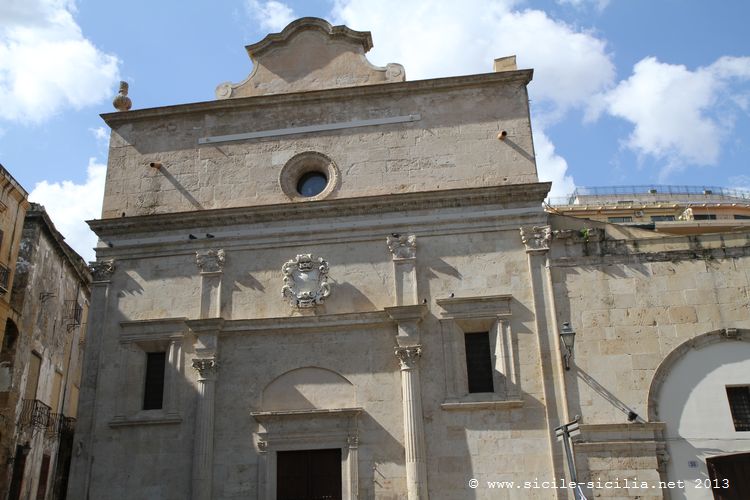
Santa maria dei miracoli
Santa Maria dei Miracoli was built around 1545 on the site where the image of the Virgin considered miraculous was painted.
Its style is broadly Renaissance, but also inspired by older constructions.
Its square plan is in the form of a Greek cross, with a very tall and luminous interior thanks to high arches supported by slender columns. The sculptural details, such as the capitals and the bases of the columns, were finely executed by the workshop of Gagini.
The monumental 19th-century altar is covered in marbles, with a altarpiece bearing a copy of the sacred image of the Madonna dei Miracoli that was on the old wall.
On the north side of the church there is a loggia from the same period as the church.
| Address: Via Lungarini, 90133 Palermo External sites: en.wikipedia.org, www.palermoviva.it |
Church of the Holy Saviour
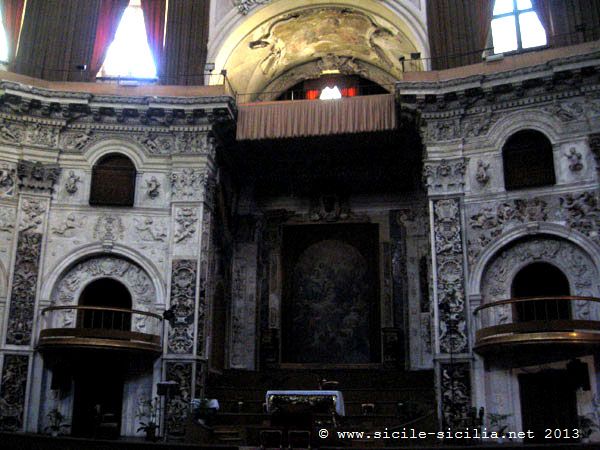
Chiesa del Santissimo Salvatore
This historic church in Palermo was erected in 1072 by Roger of Hauteville. It was considerably remodelled over the centuries.
The main modification of the Church of the Holy Saviour (Santissimo Salvatore in Italian) was carried out from 1682 based on a design by Paolo Amato, adopting a twelve-sided interior on an elliptical plan covered by a large dome and giving it a rich Baroque decoration. This form recalls the works of Borromini or Bernini.
The main facade has clear and severe lines, with a beautiful loggia and a semicircular tympanum.
A loggia was built around the dome in 1763. In the entrance vestibule, on the vault, are frescoes painted by Vito D’Anna: the miracle of Saint Basil and the Sermon of Saint Basil. The same artist created the fresco of the dome, now very deteriorated, depicting Paradise.
The Baroque decoration is very rich, with its polychrome marbles, stuccos, and statues.
| Address: Via Vittorio Emanuele, 392, 90134 Palermo External sites: en.wikipedia.org, turismo.comune.palermo.it, www.palermoviva.it |
Sanctuary of Saint Rosalia (glimpse)
The sanctuary of Saint Rosalia was built in 1625 on Mount Pellegrino. It is preceded by a staircase, with a 17th-century facade and the cave where the relics of the saint were found in 1624, who is said to have lived as a hermit in the 12th century.
→ Read more Sanctuary of Saint Rosalia in Palermo
| Address: Via Bonanno Pietro, 90142 Palermo External sites: www.palermoviva.it, it.wikipedia.org |
Oratory of San Lorenzo
Located near the Basilica of Saint Francis of Assisi, this Baroque oratory was built in the second half of the 16th century by the Franciscans and dedicated to the worship of Saint Francis and Saint Lawrence. It is preceded by a small courtyard with a fountain.
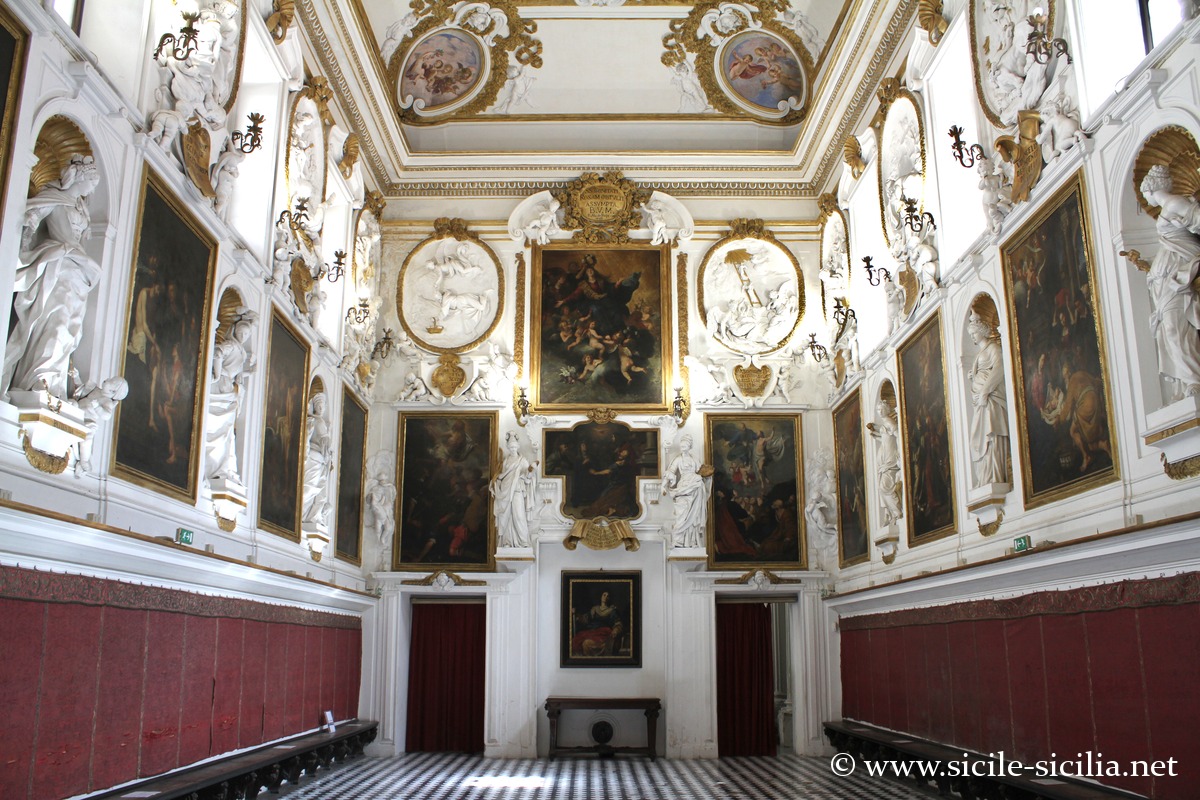
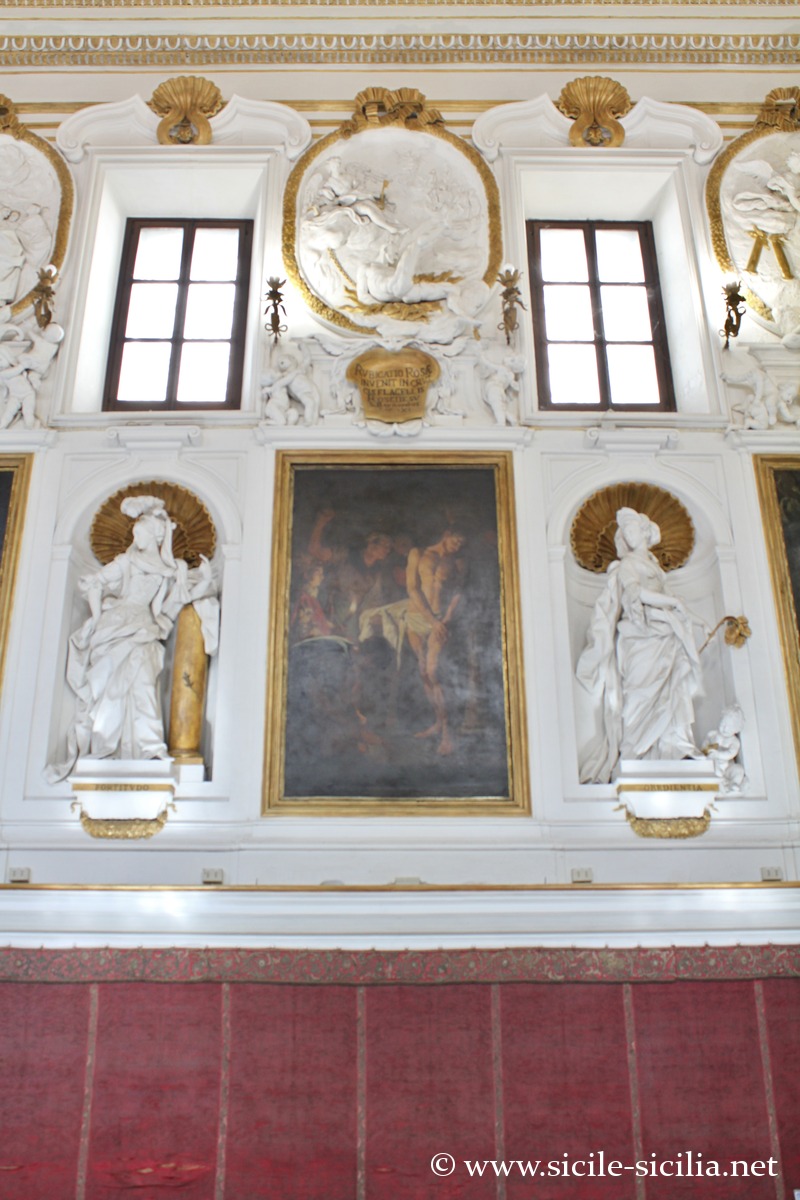
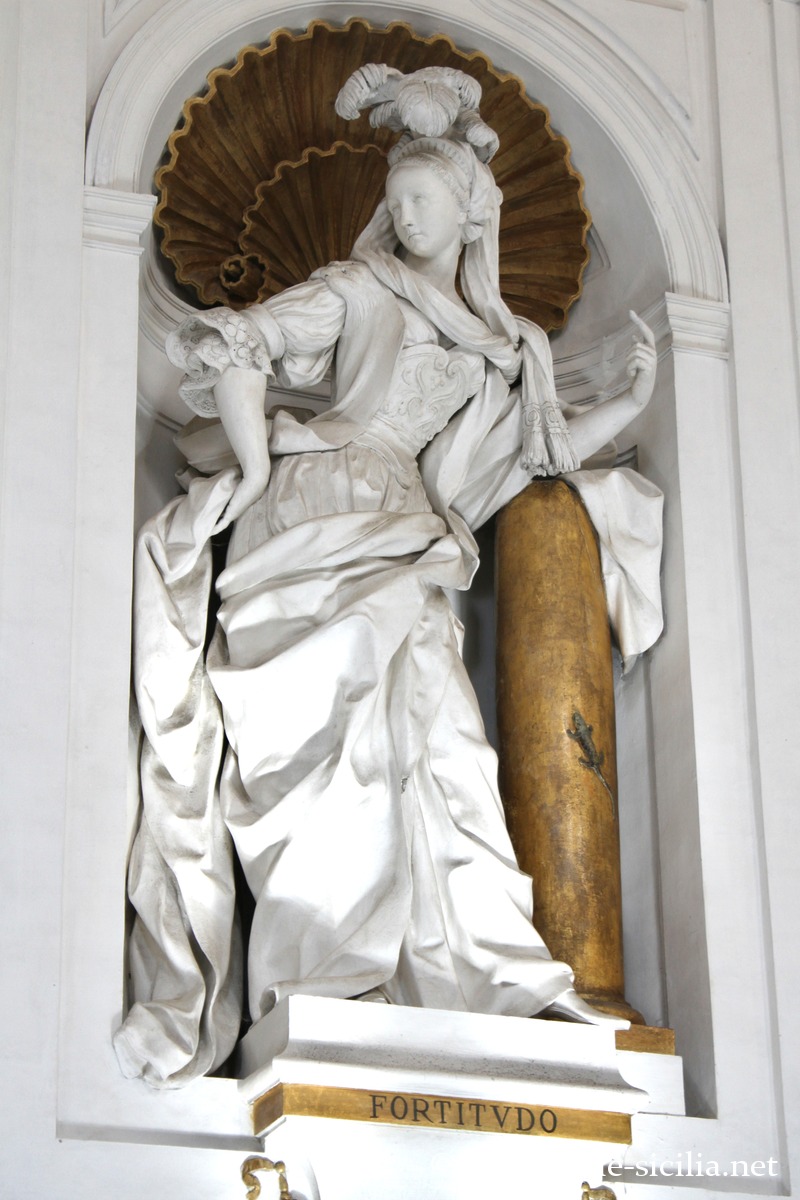
This rectangular chapel is decorated with rich stucco sculptures, made in the early 18th century by Giacomo Serpotta, depicting scenes from the lives of Saint Francis and Saint Lawrence. Sculptures also represent the virtues. On the wall behind the altar was the Nativity painted by Caravaggio in 1609 and stolen in 1969, which has recently been replaced by a photographic reproduction.
| Address: Via Immacolatella, 5, 90133 Palermo External sites: fr.wikipedia.org, turismo.comune.palermo.it |
Church of Santa Maria dello Spasimo
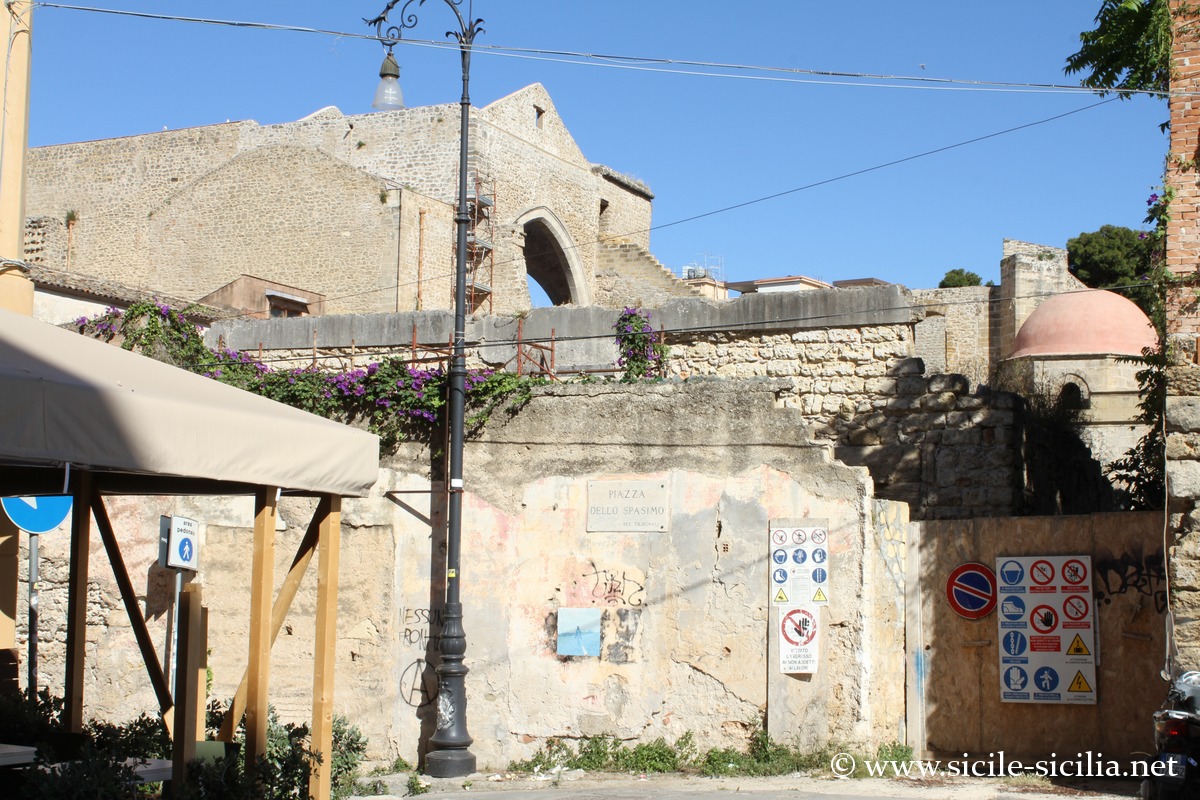
Santa Maria dello Spasimo
This unfinished late Gothic church was built from 1506 in the old Kalsa district. It was named “Spasimo” (sorrow in English) in reference to Mary’s suffering for the crucified Christ.
Construction work was interrupted in 1536 when the area was chosen for the construction of a rampart.
It subsequently served as a theatre, then a grain warehouse and finally a hospital until 1986. Nowadays, it serves as a space for exhibitions, concerts and cultural events.
The three naves are separated by arcades with pointed arches and there are elements of the Chiaramonte style that recall the Arab-Norman tradition, with for example the small red dome on the north part. The central nave appears never to have had a roof. Other Gothic elements can be found in the wide depressed arch or the windows of the chapels.
| Address: Via Dello Spasimo, 10, 90133 Palermo External sites: it.wikipedia.org, turismo.comune.palermo.it, www.palermoviva.it |
Oratory of the Holy Rosary of Saint Dominic
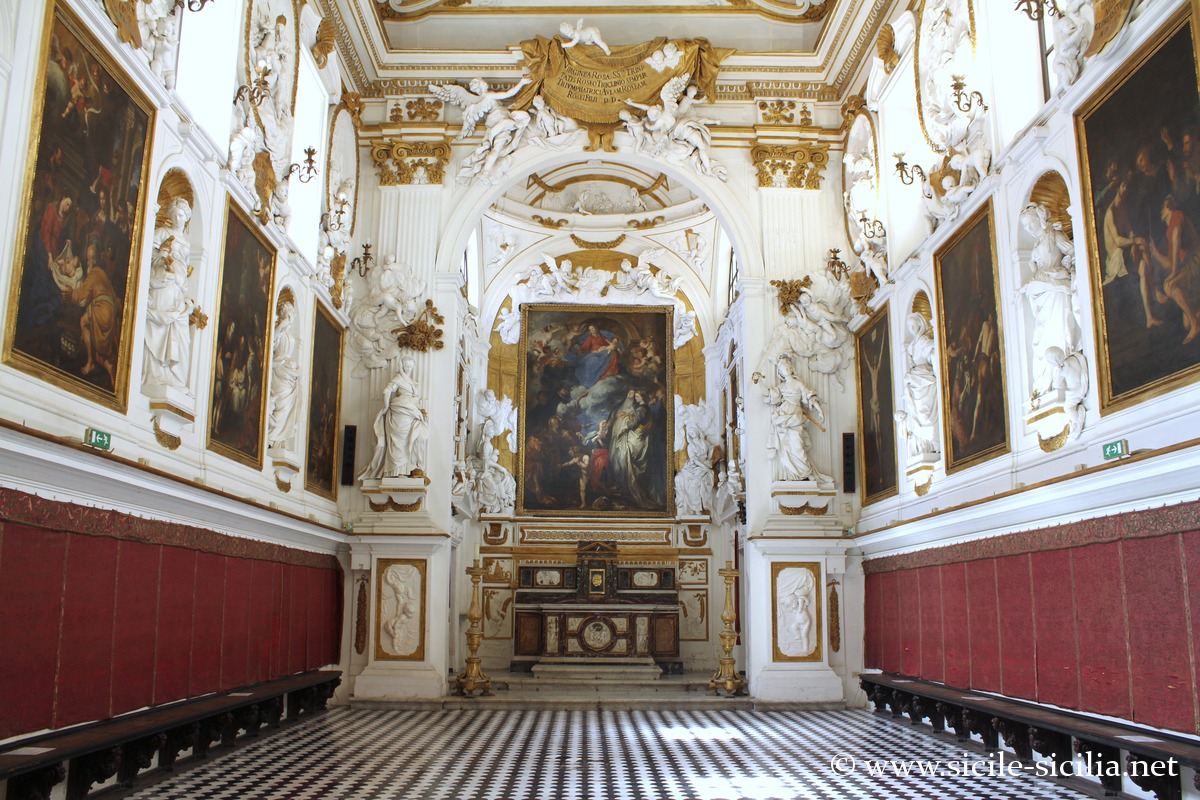
Oratory of the Holy Rosary
This elegant Baroque oratory dedicated to Saint Dominic was built in 1573 by the Confraternity of the Rosary.
It houses a painted sequence of the Mysteries of the Most Holy Rosary made by various 17th-century artists, alternating with the stucco sculptures of Giacomo Serpotta which embody the twelve Christian Virtues in a harmonious decorative ensemble.
The building also has a vault fresco depicting the Coronation of the Virgin by Pietro Novelli and panels illustrating scenes of the joyful and sorrowful mysteries of the Rosary, a testimony to the iconographic integration of Dominican devotion.
The commission for the large altarpiece by Van Dyck, the Madonna and Saints (1628), is part of the context of the renewed cult of Saint Rosalia after the plague of 1624 in Palermo, symbolizing heavenly protection and popular devotion in the city


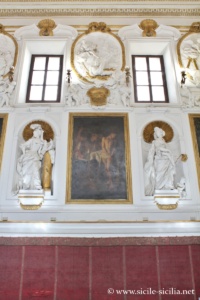

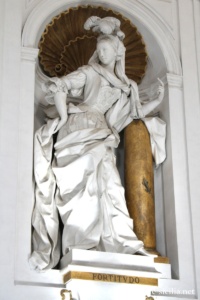
Force of Strength
| Oratorio del SS. Rosario in San Domenico Via Bambinai, 2, 90133 Palermo External sites: it.wikipedia.org, turismo.comune.palermo.it, www.palermoviva.it |
Church of the Immacolata Concezione
The Church of the Immacolata Concezione al Capo is a major Baroque building in Palermo located on Via Porta Carini, in the heart of the Capo market, in the historic Seralcadio district (Monte di Pietà). Built between 1604 and 1612 according to a design attributed to Orazio Nobili, it was embellished and decorated until the mid-18th century.
It was linked to a vast Benedictine monastery founded in 1576, transformed into a hospital in the 19th century and then demolished in the 20th century to allow the construction of the Palace of Justice.
Its facade, traditional of Roman Baroque, is sober but the interior contrasts with its richness. Its single nave is decorated with polychrome marbles and gilded stuccoes that cover walls and vaults, with a spectacular fresco of the Triumph of the Religious Orders by Olivio Sozzi.
The main altar is dominated by the large canvas by Pietro Novelli depicting the Immaculate Conception (1637), surrounded by stucco and angelic frescoes in the small octagonal dome.
Among the remarkable works and decorations are statues of Benedictine saints, polychrome marble antependia, as well as several paintings and statues in the side chapels dedicated in particular to Saint Rosalia and Saint Benedict.
Church of Saint Francis Xavier of Palermo
The Chiesa di San Francesco Saverio is a Baroque church located in the Albergheria district, built between 1685 and 1710 for the Society of Jesus according to a design by the Jesuit architect Angelo Italia.
It is considered one of the most significant examples of Sicilian Baroque architecture, inspired by the Roman models of Borromini, with a facade in two orders and a large central dome flanked by four small domes.
The interior develops on a Greek-cross plan with a vast central octagonal space supported by pairs of columns and surrounded by four hexagonal chapels.
The interior decoration, late 17th and early 18th century, shows a typical sight of Sicilian Baroque, employing a rich covering of polychrome marbles and columns in Billiemi stone.
Among the remarkable works of art are paintings of saints (including San Calcedonio by Gaspare Serenario) and a wooden statue of the Archangel Michael by Antonio Rallo, present in the side chapels.
Built as part of a vast Jesuit complex (Casa di Terza Probazione), the building illustrates the cultural and educational place of the Jesuits in the urban planning of the district in the modern era.
| Chiesa di San Francesco Saverio Piazza S. Francesco Saverio, 90134 Palermo PA |
Church Santa Maria della Pietà
The church of la Pietà built in the old Arab quarter of Kalsa is considered a notable example of the early Baroque in Palermo, built from 1678 to 1684 on a design by Brother Giacomo Amato of the order of the Crociferi.
Its facade features two rows of projecting columns, like certain Roman churches, and statues of Dominican saints.
Inside, formed of a single nave, are frescoes by Borremans from the 18th century, stuccoes by Giacomo Serpotta and the statues of the patron saint of Palermo, Saint Rosalia and of the Immaculate Virgin, a neoclassical high altar with a tabernacle in lapis lazuli.
The fresco of the vault was made in 1708 by Antonio Grano, depicting the Triumph of the Dominican Order.
| Address: Via Torremuzza, 1, 90133 Palermo External sites: it.wikipedia.org, turismo.comune.palermo.it |
Church Santa Maria in Valverde
The church of Santa Maria in Valverde (Saint Mary of Valverde), is a splendid example of Baroque art, built around 1633 by Mariano Smiriglio, reworking a 14th-century temple. A Carmelite convent founded in the 12th century was annexed to the church.
The main facade was rebuilt in the 19th century. There is a secondary facade with a beautiful Baroque door topped by a tympanum and volutes. The elegant bell tower was erected in the 18th century.
The rectangular interior is richly decorated with marbles and stuccoes by Paolo Amato, including volutes, garlands, cherubs and angels. The frescoes around the choir by Olivio Sozzi represent The Glory of the Virgin, and there are frescoes by Antonio Grano on the vault and walls.
| Address: Via Squarcialupo, 2, 90133 Palermo External sites: wikipedia page, turismo.comune.palermo.it |
Church Santa Maria la Nova
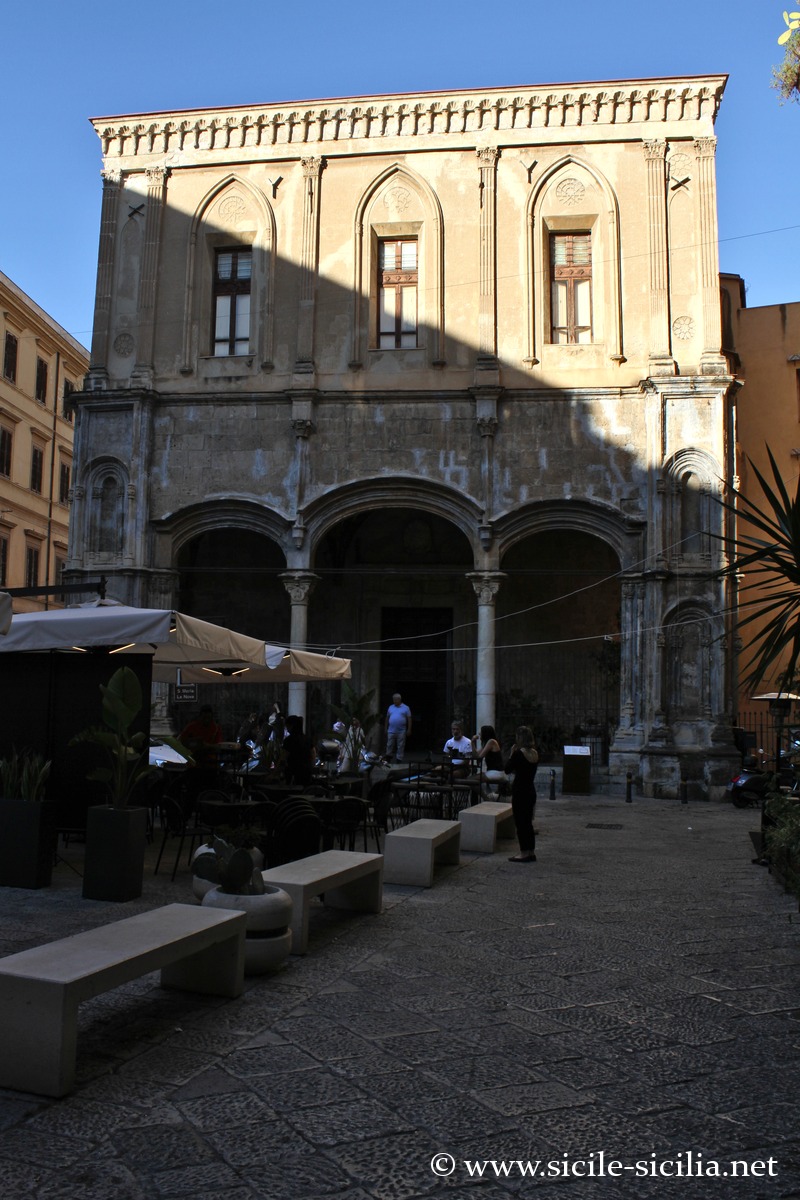
Santa Maria la Nova
Santa Maria la Nova is a church located on Piazza San Giacomo La Marina, in the heart of the historic Castellammare district in Palermo, built in the 16th century on an old oratory and a small 14th-century hospital intended to welcome pilgrims.
Its exterior is distinguished by a Gothic portico with three arches, inspired by Santa Maria della Catena, forming a loggia that precedes the main entrance and evokes the medieval influences still visible.
The interior has three naves separated by monolithic columns and ends in an octagonal tribune surmounted by a dome, the work of the Renaissance Giorgio di Faccio added in 1568. The decoration of the walls and chapels features precious 18th-century stuccoes by Procopio Serpotta, and among the works are paintings from the 17th-18th century.
| Address: P.za S. Giacomo La Marina, 90133 90133 Palermo External sites: fr.wikipedia.org, turismo.comune.palermo.it |