

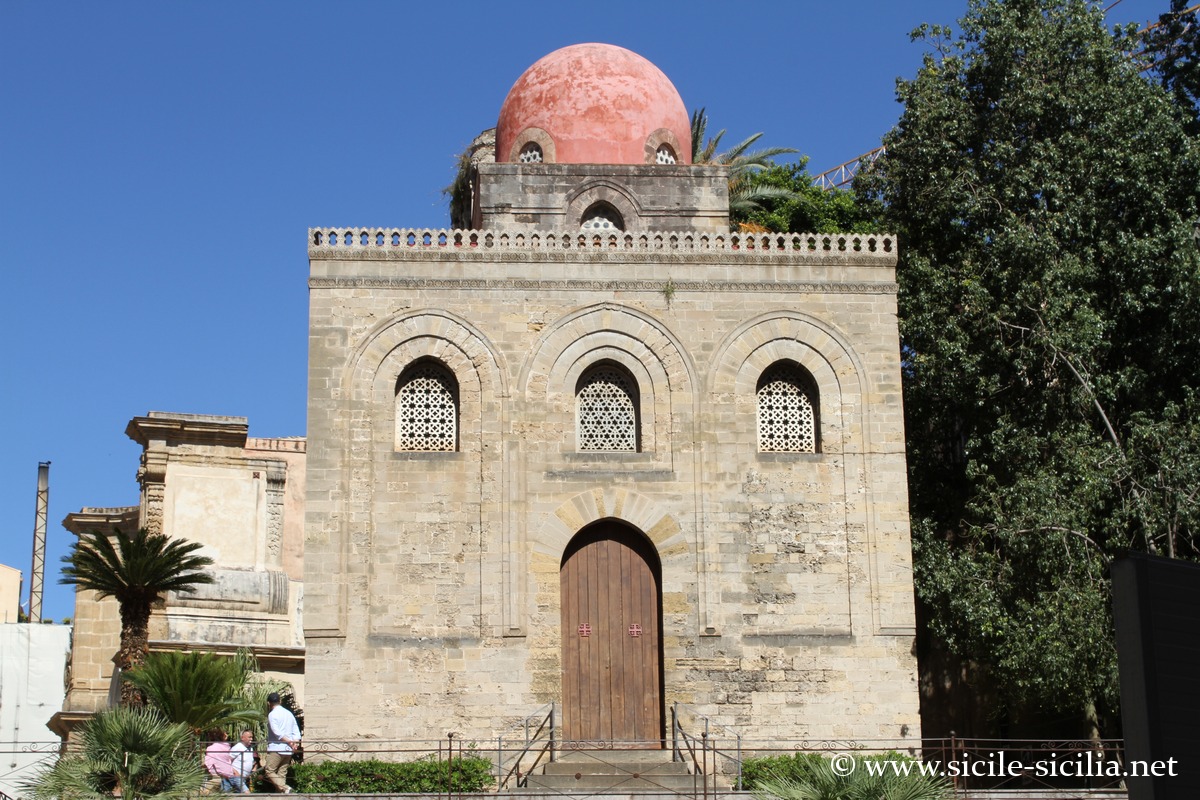
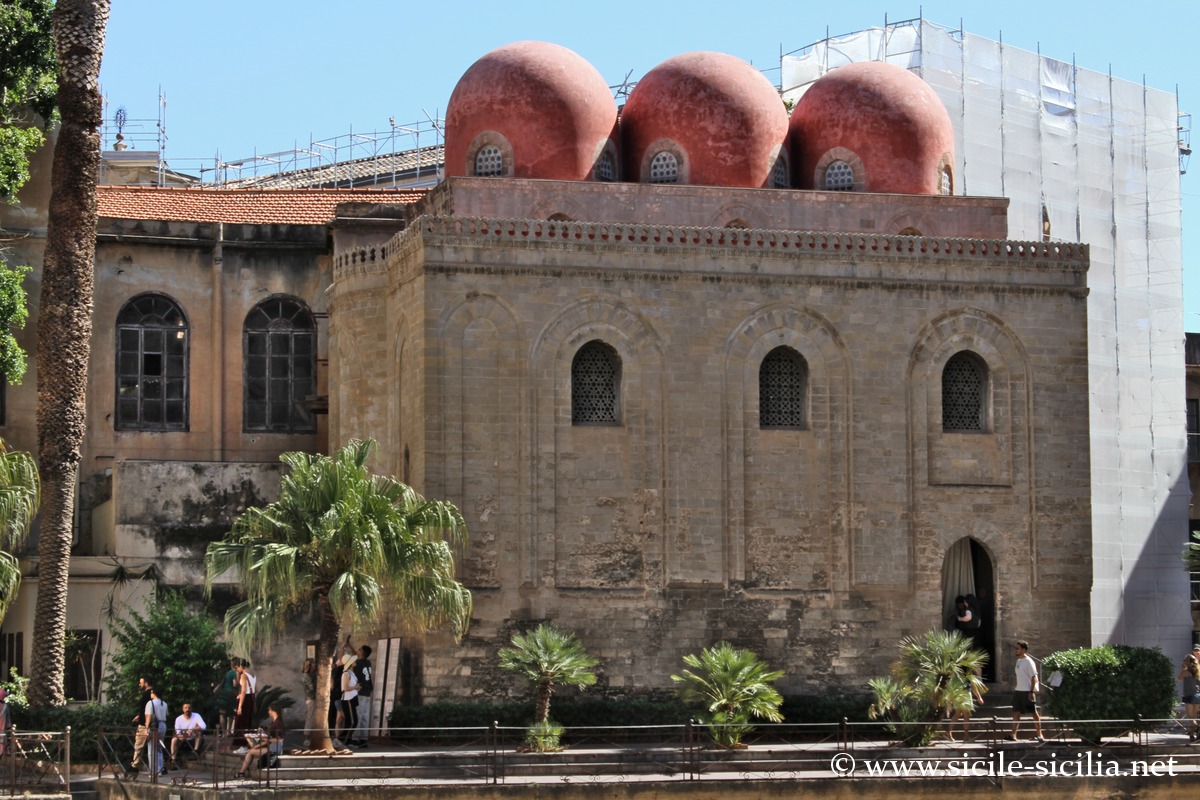
The church of San Cataldo is located on Piazza Bellini. It is one of the city’s examples of Arab-Norman architecture, of parallelepiped shape and covered by its three small red domes aligned.
The church is notable for its minimalist exterior and sober interior, contrasting with the ornamental richness of other contemporary churches, such as Palermo Cathedral or the Martorana church located opposite.
Historical overview
San Cataldo was founded between 1154 and 1160 by Maio of Bari, when he was the Emir of emirs, the Grand Admiral of King William I of Sicily, as the chapel of a now-vanished palace that belonged to the admiral’s family, which is said to have served as both a residence and an administrative centre.
The church is dedicated to San Cataldo, an Irish bishop of Taranto, whose cult was introduced to Sicily in the Norman era, testifying to the extensive network of devotions imported by the Normans.
Interior
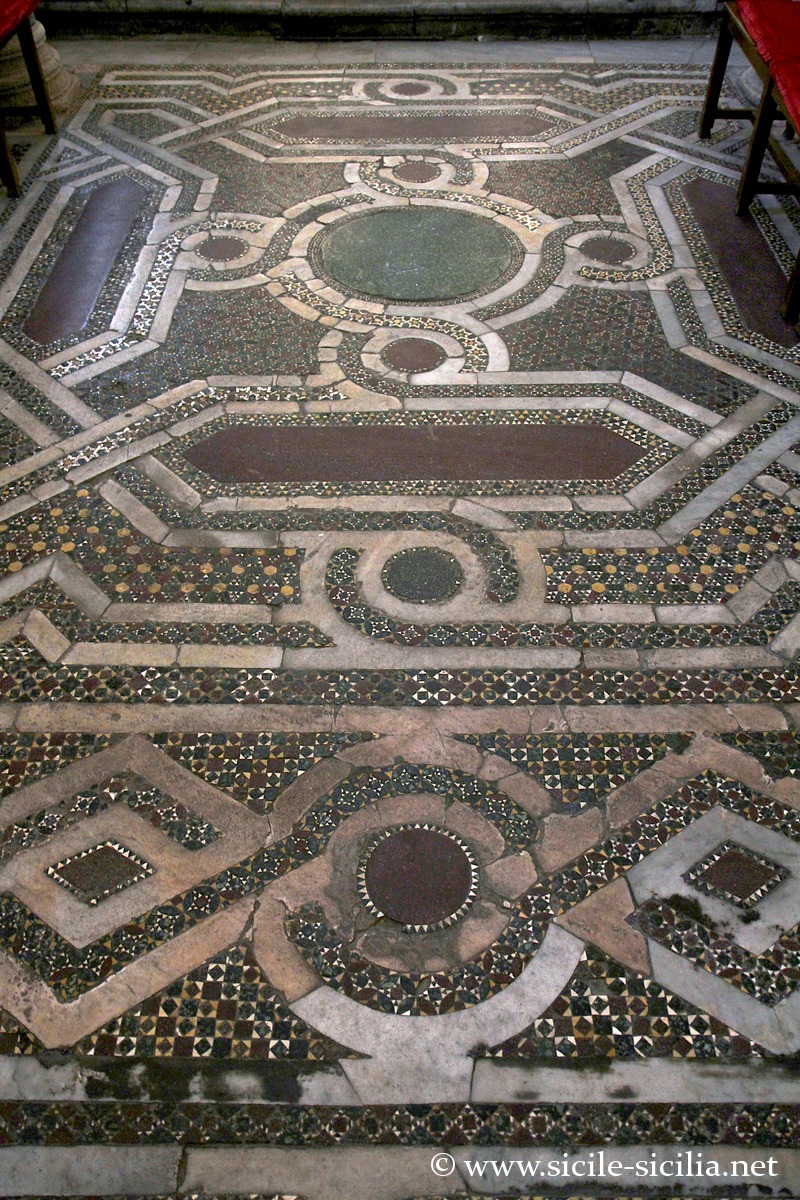
It was administered for centuries by the Benedictines, until it was transformed into a post office in 1787, modified, before being restored in 1882. This restoration sought to remove the Baroque additions and to restore the original 12th-century plan and appearance, notably the structure of the three naves and the domes, as well as the use of polychrome marble in the paving.
Architecture and visit
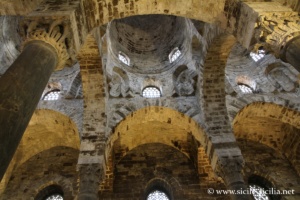
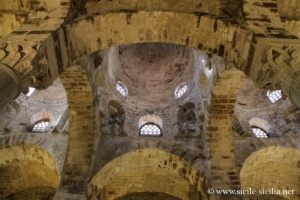
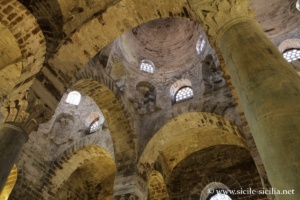
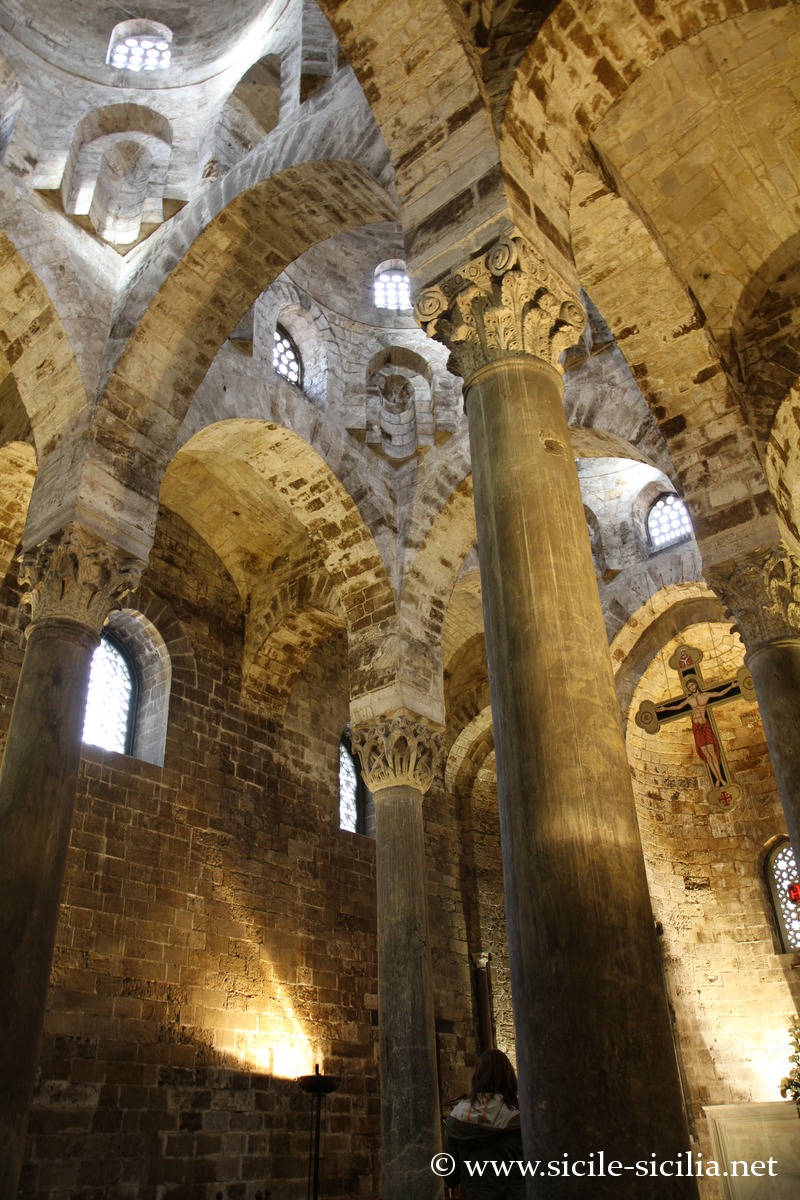
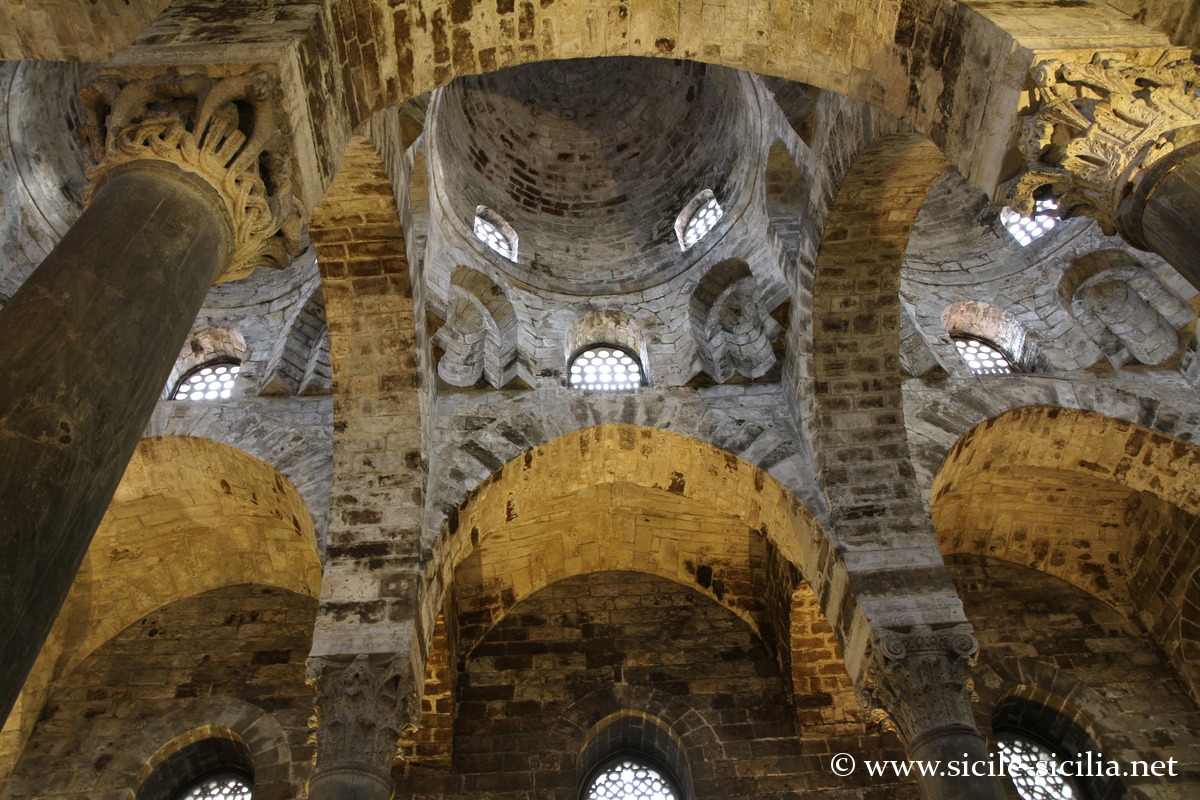
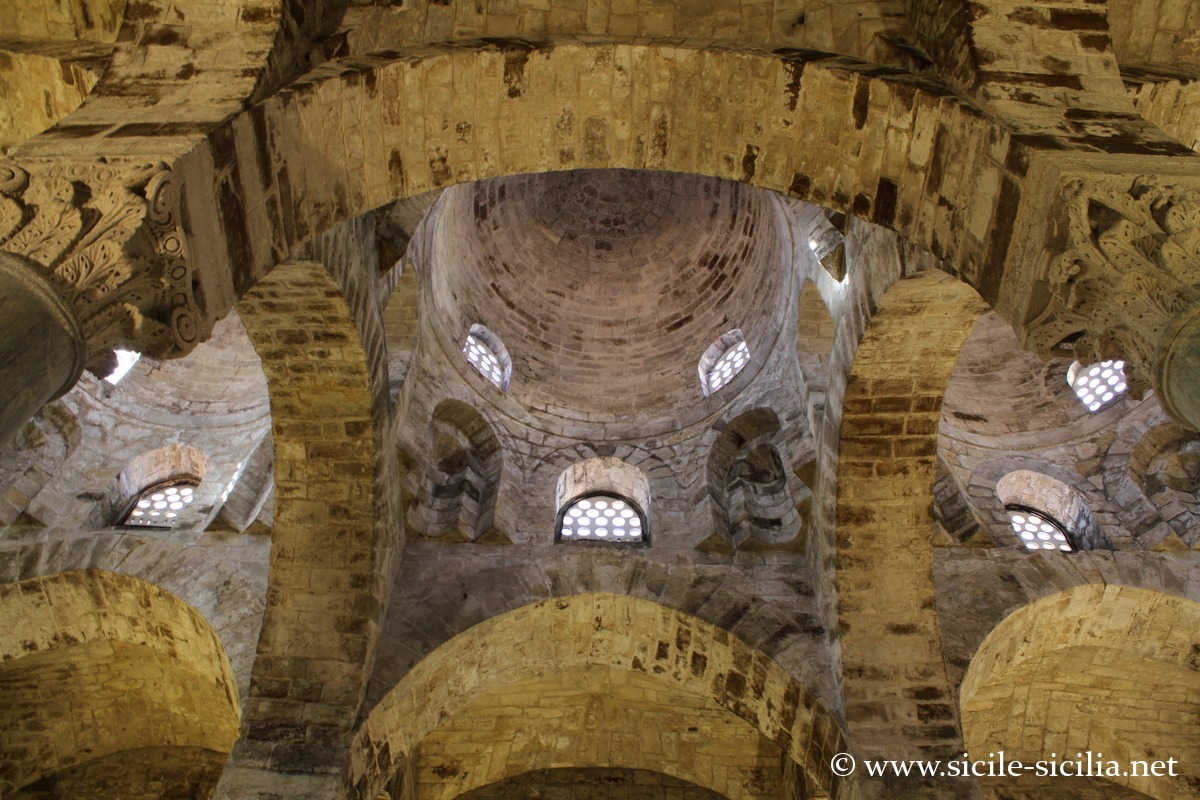
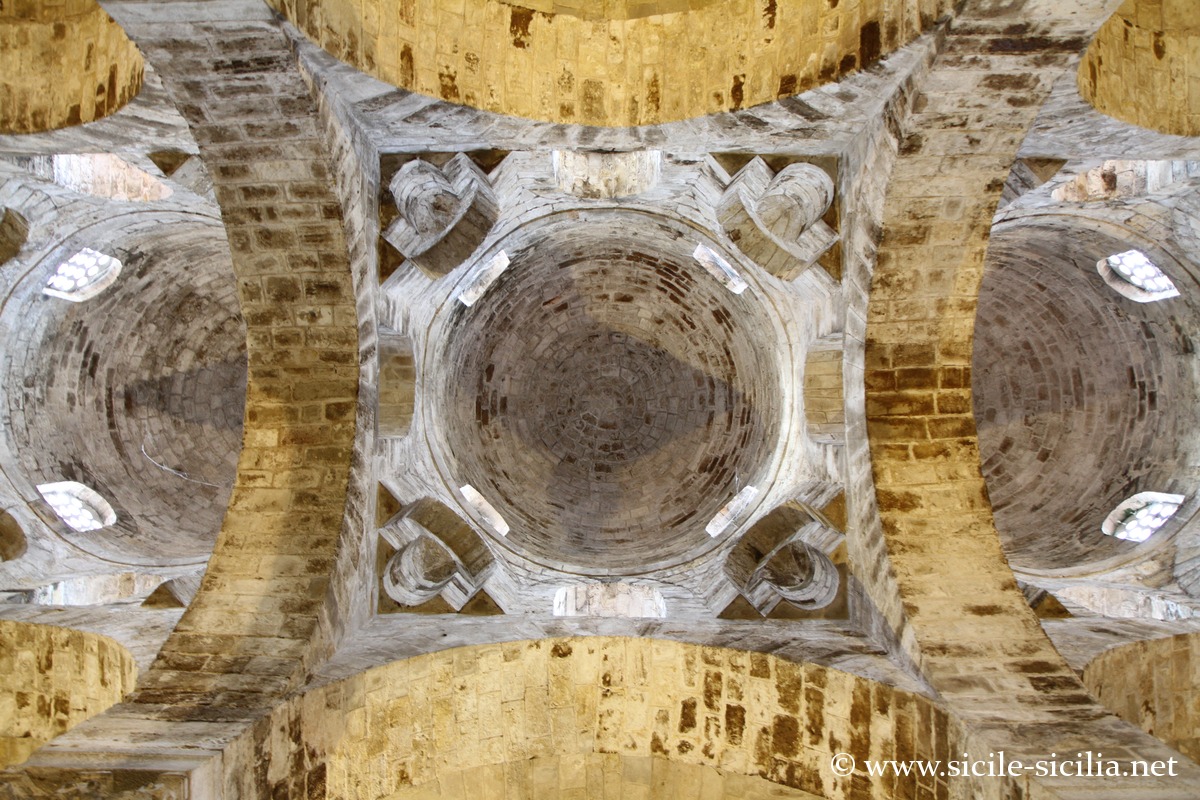
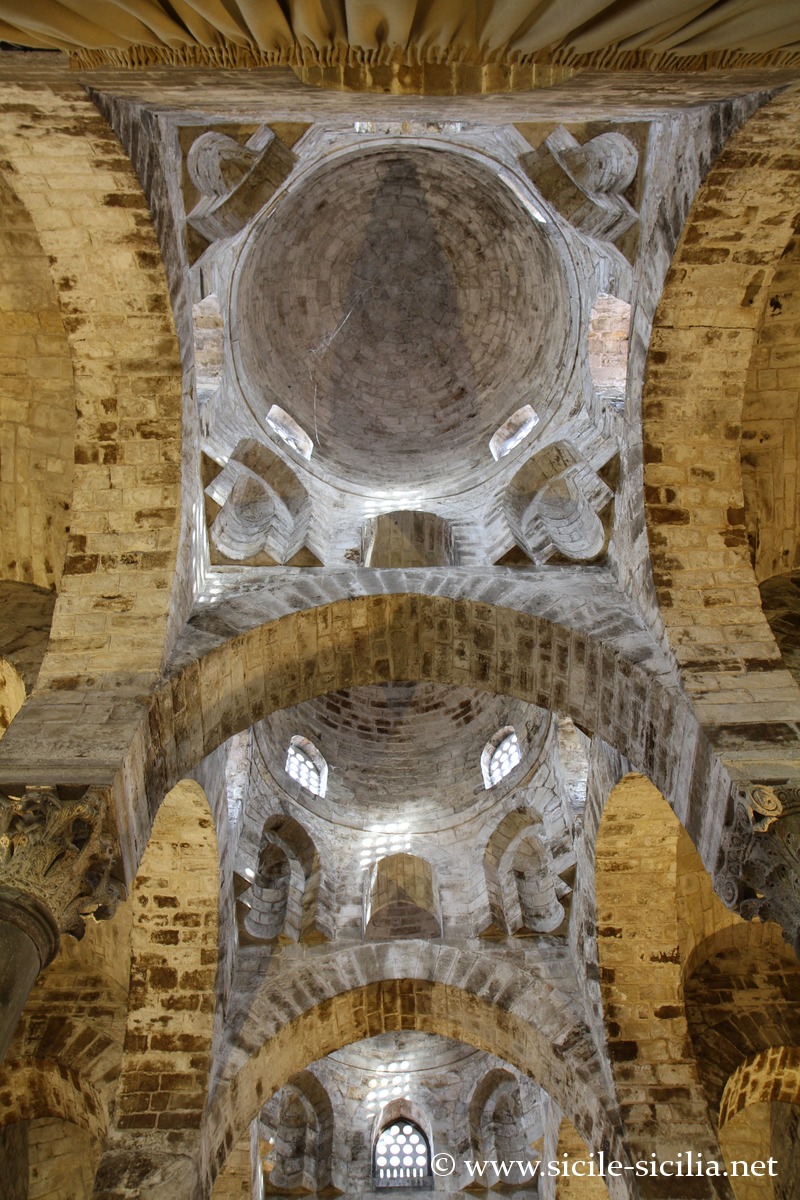
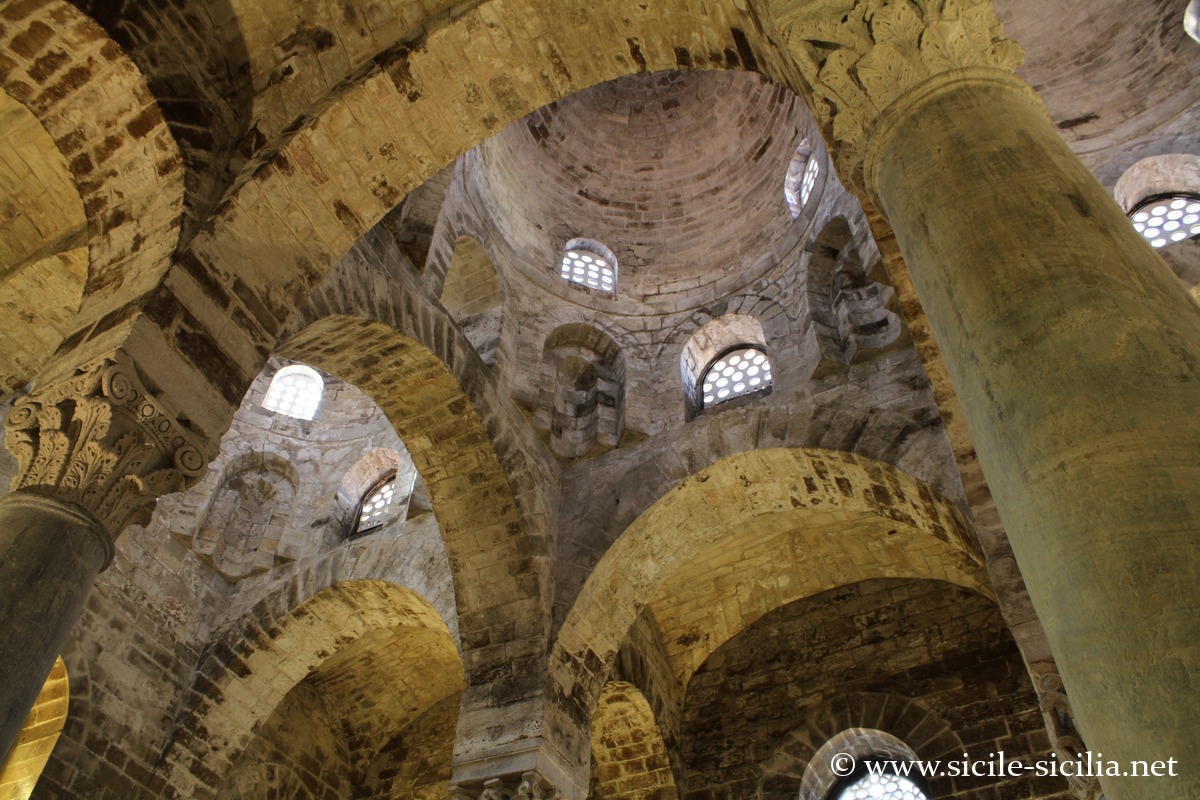
The simple rectangular plan with three naves is oriented east-west, in accordance with the liturgical practices of the time. It is associated with the three domes and is considered a pure example of palatine chapel architecture, where the combination of Norman, Byzantine and Islamic traditions is evident. These characteristic domes are hemispherical in shape and covered with red terracotta, recalling the Oriental influences of the period.
Exterior
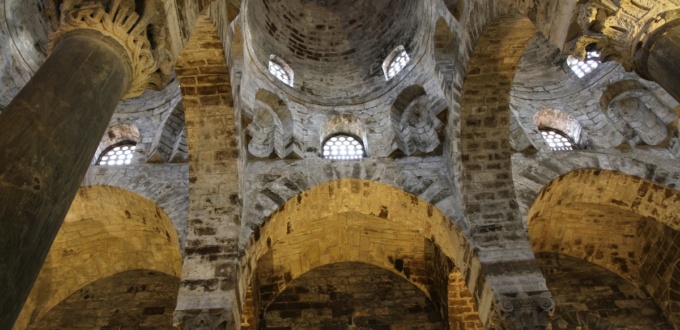
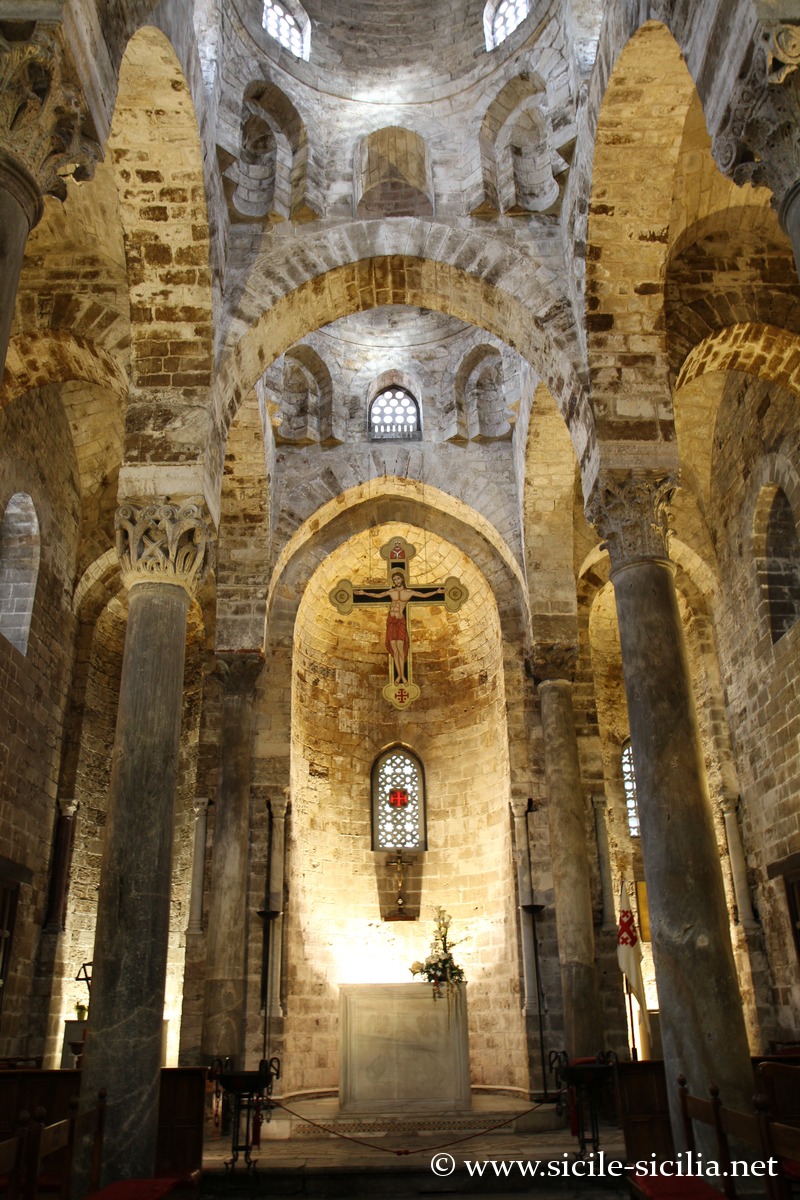
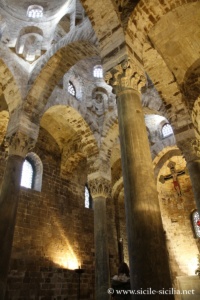
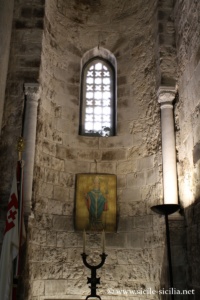
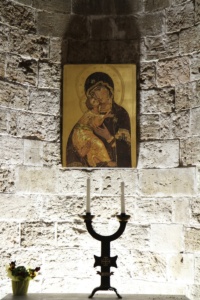
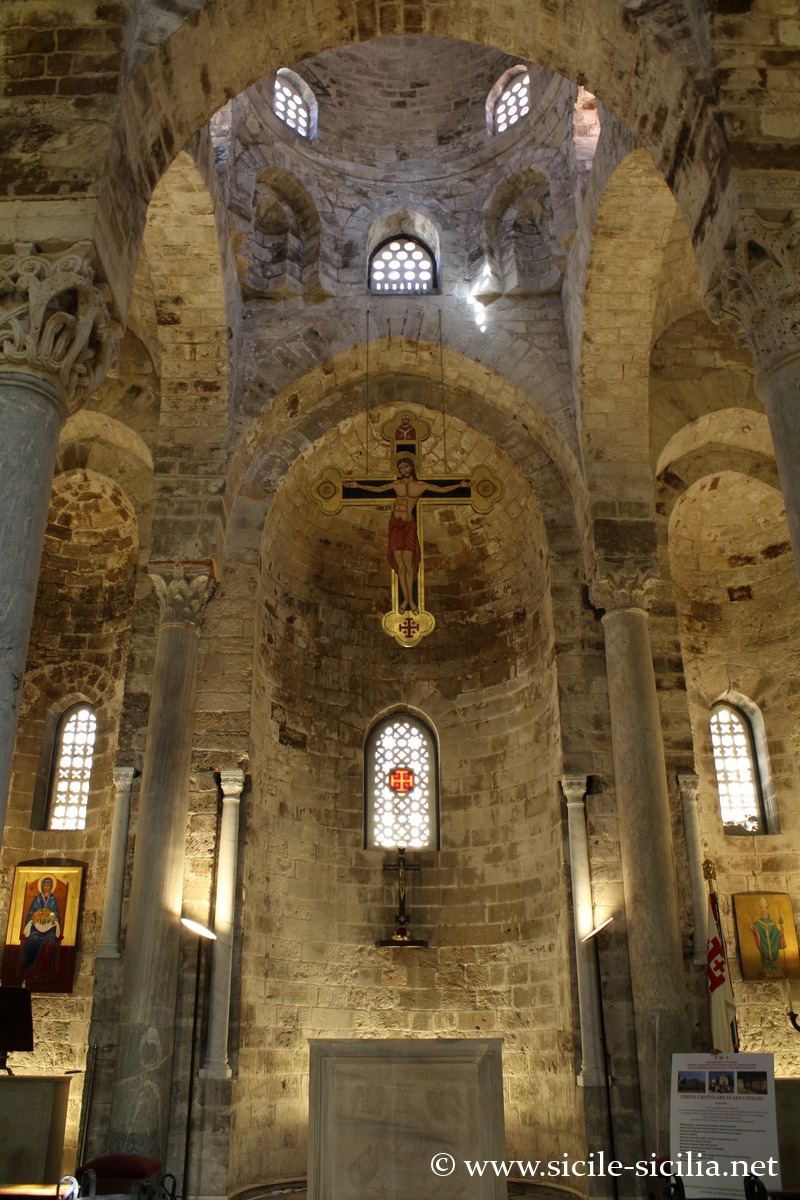
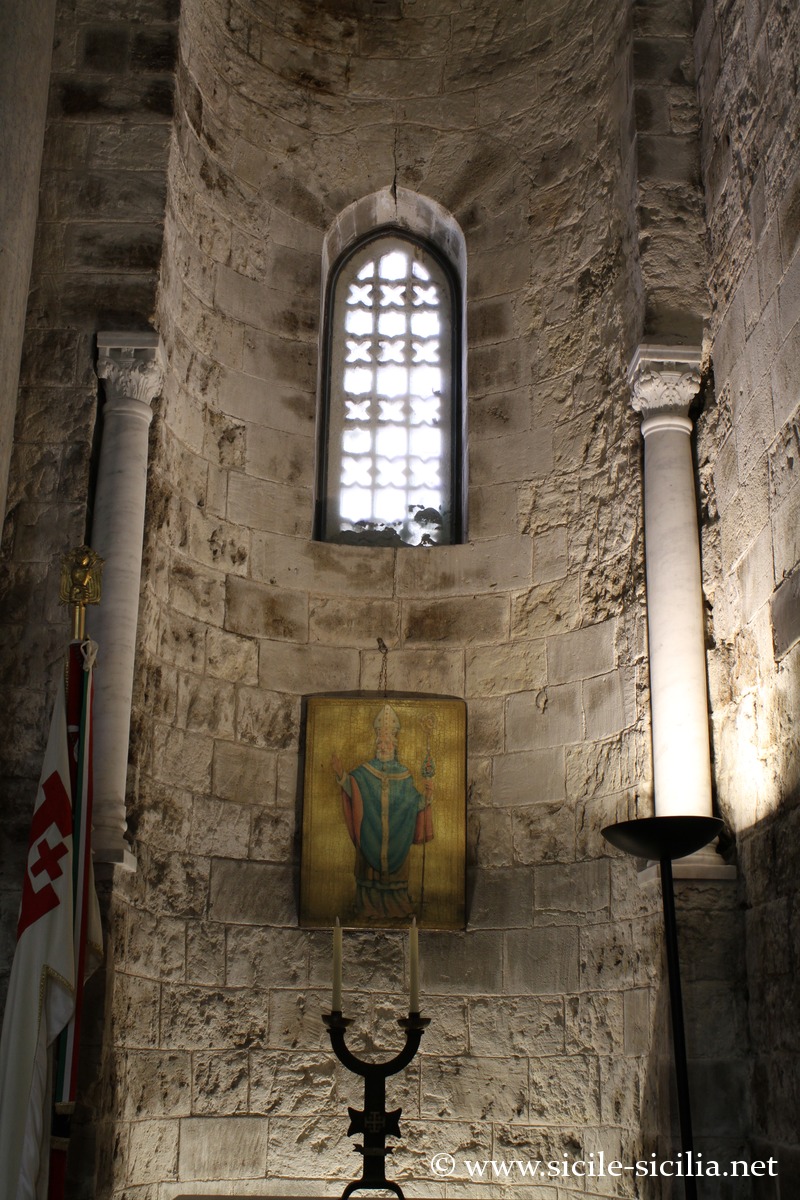
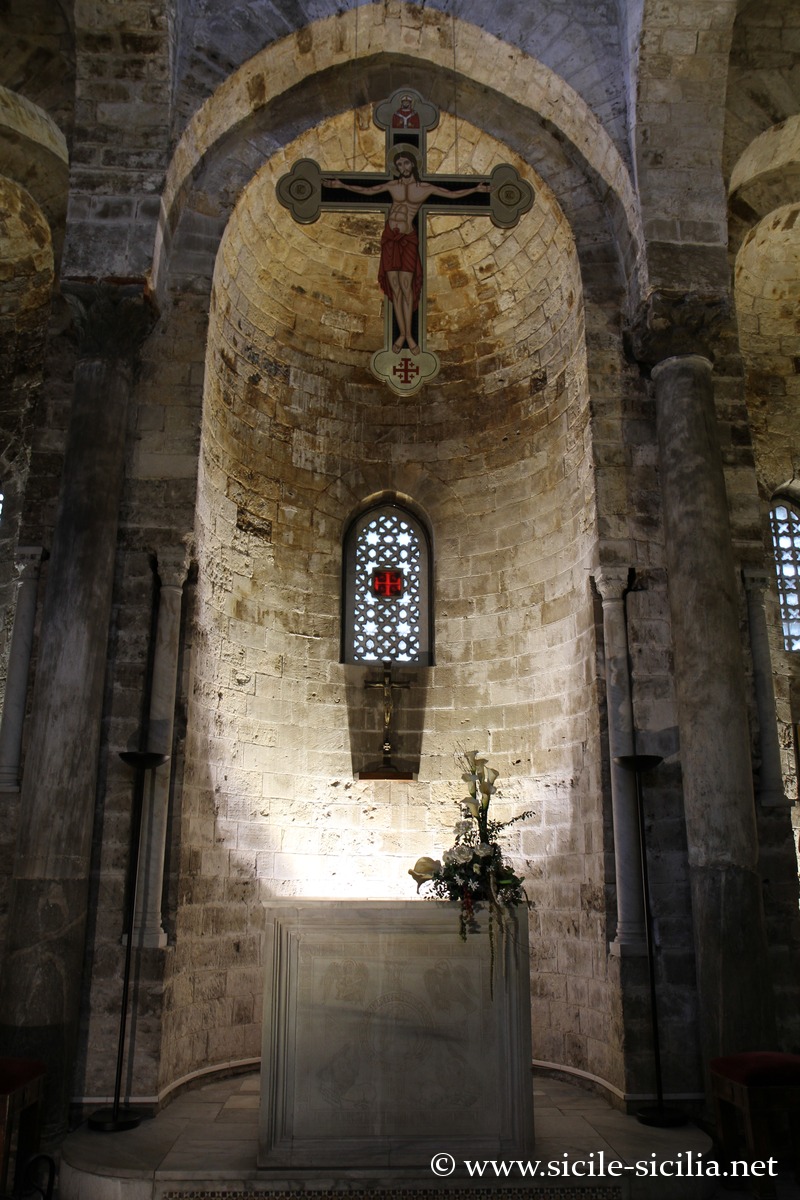
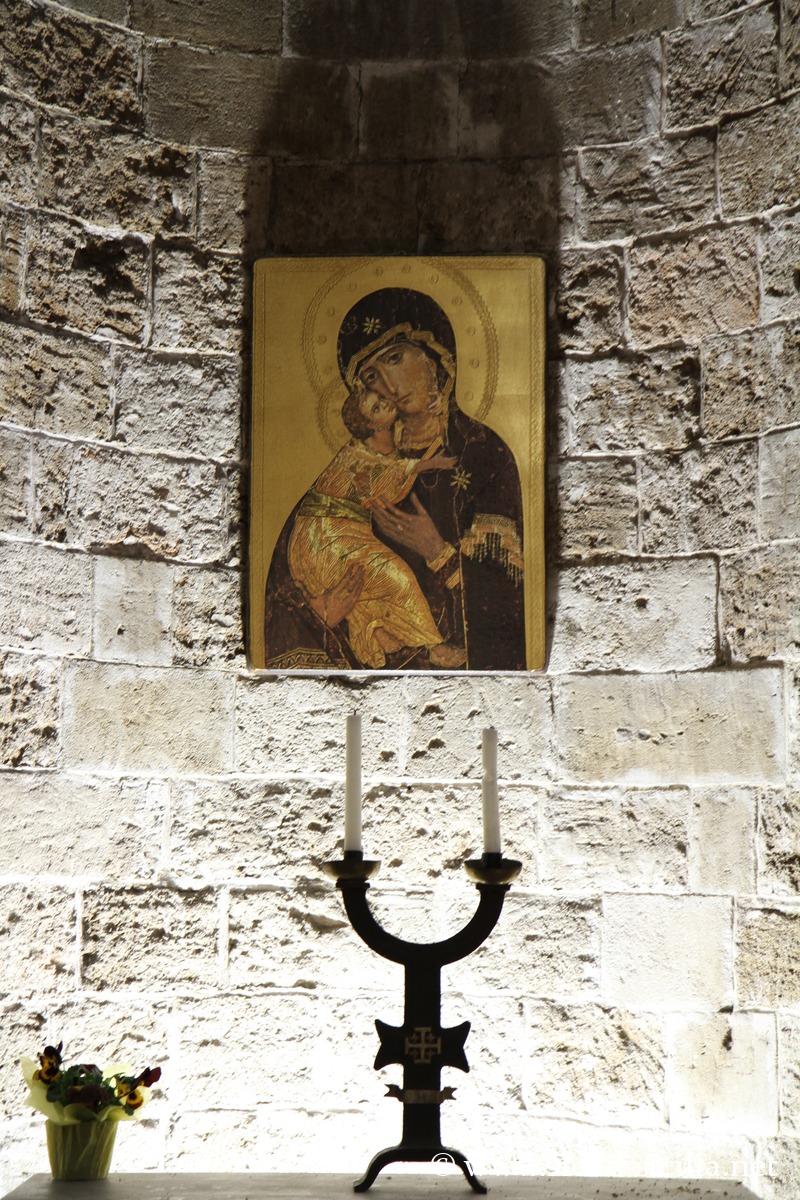
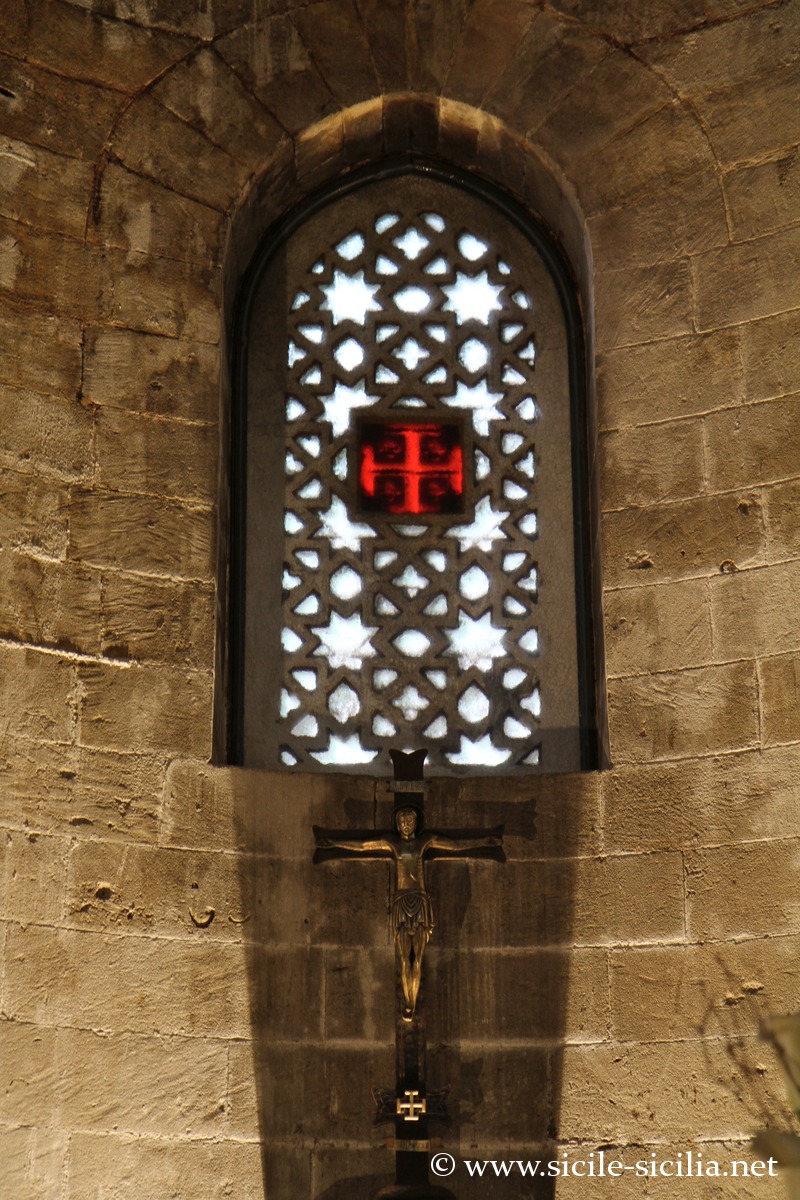
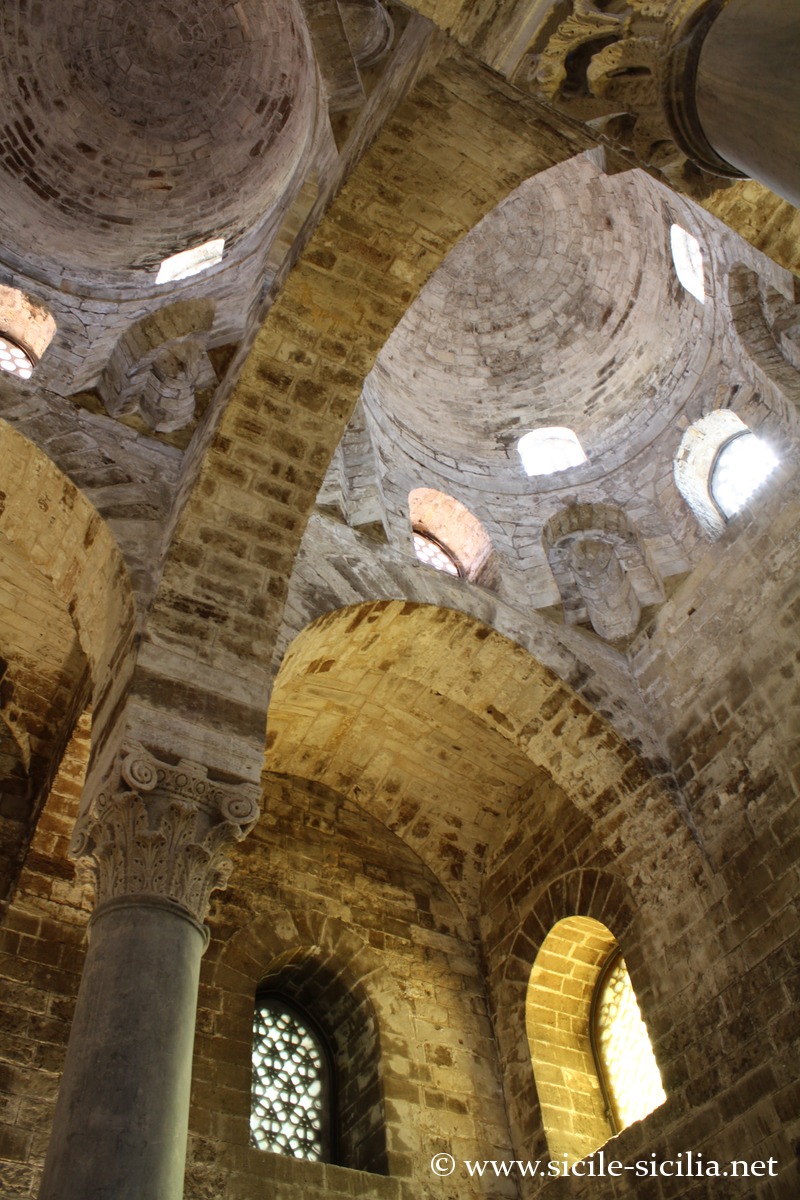
The beautiful interior, sober with its bare walls, is divided into three naves separated by columns and arches of Byzantine style and preserving a very beautiful altar. The openings are narrow and arrow-slit shaped, letting light diffuse moderately, contributing to the intimate atmosphere.
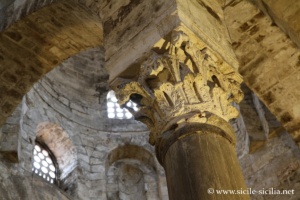
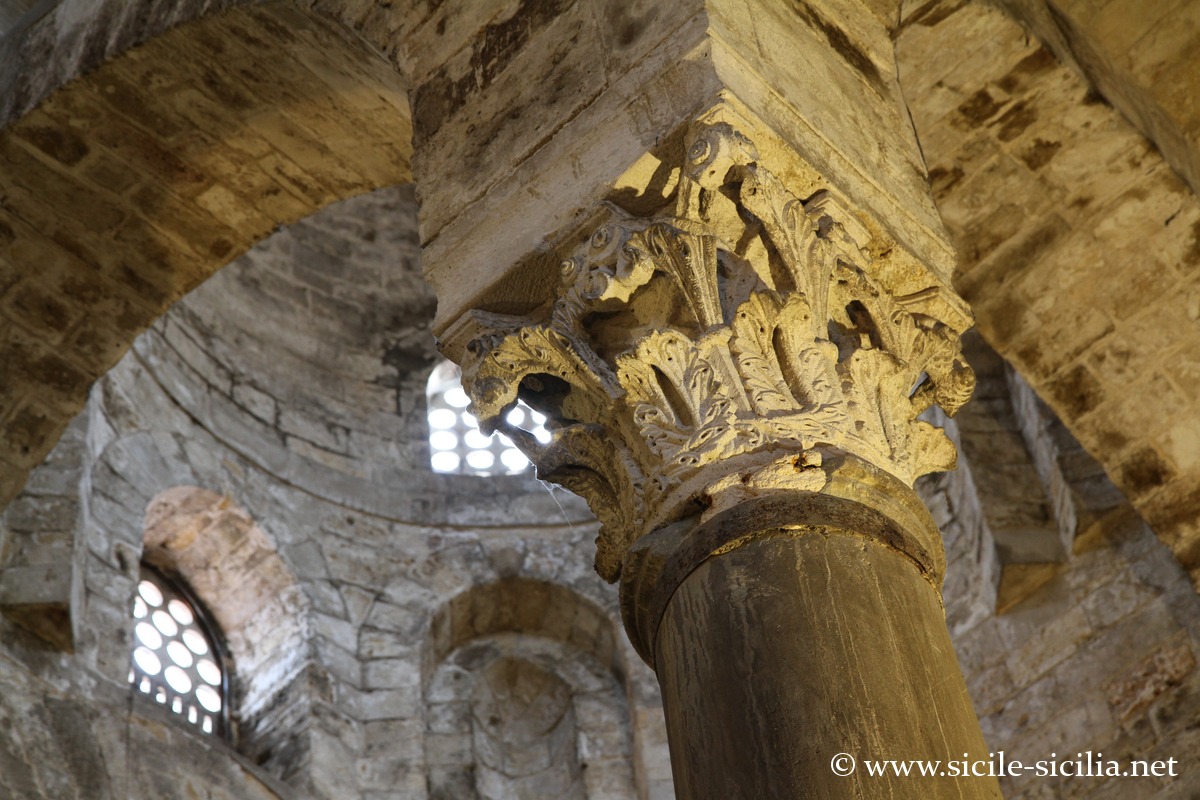
The columns are of granite and marble and have adapted Corinthian capitals with a Byzantine influence. The round arches contribute to the feeling of sobriety and interior harmony.
The polychrome paving includes geometric motifs characteristic of the Norman era, using contrasting colours and inlays of local and imported stones, including red porphyry from Egypt.
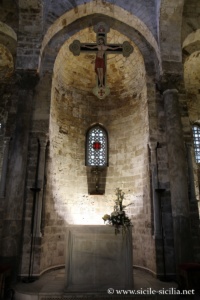
The main altar, preserved in its restored medieval state, is built of white and red marble, simple but elegant, in harmony with the general sobriety.
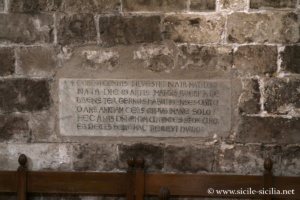
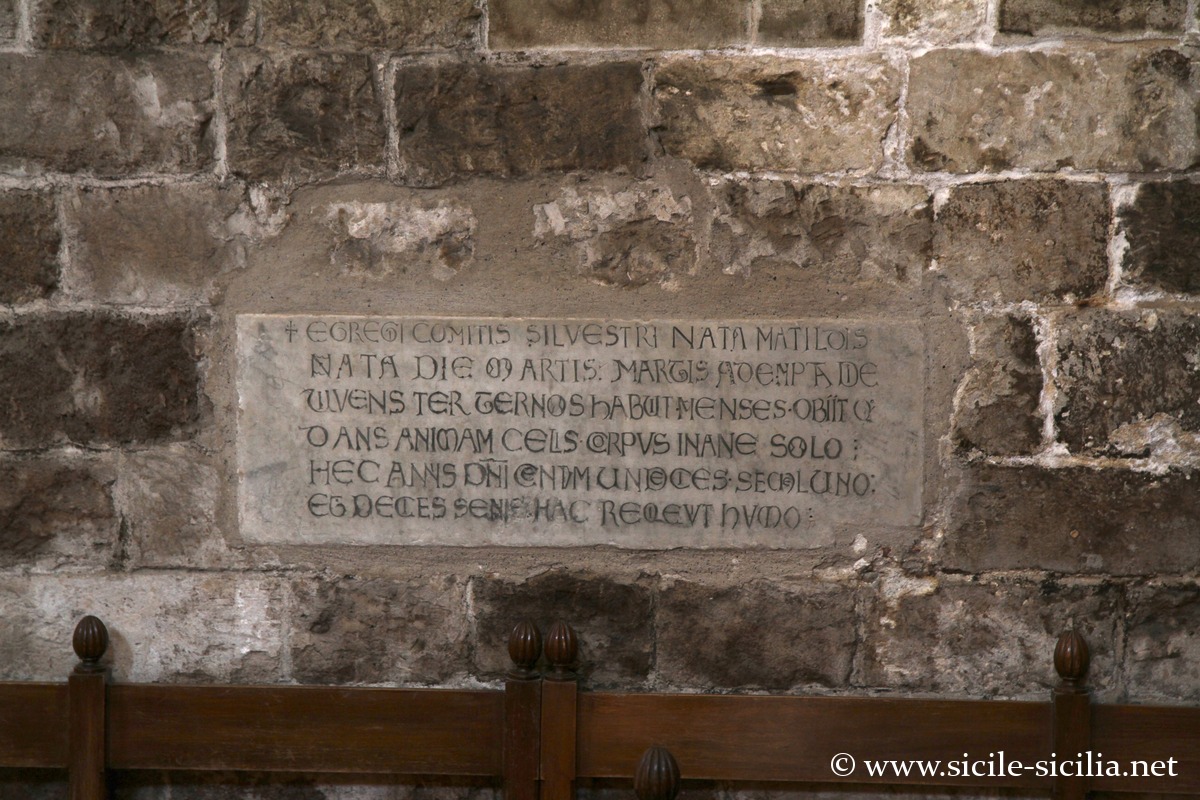
Embedded in the wall, a Latin plaque commemorates the burial of Matilde, the daughter of Count Silvestro di Marsico in 1161, who died at the age of 9 months, which can be translated thus: “Of the noble countess Silvestro, born Matilde; born on a Tuesday, taken [de ce monde] on a Tuesday. Alive, she lived three times three months, then she died. Giving her soul to heaven, her lifeless body to the ground, she rested here one hundred and eleven times once, and ten times six [années].”
Where the church of San Cataldo is located
If you see this after your page is loaded completely, leafletJS files are missing.
San Cataldo
Piazza Bellini, 1, 90133 Palermo PA
Photo gallery
Exterior of San Cataldo 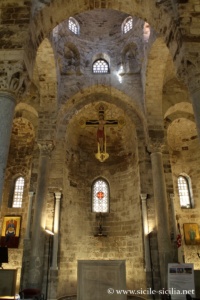


Capital 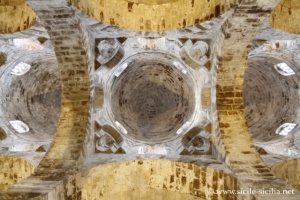
Dome 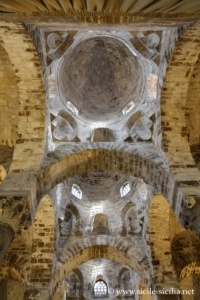
Domes 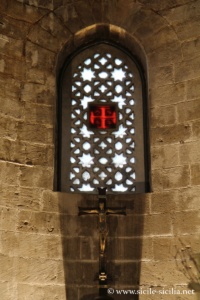
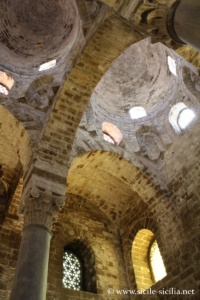
Engraved plaque 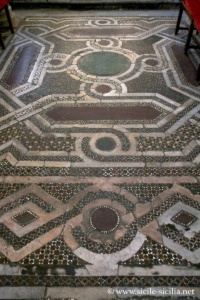
Cosmatesque floor
Information
San Cataldo Suggested visitsPowered by GetYourGuide Sources and external sites
|