
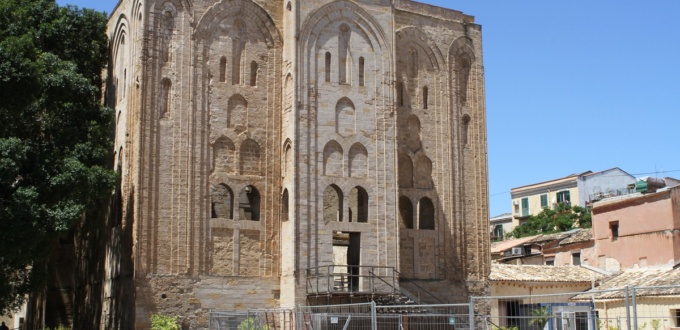
It was in the middle of the vast park called Genoardo – from the Arabic “Jannatt al-ard” meaning “paradise on earth” – that King William II had the Cuba Palace built around 1180. Its name comes from the Arabic “Qubba,” which means “dome.” It is also known as Cuba Sottana or Cuba Castle.
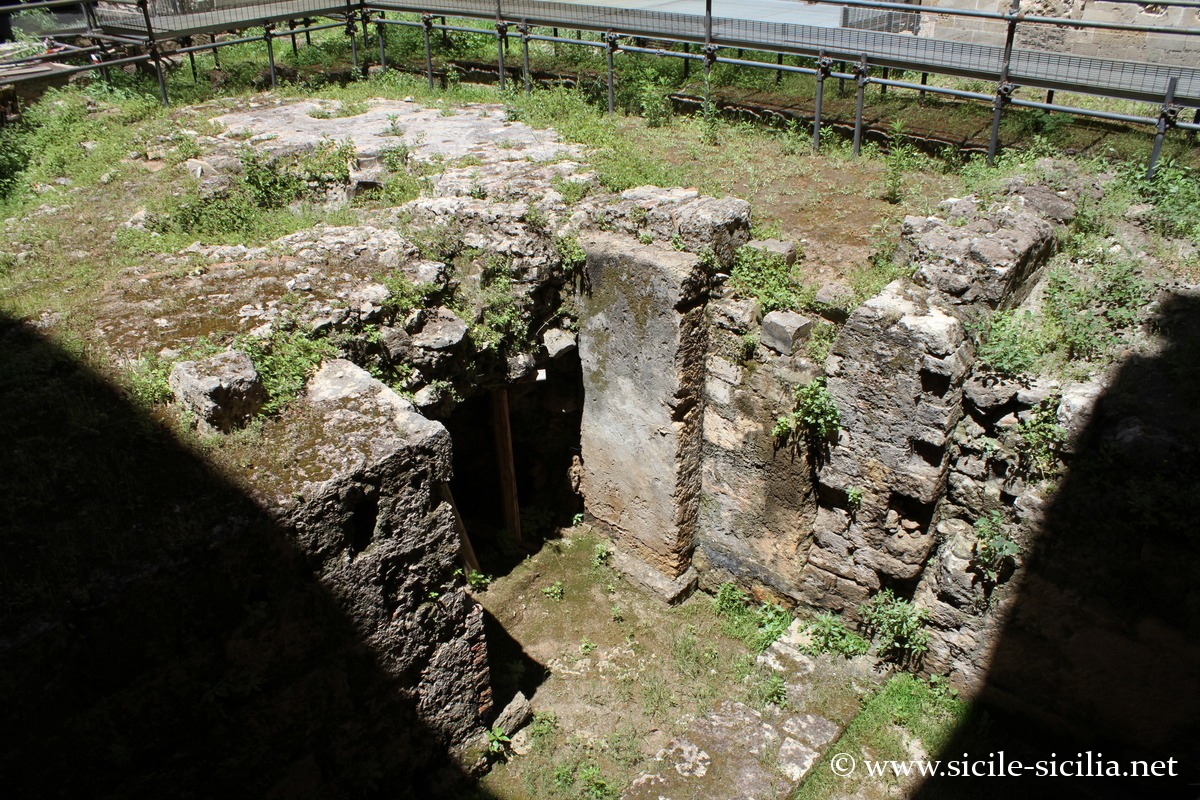
It was surrounded by a basin. Today partially restored, it was a leisure pavilion for the king and his court, also used for official receptions and ceremonies, notably banquets and royal festivities. The Spanish viceroys also later used it as a residence.
One of the stories in The Decameron by Boccaccio, written in the 14th century, is set in the park around the Cuba, with the love story between Gian di Procida and Restituta.
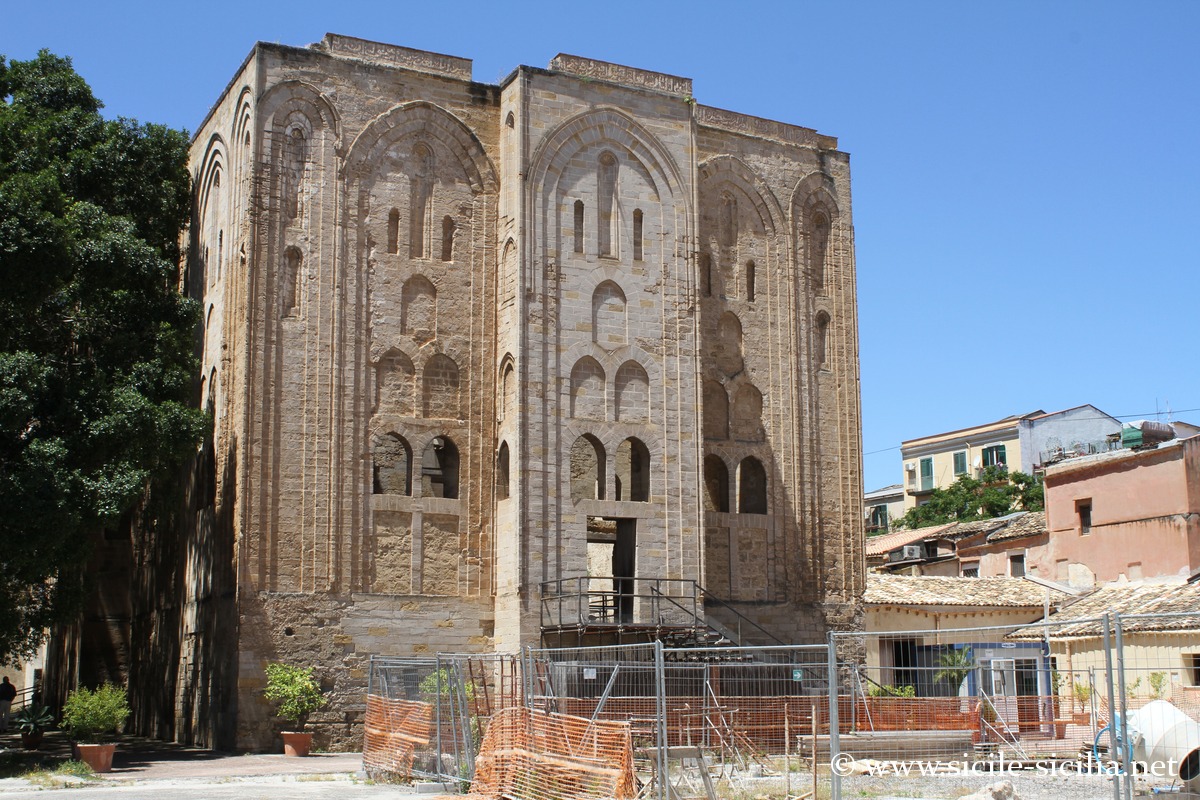
Cuba Palace
The Genoardo was a royal park of the Islamic-Norman type, with terraced gardens, basins and shaded avenues, inspired by the Fatimid and Zirid gardens of North Africa. Historians moreover consider that Fatimid workers took part in the construction of the palace.
Architecture of the Cuba and art
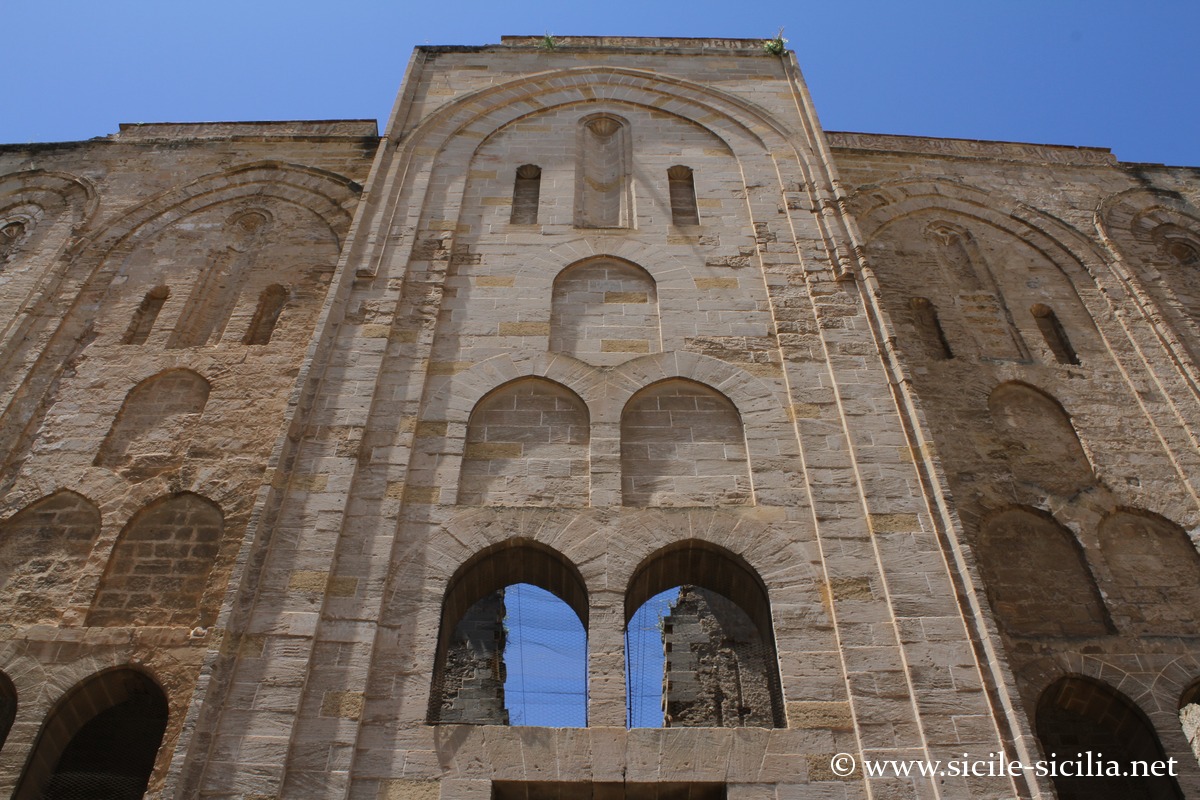
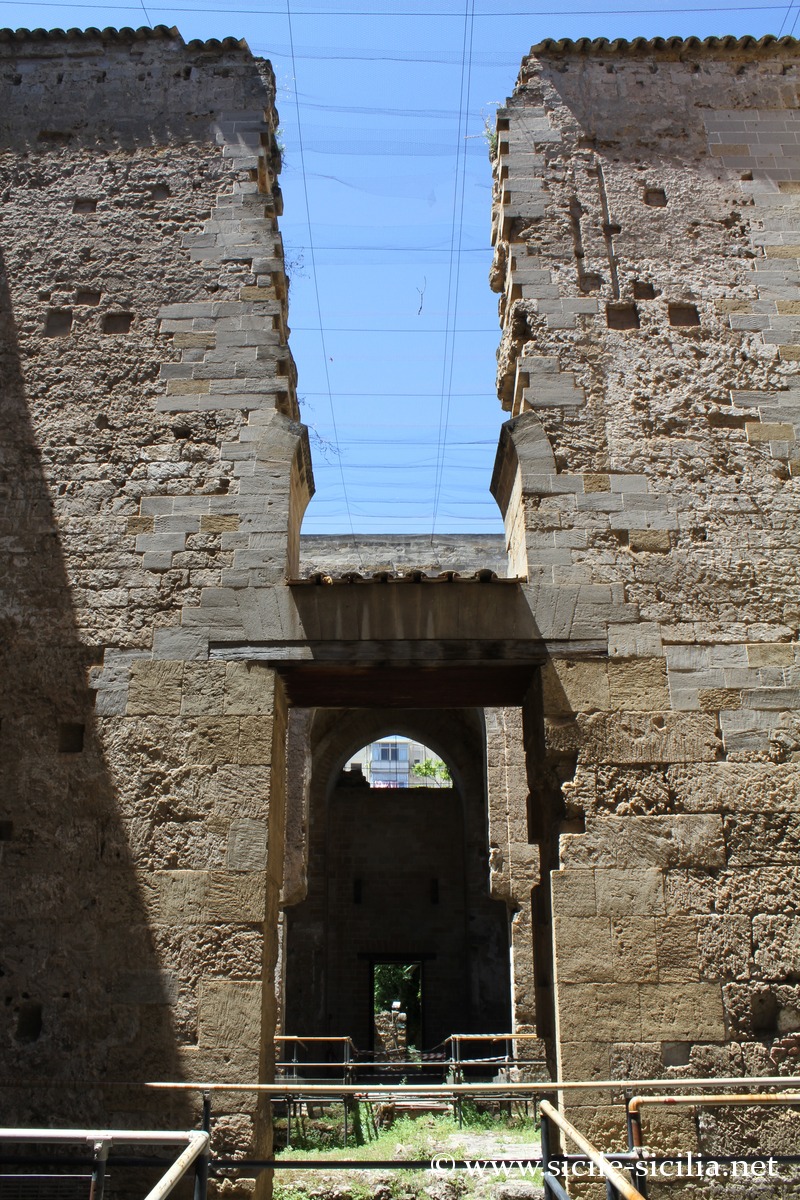
The palace is rectangular in shape, measuring 31.5 meters in length and 16.80 meters in width, with in the middle of each facade a projecting tower-shaped body, the most important of which was the only access, with a passage over the lake.
This arrangement recalls Islamic palatial models, combining defensive and decorative functions, with towers serving both as loggias and as elements of architectural symmetry.
Its construction with thick walls and few openings helps maintain a moderate temperature in summer. This thermoregulation technique is characteristic of Mediterranean and Islamic architecture.
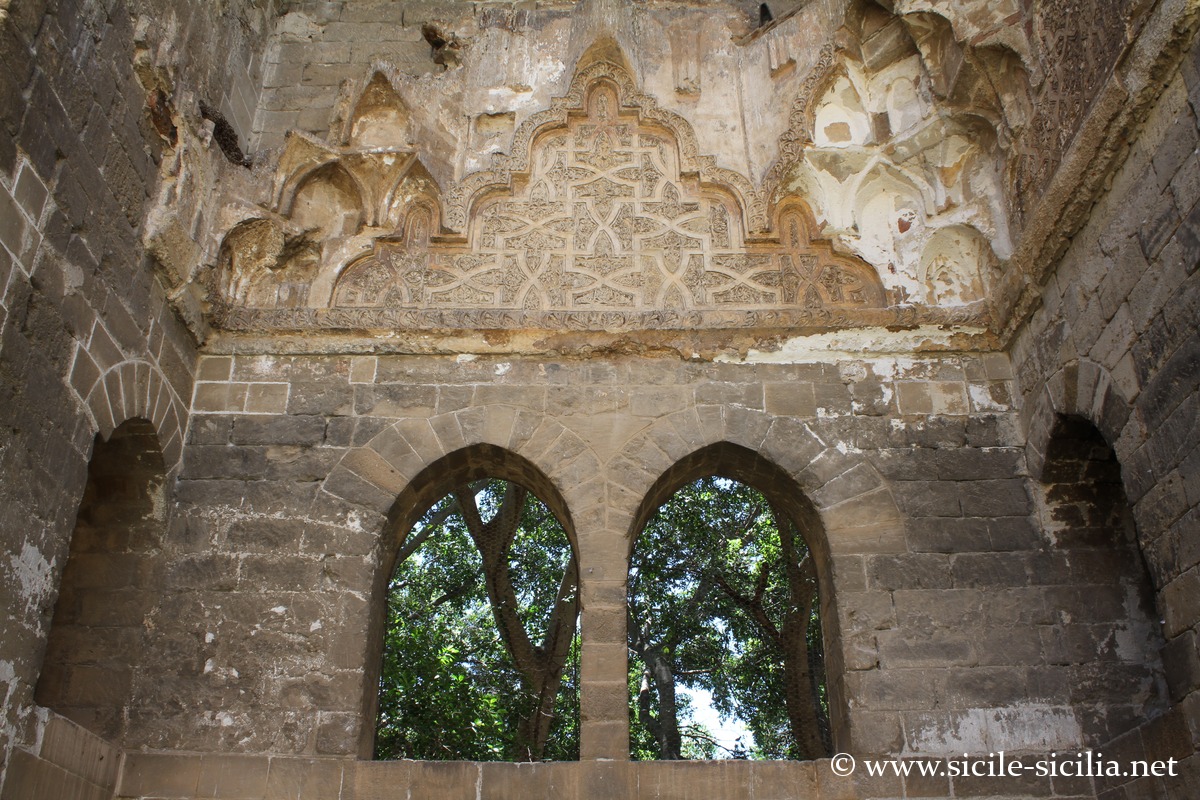
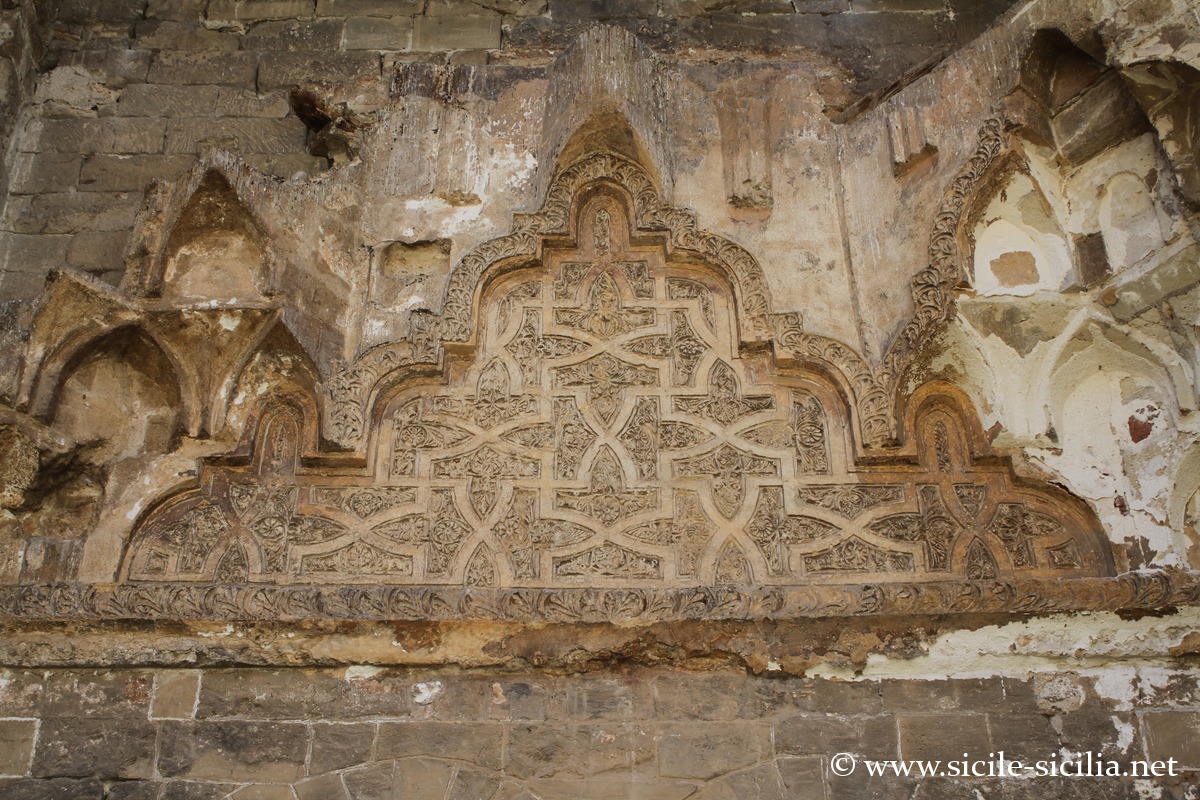
Muqarnas inside the Cuba
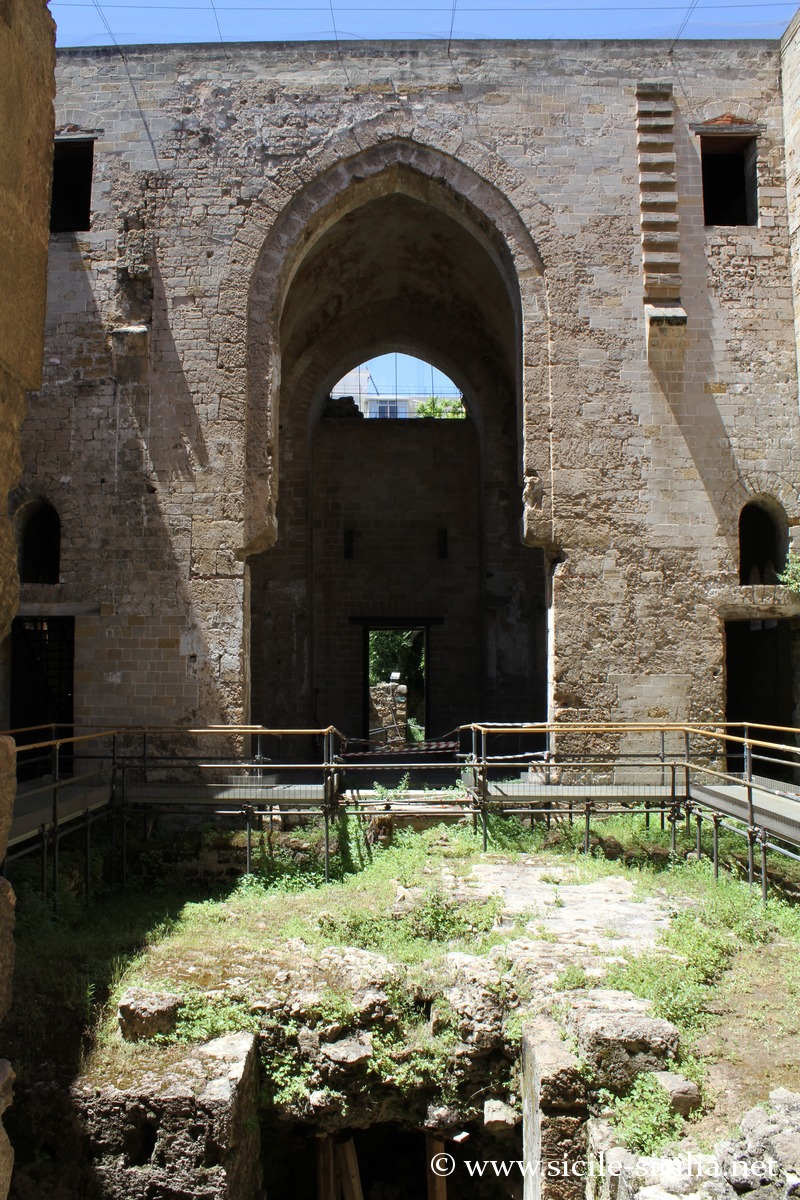
The Islamic style is found in the pointed arches of the facade, the blind arcades, the muqarnas inside and the decorations. Muqarnas are typically Arab half-dome decorations that served to create a complex interplay of light and shadow.
The interior decorations also included panels of carved stucco and complex geometric patterns, typical of Fatimid art and Andalusian influences. Some parts of the vaults are decorated with stylized floral motifs in bas-relief.
In the center of the interior are the remains of a splendid marble fountain of the Arab type that also served to cool the air. It had several superimposed basins and a water-flow system that created a pleasant sound and visual effect, in harmony with the architecture and symmetry of the central hall.
A fascinating epigraph was found in the 19th century, in Arabic with Kufic characters, on which one reads:
“In the name of God, the Merciful, the Compassionate, Take heed, Stop and look! You will see the remarkable dwelling of the most eminent among the kings of all the earth, the Christian king William II. There is no castle worthy of him. Praise be to God the Eternal. May He keep him in prosperity and grant him blessings throughout his life.” (source: wikipedia.it)
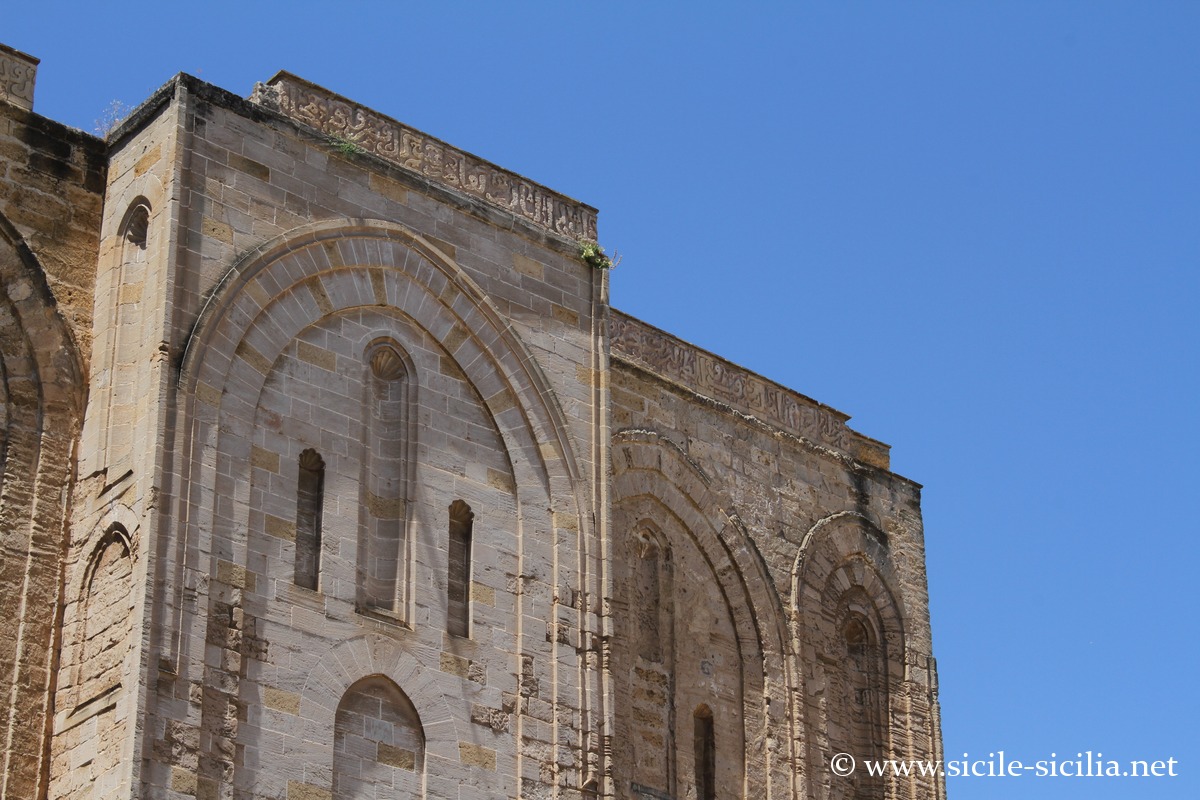
The palace is also crowned by an epigraphic frieze in Kufic Arabic characters that runs along the top of the outer walls, integrated into the cornice; its approximate translation reads: “In the name of God, this palace was built by William, king of the Christians, in the year of his majesty”.
Exterior of the Cuba 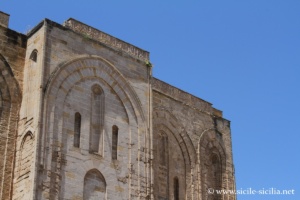
Exterior epigraph 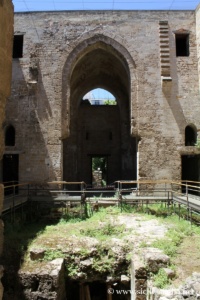

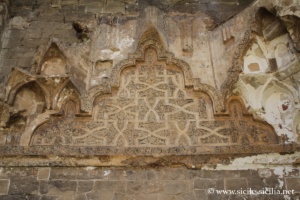

Muqarnas inside 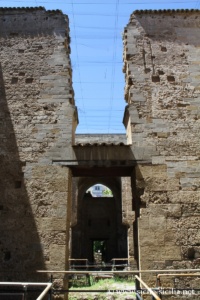
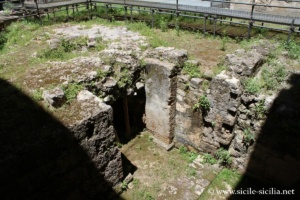
Basin of the Cuba
Where is the Cuba Palace in Palermo
If you see this after your page is loaded completely, leafletJS files are missing.
Palazzo della Cuba
Corso Calatafimi, 100, 90129 Palermo
Information
Sources and external sites
|