
Monte di Pietà, also called Seralcadi, is one of the four historic districts of central Palermo, part of the old town between Via Vittorio Emanuele, Via Maqueda and the old course of the medieval walls.
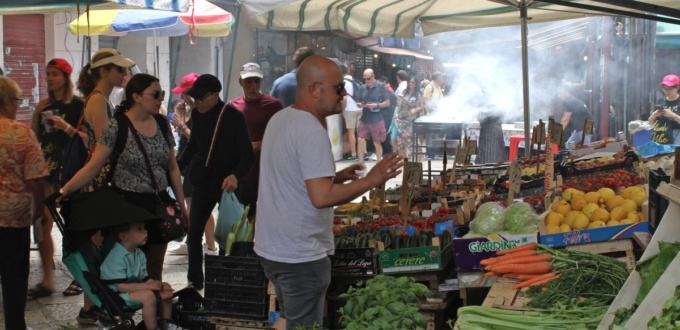
Here is held the Capo Market, one of the historic markets of the city, near the Porta Carini located in the north-western walls of the city, and heir to the district’s trading tradition that dates back to the Islamic era.
The urban fabric is dense with alleys, Baroque squares and historic buildings, where the successive layers of the city’s history can be found, from the Muslim and Norman era to the Baroque and Neoclassical period.
Islamic origin of the district
The name Seralcadio (or Seralcadi) derives from Arabic (sari al-qāḍī or ḥārat al-ṣaqāliba), referring to “quarter of the judge”, an urban sector occupied by various communities and trading activities, established during the period of Muslim domination of Palermo.
It developed beyond the Papireto, an ancient watercourse now disappeared, outside the first city walls. In the Islamic era, it was one of the most densely populated areas of the city, hosting in particular mercenaries and merchants. Indeed, notarial sources from the 11th century mention, for example, the sale of house-workshops bordering the “platea pubblica Seralcadi”, later called “platea magna” because of its commercial vocation. Chronicles by Ibn Jubayr from 1184 evoke the Capo (Caput Seralcadi) as a district densely populated by Muslims engaged in trade.
Capo Market of Palermo
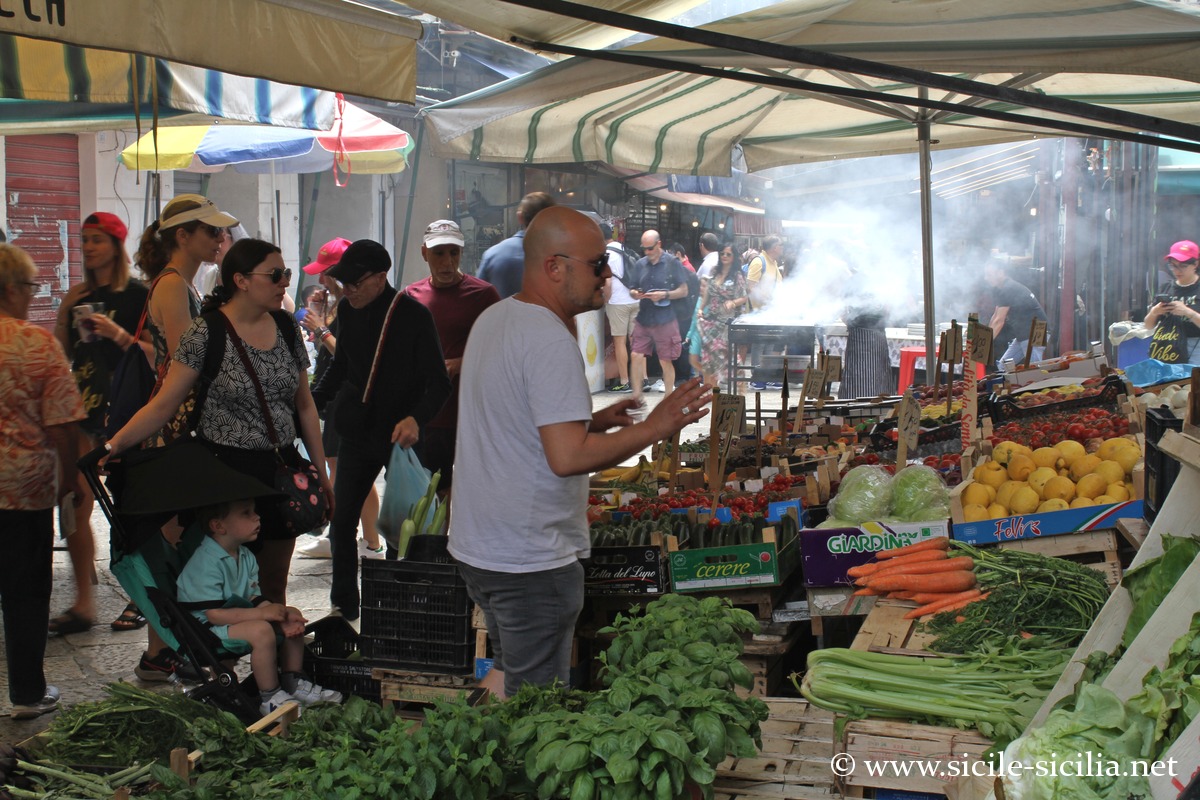
Capo Market
The Capo Market (Mercato del Capo) is one of the three oldest and liveliest food markets in Palermo, located slightly north of the cathedral in the historic district of Monte di Pietà or Seralcadi, which takes its name from the Arabic sari al-cadì.
It is held along alleys such as Via Porta Carini, Via Sant’Agostino, Via Beati Paoli, Via Cappuccinelle and Via Volturno, with the emblematic entrance through the Porta Carini.
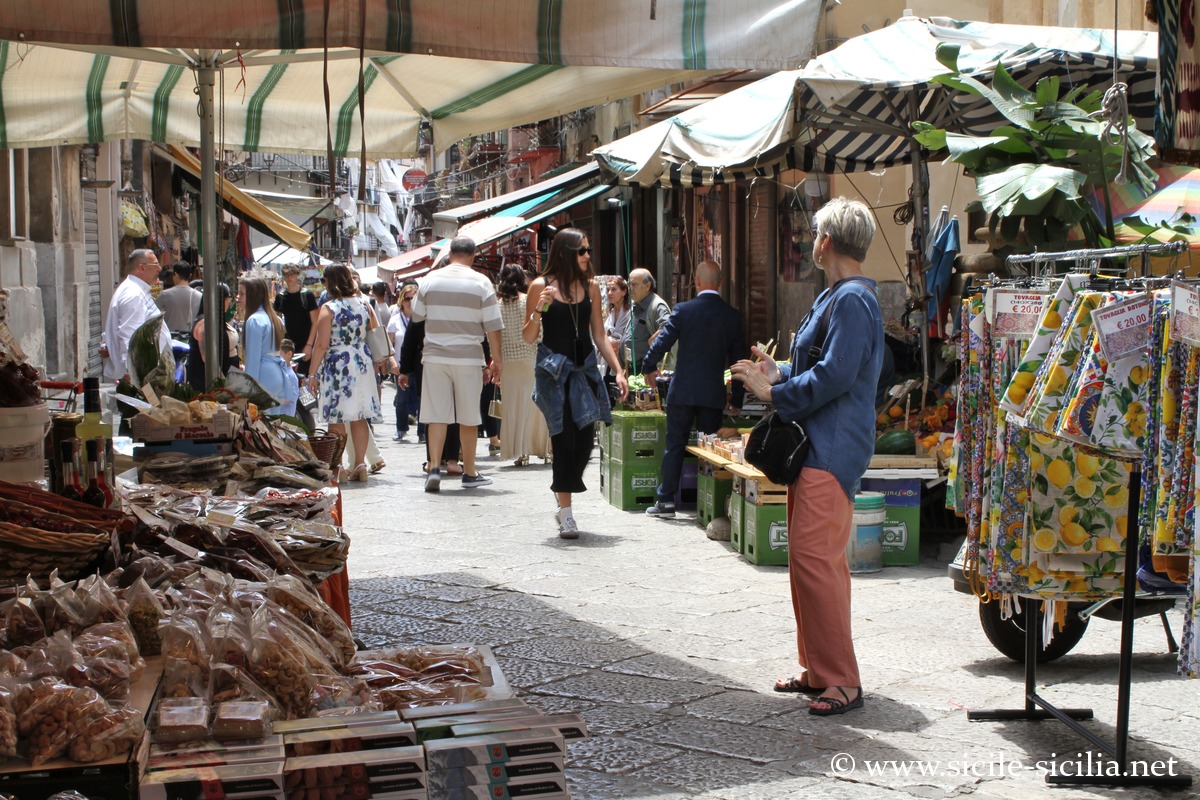
The market is renowned for its lively and colourful atmosphere, punctuated by the calls of the vendors, with a great diversity of fresh products: seasonal fruit and vegetables, fish and seafood, meats, cheeses and spices, with an atmosphere evoking that of a Mediterranean souk.
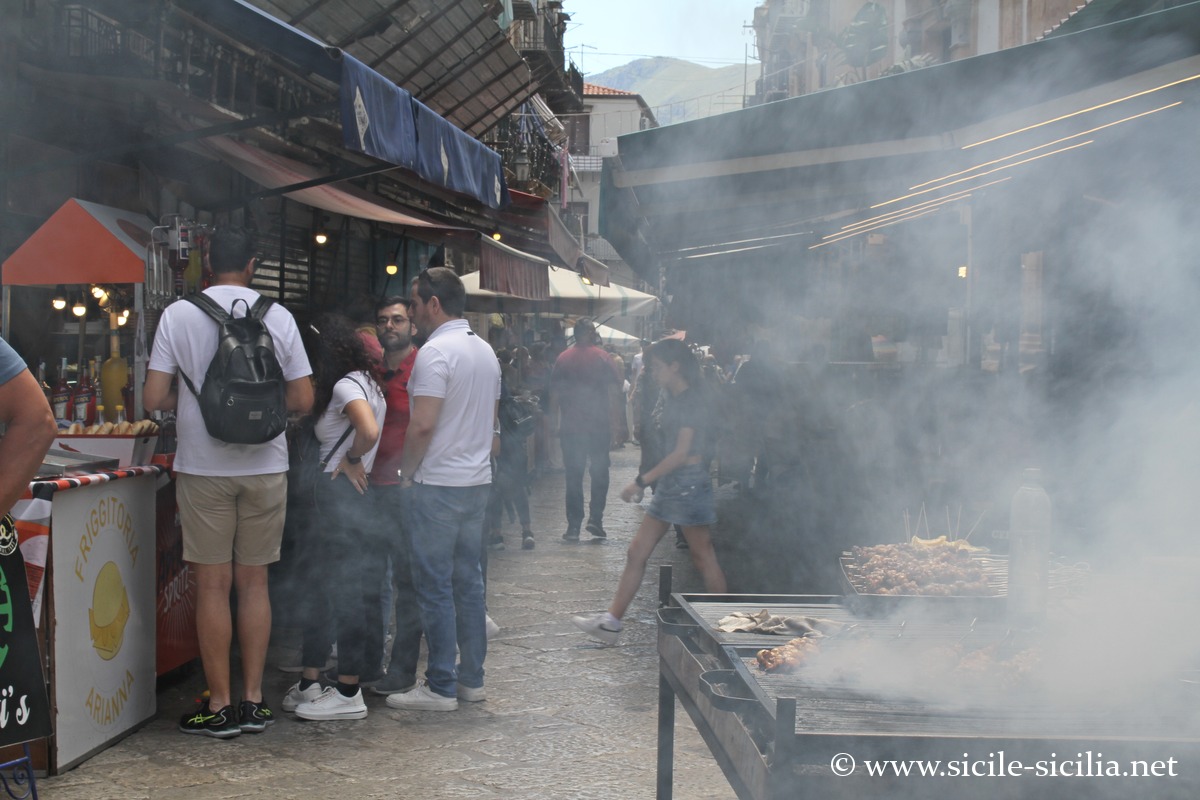
It is also a place where you can taste Palermo street food (panelle, arancini, fried fish, etc).
Where the Capo Market is located
The Seralcadi district (Monte di Pietà)
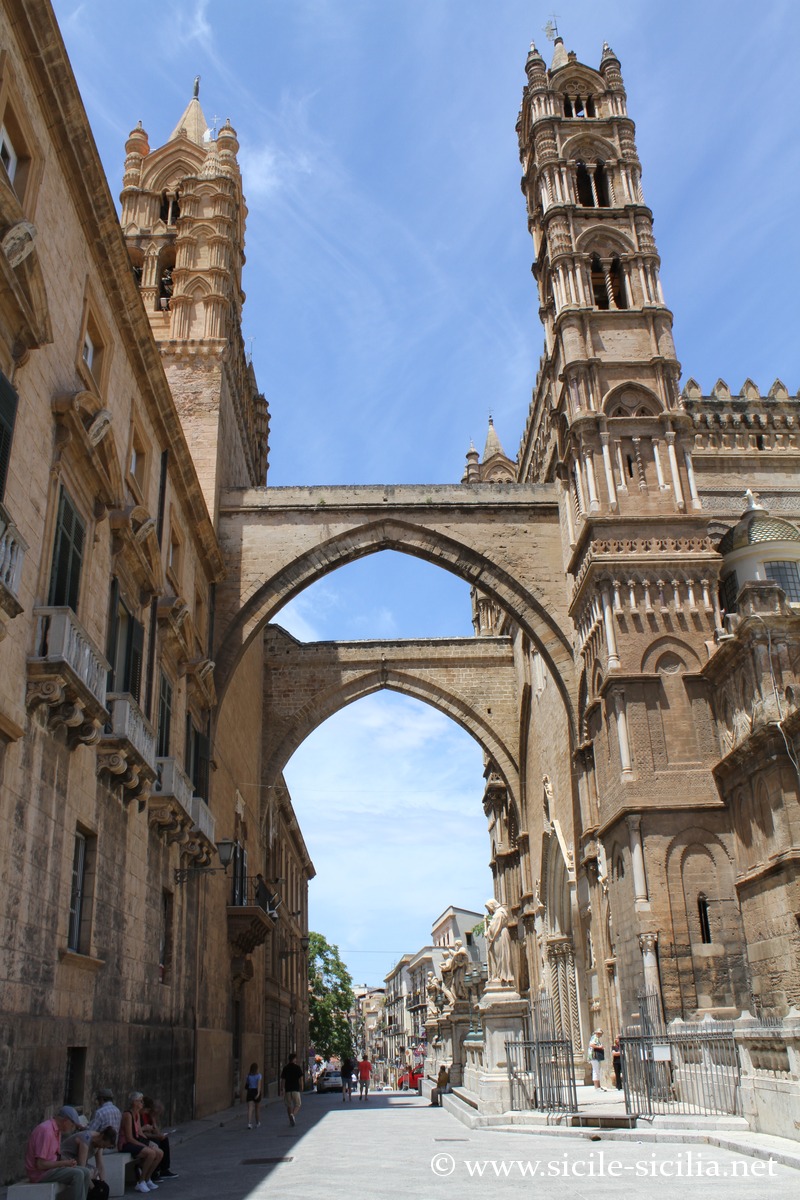
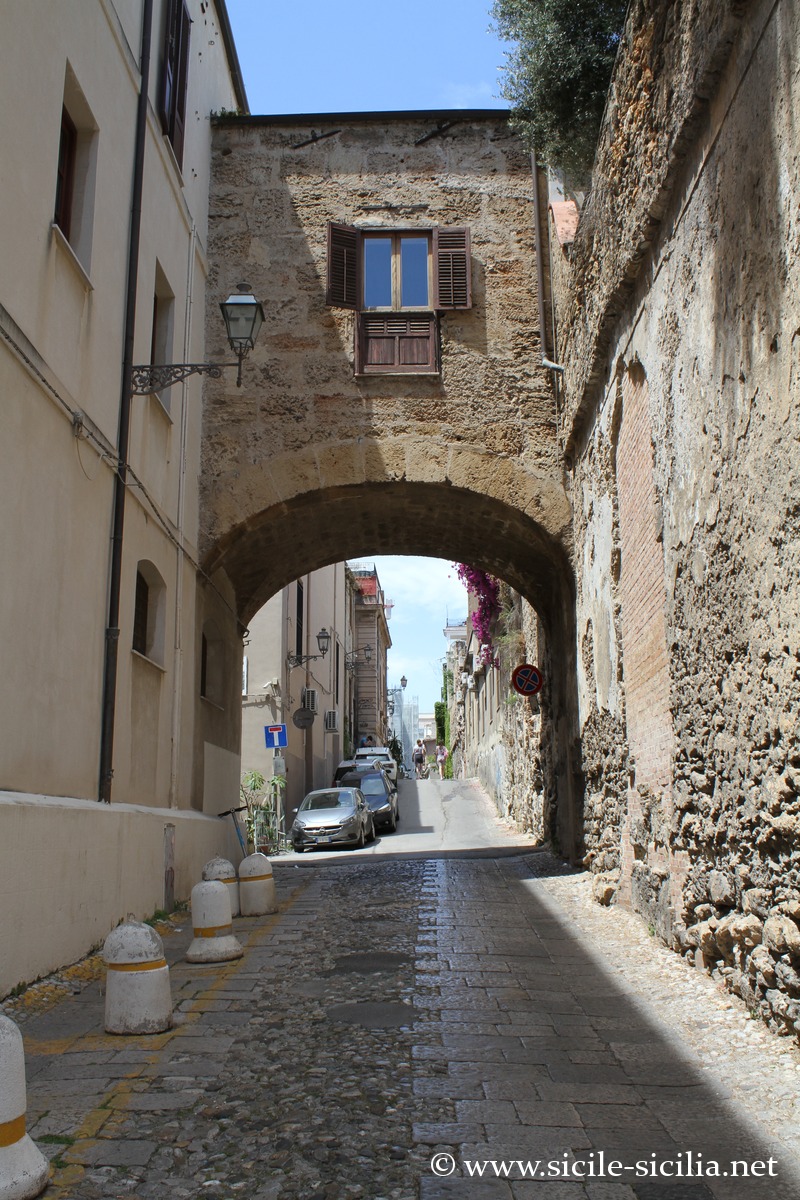
Arch-bridges between the palace and the cathedral
The main building, in the south-western corner, is the majestic Cathedral of Palermo, a masterpiece of Arab-Norman architecture inscribed on the UNESCO World Heritage List, with its royal tombs, its crypt and its panoramic roofs. An arch connects it to the Archbishop’s Palace with the Diocesan Museum, rich in ecclesiastical artefacts and which allow an understanding of the religious history of Palermo.
On the opposite side, in the north-eastern corner, Piazza Verdi is a large historic square where the Teatro Massimo Vittorio Emanuele stands, the largest opera house in Italy, an icon of the city and cultural centre of the district.
In the south-eastern corner is the intersection of the main axes and the four historic districts with the Quattro Canti (Piazza Vigliena).
The district has a number of other important religious buildings such as the church of Sant’Agostino, as well as small oratories (Oratorio dei Pellegrini, Oratorio dei Santi Pietro e Paolo), and small churches (Chiesa dei Tre Re, Santa Cristina la Vetere, etc), including:
- Oratory of Saints Peter and Paul (Oratorio dei Santi Pietro e Paolo), built in 1697-1698 for the chapel of the priests’ hospital, is located in the heart of the Monte di Pietà district, near the cathedral.
The Baroque façade has a dynamic portal designed by Paolo Amato, with a statue of the Immaculate Conception and twisted columns, and the interior contains a vault painted by Filippo Tancredi depicting the Incoronazione della Vergine. The interior decoration includes refined stuccoes attributed to Giacomo Serpotta and Domenico Castelli, as well as altars dedicated to Santa Rosalia and San Ferdinando, illustrating 17th-century Palermo Baroque art. - Oratory of the Pilgrims (Oratorio dei Pellegrini), built in the 16th century by the Compagnia della SS. Trinità, was annexed to the former pilgrims’ hospital and intended to welcome and assist travellers in Palermo.
The building remains modest in its exterior architecture, but the interior preserves frescoes dating from the 18th century attributed to Guglielmo Borremans, including in particular a scene of Abraham and the three angels. - Church of the Three Kings (Chiesa dei Tre Re), founded at the end of the 16th century by the Compagnia dei Tre Re on the site of the previous medieval church of San Giorgio lo Xheri, has a major Baroque element with a vault adorned with a fresco by Vito D’Anna depicting the Triumph of the Magi (1751) and decorative stuccoes made by Procopio and Giovanni Maria Serpotta.
A central square of the district is Piazza Monte di Pietà, formed around the historic palace of the Monte di Pietà, an institution created in the 16th century as a mont-de-piété to help the poor; its building with a Neoclassical portico and a clock from 1684.
On Via Principe di San Giuseppe can be seen several remains of water towers (“torri d’acqua” or “castellette”), often embedded in the walls of old buildings, or else isolated structures, which were once integrated into the gravitational water distribution system. These towers were part of the city’s drinking water system until the beginning of the 20th century and were built from the 16th century onwards.
Where the Seralcadi district of Palermo is located
If you see this after your page is loaded completely, leafletJS files are missing.
Gallery
Capo Market 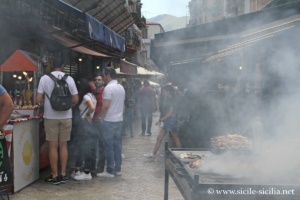
Capo Market 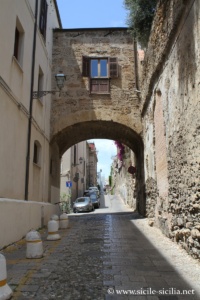

Via Mura di San Vito and Water Towers
Information
External sites
- Wikipedia page: Seralcadi on Wikipedia (FR)
- Tourist sites and blogs about Palermo: Piazza Capo on palermoviva.it, article from the diocese on chiesadipalermo.it