
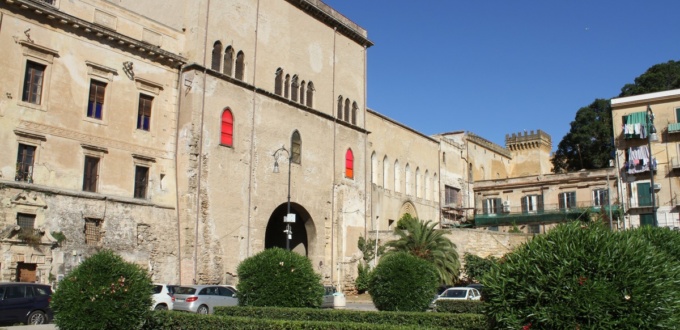
The Kalsa district is one of the four historic districts of Palermo; founded in the 9th century under Arab rule, it was a fortified administrative and residential citadel, whose medieval urban layout is still legible today.
Located between Via Maqueda, Via Vittorio Emanuele and the Foro Italico on the seafront, it forms an ancient, dense and lively urban sector. It blends medieval remains, Renaissance palaces and Baroque buildings, reflecting Arab, Norman, Spanish and Bourbon rule, with major monuments such as Piazza Bellini and Piazza Pretoria at its western end with its Norman churches, the Abatellis Palace, Piazza Marina with the Palazzo Chiaramonte-Steri, the Church of the Spasimo, the Porta Felice, etc.
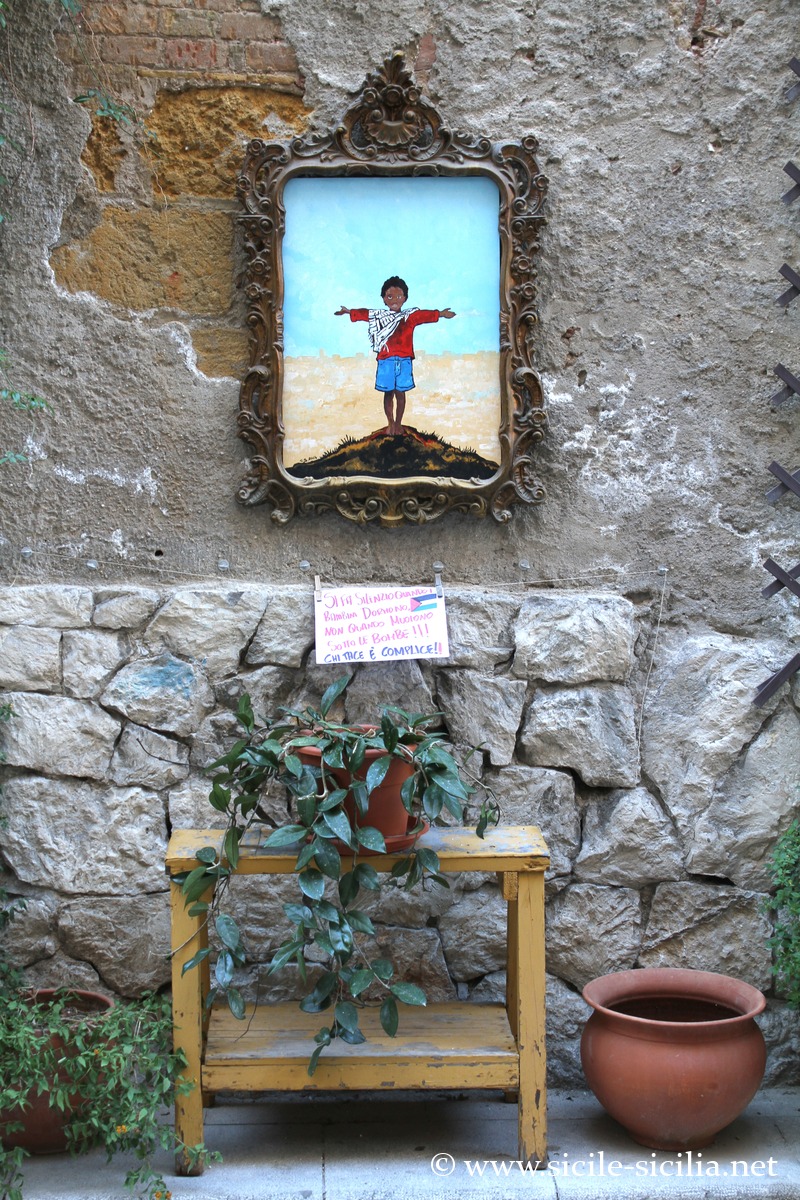
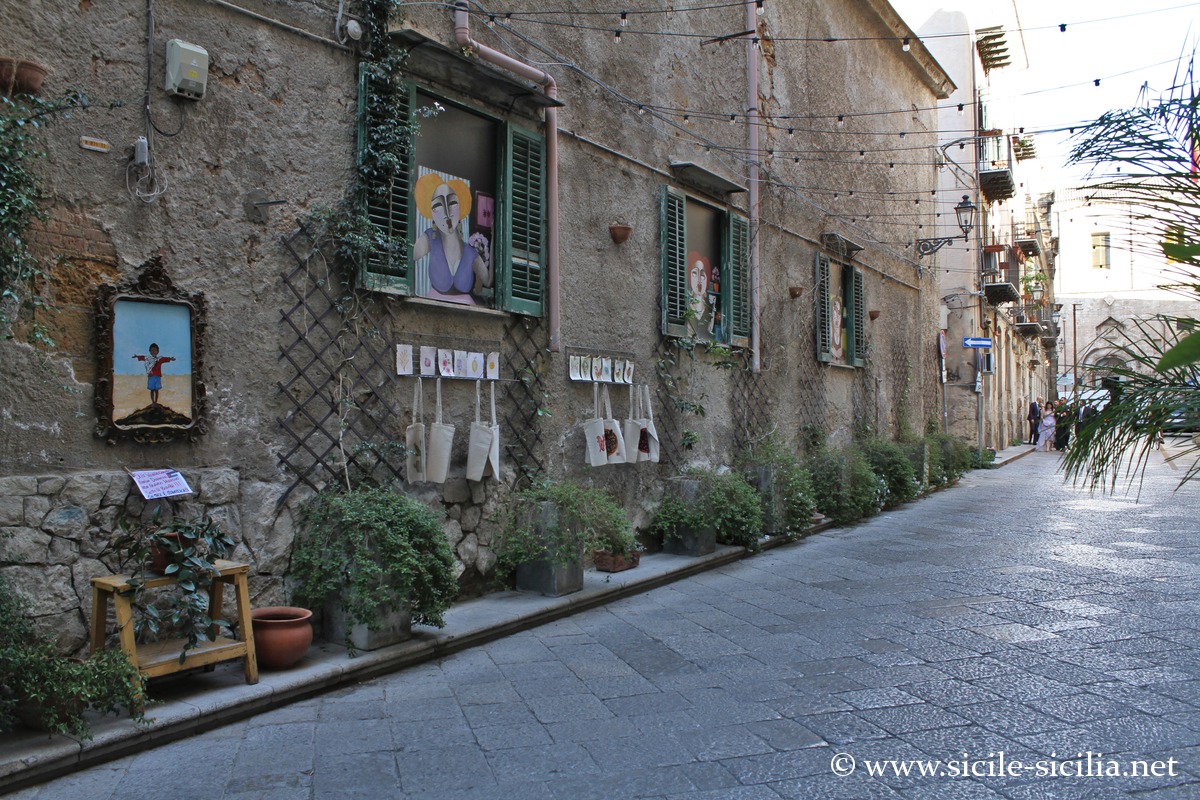
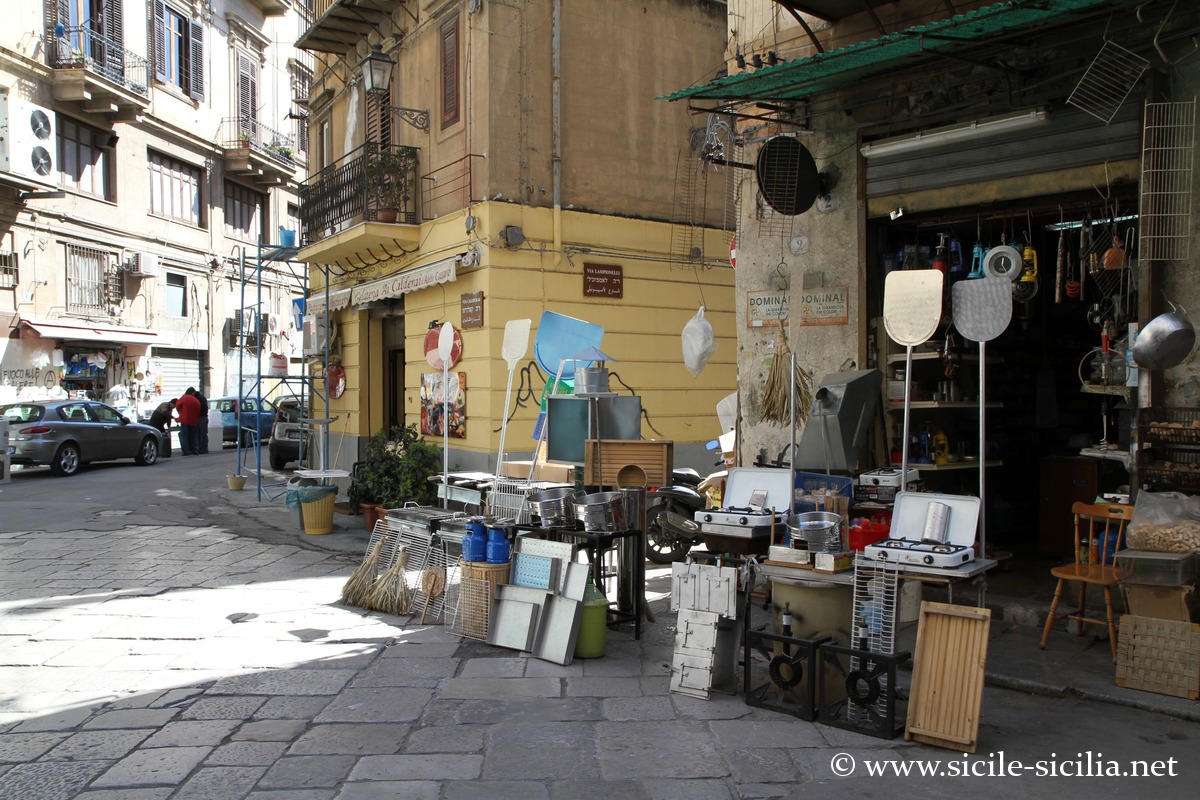
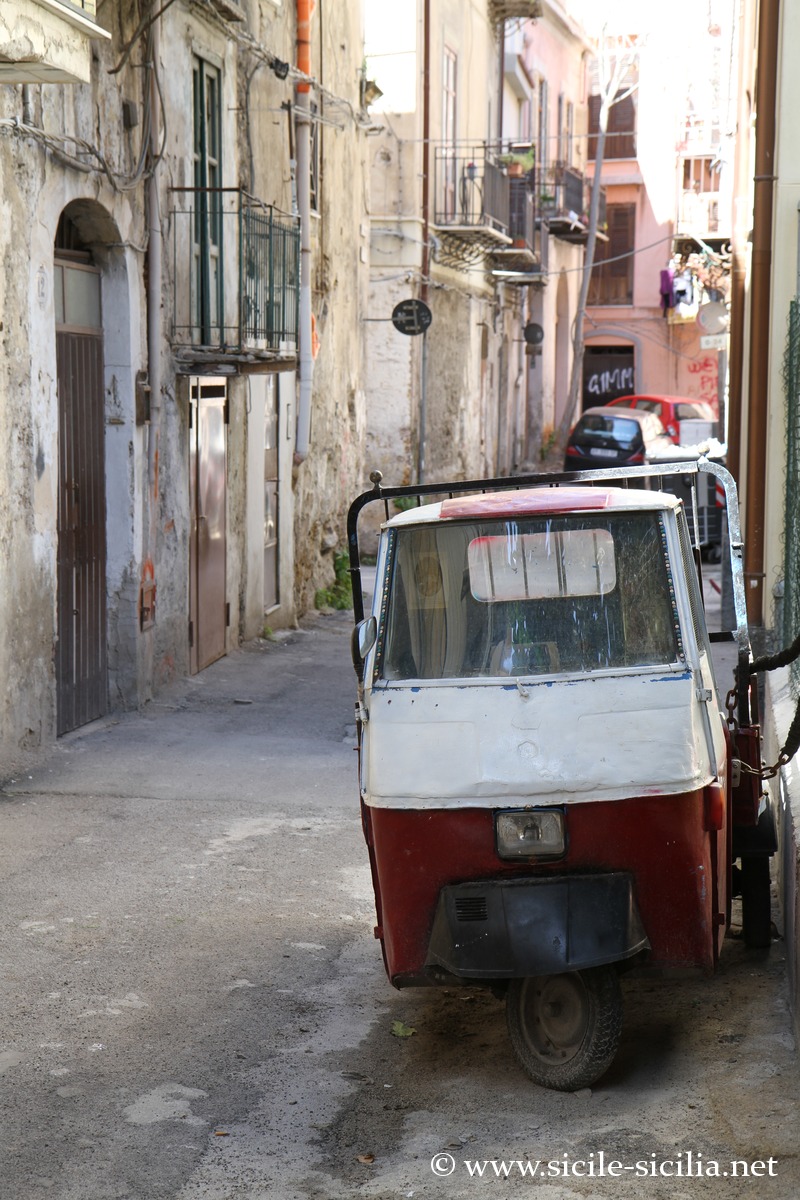
Severely affected by the bombings of 1943, the district has since the end of the 20th century undergone a marked cultural conversion with museums, artistic spaces and a strong urban identity blending historical heritage and contemporary life. Its charm also lies in its narrow alleys, small squares, and artists’ workshops somewhat off the main tourist circuits.
The Islamic citadel of Kalsa
In the 9th century, during Islamic rule, the Kalsa, from the Arabic al-Khalisa (“the chosen one”), was founded as a fortified citadel distinct from the rest of the city. It housed the seat of the emir’s power, with the governor’s palace, administrative residences, mosques, gardens and an inner port connected to the sea.
After the Norman conquest in 1072, the Kalsa lost its central political role but remained a strategic and port district, gradually Christianized by the establishment of churches and monasteries.
Its origin explains the layout of narrow and irregular streets still perceptible today.
Piazza della Kalsa
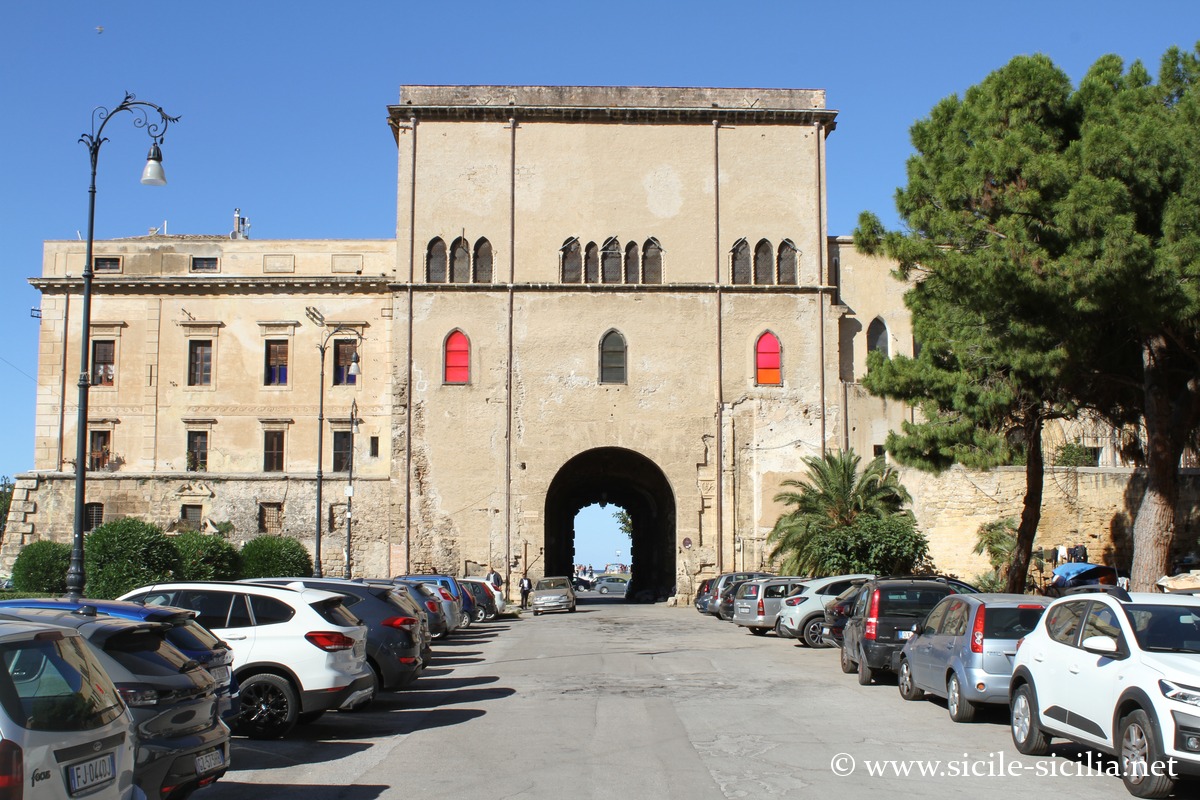
Palazzo Forcella de Seta and Porta dei Greci
The piazza della Kalsa is part of the medieval urban fabric dating from the Arab period, bordered by the Forcella De Seta Palace, a building of medieval origin attested as early as the 15th century. It was remodeled in the 18th and 19th centuries, notably with the addition of neoclassical elements. It is known for its loggia open toward the seafront, inherited from modern Palermitan aristocratic architecture.
The Porta dei Greci is an ancient gate of Palermo, originally erected in the 14th century, rebuilt in 1553 in a style inspired by the Porta di Castro, integrated into the facade of the Palazzo Forcella De Seta.
The Church of Saint Teresa of the Kalsa (Chiesa di Santa Teresa alla Kalsa) is a Baroque church built between 1686 and 1706 by the architect Giacomo Amato for the Discalced Carmelites, on an old Muslim cemetery, with a facade enlivened by columns and a precious coat of arms of the Sacra Famiglia by Cristoforo Milanti.
The interior with a single nave is richly decorated with works from the 17th-18th centuries, including stuccoes by Giuseppe and Procopio Serpotta, paintings by Antonio Grano and a canvas by Gaspare Serenario, as well as a main altar in marbles and semi-precious stones.
Kalsa District
Monuments and cultural sites
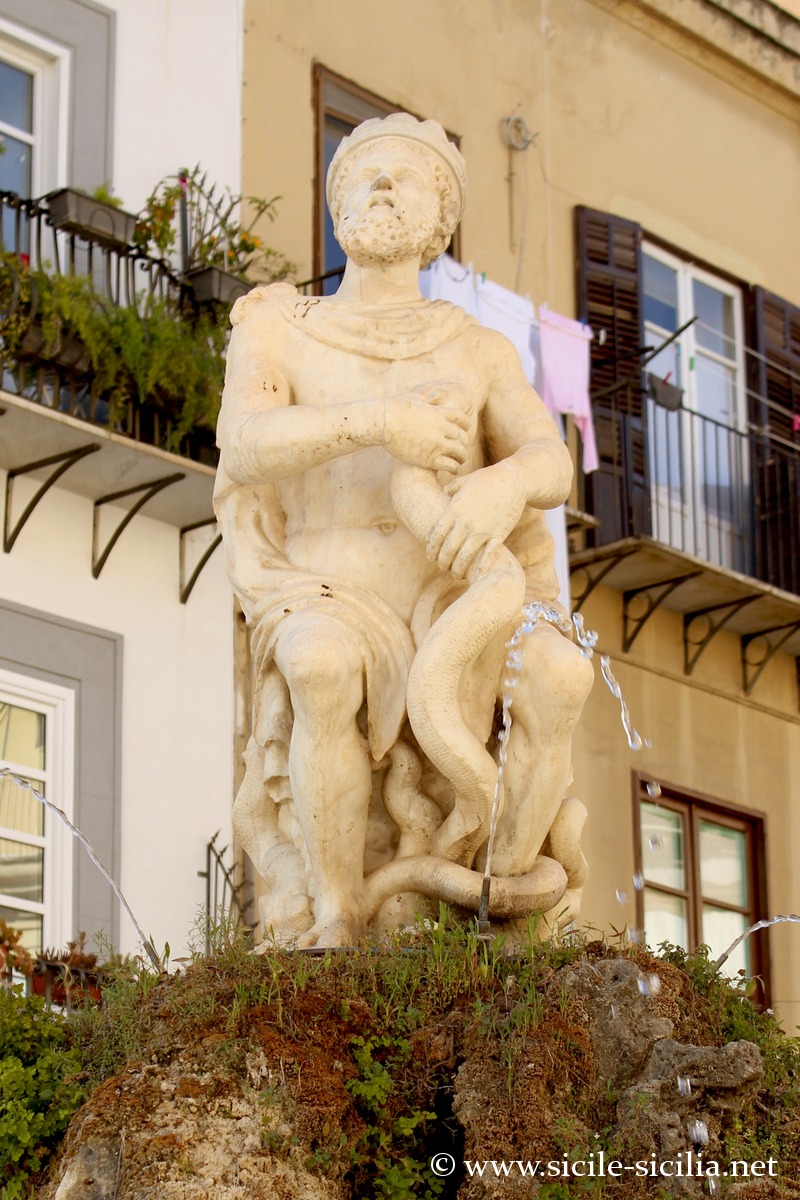
Statue of the Genius of Palermo, Piazza Rivoluzione
The Piazza Marina is one of the historic hubs of the district. It hosts the Garibaldi Garden, famous for its giant fig tree, and is lined with remarkable palaces such as the Palazzo Chiaramonte-Steri, former seat of the Spanish Inquisition in Sicily.
The Piazza Bellini is one of the most beautiful in Palermo, at the north-western edge of the Kalsa, with San Cataldo and the Martorana, masterpieces of Arab-Norman architecture of the 12th century. It adjoins another emblematic square, the Piazza Pretorio with its famous fountain.
The Abatellis Palace, built at the end of the 15th century in the Catalan Gothic style by Matteo Carnilivari, houses the Galleria Regionale della Sicilia, one of the main art museums of Palermo. Nearby, the Gallery of Modern Art of Palermo (GAM), housed in the former convent of Sant’Anna, presents collections from the 19th and 20th centuries.
The district is very dense in churches, besides those already mentioned including those of Piazza Bellini.
The Church of Santa Maria dello Spasimo is one of the most singular places of the Kalsa. Left unfinished, it is distinguished by the absence of a roof and by its Gothic apse open to the sky, which today makes it a major cultural and event space.
There are several remarkable churches, including Saint Francis of Assisi dating back to the 13th-14th centuries, with its associated Franciscan complex.
Near the port, Santa Maria della Catena (late 15th-early 16th century) constitutes a major milestone in the Gothic-Renaissance transition in Palermo, linked to the maritime world and lay confraternities.
There are also Santa Maria della Pietà alla Kalsa, an important Baroque church associated with an old hospice.
A few steps away, Santa Maria dell’Itria dei Cocchieri (1596-1598) is a small church in a simple Renaissance style, with sculpted elements and an interior that reflects a confraternal piety of the early 17th century.
The Chiesa di Santa Teresa alla Kalsa, a Baroque church of the 17th century, illustrates the religious and architectural renewal of the district in the modern era, alongside many other churches and oratories scattered through its alleys. San Mattia ai Crociferi, a building of the 17th century, is linked to the hospitaller order of the Crociferi, now deconsecrated.
Discreet but historically important, San Giovanni dei Napoletani (1617) is a Baroque-Neoclassical church founded by a confraternity of Neapolitan merchants, with a nave decorated with stuccoes and an octagonal dome.
Finally, Sant’Anna la Misericordia (1606-1632) presents a spectacular Baroque facade and recalls the expansion of religious architecture in the 17th century in this dense urban sector.
Finally, several oratories and confraternal chapels now disappeared or transformed testify to the exceptional religious density of the Kalsa between the Middle Ages and the modern era.
Among the various squares, on Piazza della Rivoluzione stands a statue of the Genius of Palermo in marble from the 16th century. It became an emblem of popular freedom during the uprisings against Bourbon rule and was reinstalled here in 1860, giving the square its current name.
Open spaces and seafront
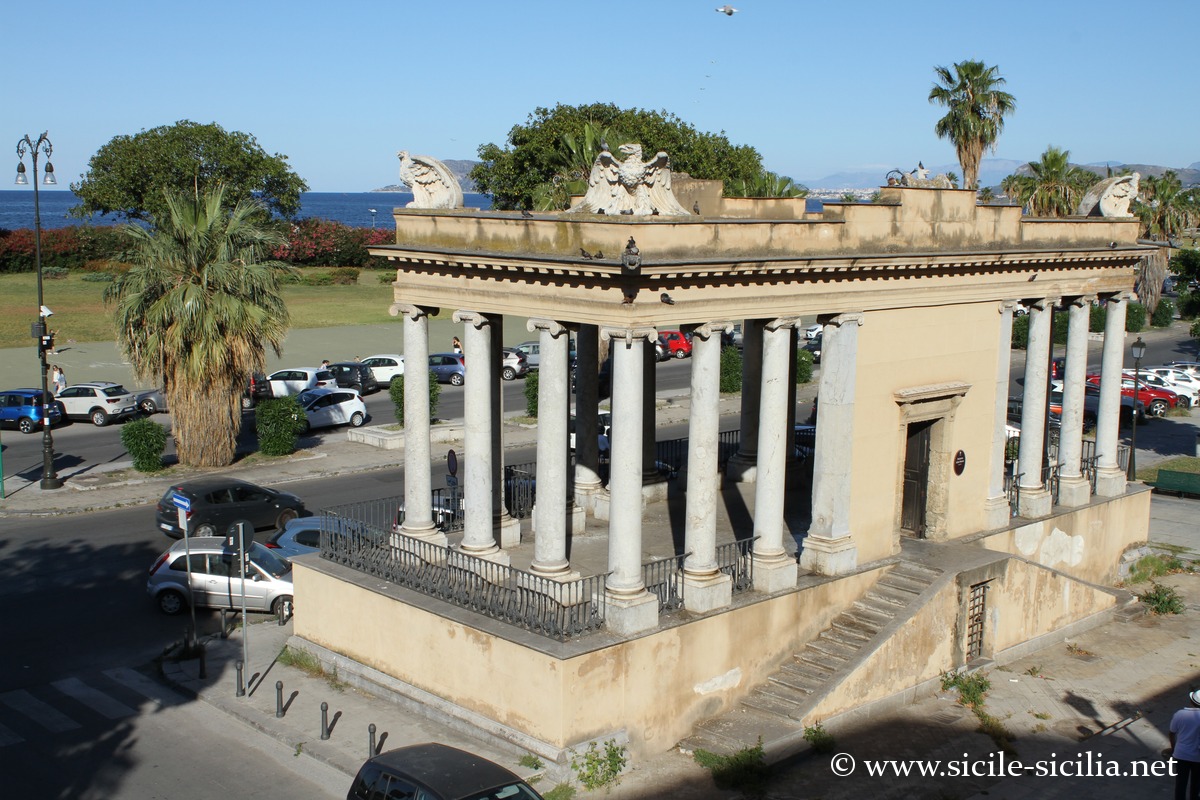
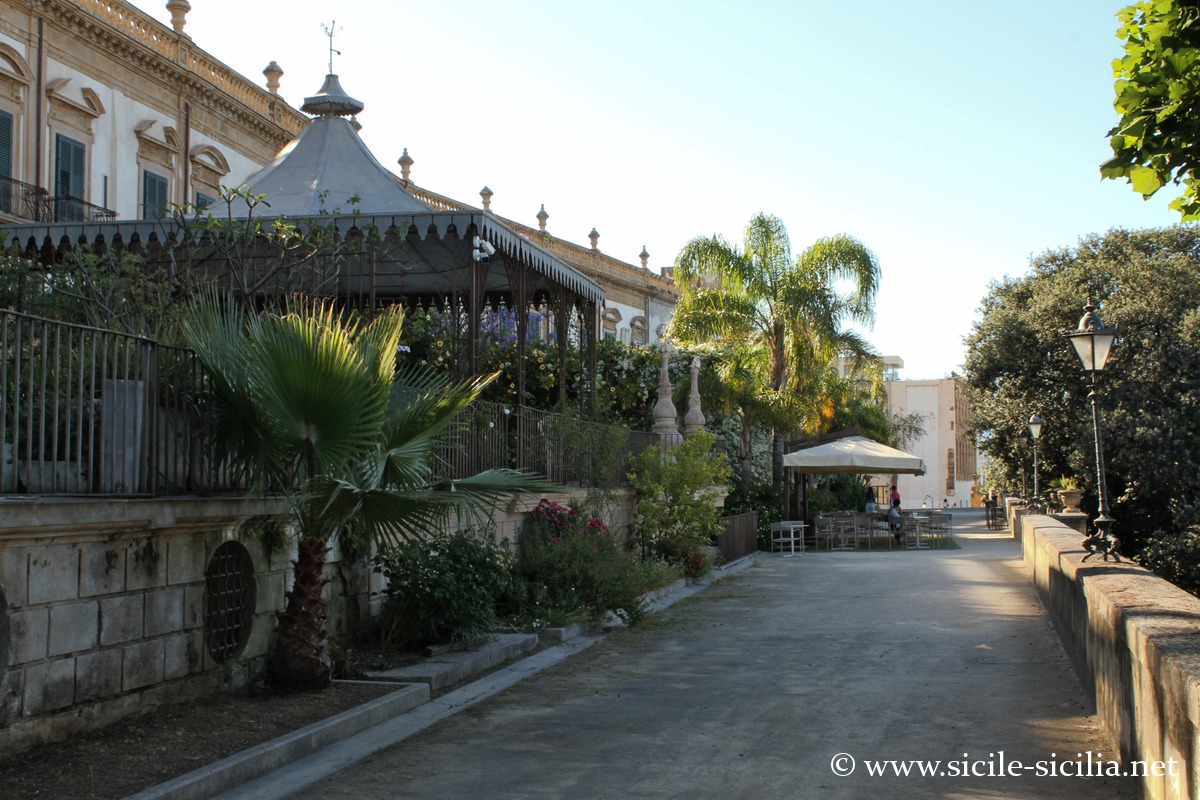
Tempio dei Concerti, Foro Italico
The promenade along the Foro Italico offers a vast esplanade facing the sea, laid out from the 16th century. It is marked by the monumental Porta Felice, a Baroque gate opening the city toward the coast.
At the eastern end of the Kalsa are two important green spaces: the Villa Giulia, a public garden from the late 18th century designed according to a neoclassical geometric plan, and the Botanical Garden of Palermo, founded in 1789. The latter is one of the largest and most important botanical gardens in Italy, with botanical collections from around the world.
Palaces and contemporary identity
Among the other witnesses of the past are several historic palazzi, such as the Palazzo Butera, the Palazzo Forcella de Seta or the Palazzo Jung, which recall the residential and aristocratic role of the district in the modern era.
Severely affected by the bombings of the Second World War, the Kalsa has since the end of the 20th century undergone a profound transformation. It now asserts itself as a cultural and creative district, blending local life, museums, cafes, artistic initiatives and bohemian atmospheres, while preserving a strong historical identity.
Where is the Kalsa district
If you see this after your page is loaded completely, leafletJS files are missing.
Photo gallery
Information
External sites
- Wikipedia page: en.wikipedia.org
- Tourist sites and blogs about Palermo: the Kalsa on palermoviva.it