
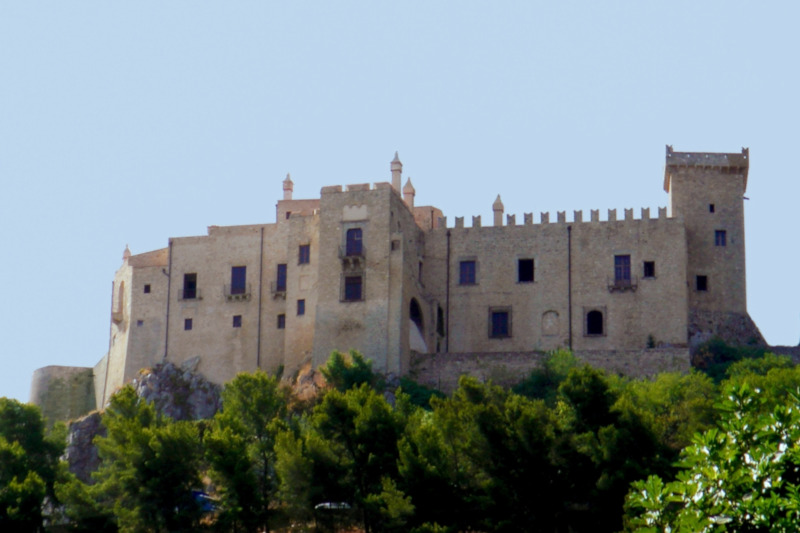
The village of Carini stands at the foot of Monte Saraceno, northwest of Palermo, overlooking the urbanized coastal plain of the Gulf of Carini.Monte Saraceno is a strategic relief occupied since protohistory, showing remains of fortifications and indigenous then medieval settlements.
The main attractions of Carini are the Chiaramonte Castle (11th-12th century), of Arab-Norman origin, and the catacombs of Villagrazia di Carini.
Carini is located near the ancient Hyccara, of Greek origin and destroyed during the Peloponnesian War in 415 BC by the Athenians according to Thucydides’ account, later rebuilt by the Romans, whom the Arabs later called Qarinis.
Human occupation is very ancient: in the Ciachea district there is a prehistoric necropolis with oven tombs (tombe a forno), and in the corner of the caves were frequented since the early Bronze Age.
Carini Castle
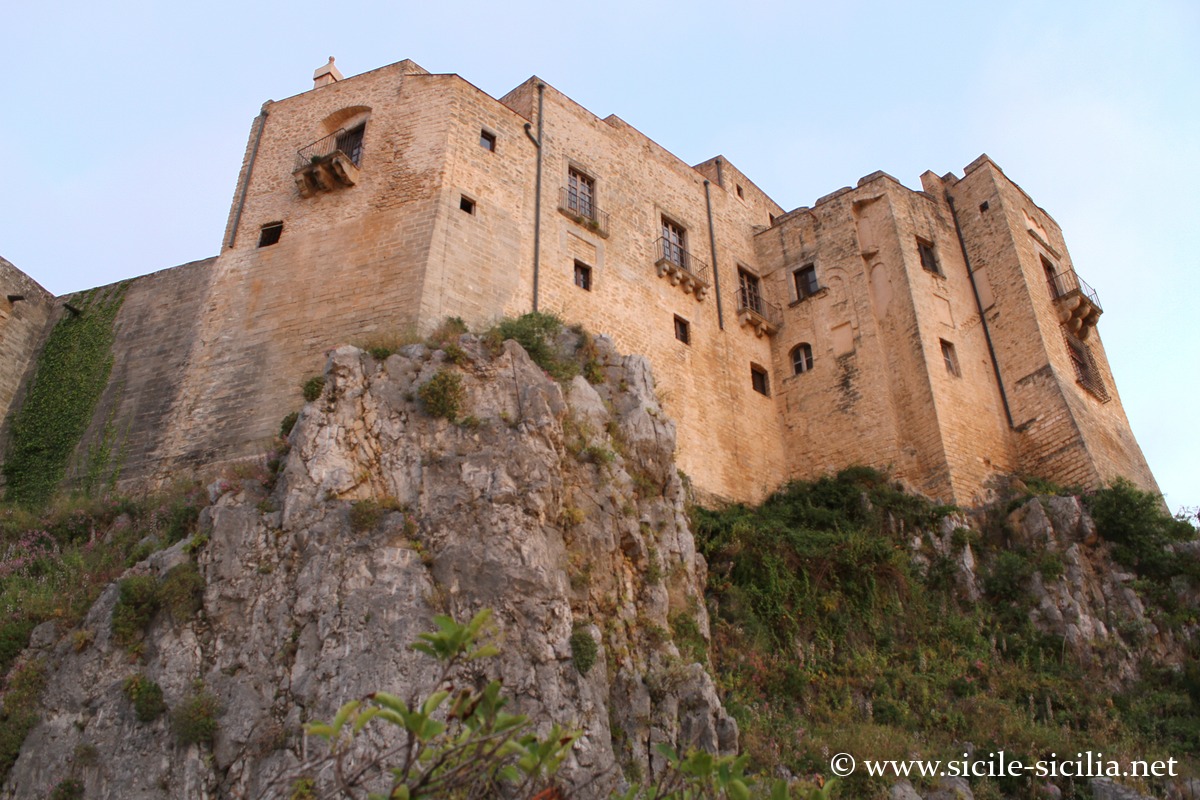
Carini Castle
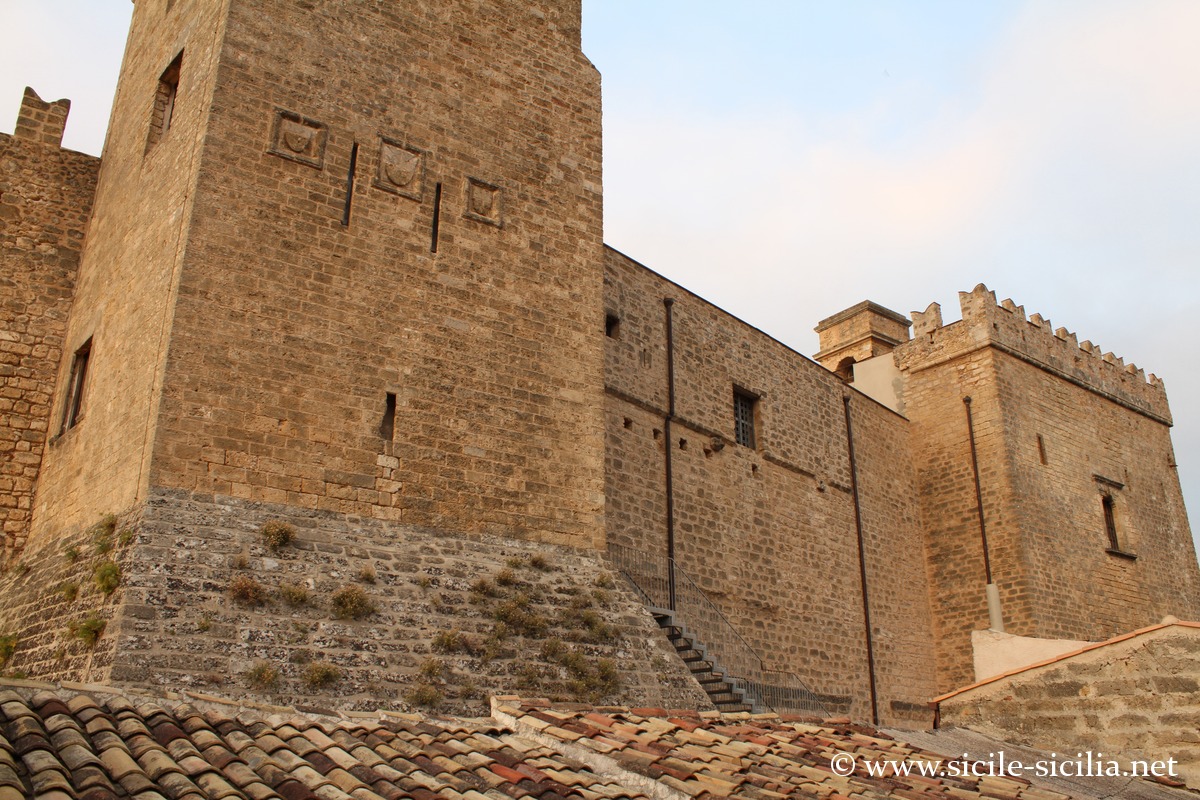
The Chiaramonte Castle of Carini was built around the beginning of the 12th century by the Norman knight Rodolphe Bonello, companion of Count Roger, on an ancient Arab construction.
Around the large courtyard, the residential buildings have two floors, combining Islamic and Norman traditions, intended both for representation and defense.
You can see a very beautiful wooden tabernacle from the 17th century in the Chapel with Corinthian columns, or a beautiful decorated coffered ceiling from the 15th century in the banquet hall on the second floor, which is accessed by an external staircase. The fireplace bears the coat of arms of the La Grua, a resident family that adapted the castle to a residence between the 15th and 17th centuries.
On the ground floor there is a room with a groin vault and an ancient exterior wall retaining medieval traces. A large hall is divided by two pointed arches (typical of Chiaramonte Gothic) with a central column.
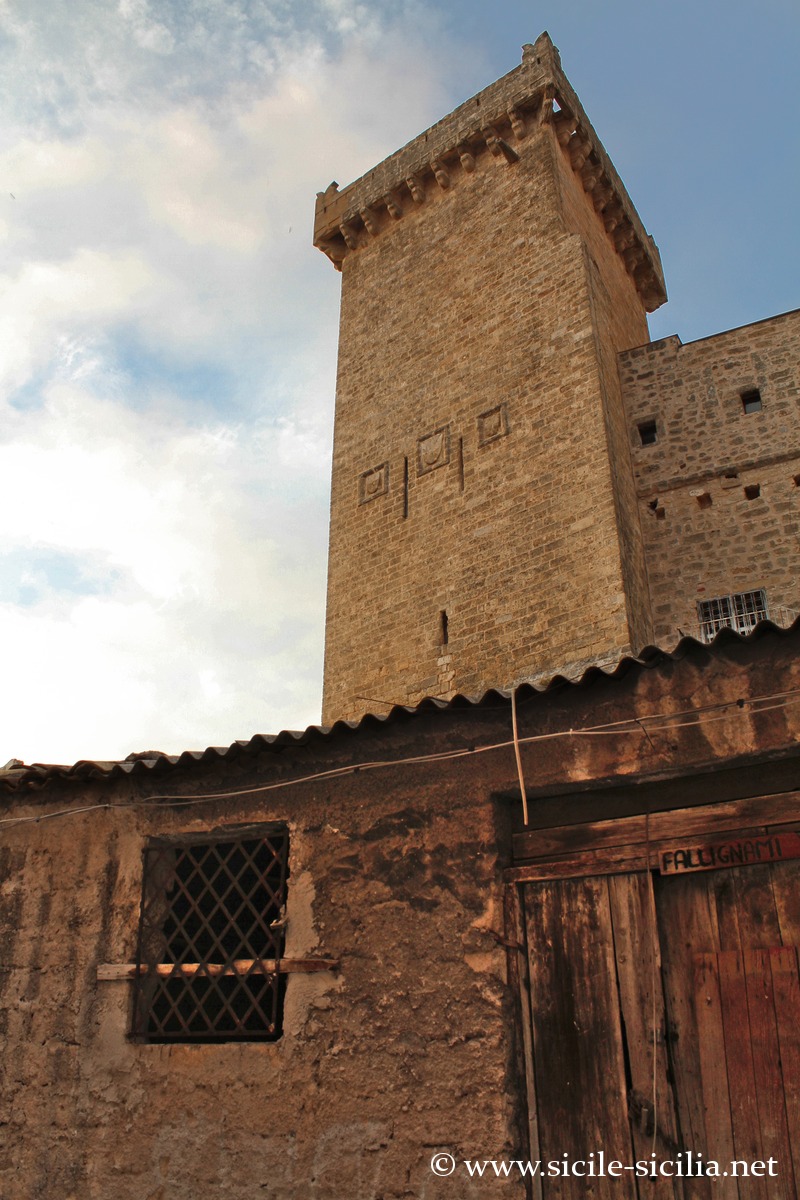
Carini Castle
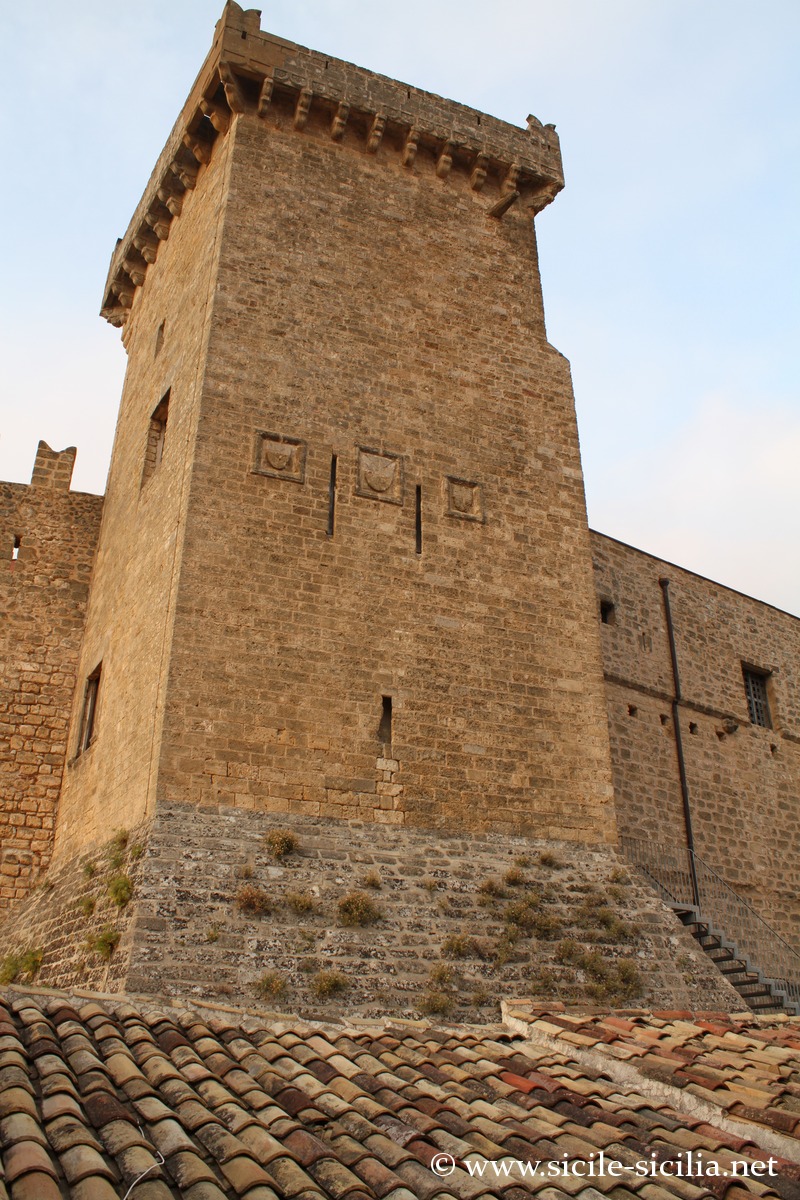
The castle tower, where the coat of arms of the Abbate can be seen, dominates the south of the town. A terrace has been arranged to contemplate the city. The Abbate were another influential family of Carini.
The history of the castle is linked to the murder of a “baroness” and its attendant legend.
The Baroness of Carini Laura Lanza, wife of Vincenzo La Grua-Talamanca, was caught in the act with her lover Ludovic Vernagallo by her father Cesare Lanza, Baron of Trabia, who killed them both on December 4, 1563.
The story was hushed up because of the power of the families who did not want to lose their prestige. Only the date of death was communicated. Cesare Lanza was acquitted and even became Count of Mussomeli the following year.
It was only in the 19th century that the story was reconstructed by the researcher Salvatore Salomone Marino, by studying popular tales, and a pioneer of Sicilian ethnography, combining oral sources and archival documents.
It is said that the ghost of Laura Lanza still wanders without peace in the fortress and that on the anniversary of the murder, the bloodstained mark of her hand reappears on the walls.
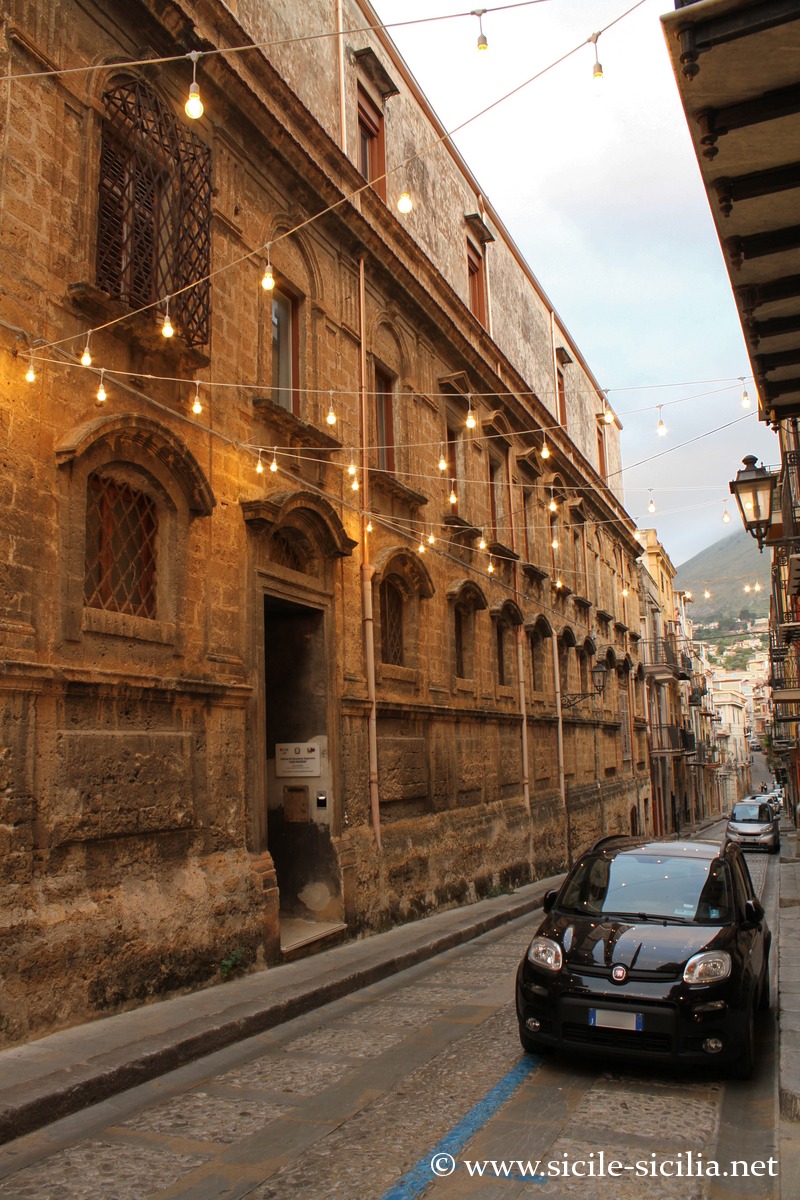
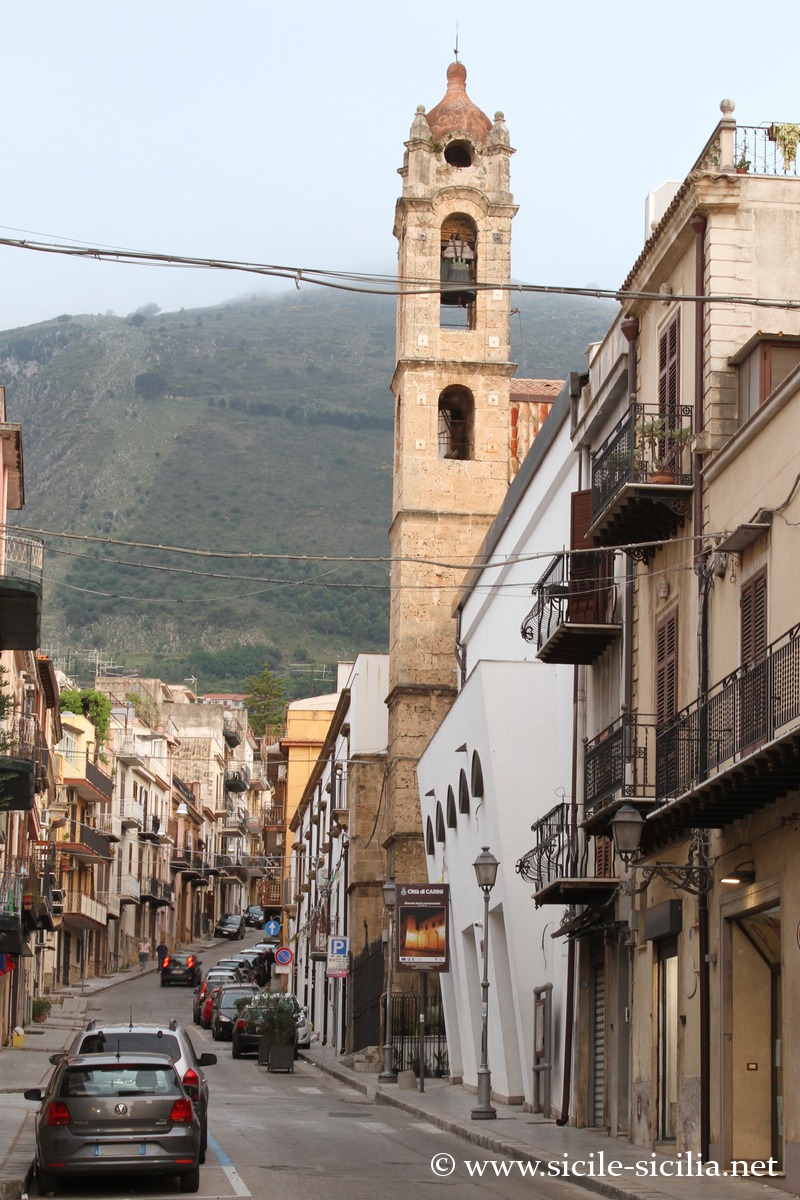
Historic center of Carini
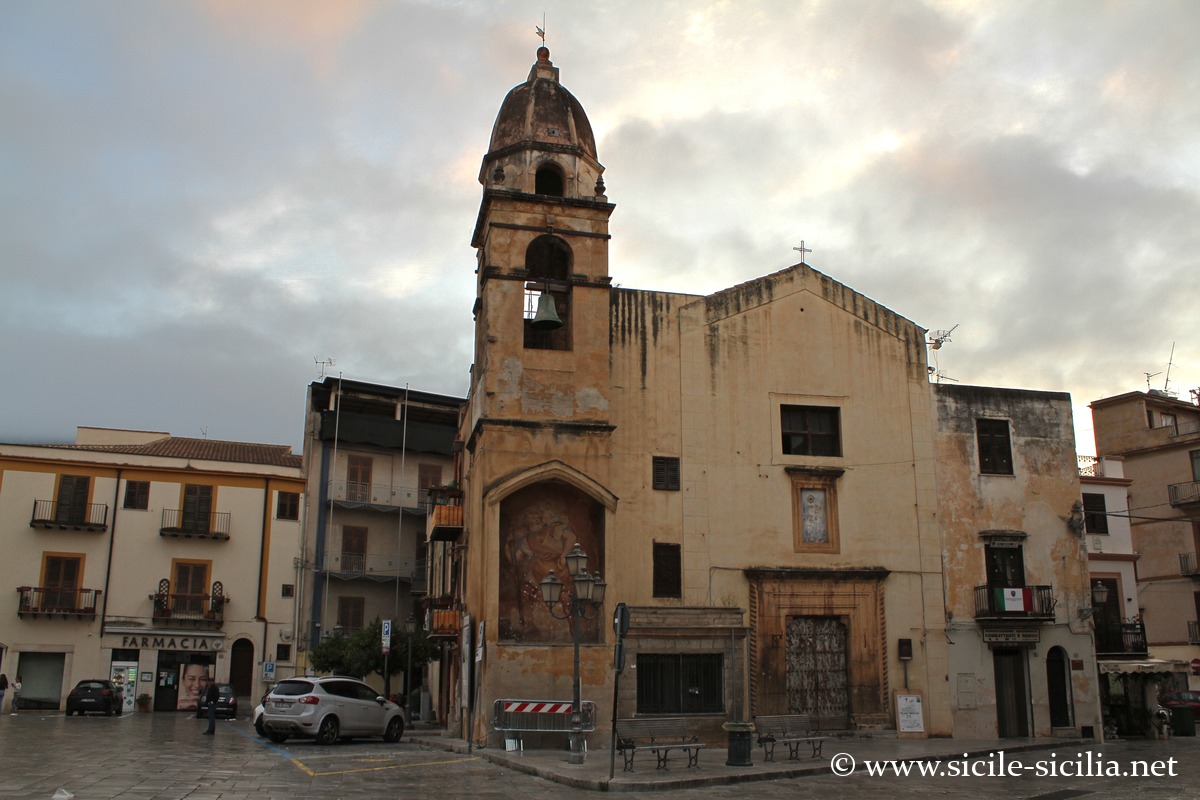
Outside the castle, you can discover in the village center the Cathedral of Santa Maria Assunta, with its 17th-century interior richly decorated with stuccoes and frescoes, and next to it the Oratory of the Company of the Most Holy Sacrament, typical of the decorative stucco art of the school of Giacomo Serpotta.
The Carmine Church and the remains of the Carmelite convent constitute important testimonies of religiosity and urban planning between the 16th and 18th centuries.
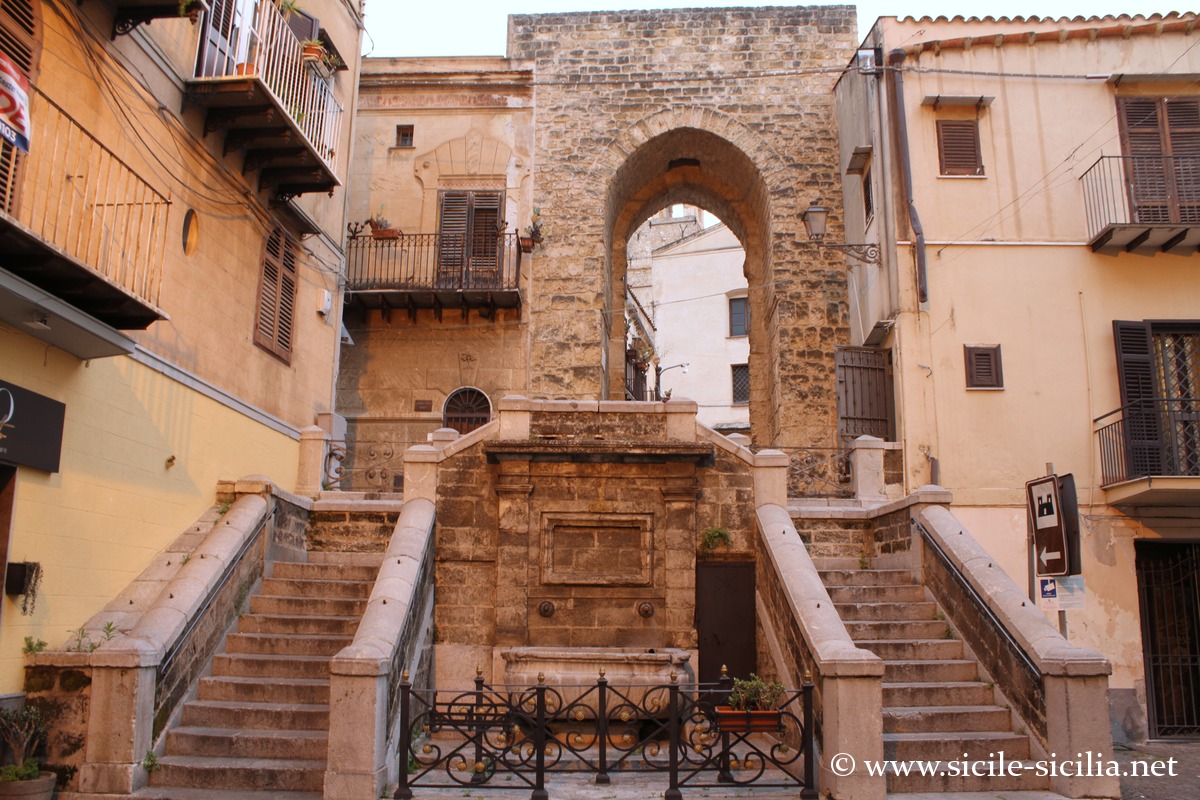
Fontana della Batia 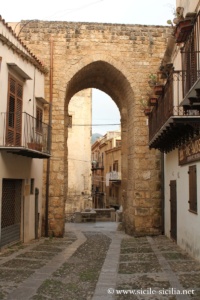
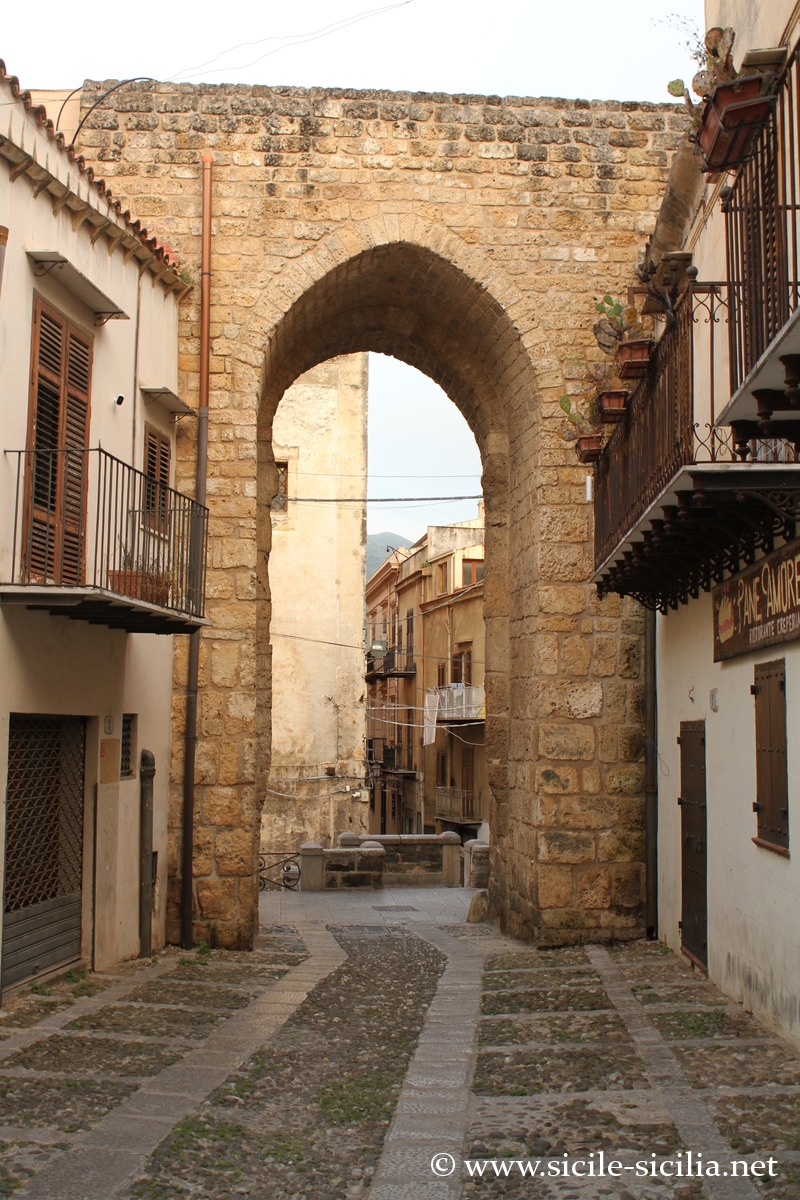
Porta Castello 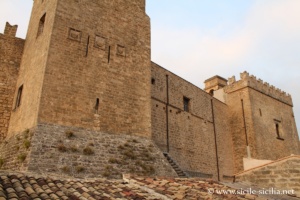

Carini Castle 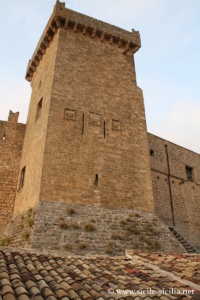

Carini Castle 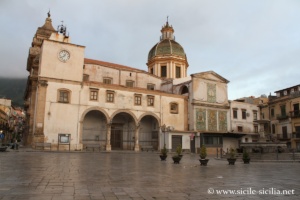
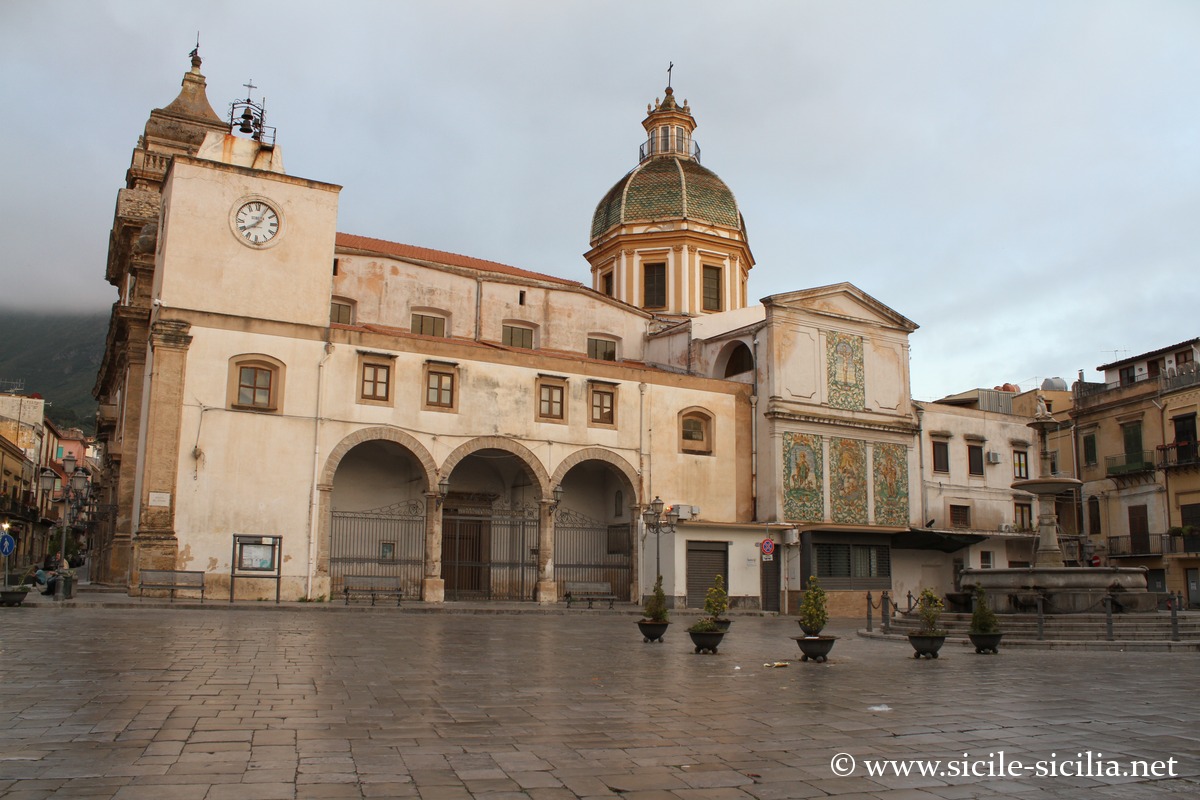
Chiesa Madre, Piazza Duomo 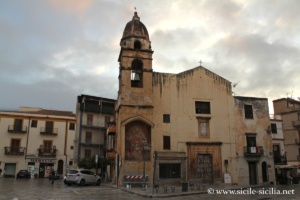
San Vito Church 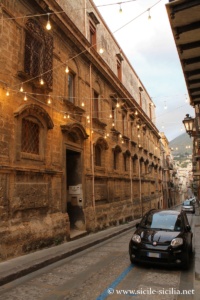
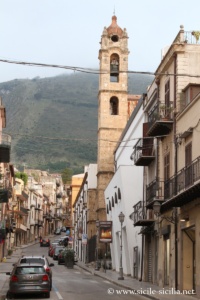
Chiesa del Carmine, Via Rosolino
Where Carini is located and map
If you see this after your page is loaded completely, leafletJS files are missing.
Catacombs of Villagrazia di Carini
After the castle, the most interesting site in Carini is the early Christian catacombs of the 4th-6th century AD of Villagrazia di Carini, covering more than 3500 square meters, which existed in Roman times.
This funerary complex is associated with a structured Christian community, probably linked to a villa or a late-antique agricultural center.
These are the largest catacombs in western Sicily, discovered by Salinas in 1899, not far from the San Nicola district, the ancient center of the Roman city of Hyccara, which was known for its agricultural wealth, for its important cereal production.
They were very damaged after their discovery, with the construction of a quarry, the route of road 113, air-raid shelters, etc. A rehabilitation and excavations began in 2000.
These catacombs are characterized by monumental galleries carved into the rock by man, niches and hypogea intended for noble families. There are also the oldest and most complete early Christian frescoes in Sicily. Scenes illustrate the old and new testament (including the sacrifice of Isaac, Moses, the Adoration of the Magi) or daily life and portraits of the deceased. In particular, the most striking paintings decorate the tombs of children, with young girls praying under a rain of roses, a child with a foal, or children accompanied by their family in gardens representing Paradise.
The engraved inscriptions are in both Greek and Latin.
Where the catacombs of Villagrazia di Carini are located
The beaches and surroundings of Carini
Torre Pozzillo
In summer the various beaches around Carini attract many tourists, the population of the town being doubled.
The Bioparco di Sicilia is one of the largest zoological parks in southern Italy, hosting many species of animals and presenting a prehistoric area with life-size reproductions of dinosaurs.
Some natural sites are not lacking in interest, such as the Carburangeli caves OR the Puntali caves where traces of the Paleolithic and Bronze Age were found, and the Baglio dei Pescatori, an ancient tuna fishing trap, on a rocky part of the coast.
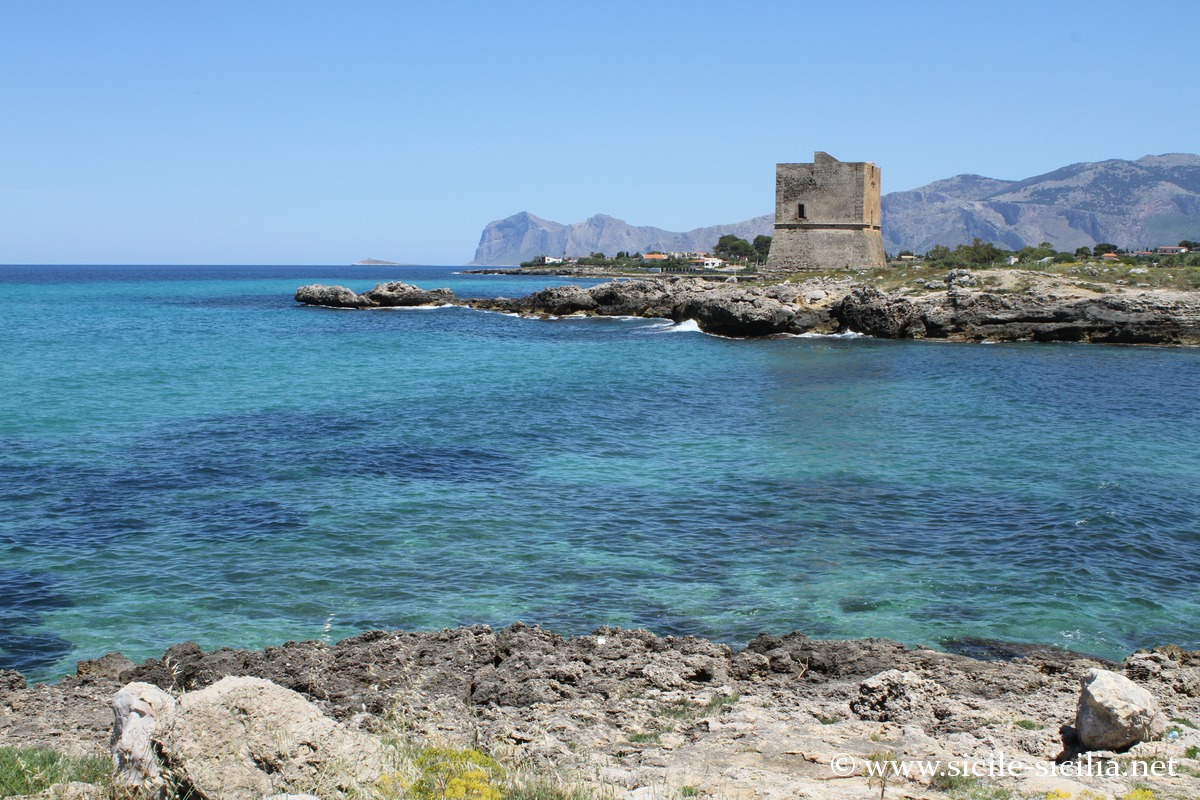
Several watchtowers also dot the territory, built mainly between the 16th and 17th centuries, were part of a vast defensive system against corsair incursions.
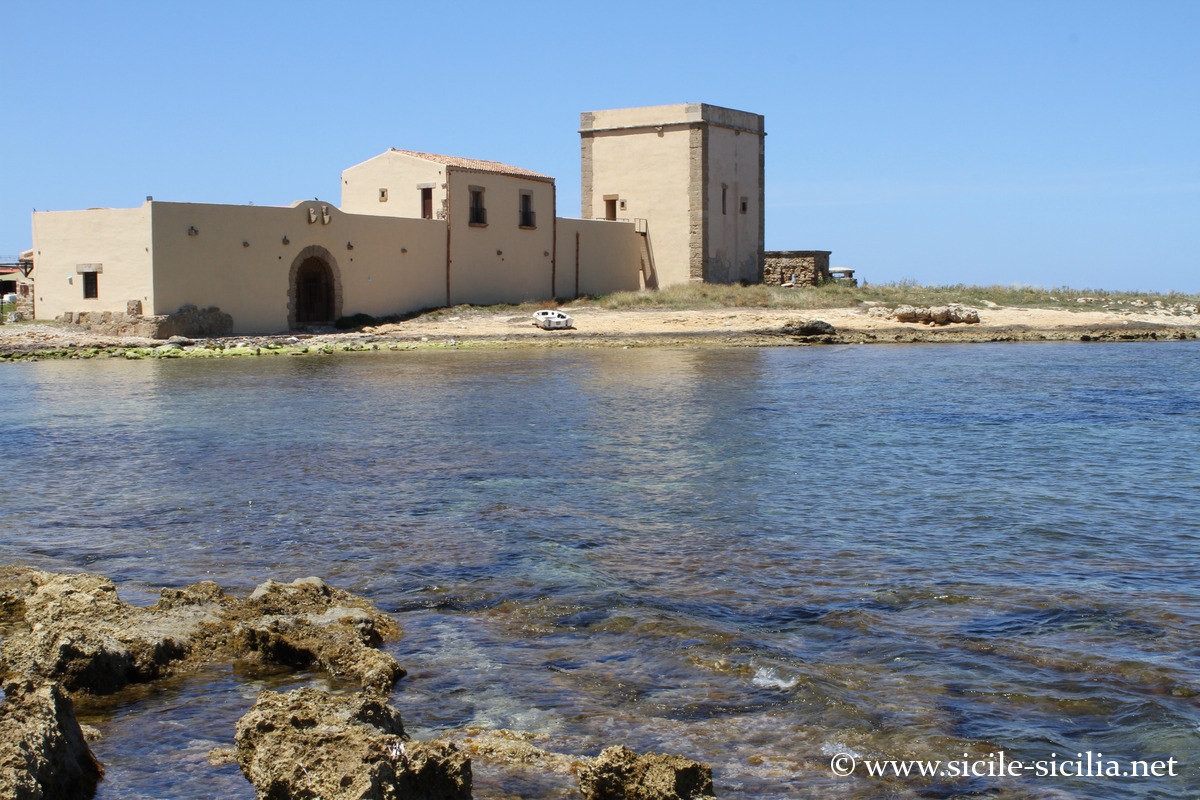
Tonnara dell’Orsa
To the east, Isola delle Femmine, a small seaside village that has become one of the most appreciated seaside resorts of the Palermitans, with the islet offshore included in the Capo Gallo nature reserve.
Nearby the Capaci beach is lined with bars enlivening nightlife and attracting young people.
The municipalities of Cinisi and Terrasini further west, close to the Falcone and Borsellino international airport, are villages between sea and mountain, with beautiful beaches, nature reserves such as at Capo Rama, ancient watchtowers (Torre Alba, Torre di Capo Rama, etc), a small fishing port, gastronomy and still living traditions, the Pecoraro, Palmeto and Montagna Longa mountains, and in Terrasini a regional museum with its permanent exhibition devoted to local traditions such as the Sicilian cart.
Information
Visits: Bioparco and surroundings
External sites
- Carini: en.wikipedia.org
- Carini Castle: it.wikipedia.org
- Villagrazia Catacombs: www.palermoviva.it