

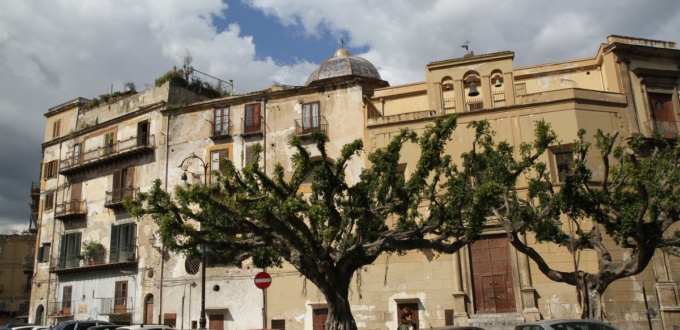
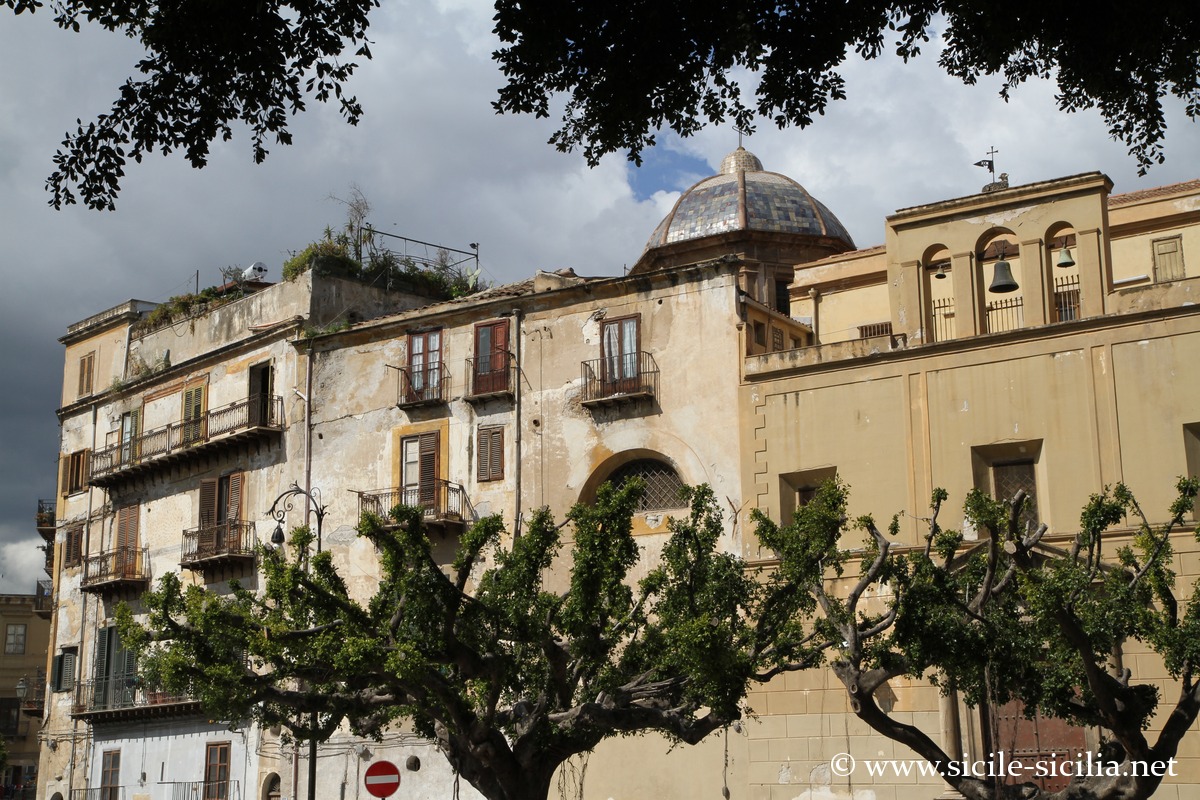
The Piazza Marina is a square in the historic centre of Palermo located in the Kalsa district, on the western edge of the ancient Islamic port district of the Kalsa, between the historic seafront and the city’s medieval aristocratic fabric.
In the centre of the square is the small public garden of the Villa Garibaldi designed by the architect Giovan Battista Filippo Basile in 1863.
Historical overview
Until the Middle Ages, the square was a marsh connected to the port of Cala, part of a coastal lagoon used as a natural basin.
In the 14th century, under Angevin rule, land reclamation works were carried out, allowing a gradual urbanisation of the area.
Between the 15th and the end of the 18th century, the square was the main site of public executions in the city, notably by the Holy Inquisition, where heretics held in the nearby Steri prison were condemned to be burned at the stake. The Tribunal of the Holy Office was abolished in 1782 in Sicily.
Buildings on the Piazza Marina
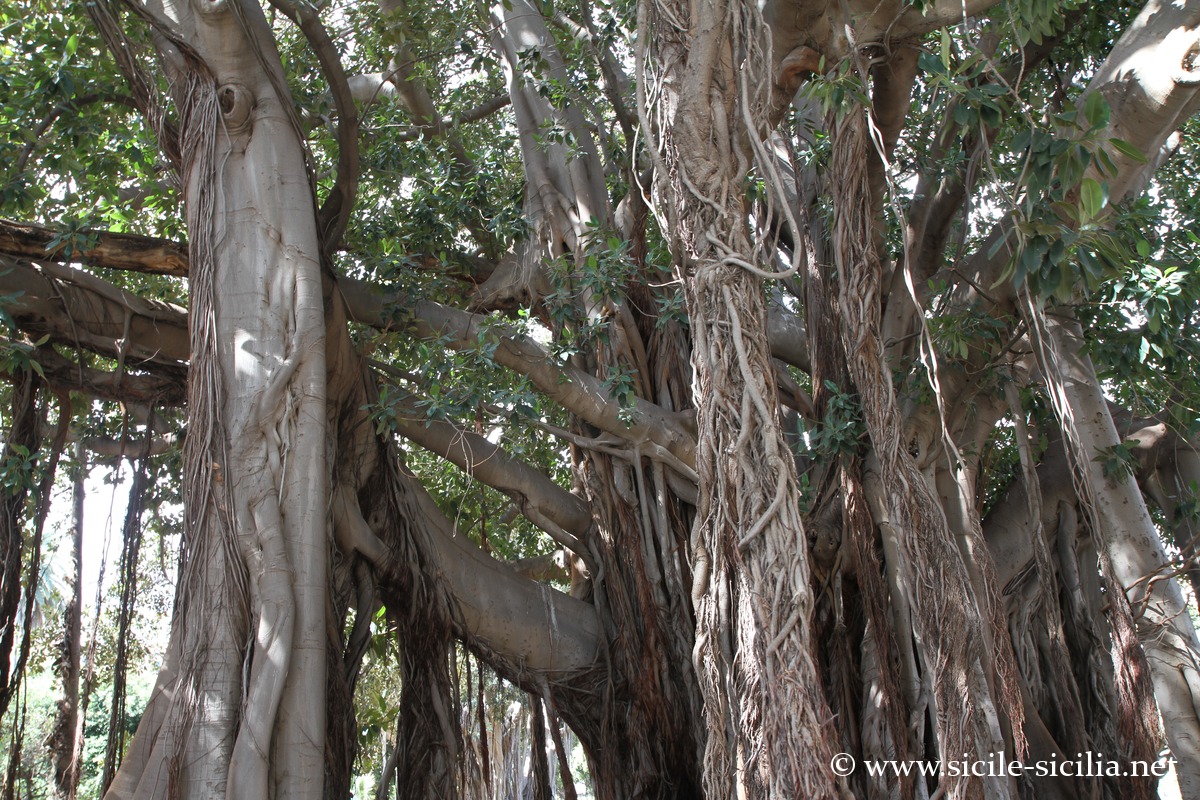
Around the charming Piazza Marina and the Garibaldi Garden, which preserves a remarkable Ficus macrophylla planted around 1845 – one of the oldest and most imposing specimens of its kind in Europe – stand beautiful Palermitan buildings:
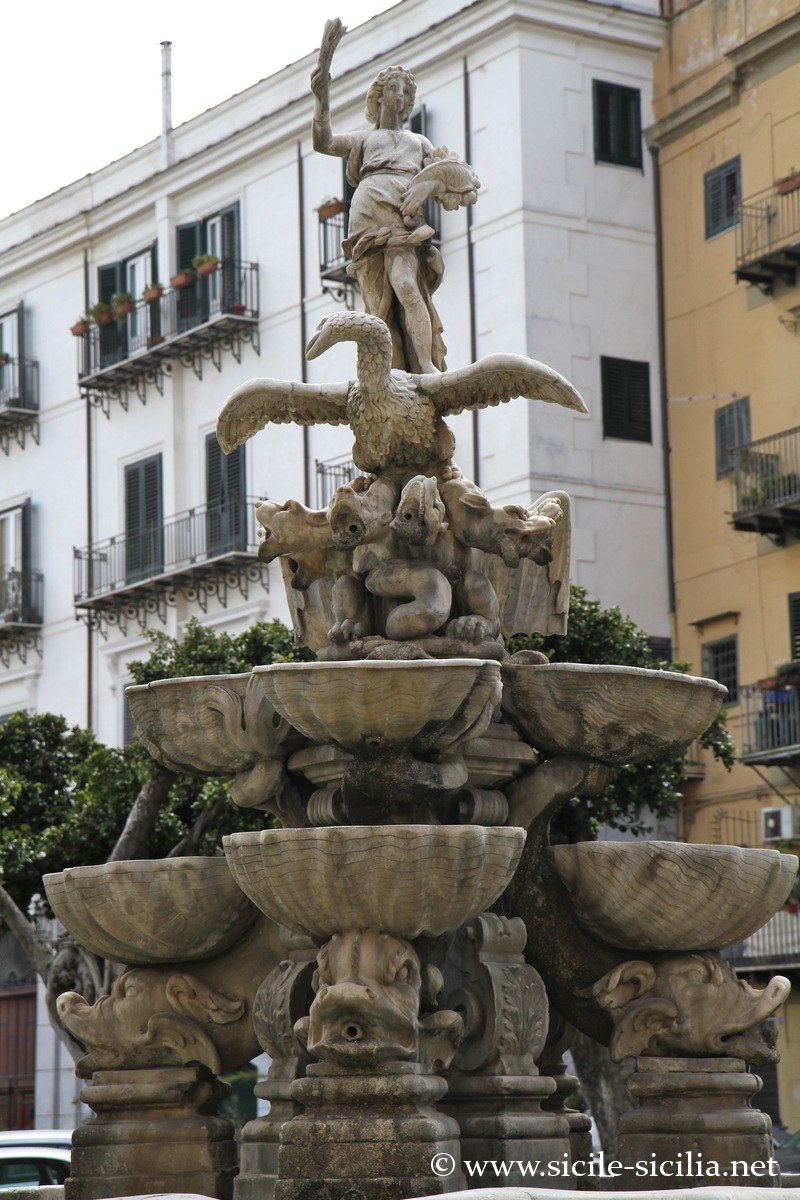
Garraffo Fountain
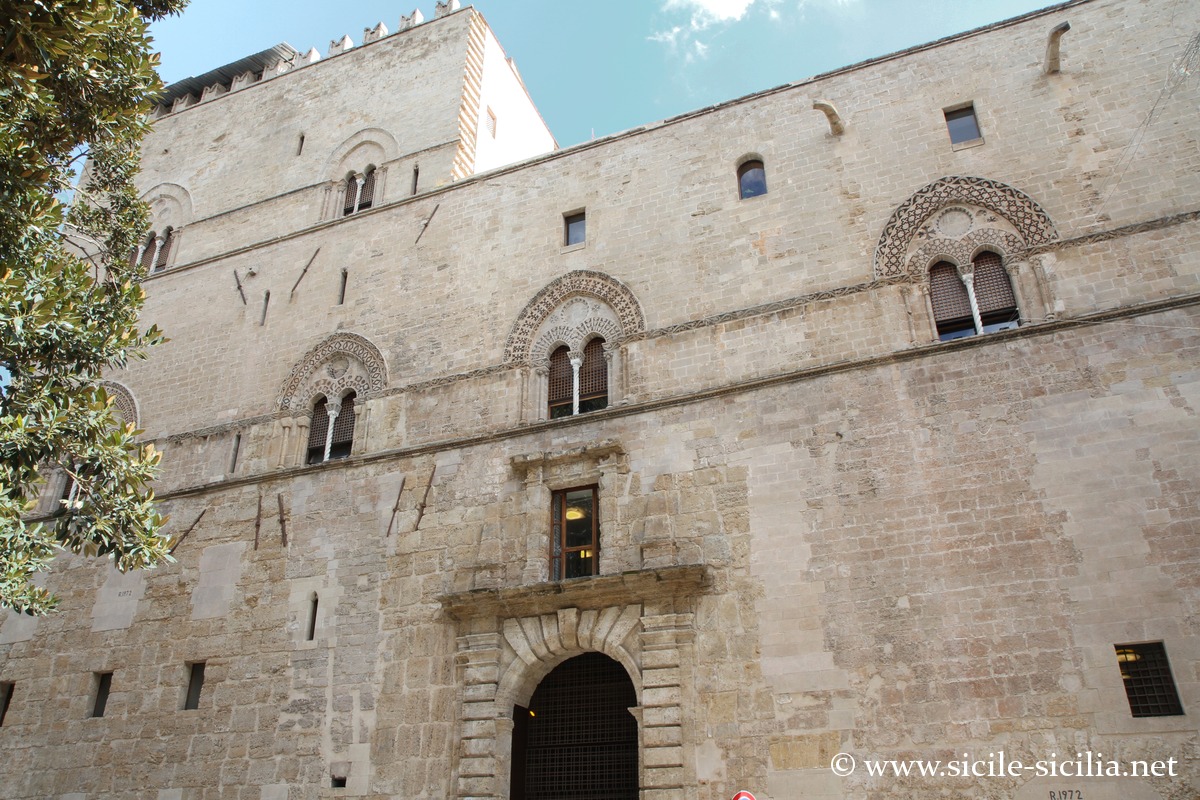
- The Chiaramonte-Steri Palace: built at the end of the 14th century for the powerful Chiaramonte family, it is one of the most important examples of Catalan Gothic in Sicily, which housed the seat of the Inquisition until 1782 and still preserves prisoners’ graffiti.
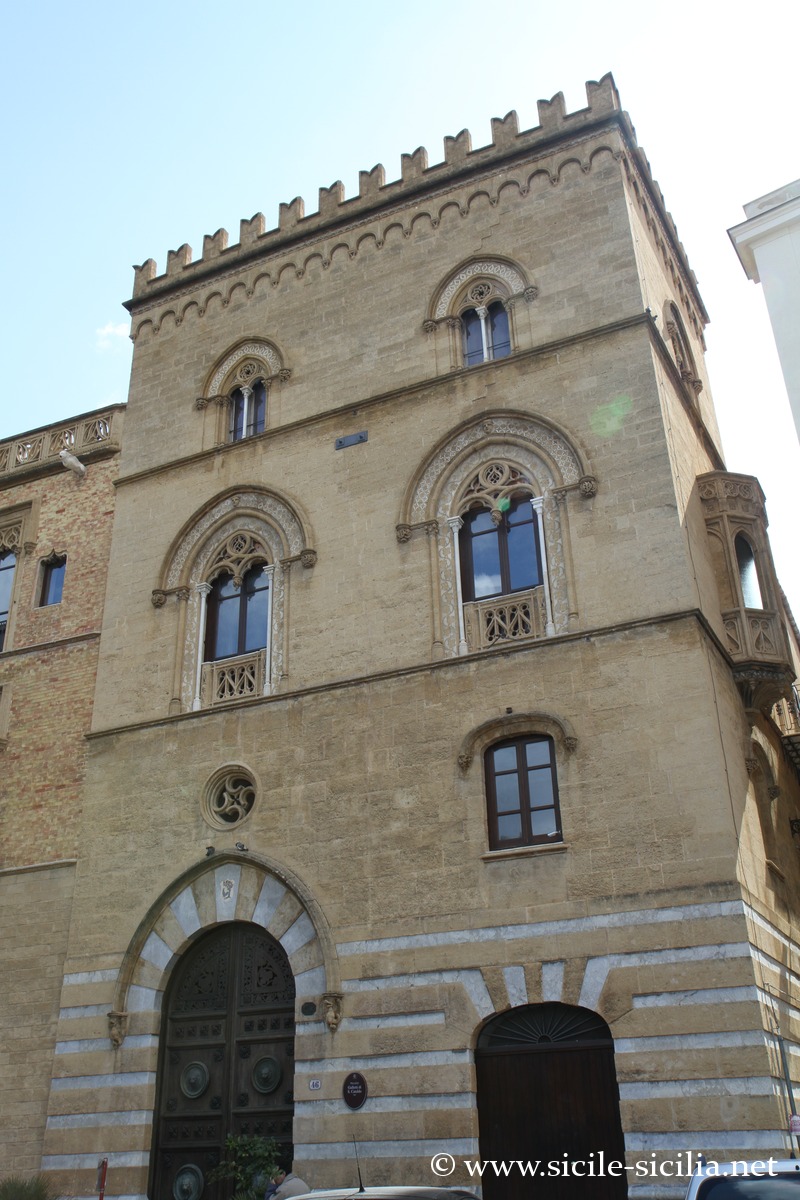
- The Galletti Palace: an aristocratic palace of the 17th-18th centuries, remodelled several times, representative of Palermitan noble civil architecture.
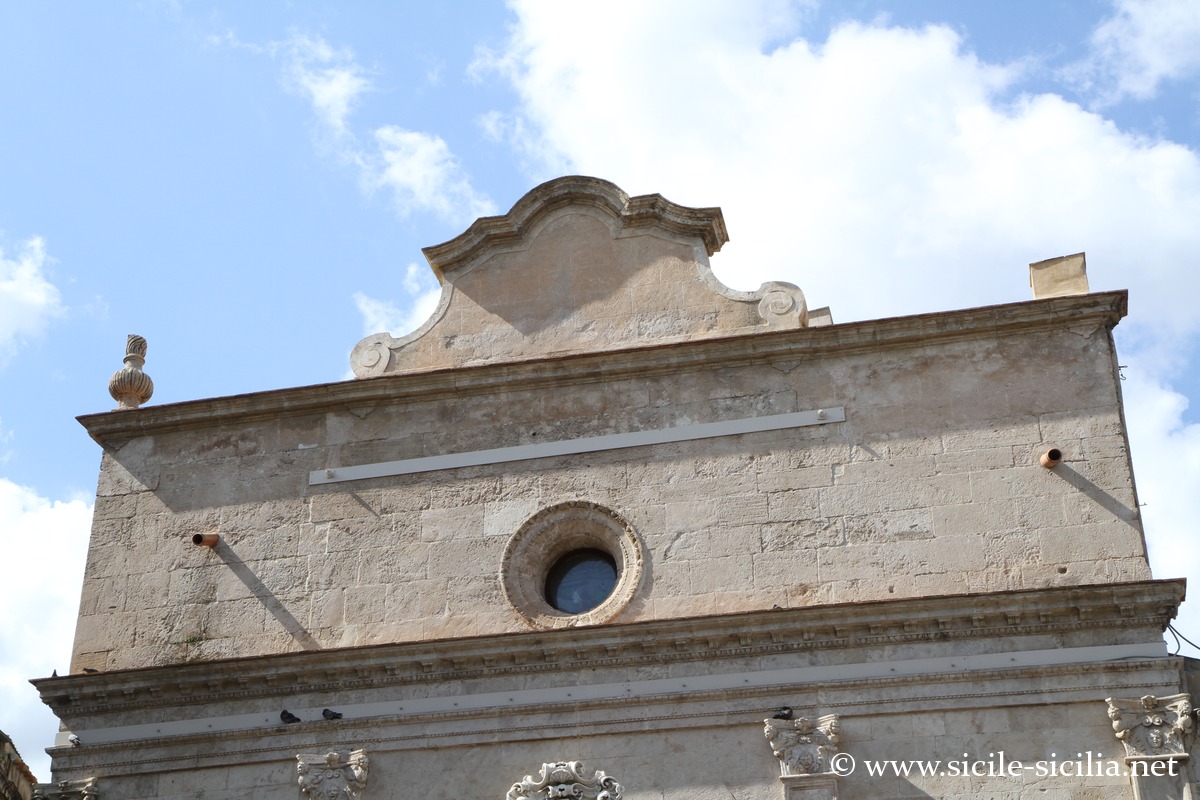
- Church of Santa Maria dei Miracoli: a 17th-century Baroque building linked to popular Marian devotion, remodelled after the destruction of the Second World War.
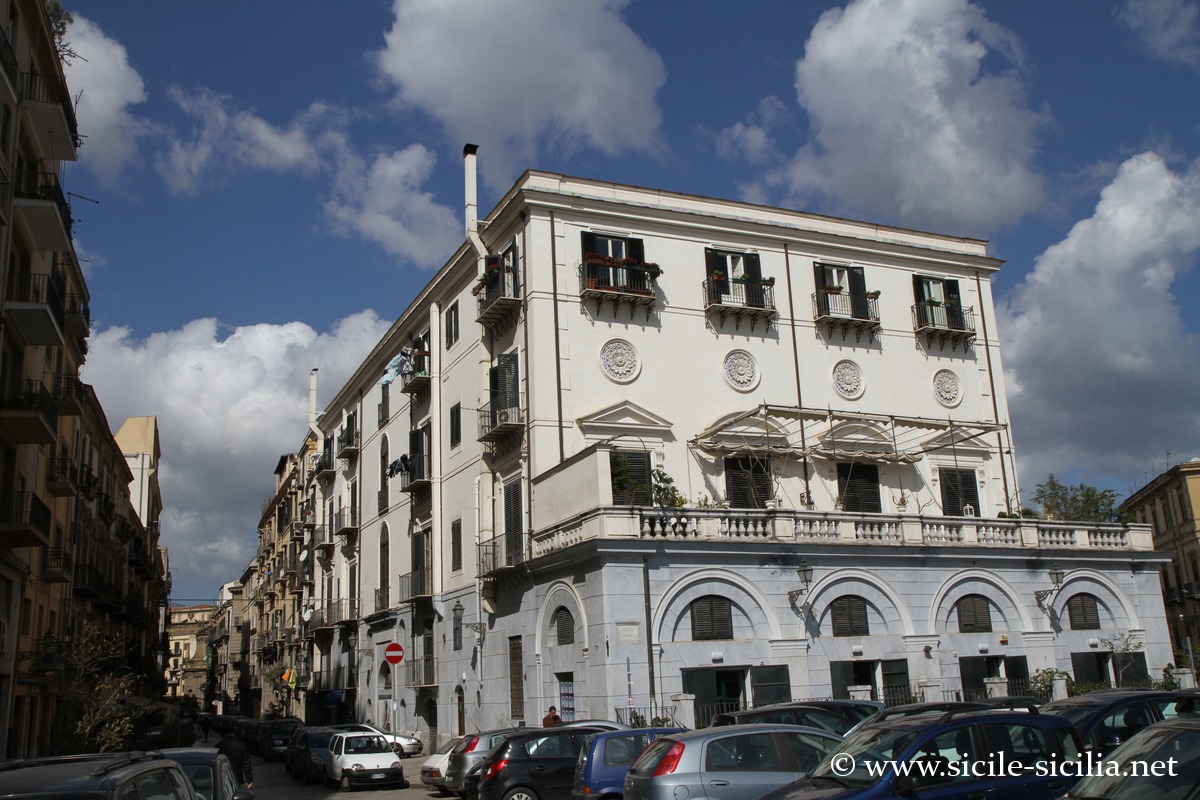
- De Gregorio Palace and Forcella De Seta: noble residences lined up along the southern side of the square, testifying to the aristocratic residential transformation of the area in the modern era.
- In one corner is also the Garraffo Fountain. A Mannerist work of the 16th century attributed to Giuseppe Spatafora, it was moved to the square in the 19th century and represents a genius holding a cornucopia, a symbol of urban prosperity.
Where the Piazza Marina in Palermo is located
If you see this after your page is loaded completely, leafletJS files are missing.
Photo gallery
Villa Garibaldi, Piazza Marina 
Ficus of the Garibaldi Garden 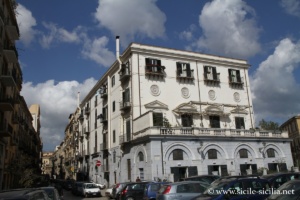

Piazza Marina 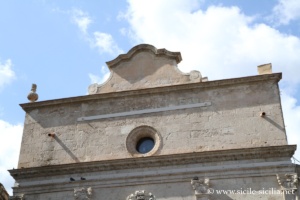
Santa Maria dei Miracoli 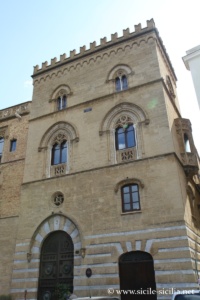

Galletti Palace 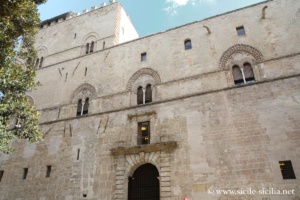
Chiaramonte Steri Palace
Information
Visit ideas
External sites
- Tourist sites: www.palermoviva.it, turismo.comune.palermo.it