

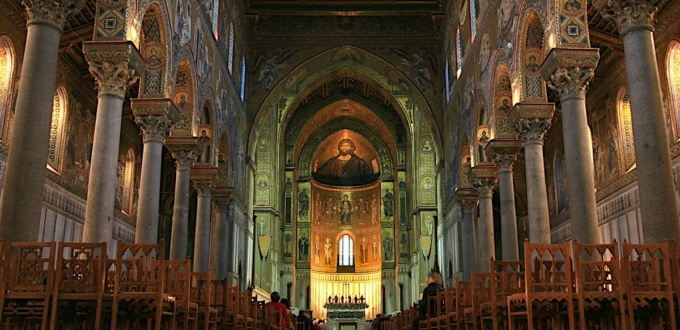
The Cathedral of Monreale, or Santa Maria la Nuova, is a cathedral and a minor papal basilica dedicated to the Virgin Mary, located in the centre of Monreale, on the heights less than 10 km south-west of Palermo.
Built in the 12th century, this exceptional monument is notable in particular for its cloister and its vast ensemble of mosaics on a gold background of Byzantine inspiration. Since 2015, it has been inscribed on the Unesco World Heritage List as part of the site “Arab-Norman Palermo and the Cathedrals of Cefalù and Monreale”, which brings together nine great Arab-Norman achievements.
General presentation and history
The legend of the carob tree of Monreale
According to an old tradition, King William II fell asleep under a carob tree during a hunt in the woods of Monreale. The Virgin then appeared to him in a dream and revealed to him the existence of a treasure hidden beneath the tree, while asking him to raise in that place a church consecrated to her. On waking, the sovereign had the ground dug at the indicated spot and the treasure was indeed discovered. It is said to have served to finance the construction of a great church dedicated to Mary: the future Cathedral of Monreale.
This story illustrates the desire to present the foundation of the cathedral as a work placed under the protection of the Virgin. It highlights the very strong link between the cathedral, Norman power and the Marian cult.
This tradition is notably reported in the account of Francesco Testa, archbishop of Monreale in the 18th century.
This cathedral is one of the major buildings of Arab-Norman architecture and art. Its construction was undertaken from 1172 at the initiative of King William II, grandson of Roger II, on the wooded heights overlooking Palermo, in a sector frequented by the Norman court for hunting. The site was not, however, entirely devoid of religious history. Medieval documents designate the place under the name of Santa Ciriaca or Aghia Kiriaki, in reference to an ancient church.
The monument bears witness to the meeting of Western, Islamic and Byzantine architectural and artistic traditions that then characterised the Norman kingdom. It stood at the heart of a vast complex comprising the royal palace, to the north, and the Benedictine monastery with its cloister, to the south, built at the same time.
Wishing to erect an ensemble capable of rivaling the Palatine Chapel founded by his grandfather Roger II, William II devoted considerable resources to the worksite. He engaged the best craftsmen trained in different Mediterranean artistic traditions, all contributing to the singular character of the monument.
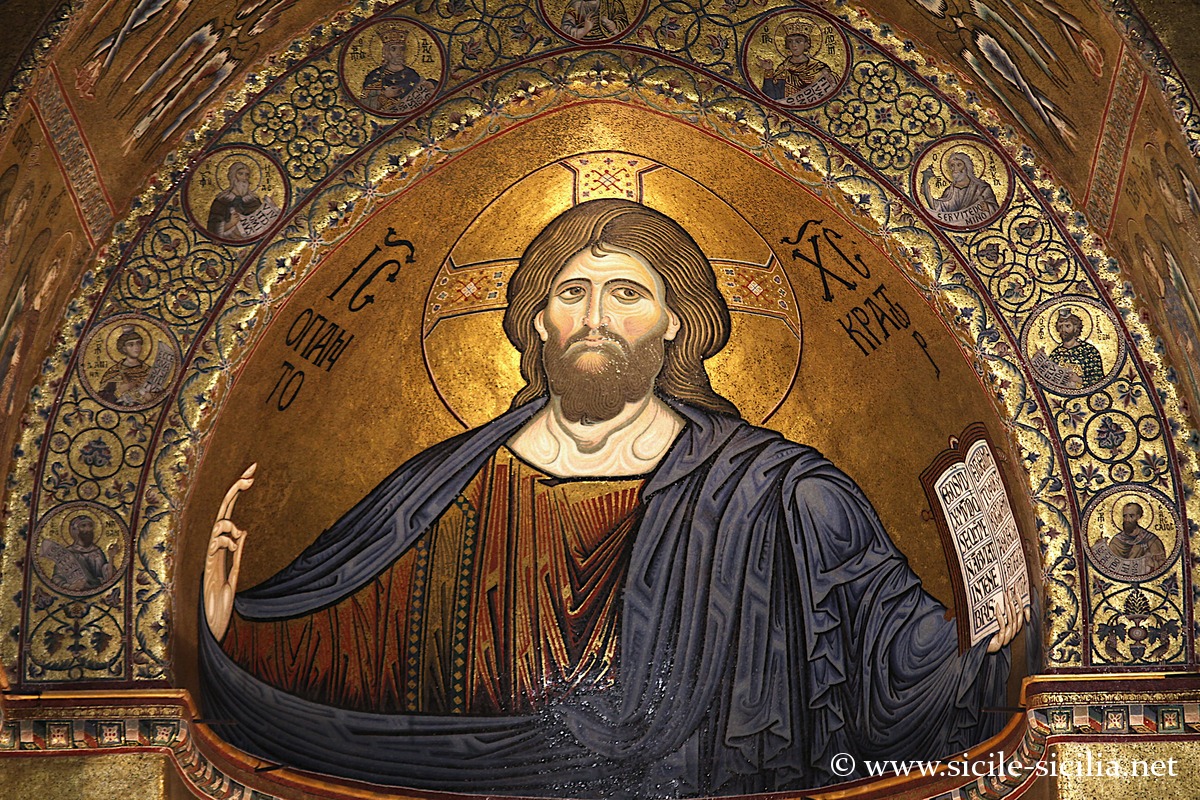
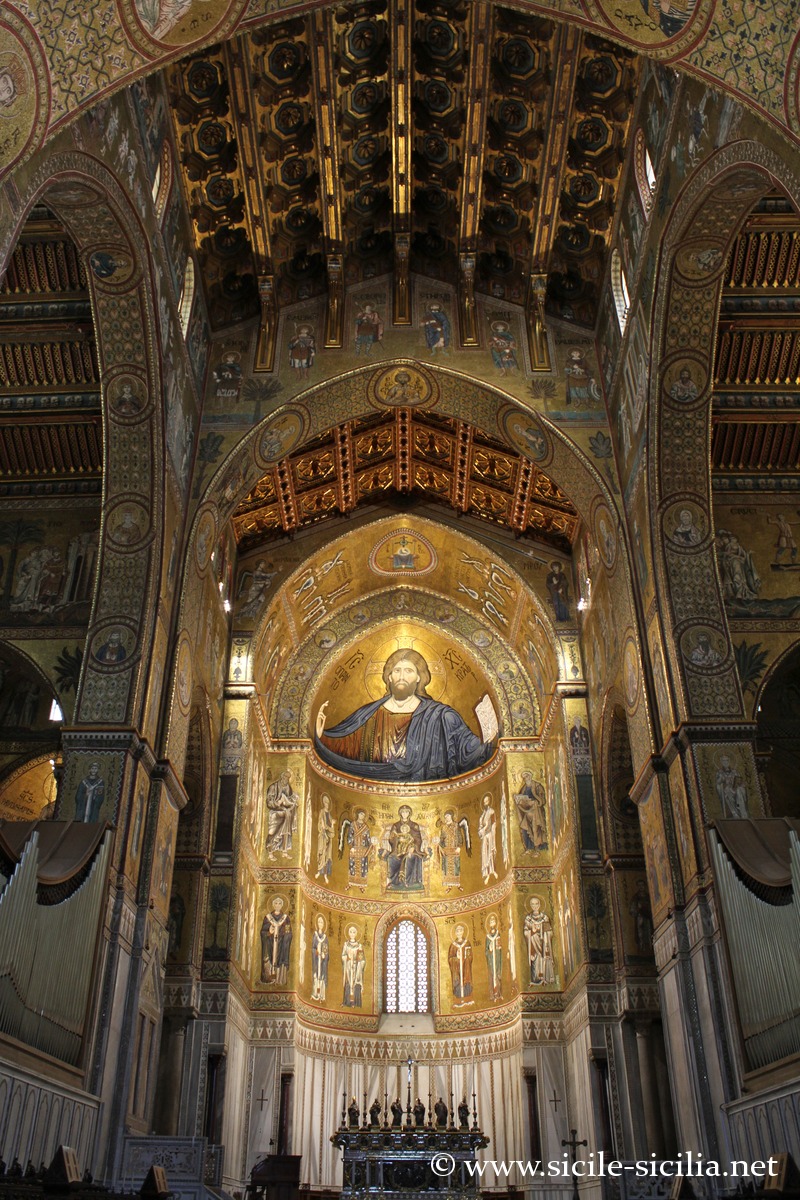
Christ Pantocrator, mosaic of the apse
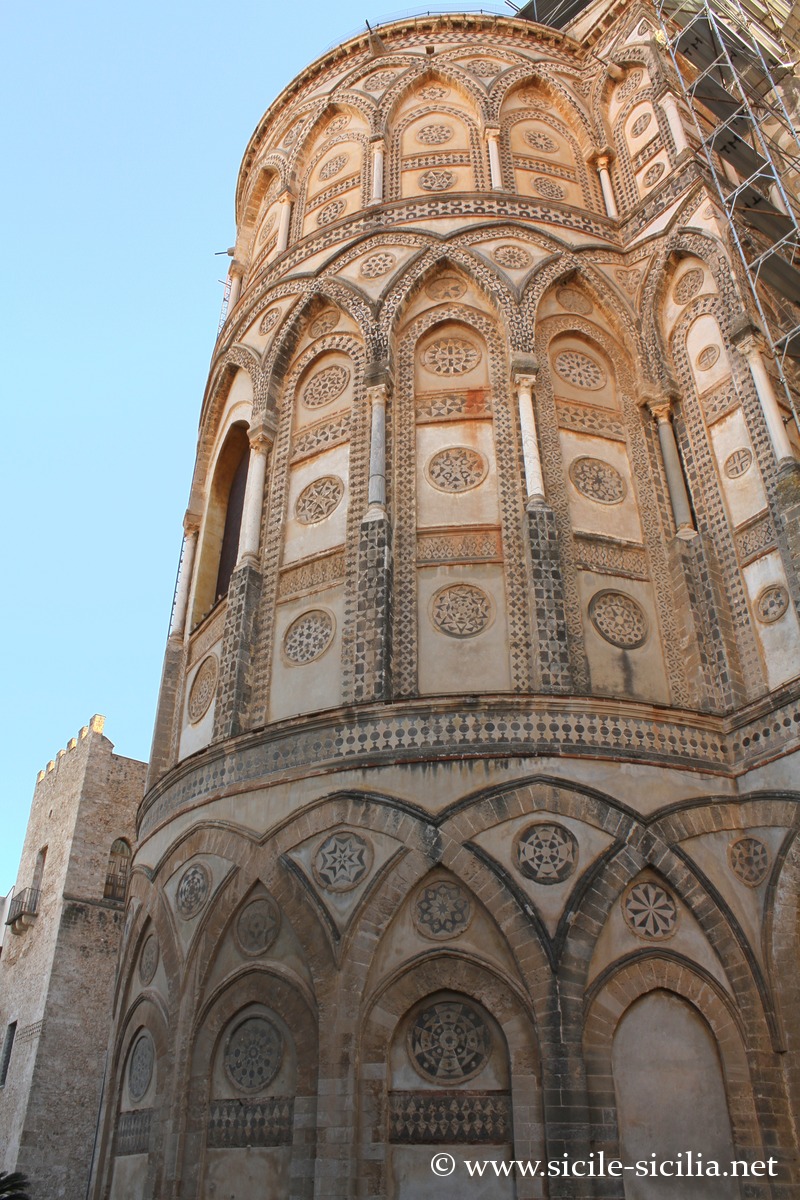
Thus, the Norman Romanesque style is found in particular in the massive structure of the building and its two towers. The Islamic influence appears in the interlocking arcatures and the polychrome inlays of the exterior walls, particularly remarkable on the apses, while the Byzantine tradition dominates in the mosaics covering the interior walls.
Let us continue with a general presentation of the main architectural and artistic elements of the building.
→ Read also the page devoted to the complete visit of the Cathedral of Monreale and the Benedictine cloister of Monreale.
Overview of the cathedral
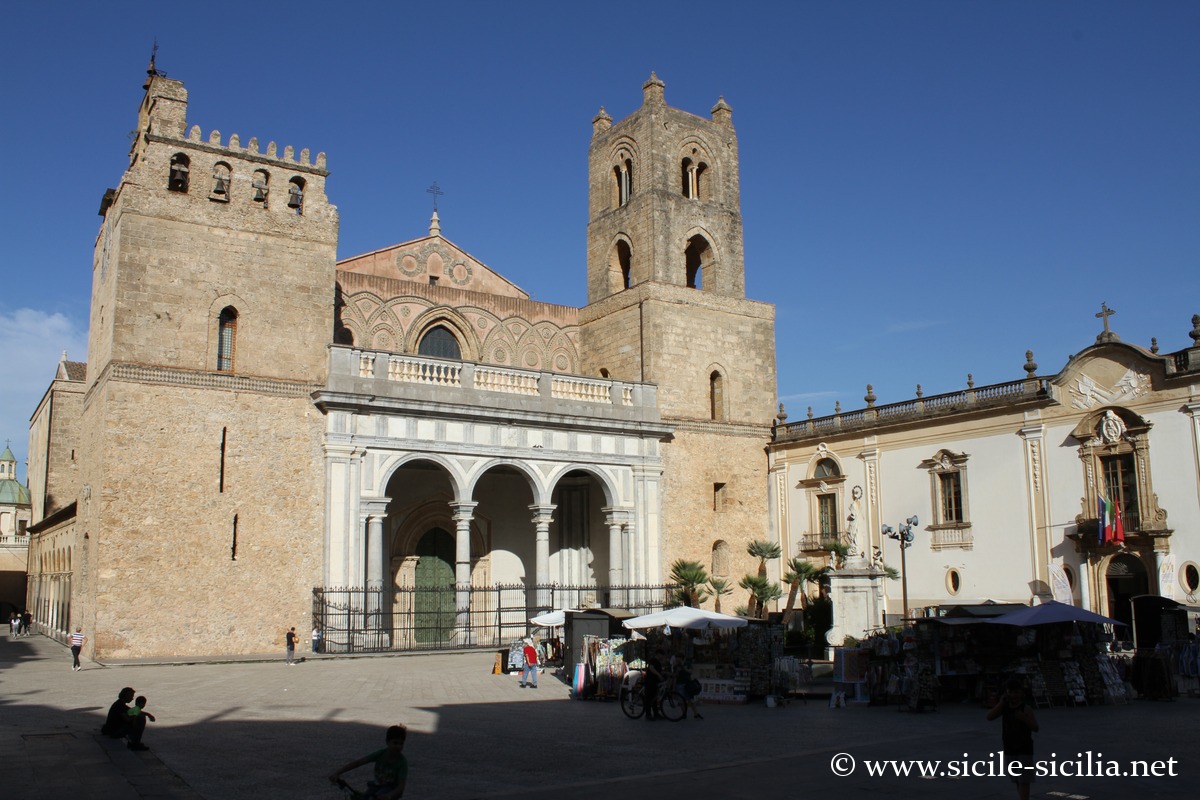
Exterior of the cathedral
The Cathedral of Monreale measures approximately 102 metres long by 40 metres wide.
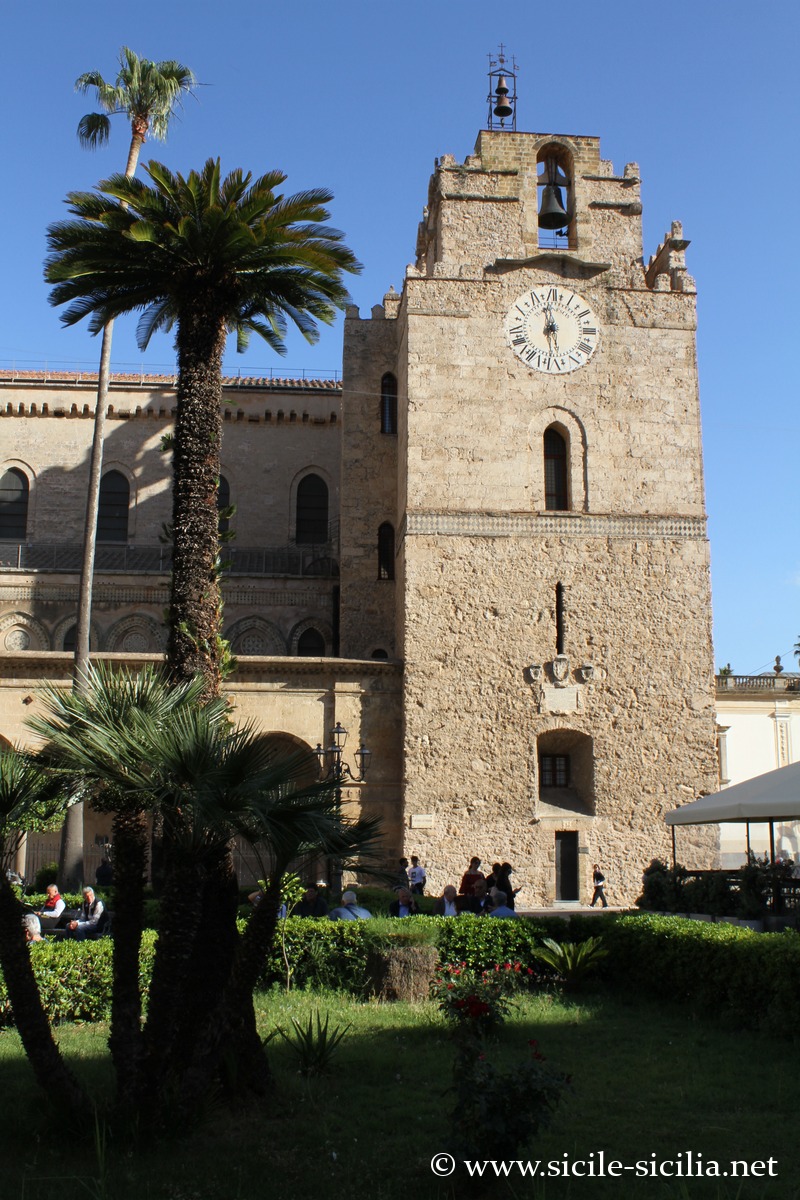
Its façade is flanked by two powerful Norman towers, one of which remained unfinished, while the upper part of the other was damaged by lightning in the 16th century.
The apses and the chevet preserve their remarkable medieval decoration, composed of interlocking arcatures, geometric motifs and inlays of coloured stones testifying to the influence of Islamic art.
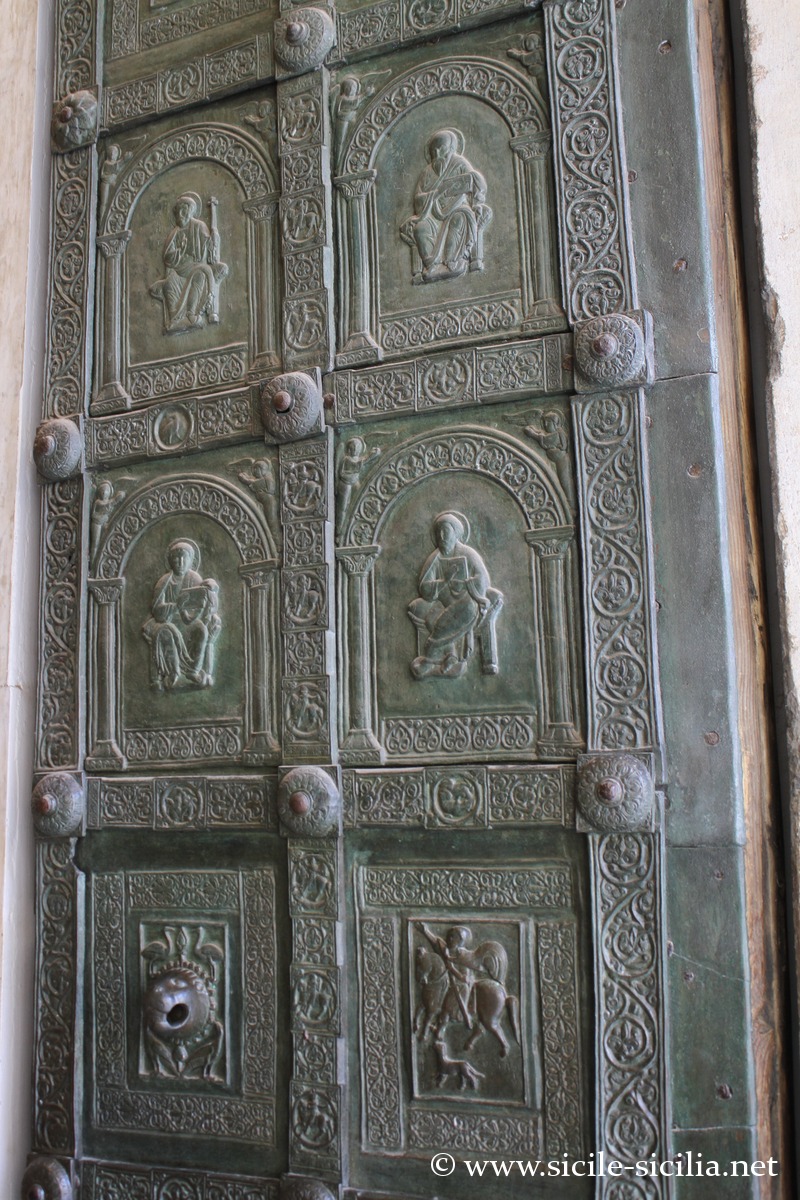
The western portico, added in the 18th century, precedes the great bronze door made by Bonanno Pisano and put in place in 1185, whose panels illustrate scenes from the Old and New Testaments. On the north side, a second bronze door was made by Barisano da Trani between 1184 and 1190.
The interior consists of three naves separated by antique reused columns, mainly of granite, surmounted by Corinthian or figured capitals supporting ogival arcades.
The upper parts of the walls are almost entirely covered with mosaics of Byzantine inspiration, executed for the most part at the end of the 12th century, while the lower parts are clad in polychrome marbles.
In the main apse, the immense figure of the Christ Pantocrator dominates the Virgin and Child, the archangels, the apostles and the saints.
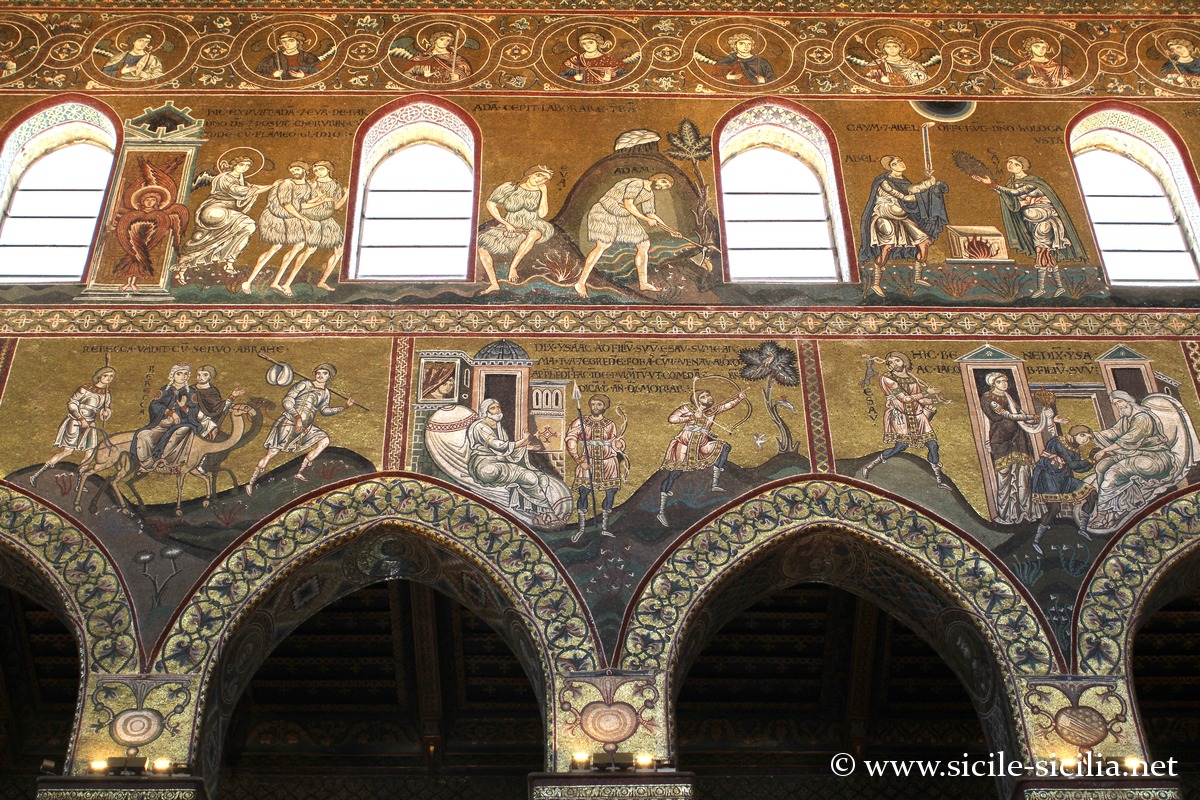
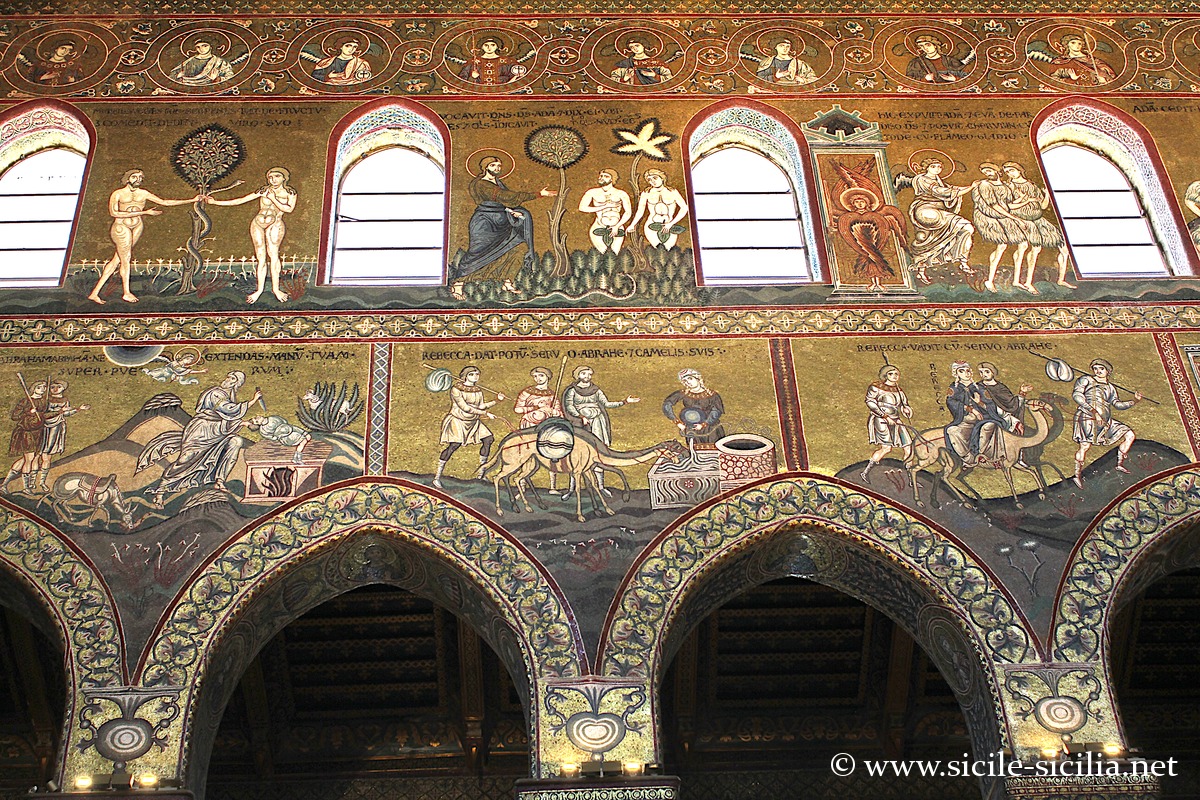
Episodes of the Old Testament, mosaics of the nave
The mosaics of the nave mainly recount episodes of the Old Testament, from the Creation of the world, while those of the choir, the transept and the side aisles illustrate the life of Christ and the Apostles.
The south transept houses the tombs of the kings William I and William II. In the northern part are notably the burials of Margaret of Navarre, mother of William II, and of two of her sons. A funerary monument also recalls the depositing at Monreale of part of the viscera of Saint Louis after his death at Tunis in 1270.
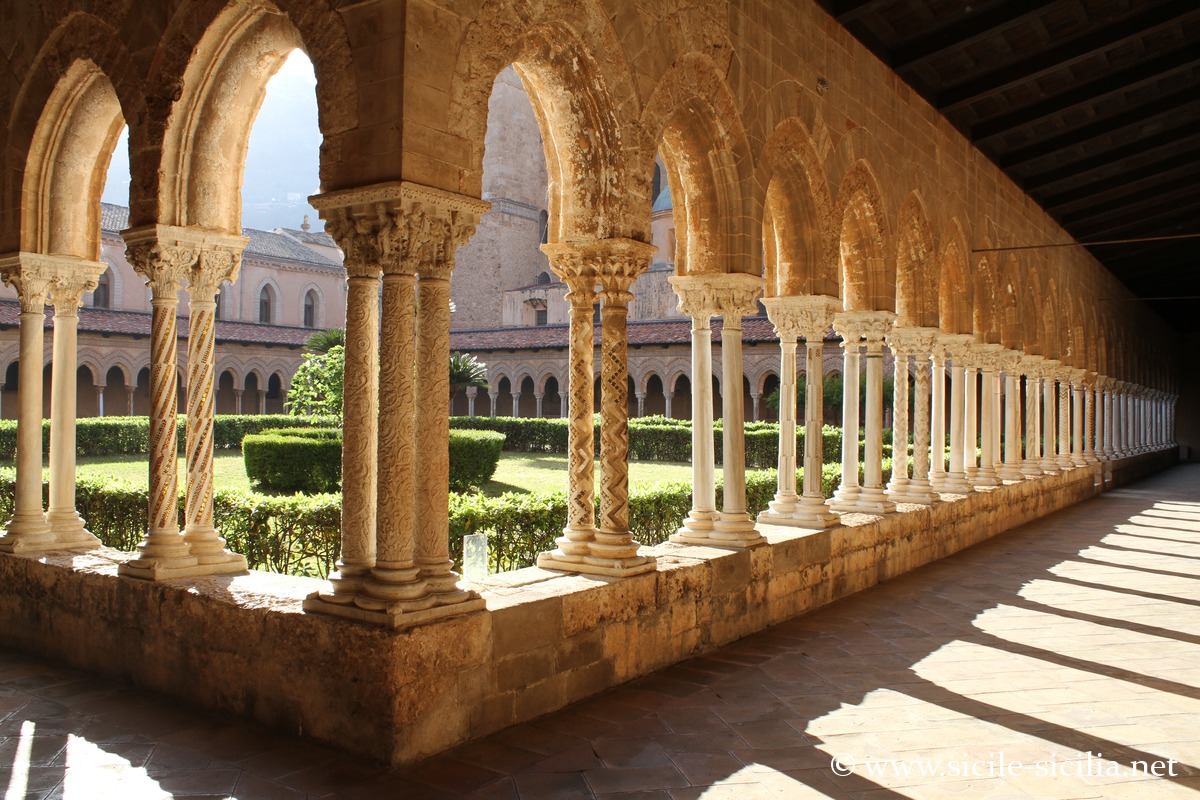
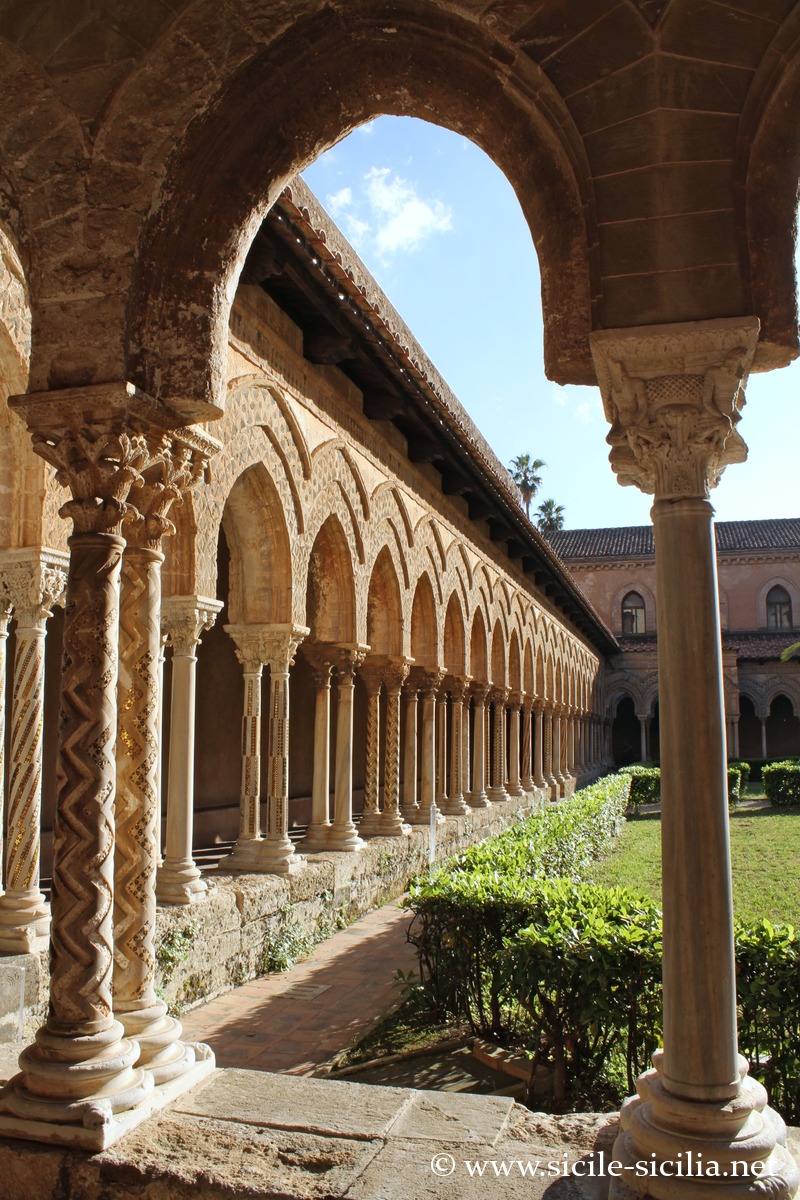
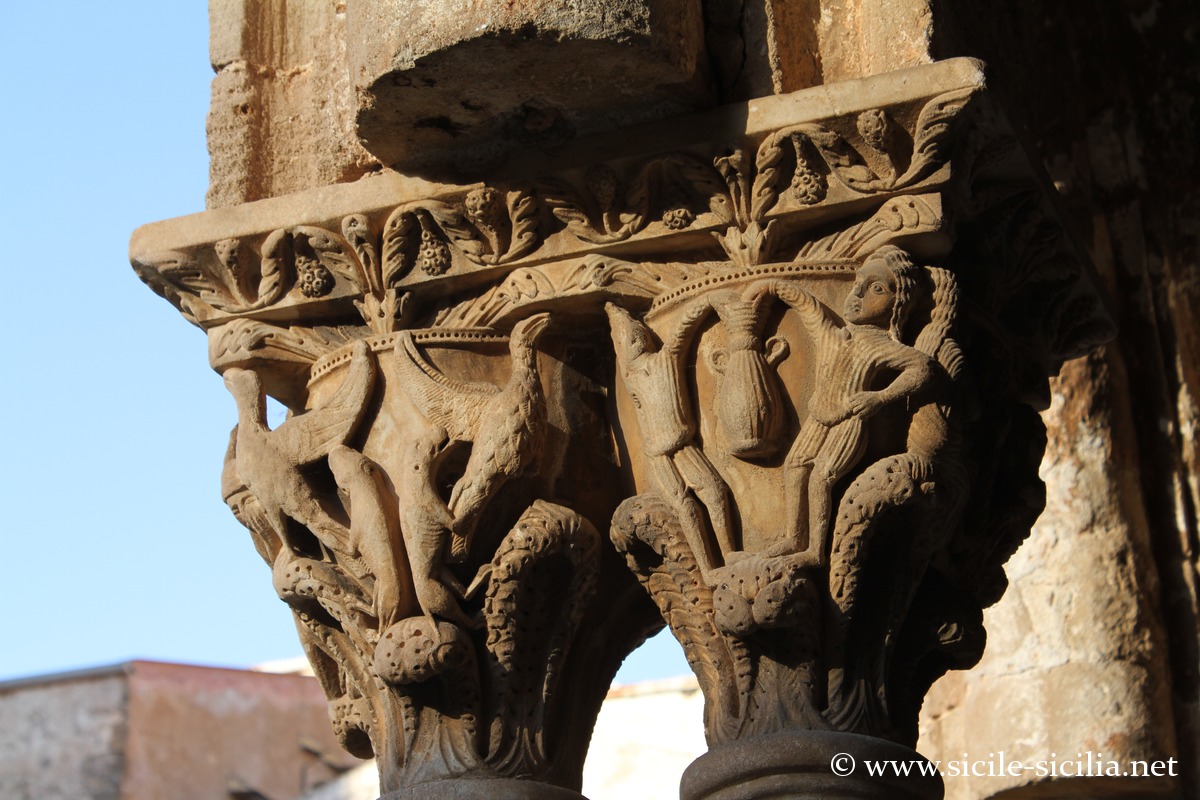
The cloister of the former Benedictine monastery, almost square in plan and measuring about 47 metres on each side, is among the most remarkable monastic ensembles of medieval Italy. Its ogival arcades rest on twin columns, sometimes smooth, twisted or adorned with zigzag motifs, several of which are enriched with polychrome mosaic inlays. Their capitals, all different, present biblical scenes, human figures, animals, plants and symbolic motifs. At one of the corners is an elegant pavilion sheltering a fountain whose water streams along a sculpted column.
→ Read also the page devoted to the exhaustive visit of the Cathedral of Monreale.
→ Read also the page devoted to the Benedictine cloister of Monreale.
Where the Cathedral of Monreale is located: map
If you see this after your page is loaded completely, leafletJS files are missing.
Duomo di Monreale
Piazza Guglielmo II, 1, 90046 Monreale PA
Photo gallery
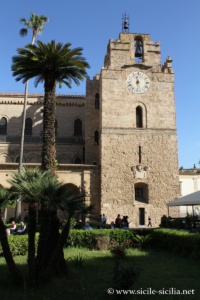

Unfinished bell tower 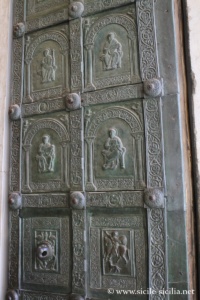
Bronze door by Bonanno Pisano 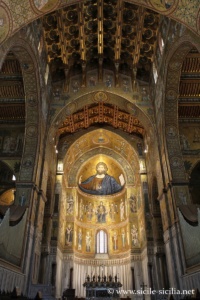
Choir and apse 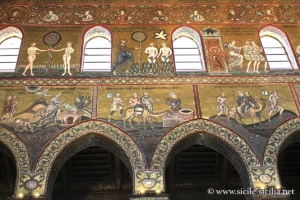

Mosaics of the Old Testament, south nave 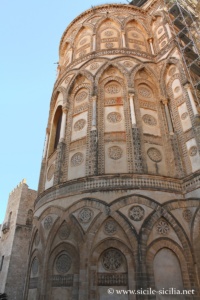
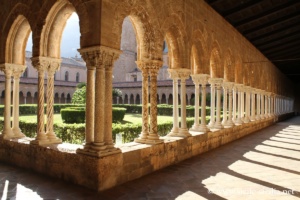
Benedictine cloister of Monreale 
Benedictine cloister of Monreale 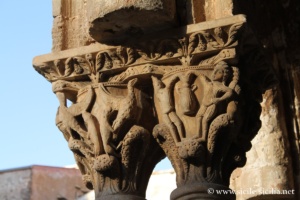
Benedictine cloister of Monreale
Information
Visit suggestions
External sites
- Cathedral of Monreale on Wikipedia
- Diocese website: www.diocesimonreale.it
- Unesco website: arabonormannaunesco.it
- Sites devoted to Monreale: www.monrealetour.it
- On the sites devoted to Palermo: www.palermoviva.it