

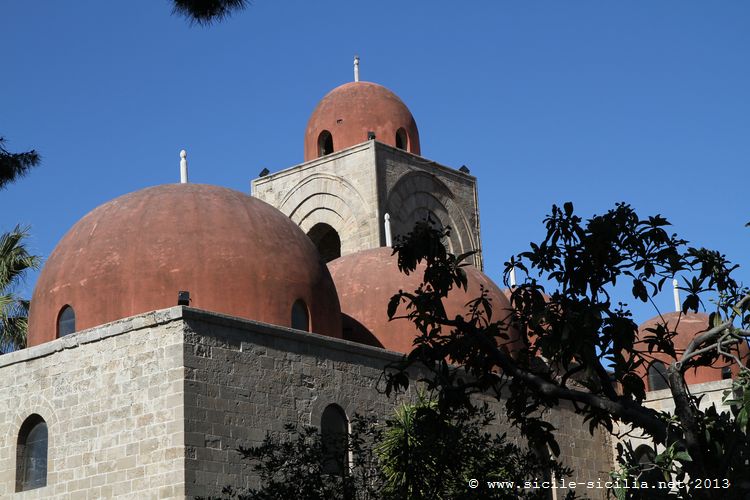
The Church of Saint John of the Hermits (San Giovanni degli Eremiti in Italian), one of the most emblematic monuments of Palermo, a Norman church of medieval origin, marked by the Arab-Norman style of the period.
Historical overview
In the 6th century, a church already existed there, where previously there had been a pagan place of worship with an underground spring and a grotto. A mosque was established there under Arab rule, before being rebuilt under Roger II of Sicily around 1140 to become a monastery entrusted to the Benedictines of Montevergine.
Located in the gardens of the Royal Palace, and near the Kemonia river (now drained), its abbot was one of the most important figures of the court.
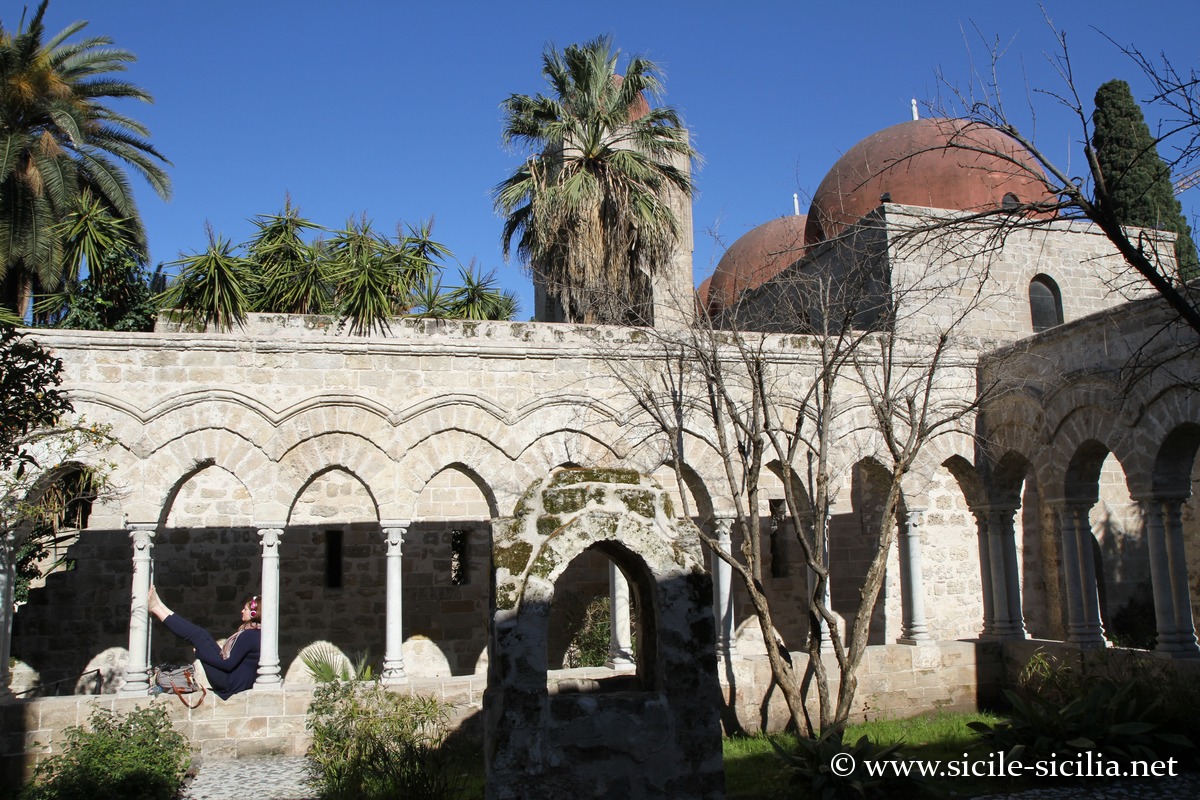
Benedictine cloister
In the centuries that followed the Normans, the convent lost its prestige. The buildings were modified and in the 16th century the church was incorporated into another building.
A restoration at the end of the 19th century, by the architect Giuseppe Patricolo, restored the church to its original appearance, the interior stucco was removed and the buildings later than the Middle Ages were demolished.
Of the monastic complex that included the chapter house, a dormitory, a refectory, the cemetery, the church and the cloister, one can still admire the church, the cloister and a few remains of the monastery.
Architecture and description
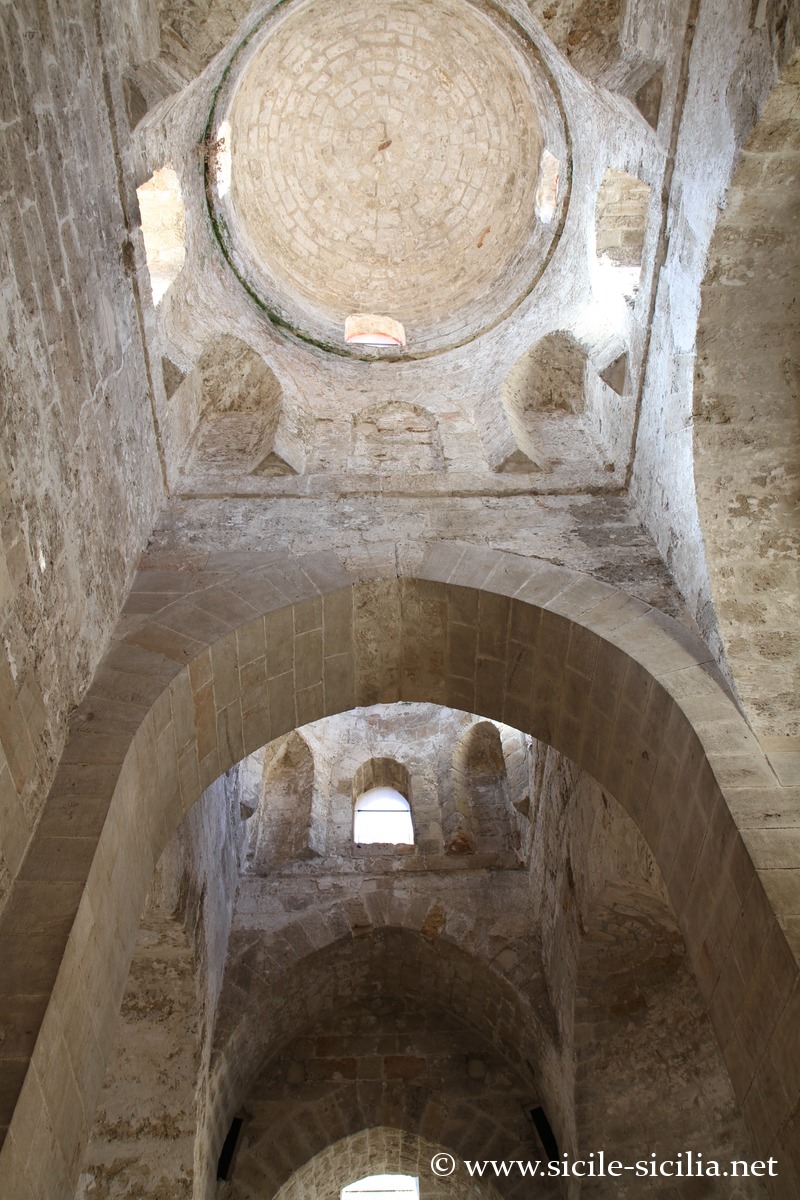
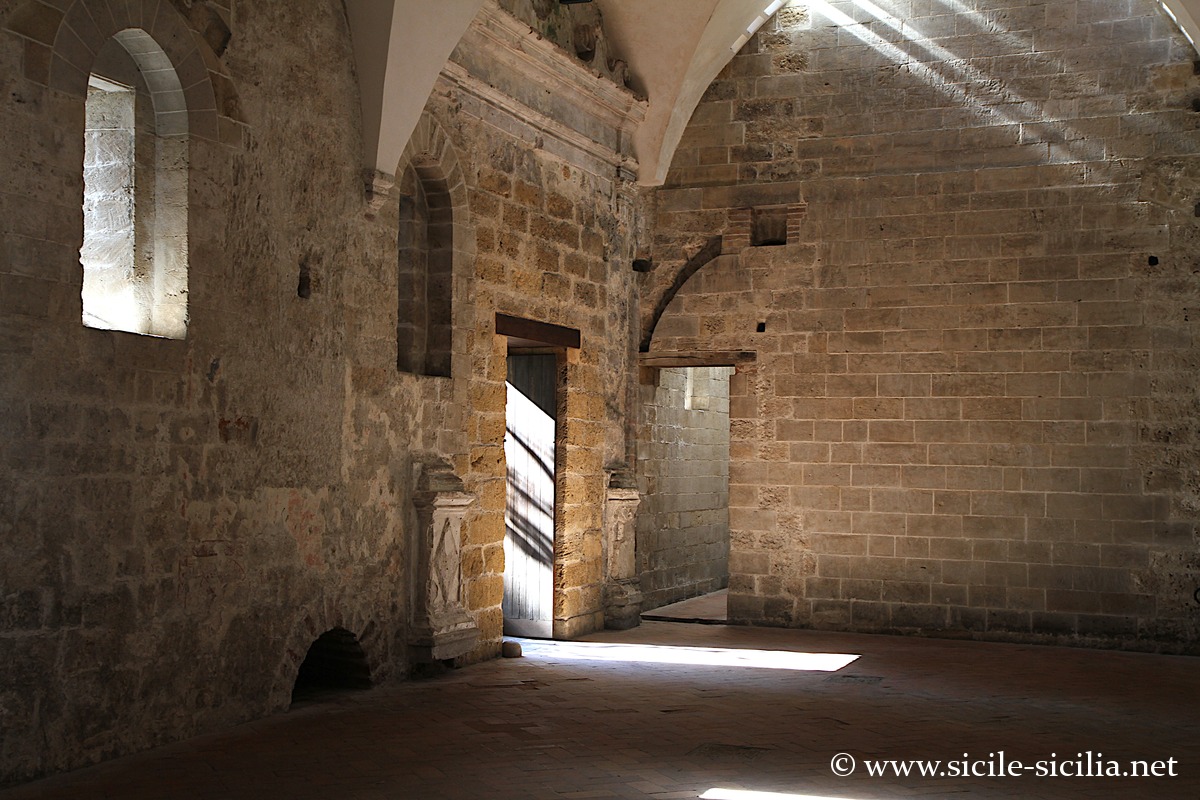
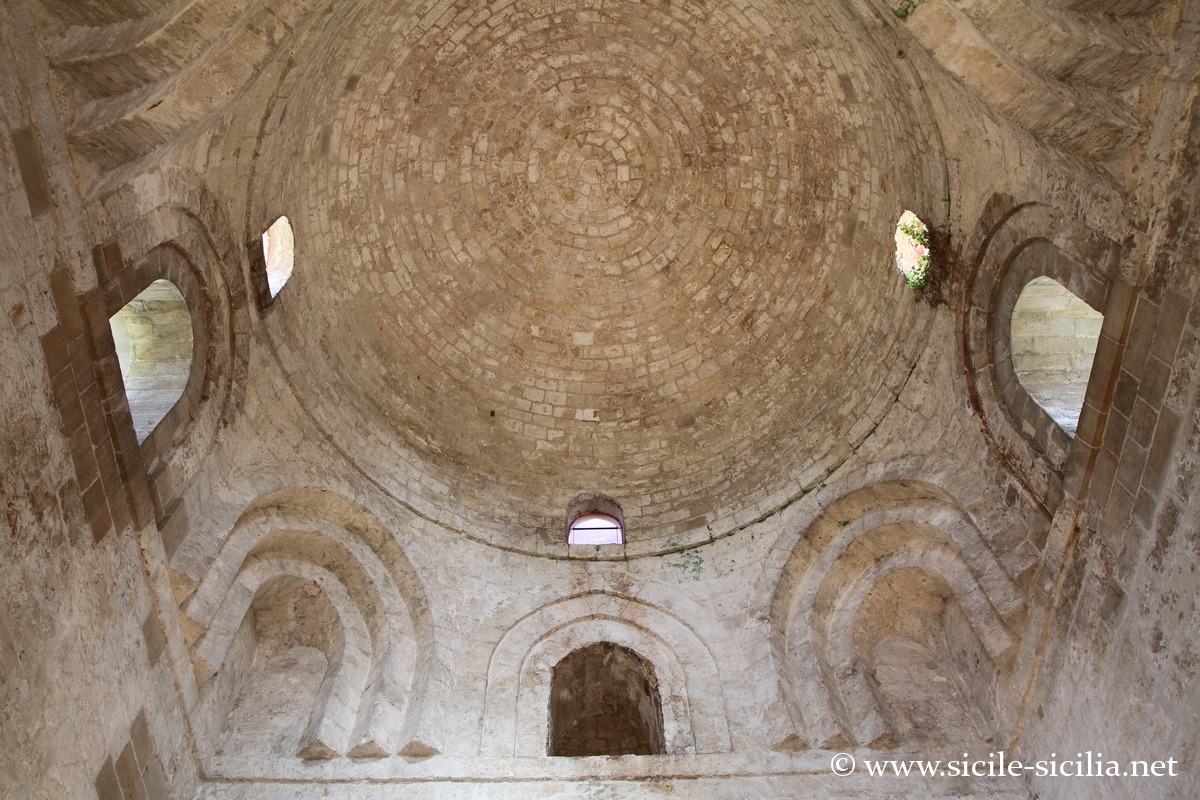
Interior of Saint John of the Hermits
The transept and the sacristy occupy the rectangular courtyard that was the main body of the mosque. The north wall of this courtyard became the south wall of the church.
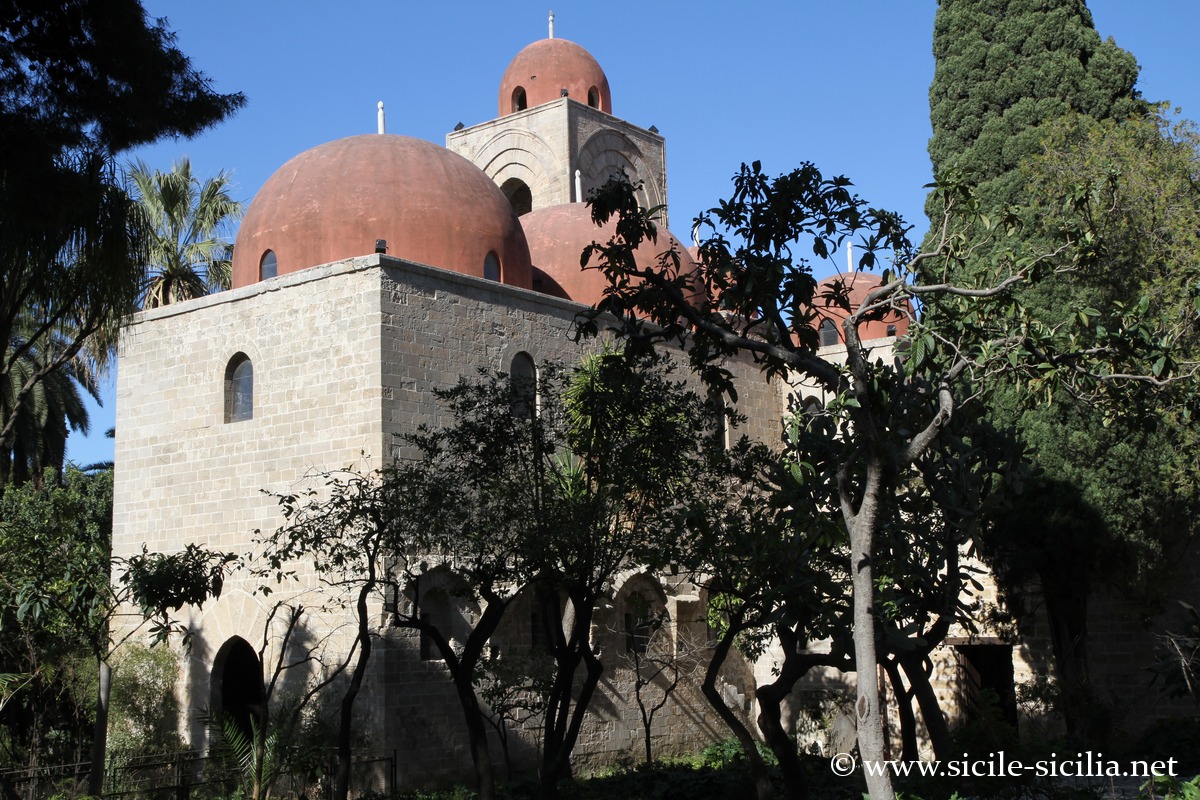
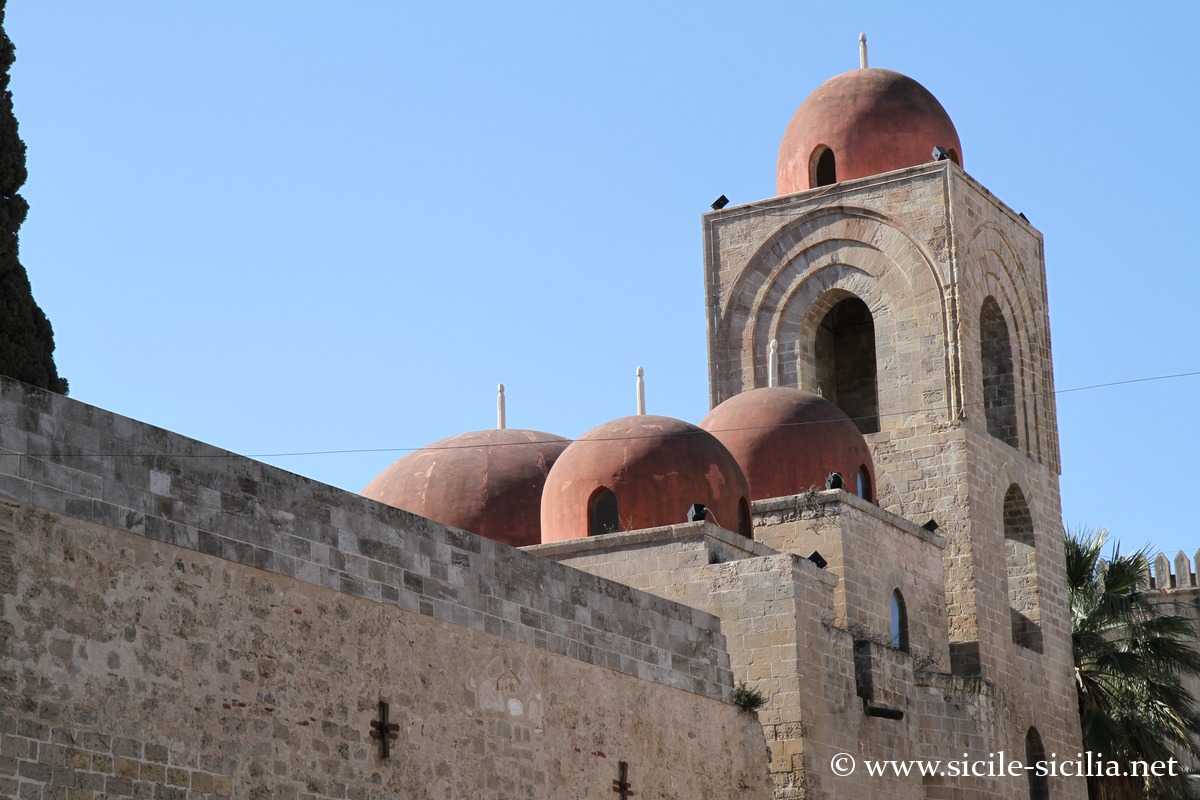
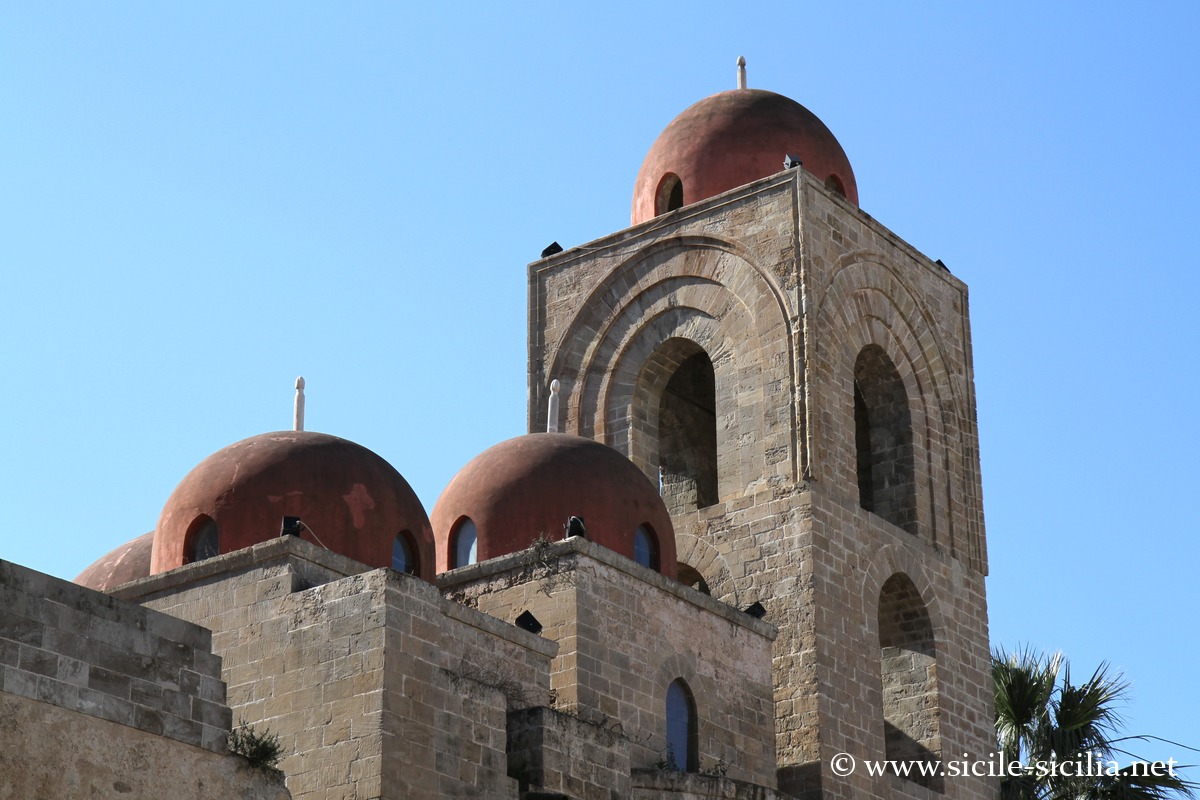
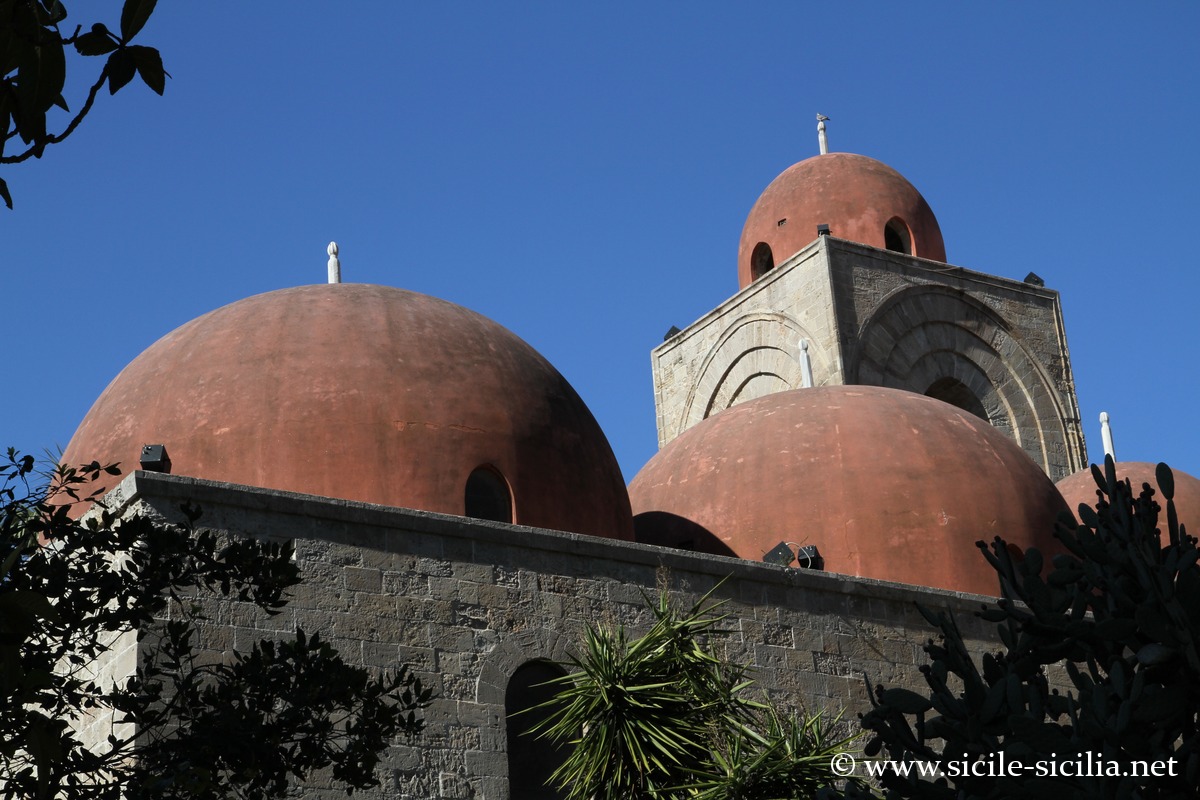
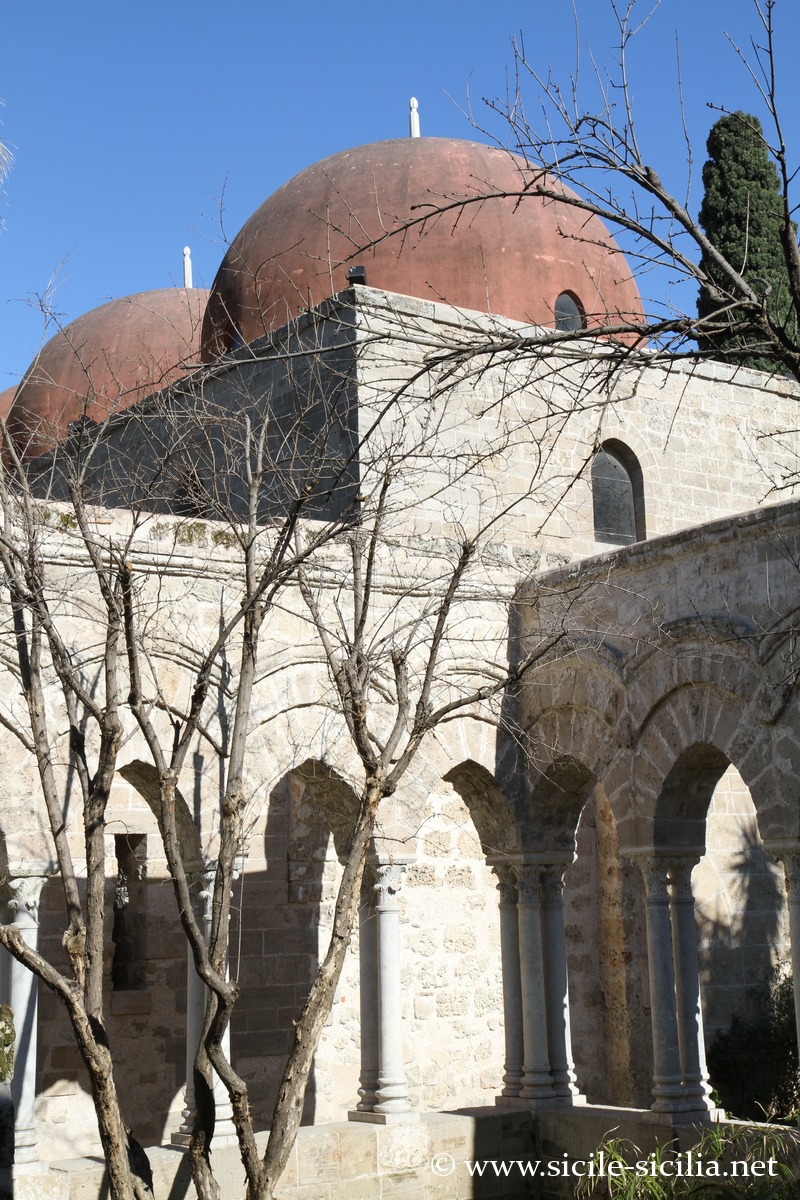
The church is a model of Norman style, built according to Islamic architectural models: harmonious and relatively small overall proportions, simple geometric forms (cubes topped with hemispherical domes).
Oriented to the East, the church is in the shape of a Saint Anthony’s cross (T-shaped).
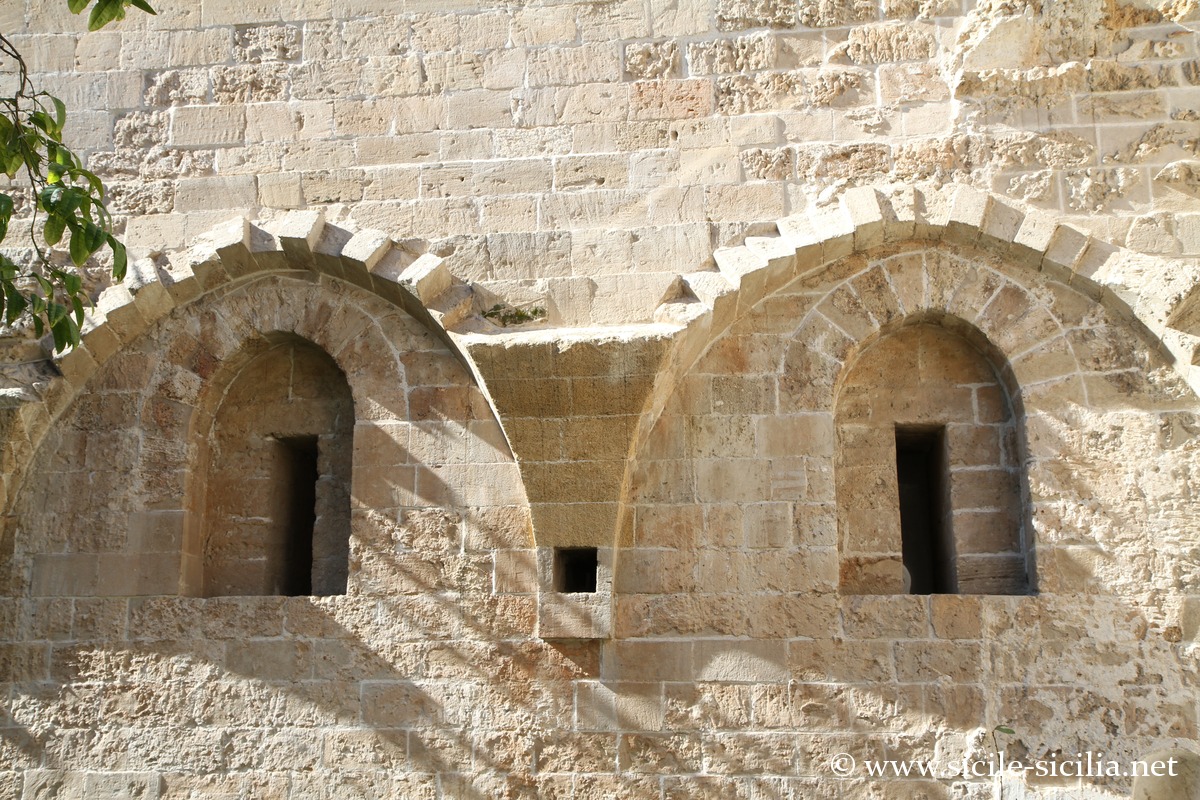
The side walls of the church are pierced with ogival windows. They were adorned with plaster transennas in arabesque, rediscovered in the 19th century. A copy is located here, an original is housed at the Palazzo Abatellis Gallery.
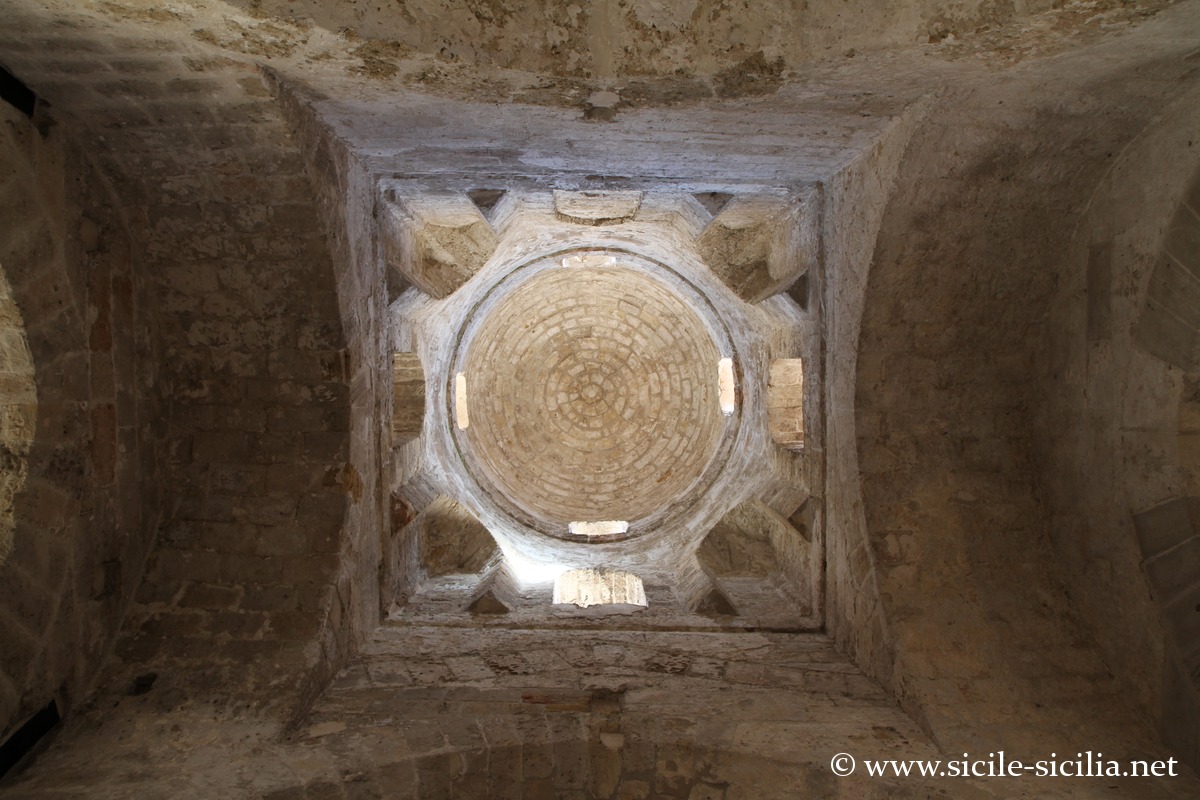
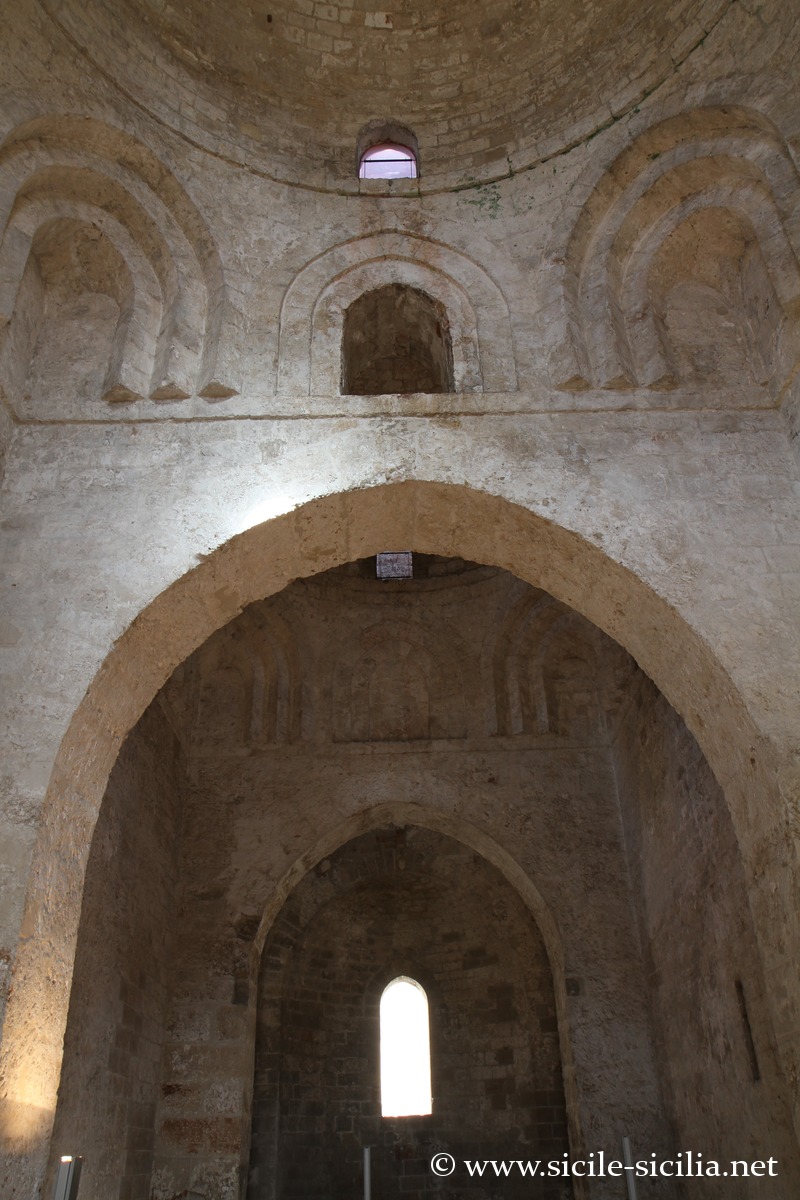
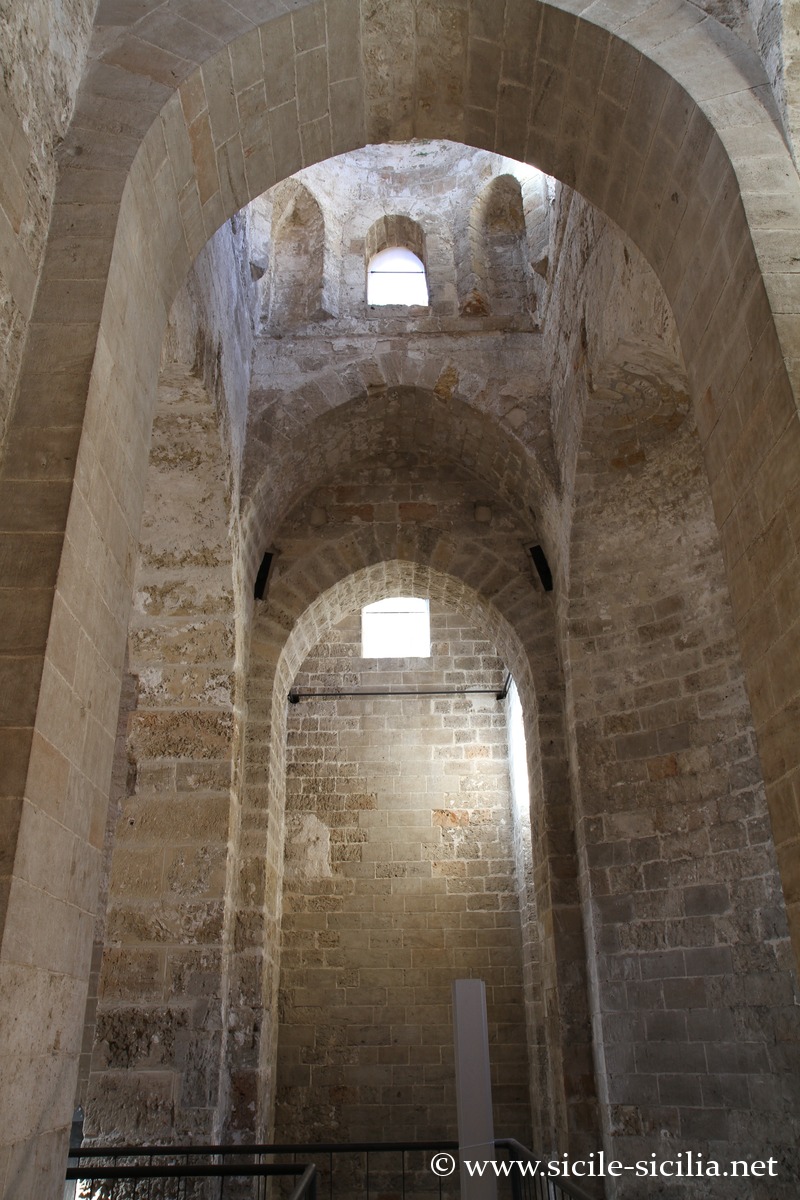
The interior of the church is composed of cubic structures topped with a dome, repeated five times, two in the bays of the nave, three in the transept.
This combination of the square, representing the earth, and the circle, representing the sky, existed both in Fatimid Islamic culture and in the Byzantine Empire.
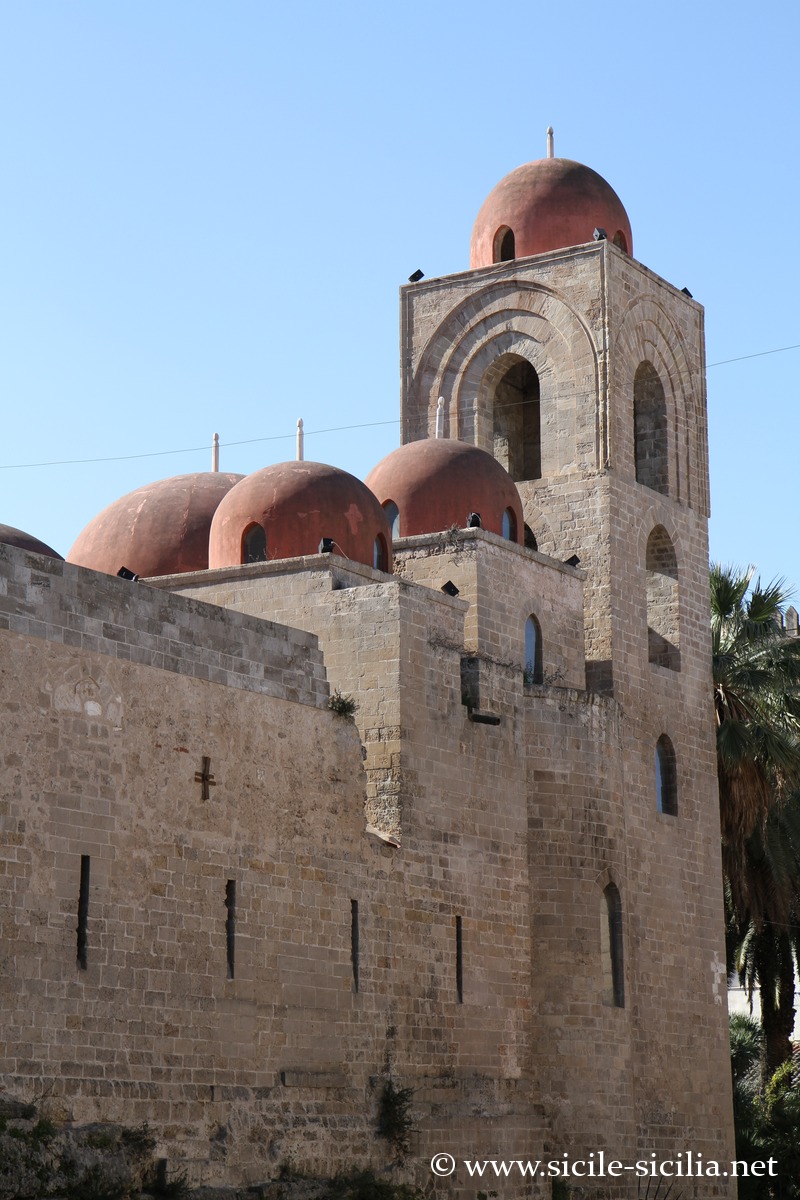
Saint John of the Hermits
Angular niches were the only decorative element of this unadorned interior, making the junction between the rectangular base and the dome.
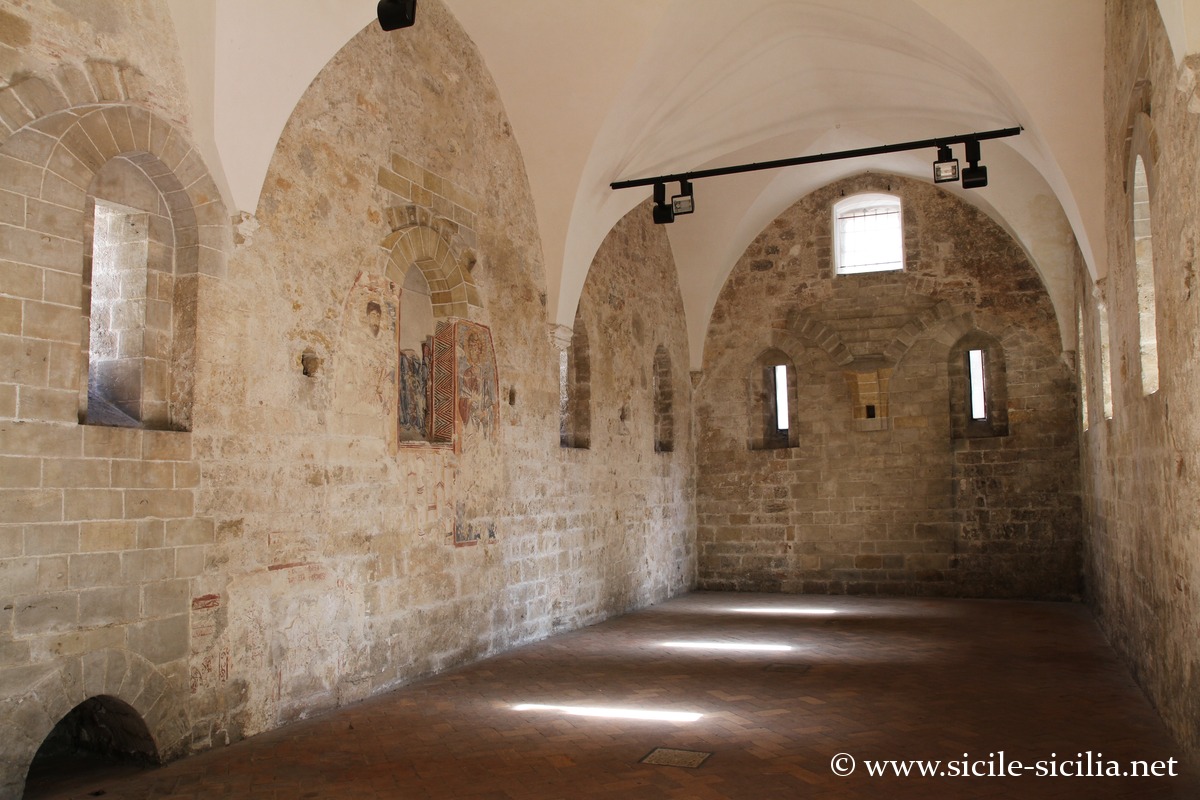
The restoration of 1880 revealed that the right side of the transept of the church corresponds to the former Islamic building (having been a rectangular hall, a portico and an open courtyard). The bases of the pillars that divided this space remain. The ceiling was covered with ogival vaults.
This “qubba”, cubes topped with a round dome, typically of Muslim style, is found in other churches contemporary with this one such as San Cataldo and Saint John of the Lepers.
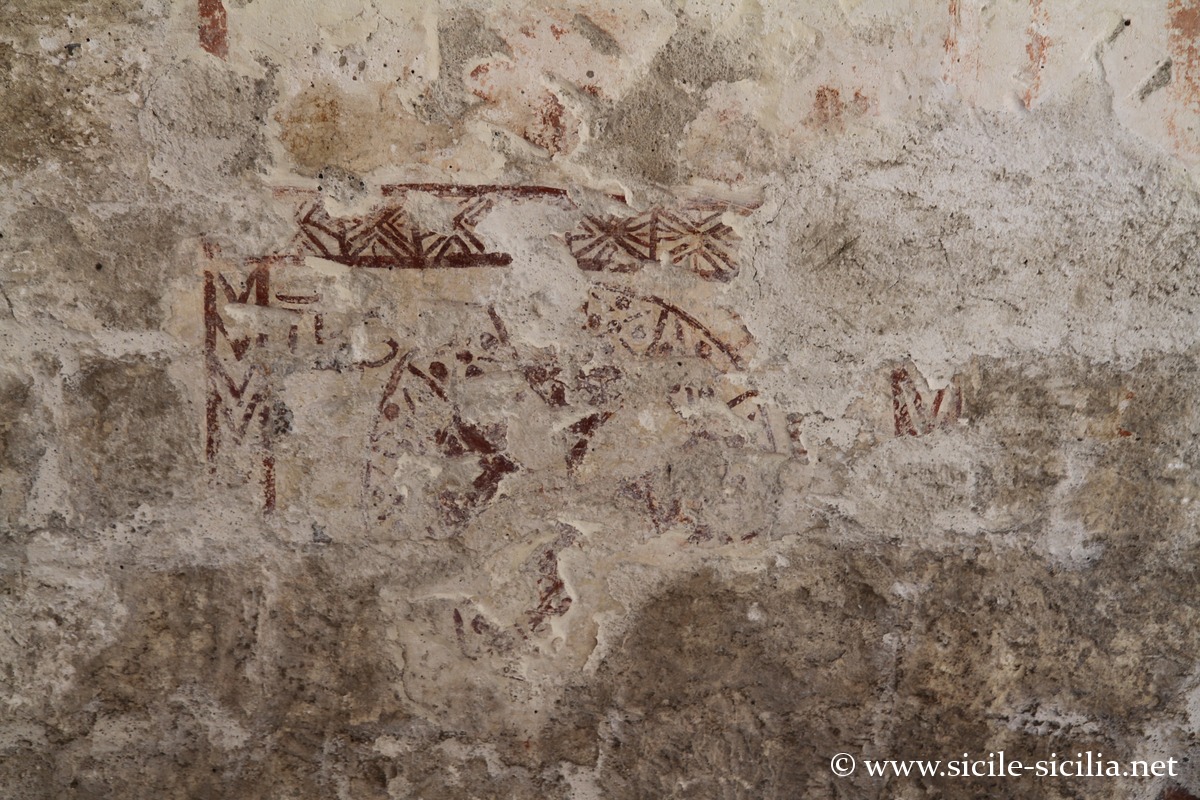
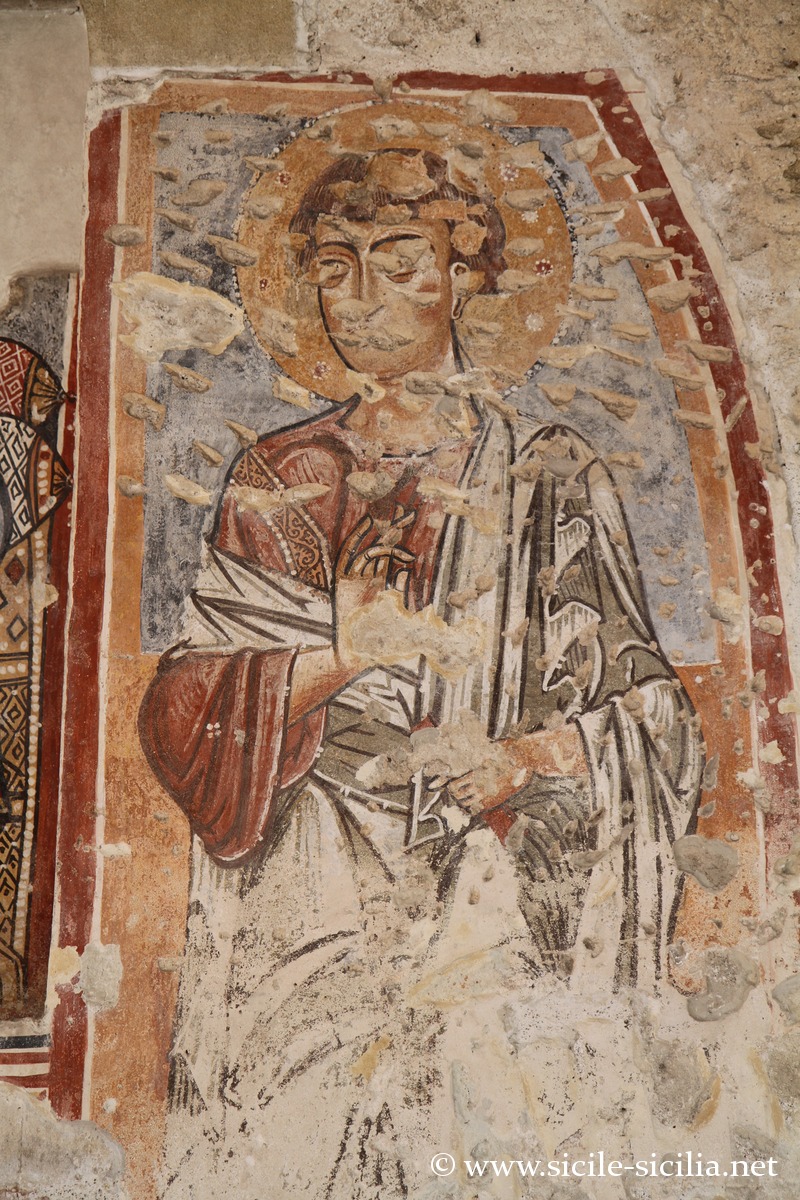
From the Norman period, a few remains of medieval frescoes have survived: Mary enthroned between Saint John and Saint James. Traces on the right wall of the church correspond to the former portico.
Inside the rediscovered enclosure there was a Norman cemetery.
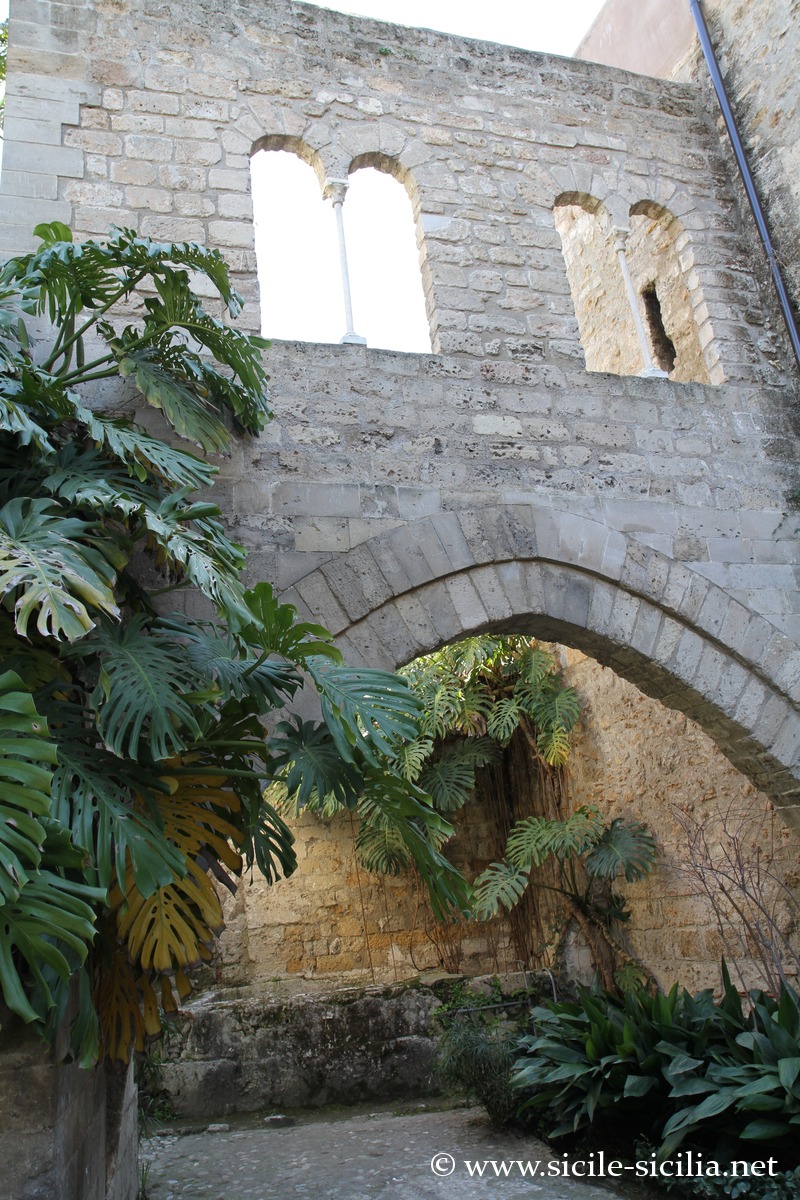
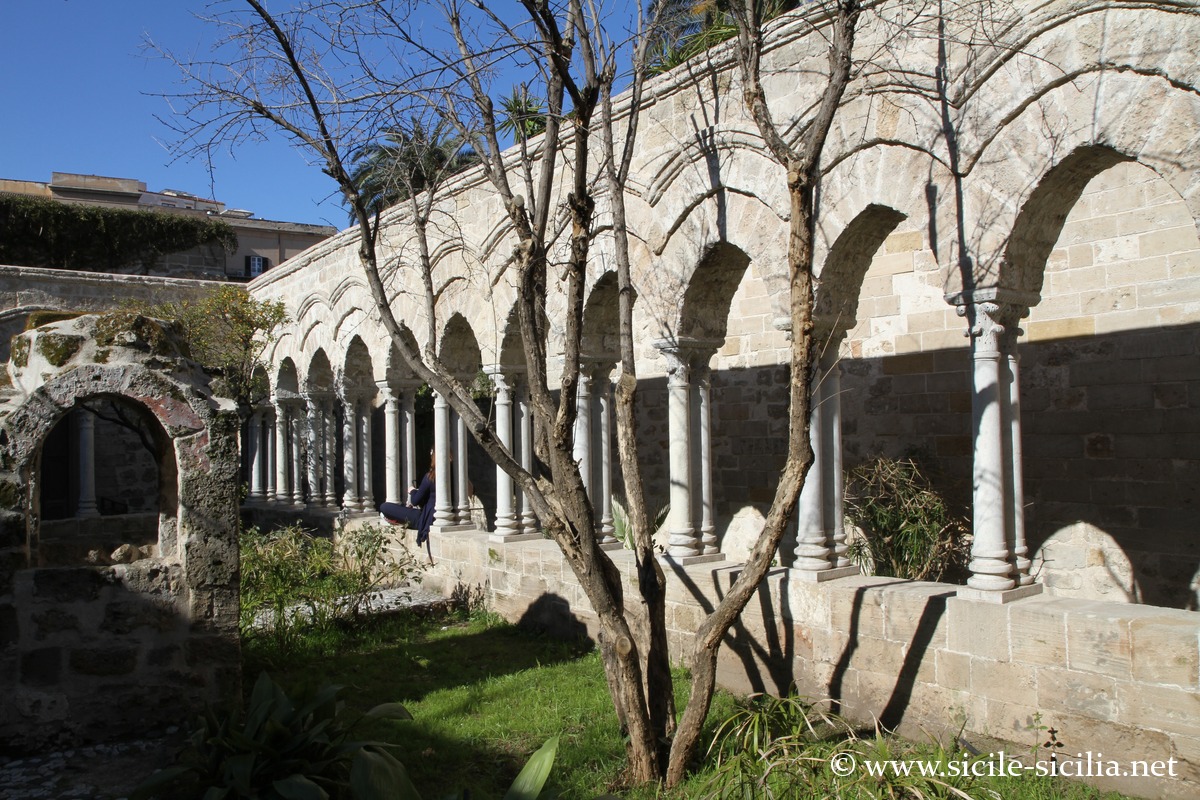
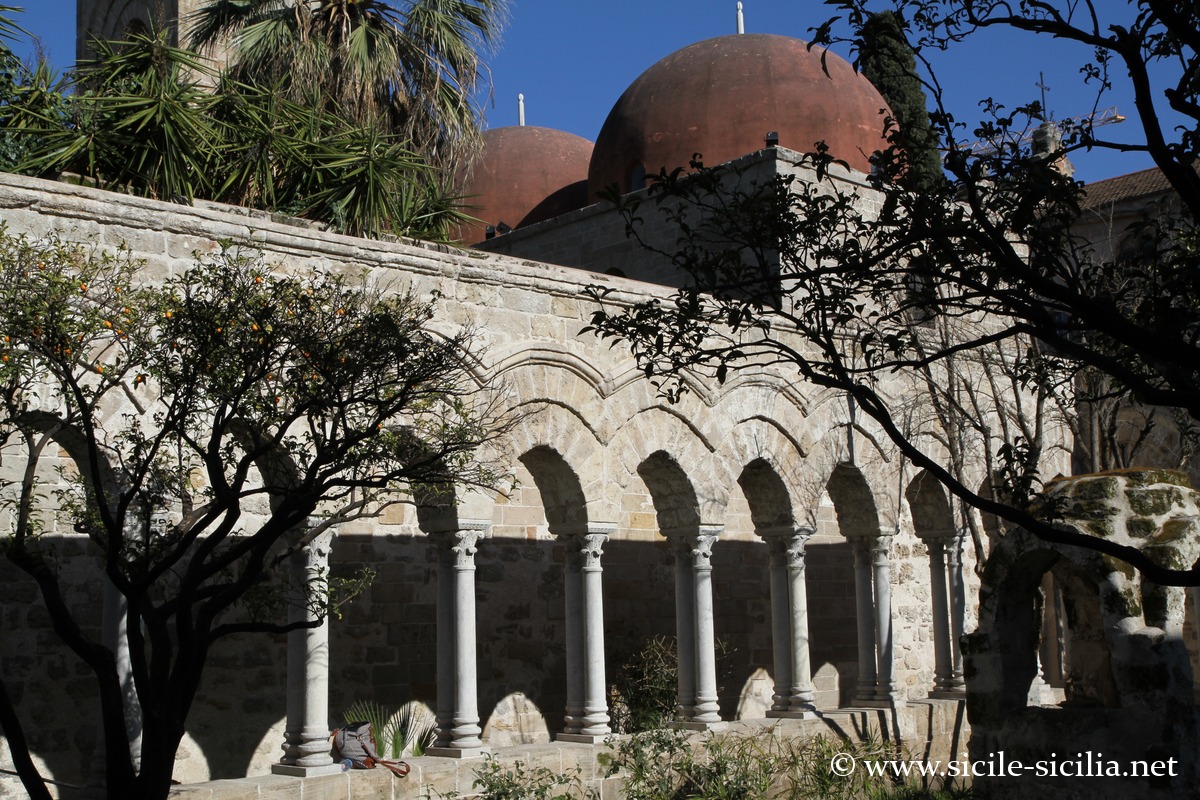
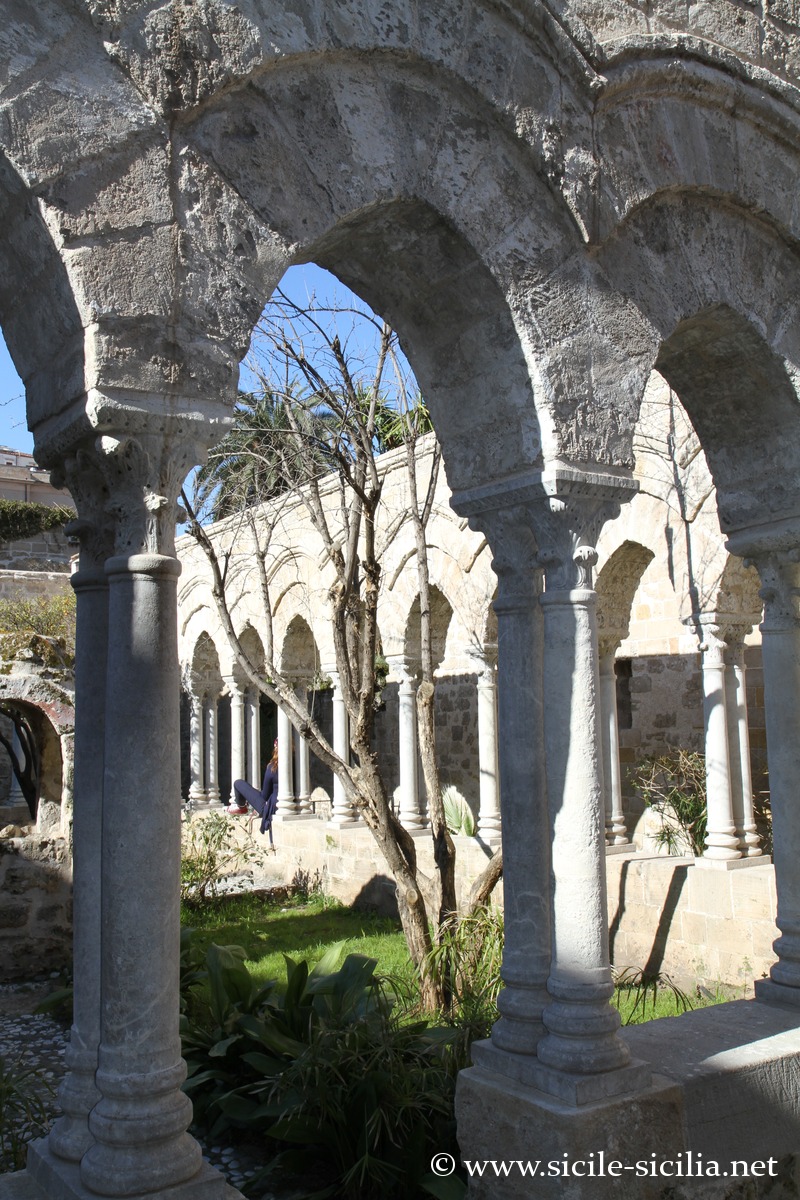
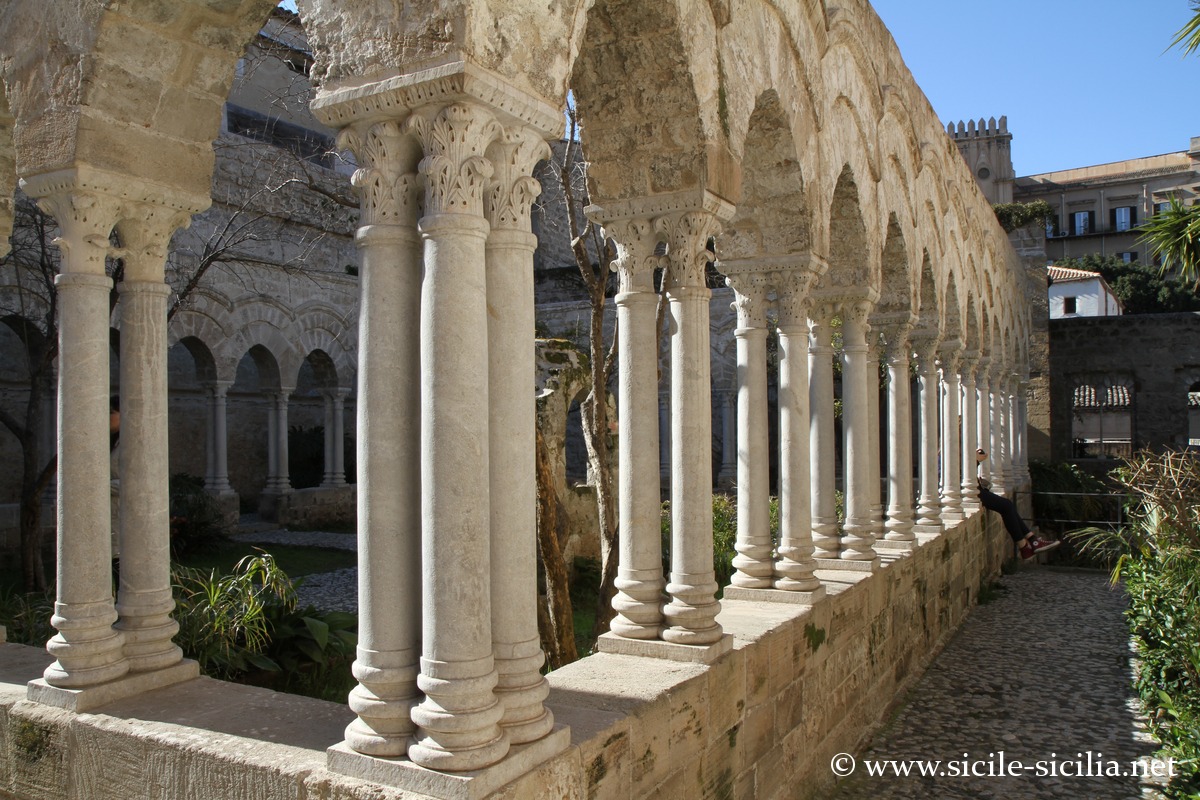
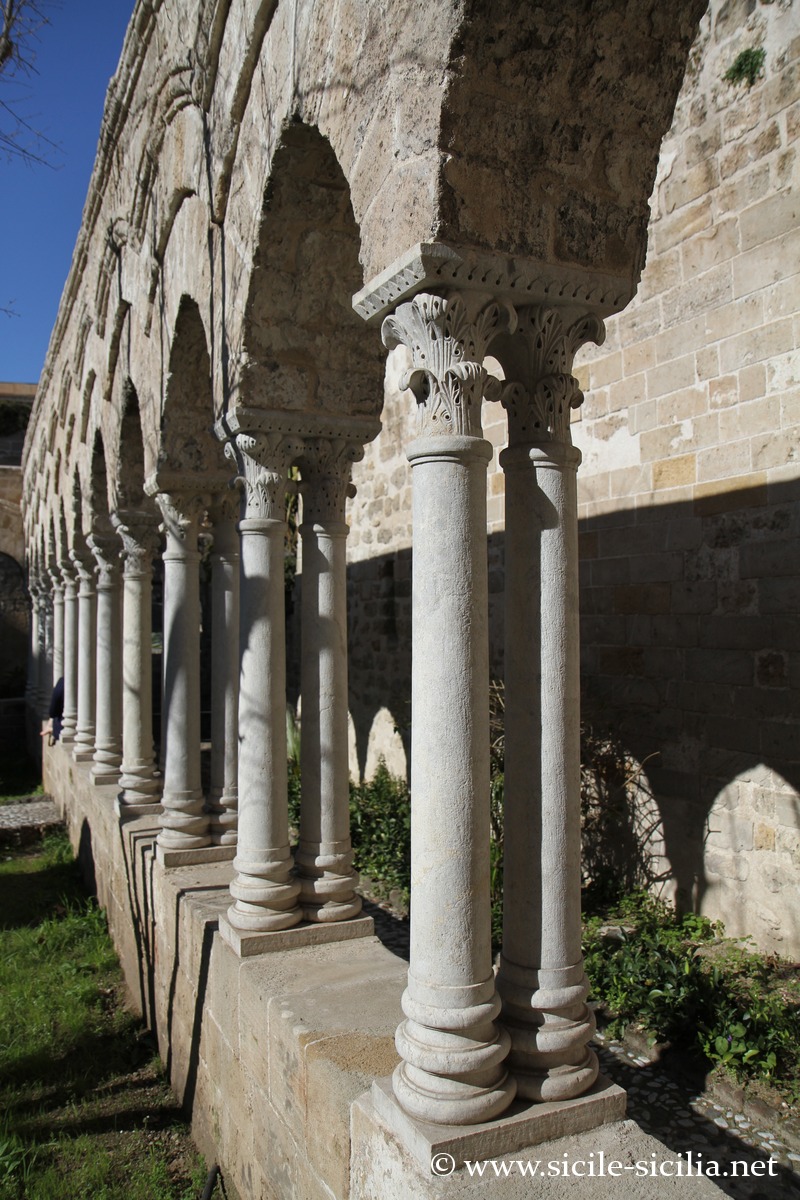
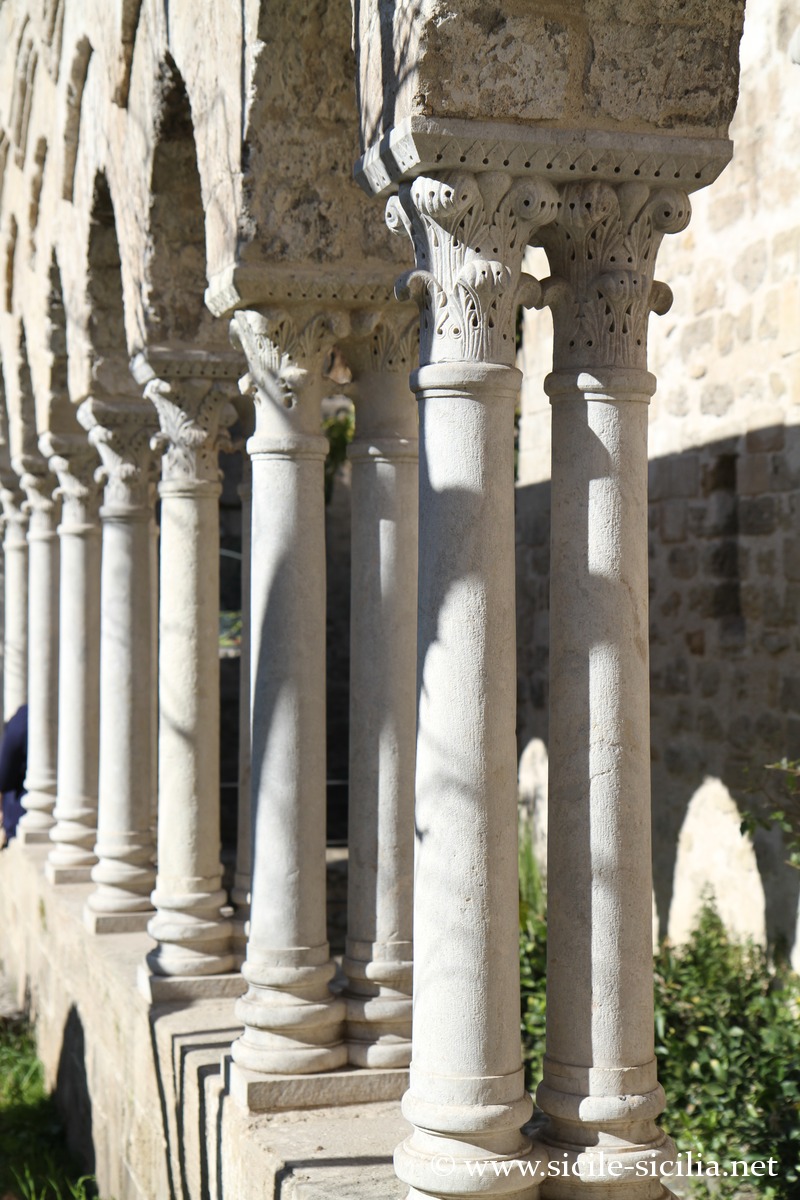
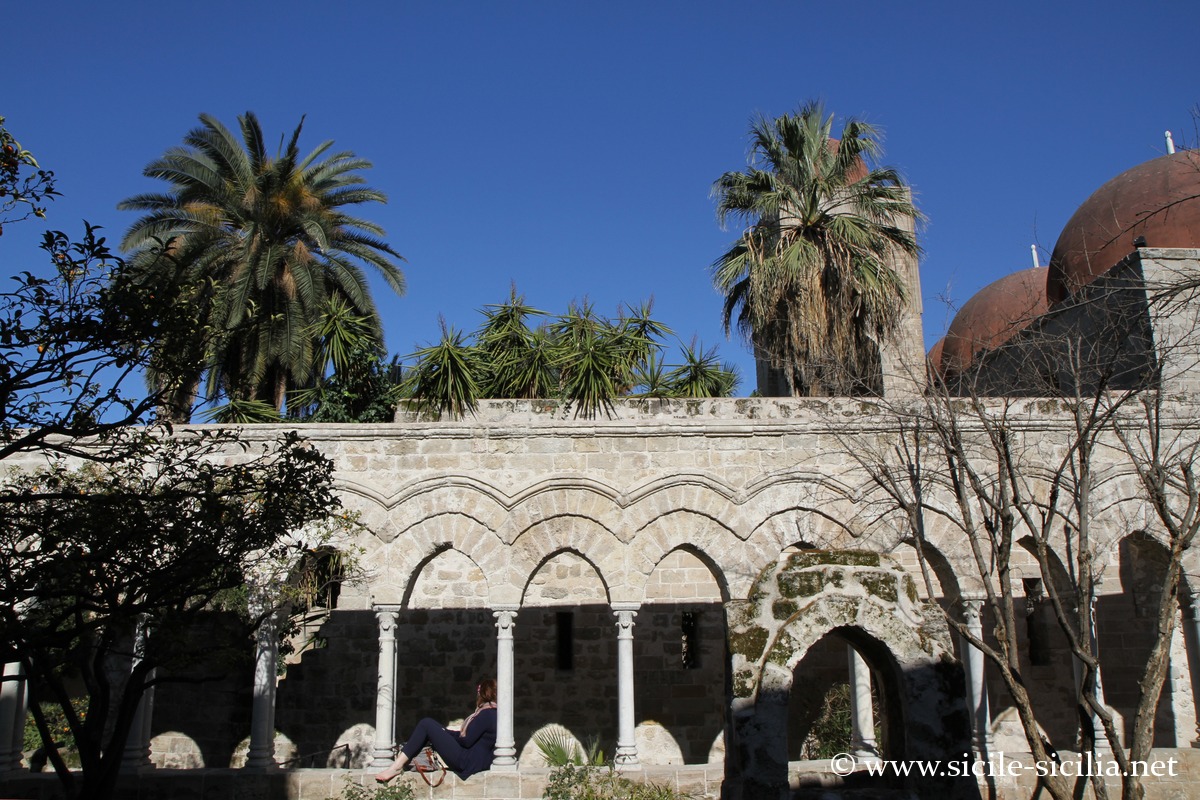
The cloister of the convent, probably from the 13th century and later modified, is rectangular, framed by paired columns separated by ogival arcades. There is also an Arab cistern.
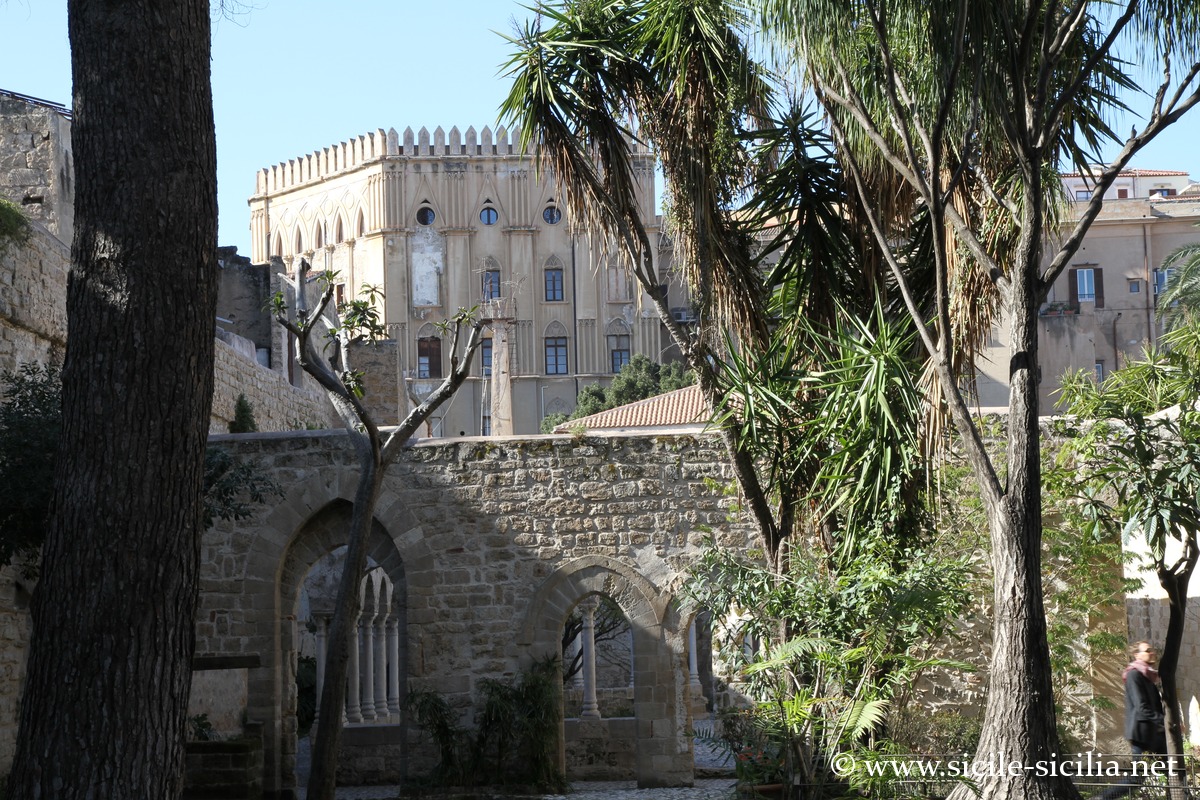
In the 19th century, an exotic garden was planted at the entrance to the site, still occupying it today.
Photo gallery
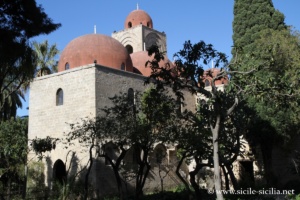

Church and domes 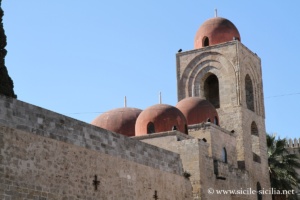
Church and domes 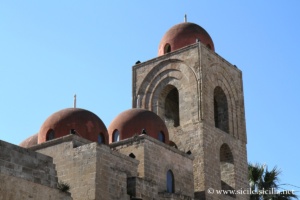
Church and domes 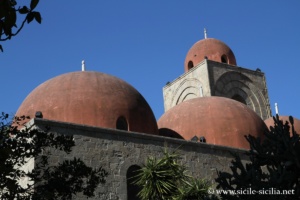
Church and domes 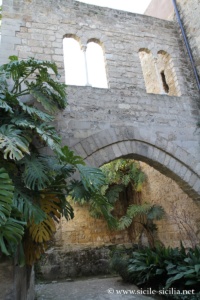

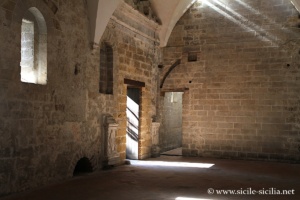
Hall of Saint John of the Hermits 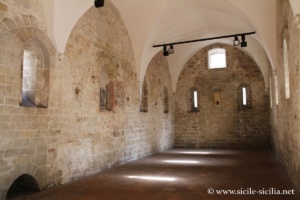
Hall of Saint John of the Hermits 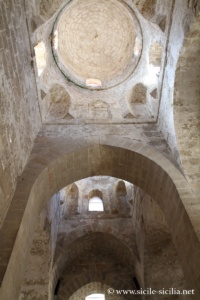
Interior of Saint John of the Hermits 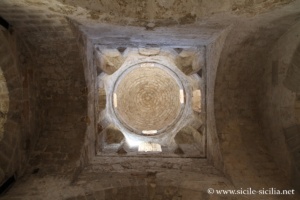
Interior of the church 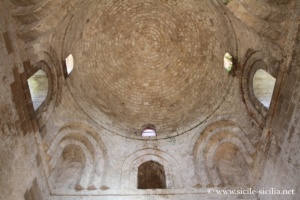
Interior of the church 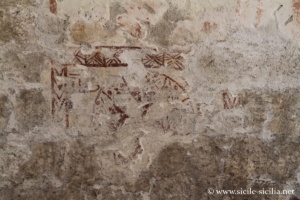
Frescoes at Saint John of the Hermits 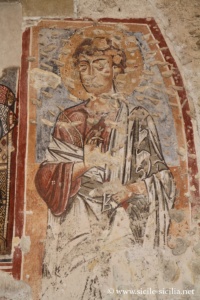
Frescoes at Saint John of the Hermits 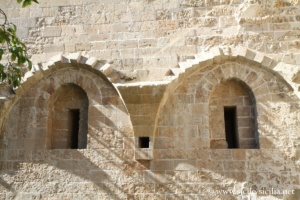
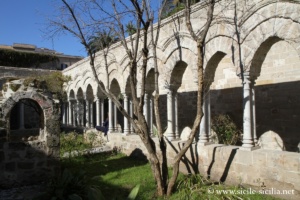
Cloister of Saint John of the Hermits 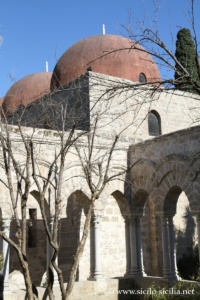
Cloister of Saint John of the Hermits 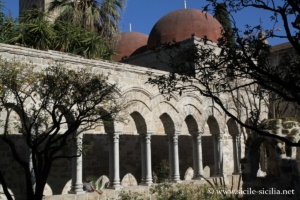
Cloister of Saint John of the Hermits 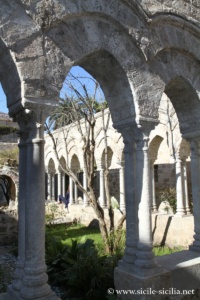
Cloister of Saint John of the Hermits 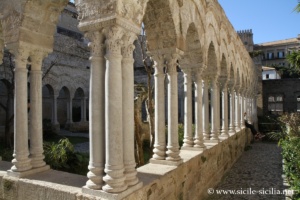
Cloister of Saint John of the Hermits 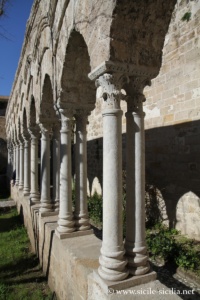
Cloister of Saint John of the Hermits 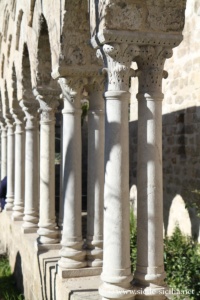
Cloister of Saint John of the Hermits 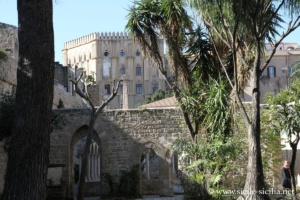
Cloister at Saint John of the Hermits and Norman Palace 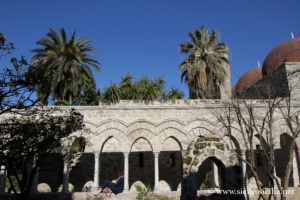
Cloister of Saint John of the Hermits 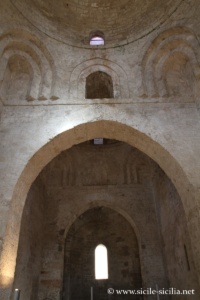
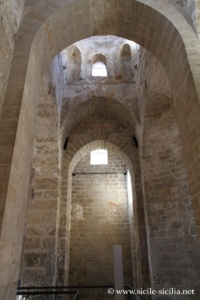
Where the Church of Saint John of the Hermits is located
If you see this after your page is loaded completely, leafletJS files are missing.
Information
| Chiesa di San Giovanni degli Eremiti Via dei Benedettini, 20, 90134 Palermo PA External sites |