

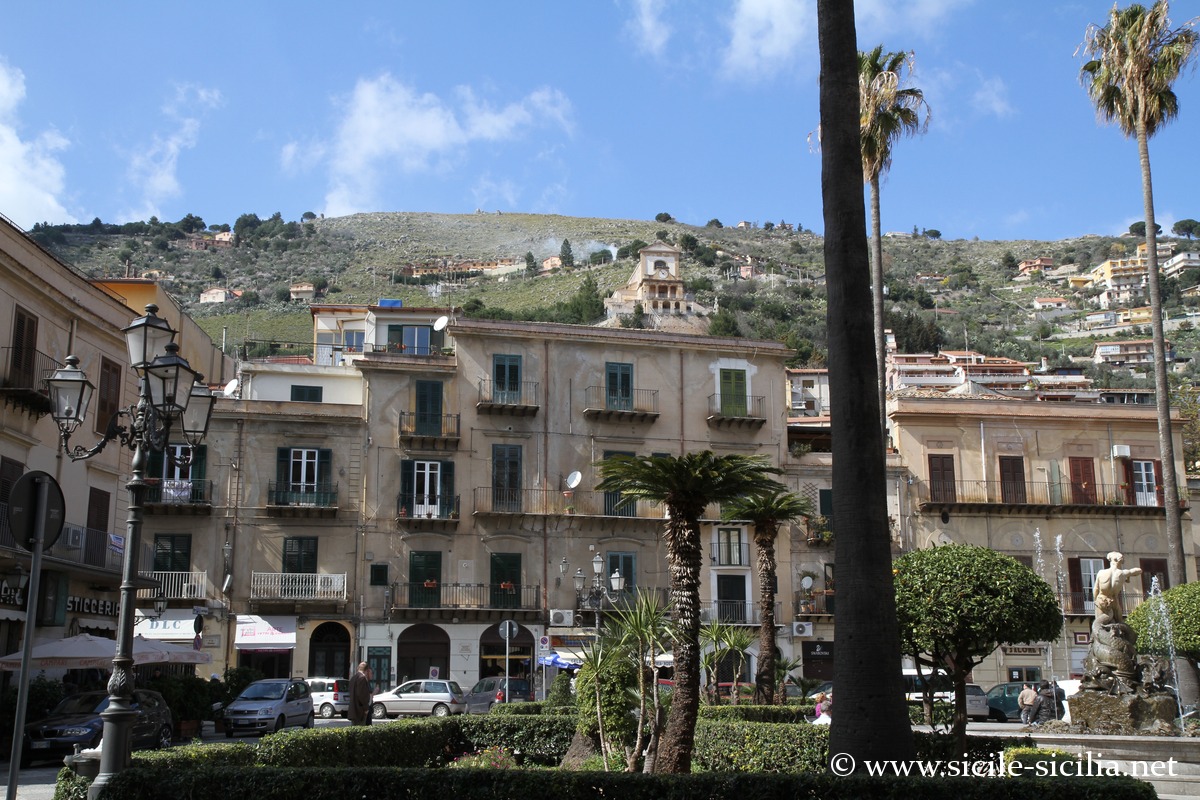
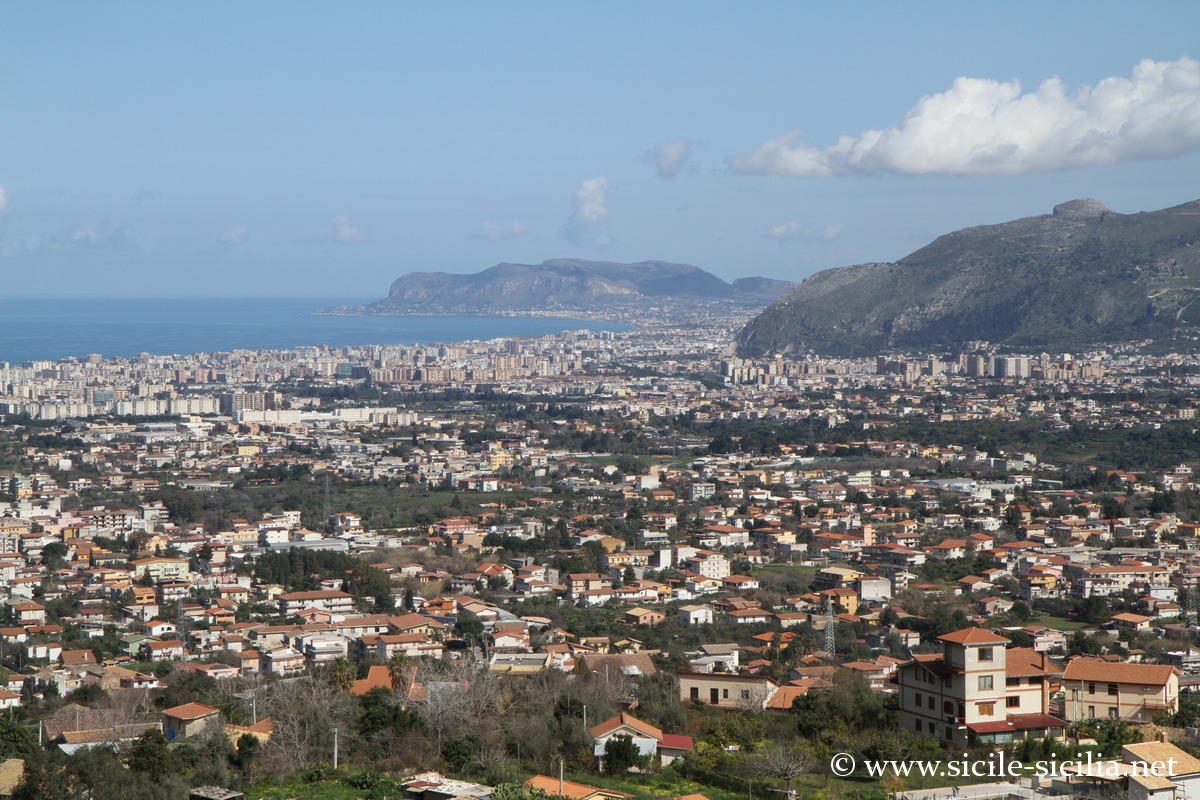
The town of Monreale, a few kilometres south-west of Palermo, is situated on the slope of Mount Caputo. From its position, at nearly 310 metres above sea level, it overlooks the fertile plain “Conca d’oro” (the Golden Shell in English), where orange, olive and almond trees grew for centuries.
Seat of an archdiocese, it is known above all for its exceptional Arab-Norman cathedral, inscribed on the UNESCO World Heritage List (along with nine other sites from that period located in Palermo and Cefalù).
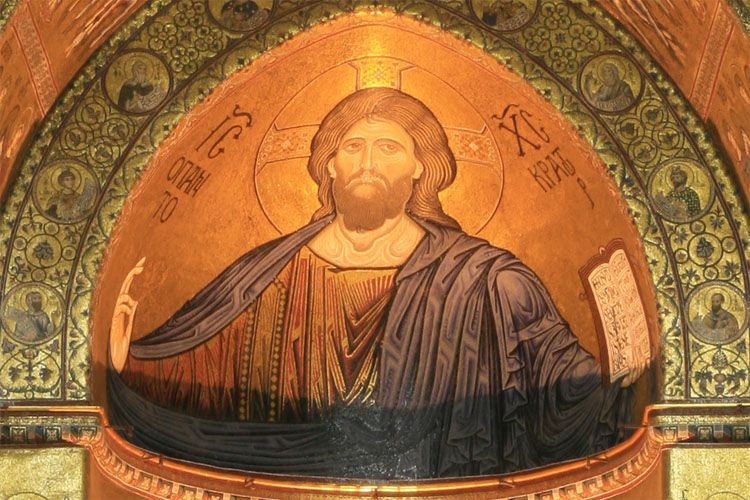
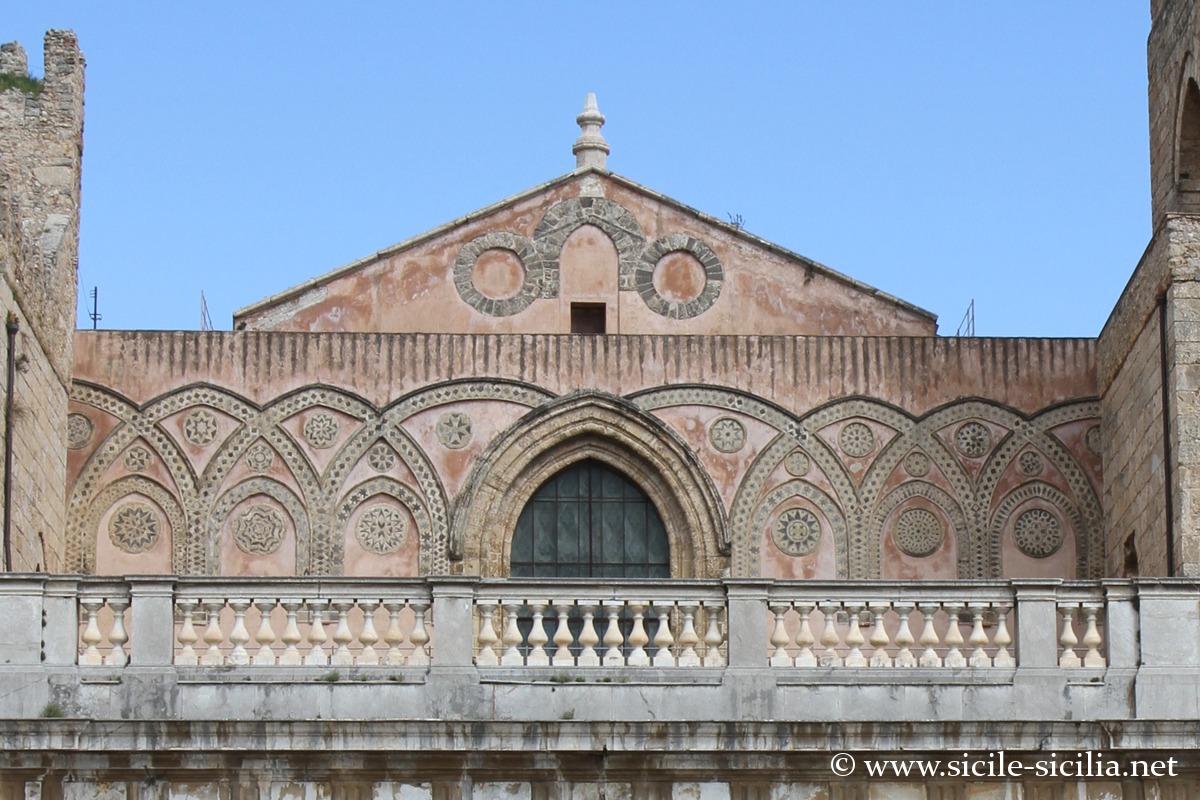
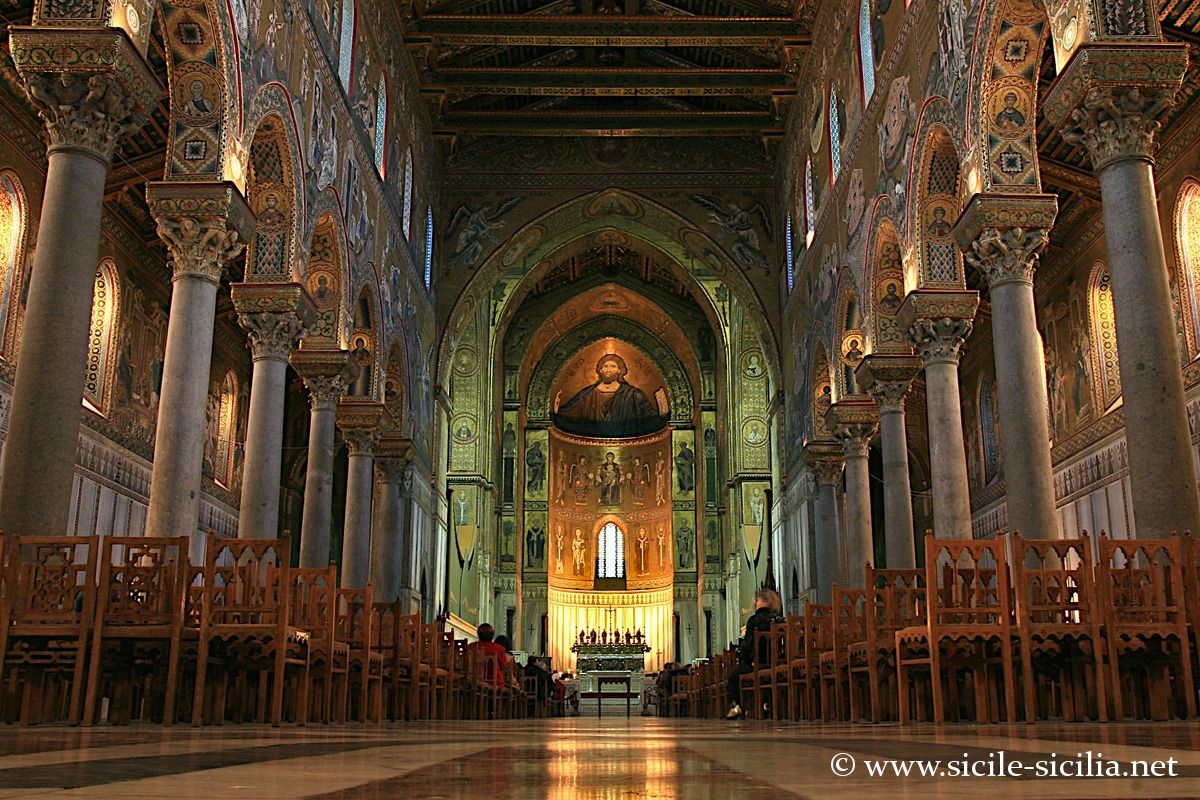
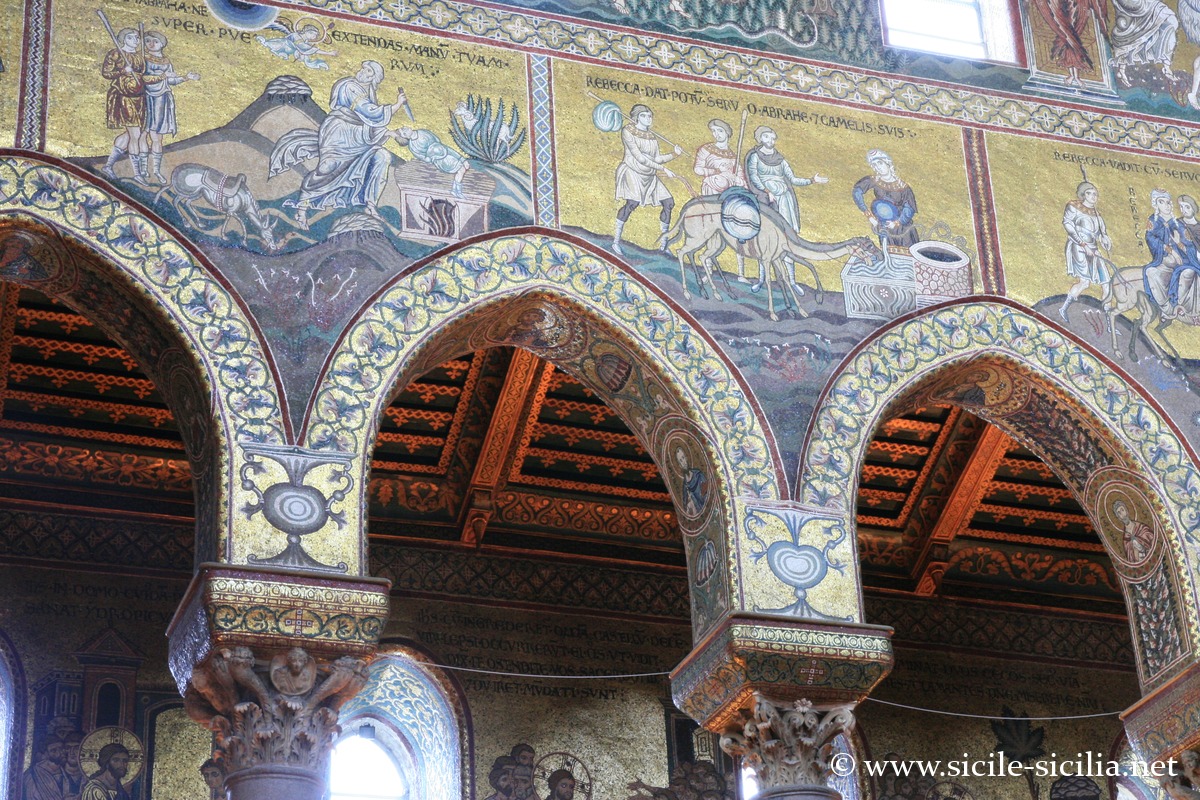
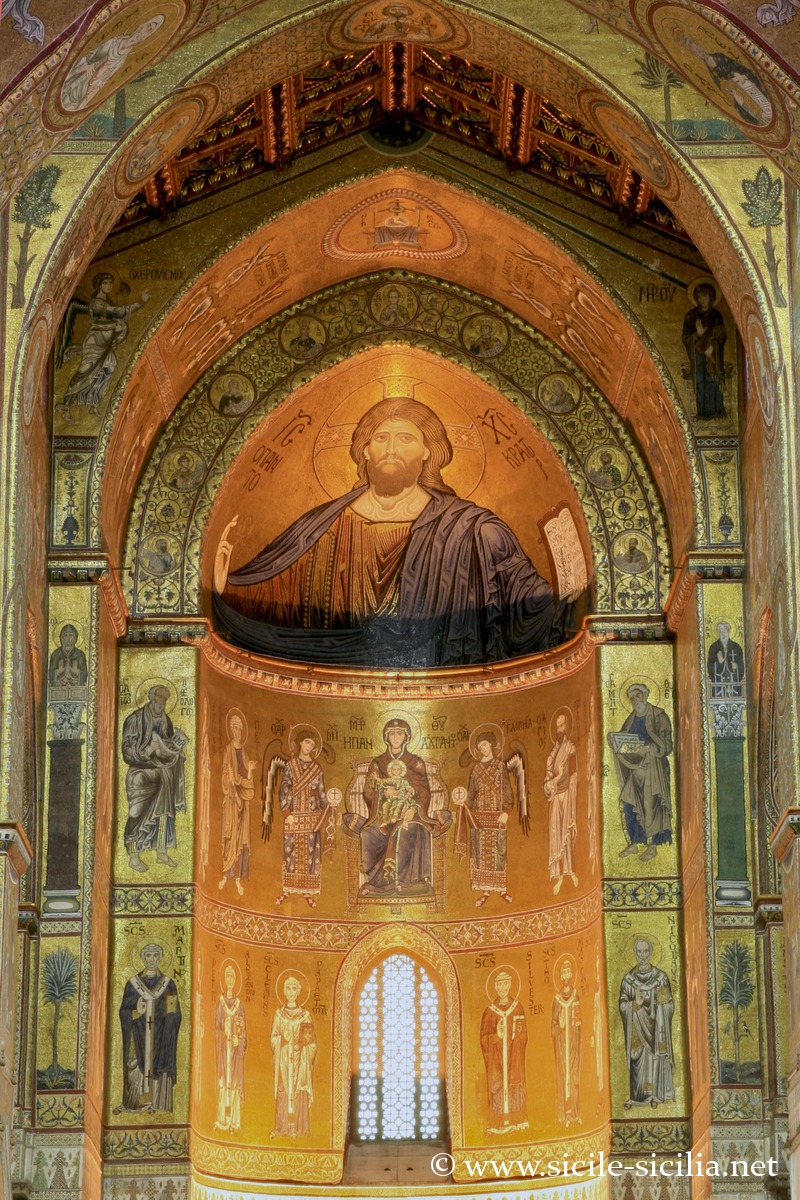
It is one of the finest examples of this architecture, blending Norman, Arab and Byzantine influences. Its interior is striking with its 42 large mosaics covering nearly 6,400 m².
Byzantine-inspired, they depict scenes from the Old and New Testaments. Its splendid cloister is also typical of Arab-Norman and Byzantine art with its colonnades and arcades, considered one of the major masterpieces of Mediterranean Romanesque sculpture of the late 12th century.
Historical elements of Monreale
The Monte Reale (Royal Mount in English) was under the Normans a royal hunting reserve, where a pavilion that stood on the site of the current town hall welcomed the lords. From 1174, the Norman king William II, grandson of the great Roger II, undertook there the construction of a monastery entrusted to the Benedictines of Cava de’ Tirreni, with the building of the cathedral. This ecclesiastical seat, linked to royal power, also aimed to limit the influence of the archbishop of Palermo.
It was around it that the town developed, Monreale quickly receiving fiscal and administrative privileges, favouring its urban development in the 12th century.
This place already had a religious history, because during the occupation of Palermo by the Arabs until 1072, the bishop of Palermo had moved to a small church of Aghia Kiriaki, the name of the village that would later be called Monreale.
The works of the cathedral were completed in 1182, the official consecration took place in 1183, in the presence of the king.
Cathedral and monastery of Monreale (overview)
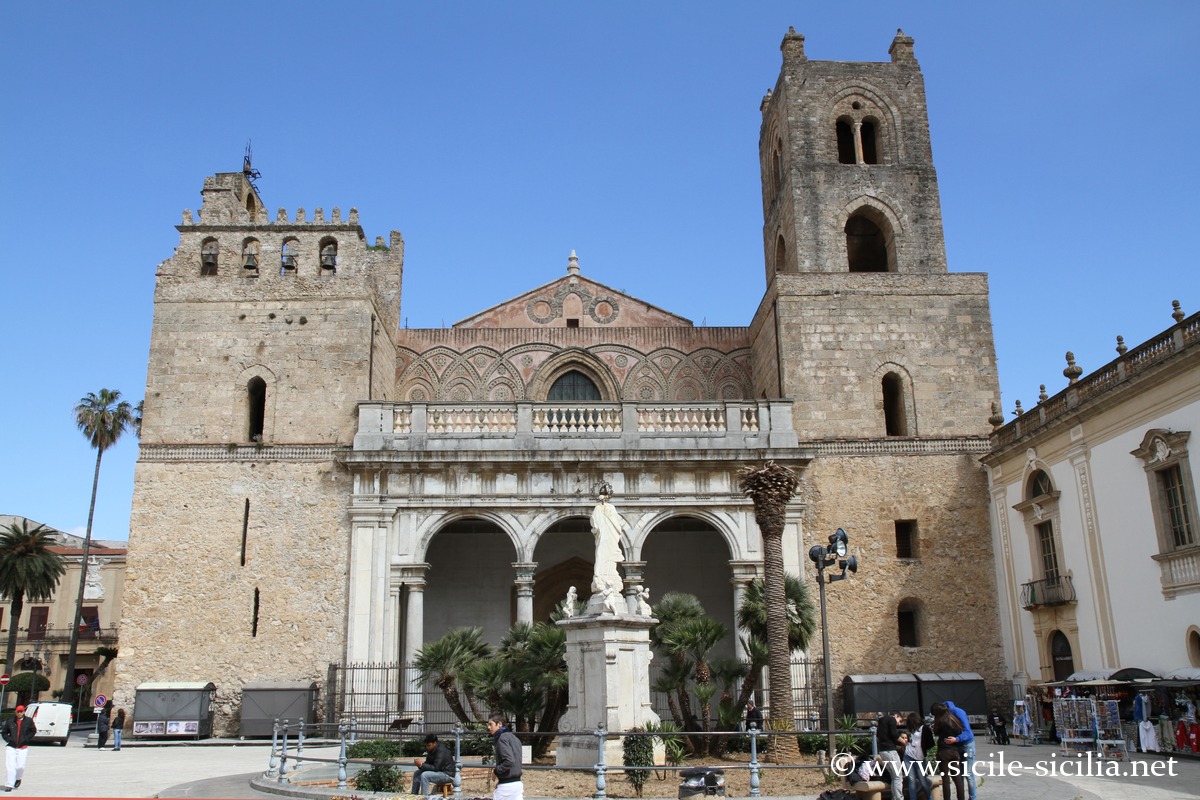
Façade of the cathedral
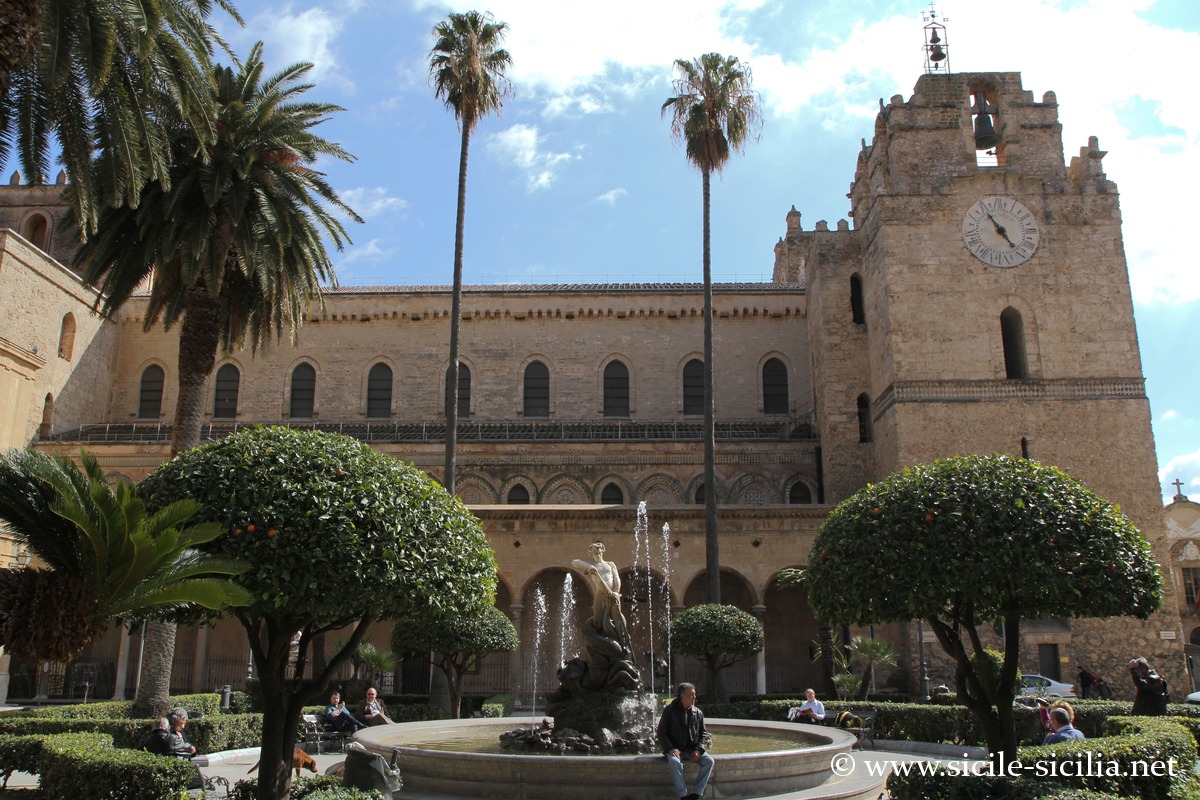
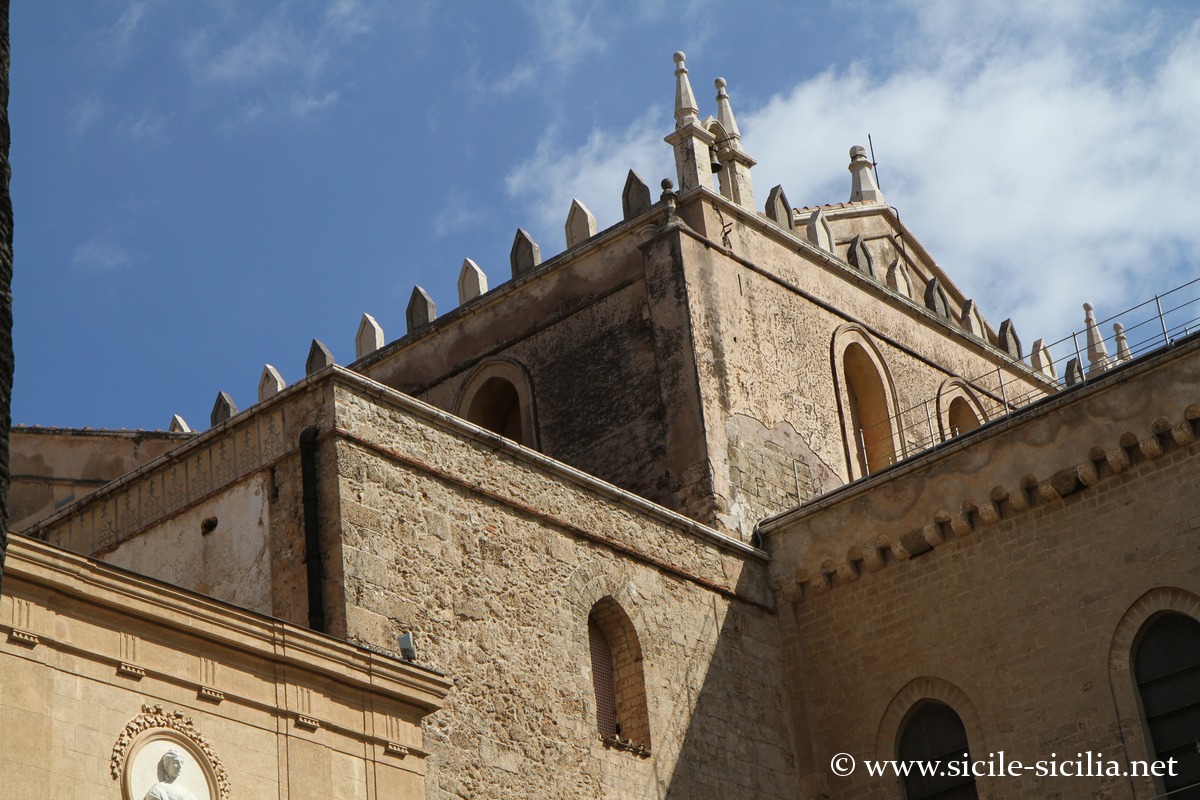
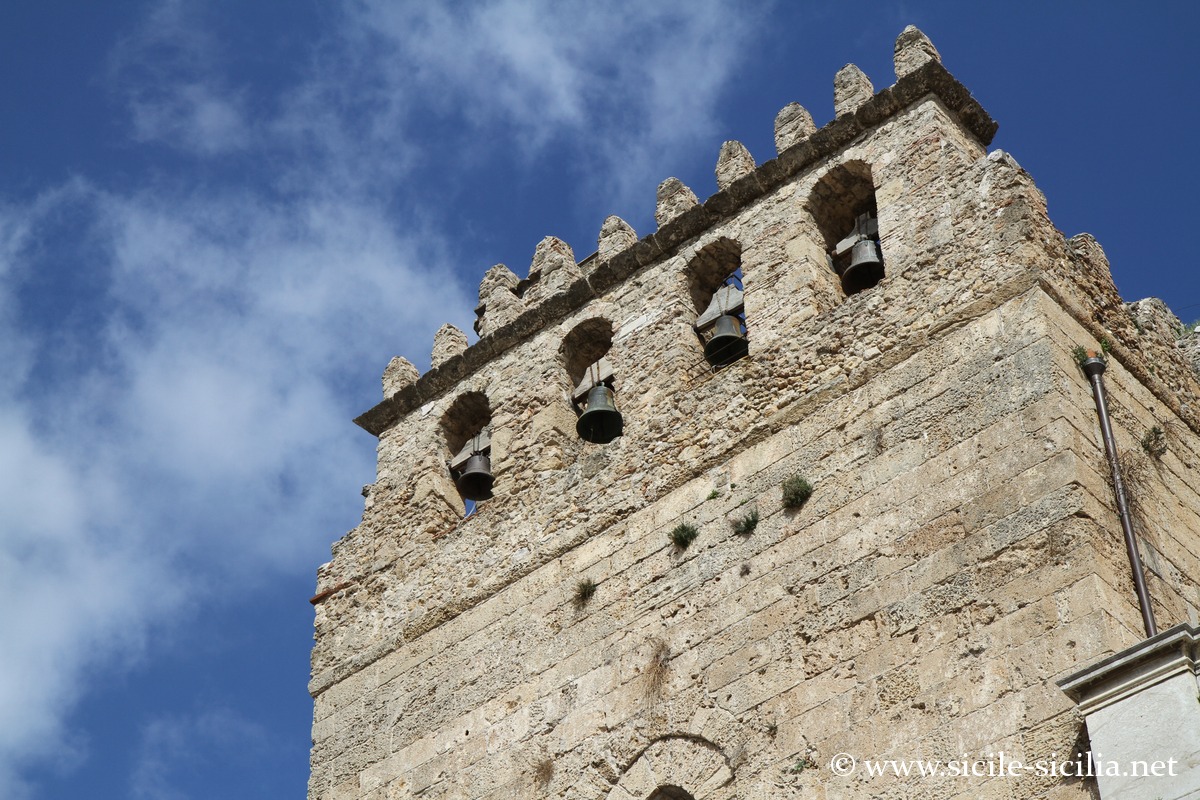
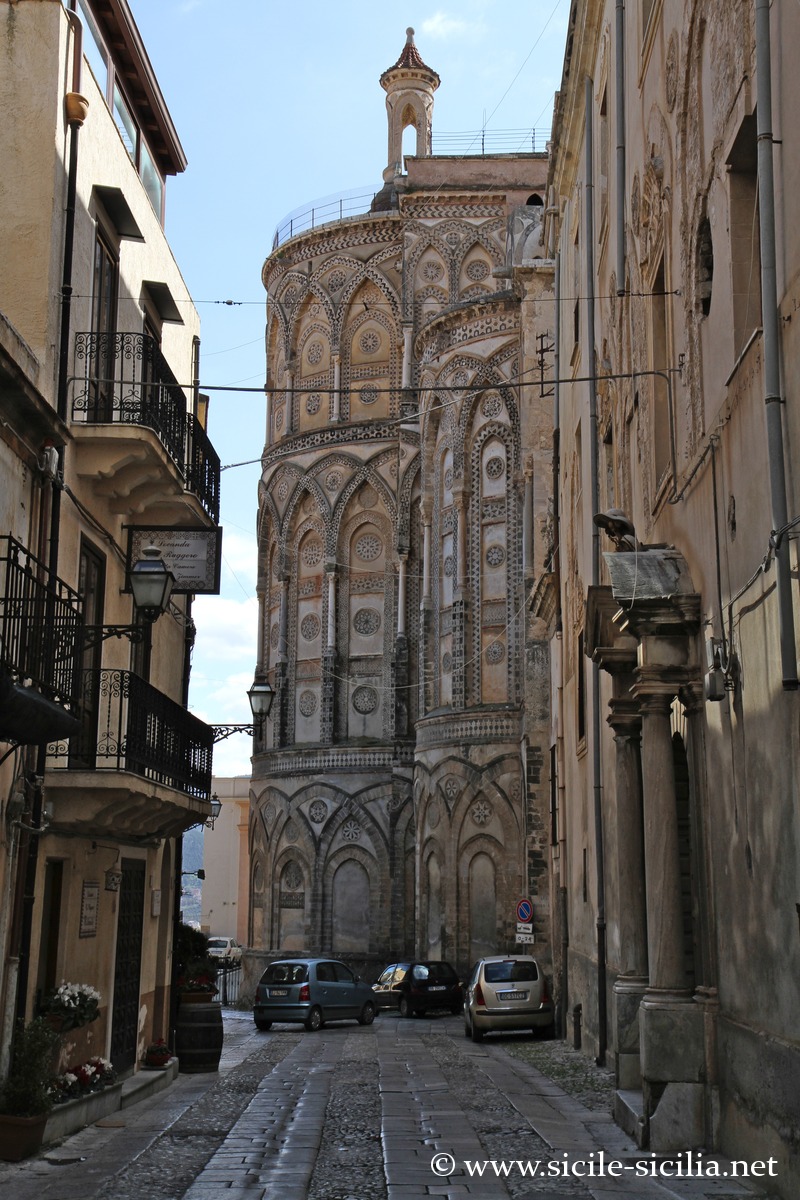
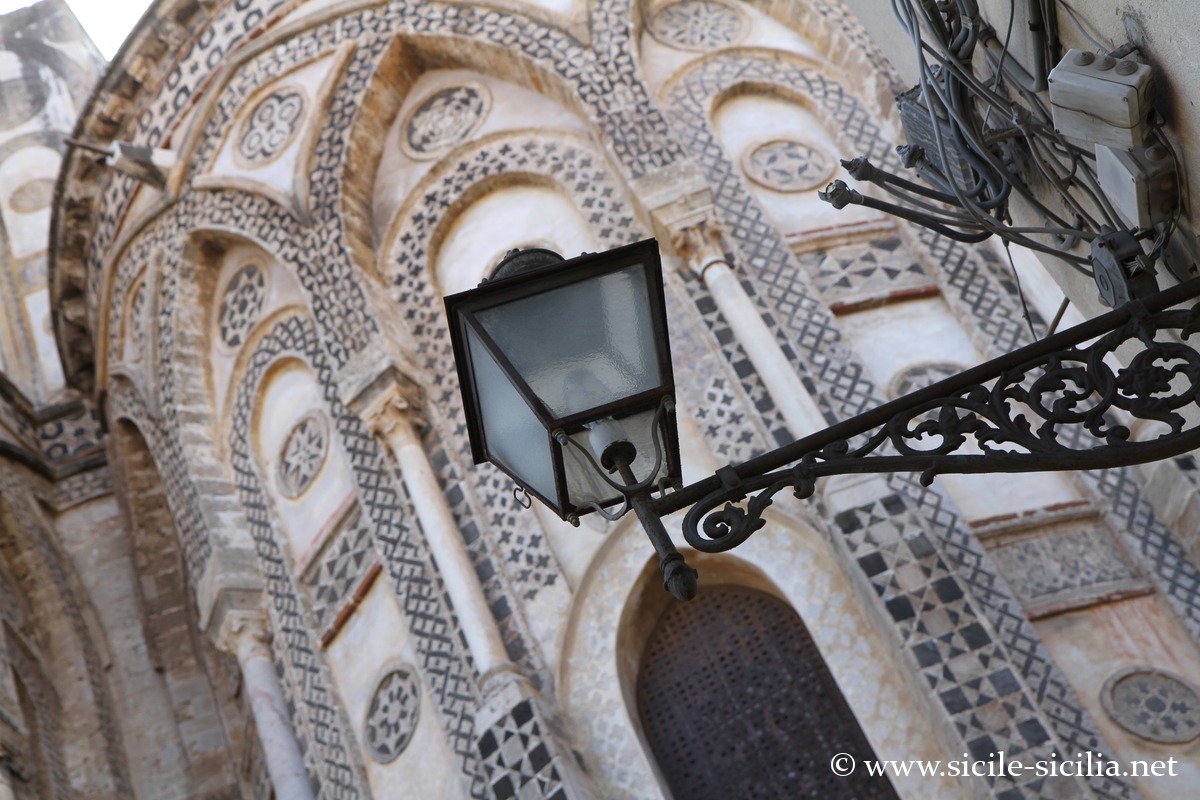
This Arab-Norman jewel displays a massive exterior, a typical example of Norman constructions, 102 metres long, with two great towers, one of which was partially destroyed, a Romanesque portal with bronze doors, an interior divided by pointed arcades, and large cycles of frescoes made under William II and Tancred of Sicily.
The cloister stands out with its 228 small columns, each bearing its own decoration, blending Provençal, Burgundian, Arab art and the Salerno style. The historiated capitals present a complex iconographic programme, alternating plant motifs, biblical scenes and symbolic figures.
→ Read the article on Monreale Cathedral, the complete visit of the building and the cloister.
Other buildings in Monreale and surroundings
Fountains of Monreale
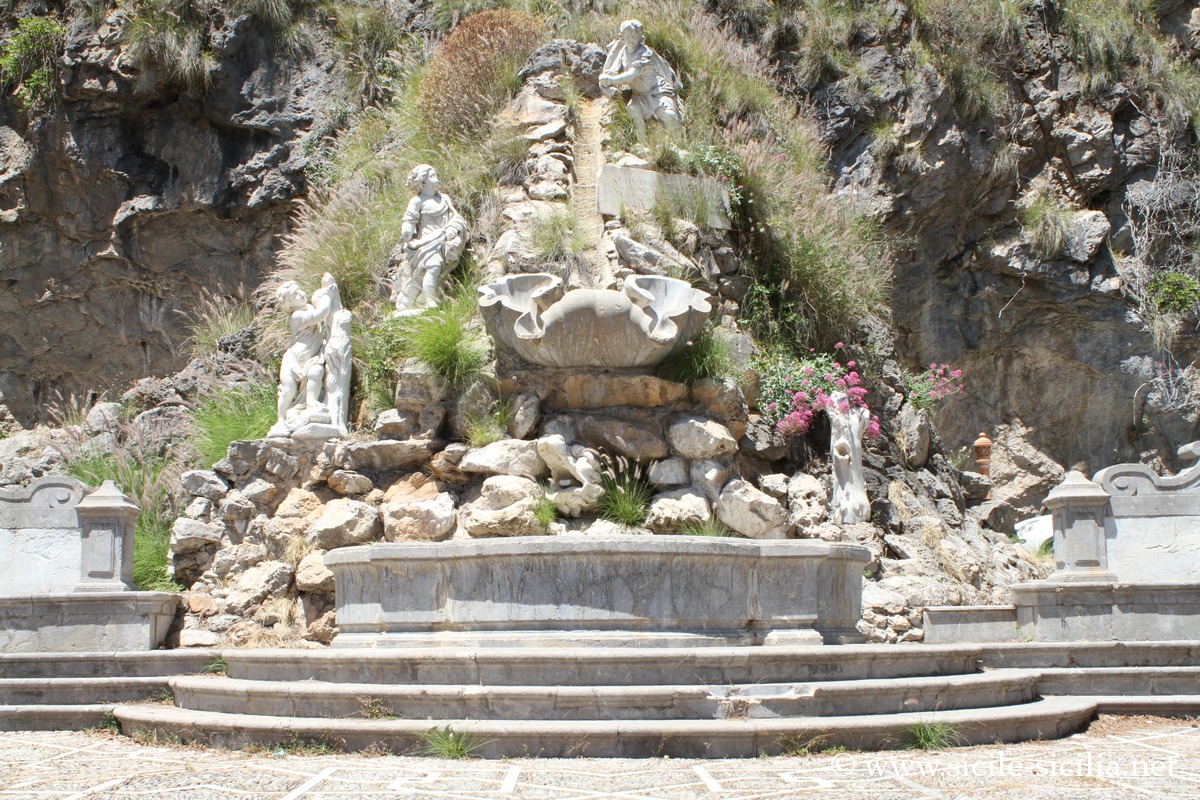
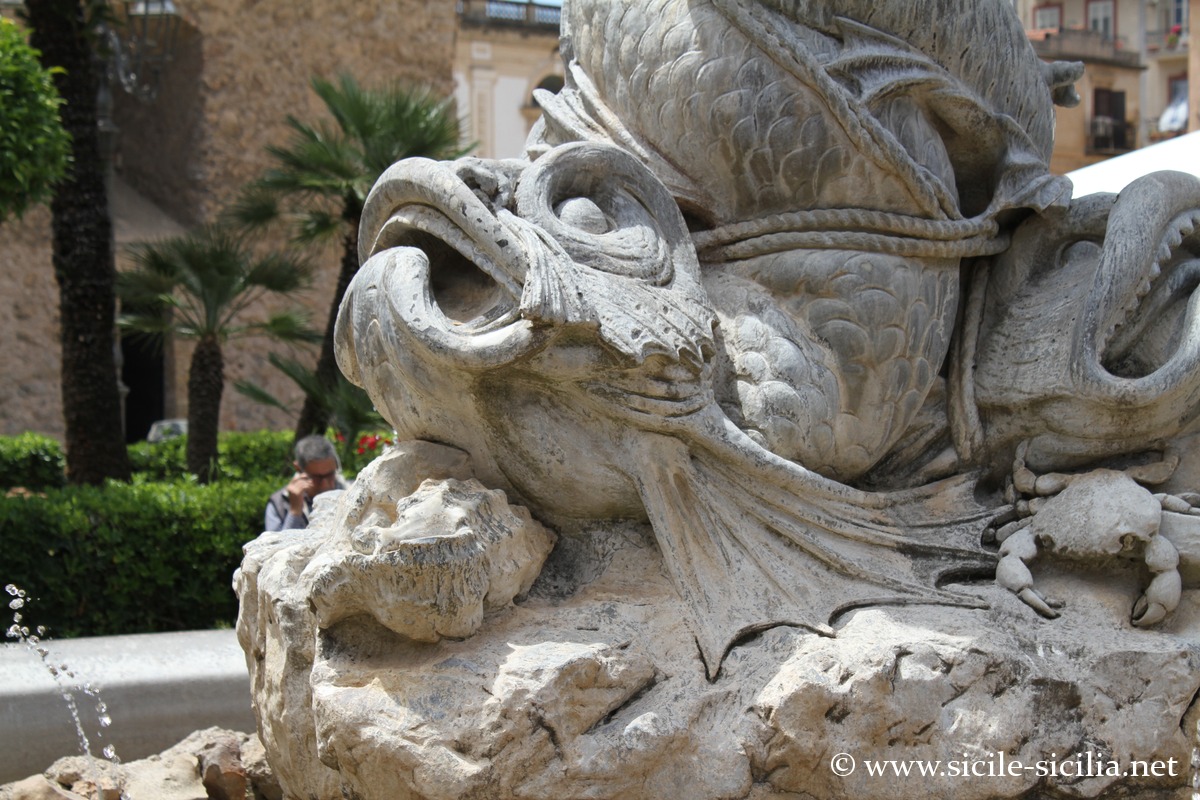
Fountain of the Dragon
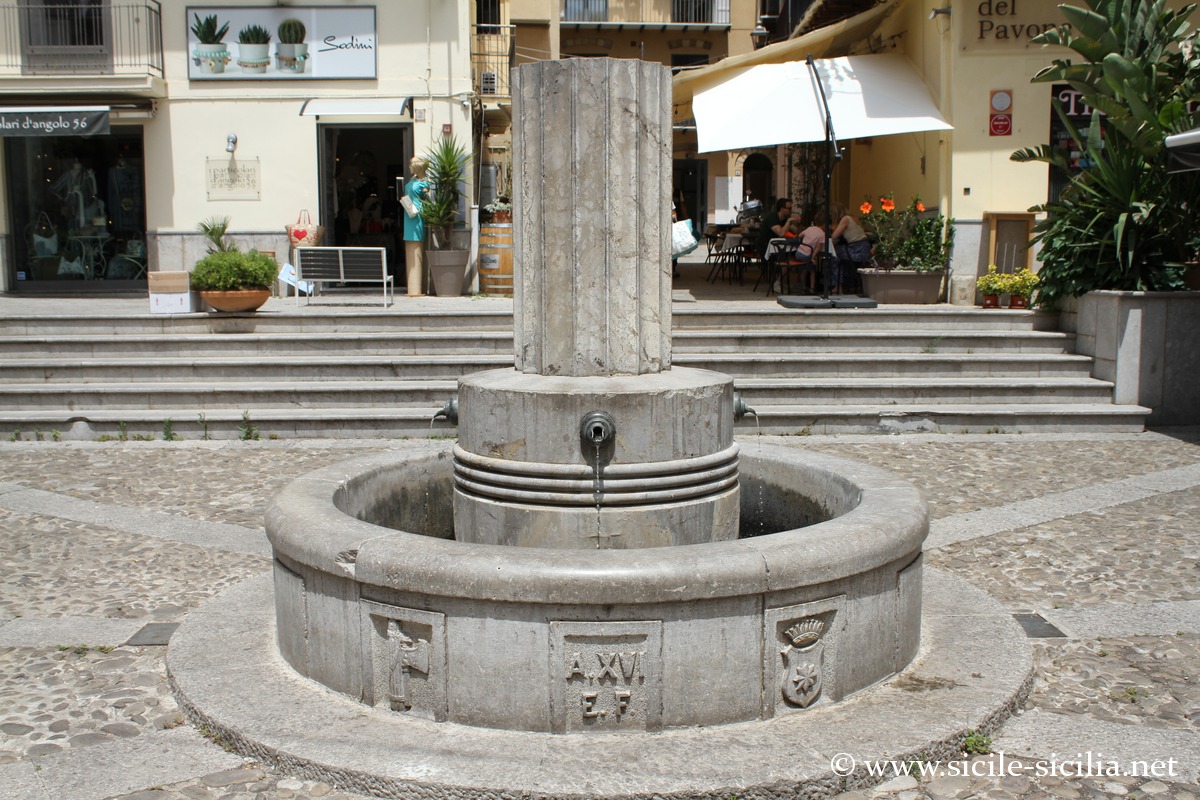
The fountains constitute a major urban element of Monreale, testifying to hydraulic mastery and civic decoration between the 17th and 19th centuries.
They are found along the panoramic Rocca-Monreale road built in the 18th century. The majority of these fountains is attributed to Ignazio Marabitti, a Palermo sculptor active in the second half of the 18th century.
- Fountain of the Pescatore (of the fisherman) in marble and stone with its cherubs, a polygonal basin.
- Fountain of the Dragon, by the same sculptor Ignazio Marabitti with its dragon and its cherubs.
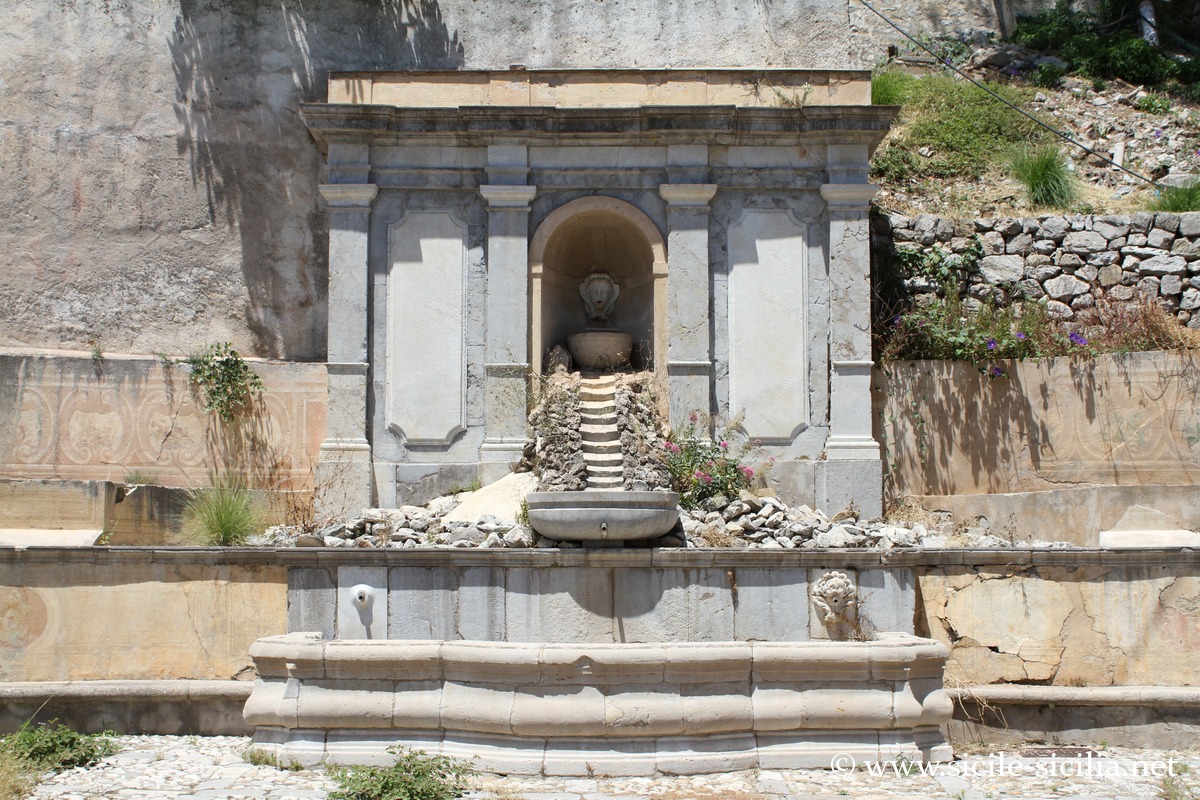
- Hemicycle Fountain, made for the poor of the town in marble and stone, of semi-circular shape;
- Before the main square, the Aedicule Fountain (or fountain of the Harpies) of 1665, in a niche surmounted by coats of arms;
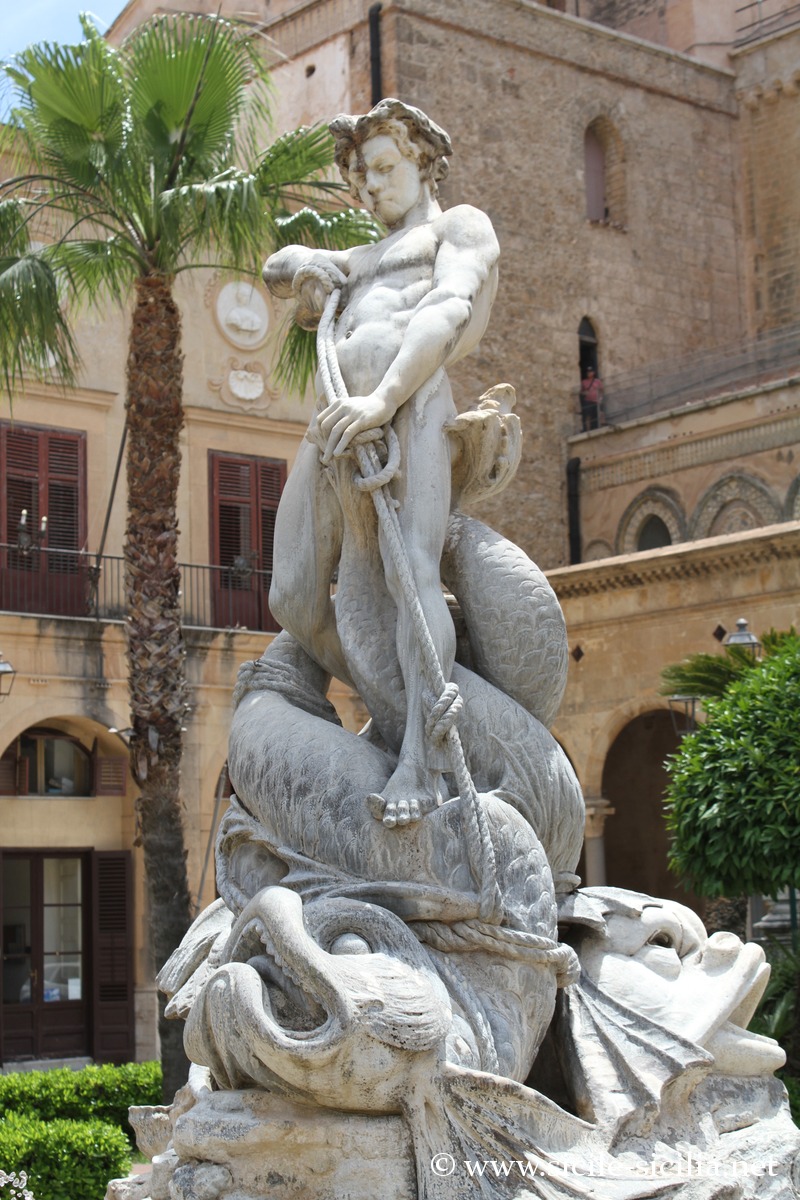
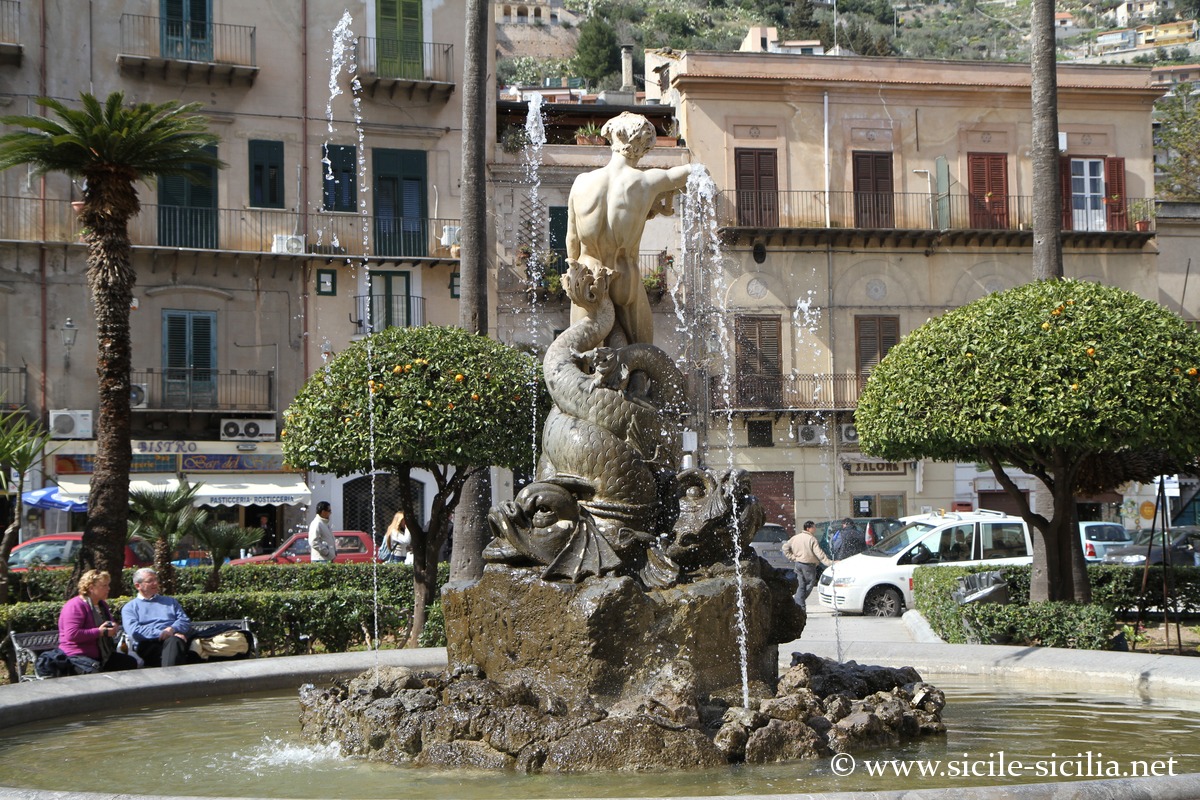
- In the centre of Piazza Vittorio Emanuele stands the beautiful Fountain of the Triton (Fontana del Tritone) of 1881 with its circular marble basin, and in the centre the triton man on the rocks, vanquishing the dragons that emerge from the waters.
- In the cloister is the superb little Fountain of the King (fontana del Re) with its column in the middle of the circular basin.
There are also other small and medium-sized fountains in various places in Monreale (read www.monrealetour.it/le-fontane-di-monreale).
Municipal Gallery “Giuseppe Sciortino”
Installed in spaces of the former Benedictine complex adjoining the Duomo, this gallery holds an important collection of Sicilian modern and contemporary art, enriched from the end of the 20th century by private donations
It notably includes works by Renato Guttuso, Giuseppe Migneco, Antonio Donghi and Carlo Levi, as well as a significant group of sculptures and paintings by Giuseppe Sciortino. It also presents Sicilian artistic ceramics and graphic works illustrating the realist and post-futurist movements of the 20th century.
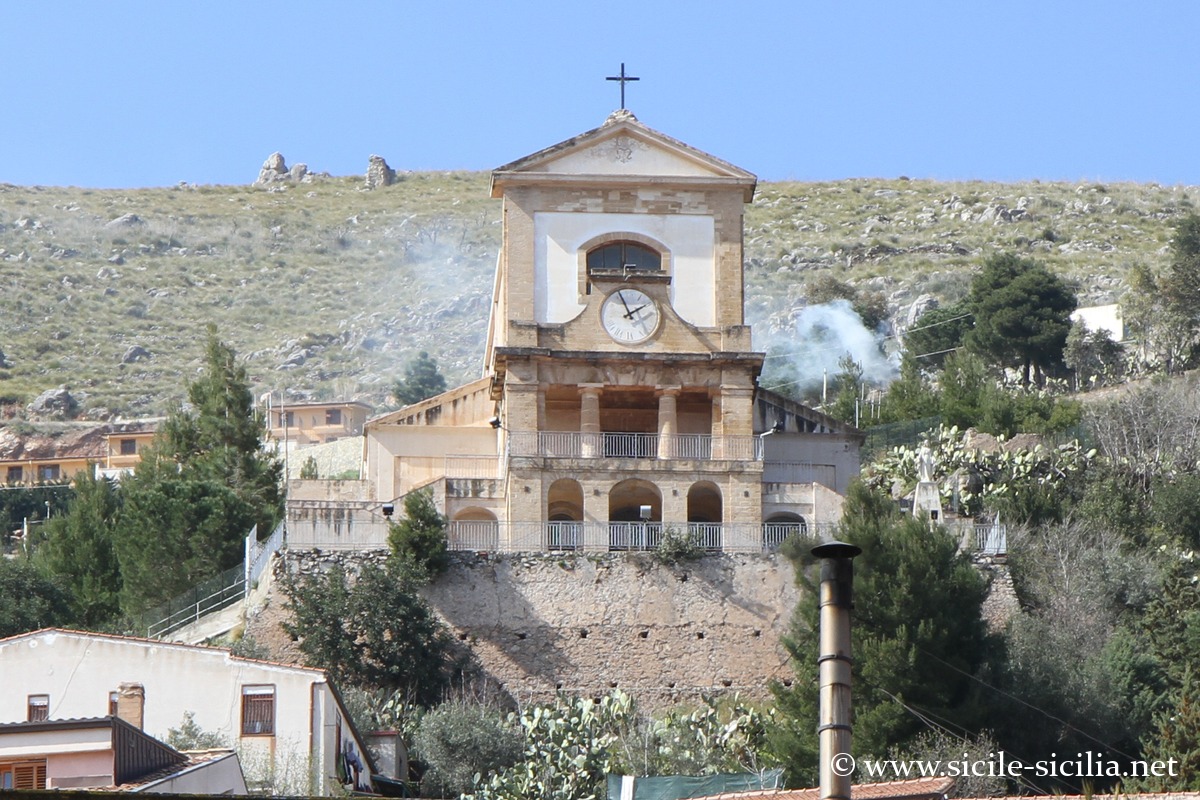
Sanctuary Madonna delle Croce
The sanctuary develops around an ancient Via Crucis route attested from the modern era, linked to a local Marian devotion rooted in medieval tradition. Its dominant position makes it a major religious and landscape landmark, offering an extensive view over Monreale and the Conca d’Oro.
The interior preserves a votive painting representing the Marian apparition, dated to the beginning of the 19th century, as well as several ex-votos linked to local pilgrimages.
Town Hall
It occupies a group of buildings located near the cathedral complex, integrating medieval structures deeply remodelled between the modern era and the 18th century. It incorporates parts of the former Norman royal palace of William II, recognisable in certain masonry and volumes. The current façade faces Piazza Vittorio Emanuele.
Villa del Belvedere
This garden corresponds to that of the former Norman monastic complex, transformed into a public space in contemporary times. It preserves monumental trees and above all an essential landscape function, serving as a natural belvedere over Palermo and the Conca d’Oro. It is home to several large ficus magnolioides, planted between the end of the 19th and the beginning of the 20th century.
Collegiate Church (Santa Maria la Nuova)
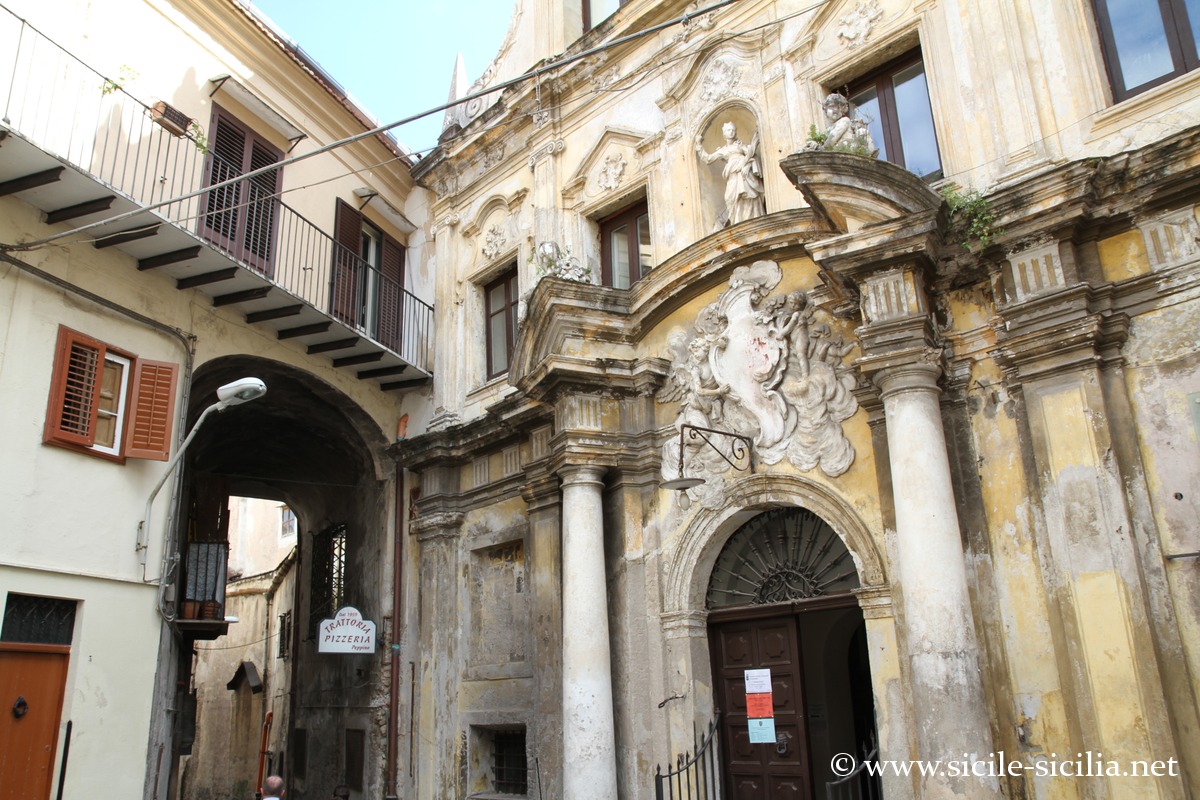
Founded in the 15th century, the Collegiate Church was remodelled several times between the Renaissance and the Baroque era.
It preserves the wooden statue of San Castrense, patron saint of Monreale, as well as several Baroque altars in polychrome marbles.
Cutò Palace
The Cutò Palace is an aristocratic building developed on earlier structures, probably linked to the medieval defensive system. Its elevated position suggests both a residential function and one of visual control of the territory, illustrating the settlement of noble families in the orbit of the ecclesiastical power of Monreale. It preserves an inner courtyard and a panoramic terrace offering a direct view of the Conca d’Oro and Palermo. Part of the building is today converted into bed-and-breakfast accommodation, integrated into the historic residence.
Visitable by reservation: enquire at the Monreale tourist office.
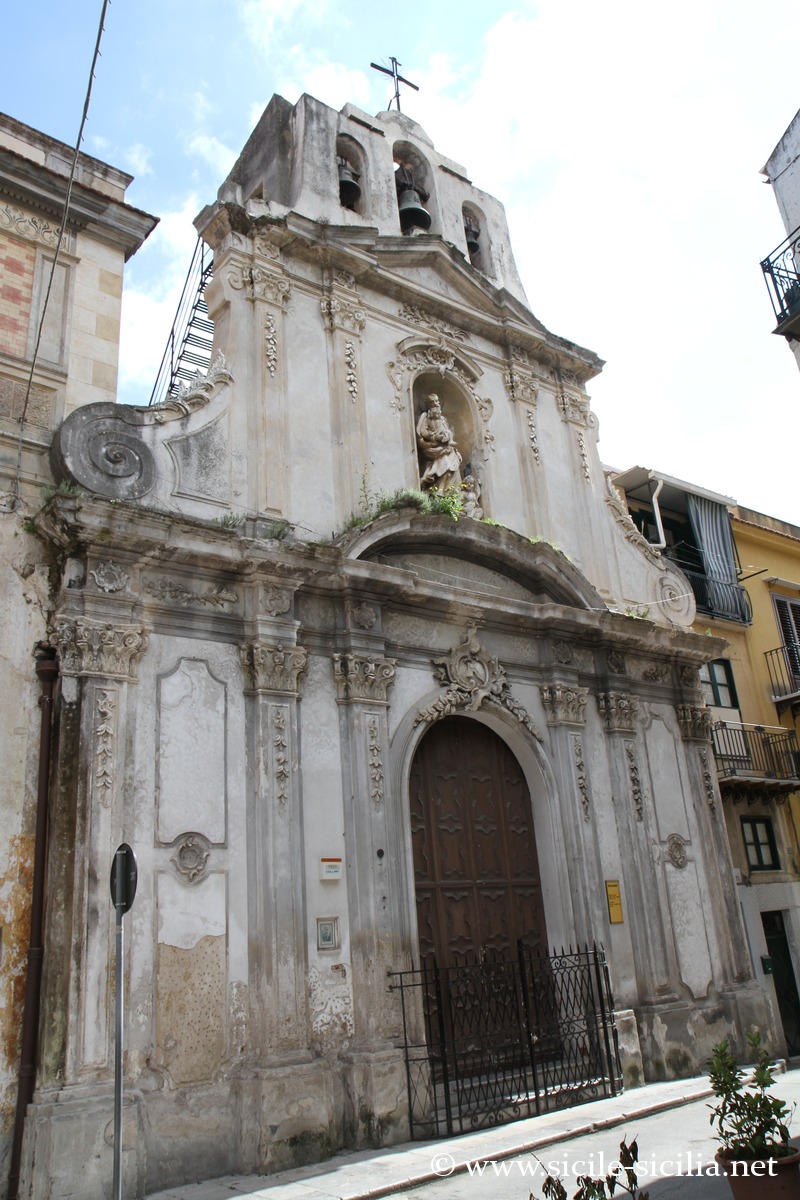
Church of the Santissimo Crocifisso
This church is a fundamental building for the parish history of Monreale, linked to a very ancient popular devotion to the crucified Christ.
It houses a statue of the crucified Christ venerated during penitential processions, as well as sober Baroque interior decorations.
Monumental Cemetery of Monreale
The monumental cemetery of Monreale, laid out in the 19th century, presents a significant ensemble of funeral chapels, sculptures and epitaphs representative of contemporary Sicilian funerary art. There are family chapels adorned with neoclassical and realist sculptures, as well as funeral monuments dating from the second half of the 19th century.
Ancient aqueducts and medieval cisterns
The ancient aqueducts and medieval cisterns of Monreale were part of a complex hydraulic system intended to supply the monastery, the archbishop’s palace and the gardens. Heirs to ancient and Islamic traditions, they bear witness to the mastery of water as a structuring element of Norman power and territorial organization.
Some vaulted cisterns and underground conduits can still be traced in the urban fabric and around the cathedral complex.
Around Monreale
Castellaccio
This fortified convent of Norman architecture built on Monte Caputo which overlooks Monreale at 764 metres of altitude was built in the 12th century by King William II, possibly by remodelling an older building, at the same time as the cathedral and the monastery.
It is the only example of a fortress monastery in western Sicily, intended to protect Monreale and control the valley within a wider defensive system.
It was called Castellaccio probably because of its sad state of preservation.
The enclosure has curtain towers, walls 1.50 metres thick, and numerous loopholes. The main monument is 80 metres long.
The interior has a residential sector around a courtyard, today without a roof, and a monastic sector, including a church and another courtyard.
In the 14th century the troops of Giovanni Chiaramonte damaged the fortress to dislodge Catalans who had entrenched themselves there. It was later restored but began to be abandoned from the 16th century onwards.
It now houses an alpine refuge.
San Martino delle Scale
Founded in the 6th century, this abbey was rebuilt in the 14th century. Tradition attributes the initial foundation to Saint Benedict, although the first documentary attestations are medieval.
It preserves numerous architectural elements from several eras, and the present ensemble results mainly from building campaigns between the 15th and 18th centuries.
The exterior of the church is sober. The interior decorations were made by the great artists of the period, such as Zoppo di Gangi, Filippo Paladini, Paolo De Matteis and Guglielmo Borremans.
The nave is cut by the transept, surmounted by a dome, with a Madonna with Saint Benedict by Pietro Novelli (1634), a baptismal font of 1396 and a 15th-century portal.
The altars are dedicated to Saint Benedict (18th century) with a painting by Pietro Novelli (17th century), and the other shows the San Martino by Filippo Paladini.
It houses one of the most beautiful wooden choirs in Italy, from the Mannerism of the late 16th century, commissioned from the Neapolitans Ferraro and Vigliante. It consists of 68 stalls on two levels, with six large canvases made by Paolo De Matteis (1727).
The rich stucco decorations date from the beginning of the 17th century.
Photo gallery
Where Monreale is located in Sicily: map
If you see this after your page is loaded completely, leafletJS files are missing.
Information
Suggested visits
External sites
- Wikipedia page
- Tourism of the municipality of Palermo: turismo.comune.palermo.it
- Official website of the cathedral: www.duomomonreale.com
- Tourist portals: www.monrealetour.it
Comments in other languages
On the other side of the cloister, there is a beautiful view when going down toward the Villa del Belvedere, especially at the end of the day, over the Conca d’Oro and Palermo.
Not far from the cathedral, Forno Litria is a typical forno, with its wood-fired oven that makes “pane cunzato” the old-fashioned way, and simple, tasty pizzas.