

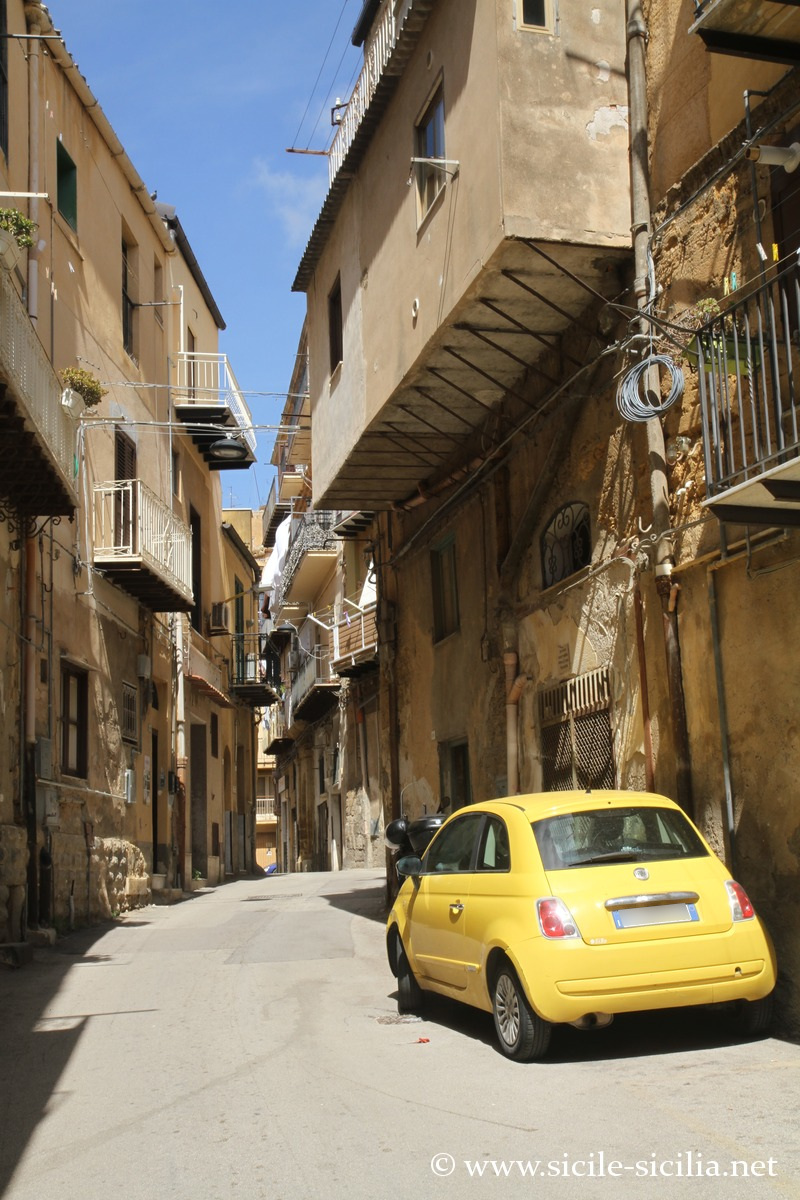
It is on a hill, named Girgenti, that the historic centre of Agrigento extends, made up of winding alleys and stairways that are sometimes a little demanding. It is often overlooked by passing visitors, even though one discovers beautiful places and a long history there.
The two main streets that cross it are the pretty Via Atenea and the panoramic Viale della Vittoria, from which one enjoys a fine view over the Valley of the Temples and the sea. The ancient city walls had 14 gates.
This urban fabric is of typically Arab origin, built between the 9th and 15th centuries, and preserving medieval buildings, monasteries, churches and palaces, including the San Gerlando Cathedral, the Basilica of Santa Maria dei Greci, the bishop’s palace and the monumental monastic complex of Santo Spirito.

Historic centre of Agrigento 
Historic centre of Agrigento 
Santo Spirito Monastery
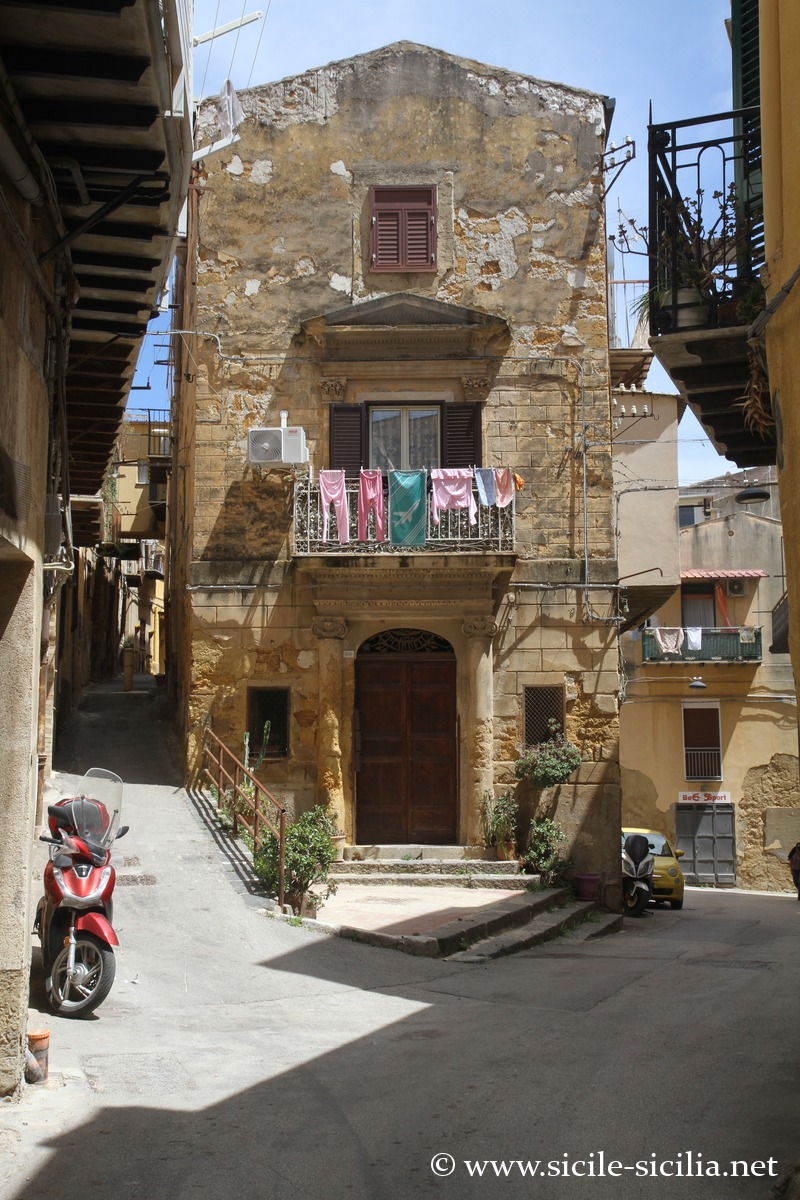


What to see above all in the centre of Agrigento
- San Gerlando Cathedral
Built on the ridge overlooking Via Duomo, it is the main religious monument of the upper town. The building preserves Norman elements, Gothic phases and Baroque interventions, as well as an important treasury linked to the figure of San Gerlando. - Church of Santa Maria dei Greci
Built over an ancient Doric temple, whose base and some vestiges integrated into the floor can still be perceived. It is one of the points where the link between the Greek period and the medieval period is most tangible. - Cistercian Monastery of Santo Spirito
Founded by the Chiaramonte in the 13th century, it groups together the Gothic-Chiaramonte church and the adjoining conventual spaces. The complex is remarkable for its medieval and Baroque stratification. The monastery is also known for the traditional production of convent pastries. - Via Atenea and its alleys
Main axis of the historic centre, lined with palaces, oratories and religious buildings. The side alleys, older and steep, preserve the medieval structure of Girgenti. - Church of San Domenico and the cloister
Former Dominican complex, today a museum and cultural space. The cloister is one of the best-preserved architectural settings in the centre. - Panoramic viewpoints of the upper town
From the cathedral area and the natural terraces of the old town, one enjoys extensive views over the Valley of the Temples and the sea, without having to leave the old centre. - Pirandello Theatre
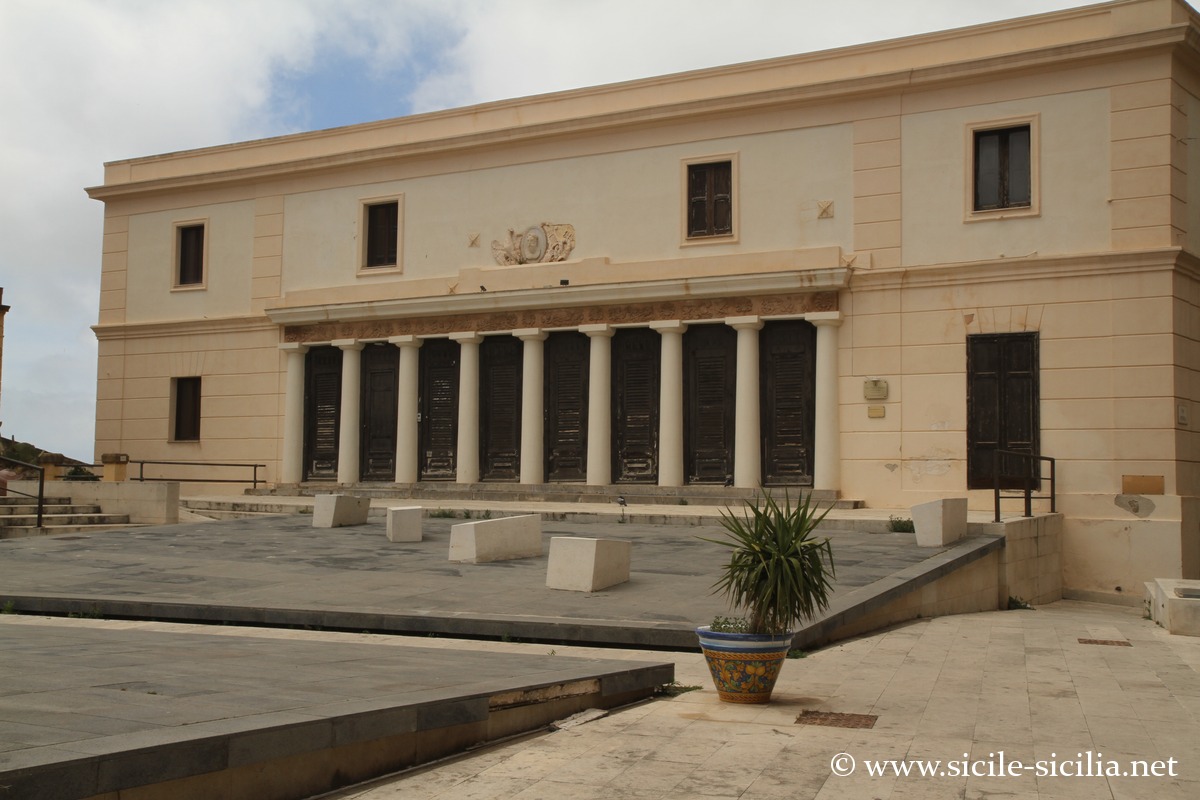
Integrated into the Palazzo dei Giganti, it was built in the second half of the 19th century and constitutes an essential marker of the modern development of the city. The interior has a decor inspired by the Art Nouveau style. - Picture Gallery and civic museums
Housed in several historic buildings, they preserve paintings, modern works and collections linked to Sicilian artists and to the history of the city.
San Gerlando Cathedral of Agrigento
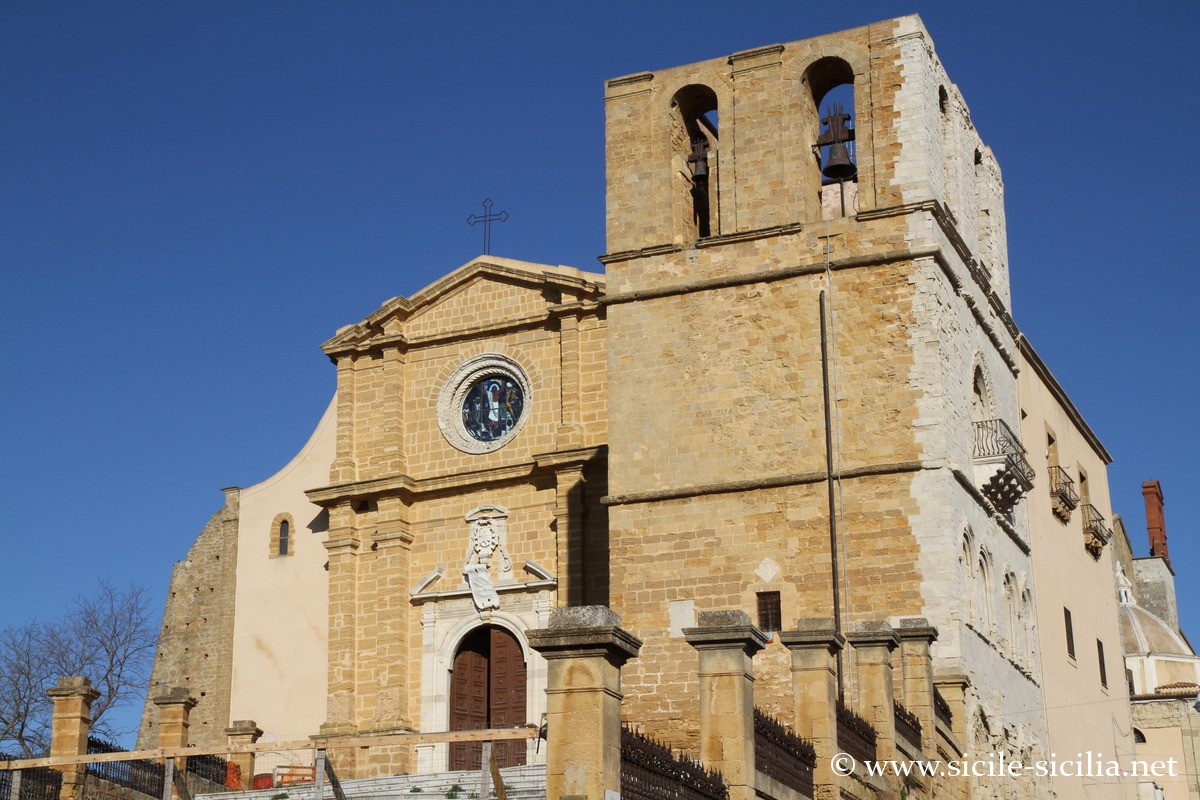
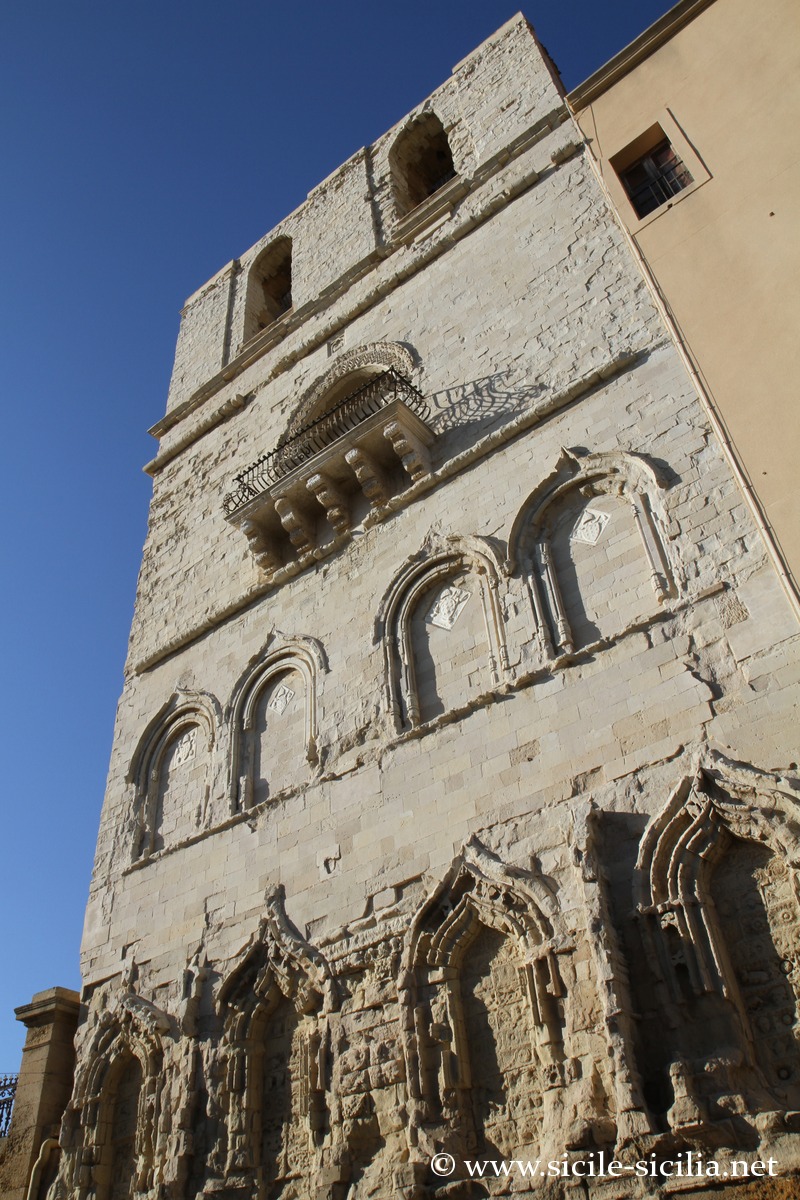
The San Gerlando Cathedral, founded towards the end of the 11th century, is in a Norman-Gothic style, with an unfinished 15th-century bell tower, the result of nine centuries of construction and alterations. Originally, the remains of the temple of Jupiter Atabirius were still there. It was rebuilt in the 13th century, and the bell tower dates from the 15th century. In the 16th and 17th centuries the nave was enlarged and new chapels were built. The current facade dates from the 17th century.
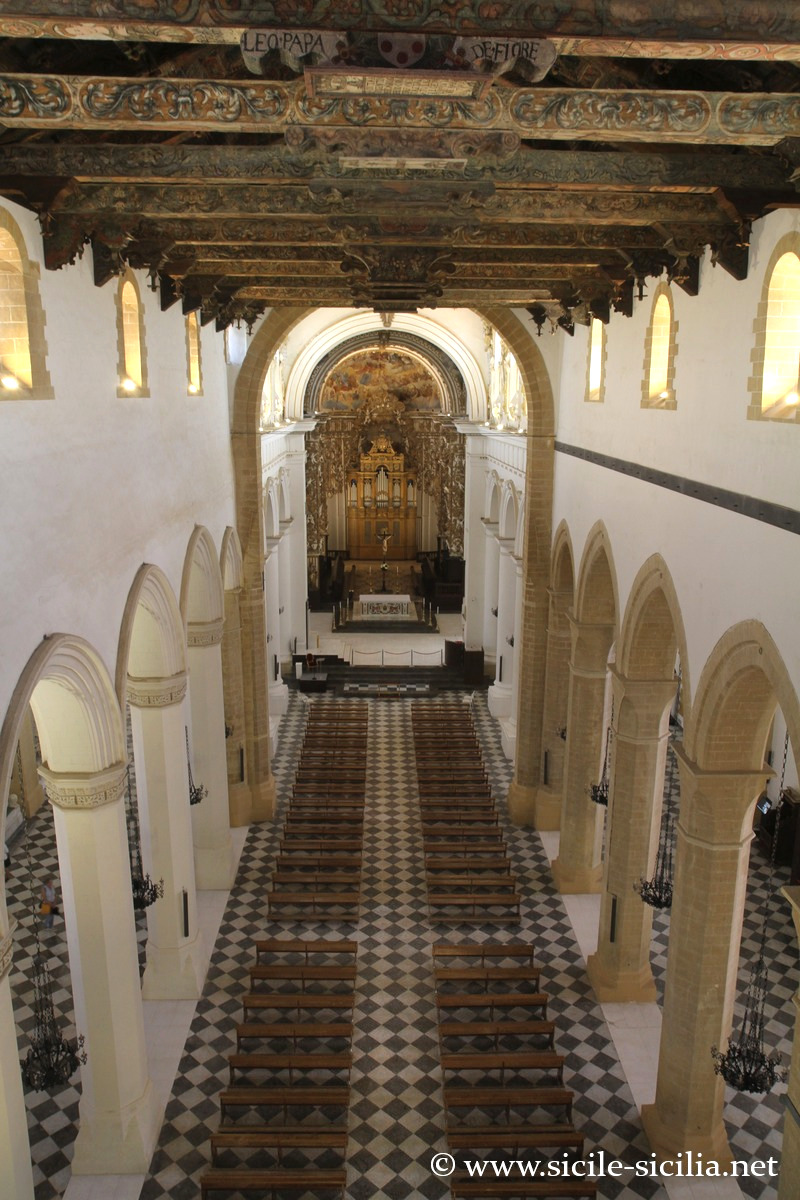
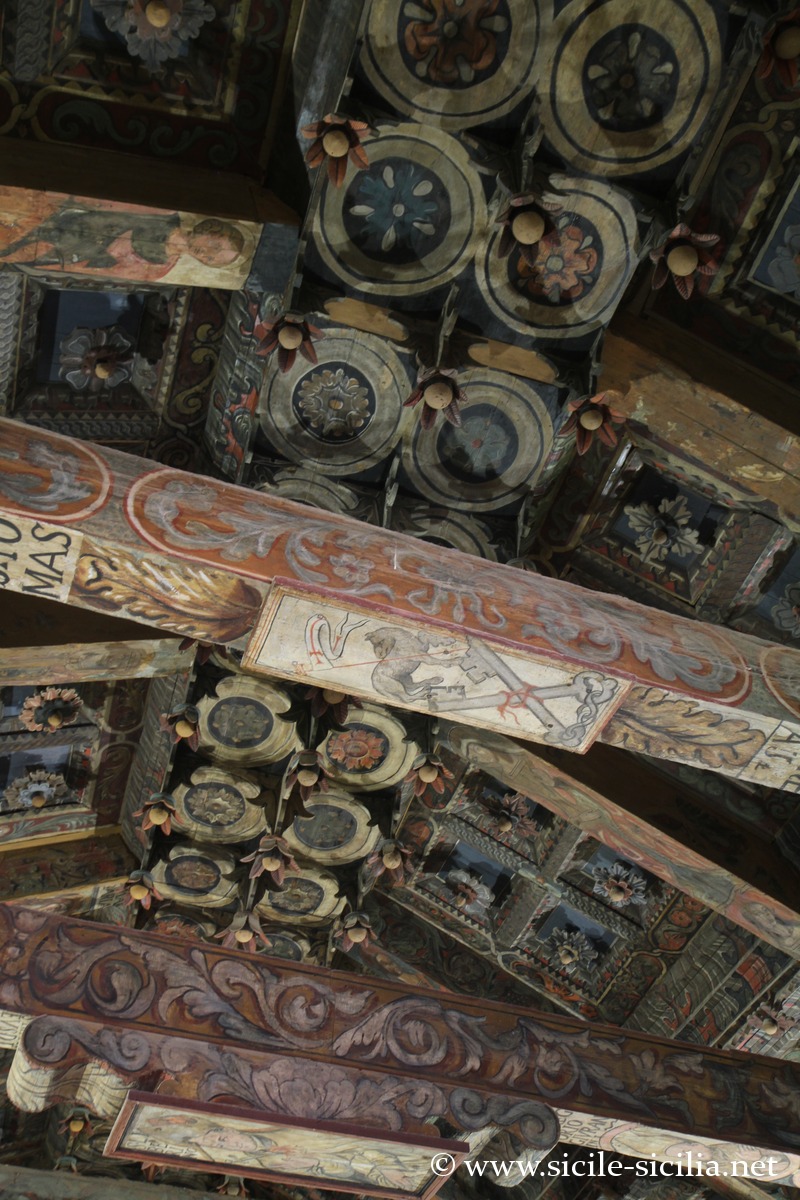
The building stands at the top of a staircase, nearly 100 metres long, with a superb painted wooden ceiling from the early 16th century depicting saints and family coats of arms. 17th-century coffers complete it, with the double-headed eagle representing the emblem of Charles V. The dome, painted at the end of the 18th century, illustrates the cardinal virtues.
The west side of the church dates from the 13th and 14th centuries, the east from the 15th and 16th centuries, and the transept from the 12th century.
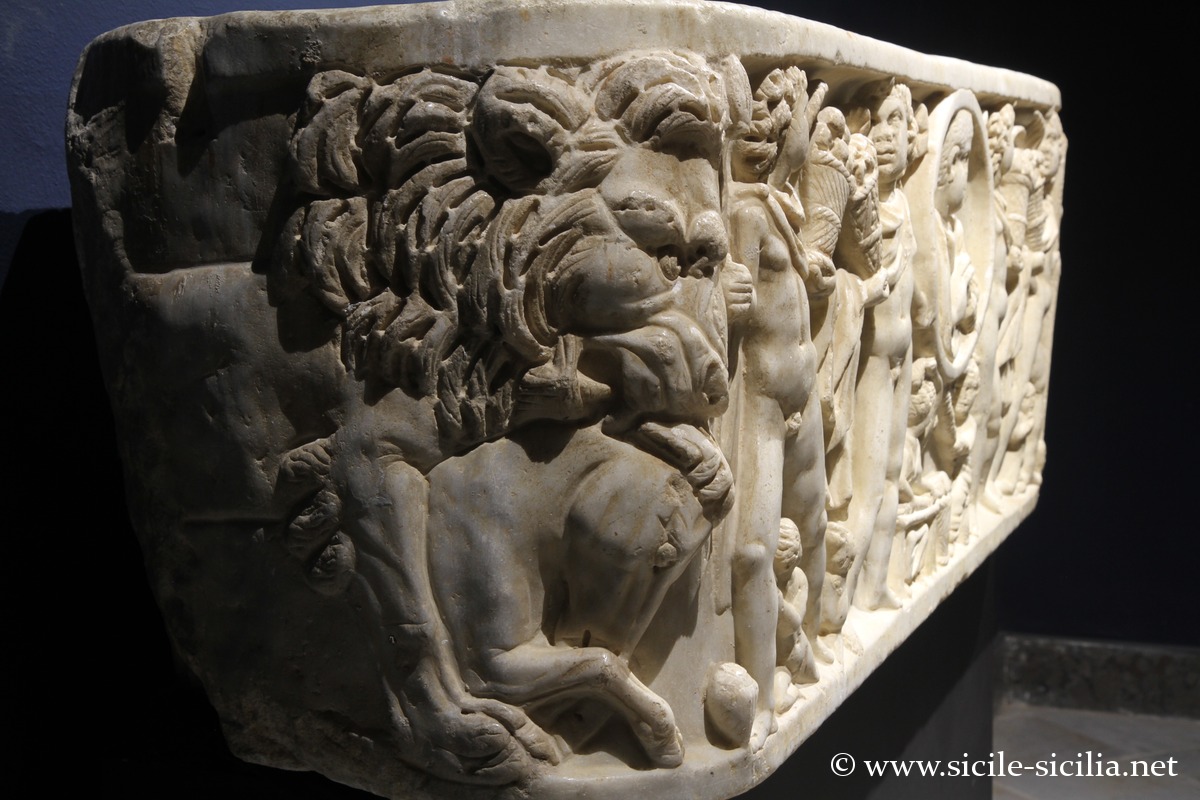
In the treasury several sarcophagi from the Greek and Roman periods are preserved.
It is possible to climb the towers for a view over the city.
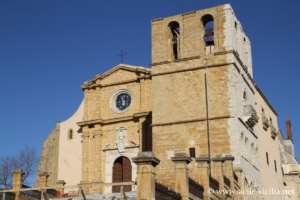
Facade of San Gerlando Cathedral 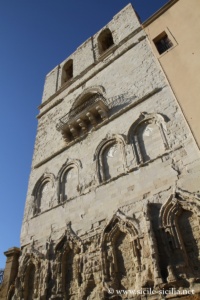
Bell tower of San Gerlando Cathedral 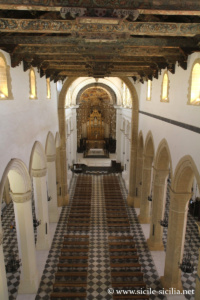
Central nave of San Gerlando Cathedral 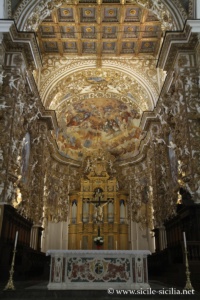
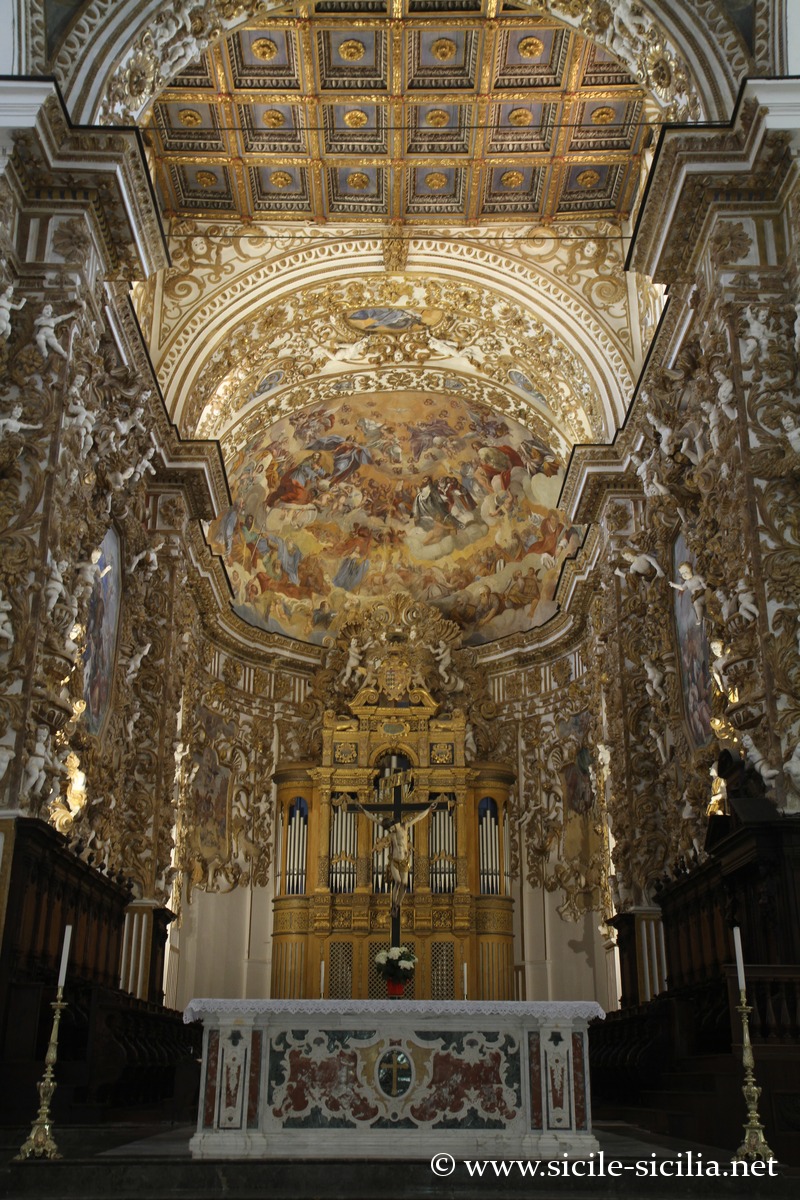
Apse of the cathedral 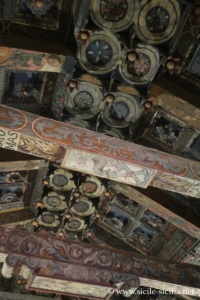
Ceiling of the cathedral 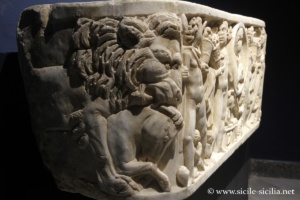
Sarcophagus of the Donne Coronarie, treasury of the cathedral 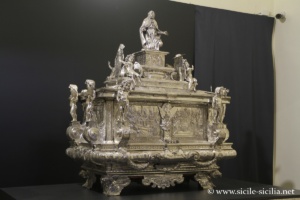
Reliquary urn of San Gerlando

Church of Santa Maria dei Greci
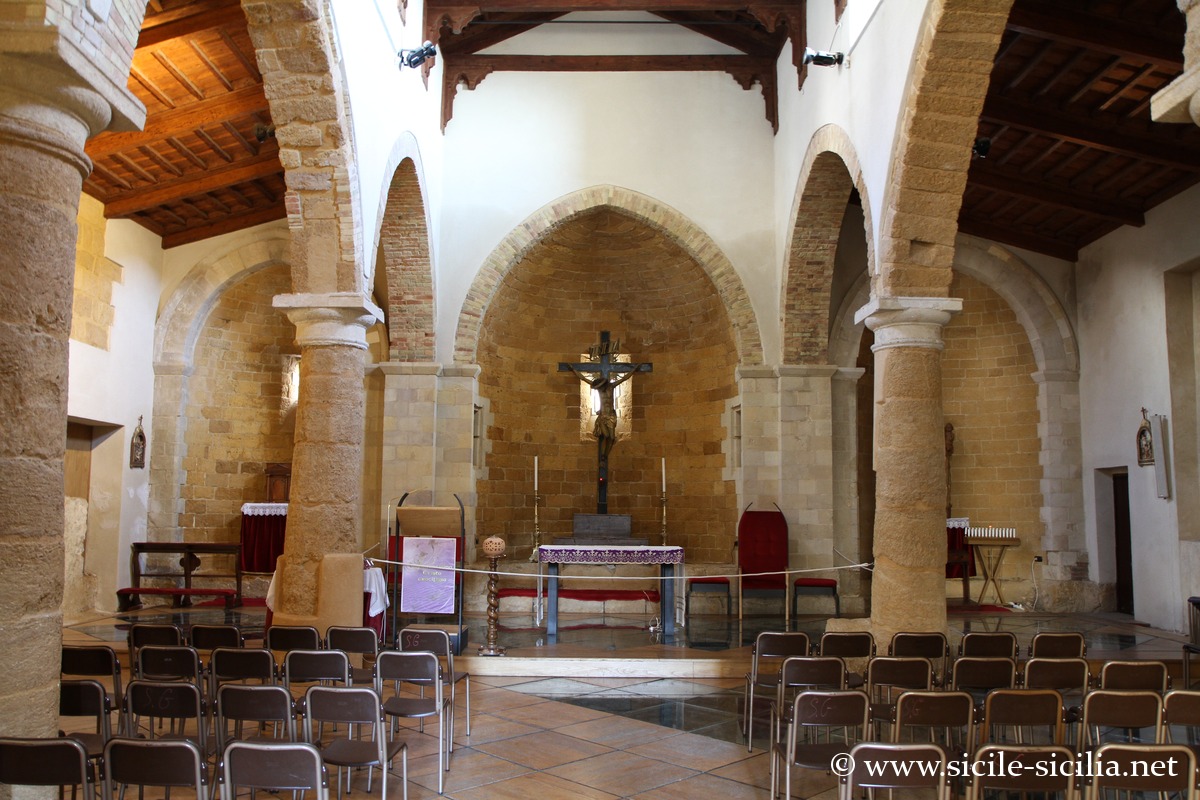
The Church of Santa Maria dei Greci, originally of Greek Orthodox worship, is located in the oldest part of the city. It was built in the 12th century, on the basis of a Doric temple from the 5th century BC, perhaps dedicated to Athena.
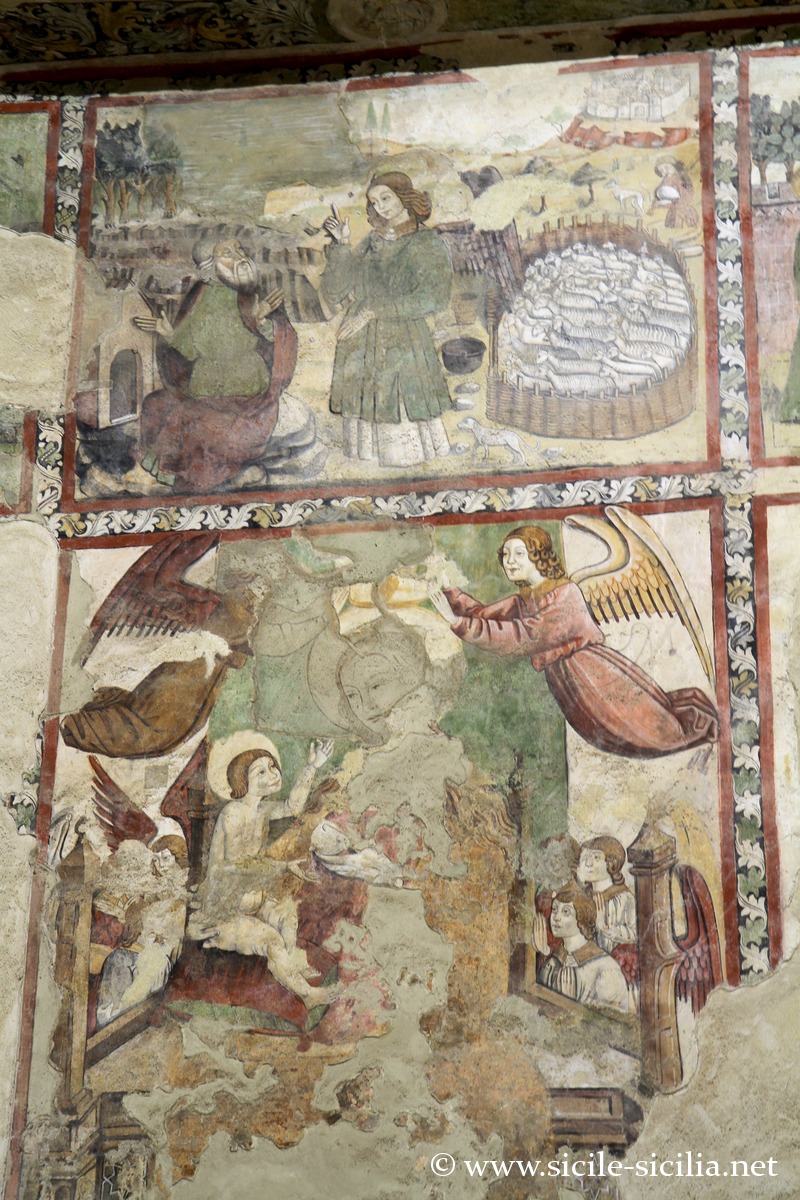
The simple Arab-Norman facade dates back to the 13th century and inside, with its three naves, the walls support a wooden roof structure and bear remains of 14th-century frescoes.
From the left side, one can access views of the remains of the ancient temple, including its foundations, base and a few columns.
Church of Santa Maria dei Greci 
Church of Santa Maria dei Greci 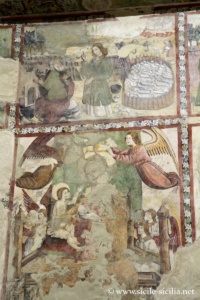
Old frescoes of the church
Santo Spirito Monastery
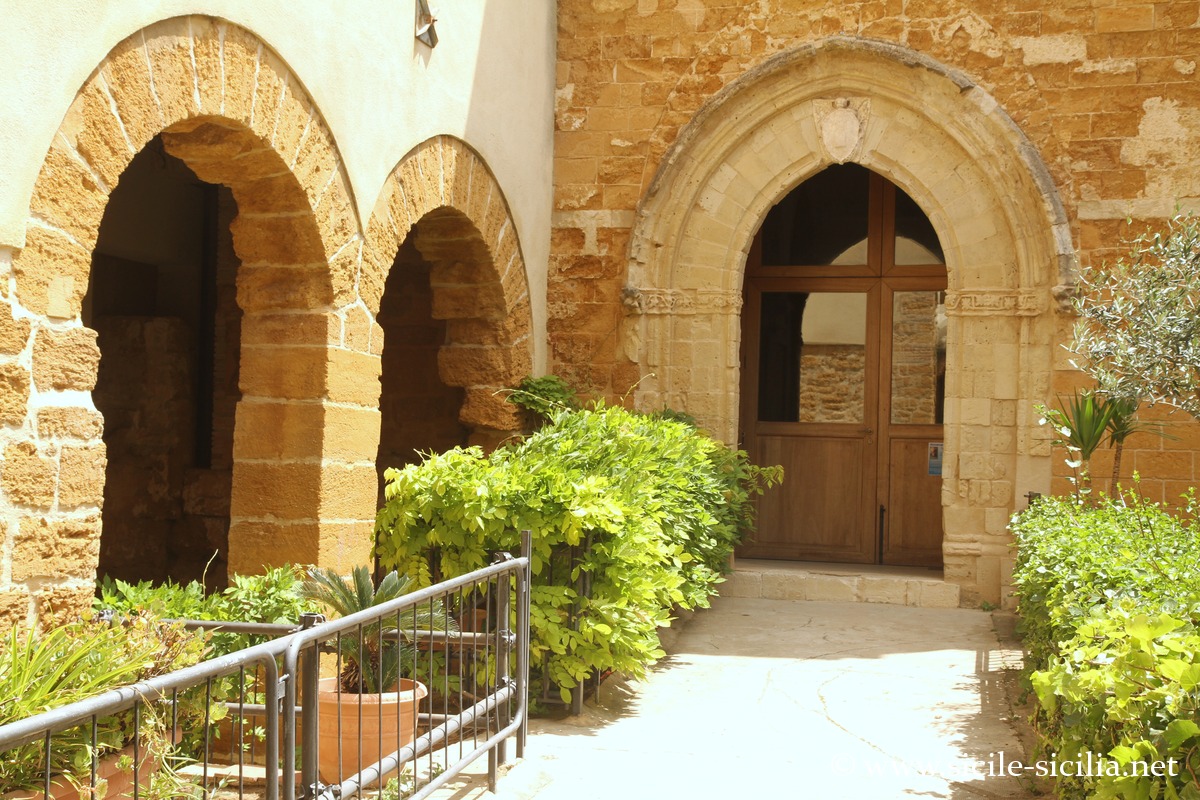
The abbey of Santo Spirito was built in 1260-90, with a church and a Cistercian monastery, thanks to a donation from the wife of Federico Chiaramonte, Marchisia Prefoglio. The complex is known locally as the “Badia Grande”. It features different styles such as Catalan, Gothic and Baroque, among the facades, portals and the bell tower.
The interiors and their decorations span from the 13th to the 18th century. It preserves a magnificent cloister, with Gothic portals.
On the facade the church has a magnificent portal and a beautiful Baroque rose window, in Catalan styles. Two other smaller portals are also richly decorated.
The 18th-century late Baroque interior is adorned with numerous stuccoes and preserves traces from the 14th century, a 16th-century holy water font, a Madonna by Gagini and a coffered wooden ceiling with geometric patterns from 1758 (where the coats of arms of the Chiaramonte family are painted). The apse is decorated with the sculpted scene of the Glory of the Benedictine saints Benedict and Bernard.
Today, collections of the ethno-anthropological museum are housed there. (see further on).
Nowadays, the nuns still make almond and pistachio sweets.

Santo Spirito Monastery 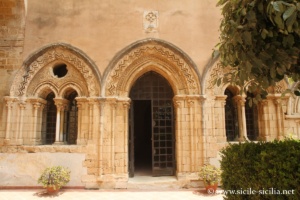
Portals of the church, Santo Spirito Monastery 
Apse of the Church of Santo Spirito 
Refectory of the Santo Spirito Monastery 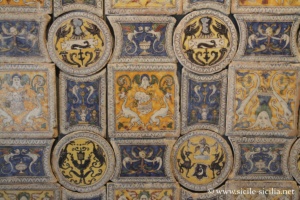
Ceiling of the monastery 
Ethno-cultural museum, Santo Spirito Monastery


Suggested itinerary in Agrigento
Loop made starting from the surroundings of the eastern entrance of the old town of Agrigento, near the Porta di Ponte.
- Belvedere Arancio
Just outside the walls, on the eastern side, with its small park, renowned for its panorama over the Valley of the Temples down to the sea. - Villa Bonofiglio,
Historic municipal garden, where the city’s monument to the fallen in the 20th-century wars stands, with a circular fountain topped by a stele. - Church of San Calogero
The sanctuary of San Calogero in Agrigento dates from the 13th–14th century, located outside the ancient city walls. It was rebuilt in the 16th century by a local confraternity and officially recognized for the worship of San Calogero. The church preserves a late Renaissance statue of the saint and was restored by the Franciscan friars in the 19th century. - Porta di Ponte,
Rebuilt in the 19th century in a neoclassical style, it marks the eastern entrance of the historic city and the beginning of Via Atenea, the main artery of the center. It is made in a neoclassical style with a central arch framed by pilasters. - Via Atenea
The street crosses the entire historic center for about 750 meters, formerly called “via Maestra”, paved with lava stone after the Italian unification of 1860. There are numerous old palaces, shops, restaurants and bars. - Church of San Pietro
Rebuilt in the second half of the 18th century (around 1773–1795) on the site of an earlier building, probably medieval. The facade, in tuff, has two orders topped by a bell tower loggia, with a truncated pediment adorned with papal coats of arms. The interior consists of a single vaulted nave, decorated with frescoes from the period (1785), notably a series of scenes illustrating episodes from the life of Saint Peter. - Basilica of San Francesco d’Assisi (Immacolata Concezione) and adjacent Chiaramontano convent
The building (whose origin dates back to a Franciscan foundation of the 13th century) was rebuilt in its current form in 1788; the basilica today has a single rectangular nave, three superimposed orders on the facade flanked by two bell towers, and houses six side altars as well as works such as a statue of the Virgin from the school of Gagini and an 18th-century wooden crucifix.
Next to it, the remains of the Chiaramontano convent are still visible: one can recognize an entrance portal with restored mullioned windows, as well as a vaulted chapel on pointed arches, testimonies of medieval Gothic-Chiaramontane architecture. - Statue of Andrea Camilleri (via Atenea). On via Atenea, this statue pays homage to the writer born in Agrigento: depicted seated, leaning on a table with books, it embodies the contemporary link between the city and the author.
- Church of San Lorenzo (known as Purgatorio)
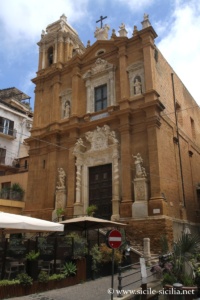
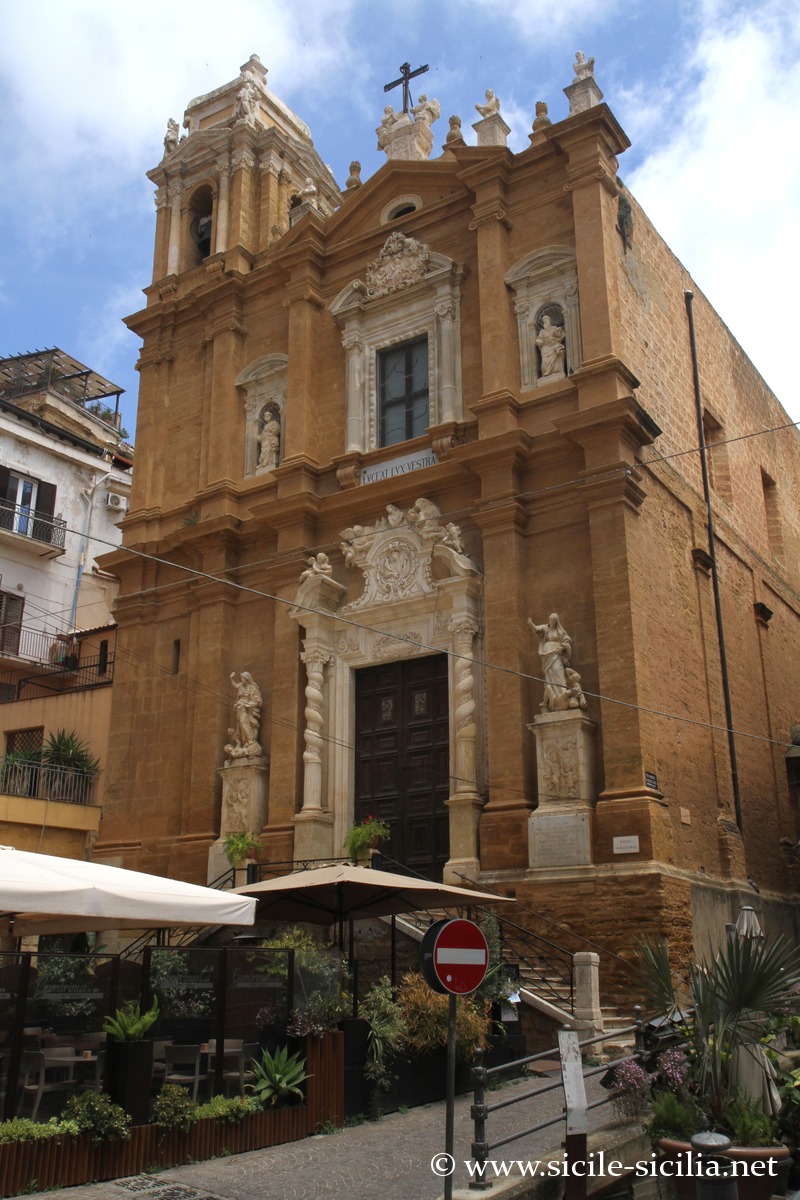
Church of San Lorenzo (of Purgatory)
Baroque building erected from 1626, completed in the first half of the 18th century. The slender facade presents two orders crowned by a tympanum; the entrance portal is framed by twisted columns and bordered by allegorical statues of Faith and Charity, surmounted by a medallion depicting the Virgin.
Inside, the walls and the vault are adorned with rich stuccoes of the “serpottian” school. Along the nave, eight statues traditionally attributed to Giacomo Serpotta represent the Virtues. The ceiling is adorned with a painted false dome from 1767, a “swirling” decoration evoking the souls of Purgatory. - Chamber of Commerce Palace (former town hall)
A singular building, built in the mid-19th century, in Neo-Gothic style. The facade features coats of arms, a clock and a small bell tower, with elaborate decoration. - Circolo Empedocleo
Dating from 1835, this Neoclassical-style building served as a social club for notables. The broad, low facade features Doric half-columns and a pediment adorned with a bas-relief depicting the philosopher Empedocles. It is now used for cultural events. - Church of San Giuseppe
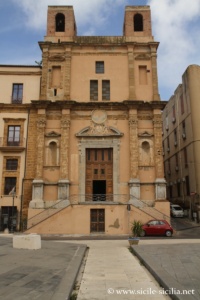
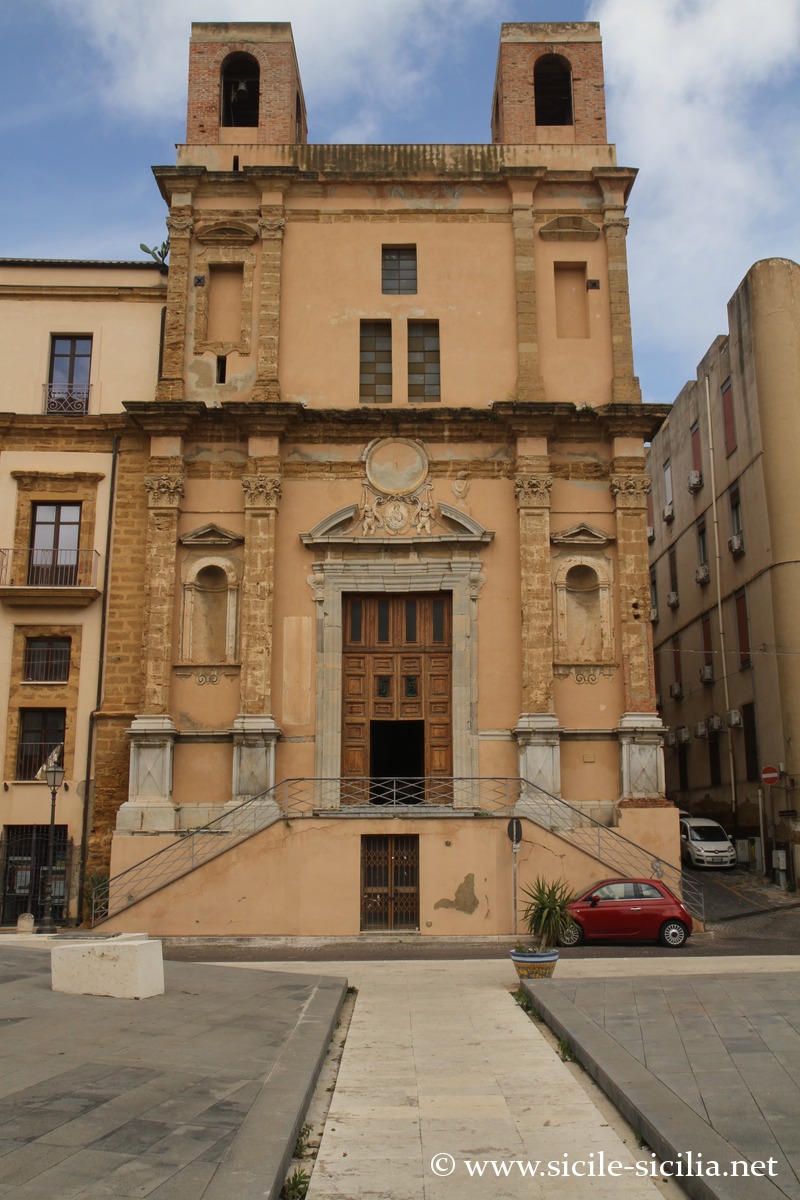
Church of San Giuseppe
The current structure of the church dates back to a major transformation that took place between 1656 and 1660, undertaken by the Padri Filippini (Philippine Fathers), from an earlier building.
Its Baroque facade rises above a double side staircase, with two symmetrical bell towers, unfinished.
The interior presents a single vaulted nave and monumental Baroque cantorias; the ceiling was decorated with frescoes in 1947 by the painter Raffaele Gurrieri, depicting scenes from the life of Saint Joseph and the Holy Family. - Municipal Art Gallery (former College of the Philippians)
The building dates back to 1703, designed by the architect Simone Mancuso, and long housed the convent of the Philippine Fathers before being transferred to the municipality, then converted into an art gallery.
The art gallery notably exhibits works by 19th-century Sicilian artists such as Francesco Lojacono or Raffaello Politi — landscapes, city views, naturalist scenes — as well as old paintings dating from the 15th–17th centuries.
The interior architecture of the palace is remarkable: it preserves a vast arcaded cloister, cross vaults, a central atrium with a well, etc. - Pirandello Theatre (via Piazza Luigi Pirandello)
Built in the 19th century, this theatre occupies part of the former Dominican convent. The auditorium, with three tiers of boxes, can accommodate up to about 700 people. - Church of San Domenico
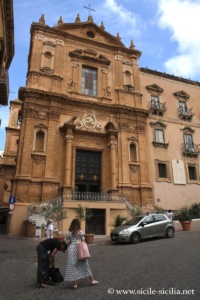
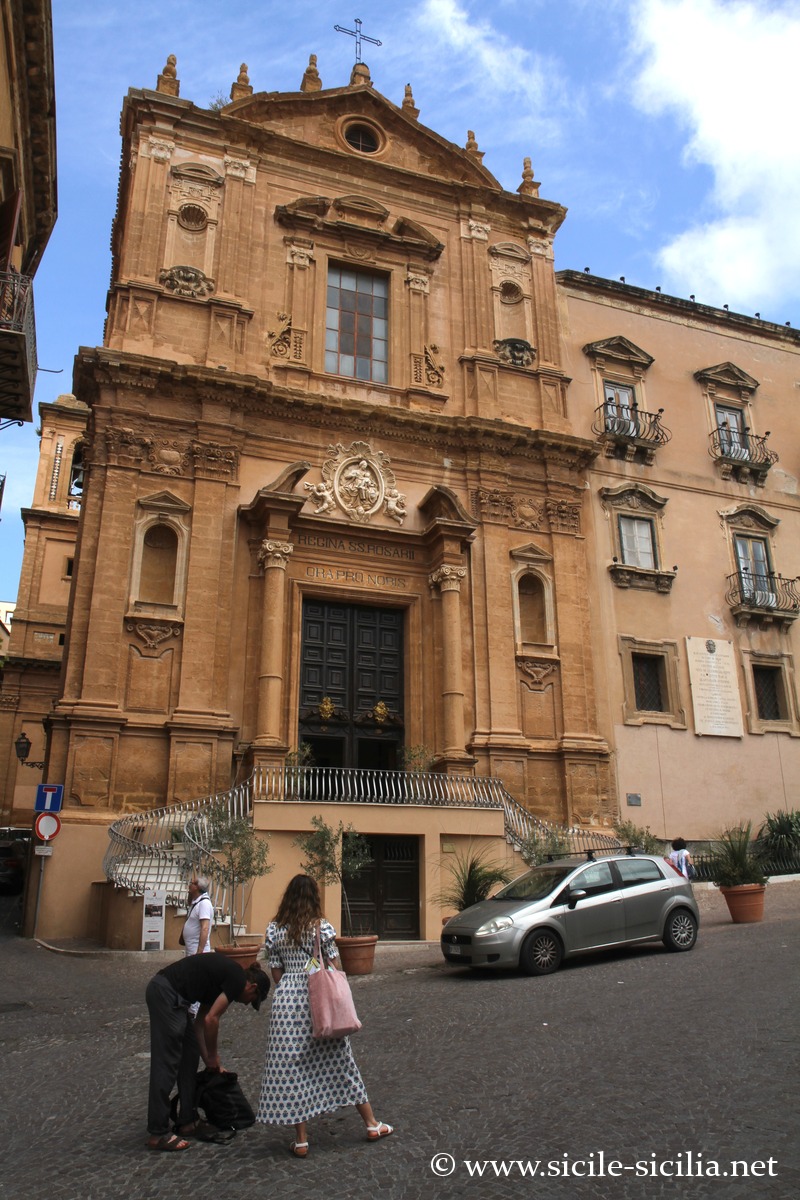
Church of San Domenico
Located not far from the theatre, this Baroque church dates back to the 17th century. The entrance portal is framed by two Corinthian columns supporting a pediment adorned with a bas-relief depicting the Madonna del Rosario, and the facade was redone in the 18th century.
Inside, the side chapels are decorated with 18th-century canvases, including a remarkable altarpiece presumably attributed to Pompeo Buttafuoco: a “Crucifixion with auxiliary saints”.
Furthermore, the church preserves two large cantorias (decorated galleries) dating from the 17th–18th century, carved in walnut wood with decorative elements in Baroque style (floral motifs, gilding, corbels, shells) - Domenico Modugno Belvedere, Piazza Sinatra
A high point of the city from which one can enjoy a wide panorama. - Cathedral of San Gerlando (Duomo)
Built in the 11th century and consecrated in 1099, bearing witness to numerous phases of remodeling over the centuries, combining an initial Romanesque plan with later modifications (see further on). - Palazzo Steri Chiaramontano (former archbishop’s seminary)
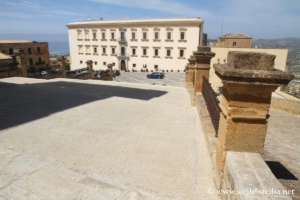
Steri Chiaramontano
The “Steri” of Agrigento constitutes the former palace-fortress of the noble Chiaramonte family, built in the 14th century on the western tip of the city. After the founding of the diocesan seminary in 1577, the building was assigned in 1611 to the clergy as the new seat of the Seminario Arcivescovile di Agrigento.
Despite the numerous transformations over the centuries, medieval portions — notably halls with ribbed cross vaults and elements of the original architecture (battlements, tower incorporated into the south facade) — survive. - Diocesan Museum of Agrigento and Episcopal Palace
The Museo Diocesano di Agrigento (or MUETAN: Ethno-Anthropological Museum of the Archdiocese) was officially founded in 1872 by Bishop Turano and, since its recent reorganization, occupies the rooms of the Palazzo Arcivescovile di Agrigento (18th-century episcopal palace).
The museum’s permanent collection, spread over eight rooms, traces the history of the archdiocese from the Norman reconquest (1087) to the 19th century, with liturgical objects, sacred artworks, reliquaries, sculptures and medieval fragments.
The palace itself dates back to the 11th century with Bishop Gerlando and was rebuilt between 1607 and 1627 and then enlarged later. The facade is distinguished by a monumental portal framed by columns supporting a balcony topped by a tympanum with coats of arms. A 15th-century clock tower survives, with its dial. Hypogeum of the Bishopric (Ipogeo del Vescovado)
Also called “Ismani”, this underground passage lies beneath the museum building. It extends for about 90 meters, with excavated galleries. This underground network probably comes from the quarrying of local stone intended for construction, with cavities used as quarries.
Since 2024, it has been accessible as part of guided tours organized on weekends or by reservation.Church of Santa Maria dei Greci
Built in the 12th century on the foundations of an ancient Doric temple of the 5th century BC (some sources mention a temple dedicated to Athena). The facade has an Arab-Norman style portal, and the interior contains ancient visible foundations as well as medieval elements (see further below)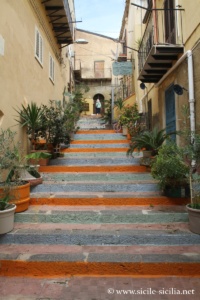 Staircase of the Artists
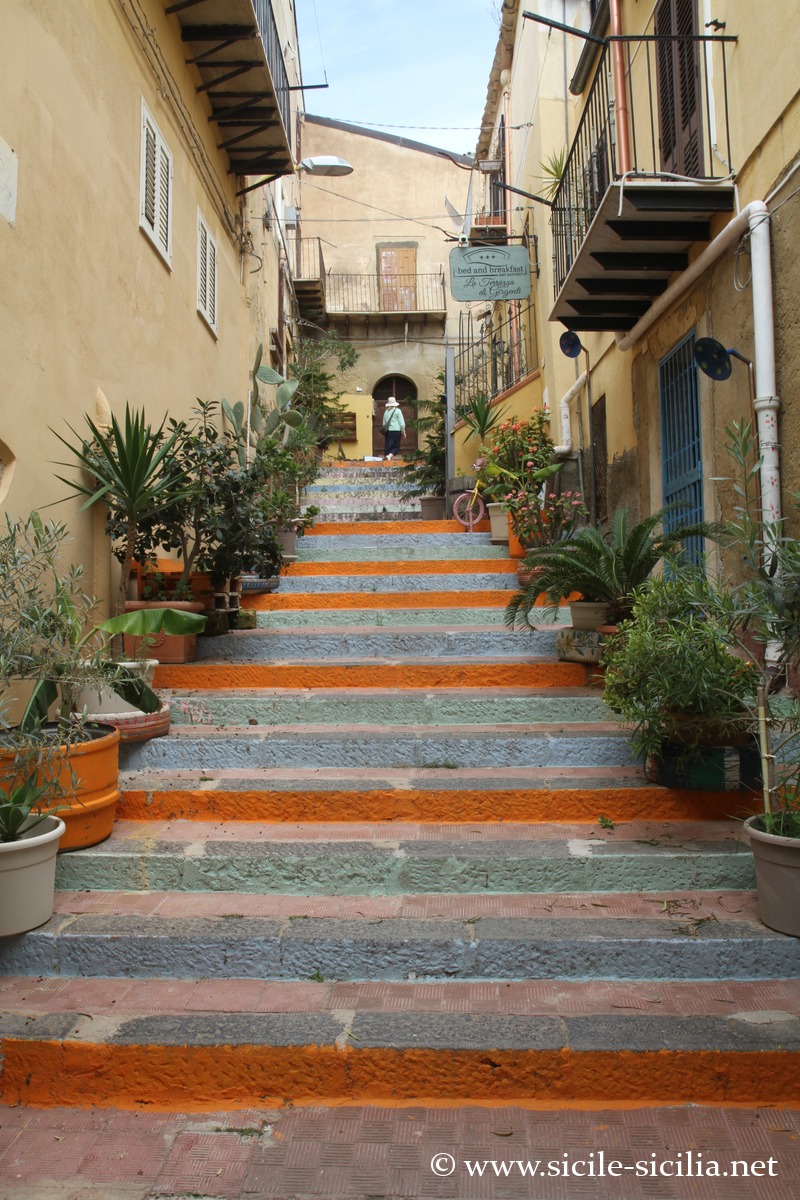
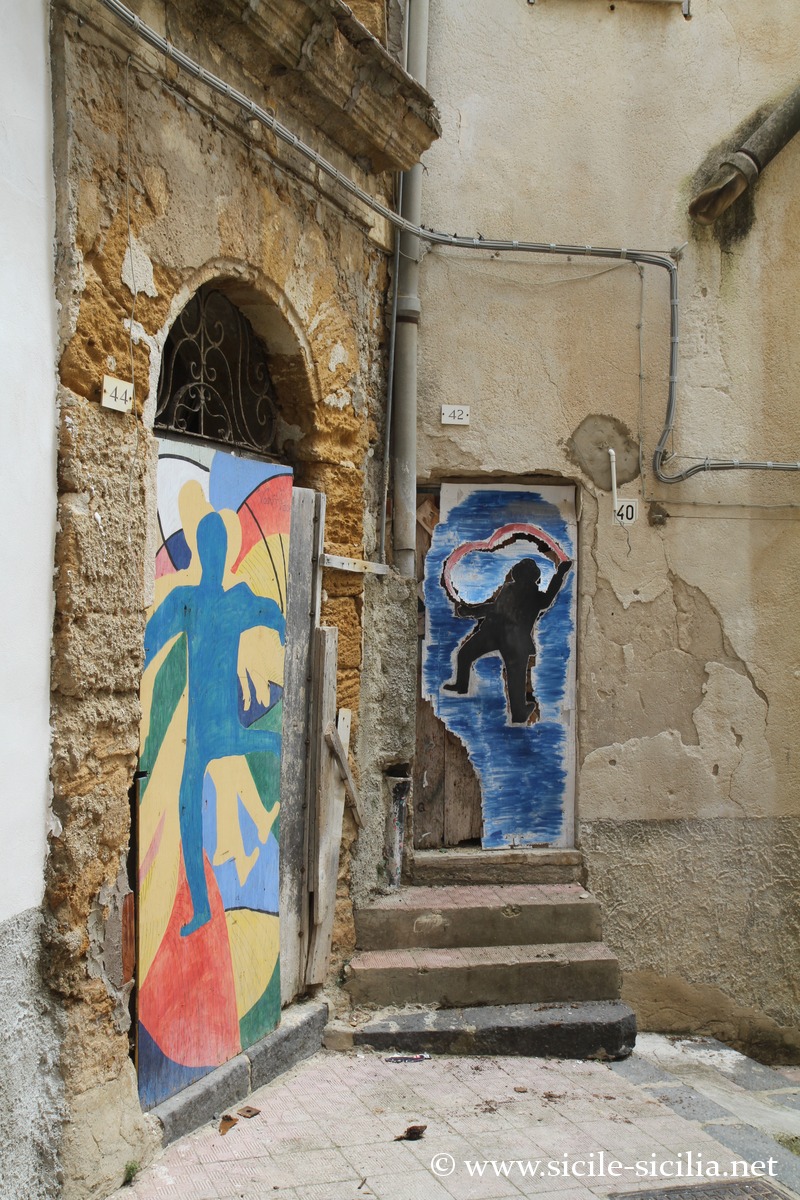
In the alleys of the center, a staircase whose steps are painted to form a large image of a prickly pear cactus, lined with workshops, murals or sculptures.- Church of Santa Maria del Soccorso
Locally called “Badiola”, it was built in 1529, adjacent to a convent of nuns.
The interior has a lunette barrel vault (rebuilt after a landslide in 1966) and stucco lesenes and cornices around the presbytery and the apse.
The facade preserves a Renaissance portal attributed to the school of Gagini: the arch rests on four columns with decorated Corinthian capitals, and above it opens a rose window; the loggetta campanaria with three arches, typical of Sicilian Baroque, tops the whole. - Monastery of Santo Spirito
Founded in 1299 (or 1260 according to sources), it was one of the largest Cistercian abbeys in the region. The church preserves a Gothic portal with a rose window, while the medieval cloister, with its Gothic portals, illustrates a remarkable example of medieval religious architecture in Agrigento.
Today, collections of the ethno-anthropological museum are housed there. (see further below).
Gallery
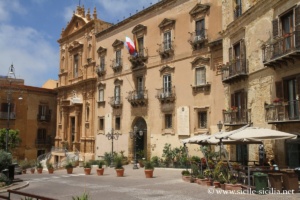
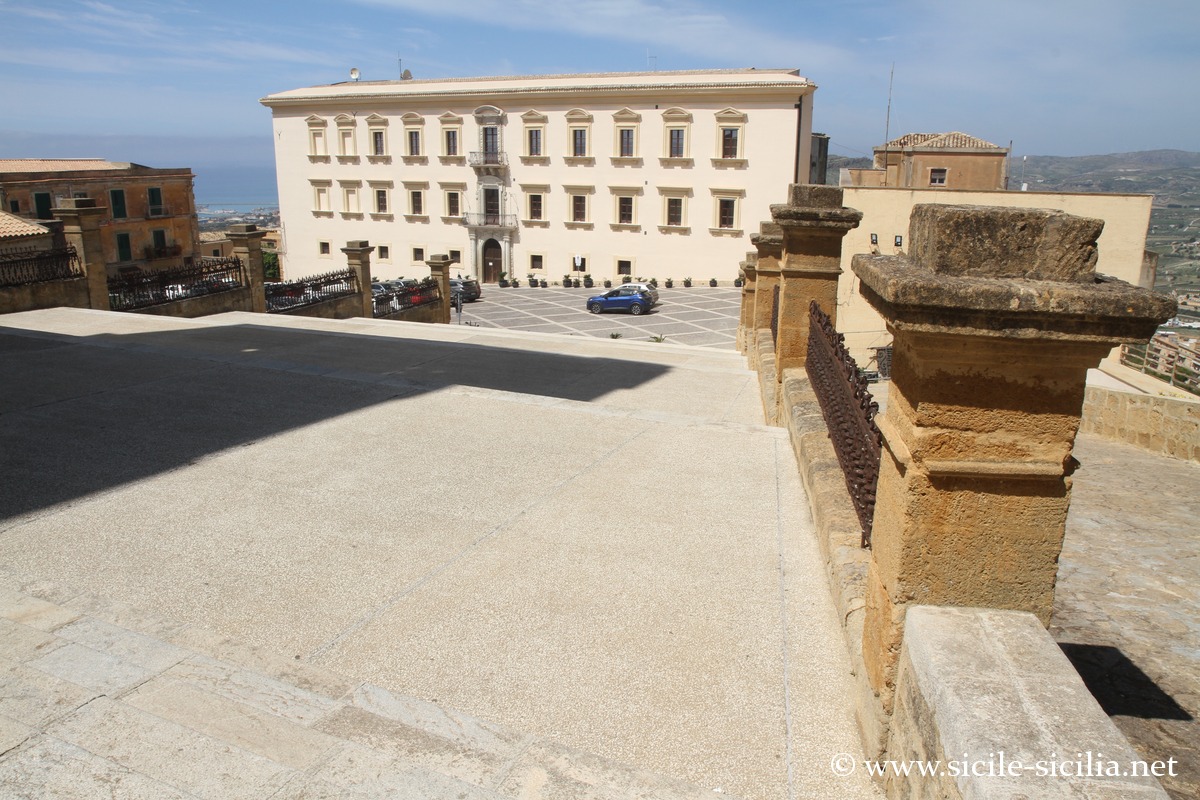
Piazza del Municipio 
Historic center of Agrigento 
Historic center of Agrigento 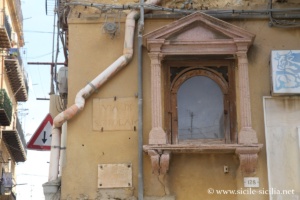
Historic center of Agrigento 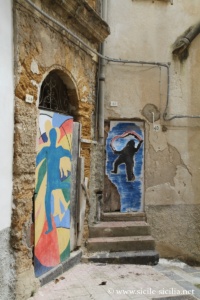
Historic center of Agrigento 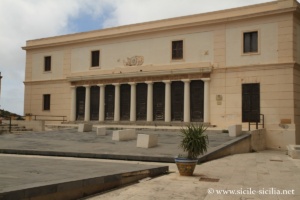
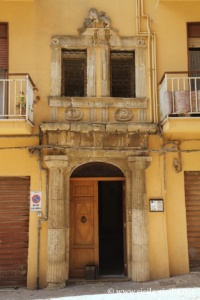
Historic center of Agrigento 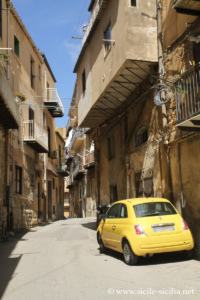
Historic center of Agrigento
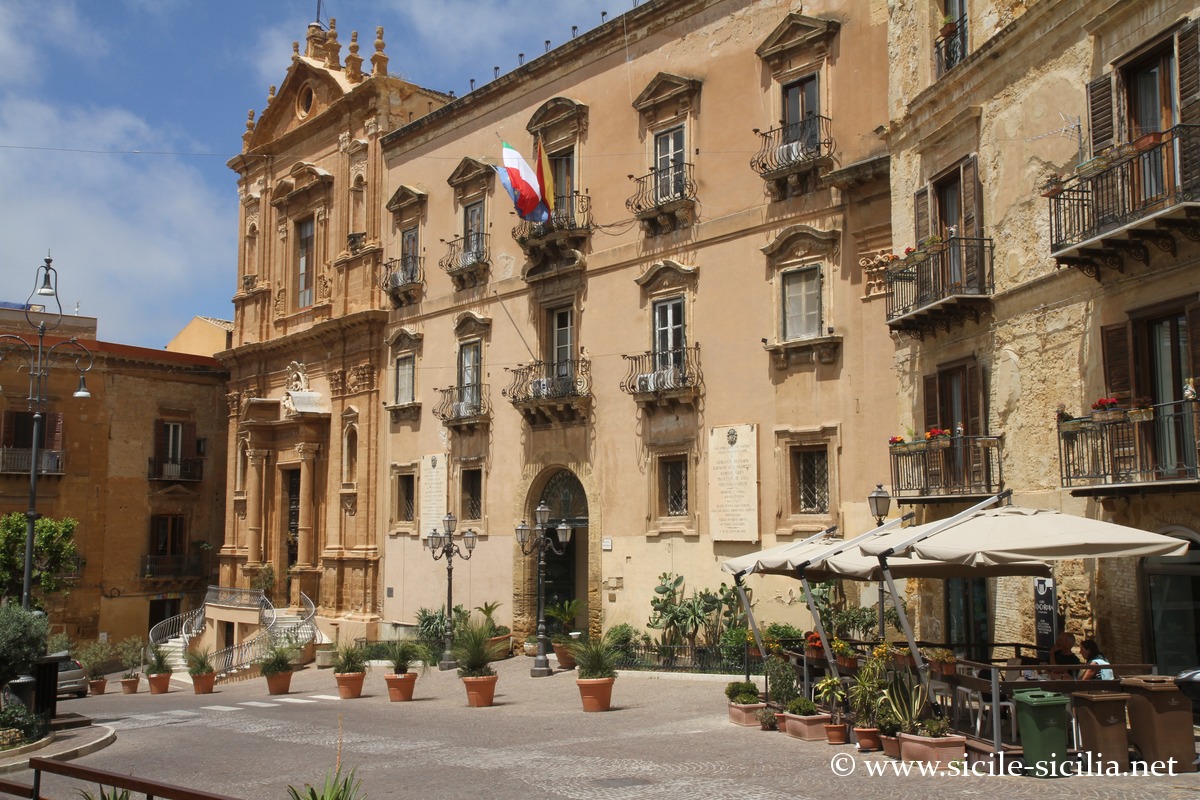


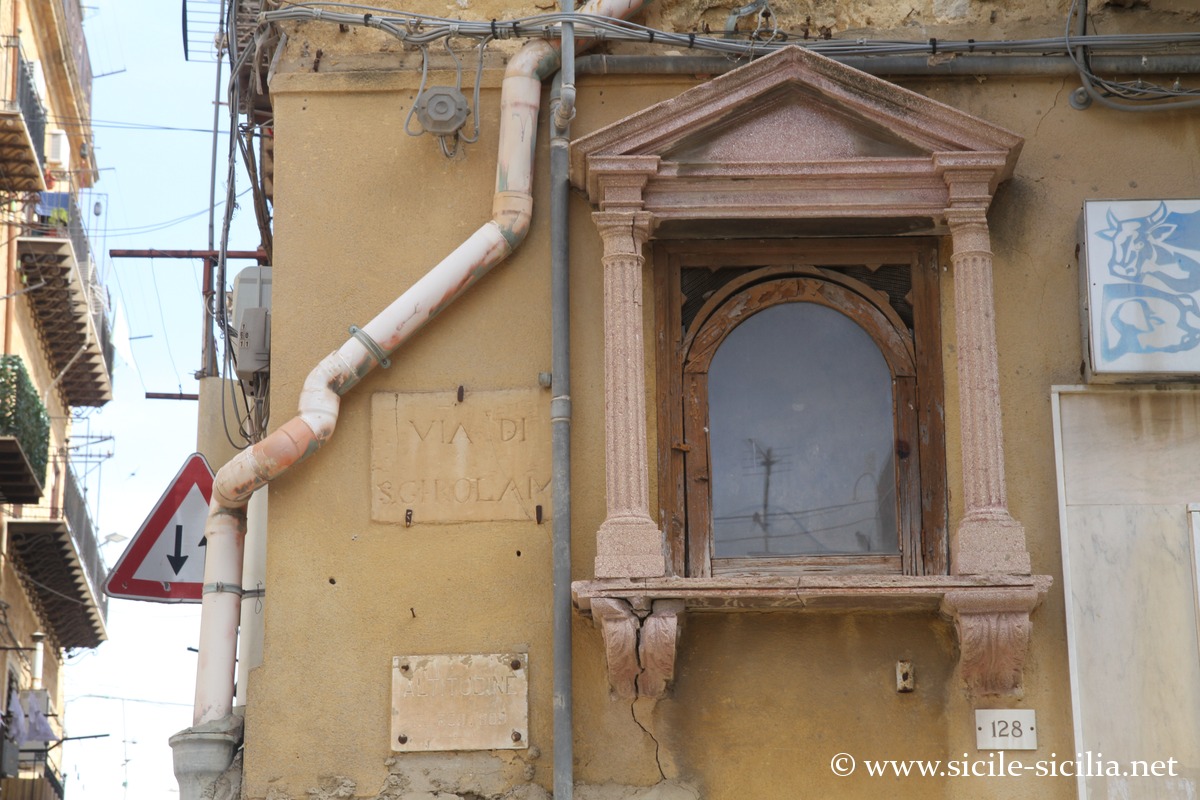
In the surroundings
Valley of the Temples, archaeological museum and Church of Saint Nicholas
→ Valley of the Temples
→ The Church of Saint Nicholas (San Nicola), which adjoins the archaeological museum
Pirandello House
The Pirandello house, birthplace of the famous Italian writer of the early 20th century, is located in the Caos district (8 km from the center, toward Porto Empedocle: map). Its rooms house a vast collection of photographs, reviews and awards, first editions, dedications, paintings dedicated to Luigi Pirandello, posters of performances of his plays, etc. In the garden, the author’s ashes were buried.
La Scala dei Turchi
The Scala dei Turchi is a splendid portion of the coast between Realmonte and Porto Empedocle, 15 km from Agrigento, with a dazzling white limestone and clay rock, shaped by time with undulations that form beautiful terraces with softened contours (read the page scala dei turchi).
Beaches and coastline
Along the coast stretch long beaches, from those of Marina di Licata about 45 km to the south, of the Punta Bianca reserve (20 km to the south), or those of San Leone which are the most popular (including Dune) a few kilometers from Agrigento.
To the west, 40 km away, Capo Bianco and the beaches of Heraclea Minoa, between Agrigento and Sciacca. At the same road distance, geographically closer, the Torre salsa nature reserve.
→ Read in detail the coastal itinerary from Agrigento to Sciacca
Favara, Racalmuto and Aragona
→ See itinerary east of Agrigento: Favara, Racalmuto and Aragona.
Information
External sites
- Official website of the Valley of the Temples: www.lavalledeitempli.it
- Tourist portal of the municipality: comune.agrigento.it/vivere-il-comune
- Tourist portals and blogs: livingagrigento.it, itineraries (in Italian), 3-day itinerary, www.lorenzotaccioli.it
- Map and PDF brochure: www.visitsicily.info
- Agrigento on the Wikipedia page
- Cathedral of Agrigento: official website
In the Agrigento category
- Agrigento
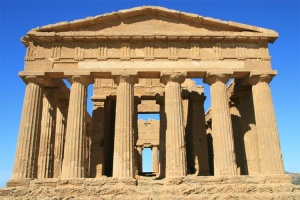 Agrigento is a city near the southern coast of Sicily, whose origins ...
- Visit to Agrigento and surroundings
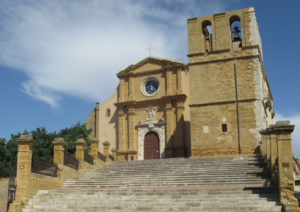 It is on a hill, named Girgenti, that the historic centre of ...
- Hotels in Agrigento
 Hotels in Agrigento in Sicily and accommodations near the Valley of the ...
- Valley of the Temples of Agrigento
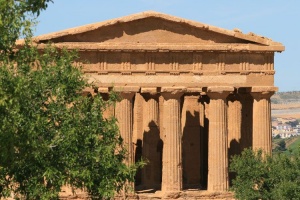 In antiquity, Agrigento was one of the most powerful Mediterranean cities of ...
- Regional Archaeological Museum of Agrigento and San Nicola
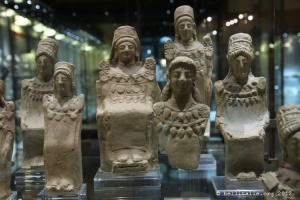 The Regional Archaeological Museum of Agrigento, officially named Museo Archeologico Regionale “Pietro ...
- Scala dei Turchi
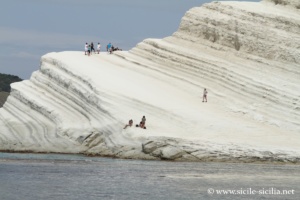 The Scala dei Turchi (“Stair of the Turks” in English) is a ...
- Torre Salsa Nature Reserve and Heraclea Minoa
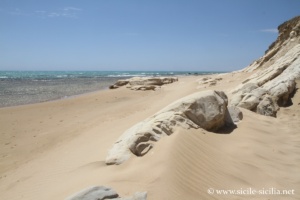 This stretch of coastline in southern Sicily, west of Agrigento and east ...
- Coastal itinerary west of Agrigento towards Sciacca
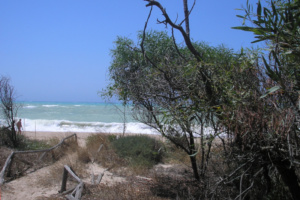 Itinerary west of Agrigento, starting from Pirandello’s birthplace south of the town, ...
- From Licata to Agrigento
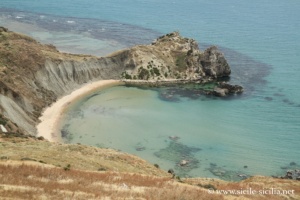 La côte entre Licata et Agrigente alterne plages sableuses, criques et promontoires ...
- Favara, Racalmuto and Aragona
 If, after visiting the most attractive sites of Agrigento and its coastal ...
- Siculiana
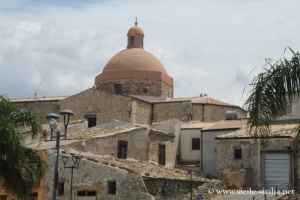 Siculiana is a pretty little village 20 km west of Agrigento, set ...
- Maps of Agrigento
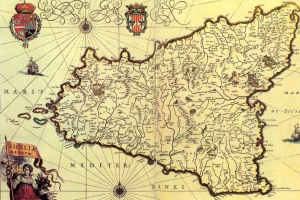 Interactive map of Agrigento, the Valley of the Temples, the ancient sites.
- Gastronomy and traditions in AgrigentoGastronomic specialities in Agrigento The gastronomy of Agrigento revolves mainly around seafood, with ...
- Near Agrigento
 Sicilian destinations near Agrigento, including the Sicani Mountains inland to the north, ...
- Activities in Agrigento, guided tours and excursions
 Booking of activities in Agrigento and its surroundings, guided tours of the ...