

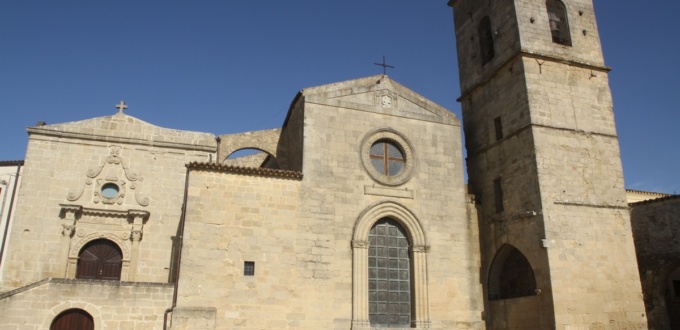
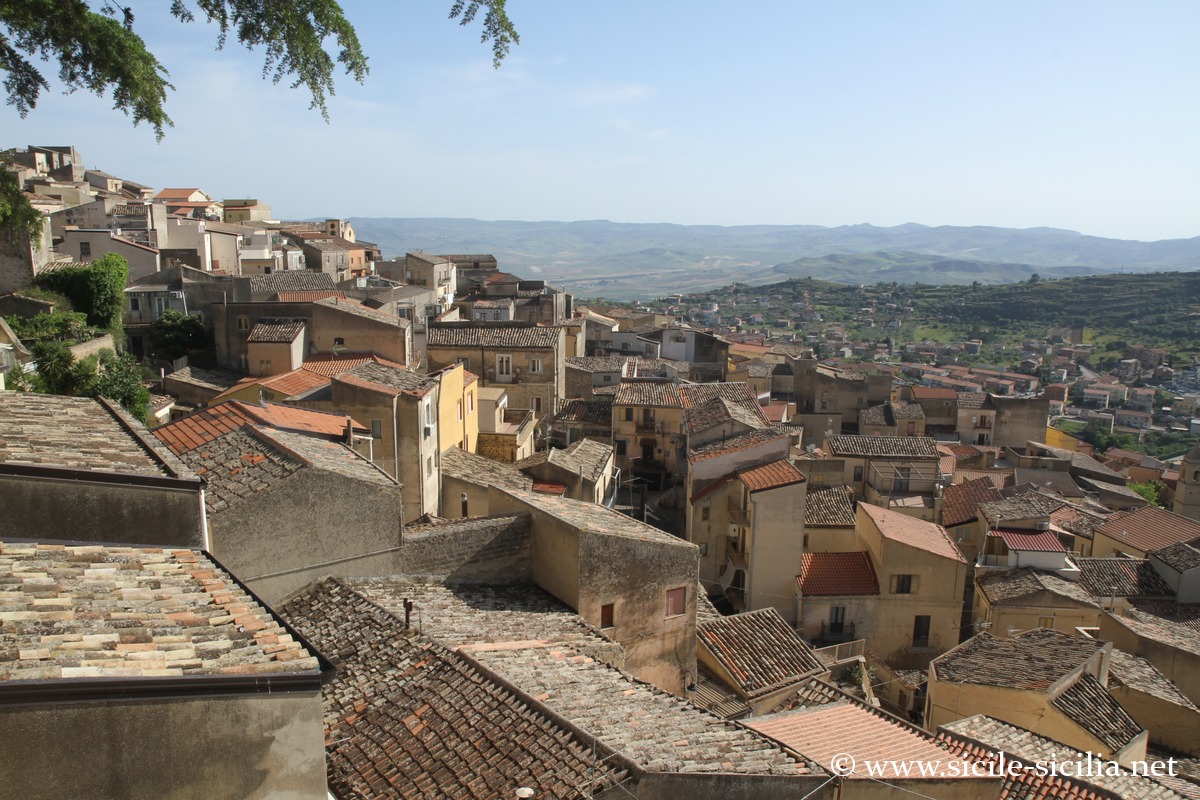
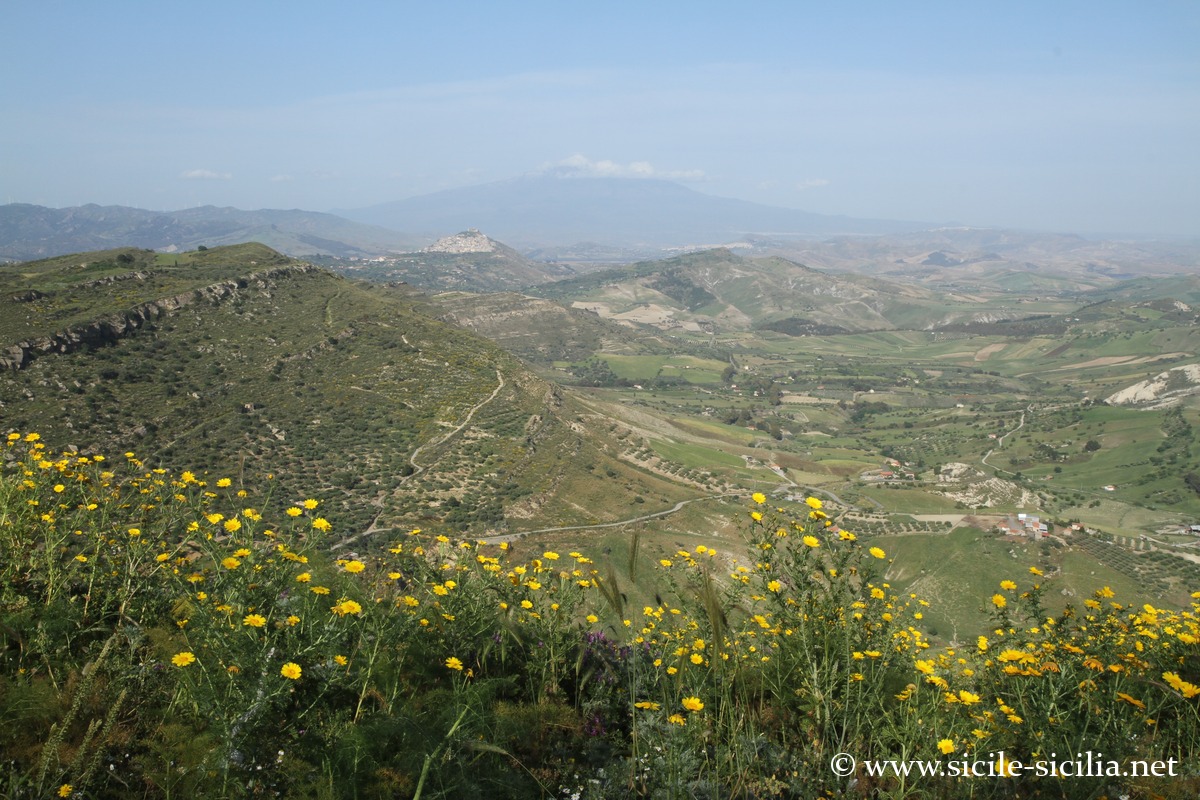
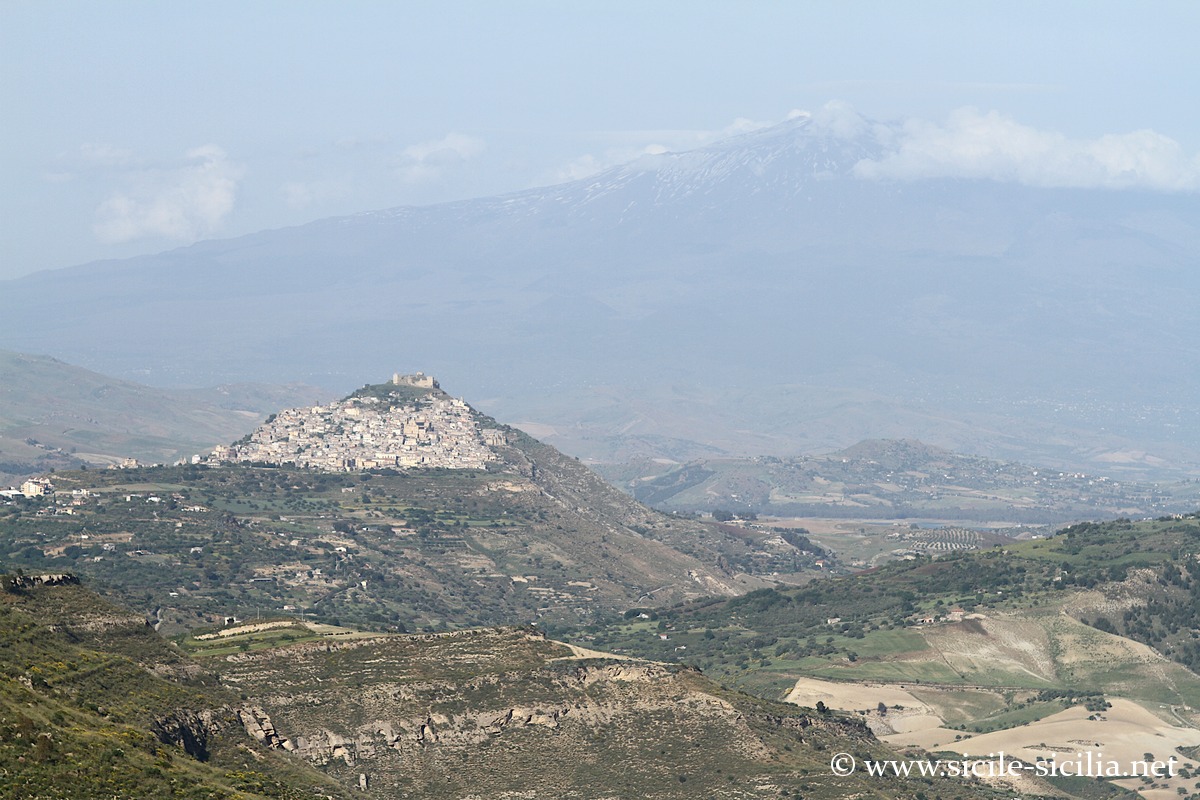
Assoro, perched on the steep hill of Monte Stella in the Heraean Mountains, at nearly 850 metres of altitude in the heart of Sicily. It preserves a well-preserved medieval centre, heir to a city inhabited since Antiquity by local peoples. Its main monuments — the Basilica of San Leone, with its early Christian crypt and works of the Valguarnera family, and the ruins of the castle, vestiges of the Byzantine, Arab and Norman fortifications — bear witness to the town’s medieval history. From the summit, the panorama over the high plain of Enna allows one to appreciate the landscape shaped by centuries of human presence, all the way to Etna.
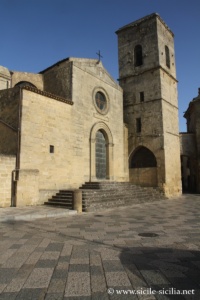
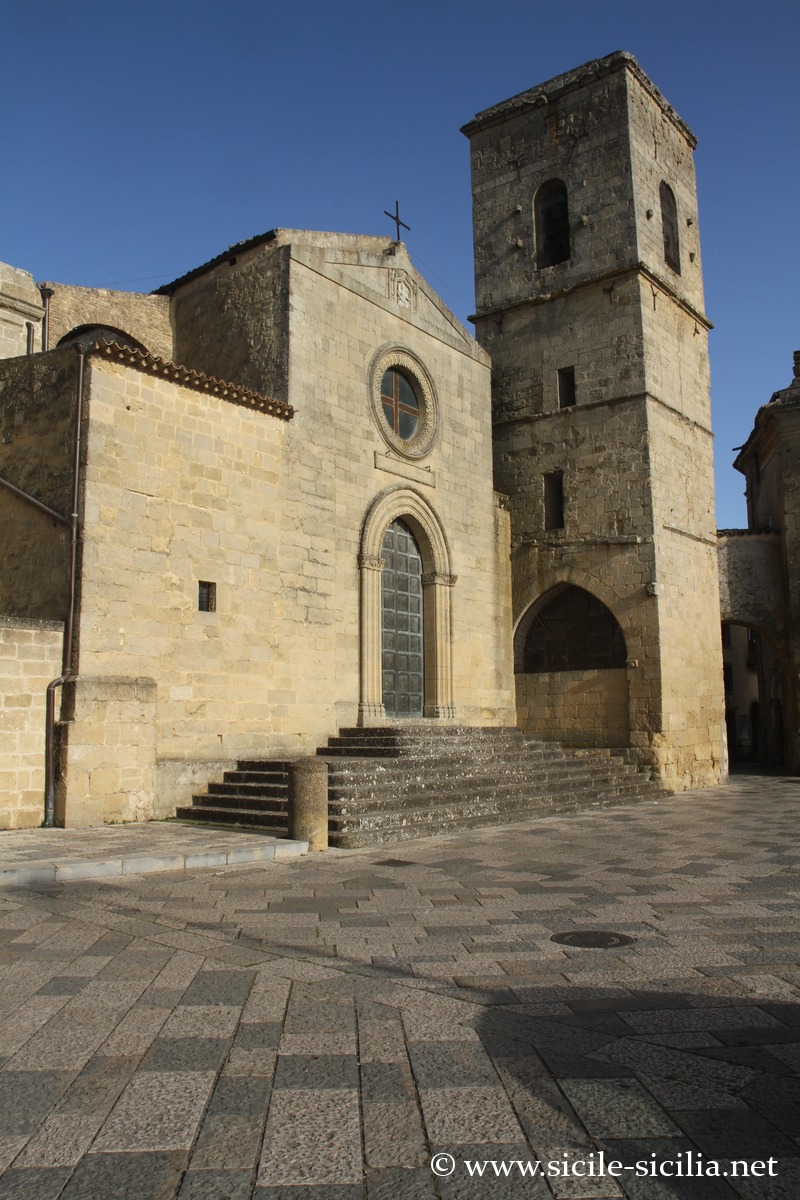
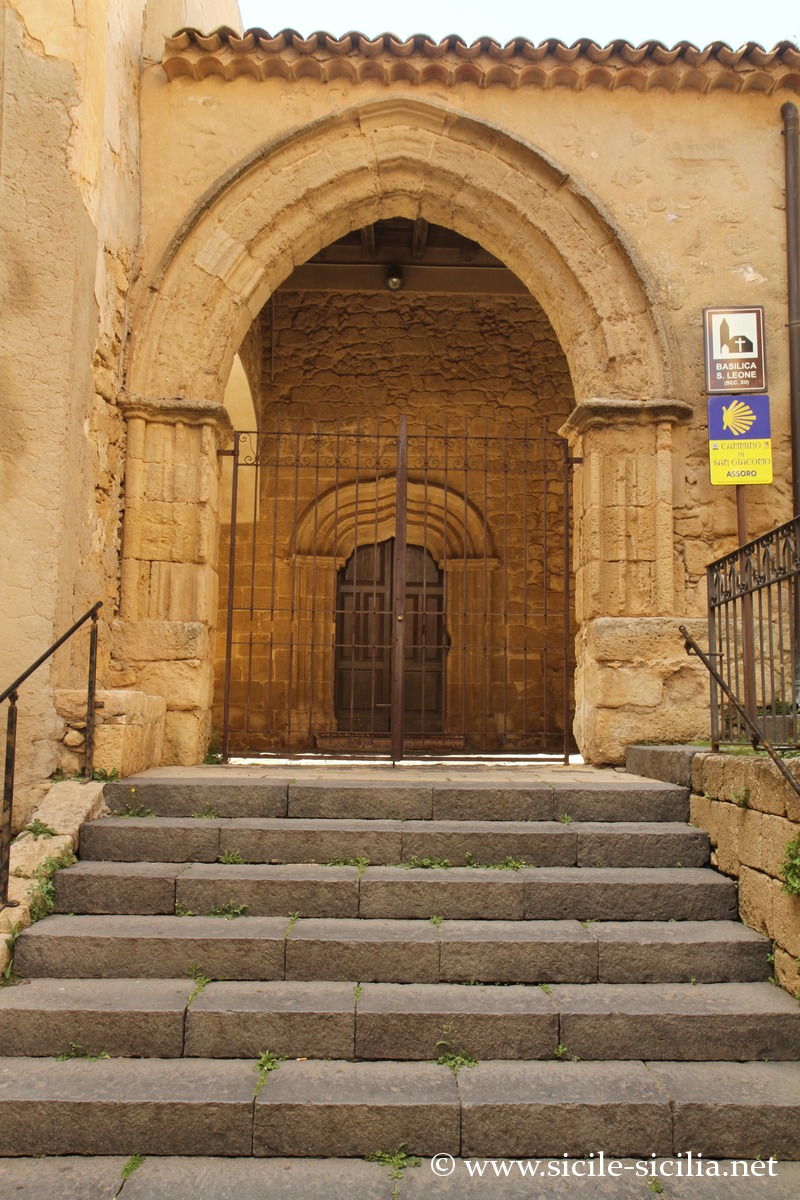
Basilica San Leone 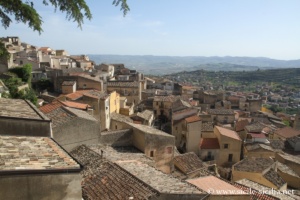
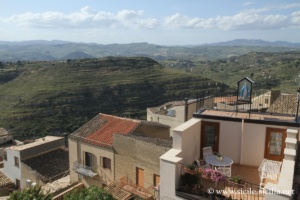
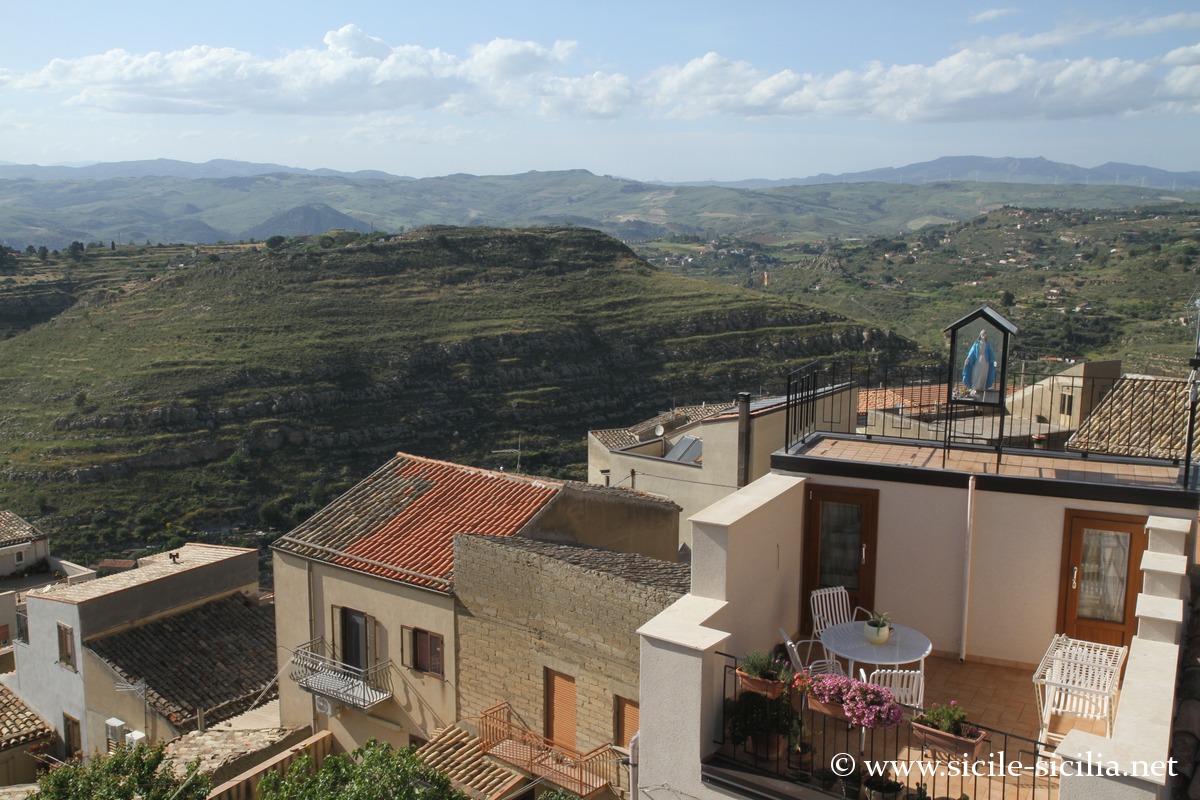
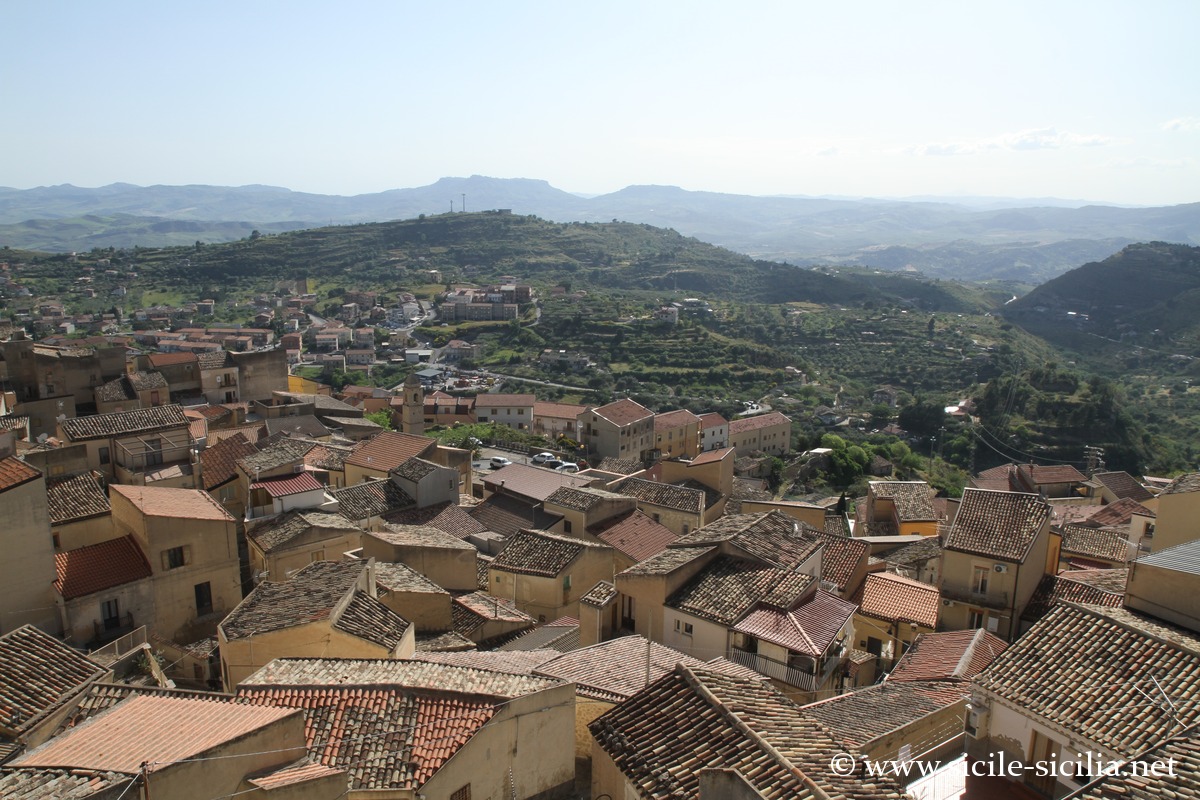
Panorama over Assoro from Piazza Umberto I 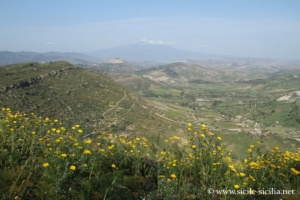
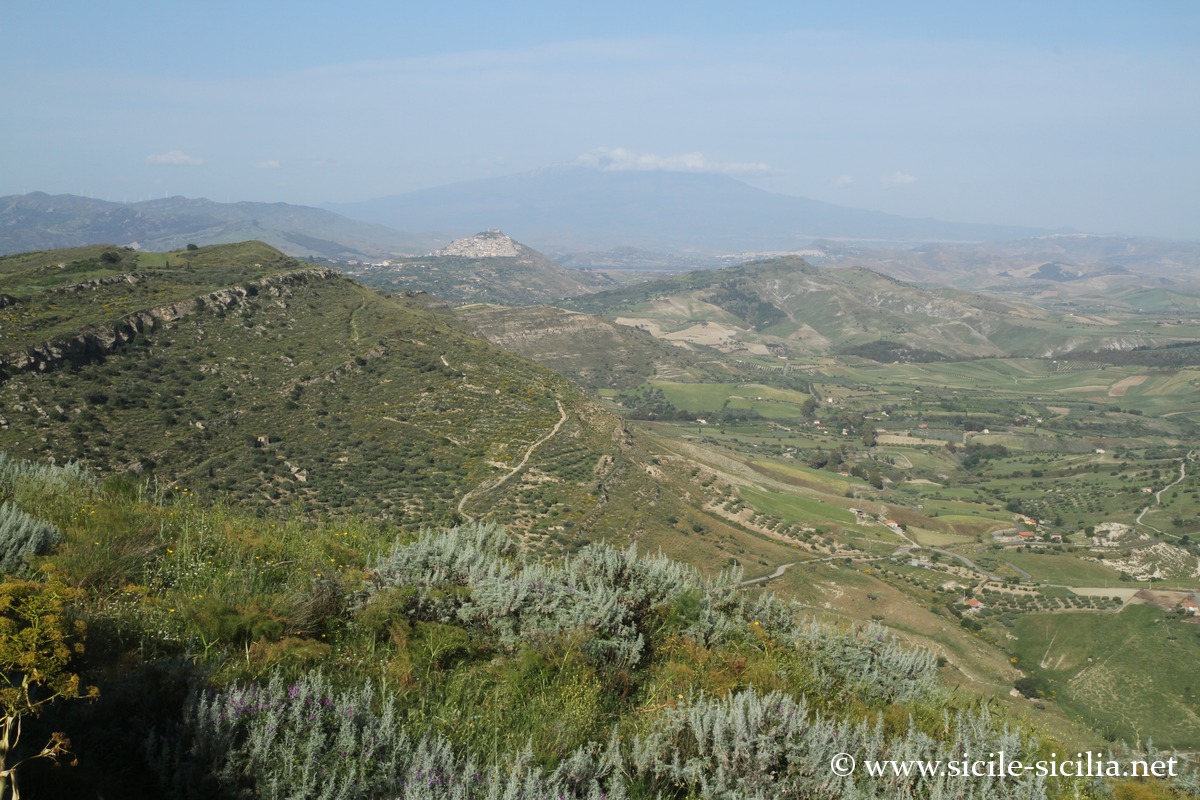
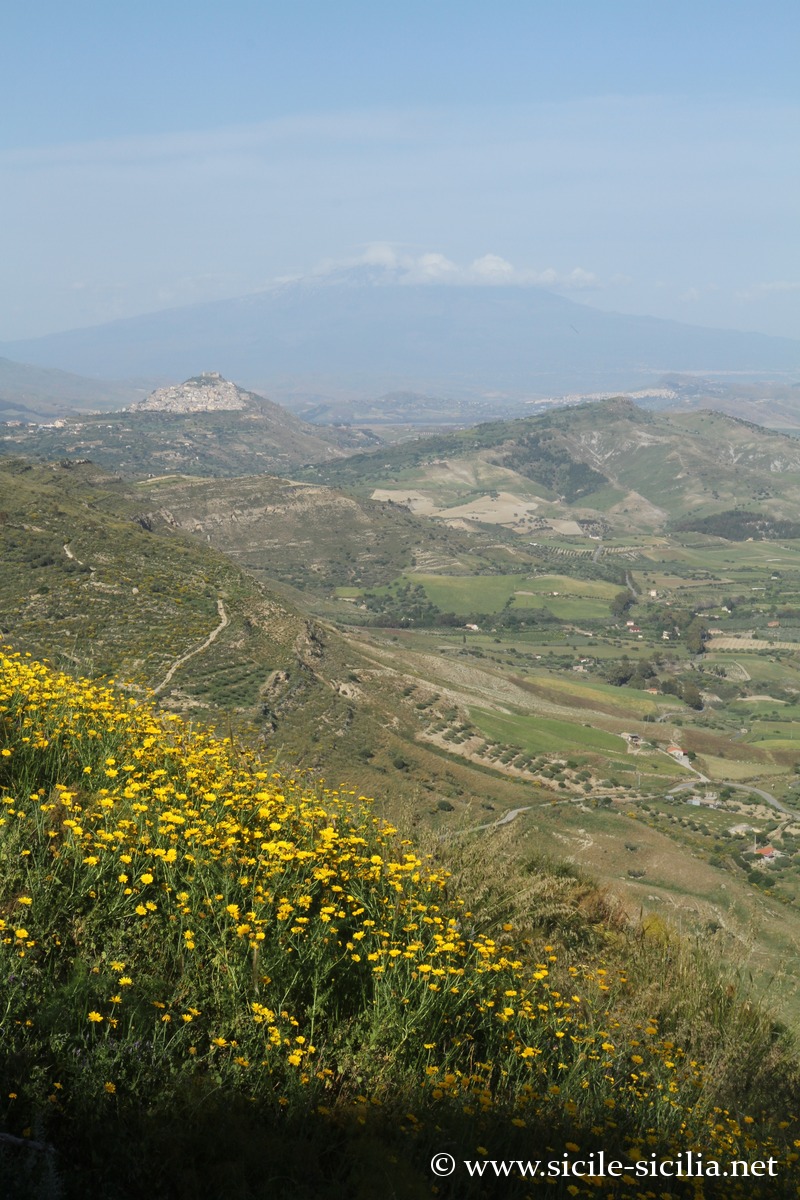
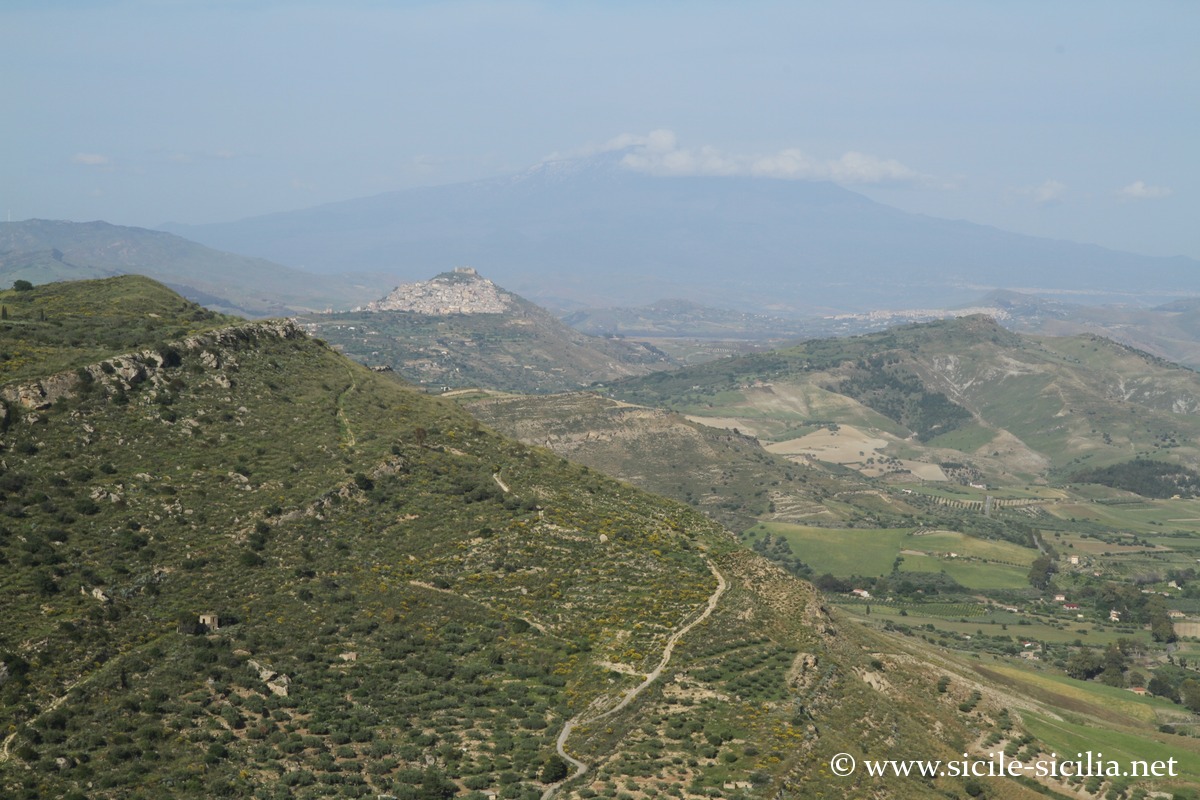
Via Panoramica at the foot of the castle: Agira and Etna
Places and monuments of Assoro
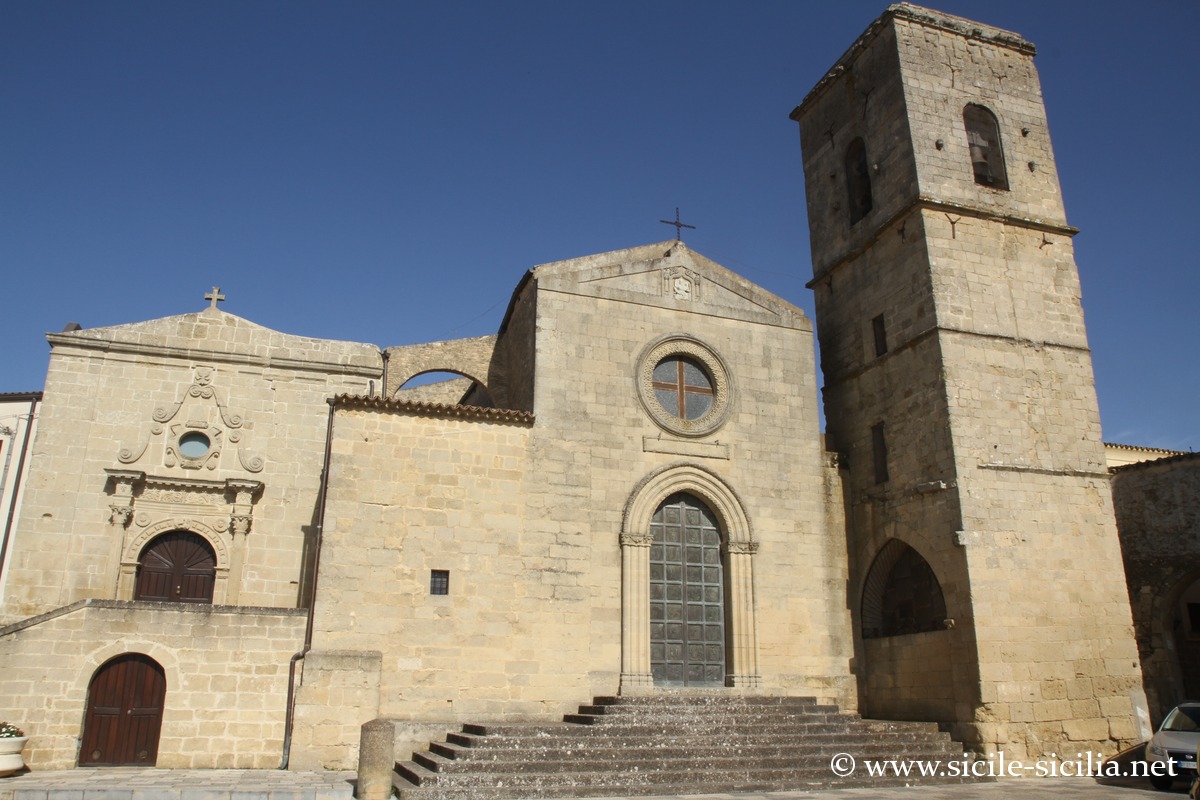
Assoro preserves its medieval structure and several monuments, above all the Basilica San Leone. This very beautiful cathedral, founded in 1186 by Constance of Hauteville as a royal chapel, had to be partly rebuilt after the 1693 earthquake.
It is a remarkable example of a Gothic-Catalan exterior with walls of Arab and Norman influence, enriched by Renaissance additions, as in the openings and windows, and Baroque ones especially in the interior. The main portal is a pointed arch with a wrought bronze door. It adopts a Latin cross plan with three naves separated by beautiful twisted columns, a raised transept with three apses, topped by a wooden roof with trusses and fan vaults. The interior features side chapels, 17th-18th century altars, decorative stuccos and bas-reliefs.
The cona de Gagini (1515) occupies the apse conch and represents the three kingdoms of the Afterlife: Hell, Purgatory and the Risen Christ, surrounded by the coats of arms of the town and of the Valguarnera family, with festoons, symbols of the four evangelists and decorative putti. The side niches house statues of saints, including San Leone Vescovo, San Leone II, San Benedetto di Norcia and San Placido, while the central statue is the Virgin “Libera Inferni”, holding a pomegranate symbolising the graces granted to the living and the dead.
There are also a holy water stoup and a baptismal font by Antonello Gagini (16th century), four sarcophagi of the Valguarnera family dated around 1511-1513, a silver cross by Vincenzo Archifel (16th century), as well as a bronze portal. Beneath the building, an early Christian crypt recalls the antiquity of the site.

Basilica Saint-Léon 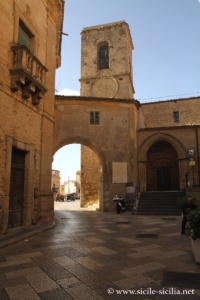

Via Crisa 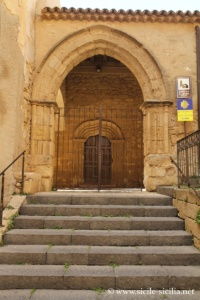
Basilica Saint-Léon, side portal
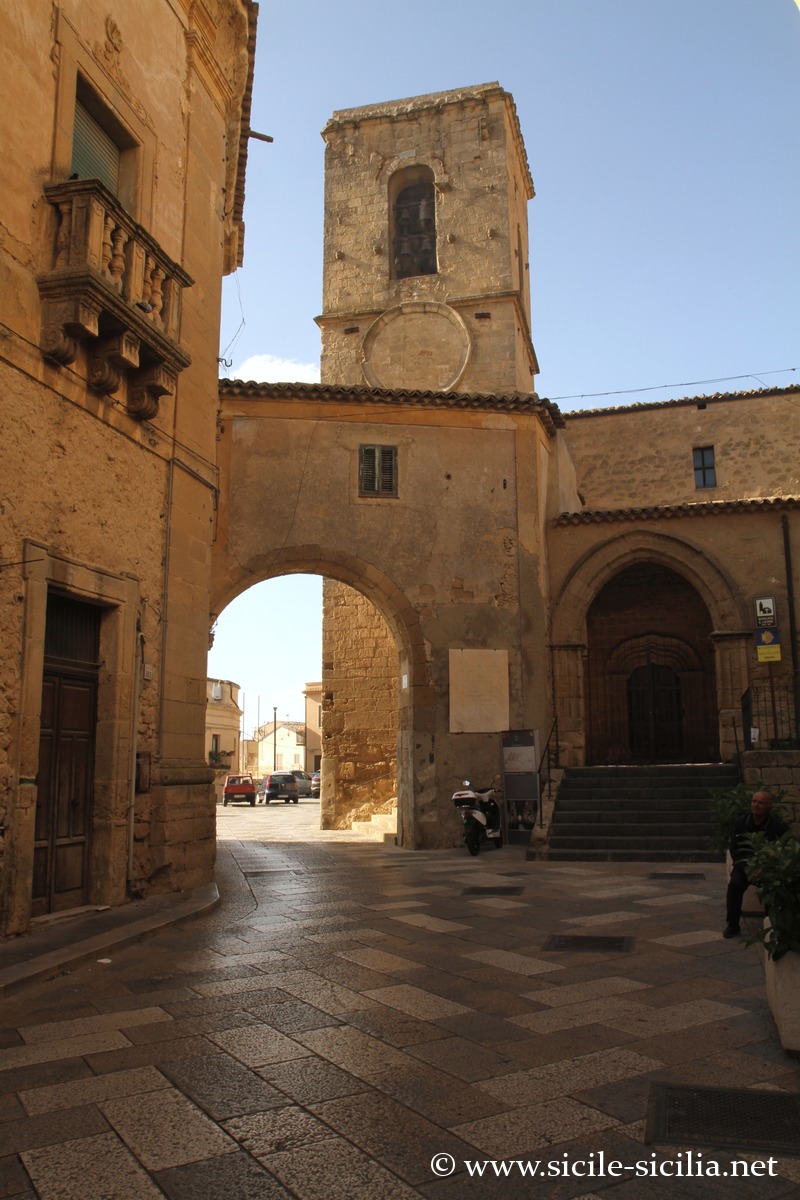
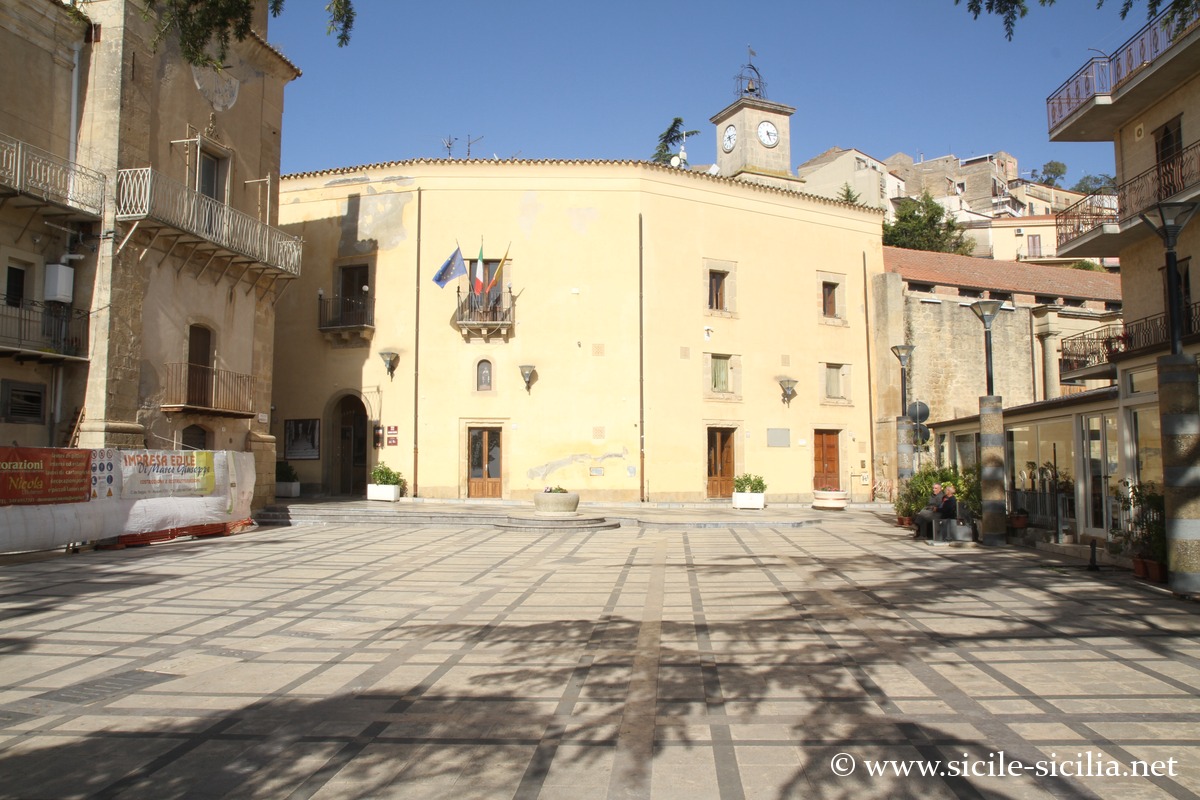
The elegant Palazzo della Signoria (Lord’s Palace), built in 1492 by the Valguarnera family, is a fine example of Catalan architecture, with finely chiselled balconies. It was enlarged in the 16th century in a Baroque style. An arched passage links this palace to the Basilica San Leone.
The remains of the castle of Assoro culminate on a rocky outcrop. Forming an irregular polygon, the walls join a circular tower; a secondary enclosure and rooms are cut into the rock. Its origin may be Byzantine, and it was conquered by the Arabs in 939. After the Norman period, the fief passed, in 1397, to the Valguarnera, before being gradually abandoned. The panorama over the Heraean Mountains is breathtaking.
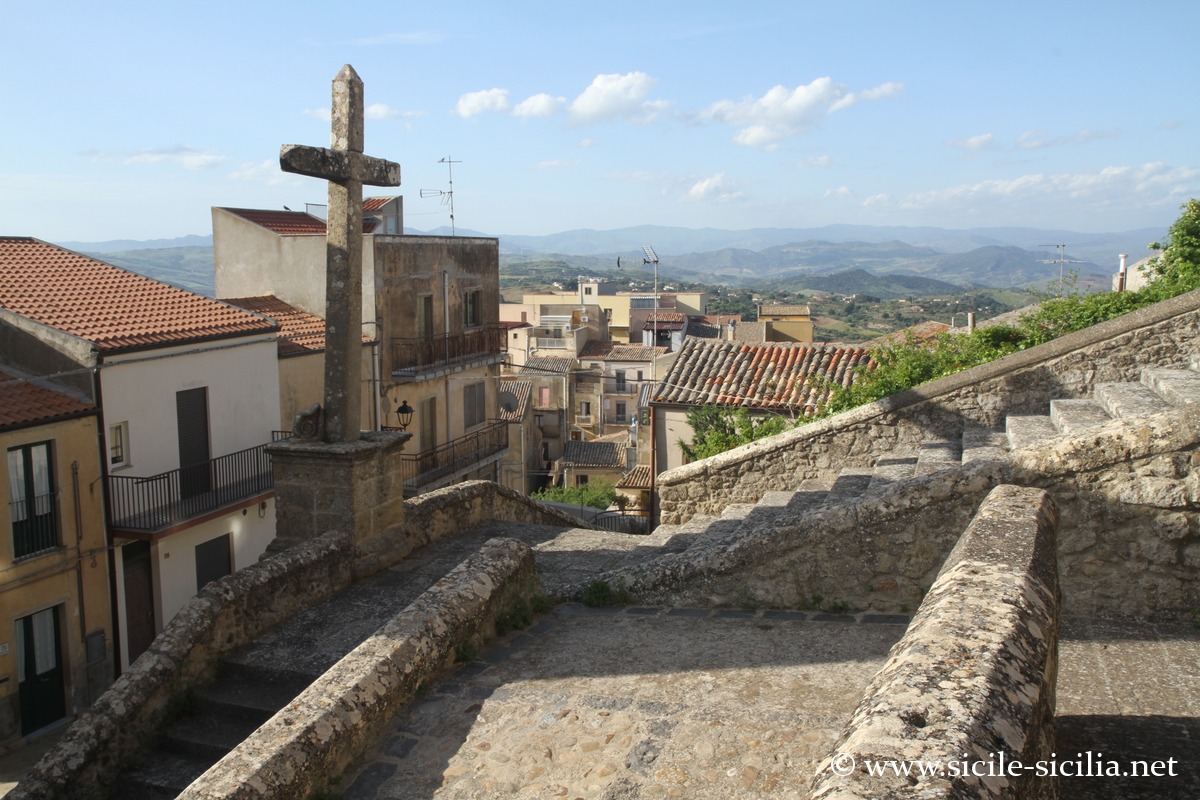
The beautiful church of Santa Maria degli Angeli and its convent were built in 1622 by the Reformed Franciscan Fathers, incorporating the old church of Santa Margherita. It is preceded by a monumental staircase topped by a stone cross made from monoliths carved in the cloister’s cistern. The interior, with painted Baroque decorations, has frescoes from 1754.
The former Badia di Santa Chiara belonged to a monastery founded in the 15th-16th century, built by the Valguarnera, on an ancient early Christian site. It has a single stone nave, a wooden roof with exposed beams, and a loggia-cantoria typical of the convents of its era.
The church of the Spirito Santo would date from the 13th century, with an exterior portico and a Gothic portal.
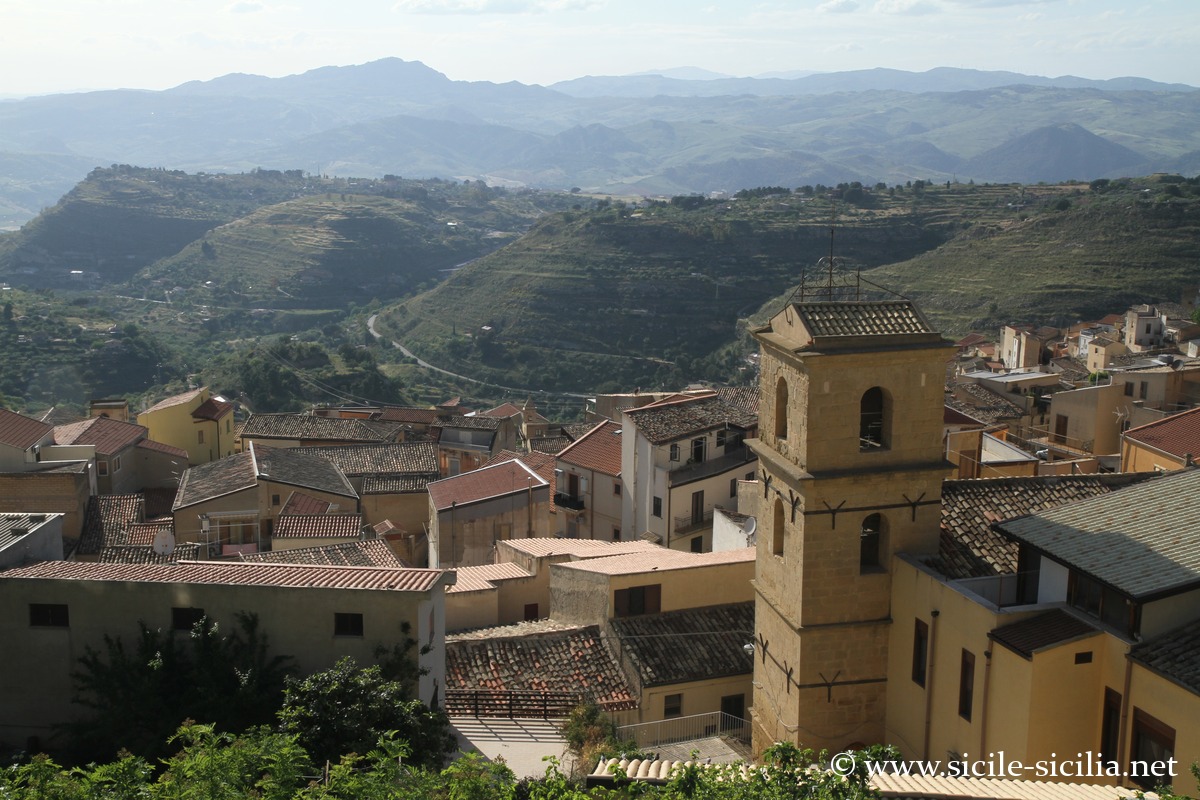
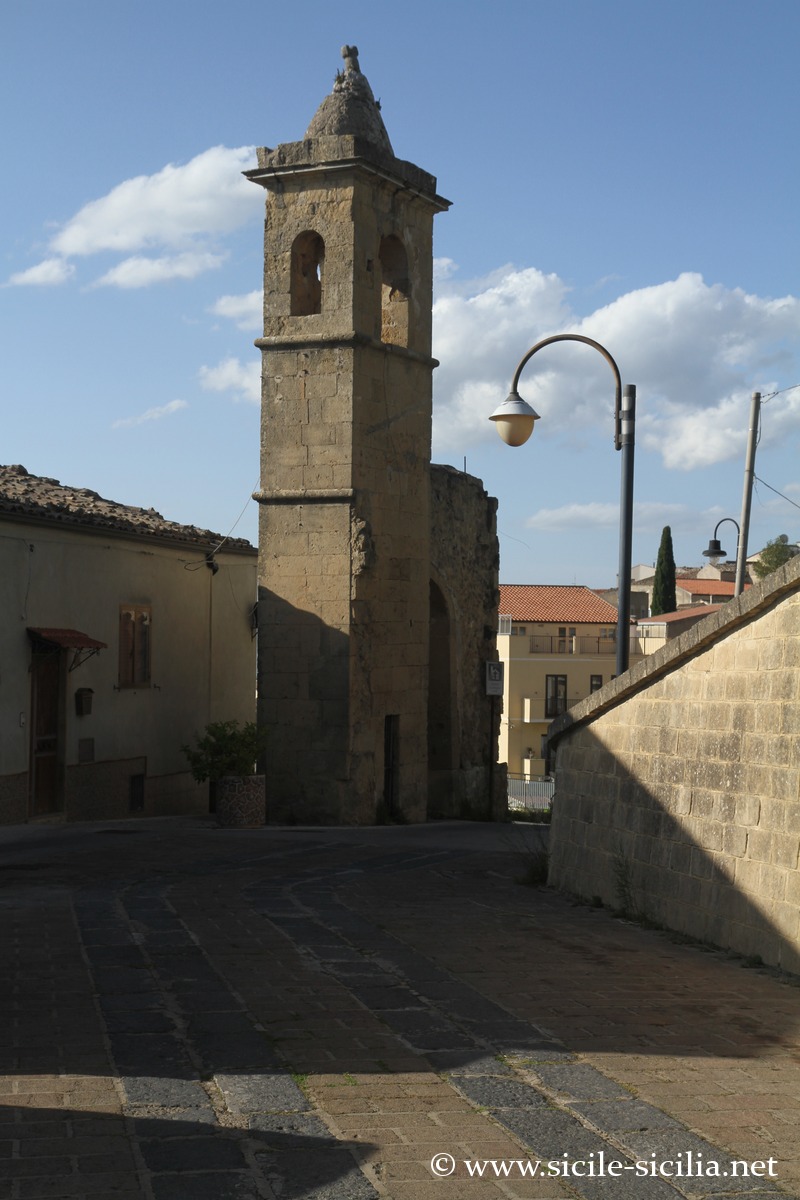
Of the church of Santa Caterina, dating back to the 12th century, only the bell tower and ruins remain, bearing witness to medieval transformations. Nearby there are also the remains of the 17th-century church of San Biagio, with its bell tower.
Panorama of Piazza Guglielmo Marconi 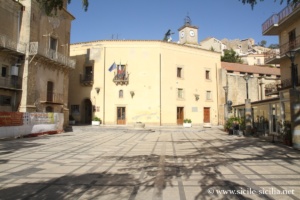
Piazza Umberto I 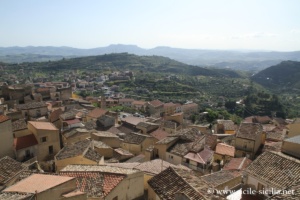
Panorama over Assoro from Piazza Umberto I 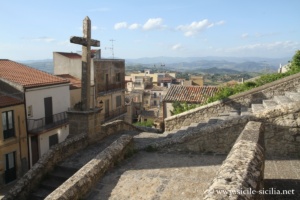
Terrace of Santa Maria degli Angeli 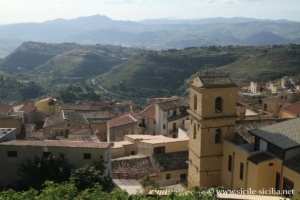
Church of Santo Spirito 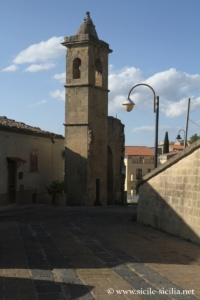
Ruins of San Caterina 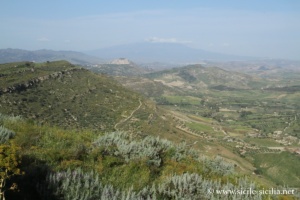
Via Panoramica, castle: towards Agira and Etna 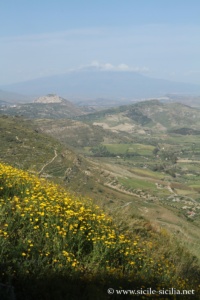
Via Panoramica, castle: towards Agira and Etna 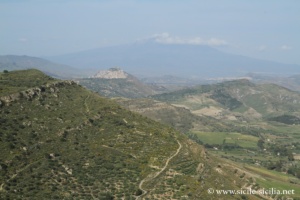
Via Panoramica, castle: towards Agira and Etna 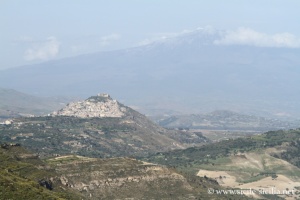
Via Panoramica, castle: towards Agira and Etna
Historical overview of Assoro
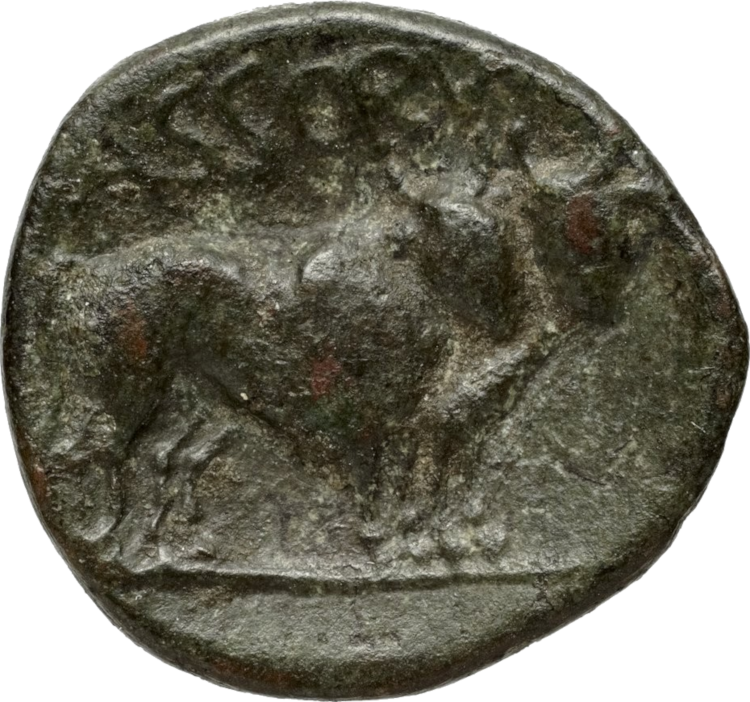
Bronze of Assoro (Roman period)
According to the historian Apollodorus of Athens (2nd century BC), the city of Assorus would have brought together three distinct ancient peoples: the Sicani, the Sicels and the Elymians. It would have remained independent during the period of Greek domination of the island, preserving a marked local identity. Several types of coins have been discovered there, notably bronzes with a stable iconography specific to the city.
Assorus was also known for the cult of Apollo, whose sanctuary occupied an important place in Sicel religious life. Diodorus’s accounts indicate that it remained loyal to the Romans during the Second Punic War, a loyalty through which it obtained certain tax advantages. Cicero explicitly cites it as a civitas immunis. Unlike other communities in Sicily, it passed through the crises of the late Roman period without major destruction, which allowed it to maintain a continuity of occupation rare on its plateau.
In Late Antiquity and under the Byzantines, Assoro remained a stable fortified point within the island’s inner defensive network. The Islamic era marked a reorganisation of its agricultural territory, with the introduction of hydraulic systems and the creation of terraces suited to the mountain’s slopes. With the Norman conquest, the site acquired a strategic role in the control of the high plain of Enna, and its continuous occupation until the Middle Ages bears witness to a lasting settlement, shaped by the successive powers that exploited both its elevated position and the surrounding resources.
Where Assoro is located: map
If you see this after your page is loaded completely, leafletJS files are missing.