

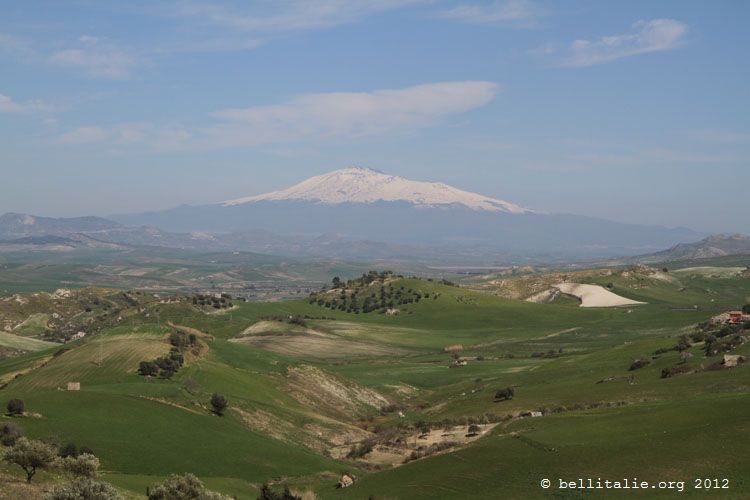
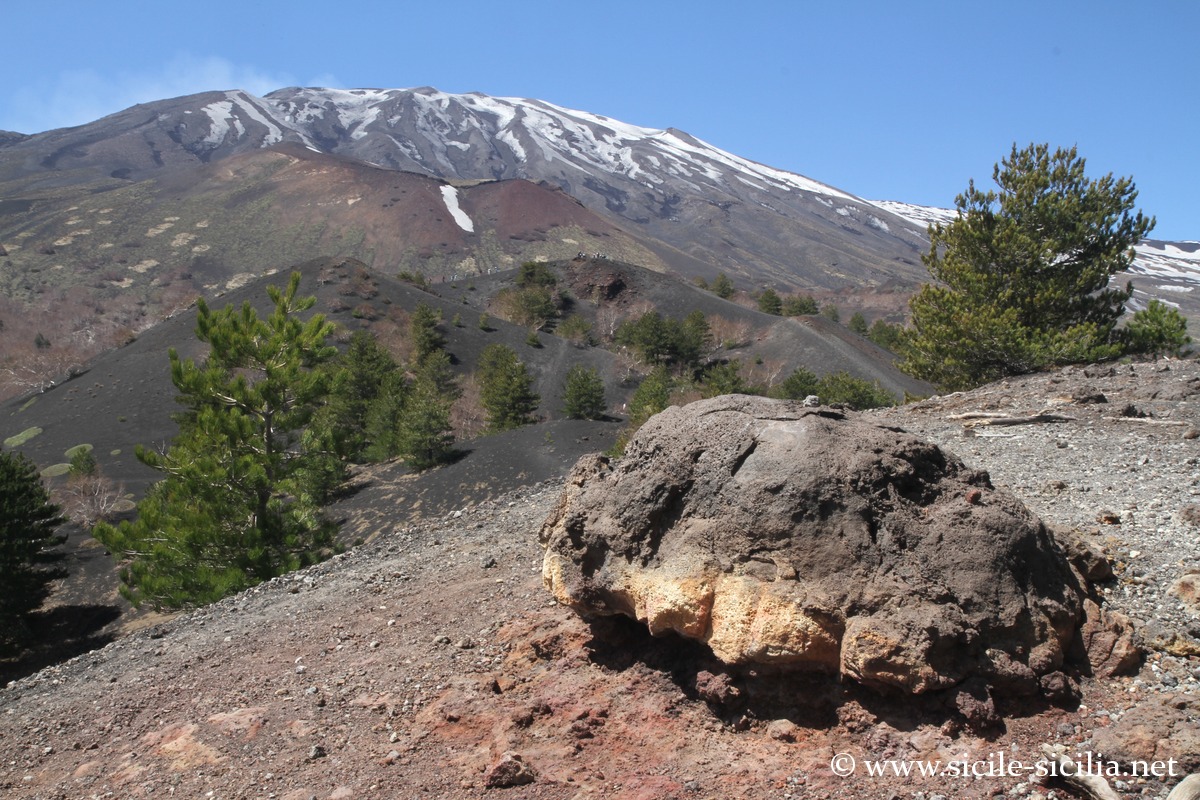
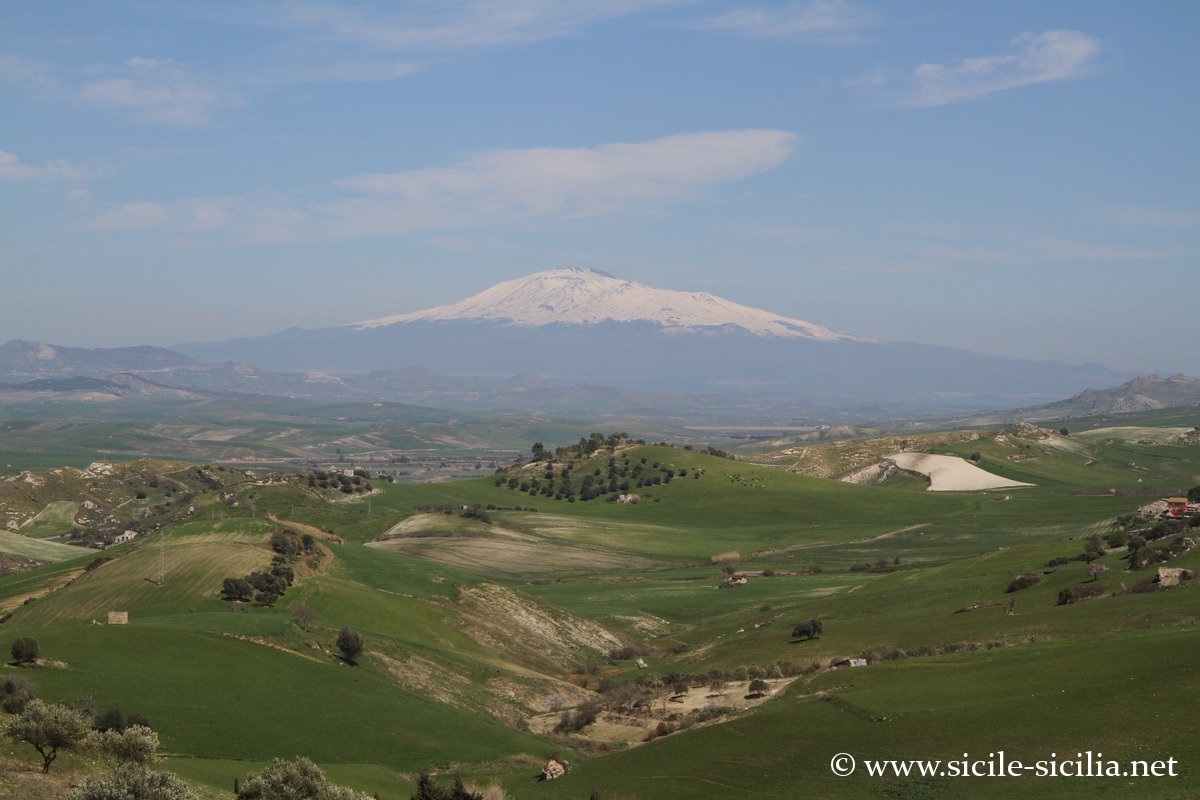
Rising to 3,403 metres above sea level (measured in 2024), Etna dominates the whole of Sicily, visible from much of the island. It is the highest active volcano in Europe and a unique site with its nature park formed by various layers of volcanic rock, where a great botanical diversity and varied landscapes flourish, from the lush nature of the lower slopes to the craters and lunar landscapes of the heights. Regularly, new lava flows emerge from the volcanic vents, sometimes threatening towns.
On Etna one discovers the various volcanic features, such as the summit craters, the numerous inactive volcanic cones at various heights, the solidified lava rivers, the caves, or the great depression of the Valle del Bove which was formed by collapses.
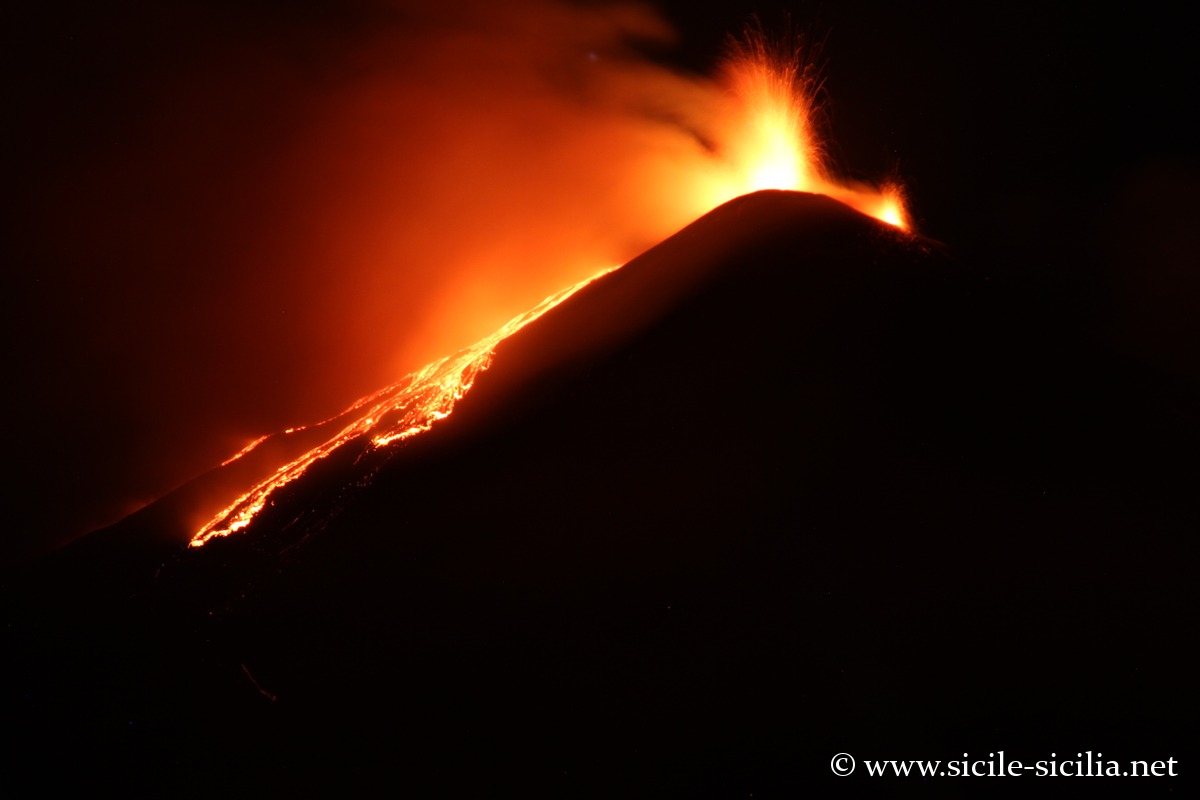
Eruption of Etna April 2025 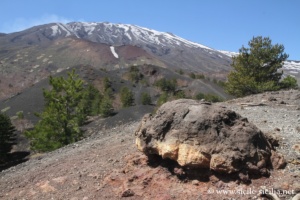
Monte Frumento from Monti Sartorius
An active volcano and nature park
Etna is an active volcano, and the highest in Sicily, with an altitude in 2024 of 3,403 metres (from the Voragine crater). Theoretically it does not represent an “imminent” threat to populations. For on the one hand, not being explosive, it does not disperse clouds of ash, and on the other hand, it takes weeks for the lava flows to fill the current craters before overflowing onto the slopes. However, overflows occur regularly, and more than a hundred seismic activity stations monitor it permanently.
Thus, the Sapienza refuge and the mechanical lifts were largely destroyed by the eruptions of 2001 and 2002. In 1992, the village of Zafferana Etnea was narrowly saved from a lava flow by the dropping of concrete blocks.
To climb the slopes of the volcano, there are two roads: one to the north-east which leads to the Piano Provenzana refuge; the other to the south which leads to the Sapienza refuge. (see also excursions on Etna).
Although the south is better equipped, the north side is perhaps more spectacular.
The best-equipped and most touristy villages, close to Catania, are on the south side of the volcano: Zafferana Etnea and Nicolosi. The latter is also a ski resort.
To the north-east, Piano Provenzana also offers equipment for skiing.
Historical overview of Etna, eruptions and craters
In antiquity, volcanic eruptions were attributed to the monster Typhon, struck by Zeus, and buried beneath Etna.
Many eruptions have been reported by history: including those of 475 BC, 1169, 1329 and 1381, whose lava flows ended in the sea.
The most notable eruptions of Etna since the Middle Ages
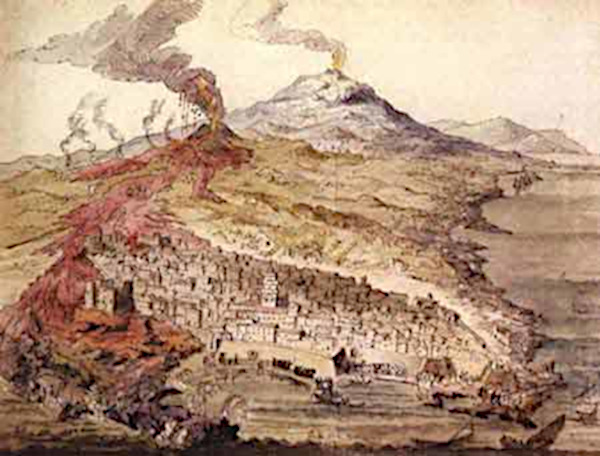
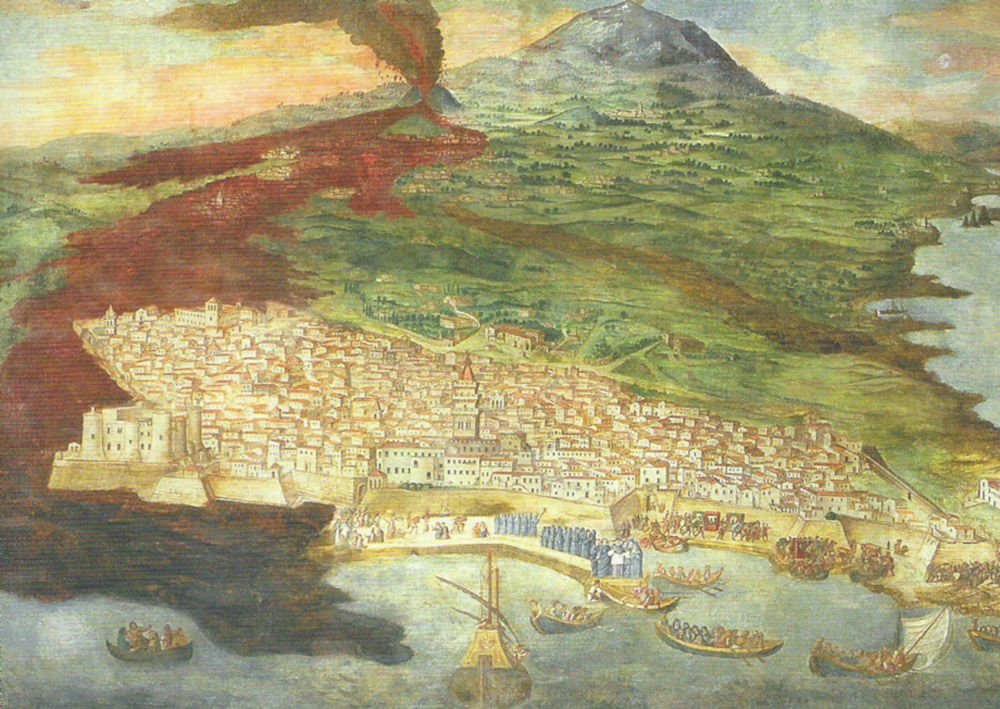
In 1169, a violent eruption, accompanied by an earthquake, caused thousands of deaths in Catania. In 1669, the most destructive in recent history buried several villages and reached Catania, destroying part of its fortifications; a river of lava swept over the southern slope, destroying 15 villages. It lasted 122 days. The cones of this eruption are the Monti Rossi.
In 1763, a series of explosions caused significant lava flows. They formed the Monti Calcarazzi.
The Silvestri craters emerged during the eruption of 1892.
In 1928, the eruption completely destroyed the village of Mascali. The cone of Monte Nero appeared near the eruptive fissure.
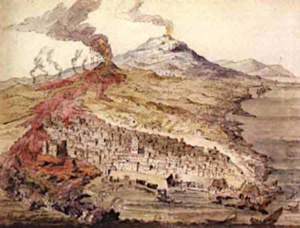
Eruption of Etna in 1669 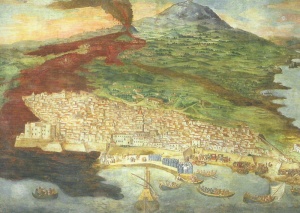

Eruption of Etna, engraving from 1669 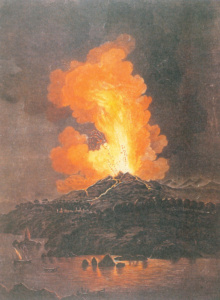

Eruption of 1766 (Alessandro d’Anna) 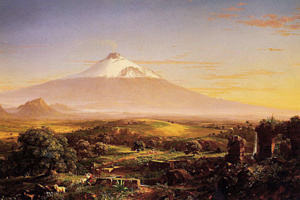

Etna in 1842 (Thomas Cole) 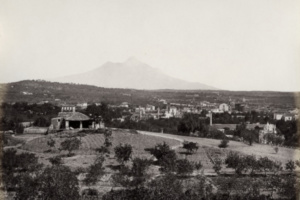
Etna in 1910, seen from Catania
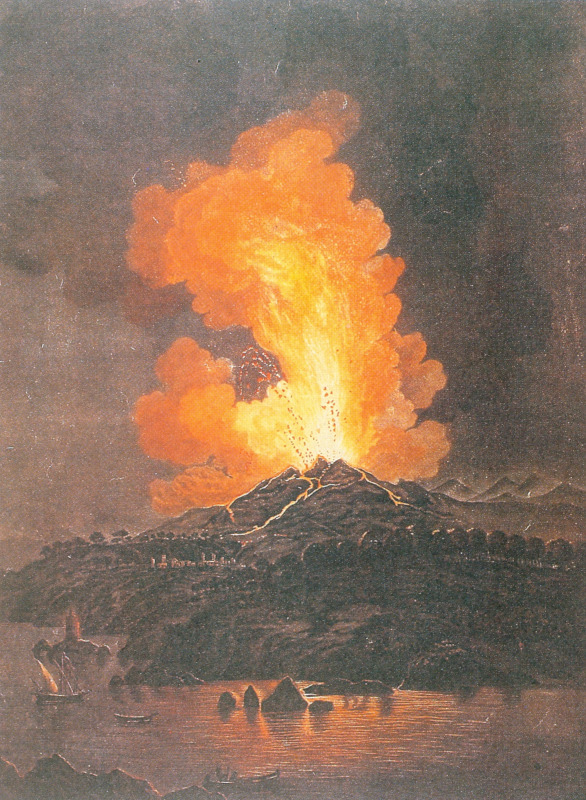
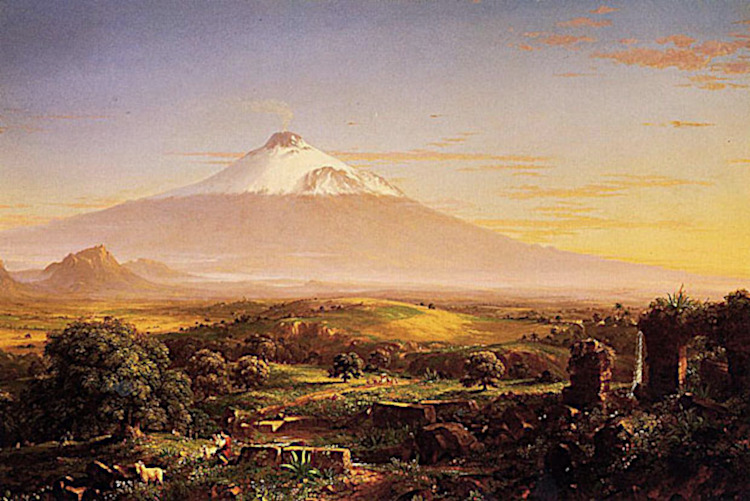
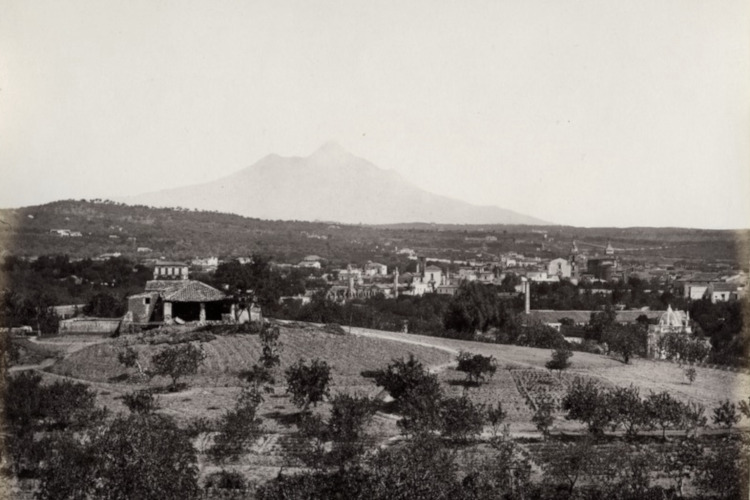
Activity since the 20th century and the craters
The highest summit crater of Etna was the North-East Crater (NEC), formed in 1911, having reached 3,350 metres in altitude after several eruptive episodes.
Among the most important of the 20th century, those of 1981 (small craters of the Piano delle Concazze) and of 1991-1993 were particularly notable, the latter threatening Zafferana Etnea. It resulted from the opening of an eruptive fissure on the south-east flank, and the activity of the craters of Torre del Filosofo.
In 2001 and 2002-2003, violent eruptions damaged tourist infrastructure. In 2001, the craters of Montagnola and Laghetto emerged and part of the south-east summit crater collapsed. To the north-east, in 2002 the Monti 2002 appeared.
In 2018 and 2021, explosive episodes generated vast ash plumes, disrupting air traffic. Fissures appeared in 2018 near the New South-East Crater. The latter experienced intense activity, with spectacular explosions in 2021.
The New South-East Crater (NSEC) of Etna emerged in 2007, near the South-East Crater, active since 1971. It has experienced rapid growth with frequent and intense eruptions (2011-2013, and 2020 and 2022), to the point of becoming the highest point of Etna in 2021, surpassing the North-East Crater with 3,357 metres in altitude.
After the eruptions of 2024, it is the Voragine crater that has reached a record altitude of 3,403 metres, an altitude measured in September 2024.
Since February 2025, the NSEC has remained active with intermittent effusive and Strombolian eruptions. In June 2025, a major pyroclastic flow occurred following a collapse of the northern flank of the crater, generating an ash plume reaching 6.5 km in height.
Etna remains in constant activity, with frequent and sometimes spectacular eruptions. The altitude of Etna can fluctuate depending on volcanic activity.
In the images above, one can note the evolution of the volcano’s appearance over the course of history.
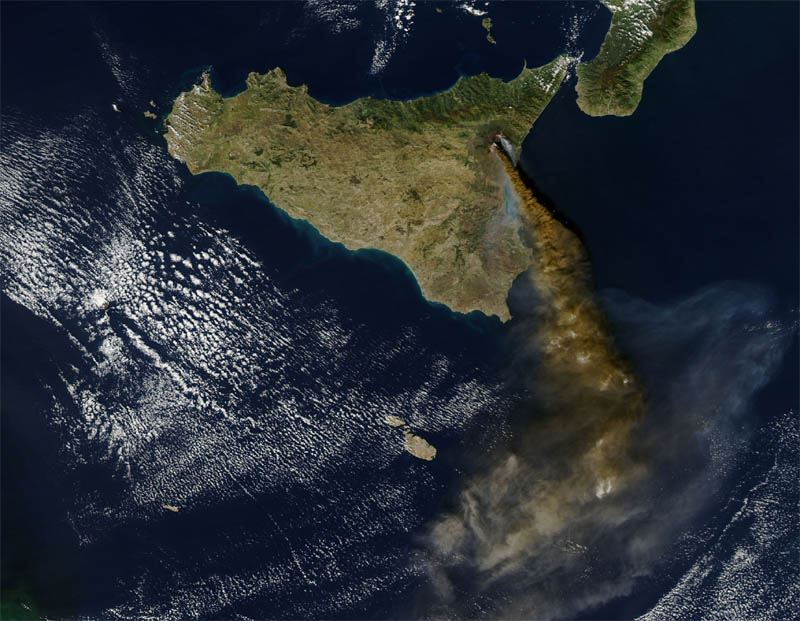
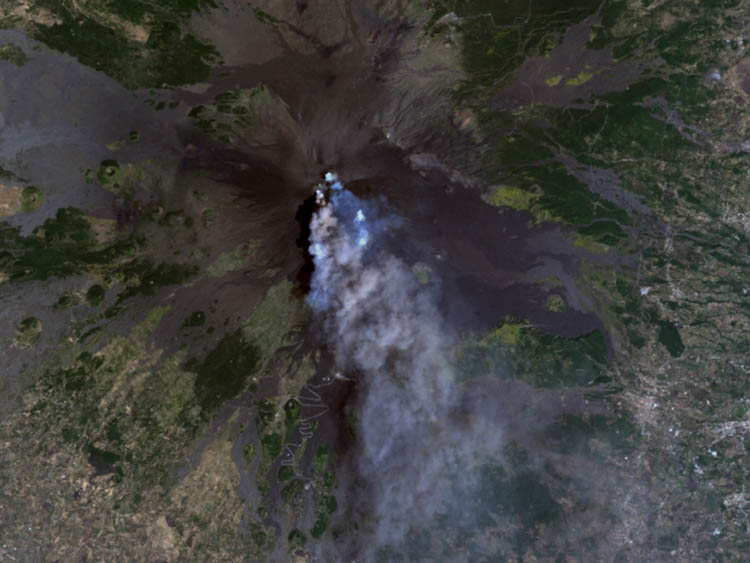
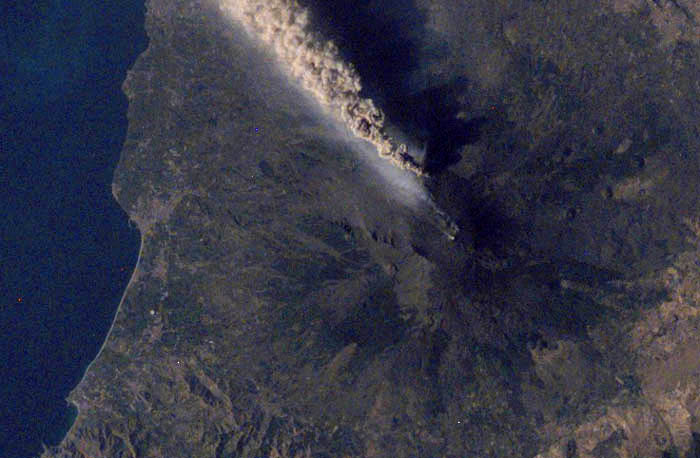
Etna seen from the sky
Etna in 1910, seen from Catania 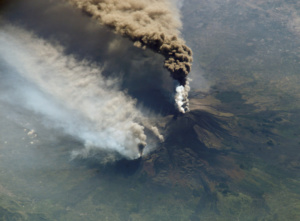

Eruption 30 October 2002 (ISS) 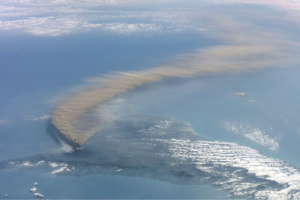
Eruption of 2002 (NASA) 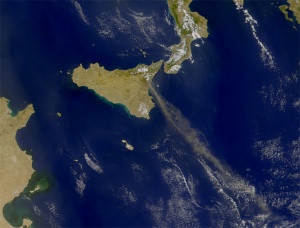

Eruption seen by satellite 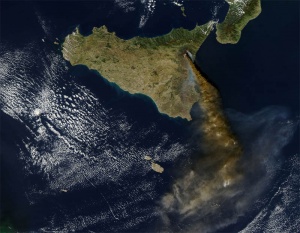

Eruption seen by satellite 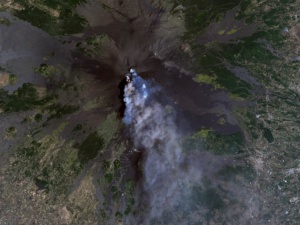

Eruption seen by satellite 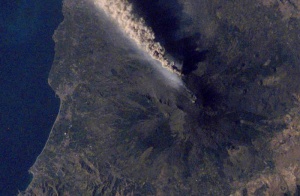

Eruption seen by satellite
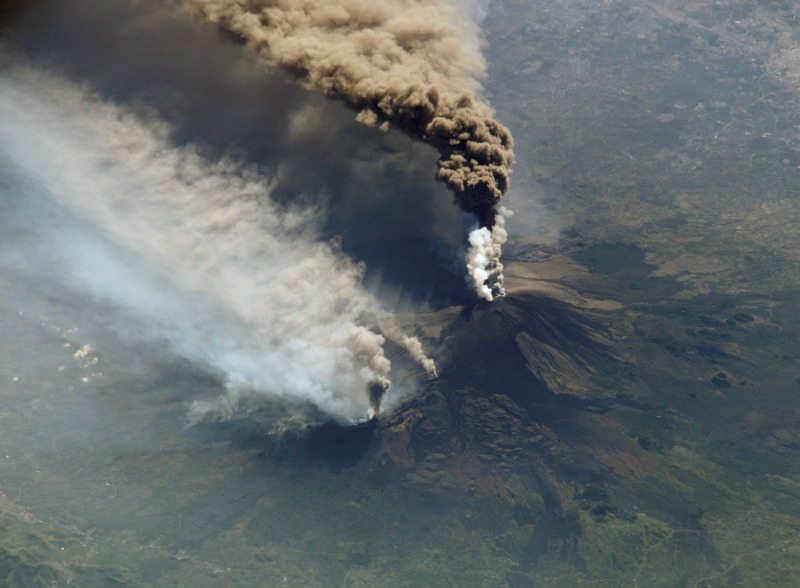
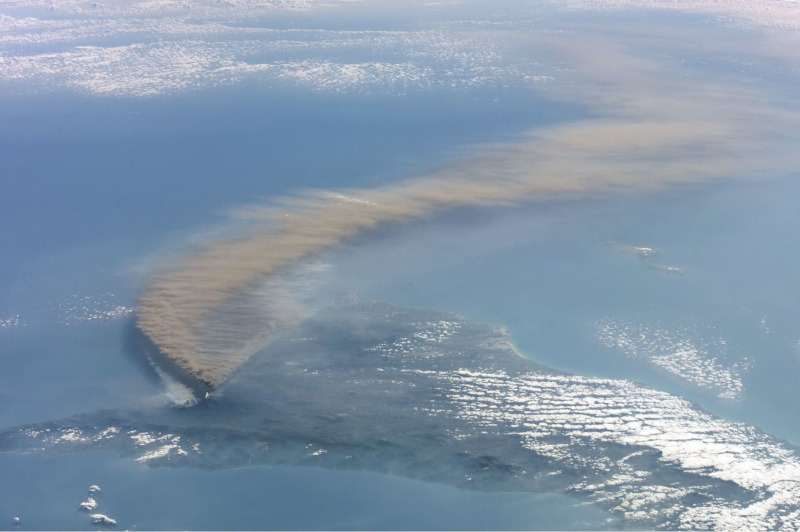
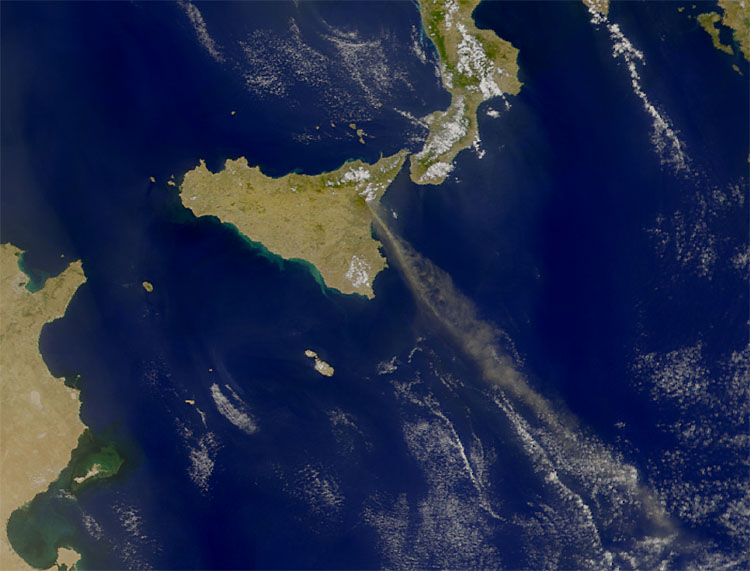
Map of Etna and surroundings
 Show interactive map
 Articles on Etna
- Centuripe
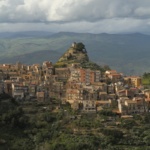
 Upstream of the valley, on a series of hills overlooking the Simeto, lies Centuripe, an ancient city already inhabited in the 5th century BC. Its urban layout extends over five ...
 - Simeto Valley, Paternò, Adrano
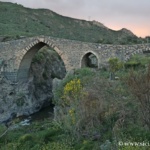 West of Catania, the Simeto valley forms a vast region still little visited by tourism. The river, about 113 km long, rises on the south-western slopes of Etna and cuts ...
 - Circumetnea, the train around Mount Etna
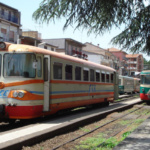 The Circumetnea is an opportunity for an original discovery of the Etna region by train, which runs along an old railway line over much of the circuit around the volcano, ...
Information
External sites
- Official sites: www.unescoparcoetna.it, www.parcoetna.it and www.parks.it
- On Wikipedia: Etna on Wikipedia, eruptions of Etna
Comments in other languages
The lava cave “Grotta dei Tre Livelli” 4 km from the Sapienza parking lot in the direction of Zafferana Etnea is worth visiting; you descend with a helmet into galleries formed by ancient solidified lava flows.
A small point to correct, if I may: saying that Etna is “not explosive” is a bit misleading. It is mainly effusive, yes, but it regularly produces strombolian phases and even fairly significant ash plumes (as in 2021 or 2025)
For the visit, above 2,900 m, access is strictly regulated and must be done with authorized guides, even when the volcano appears calm. The northern slope with access to Piano Provenzana is often less frequented and more unspoiled than the southern access from Sapienza.
Among the villages near the access points to the summit, the nicest at the foot of Mount Etna is Zafferana Etnea. Nicolosi has more facilities but is not very attractive