
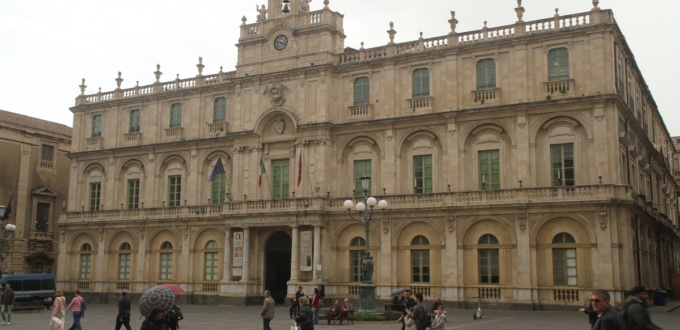
Beyond this page dedicated to the most remarkable palaces in Catania, you can also find in the article dedicated to Via Etnea (Palazzo dell’Università, etc.) other interesting buildings that can be discovered along this street and in the squares it crosses.
Palazzo Biscari in Catania
A few steps east of Piazza Duomo, Palazzo Biscari (Via Museo Biscari, 29), is perhaps the most important monument in the city, in any case the finest example of Baroque architecture in Catania. It is built partly on the 16th-century city walls erected by Charles V.]
After the 1693 earthquake, it was rebuilt from 1700 by Ignazio III Paternò Castello, prince of Biscari (1643-1699), with extensions by his son Vincenzo and especially his grandson Ignazio V (1719-1786), a scholar and archaeologist. The latter also installed there a museum with his important archaeological collection, the “Ignazio V collection”, including archaeological, numismatic and natural history pieces, which was accessible to European scholars, a large part of which is now in the Castello Ursino in Catania.
The west facade, facing the sea, displays allegorical reliefs sculpted by Antonino Amato, representing Abundance, Prosperity, Fertility and Wisdom, a style influenced by Spain.
One enters the palace through a vast door, leading to the central courtyard with a large double-ramp staircase.
Inside, one can visit in particular the Ballroom and its rococo style embellished with mirrors, frescoes and stuccoes. The small central dome, where the orchestra was installed, is covered with a fresco representing the Glory of the Paternò Castello di Biscari family, painted by Sebastiano Lo Monaco.
Among the other rooms, marked by rococo decorations and furniture. The sala dei Feudi (hall of the fiefs) is decorated with frescoes with scenes of the quarrels of the Biscari family, large canvases representing the feudatories and the lands of the Biscari. The princess’s apartments with their woodwork and Roman marbles on the floor that were reused there, installed by Ignazio V for his wife. The bird gallery and the Don Quixote room.
The palace has two inner courtyards with columns, including a small garden accessible during visits.
Guided tours are offered by reservation. (www.palazzobiscari.it, at 10 a.m. and 12 p.m. (groups of 10 max.), duration 1h; price €12/adult)
Palazzo della Cultura in Catania
The Palace of Culture (palazzo della Cultura), formerly Palazzo Platamone and the Monastery of San Placido, occupies an entire trapezoidal block (121 Via Vittorio Emanuele II).
On the short side stands the church of San Placido, one of the jewels of Baroque Catania, with the facade (1769) by Stefano Ittar marked by its concavity and an interior of great elegance, with Baroque frescoes and stuccoes; the church adjacent to the complex.
The Platamone family was one of the most illustrious families of 15th-century Catania and their palace one of the most luxurious architectural examples in the city. Shortly after its construction around 1409-1412, on the supposed ruins of a Roman temple of Bacchus, the family entrusted premises to found the monastery of San Placido, given to the Benedictines. It has a late Gothic style with Islamizing “chevron” motifs.
Since the reconstruction that followed the 1693 earthquake, the courtyard contains the remains of the 15th-century palace, with the surviving medieval loggia and its balcony, adorned with floral and human motifs in limestone. In the center of the balcony is the coat of arms of the Platamone (mountain with three shells and lilies). The complex also incorporates 18th-century elements by architects such as Vaccarini.
After the suppression of religious orders in 1866-1867, it was acquired by the municipality in 1909 for offices; since 2008, it has been the seat of the assessorship for Culture.
Visiting conditions: Open Monday-Friday 9 a.m.-1:30 p.m. (closed weekends and public holidays except events); free entry for the courtyards and the church. The palace hosts temporary exhibitions, concerts and cultural events.
Information
External sites
- Palazzo Biscari: official website, Wikipedia page
- Palace of Culture (Palazzo Platamone): www.comune.catania.it
- Opening hours of the Palazzo della Cultura (Palazzo Platamone): www.comune.catania.it
Articles about Catania
- Catania
 The second most populous city in Sicily after Palermo, Catania has faced terrible earthquakes and volcanic eruptions over the centuries, undergoing numerous ...
 - Hotels in Catania
 Hotels in Catania in Sicily, at the foot of Mount Etna. Apartments, accommodations or farm stays in the surrounding area, and bed ...
 - Riviera of the Cyclops
 Along the coast north of Catania, the “Riviera dei Ciclopi” (Riviera dei Ciclopi in Italian) stretches for about 12 kilometers between Aci ...
 - Catania Walking Tour Itinerary
 The interesting historic centre of Catania is marked by Baroque architecture, part of which has been inscribed, along with seven other towns ...
 - Piazza del Duomo and Catania Cathedral
 In the heart of Catania, the Piazza Duomo is the starting point for a tour of the city. The present square is ...
 - Churches of Catania
 Beyond this article dedicated to the churches of the city, also discover the main religious buildings with the articles on the Piazza ...
 - Via Crociferi in Catania: the Baroque churches
 The Via Crociferi is called the “street of churches”, a monumental and emblematic street of Catania, very dense with Baroque architecture, not ...
 - Ancient sites of Catania
 The ancient remains of Catania bear witness to the importance of the city during the Greek and Roman periods, when the ancient ...
 - Along the Via Etnea in Catania
 The Via Etnea is the main shopping street in the centre of Catania, a very long street lined with shops, ice cream ...
 - Bellini Square and Theatre in Catania
 Bellini Theatre Located towards the north-east of Piazza Duomo, on the square of the same name, the Bellini Theatre (Teatro Massimo Vincenzo Bellini ...
 - Ursino Castle of Catania
 The Ursino Castle of Catania was built between 1239 and 1250 on the orders of Frederick II of Swabia by Riccardo da ...
 - Benedictine Monastery and San Nicolò of Catania
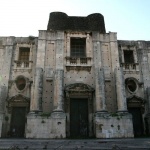 About 850 metres west of Piazza Duomo, Piazza Dante sits in front of a large Benedictine monastery, which was originally intended to ...
 - Museums of Catania
 List of the main museums of Catania, including palaces, religious and archaeological sites. Municipal Museum of Castello Ursino (overview) The Castello Ursino, built between ...
 - Other sites and places in Catania
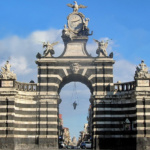 Porta Garibaldi in Catania In the south-west of Catania’s centre, more than a kilometre from Piazza Duomo, the Porta Garibaldi was built in ...
 - Discovering underground Catania
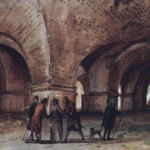 Lava flows have periodically covered entire districts of Catania, burying much of the city’s past, which will remain largely hidden forever. However, you ...
 - Catania Environs: Riviera and Countryside
 Mount Etna (overview) In the environs of Catania, the Etna park offers a spectacular discovery of the highest active volcano in Europe, with ...
 - Traditions and gastronomy in Catania
 Feast of Saint Agatha in Catania The main festival of Catania is that of Saint Agatha, which lasts three days. After a month ...
 - Activities in Catania, guided tours and excursions
 Booking activities in Catania and its surroundings, guided tours, tastings, outings on the neighbouring volcano of Etna, etc.
 - Around Catania
 Sicilian destinations near Catania, including Mount Etna rising to the northwest, Taormina along the coast to the north, and to the south ...