

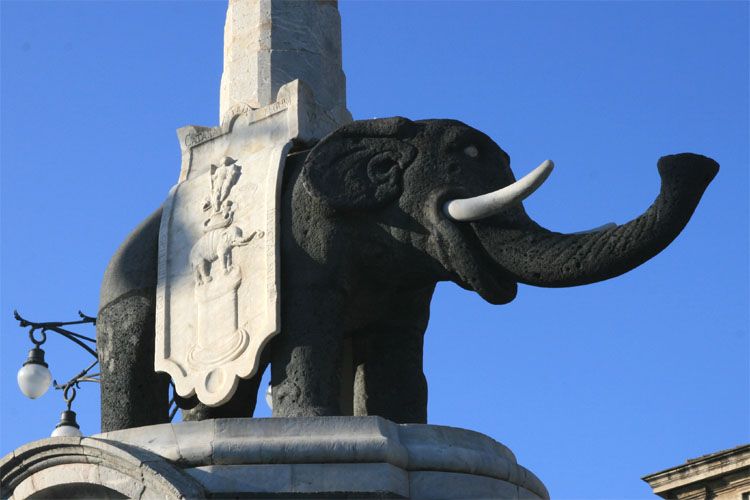
The second most populous city in Sicily after Palermo, Catania has faced terrible earthquakes and volcanic eruptions over the centuries, undergoing numerous urban transformations and seeing several cultures pass through its lands. Located between Etna and the Ionian Sea, the volcano still influences its urban planning, where black lava stone is often found in the constructions.
A Baroque heritage, but also an older one
The city preserves a historic centre whose Baroque heritage earned it a UNESCO listing along with other towns of the Val di Noto.
The heart of Catania is undoubtedly the Piazza Duomo with its cathedral, its fountain and its palaces. Beautiful architectural examples, palaces and churches, can be found in other squares, and particularly in the emblematic Via Crociferi, famous for its succession of Baroque churches.
Among the city’s other sites are the Greco-Roman remains of the theatre and the amphitheatre, the Ursino Castle with the municipal museum, the Bellini Theatre, its underground places such as the ancient baths, or an important fish market, the Pescheria, which has enlivened the city centre for centuries.
Catania is located at the base of Etna, 45 km south of Taormina and 60 km north of Syracuse.
Top 10 things to see and do in Catania
- Piazza del Duomo
The monumental heart of the city, this Baroque square is home to several emblematic buildings: the Cathedral of Sant’Agata, dedicated to the city’s patron saint, rebuilt after the 1693 earthquake, the Fountain of the Elephant, symbol of Catania, depicting an elephant in black lava topped by an Egyptian obelisk, and the Palazzo degli Elefanti, the current town hall. - Via Crociferi
The Baroque street par excellence, listed as a UNESCO World Heritage Site along with Catania’s historic centre. It concentrates a remarkable ensemble of churches and religious buildings erected in the 18th century: the church of San Benedetto, famous for its angelic staircase, the Jesuit church of San Francesco Borgia, the church of San Giuliano with its convex façade, the Jesuit College and the former Benedictine convent. - Pescheria market and Piazza Carlo Alberto market
Catania’s historic fish market, located behind Piazza del Duomo. A lively and authentic place, where fresh fish, local products and the cries of the vendors set the atmosphere.
Another market, larger and more general, is held in Piazza Carlo Alberto, larger and more general. - Benedictine Monastery
It is one of the largest monasteries in Europe, now integrated into the University of Catania. A mix of Baroque and classical architecture, with peaceful cloisters, a library and Roman remains in the basement. - Ursino Castle
Medieval fortress built in the 13th century by Frederick II, once on the seafront, now surrounded by land following lava flows. It now houses Catania’s civic museum, with archaeological and artistic collections. - Via Etnea
Catania’s main artery, which crosses the historic centre in a straight line, with a direct view of Etna, lined with Baroque palaces, churches, cafés and shops, making it one of the liveliest commercial axes in Sicily. - Roman theatre and amphitheatre of Catania
Ancient complex from the 1st century, well preserved, in the heart of the city, comprising a theatre, a stage and an odeon.
Among the ancient remains, one can also visit the remnants of the amphitheatre and those of the Baths of the Indirizzo and the Achillian Baths, underground remains testifying to the ancient thermal development. - Villa Bellini and botanical garden
Catania’s main public garden, offering a shaded break in the heart of the city. Beautiful vegetation, paths adorned with floral mosaics, fountains, and a panoramic view of Etna from certain heights. - Port of Catania and Ognina
At first glance, the port of Catania has little of tourist interest, but it is a real port, where the atmosphere is appreciated by many, with the Vecchia Dogana (old customs house converted). A few kilometres north, the small ancient port of Ognina and its charming fishing village.
→ Read also visit to Catania: itinerary and places to see
Ideas for visits
Map of tourist places in Catania
 Show interactive map
Historical overview of Catania
Catania is also one of the oldest cities on the island, founded by Greeks in the 8th century BC (around -724), but it had already been occupied for a long time by Sicani peoples.
The city rivalled Syracuse for several centuries in eastern Sicily.
It experienced a certain opulence under the Romans. Then, like a large part of Sicily, it was occupied successively after the fall of Rome by the Byzantines, the Arabs, and the Normans, the Swabians, Aragonese and Spaniards.
In the 17th century, Catania experienced two major catastrophes: lava flows in 1669 that covered the lower parts of the city, then an earthquake that destroyed it in 1693, killing more than 30,000 people. This earthquake deeply impacted the whole of south-eastern Sicily. The reconstruction following this earthquake gave rise to ordered urban planning and a homogeneous Baroque architecture, which became Catania’s identity mark.
Where Catania is located: map
If you see this after your page is loaded completely, leafletJS files are missing.
Articles about Catania
- Hotels in Catania
 Hotels in Catania in Sicily, at the foot of Mount Etna. Apartments, accommodations or farm stays in the surrounding area, and bed ...
 - Riviera of the Cyclops
 Along the coast north of Catania, the “Riviera dei Ciclopi” (Riviera dei Ciclopi in Italian) stretches for about 12 kilometers between Aci ...
 - Catania Walking Tour Itinerary
 The interesting historic centre of Catania is marked by Baroque architecture, part of which has been inscribed, along with seven other towns ...
 - Piazza del Duomo and Catania Cathedral
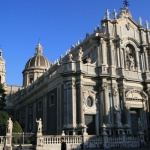 In the heart of Catania, the Piazza Duomo is the starting point for a tour of the city. The present square is ...
 - Churches of Catania
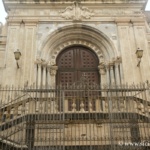 Beyond this article dedicated to the churches of the city, also discover the main religious buildings with the articles on the Piazza ...
 - Via Crociferi in Catania: the Baroque churches
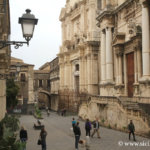 The Via Crociferi is called the “street of churches”, a monumental and emblematic street of Catania, very dense with Baroque architecture, not ...
 - Ancient sites of Catania
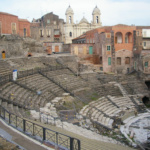 The ancient remains of Catania bear witness to the importance of the city during the Greek and Roman periods, when the ancient ...
 - Along the Via Etnea in Catania
 The Via Etnea is the main shopping street in the centre of Catania, a very long street lined with shops, ice cream ...
 - Palaces of Catania to discover
 Beyond this page dedicated to the most remarkable palaces in Catania, you can also find in the article dedicated to Via Etnea ...
 - Bellini Square and Theatre in Catania
 Bellini Theatre Located towards the north-east of Piazza Duomo, on the square of the same name, the Bellini Theatre (Teatro Massimo Vincenzo Bellini ...
 - Ursino Castle of Catania
 The Ursino Castle of Catania was built between 1239 and 1250 on the orders of Frederick II of Swabia by Riccardo da ...
 - Benedictine Monastery and San Nicolò of Catania
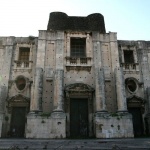 About 850 metres west of Piazza Duomo, Piazza Dante sits in front of a large Benedictine monastery, which was originally intended to ...
 - Museums of Catania
 List of the main museums of Catania, including palaces, religious and archaeological sites. Municipal Museum of Castello Ursino (overview) The Castello Ursino, built between ...
 - Other sites and places in Catania
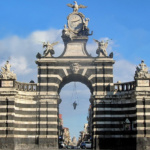 Porta Garibaldi in Catania In the south-west of Catania’s centre, more than a kilometre from Piazza Duomo, the Porta Garibaldi was built in ...
 - Discovering underground Catania
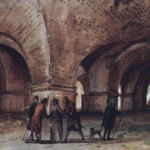 Lava flows have periodically covered entire districts of Catania, burying much of the city’s past, which will remain largely hidden forever. However, you ...
 - Catania Environs: Riviera and Countryside
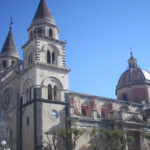 Mount Etna (overview) In the environs of Catania, the Etna park offers a spectacular discovery of the highest active volcano in Europe, with ...
 - Traditions and gastronomy in Catania
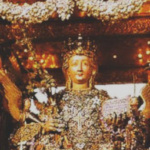 Feast of Saint Agatha in Catania The main festival of Catania is that of Saint Agatha, which lasts three days. After a month ...
 - Activities in Catania, guided tours and excursions
 Booking activities in Catania and its surroundings, guided tours, tastings, outings on the neighbouring volcano of Etna, etc.
 - Around Catania
 Sicilian destinations near Catania, including Mount Etna rising to the northwest, Taormina along the coast to the north, and to the south ...
Information
External sites
- Wikipedia page
- Portale Turismo – Comune di Catania : official tourism site of the city of Catania, offering itineraries, monuments, cultural events and practical information.
- Visit Sicily – Catania : official guide of the Sicily region, with a presentation of the main historical and natural sites of Catania.
- Touring Club Italiano – Catania : cultural and historical presentation of Catania and its surroundings by a recognised Italian institution.
Comments in other languages
Near the Pescheria (the fish market), there are bar-restaurants where you can eat fried fish and seafood (like Scirocco), to take away in paper cones or eat on site, until lunchtime. Simple and pretty good :)
Important point for understanding Catania on the ground: the current Baroque city is almost entirely the result of the reconstruction after the 1693 earthquake, so in many buildings and palaces you see dark volcanic stone combined with light limestone elements.
Another interesting aspect for discovering the city: the sites (generally accessible on guided tours) near the baths or the theater, which make it possible to explore the ancient levels buried under the eruptions, sometimes as much as 10 meters below the current street level.