

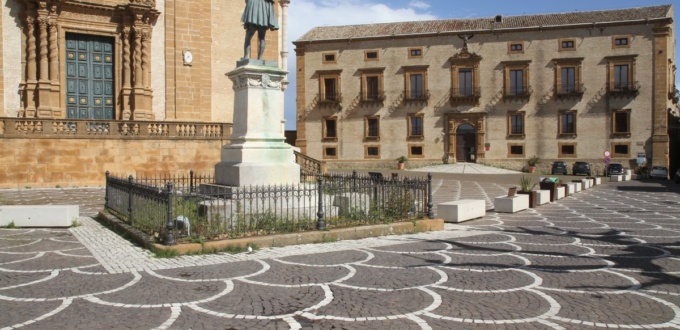
Piazza Armerina is a pretty town of about 20,000 inhabitants, at 700 metres of altitude in the Erean Mountains, founded by the Arabs in the 10th century.
It is famous above all for the Roman Villa del Casale, a few kilometres from the centre, a magnificent villa rich in extraordinary floors with extensive mosaics of 3,500 m², very well preserved, inscribed on the Unesco world heritage list.
The historic centre, spread over several districts, also preserves beautiful monuments, in particular churches and the Aragonese castle.
Traditions and festivities in Piazza Armerina
- A famous tradition is held every year where the four medieval districts compete in the Palio of the Normans (from 12 to 14 August), a festival that is the occasion for numerous events and re-enactments, including that of the procession of the entry of the troops of Roger of Hauteville freeing the town from the Saracens.
It involves nearly 600 participants costumed as knights, ladies, notables and Norman troops. - Every year the town celebrates the feast of Maria Santissima delle Vittorie, patron saint of the town, according to two main appointments: on the one hand 3 May (with the icon of the Madonna carried in procession from the hermitage of Piazza Vecchia to the town, after a traditional departure on the last Sunday of April), and on the other hand 15 August, the day of the Assumption of the Virgin, immediately after the Palio of the Normans, the culmination of popular devotion.
- In spring, commercial tradition comes back to life with the “Fiera di Maggio“, a fair-market held at the end of May and marking the arrival of the summer season: artisans, local products and attractions bring together inhabitants and visitors.
View of Piazza Armerina 
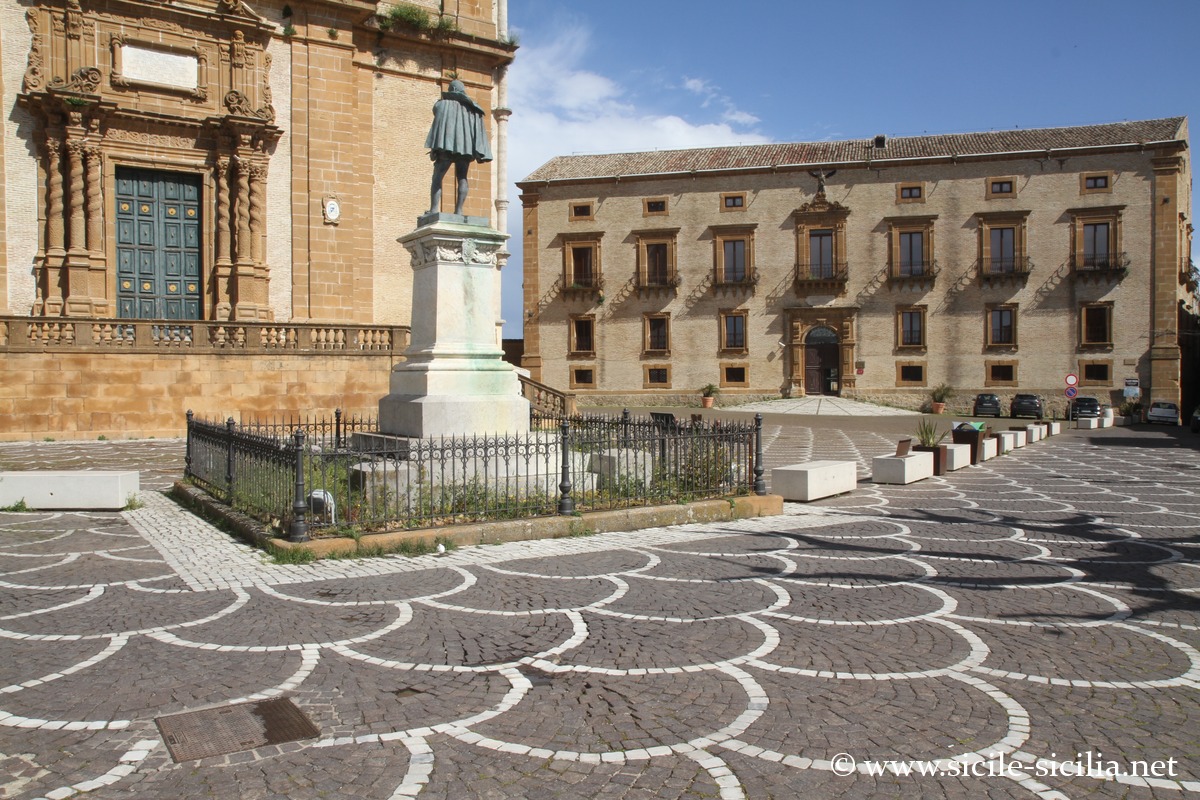
Piazza Cattedrale
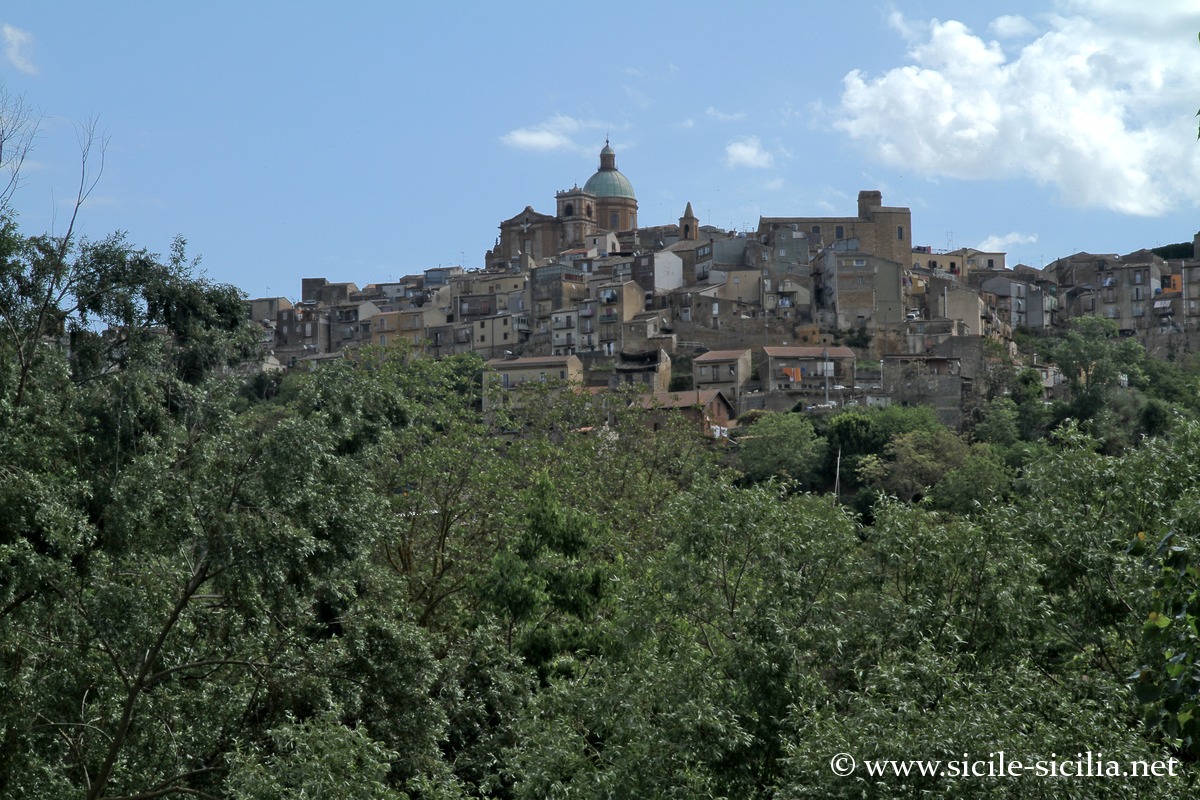
The heritage of Piazza Armerina
The historic centre of Piazza Armerina is remarkable, with its Baroque buildings such as the Duomo, its four historic medieval districts, Renaissance palaces such as the Palazzo Trigona, or the Aragonese castle.
Main monuments of the Monte district
Monte is the richest district of the town, whose fishbone plan is inherited from the Normans, around via Monte, along which stand interesting buildings such as Palazzo Geraci, the monastery of the Trinity, Palazzo Trigona, Palazzo Roccabianca and the duomo. At the end of the street, the 17th-century church of the Angeli Custodi (guardian angels) is decorated with beautiful frescoes, and Santa Maria della Catena dates from the 12th century. Via del Crocifisso leads to the churches of the Crucifix and of Saint Martin of Tours (the town’s first Norman church, begun in 1163).
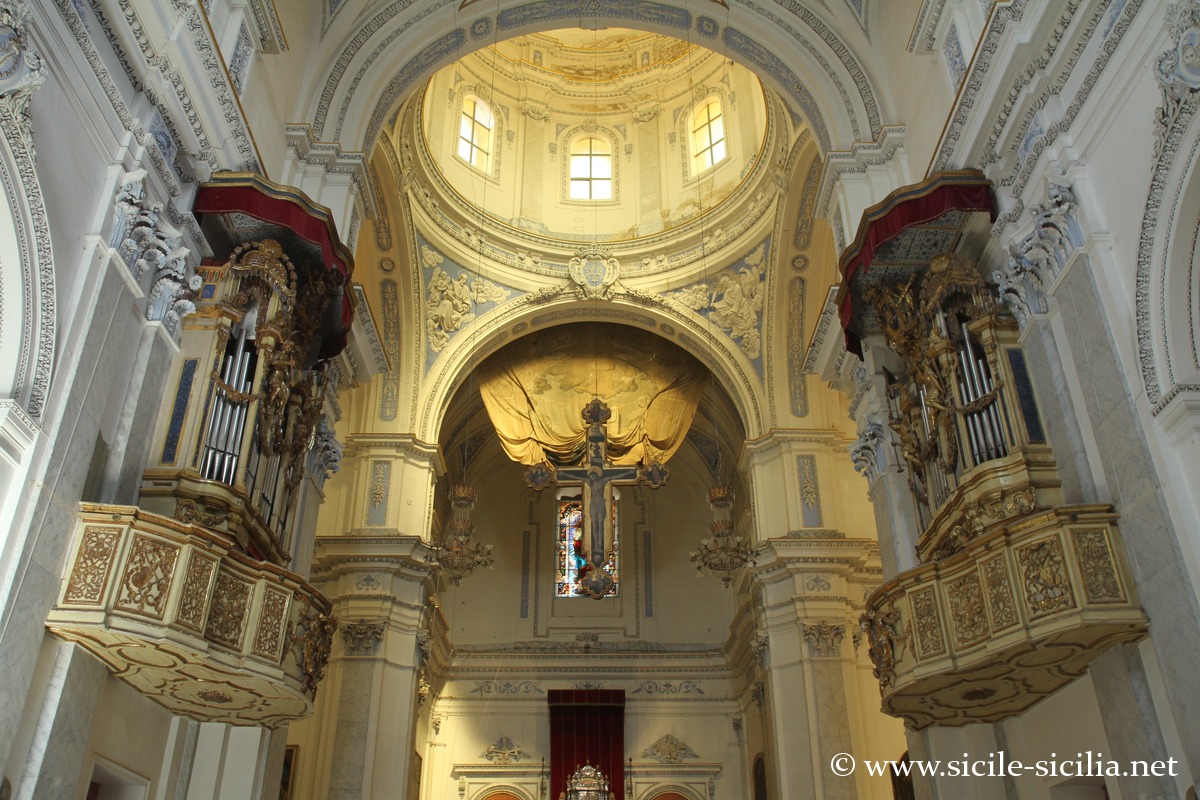
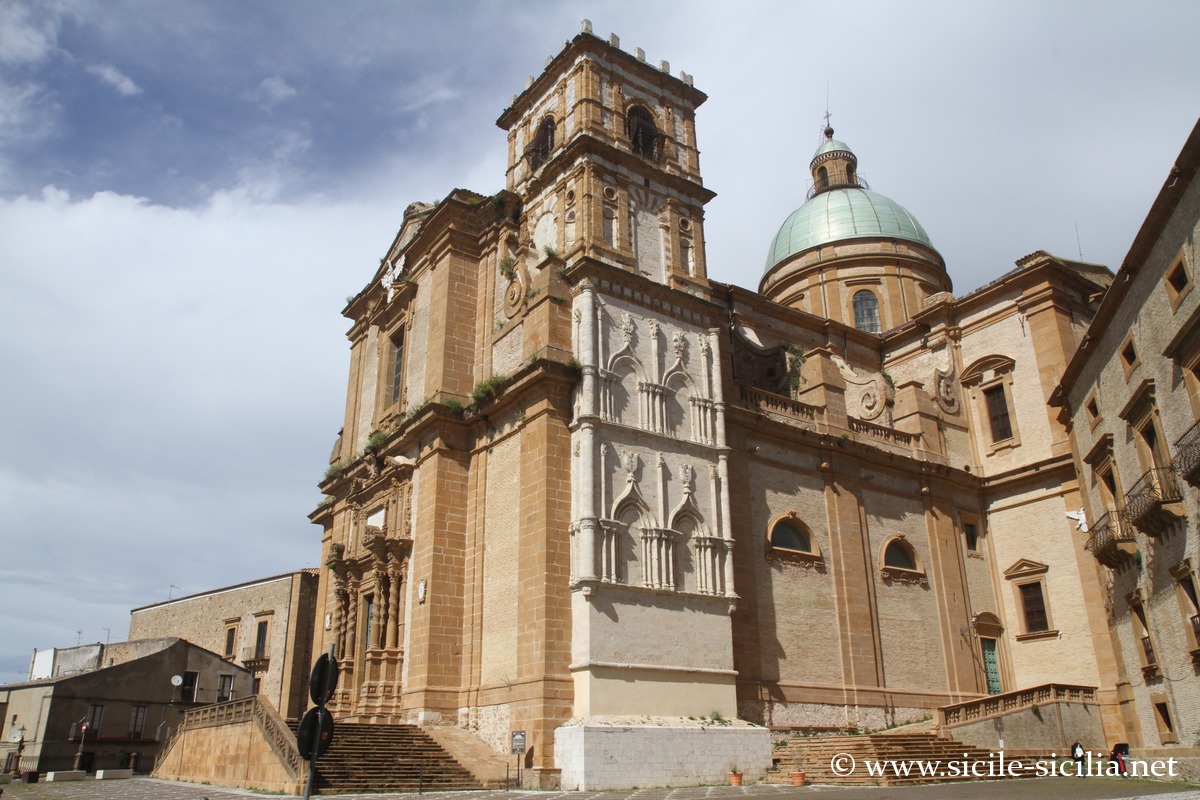
The cathedral of Maria Santissima delle Vittorie was built over nearly 100 years from 1604 in place of the old 15th-century church, consecrated in 1742. However, the 15th-16th-century bell tower in Catalan Gothic style remains.
The dome completed in 1768 is the highest in Sicily at 76.5 metres, with a diameter of 13.88 metres.
The original bell tower, partly Gothic-Catalan (1517) and raised in 1578, remains integrated into the building.
Inside are major works including the large painted cross suspended from the triumphal arch (1485), painted on both sides (Crucifixion and Resurrection) and attributed to the “Maestro della croce di Piazza Armerina”. A baptistery by Antonello Gagini (1594) or a related workshop is set into the bell tower, consisting of a marble arch, a sign of the art of the Sicilian Renaissance. The main altar is remarkable, in lapis lazuli, hardstones and Sicilian marbles, which also includes the silver reliquary (1625) containing the icon of the Virgin Maria SS. delle Vittorie, of Byzantine origin according to tradition.
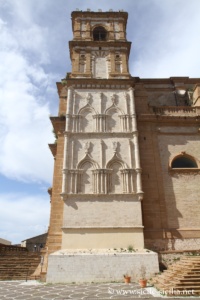
Exterior of the cathedral basilica 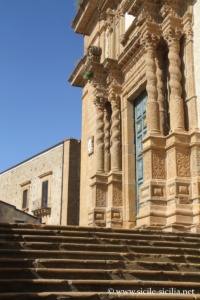

Portal of the cathedral basilica 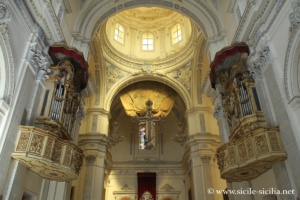

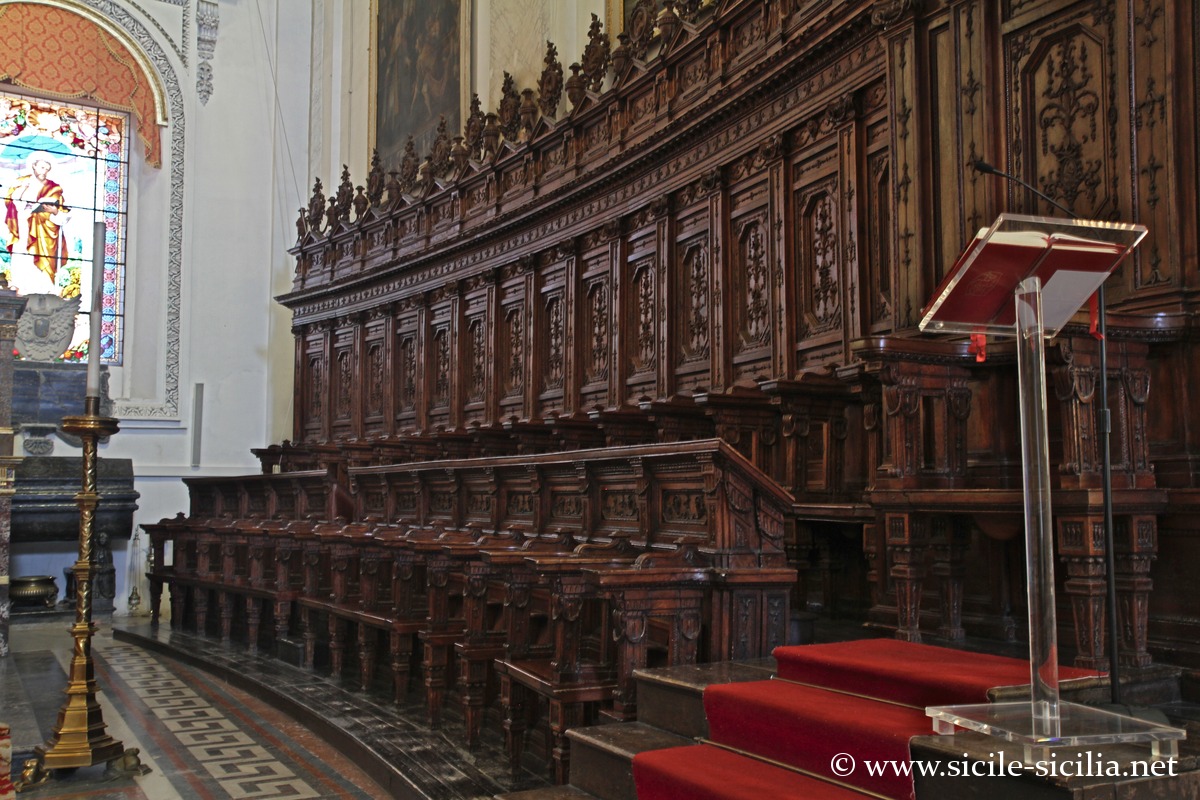
Choir of the cathedral basilica 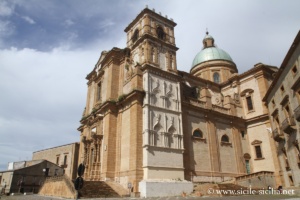
Cathedral basilica 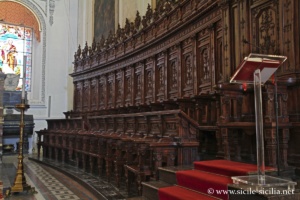
Cathedral basilica
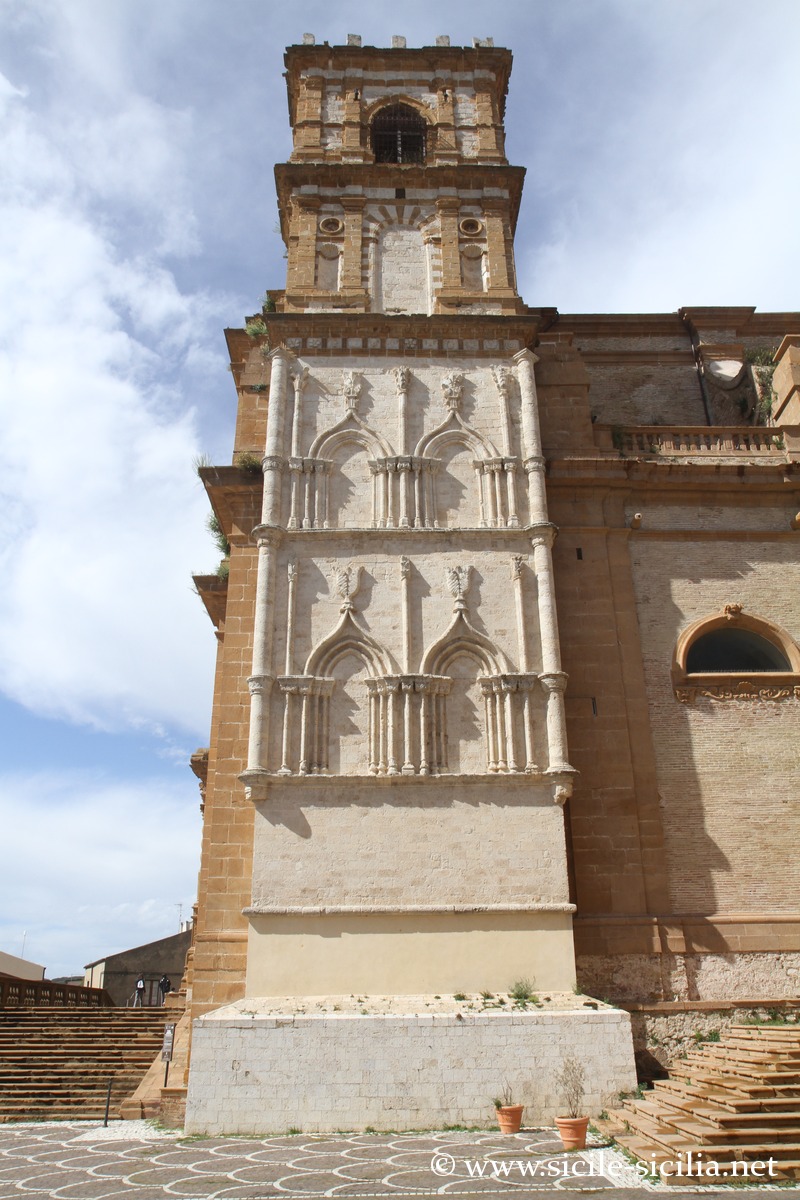
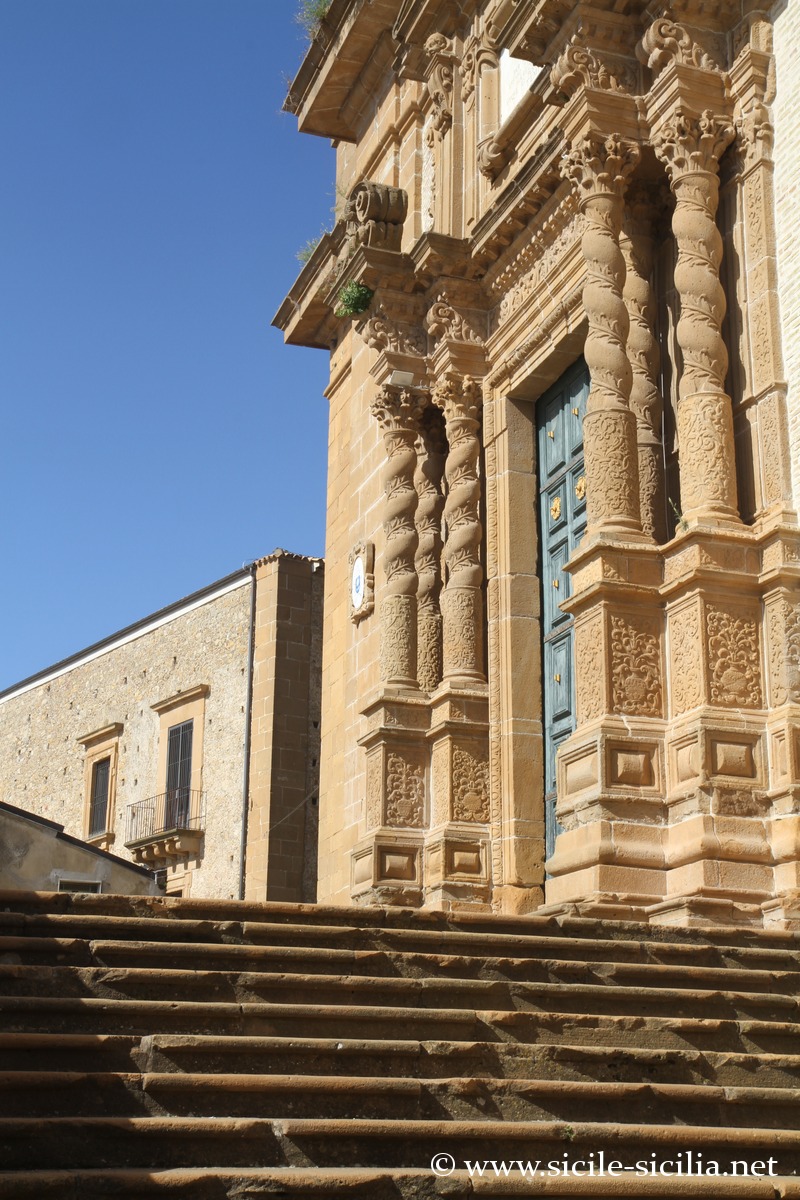
Beside it, the Palazzo Trigona della Floresta from the late 17th – early 18th century is an example of Baroque civil architecture, with a beautiful Catalan Gothic portal on its façade. The golden eagle of the Trigona family is on the architrave of the balcony.
The interior hides a courtyard and the Sicilian region has recently installed an archaeological museum made up of the excavation campaigns of the Villa Romana del Casale, the “Museo della Città e del Territorio”.
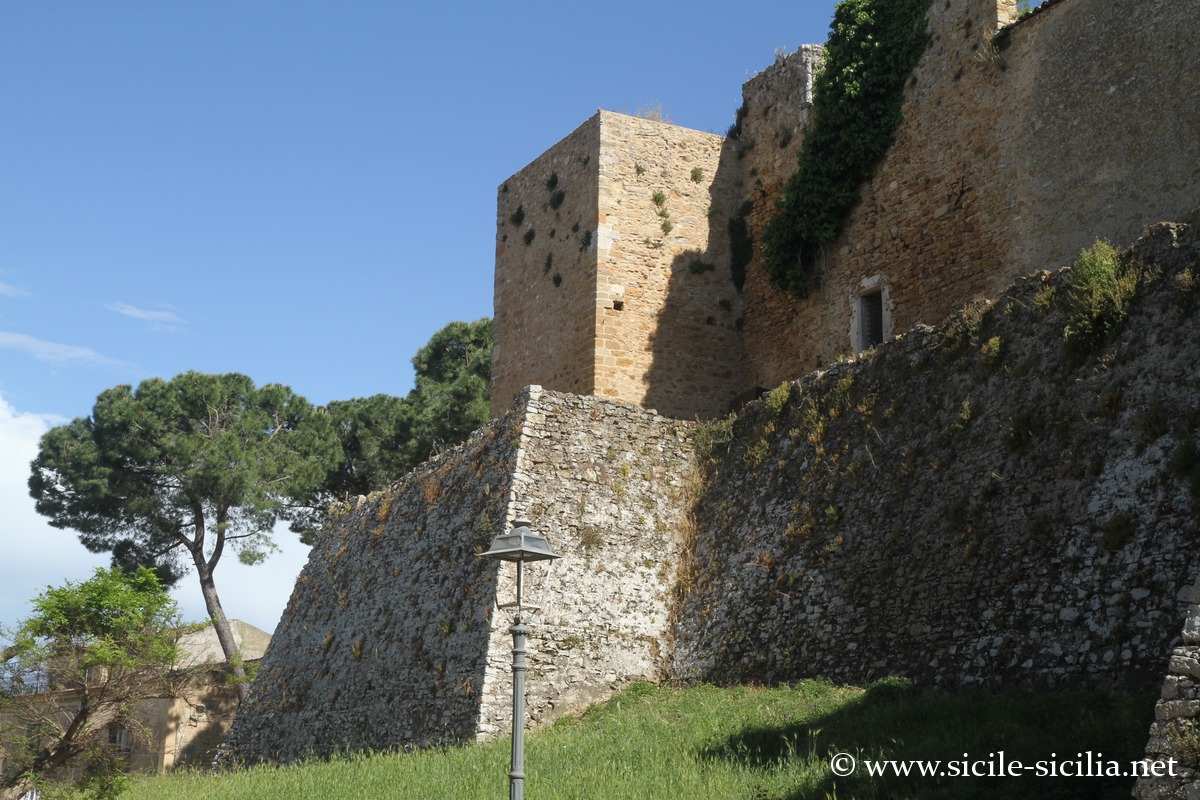
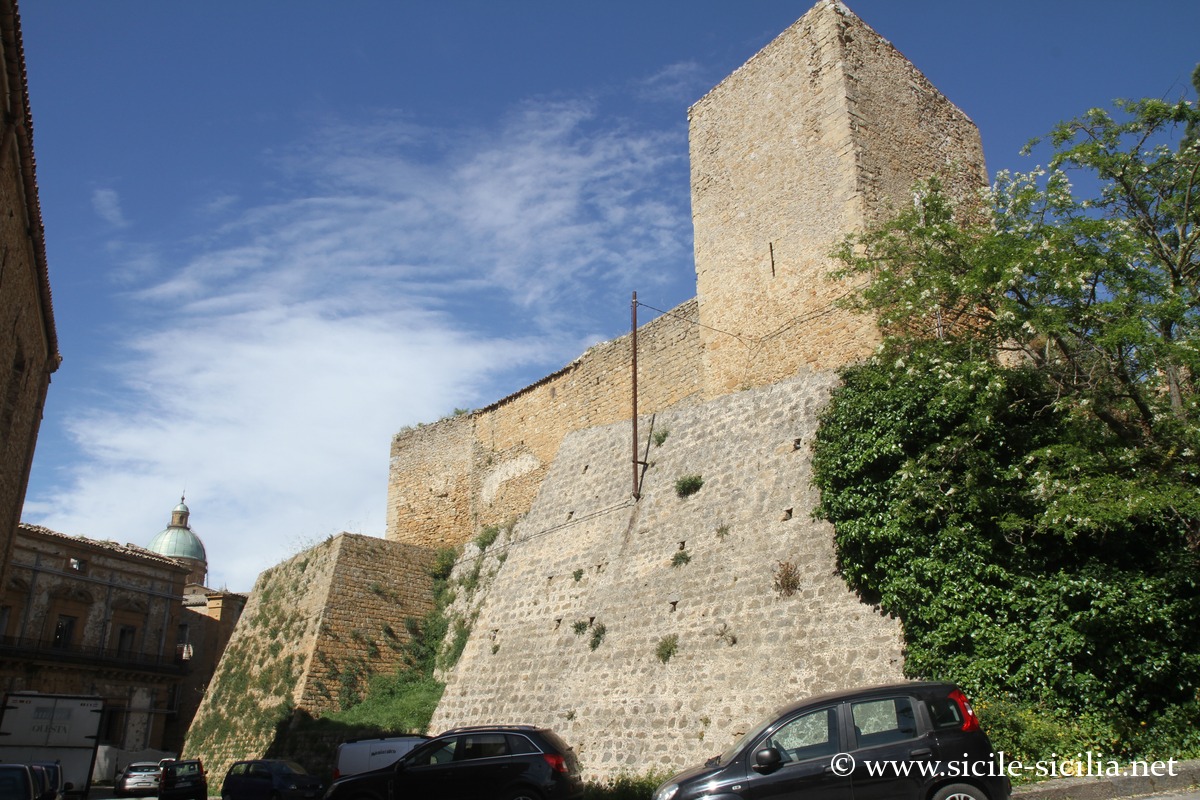
The Aragonese castle was built at the end of the 14th century by the King of Sicily Martino I il Giovane to keep the feudal lords in check. It was used as a prison in the 19th century and later became private property. Its plan is quadrangular with four quadrangular towers, and the top floor has disappeared. It rests on a high limestone base, reinforced by corner buttresses. From 1812, with the abolition of the castellanships, it was used as a state prison.
Historic centre of Piazza Armerina 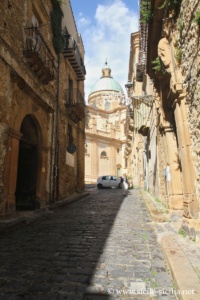
Piazza Armerina 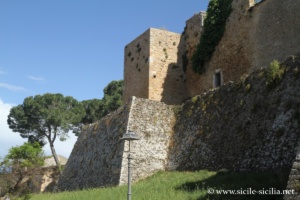
Aragonese castle
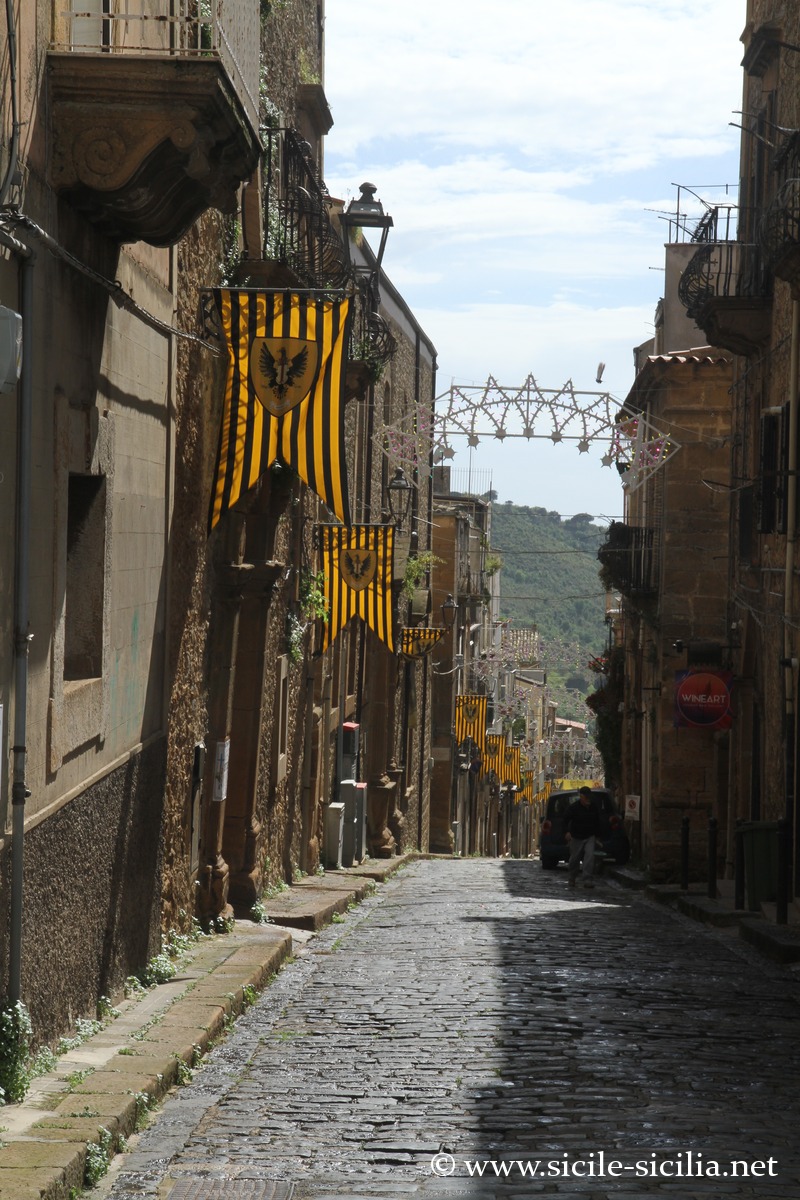
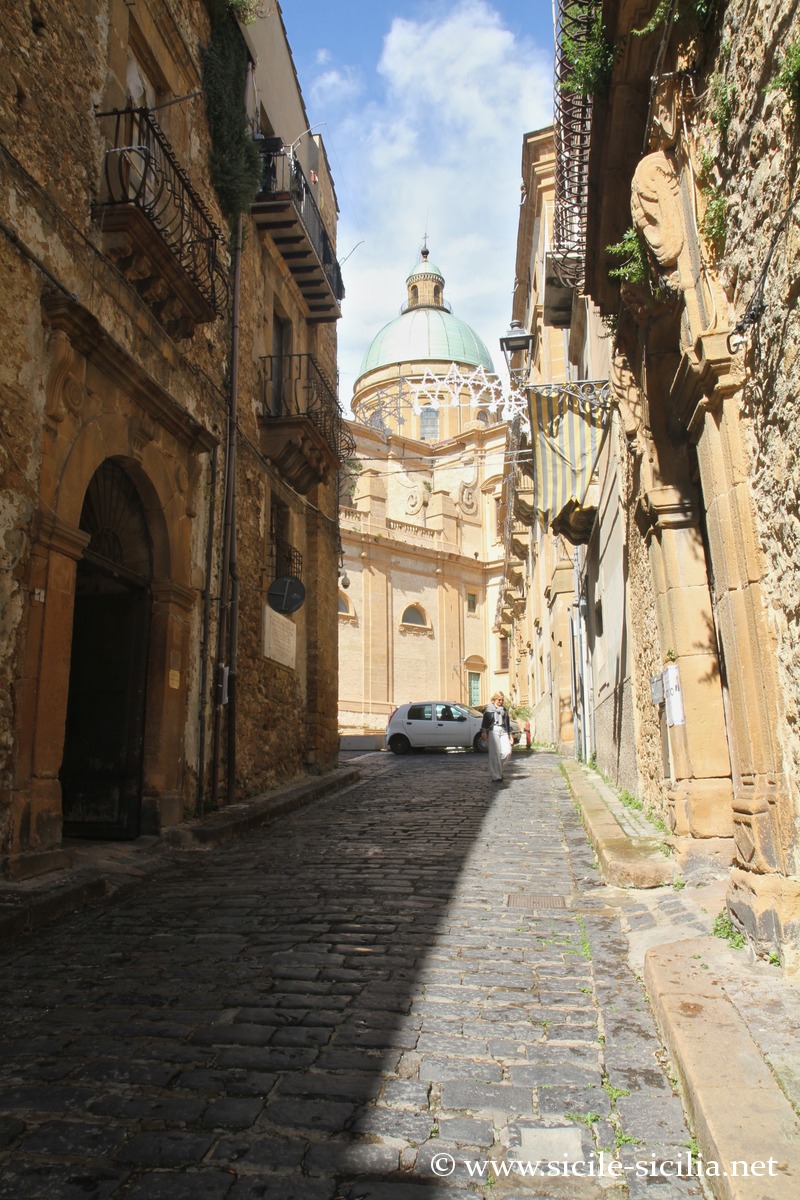
Other buildings of Monte
Chiesa degli Angeli Custodi (Church of the Guardian Angels): built in 1660, in Baroque style, with a single nave. The marble main altar, the presbytery renovated in blue-yellow tones, and major frescoes give this church local importance.
Chiesa del SS.mo Crocifisso (Church of the Crucifix), from the 17th century, rebuilt in 1785. The façade has a double order with three Baroque portals, and the interior has a single nave with a Greek cross, six side chapels topped with domes, an 18th-century organ and a Via Crucis carved in wood.
Chiesa di San Martino di Tours: the town’s first Norman church, begun in 1163. It preserves two side portals with ogival arches, an interior with a single nave, a 19th-century coffered wooden ceiling and a large 17th-century canvas in the presbytery.
The Pinacoteca Comunale di Piazza Armerina: Municipal art gallery, housed in the north wing of a former 15th-century Carmelite convent, displaying works from before the 18th century. It notably presents canvases of the 17th-century Sicilian schools, including a “Crucifix on panel” from 1485 attributed to the “Maestro della Croce di Piazza Armerina”.
The Church of Sant’Ignazio di Loyola is a Jesuit building erected from 1603, with the college attended from 1689 as a place of university study. The church was completed in the second half of the 17th century, with a slightly convex façade accessible by a double staircase, and the interior with three naves features two Baroque stucco altars with twisted columns, a low octagonal dome and numerous canvases from the 17th-18th century.
Today the municipal library is housed there.
Aragonese Castle 
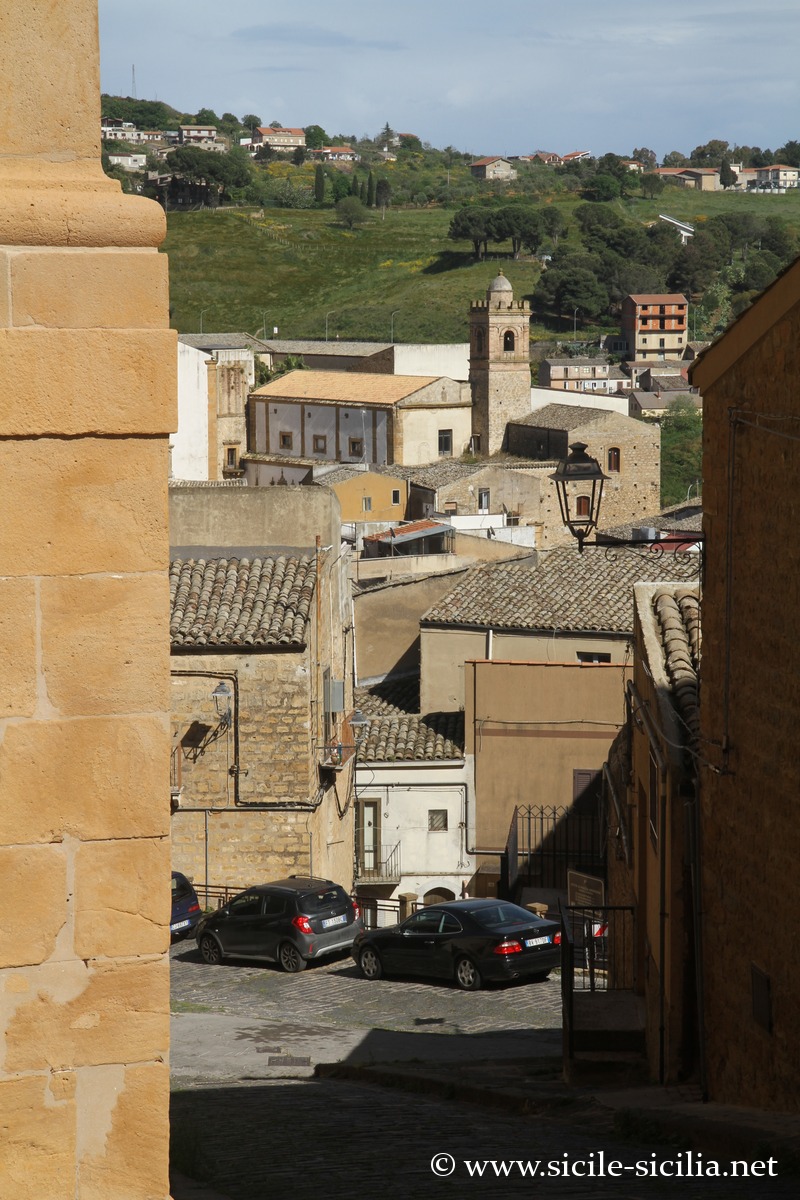
Historic centre of Piazza Armerina 
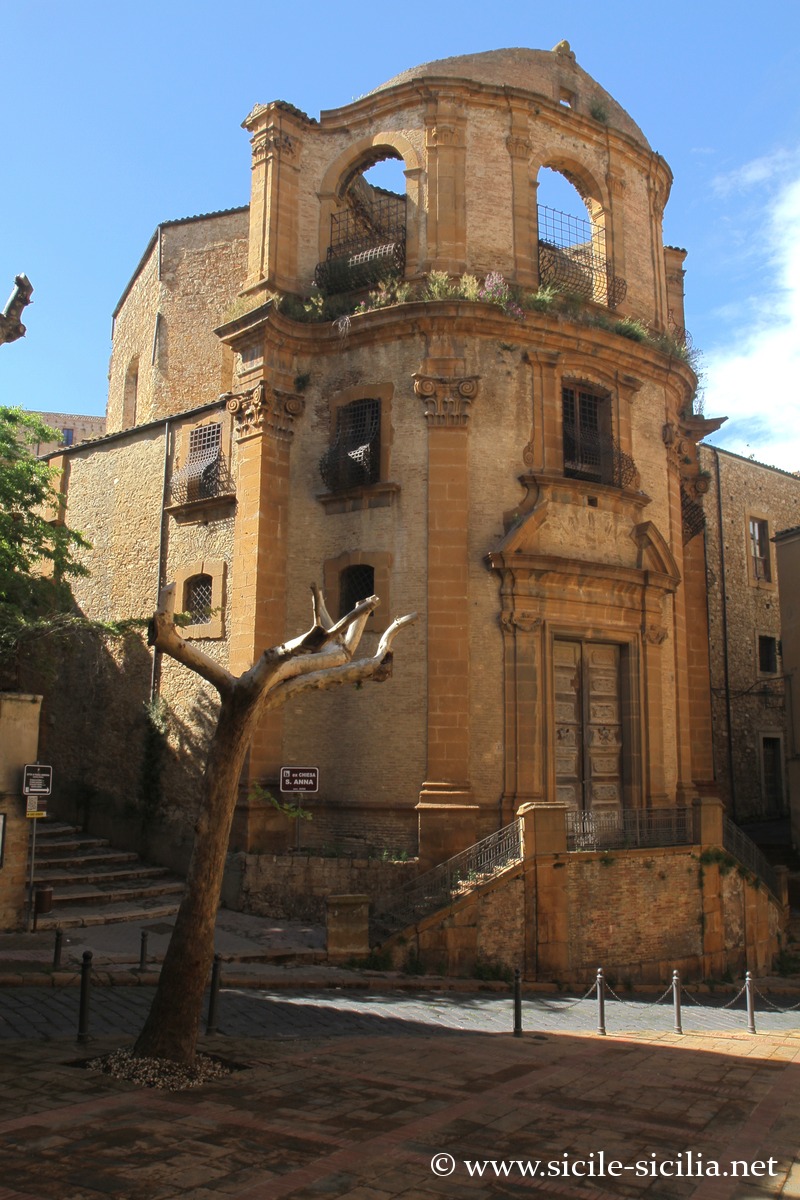
Church of Sant’Anna
Castellina district
The Castellina district is located to the north at the foot of the old Benedictine convent, which was a castle in the Middle Ages. Its church of Santa Veneranda was founded in the 12th century and rebuilt in the 17th century. On the outskirts stands the 14th-century Torre Castellina tower and a portion of the old wall, a breach in which serves as the entrance to the district.
The Chiesa di San Rocco (Church of Saint Roch) is Baroque, built between 1613-1622, associated with the adjacent Benedictine convent that houses the town hall. The finely carved tuff portal and the meridian line above it are remarkable features. Inside, there are several 18th-century polychrome marble side altars and a coffered vault motif enhanced with stucco. The adjacent convent preserves a chapter house with carved wood and the former cloister, now partially occupied by municipal services.
Casalotto district
The Casalotto district occupies a hill east of the historic centre and was incorporated into Piazza Armerina in the 16th century.
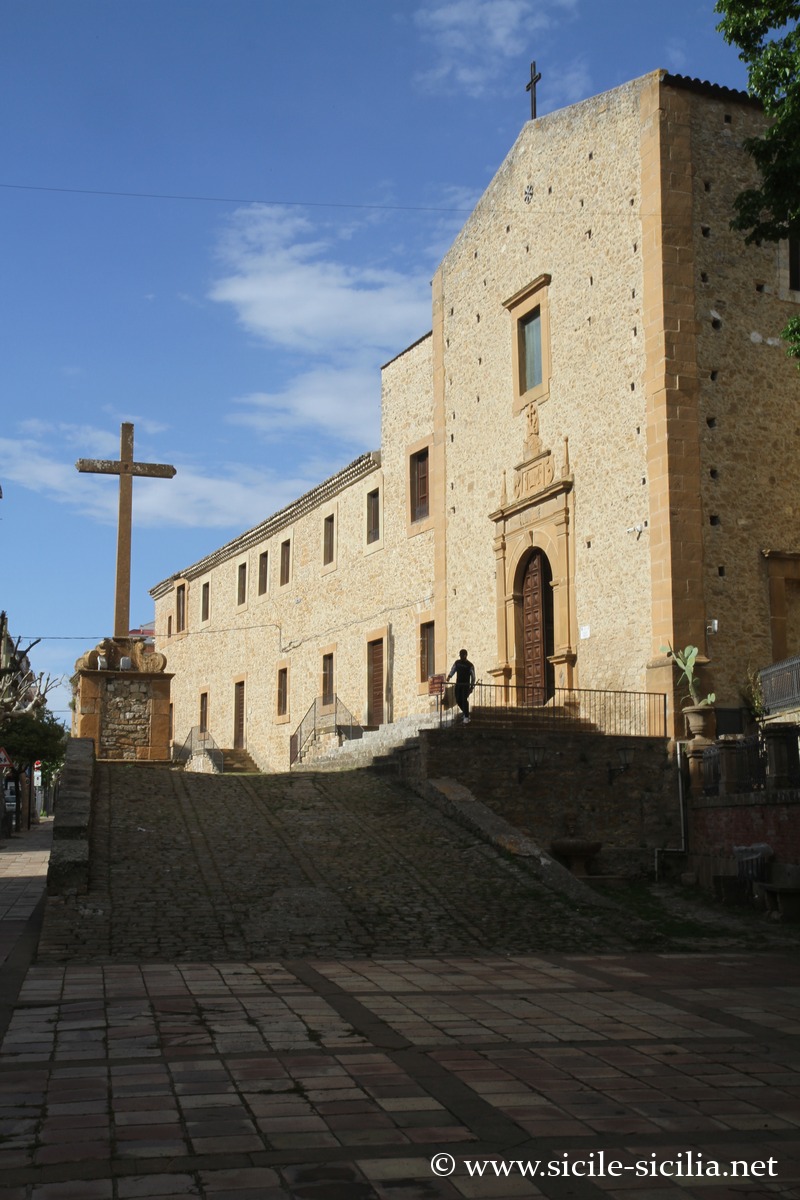
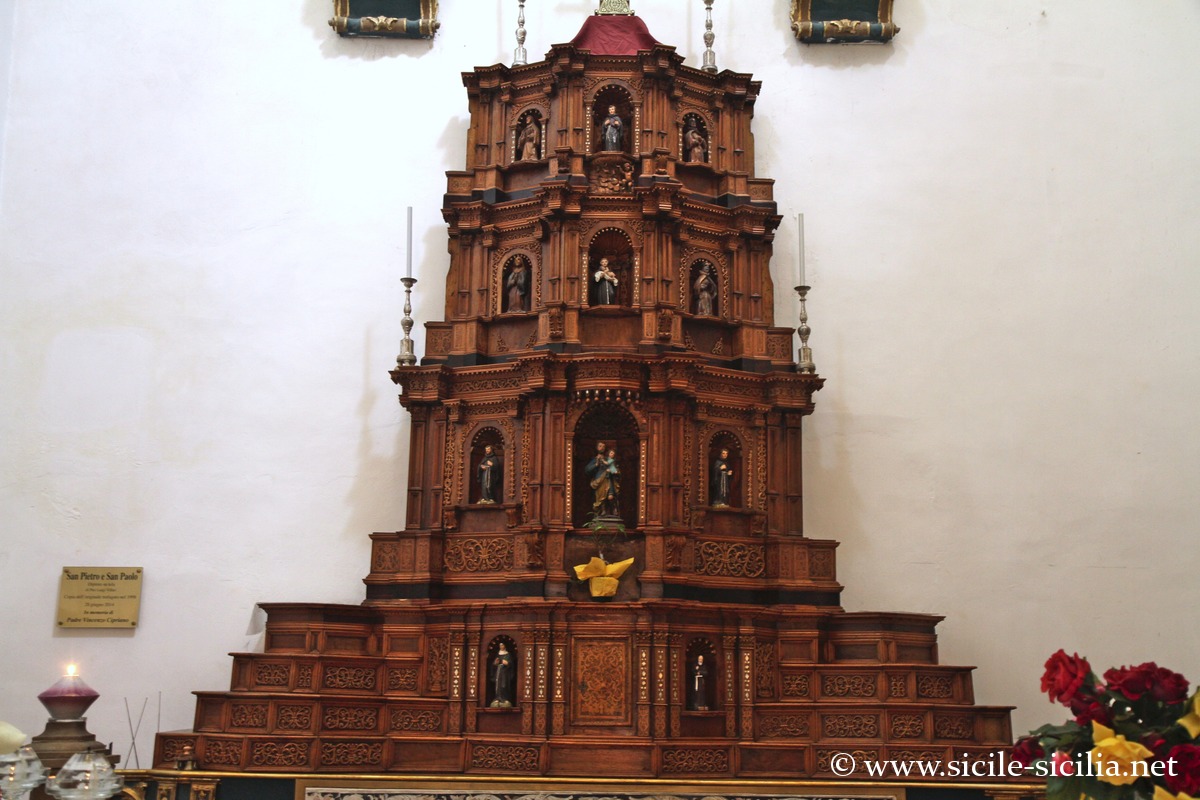
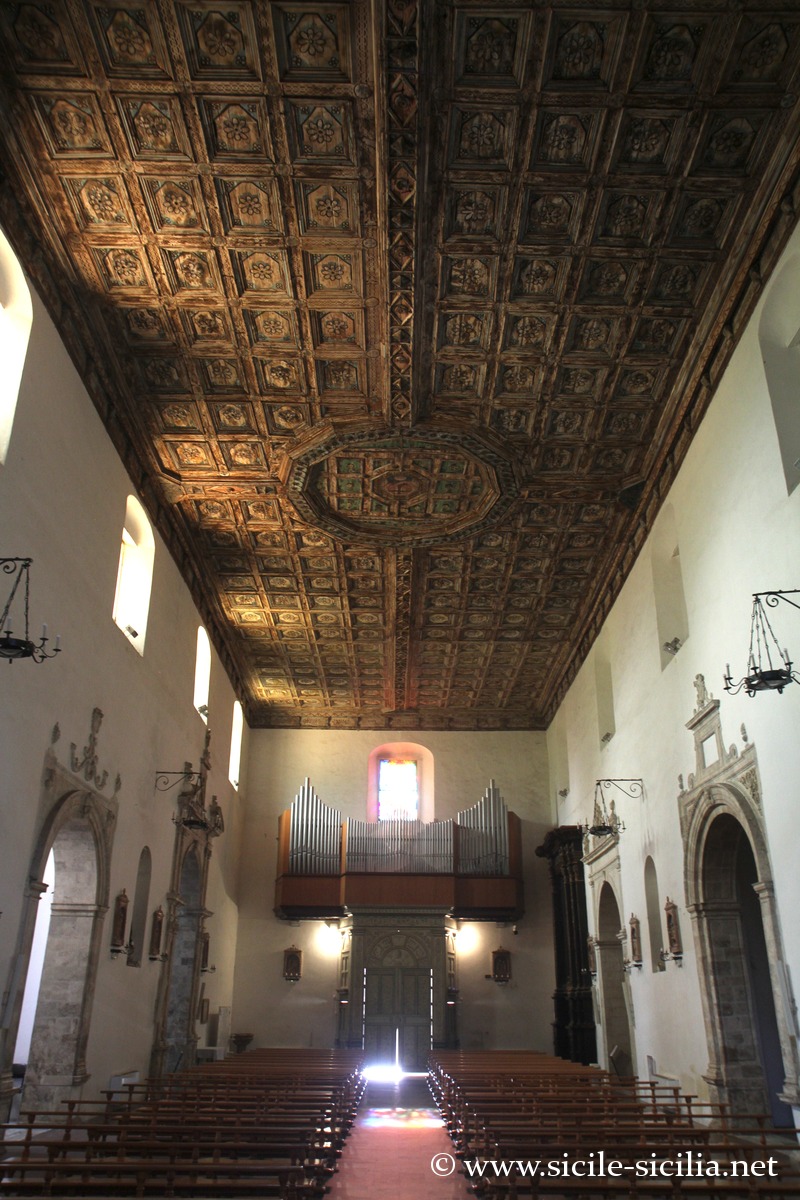
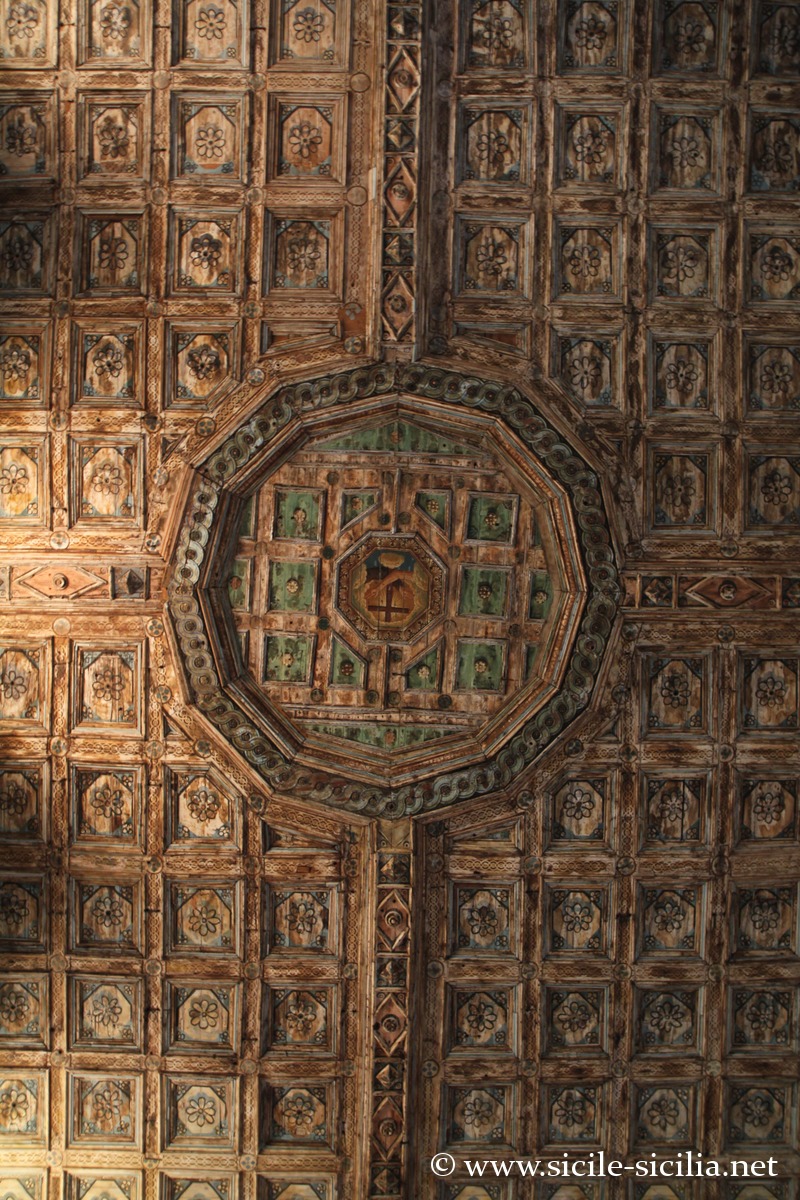
The Chiesa di San Pietro (Church of Saint Peter) is one of the most important in the town, rebuilt in the mid-16th century, refurbished in the 18th century, with a very rich interior, including a coffered ceiling, a “Caravaggesque” canvas and in the apse a miraculous icon of the Madonna that was in the previous church (of which the old apse remains), and an important 17th-century altarpiece in polychrome wood. Adjacent is the convent cloister from the 16th century.
It preserves a historic organ dating from 1734 attributed to the Lipari workshop.
The Teatro Garibaldi theatre, facing the Church of Santo Stefano, was inaugurated in 1798. The interior stucco and gilded decorations are from the Napoleonic era.
Nearby the Commandery of the Templars (Commenda dei Cavalieri di Malta) is mentioned as early as 1187, built on the medieval walls, incorporating remains of an old hospital for pilgrims.
Canali district
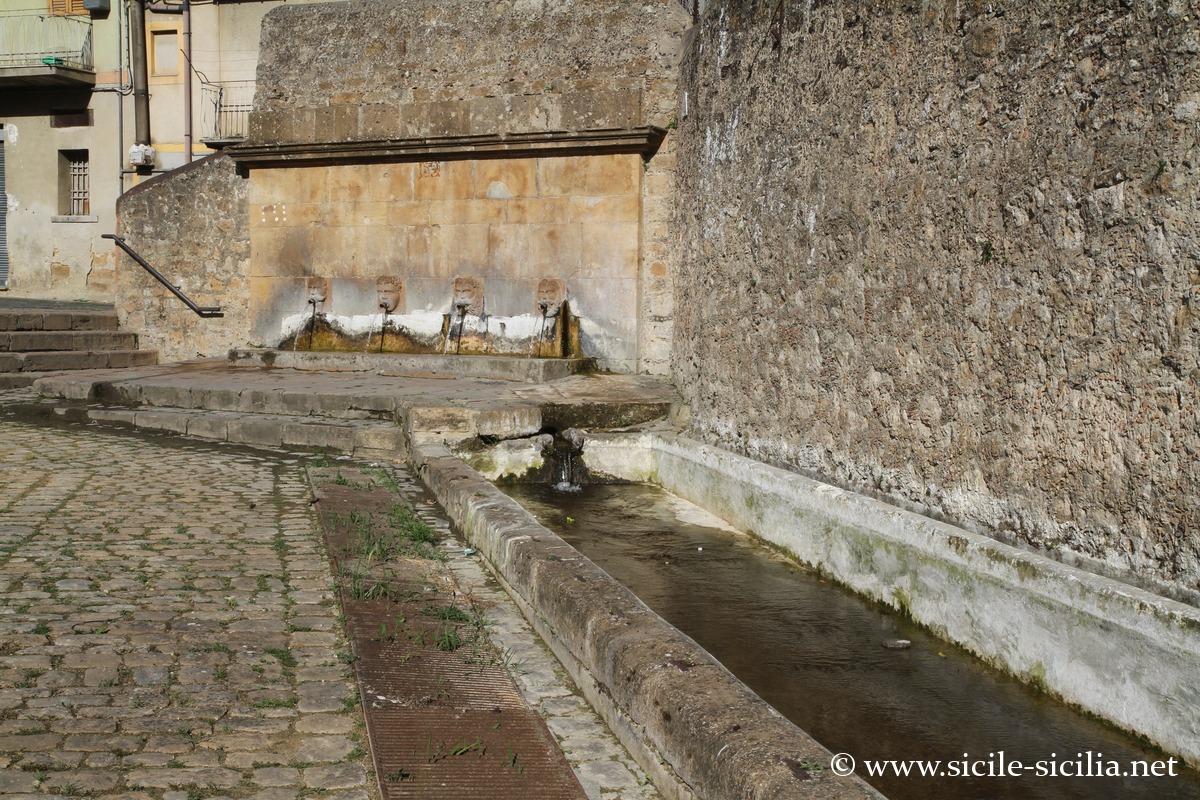
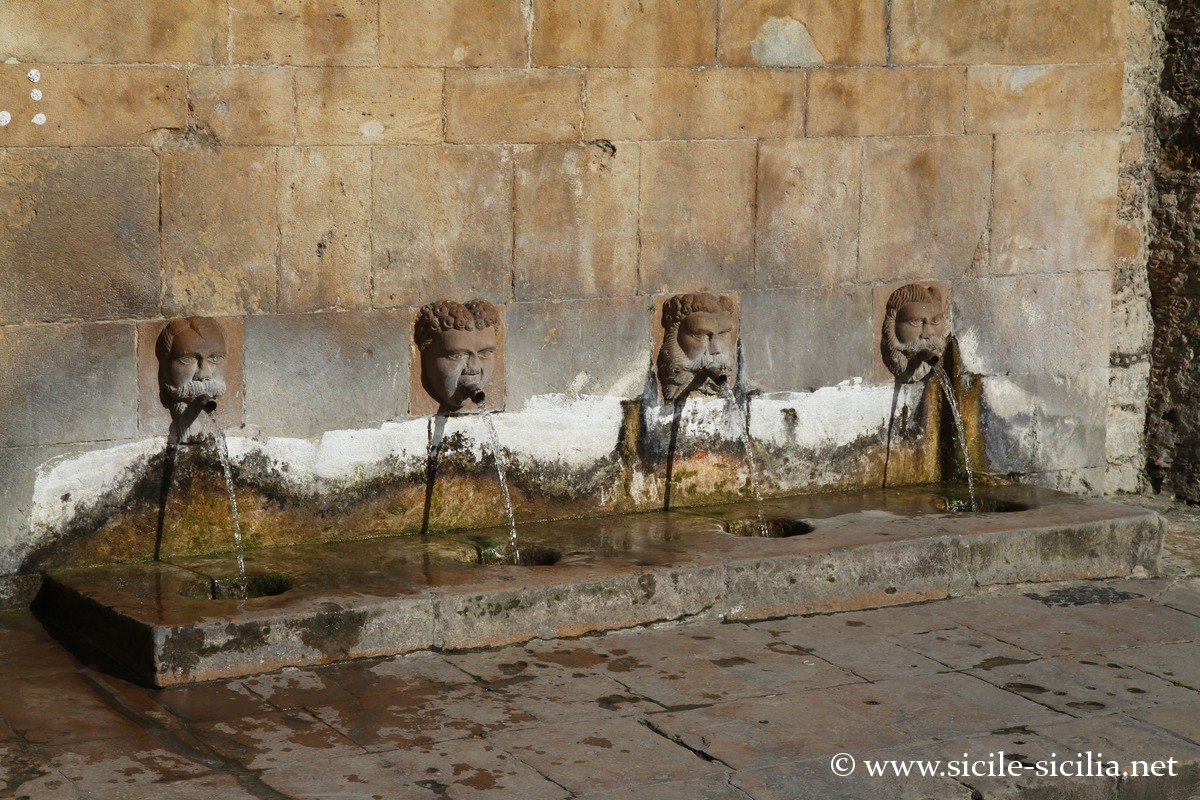
The Canali district from the late 14th century is to the south-west; at that time it was the Jewish quarter. There is a monumental sandstone fountain from which spring water gushes from four masks. A synagogue was converted into the church of Santa Lucia after the Spanish kingdom forced the Jews to convert or expelled them.
The fountain of the Canali district dates back to the 19th century, from which spring water flows from four masks and feeds a wash-house.
Commandery of the Knights of Malta 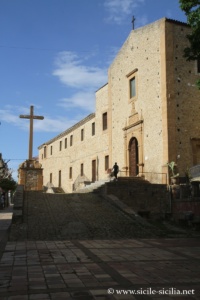
Church of San Pietro 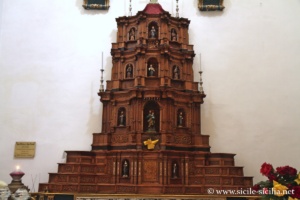
Church of San Pietro 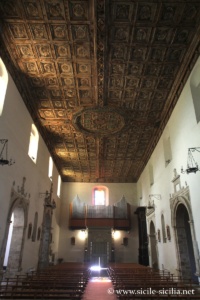
Nave of the Church of San Pietro 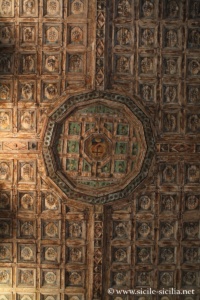
Wooden ceiling of the Church of San Pietro 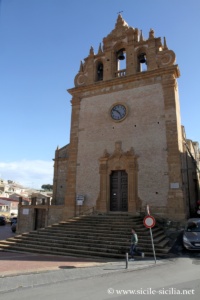
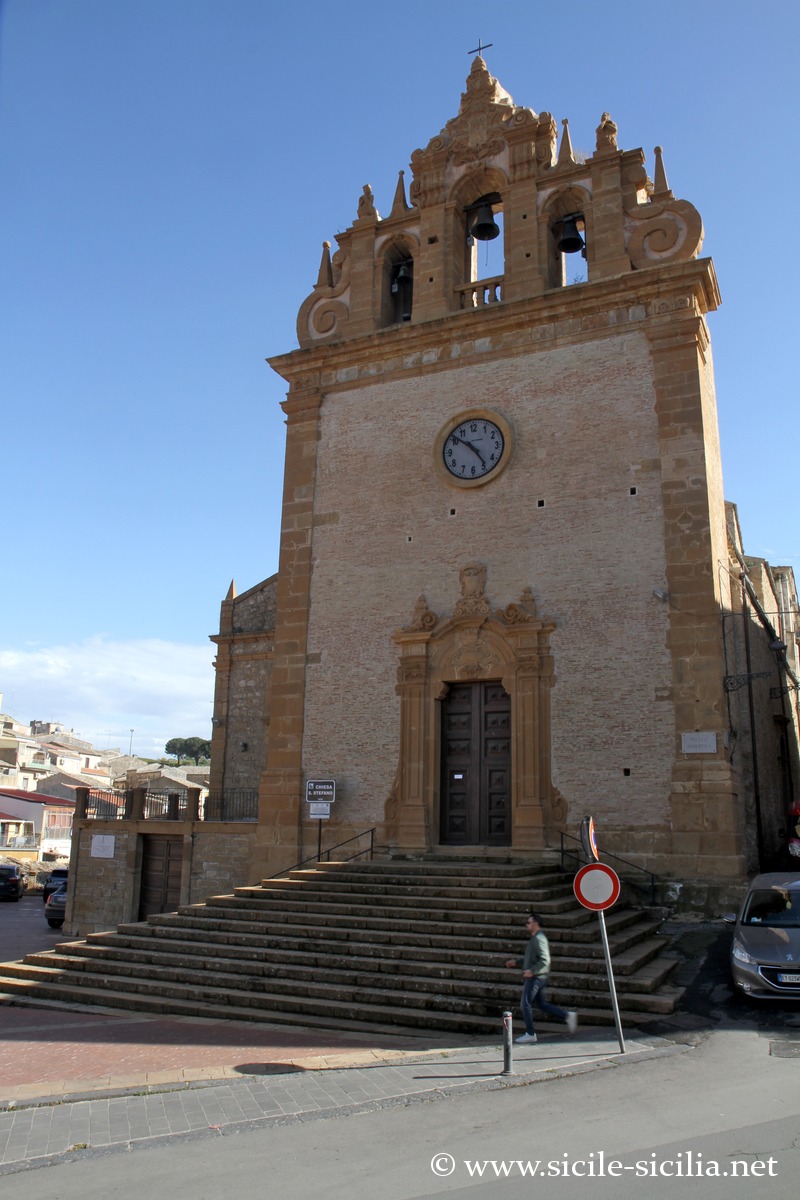
Church of Santo Stefano 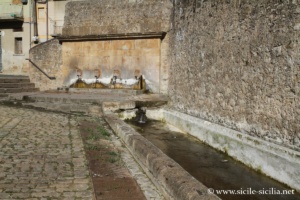
Canali Fountain 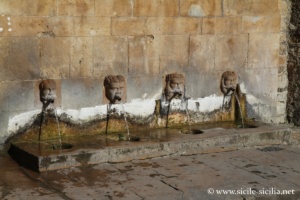
Canali Fountain
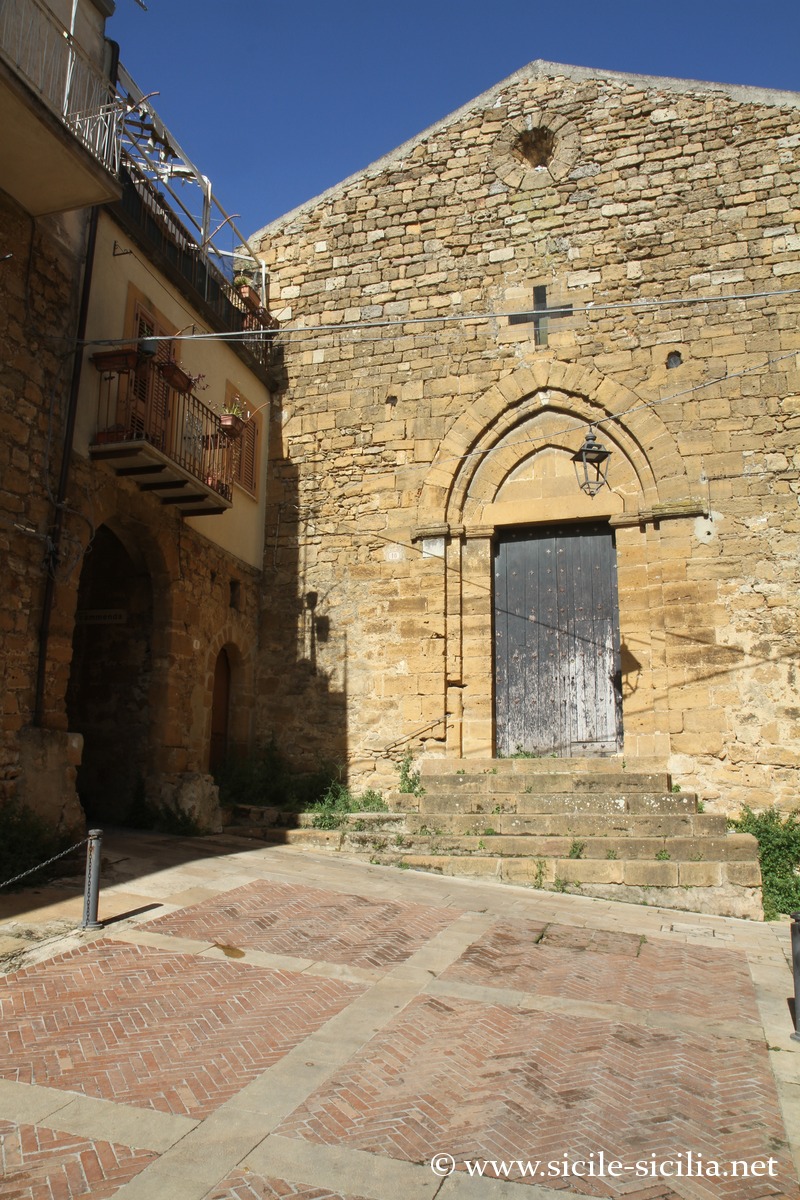
Outside Piazza Armerina
Of course, the unmissable Roman Villa of Casale is there, 6 km south-west of the centre of Piazza Armerina, with its hundreds of square metres of mosaics in an exceptional state of preservation.
In the 18th-century Villa of Wonders, near the Villa Romana del Casale, there is one of the region’s most important private museums, with all kinds of objects, ceramics, vases, furniture, paintings, sculptures, marbles and more.
One kilometre north of the centre, the Priory of Sant’Andrea preserves a 12th-century church (Norman/Swabian) in the Sicilian-Romanesque style, a remnant of a priory founded in 1096 by the knights of the Holy Sepulchre. It has an Egyptian cross plan and frescoes from the 12th to the 15th centuries depicting cycles of the Passion and the Resurrection.
Further afield in the surroundings of Piazza Armerina rise the Erei mountains, with the forests of Ronza park, and the Rossomanno Grottascura Bellia nature reserve with the “enchanted stones” (10 km north).
The important archaeological site of Morgantina is 15 km to the east. This ancient Sicel and Greek city with its important Roman remains, and the neighbouring town of Aidone where the Museo Archeologico Regionale di Aidone is located, with the finds from the Morgantina site.
Other sites include the Olivo lake dam (10 km west), the archaeological site of Montagna di Marzo (10 km north-west), Lake Pergusa and its nature reserve (25 km north).
About 20 km to the south-west stands the spectacular cylindrical tower and the fine remains of Mazzarino Castle, probably of Arab or Norman origin, and the small town of Mazzarino of medieval origin which preserves an interesting historic centre marked by the Baroque.
At 13 km, the archaeological site of a Roman town of Greek origin Sophiana, occupied until the 13th century.
Where Piazza Armerina is located: map
If you see this after your page is loaded completely, leafletJS files are missing.
Articles: Piazza Armerina category
- Villa Romana del Casale
 The Villa del Casale in Piazza Armerina is a unique example of a luxurious Roman villa, whose mosaics illustrate the daily life ...
 - Morgantina
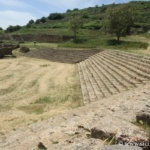 A few kilometres from Aidone lies the archaeological site of Morgantina, the remains of an ancient city inhabited since the Bronze Age ...
 - Aidone and Pietratagliata
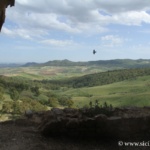 Located in the heart of the Heraean Mountains, the town of Aidone is often referred to as the “balcony of Sicily”. It ...
Information and visits
External sites
- Tourist sites and blogs: www.piazzaarmerina.org, www.visitpiazzaarmerina.com
- Piazza Armerina: Wikipedia page, www.piazzaarmerina.org, www.piazzaarmerina.com
- Villa of Wonders (Villa delle meraviglie): villameraviglie.it
- Morgantina and Aidone museum: parco archeologico on regione.sicilia.it, Museo di Aidone on regione.sicilia.it, www.prolocoaidone.it, en.wikipedia.org
- Sofiana: www.regione.sicilia.it, www.radioluce.it, www.piazzaarmerina.org, www.persee.fr
- Mazzarino: en.wikipedia.org
Comments in other languages
I really liked the Sant’Andre priory, one km from the center, deserted and with beautiful medieval frescoes in buildings of great sobriety. A place that deserves to be better known.