

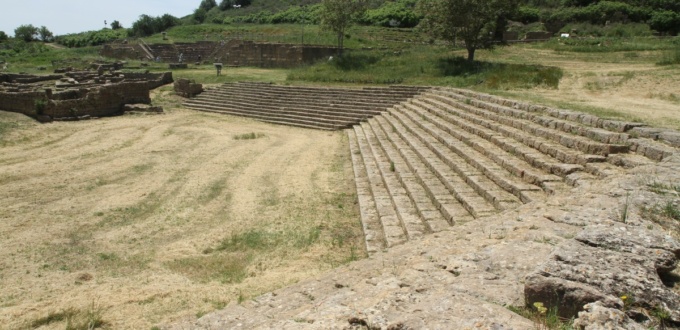
A few kilometres from Aidone lies the archaeological site of Morgantina, the remains of an ancient city inhabited since the Bronze Age by indigenous peoples, then by the Sicels, the Greeks and the Romans. Besides the archaeological park, there are other areas covering nearly 3 kilometres and several hills.
The city controlled a vast agricultural territory, near the Gornalunga river, a tributary of the Simeto.
Substantial ruins remain from the Greek Hellenistic period, with its public buildings on the agora, the gymnasium, the sanctuaries, the Ekklesiasterion, the theatre, and houses decorated with mosaic floors and wall frescoes.
Substantial ruins remain from the Greek Hellenistic period, with its public buildings on the agora, the sanctuaries, the Ekklesiasterion, the theatre, and houses decorated with mosaic floors and wall frescoes.
All the discoveries from the archaeological area of Morgantina are kept at the archaeological museum of Aidone and span a period from the Iron Age to the first century BC.
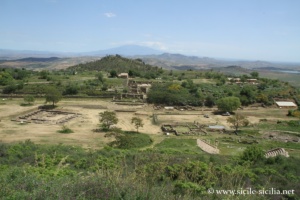

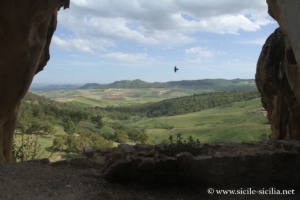
Panorama of Morgantina from the western hill 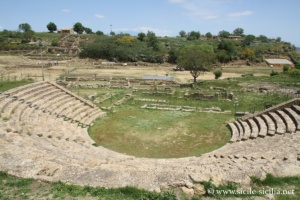
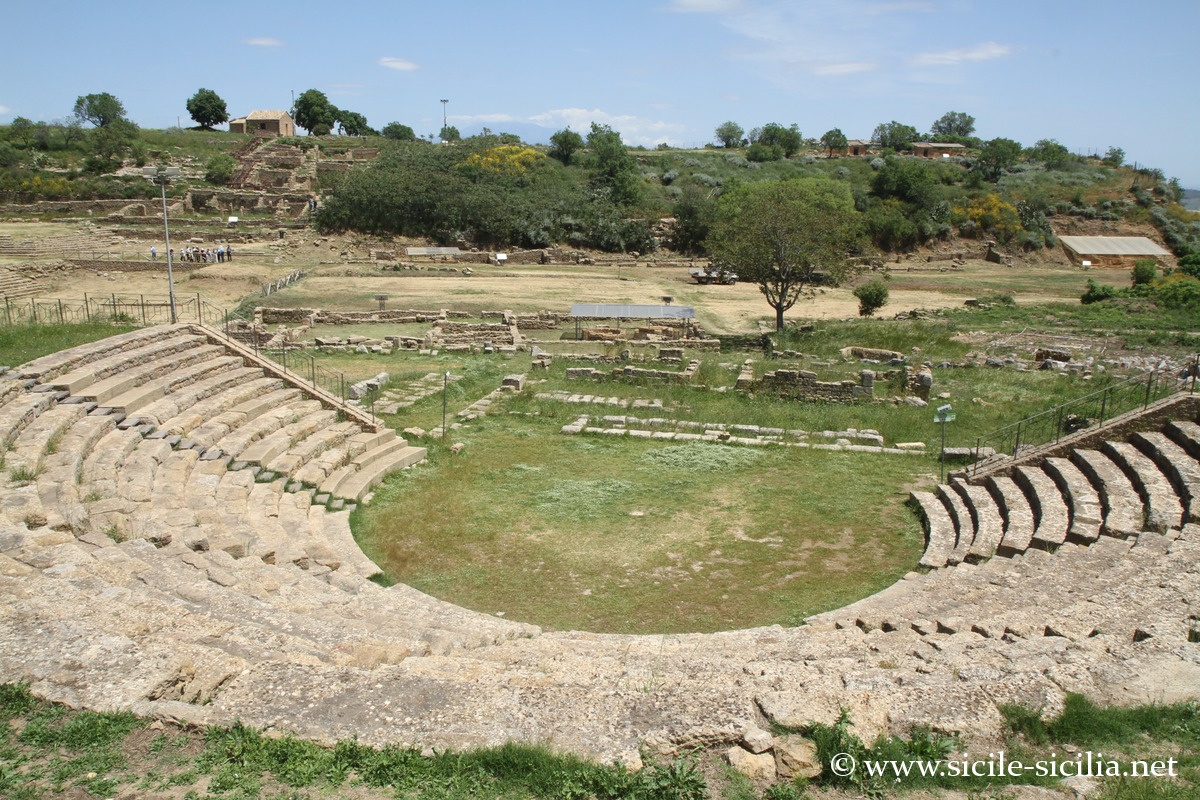
Greek theatre
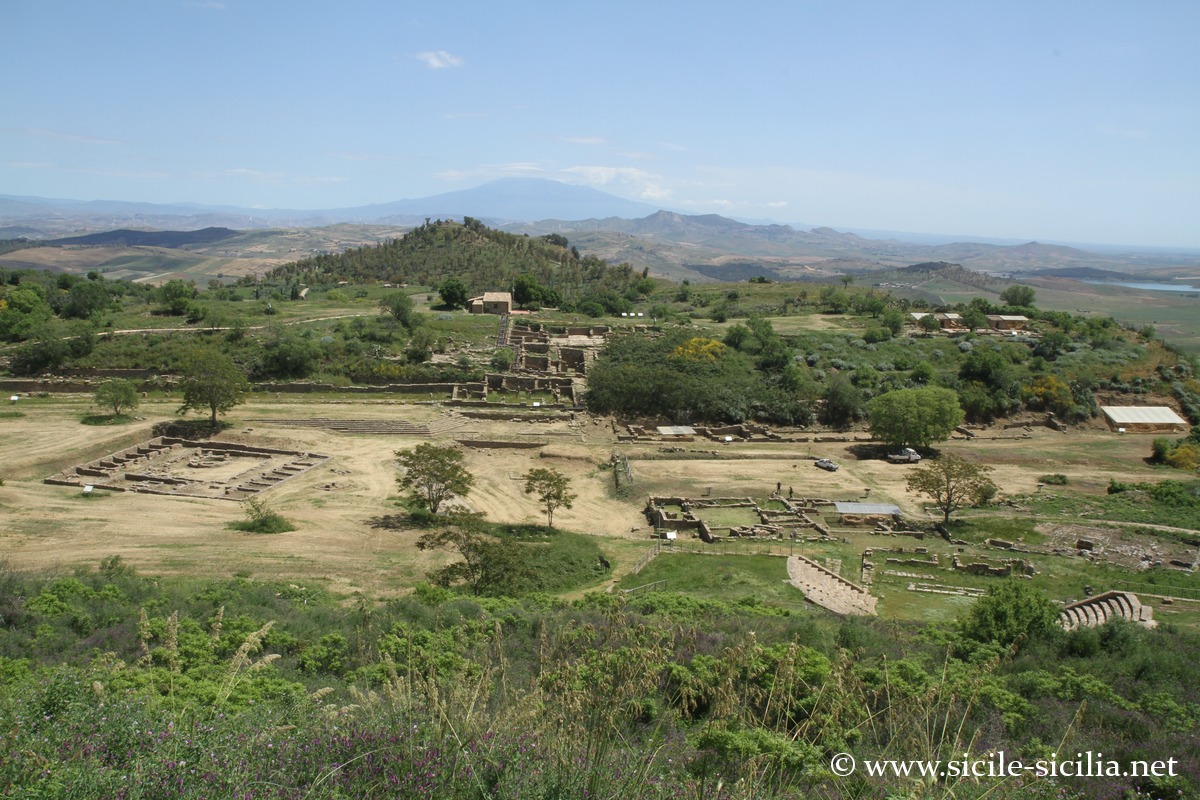
The hills of Morgantina
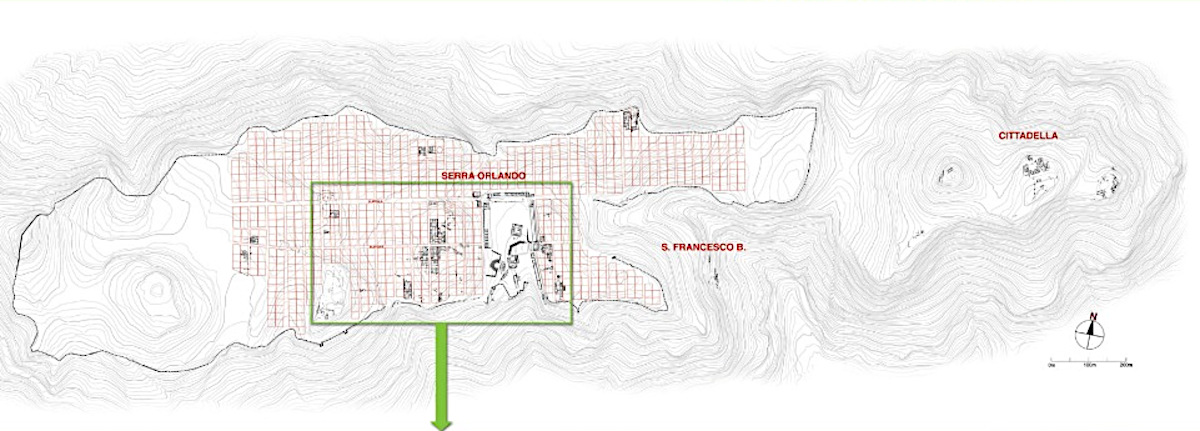
Protected by its ancient walls, the city spreads out between several hills. Three hills can be identified
On the citadel hill or “Cittadella“, 1 km north-east of the present agora, the oldest remains were found together with the original settlement: circular and rectangular huts of a Bronze Age village (perhaps the Castelluccio and Sican culture).
Map of the site of Morgantina
It is also there that the acropolis of the archaic sacred area was located, with several temples, the largest of which was 32 metres long and dated from the 6th century BC. There were also the agora and the necropolis of the archaic Greek city on the slopes.
It lies outside the archaeological park, but it is still possible to go there.
Later, the acropolis was moved less than 1 km to the south-west onto a hill, at the foot of which lies the Serra Orlando where the agora with the theatre and the sanctuaries of the Greek Hellenistic period were built.
To the east of the Serra Orlando hill, the San Francesco area is a vast terrace, with traces of huts of the Castelluccio culture and the remains of a sacred area. It is here that the Venus of Morgantina and the acroliths of the goddesses Demeter and Persephone were looted around 1980.
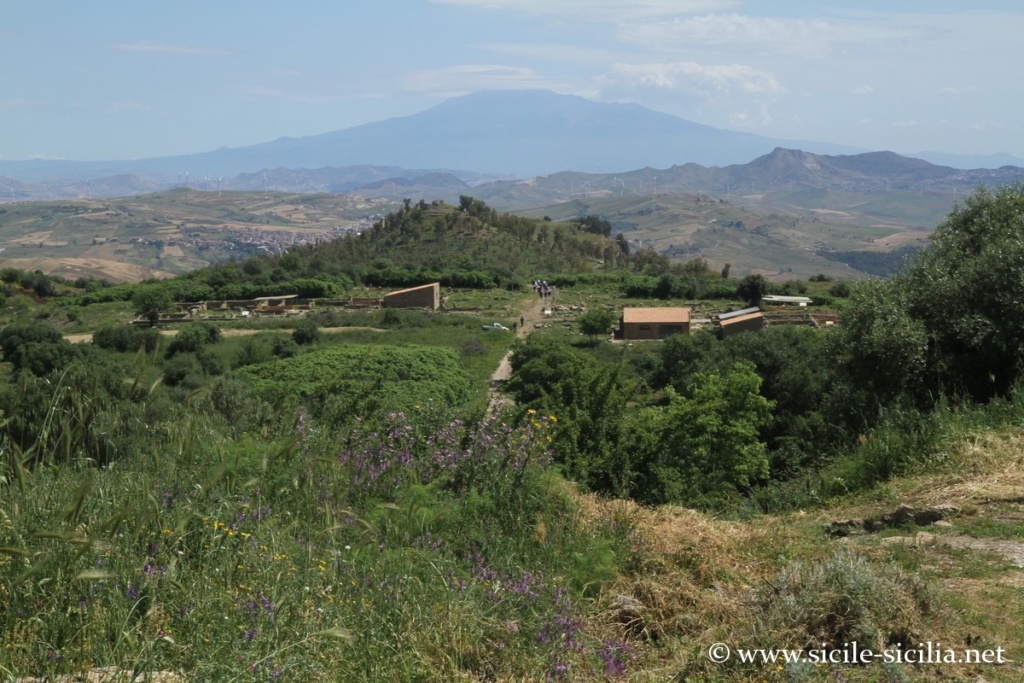

View of the Citadella hill from the Hellenistic acropolis, with Etna in the background
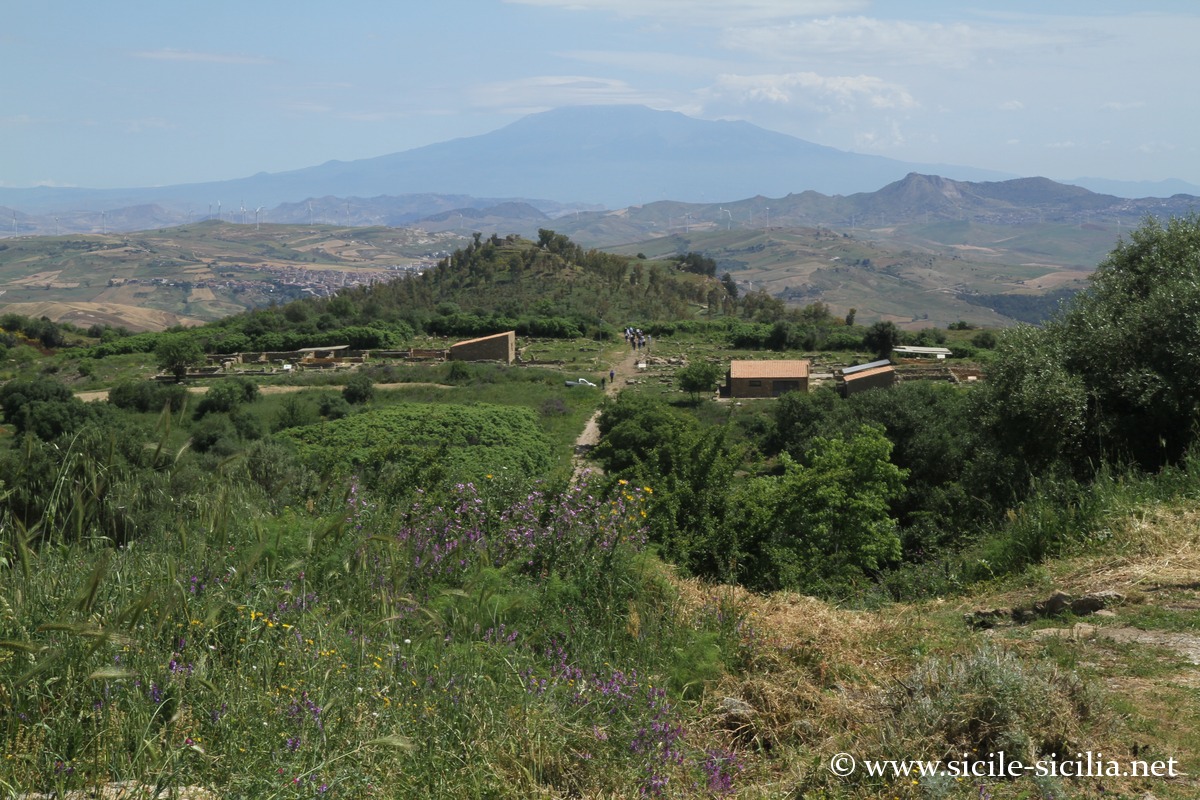
Visiting the archaeological site of Morgantina
Map of the archaeological park of Morgantina :
If you see this after your page is loaded completely, leafletJS files are missing.
Western quarter, agora and theatre
The archaeological park extends over the site of Serra Orlando with the Sant Agnese hill to the west and its hill to the east. Its present appearance dates essentially from the 4th century BC, under the hegemony of Syracuse.
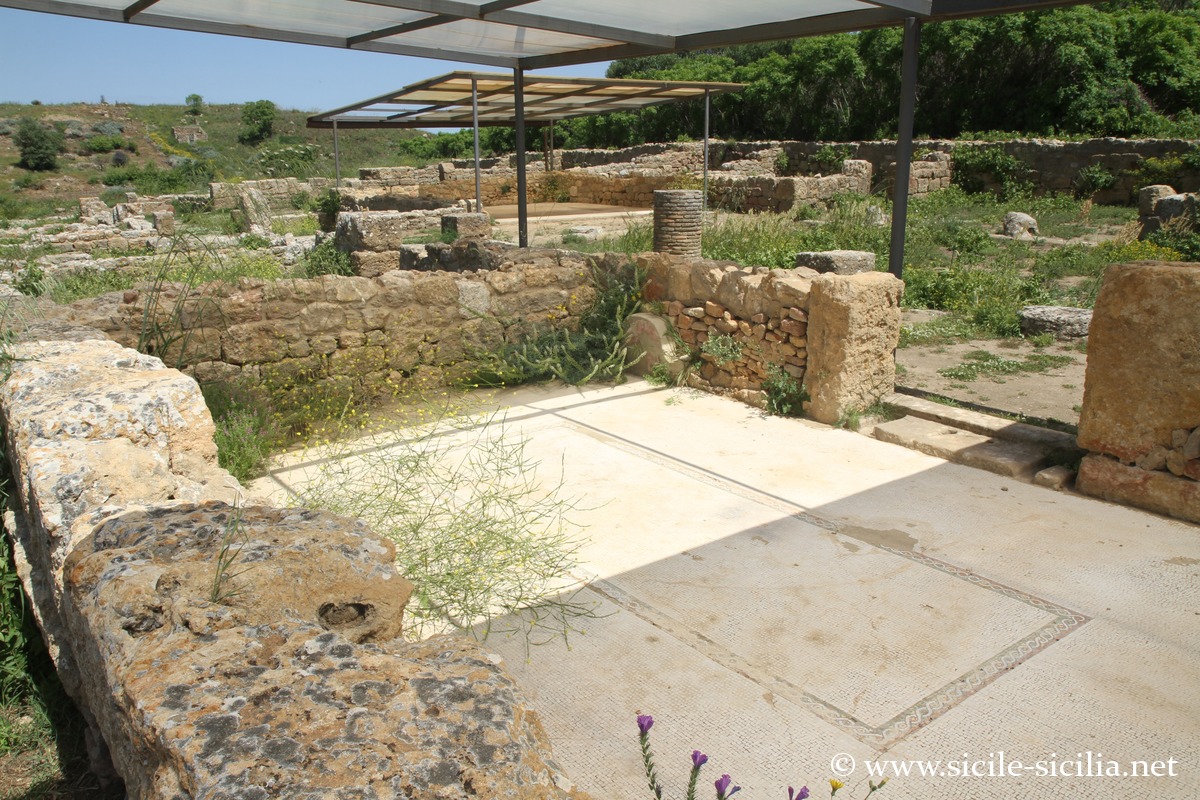
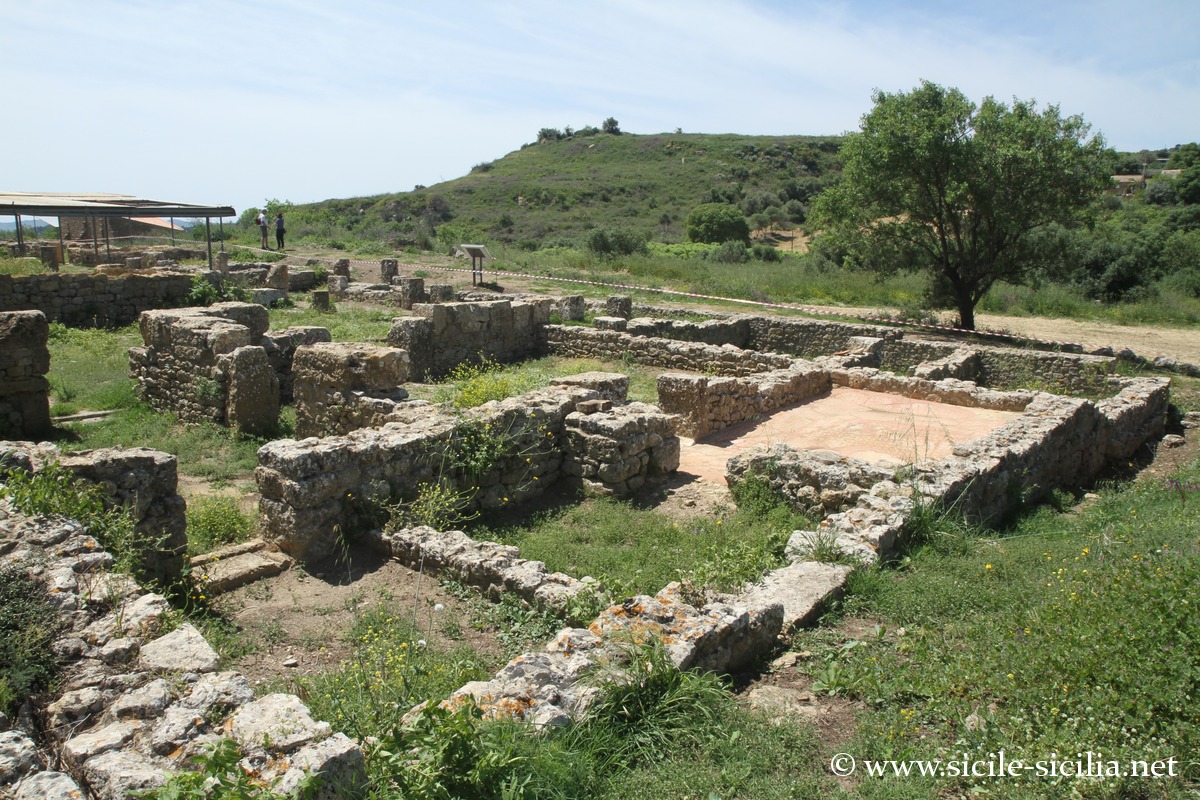
After the ticket office, one sets off along the axis of Plateia B which leads up to the Western Quarter, which is located higher up, characterised by an orthogonal plan. Several fine houses stood there, of which some mosaic floors remain. The first one encountered is the House of the Tuscan Capitals, remodelled in the 1st century BC. Continuing the climb, to the right is the House of Pappalardo, which measured 500m2 and dates from the 3rd century BC, while continuing eastwards one passes by the Casa delle Botteghe where the Romans installed tabernae, then reaches the crest of the hill, with a superb view over the agora and all the ancient buildings.
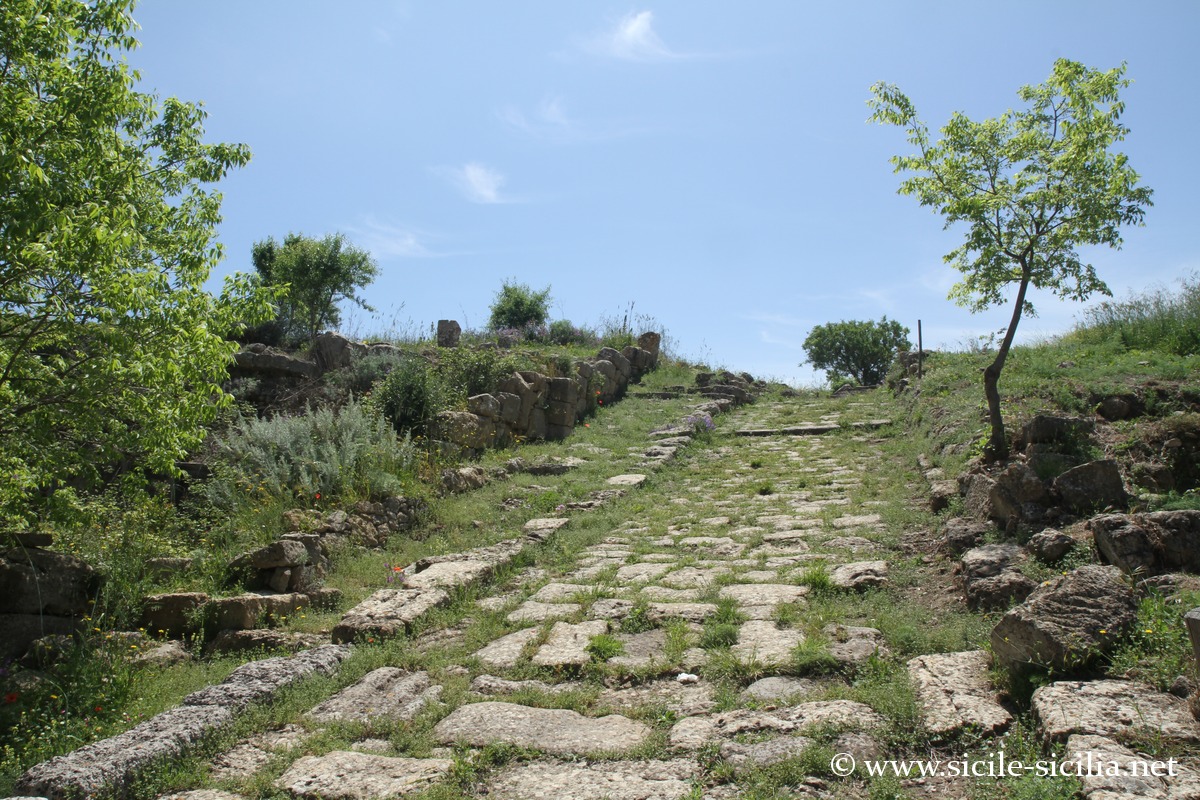
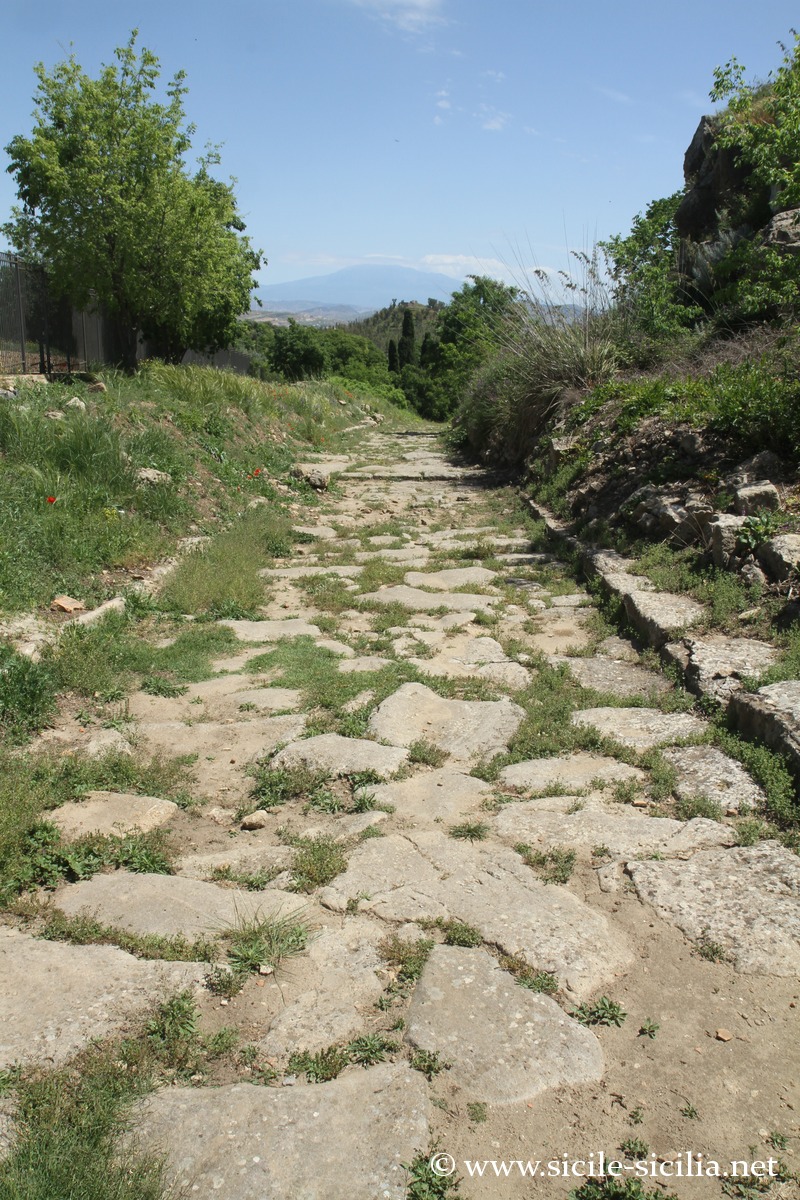
Going back, one crosses the main stenopos cutting through the quarter, descending towards the north, passing by the Casa della Cisterna with large halls around two peristyles and its cisterns, which leads out onto the main paved thoroughfare of Plateia A which joins the agora towards the east.
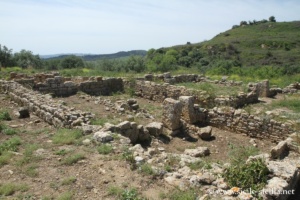
Western residential quarter 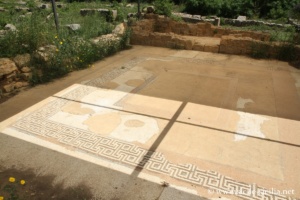
Casa Pappalardo 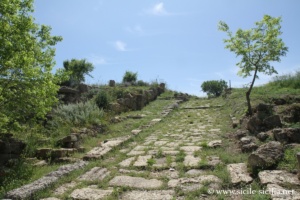
Stenopos 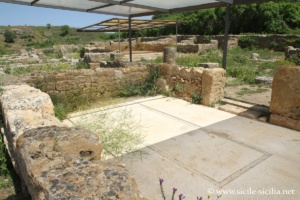
Casa della Cisterna Panorama of Morgantina from the western hill 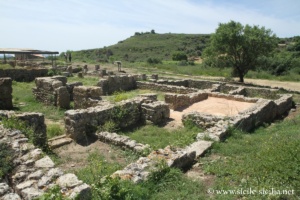
Casa della Cisterna 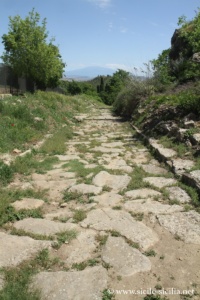

Plateia B
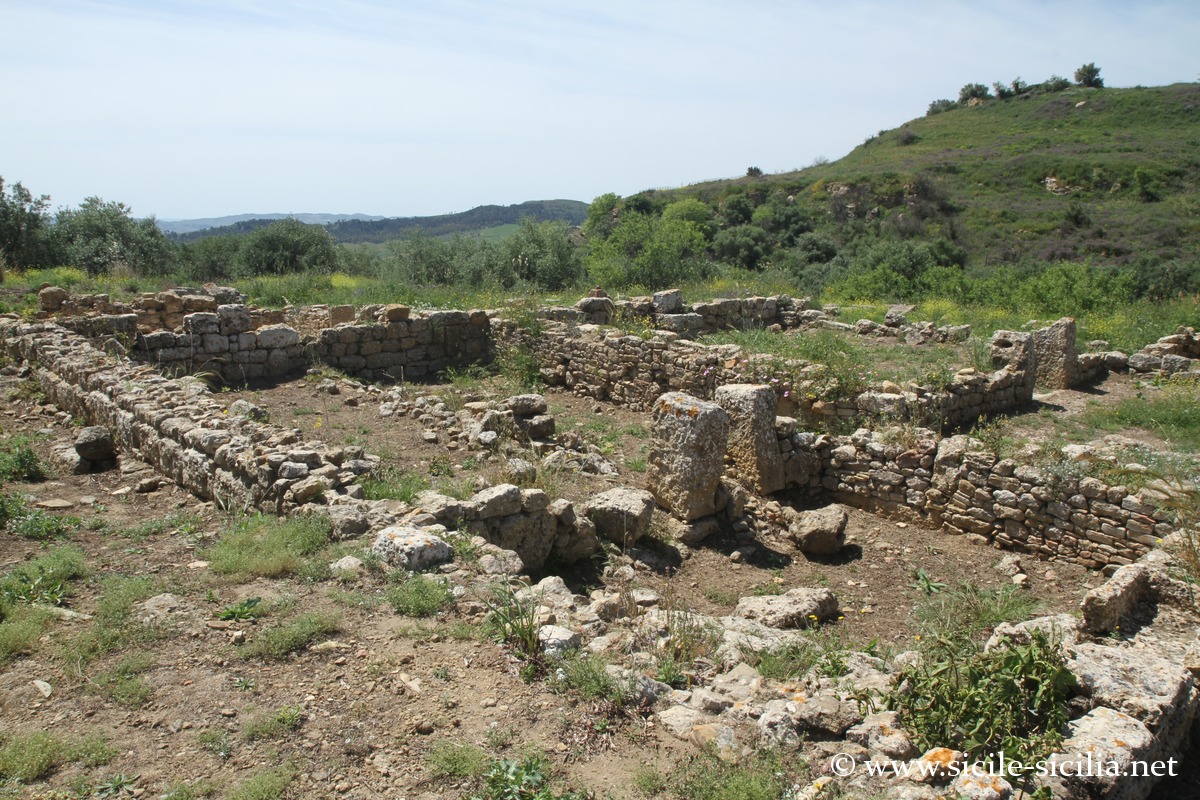
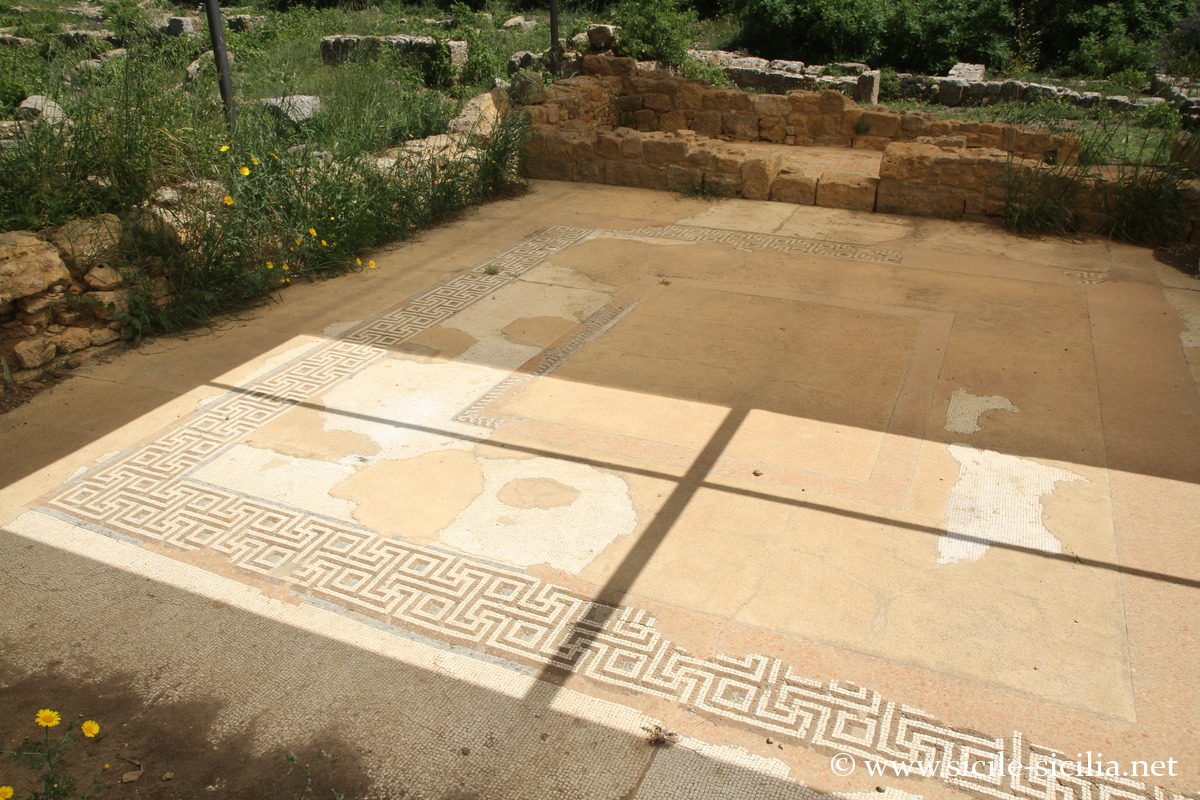
North and east of the agora
The Plateia A leads out onto the agora. The first building encountered is the Bouleuterion, seat of the city Council, with its semicircular exedra where the seats surround a podium.
The agora is the central square of the city, the place of the political and economic life of the city. It is bordered on three of its sides by the stoa, the porticoes.
One walks along the north stoa, 90 metres long, supposed to have served as a gymnasium, as a place for sporting exercises, with adjoining spaces. One reaches the Monumental Fountain with a double basin and a wide staircase, from the second half of the 3rd century BC, destroyed at the end of the 1st century BC.
To the east extends the great portico of the eastern stoa, nearly 87 metres long, which served various public functions (justice, school, meeting places).
Further east, the Macellum, which is towards the centre of the agora, is the only Roman building, constructed in the 2nd century BC and whose orientation differs from the Hellenistic buildings. It was a covered market, with 13 shops around a porticoed courtyard. There one can see the themenos in the centre, a rectangular Greek altar that was incorporated into the building.
The stoa joins the Prytaneion, with its central courtyard, seat of the city magistrate where the sacred fire was kept. The Romans transformed the building into a thermopolium (a kind of bar), with underground facilities for storing water and wine.
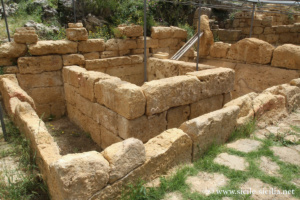
Fountain of the Nymphs 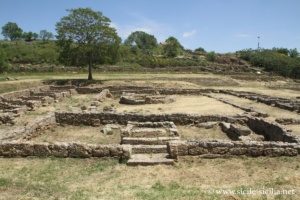
Macellum 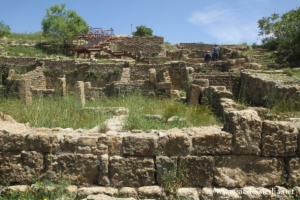
Prytaneion
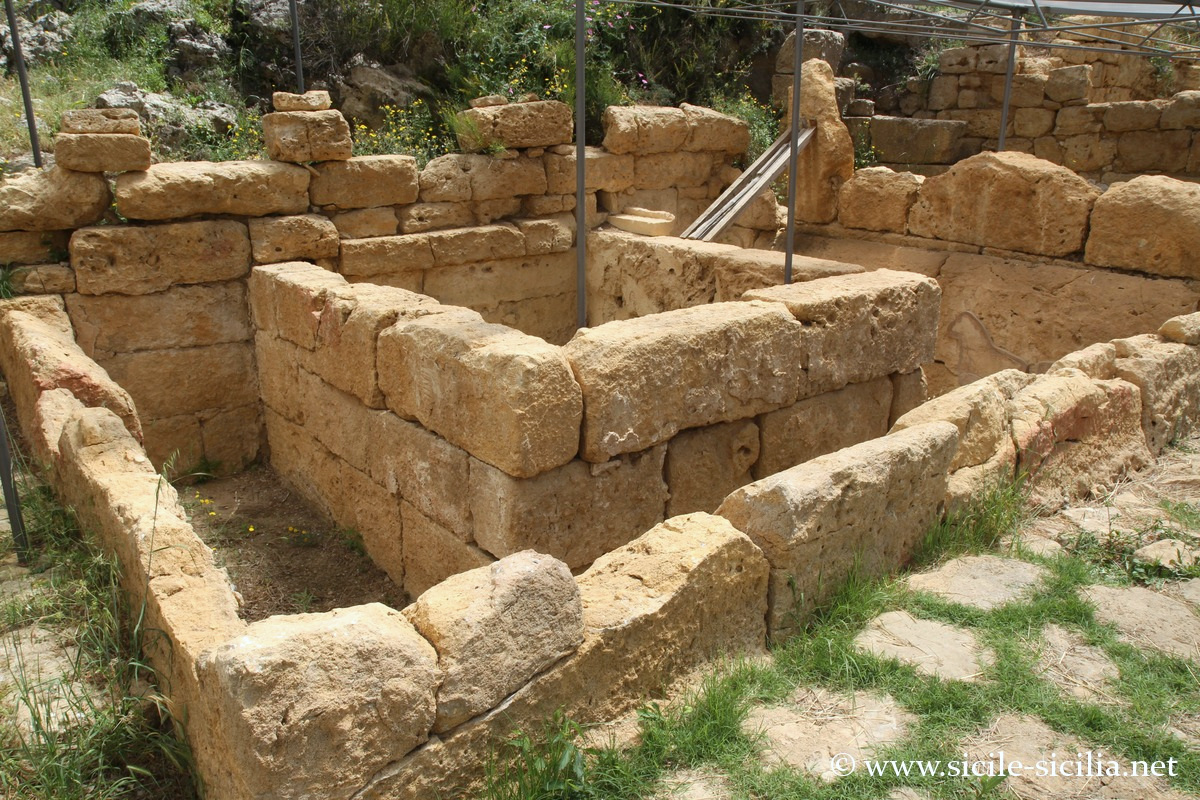
The Eastern Quarter and the kilns
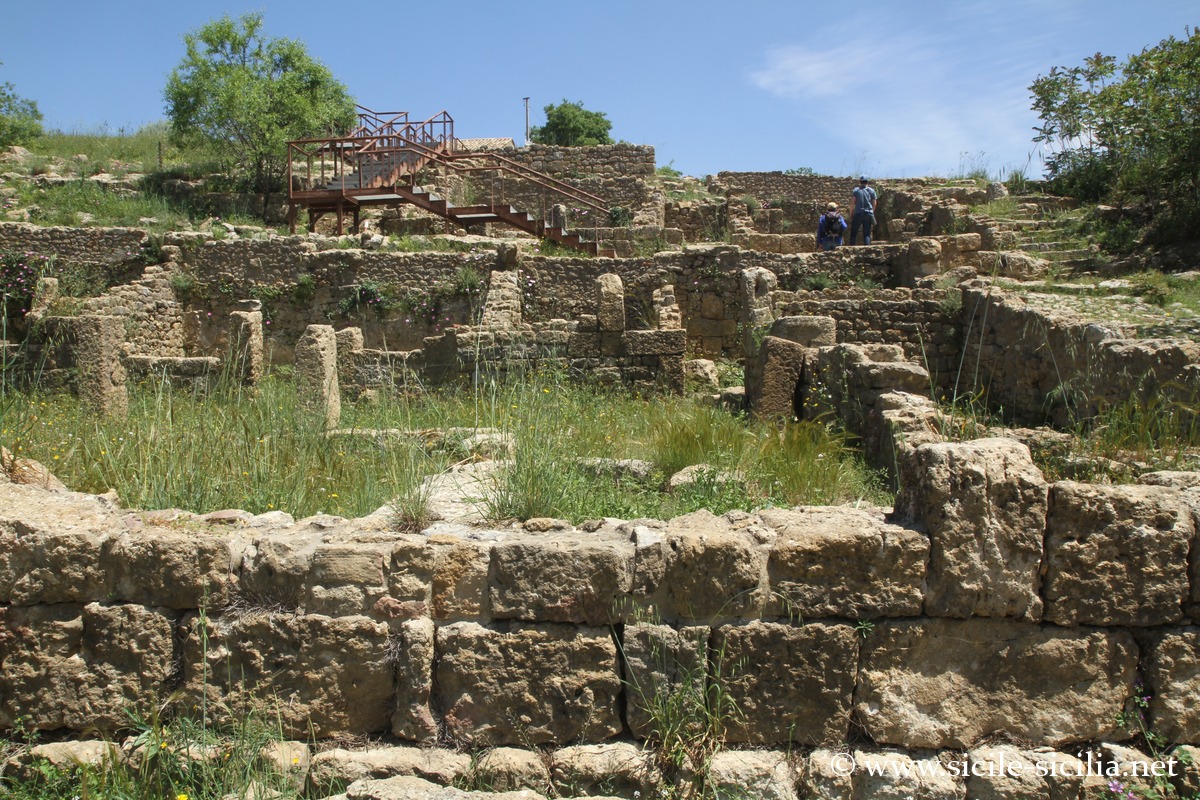
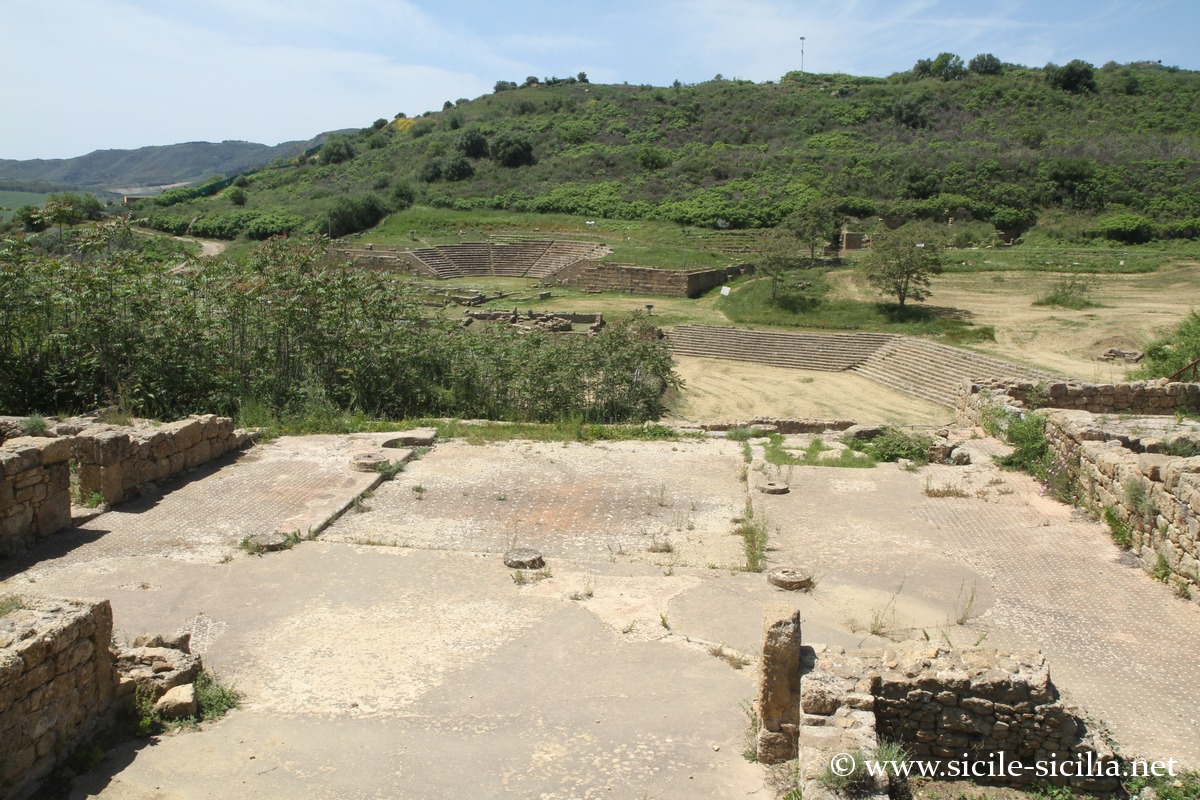
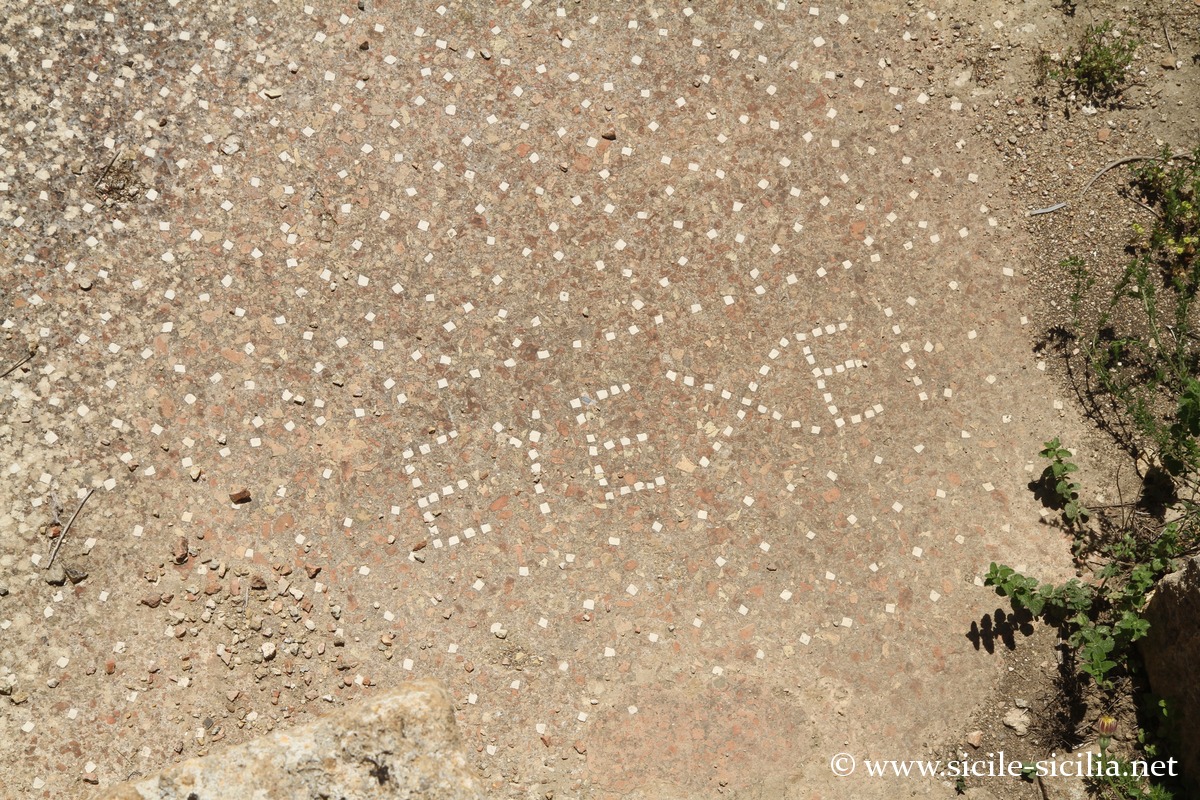
Climbing the eastern hill, one encounters residences, such as the House of Salus, with its courtyard with peristyle, the floors including the mosaic with the inscription “EYEXEI”, meaning “well-being”, thus a wish of prosperity for the house. Besides the brick columns, one can see cisterns for collecting rainwater.
At the top, further south, is the House of Ganymede, preserving a mosaic depicting the abduction of Ganymede. The rectangular peristyle was surrounded by Doric columns, with two rooms decorated with red frescoes and mosaics, dating from the 3rd century BC. It was reused, modified and divided by the Romans.
Coming back down and heading towards the south-east, one reaches the Eastern Granary, where there are kilns that were used to produce ceramics, the largest of which, tunnel-shaped with arches, was used to produce tiles and pipes for aqueducts. Near the ancient walls, the Great Kiln is very well preserved, with two pre-firing chambers, and in the centre the combustion chamber whose walls have crystallised, as well as the large firing chamber.
Casa del Saluto 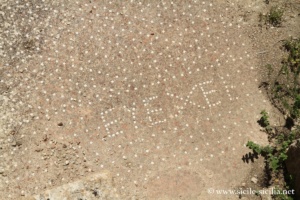
Casa del Saluto 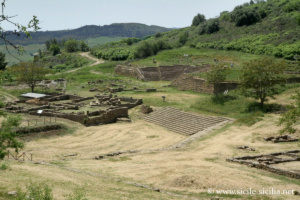
View of the agora from the top of the quarter 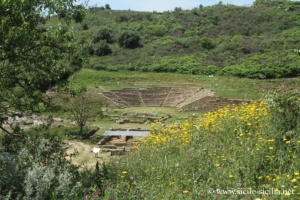
View of the theatre from the top of the quarter 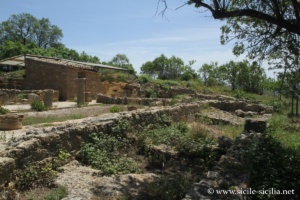
Casa del Ganimede 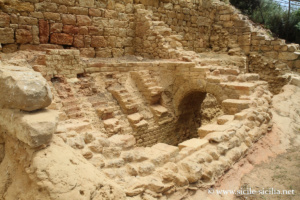
Great kiln
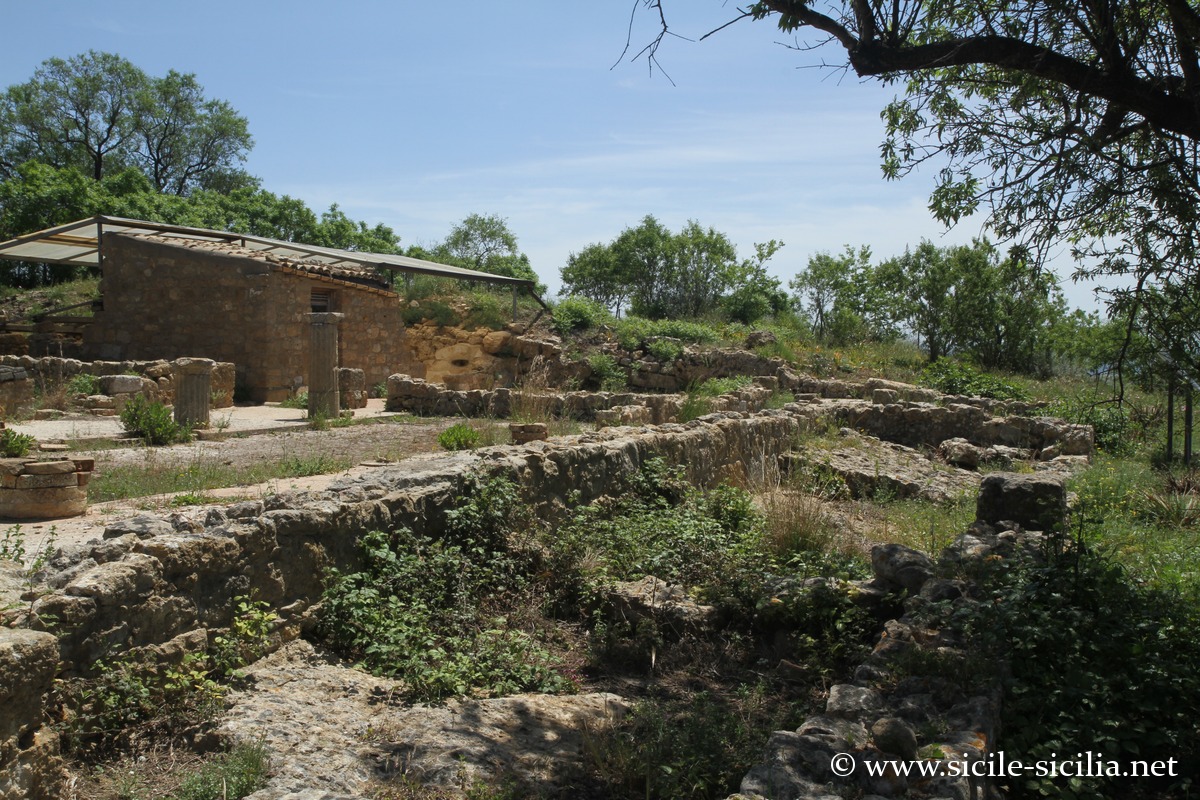
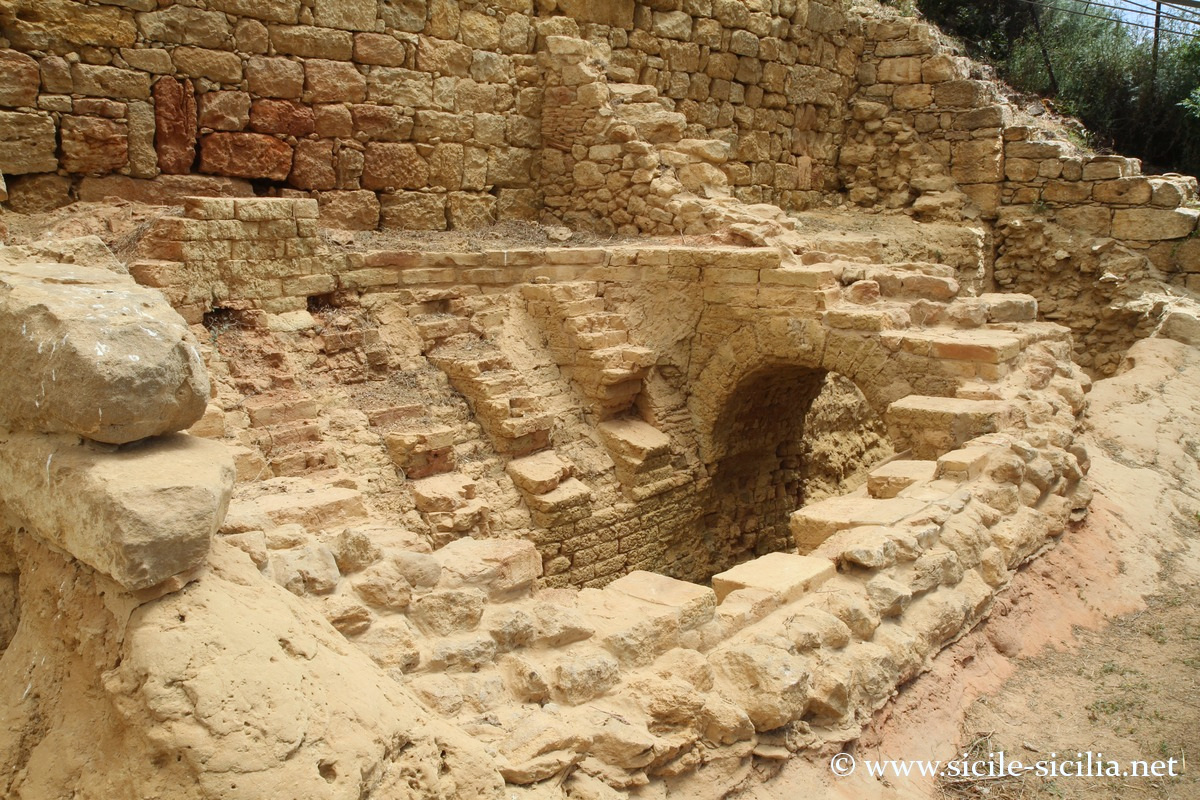
The Agora
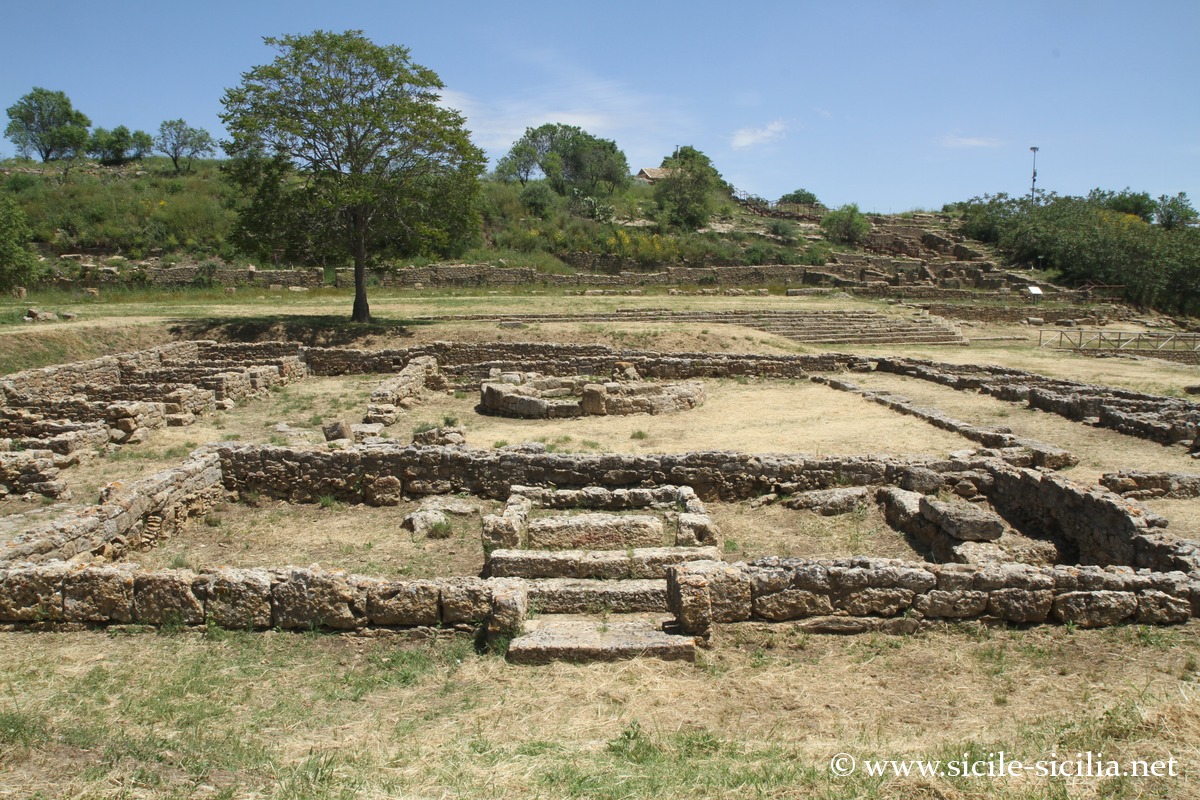
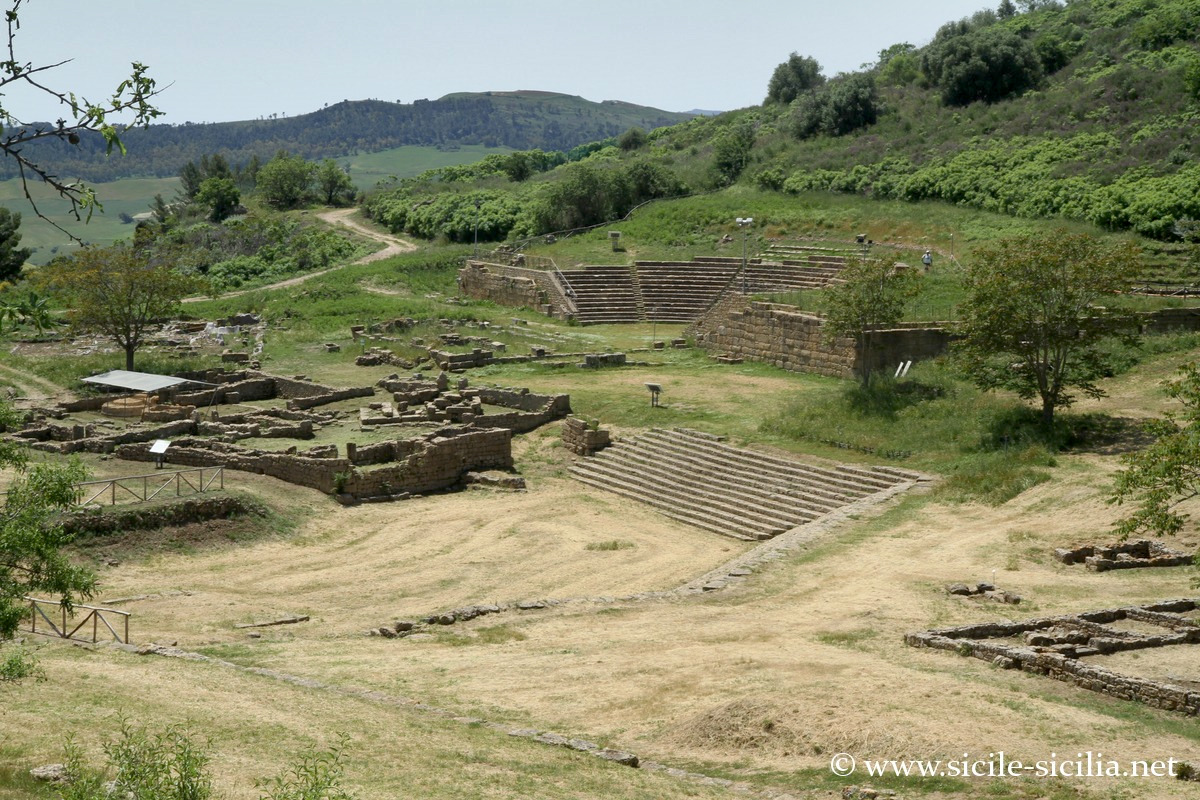
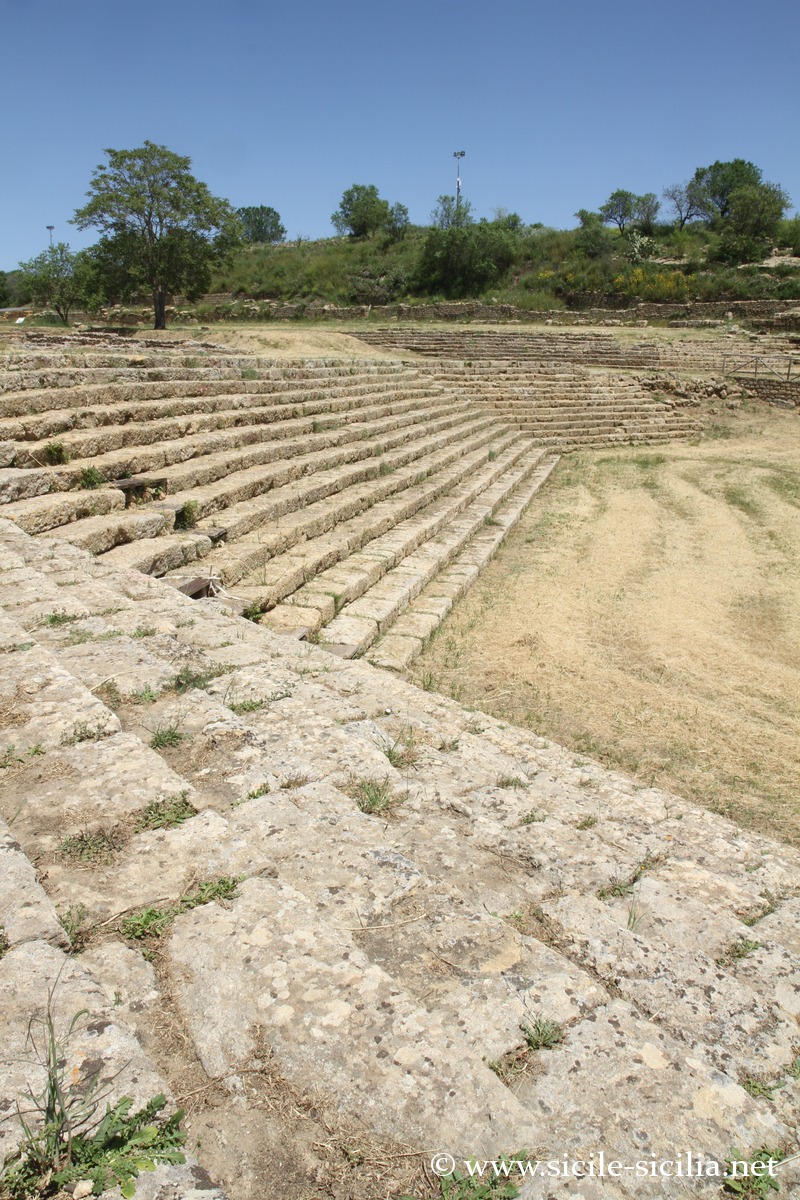
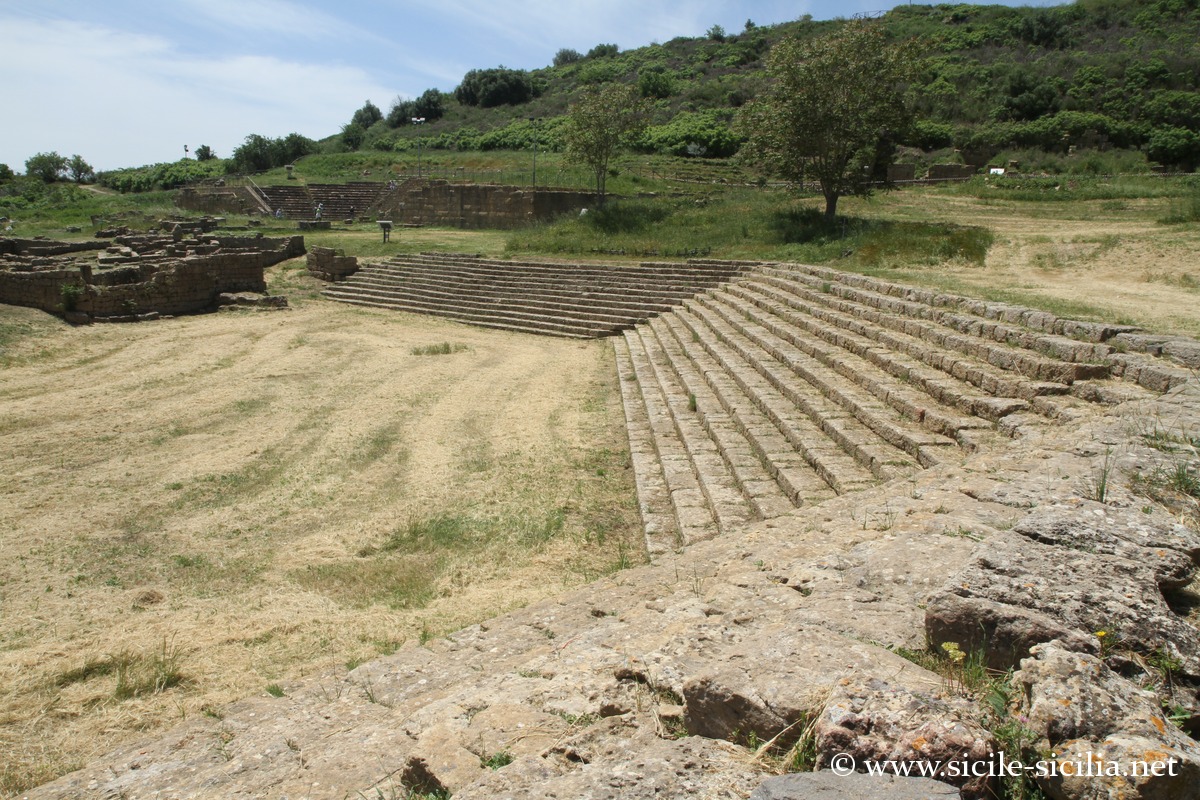
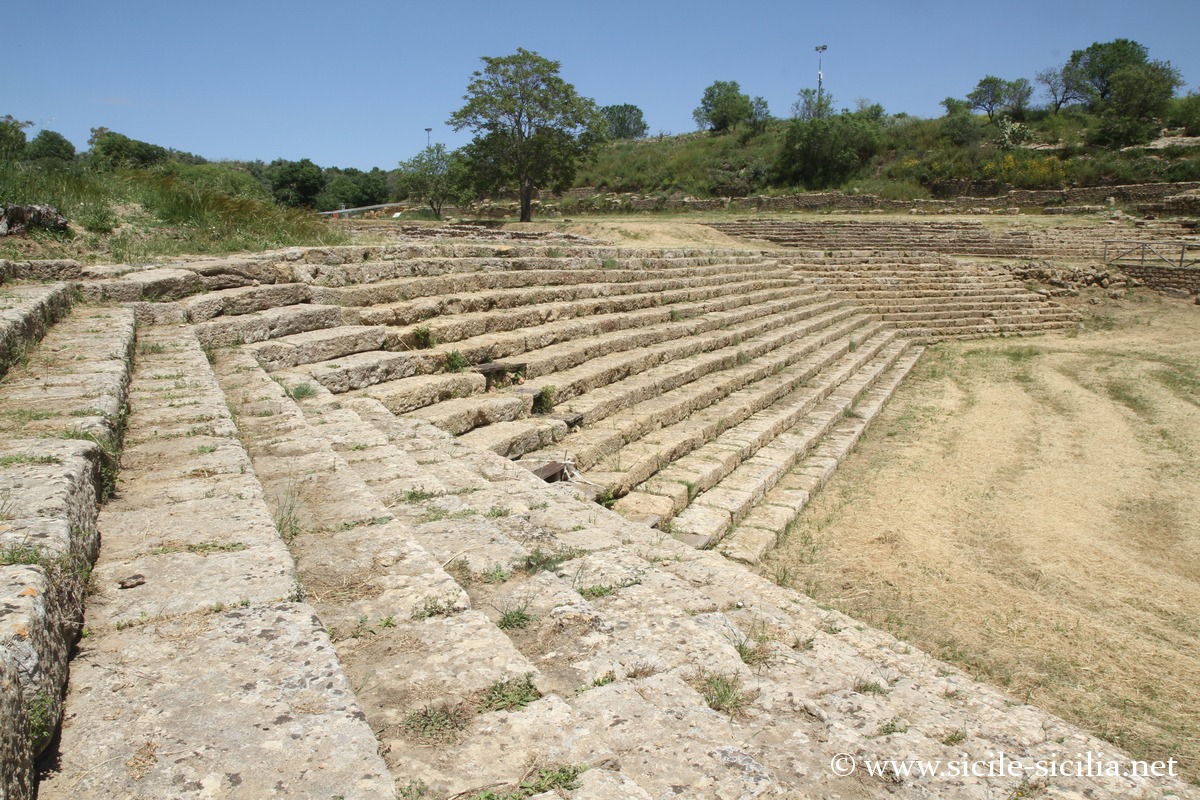
Facing the staircase and the prytaneion, the Ekklesiasterion is the emblematic building of Morgantina, with its three tiers of large steps forming an obtuse angle between them, which served to host the assembly of citizens or cultural events.
To the south is the sanctuary of the chthonic deities, the gods linked to the Earth and the underworld, such as Hades, Persephone, Hecate and Hermes, and linked to agriculture such as Demeter. It develops around two adjoining courtyards, the south courtyard with altars and chapels for sacred rites, and the north courtyard accessible to the faithful with ovens and a basin.
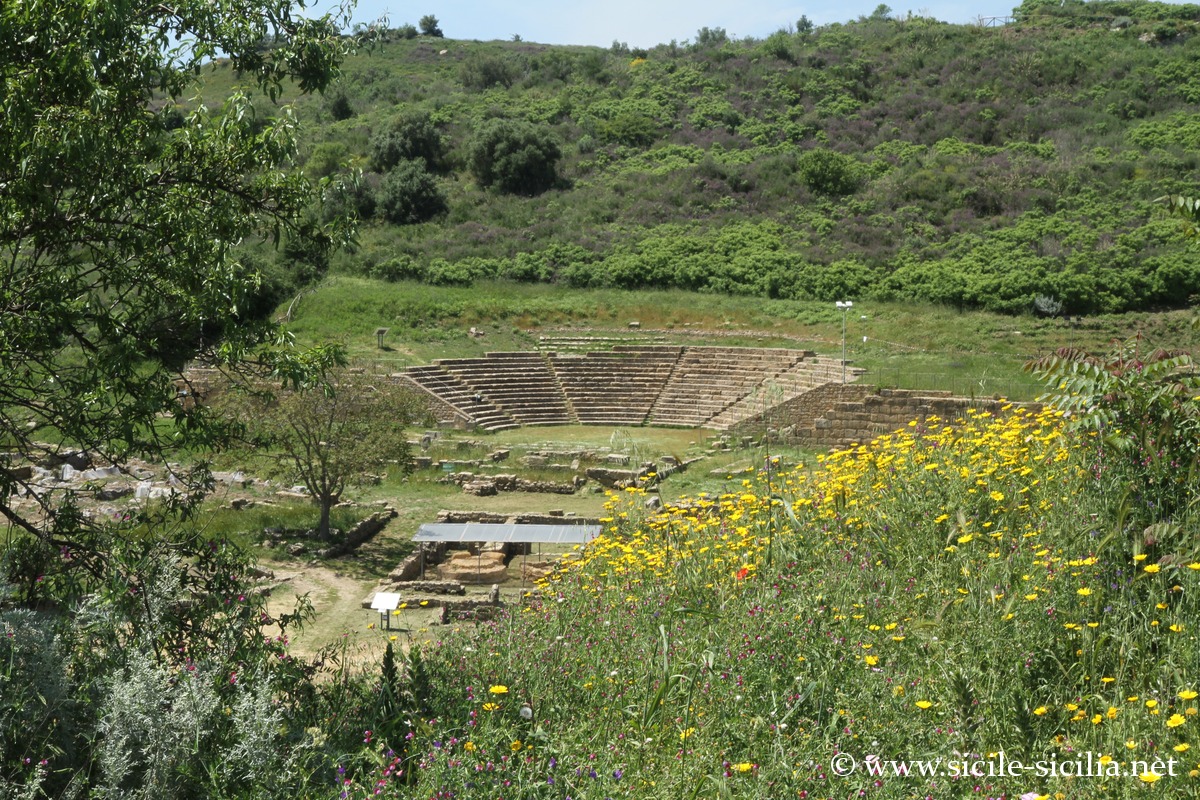
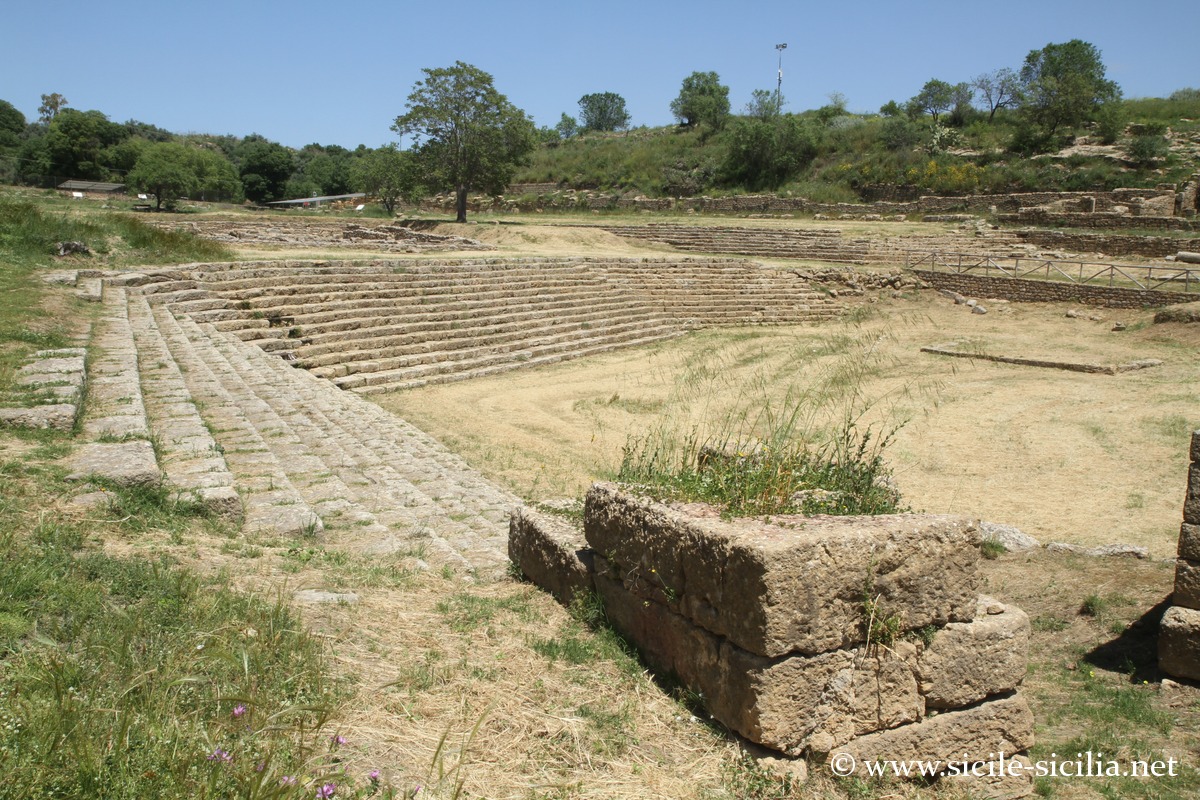
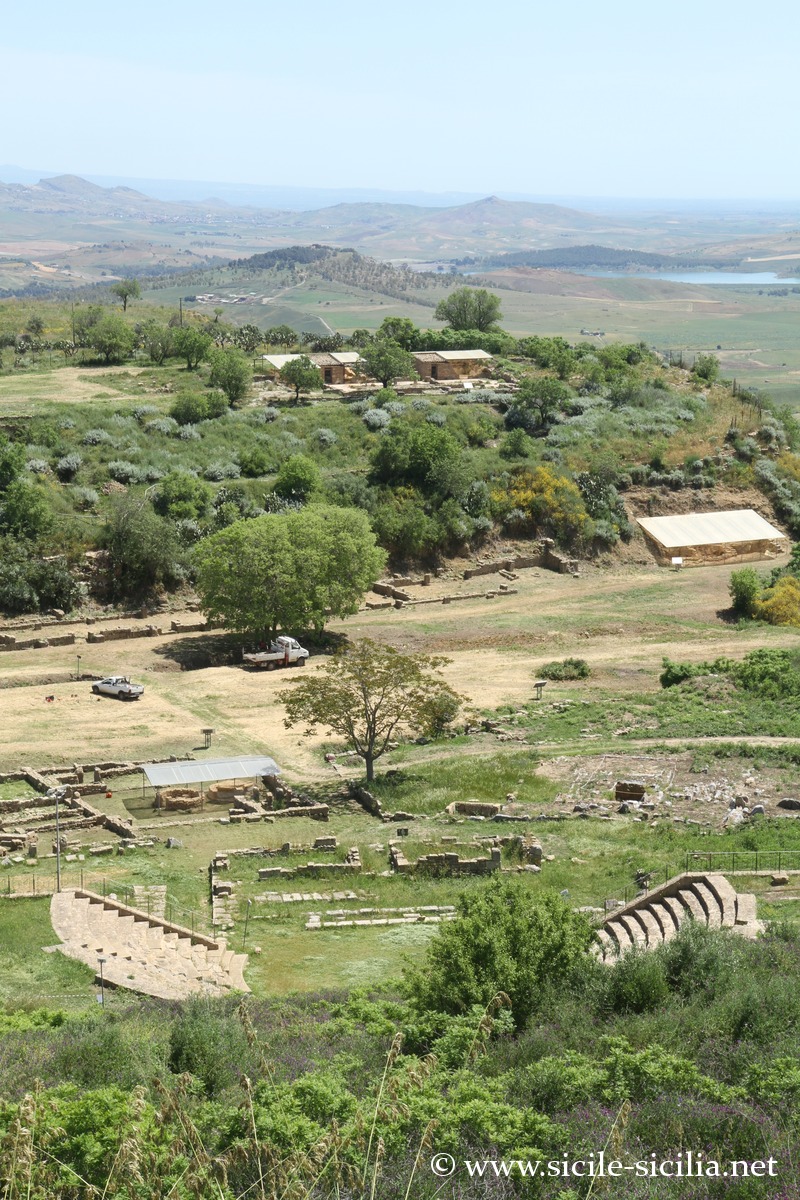
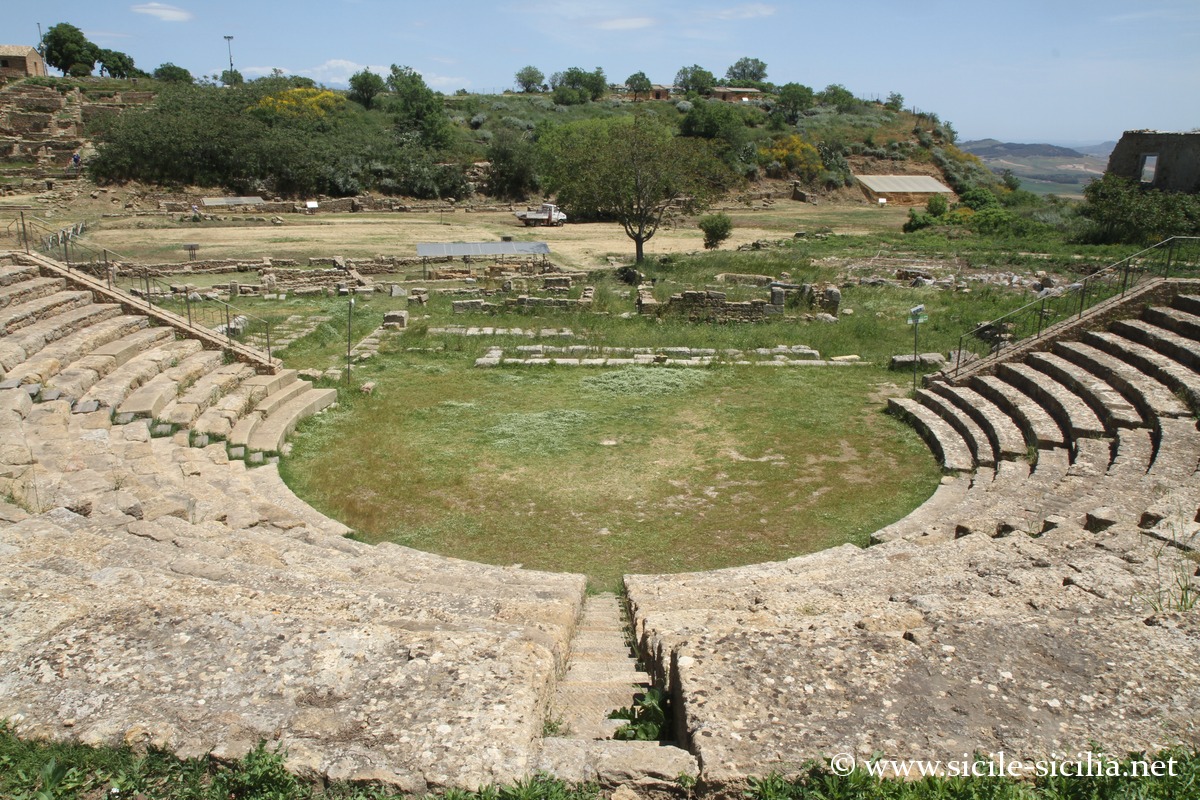
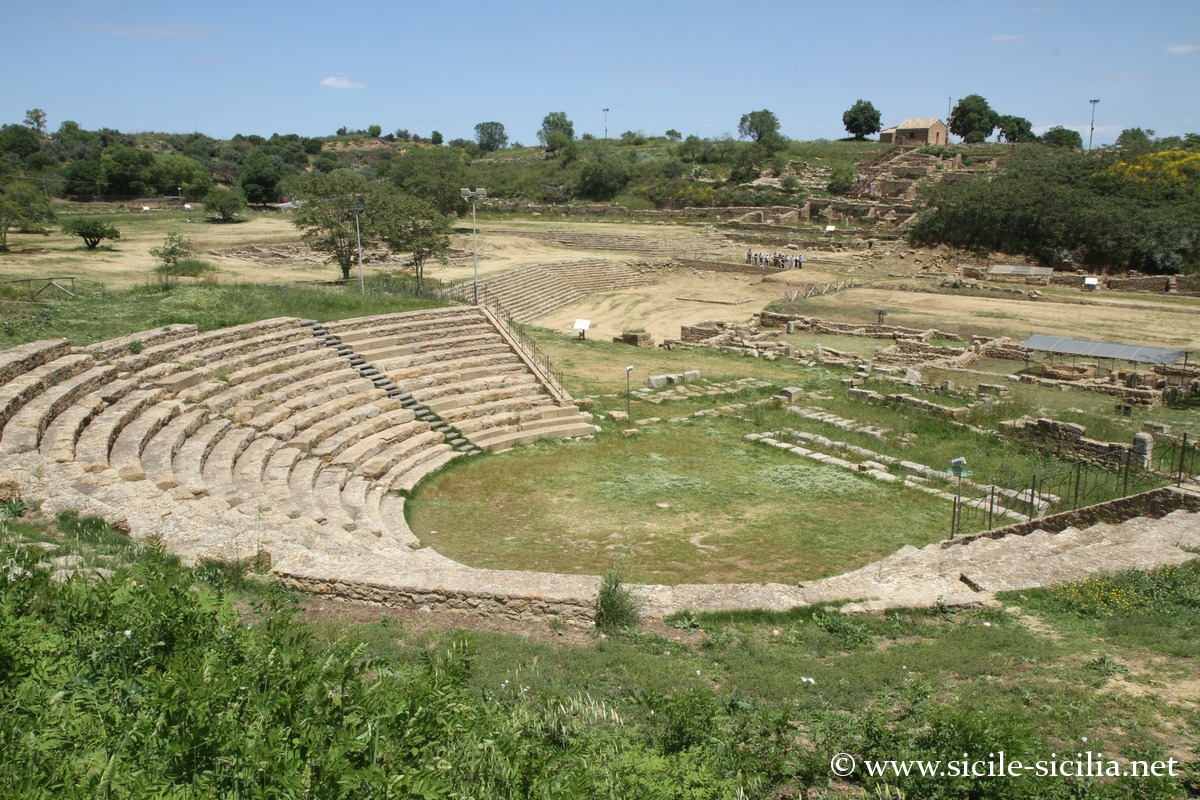
Just west of the sanctuary is the theatre with its 15 rows of steps. In the middle of the steps can be seen a dedication to Dionysus by the wealthy citizen who had it built, in the 3rd century BCE, replacing an earlier, more modest theatre. It has robust retaining walls. In the middle of the steps can be seen a dedication to Dionysus by the wealthy citizen who had it built. Part of the steps that had collapsed has been restored. There are remains of the orchestra and the stage.
Just north of the theatre, a few cells remain preserved along the west stoa, with shops or others.
Ekklesiasterion, agora 
Ekklesiasterion, Agora 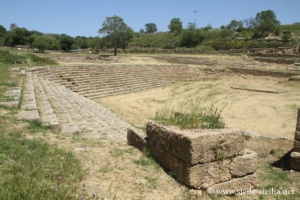
Ekklesiasterion, Agora 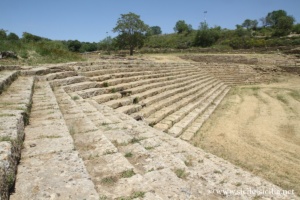
Ekklesiasterion, Agora 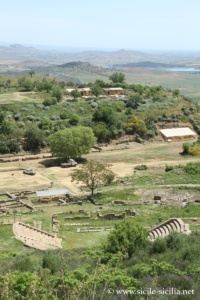
Greek theatre 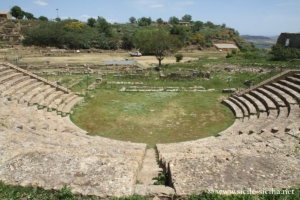
Greek theatre Greek theatre 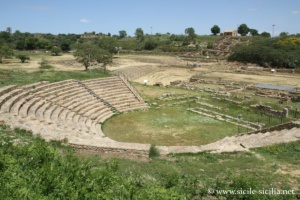
Greek theatre
Return to the entrance and baths
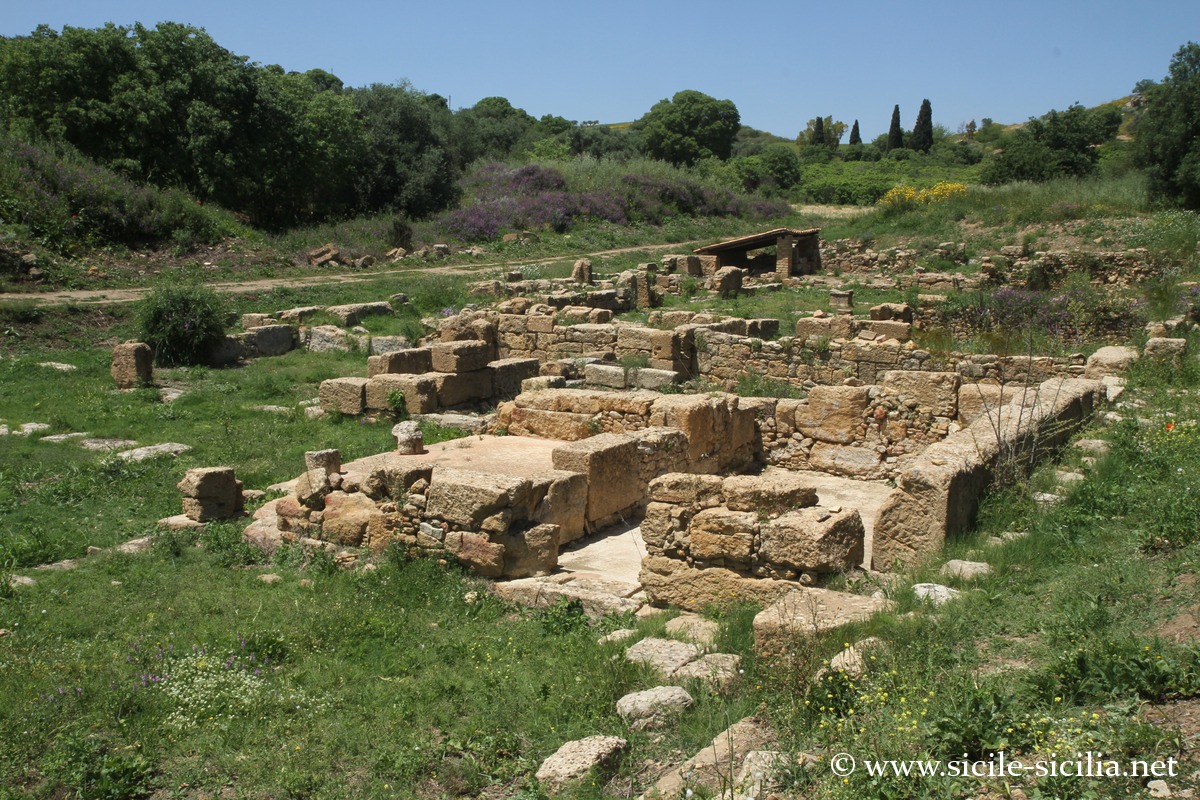
South of the theatre one takes the path westwards that leads to the grand House of the Magistrate, with its 24 rooms, divided into a private sector to the north and a reception sector to the south with triclinia and a decorated atrium.
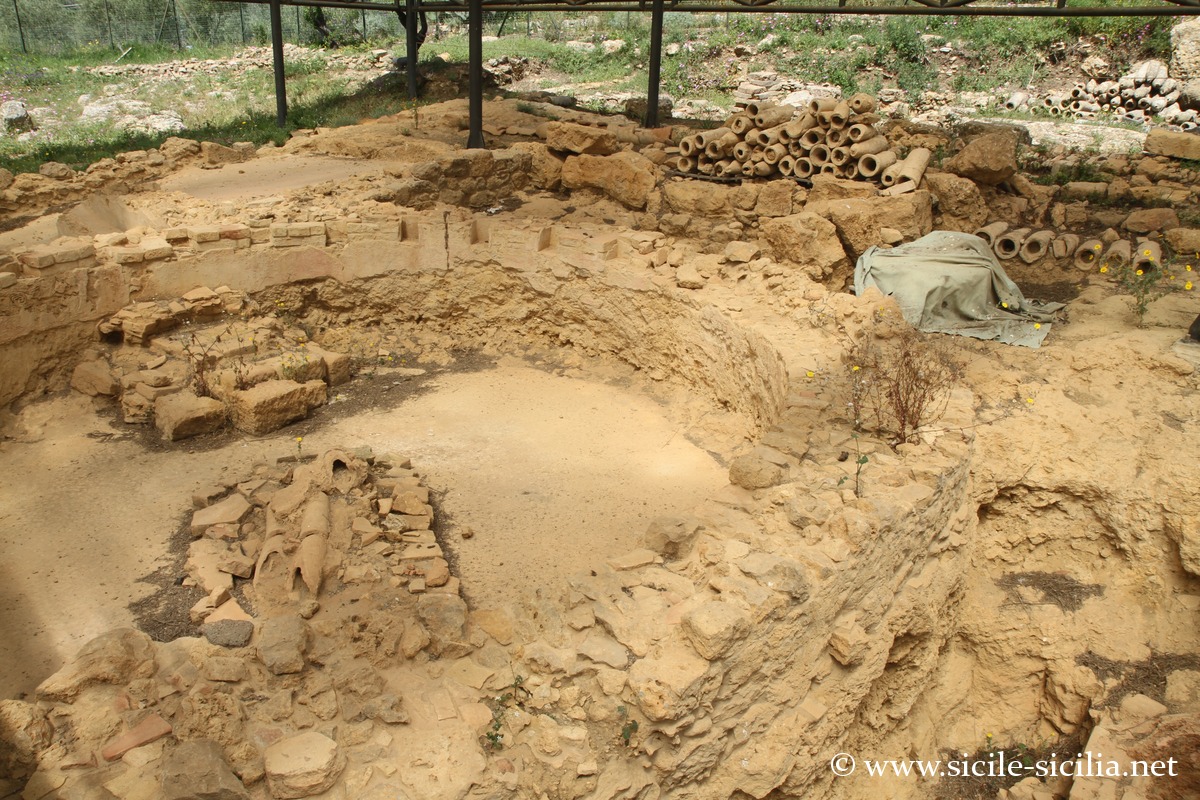
If one passes the entrance, to the west are the Baths of Contrada Agnese. It is one of the rare examples of Hellenistic baths. They are characterised by a circular room that was vaulted and covered pools. The vault was built with an original system using interlocking terracotta tubuli and plaster.
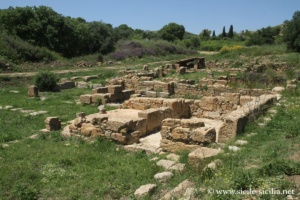
Casa del magistrato 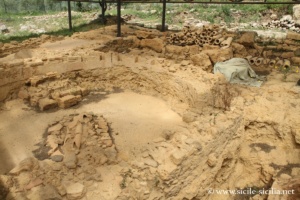
Hellenistic baths
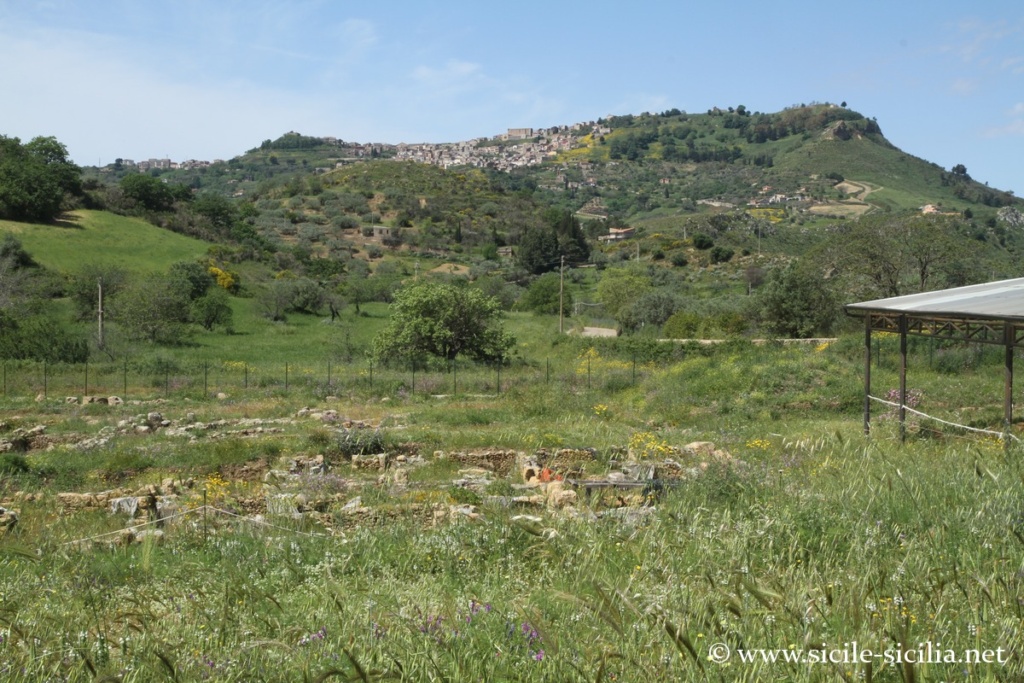
Panorama towards Aidone
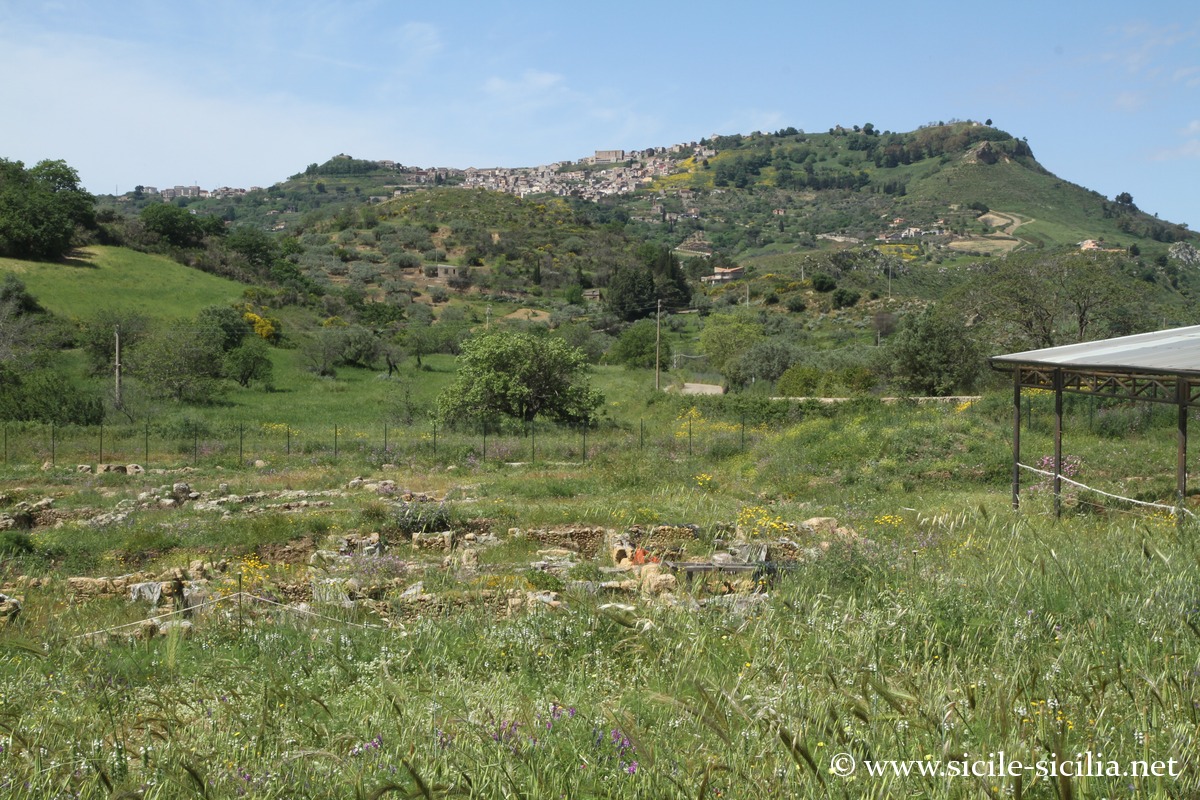
History of Morgantina
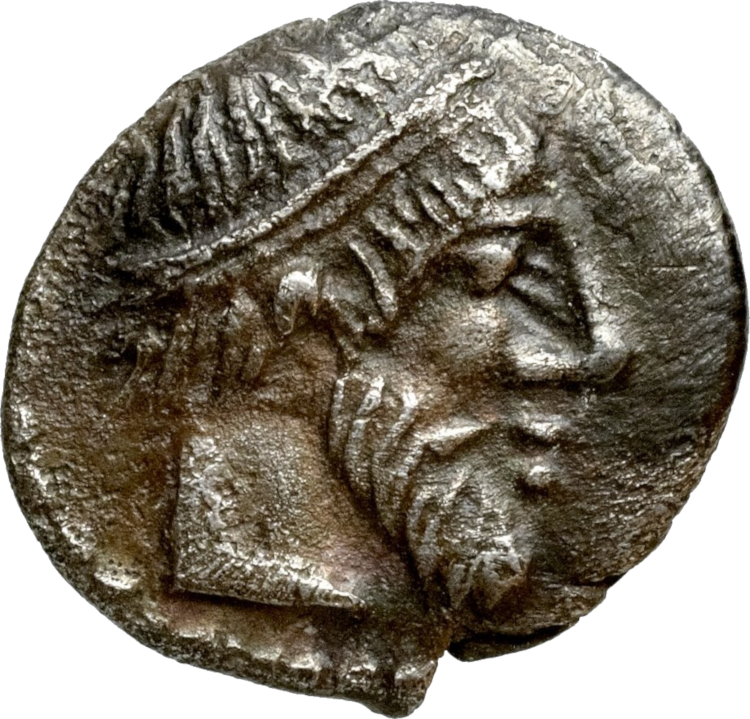
Litra of Morgantina (obverse), 415-405 BCE
The oldest traces of the site date back to the Bronze Age (2100-1600 BCE), with a village of huts on the hill of the Cittadella, dating from the Castelluccio culture, and from which the Sicanians would have originated. Mycenaean pottery has also been found on site.
The Sicels, perhaps coming from central Italy, between the 14th and 11th century BCE, pushed the Sicanians back towards western Sicily. However, legend attributes the founding of the city to a group of Morgêtes (coming from Lucania), led by the mythical king Morgetes, in the 10th century BCE.
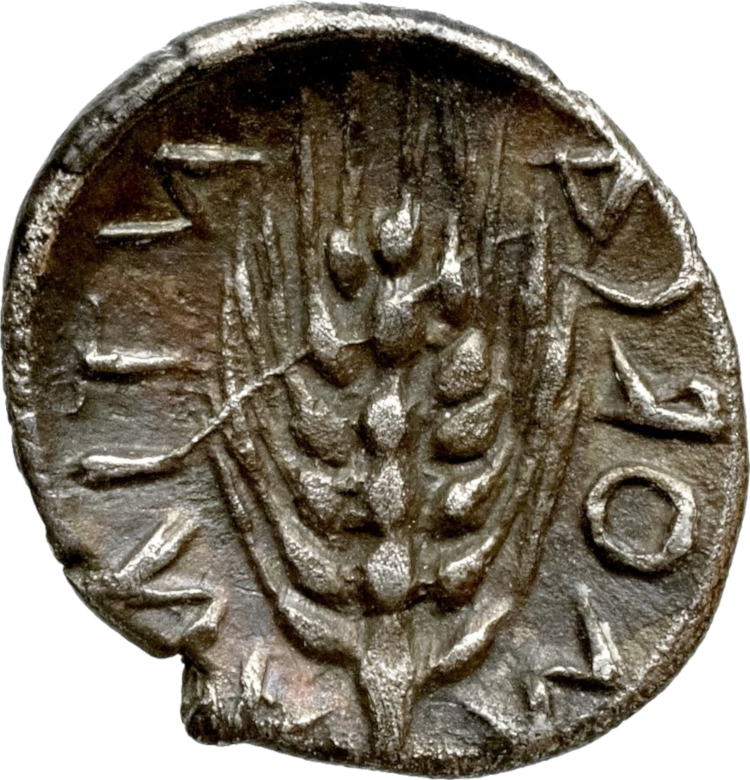
Litra of Morgantina (reverse), 415-405 BCE
During the 8th century BCE, the Greeks began to settle in Sicily, and around the 6th, Greeks of Chalcidian origin settled at Morgantina, apparently to mix with the inhabitants, as suggested by the mixture of cultural elements in funerary practices.
The city is said to have been destroyed at the end of the 6th century BCE by the tyrant Hippocrates of Gela, and once again in 459 BCE by Ducetius, king of the Sicels, during a revolt against Greek domination.
After the defeat of the Sicels, in 450 BCE the territory passed under the domination of Syracuse and was later sold to Kamarina in 424. In 396 the tyrant Dionysius of Syracuse seized it during a campaign to extend his domination in Sicily, in the context of conflicts with Carthage. But the inhabitants, rebelling against the Syracusan yoke, welcomed the Punic (Carthaginian) army led by Mago II in 392.
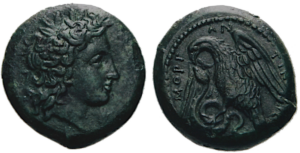

Hemilitron, Bronze, Morgantina (420-400 BCE) 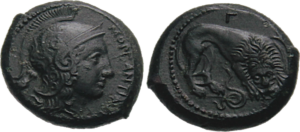

Litra, bronze, Morgantina (420-400 BCE)
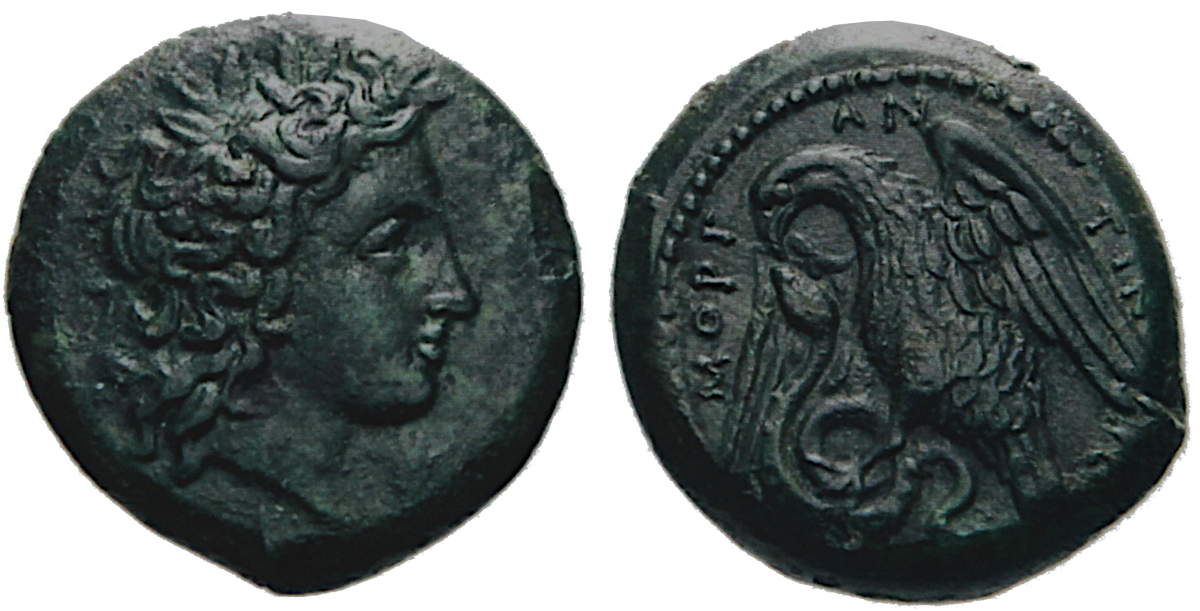
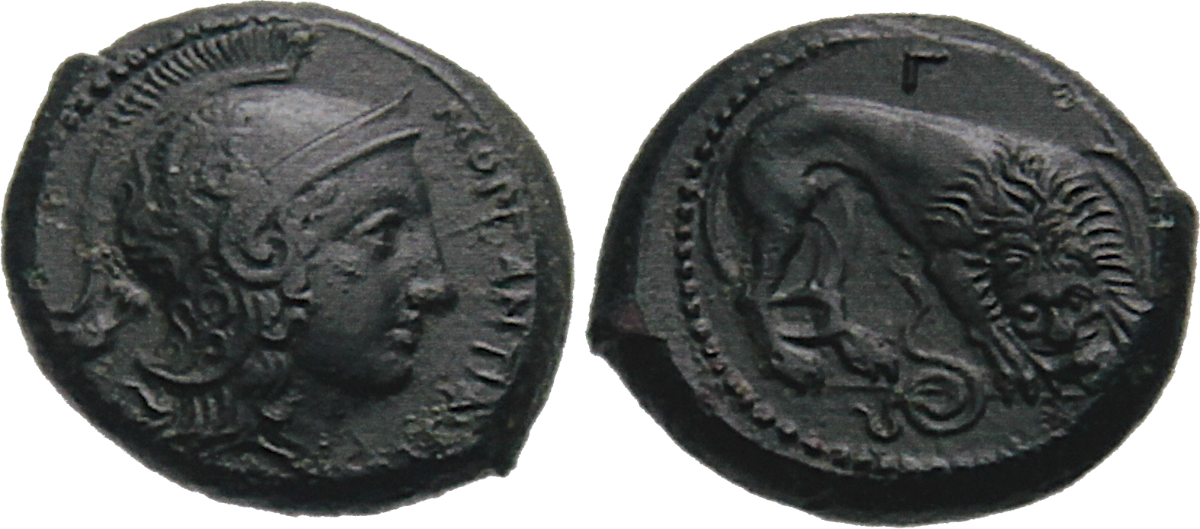
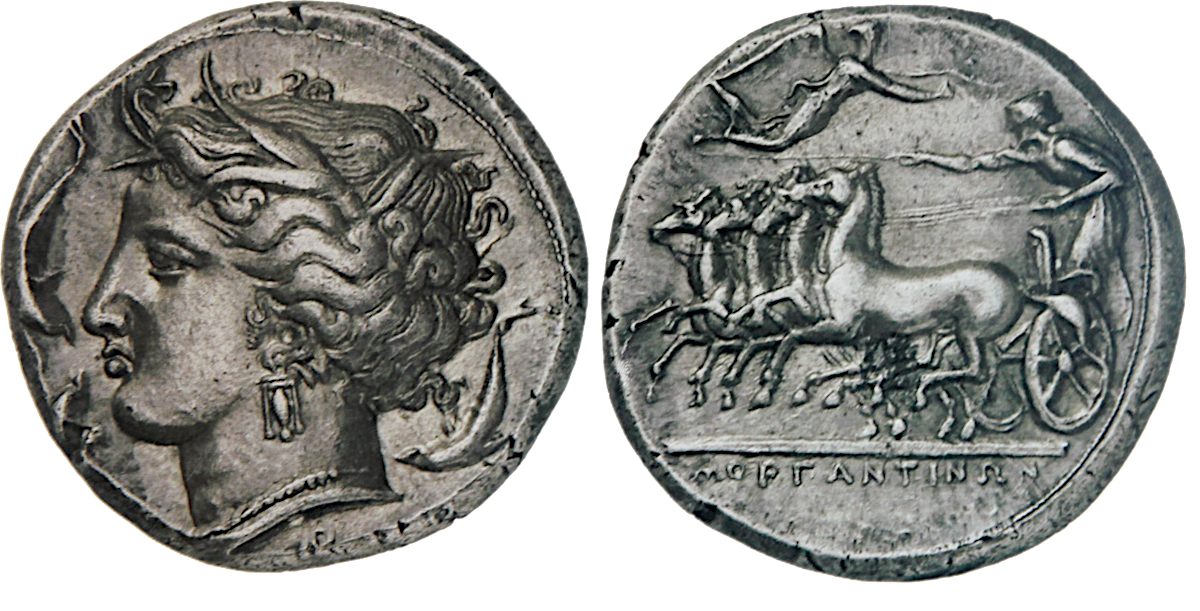
Tetradrachm (340-317 BCE)
Around 340 BCE, Timoleon defeated the Carthaginians, drove Dionysius II out of Syracuse and rid the Greek cities of tyrants in order to impose oligarchic regimes.
He rebuilt the city on the plateau, with a circuit wall, an orthogonal urban layout, the sanctuary in honour of Demeter and Persephone, the Ekklesiasterion, the Bouleuterion, etc. Many colonists from Greece settled there.
During a civil conflict, Agathocles seized Syracuse with the help of 1,200 soldiers from Morgantina in 317 BCE. He built the agora of the city.
Under the reign of Hieron II (275-215 BCE), the tyrant of Syracuse, Morgantina reached its greatest development, with nearly 10,000 inhabitants.
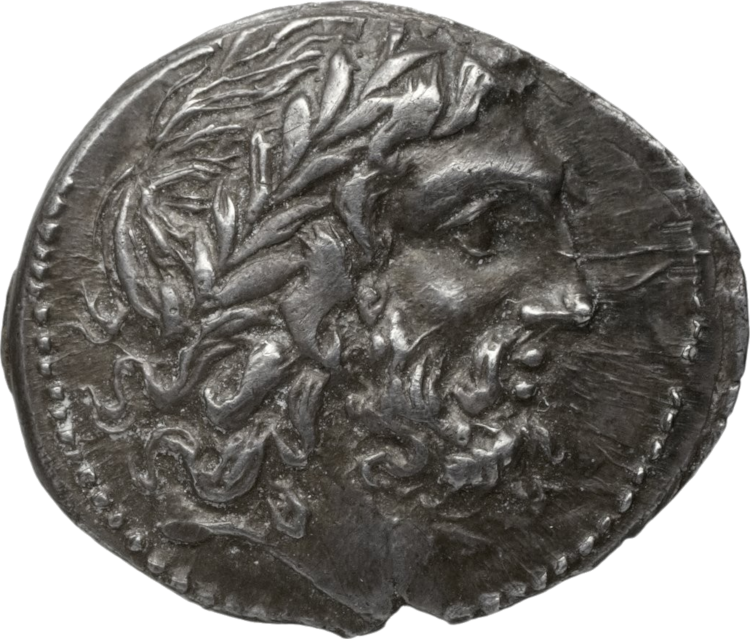
Double Litra (Morgantina, 214-212 BCE)
During the First Punic War between Rome and Carthage, Morgantina and the whole of eastern Sicily was under Hieron II, allied with the Romans. But on the latter’s death, his grandson Hieronymus was the cause of the switch of the alliance to Carthage. Later, the city resisted the Romans despite the fall of Syracuse in 212. It was besieged and destroyed in 211 by Marcus Cornelius Cethegus, then offered to the Hispanic mercenaries led by Moericus for having allowed the consul Marcus Claudius Marcellus to conquer Syracuse after three years of siege (during which Archimedes died).
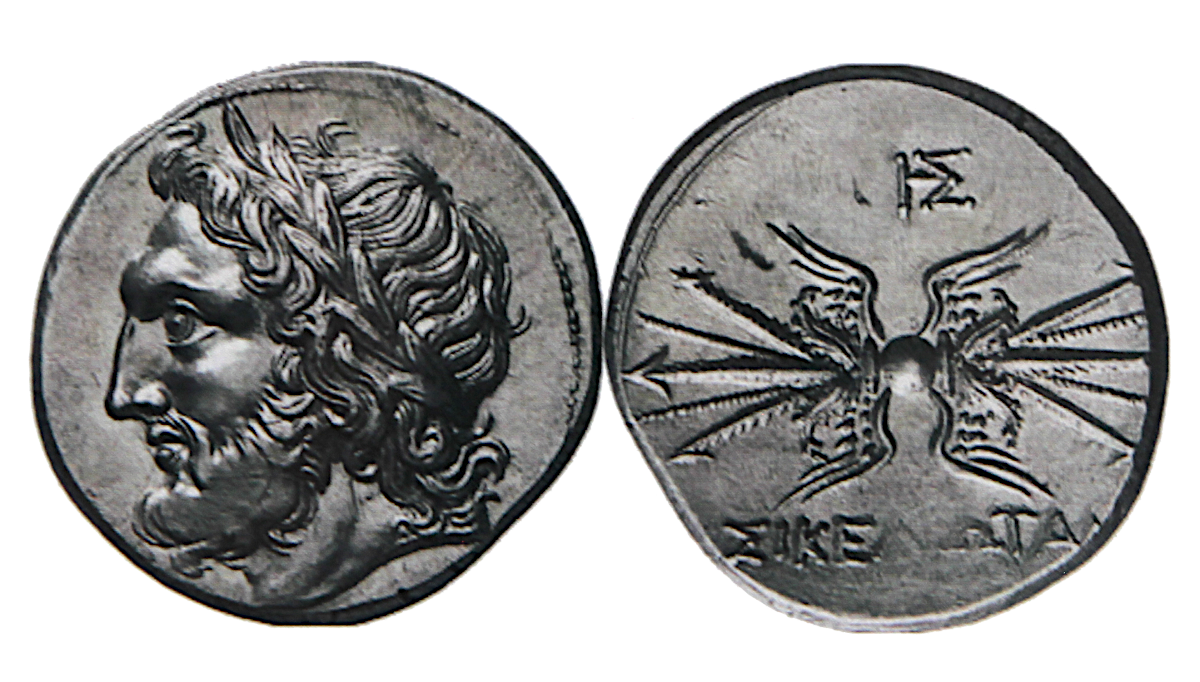
The coins of Morgantina bearing the legend ΣΙΚΕΛΙΩΤΑΣ date from 214–211 BCE, during the Second Punic War. They constitute a federal issue grouping several Greek cities of Sicily under Roman supervision and intended for administrative and commercial circulation, marking the monetary reorganisation imposed by Rome. The legend does not designate a specific people, but a common monetary entity.
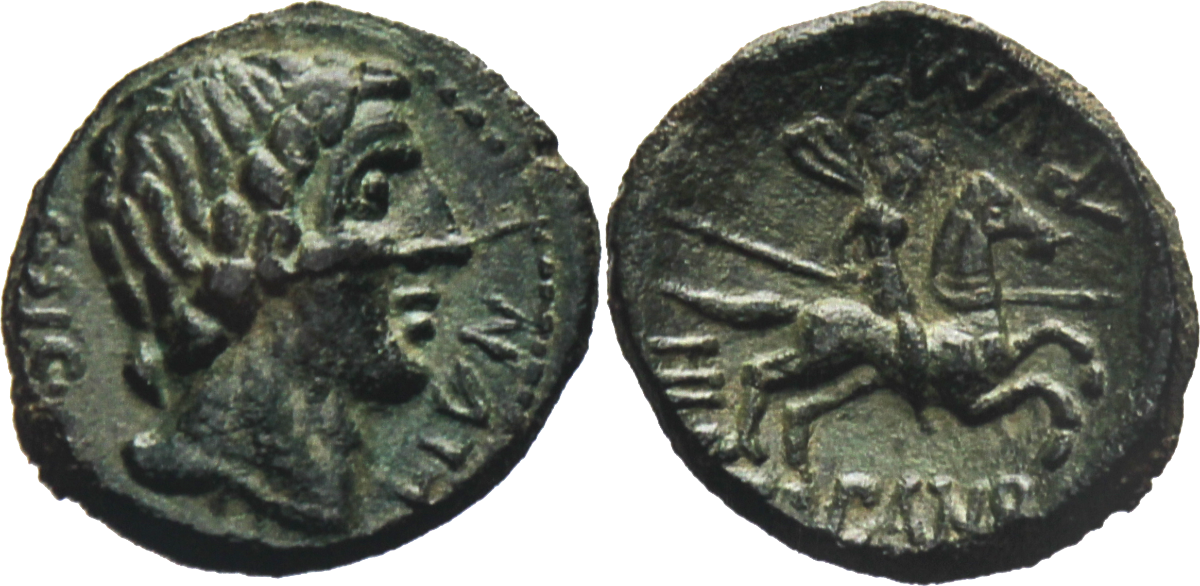
In parallel, the bronzes bearing the legend HISPANORVM (214–210 BCE) were intended for the Iberian and Numidian contingents stationed in Sicily and served mainly for military payment and logistics.
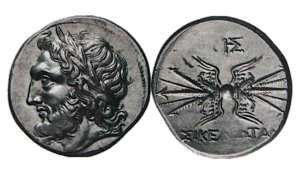

Sikeliotes Tetradrachm (Morgantina) 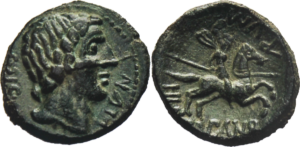

Hispanorum Bronze (Morgantina)
Smaller in size, the city remained an important commercial centre, producing bricks and ceramics, cereals (wheat, barley), oil and wine.
Diodorus Siculus recalls that Eunus, leader of the slave revolt of 135 BCE originally from Syria, who led the slaves of Enna to revolt, founded a kingdom, which was suppressed by the Roman legions, and was held prisoner at Morgantina, which had also rebelled.
During the Second Servile War (105-101 BCE), Morgantina was besieged by the rebel leader Salvius and may even have been occupied.
Morgantina was gradually abandoned from the 1st century BCE onwards.
Where Morgantina is located: map
If you see this after your page is loaded completely, leafletJS files are missing.
Information
External sites
- Regional website: regione.sicilia.it
- Tourist sites: www.sicilytourist.com, www.prolocoaidone.it/morgantina
- Wikipedia page: Morgantina
Articles: Category Piazza Armerina
- Piazza Armerina
 Piazza Armerina is a pretty town of about 20,000 inhabitants, at 700 ...
 - Villa Romana del Casale
 The Villa del Casale in Piazza Armerina is a unique example of ...
 - Aidone and Pietratagliata
 Located in the heart of the Heraean Mountains, the town of Aidone ...
Comments in other languages
A very beautiful ancient Greek site in lovely landscapes. The ekklesisterion of Morgantina, in particular, is a building unique to this city