

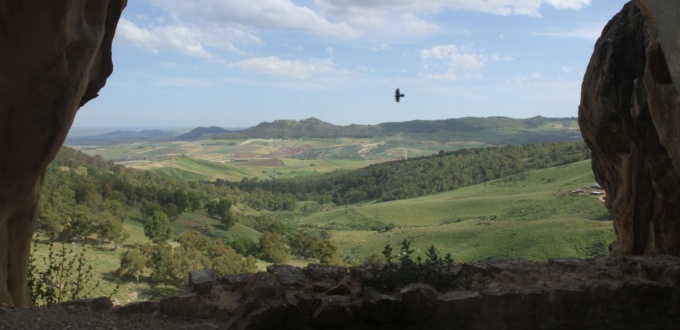
Located in the heart of the Heraean Mountains, the town of Aidone is often referred to as the “balcony of Sicily”. It took its name in the 11th century when it was Saracen, from the Arabic Ayndun meaning abundant source of water.
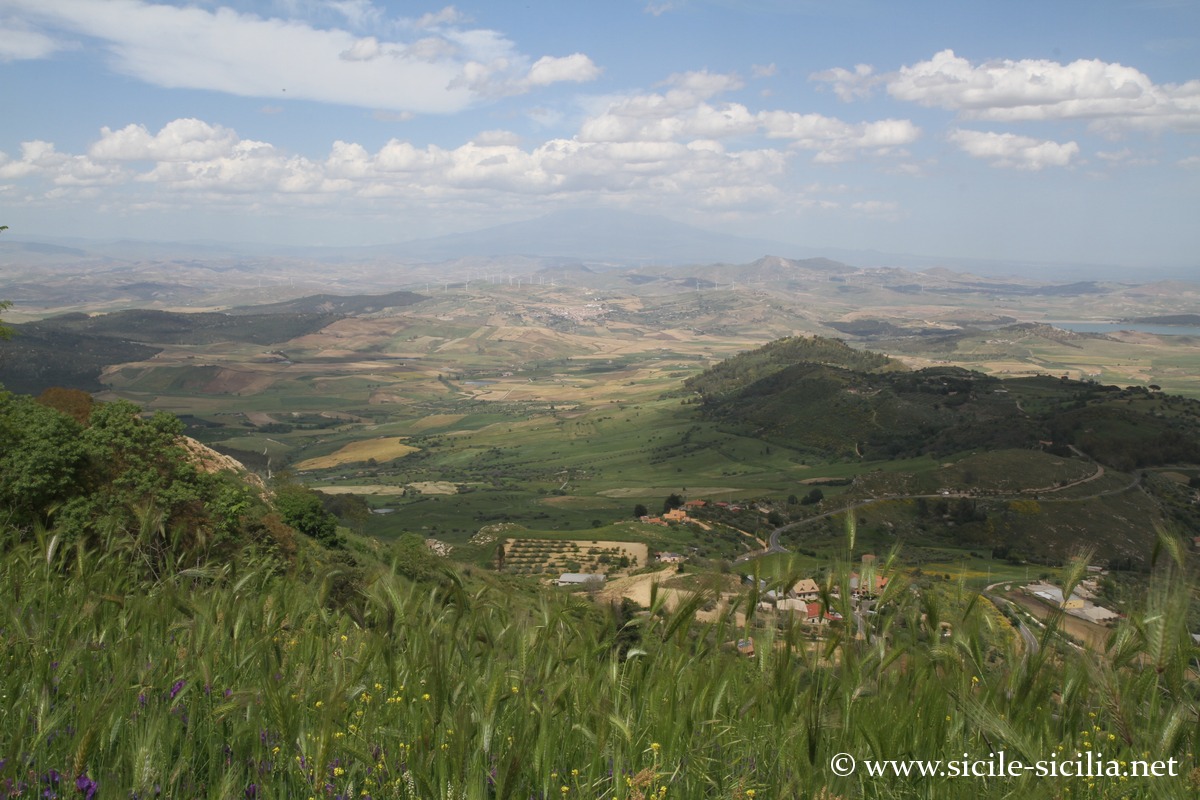
Surrounded by green and fertile hills, Aidone lies equidistant from the three coasts of Sicily, close to Etna and the plain of Catania, and situated between the Nebrodi Mountains to the north and the Hyblaean Mountains to the south.
Historical overview
A few kilometres away there was an important ancient city, Morgantina, originating in the Bronze Age, populated by the Sicani, the Sicels, the Greeks, and then the Romans. The town’s museum preserves its archaeological discoveries.
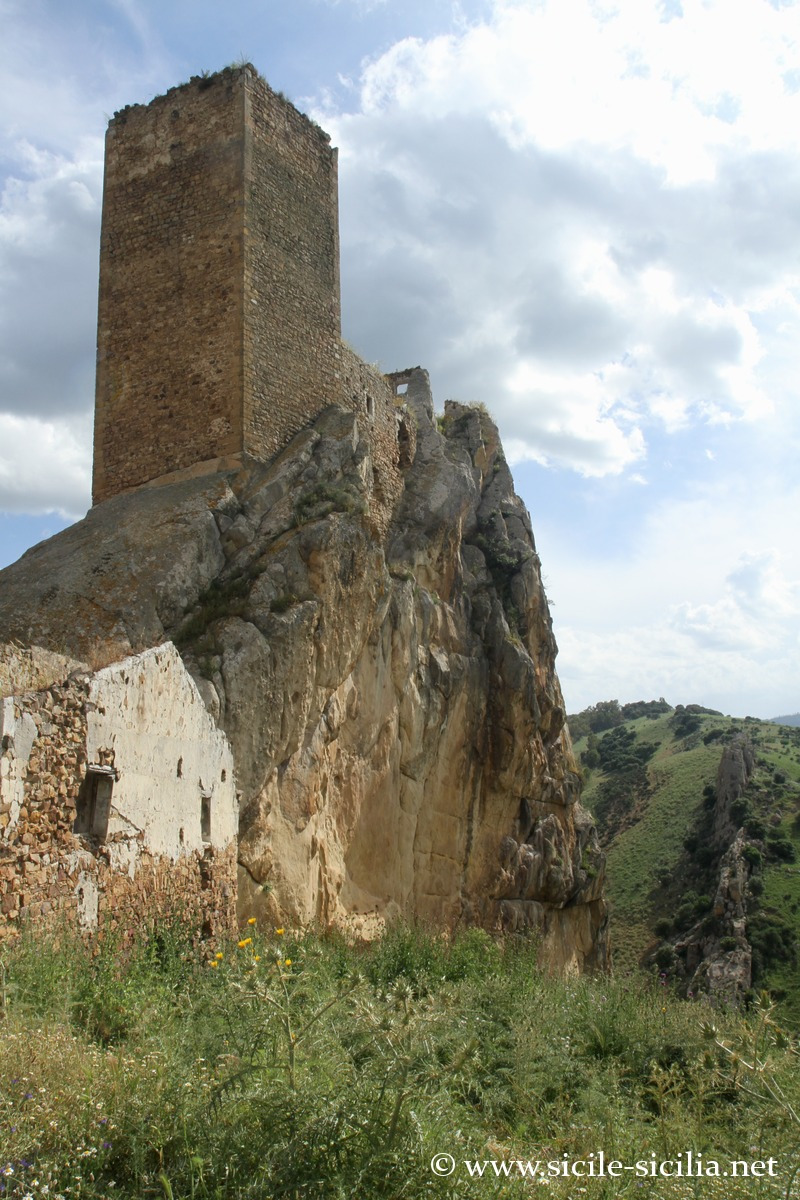
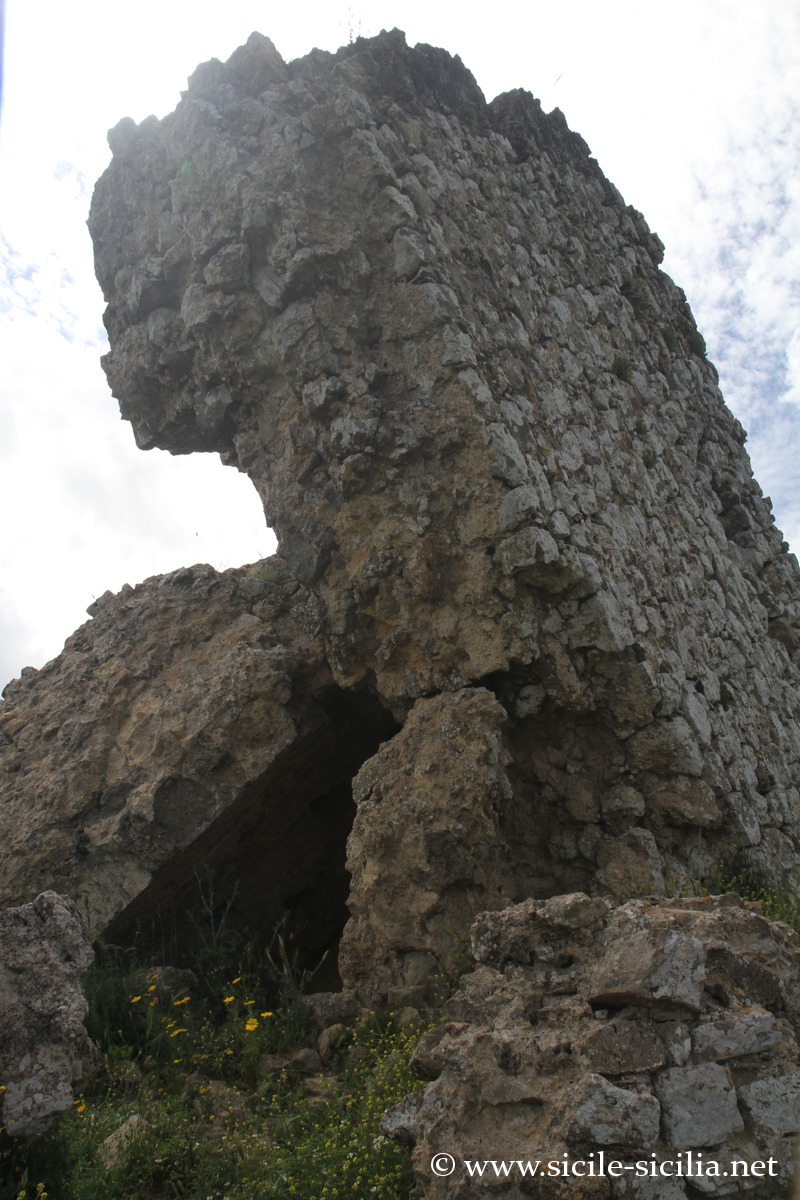
The village of Aidone is marked by the Middle Ages, with its churches of Norman origin, or in the surroundings the suggestive ruins of the Castle of Pietratagliata on a rock at the end of a wall of rock cutting across the valley.
The town experienced the vicissitudes of history between the many conflicts and the successive occupations of the Swabians, Angevins, Aragonese, or the Church. The violent earthquake of 1693 was devastating, and subsequently some of its churches were restored in the Baroque style. In 1805, with the discovery of a sulphur deposit, Aidone began to grow wealthy, until the closure of the mine in 1960.
Castle of Pietratagliata
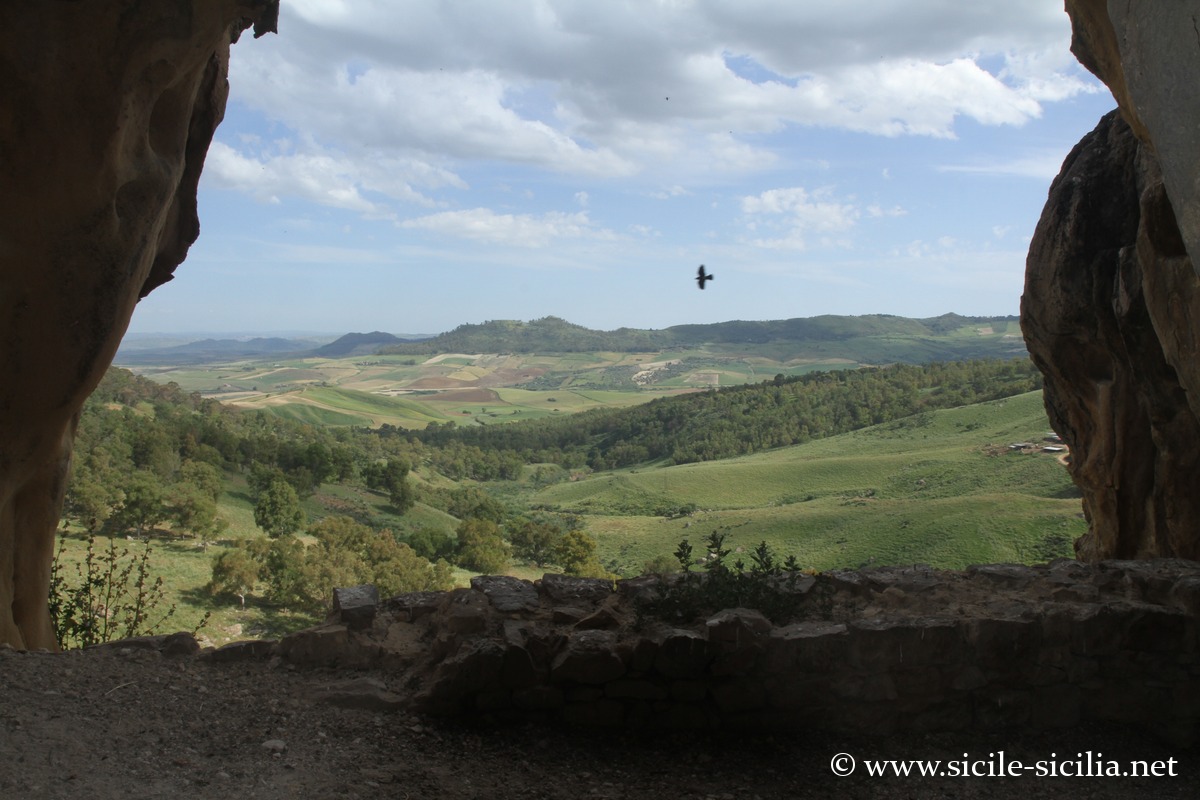
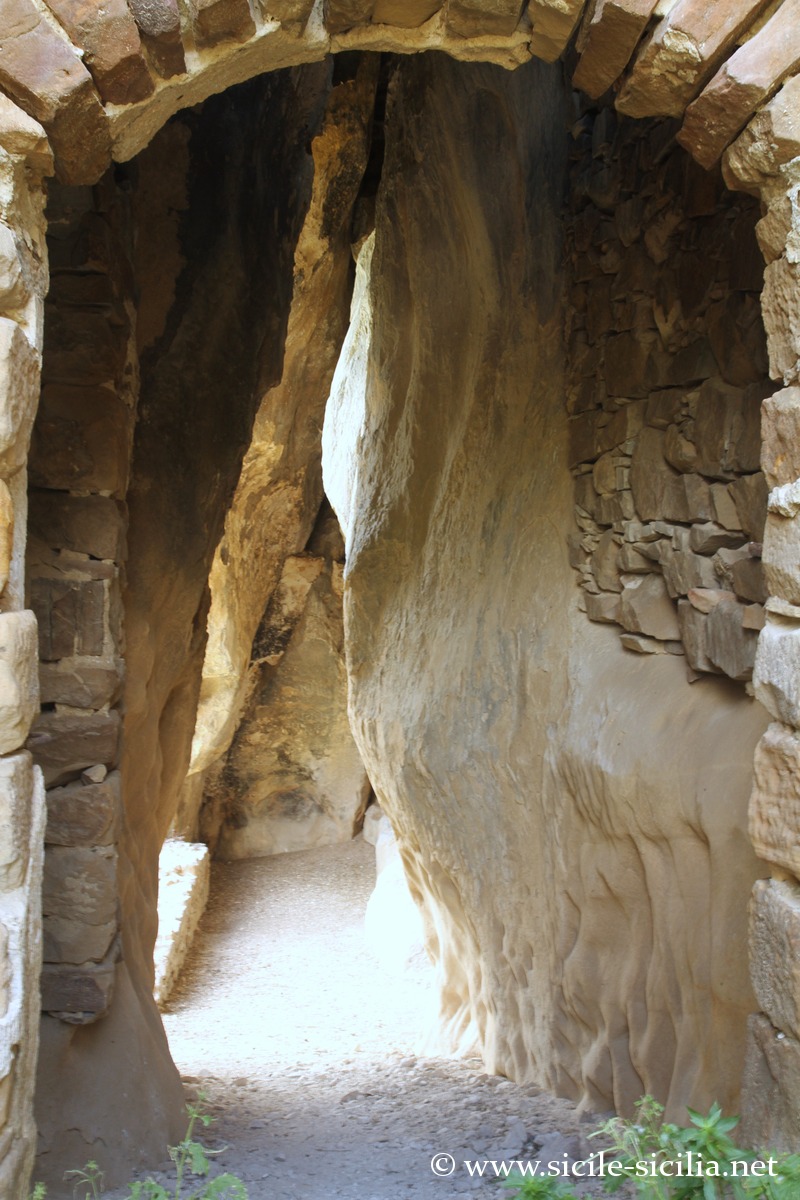
The Castle of Pietratagliata (Cut stone in Italian), also called “dei Gresti”, is located about 10 km north of Aidone, on the “contrada” Gresti, on the border of the territory of Raddusa. It is one of the most interesting examples in central Sicily of rock-cut fortification, combining architecture carved into the rock and masonry.
Tradition evokes a Byzantine then Arab phase, before the Norman occupation. The castle fulfilled the function of an outpost controlling a network of roads that linked the eastern coast (Catania-Syracuse) to the central hinterland of Sicily. It belonged to the fief of Gresti in the 14th century (from the first written trace in 1374), integrated into the baronies of Aidone (Gioeni family in the 16th century) within the kingdom of Sicily.
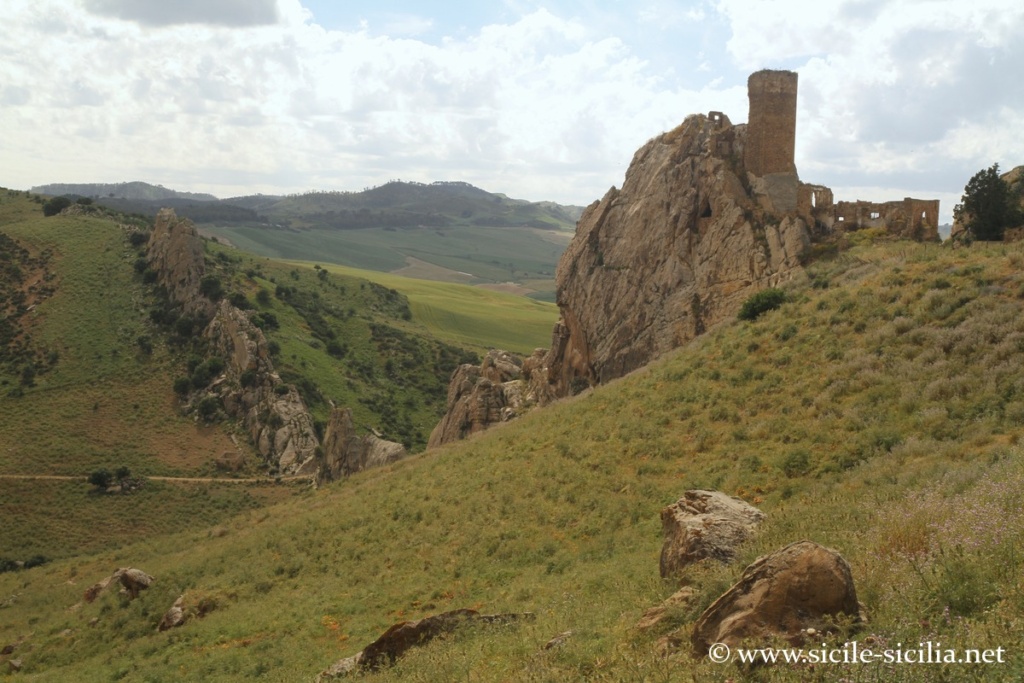
Castle of Pietratagliata
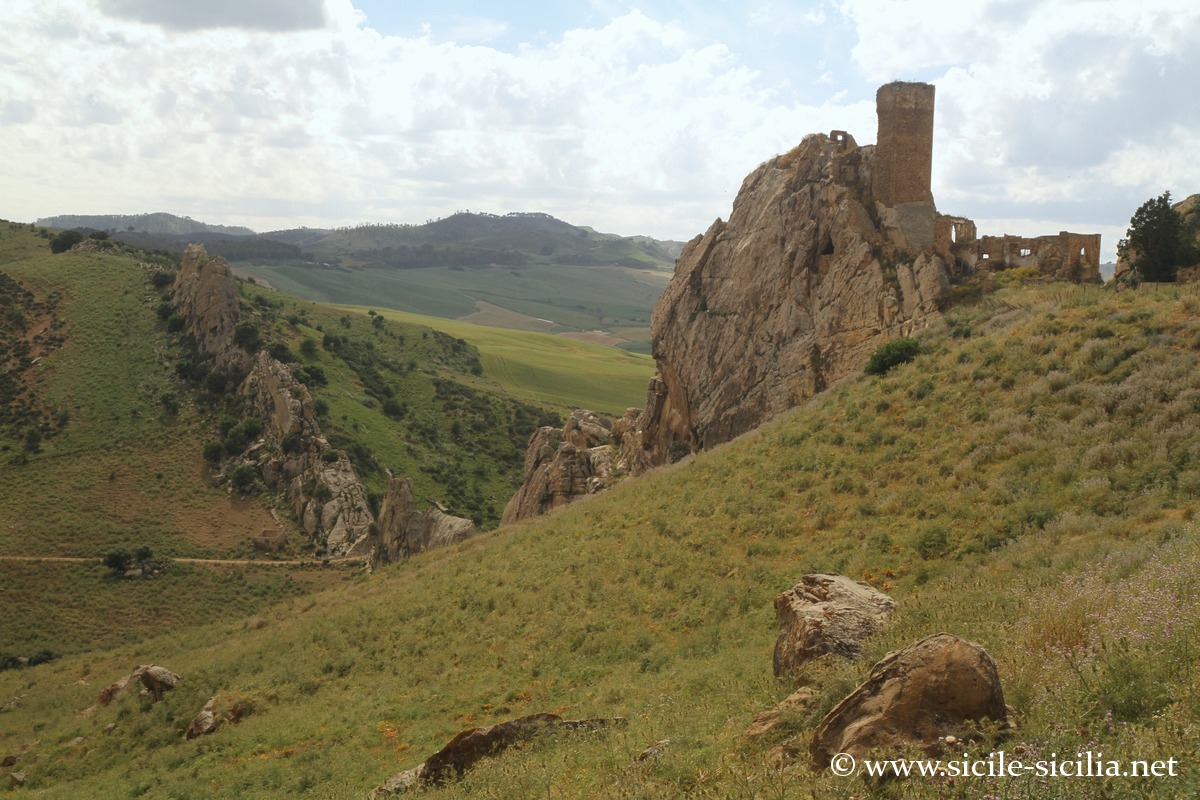
The fortress rests on an imposing rocky mass of quartz-arenite, the “pietra tagliata”, with at the foot of the slope, the bed of a stream and a small body of water called “l’urna” which remains filled with water even during droughts.
The site comprises four levels: the first groups rock-cut dwellings and open caves; on the second is placed the imposing tower and a staircase carved into the rock; on the third are the reception halls with chambers carved out and in masonry; on the last level are rural outbuildings from the feudal era. The whole is today in ruins but remains imposing in the landscape.
The access road, of dirt, is relatively difficult, the SP67 road and a hiking trail are often indicated to reach the site.
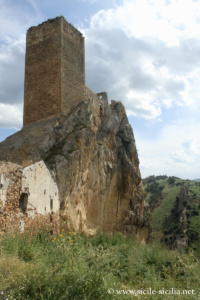
Castle of Pietratagliata 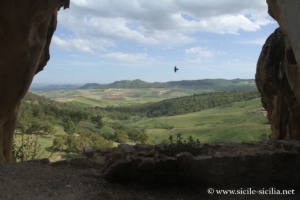
Castle of Pietratagliata 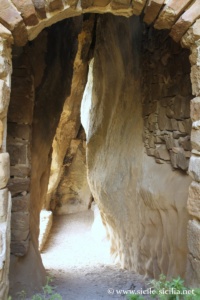

Castle of Pietratagliata
Visiting Aidone
Castellaccio and panorama
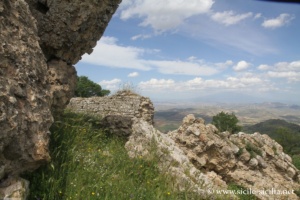
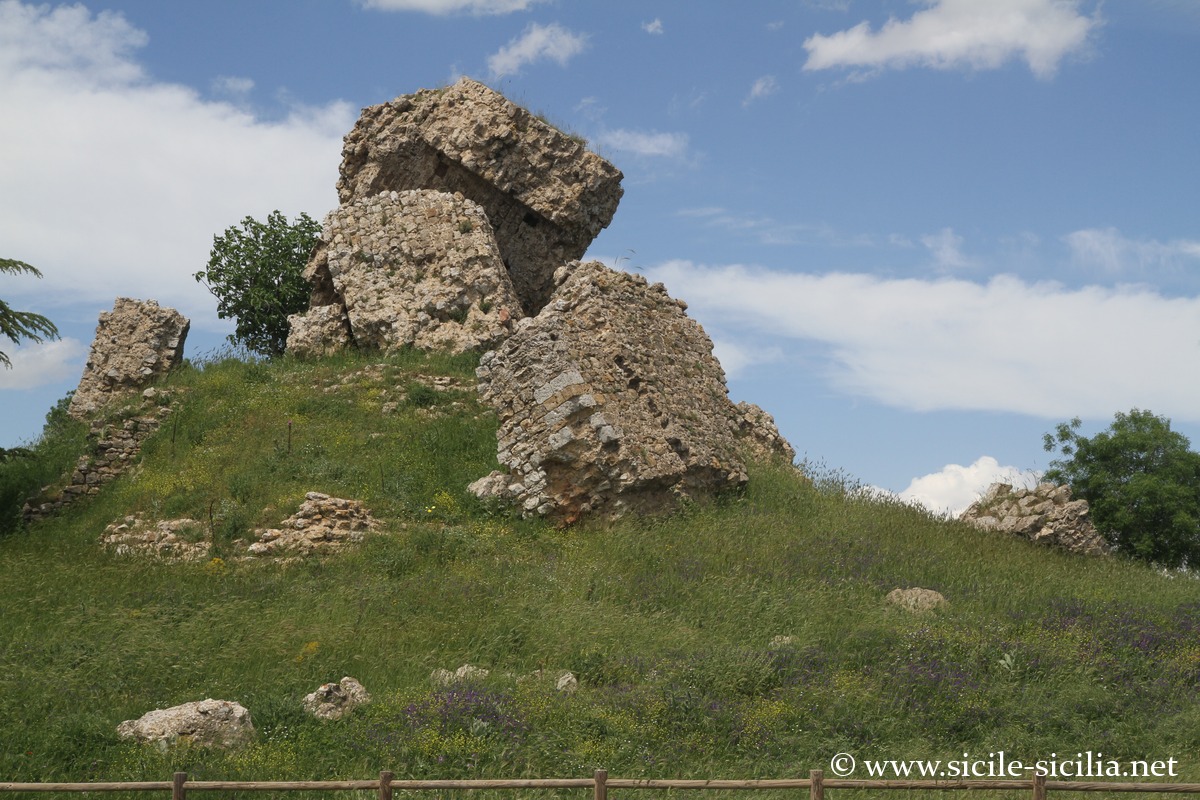
At the highest point of Aidone, which is at 889 metres above sea level, north of the town, the Castellaccio are the remains of a medieval castle, built in the 11th century in the Norman period, fortified under the Aragonese, but which collapsed after the earthquake of 1693.
Little remains of it, with thick, tangled wall sections that seem in precarious balance, but its imposing footprint remains visible, standing on an escarpment overlooking the Gornalunga valley.
Historic centre
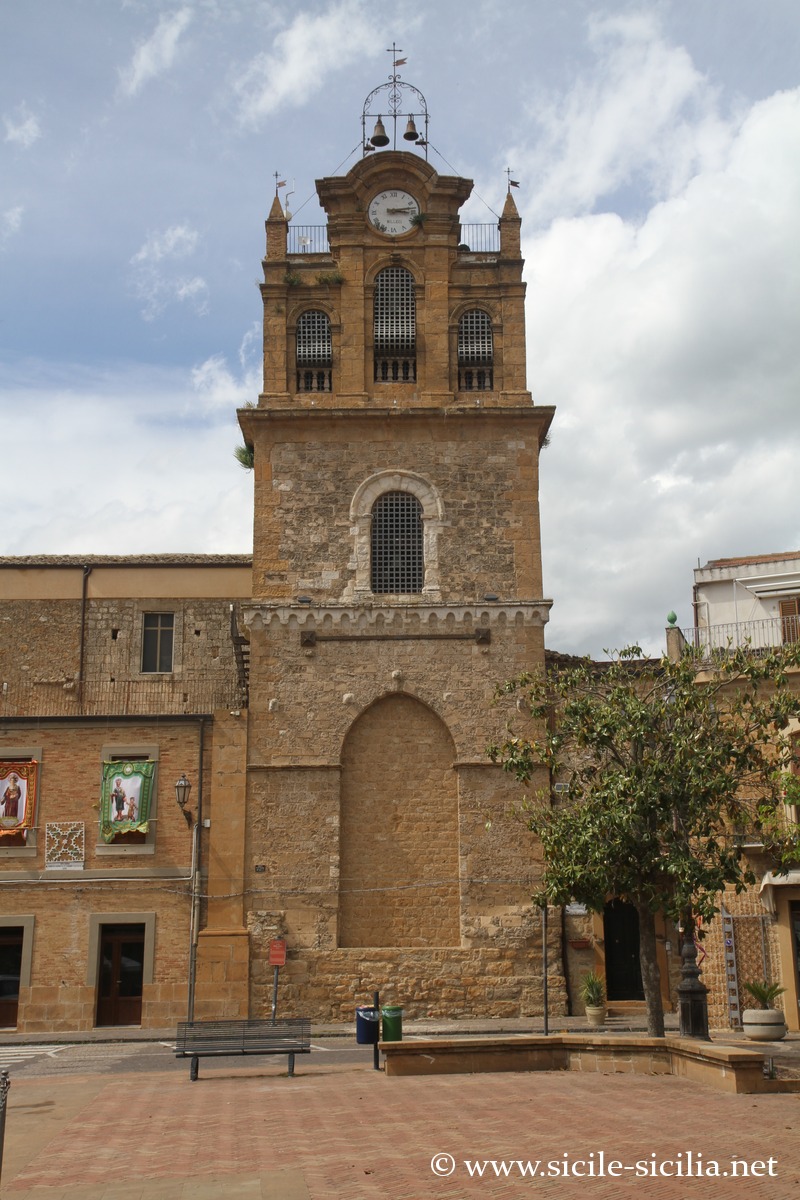
On Piazza Cordova the pretty Adelasia Tower has become the bell tower of the church of Santa Maria la Cava.
Documented as early as the 12th century, it was a defensive tower belonging to the Norman defensive walls. Remodelled subsequently, the second storey is in the Catalan Gothic style of the 16th-17th centuries and the upper storey dates from the 18th century. The ground floor has Norman elements with the pointed portal and the interior vault with ogival cross-ribbing.

Panorama from the castle site 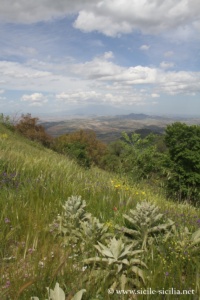
Panorama from the castle site 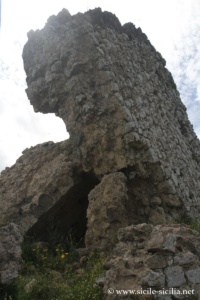
Panorama from the castle site 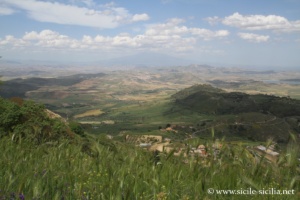
Panorama from the castle site 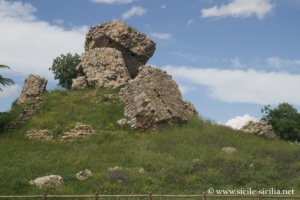
Panorama from the castle site
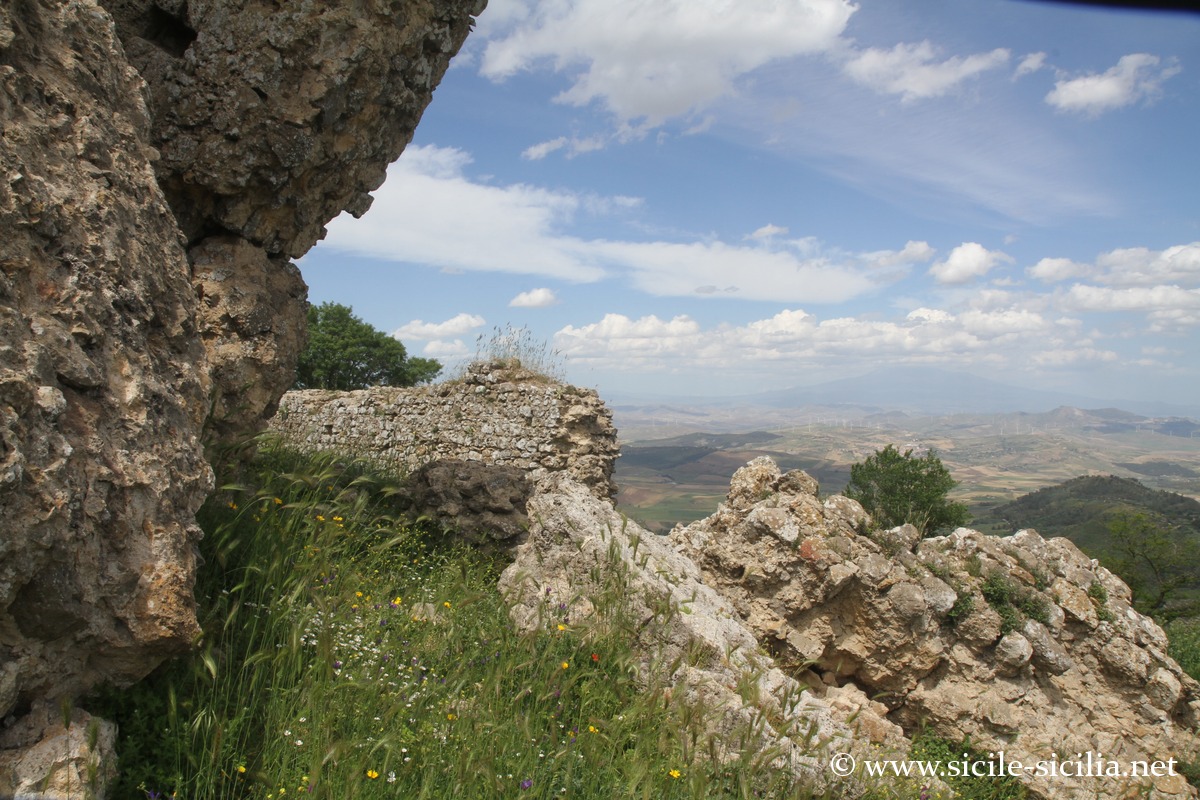
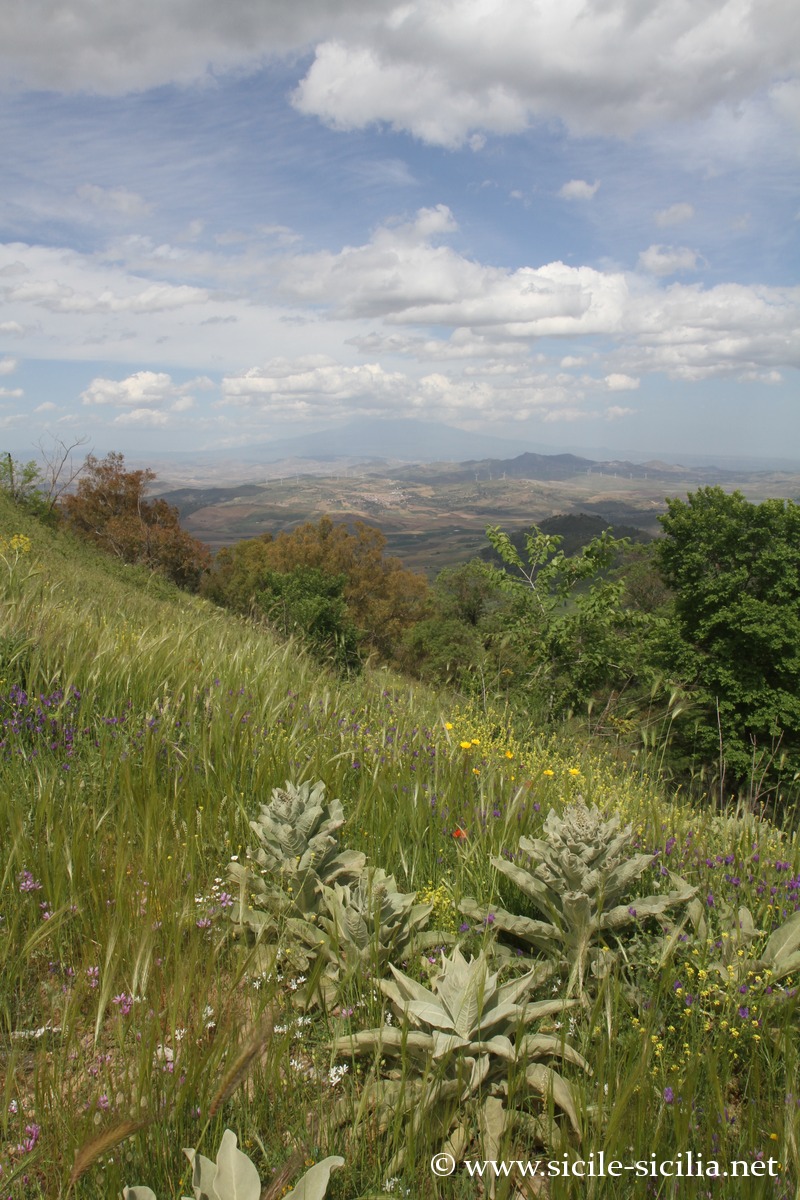
The church of Santa Maria la Cava, originally Santa Maria lo Plano di Adelasia, was founded in 1134 by Countess Adelasia d’Aquino (niece of Count Roger Hauteville). It was endowed with a Benedictine priory and granted vast lands. Of the medieval building there remain the base of the bell tower and the apse, both made of local stone with Arab-Norman influences. After the earthquake of 1693, the church was the subject of major restoration works.
The oldest church in the town is the Chiesa Madre, dedicated to San Lorenzo, which was founded by the Normans in the 11th century. It was renovated after the earthquake of 1693, and the façade in particular was rebuilt.
Of the original structure there remain the lateral buttresses, the portal, the side chapels and the unfinished bell tower.
Surveys and observations of the foundations have revealed remains of walls that could date back to an earlier structure (7th–11th c.). On the façade the inscription refers to the patron San Lorenzo chosen around the early 17th century, presumably in place of San Leone.
Inside, one notices a silver reliquary in the shape of an arm containing a relic of San Lorenzo.
Other churches of Aidone are not lacking in interest. The basilica of San Leone (11th–12th c.), dedicated to Pope Leo II, preserves a portal of Baroque appearance resulting from later reconstructions (late 18th century).
Inside, there is a large organ case and a choir loft on the back wall.
The façade wall partially preserves elements of the original construction, made with large megalithic blocks.
Chiesa madre San Lorenzo 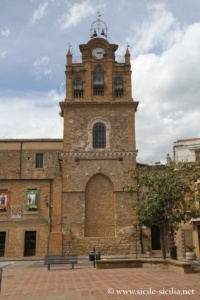
Adelasia Tower
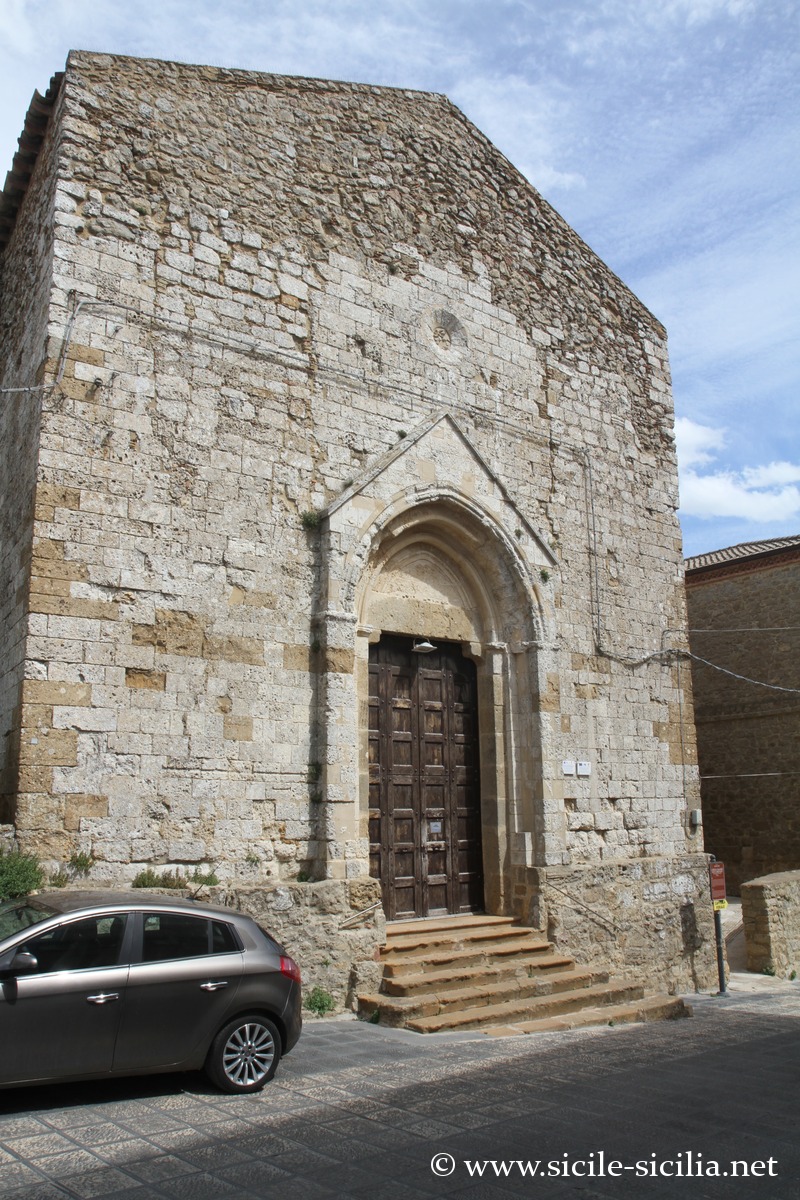
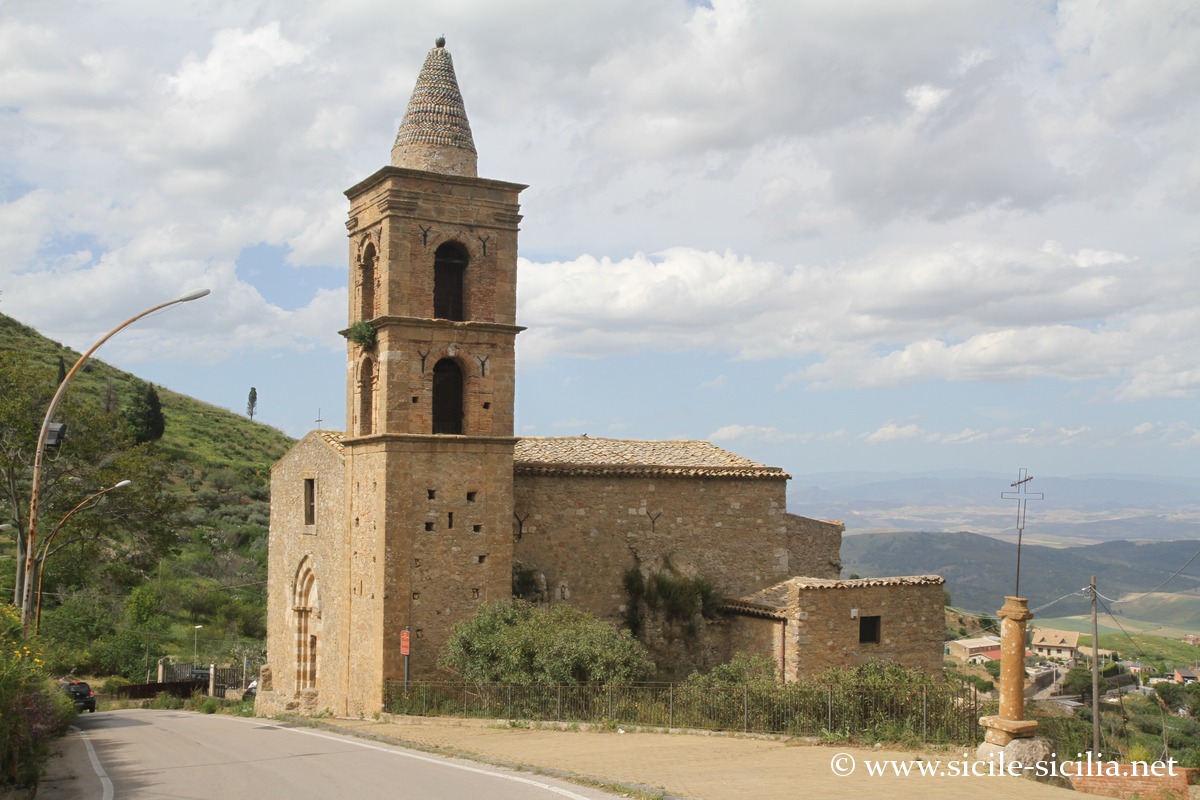
At the eastern entrance of Aidone, Sant’Antonio Abate was probably a mosque which was transformed by the Normans, of which there remain from that period the apse and the pointed-arch portal. It is the small arrow-slit openings that suggest an origin as a Muslim building.
The apsidal chevet and the lateral buttresses evoke a possible Greek cross of an earlier phase (Byzantine or late Roman) before the Norman transformation.
The top of the bell tower with the spire covered in ceramic tesserae would date from the 17th century. An important fresco of 1581 was brought to light during recent works, illustrating the life of Sant’Antonio and his temptations in a grid-like narrative style.
Of the church of San Michele Arcangelo founded in 1150 only traces of walls and the base of the bell tower remain, marked by three orders of false windows and round arches on small columns with Corinthian capitals.
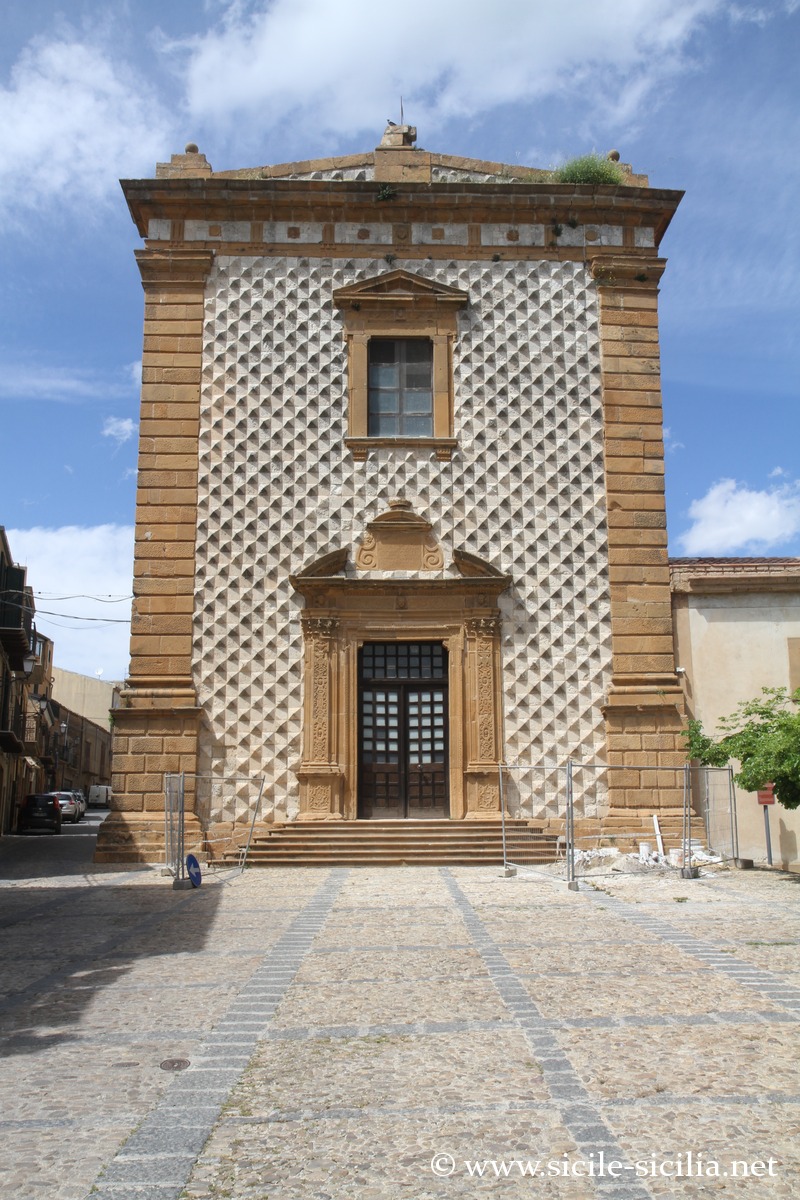
The church and former convent of San Domenico date back to the 15th century; the church was begun in 1419 by Friar Vincenzo da Pistoia. It has an unusual white diamond-pointed facade that is original.
Inside, a single nave and an apse preserve the medieval layout, but 18th-century stuccoes adorn the left wall while the right wall remains bare stone, highlighting the overlapping of phases.
Also worth mentioning is the church of San Giovanni Evangelista, erected in 1229 following a grant from Emperor Frederick II and entrusted to the order of knights. On its portal it preserves the coats of arms of the Order of Saint John and the Maltese cross, remnants of its role as a Templar commandery.
It was built on an earlier structure of which virtually nothing remains, and successive modifications have left few identifiable medieval elements today.
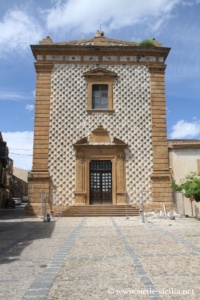
San Domenico 
Church of Sant’Antonio Abate
Although local tradition attributes to the Normans the conversion of a mosque into the church of Sant’Anna on this site, the documentation indicates that the structure visited today dates from 1530-1611 (dates inscribed near the portal) and that the adjacent convent was completed in 1623 for the Observant Fathers.
The church houses a wooden crucifix carved by Fra Umile da Petralia (1600-1638), known for its Baroque expressiveness.
The cloister is now in ruins; what remains is a portico with terracotta brick arcades resting on slender Doric-style columns.
The church of Maria Santissima delle Grazie was founded on the site of the discovery, in 1618, of a miraculous image of the Virgin nursing the Infant Jesus engraved on a stone slab.
The facade is framed by pilasters in local red stone and a central portico, topped by a loggia-bell tower, which makes it visually remarkable in the urban landscape of Aidone.
Inside, the single nave is dominated by a Baroque-style inlaid wooden high altar, enclosing the relic of the Marian image.
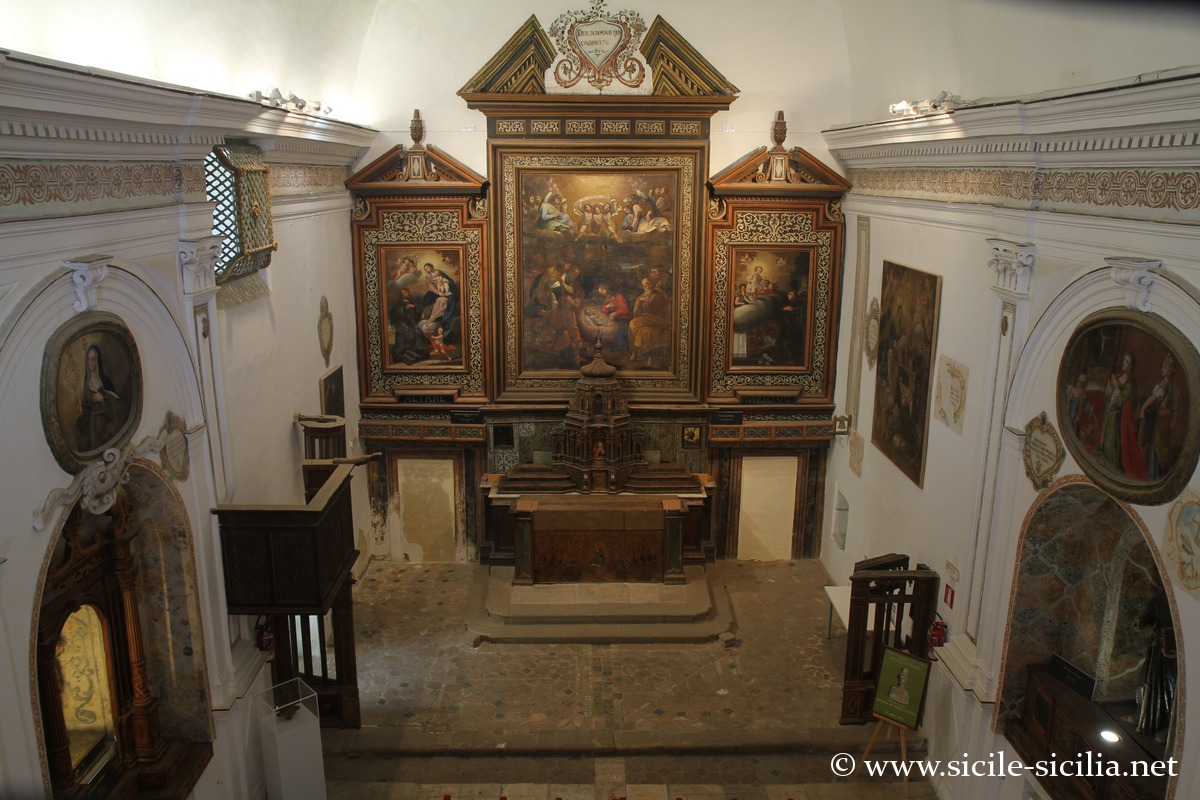
The Capuchin church, built in 1612-1618 for the Capuchin friars, is a sober building. Since 1984, the convent has housed the Regional Archaeological Museum of Aidone, in three rooms displaying objects ranging from prehistory to the Greco-Roman era, from the site of Morgantina.
Regional Archaeological Museum of Aidone
The silverware and looted treasures of Morgantina
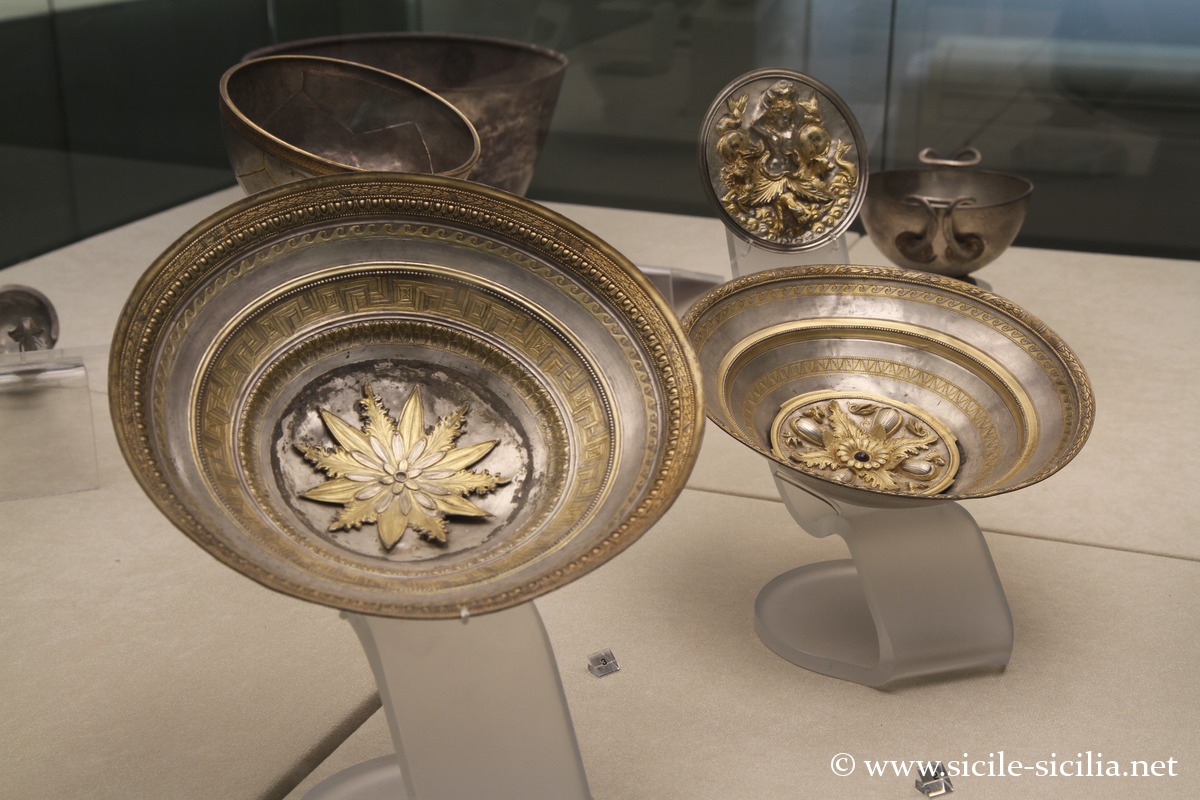
Probably hidden in a house, buried in haste during the capture of the city by Rome in 211 BC, the famous Morgantina silver treasure is one of the most fascinating archaeological affairs in Sicily. This precious Hellenistic service consists of sixteen silver pieces with gilded elements.
Rediscovered by looters in the early 1980s, they presumably lost an Italian 100-lira coin minted in 1978, which was found during the official excavations in the so-called house of Eupolemos. The Greek name of the latter appears on several pieces of the service, probably its owner. These precious objects attest to the refinement of Morgantina in the Hellenistic period.
Having passed through the black market and then the Metropolitan Museum in New York, the treasure was finally returned to Italy in 2010. Its return joins that of other works looted here, notably the famous Goddess of Morgantina, which returned to Sicily in 2011 after a long dispute with the Getty Museum in Los Angeles.
The archaeological discoveries from the site of Morgantina are kept at the Regional Archaeological Museum of Aidone, many of which were previously kept in New York before being returned. The museum is housed in the former Convento dei Cappuccini, adjoining the church of San Francesco.
The objects are classified according to chronological and thematic criteria, dating back to prehistory until the destruction of Morgantina in 211 BC.
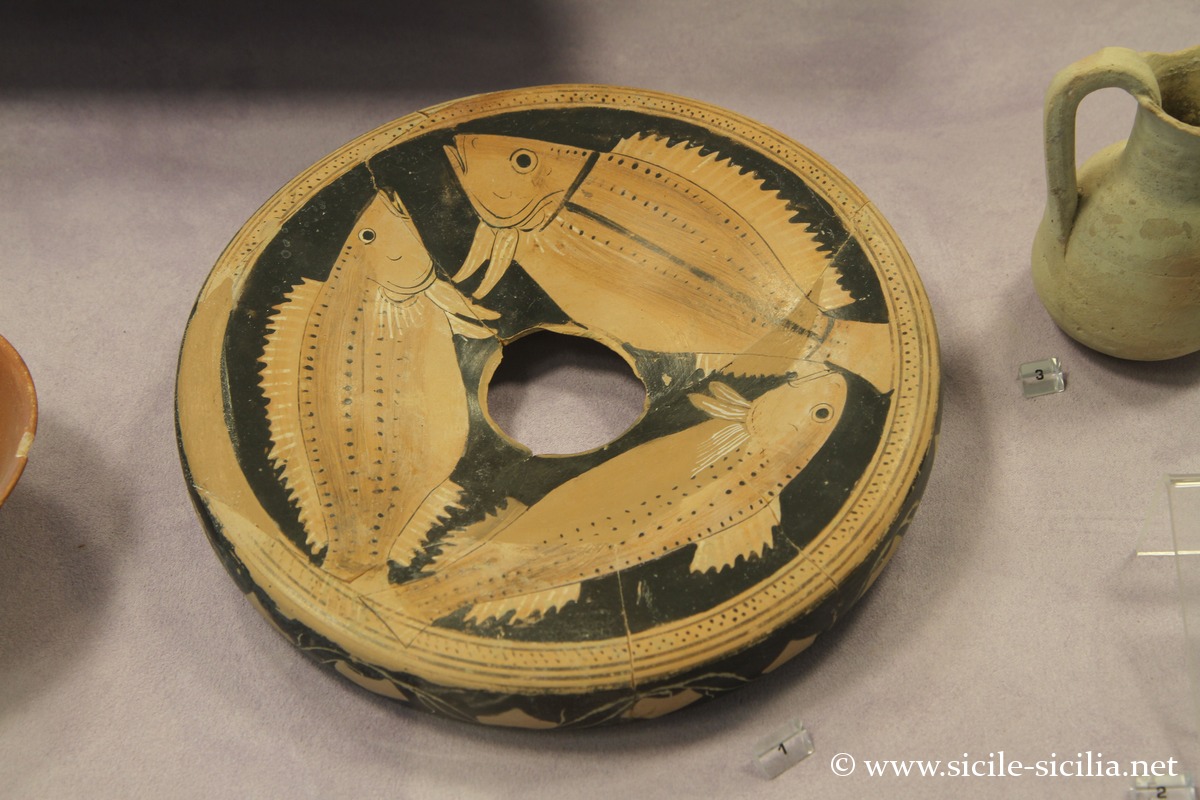
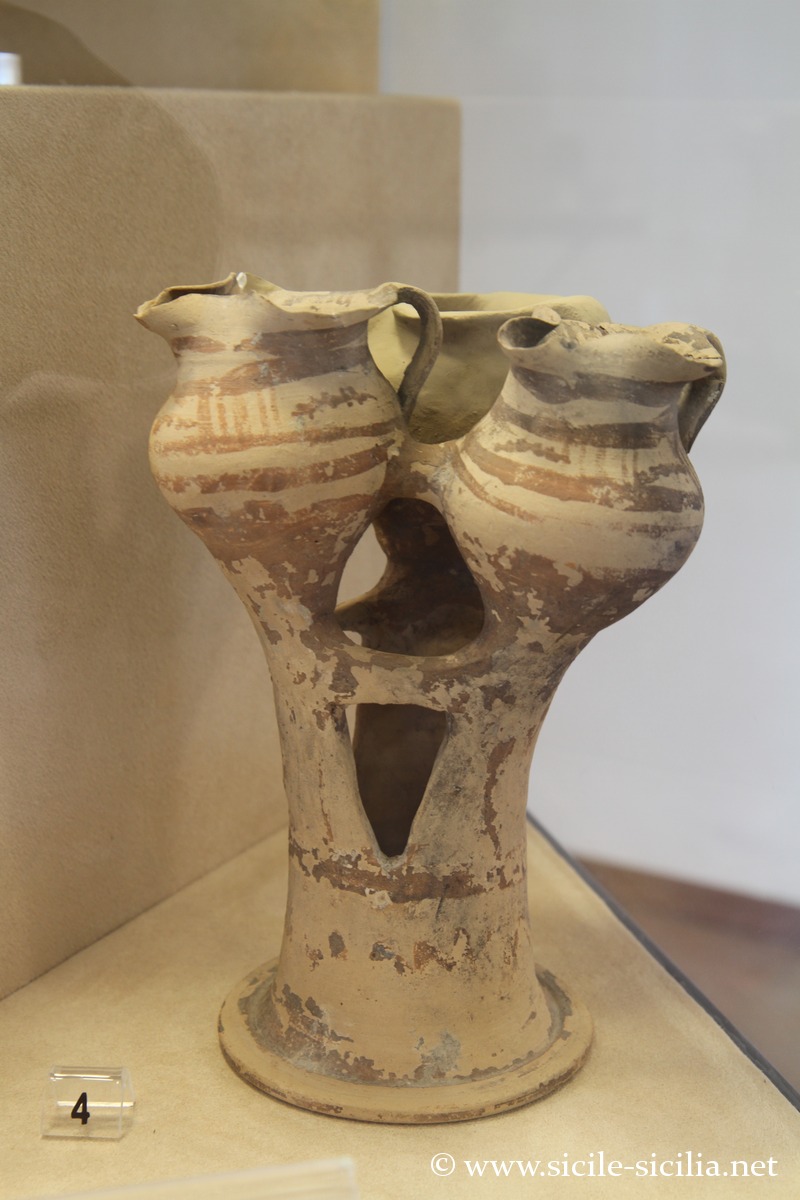
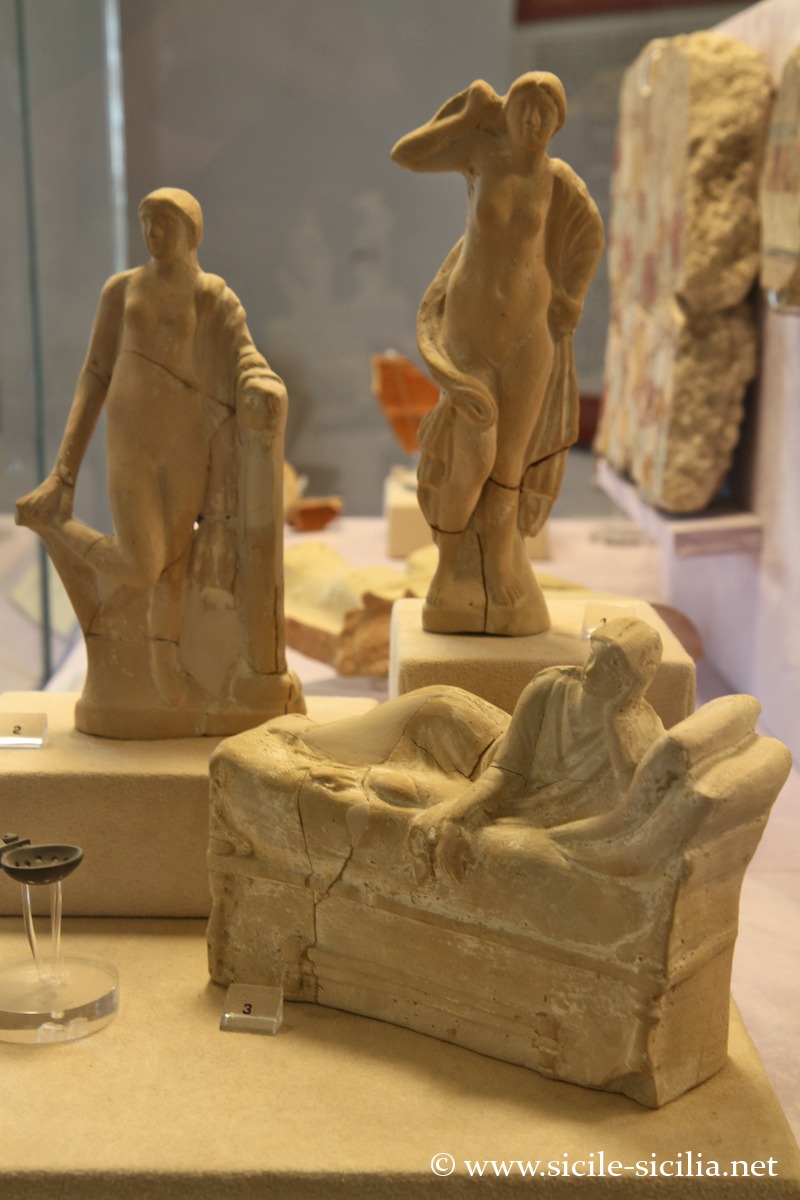
The collection brings together more than 3,000 pieces from the excavations carried out since the 1950s at Morgantina: protohistoric artifacts, ceramics, votive figurines, coins, and metal objects, tracing the evolution of the site from the Bronze Age to the Roman period.
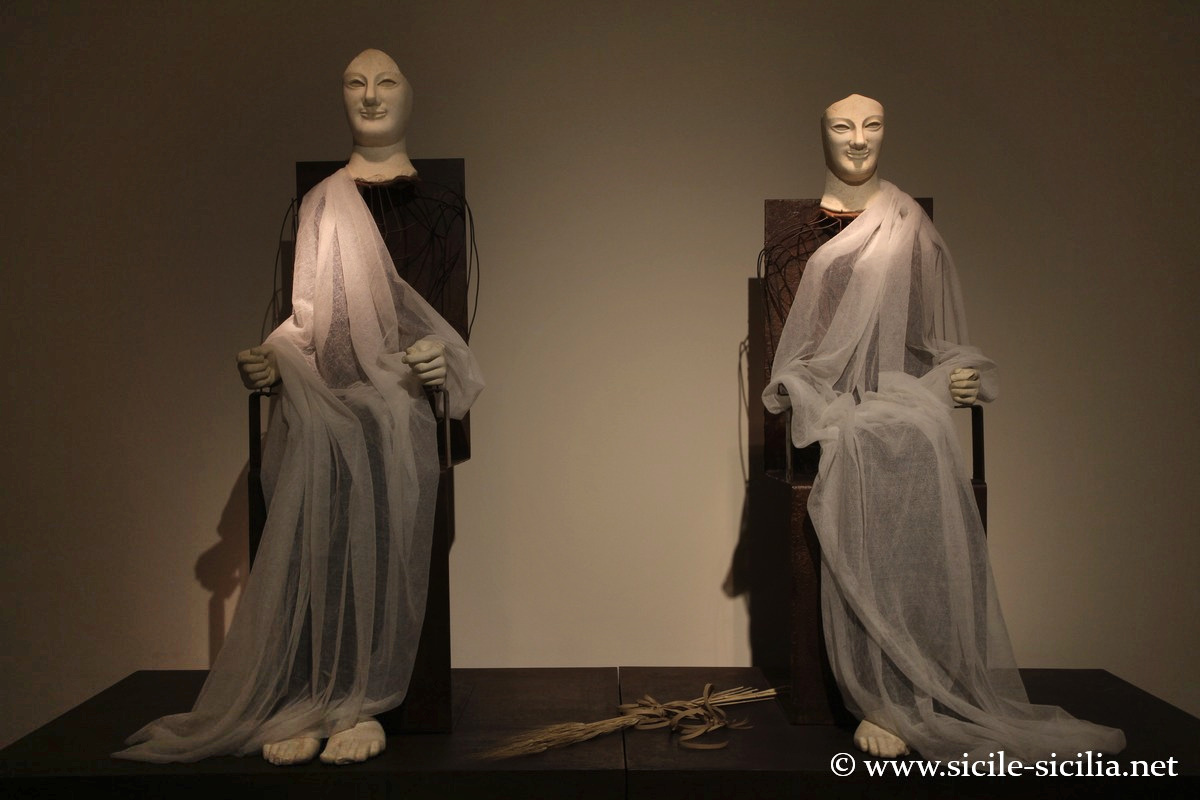
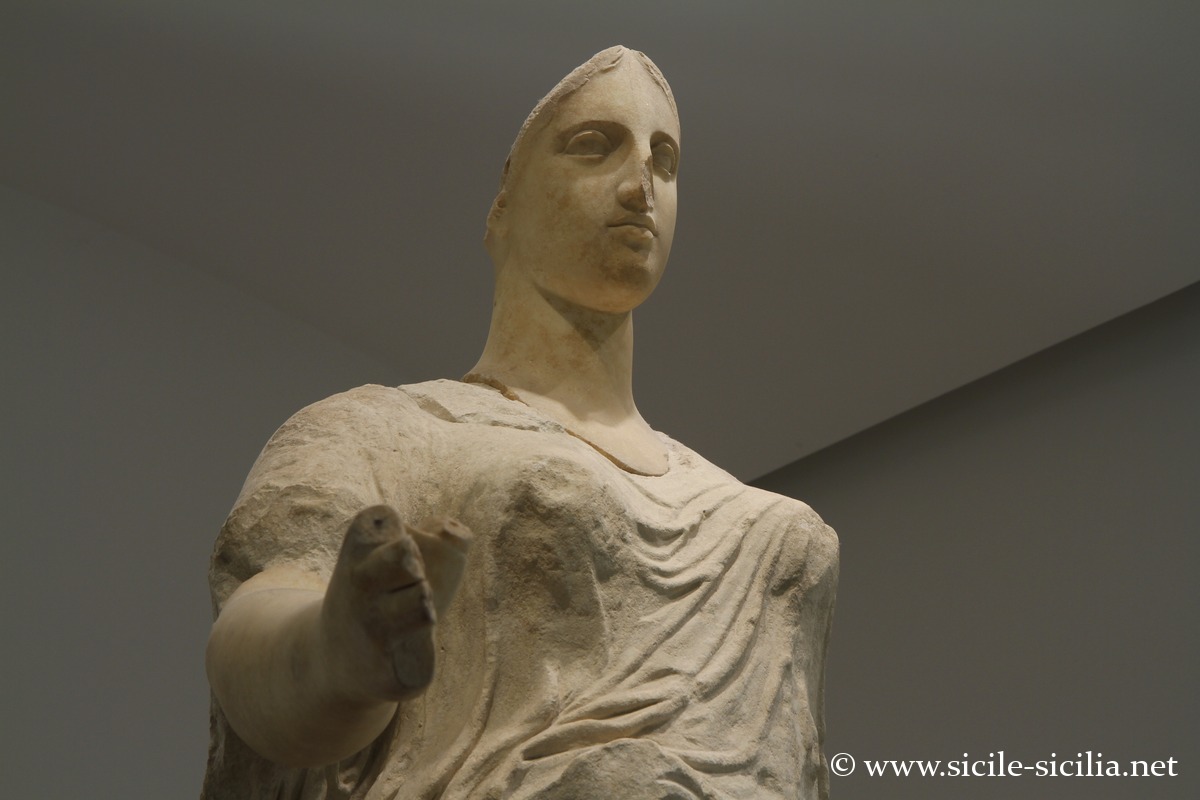
As part of the restitutions, the statue known as the “Goddess of Morgantina” was returned in 2011 after a long dispute with the Getty Museum, joining the acroliths of Demeter and Kore as well as the Hellenistic silver treasure, returned a few years earlier (see box opposite).
This “Dea di Morgantina”, 2.24 meters high and dated to the 5th century BC, probably represents Demeter or Persephone. The work, influenced by the style of Phidias, comes from a workshop of the classical Attic circle, with no certain known attribution.
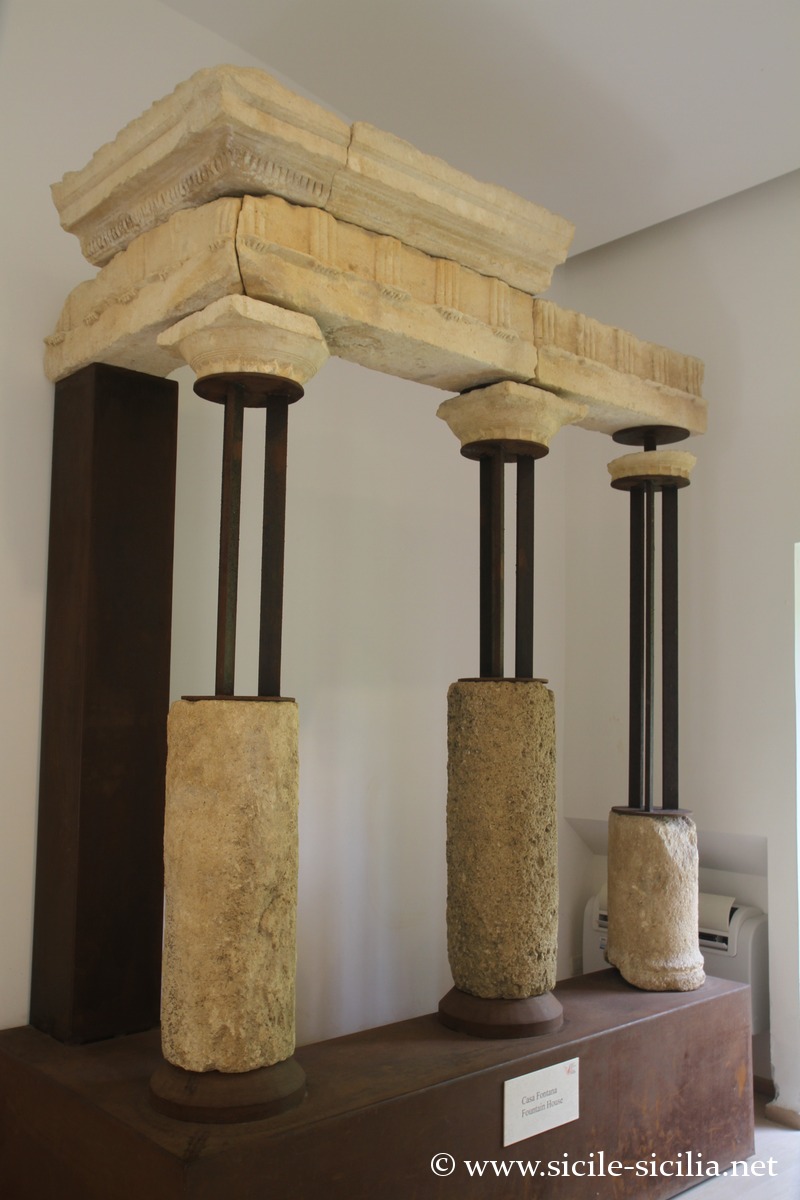
The first sections present the culture of Castelluccio and the pre-Hellenic settlements, while the following ones describe the sanctuaries, with votive objects and their Hellenistic architectural elements.
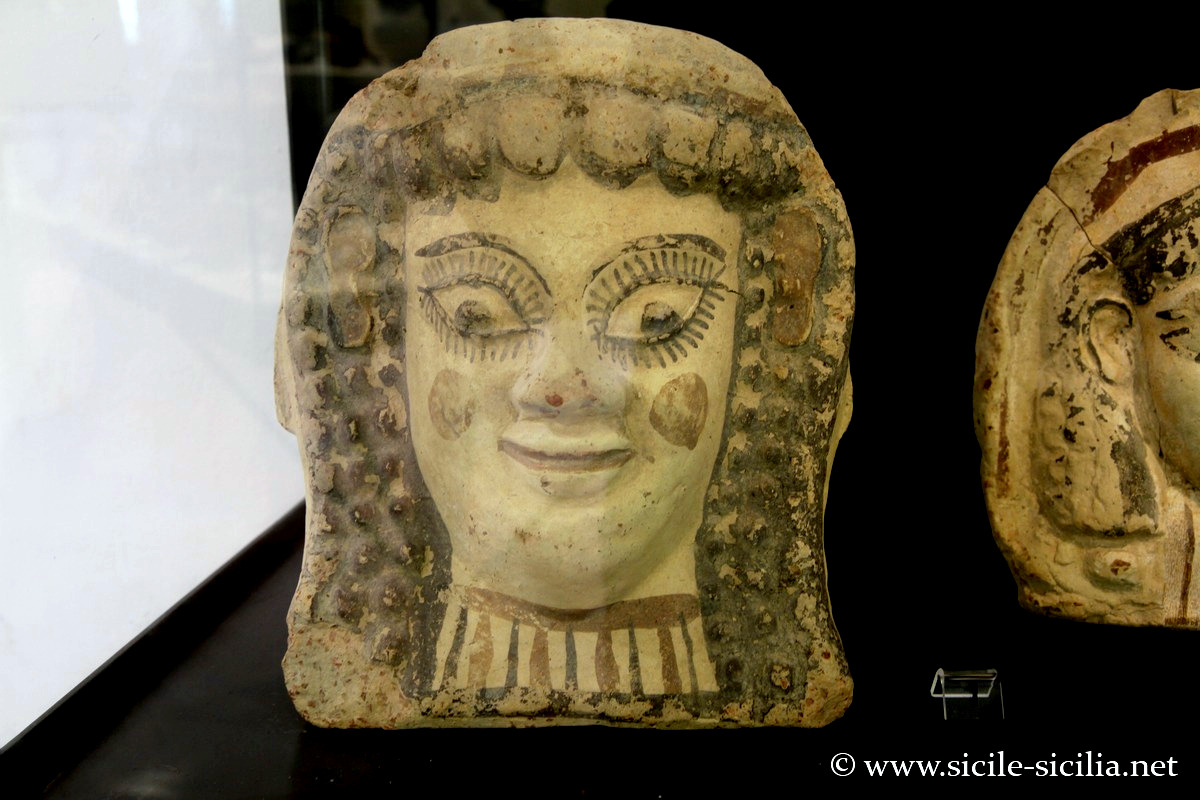
A specific room presents the Morgantina Silverware (“Argenti di Morgantina“), a remarkable collection of goldsmith work from the 3rd century BC, and another the acroliths of Demeter and Kore, illustrating the cult of the chthonic deities of Morgantina.
San Francesco, archaeological museum of Aidone 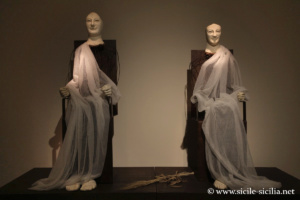
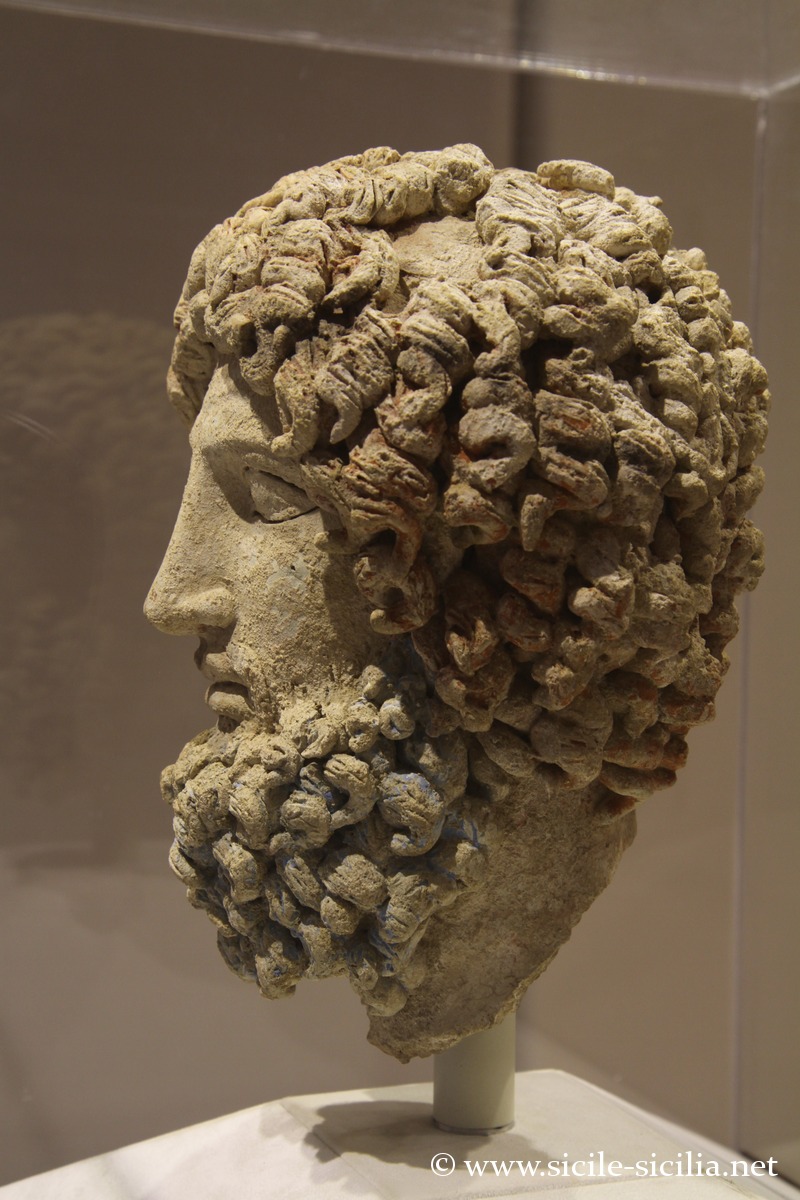
Faces of Kore and Demeter 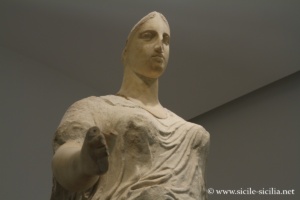
Goddess of Morgantina 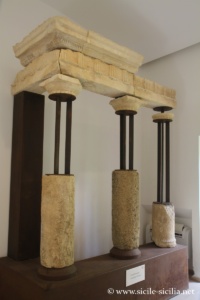
Fountain of the agora of Morgantina 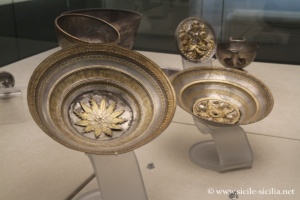
Morgantina silver treasure 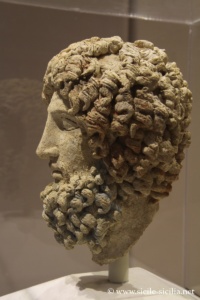
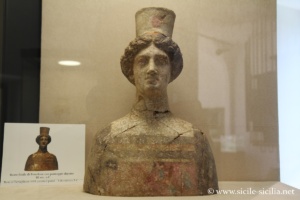
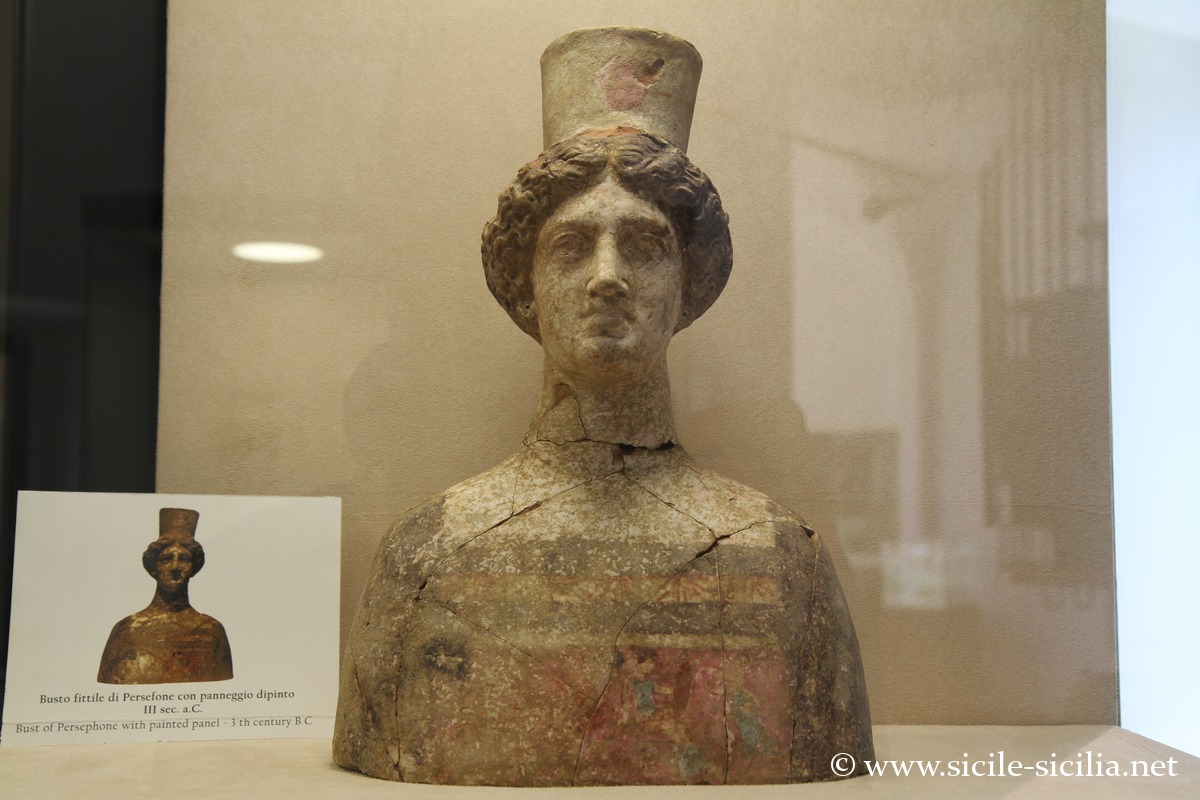
Bust of Persephone 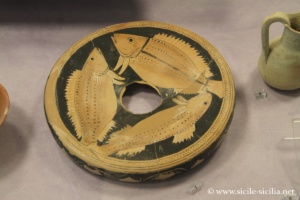
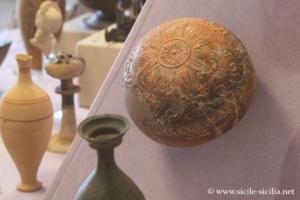
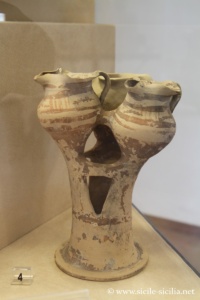
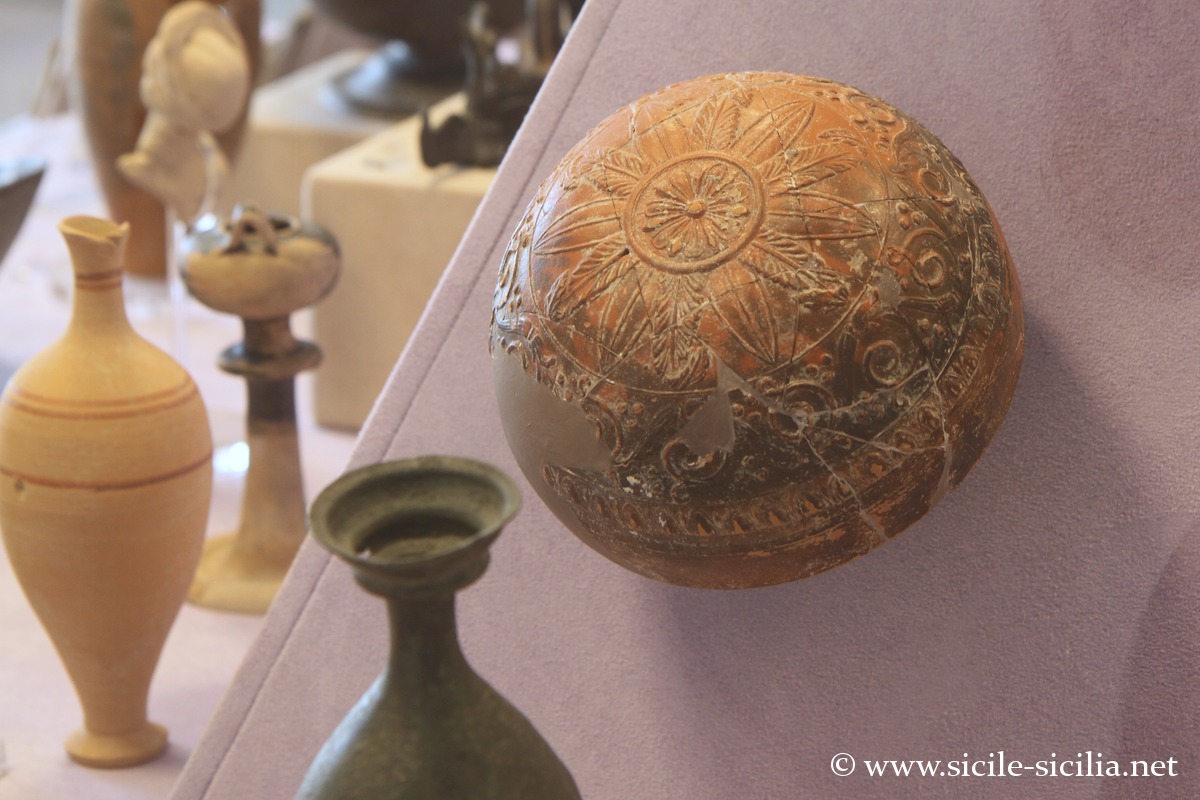
Sicel kernos 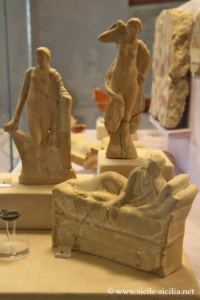
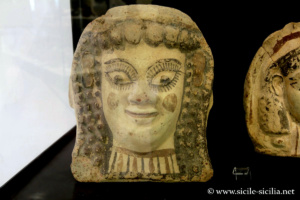
Archaeological Museum of Aidone
In the surroundings of Aidone
The church of Saint Mark, located in the contrada Scalazza, outside the village, is traditionally attributed to a foundation of 1140 by Hospitaller or Templar knights. Overlooking a stream 2 km south of Aidone, this building is compact and sober, preserving large-block masonry and openings of late Romanesque workmanship.
Traditions and events in Aidone
Religious traditions are the occasion for many festivals in Aidone, such as the feast and “tavole” of San Giuseppe on March 19, Holy Week before Easter, the feast of San Filippo Apostolo.
During the Feast of the martyrdom of San Lorenzo, on August 10, patron saint of the town, a carnival and historical reenactments took place, with the “u batt’ment” which was traditionally celebrated every 10 years on the days before San Lorenzo. There were combat performances between Christian and Saracen knights. For a few years now, the event “Morgantina rivive” consists of costume festivals held on the ancient agora on August 5 and 6.
Where Aidone and Pietratagliata are located: map
If you see this after your page is loaded completely, leafletJS files are missing.
Information
External sites
- Official site: www.prolocoaidone.it
- Tourist sites: www.sicilytourist.com, newsicilia.it/enna, www.vivasicilia.com, www.enjoysicilia.it
- Wikipedia page: Aidone, Morgantina
- Archaeological museum: official site, en.wikipedia.org
Articles: Category Piazza Armerina
- Piazza Armerina
 Piazza Armerina is a pretty town of about 20,000 inhabitants, at 700 ...
 - Villa Romana del Casale
 The Villa del Casale in Piazza Armerina is a unique example of ...
 - Morgantina
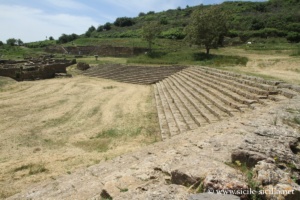 A few kilometres from Aidone lies the archaeological site of Morgantina, the ...