

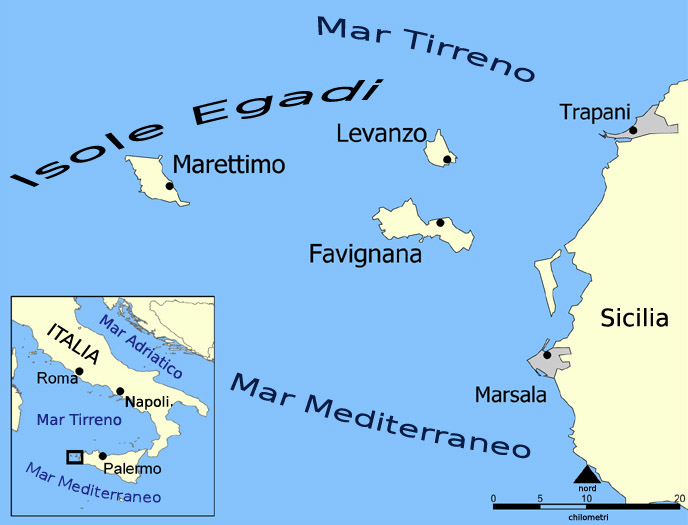
The Aegadian Islands, known in antiquity by the Latin name Aegates, are an archipelago of three main islands (Favignana, Marettimo and Levanzo) and two smaller rocky islands (Formica and Maraone), the closest of which lie about 7 km off the western coast of Sicily, between Marsala and Trapani.
To discover in the archipelago
The archipelago is home to the Egadi Islands Marine Nature Reserve, still sparsely populated, featuring very beautiful Mediterranean and marine landscapes, often deserted.
The climate is generally dry, mild in winter, and the summers are long, hot and sunny, with average highs of 30° in August.
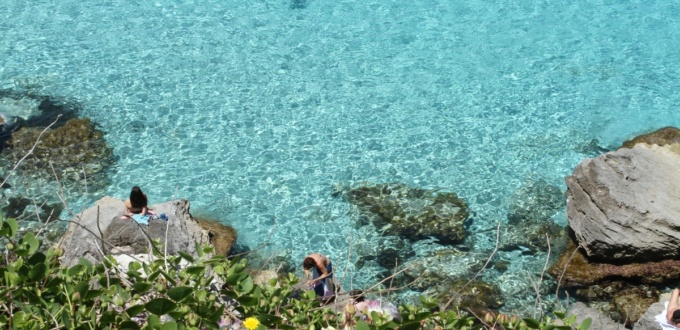
These Aegadian Islands are a lovely destination for relaxing, although in August they are very busy. Their beaches and coves are among the most beautiful in Sicily, with turquoise waters, including the Cala Rossa and the Cala Azzurra on Favignana, which are the most famous.
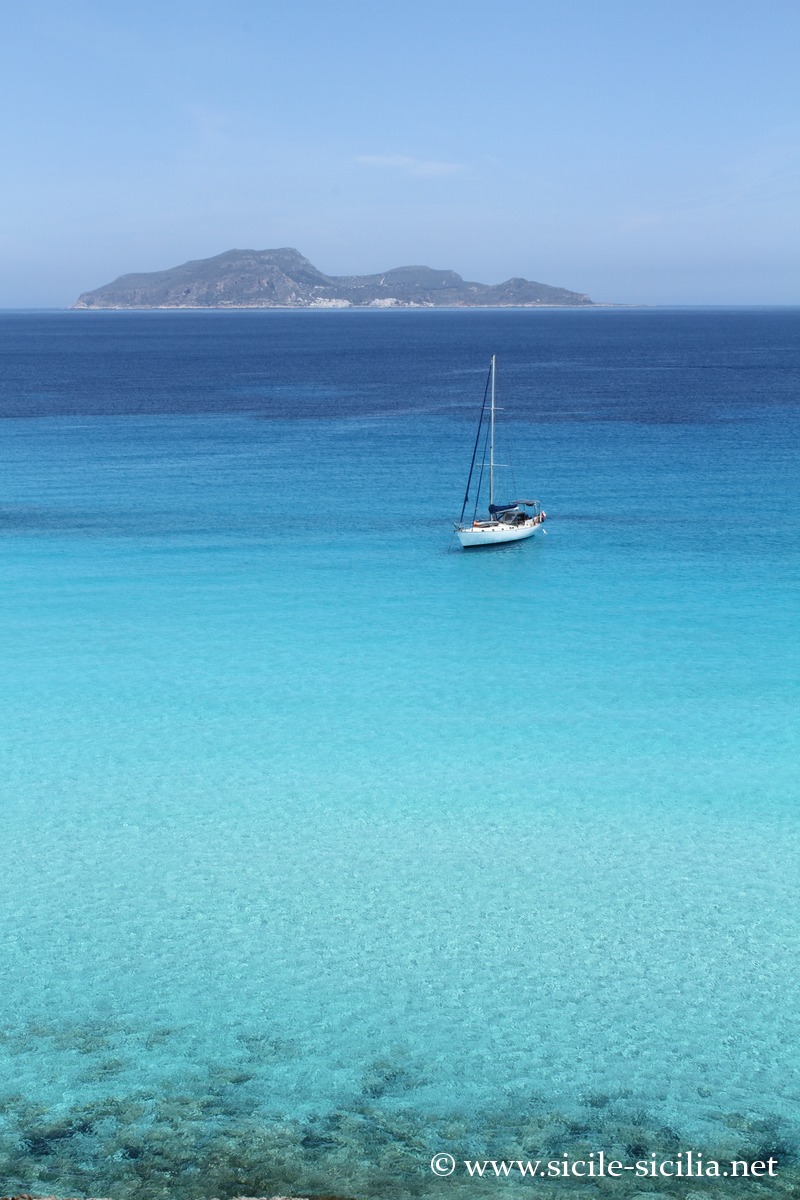
Cala Rossa on Favignana
You can also discover many caves, go cycling, and see tourist sites such as the old quarries, fortresses, caves, etc.
To reach the archipelago, several companies offer crossings by ferry or hydrofoil from Trapani.
Historical overview
Traces of ancient human settlements are found mainly on Levanzo, in prehistoric caves, and to a lesser extent on Favignana. It is assumed that the last glaciation created a natural passage between Africa and Sicily.
The Carthaginians used the Aegades as a naval base and in 242 BCE, during the First Punic War, a bloody battle between Rome and Carthage gave its name to the cove of Cala Rossa. The Romans were victorious and took possession of the islands.
After the fall of the Roman Empire, the islands fell into the hands of the Vandals, the Goths and then the Saracens. In 1081 they were occupied and fortified by the Normans.
They shared a common destiny with Sicily until the 16th century, when they became the property of the Pallavicini-Rusconi of Genoa. From the 15th century onwards, the development of tuna fishing, followed by canneries, generated significant economic growth.
Barbary pirates hid in their coves during raids in the Mediterranean.
The islands were sold by the Genoese bankers in 1874 to Ignazio Florio, and were then transferred to the Italian State in 1937.
Gastronomy, festivals and traditions
Gastronomy
The cuisine of the Aegadian Islands is closely tied to the sea and to Sicilian traditions. The signature dish is fish couscous, inherited from North African influences, prepared with fragrant broths and local fish such as tuna, swordfish or scorpionfish. Tuna, long at the heart of the island economy, is served fresh, salted or preserved, particularly on Favignana, a former major centre of the mattanza. Seafood pasta, anchovies, sea urchins, as well as the use of aromatic herbs, capers and olive oil, characterise a simple, seasonal and local cuisine.
Festivals, celebrations and traditions
On Favignana, the Feast of Saint Joseph (19 March) is marked by processions and community meals, while the Sagra del Tonno (usually in May-June) celebrates the heritage linked to tuna fishing through tastings and cultural events. The island also hosts the Egadi Summer Festival in summer, devoted to music, theatre and contemporary arts.
On Levanzo, the Feast of Saint John the Baptist (24 June) remains the main event, with a procession and celebrations around the port.
On Marettimo, the Feast of Saint Simon (August) is the island’s main religious and popular occasion, to which is added the Marettimo Italian Film Fest (July), a film festival devoted to Italian and Mediterranean films, organised in a deliberately intimate and cultural spirit.
Practical information
Access and getting around
The Aegadian archipelago is accessible mainly from Trapani and, in season, from Marsala, via regular sea connections operated by ferries and hydrofoils. The crossings serve Favignana, Levanzo and Marettimo, with travel times varying according to the island and the type of vessel. Trapani is connected to the rest of Sicily by train, regional buses and Trapani-Birgi airport, making access to the archipelago easier.
Getting around on site differs from island to island: on Favignana, the largest, you travel on foot, by bicycle, by scooter or in small authorised vehicles, while on Levanzo and Marettimo, travel is essentially on foot or by boat. Boat excursions allow you to follow the coastlines, reach isolated coves and visit the caves.
Sea crossing to the Egadi Islands
Compare schedules, fares and companies for connections to the Egadi Islands. Fill in the box on the left with the destination area (for example: “Sicily” by default, “egadi islands” to filter), then choose the desired connection on the right.
Services and accommodation
Services and the tourist offering vary considerably from one island to another. Favignana, the most developed, concentrates most of the services: several hotels of different categories, tourist residences, seasonal rentals, as well as a wide choice of restaurants, pizzerias and bars, open all year round or seasonally, especially around the port and the historic centre. There are also supermarkets, rental agencies and more comprehensive medical services.
→ Find accommodation on Favignana
Levanzo offers a more limited and intimate range, essentially made up of guesthouses, small houses for rent and a few family restaurants and trattorias, mainly concentrated around the port, with very seasonal activity.
→ Find accommodation on Levanzo
On Marettimo, the offering is deliberately limited: there are no large hotels, but mainly guesthouses and apartments, often run by the island’s inhabitants. There are few restaurants, with a simple, local atmosphere, specialising in seafood and Sicilian cuisine, with services concentrated in the single village.
→ Find accommodation on Marettimo
Where the Egadi Islands are located: map
If you see this after your page is loaded completely, leafletJS files are missing.
Articles in the Aegadian Islands category
Information
External sites
- Wikipedia page: en.wikipedia.org
- Blogs and tourist sites: www.prolocoegadi.it, www.turismo.trapani.it, www.favignana.sicilia.it
Comments in other languages
Great presentation! I would add, to complete a must-see discovery: if you go to Levanzo, visit the Grotta del Genovese. It is one of the major prehistoric sites in the entire Mediterranean, with engravings and paintings dating from the Paleolithic and the Neolithic.
In Marettimo, many coves are accessible only by boat; it’s worth taking a trip by sea.
Otherwise, 45°C in August? Let’s not exaggerate!