

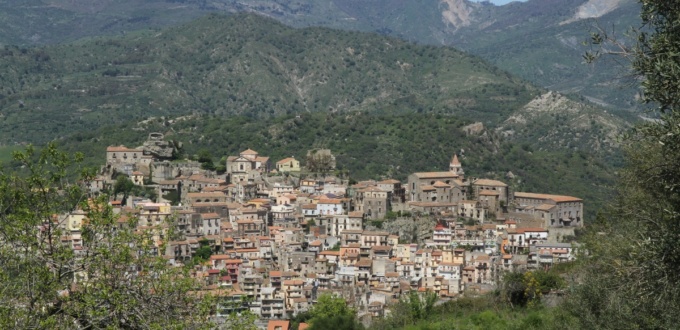
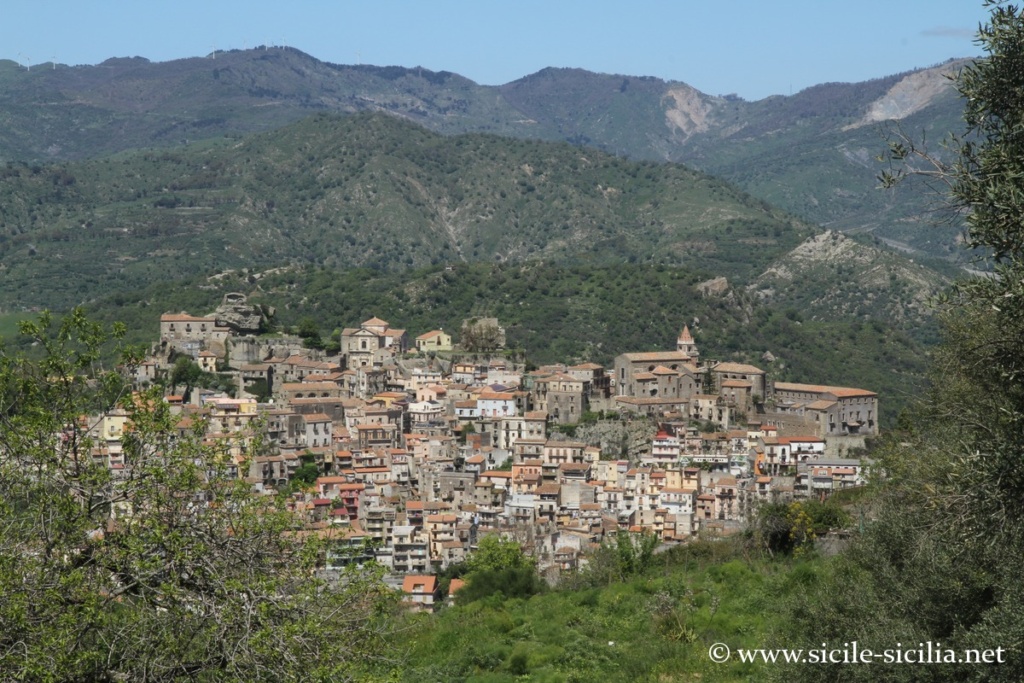
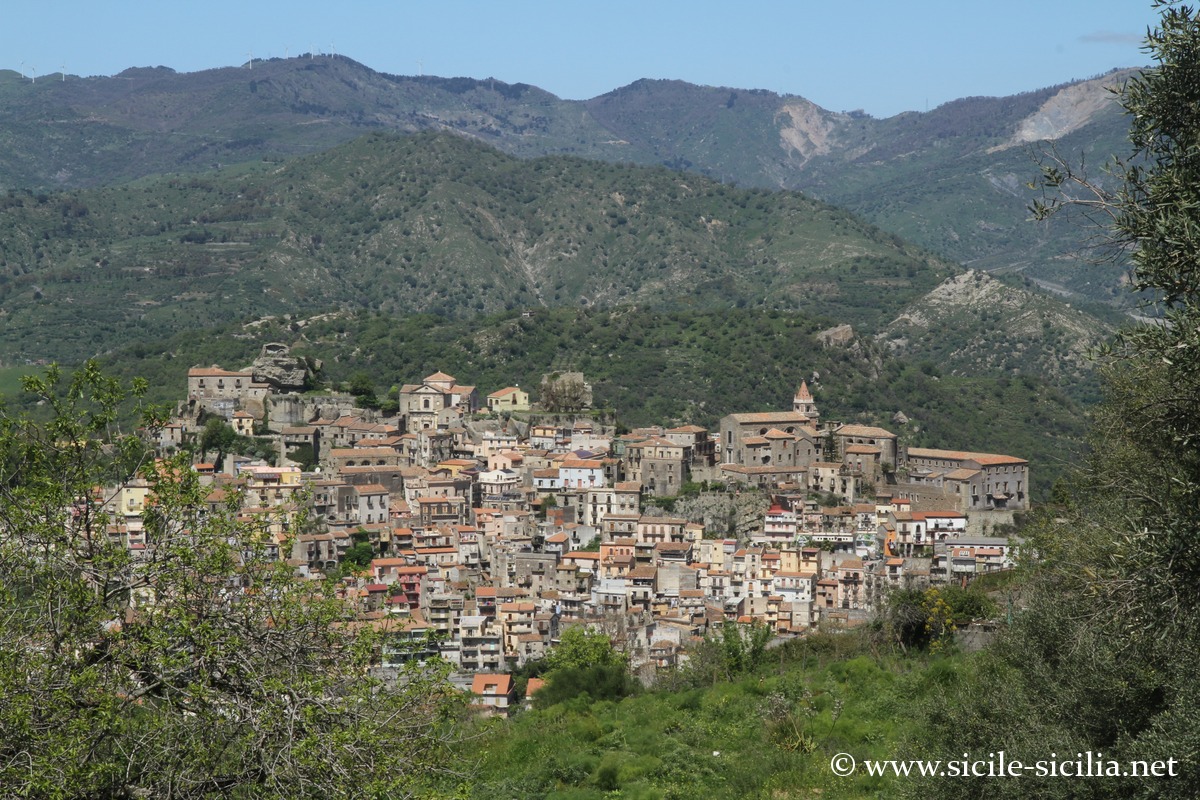
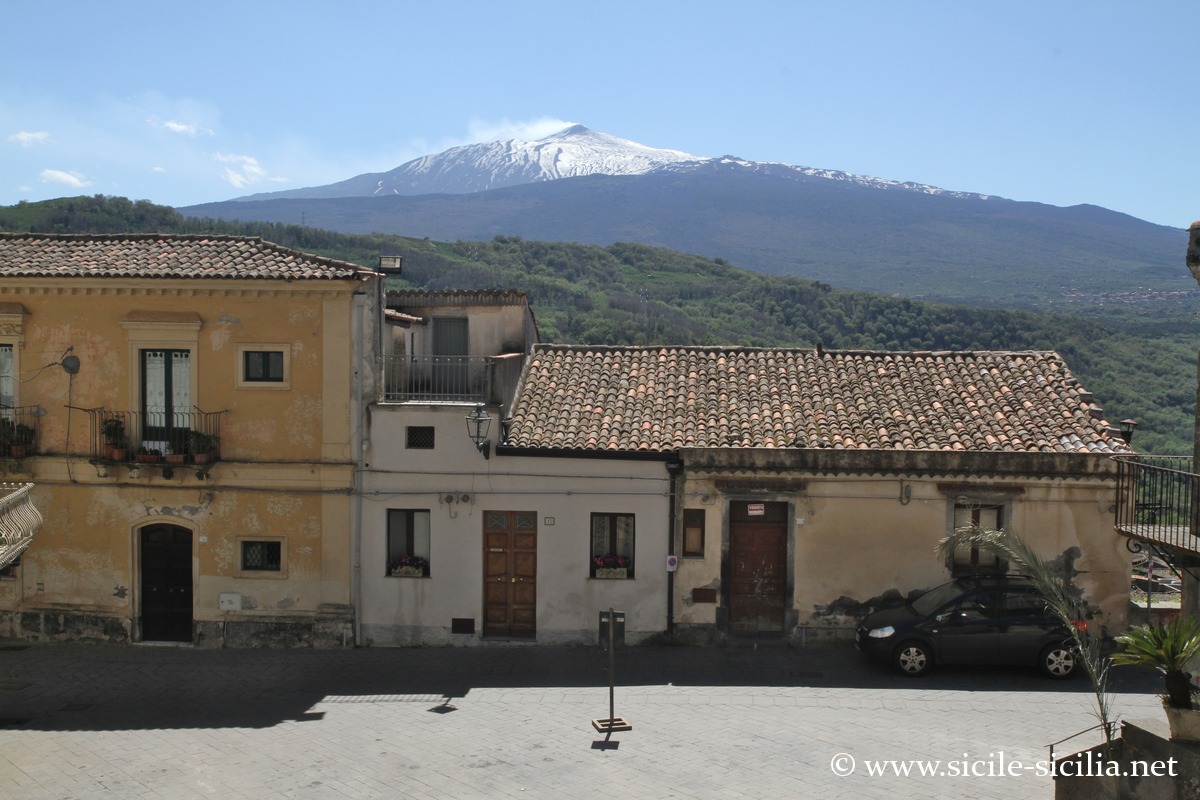
At the foot of the northern slope of Etna, the village of Castiglione is perched on a hill reaching 620 metres that overlooks the unique Alcantara valley. It is a village of medieval origin that has retained much of its authenticity, listed among the “most beautiful villages in Italy” (borghi più belli d’Italia), on one of the wine routes with its Etna Rosso terroir.
Historical overview
The name Castrileonis, meaning “castle of the lions” (a royal attribute), is known from a mention in a document of Roger the Norman dated 1092.
Greeks are said to have settled here around the end of the 5th century BC, having been exiled from Naxos after their defeat against Dionysius of Syracuse.
After the Normans and the Swabians, Frederick III of Aragon, King of Sicily, took in 1301 this fief from Roger of Lauria, an admiral who served the Aragonese kings. The latter had fought for the Aragonese against the Angevins during the Sicilian Vespers, but supported King James of Aragon against his brother Frederick III, whereas the latter, unlike the King of Aragon, did not want to conclude peace.
Later the fief became a barony and marquisate of the Gioeni family.
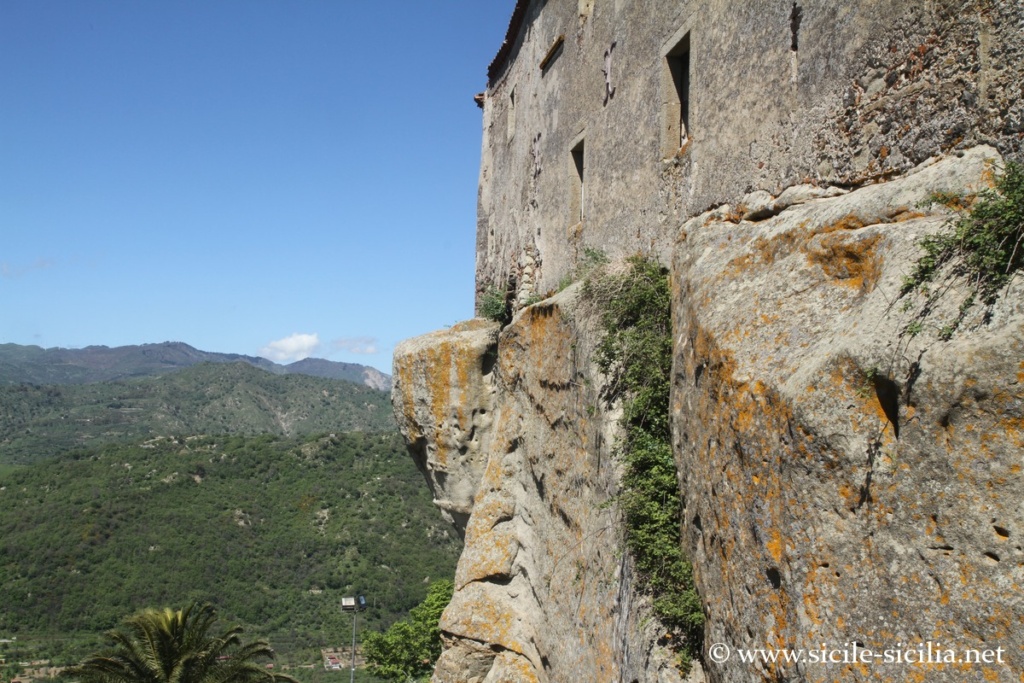
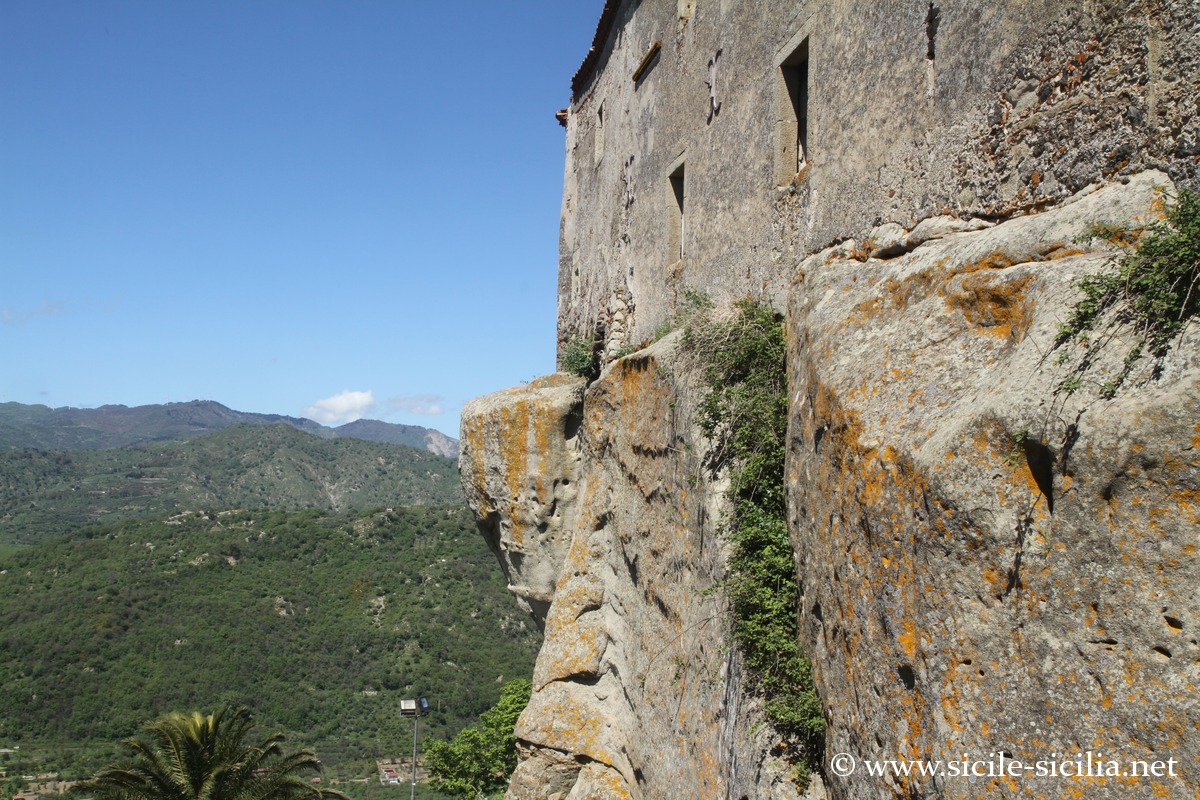
Castle of Lauria
Visiting Castiglione di Sicilia and its heritage
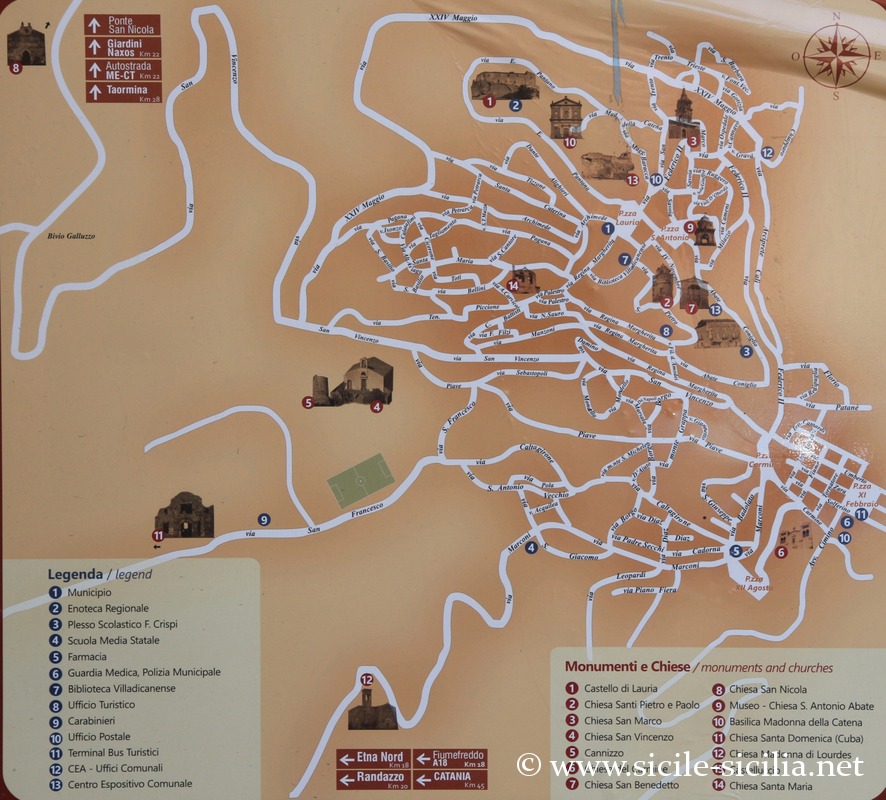 The historic centre is built on the hillside, with a certain difference in elevation between its lower part and its summit.
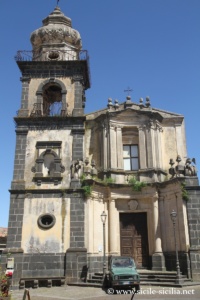
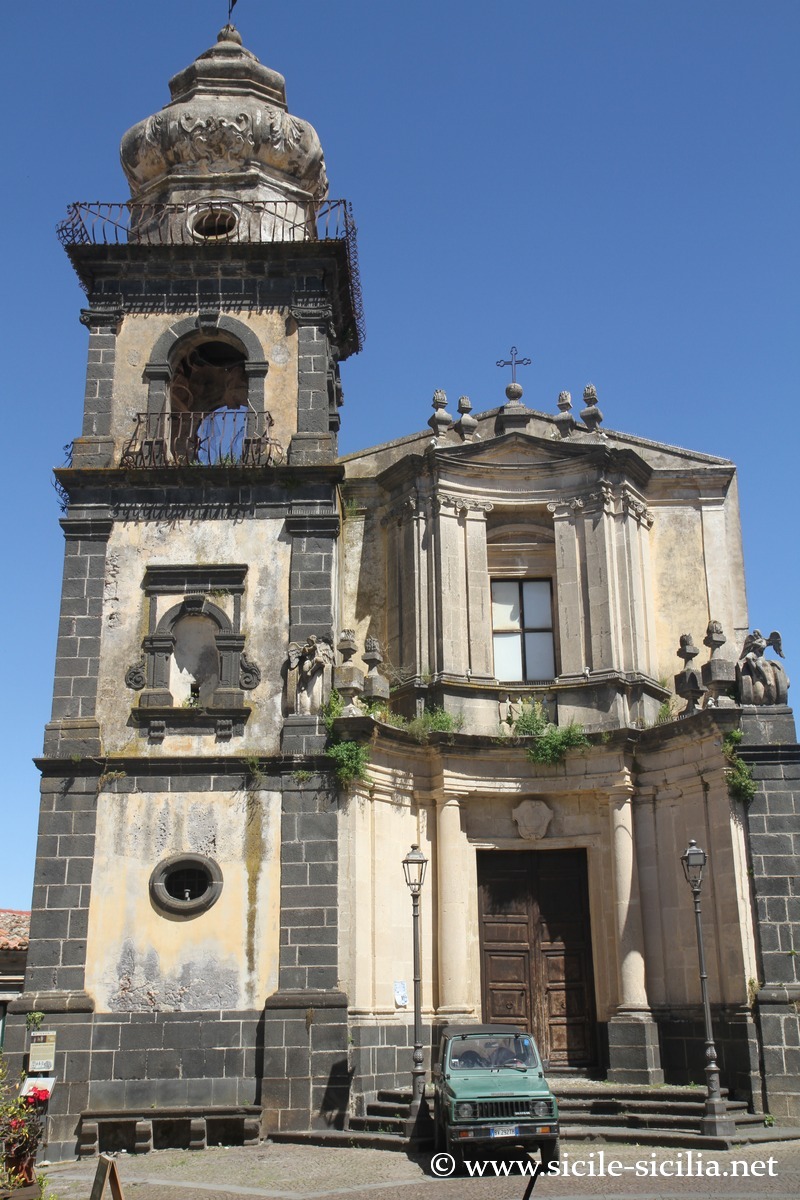
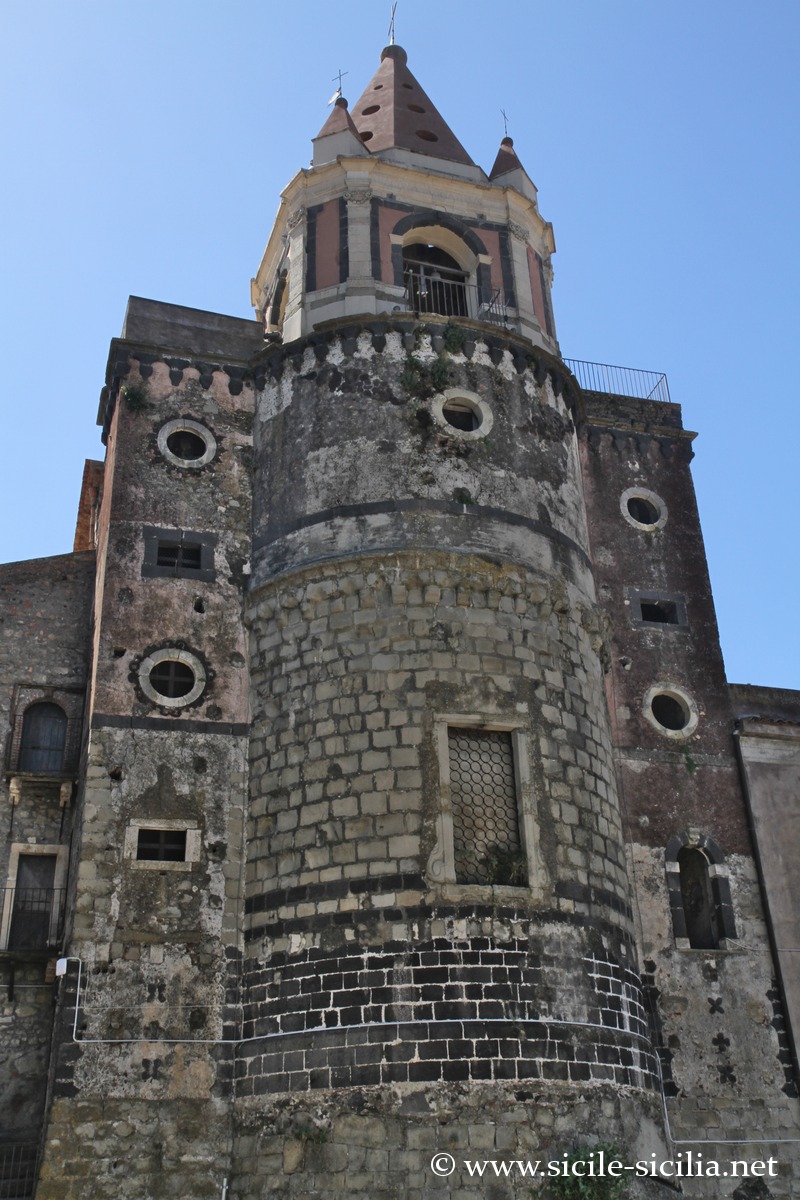
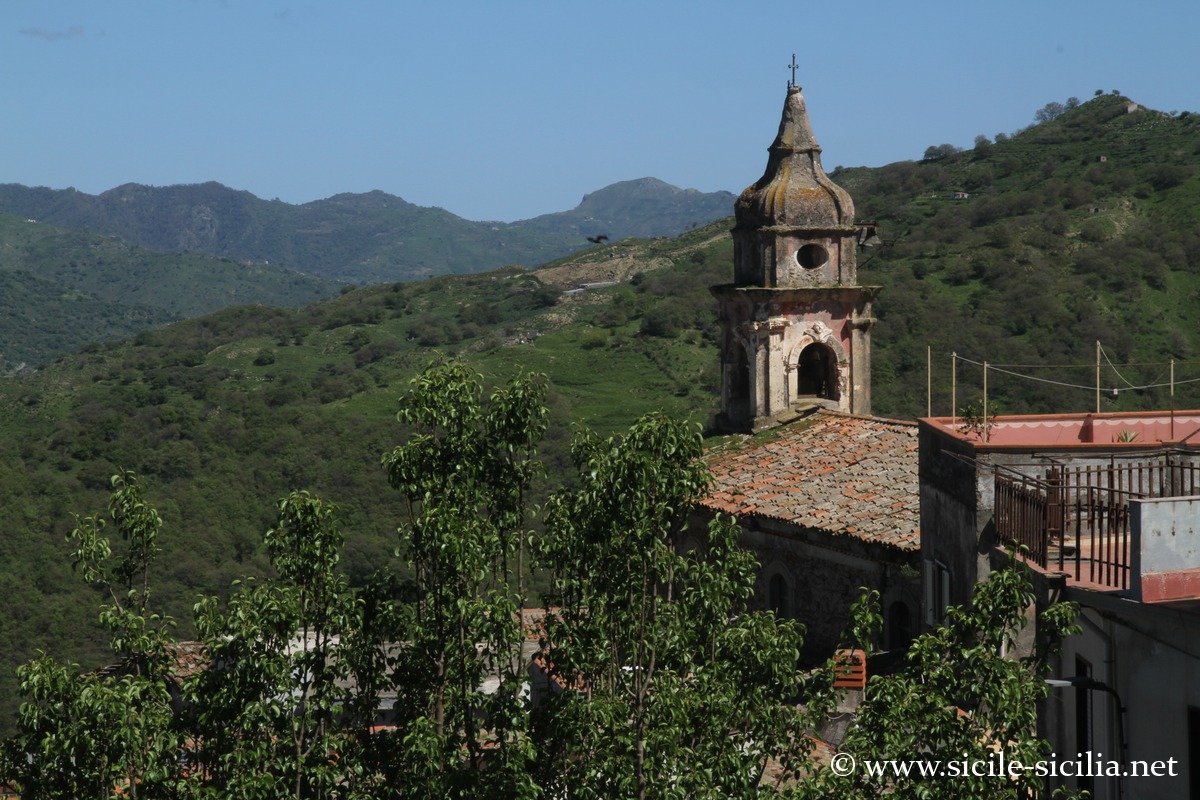
Climbing Via Regina Margherita, after a few bends, you reach Piazza Lauria, the heart of the village, with the town hall, and whose surrounding streets are paved with volcanic stone. From there you can climb to Piazza Sant’Antonio, whose church of the same name dates back to the early 17th century with a fine late 18th-century Baroque façade. In this old quarter called Cameni there are several historic palaces. Through an alley, you reach the church of San Pietro built around the early 12th century, which has retained from the original building the volcanic stone tower and the apse. Opposite, the church of San Benedetto and its monastery date back to the 18th century.
Taking Via Federico II from Piazza Lauria you reach the 12th-century church of San Marco, of Norman origin. A staircase leads above to the remains called Castelluccio, a fortification attributed to the Byzantines, located below the castle of Lauria.
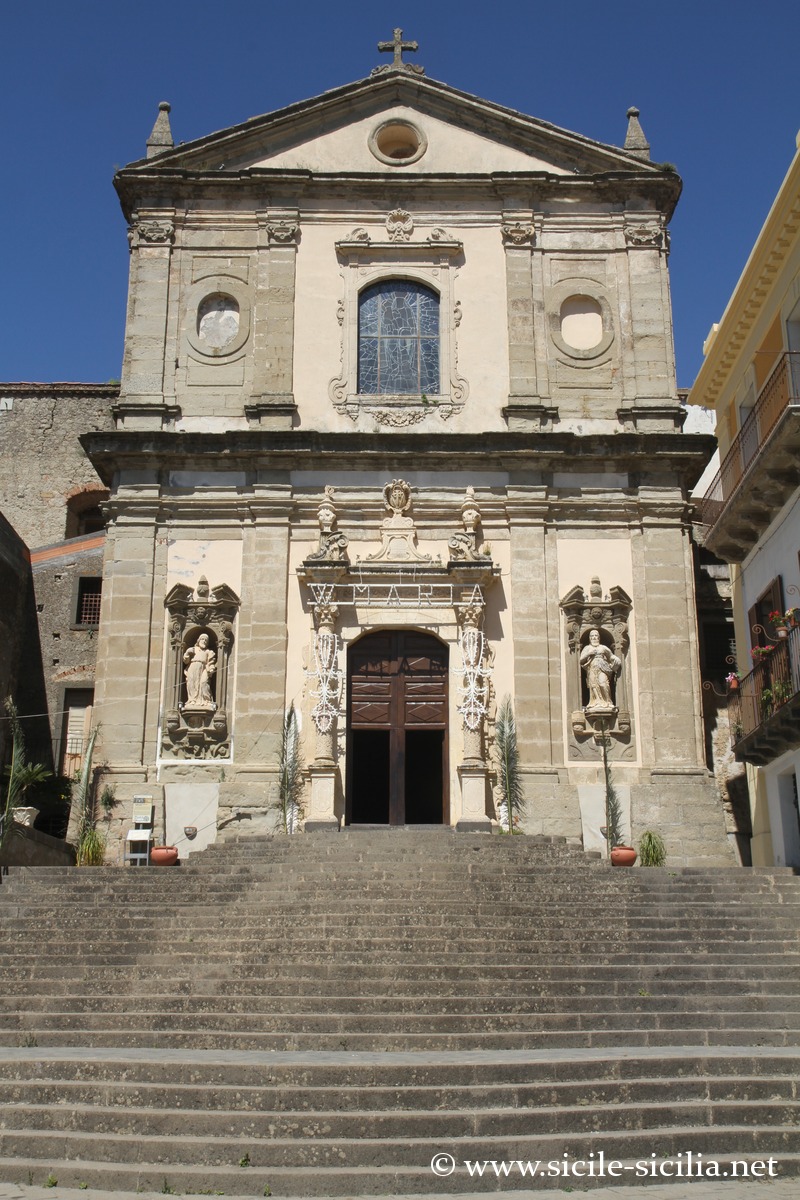
Continuing to climb, the Basilica of the Madonna della Catena is the main church of Castiglione, built from the mid-17th century, with an imposing 18th-century Baroque façade preceded by a fine staircase from which the view extends as far as Etna. It preserves a statue of the Madonna della Catena in white Carrara marble, attributed to the school of Gagini.
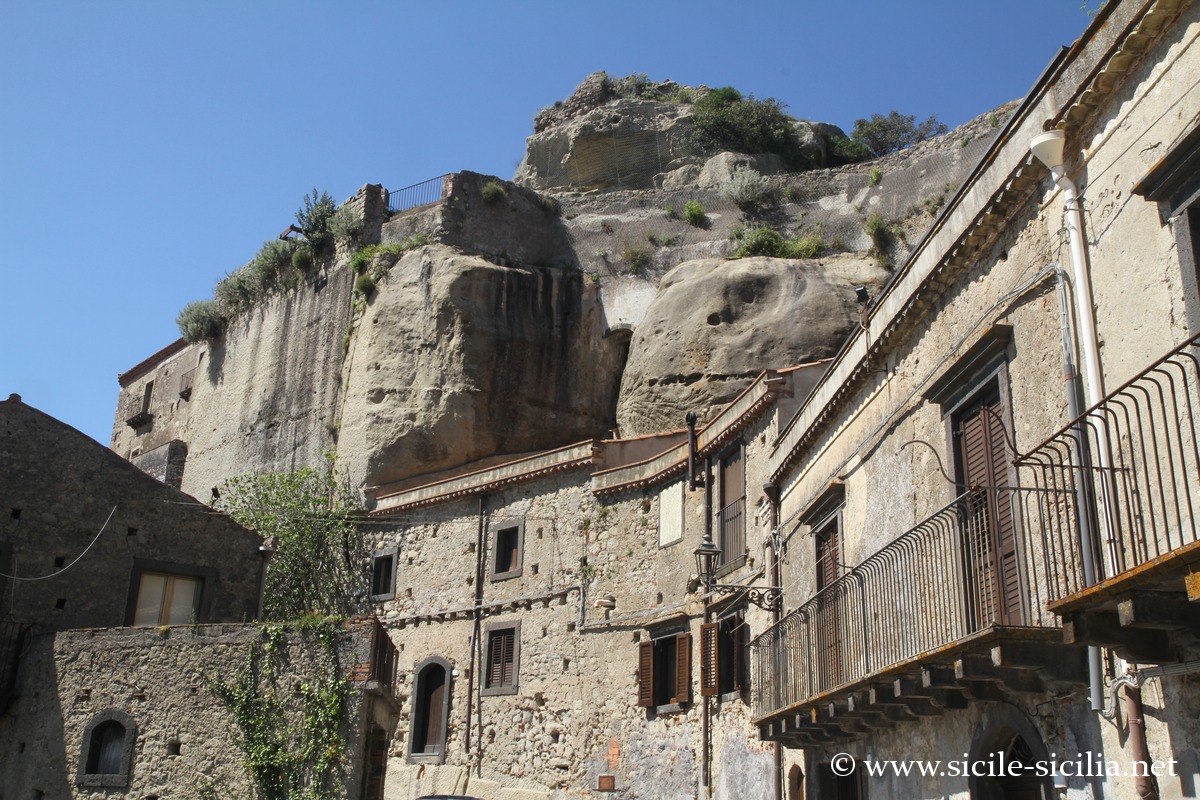
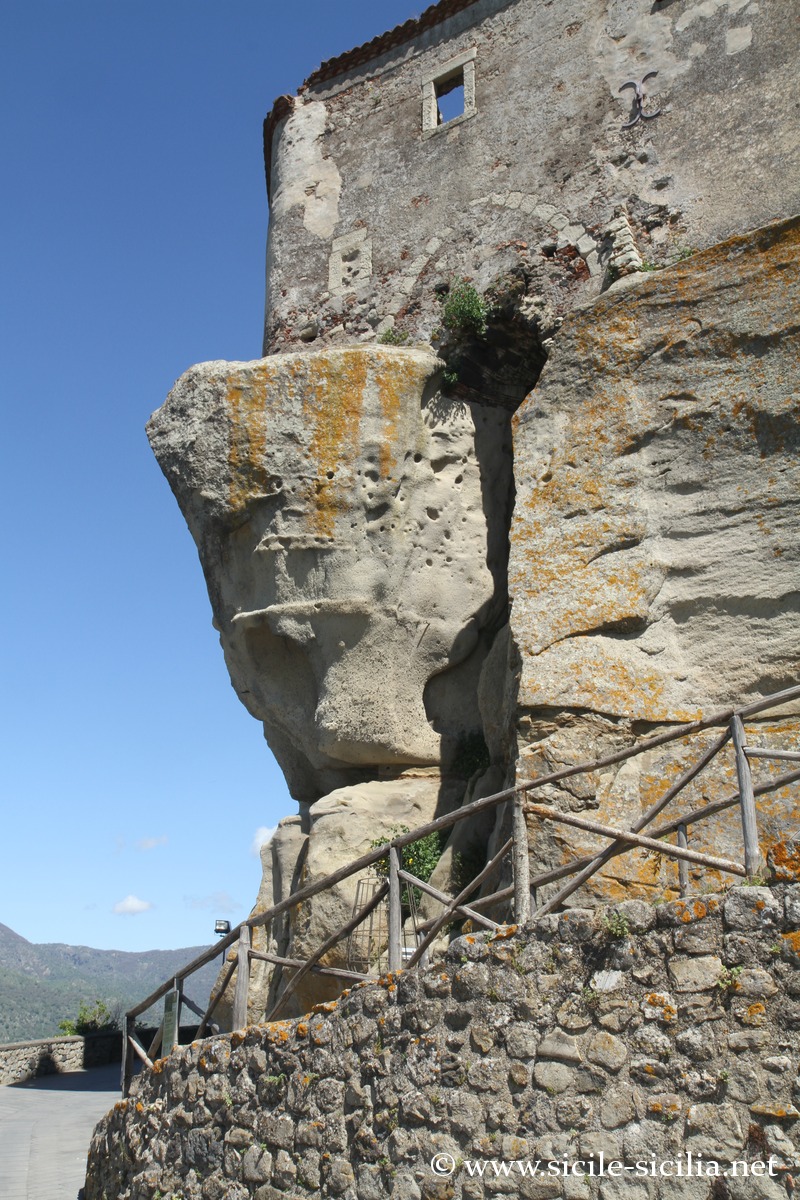
Higher up, the evocative remains of the Castle of Roger of Lauria dominate the surroundings from the top of the rock. It dates back to the Norman period (12th century).
Gallery


Sant’Antonio 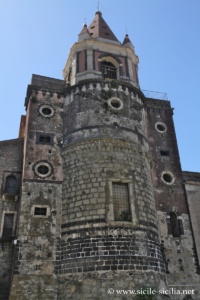
Santi Pietro e Paolo 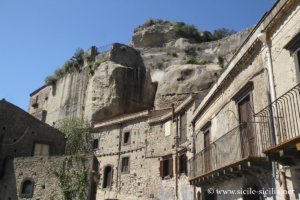
Castle of Lauria 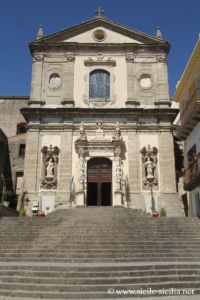
Basilica SS Maria della Catena 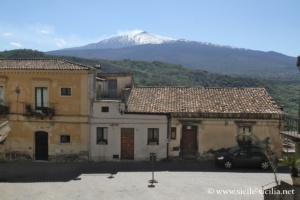
View from the threshold of the basilica 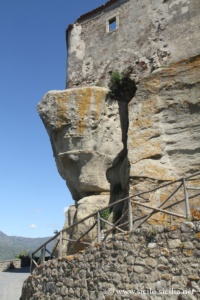
Castle Roger of Lauria 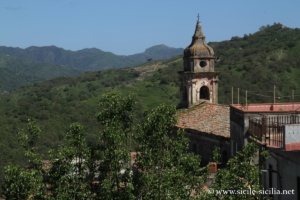
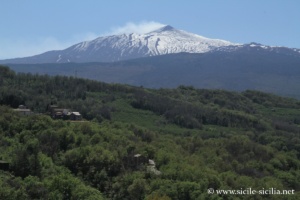
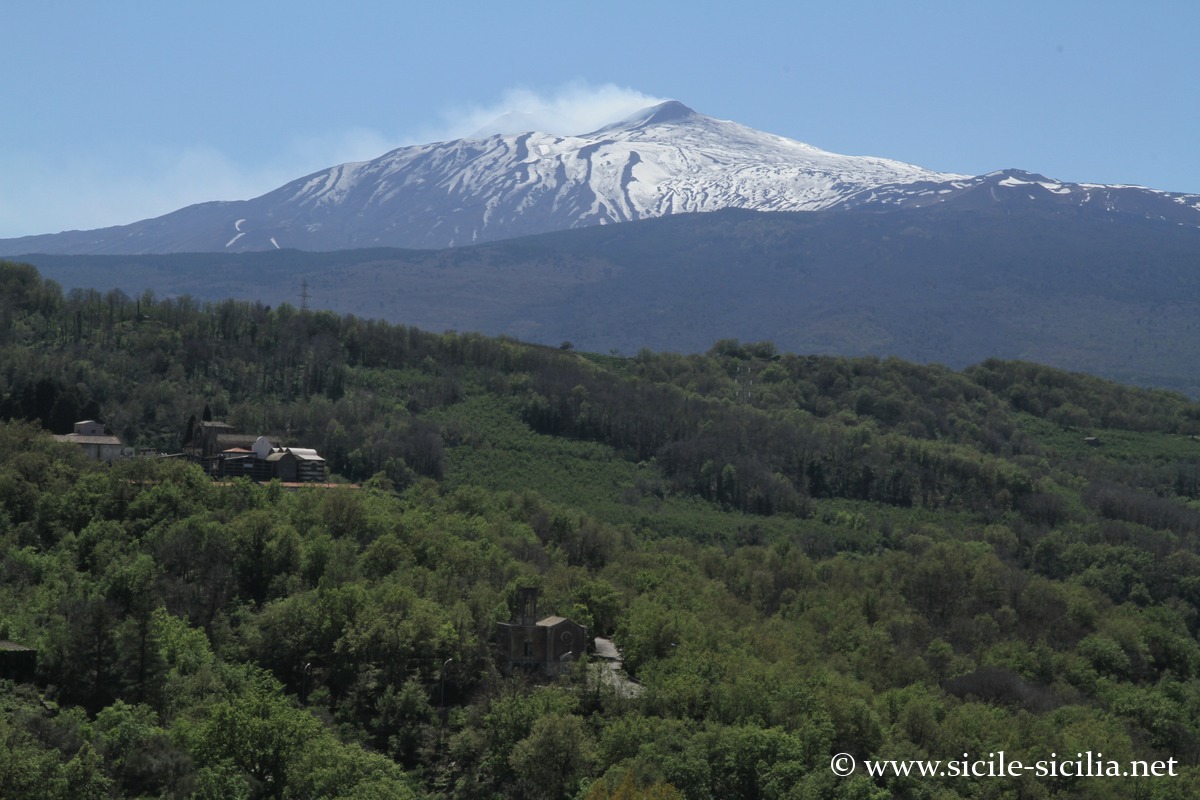
Panorama towards Etna
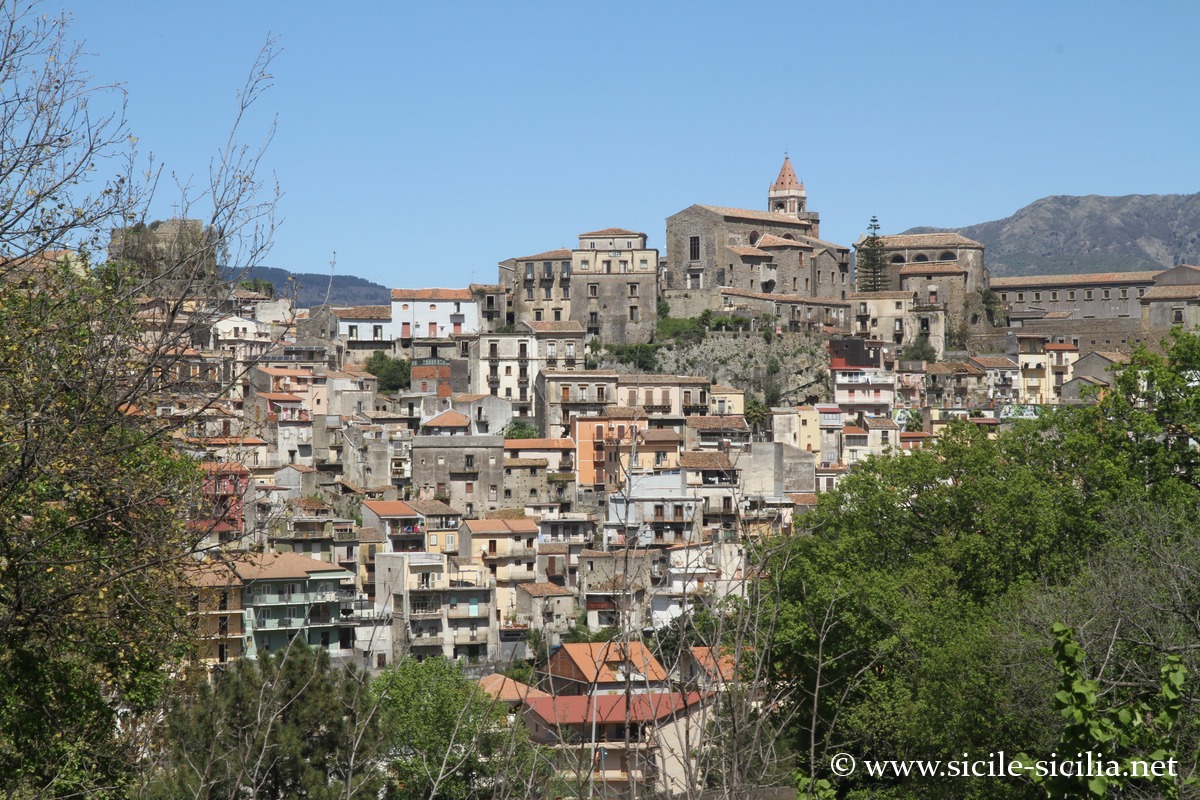
Surroundings of Castiglione
On leaving the village to the west (towards Randazzo), near the church of San Vincenzo (via San Vincenzo) which was part of an old Benedictine abbey, stands an old defensive tower in sandstone called “U Cannizzu“, from the 12th-14th centuries, which has become the symbol of the town.
About a kilometre to the north (towards Francavilla), after the bridge over the Alcantara, the small church of San Nicola is also of Norman origin, from the 12th century, preserving frescoes in the Byzantine style.
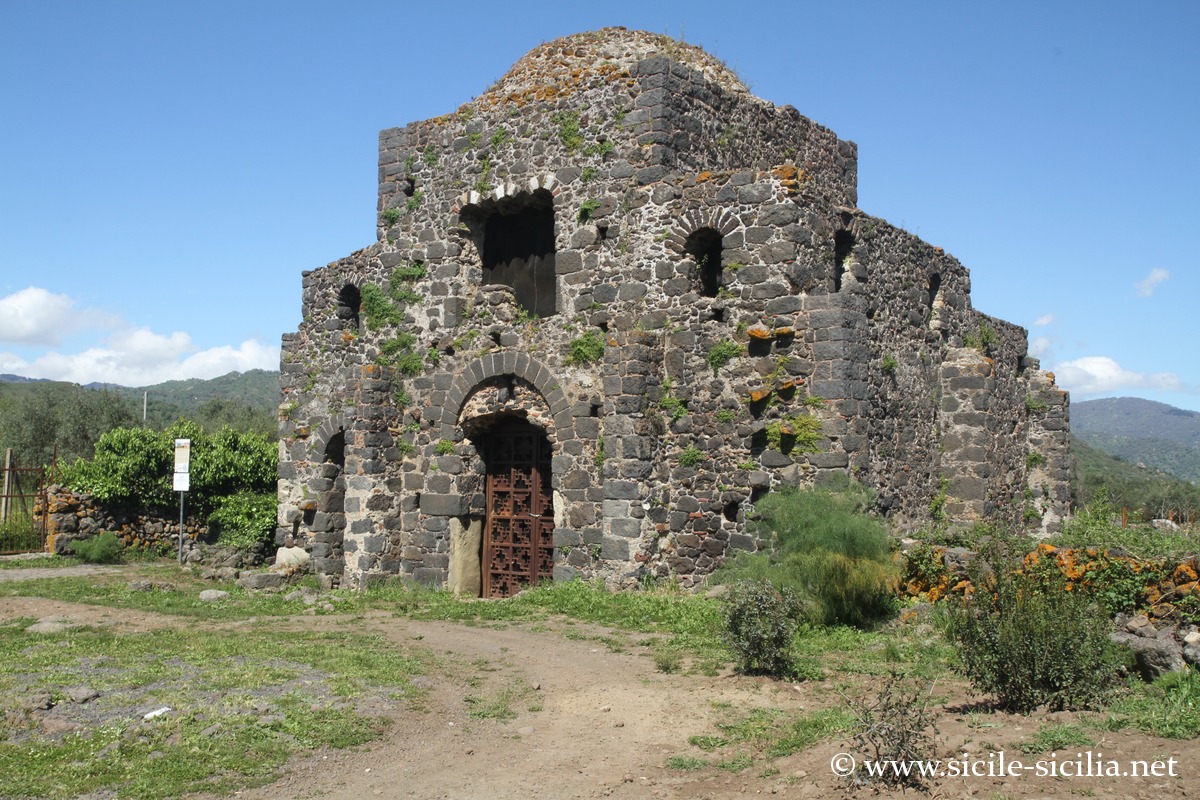
3 kilometres west of Castiglione (towards Randazzo), the cuba di Santa Domenica is a fine example of Sicilian Byzantine architecture, a chapel built by Basilian monks around the 7th century. It is the most remarkable building of this kind in Sicily.
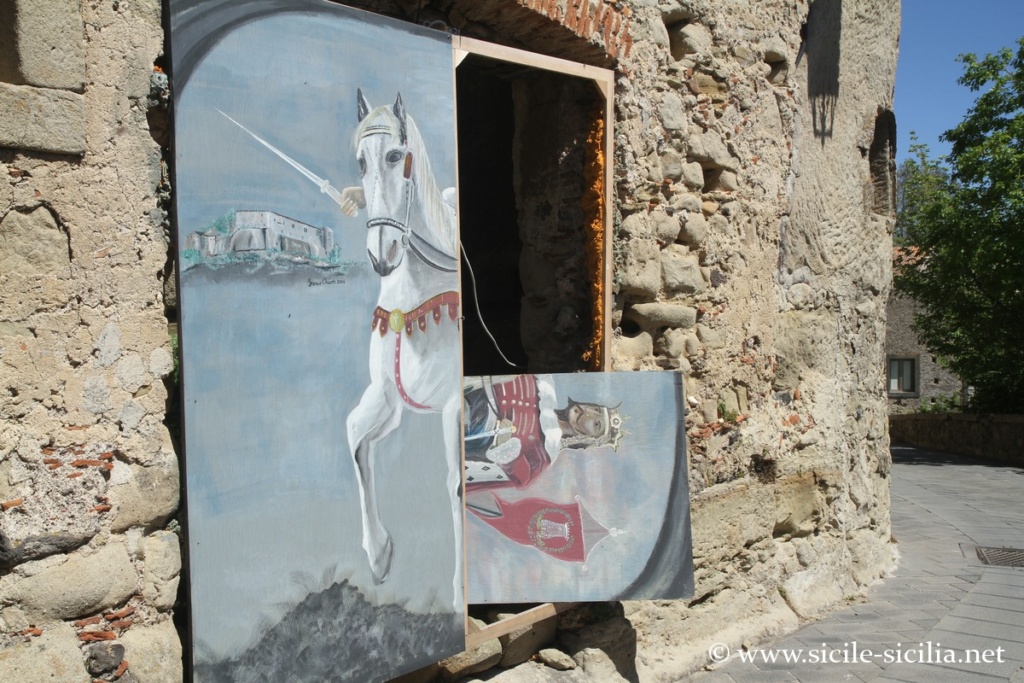

Via Edorda Pantano 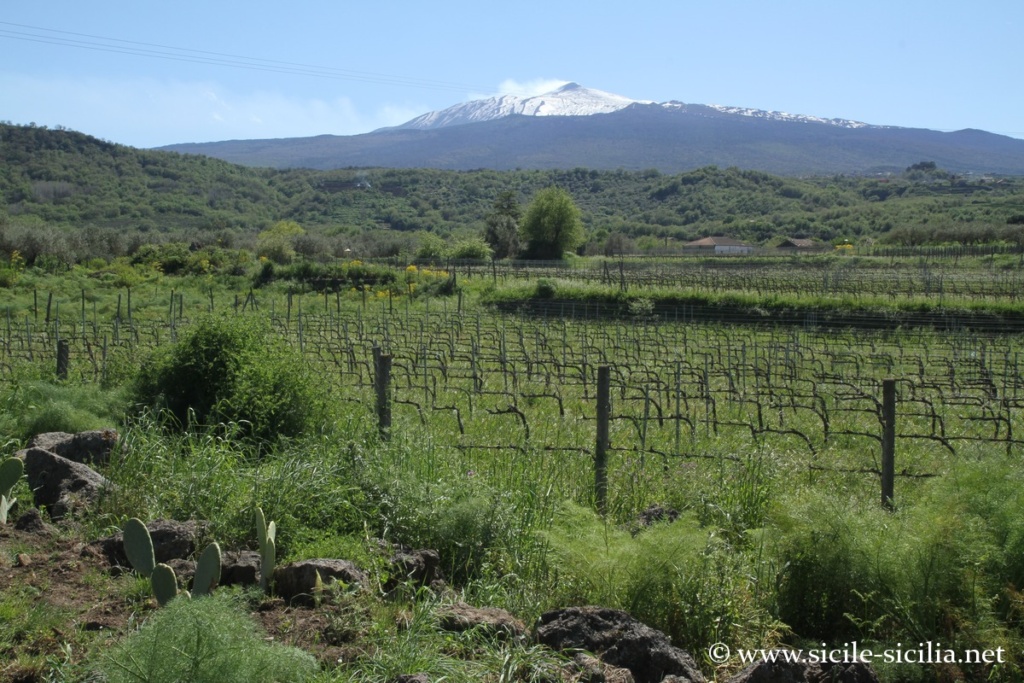
Church of the Cuba of Saint Dominic 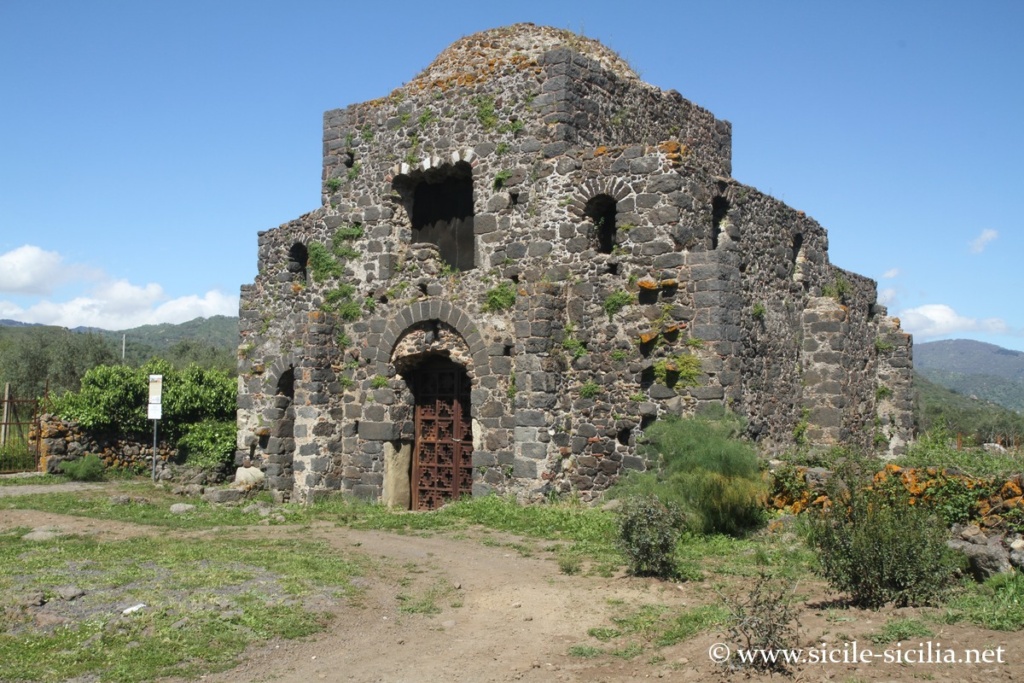
Cuba of Saint Dominic
Traditions and gastronomy in Castiglione
Among the local specialities are homemade maccheroni, usually baked au gratin and sometimes prepared with ricotta and pieces of dried meat or pork; it is a local variant of the traditional Sicilian pasta al forno (baked pasta).
Another dish close to the peasant tradition, of ancient origin, is the macco di fave (often called, in dialect, maccu), a thick broad bean purée flavoured with wild fennel; it can be served as an accompaniment to grilled meats (pork, lamb, kid) or with pasta.
As for sweets, the most characteristic pastry of Castiglione is that of the sciauni (also called ricotta ravioli): these are small ravioli/friggitelli filled with ricotta, honey, candied fruit and spices, fried and then sweetened
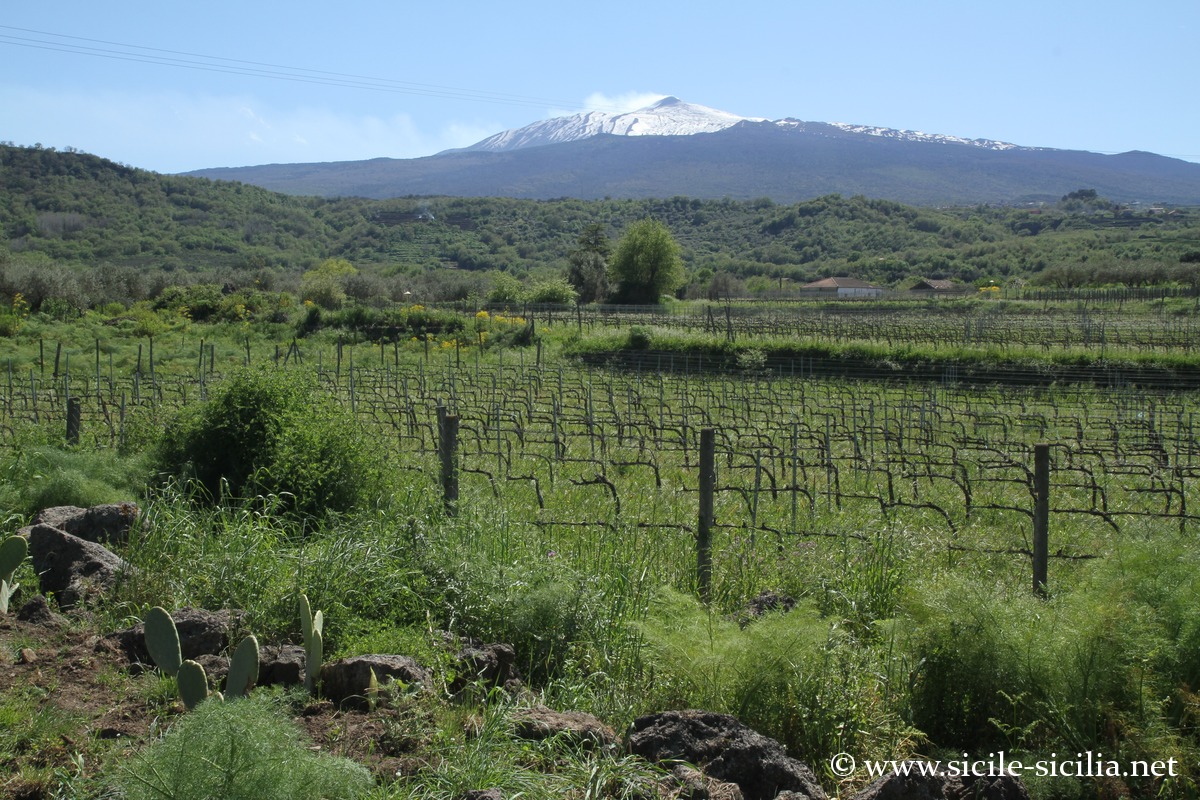
The Castiglione area is part of the Etna D.O.C. appellation: several local estates (among them Tornatore, Benanti, Cottanera, Cantine Patria and other small producers) cultivate native grape varieties (notably Nerello Mascalese, Nerello Cappuccio for the reds, Carricante for the whites) and offer visits and tastings.
Local festivals: the Madonna della Catena is the most important feast; the official date may vary from year to year and according to the calendar of municipal celebrations — traditionally the feast is linked to a Sunday in May or August depending on the year and includes a procession of the statue of the Virgin through the historic centre.
Furthermore, in summer (early or mid-August) there are food and wine events — Sagra enogastronomica, “Calici di Stelle” and the Sagra del Pane condito — which showcase local products, wines and traditional recipes.
Practical details
- Tastings / wineries: most wineries (Tornatore, Benanti, Cottanera, small local cantine) welcome visitors by appointment; check availability, opening hours and prices on the winery’s website or by phone.
- Wine tourism and scenic itineraries — routes between contrade (Trimarchisa, Pietramarina, etc.) where historic alberello vineyards are concentrated; many cantine offer visits and tastings by reservation.
Where Castiglione is located: map
If you see this after your page is loaded completely, leafletJS files are missing.
Information
Sources and external sites
- Castiglione : en.wikipedia.org
- Cuba di Santa Domenica : it.wikipedia.org
- Official website of the Comune di Castiglione di Sicilia
Institutional page containing news, local events, contacts and administrative information. - Visit Sicily — tourist page
Official/regional tourist page with practical information for visitors and suggested itineraries. - Tornatore — wine estate (Etna)
Example of a local producer (Castiglione / Etna contrade) providing information on Etna DOC wines and winery visits.
Articles in the Etna category
- Mount Etna
 Etna is the highest active volcano in Europe with its 3,330 ...
 - Hotels near Mount Etna
 Hotels near Mount Etna and its surroundings in Sicily, farm stays, ...
 - Mount Etna and park excursions
 Landscapes of the volcano Around the central crater of Etna, 3323 metres ...
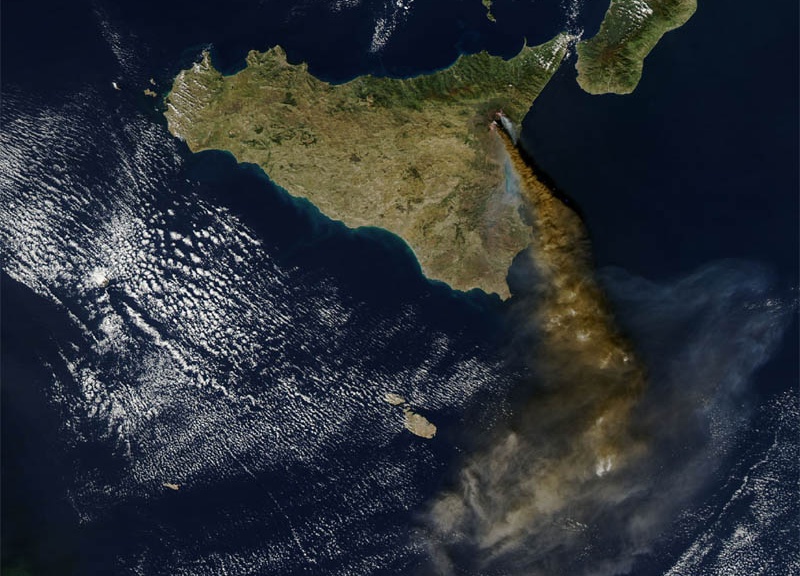
 - Etna eruptions seen from the sky
 Etna Category
 - Centuripe
 Upstream of the valley, on a series of hills overlooking the ...
 - Alcantara Valley and Gorges
 The beautiful Alcantara Gorges are located in the valley of the ...
 - Randazzo
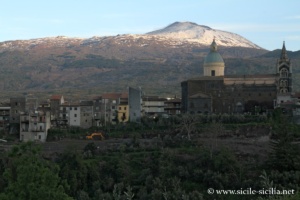 Randazzo is a charming medieval village perched at about 765 m ...
 - Simeto Valley, Paternò, Adrano
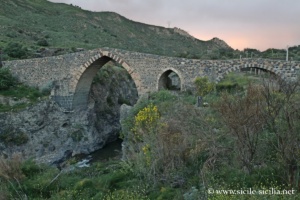 West of Catania, the Simeto valley forms a vast region still ...
 - Circumetnea, the train around Mount Etna
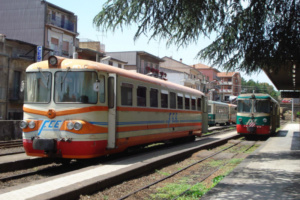 The Circumetnea is an opportunity for an original discovery of the ...
 - Zafferana Etnea
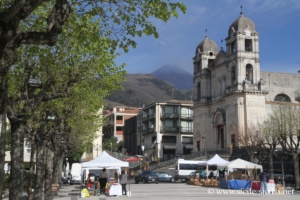 Zafferana Etnea is a Sicilian village perched at about 600 metres ...
 - Driving tour of Etna
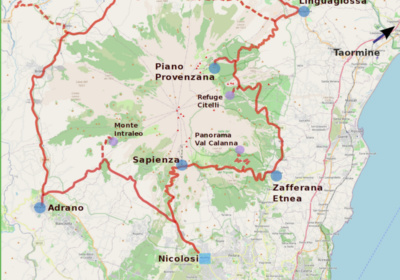 You can very easily discover the territory of Etna by car, ...
 - Nicolosi
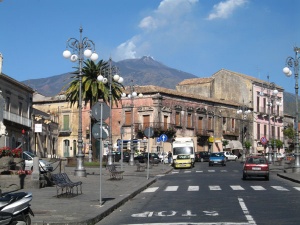
 A few kilometres from the craters of Etna, Nicolosi is one ...
 - Destinations near Mount Etna
 Destinations near Mount Etna in Sicily, including Catania at the foot ...
 - Activities on Etna, guided tours and excursions
 Booking of activities on Etna, excursions on the volcano and in ...
Comments in other languages
A superb little village!