
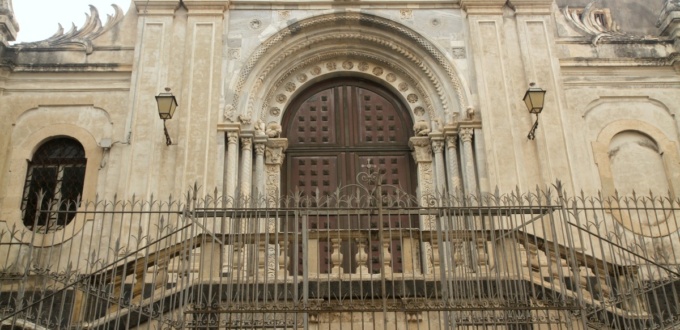
Beyond this article dedicated to the churches of the city, also discover the main religious buildings with the articles on the Piazza Duomo and its Catania Cathedral, the one on the Benedictine monastery with the church of San Nicolo, as well as those on Via Etnea and Via Crociferi, where in this latter street several Baroque churches follow one another.
Church of the Badia di Sant’Agata
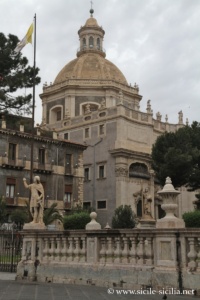
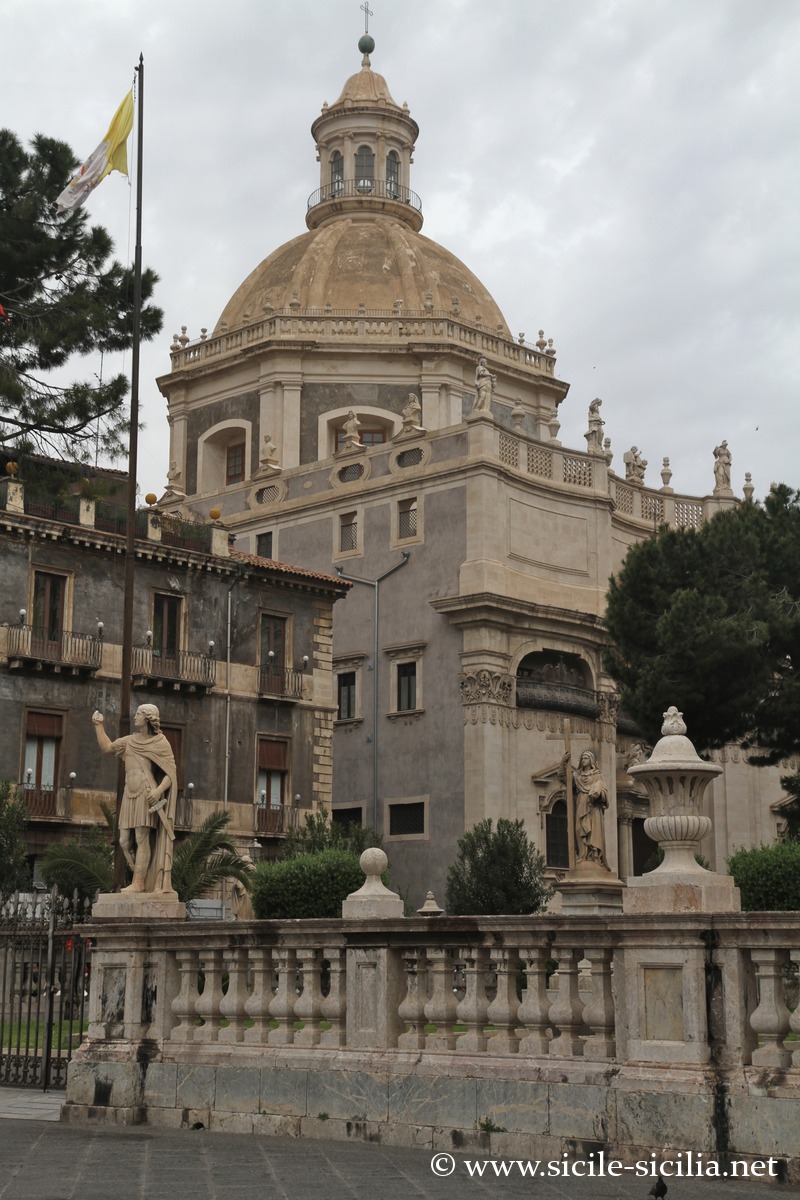
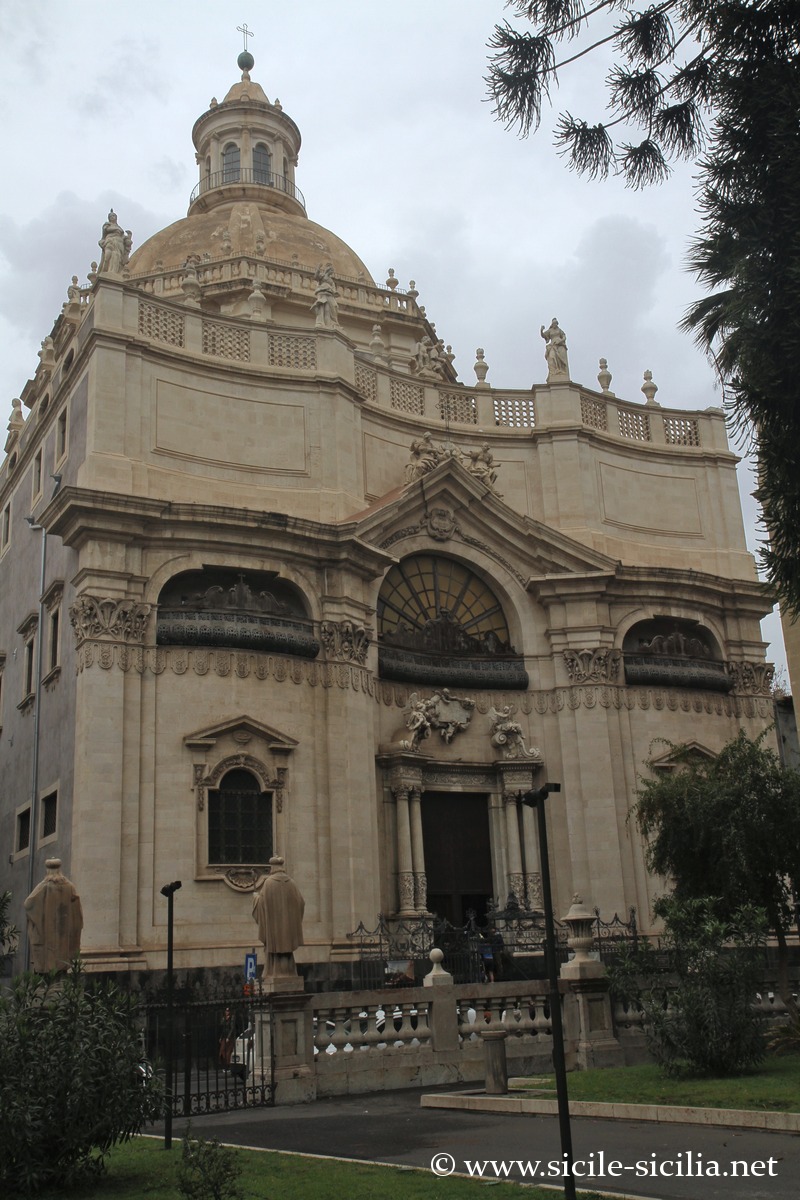
North of the cathedral, the church of the Badia di Sant’Agata (abbey of Saint Agatha in English) on Corso Vittorio Emanuele is emblematic of the art of Giambattista Vaccarini, the architect who contributed most to the Baroque reconstruction of Catania.
It is accompanied by a monastery, built in the middle of the 18th century on the ruins of the old church.
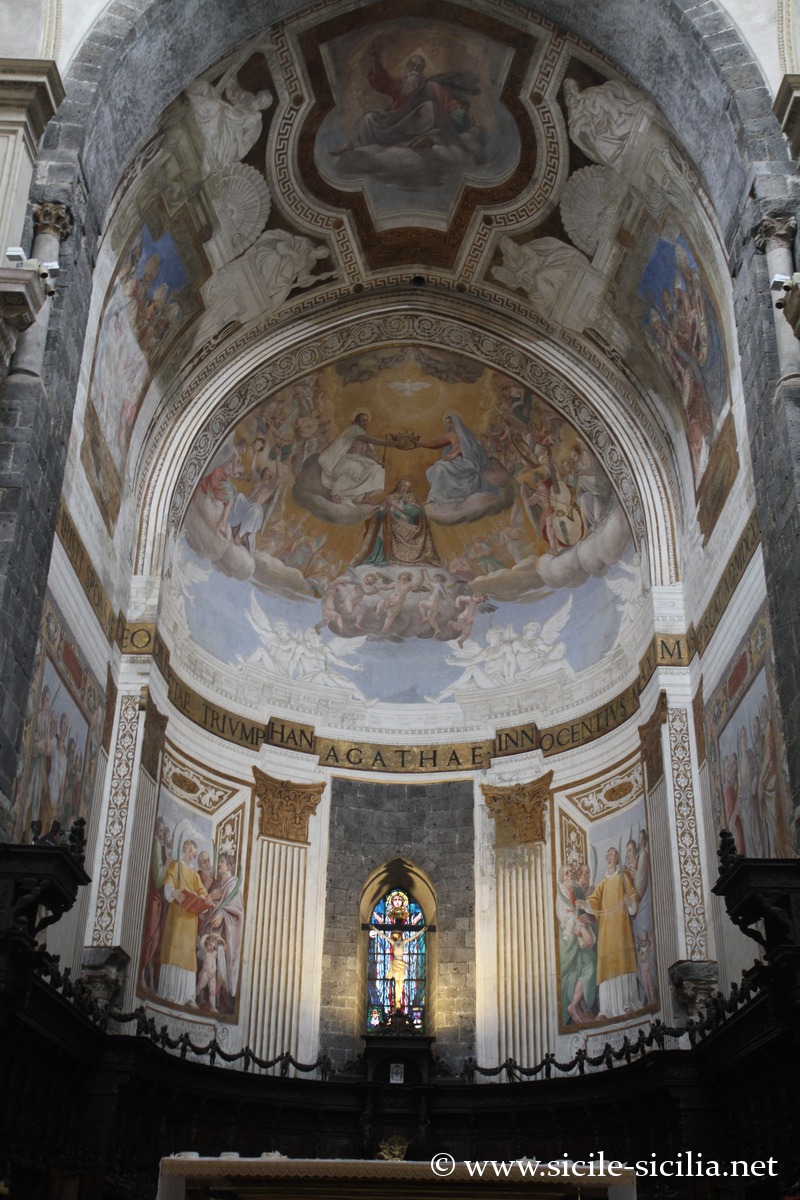
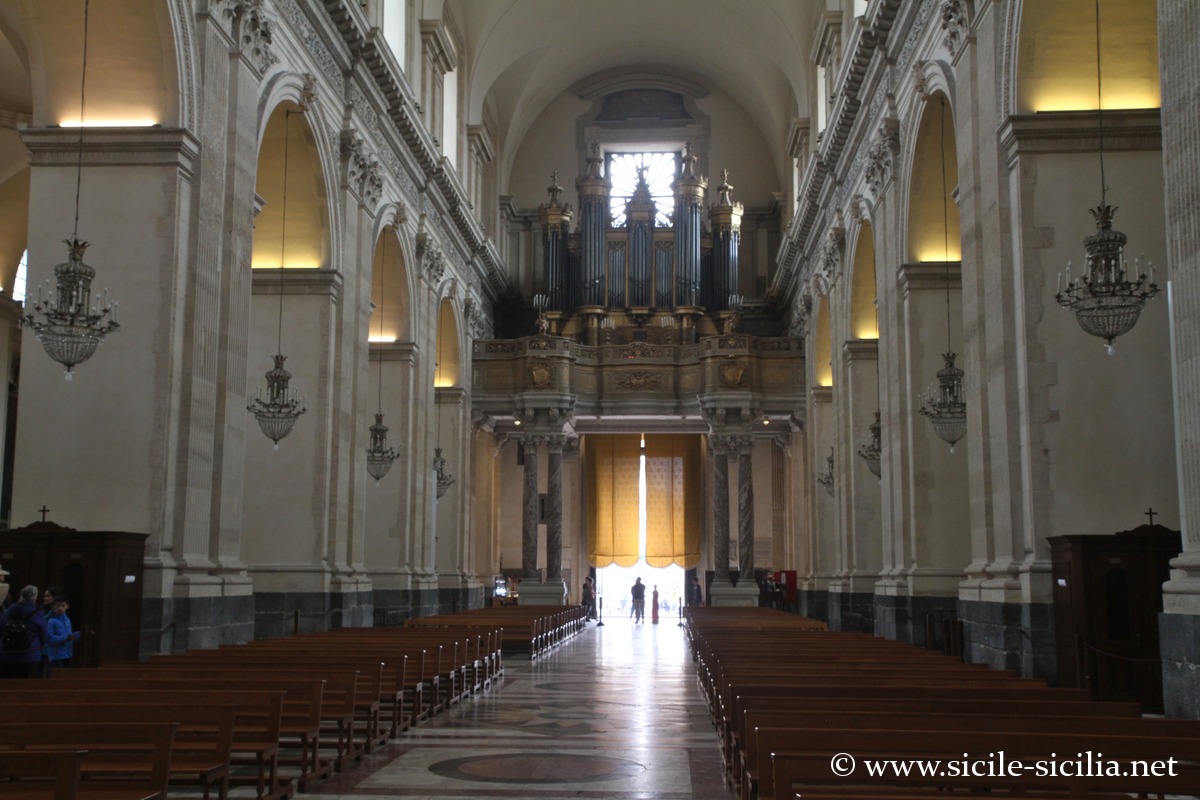
It is an architectural masterpiece. It stands out for its facade with its alternating convex and concave forms, its portal, and its imposing dome. The interior decorations are on par with the exterior, but the whole remains sober, with its white stuccos, altars, statues and marbles on the floor.
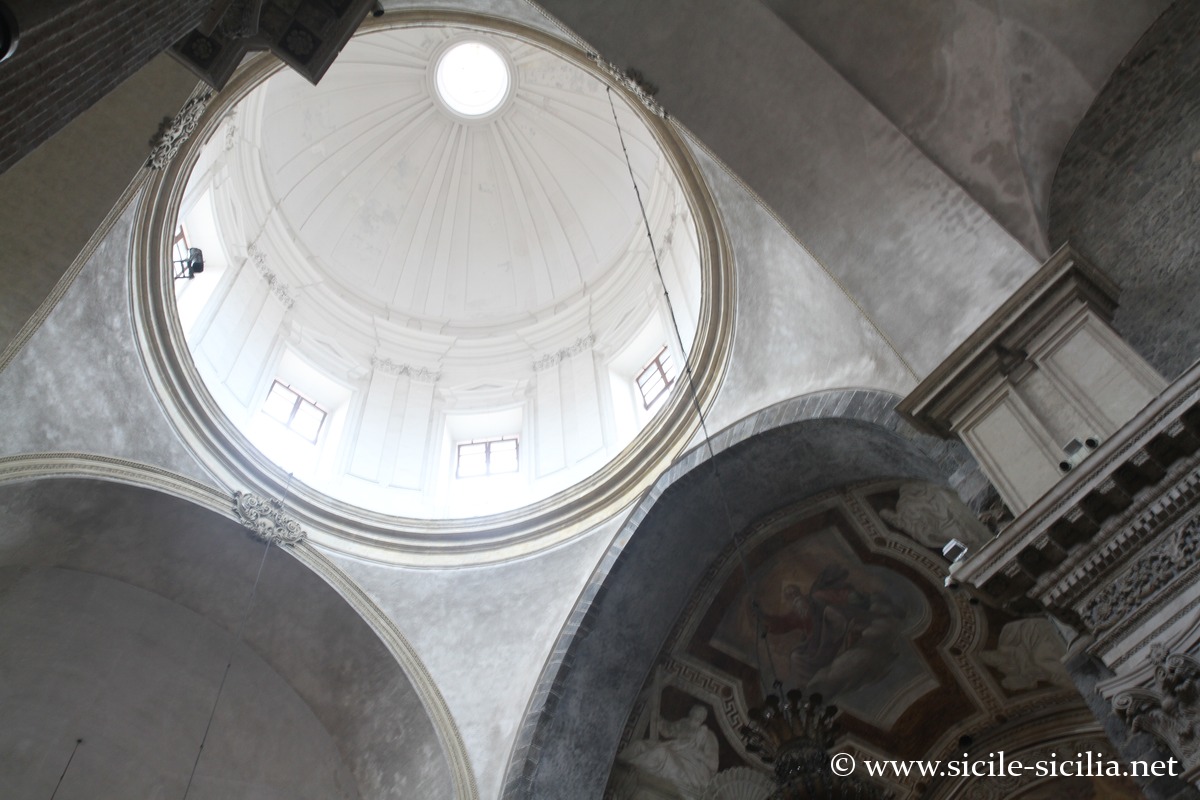
From its beautiful panoramic dome, there is a view of the Piazza del Duomo and the Via Etnea.
Church of Sant’Agata, Catania 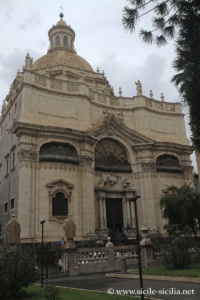
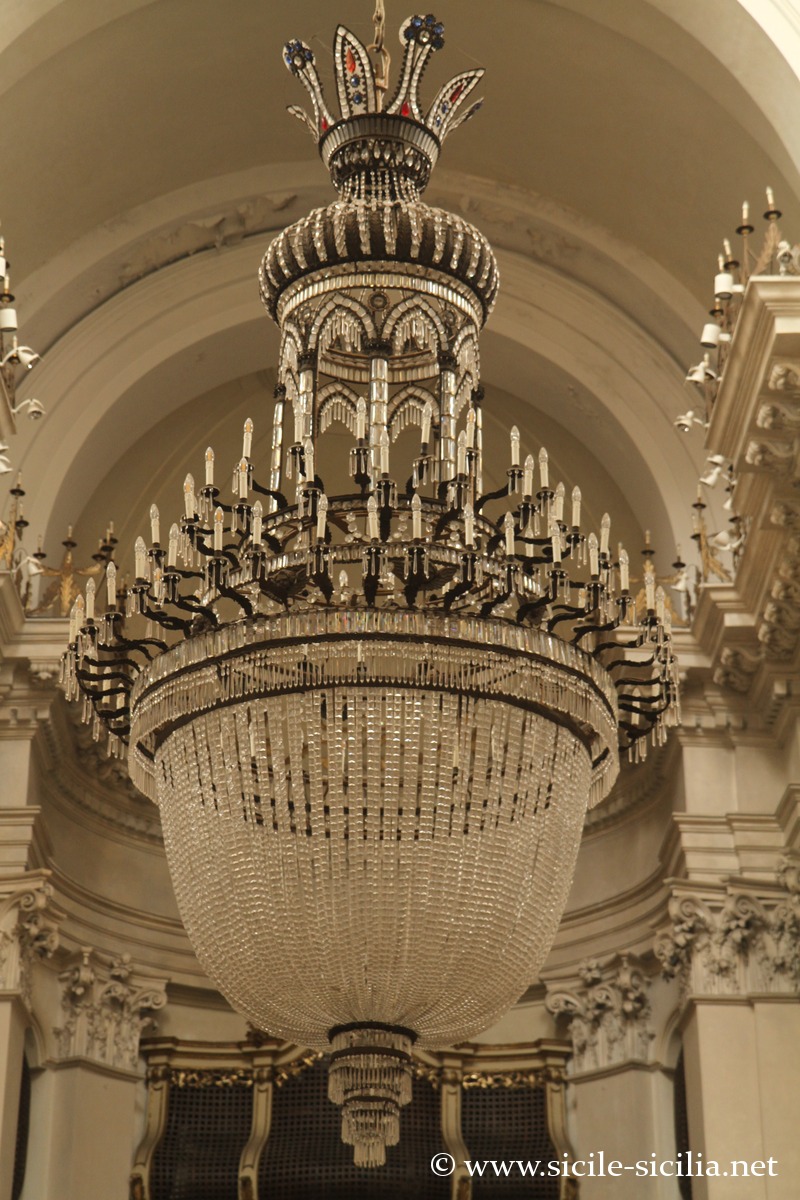
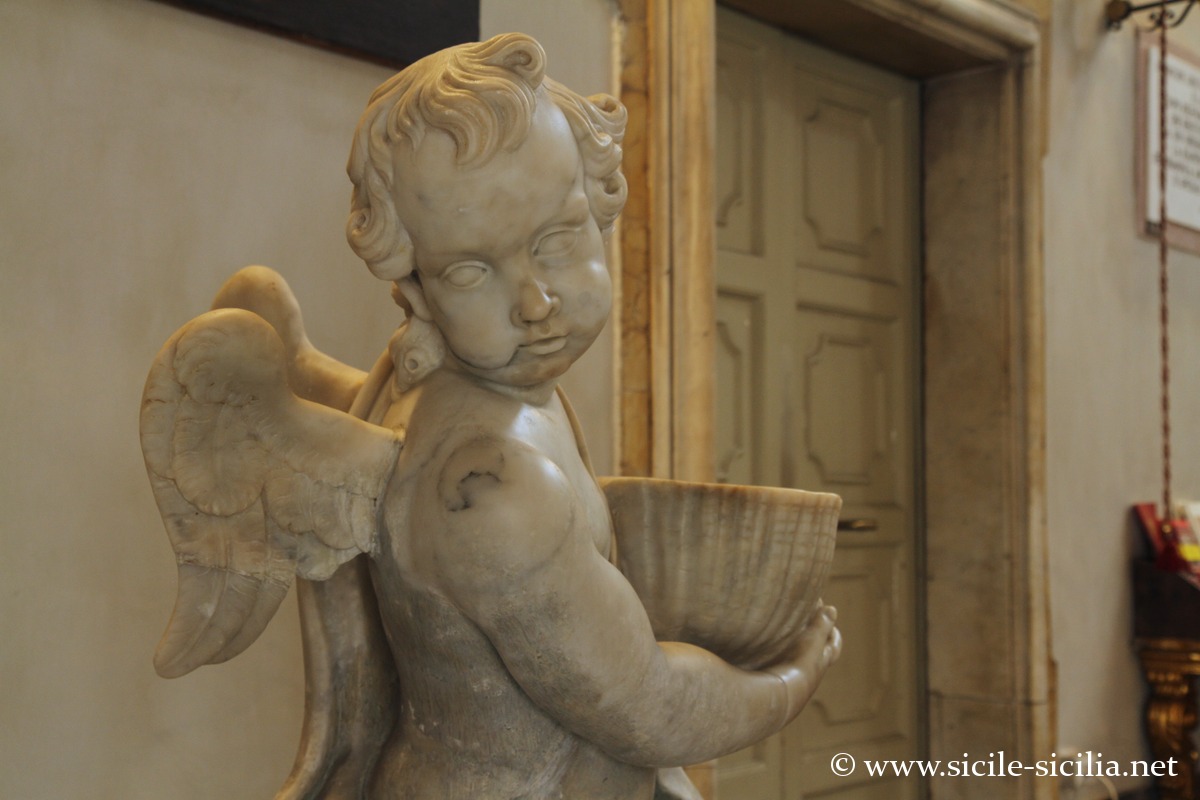
Church of Sant’Agata 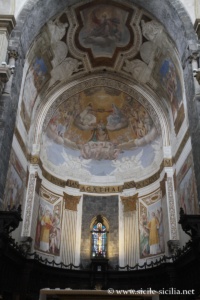
Apse of the church of Sant’Agata 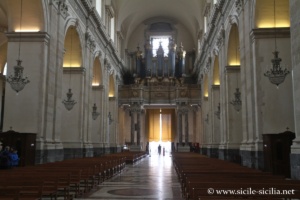
Church of Sant’Agata 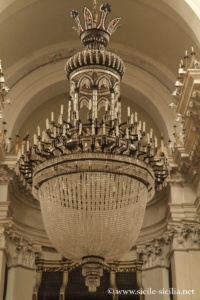

Church of Sant’Agata 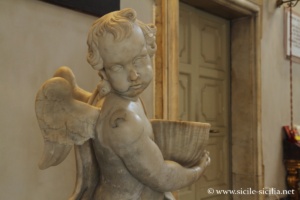

Church of Sant’Agata 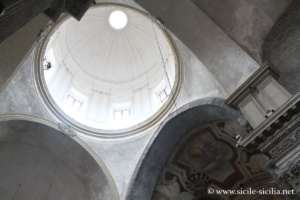
Dome of the church of Sant’Agata
Church and convent of San Placido
The convent of San Placido is one of the most important monuments of Catania. Four meters below ground level is the presumed house of Saint Agatha, dating from the 2nd century AD.
Since the reconstruction of the monastery in the 17th century, the 15th-century remains of the Platamone palace can be found in its courtyard.
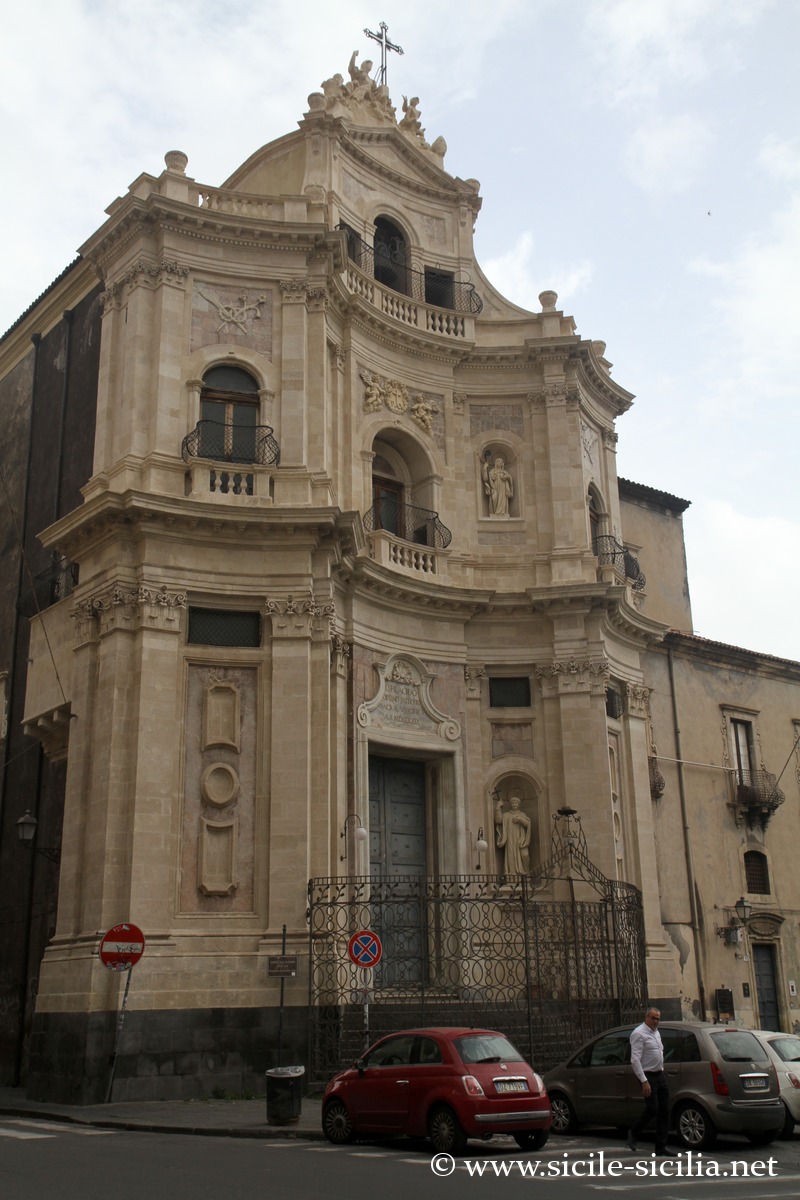
The reconstruction of the church of San Placido (Saint Placid) by Itaar was completed in 1723. The Baroque facade in white stone is concave in the center, preceded by a convex iron gate. Its door is framed by the statues of Saints Placid and Benedict, and, smaller, those of Saint Scholastica and Saint Gertrude.
The interior adorned with marbles and stuccos has a nave with fluted half-columns along the walls. The four side altars with marble bas-reliefs include canvases by Michele Rapisardi and Giuseppe Napoli.
The main altar is in polychrome marble and the apse is adorned with two large paintings by Michele Rapisardi and, at the back, two canvases by Tullio Allegra.
Church of Sant’Agata al Carcere
The young Agatha is said to have been locked in the prison at this place, before and after her first martyrdom (when her breast was cut off). There she received the visit of Saint Peter and the angel, then was condemned to be burned on 5 February 251.
Sant’Agata in Carcere (Saint Agatha of the prison in English) has become an important place of worship in Catania, where each year the inhabitants join the sanctuary by the thousands during the feast of the saint.
The building is also a treasure of history and art, preserving part of the Greek walls of the 5th century BC, and Roman structures. A chapel is said to have been erected in the 8th century AD.
15th-century structures are found in the chancel with a Gothic bay supported by four columns with Corinthian capitals.
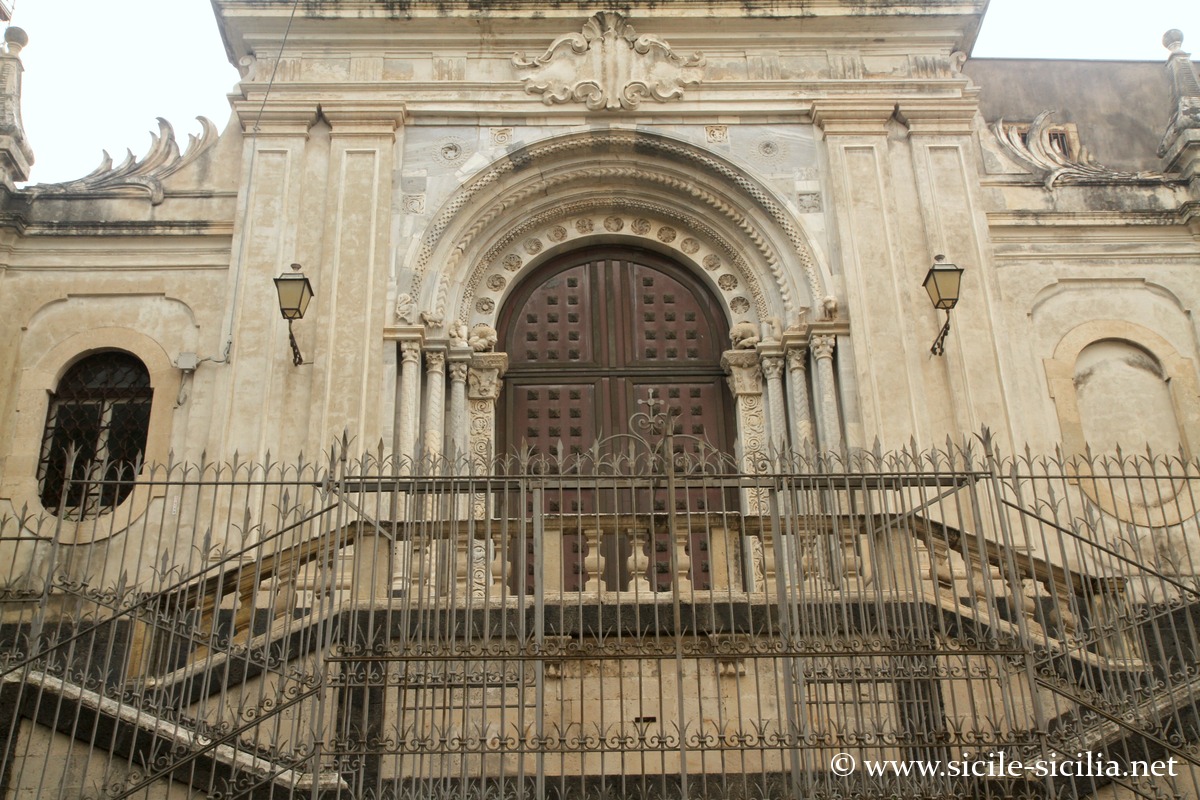
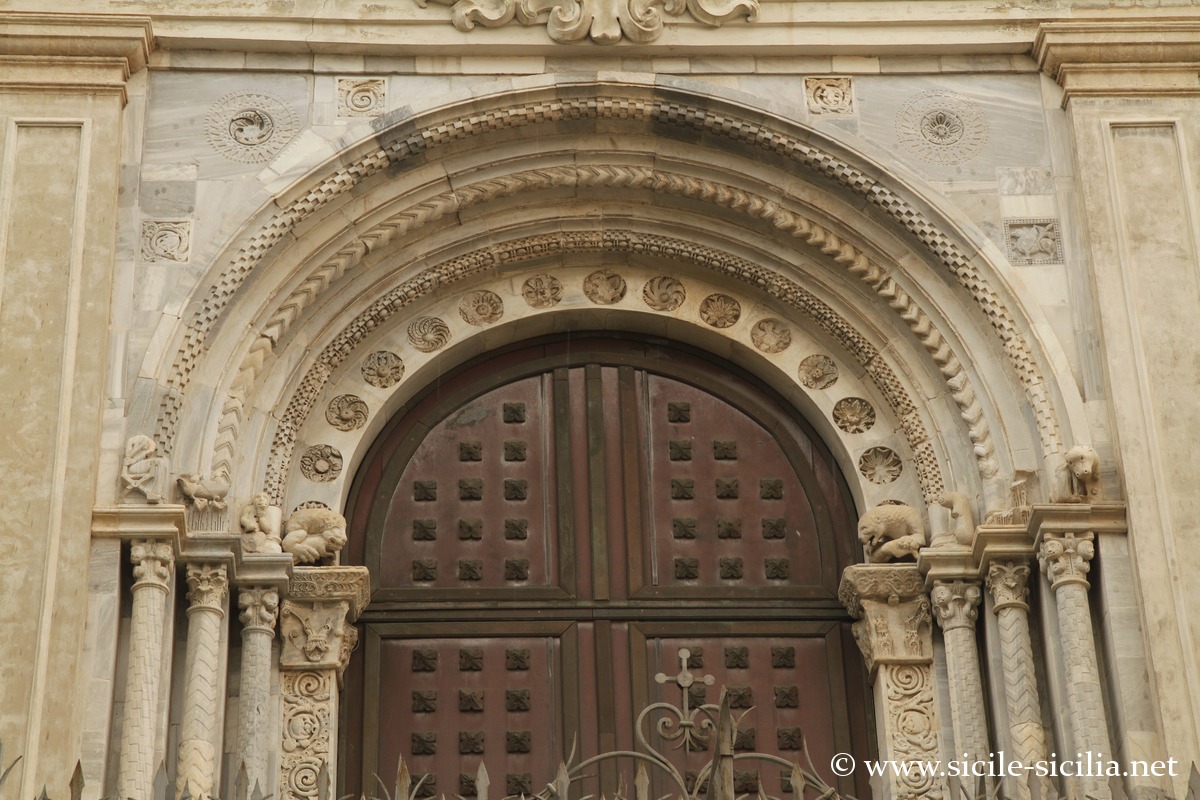
The project of the architect Francesco Battaglia for the reconstruction after 1693 enlarged the building, with a new Baroque facade embellished with an old and very beautiful Romanesque portal (of the Apulian style) coming from the destroyed cathedral.
The interior preserves an old reliquary, traces of the footsteps of Saint Agatha, and above all a precious altarpiece representing the saint being led to martyrdom (by Bernardino Niger, 1588). The crypt is of Roman origin.
Church of San Placido 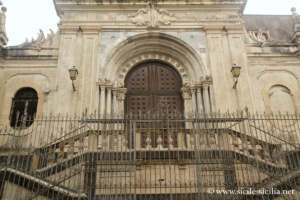
Church of Sant’Agata al Carcere 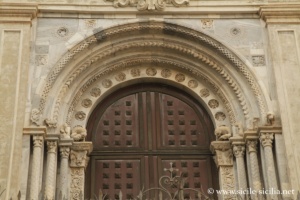
Church of Sant’Agata al Carcere
Madonna del Carmine
The Carmelites arrived in Sicily in the middle of the 13th century, from Mount Carmel (monte Carmine in Italian) in Palestine, where they founded a convent in the old church of Saint Lucy from the 8th century.
Completely destroyed by the earthquake of 1693, the basilica of the sanctuary of Maria Santissima Annunziata al Carmine was rebuilt with the convent in a grandiose architecture, whose astonishing facade is the work of Battaglia, with its tall colonnades and above the portal is the statue of the Madonna of Carmel.
Bonajuto Chapel
The Bonajuto chapel or Salvatorello is a Byzantine religious building, constructed between the 6th and 9th century AD.
It is one of the rare Byzantine buildings that have survived in Catania, located inside the Baroque Bonajuto palace.
It is found today 2 meters underground. There are medieval and 15th-century testimonies that escaped the various earthquakes.
The palace was erected from the 15th century by the Bonajuto family. It was dedicated until the 18th century to the Holy Saviour.
Church of San Gaetano alle Grotte
This 19th-century church, with its modest facade, formerly called Santa Maria alla Grotta, stands out for its grotto.
A steep staircase leads to this ancient hypogeum, whose walls have lost almost all traces of frescoes. First a Roman cistern, it is said to have become a burial place in the 3rd century, considered the first burial of Saint Agatha, above which the Byzantines later founded a chapel.
Map with the other churches of Catania
 Show interactive map
 Information
External sites
- Wikipedia page (in Italian)
- Abbey church of Sant’Agata: Wikipedia page
- Church of Saint Placid: Wikipedia page
- Saint Agatha of the prison: Wikipedia page
- Madonna del Carmine: Wikipedia page
- Bonajuto Chapel: Wikipedia page
- San Gaetano alle Grotte: Wikipedia page
Articles on Catania
- Catania
- Hotels in Catania
- Riviera of the Cyclops
- Catania Walking Tour Itinerary
- Piazza del Duomo and Catania Cathedral
- Via Crociferi in Catania: the Baroque churches
- Ancient sites of Catania
- Along the Via Etnea in Catania
- Palaces of Catania to discover
- Bellini Square and Theatre in Catania
- Ursino Castle of Catania
- Benedictine Monastery and San Nicolò of Catania
- Museums of Catania
- Other sites and places in Catania
- Discovering underground Catania
- Catania Environs: Riviera and Countryside
- Traditions and gastronomy in Catania
- Activities in Catania, guided tours and excursions
- Around Catania