
Megara Hyblaea was one of the first cities founded by the Greeks in Sicily in the 8th century BC, but it did not survive the Roman conquest.
A few kilometres further north, Augusta was founded on an isthmus in the 13th century by Frederick II.
Further south, 12 km away, on a small peninsula, lies the archaeological site and necropolis of Thapsos, the most important Middle Bronze Age site in Sicily.
Archaeological site of Megara
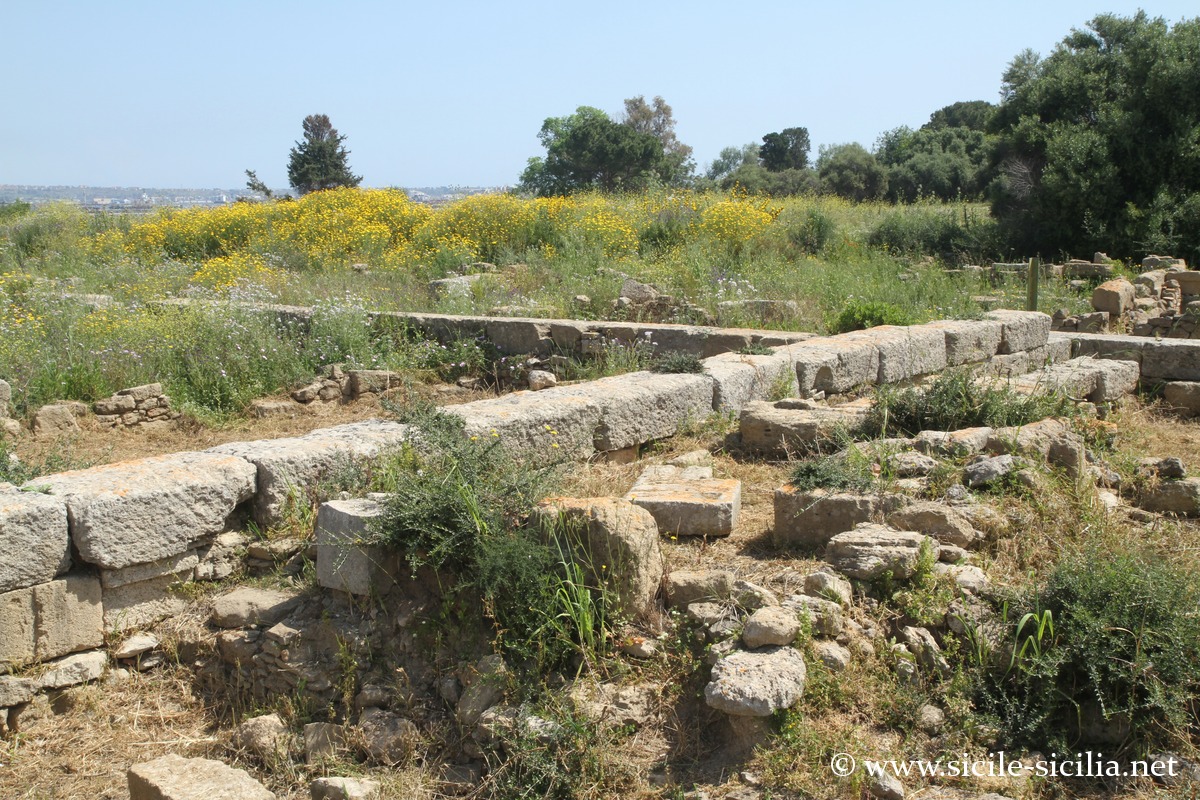
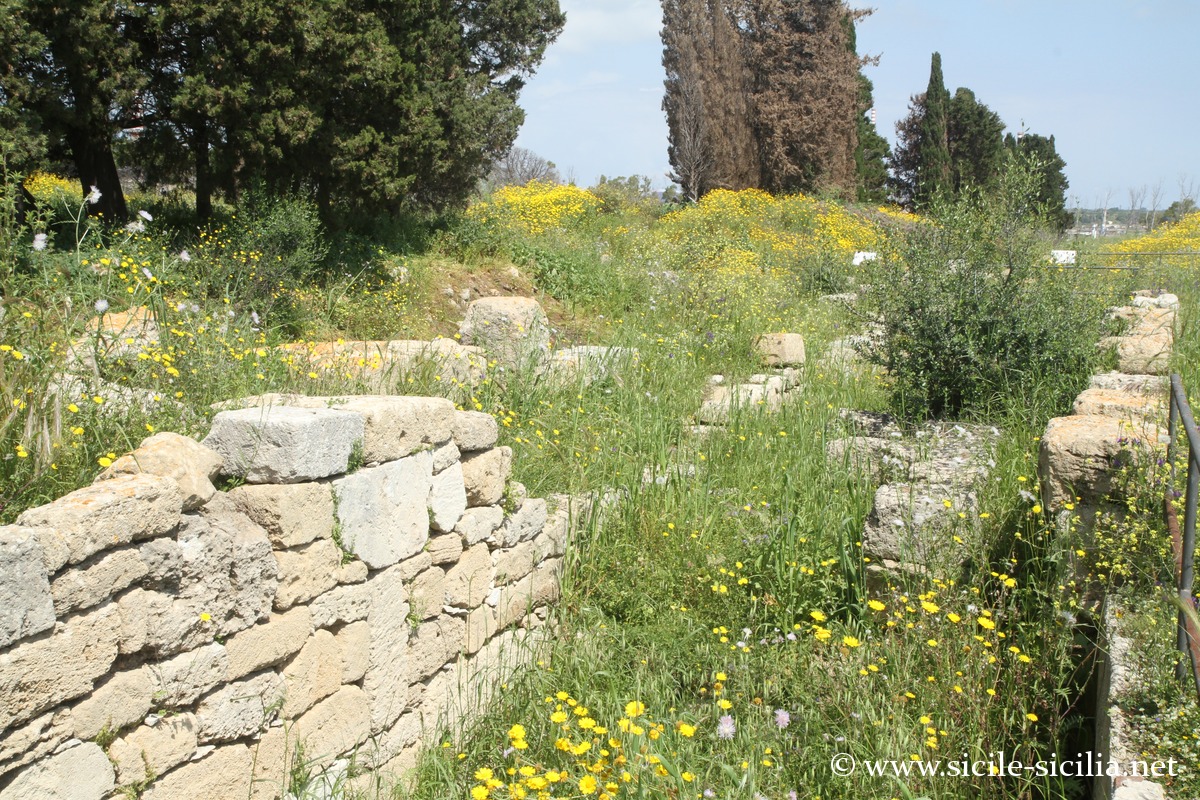
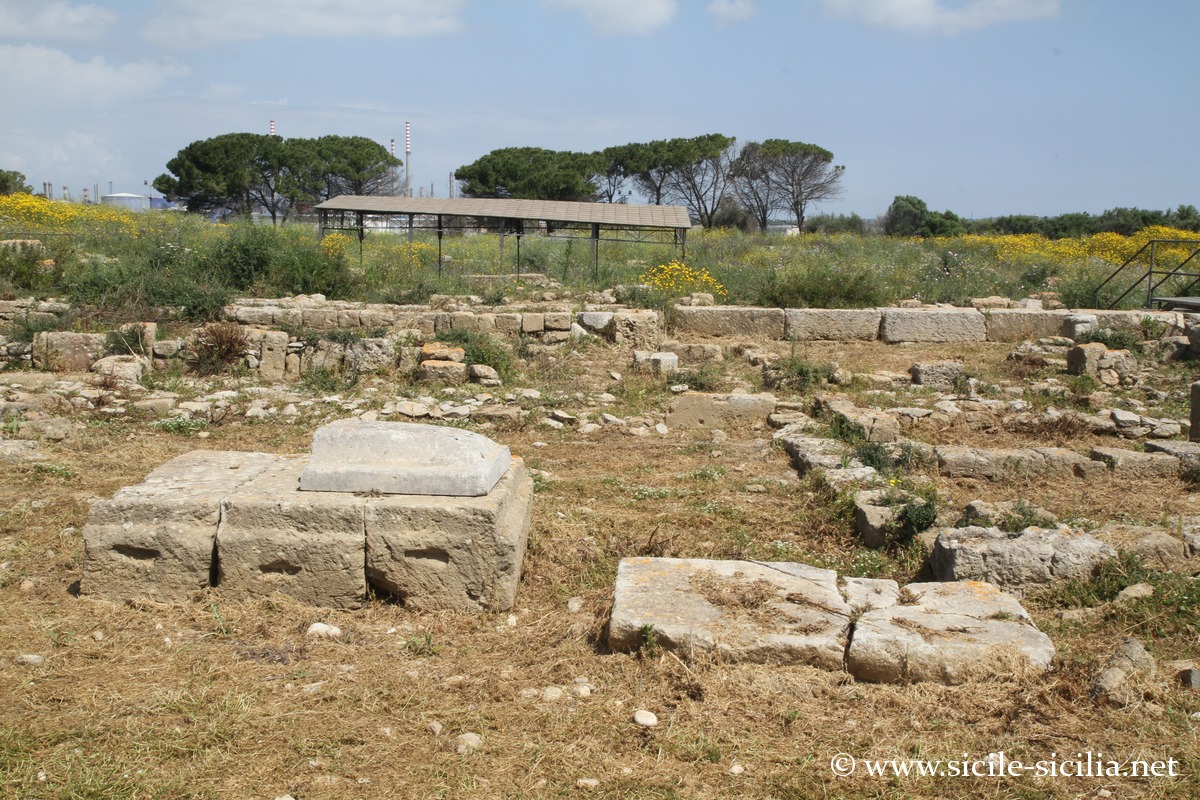
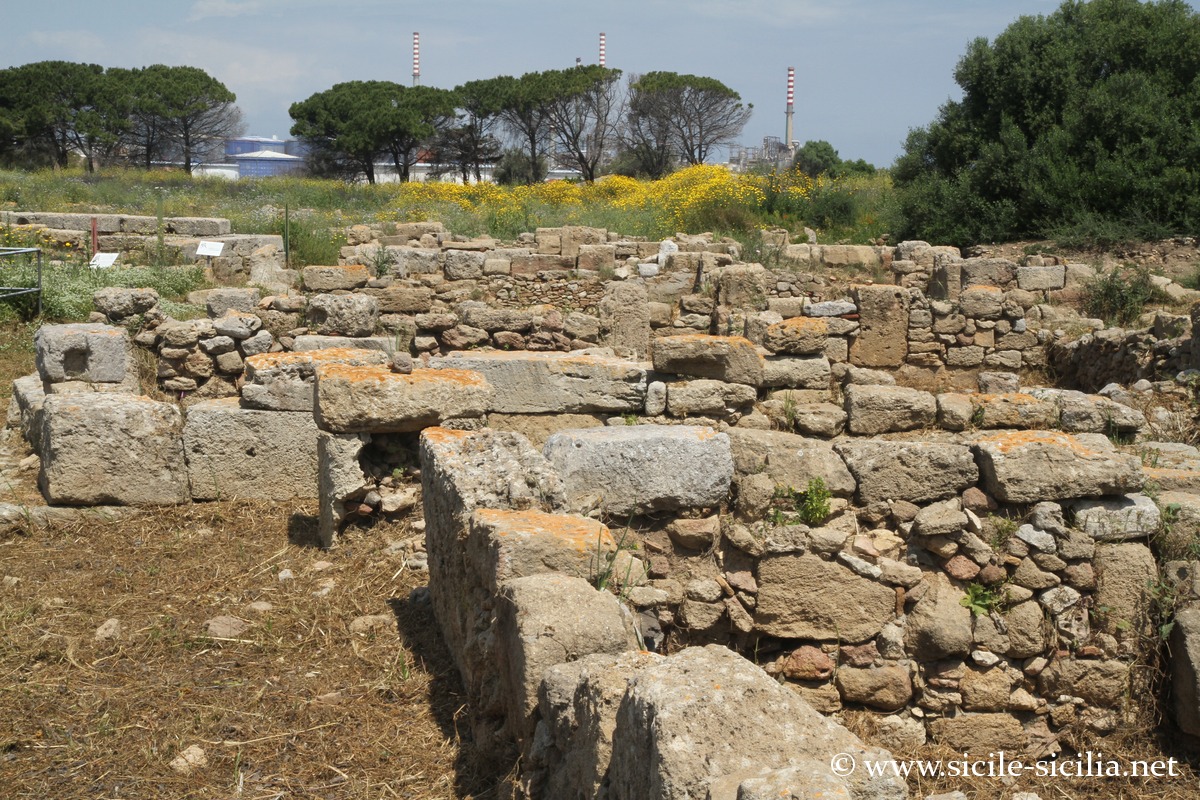
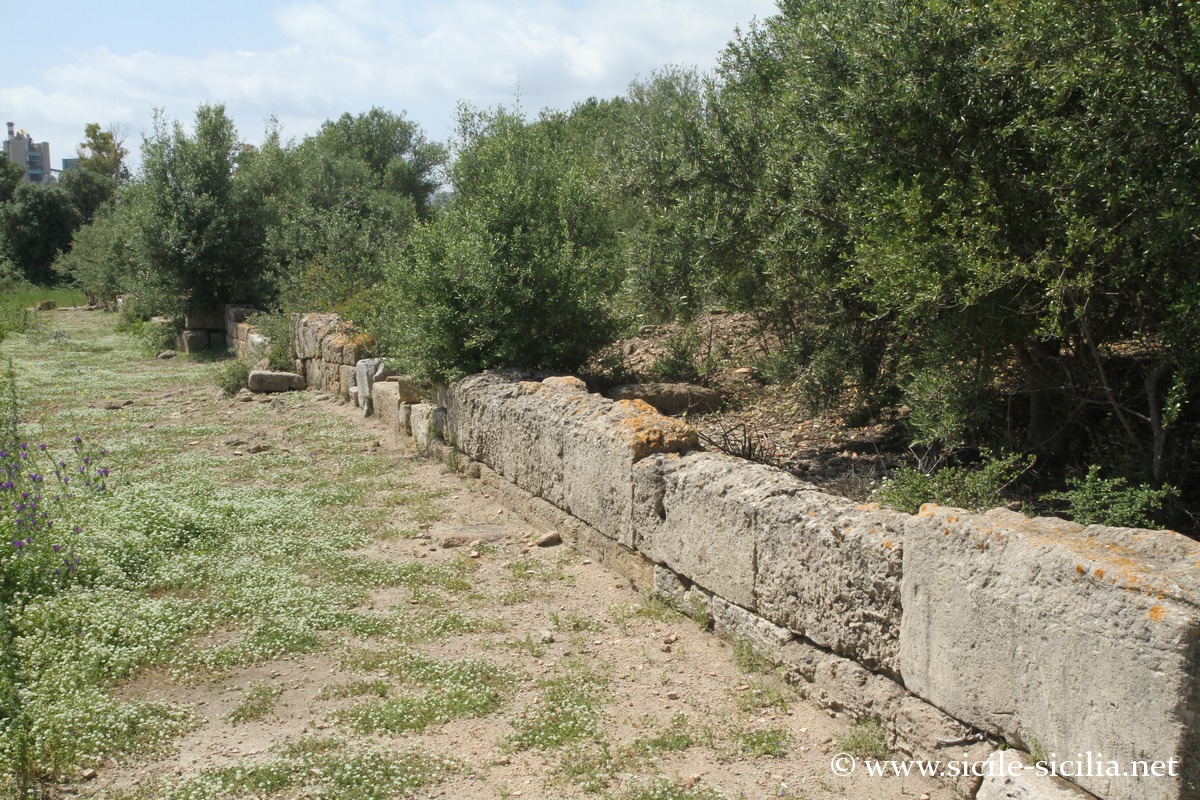
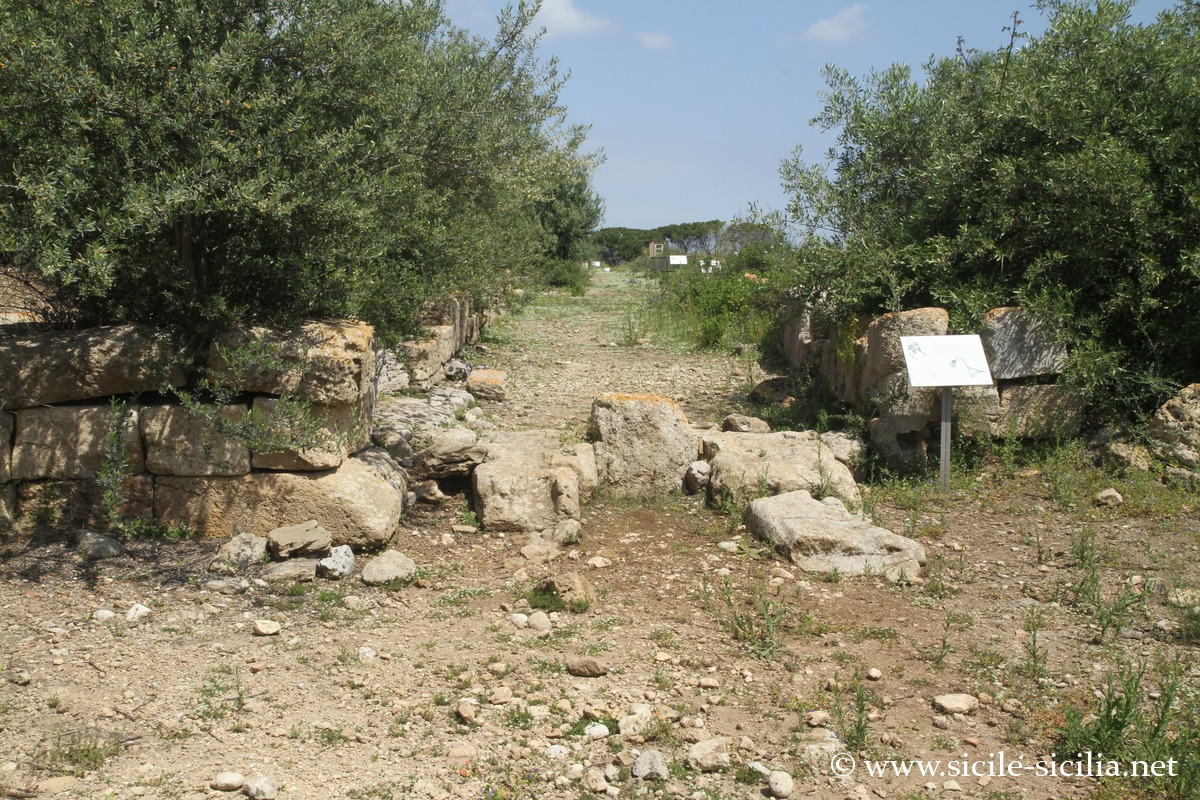
The archaeological site, although not very touristy, offers a precious glimpse of archaic and Hellenistic Greek town planning, one of the major specificities of this city.
The city is characterised by an archaic orthogonal plan, organised on a grid (Hippodamian) with perpendicular streets forming regular blocks, exceptional for a foundation of the 8th century BC in the Mediterranean. The centre of the city is a trapezoidal agora, the heart of public and economic life, surrounded by remains of porticoes and temples.
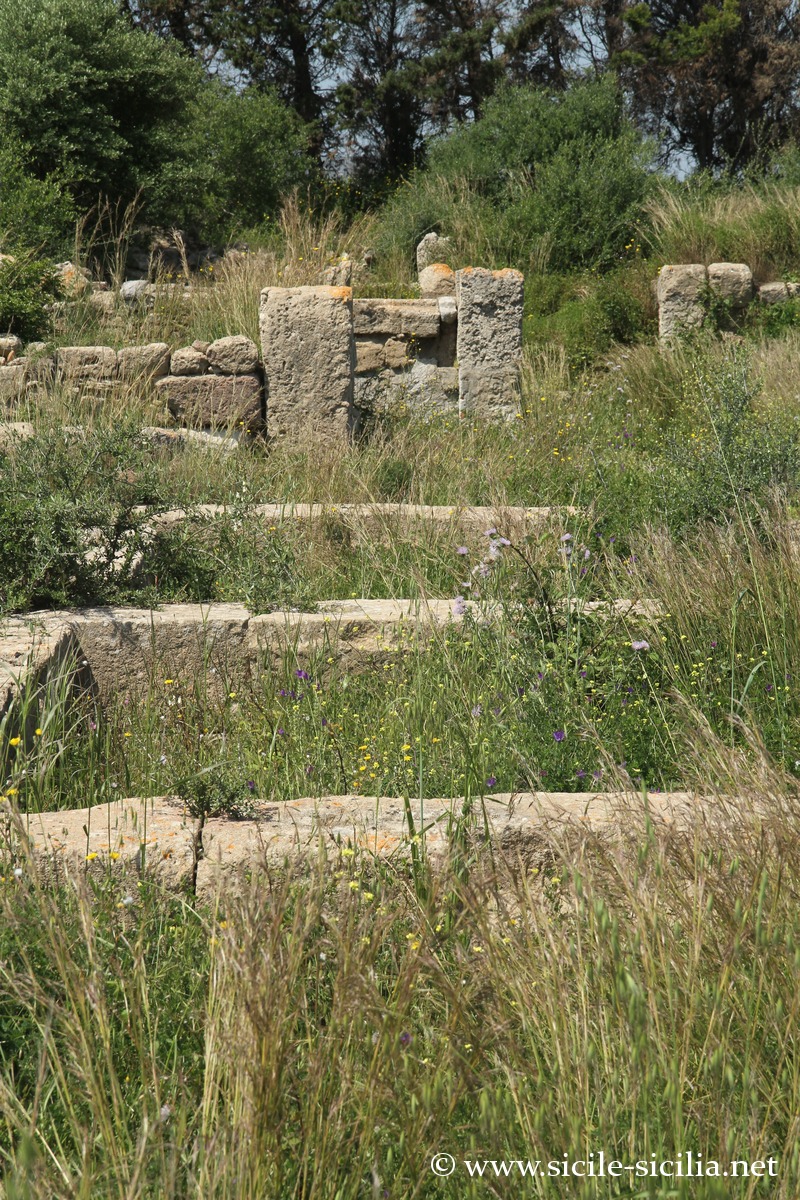
To the south of the agora, the foundations of two Doric temples dating from the 6th century BC have been brought to light. These temples, without a peripteros, had a pronaos and a naos.
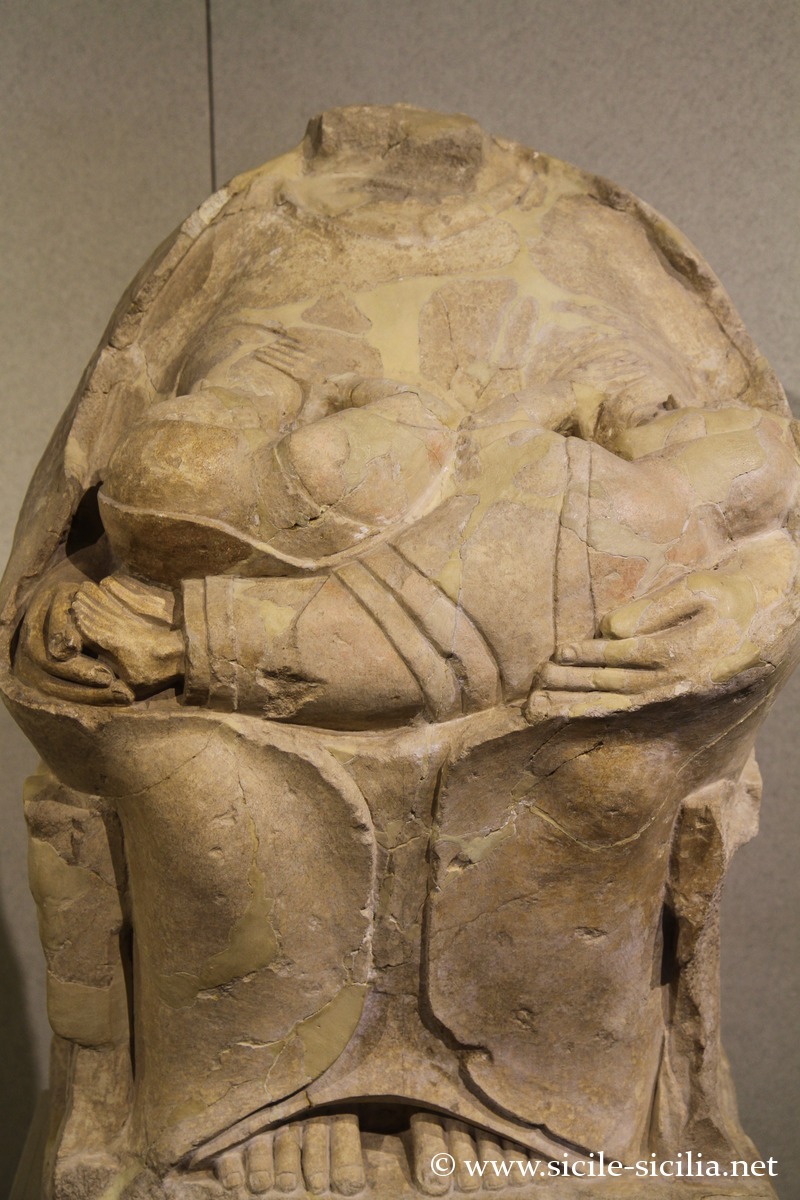
Kourotrophos: maternal figure carrying twins. Megara Hyblaea (-550). In the archaeological museum of Syracuse.
Votive objects discovered on the site are exhibited at the Museo Archeologico Regionale Paolo Orsi in Syracuse. It notably preserves an archaic statue (6th century BC) representing a woman seated on a throne breastfeeding twins, a funerary kouros in Parian marble (mid-6th century), a theatre mask (from the 6th century BC), or objects from the necropolises.
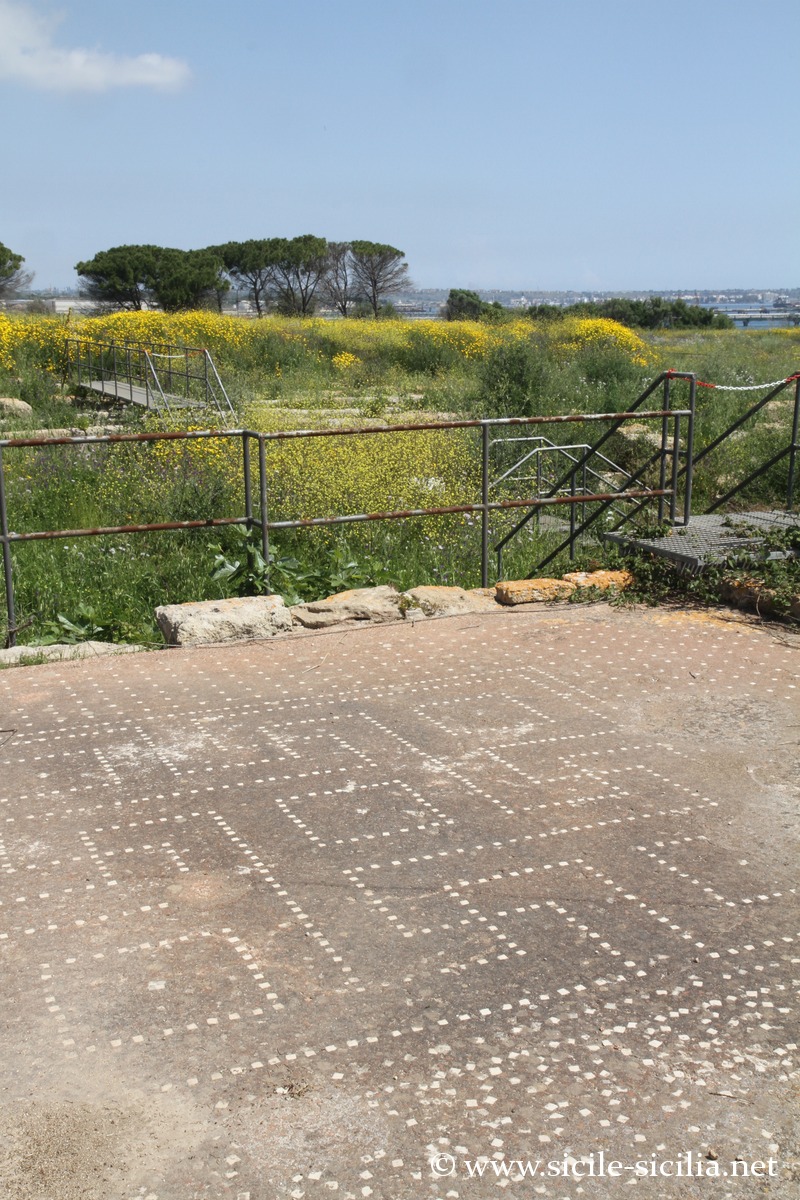
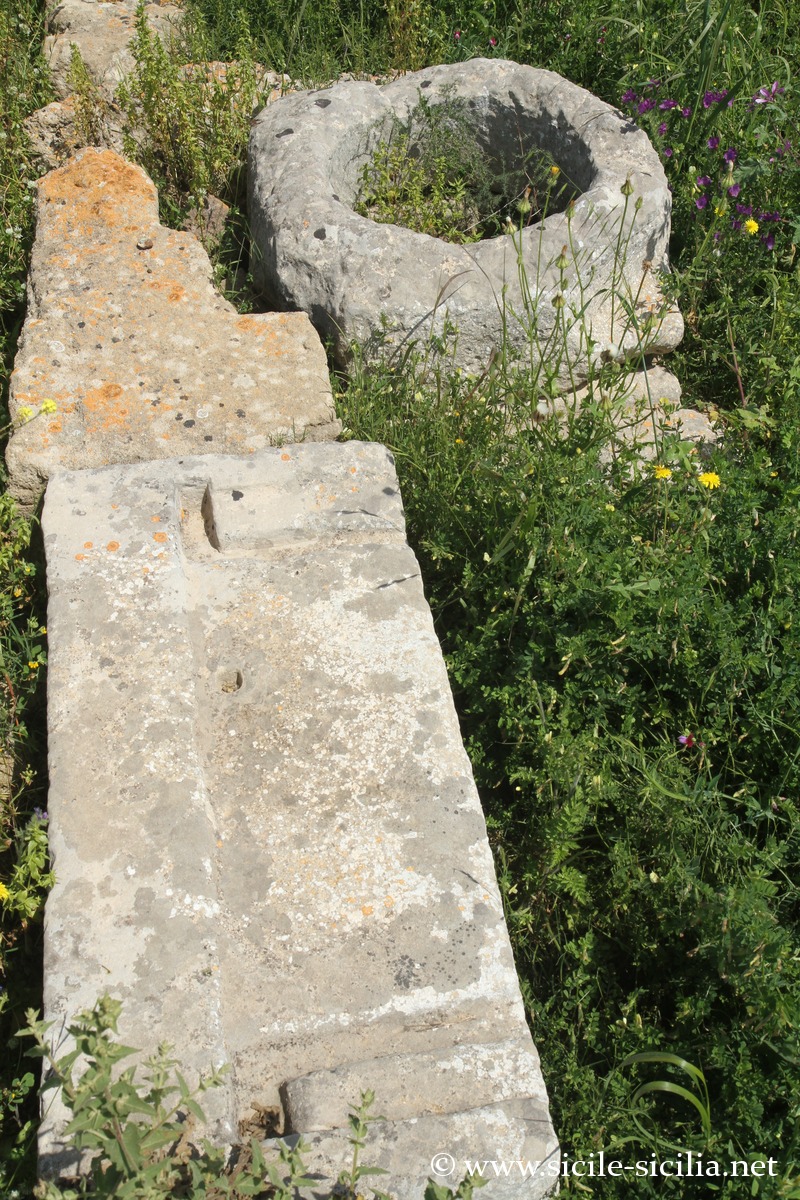
The excavations have also revealed specialised areas, including residential districts with houses, ovens and wells, as well as public buildings such as the archaic prytaneion and the Greek baths, reflecting a clear functional division between public and private spaces.
The archaic defensive walls, with square blocks, semi-circular towers and the west gate, show that the city combined urban planning and defensive strategy from its foundation. A Hellenistic temple has also been partially uncovered, illustrating the overlapping of eras on the site.
The southern necropolis, located outside the walls, is one of the oldest in the archaic Greek world and has yielded monumental tombs as well as funerary objects, offering a glimpse of the burial practices of the time.
The excavations, begun in 1891 and resumed in 1949 by the French School of Rome, brought to light the complex town planning of the city, with its streets, dwellings, workshops and public spaces.
The site is accessible to the public.
History of Megara
Megara Hyblaea was reportedly founded in 728 BC by Greek colonists from Megara (between Athens and Corinth) led by their chief named Lamis.
Thucydides and other authors recount the difficult story of the arrival of these colonists. First settled at Trotilon (today Brucoli), they moved to Leontinoi to help colonists from Chalcis on the island of Euboea. The latter wanted to get rid of the local Sicels with whom they shared the city.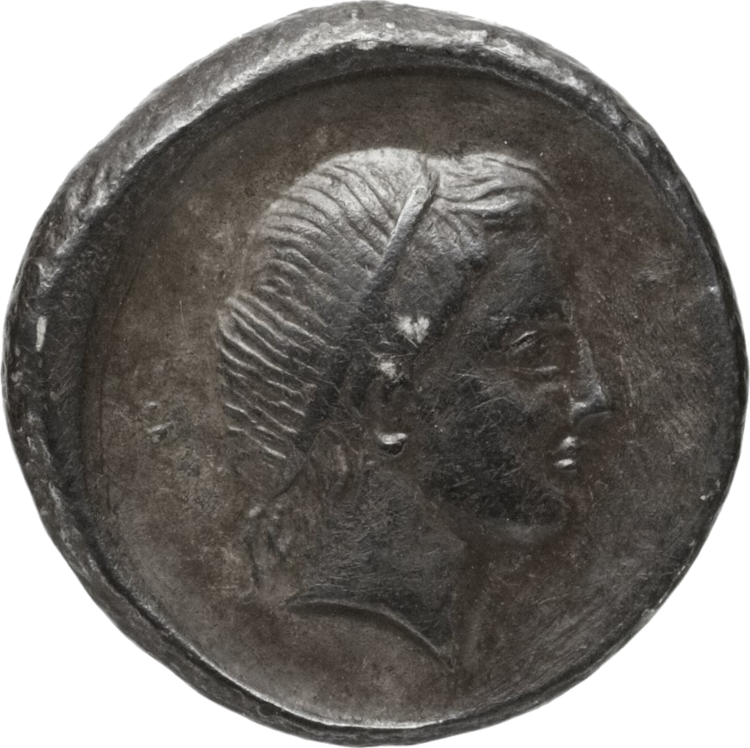 Once their affairs were settled, the Euboeans allegedly betrayed and drove out Lamis and his companions, who then went further south to settle briefly on the peninsula of Thapsos, where Lamis is said to have died. The colonists finally settled further north, on land offered by the legendary Sicel king Hyblon (whose capital Hybla was perhaps near Pantallica), to found Megara Hyblaea there.
Megara Hyblaea left less of a mark on history than its Greek neighbours and rivals Leontinoi and Syracuse, founded at the same time. Some of its inhabitants indeed left to found the colony of Selinus in western Sicily. According to Thucydides the inhabitants were expelled by Gelon, the tyrant of Syracuse, in 483 BC, and the city was razed.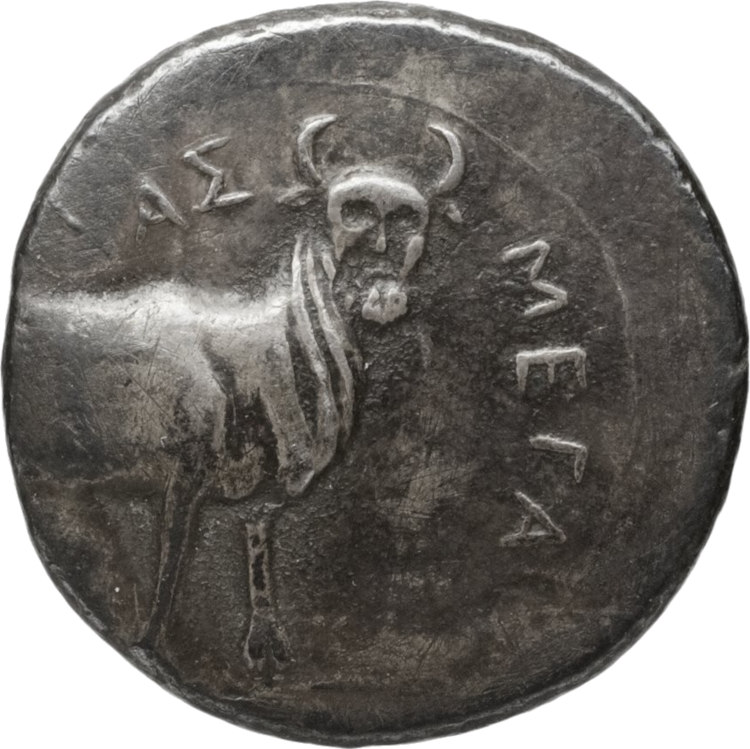 Later, a recolonisation is attributed to Timoleon of Syracuse around 340 BC. However, archaeological evidence from this period is non-existent until the reign of Hieron II, tyrant of Syracuse (270 – 215 BC).
Finally it was destroyed during the Second Punic War by the Roman general and consul Marcus Claudius Marcellus in 213 BC, then fell into oblivion.
Where is Megara Hyblaea: map
If you see this after your page is loaded completely, leafletJS files are missing.
Information
Antiquarium di Megara Hyblaea
Contrada Megara Giannalena, 96011 Augusta SR
External sites
- Megara Hyblae on Wikipedia (FR)
- The archaeological park of Megara on the Sicily Region website
- Megara on www.hermes-sicily.com,
- Excavations of Megara 2022 on HAL
Comments in other languages
Interesting site above all for lovers of antiquity, particularly Archaic Greece. Archaeologists from the French School of Rome / CNRS are still excavating the site!
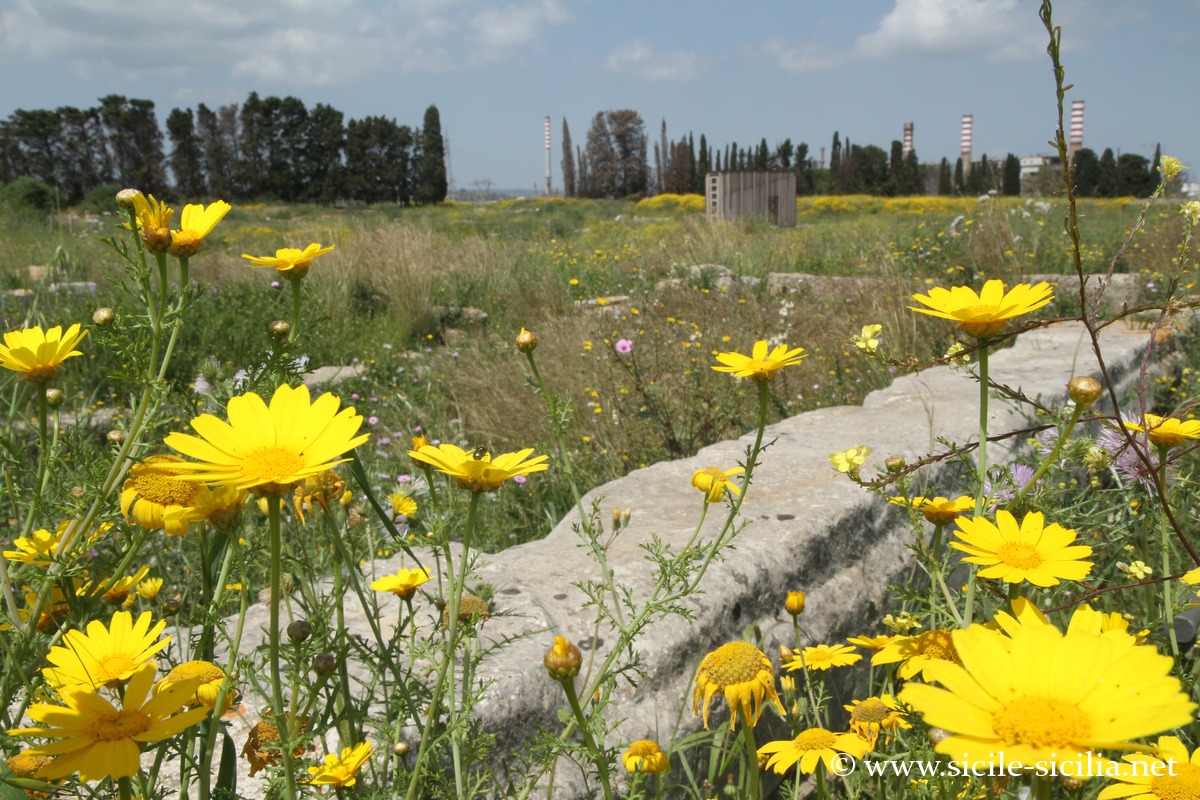
In spring, the vegetation can be overgrown