

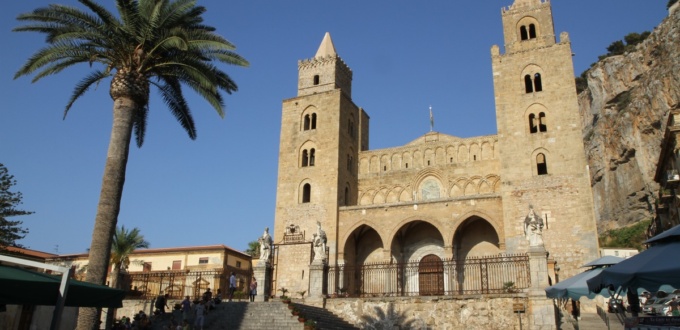
Dominating the town of Cefalù, the Norman cathedral, built in the 12th century by Roger II, is a masterpiece of medieval architecture, one of the finest works of Arab-Norman architecture in Sicily. It is inscribed as a UNESCO World Heritage Site, a testament to Arab, Norman and Byzantine influences.
Its imposing façade flanked by two fortified towers contrasts with the richness of the Byzantine mosaics inside, where a Christ Pantocrator of remarkable finesse reigns supreme.
Historical elements
According to tradition, the construction of the cathedral basilica was decided by Roger II, who had made a vow to the Holy Saviour to express his gratitude after escaping a violent storm at sea. During that storm, he eventually ran aground on the beach of Cefalù, where he found refuge.
However, military motivations seem more tangible, given the topography of the site, which gives it the character of a natural fortress, protected by ancient megalithic walls. Moreover, the extraordinary size of the basilica itself serves a defensive function.
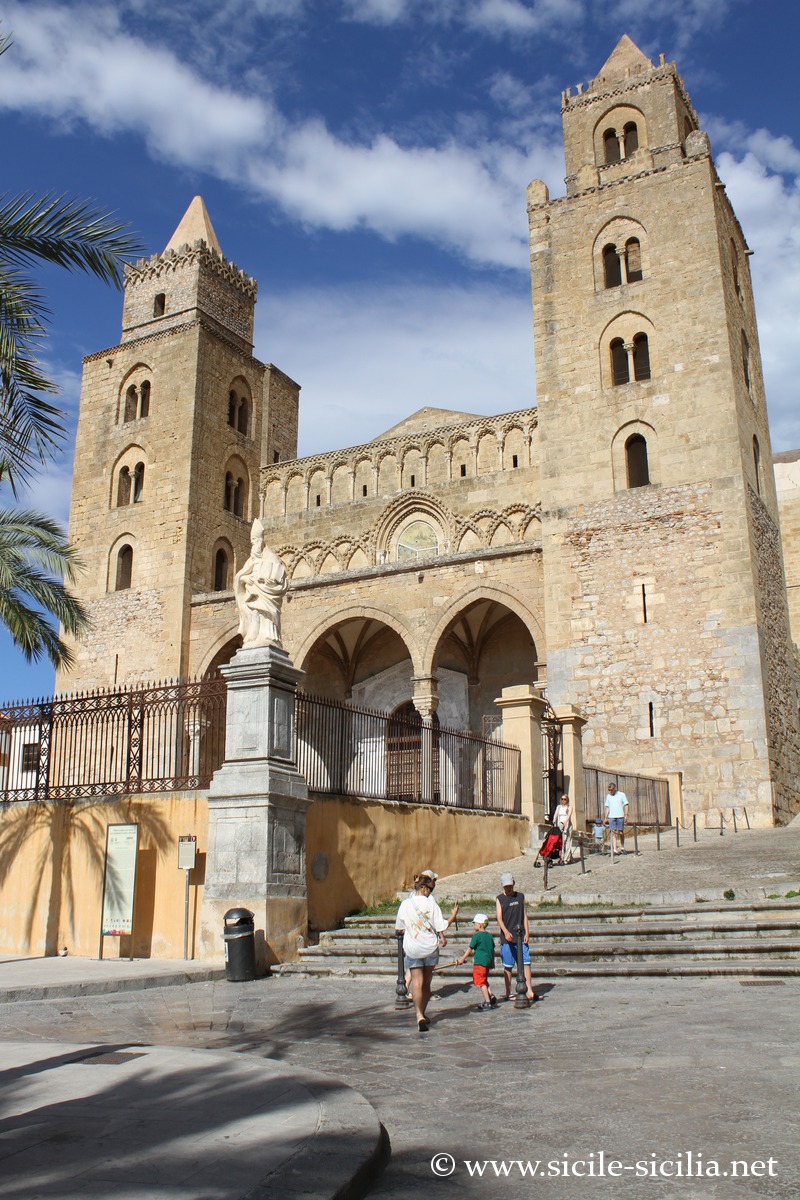
Cefalù Cathedral
Ancient remains have recently been found beneath the building, indicating the presence of an earlier place of worship, such as a polychrome Early Christian mosaic from the 6th century.
The first stone of the basilica was laid on the day of Pentecost in 1131, and the splendid Byzantine mosaics of the apse were created in 1145. Construction was intermittent. Thus the façade was completed in 1240 and a new consecration was celebrated in 1267.
In 1472, a portico by Ambrogio da Como was added between the two towers of the façade.
King Roger had intended it to house his burial, as well as those of his wife and descendants. But these tombs were later moved to Palermo by Frederick II.
It is clear that the workers and architects were largely of Arab culture, as was the case for most of the architectural masterpieces of Palermo from the same period. In particular, the appearance of a palace-fortress, typical of Maghrebi architecture, is found there.
Description and visit of Cefalù Cathedral
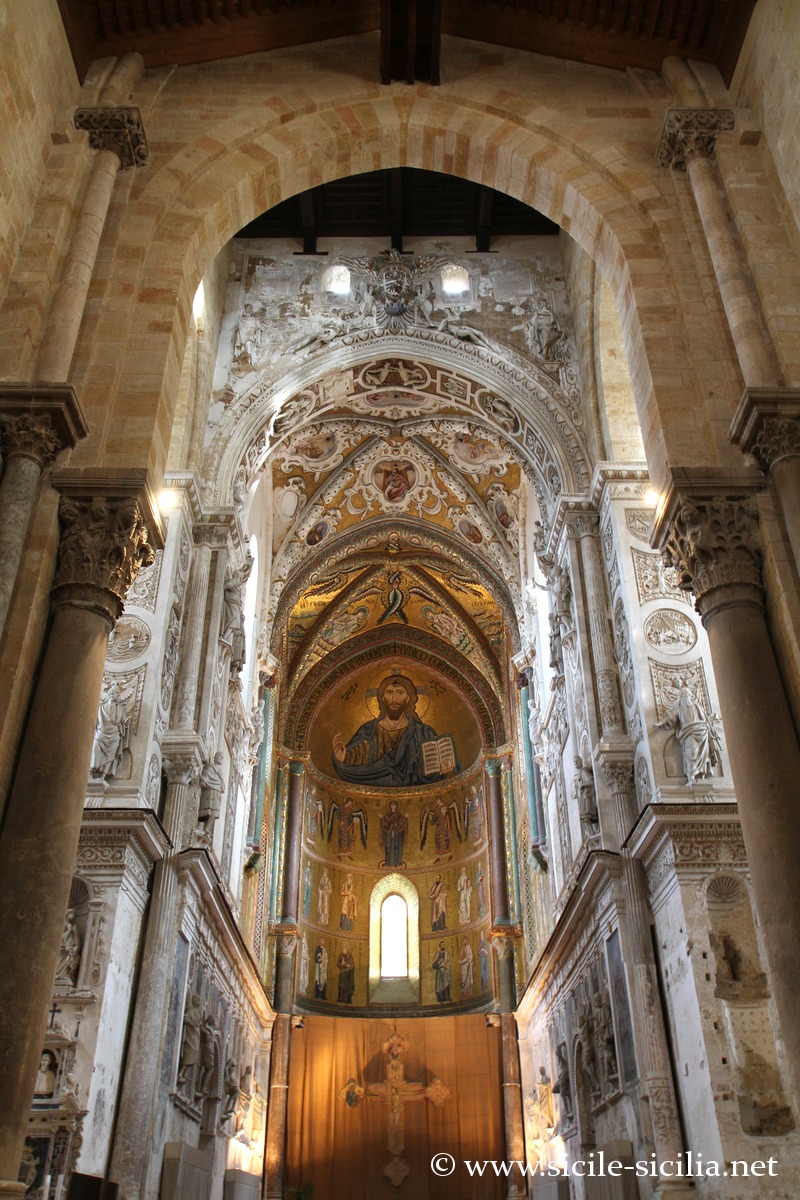
Chancel and apse
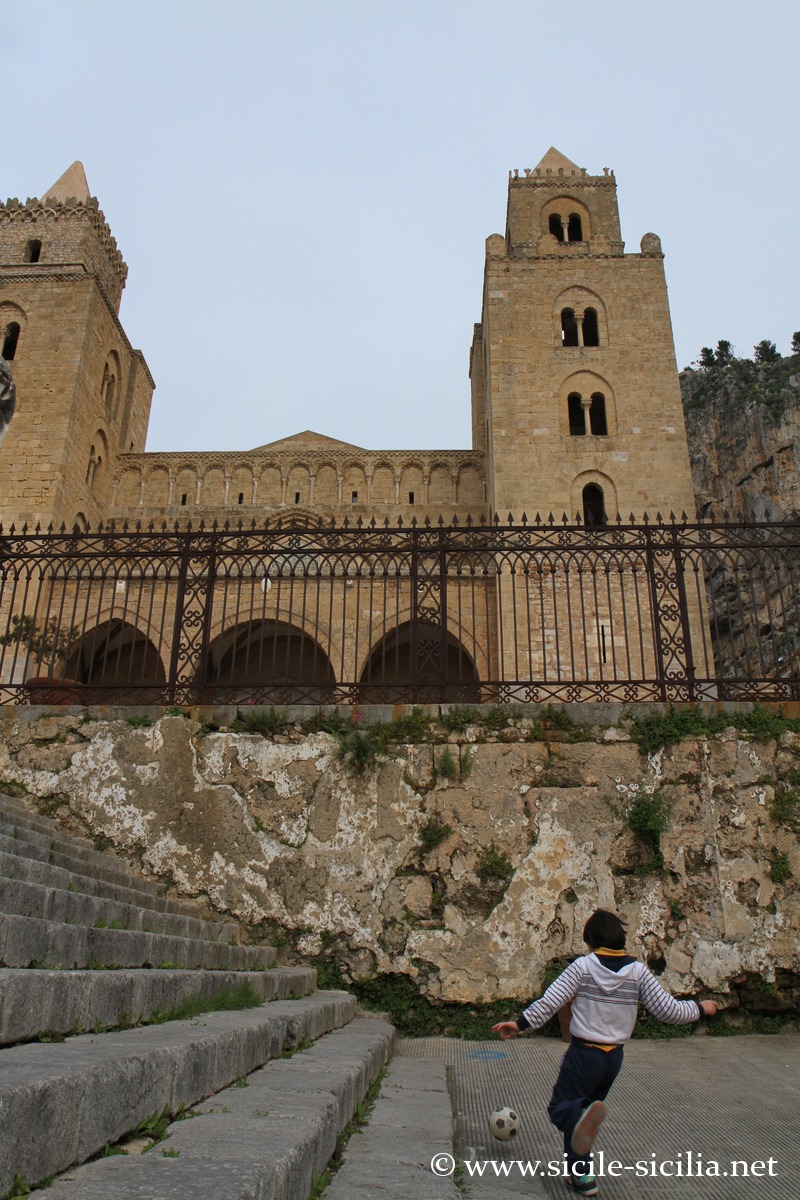
The cathedral is preceded by a forecourt, which replaced an old cemetery.
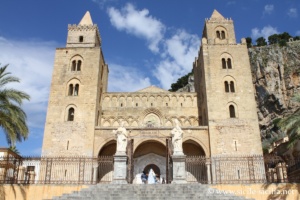
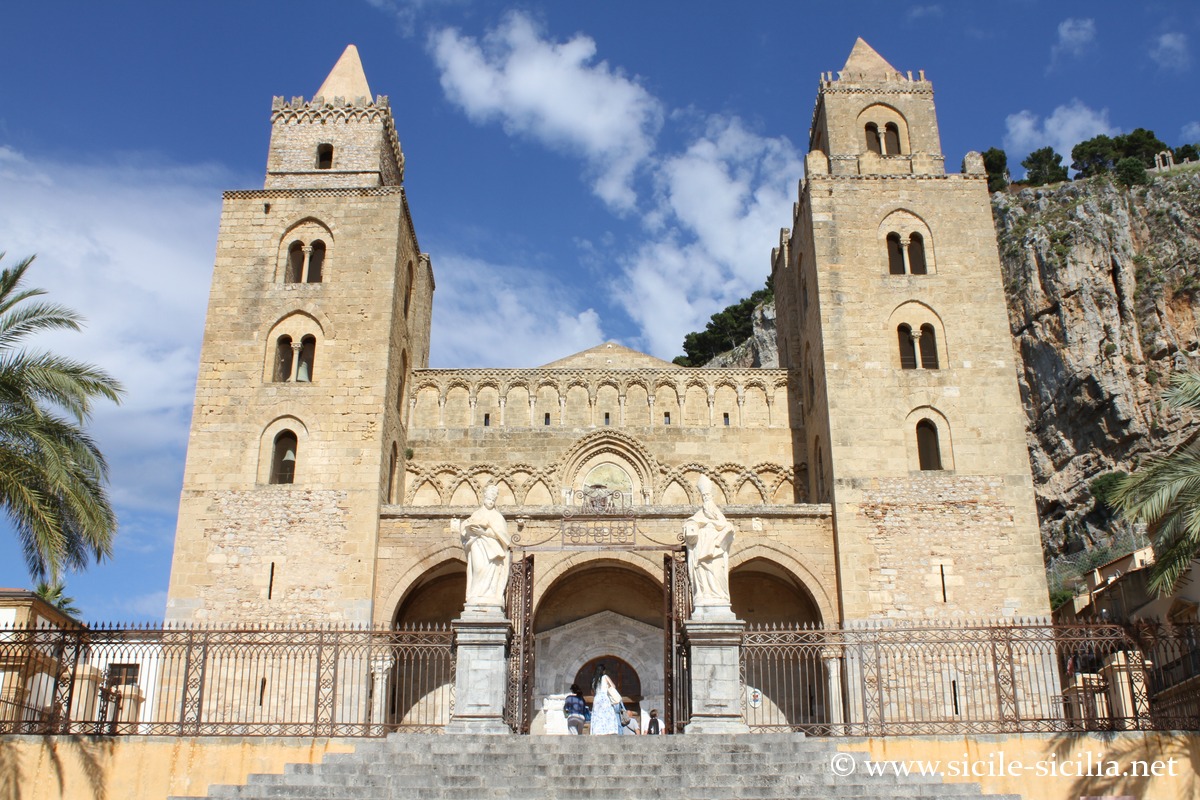
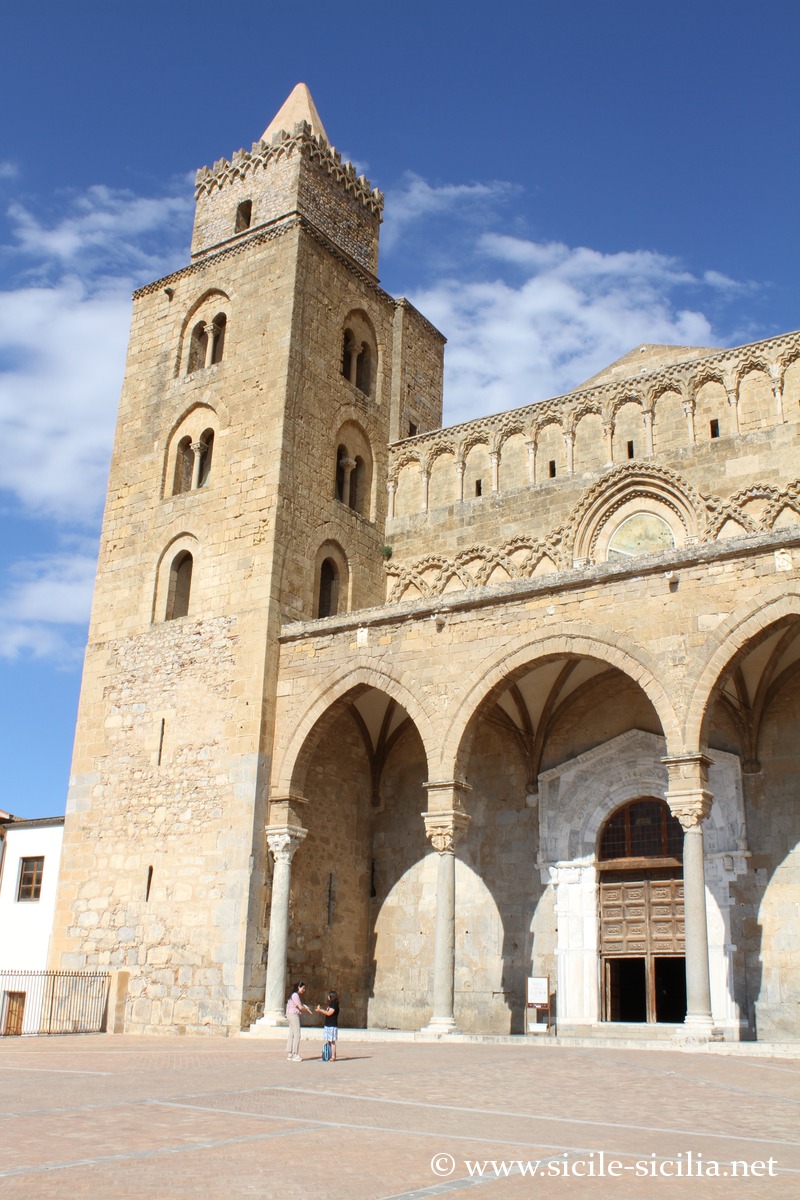
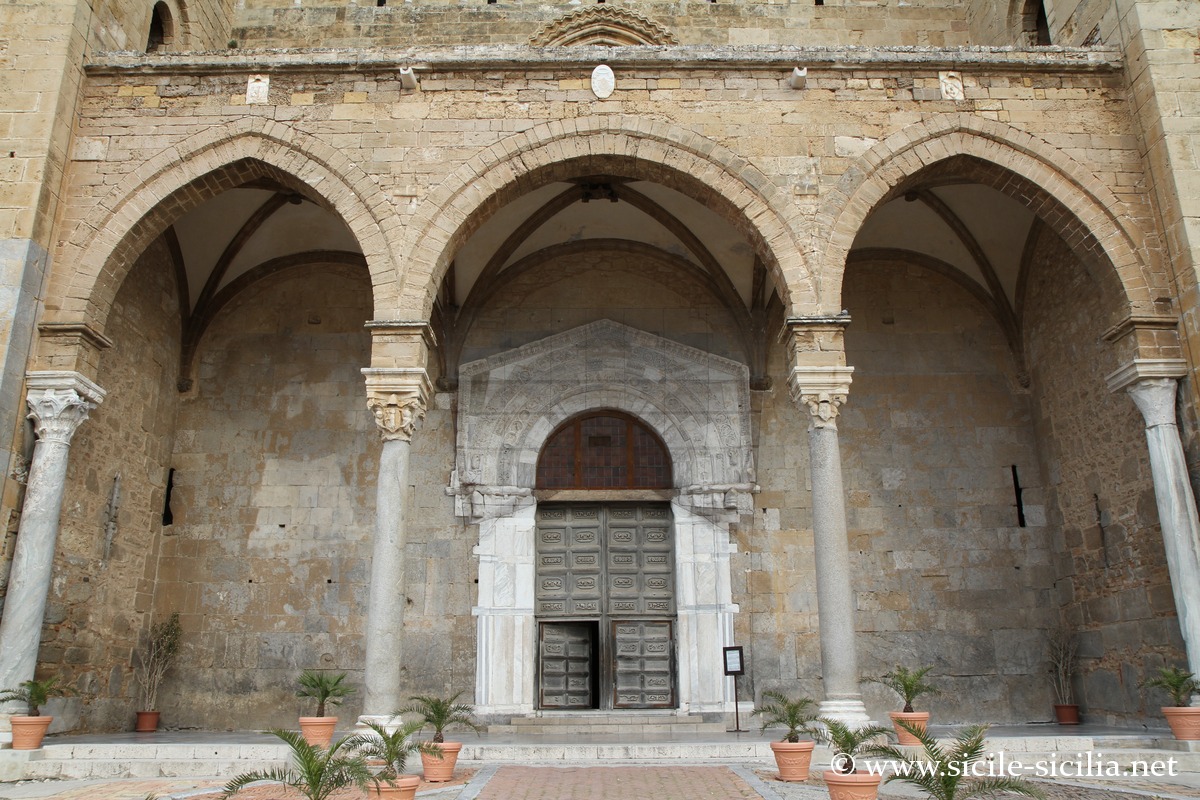
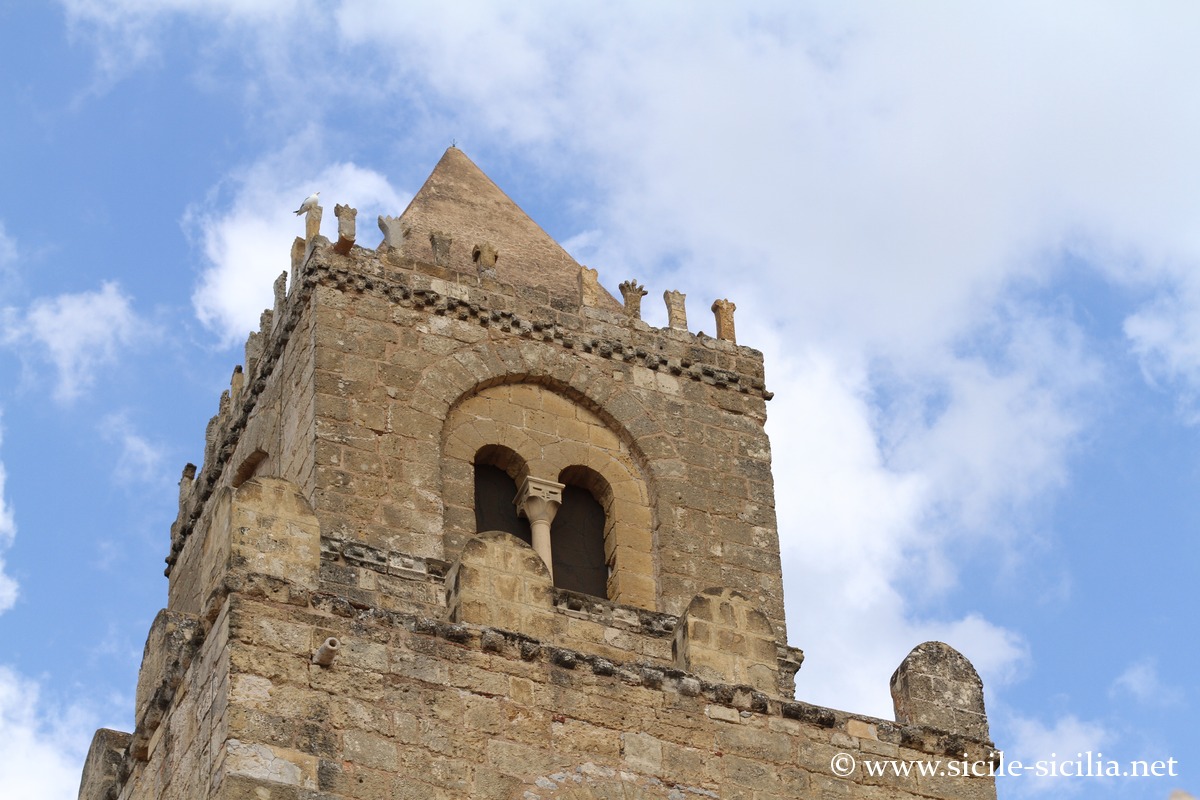
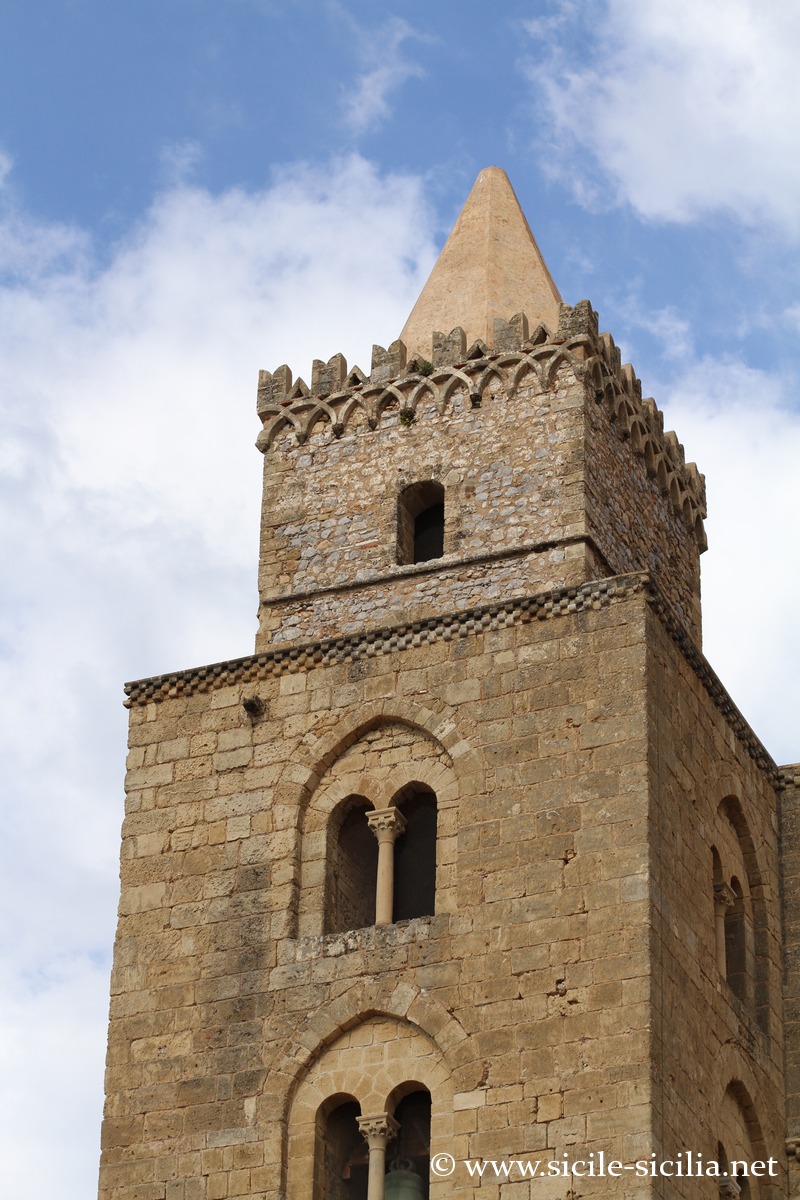
The façade has a massive and austere appearance, forming a compact block between the two large Norman towers, with mullioned windows. The pyramidal spires that surmount them date from the 15th century. They are different: one has a square plan and is surrounded by flame-shaped merlons (symbolizing the authority of the papal mitre), the other has an octagonal plan, with Ghibelline merlons (symbolizing royal and temporal power).
The 15th-century portico has three arches, with a finely decorated marble Royal Door.
Interior of the cathedral
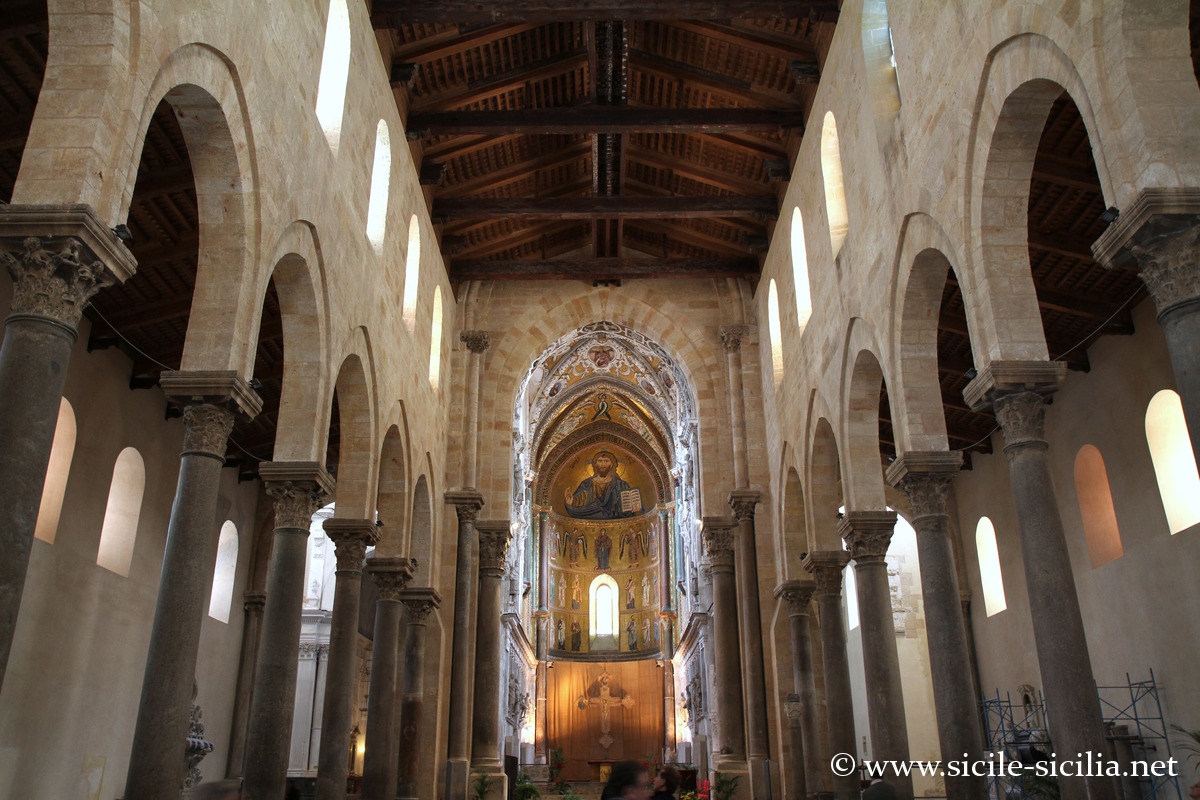
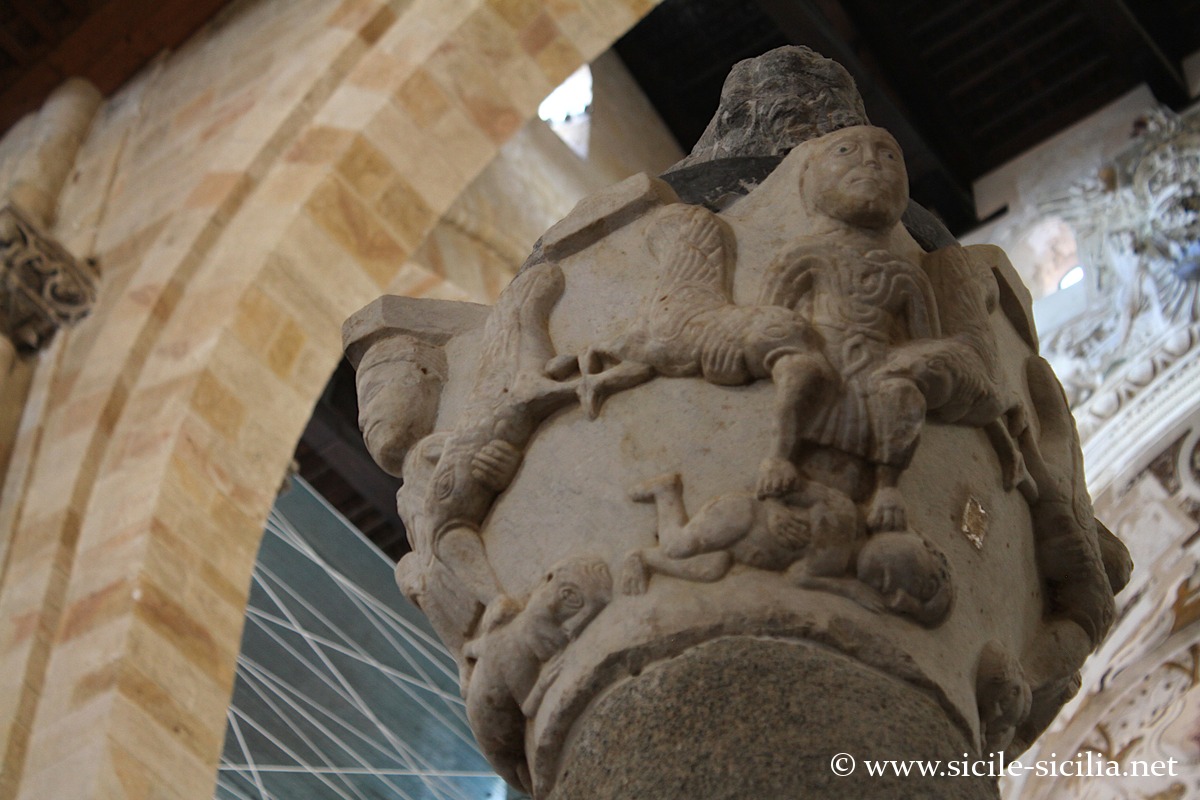
The interior has a Latin cross plan, divided into a main nave and two side naves, which are separated by two imposing colonnades whose arcades are supported by partly ancient columns. Their bases and capitals date from the 2nd century AD.
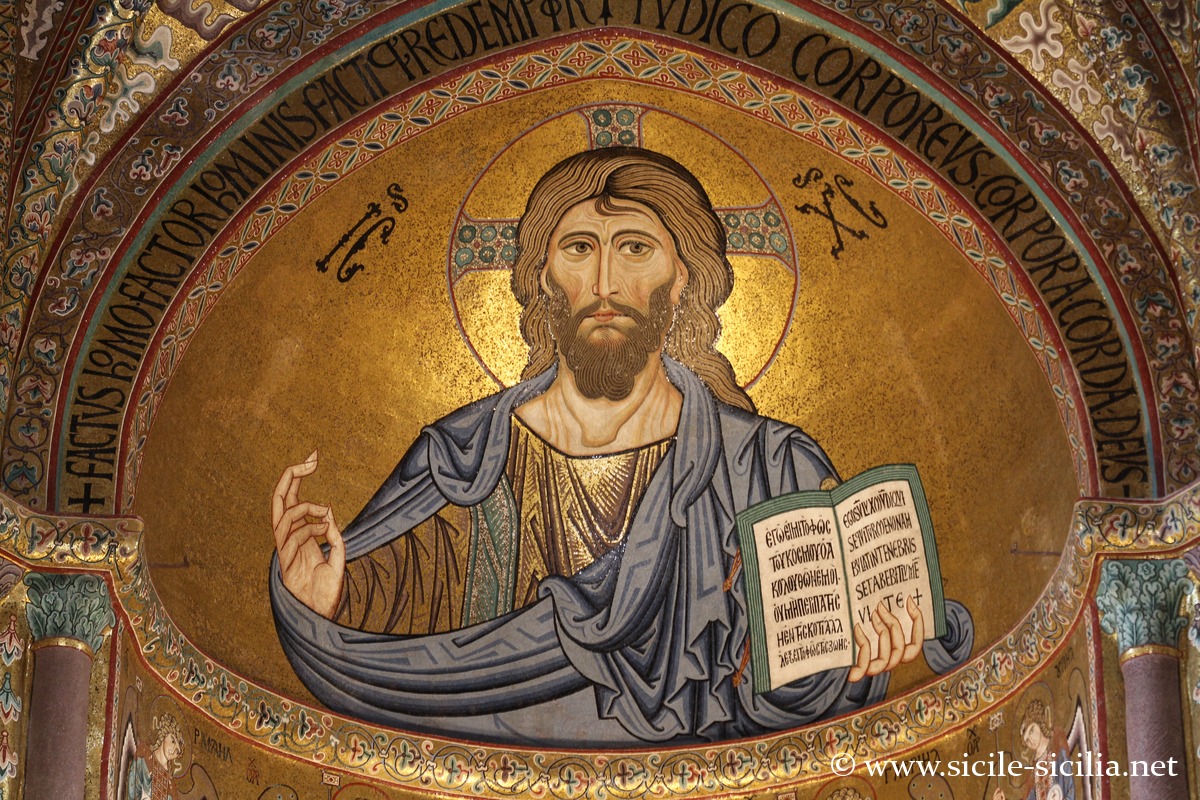
Mosaic of Christ in the apse
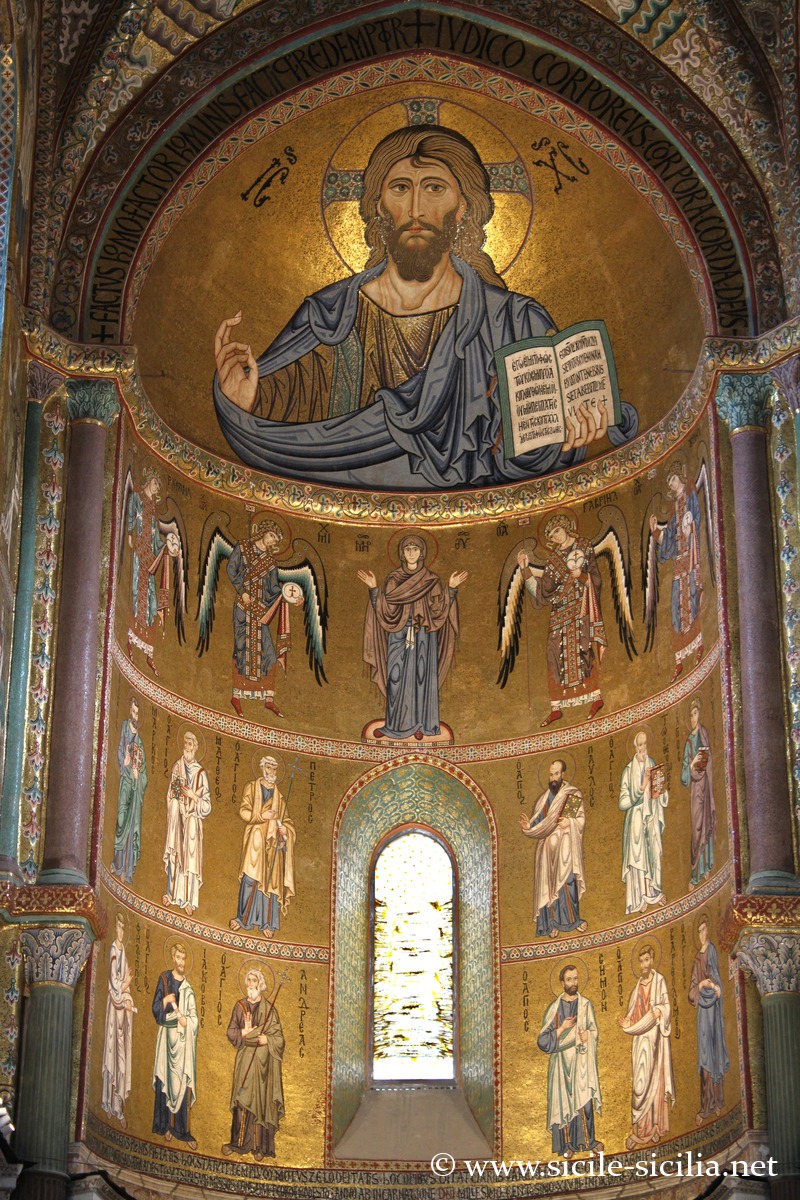
The eye is immediately drawn to the image of the Christ Pantocrator, the splendid mosaic of the apse on a golden background.
The transept is higher than the two naves. The naves have barrel vaults, other parts have exposed timber framing, and the crossing has a stone rib vault. After the transept, the style is unusual, combining essentially Romanesque style, but with pointed arches.
Cloister of the cathedral
The cathedral has an elegant medieval cloister, more than three metres below the floor of the transept. Its arcades are formed by pointed arches supported by paired columns, whose motifs are in the Byzantine style with creatures such as lions or eagles.
The mosaics
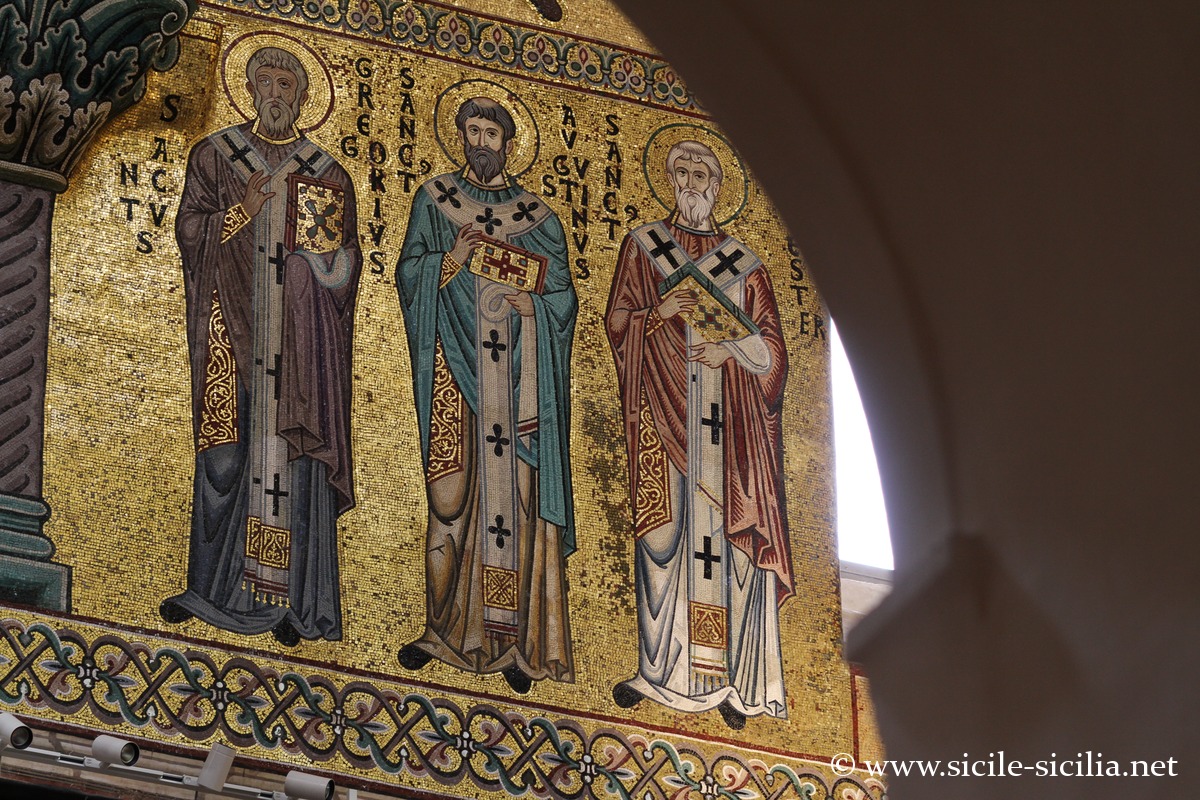
Mosaics of the apse
The mosaics, created before 1170, were completed only in the area of the chancel, the apse and part of the side walls.
Roger II had them executed by masters from Constantinople. The bust of the Christ Pantocrator dominates there. In his left hand, he holds the Gospel of John, on which one can read, in Greek and Latin: “I am the light of the world; those who follow me will not walk in darkness, but will have the light of life” (John 8:12). Below, the Virgin, apostles, prophets, saints and evangelists are depicted in procession.
The lower part and the side walls of the chancel were completed only in the 17th century, covering older paintings, now reduced to rare traces.
Paintings
Of the original paintings, there remains a figure of Urban V from the late 14th century, on a column, and a Virgin in Majesty from the 15th century, in the transept.
The ceiling of the nave is painted with busts, fantastic animals and others, perhaps created by Arab artists.
Photo gallery

Façade of the cathedral 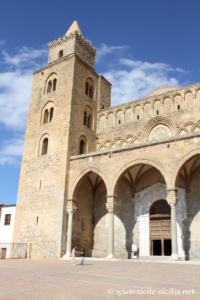

Façade and portico 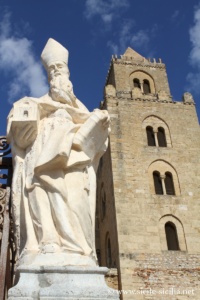
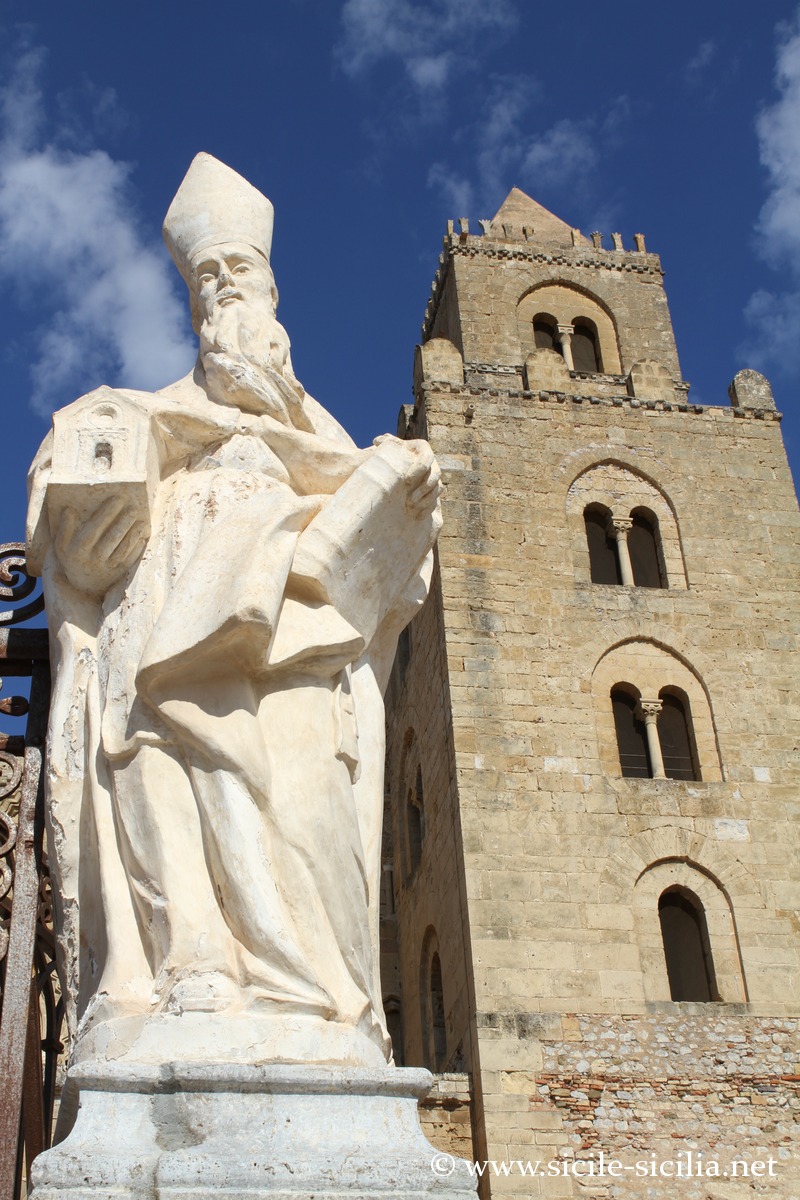
Statue of the steps and tower 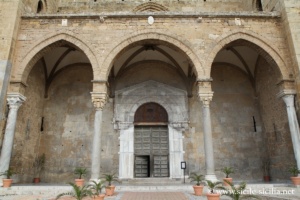
Portico 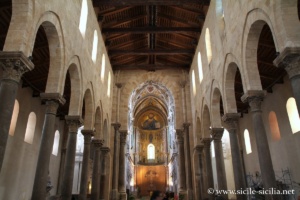
Interior 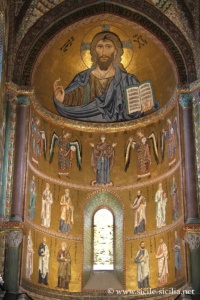
Apse 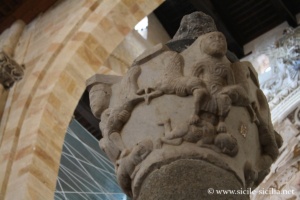
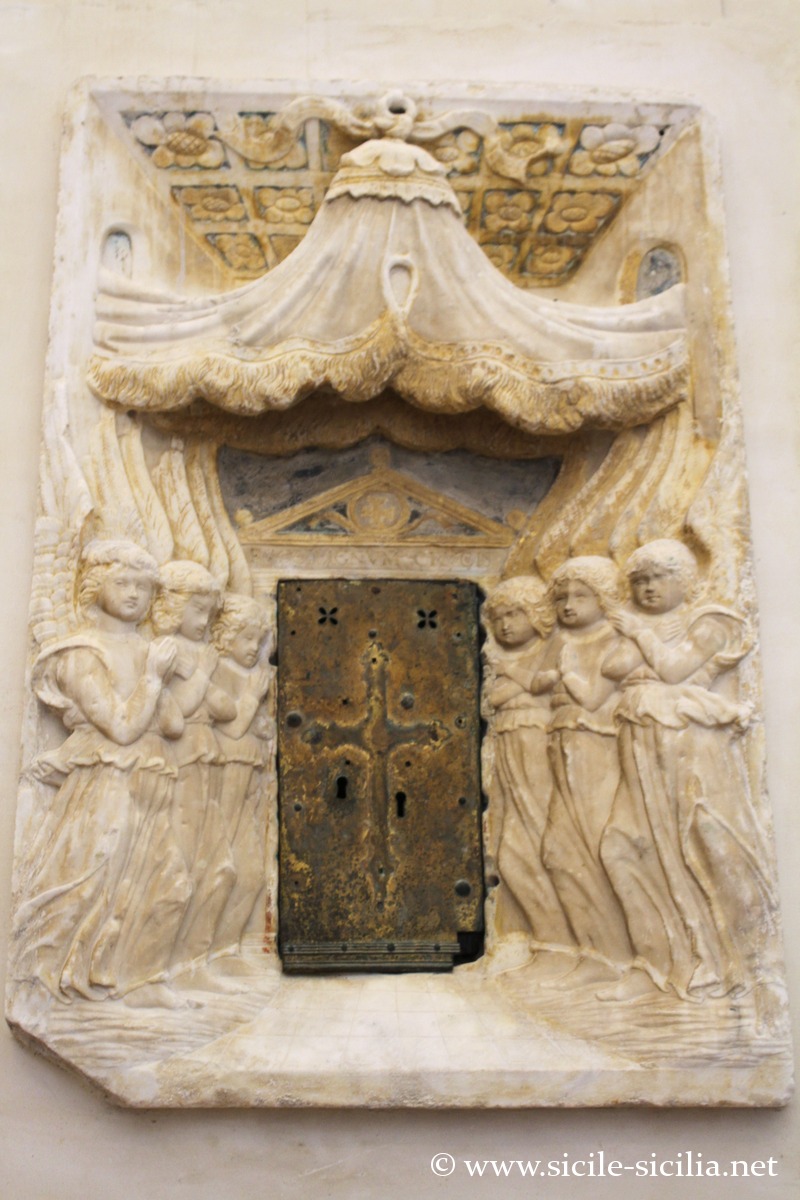
Ancient capital 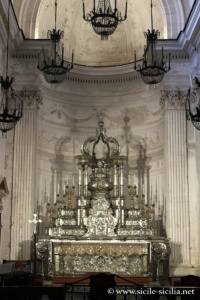
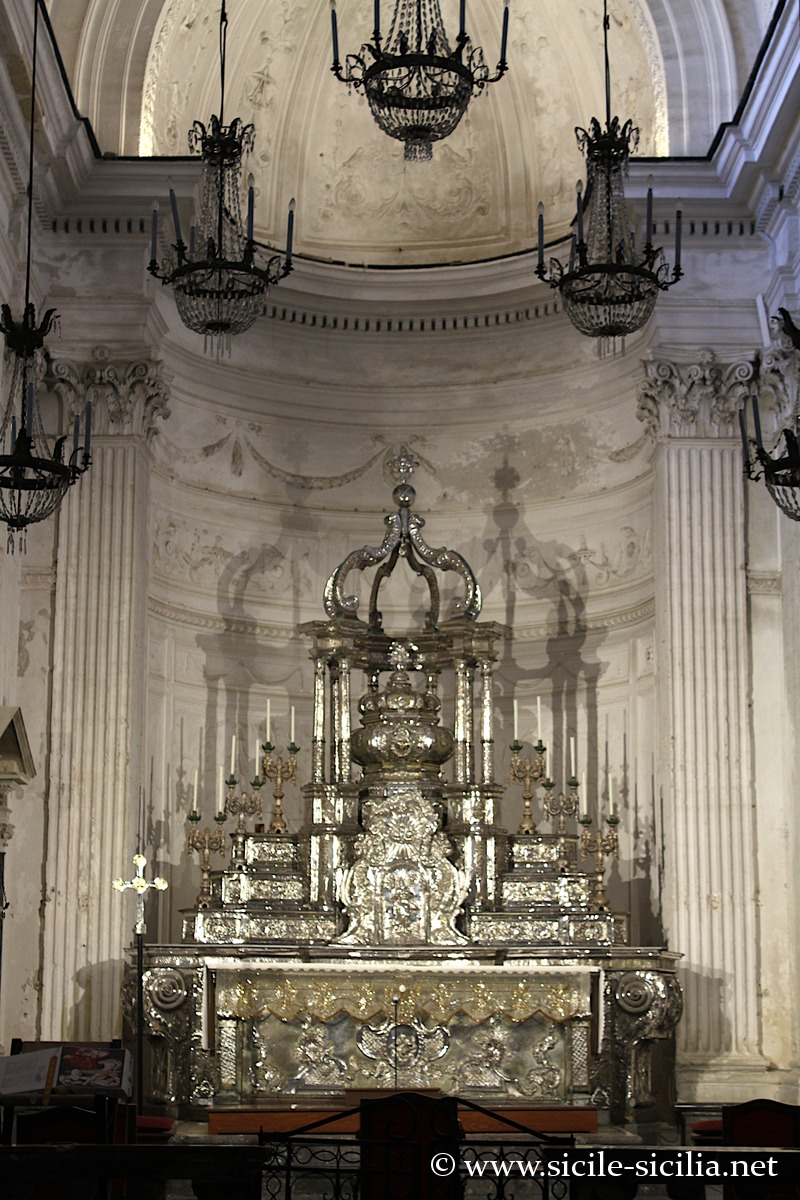
Silver altar 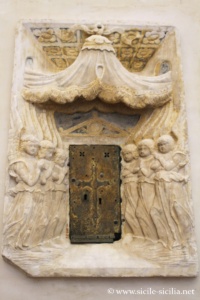
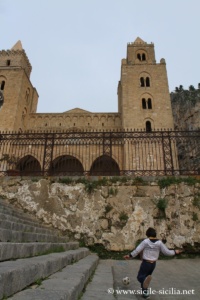
Outdoor staircase 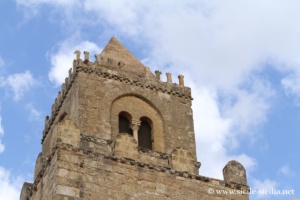
Tower of the cathedral 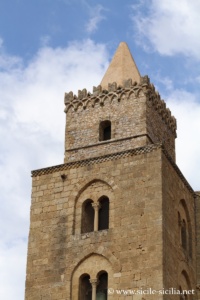
Tower of the cathedral
Where is Cefalù Cathedral and map
If you see this after your page is loaded completely, leafletJS files are missing.
Information
Sources and external sites
- Cultural and tourist blogs: www.arabonormannaunesco.it, www.visitcefalu.com/cattedrale-duomo-cefalu
- Wikipedia page: en.wikipedia.org
Articles in the Cefalù category
- Cefalù
 Cefalù is a small town of about 14,000 inhabitants, and a charming ...
 - What to see in Cefalù and surroundings
 Beyond the Norman cathedral, the highlight of the show, there are many ...
 - Himera and Termini Imerese
 Termini Imerese, on the coast between Palermo and Cefalù, could be a ...
 - Palermo Coast to Cefalù
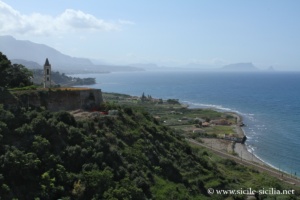 The Sicilian coast east of Palermo stretches along the fairly urbanized gulf ...
 - Palermo Coast to CefalùThe Sicilian coast east of Palermo stretches along the fairly urbanized gulf ...
- Hotels in Cefalù
 Hotels in Cefalù in Sicily, on the coast, in the centre or ...
 - Activities in Cefalù and Excursions
 Booking of activities in Cefalù and its surroundings, guided tours, tastings, excursions ...
 - Around Cefalù
 Sicilian destinations near Cefalù, including inland Castelbuono, then the Madonie park and ...