
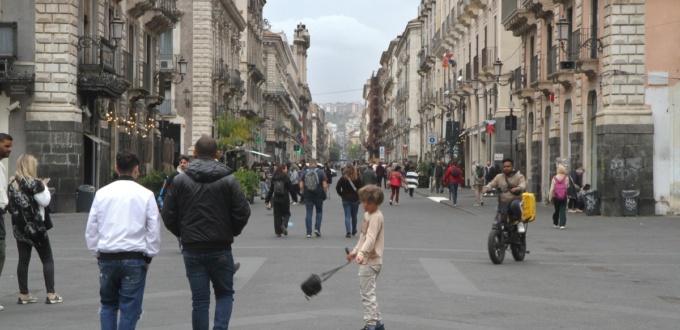
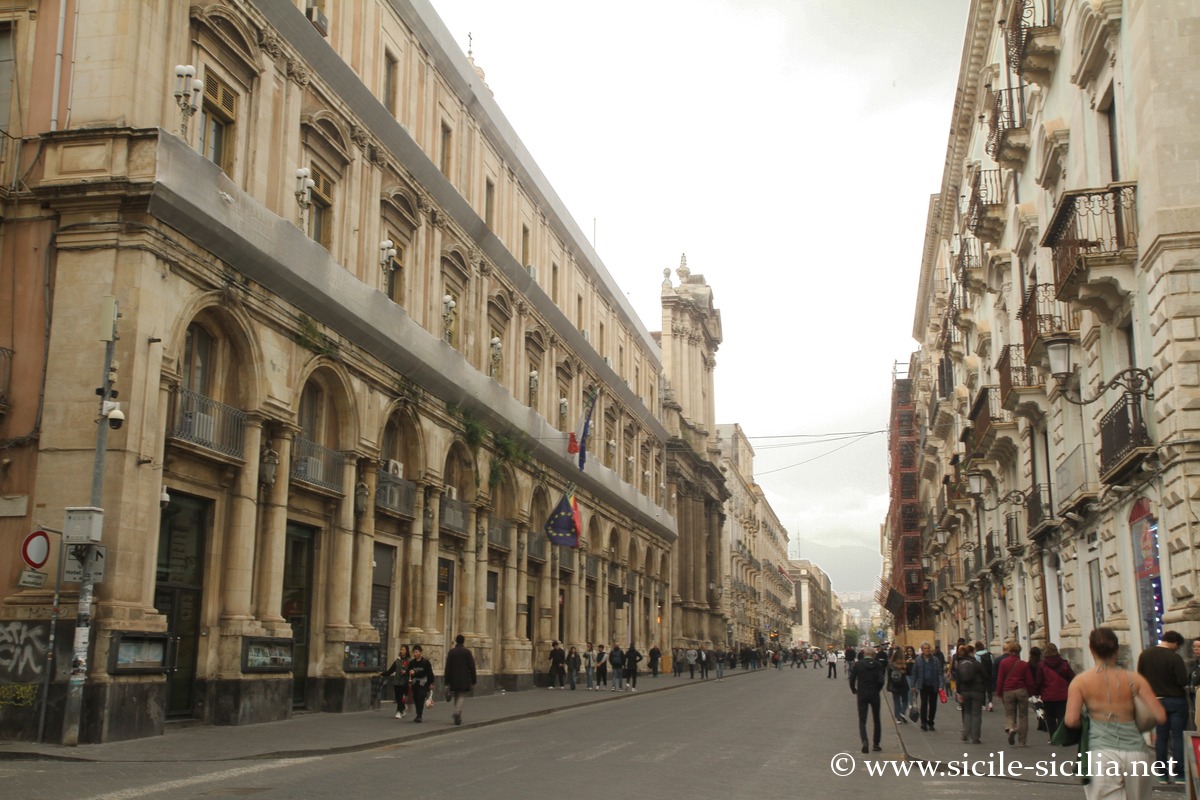
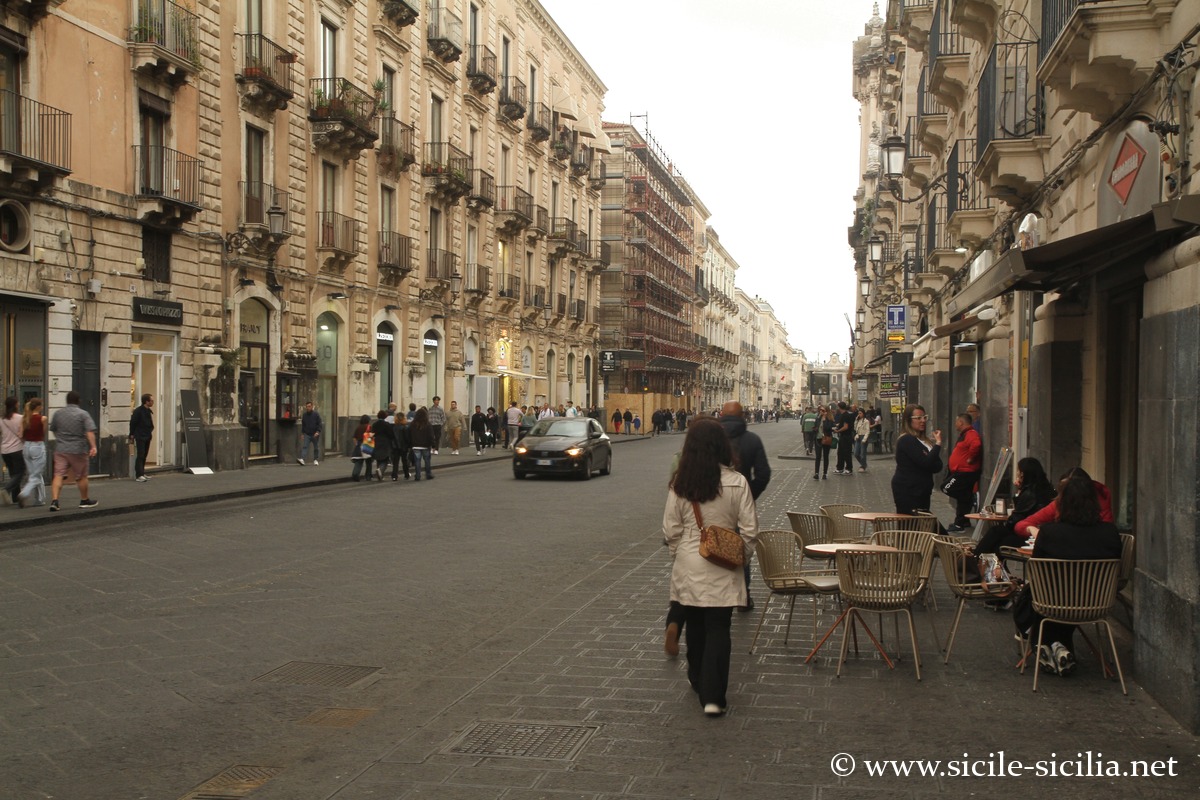
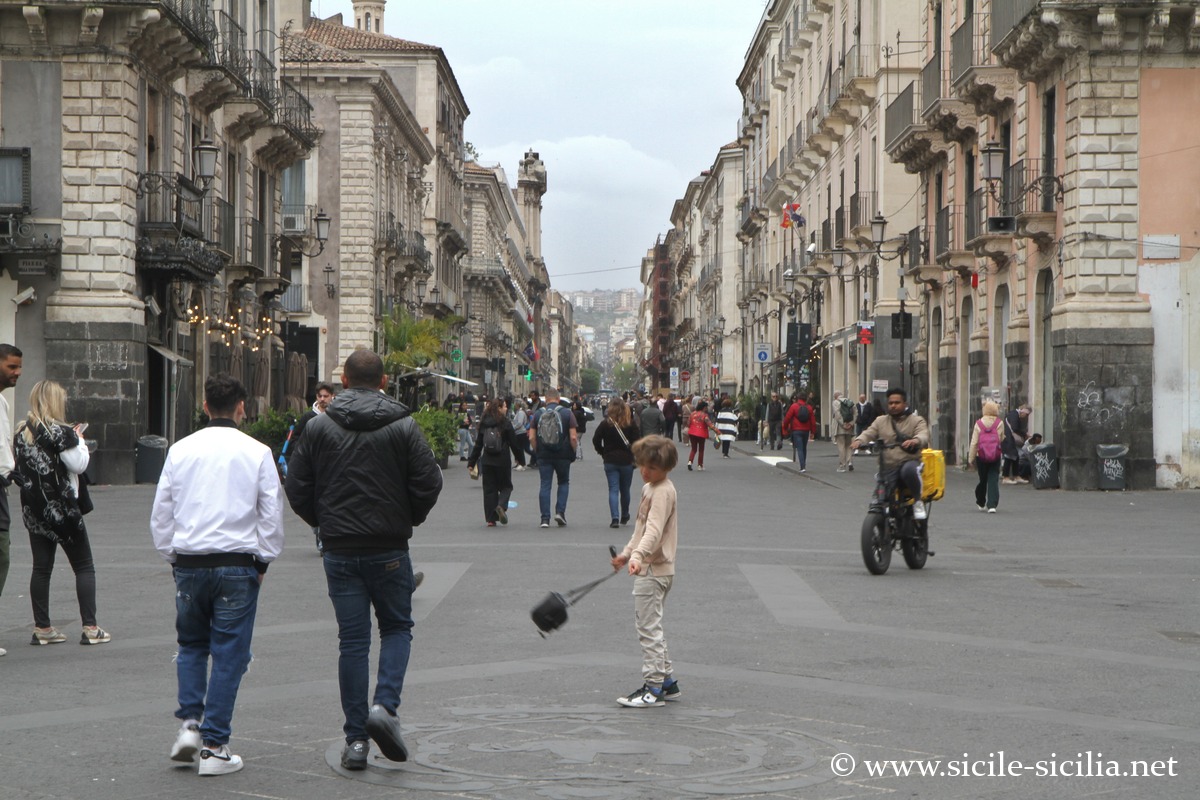
The Via Etnea is the main shopping street in the centre of Catania, a very long street lined with shops, ice cream parlours, palaces and churches, and crossing several beautiful squares of the city.
About 3 km long, it links Piazza Duomo to the green space of Parco Gioeni, with the botanical garden halfway along, passing through the main public park of the Villa Bellini, with a view of the volcano Etna along its axis on clear days. It is largely pedestrianised, ideal for strolling, lively all year round, with markets and events.
Piazza Università in Catania
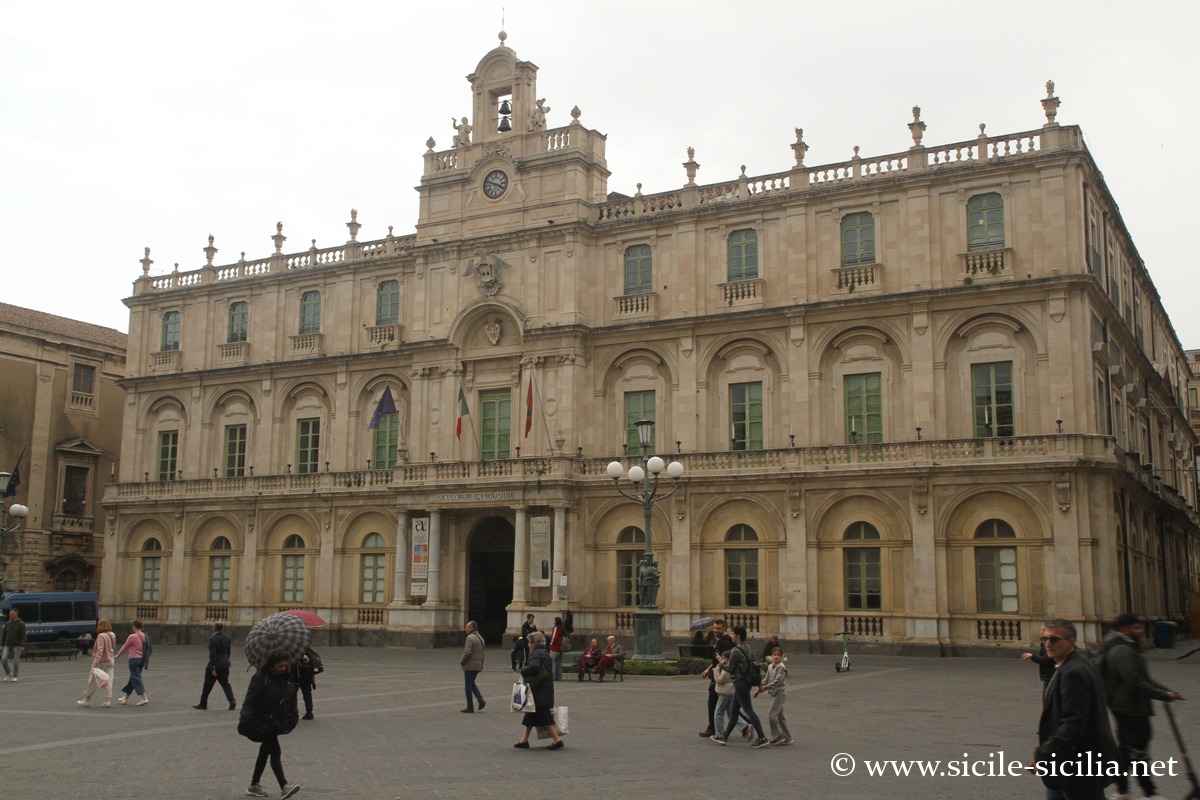
Following the Via Etnea from Piazza Duomo, you reach Piazza Università, with the University of Catania, whose palace was rebuilt after the 1693 earthquake, designed by Vaccarini (around 1730) and completed by Battaglia. Beautiful paintings adorn the interior walls. It now houses administrative offices. The inner courtyard is freely accessible (in the morning), with the black and white paving typical of Sicilian Baroque, an elegant two-storey portico and the loggia.
Opposite, the Palazzo San Giuliano was built between 1738 and 1745 by Vaccarini for the Paternò Castello family, marquises of San Giuliano, whose coat of arms is on the sculpted portal of the Baroque façade. It houses the university’s administrative offices. The interior is not open to the public.
The Palazzo Gioeni has a façade decorated with white stone and a bronze angel; 18th century.
Collegiate Church of Santa Maria dell’Elemosina
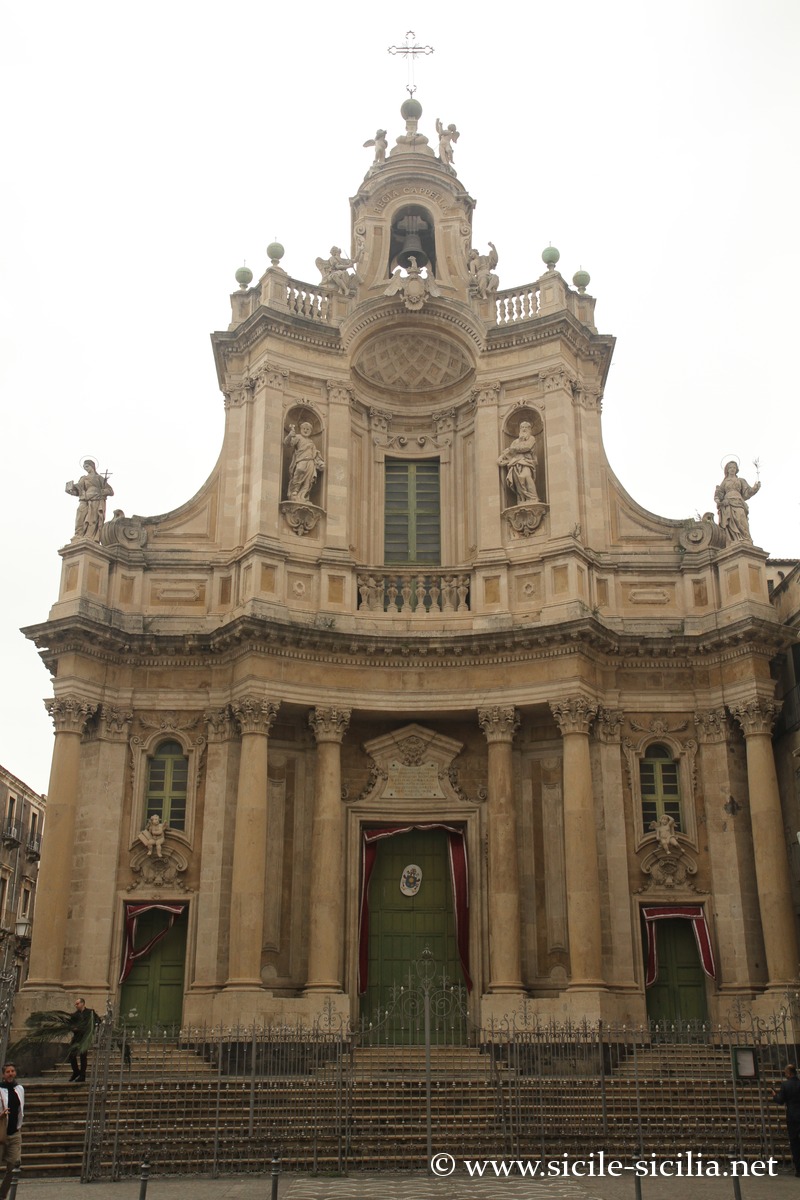
Continuing along the Via Etnea, you pass the collegiate basilica, the Basilica S. Maria dell’Elemosina, built in the 18th century with a surprising concave façade made in 1758 by the architect Stefano Ittar. Originally there was a pagan temple here dedicated to Proserpina, then a sanctuary dating back to the first centuries of Christianity, which grew in importance. It was converted into a royal chapel under the Aragonese in the 14th century, before a college of canons was established there in the 15th century.
The interior has three naves with a polychrome altar preserving a Byzantine icon. It preserves frescoes by Sciuti on the vault and the dome (1896) or a painting of Saint Apollonia by Olivio Sozzi.
Open during the day and generally on Sunday mornings.
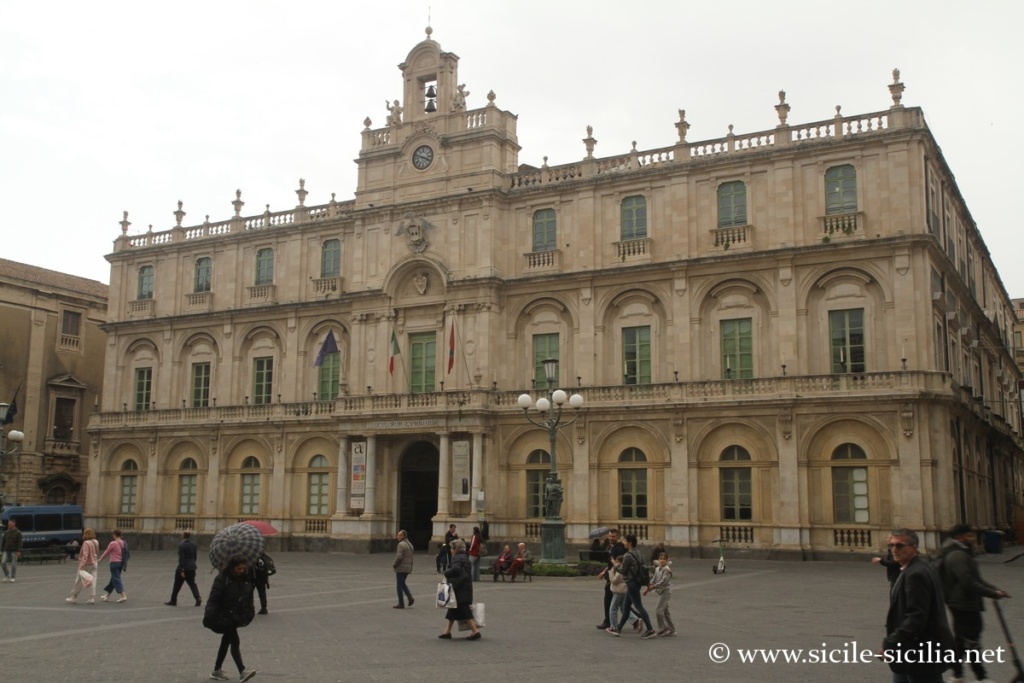
University Palace, Piazza Università 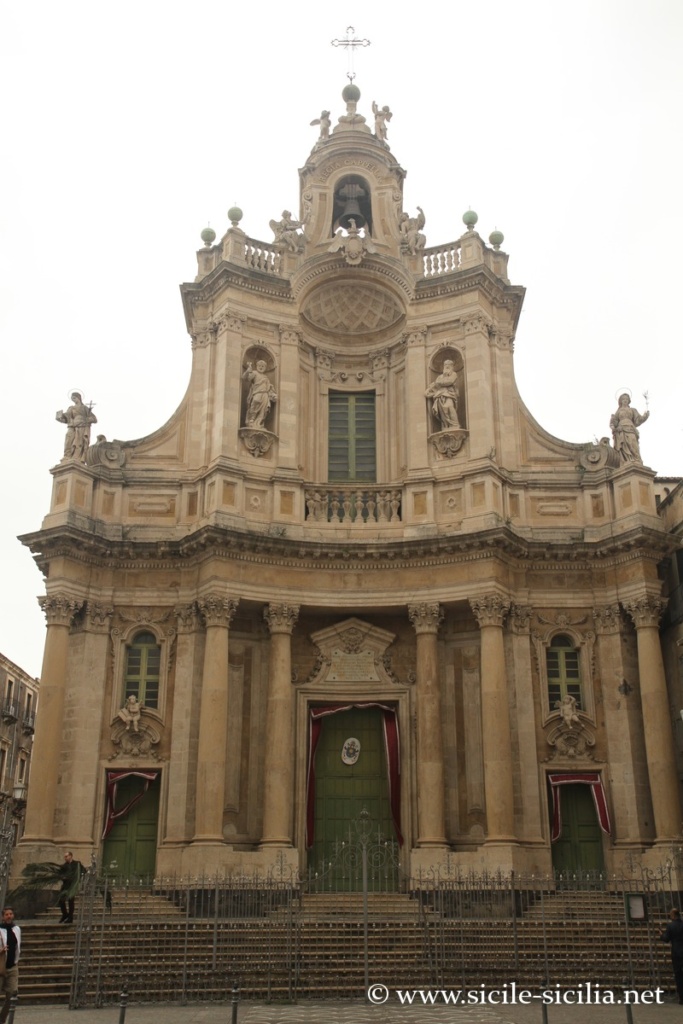
Basilica S. Maria dell’Elemosina
Quattro Canti crossroads in Catania
Further on you reach the “Quattro Canti” crossroads, with on the left the Palazzo San Demetrio, which was one of the first to be rebuilt after the 1693 earthquake (formerly Palazzo Massa di San Gregorio) and one of the most emblematic examples of the Baroque palaces of Catania, of late Baroque with its portal. However, bombed on 16 April 1943 (70 victims), it was almost entirely rebuilt afterwards, restored stone by stone.
The perpendicular street, via Antonio di San Giulinao, also has other beautiful Baroque palaces, emblematic of the Baroque with Palazzo Paternò Castello di Carcaci and other noble residences.
Further on you pass the Palazzo Minoriti, seat of the province of Catania, a former convent rebuilt in the 18th century. You then reach the church of the Archangel Saint Michael or Church of the Minorites (San Michele Archangelo ai Minoriti).
Church of the Minorites in Catania
Built after 1693 for the Minorite friars recently settled in Catania, the Church of the Minorites (Chiesa dei Chierici Regolari Minori, Caracciolini), whose dome was built between 1771 and 1787. Its white limestone façade is typical of Sicilian Baroque.
The harmonious interior preserves remarkable works, including an altarpiece from the end of the 17th century with Saint Francis Caracciolo and the Archangel Michael; a marble crucifix by Agostino Penna, canvases by Guglielmo Borremans (Annunciation) or by Marcelo Leopardi (Death of Saint Joseph and Coronation of Saint Agatha).
Piazza Stesicoro in Catania
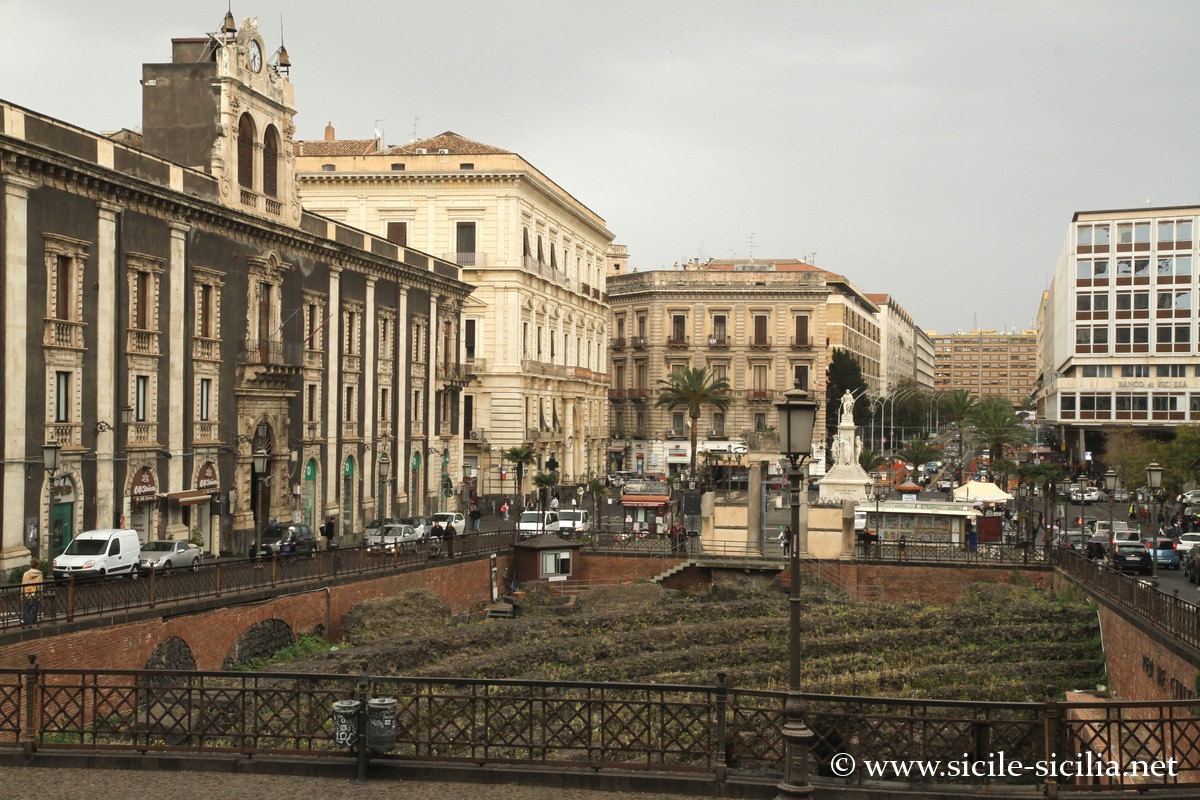
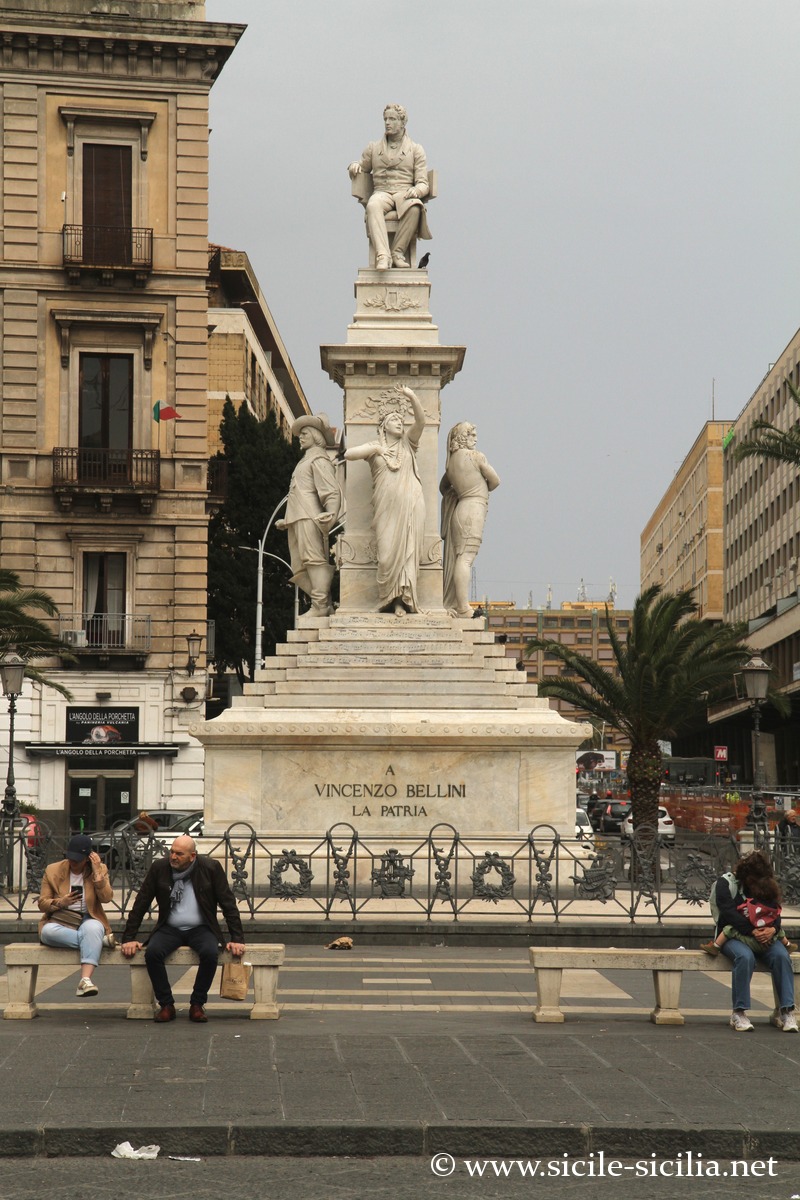
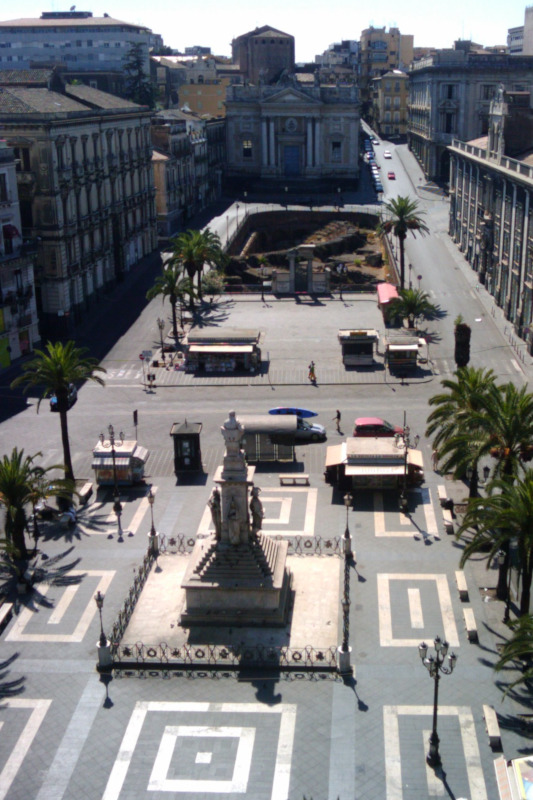
Continuing along the via Etnea, on Piazza Stesicoro stands the monument dedicated to Catania’s greatest composer, Vincenzo Bellini, sculpted by Giulio Monteverde, and surrounded by characters from Bellini’s operas, inaugurated in 1882 to replace a monument to Ferdinand II.
On the other side lie the remains of the Roman amphitheatre, dating from the 2nd century AD. It was the third largest elliptical arena in Italy, 140 metres long at its widest, with almost 1/10th of the lower levels of the remains visible.
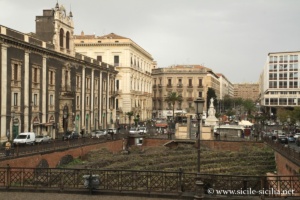
Piazza Stesicoro, Roman amphitheatre 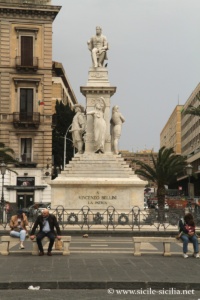
Piazza Stesicoro 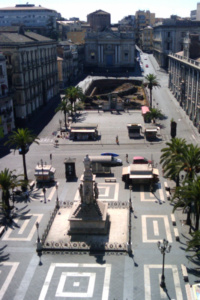

Piazza Stesicoro
Saint Agatha of the Furnace
Behind the ancient remains stands the church of Saint Agatha of the Furnace (San Biagio in Sant’Agata alla Fornace), on the site of Agatha’s martyrdom, with its late 18th-century Neoclassical façade by Antonio Battaglia.
The church dates back to the end of the 11th century, rebuilt after 1693 on the orders of Bishop Andrea Riggio, who also incorporated an existing subsidiary church of San Biagio.
The chancel has two chapels, the Chapel of the Crucifix and the one dedicated to Saint Agatha, in which the relic of the “furnace” (the carcarella) is kept under glass, the object of Agatha’s martyrdom, accompanied by a fresco by Giuseppe Barone made in 1938 depicting the martyrdom.
There are also 18th-century frescoes (Sacra Famiglia, etc.).
Villa Bellini
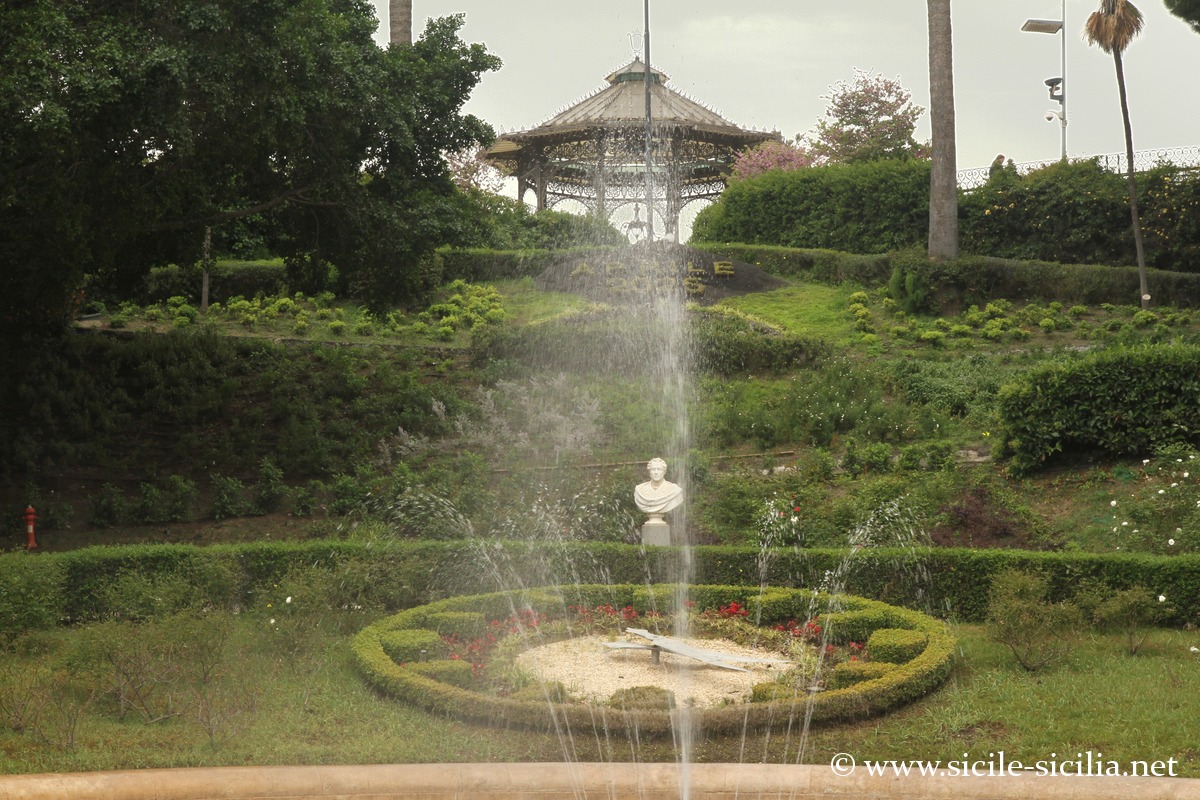
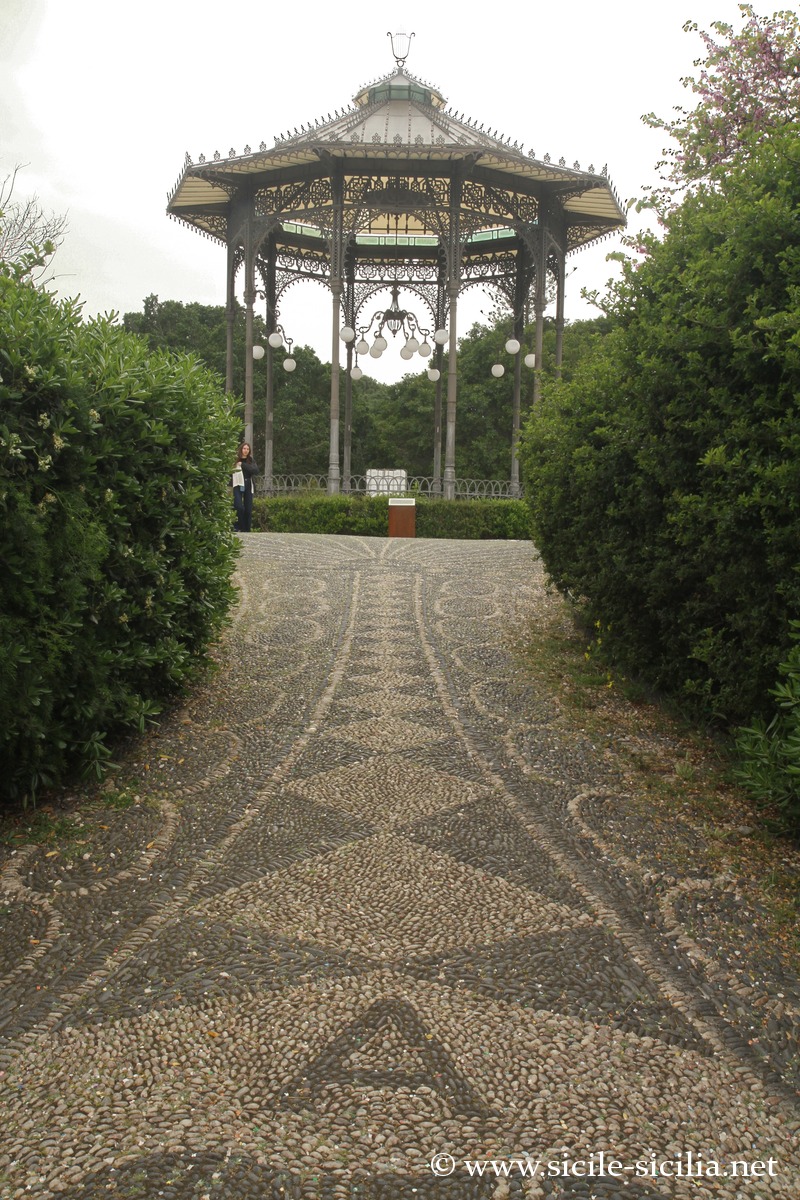
300 metres after Piazza Stesicoro, the Via Etnea reaches an entrance to the city’s main public garden, the Villa Bellini, which extends over almost 7 hectares, with centuries-old trees and kiosks. It is the former private garden of the Prince of Biscari, inaugurated in 1883, with statues, fountains and views of Etna.
→ Open every day 7am-8pm (summer), 8am-6pm (winter); free entry.
Botanical Garden of Catania
500 metres further on from the Villa Bellini, you find the interesting botanical garden of the city (Orto Botanico), founded by a monk librarian in 1858.
It extends over almost 16,000 m², divided into the Hortus Generalis, with exotic plants, and the Hortus Siculus covering 3,000 m² (the “Sicilian garden”) intended for endemic Sicilian species, bringing together more than 3000 species. In the first there are three ponds with aquatic plants, exotic greenhouses, a rich collection of palms and cacti. The large greenhouse houses more than 160 exotic plant species. The second preserves plants native to the island, some of them rare and threatened, in a miniature reproduction of a Mediterranean setting.
→ Open Monday to Friday all day, and Saturday morning.

Villa Bellini, Catania 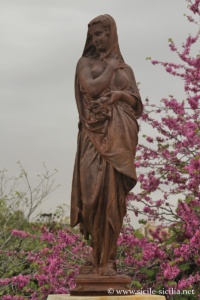
Villa Bellini, Catania 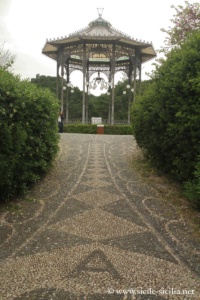
Villa Bellini, Catania
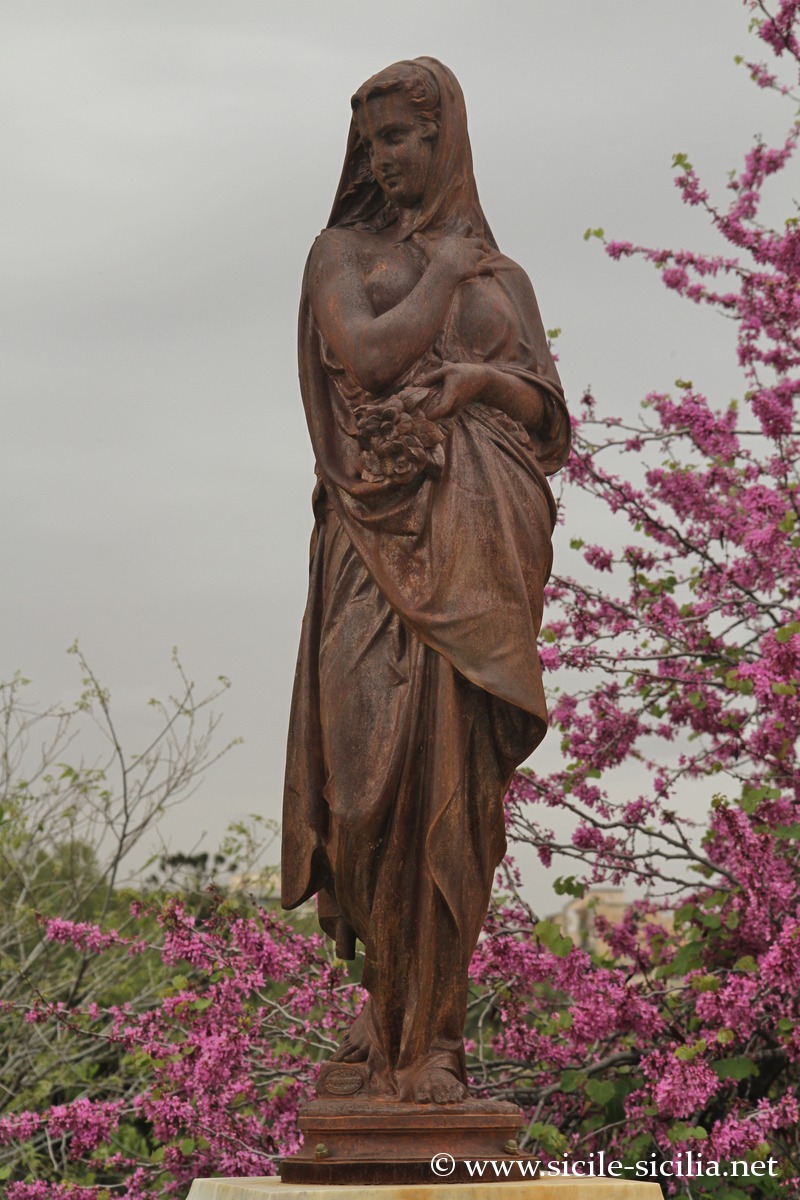
Map of the Via Etnea
 Show interactive map
 Photo gallery
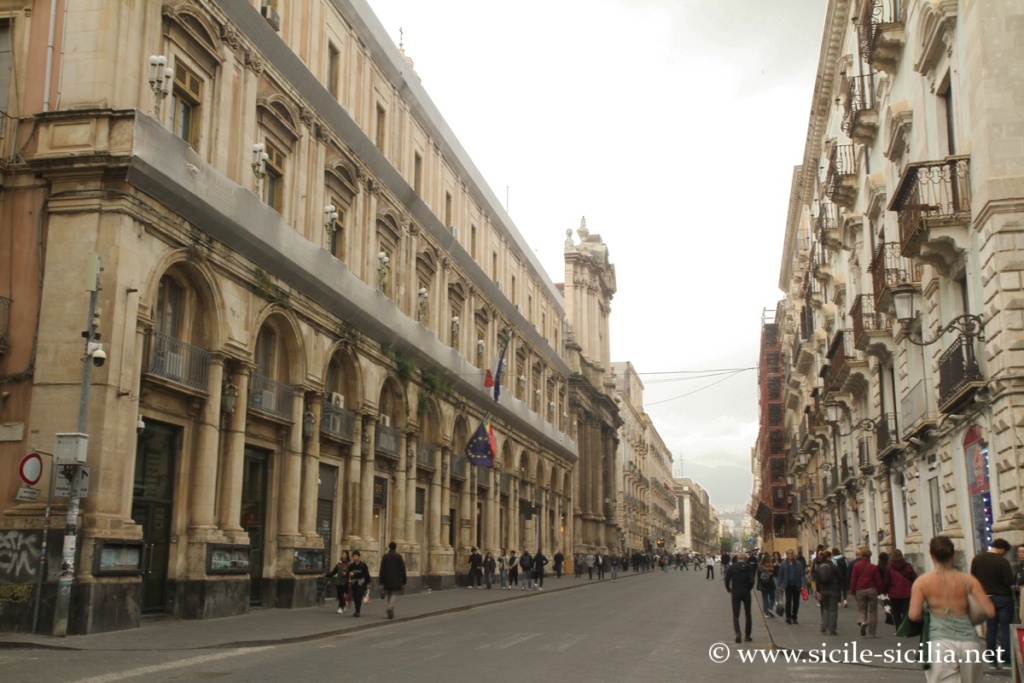

Via Etnea 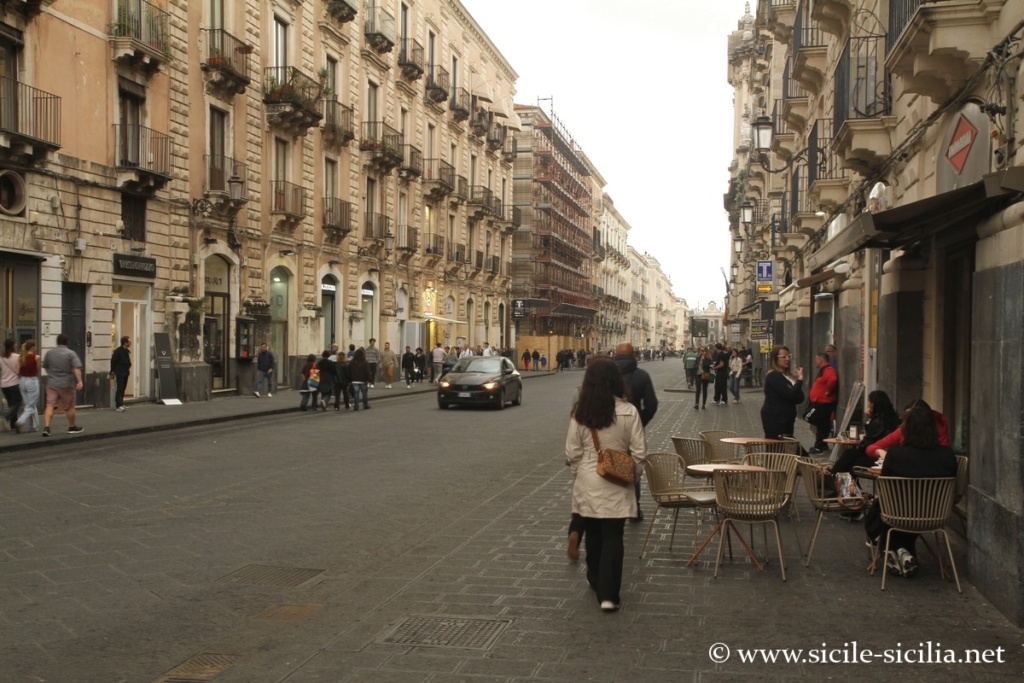
Via Etnea 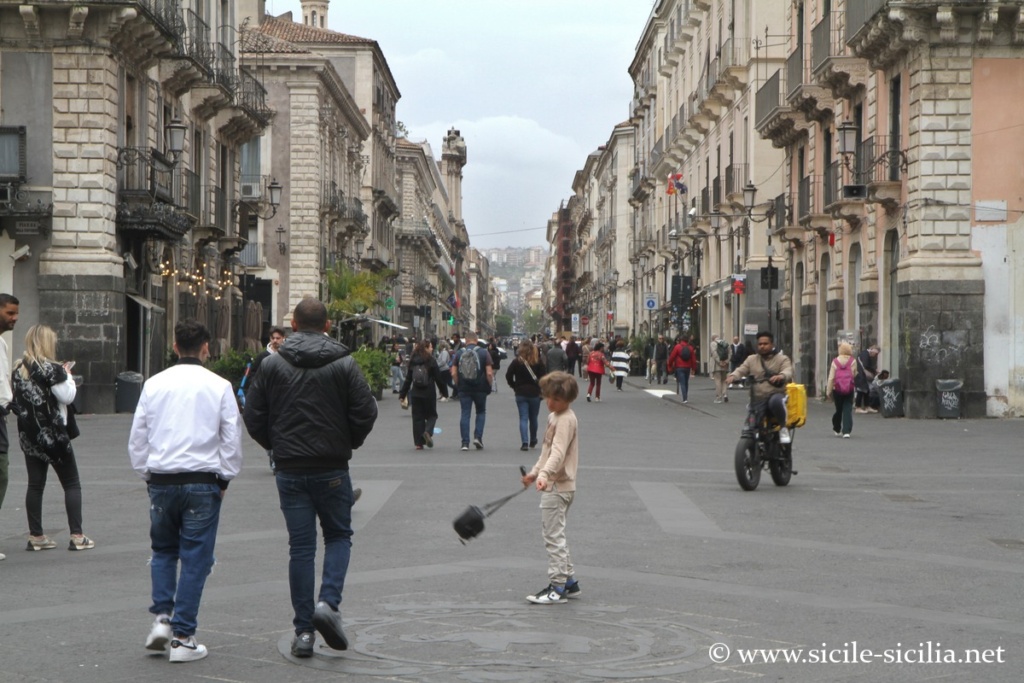
Via Etnea
Information
Tours in the centre of Catania
External sites
- Via Etnea: Wikipedia page
- Piazza dell’Università: Wikipedia page
- Basilica of Santa Maria dell’Elemosina: Wikipedia page
- Church of the Minorites: Wikipedia page
- Piazza Stesicoro: Wikipedia page
- Saint Agatha of the Furnace: Wikipedia page
- Villa Bellini: en.wikipedia.org
Articles in the Catania category
- Catania
- Hotels in Catania
- Riviera of the Cyclops
- Catania Walking Tour Itinerary
- Piazza del Duomo and Catania Cathedral
- Churches of Catania
- Via Crociferi in Catania: the Baroque churches
- Ancient sites of Catania
- Palaces of Catania to discover
- Bellini Square and Theatre in Catania
- Ursino Castle of Catania
- Benedictine Monastery and San Nicolò of Catania
- Museums of Catania
- Other sites and places in Catania
- Discovering underground Catania
- Catania Environs: Riviera and Countryside
- Traditions and gastronomy in Catania
- Activities in Catania, guided tours and excursions
- Around Catania