
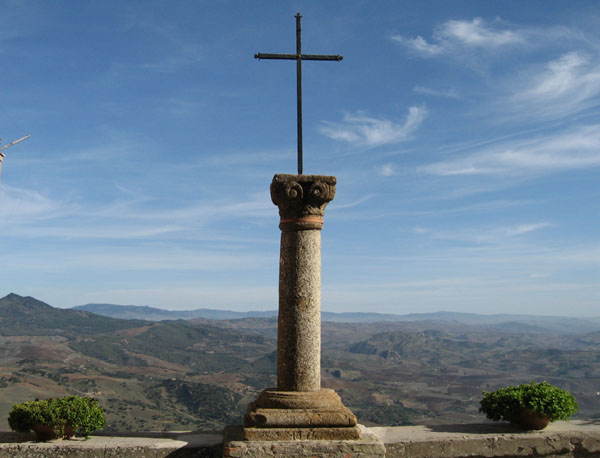
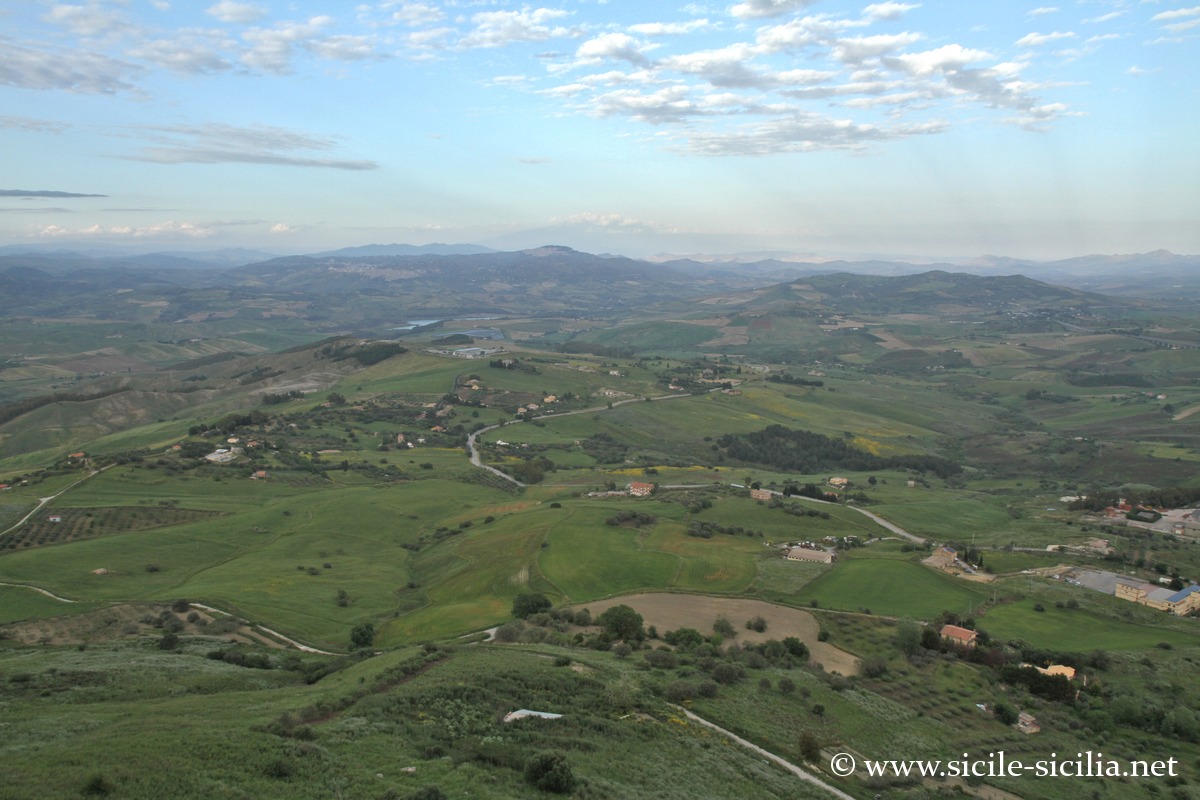
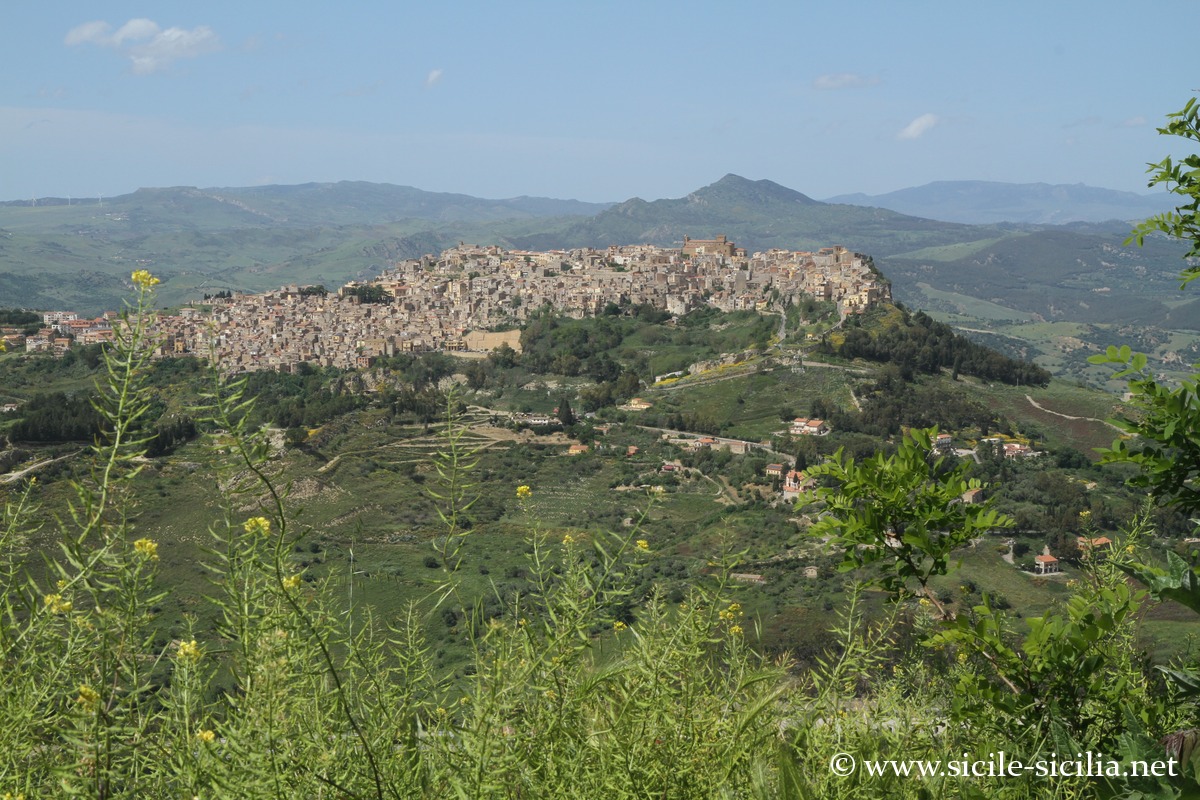
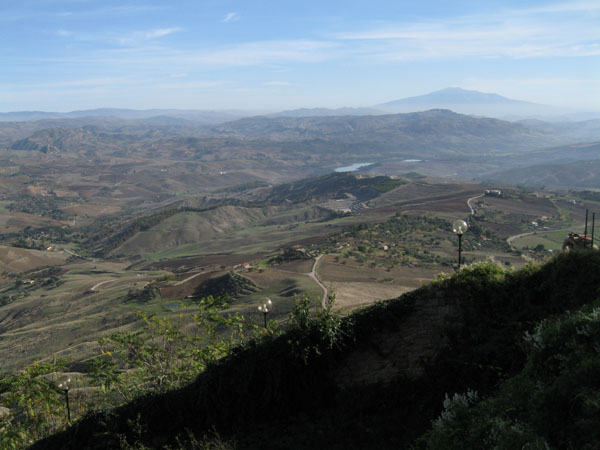
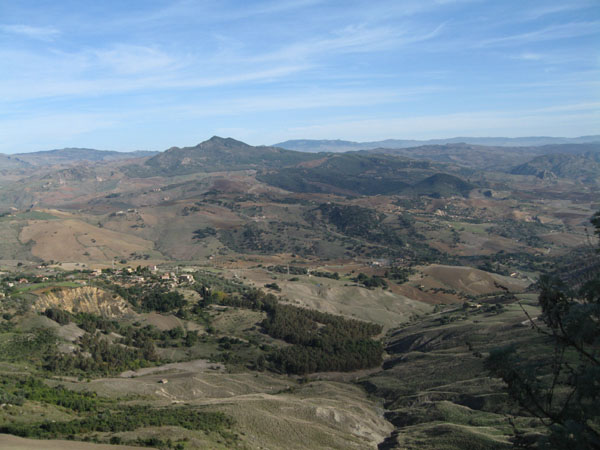
Calascibetta is a Sicilian village of nearly 4000 inhabitants located on a promontory at 691 metres of altitude, about 2.5 km as the crow flies north of Enna. Its name is said to come from the Arabic qalʿat xibet, meaning “castle on the mountain”. The town dominates the surrounding valleys and offers a panorama over the typical Sicilian hills, dotted with wheat fields, olive groves and limestone massifs. Its rather discreet heritage includes the medieval quarter, a Norman tower and especially the rock-hewn caves.
The foundation of Calascibetta is probably of Arab origin; they set up their camp there during the siege of the nearby town of Enna in 951. In 1087, it was the Norman Roger I of Hauteville who established a fortification there to besiege the Saracens of Enna. According to some sources, Roger had already built fortifications as early as 1062.
Calascibetta today
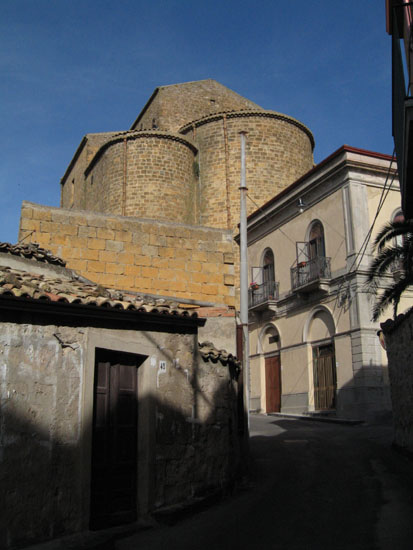
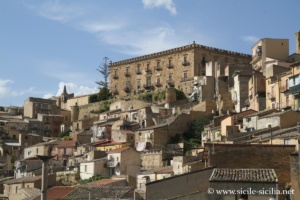
Calascibetta retains its medieval layout with narrow alleys, small squares and old buildings with Norman, Arab and Baroque influences: an 11th-century Norman tower adjoining the church of Saint Peter built in the 14th century on the ruins of an old castle, etc. Via Carcere street features very old rock dwellings.
A little further north, one can discover the necropolises of Realmese (9th – 6th century BC), as well as a troglodyte village of Byzantine origin at Vallone Canalotto.
10 km west of Enna, on the road to Villarosa, a small museum is dedicated to trains with an old locomotive.
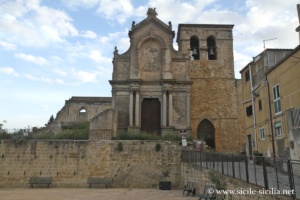
Norman Tower and Saint Peter 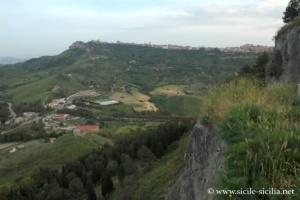
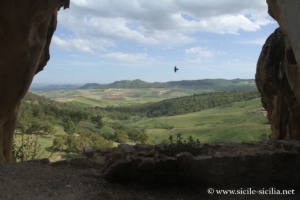
Panorama towards Enna from the Poggio of Count Roger 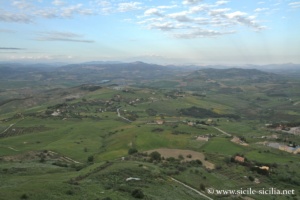
Panorama from the poggio of Count Roger 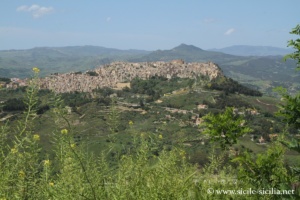
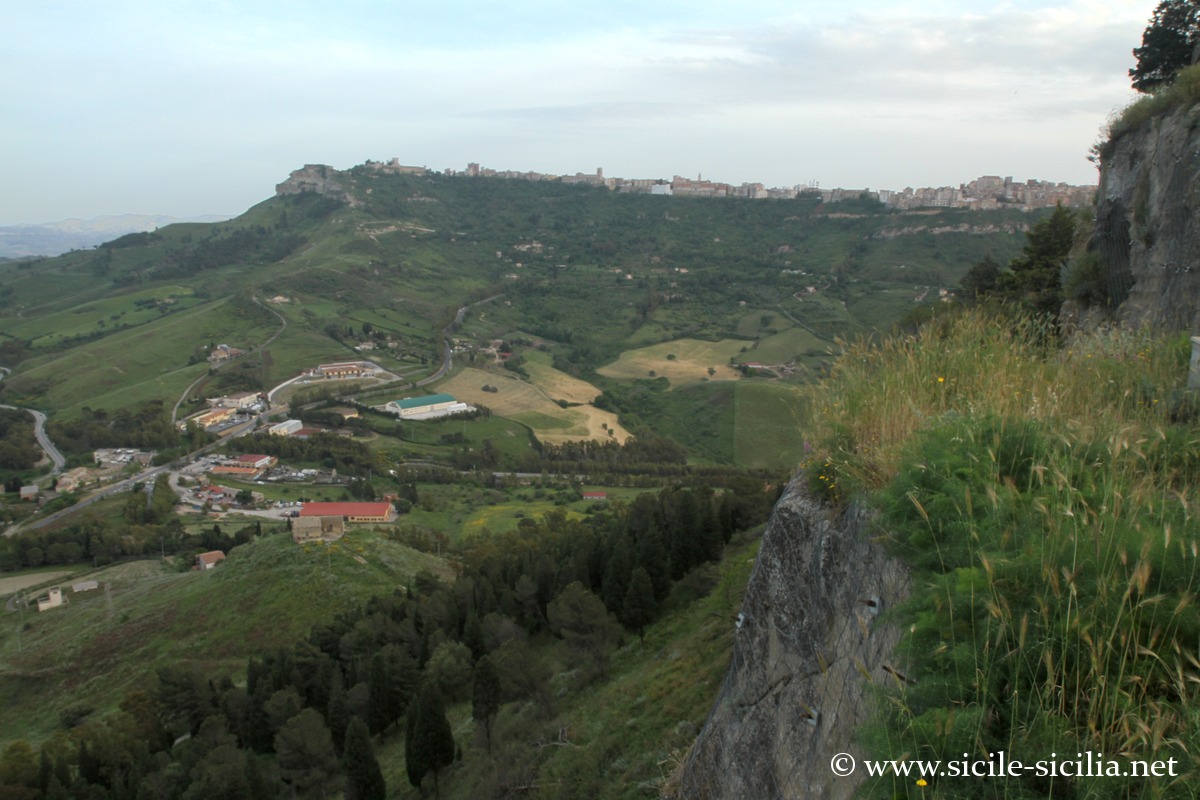
Belvedere of Enna: view of Calascibetta
Festivals and traditions
- Madonna di Buon Riposo : Religious festival + Sagra de la Salsiccia + Palio dei Berberi (traditional event)
The festival is celebrated on the first weekend of September in Calascibetta, combining a religious procession and local traditions around the sanctuary dedicated to the Virgin, including the sausage festival, the palio and shows.
The Palio of the Berbers is a bareback horse race, deeply rooted in local tradition, in memory of the Arab and Berber presence. - Living nativity in the caves
During Christmas, some caves of Via Carcere are used for “living nativities”, offering a picturesque spectacle in the medieval cavities.
Places of interest in Calascibetta
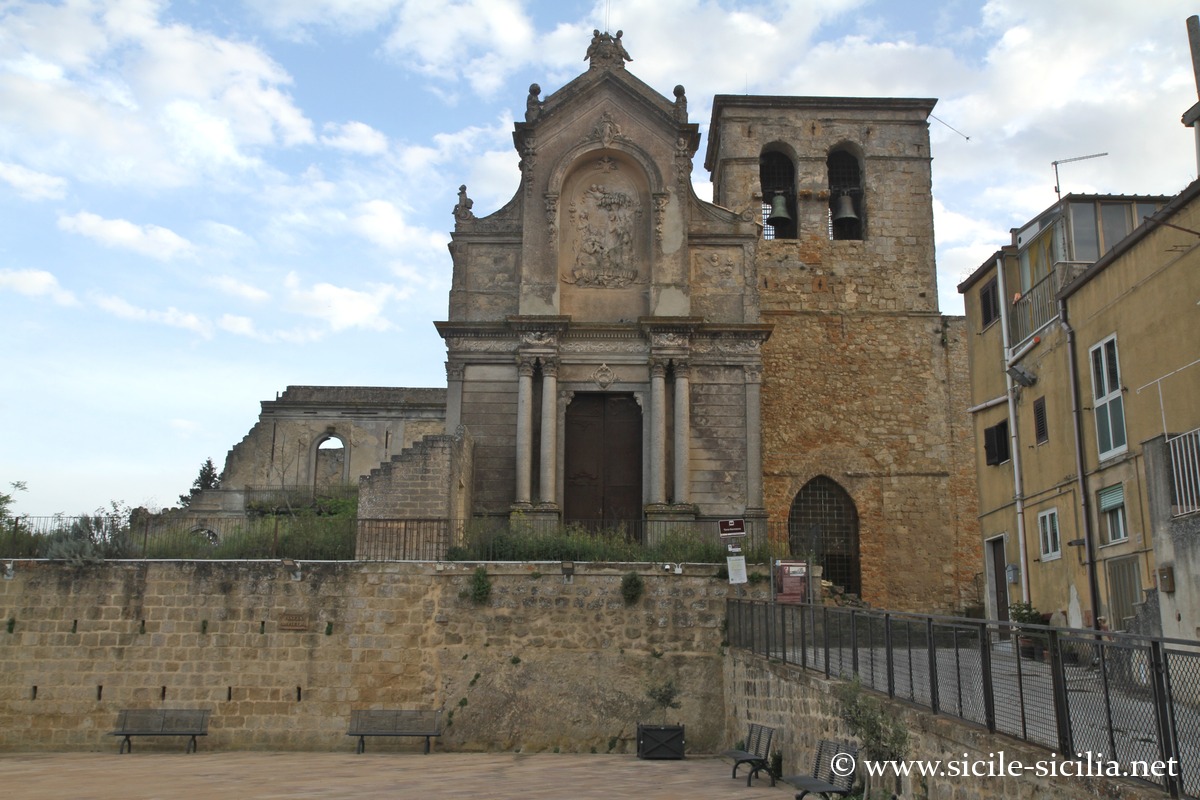
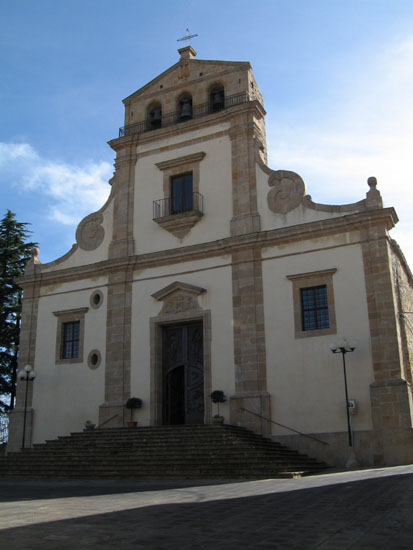
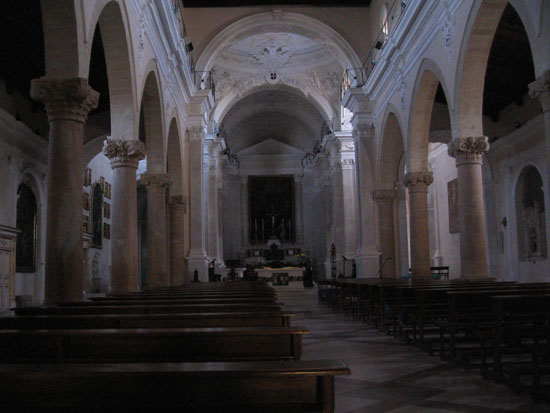
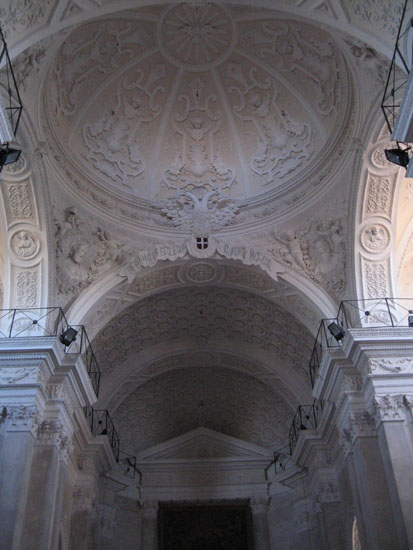
Mother church San Pietro e Santa Maria Maggiore
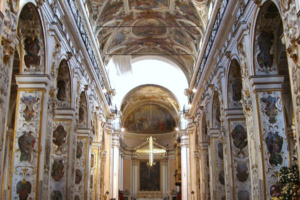
Built in the 14th century by King Peter II of Aragon on the ruins of an old castle, the facade was remodelled in the 18th and 19th centuries. The interior preserves a rich liturgical heritage: a 17th-century carved wooden choir, a 16th-century baptismal font and a silver reliquary representing the Virgin. This building is considered the Regia Cappella Palatina of Calascibetta and constitutes the main monument of the historic centre.
Norman Tower – San Pietro
This Norman tower is linked to the old fortification of the castle built by Roger I. It is located at the eastern end of the rocky spur, close to the Poggio of Count Roger of Hauteville.
Piazza Umberto I and church of Santa Maria del Monte Carmelo
The main square, very vast, has a marble fountain and bronze statues. It offers a panoramic view of the village and its medieval alleys. The church of Santa Maria del Monte Carmelo, located on the edge of the square, constitutes an important religious landmark of the centre and preserves a sober interior of post-medieval tradition.
Capuchin convent
Built in 1589 by the Capuchins, the convent houses an important work by Filippo Paladini entitled “Adorazione dei Magi”. It constitutes one of the best-preserved monastic complexes of the town and still preserves part of the old conventual spaces.
Caves of Via Carcere
This rock network comprises caves on several levels, used as a prison in the Middle Ages, carved into a limestone rock where fossils are visible, notably Pliocene oyster shells. These medieval and pre-existing cavities represent one of the most singular sites of the historic centre.
Surroundings and archaeological sites
Necropolis of Realmese
Located a few kilometres to the north, the necropolis of Realmese counts 288 rock-cut tombs, dated from the 9th (protohistoric period) to the 6th century BC (archaic period).
Excavations carried out in 1949–1950 led to the discovery of ceramics, jewellery and copper objects, now kept in the Paolo Orsi museum in Syracuse.
Some areas retain a paving of “pietra cutu” and portions carved into the rock.
Byzantine village of Vallone Canalotto
About 1 km from Realmese, a rock village with 30 cavities: houses, Byzantine churches and columbaria.
Water collection systems and interior passages on several levels testify to the advanced organisation of this Byzantine and late Roman site.
Villarosa train museum
Located 10 km west of Enna, this museum presents an old locomotive and various railway exhibitions, managed by the association “Amici del Treno Museo di Villarosa”: www.trenomuseovillarosa.com.
Gallery

Panorama of Calascibetta 

Calascibetta 

Calascibetta 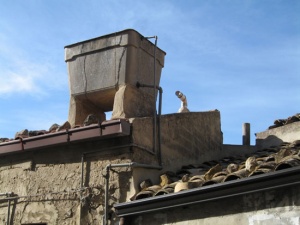
Calascibetta 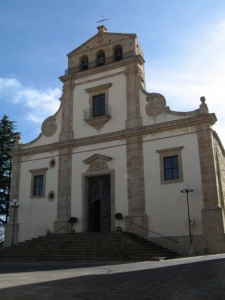
Chiesa Madre, Calascibetta 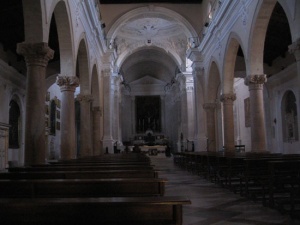
Chiesa Madre 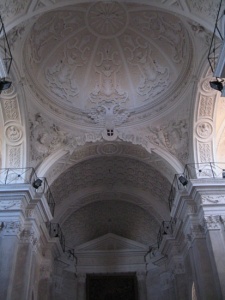
Chiesa Madre 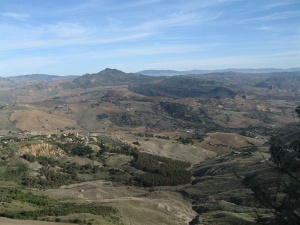
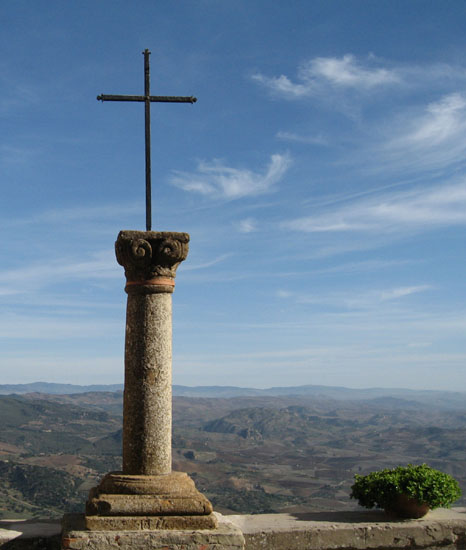
Panorama in Calascibetta 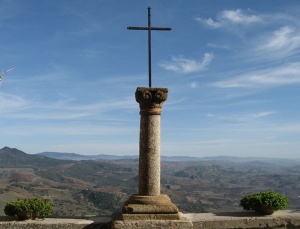

Calascibetta in Sicily
Where Calascibetta is located: map
If you see this after your page is loaded completely, leafletJS files are missing.
Information
External sites
- Calascibetta on Wikipedia: en.wikipedia.org
- Necropolis of Realmese: it.wikipedia.org/wiki/Necropoli_di_Realmese
Articles in the Enna category
- Piazza Armerina
 Piazza Armerina is a pretty town of about 20,000 inhabitants, at 700 metres ...
 - Enna
 On a plateau at 948 metres above sea level, Enna is the capital ...
 - Hotels in Enna
 Hotels in Enna in Sicily and farm stays, bed and breakfasts and apartments ...
 - Visit of Enna, monuments and surroundingsThe heritage of the city of Enna is mainly concentrated along the Via ...
- Villa Romana del Casale
 The Villa del Casale in Piazza Armerina is a unique example of a ...
 - Morgantina
 A few kilometres from Aidone lies the archaeological site of Morgantina, the remains ...
 - Assoro
 Assoro, perched on the steep hill of Monte Stella in the Heraean Mountains, ...
 - Aidone and Pietratagliata
 Located in the heart of the Heraean Mountains, the town of Aidone is ...
 - Leonforte
 In the Heraean Mountains, about 20 kilometres north-east of Enna, lie two pretty ...
 - Caltanissetta and its surroundings
 A town with little tourism in the centre of Sicily, Caltanissetta is a ...
 - In the Surroundings of Enna
 Sicilian destinations near Enna: Piazza Armerina and the Roman villa of Casale 30 ...