
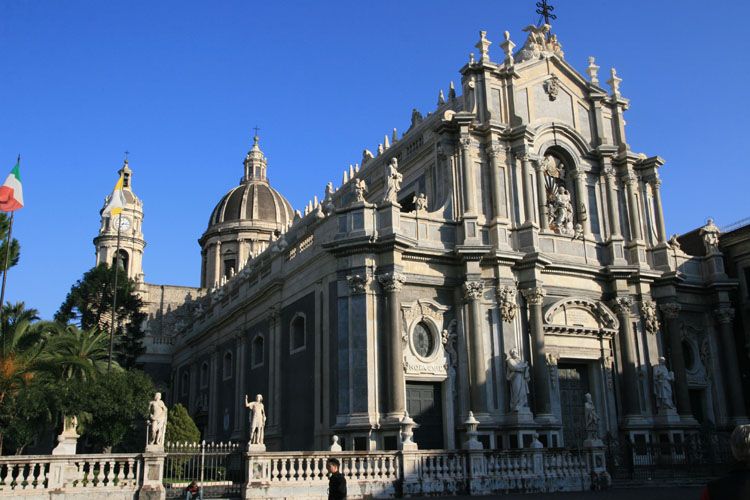
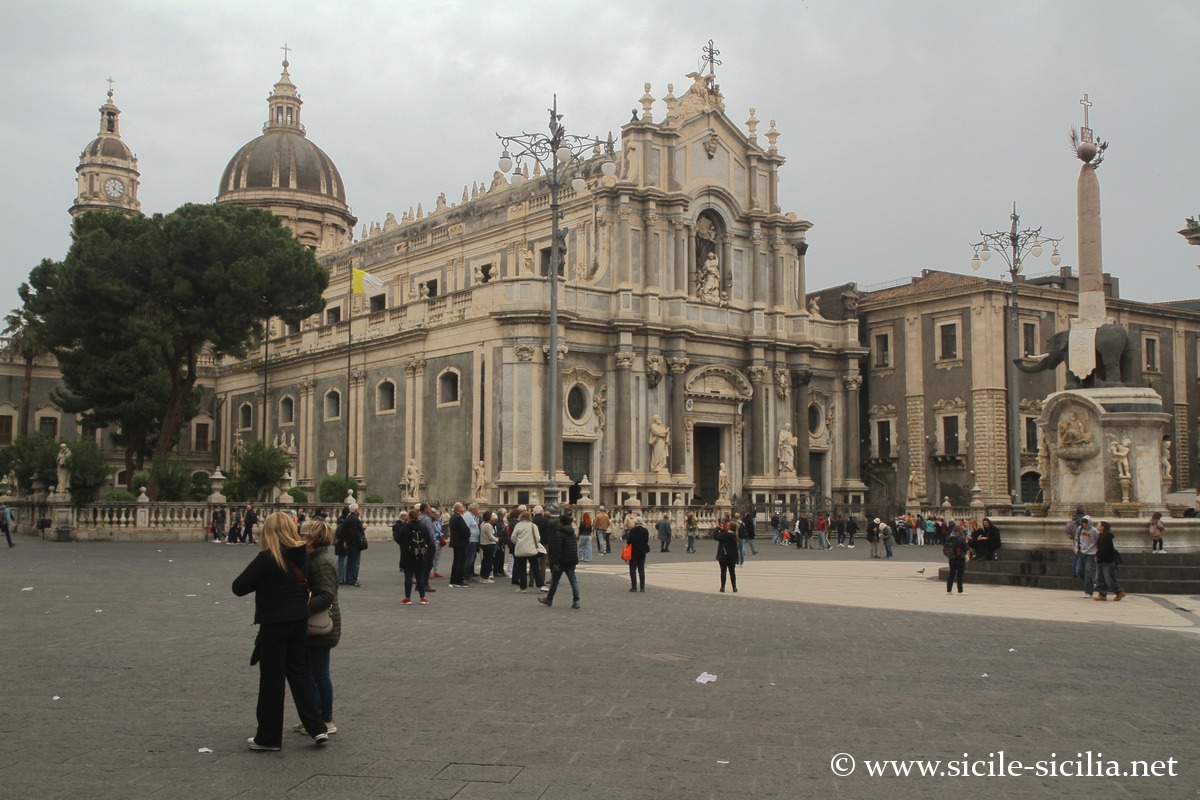
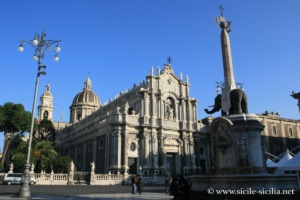
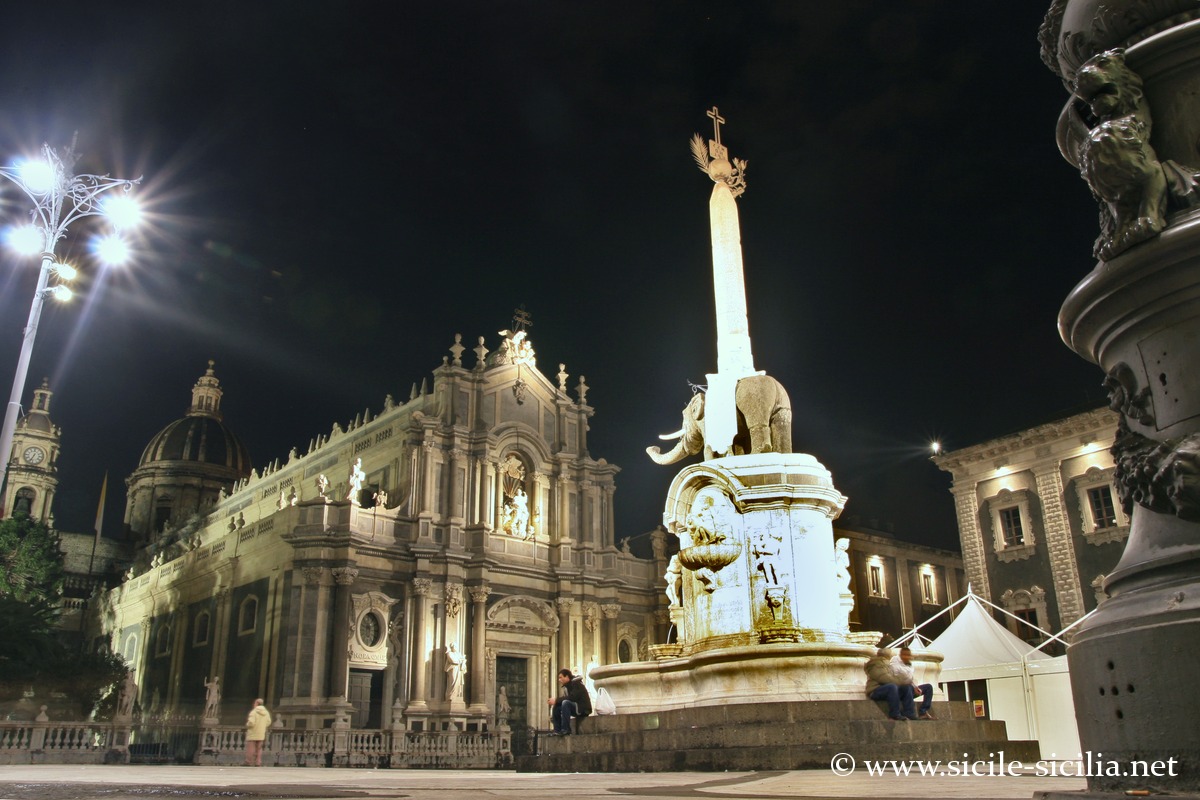
In the heart of Catania, the Piazza Duomo is the starting point for a tour of the city. The present square is the result of the reconstruction that followed the disastrous earthquake of 1693. It was redesigned by Giovanni Battista Vaccarini around 1730 and is considered a model of Sicilian Baroque urban composition, with a stylistic unity between the façades and the volumes; the main buildings are: the cathedral, the town hall and the Baroque palaces. Its architectural qualities earned it inscription as a UNESCO World Heritage Site, along with other Baroque sites of the Val di Noto.
A place of gathering and events, it hosts in particular the great annual festival dedicated to Saint Agatha, the patron saint of the city.
Overview of Piazza Duomo
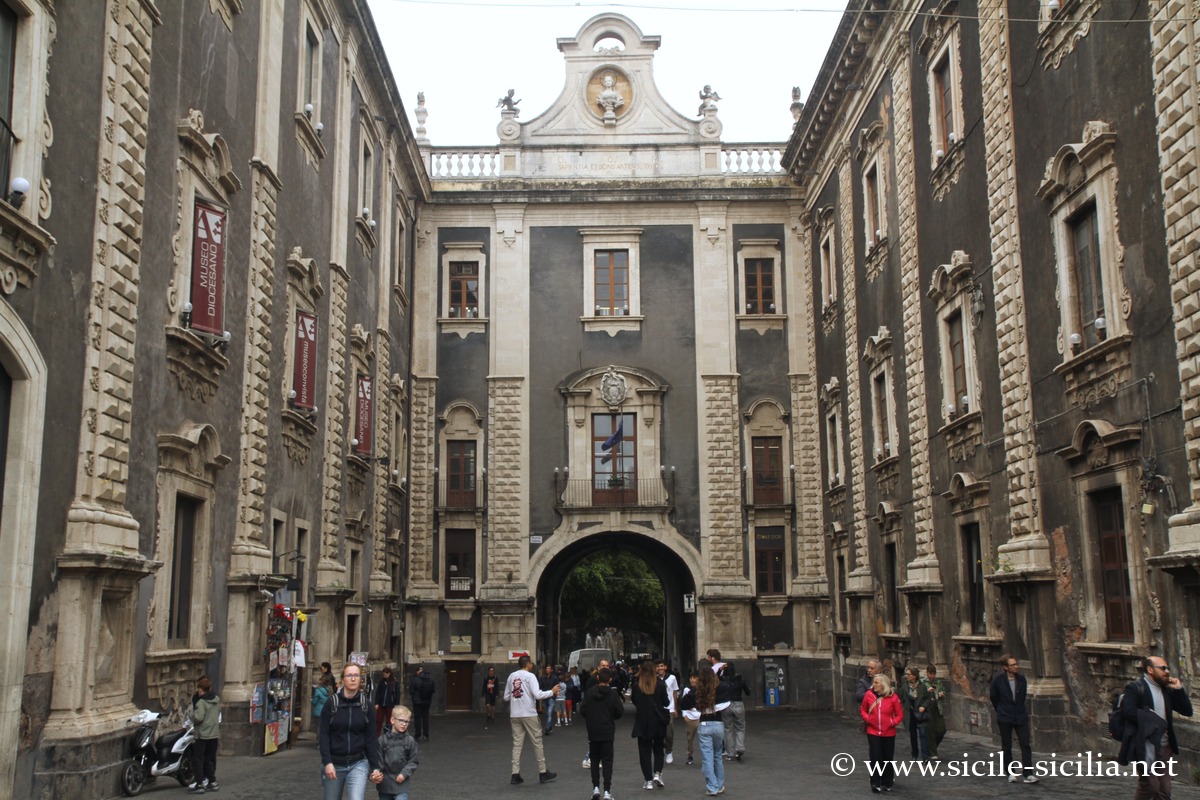
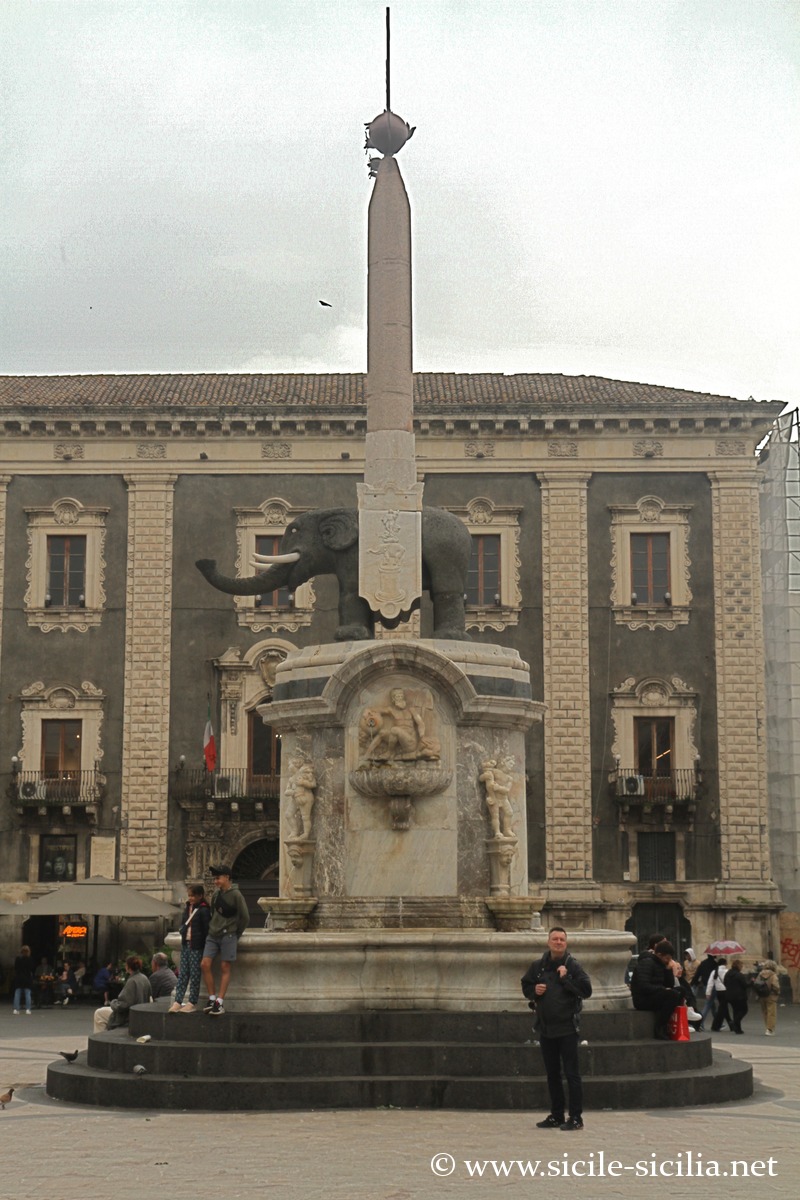
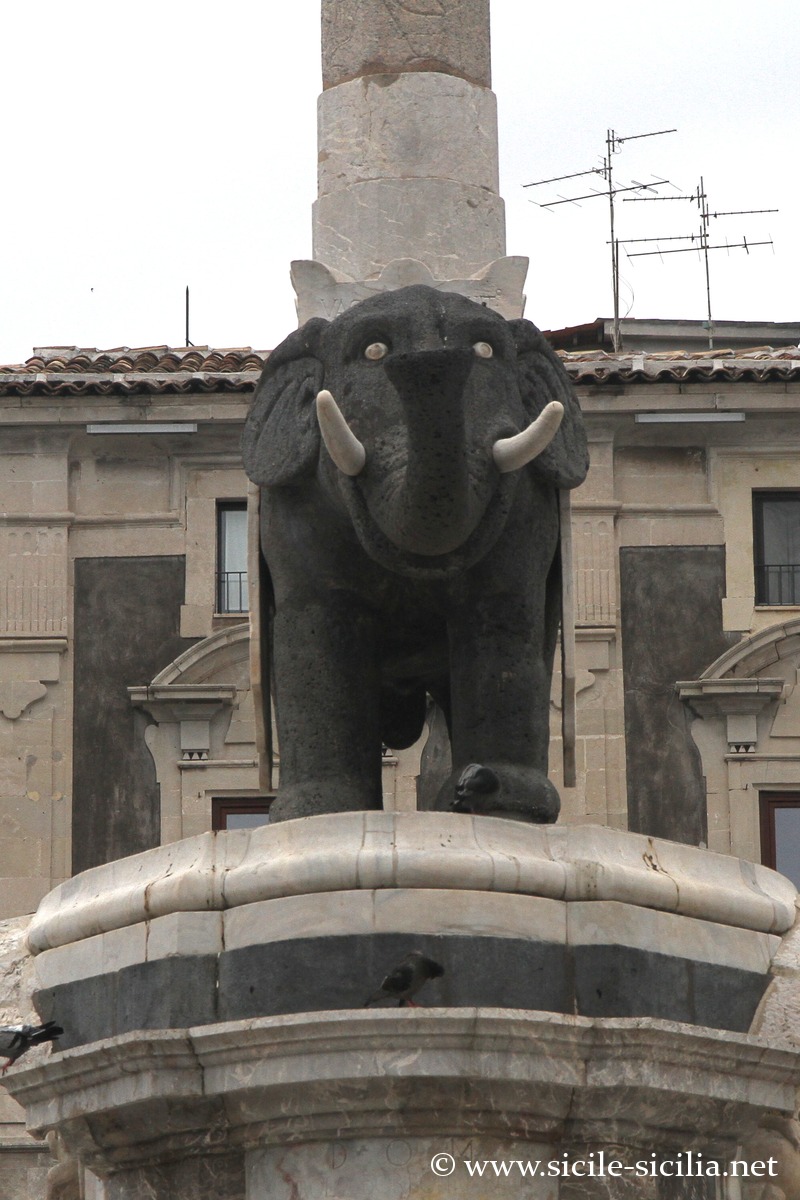
At the centre of the square stands the Elephant Fountain, the symbol of Catania. On the north side, the Palazzo degli Elefanti (Palace of the Elephants) houses the town hall, a 17th-century work by Vaccarini. Opposite, the Palazzo dei Chierici (Palace of the Clerics) dates from the early 18th century. One side of the square is closed by the Porta Uzeda, erected in 1695, close to the Amenano Fountain. A few steps to the south is the fish market, the Pescheria, a typical and ancient spot in the city. It is attested since the Middle Ages, occupying part of the route of the ancient Roman road that linked the port to the ancient forum of Catania.
One would not suspect that beneath the square lie the ancient Terme Achilliane, accessible from the Diocesan Museum of Catania located in the Palazzo dei Chierici. These baths, dating from the 1st or 2nd century AD, were part of a vast Roman complex.
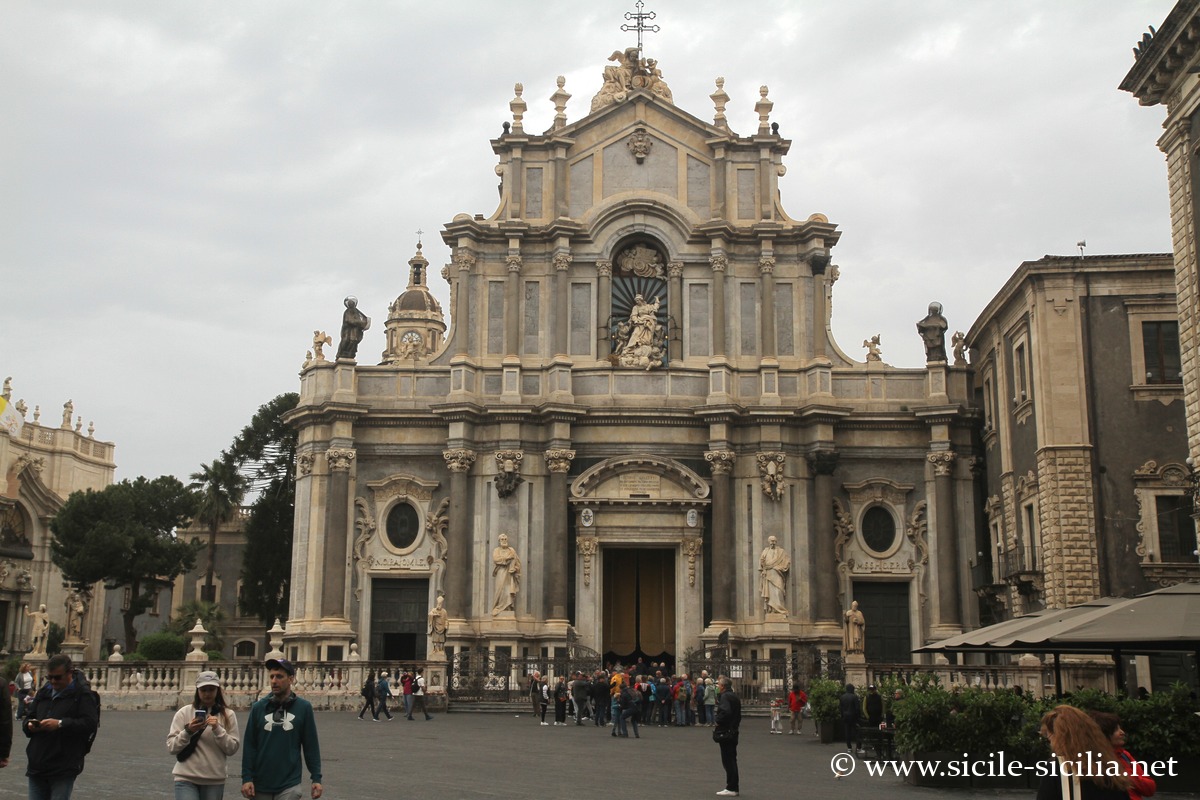
Catania Cathedral of Saint Agatha
The cathedral, dedicated to Saint Agatha, was erected towards the end of the 11th century by the Norman king Roger I.
Rebuilt after the earthquake of 1693, its Baroque façade, a remarkable work by Vaccarini, was completed in 1758. It combines white Carrara marble and black basalt stone, typical of Catania’s Baroque, and features statues of the city’s patron saints made by Giovanni Battista Marino.
From the Norman period survive the three tall apses in volcanic stone and part of the transept.
In addition to the relics of Saint Agatha, the cathedral contains the tomb of Vincenzo Bellini, the famous composer born in Catania (1801-1835).
Piazza del Duomo, cathedral 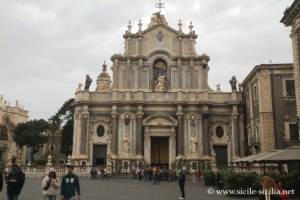
Catania Cathedral
Agatha of Catania
Patron saint of Catania, Agatha was a young virgin who devoted herself to Jesus and refused the advances of the Roman prefect Quintianus. He had her tortured in 250 and her breasts torn off.
According to tradition, Saint Peter healed her, but she was then executed, dragged over burning coals. Her cult, very ancient, spread throughout the Christian world. Celebrated on 5 February, it attracts several hundred thousand pilgrims to Catania every year.
Her relics are kept in the cathedral.
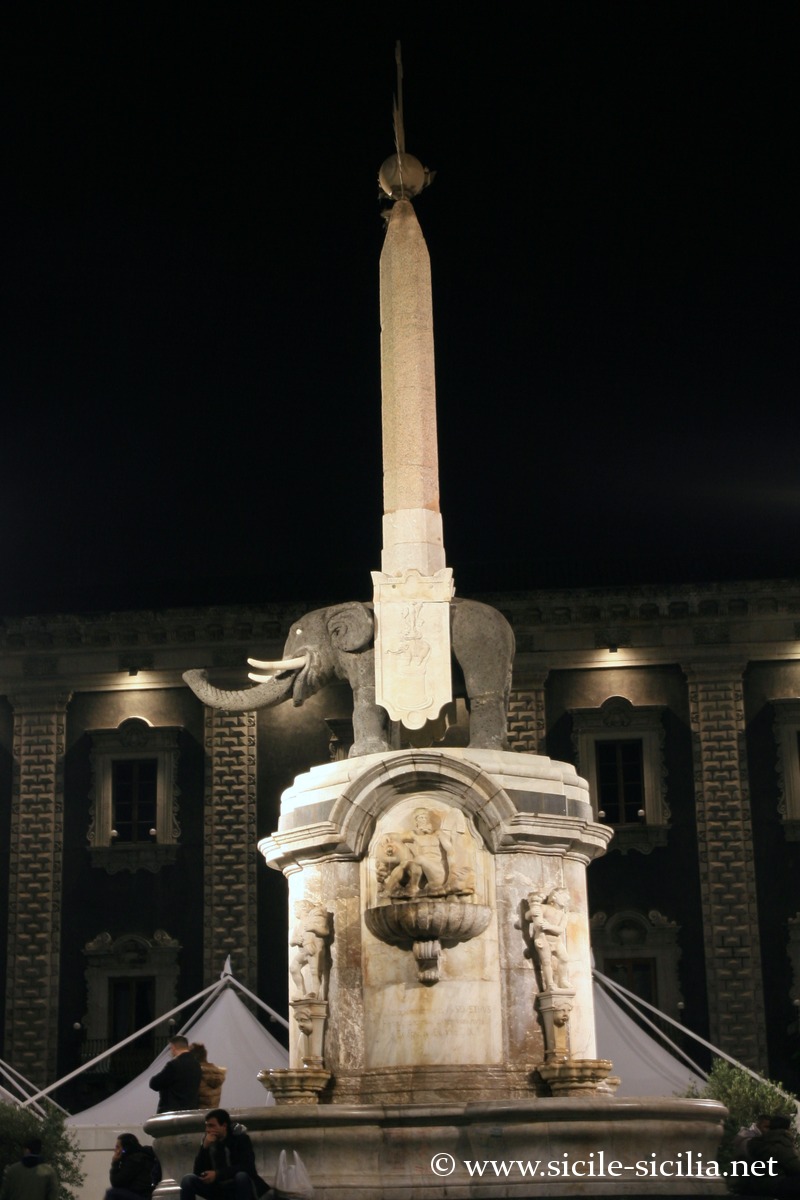
Elephant Fountain in Catania
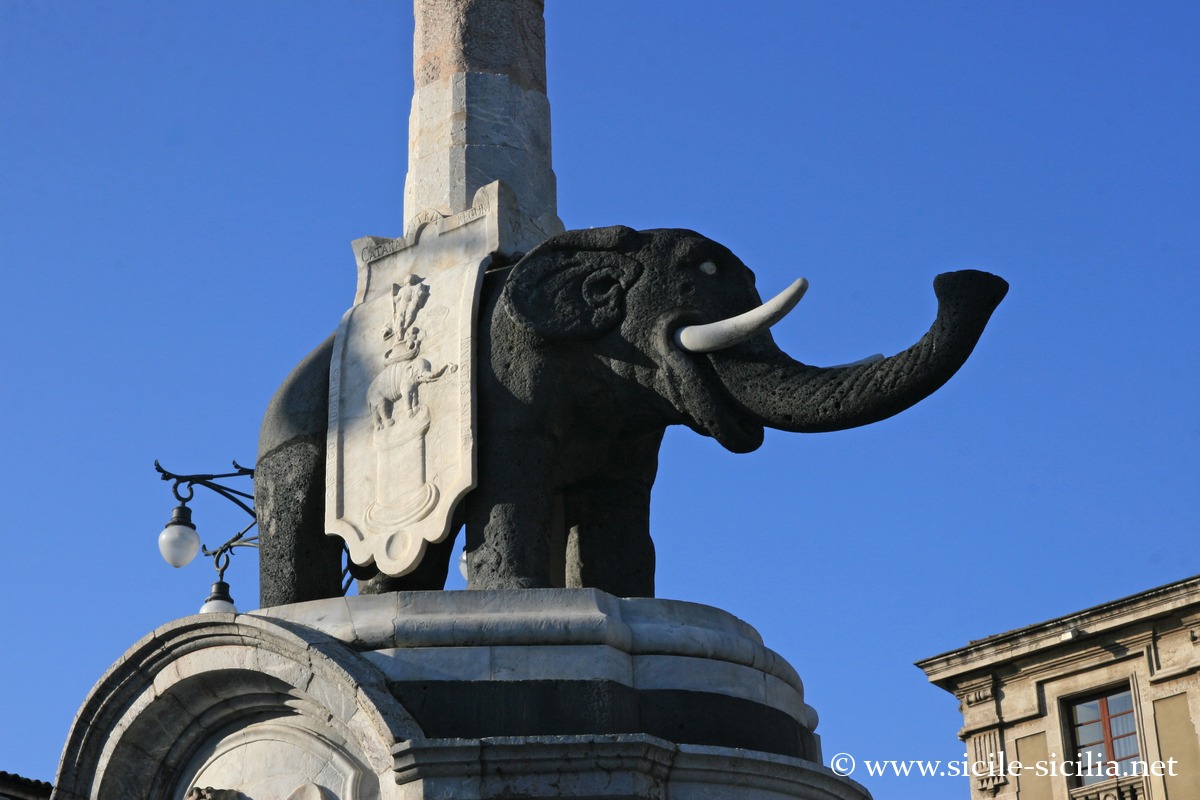
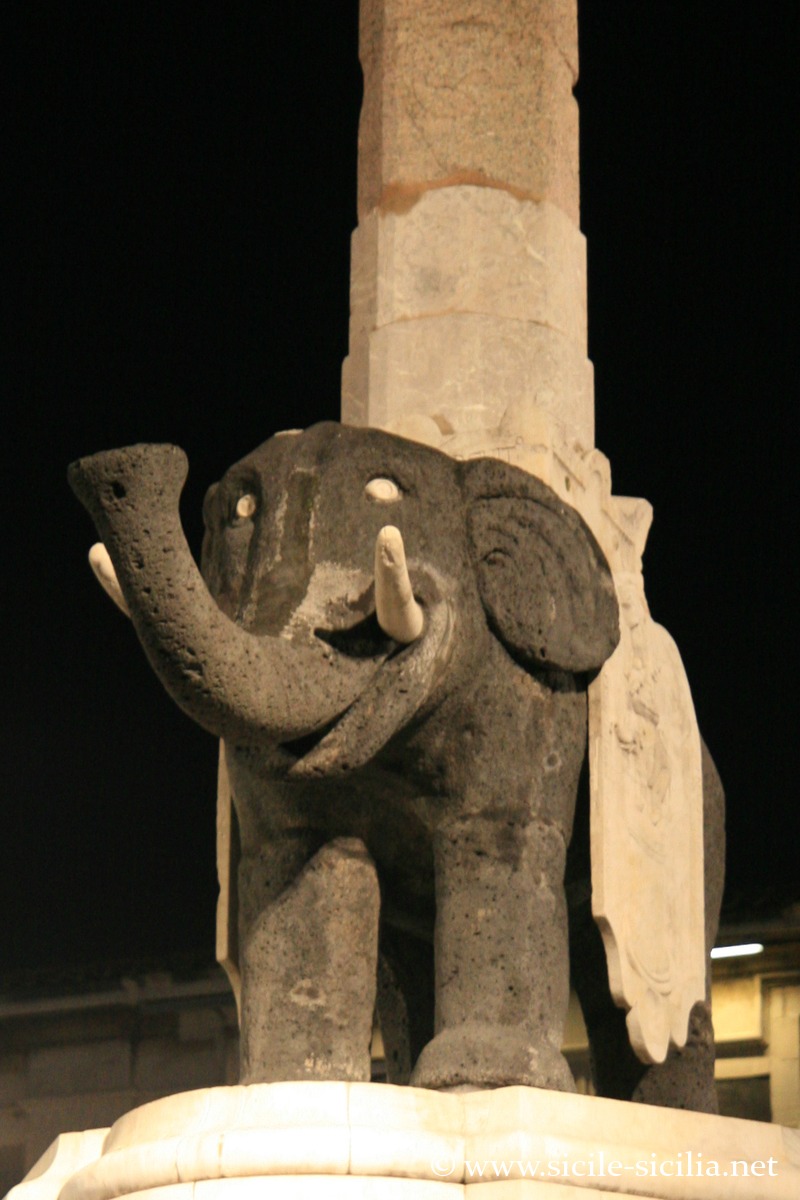
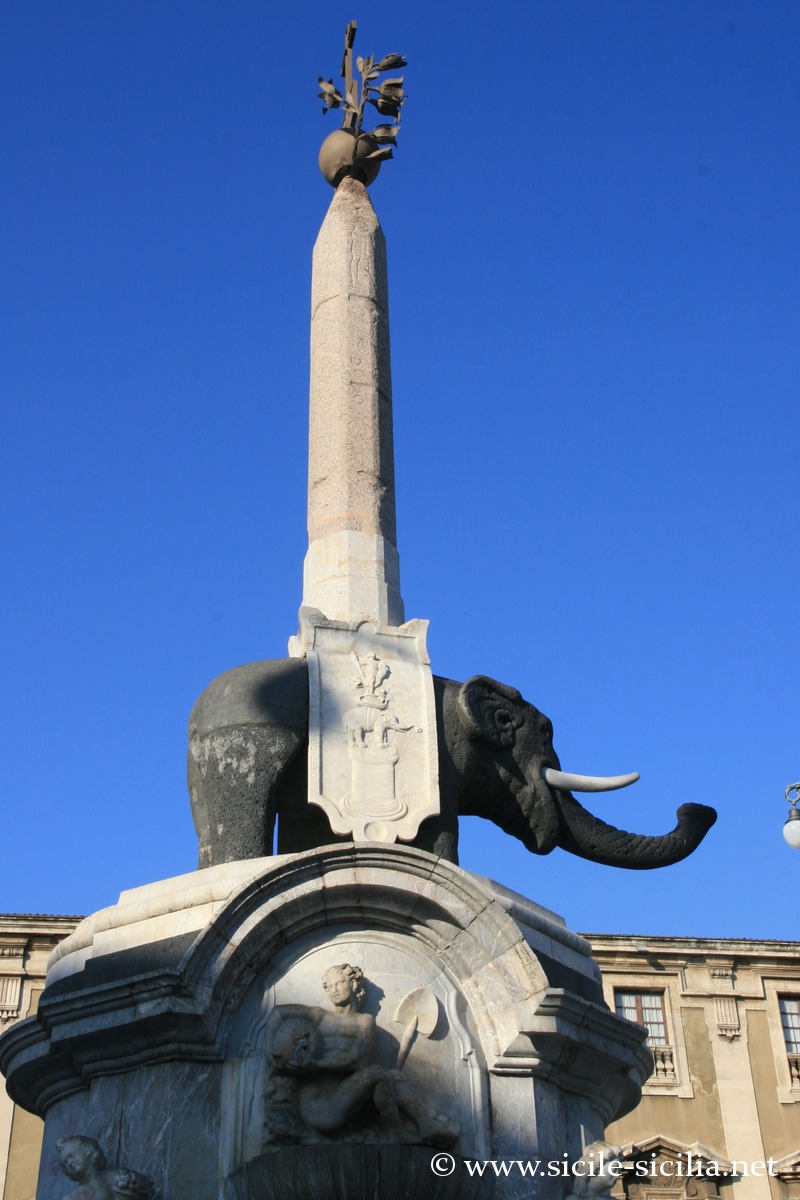
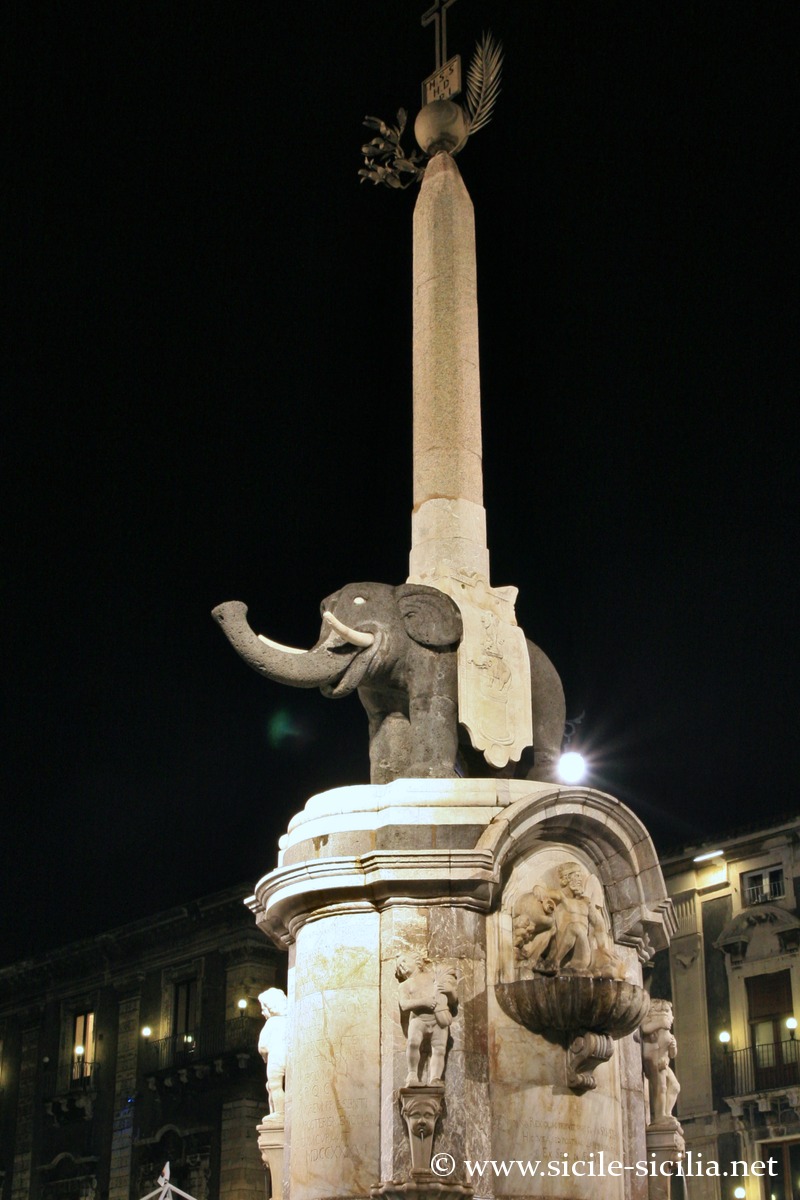
Now the emblem of the city, this fountain consists of an elephant in lava stone dating from the Roman period, carrying on its back an obelisk of Egyptian origin, probably from Aswan. According to the chronicles, it previously adorned the sanctuary of Isis, attested in ancient Catania.
The whole is a work by Vaccarini., completed in 1736.
The marble mantle adorning the elephant’s flanks bears the symbols of Saint Agatha, while the obelisk is also topped with her emblem.
According to legend, the elephant belonged to a magician and had the power to calm the rages of Etna.
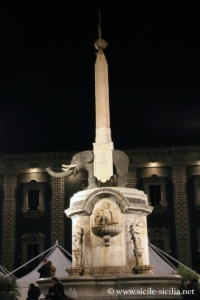
Vaccarini Fountain, obelisk and elephant 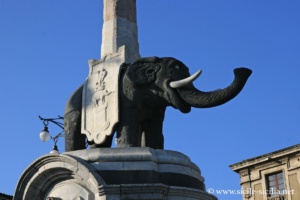
Vaccarini Fountain, obelisk and elephant 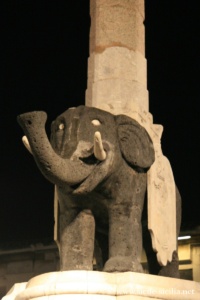

Vaccarini Fountain, obelisk and elephant
Amenano Fountain
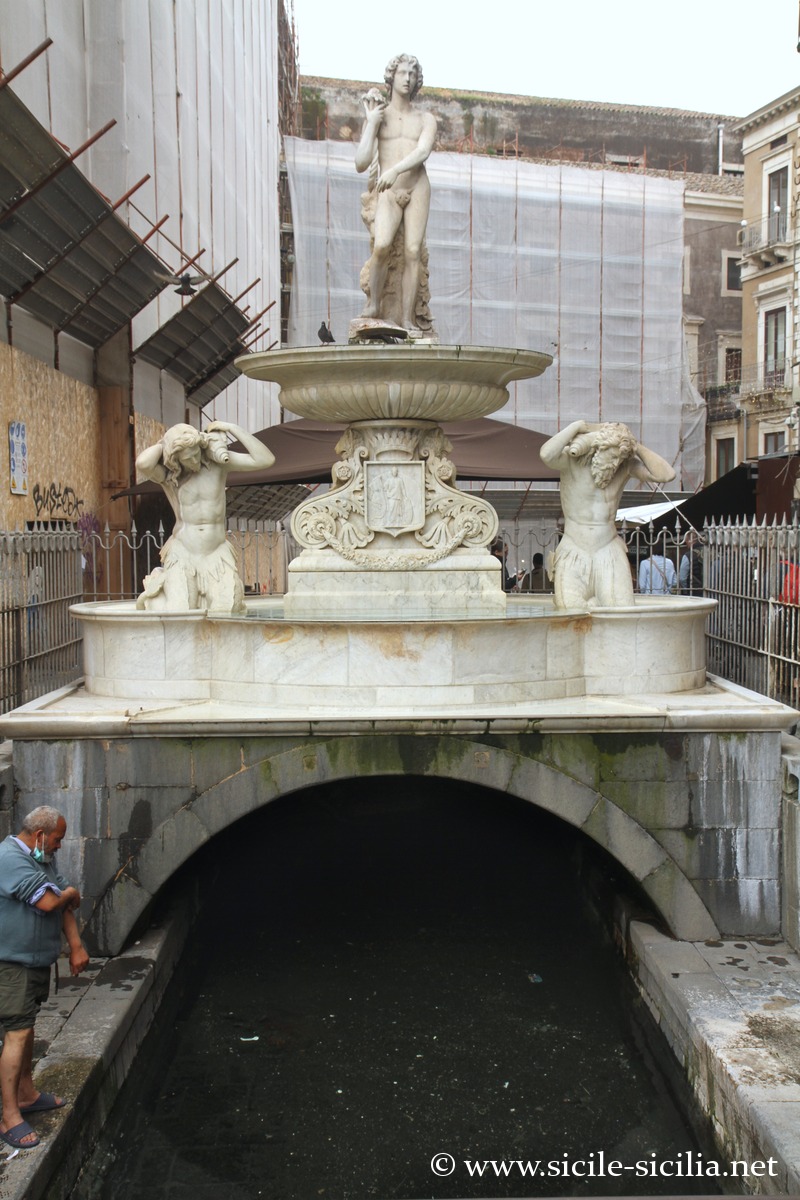
An underground river runs through Catania: the Amenano. It once fed a lake located west of the city, covered by a lava flow in 1669. Its resurgence is visible through the Amenano Fountain, in white marble, located south of Piazza Duomo. This neoclassical work by Tito Angelini represents a young man pouring water and symbolises the rebirth of the river buried beneath the city.
Palazzo degli Elefanti
The Palazzo degli Elefanti (Palace of the Elephants), seat of Catania’s town hall, was built after the 1693 earthquake to replace the 16th-century Palazzo Senatorio. Vaccarini took part in its design, and the interior preserves works by Giuseppe Sciuti, Emilio Greco and Francesco Contraffatto. The palace’s inner courtyard, adorned with a monumental double-ramp staircase, is one of the most accomplished examples of Baroque civil architecture in Catania.
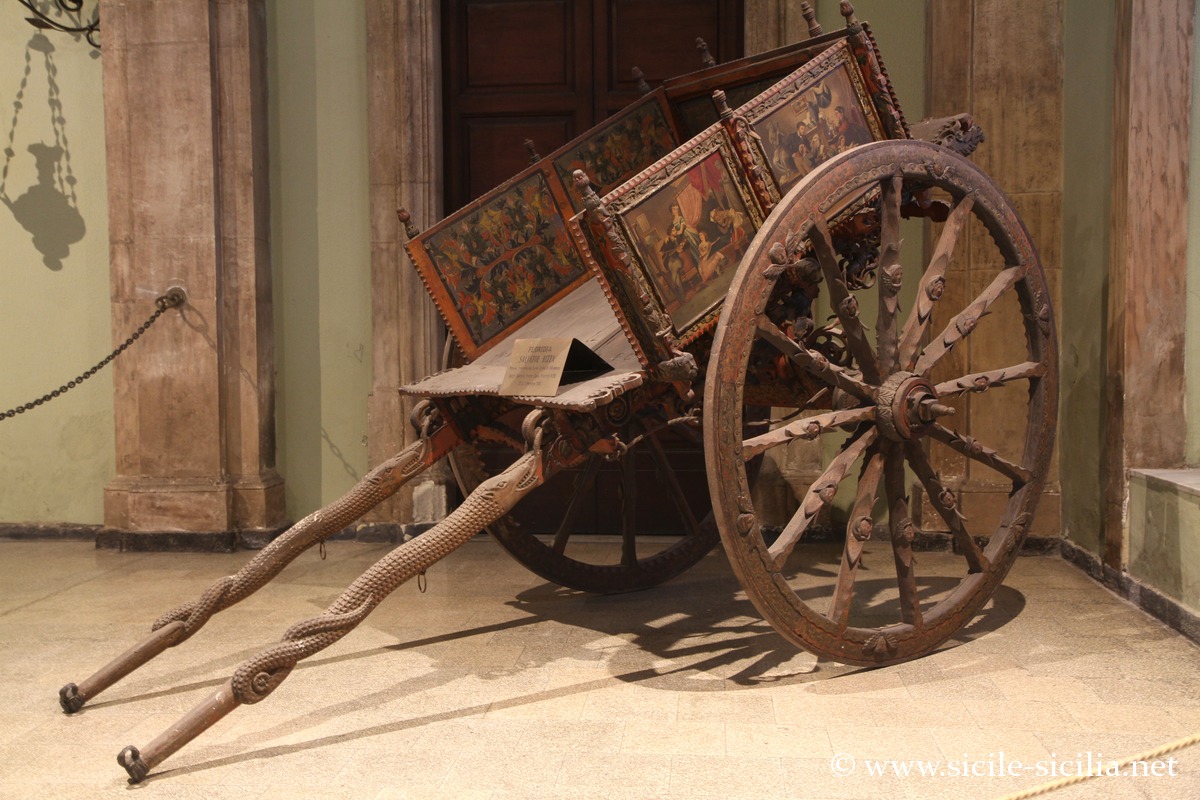
Behind its great portal are displayed old carriages once used by the municipality.
Palazzo dei Chierici
The Palazzo dei Chierici (or Palazzo del Seminario dei Chierici) was partly rebuilt after the 1693 earthquake and enlarged in the 18th century, on remains of the former bishop’s palace by the architect Alonzo di Benedetto, then completed by Francesco Battaglia. It now houses municipal offices. Going down the stairs to the right of the building, one reaches the Porta Uzeda, facing the Pescheria, adorned with an epigraph of 1553. It was once part of the defensive walls of Charles V on which the palace partly rests.

Porta Uzeda 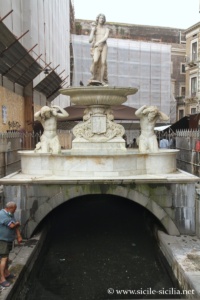
Amenano Fountain 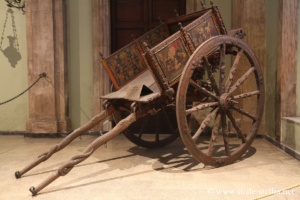
Sicilian cart, Palazzo degli Elefanti
Diocesan Museum and Terme Achilliane
The Diocesan Museum of Catania is housed in the Palazzo dei Chierici adjoining the Cathedral of Saint Agatha. From its terraces, one enjoys a beautiful view of the sea, Etna and the square.
The museum also provides access to the underground complex of the Terme Achilliane, where one can observe the ancient structures crossed by the Amenano river.
It is organised into two sections: the first displays the sacred furnishings of the cathedral, the second gathers objects from other churches of the city and the region, as well as a picture gallery, including pieces of liturgical silverware in chased silver from the 17th century, from Catania’s goldsmithing tradition.
Where is Piazza Duomo in Catania
If you see this after your page is loaded completely, leafletJS files are missing.
Photo gallery
Piazza del Duomo 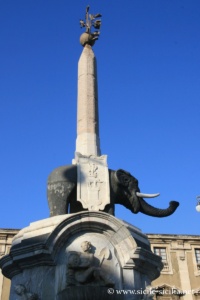
Elephant Fountain 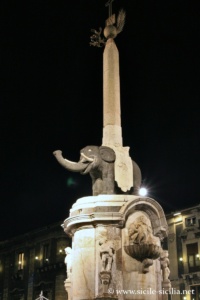
Elephant Fountain 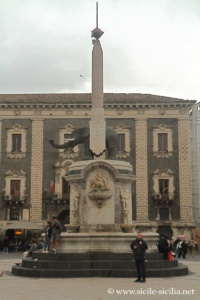
Elephant Fountain 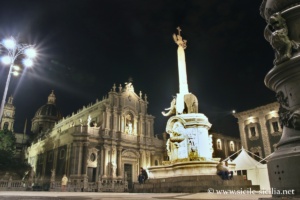
Piazza del Duomo 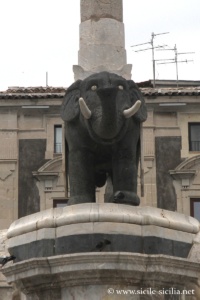
Elephant Fountain
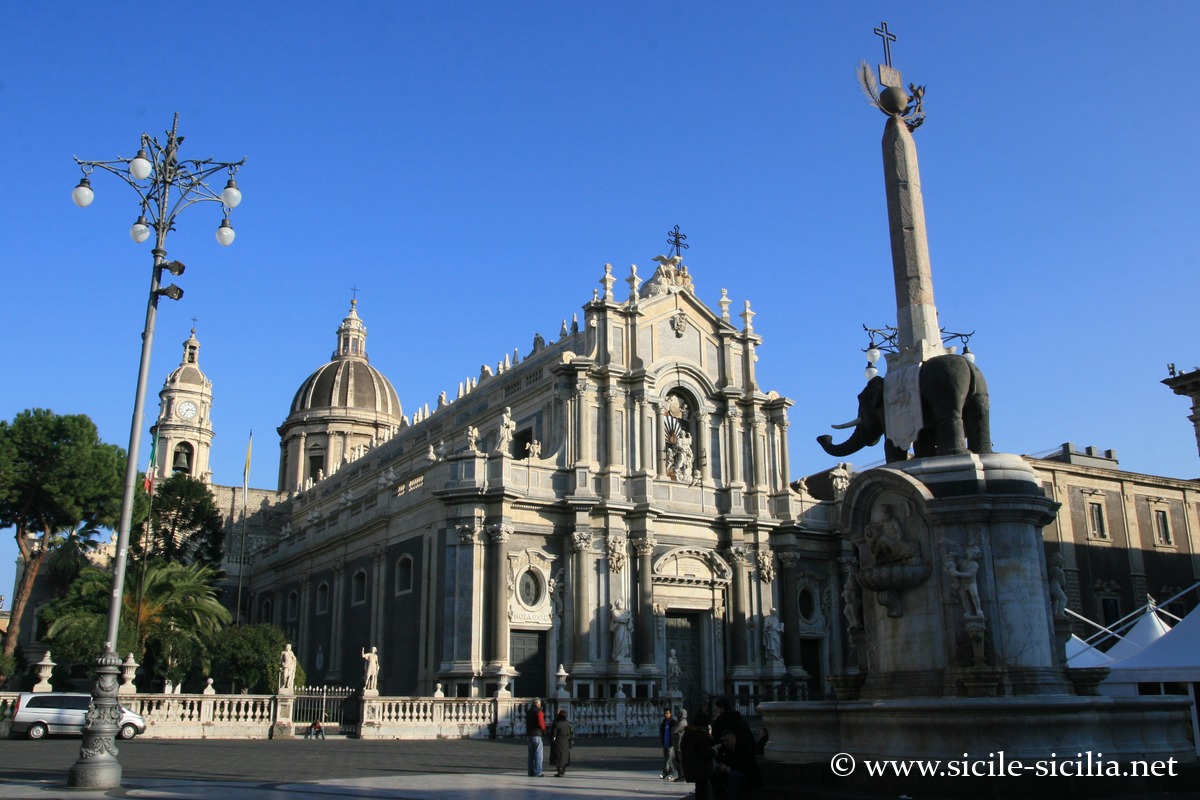
Information
External sites
- Catania municipality website: www.comune.catania.it
- Cathedral of Saint Agatha: Wikipedia page, official website www.cattedralecatania.it
- Palace of the Seminary of the Clerics: Wikipedia page
- Diocesan Museum: museodiocesanocatania.com
Articles in the Catania category
- Catania
 The second most populous city in Sicily after Palermo, Catania has faced terrible ...
 - Hotels in Catania
 Hotels in Catania in Sicily, at the foot of Mount Etna. Apartments, accommodations ...
 - Riviera of the Cyclops
 Along the coast north of Catania, the “Riviera dei Ciclopi” (Riviera dei Ciclopi ...
 - Catania Walking Tour Itinerary
 The interesting historic centre of Catania is marked by Baroque architecture, part of ...
 - Churches of Catania
 Beyond this article dedicated to the churches of the city, also discover the ...
 - Via Crociferi in Catania: the Baroque churches
 The Via Crociferi is called the “street of churches”, a monumental and emblematic ...
 - Ancient sites of Catania
 The ancient remains of Catania bear witness to the importance of the city ...
 - Along the Via Etnea in Catania
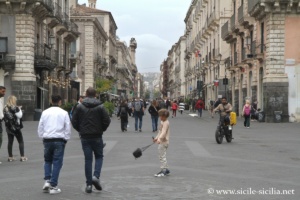 The Via Etnea is the main shopping street in the centre of Catania, ...
 - Palaces of Catania to discover
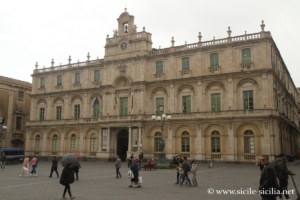 Beyond this page dedicated to the most remarkable palaces in Catania, you can ...
 - Bellini Square and Theatre in Catania
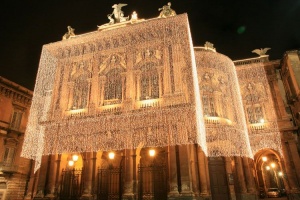 Bellini Theatre Located towards the north-east of Piazza Duomo, on the square of the ...
 - Ursino Castle of Catania
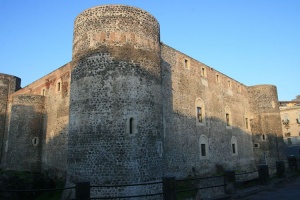 The Ursino Castle of Catania was built between 1239 and 1250 on the ...
 - Benedictine Monastery and San Nicolò of Catania
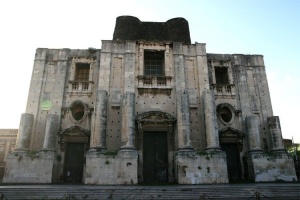 About 850 metres west of Piazza Duomo, Piazza Dante sits in front of ...
 - Museums of Catania

 List of the main museums of Catania, including palaces, religious and archaeological sites. Municipal ...
 - Other sites and places in Catania
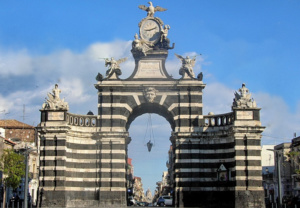 Porta Garibaldi in Catania In the south-west of Catania’s centre, more than a kilometre ...
 - Discovering underground Catania
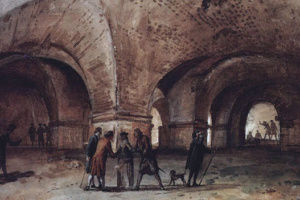 Lava flows have periodically covered entire districts of Catania, burying much of the ...
 - Catania Environs: Riviera and Countryside
 Mount Etna (overview) In the environs of Catania, the Etna park offers a spectacular ...
 - Traditions and gastronomy in Catania
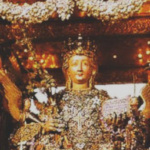 Feast of Saint Agatha in Catania The main festival of Catania is that of ...
 - Activities in Catania, guided tours and excursions
 Booking activities in Catania and its surroundings, guided tours, tastings, outings on the ...
 - Around Catania
 Sicilian destinations near Catania, including Mount Etna rising to the northwest, Taormina along ...
Comments in other languages
This square is the center of Catania: the cathedral, the Elephant Fountain, the palaces with the diocesan museum, and adjoining the pescheria, the fish market, the Badia Sant'Agatha, etc