
The ancient remains of Catania bear witness to the importance of the city during the Greek and Roman periods, when the ancient Càtina (or Càtana) occupied a strategic position on the eastern coast of Sicily. Founded by Greek colonists from Naxos in the 8th century BC, it came under Roman rule in 263 BC, then experiencing an urban development marked by the construction of theatres, baths and monumental infrastructure.
The successive earthquakes and eruptions of Etna profoundly reshaped the ancient fabric, burying a large part of the structures beneath the current Baroque city. Today, the excavations and restorations carried out since the 19th century allow several major complexes to be rediscovered: amphitheatre, theatre, odeon and thermal complexes. These remains, partially visible or integrated into modern buildings, offer a precise overview of ancient Catania and its evolution through the ages.
Roman amphitheatre of Catania
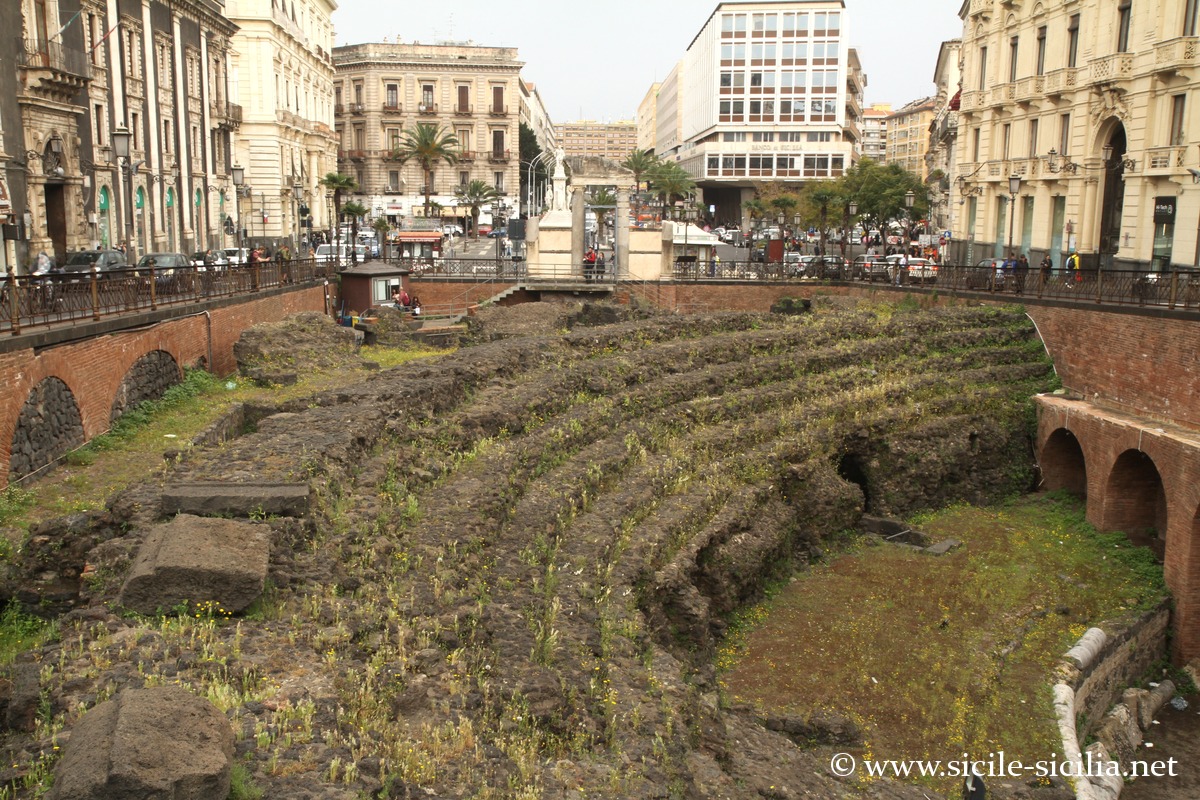
Located on one side of Piazza Stesicoro, the Amphitheatre of Catania (Anfiteatro) is one of the major witnesses of the Roman period in Catania. It was the largest elliptical arena in Italy after that of the Colosseum in Rome and that of Verona.
Dating back to the 2nd century AD, during the reign of Hadrian or Antoninus Pius, its capacity is estimated at 15,000 spectators, measuring about 70 m by 50 m.
It was abandoned from the 5th century, then serving as a stone quarry for building throughout the Middle Ages in particular.
Only a small section is visible today; the major part of the amphitheatre is buried beneath modern constructions.
The remains can be seen from the square and access with a ticket to the underground part is possible.
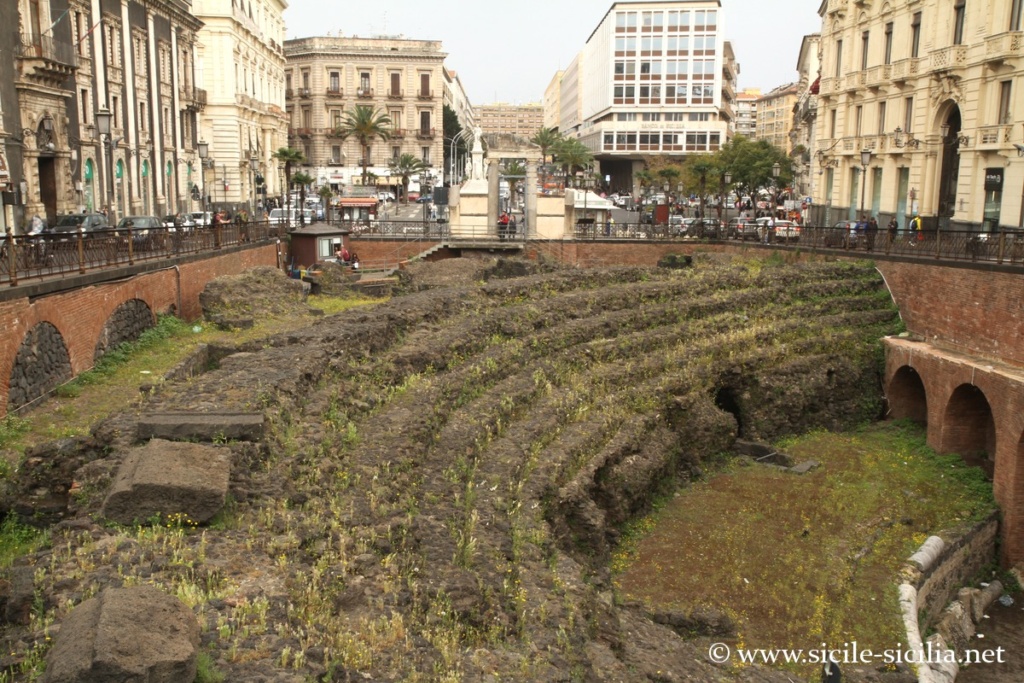
Roman amphitheatre of Catania
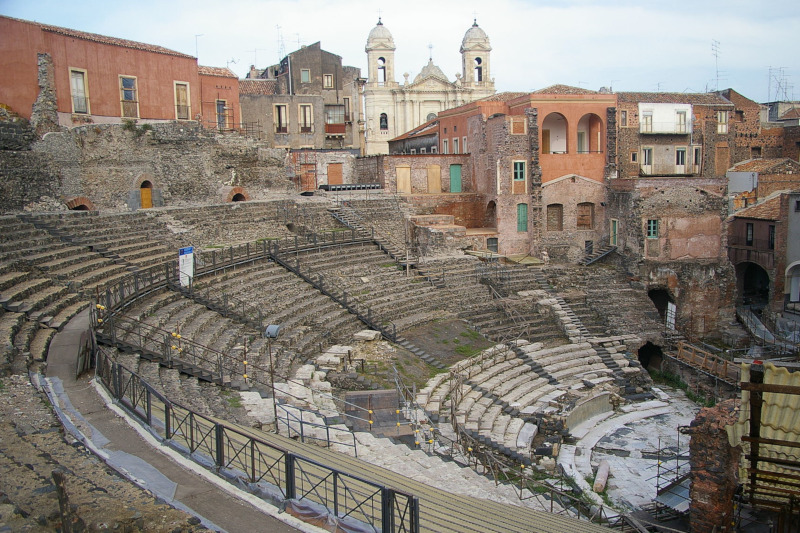
Greco-Roman theatre and odeon of Catania
The Greco-Roman theatre (Teatro greco-romano) located in via Vittorio Emanuele would date back to the 5th century BC, but the dating is not certain. The current remains are from the Roman period, built on a hypothetical earlier Greek structure.
Its capacity was about 7000 spectators, leaning against the hill where the ancient Acropolis stood. Its tiers rest on high vaulted galleries, and the lower structures are nowadays bathed by the water of the Amenano river.
The archaeological complex also includes an adjacent odeon, of smaller dimensions, intended for musical performances or civic gatherings.
Both buildings are accessible from Via Vittorio Emanuele 266, open every day from 9am to 7pm (last access 6:30pm), full price about €6, free on the first Sunday of the month.
File source: http://commons.wikimedia.org/wiki/File:Catania_Greek-Roman_theater.JPG 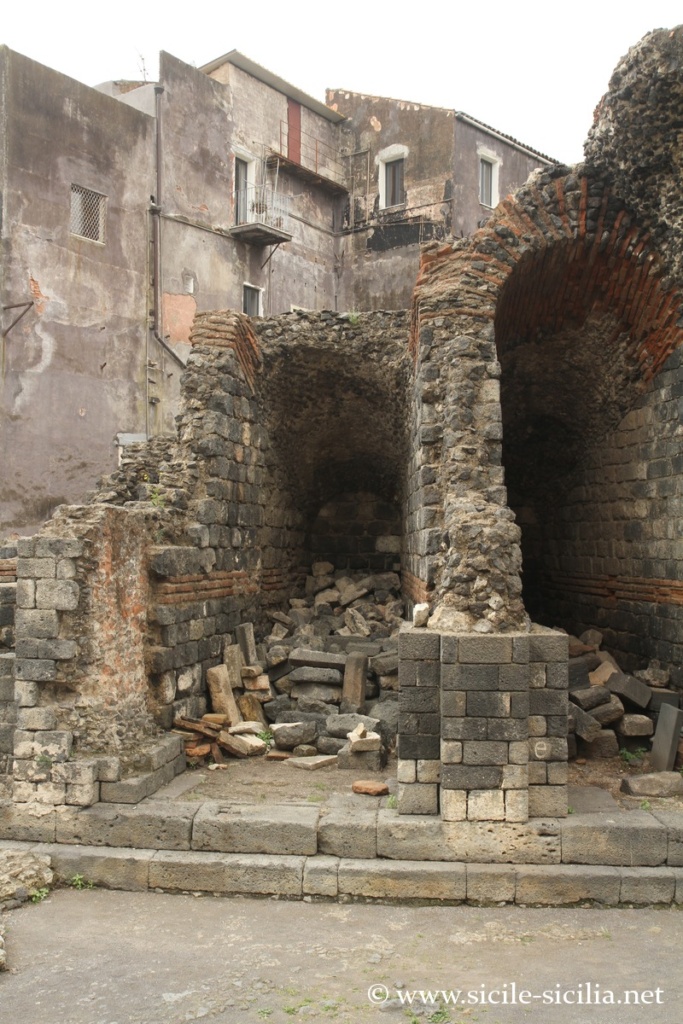
Exterior of the Roman theatre of Catania
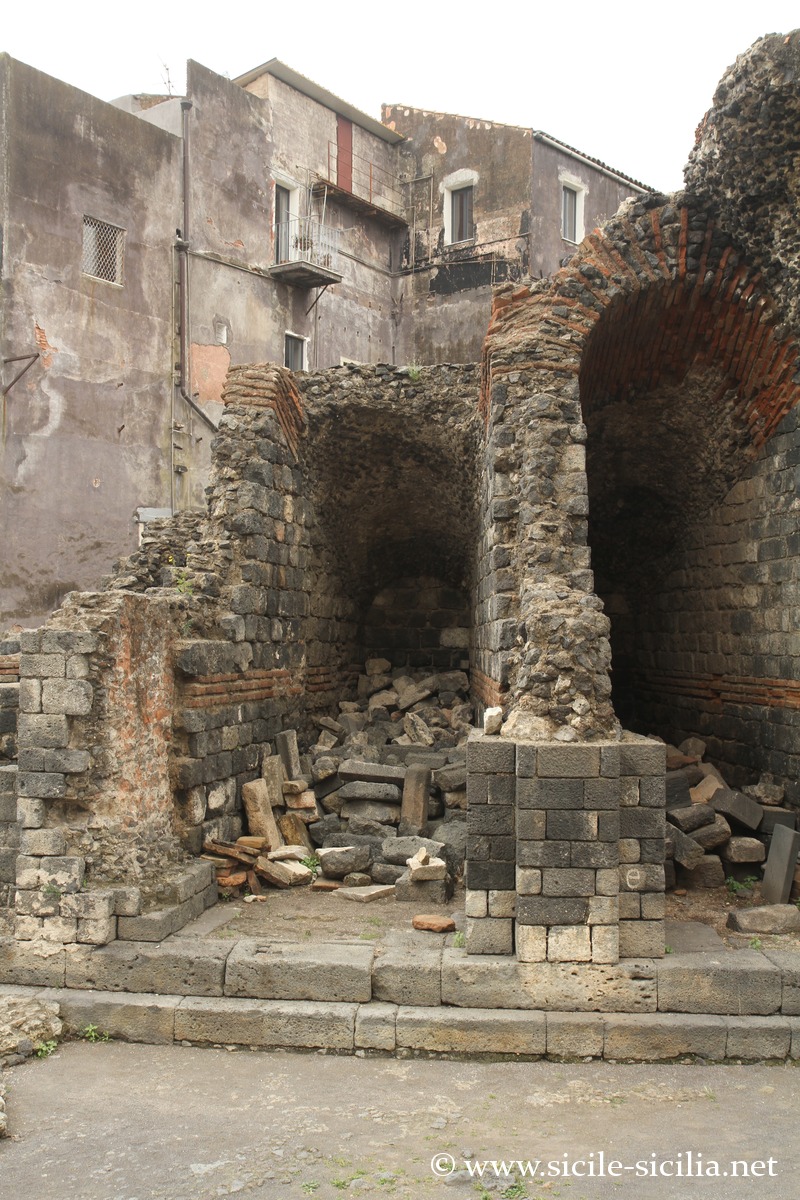
Baths of the Rotonda in Catania
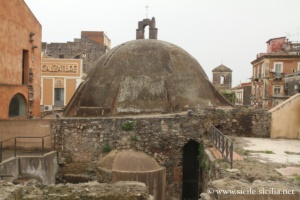
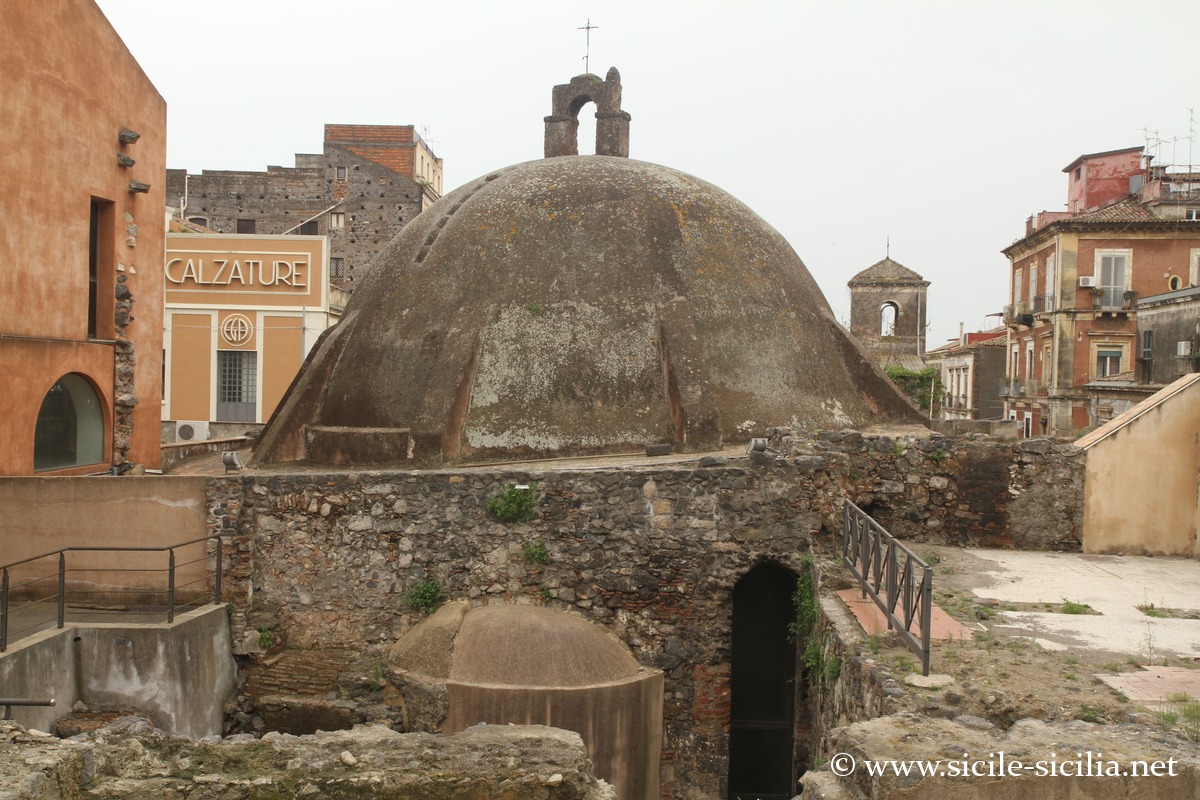
The Baths of the Rotonda (Terme della Rotonda) consist of a vast complex located north of the ancient theatre. It was reworked several times throughout history. The original baths date from the end of the 1st or the beginning of the 2nd century AD. They were surmounted by a medieval church dedicated to the Virgin Mary in the Byzantine period (end of the 6th century), with a circular plan and covered by a dome. There are remains of frescoes, the oldest from the 6th century, and others from the 12th-14th centuries, as well as a more recent cycle from the 18th century, partially altered. Some Byzantine scenes are preserved on the internal walls of the dome. An imposing castellum aquae (reservoir/distribution structure of the Roman aqueduct) was brought to light during recent excavations around the baths during the 2004–2008 and 2015 excavation campaigns.
The site depends on the Parco Archeologico di Catania e della Valle dell’Aci. Access is free but only by reservation or as part of occasional organized guided tours.
Baths of the Rotonda 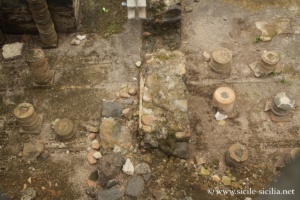

Baths of the Rotonda
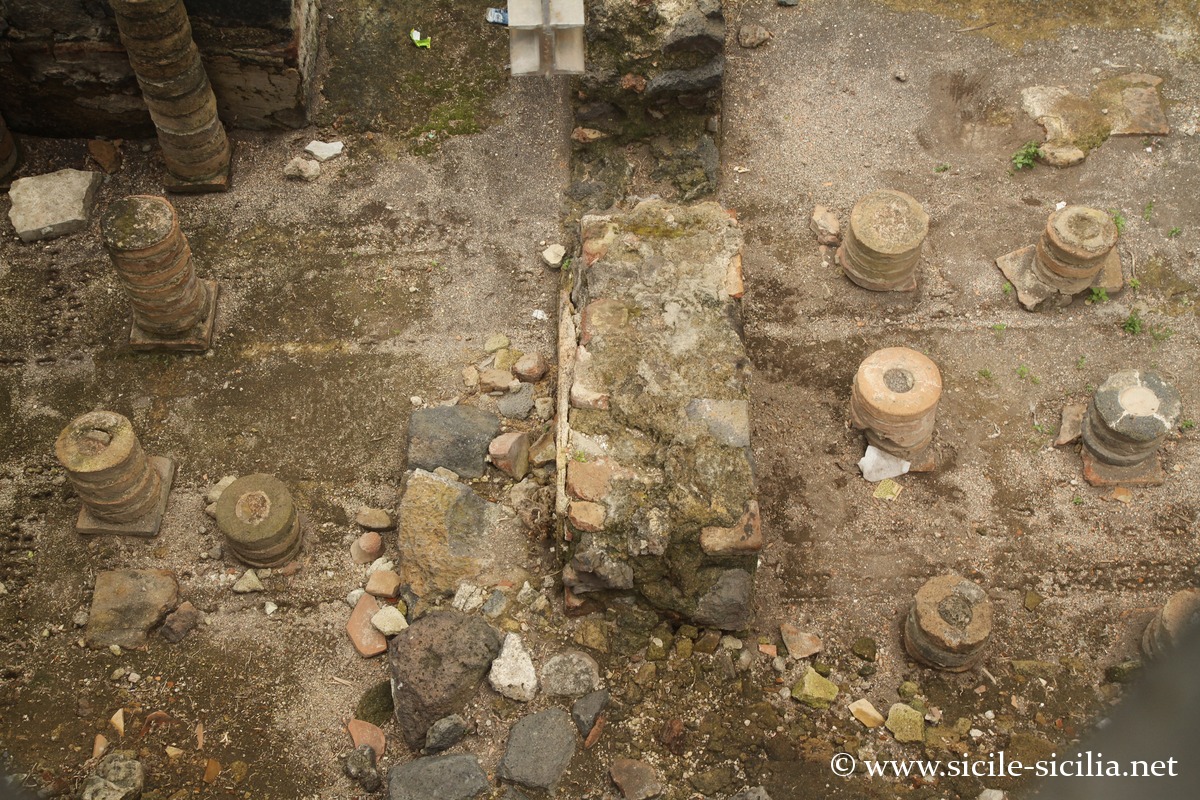
Achilliane Baths in Catania
The Achilliane Baths (Terme Achilliane) are located beneath the cathedral and Piazza Duomo. Only a small part is uncovered, dated to the 4th-5th century AD, and the original extent of these baths is unknown.
Nevertheless, impressive structures are preserved, including a large rectangular hall of 12 by 13 metres with a vault supported by four pillars, and heating conduits. Originally the vaults were adorned with stuccos with figurative motifs (cherubs / putti, animals, vine shoots). These decorations are visible in gouaches and illustrations by 18th-century travelling artists, such as Jean Houel, who reproduced them, works notably preserved at the Hermitage in Saint Petersburg.
The baths are accessed from the diocesan museum. The ticket combined with the diocesan museum, guided tour possible on site.
Baths of the Indirizzo in Catania
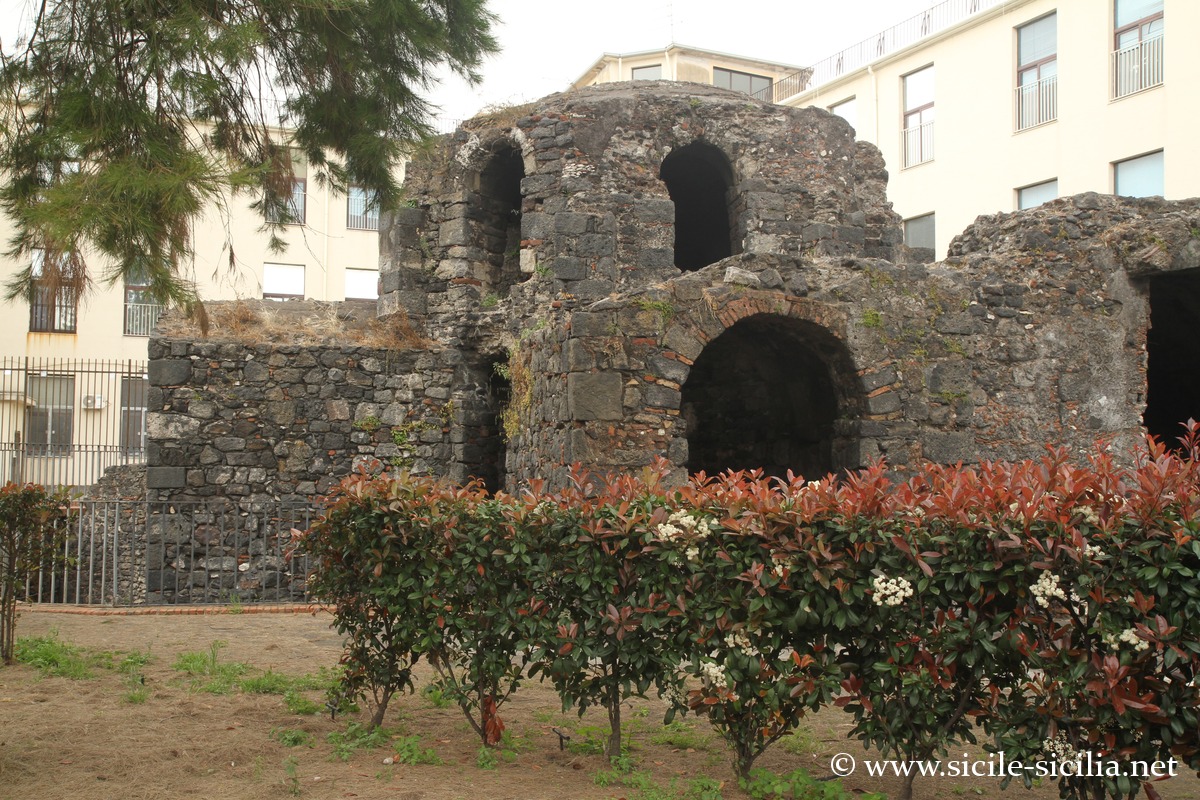
The Baths of the Indirizzo (lit. Baths of the Address), Terme dell’Indirizzo in Italian, took their name from the former convent of Santa Maria dell’Indirizzo located above the site. They are partially incorporated into the former Carmelite convent of Santa Maria dell’Indipendenza.
Several rooms of the baths remain, having kept their original roofs, including the largest of octagonal shape (dated to the 3rd-4th century AD) with its rectangular openings, covered by a central dome.
Pieces of furnaces used to heat the rooms also remain, as well as air conduits and water pipes. The site can be visited by reservation, entry is free, under the management of the Parco Archeologico di Catania. The exterior of the structure can be seen from the street.
Other ancient remains in Catania
Among the other ancient structures of Catania are the ancient walls of the former acropolis located near the theatre, as well as stretches of aqueducts and pipes still visible in certain underground areas. Excavations have also brought to light remains of small sanctuaries and fragments of Latin inscriptions scattered throughout the historic centre.
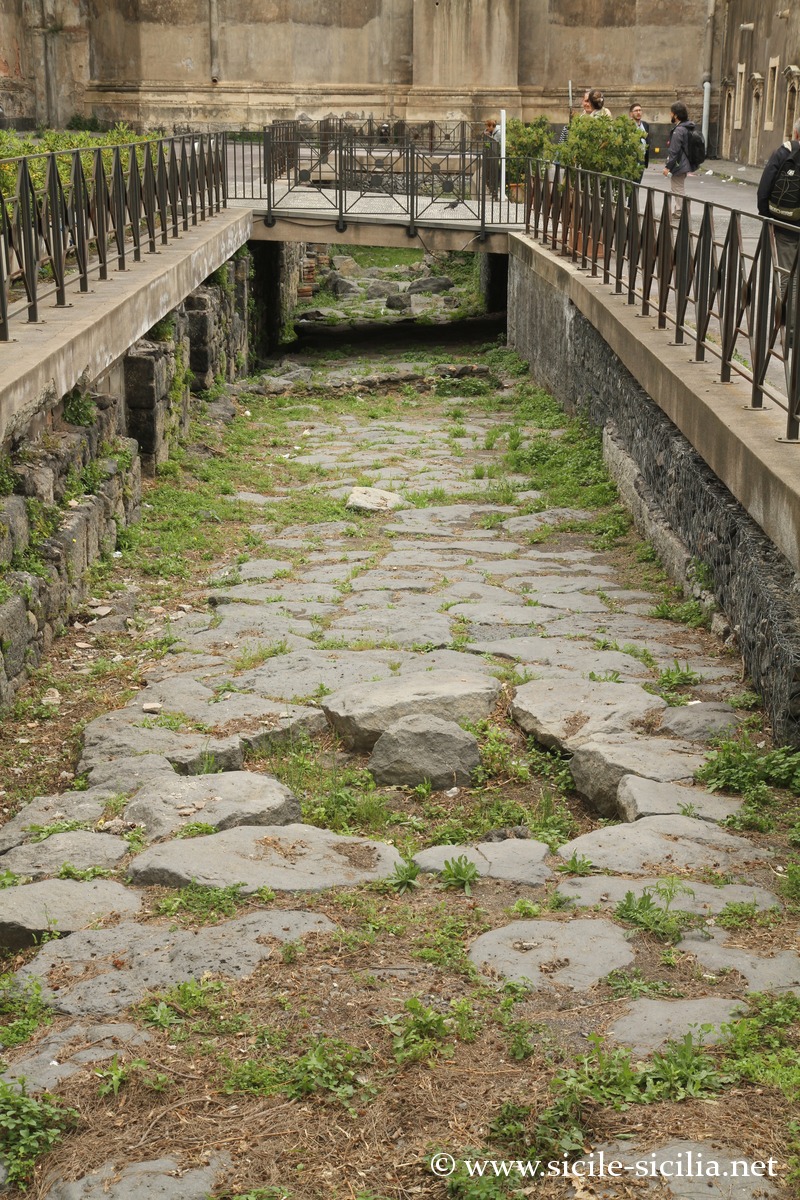
Within the vast complex of the Benedictine Monastery of San Nicolò l’Arena, excavations have revealed the presence of important ancient remains. Several Roman domus were discovered there, dated from the late Hellenistic period to the imperial era, comprising peristyles and interior living spaces. Segments of the main axes of the Roman road network — the Cardo and the Decumanus Maximus — are also still visible in certain courtyards and basements of the monastery.
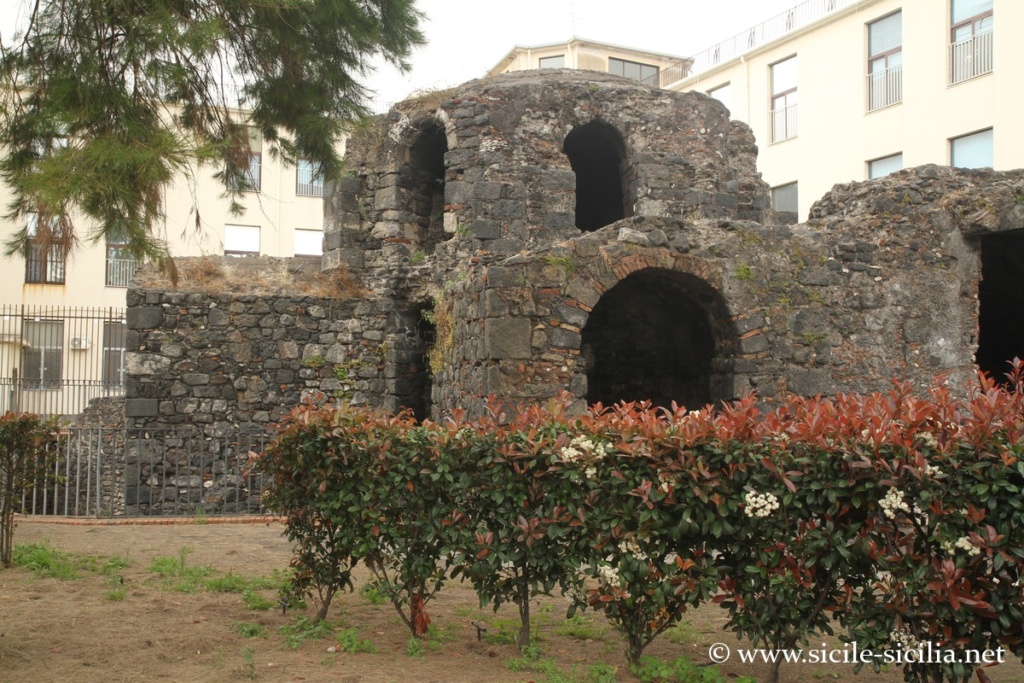

Baths of the Indirizzo 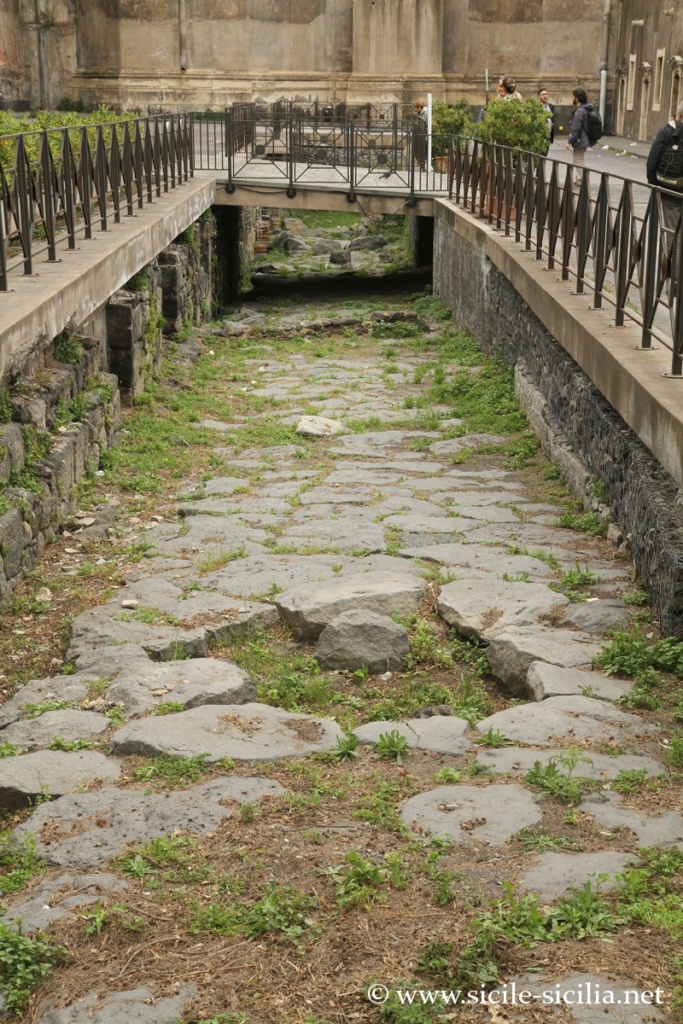

Roman road, monastery of San Nicolo
Map with the ancient sites of Catania
 Show interactive map
 Information
Guided tour ideas
External sites
- Amphitheatre: Wikipedia page, Sicily region website
- Theatre: Wikipedia page, Sicily region website, www.museionline.info
- Baths of the Rotonda: region website, www.museionline.info, Wikipedia page
- Achilliane Baths: diocesan museum article, Wikipedia page, diocesan museum
- Terme dell’Indirizzo: Wikipedia page, Sicily region
Articles about Catania
- Catania
 The second most populous city in Sicily after Palermo, Catania has faced ...
 - Hotels in Catania
 Hotels in Catania in Sicily, at the foot of Mount Etna. Apartments, ...
 - Riviera of the Cyclops
 Along the coast north of Catania, the “Riviera dei Ciclopi” (Riviera dei ...
 - Catania Walking Tour Itinerary
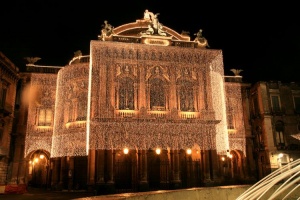 The interesting historic centre of Catania is marked by Baroque architecture, part ...
 - Piazza del Duomo and Catania Cathedral
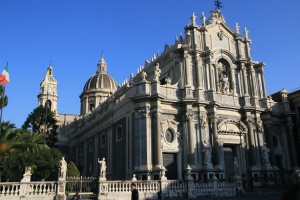 In the heart of Catania, the Piazza Duomo is the starting point ...
 - Churches of Catania
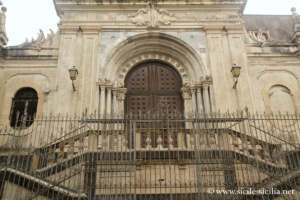 Beyond this article dedicated to the churches of the city, also discover ...
 - Via Crociferi in Catania: the Baroque churches
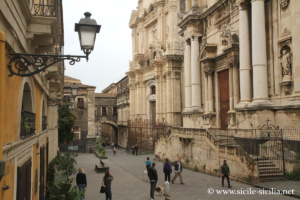 The Via Crociferi is called the “street of churches”, a monumental and ...
 - Along the Via Etnea in Catania
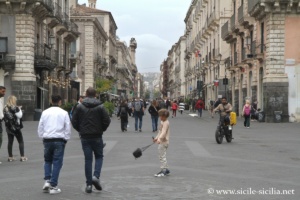 The Via Etnea is the main shopping street in the centre of ...
 - Palaces of Catania to discover
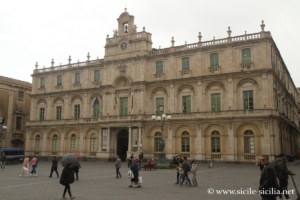 Beyond this page dedicated to the most remarkable palaces in Catania, you ...
 - Bellini Square and Theatre in Catania
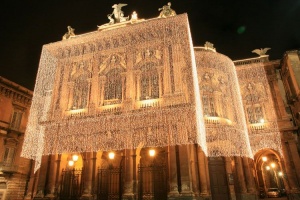 Bellini Theatre Located towards the north-east of Piazza Duomo, on the square of ...
 - Ursino Castle of Catania
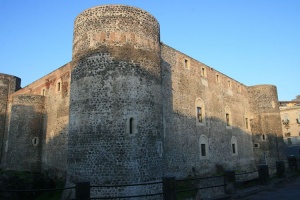 The Ursino Castle of Catania was built between 1239 and 1250 on ...
 - Benedictine Monastery and San Nicolò of Catania
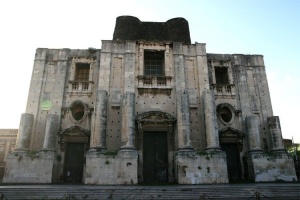 About 850 metres west of Piazza Duomo, Piazza Dante sits in front ...
 - Museums of Catania

 List of the main museums of Catania, including palaces, religious and archaeological ...
 - Other sites and places in Catania
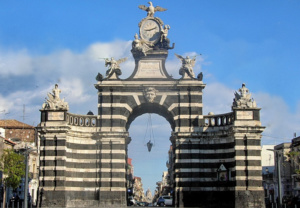 Porta Garibaldi in Catania In the south-west of Catania’s centre, more than a ...
 - Discovering underground Catania
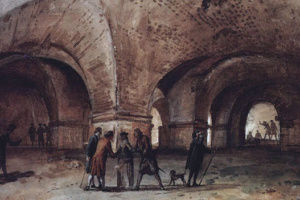 Lava flows have periodically covered entire districts of Catania, burying much of ...
 - Catania Environs: Riviera and Countryside
 Mount Etna (overview) In the environs of Catania, the Etna park offers a ...
 - Traditions and gastronomy in Catania
 Feast of Saint Agatha in Catania The main festival of Catania is that ...
 - Activities in Catania, guided tours and excursions
 Booking activities in Catania and its surroundings, guided tours, tastings, outings on ...
 - Around Catania
 Sicilian destinations near Catania, including Mount Etna rising to the northwest, Taormina ...