
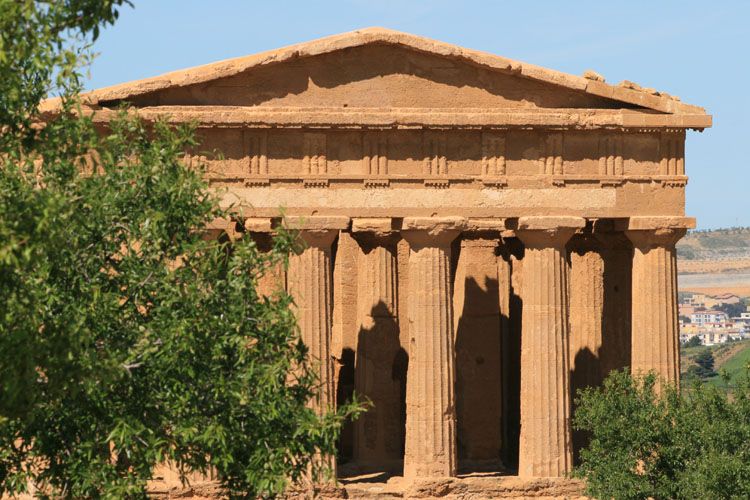

In antiquity, Agrigento was one of the most powerful Mediterranean cities of Magna Graecia. Its archaeological area of the Valley of the Temples, listed by UNESCO, is remarkable for the preservation of its buildings, with its Doric temples that are among the most important in the Greek world, dating back to the 6th-5th centuries BCE.
Category: Valley of the Temples
File on the Valley of the Temples in Agrigento, articles on the temples and monuments, places to see, map of the sites and archaeological museum.
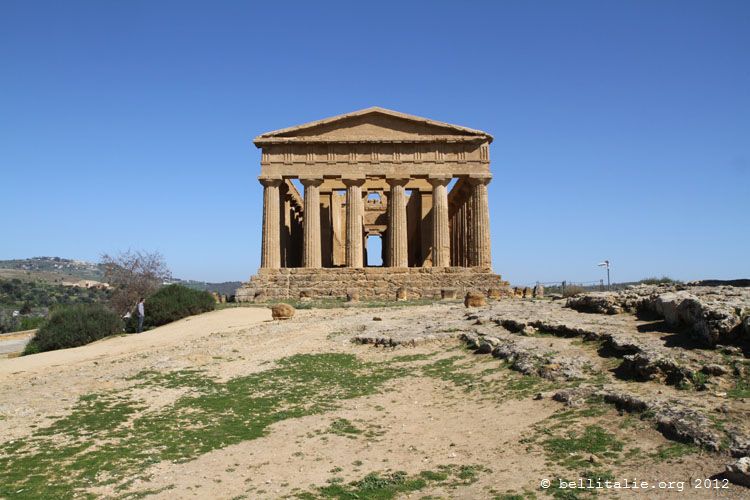
Construit entre 440 et 430 avant J.-C., le Temple de la Concorde, situé sur la crête de la Vallée des Temples d’Agrigente, figure parmi les édifices doriques les mieux conservés du monde grec. Cette datation se rattache à la phase d’aménagement monumental d’Akragas au cœur de la période classique, après la tyrannie de Théron. Présentation […]
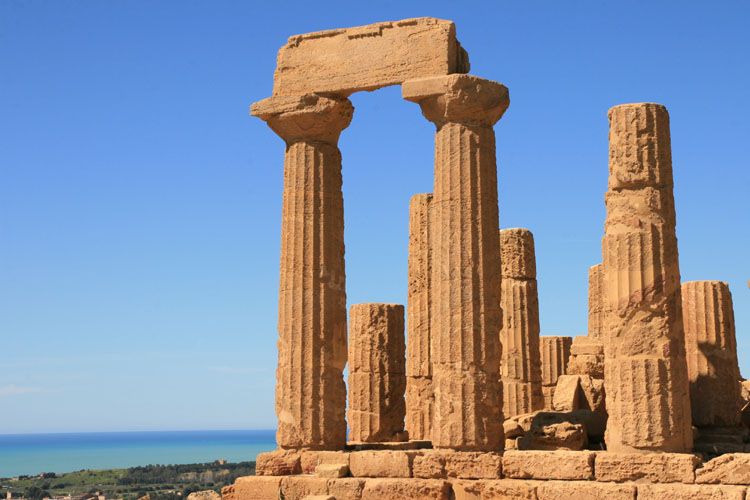
Situated at the end of the ridge, the Temple of Hera, also known as the Temple of Juno Lacinia or Temple D, overlooks a large area between the Valley of the Temples of Agrigento and the Mediterranean. On its eastern side is an altar intended for sacrifices, attesting to ritual practices in antiquity and confirming […]
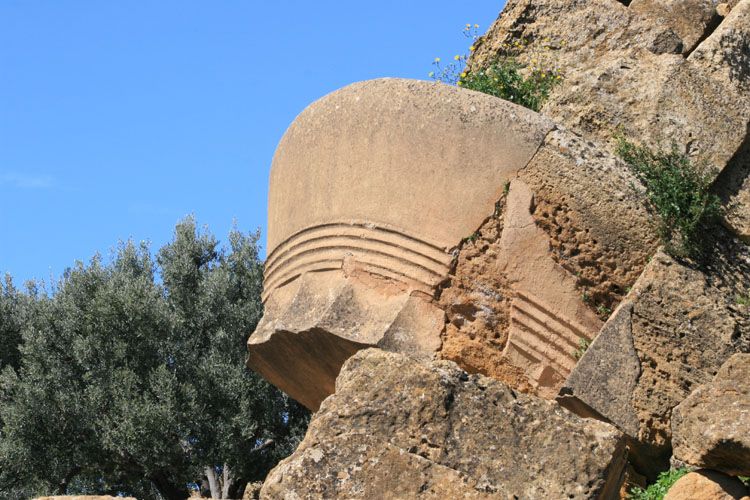
Situé dans la Vallée des Temples d’Agrigente, le Temple de Zeus Olympien, ou Olympéion, était un édifice monumental demeuré inachevé. C’est le plus grand temple dorique d’Occident. Sa construction ne fut jamais menée à son terme. Il présente aussi un cas architectural unique dans le monde grec, dont les statues de géants qui se trouvaient […]
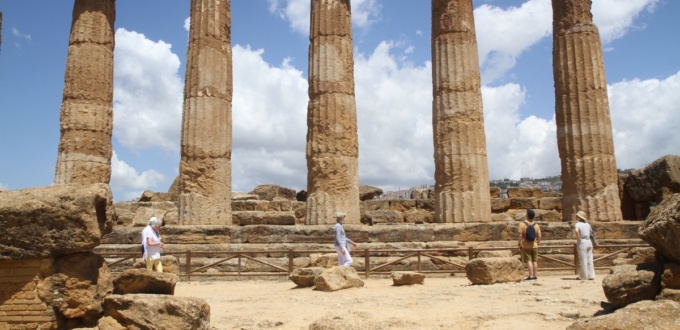
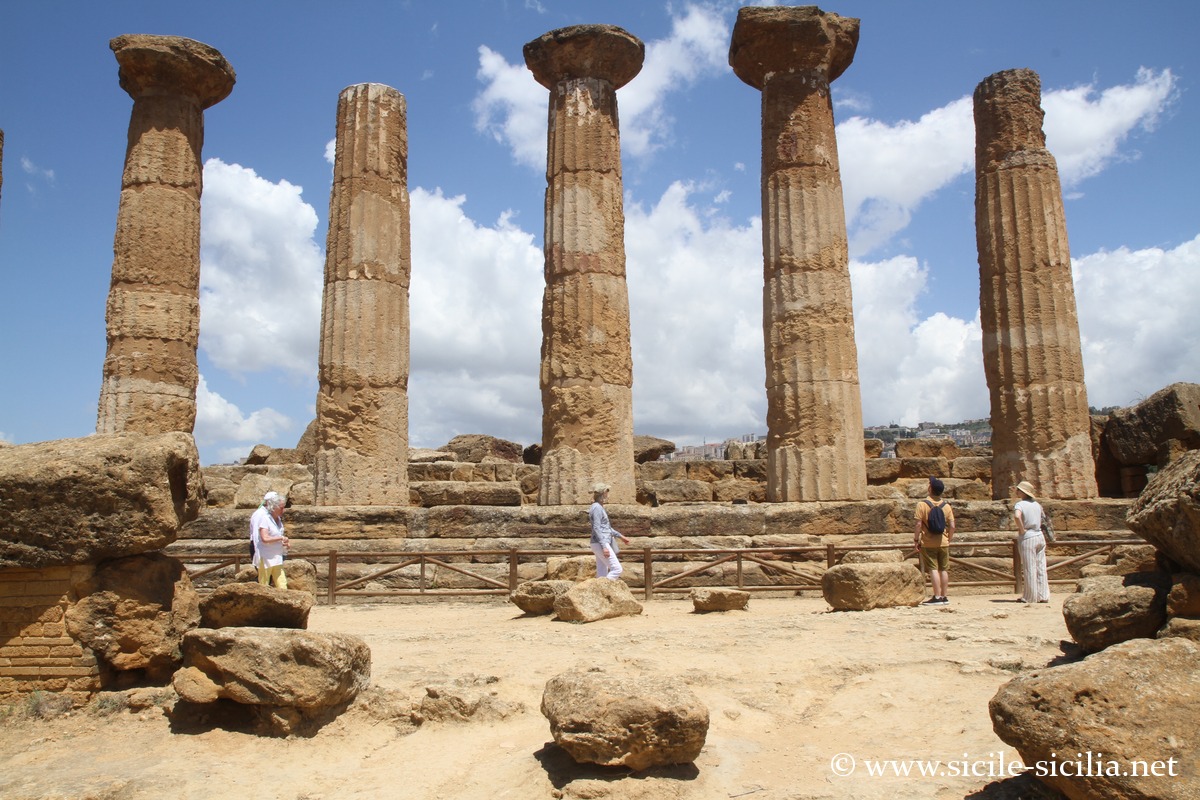
Bien que ses vestiges soient plus modestes que ceux d’autres monuments de la vallée des Temples d’Agrigente (l’ancienne Akragas), le temple d’Hercule, de style dorique archaïque, est considéré comme le plus ancien sanctuaire du site. Son édification remonte à la fin du VIᵉ siècle avant notre ère, datation fondée sur l’analyse de son style architectural […]
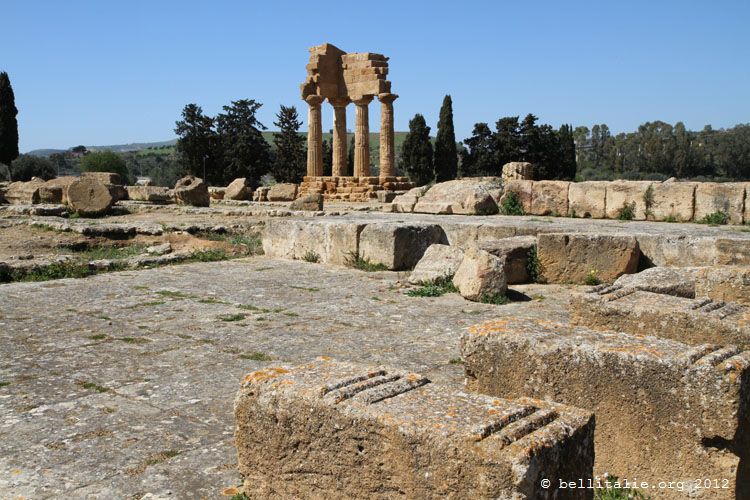
To the west of the Temple of Zeus extends a residential sector, followed by a sacred area up to Gate V, then the sacred area of the Chthonian Deities and finally at the end of the hill an archaic sacred area. Sector between the Temple of Zeus and Porta V To the west of the […]
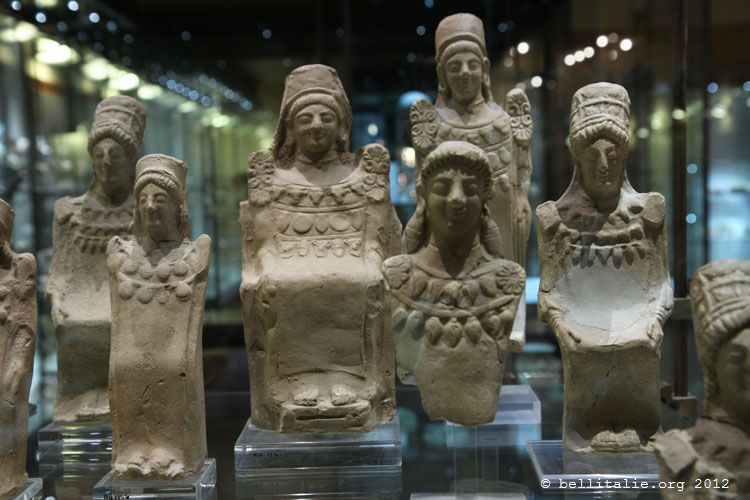
The Regional Archaeological Museum of Agrigento, officially named Museo Archeologico Regionale “Pietro Griffo”, is located on the hill of San Nicola (known as Poggetto San Nicola), overlooking the Valley of the Temples, to the south of the city.Inaugurated in 1967, it occupies the structures of a former Cistercian monastery from the 14th century, to which […]
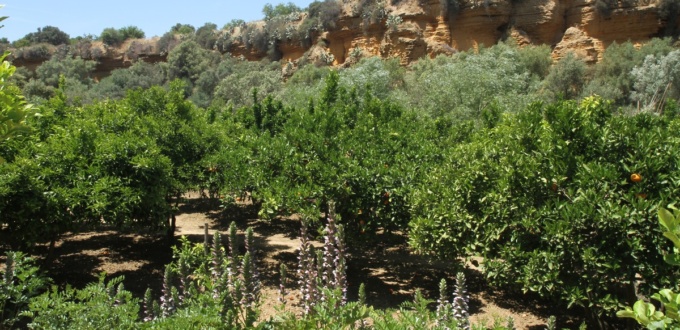
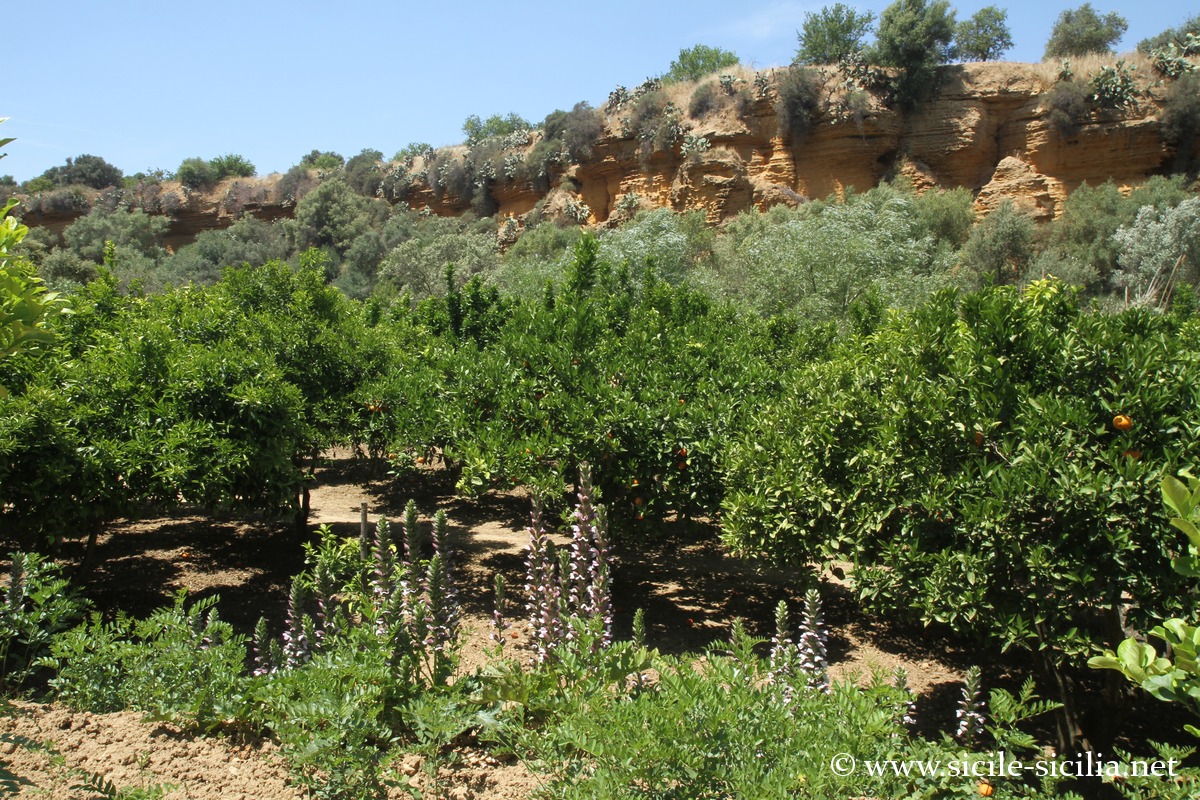
The Kolymbethra Garden lies in the heart of the archaeological park of the Valley of the Temples in Agrigento, between the Temple of Castor and Pollux and the Temple of Vulcan (also called the Temple of Hephaestus). The site dates back to the Greek era of the city of Akragas, founded in the 6th century […]
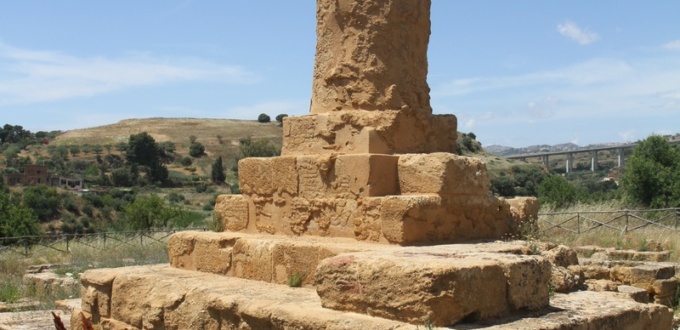
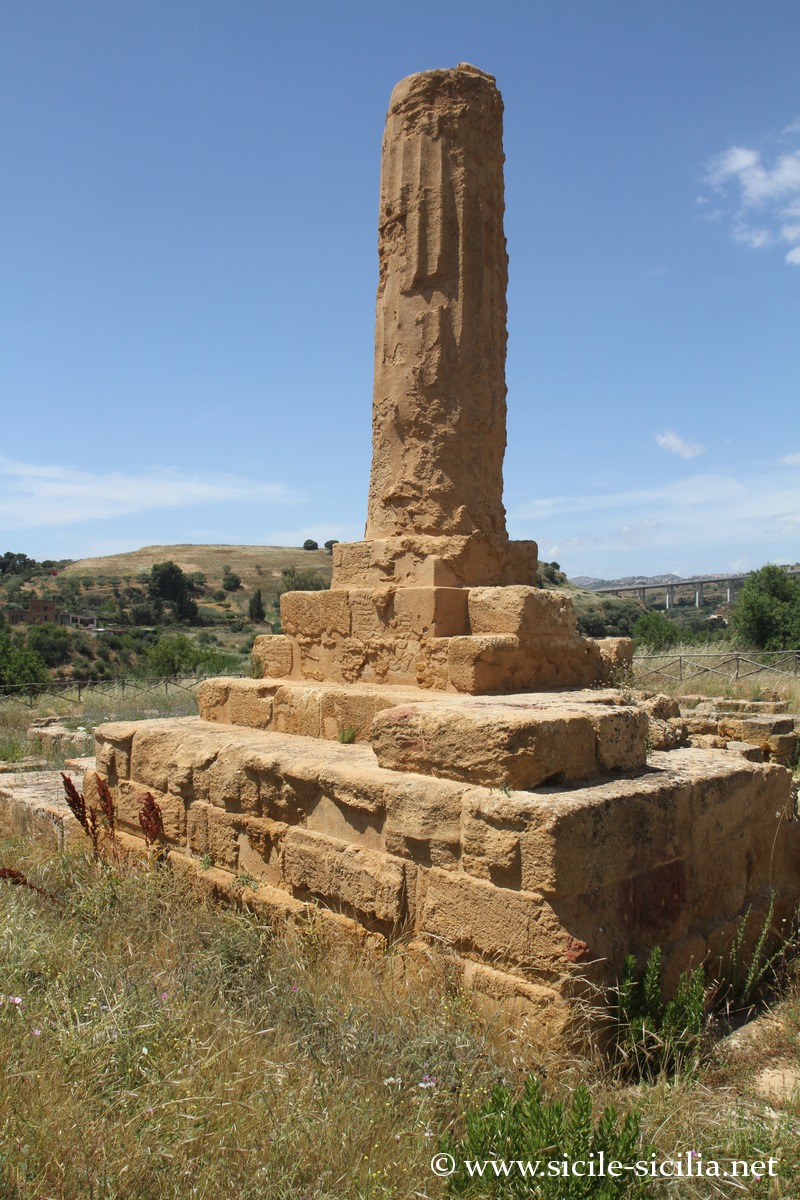
Le Temple de Vulcain occupe la pointe occidentale de l’éperon rocheux qui forme la Vallée des Temples d’Agrigente, sur la crête en dehors de l’agglomération moderne. Il date de l’époque classique, vers 430 av. J.-C., avec un plan périptère d’ordre dorique, hexastyle, 6 × 13. Présentation et aspect historique On accède au Temple de Vulcain […]
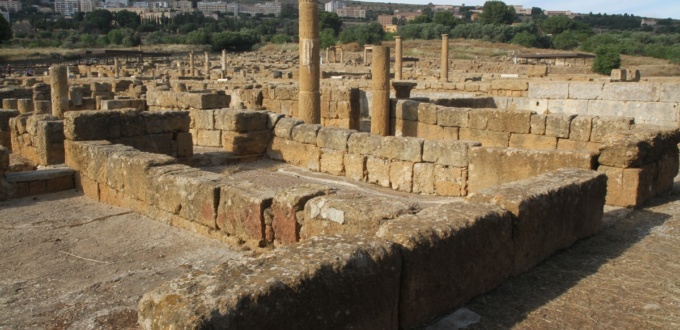
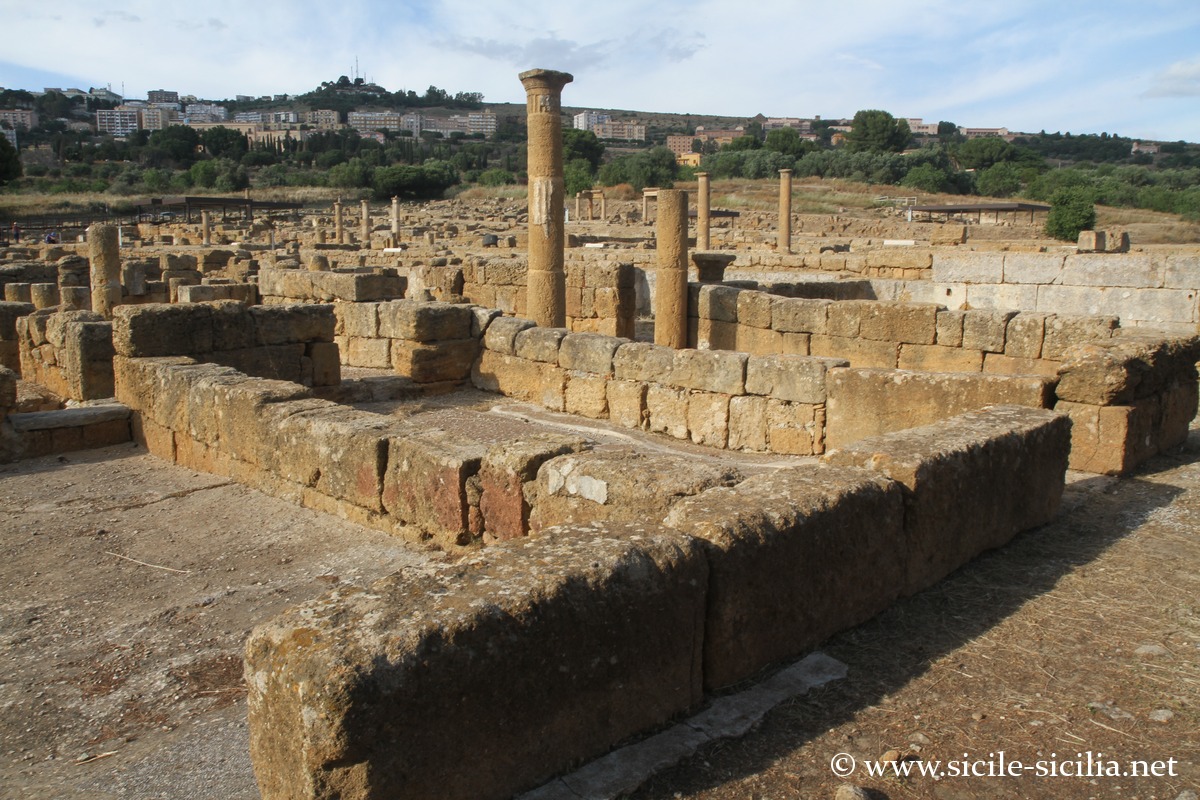
Near the Archaeological Museum of Agrigento are several areas of remains, including the upper agora and the Ekklesiasterion on the one hand, and the vast Hellenistic quarter on the other. Hellenistic-Roman Quarter This large residential sector represents the most significant documentation of the urban history of ancient Akragas. All the visible monumental remains date to the […]
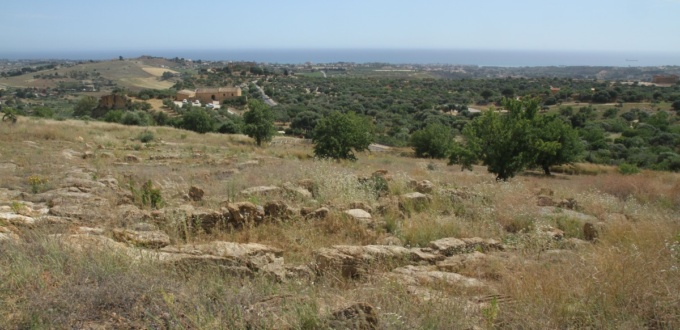
The Rupe Atenea constitutes the highest point and the natural acropolis of ancient Akragas, dominating to the north the Valley of the Temples and bounded to the west by the Girgenti hill. It served both sacred and defensive functions, while the settlement, sanctuaries and necropolises spread across the plateau and the surrounding hills. In the […]
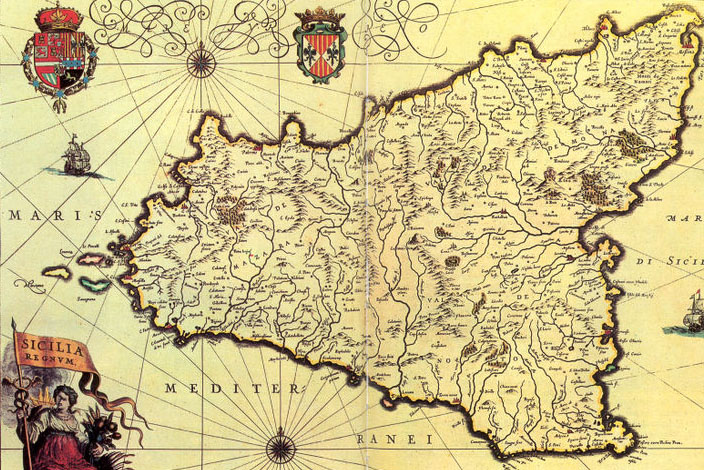
Interactive map of Agrigento, the Valley of the Temples, the ancient sites.