
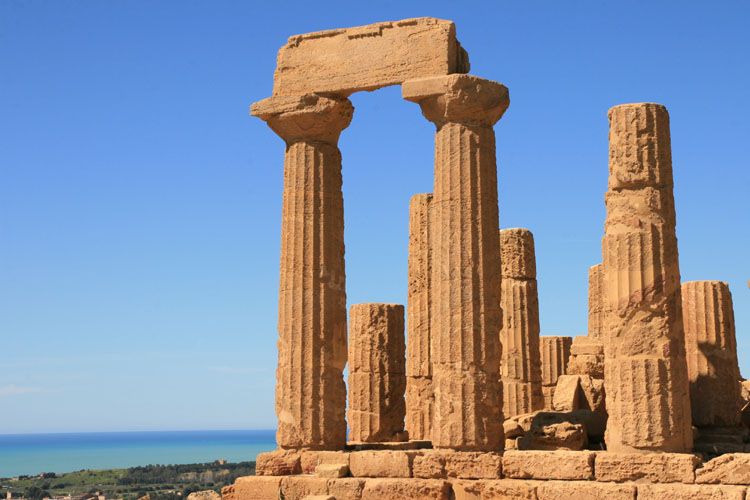
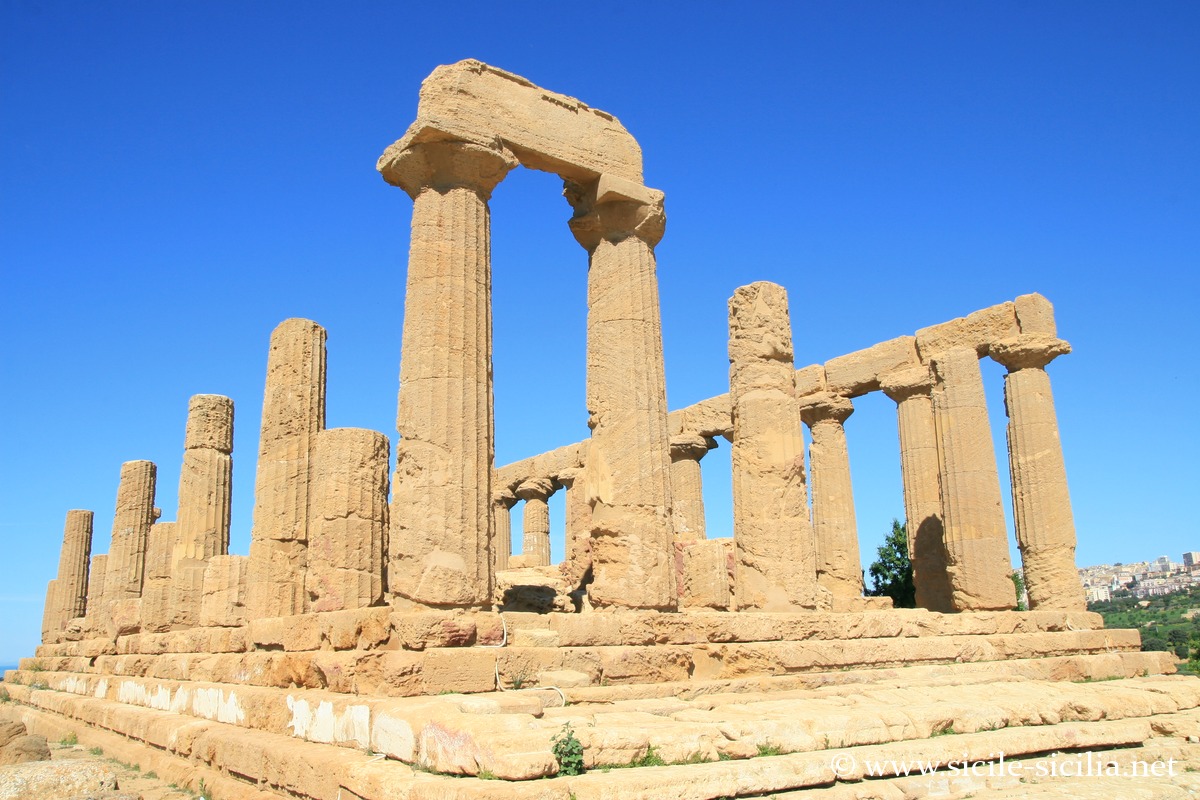
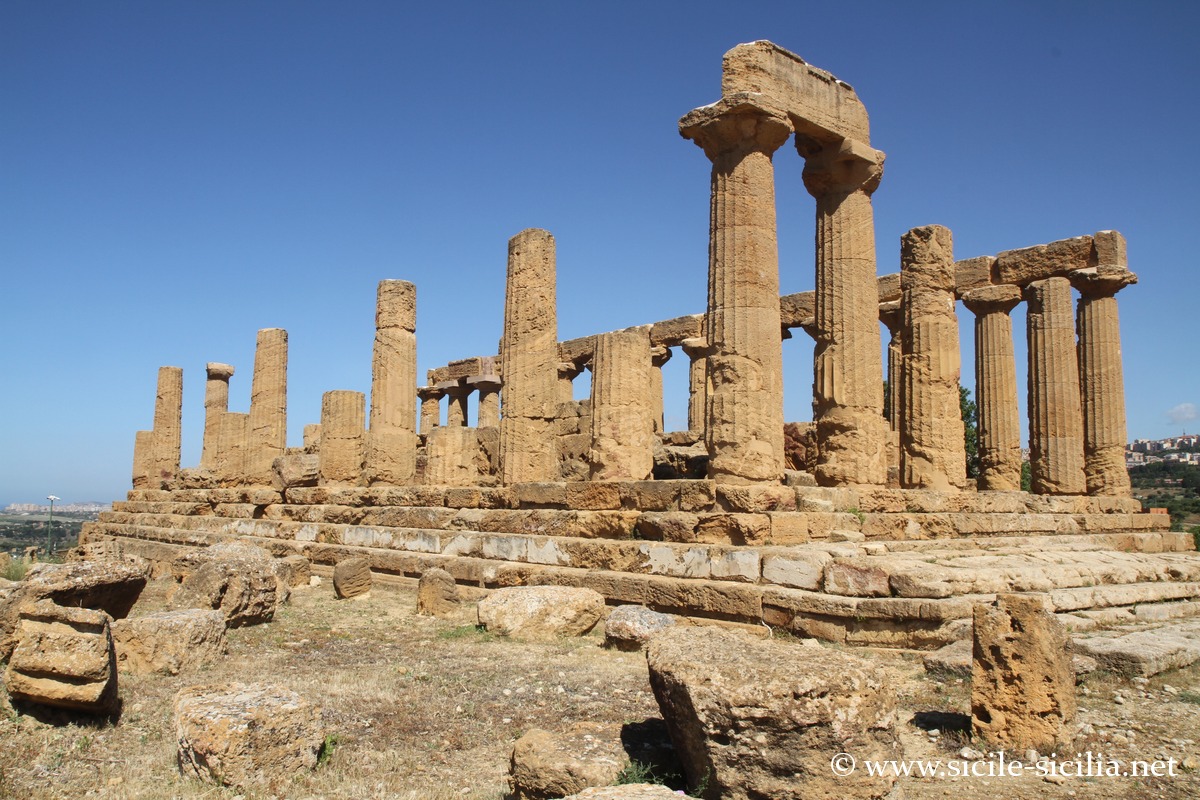
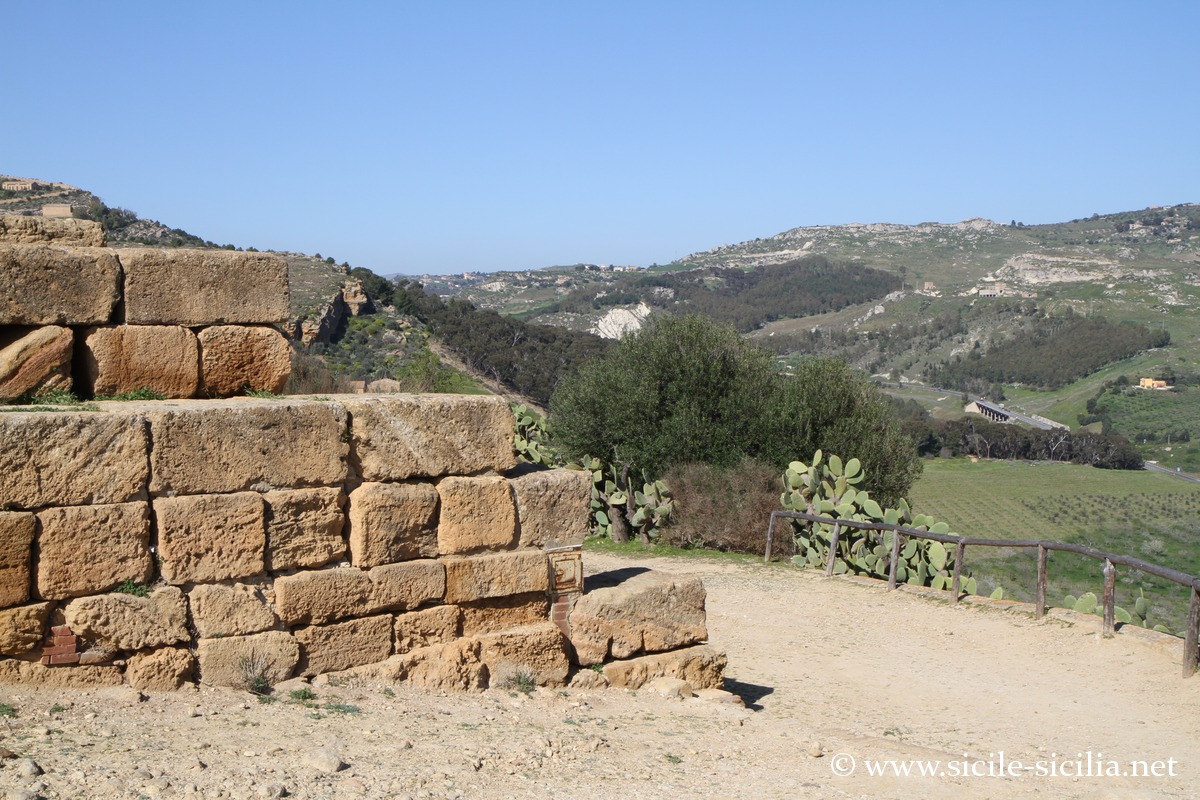
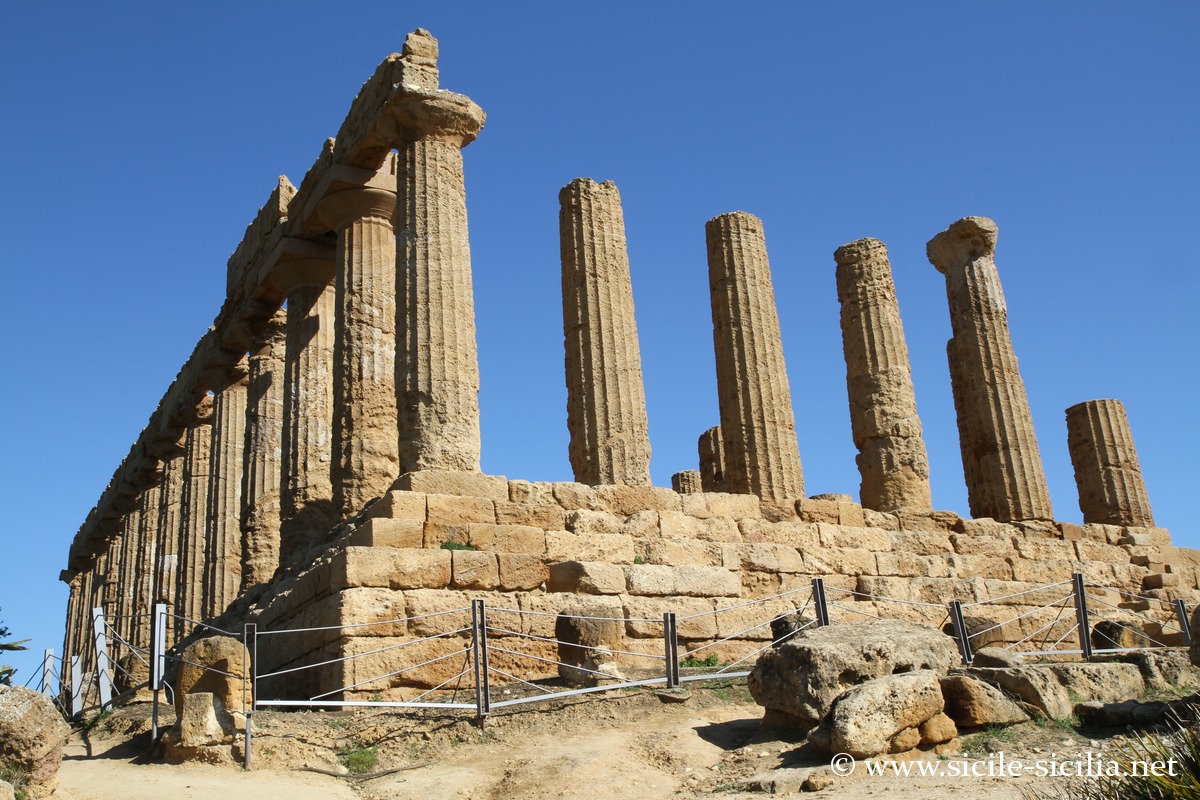
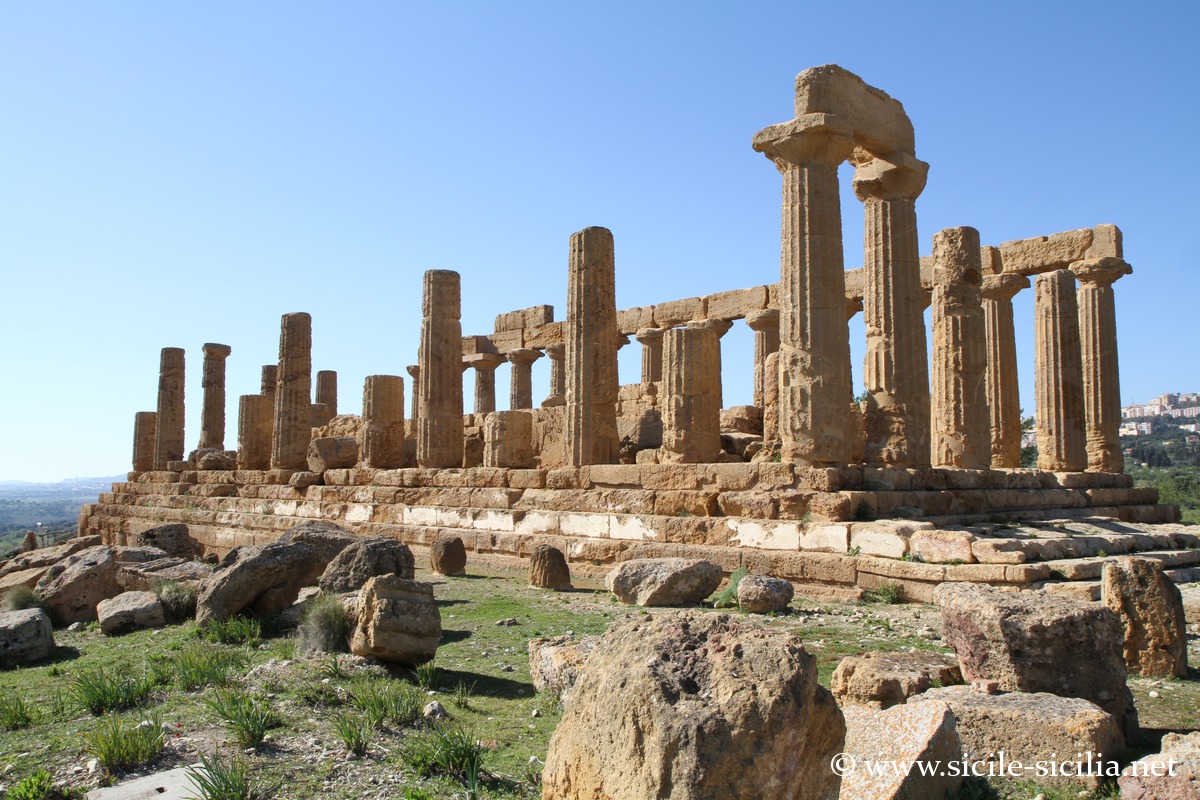
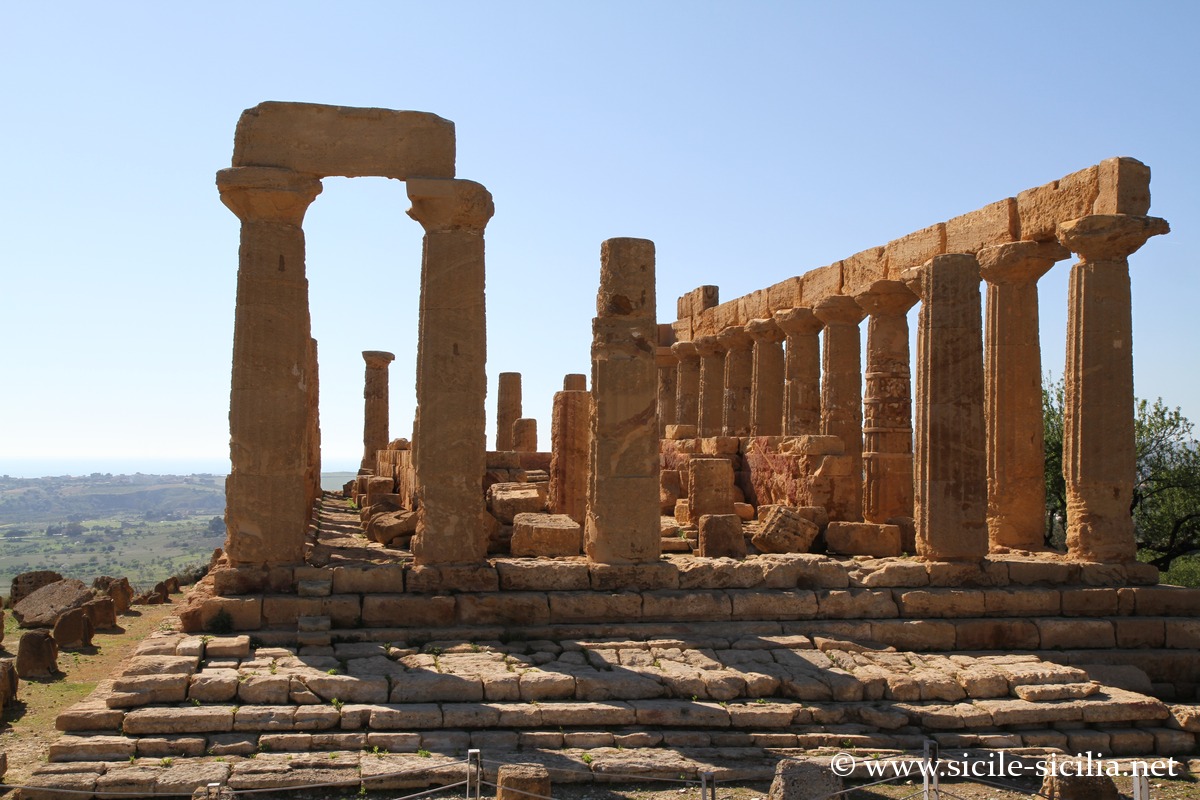
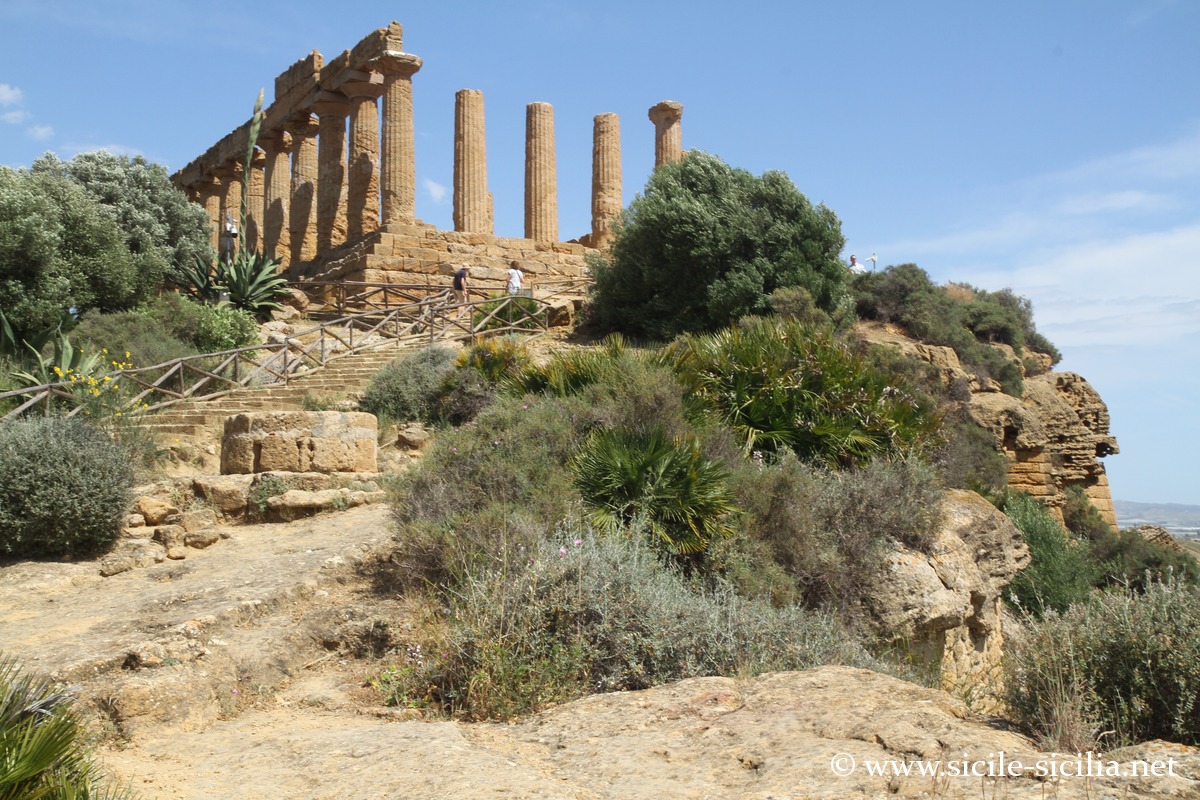
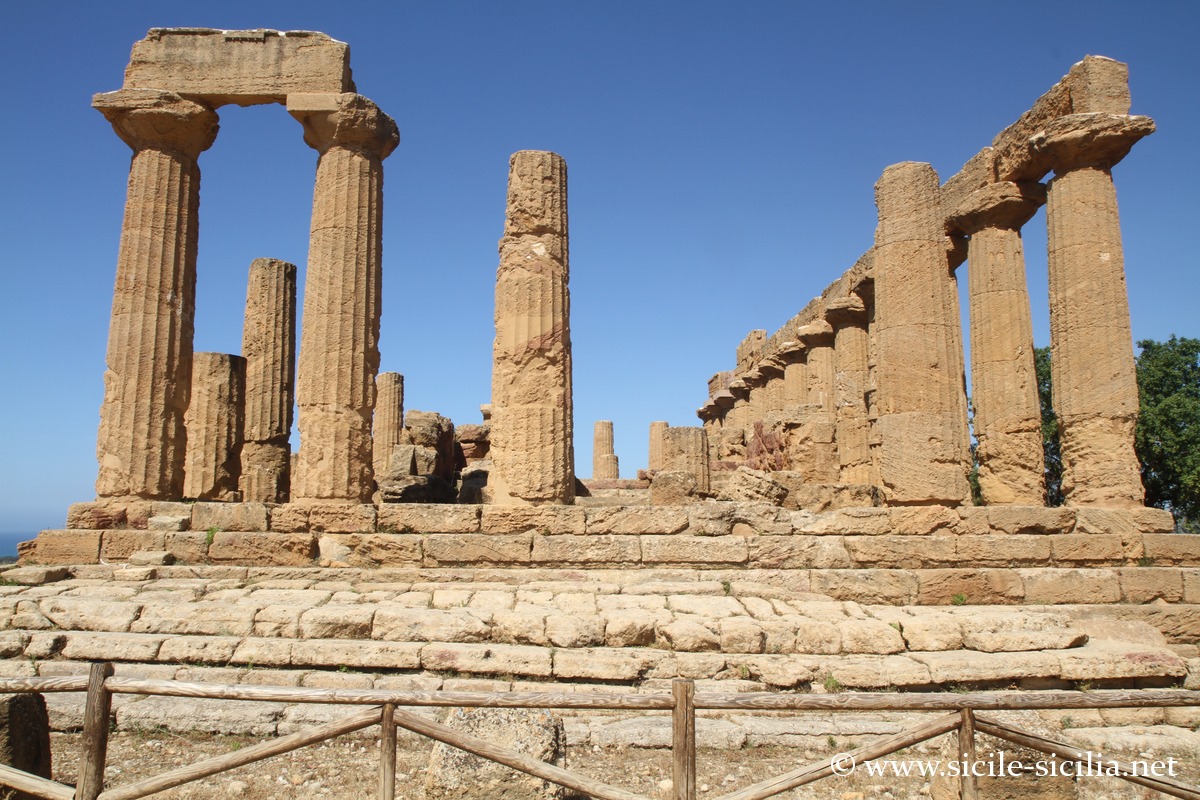
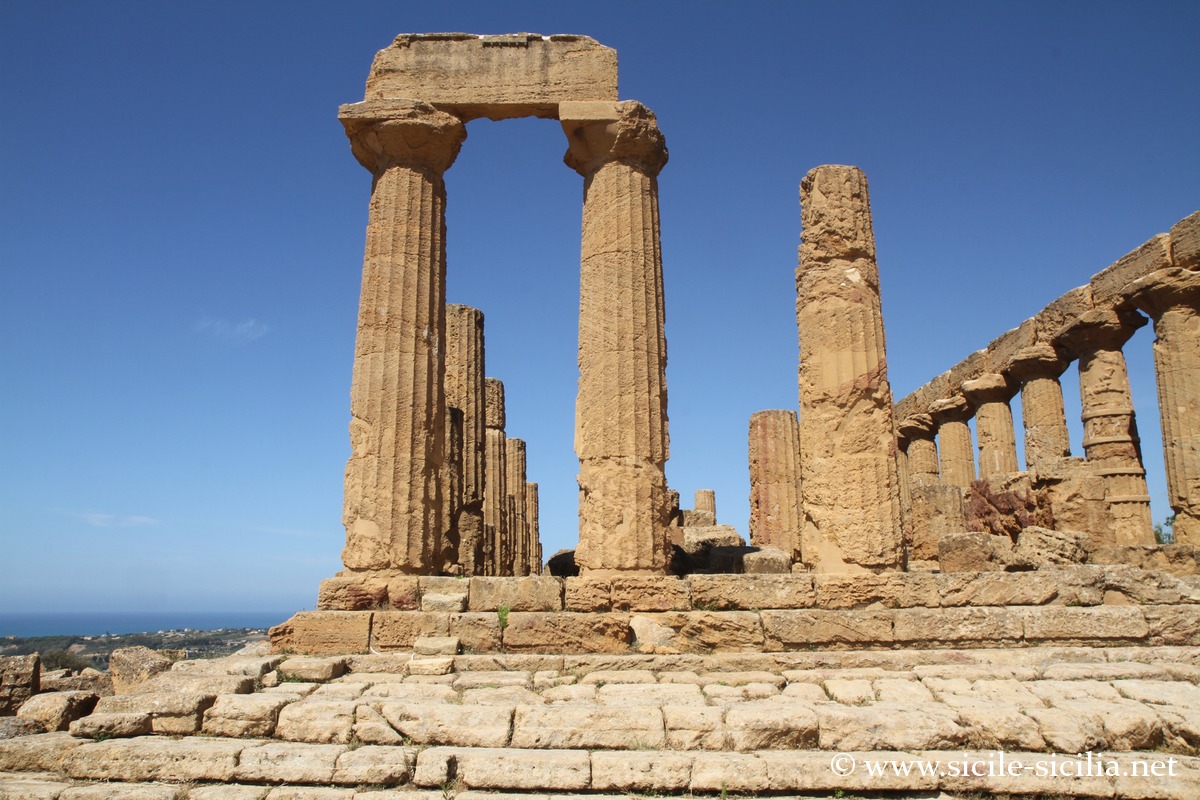
Situated at the end of the ridge, the Temple of Hera, also known as the Temple of Juno Lacinia or Temple D, overlooks a large area between the Valley of the Temples of Agrigento and the Mediterranean. On its eastern side is an altar intended for sacrifices, attesting to ritual practices in antiquity and confirming the cultic function of the site.
Historical overview and architecture
Built around 450 BC, during a period of prosperity for the city of Akragas, the temple was long attributed to Hera due to a mistaken reading of a passage by Pliny the Elder, which in fact referred to the sanctuary of Hera located at Cape Lacinium, near Crotone in Calabria.
It was damaged during the fire caused by the Carthaginians during the sack of Akragas in 406 BC, as indicated by the traces of burning still visible on some blocks of the cella. The Romans subsequently undertook a restoration, during which the terracotta roof was replaced by a marble covering and a sloping plane was built on the eastern facade.
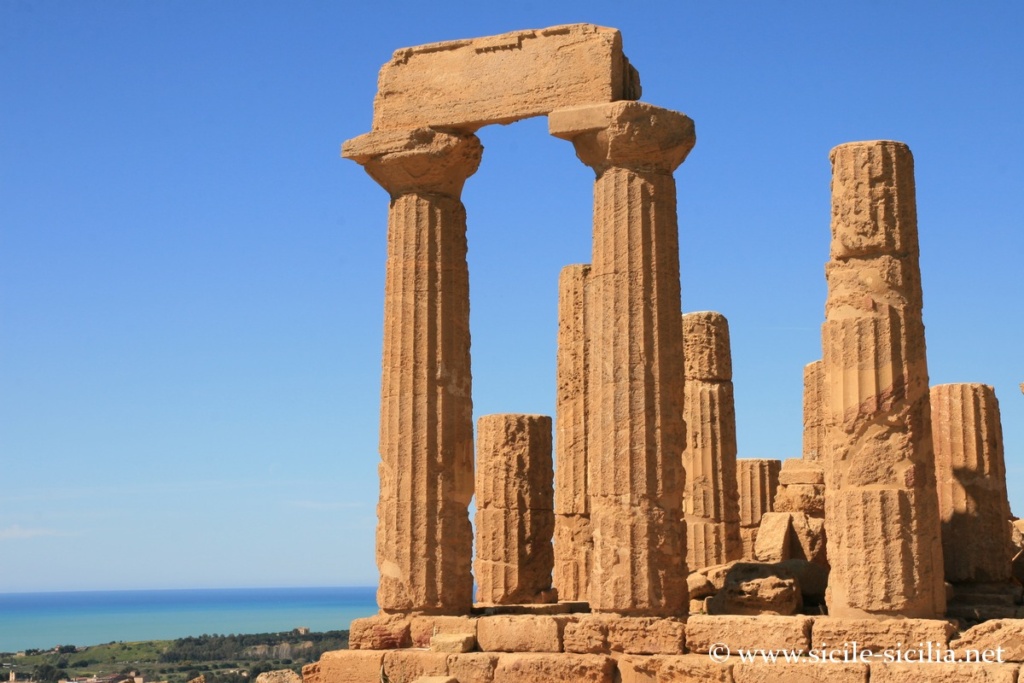
Temple of Juno
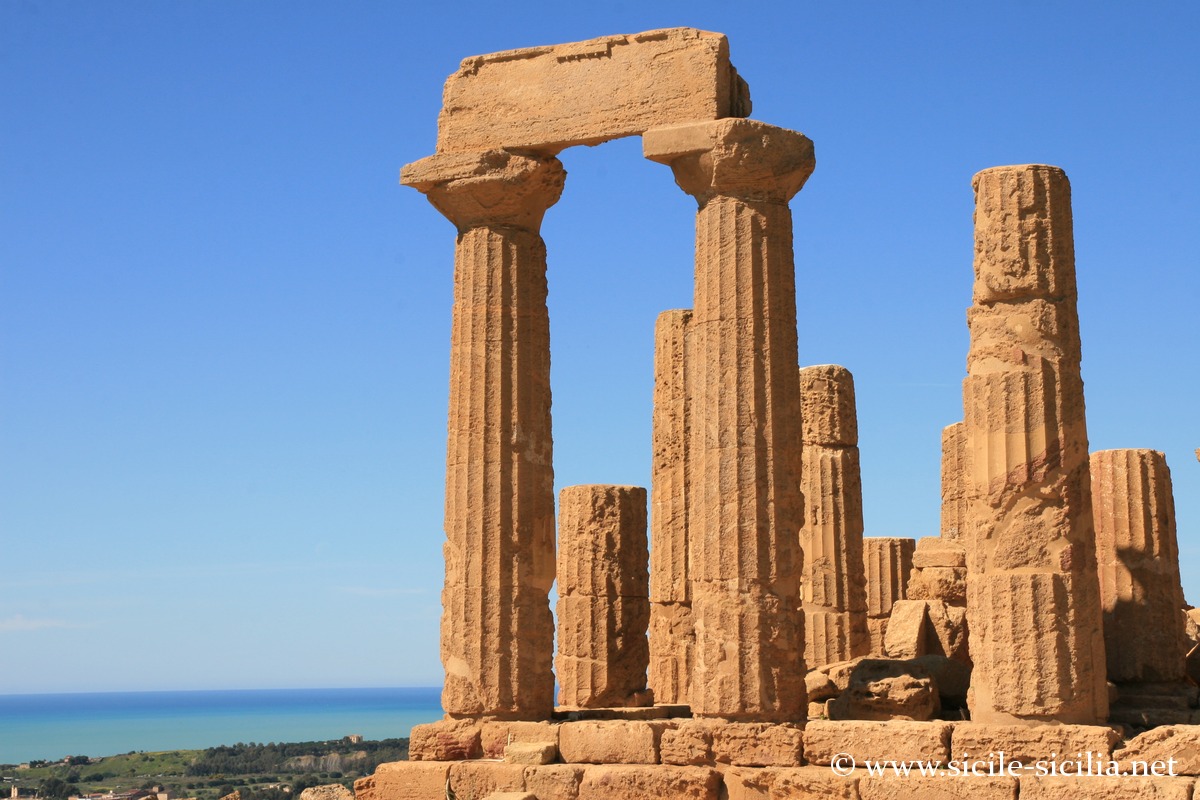
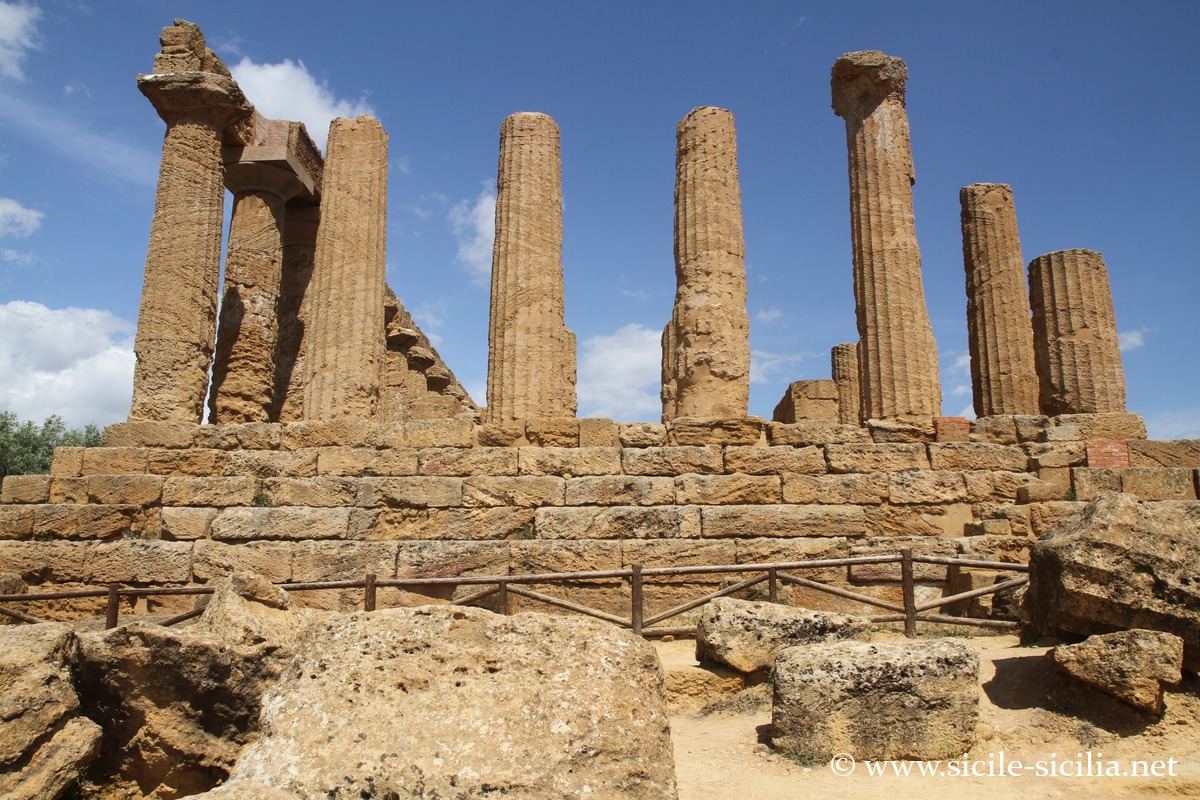
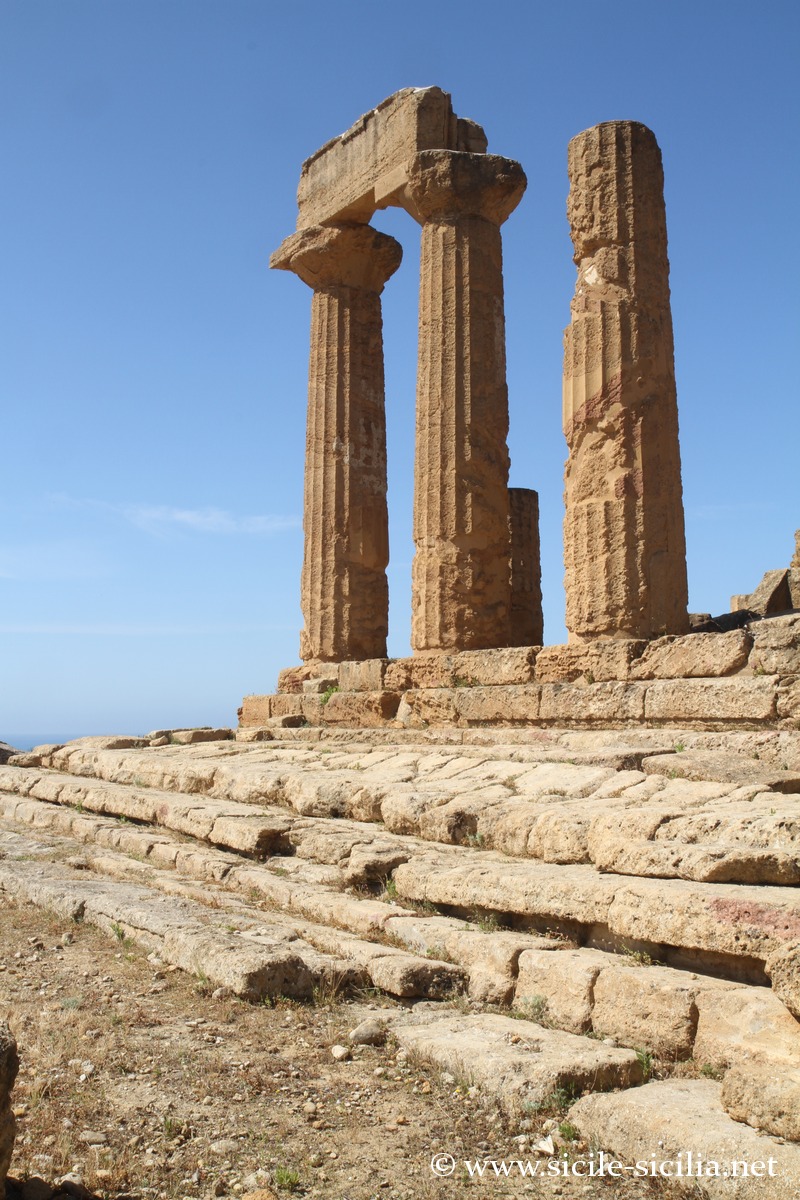
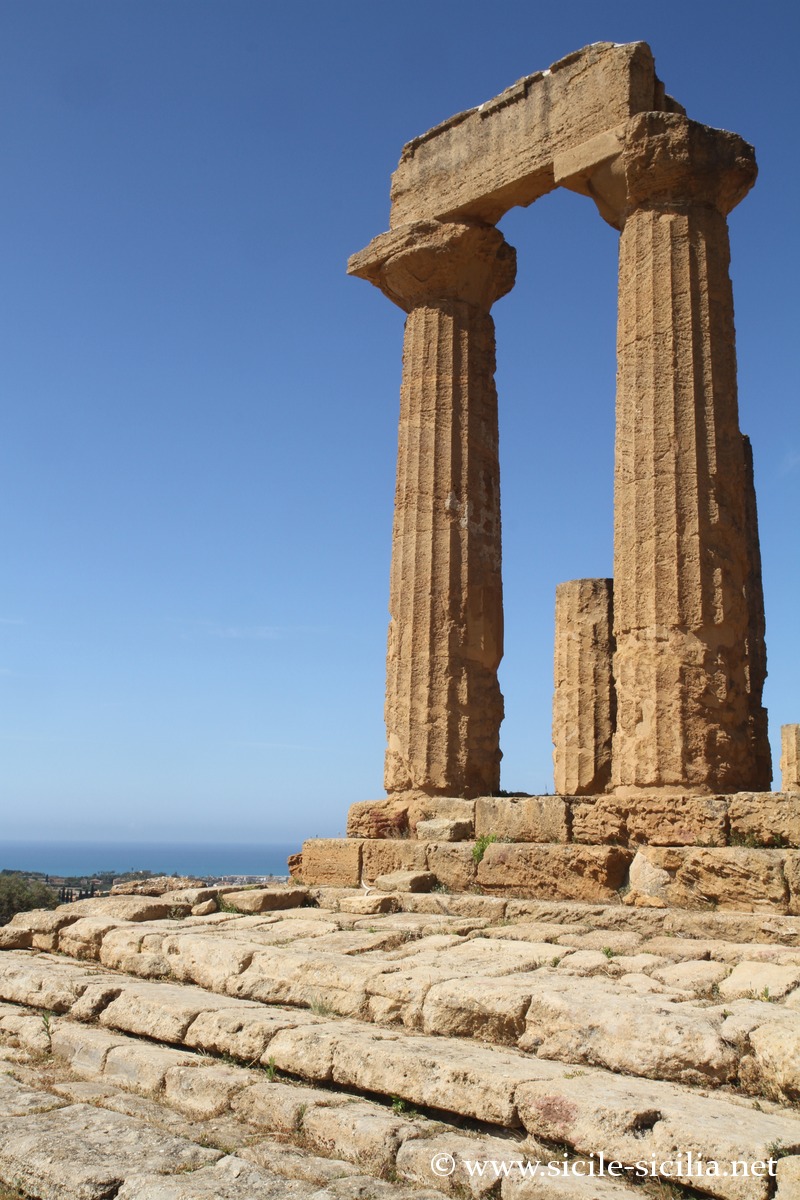
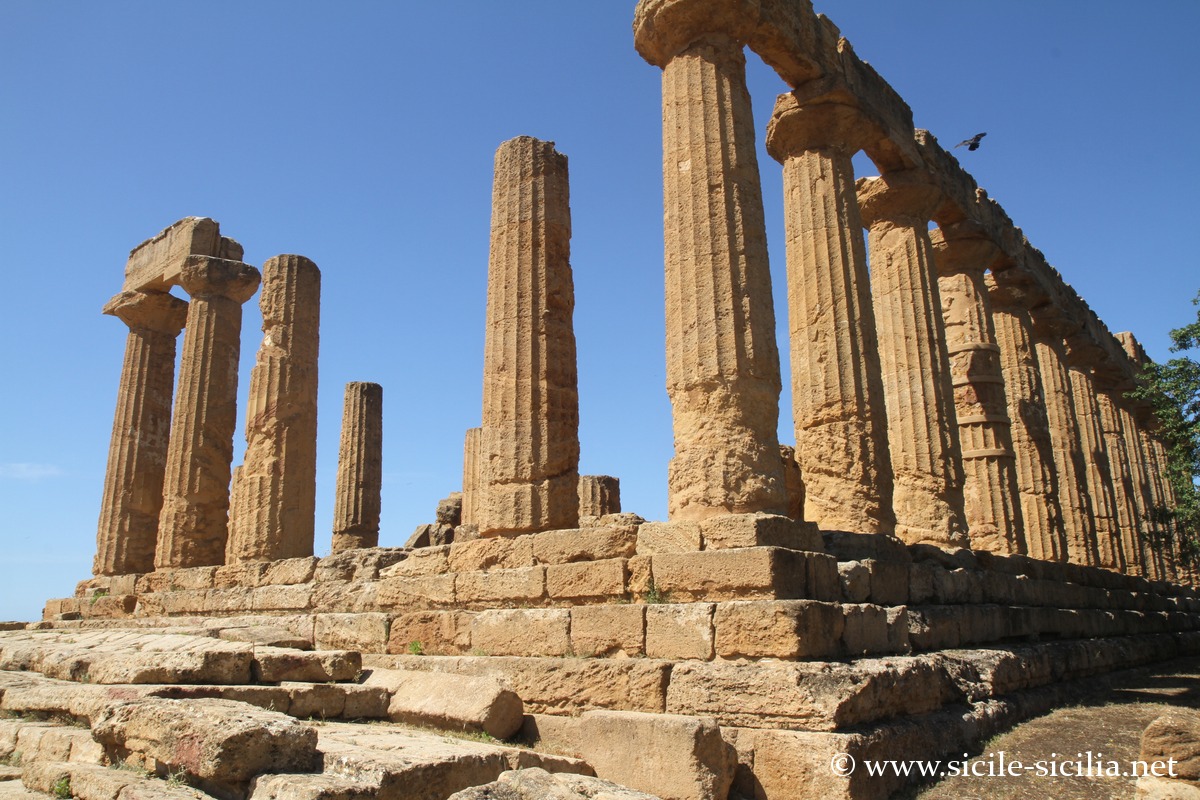
The building belongs to the classical Doric style. It is a peripteral temple resting on a four-step base, composed of 6 columns on the short sides and 13 on the long sides, making a total of 34 columns. Its proportions are close to those of the neighboring Temple of Concordia, built according to similar architectural principles. Inside, the organization followed the traditional scheme: a pronaos preceding the cella and an opisthodomos at the rear.
The ground dimensions are approximately 38.15 × 16.90 m. A significant part of the north colonnade is still preserved, with its architrave and elements of the frieze. The other sides are more incomplete, with several columns and architraves having disappeared. From the 18th century onward, various operations made it possible to re-erect several columns and improve the readability of the original plan.
Gallery
Temple of Juno or Hera 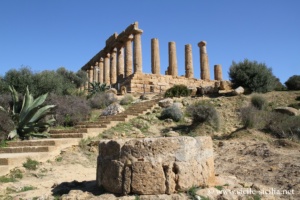
Temple of Hera, Agrigento
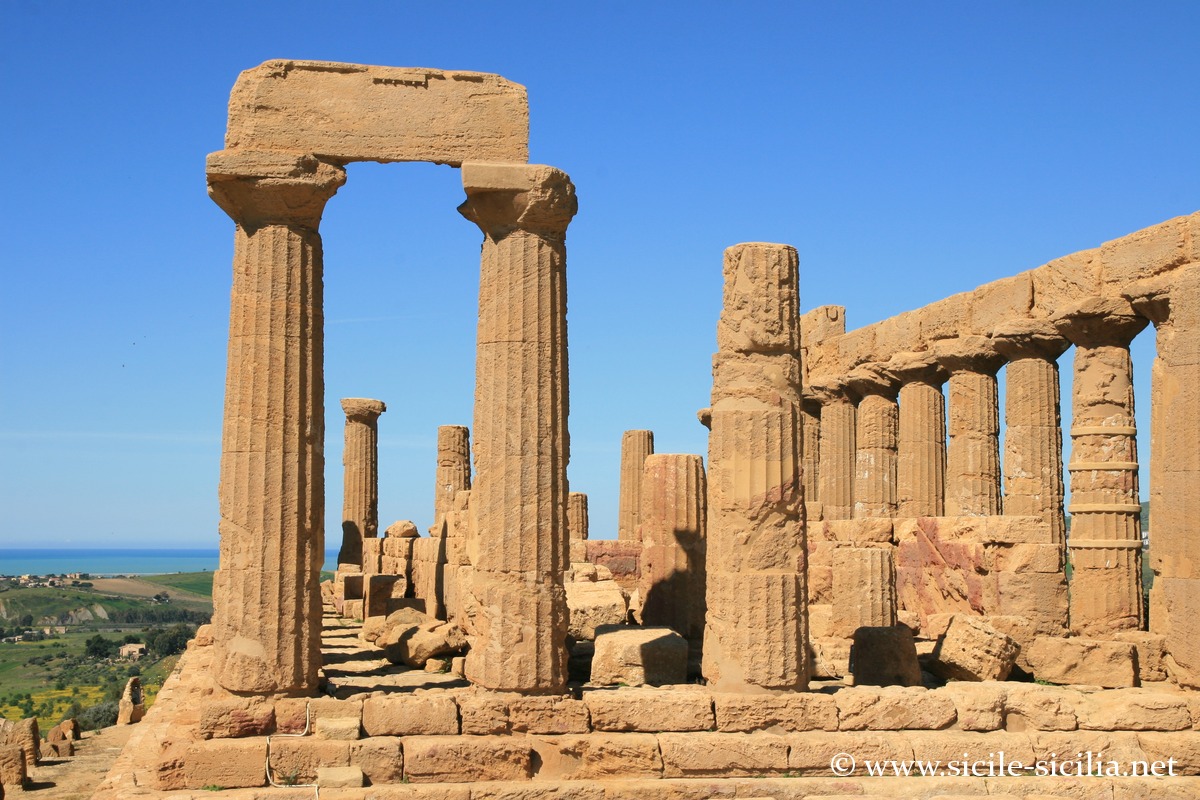
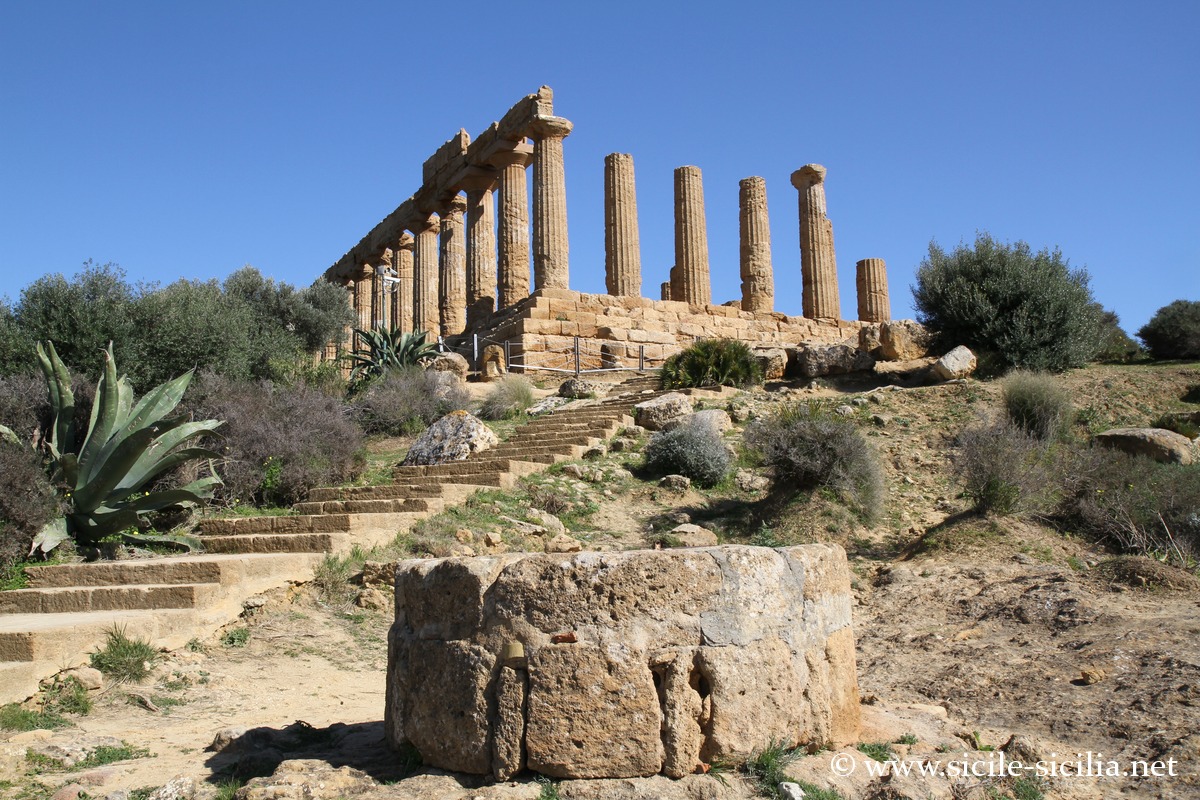
Temple of Juno (Hera), east side 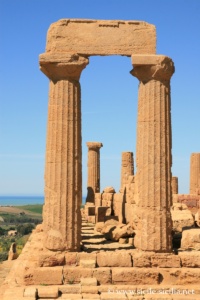
Temple of Juno (Hera), east side 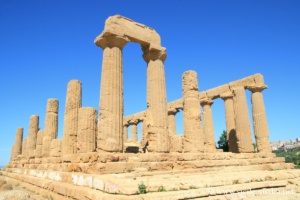
Temple of Juno (Hera), east side 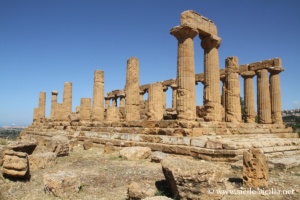
Temple of Juno (Hera), south side 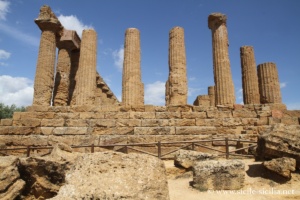
Temple of Juno (Hera), west side 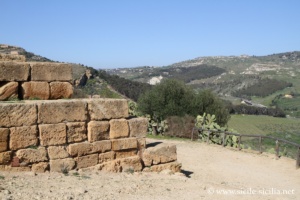
Altar of the Temple of Juno (Hera) 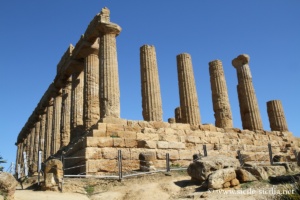
Temple of Juno (Hera), west side 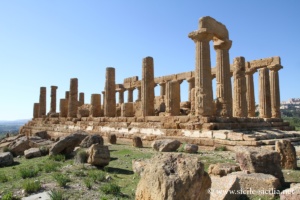
Temple of Hera 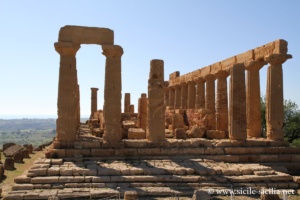
Temple of Hera 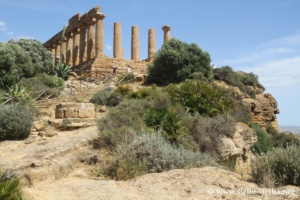
Temple of Juno (Hera), west side 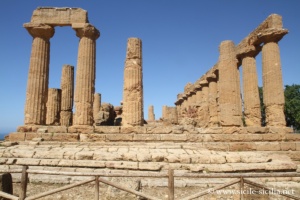
Temple of Juno (Hera), east side 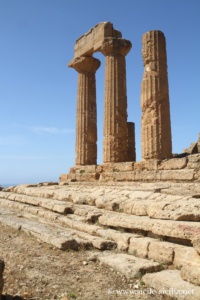
Temple of Juno (Hera), east side 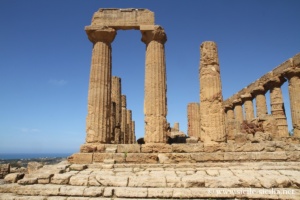
Temple of Juno (Hera), east side 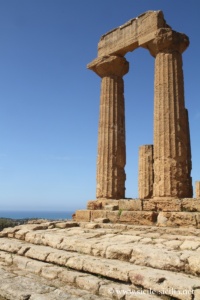
Temple of Juno (Hera), east side 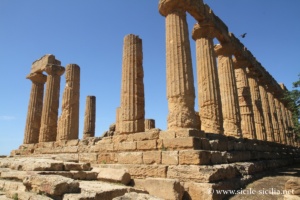
Temple of Juno (Hera), northeast
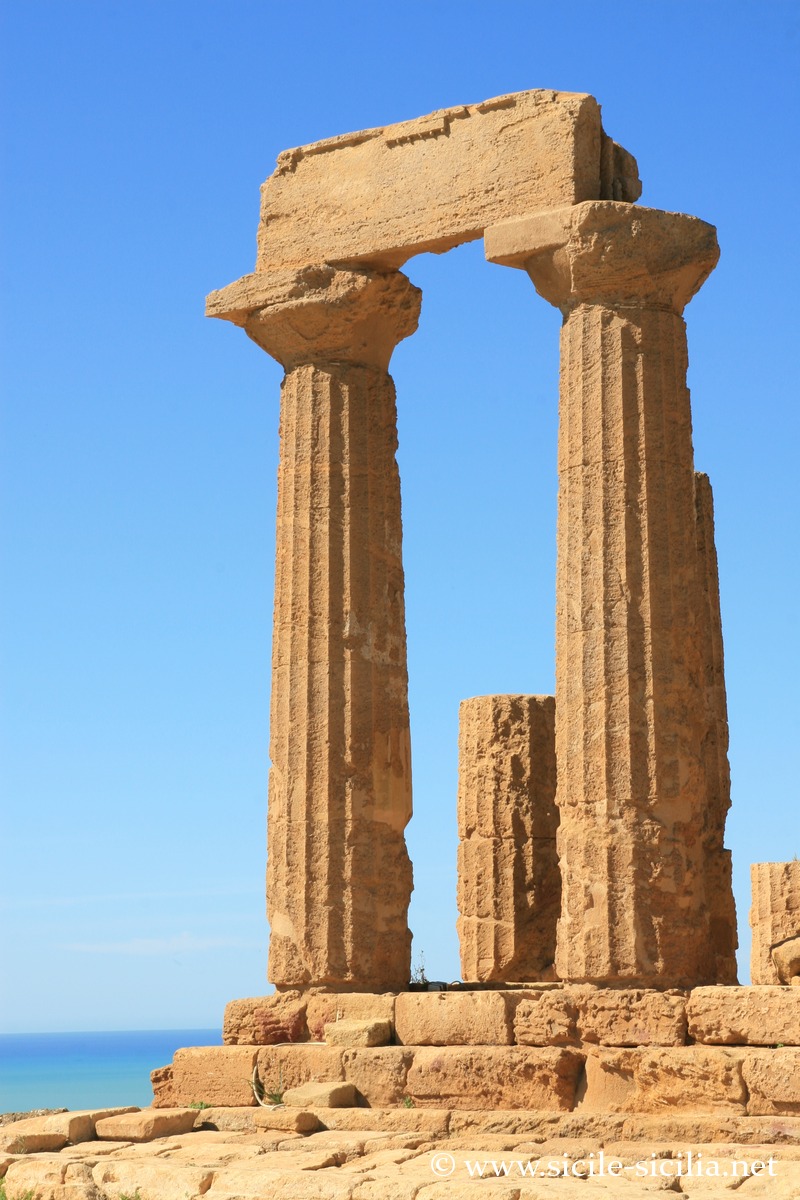
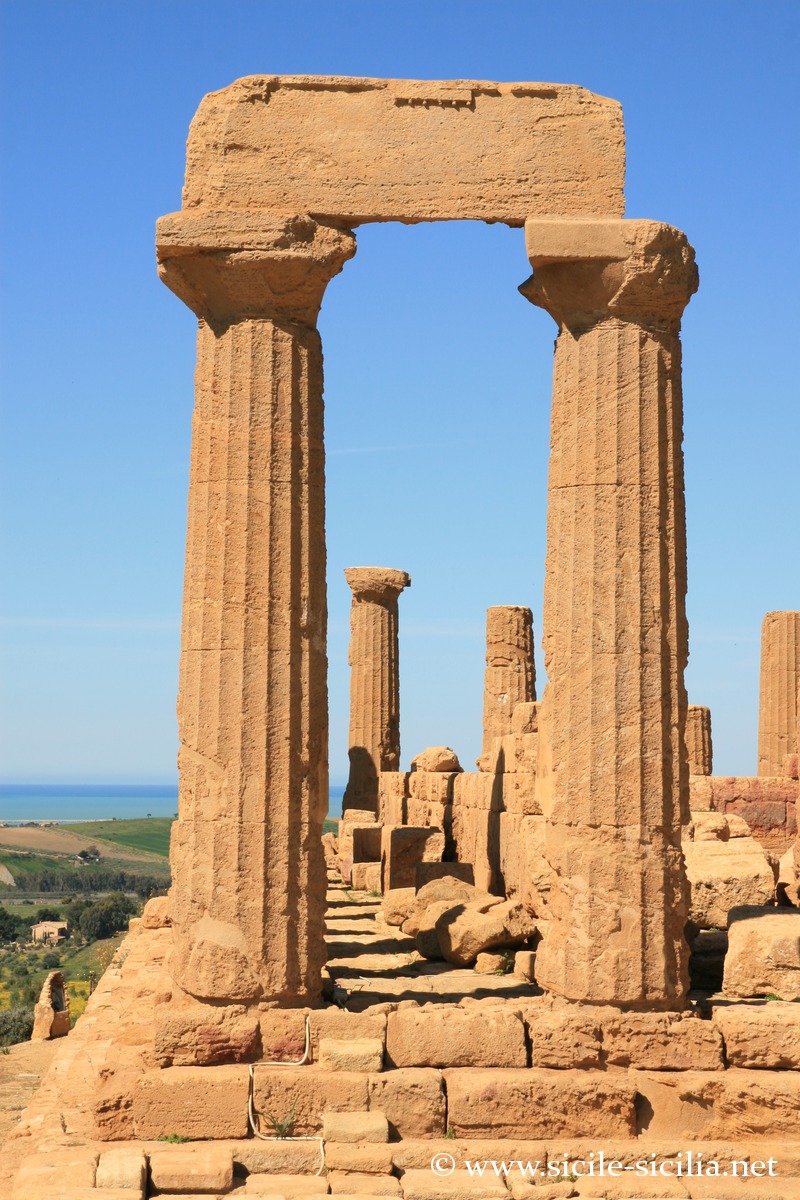
Where the Temple of Juno is located: map
If you see this after your page is loaded completely, leafletJS files are missing.
Information
External sites
- Official website: www.lavalledeitempli.it
- Wikipedia page: en.wikipedia.org
- Temple of Juno on www.museionline.info
Articles on the Valley of the Temples of Agrigento
- Valley of the Temples of Agrigento
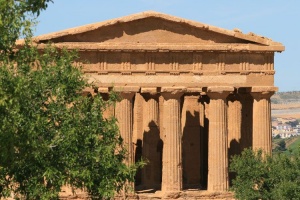 In antiquity, Agrigento was one of the most powerful Mediterranean cities of ...
- Temple of Concordia in Agrigento
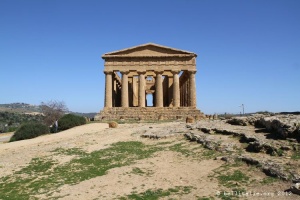 Construit entre 440 et 430 avant J.-C., le Temple de la Concorde, ...
- Temple of Olympian Zeus in Agrigento
 Situé dans la Vallée des Temples d’Agrigente, le Temple de Zeus Olympien, ...
- Temple of Hercules in Agrigento
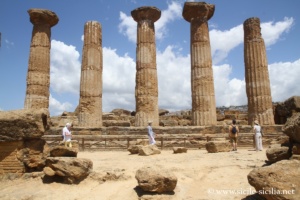 Bien que ses vestiges soient plus modestes que ceux d’autres monuments de ...
- Temple of the Dioscuri in Agrigento and western sector
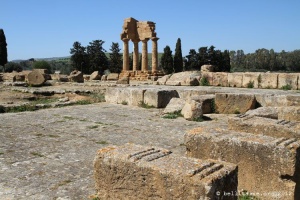 To the west of the Temple of Zeus extends a residential sector, ...
- Regional Archaeological Museum of Agrigento and San Nicola
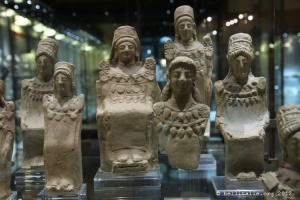 The Regional Archaeological Museum of Agrigento, officially named Museo Archeologico Regionale “Pietro ...
- Kolymbethra Garden in Agrigento
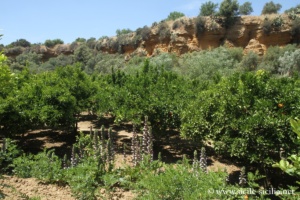 The Kolymbethra Garden lies in the heart of the archaeological park of ...
- Temple of Vulcan at Agrigento
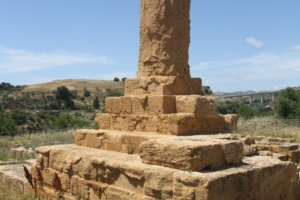 Le Temple de Vulcain occupe la pointe occidentale de l’éperon rocheux qui ...
- Hellenistic-Roman Quarter and Upper Agora
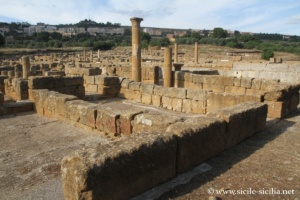 Near the Archaeological Museum of Agrigento are several areas of remains, including ...
- Rupe Atenea and Temple of Demeter
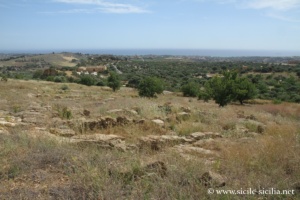 The Rupe Atenea constitutes the highest point and the natural acropolis of ...
- Maps of Agrigento
 Interactive map of Agrigento, the Valley of the Temples, the ancient sites.
Articles on Agrigento
- Agrigento
- Visit to Agrigento and surroundings
- Hotels in Agrigento
- Valley of the Temples of Agrigento
- Regional Archaeological Museum of Agrigento and San Nicola
- Scala dei Turchi
- Torre Salsa Nature Reserve and Heraclea Minoa
- Coastal itinerary west of Agrigento towards Sciacca
- From Licata to Agrigento
- Favara, Racalmuto and Aragona
- Siculiana
- Maps of Agrigento
- Gastronomy and traditions in Agrigento
- Near Agrigento
- Activities in Agrigento, guided tours and excursions