
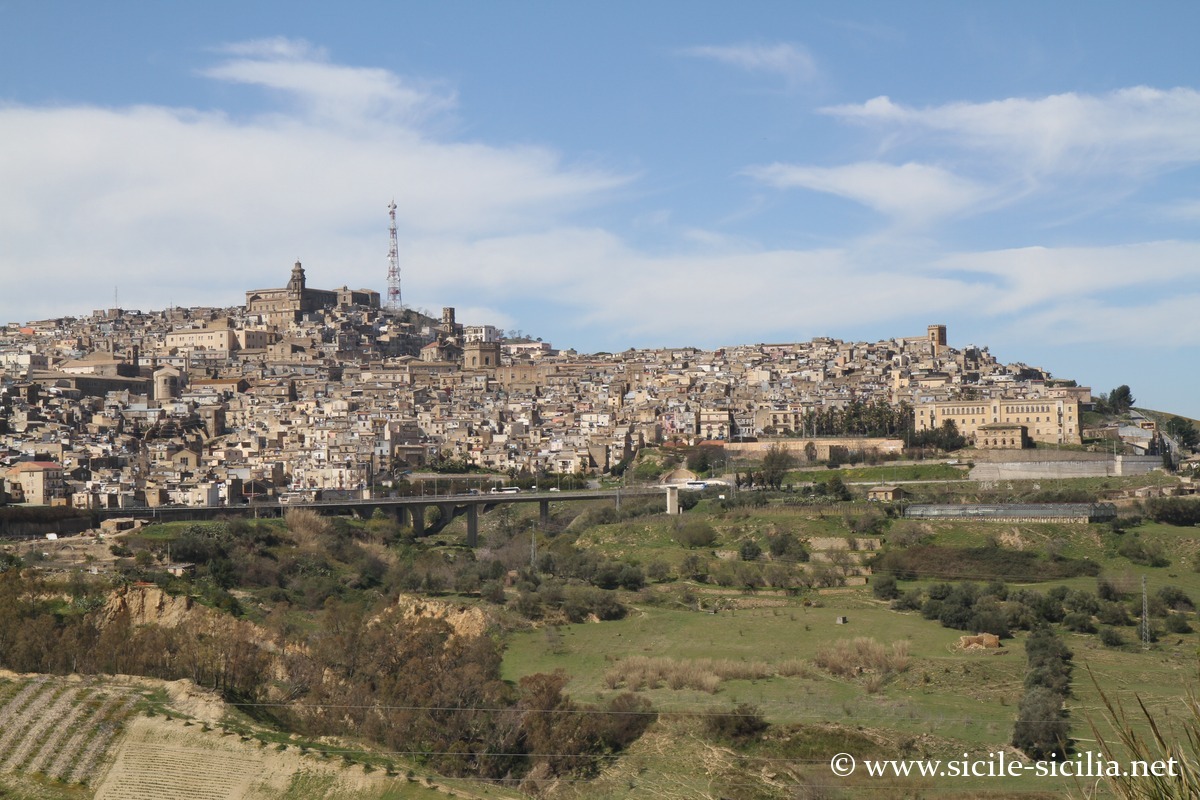
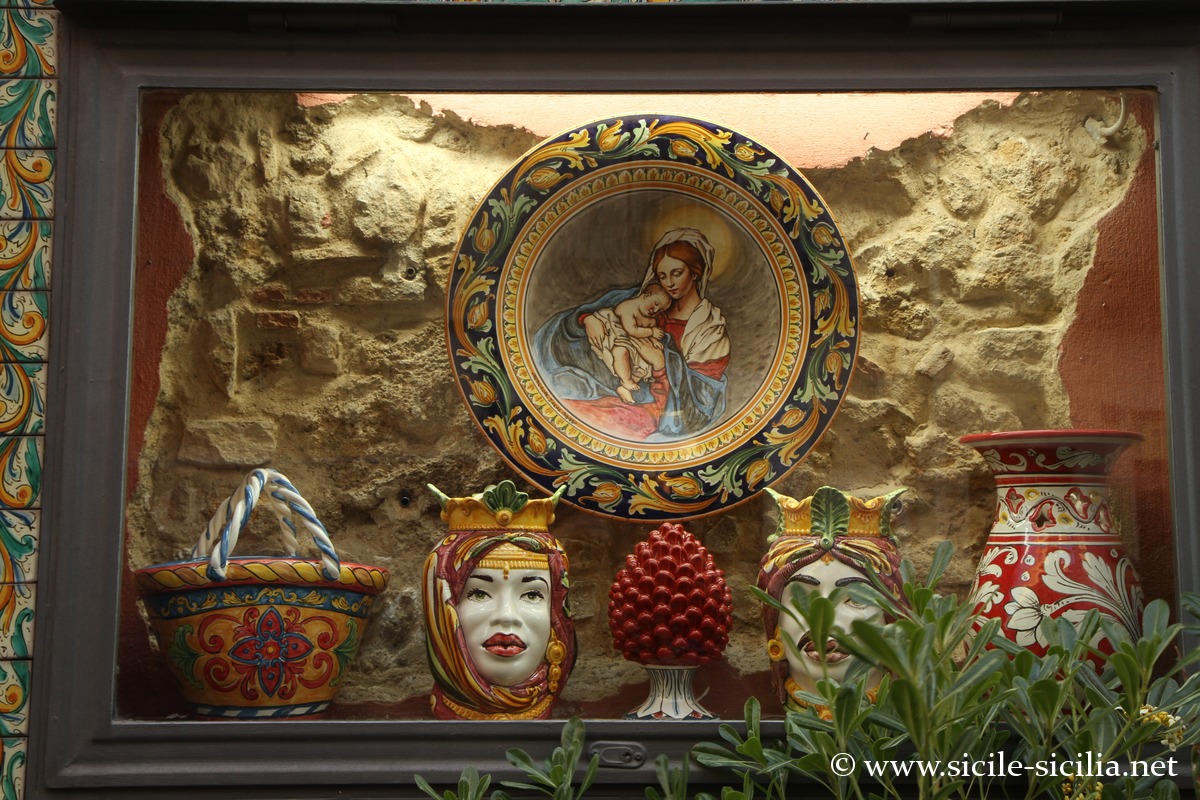
In the charming medieval-old centre of Caltagirone, beautiful baroque façades intersect. But the town is especially known for its abundance of colourful ceramics that decorate both the main avenues and the corners of the alleyways.
The most remarkable sites are the staircase of the Scala di Santa Maria del Monte, the church at its summit of Santa Maria del Monte, the Regional Ceramics Museum, the Cathedral of Saint Julian, and the public garden of the Villa Comunale.
Caltagirone itinerary and places to discover
Here is a visiting itinerary of Caltagirone, starting from the area south of the centre, around the main park, then reaching the historic heart, before finally exploring the western and eastern edges of the centre.
In the south: Villa Comunale, ceramics museum and Via Roma
The Villa Comunale is the public garden, in English style, which was designed at the end of the 19th century, with monuments covered in local ceramics produced by local workshops, such as the pretty Moorish-style bandstand, the balustrade on via Roma decorated with vases, and the beautiful Teatrino del Bonaiuto.
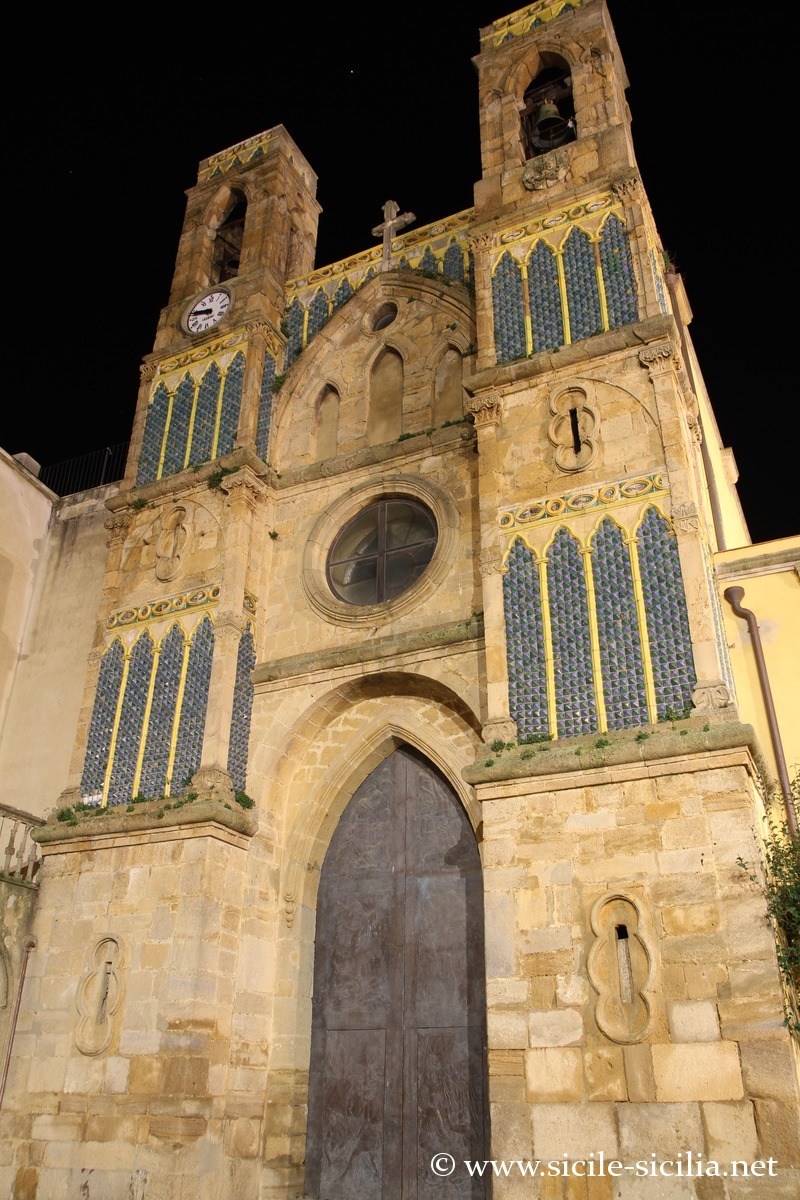
Church of San Pietro
From the latter you reach the Ceramics Museum , founded in 1965, which preserves objects dating back from prehistory to the present day. It holds one of the most important specialised collections in Sicily, arranged in chronological sections. The inhabitants were already producing terracotta 10 centuries before our era. The area dedicated to the Greek world also displays kylixes and hydriai from local excavations carried out in the 20th century, including a beautiful Attic krater from the 5th century BC that illustrates this activity with the scene of a potter at a wheel.
On leaving the park, the baroque church of San Francesco di Paola (Saint Francis of Paola) is attached to an old hospital. It preserves in particular a 15th-century sacristy, predating the 1693 earthquake, with ribbed vaults characteristic of late Sicilian Gothic. The adjoining hospital once belonged to the network of charitable institutions controlled by the municipality.
Set apart, the church of San Pietro di Caltagirone is a neo-Gothic building constructed in the 19th century whose façade is covered in polychrome majolica. Inside, the vault is decorated with frescoes by Giuseppe Vaccaro, illustrating episodes from the life of Saint Peter, and the apse preserves a high altar in polychrome marble.
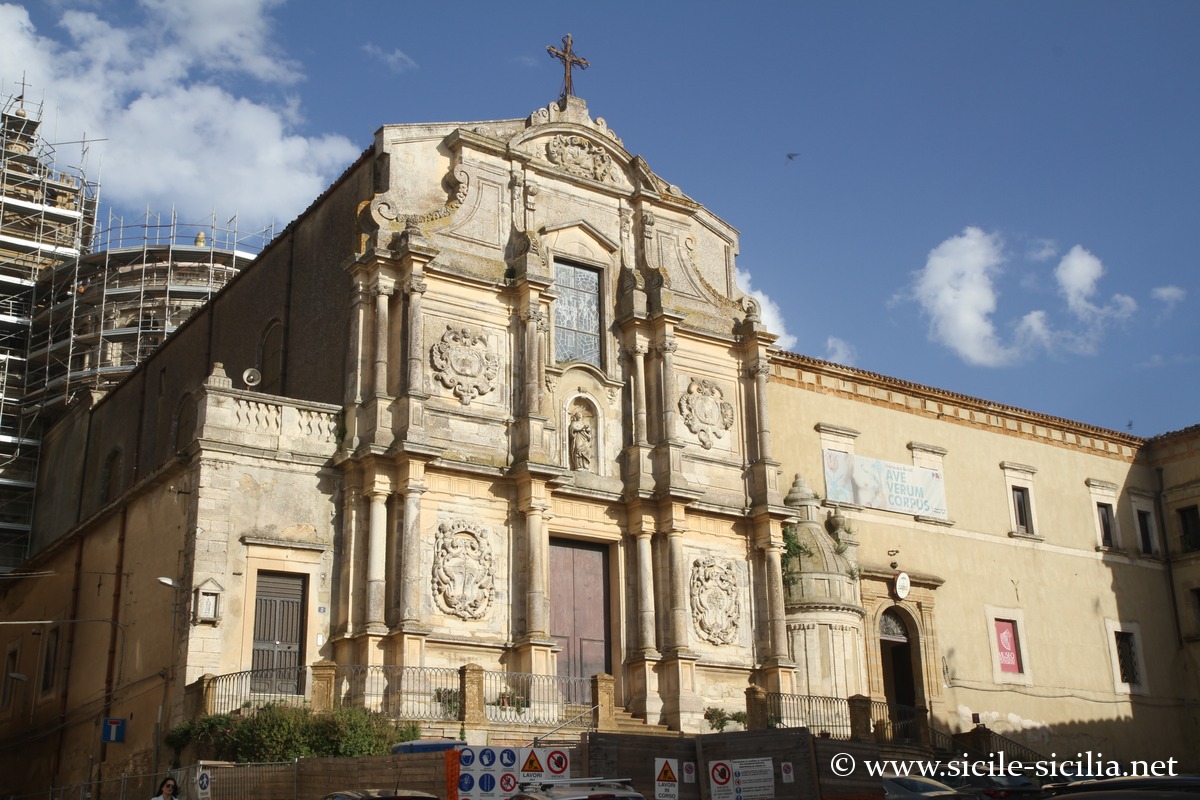
Church of San Francesco d’Assisi
Along Via Roma you discover the balcony of the Casa Ventimiglia, decorated with 18th-century majolicas. These local tiles are inherited from the reconstruction period when noble families invested in ceramic decoration to assert their status.
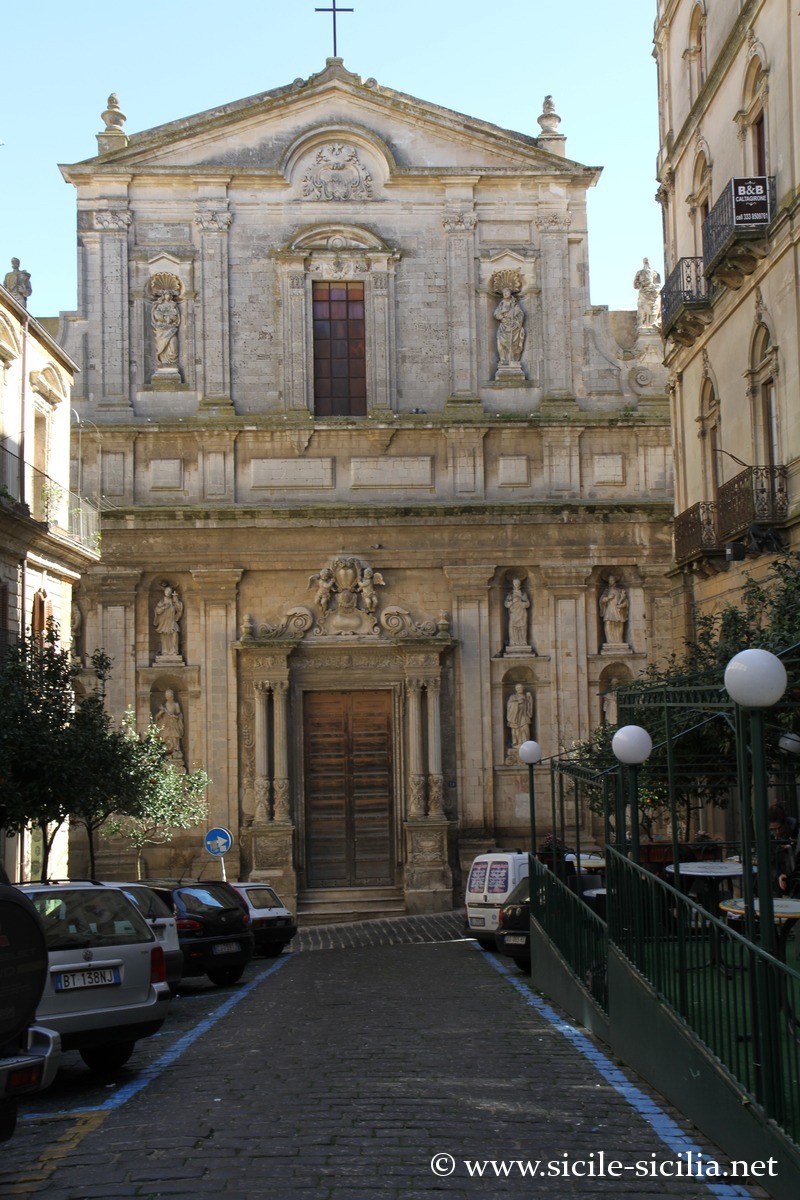
Further on is the church of San Francesco d’Assisi (Saint Francis of Assisi), which was a Gothic monument built around 1230, rebuilt as a baroque church after 1693 under the direction of the architect Battaglia – also active in Catania – with an imposing façade. A Gothic chapel has survived and the dome remained unfinished.
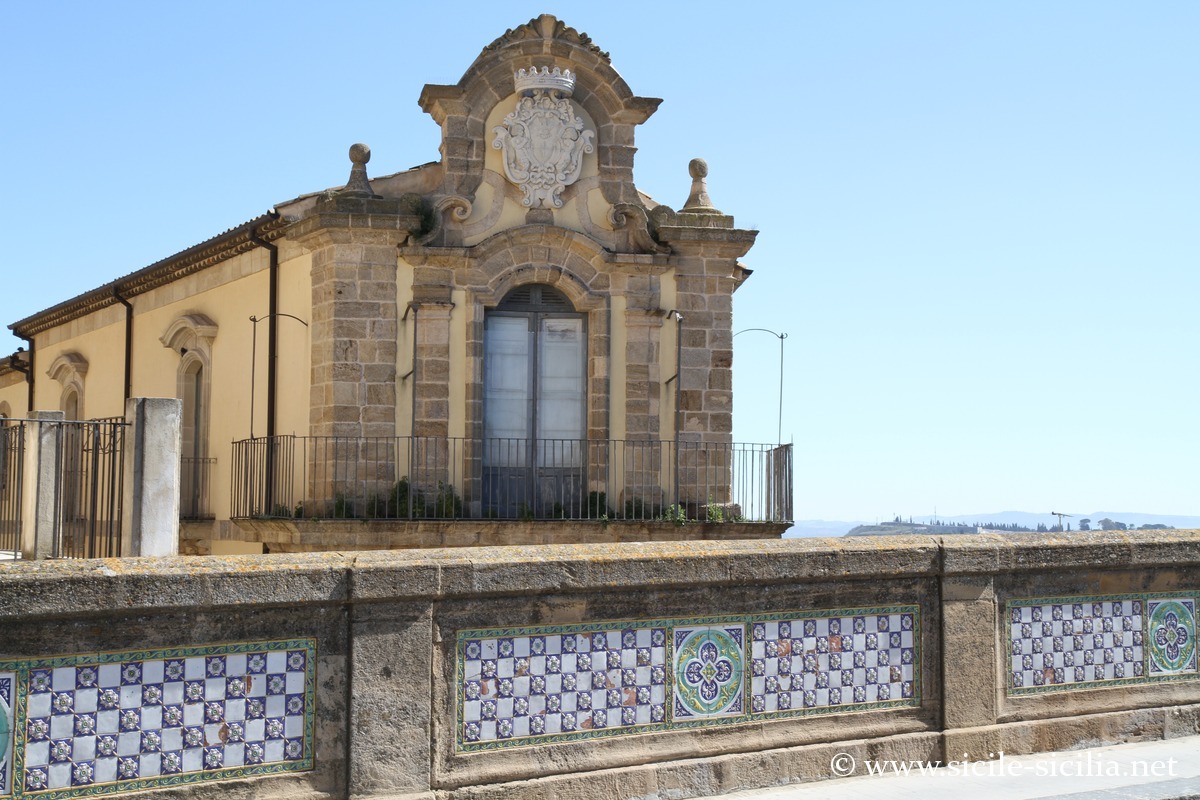
Ponte san francesco
Adjoining it, the Franciscan convent preserves a pretty cloister, partly rebuilt after 1693, retaining a Gothic arch. It houses the interesting diocesan museum (museo diocesano), preserving pieces from the old destroyed churches, notably 16th-century wooden tabernacles
You then cross the beautiful decorated bridge Ponte de San Francesco which dates from the mid-17th century, adorned with polychrome tiles produced during the 19th-century restorations. Its original construction was intended to connect two districts separated by a deep ravine.
It joins the church of Sant’Agata (Saint Agatha), seat of the confraternity of majolica makers. Built in 1576, it stands out for its baroque stone façade and its rich stucco decoration. It preserves a marble holy water font by Giandomenico Gagini (1610) and a canvas of the “Madonna della Lettera”.
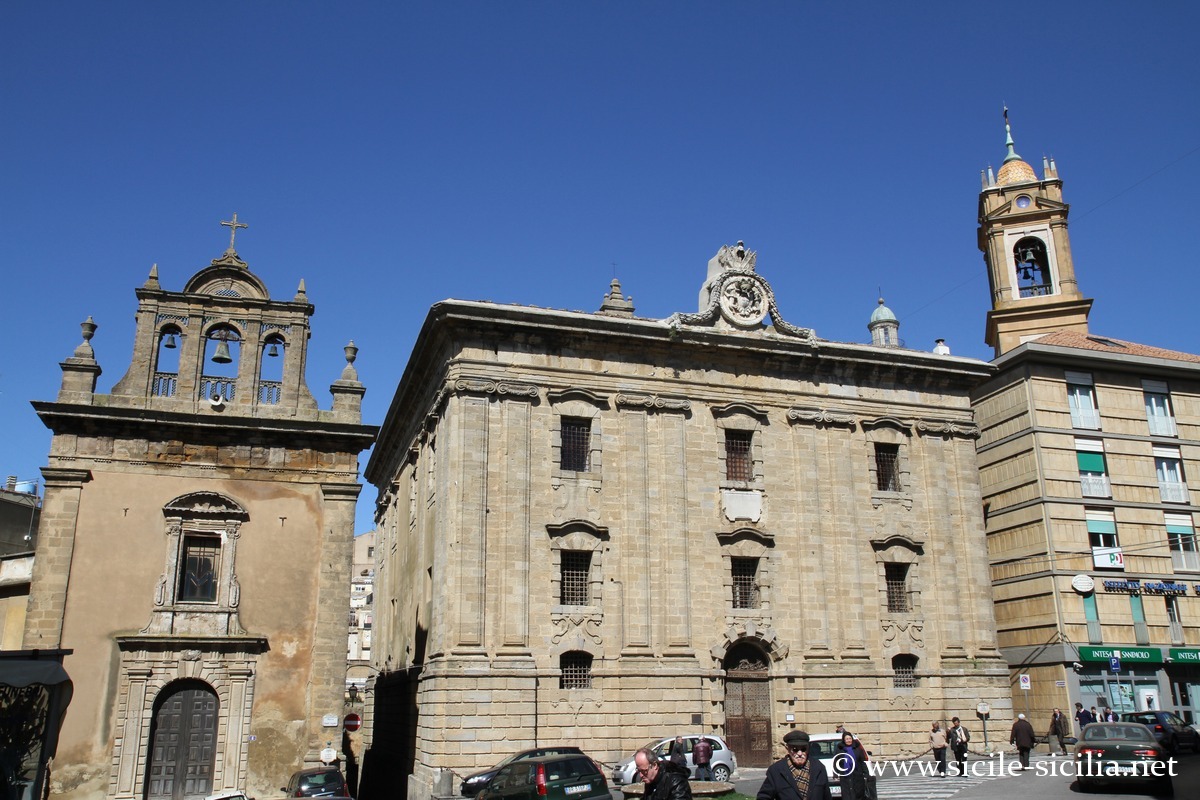
Sant’Agata, Carcere borbonico
Beside it, the former Bourbon prison from the end of the 18th century is nowadays the seat of the Municipal Museum, devoted to history and archaeology, which occupies the former cells and displays in particular the municipal epigraphic collection.
Nearby, the church of San Pietro (Saint Peter) is a neo-Gothic construction from the second half of the 19th century, where the two beautiful towers decorated with majolicas from the Judica workshops, which frame a central part with pointed arches and whose door includes bronze panels. The interior preserves a cycle of frescoes by Vaccaro. The church was rebuilt after 1850 as part of an urban modernisation programme.
Historic heart of Caltagirone
At the heart of the historic centre of Caltagirone is the large square Piazza Umberto, where elegant buildings stand, including the former Senatorial Palace, the former Garibaldi Theatre (which was in operation until the early 20th century, now the Sturzo Gallery), and the 18th-century building (Banco di Sicilia) that was the former Monte di Pietà. The latter was founded in the 16th century as a microcredit institution controlled by the Church.
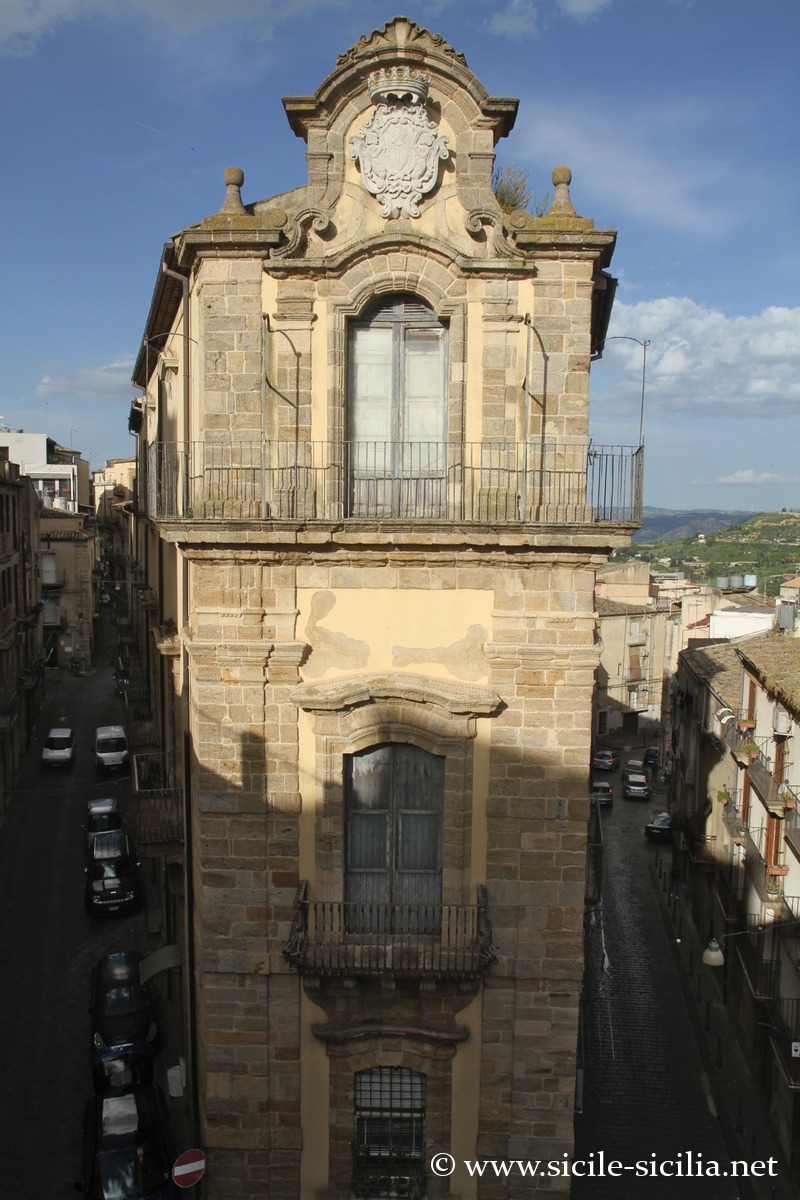
All around are beautiful buildings, among which stands out the Palazzo Crescimanno d’Albafiorita which preserves 19th-century painted ceilings, or the palazzo Libertini di San Marco, former seat of the bishopric, with a beautiful interior staircase and a 17th-century portal.
Cathedral
The large church of the Gesù (1570) of the Jesuit college, has on its façade eight statues representing saints and the Virgin and Child. It preserves in particular a Pietà painted by Filippo Paladini, the Nativity by Polidoro da Caravaggio, and in the former Jesuit college two patios with porticoes.
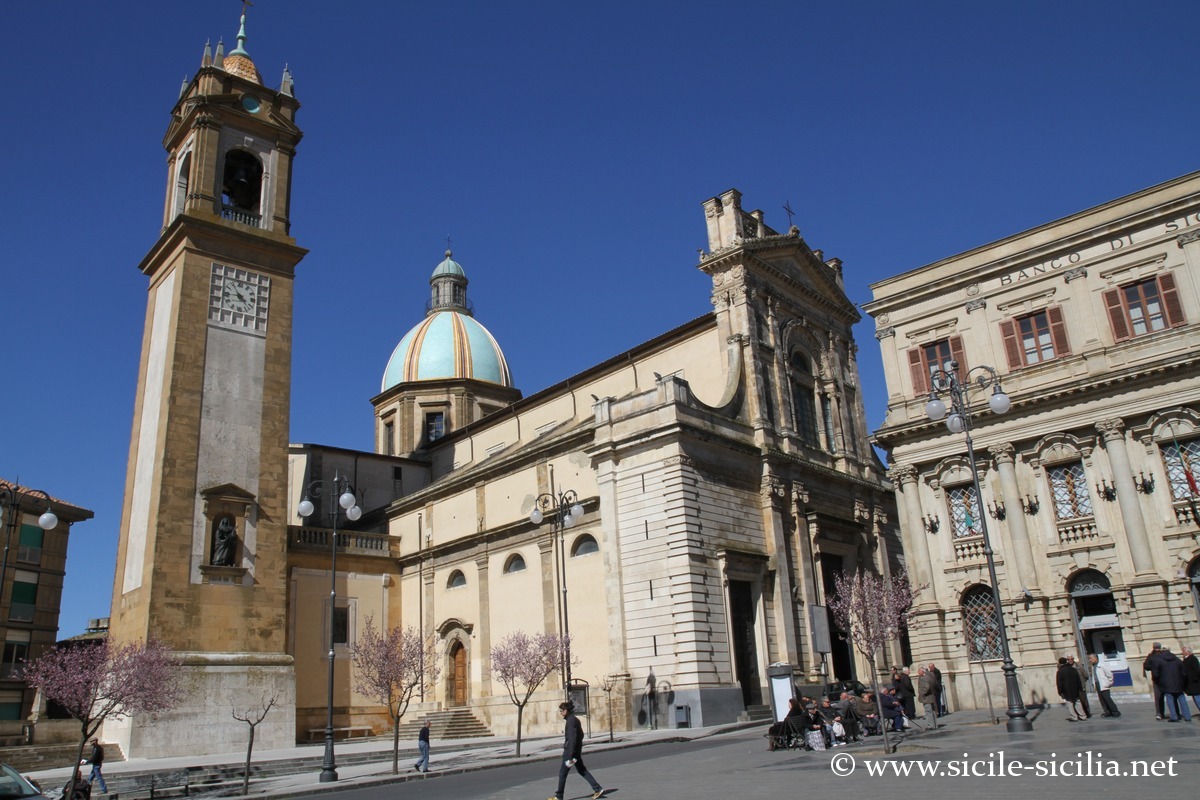
On the other side of the square, the Cathedral of San Giuliano (Saint Julian), of Norman origin and rebuilt after the 1693 earthquake, displays a beautiful early 20th-century façade in floral Art Nouveau style, and a bell tower. Its dome is covered with local ceramics typical of Caltagirone
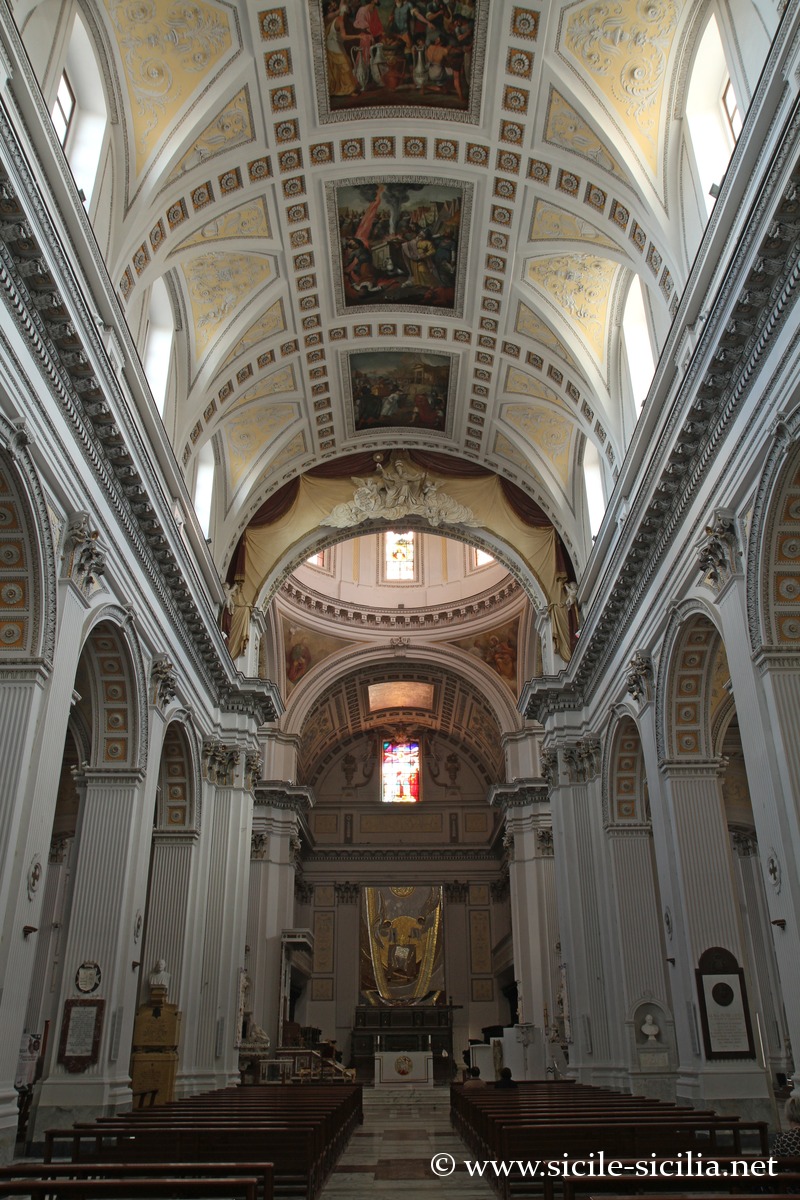
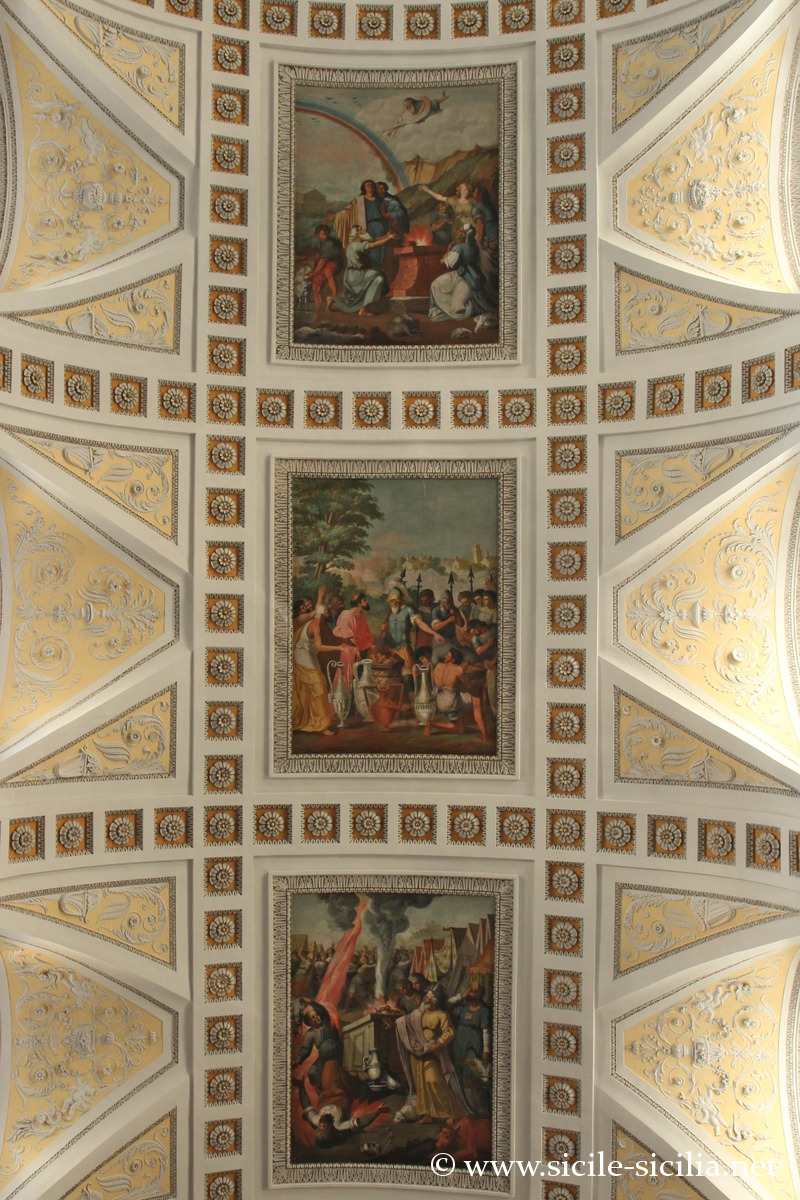
The interior has three naves decorated with frescoes by Giuseppe Vaccaro dating from 1862, illustrating biblical scenes.
It also preserves a liturgical treasure including pieces from the 16th century.
Corte capitanale
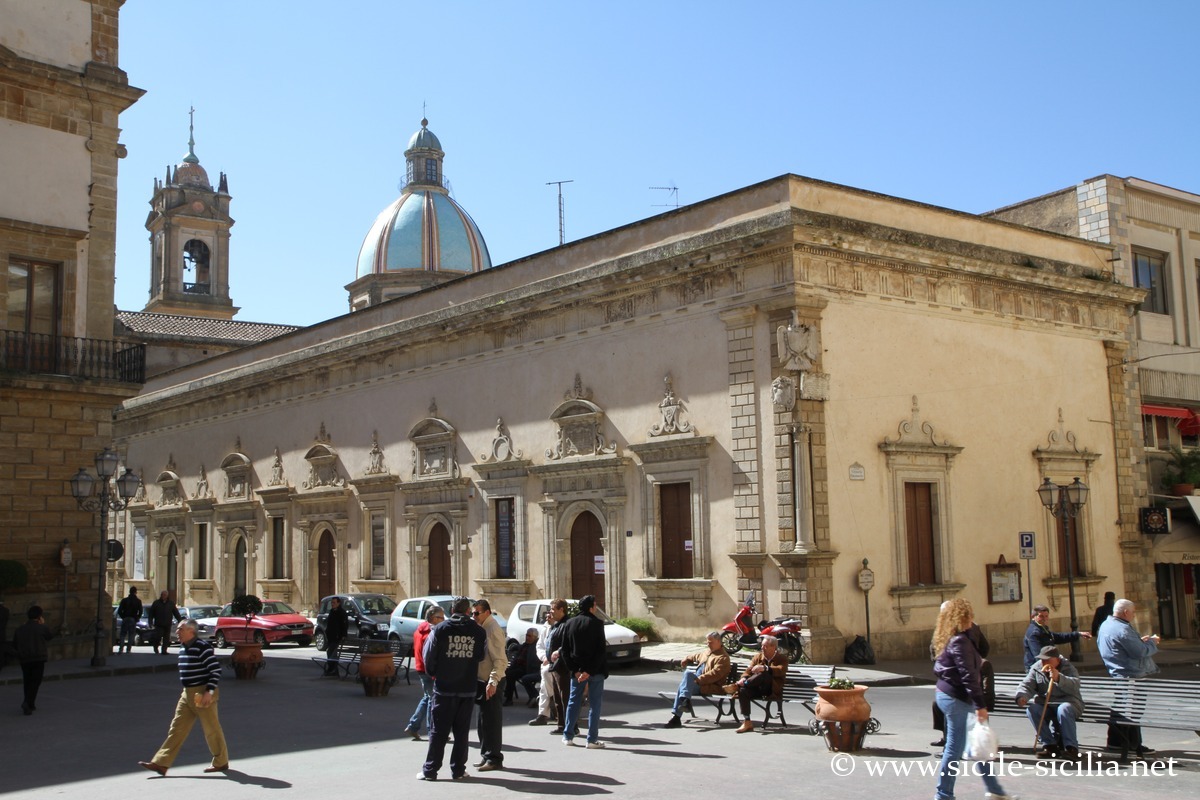
Moving towards Piazza Municipio, you pass the Court of the Captain of Justice (Corte Capitanale), then the beautiful town hall (Palazzo del Principe Bellaprima), a neoclassical building from 1872 designed by the architect Giambattista Nicastro with an eclectic style inspired by Piedmontese administrative models
The Corte Capitanale was the institution responsible for public order under Spanish rule. It is an elegant Renaissance civil building erected from 1601 by Antonuzzo Gagini, with the coats of arms of the Spanish sovereigns on its façade. Today it serves as a cultural space and photographic gallery.
Several other palaces embellish via Bonaventura, which leads further on to the church of San Bonaventura with ceilings adorned with trompe-l’œil frescoes of feigned architecture (18th century). It was attached to a Franciscan convent suppressed in the 19th century.
At the foot of the steps stand the Palazzo Reburdone remodelled in the 19th century housing the museum of contemporary ceramics, and the church of San Giuseppe (Saint Joseph) which once belonged to the Franciscans. It was designed in the 18th century and stands out for its unusual polygonal plan with ten sides, with two small side bell towers.
Scalinata de Santa Maria del Monte
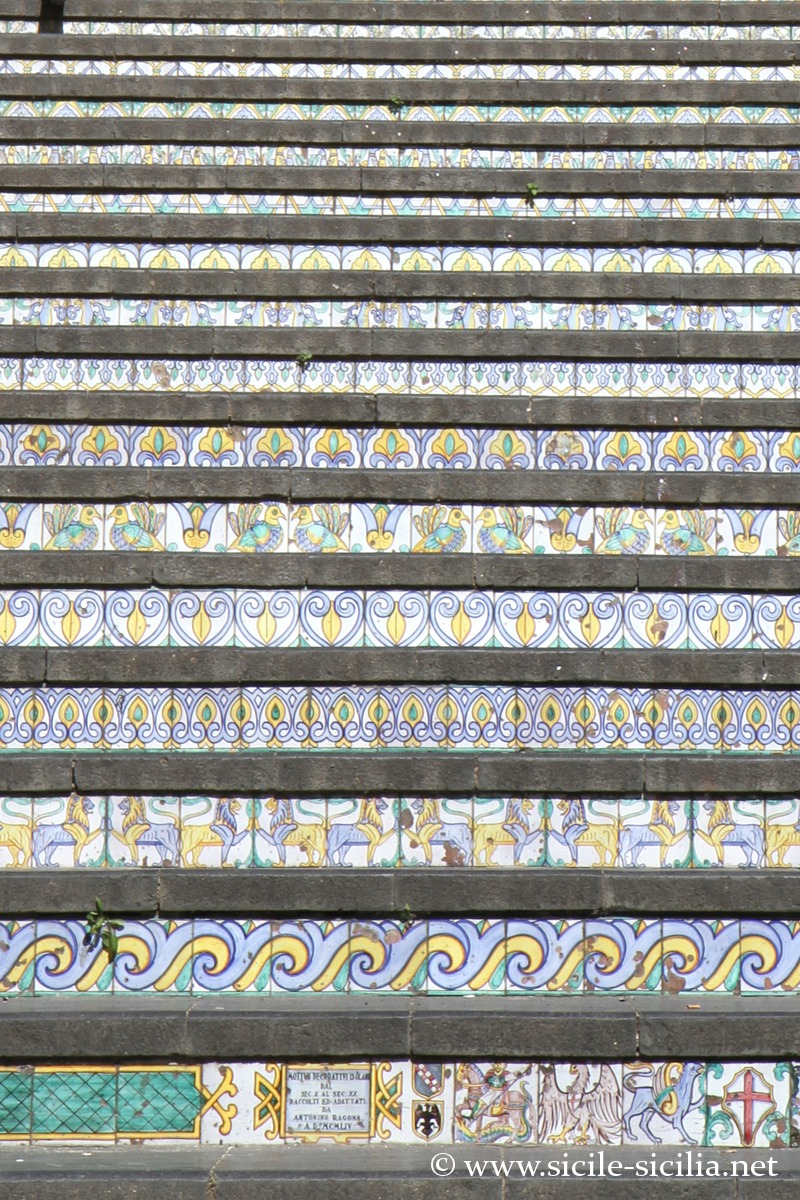
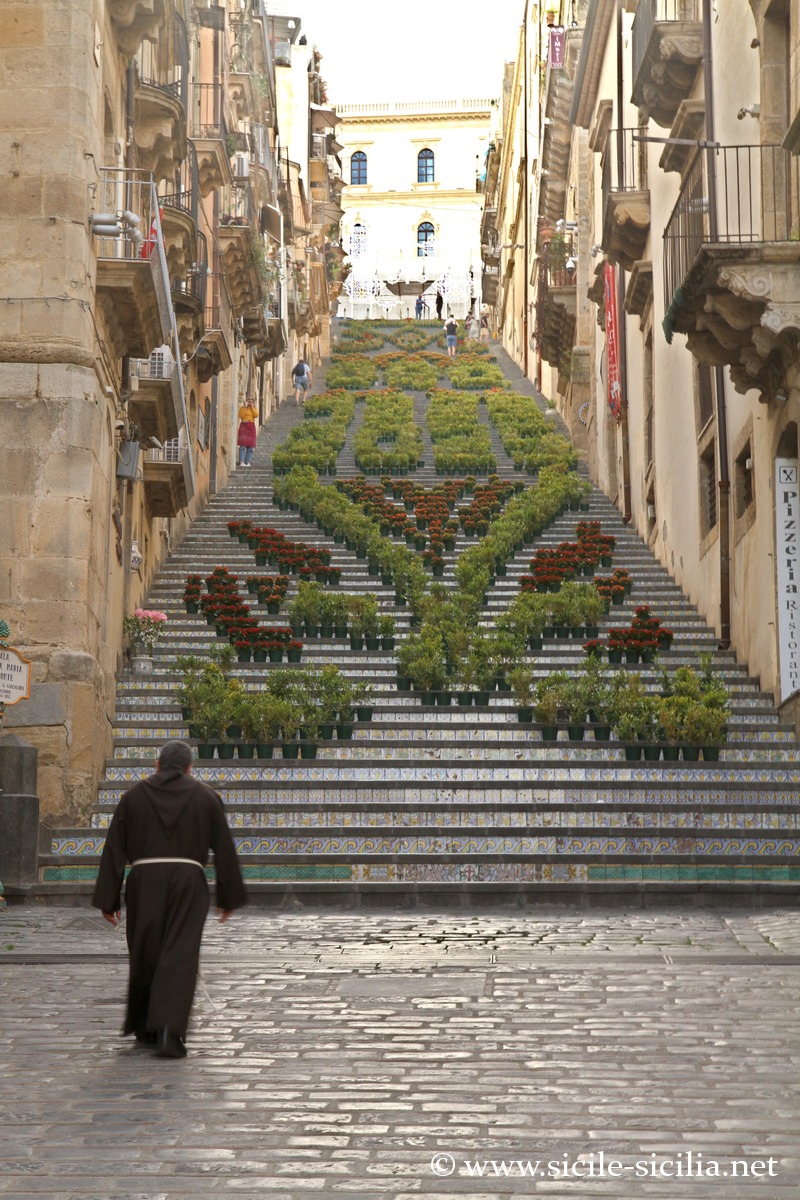
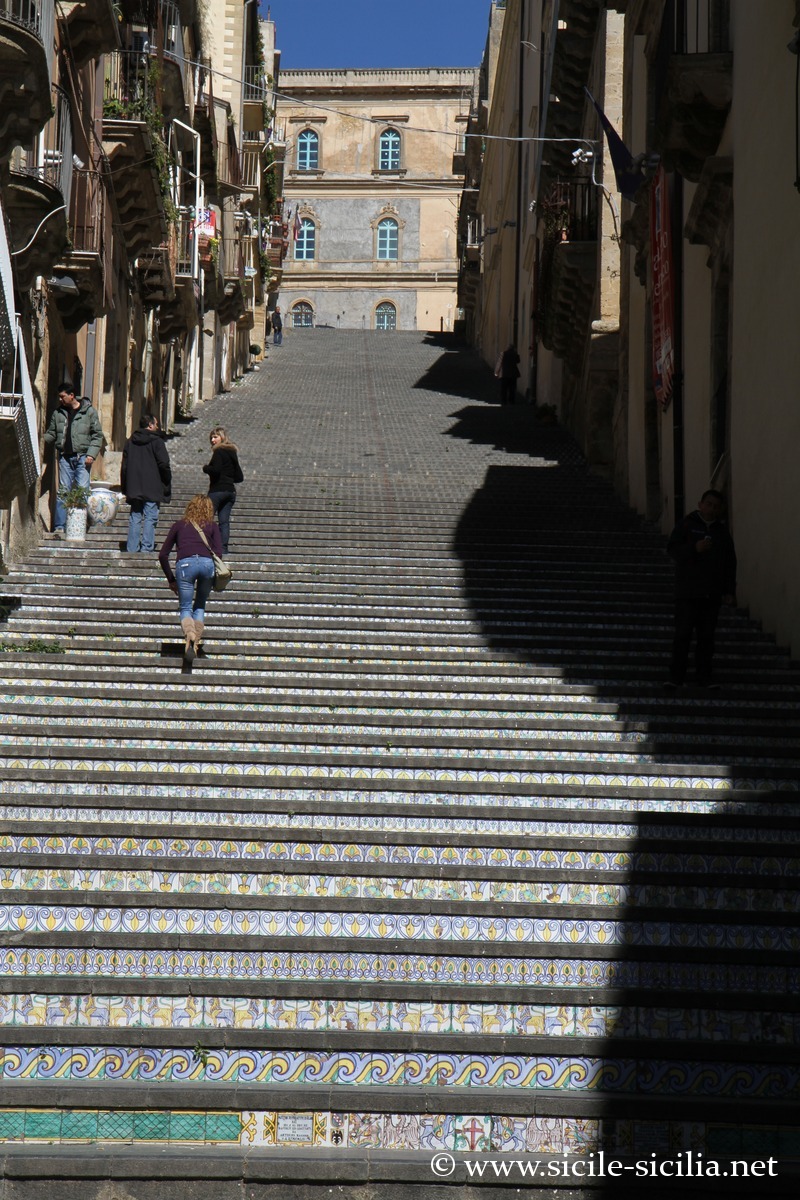
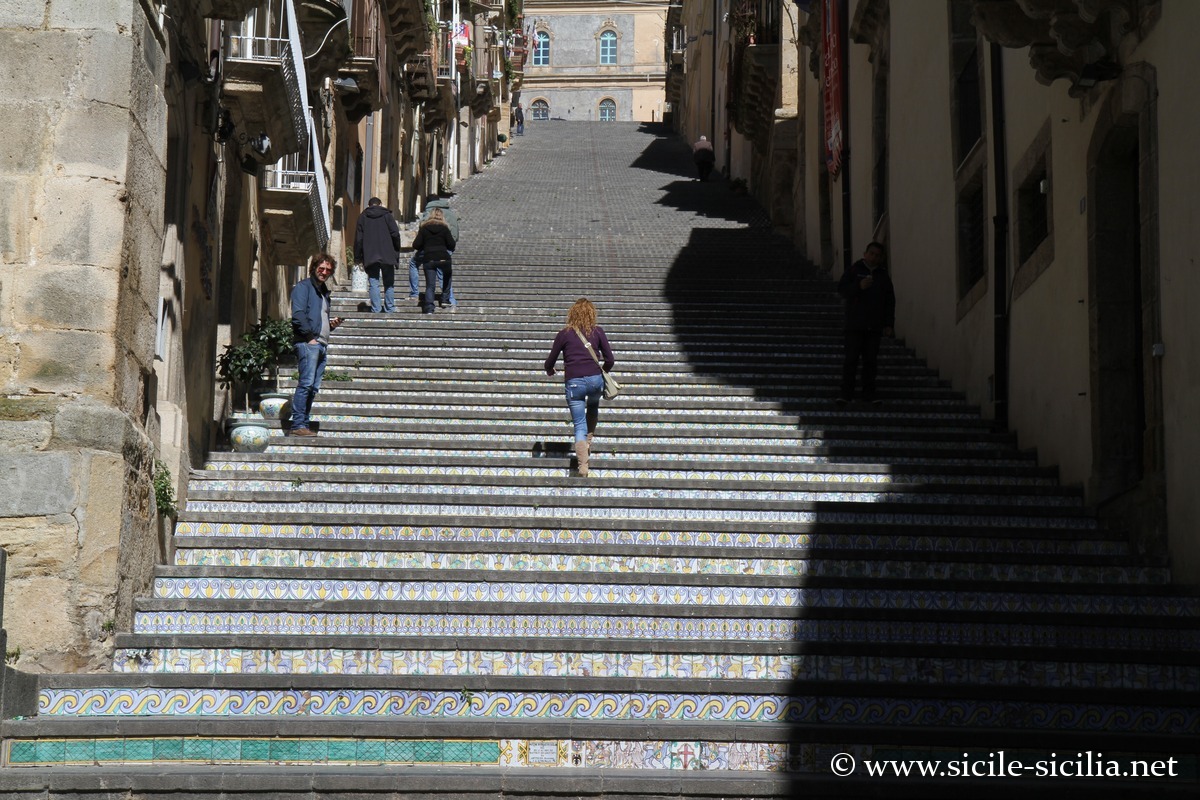
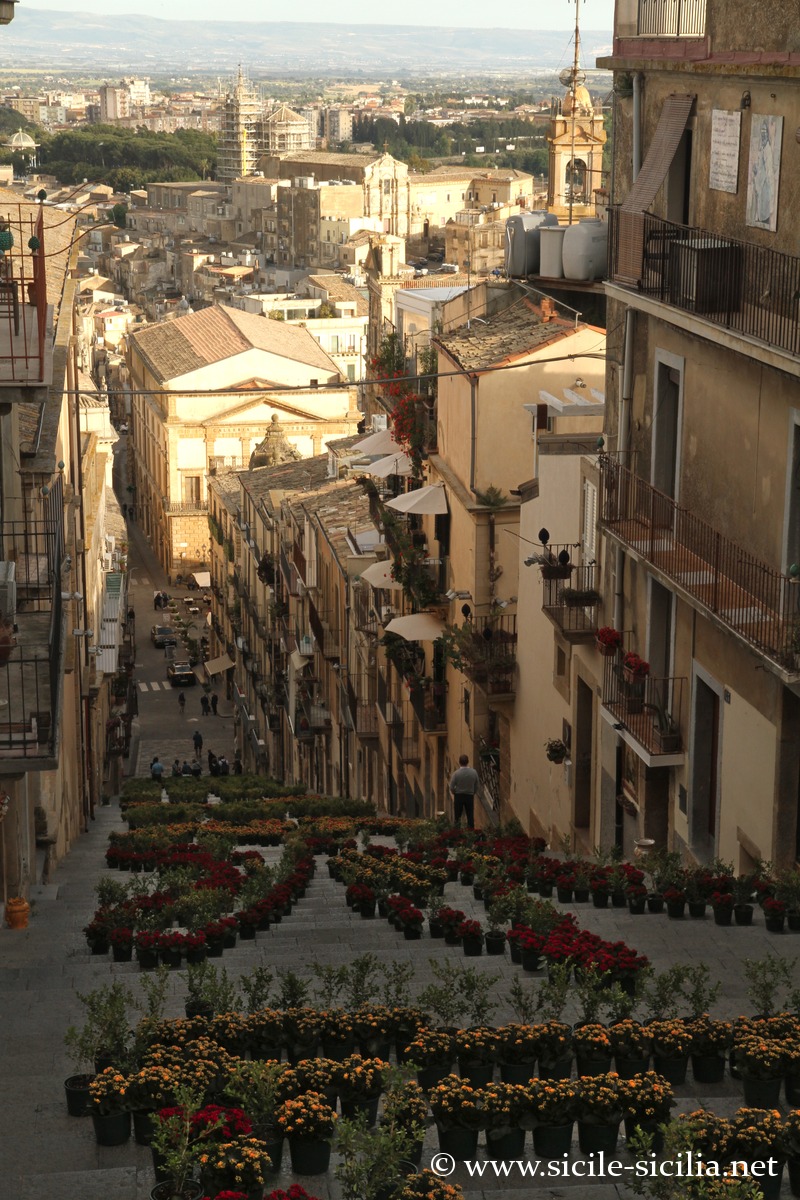
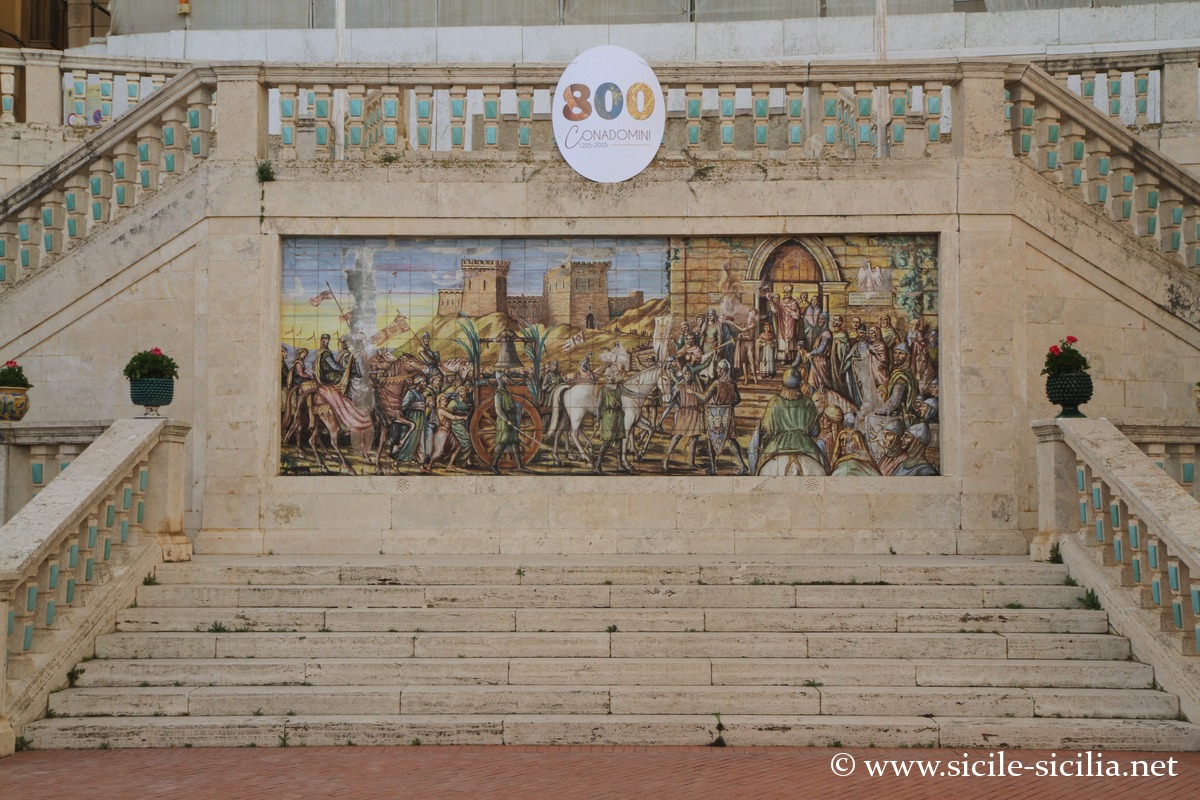
The superb Staircase of Santa Maria del Monte, built in 1608, consists of 142 steps that were decorated in 1953 with painted ceramics. They all have different motifs, evocations of Sicilian history, folklore and culture.
It leads 50 metres higher to the church of Santa Maria del Monte and to the Sant’Agostino complex, where the Norman castle and the fortified medieval quarter once stood. From there you can enjoy a beautiful panorama over the town.
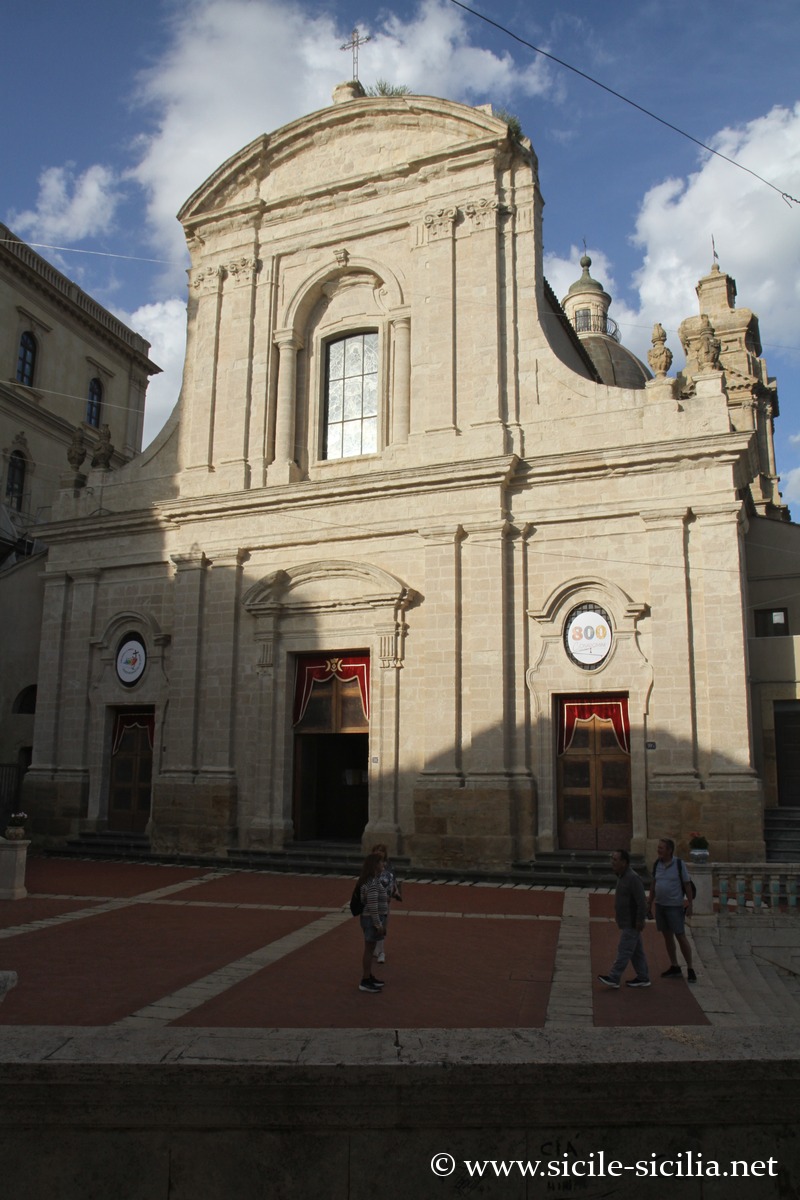
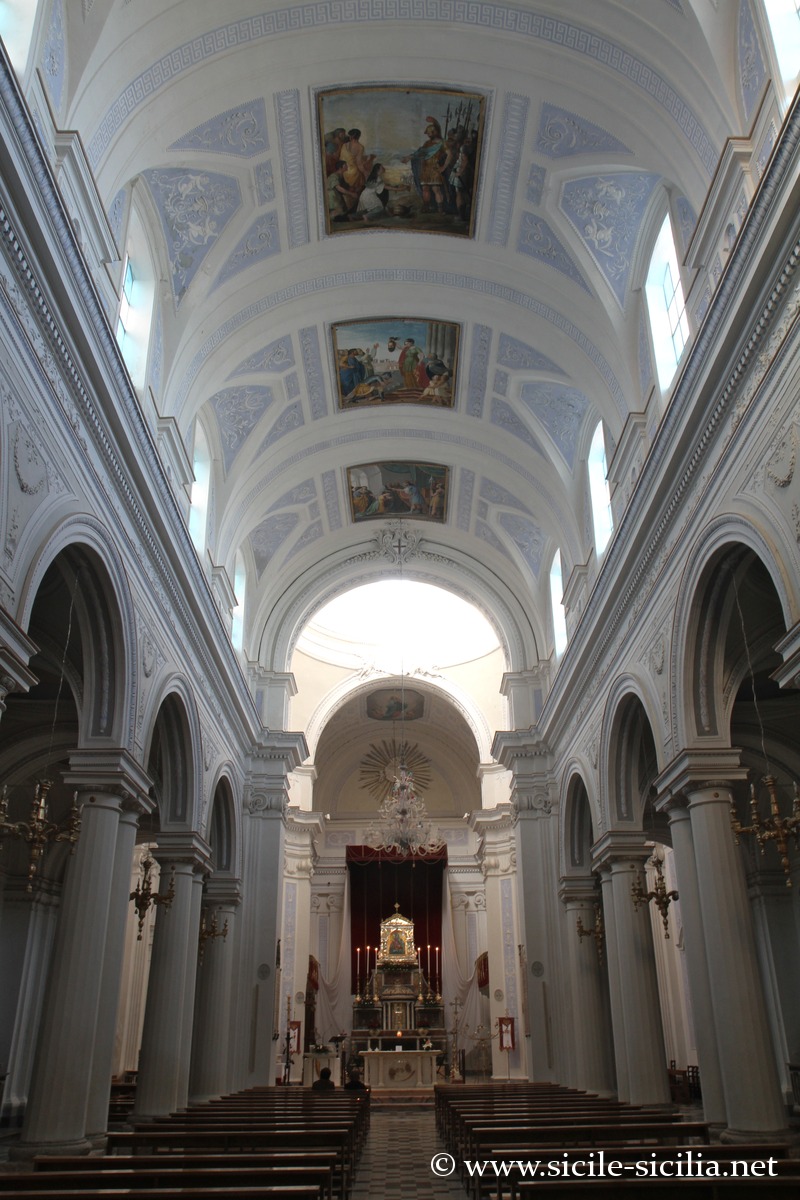
Dating back to the 12th century, Santa Maria del Monte was once the cathedral of Caltagirone, entirely rebuilt after the 1693 earthquake to a design by Battaglia. Inside, the altar displays the Madonna Conadomini, a Byzantine icon of the 12th century probably imported into Sicily in Norman times. The church also preserves a 18th-century majolica floor and 19th-century frescoes depicting biblical heroines painted by the Vaccaro brothers.
To the west and to the east
Basilica di San Giacomo
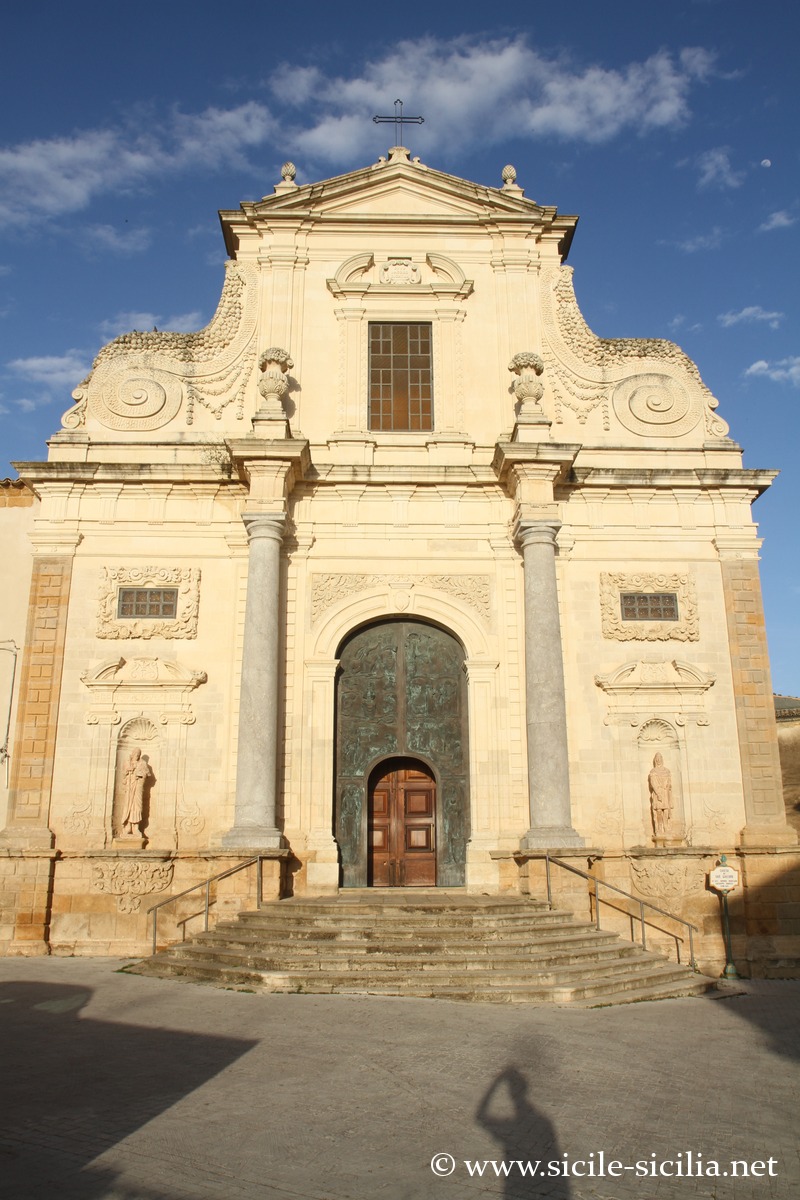
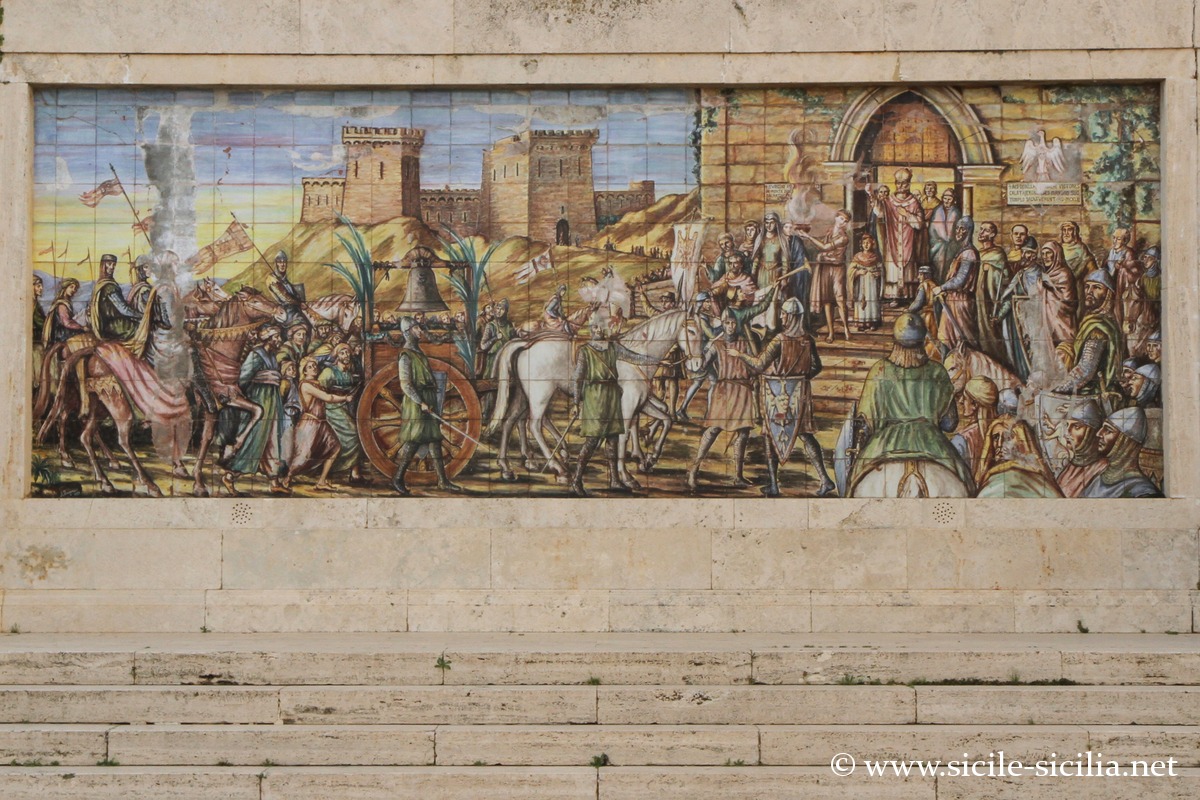
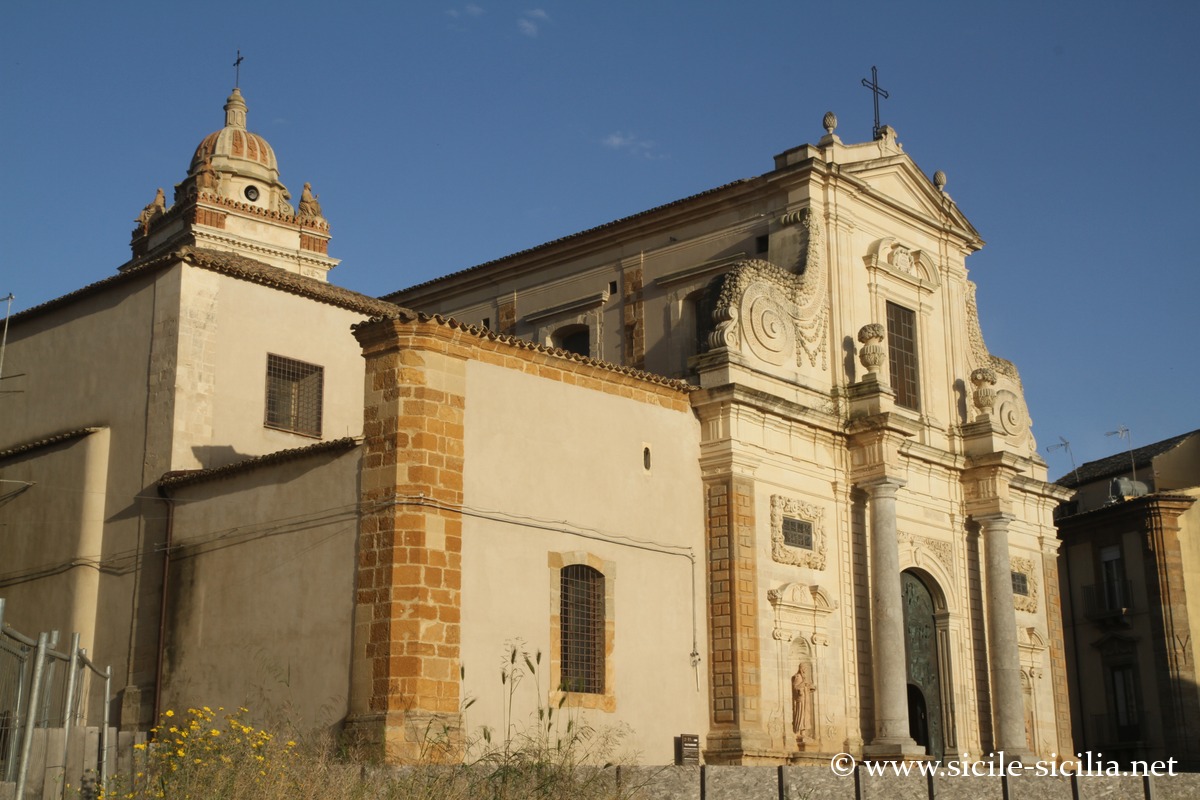
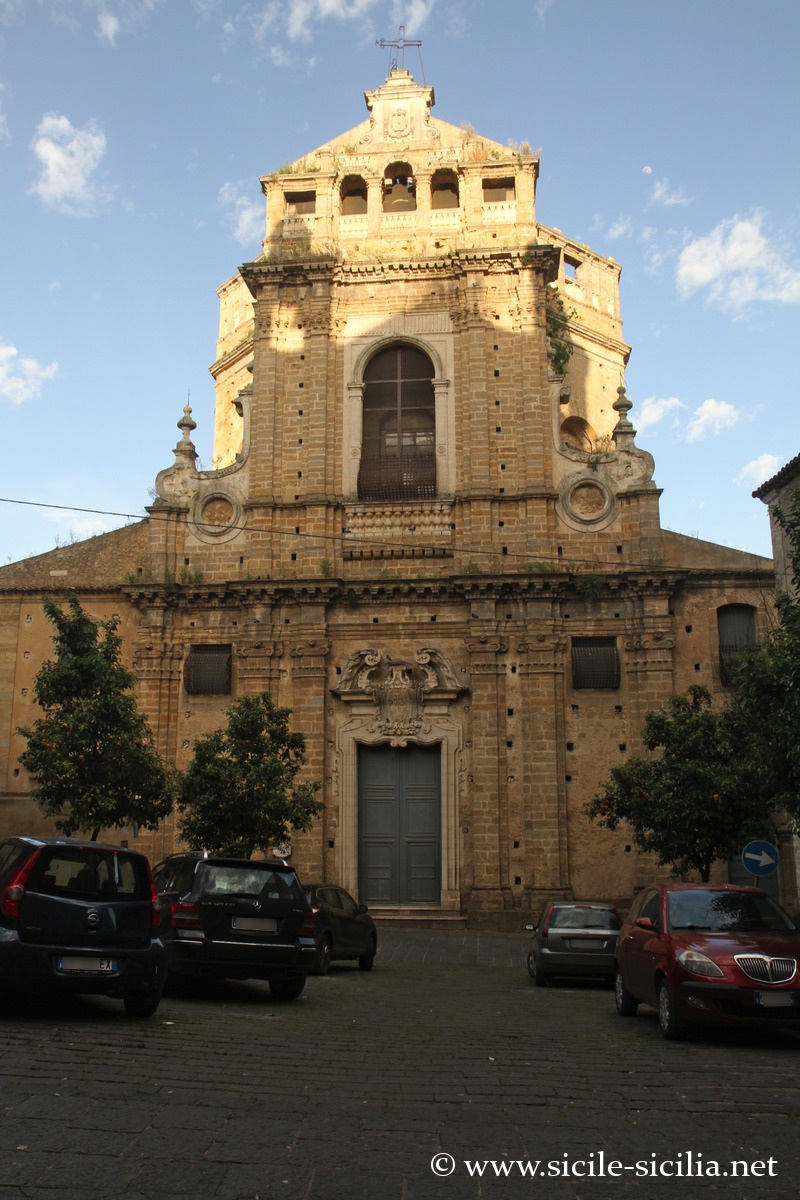
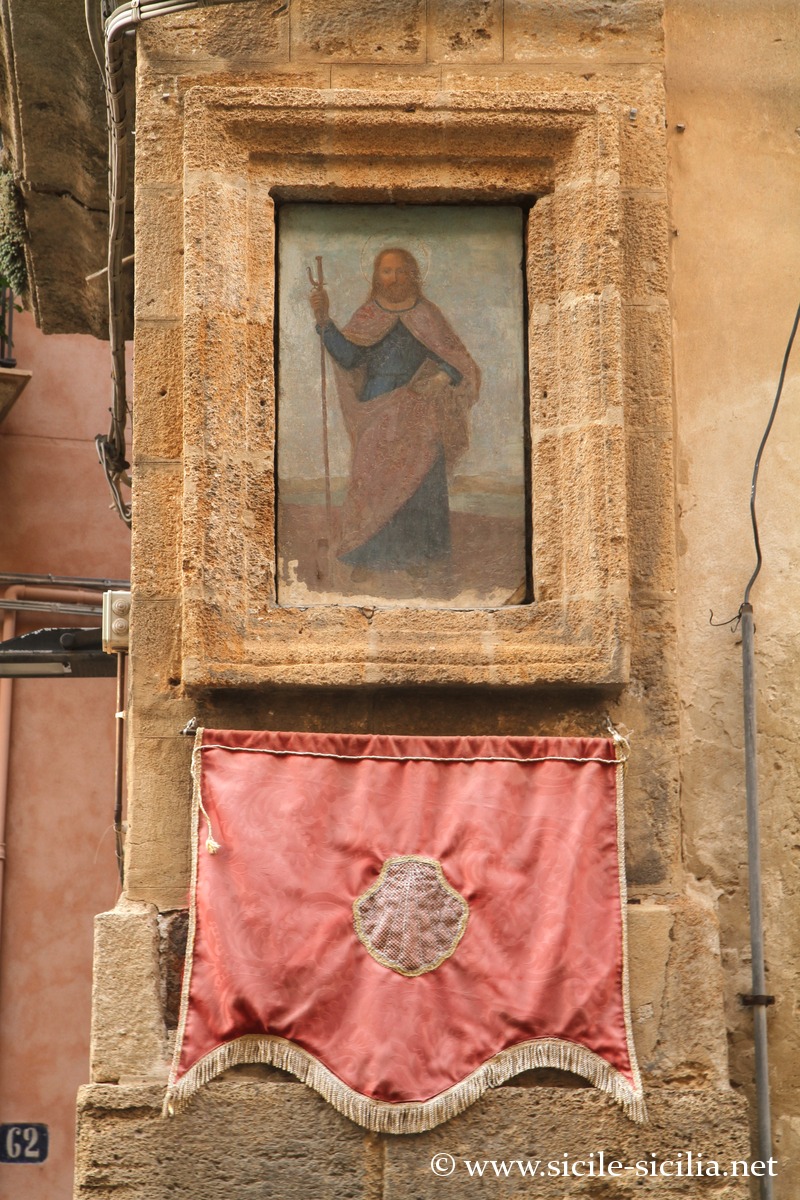
To the west of the town, via Vittorio Emmanuelle leads to the Basilica of San Giacomo (Basilica of Saint James) of the 18th century in late Baroque style, which was reportedly founded around 1090 by the Norman Roger II after his victory over the Muslims.
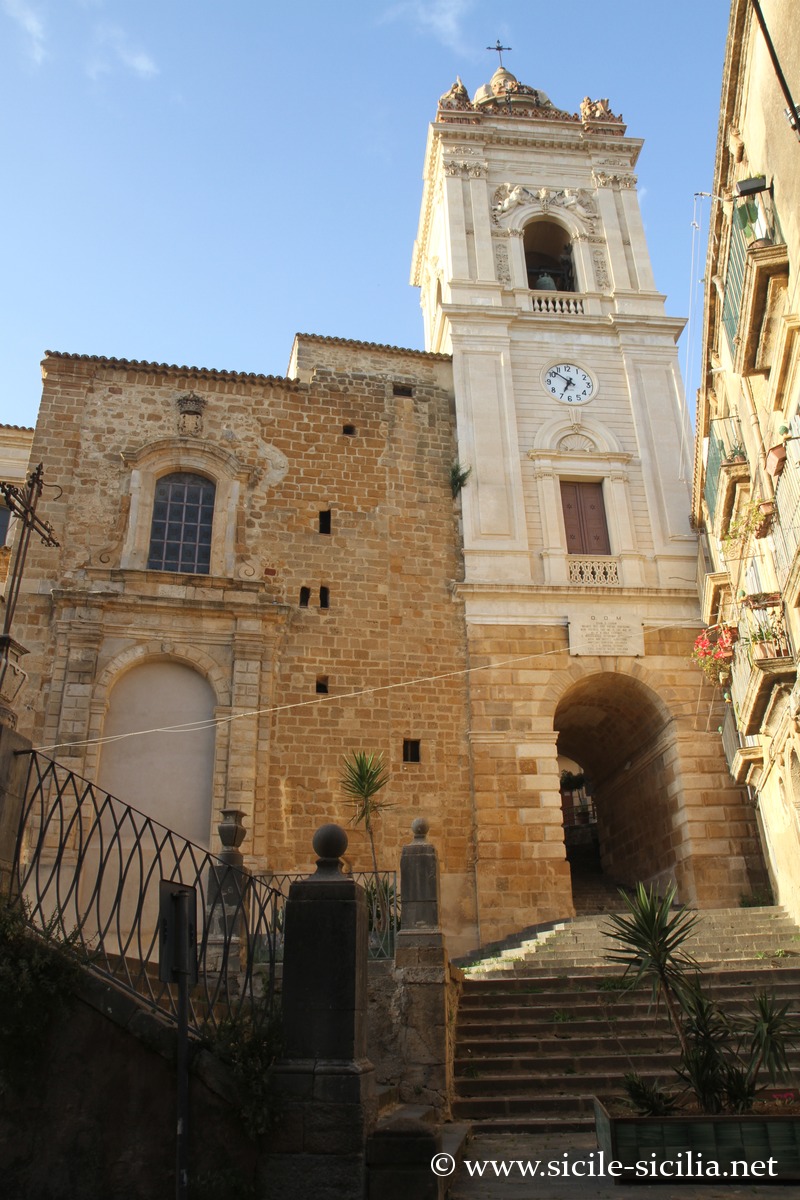
The 19th-century bell tower, whose base is medieval, is decorated with terracotta statues of the four evangelists. The interior with three naves is supported by monolithic columns. Besides medieval remains in the structure, it preserves works by the sculptors Gagini, the wooden statue of Saint James by Vincenzo Archifel, and a silver reliquary housing a relic of Saint James.
To the east, Via Sturzo leads to the church of San Giorgio del Rosario (now an auditorium) and opposite it the church of SS. Salvatore (Holy Saviour), once belonging to the Basilian community, which houses a Madonna by Antonello Gagini and the mausoleum of Don Luigi Sturzo created in the 1950s to honour the founder of the Italian Popular Party. It is a fine example of Sicilian Baroque, rebuilt in the second half of the 18th century. With an octagonal plan, it is richly decorated with stuccoes, with a marble statue of the Virgin of Monserrato, attributed to Antonello Gagini (1526).
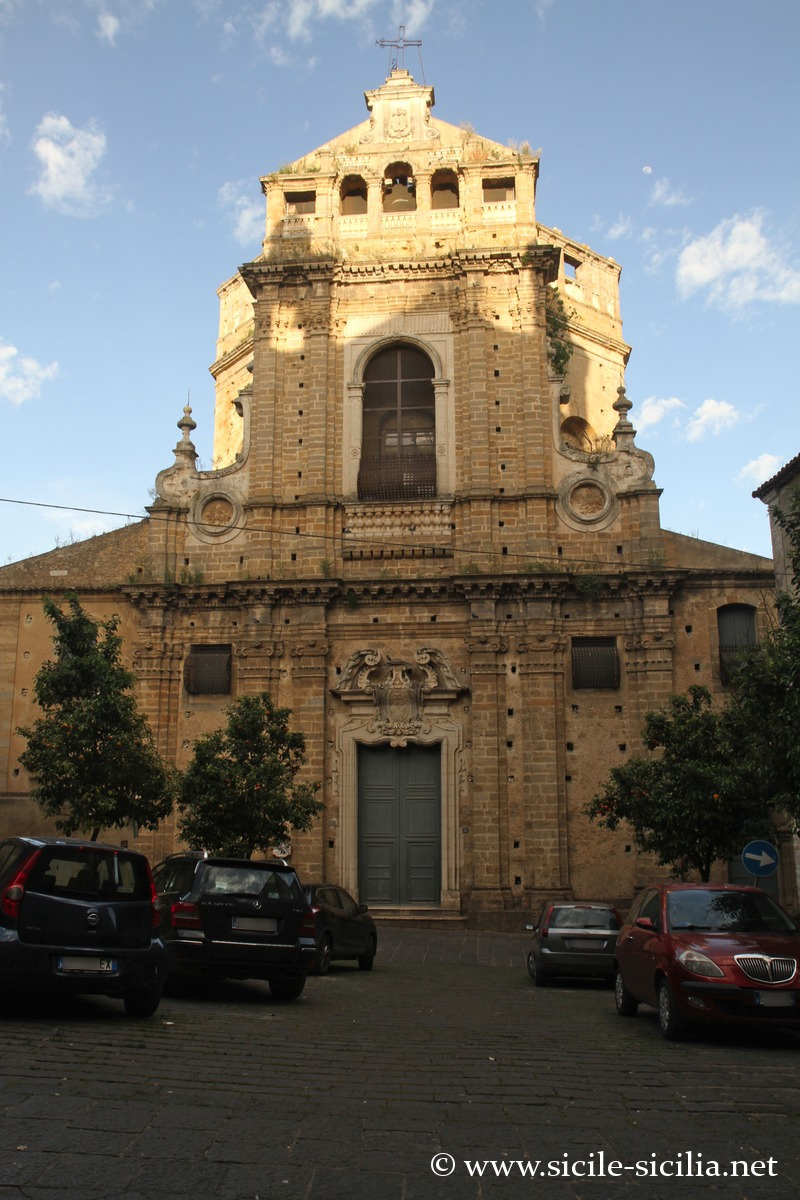
Chiesa del Santissimo Salvatore,
Also to be found in these parts are the Museum of Traditional Nativity Scenes (Museo delle Tradizioni Presepiali), which displays artisanal nativity scenes from the 18th to the 20th century, from the family workshops of Caltagirone, and the museum of the Struzo house.
At the top of the street, the church of San Giorgio (Saint George) of the 11th century preserves Romanesque elements as well as its Gothic bell tower and entrance. Inside, the Trinity of the 15th century depicting the Mystery of the Redemption, attributed to Van Der Weyden, is one of the most important Flemish paintings in Sicily.
At the end of Via Cappucini, the Capuchin Convent – important in the 17th and 18th centuries – includes a church with a very sober white stone facade that survived the earthquake and preserves precious works. There is also a small museum with paintings, precious objects, as well as a 16th-century crypt. The latter houses the tombs of religious and several liturgical objects predating the earthquake.
In the surroundings of Caltagirone
San Pietro and Niscemi Woods
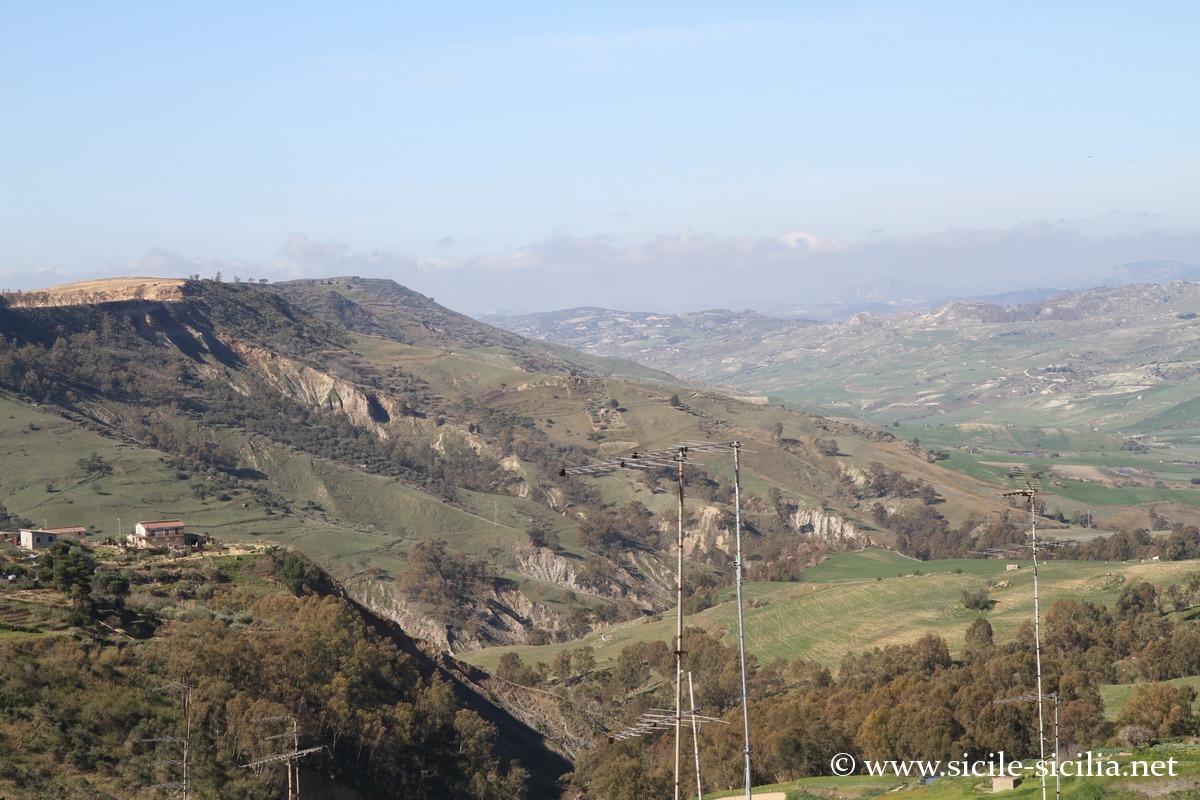
Twenty kilometres south-west of Caltagirone stretches one of the most beautiful and vast wooded areas of Sicily with the oak forest of Santo Pietro and that of Niscemi (Riserva Naturale Orientata Bosco di Santo Pietro/Sughereta di Niscemi). The forest extends over a sandy plateau crossed by valleys, sheltering a very diverse vegetation including cork oaks, holm oaks, myrtle, carob, and garrigue, but also many birds including birds of prey and migrants, fox, wildcat, etc. Several trails cross these woods, including the trail leading to the valley of the “Fontana del Cacciatore”.
Towns and archaeological sites
The town is not far from other famous sites such as the Villa Romana del Casale at Piazza Armerina (35 km), the ancient Morgantina (35 km), to the north-west.
To the east and south-east stretches another part of the Calatino, with the Archaeological Site of Palikè, an ephemeral Sicel town of the 5th century BC.
20 km to the north-east, the beautiful ruins of the castle of Mongialino stand at the top of a hill
Towns of late Baroque and Renaissance are at a reasonable distance: Vizzini (32 km), Licodia Eubea (27 km), Mineo (26 km), Militello in Val di Catania (42 km) and Grammichele (16 km) with its hexagonal urban plan centred on a square of similar shape.
Photo gallery

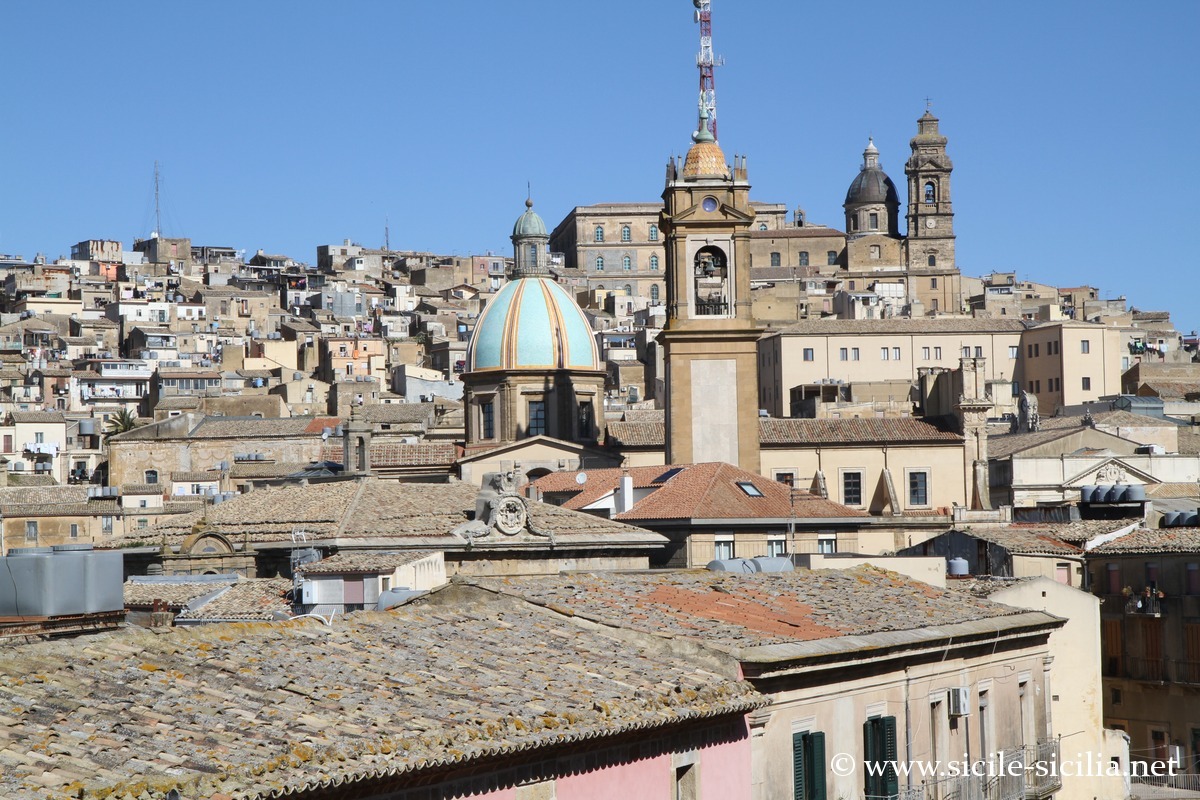
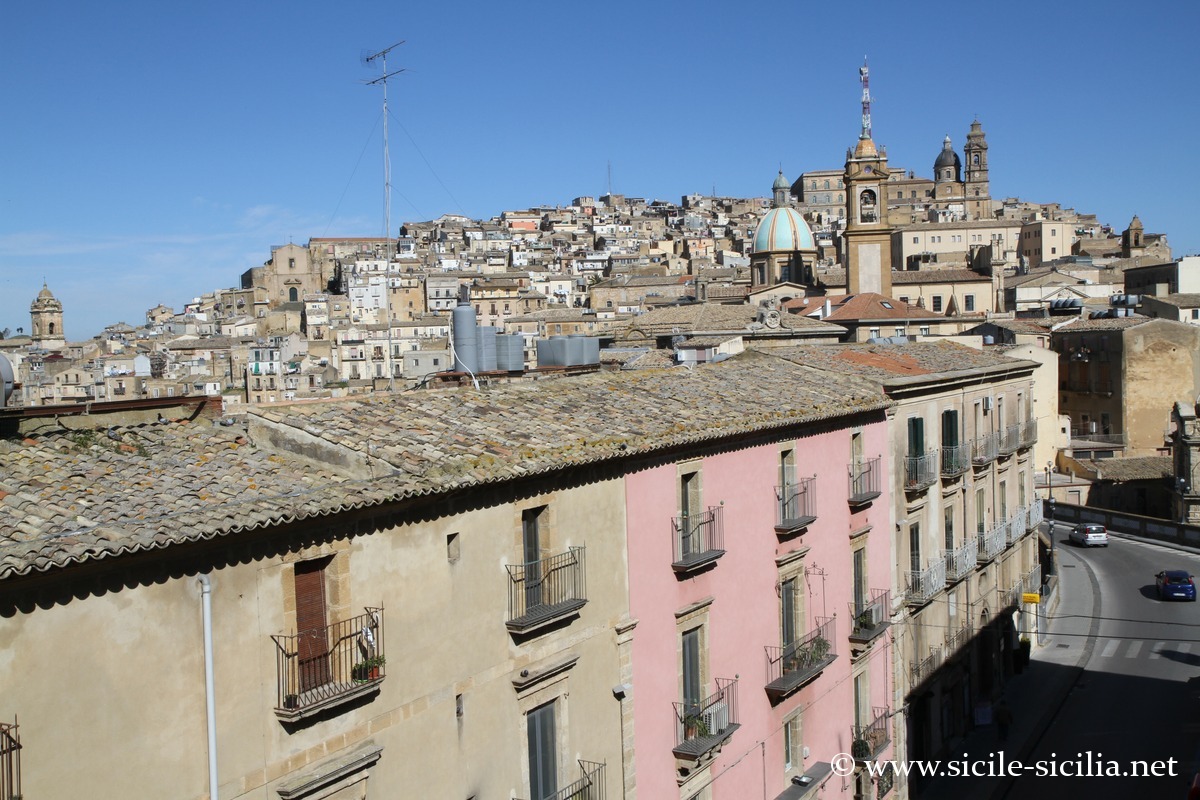
View of Caltagirone 
Caltagirone 
View of Caltagirone 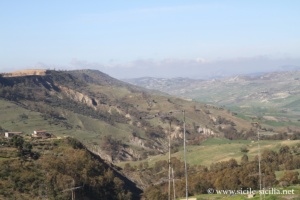
Caltagirone 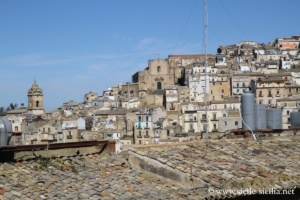
Caltagirone 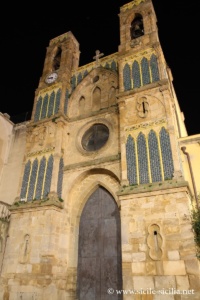

Church of San Pietro 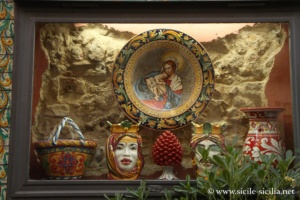
Ceramics of Caltagirone 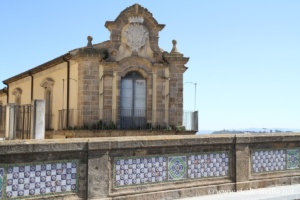
Ponte san francesco 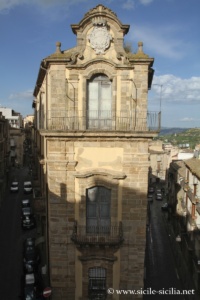
Ponte San Francesco 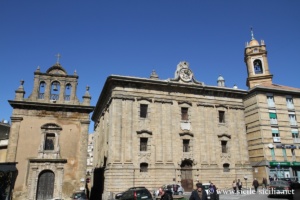
Sant’Agata, Carcere borbonico 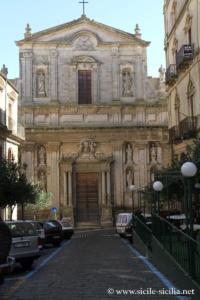
Chiesa del gesù 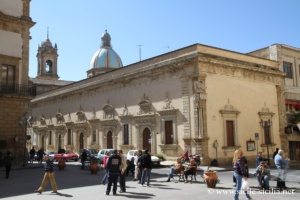
Corte capitanale 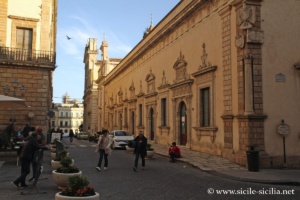
Ex corte del Capitano 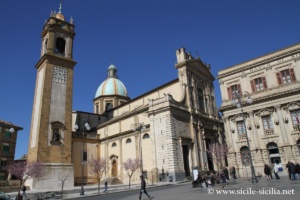
Cathedral 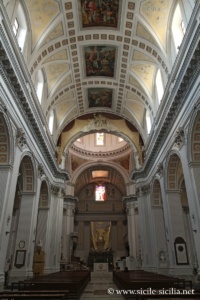
Cathedral of San Giuliano 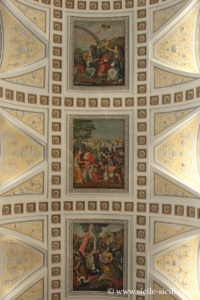
Ceiling of the cathedral of Caltagirone 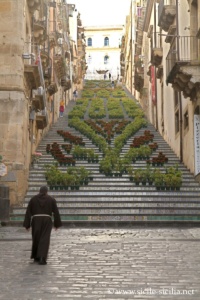
Staircase of Caltagirone 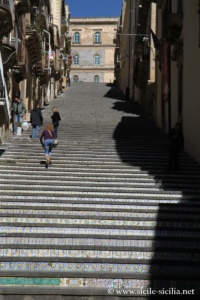
Scala Santa Maria del Monte 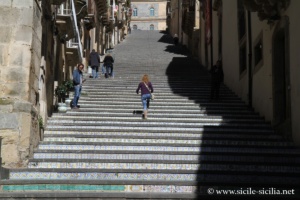
Scala Santa Maria del Monte 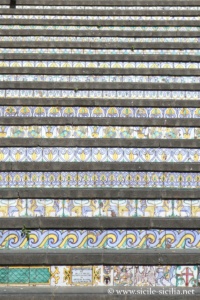
Scalinata de Santa Maria del Monte 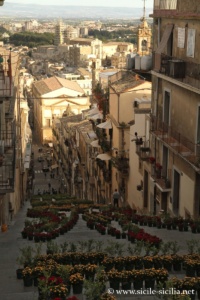
Staircase of Caltagirone 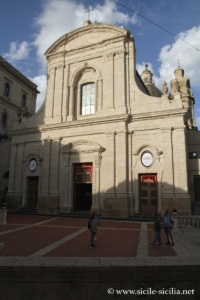
Church of Santa Maria del Monte 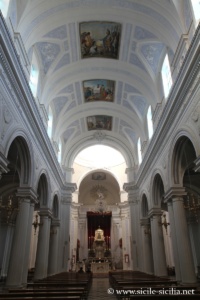
Church of Santa Maria del Monte 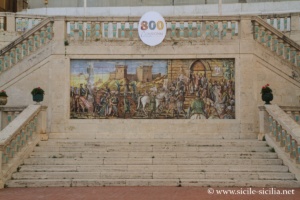
Viewpoint of the Scalinata di Santa Maria del Monte 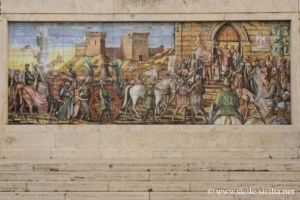
At the top of the staircase of Caltagirone 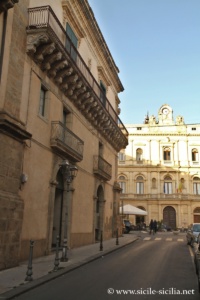
Corso Vittorio Emanuele 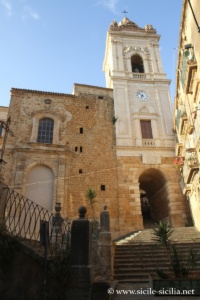
Bell tower, San Giacomo 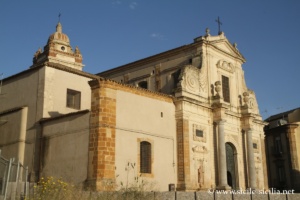
Basilica di San Giacomo 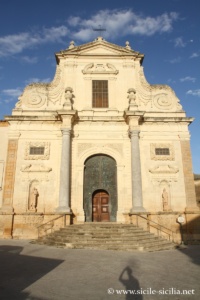
Basilica di San Giacomo 
Via Campanile, San Giacomo 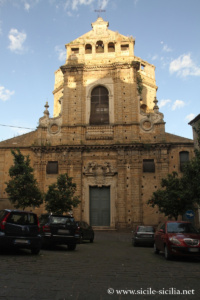

Church of Santissimo Salvatore 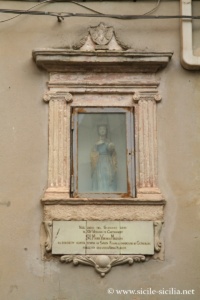
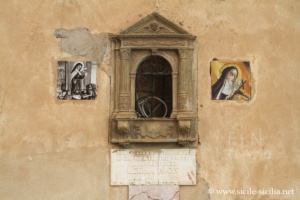
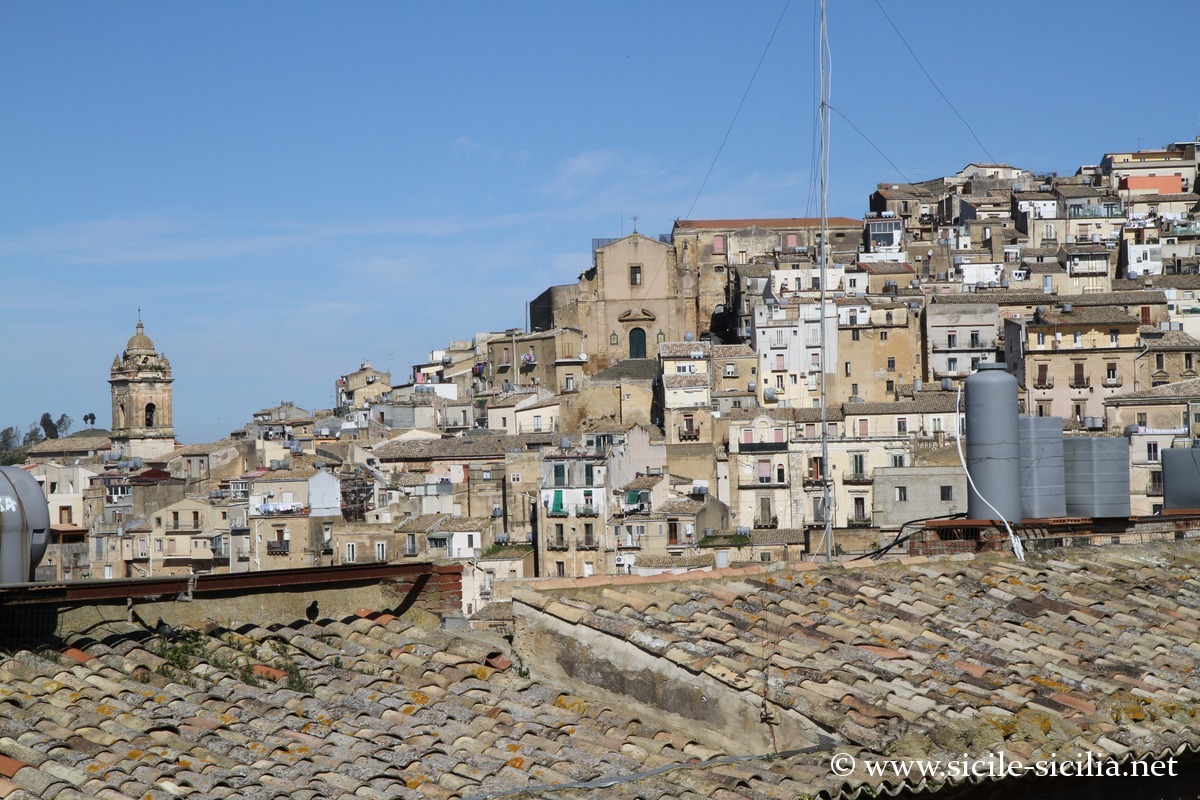
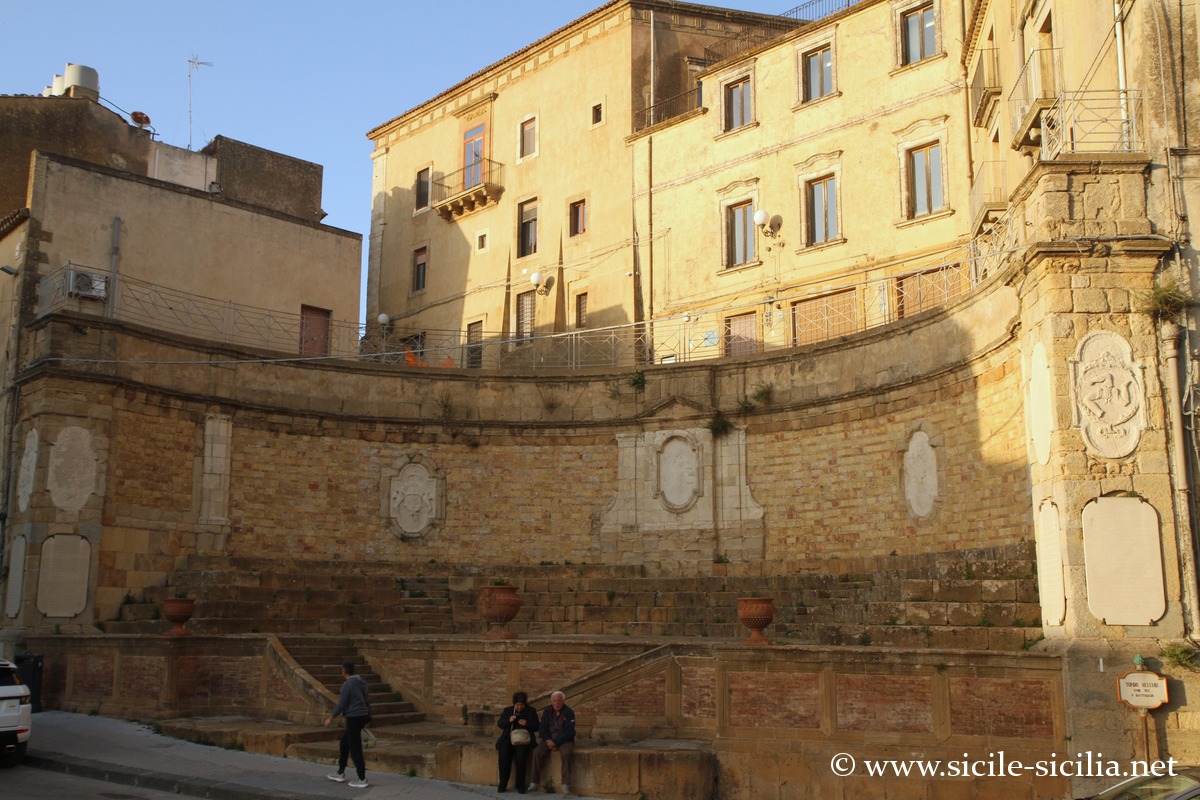
Historic centre of Caltagirone 
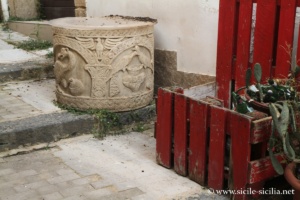
Tondo Vecchio


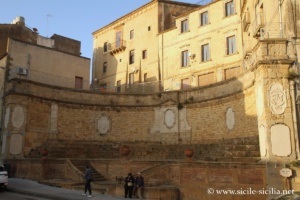
Information
External sites
- Tourism section of the municipality’s website: www.comune.caltagirone.ct.it/it/vivere
- Diocesan museum: museodiocesanocaltagirone.it
- Tourism sites and blogs: www.siciliapreziosa.it
Category Caltagirone
- Caltagirone
 Long known for its pottery production, Caltagirone turned to artistic ceramics and terracotta ...
 - Militello in Val di Catania
 Set in the hills between the plain of Catania and the north of ...
 - The Calatino
 The Calatino, a historical region of southern Sicily centered on Caltagirone, is little ...
 - Hotels in Caltagirone
 Hotels in Caltagirone and accommodations in its surroundings, bed & breakfasts, guest rooms.
 - Destinations near Caltagirone
 Sicilian destinations near Caltagirone, with Piazza Armerina and the Roman villa of Casale ...