
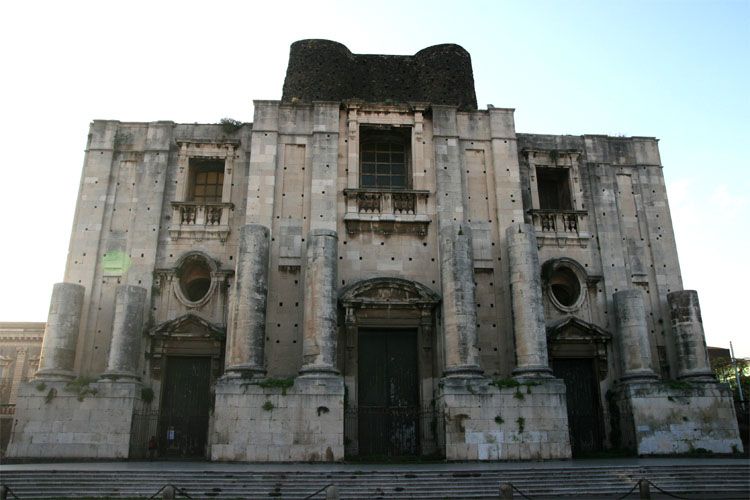
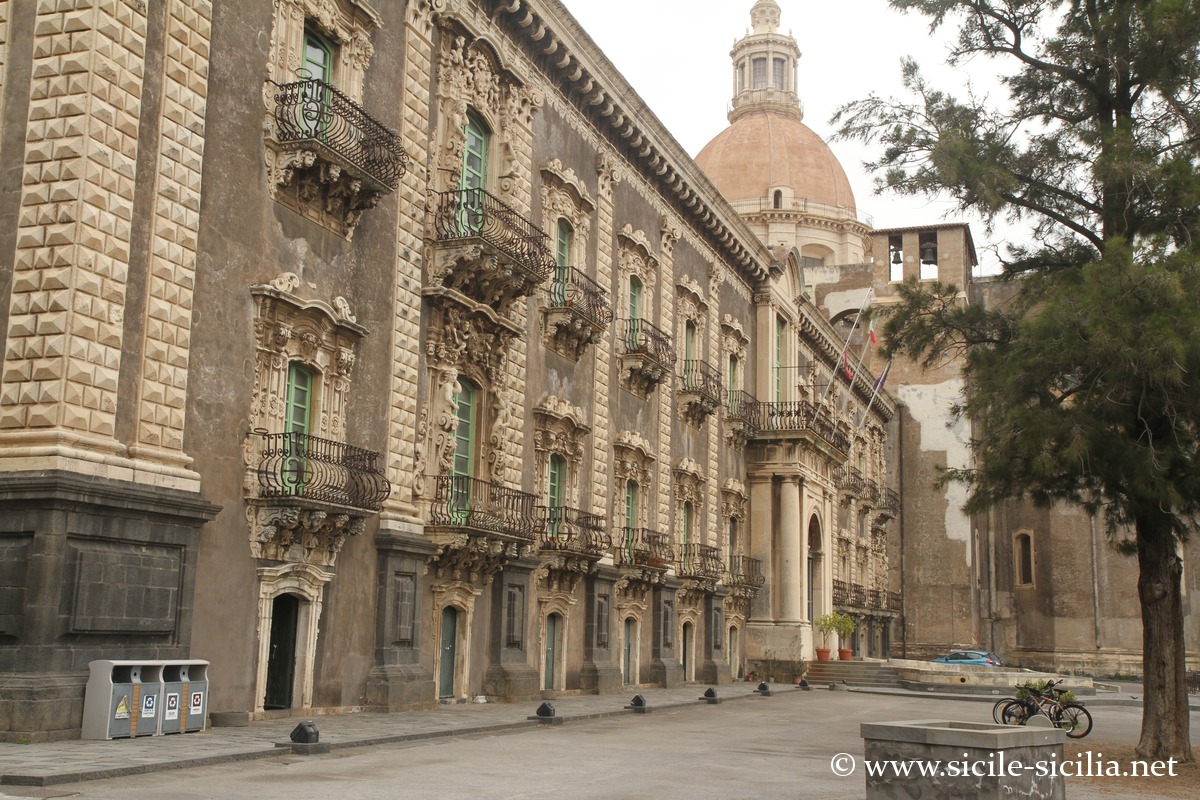
About 850 metres west of Piazza Duomo, Piazza Dante sits in front of a large Benedictine monastery, which was originally intended to be even larger, with four cloisters and a majestic church. In the end, two large cloisters were built and the church remained unfinished, including the “Chiostro di marmo” (marble cloister) and a second, later cloister.
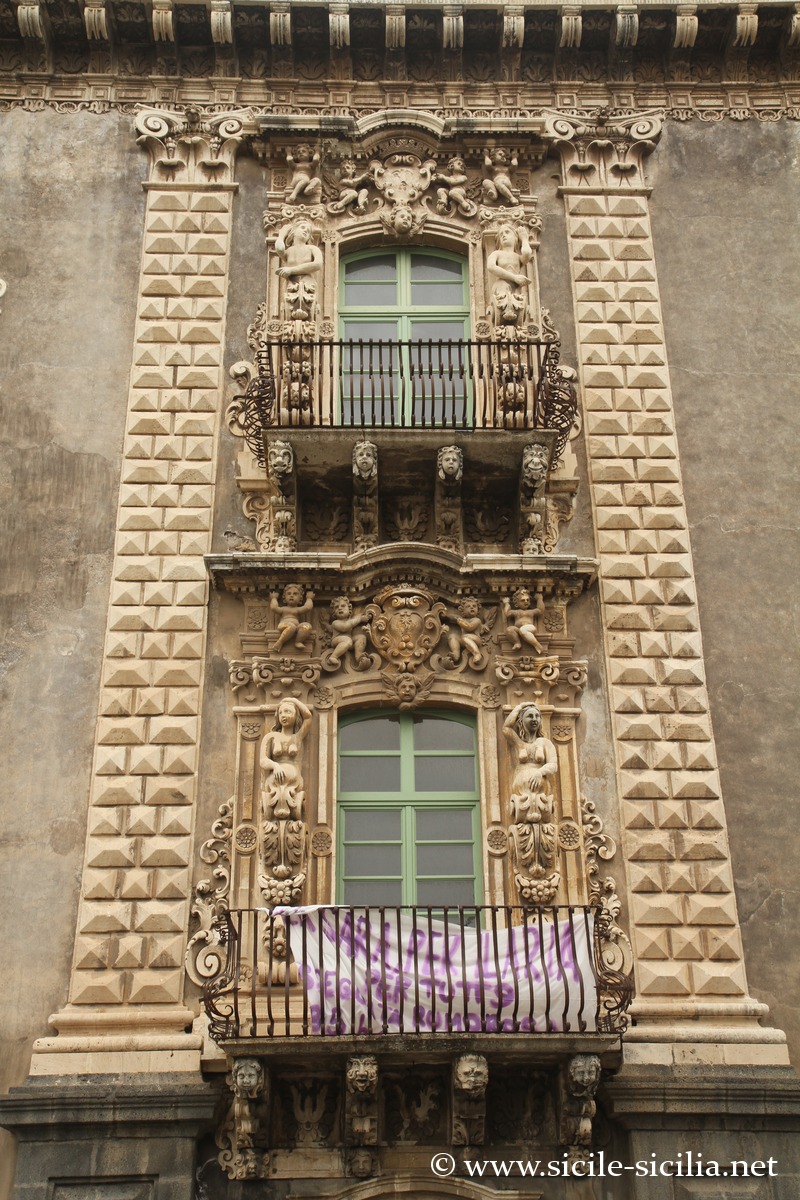
Dedicated to Saint Nicholas of the Arena (San Nicolò l’Arena), it is one of the largest Benedictine complexes in Europe and also a jewel of Sicilian Baroque. It is considered the second-largest Benedictine monastery in Europe after the one in Mafra, Portugal.
The complex is part of the UNESCO World Heritage site “Città tardo barocche del Val di Noto”.
Saint Nicholas of the Arena in Catania
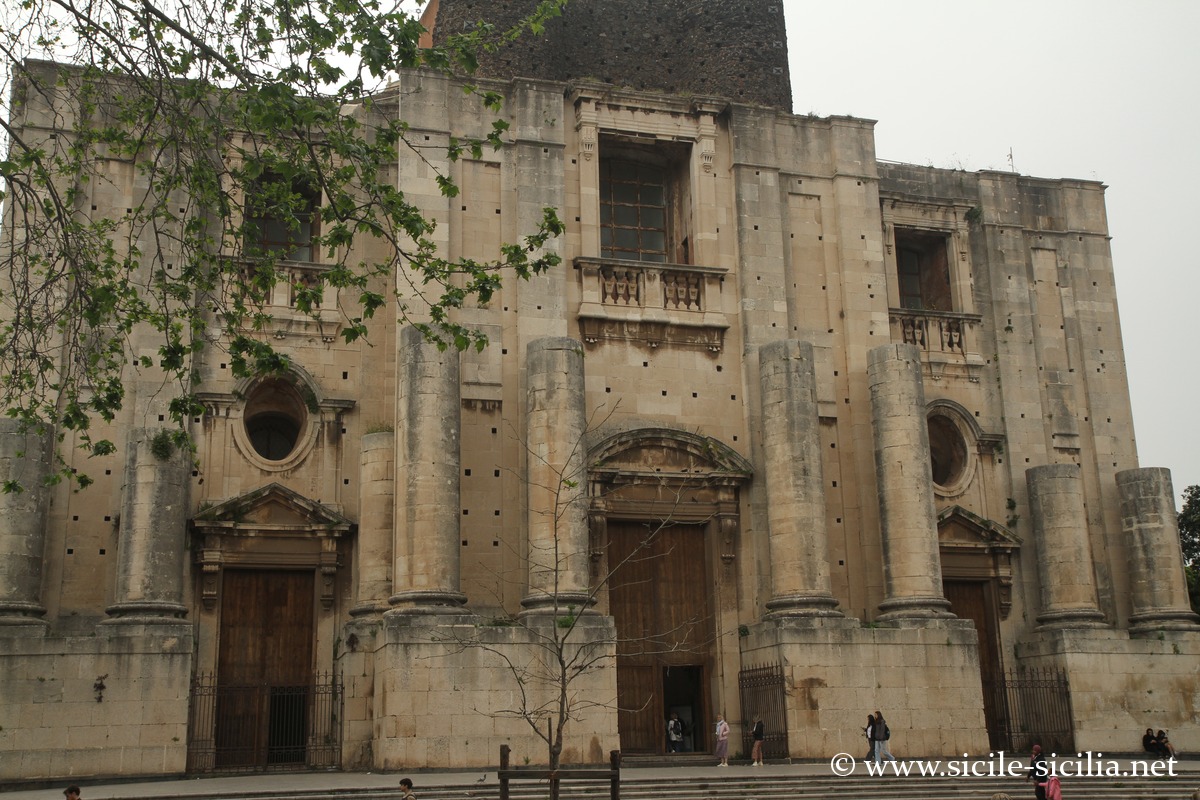
The large church of San Nicolò l’Arena (Saint Nicholas of the Arena), inspired by Roman models, was begun in 1687 and construction resumed after the 1693 earthquake, with several architects working on it, including Francesco Battaglia and Stefano Ittar, who built the dome reaching 66 metres in height.
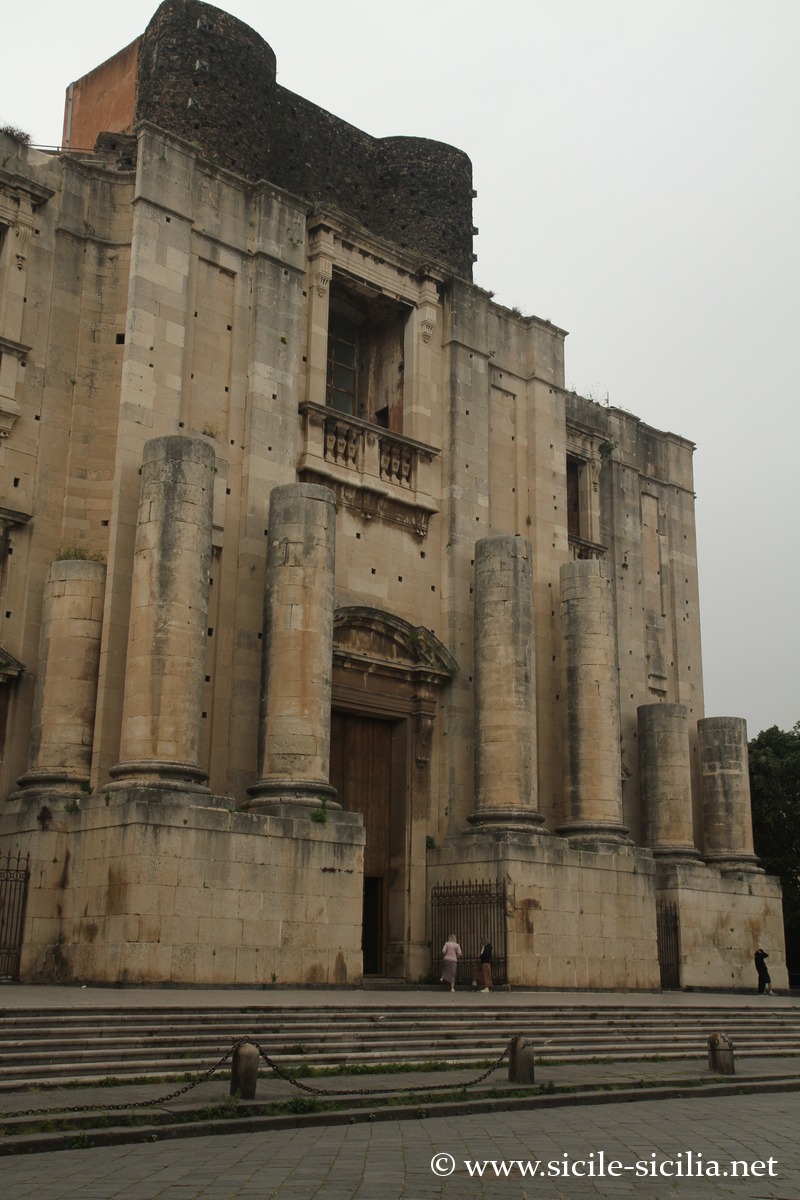
The façade remains unfinished, due to technical and financial difficulties. Thus, the columns are interrupted halfway up, and the planned pediment was never added.
The interior, with its three naves, reaches a length of 105 metres, with naves 48 metres wide and the transept 71 metres.
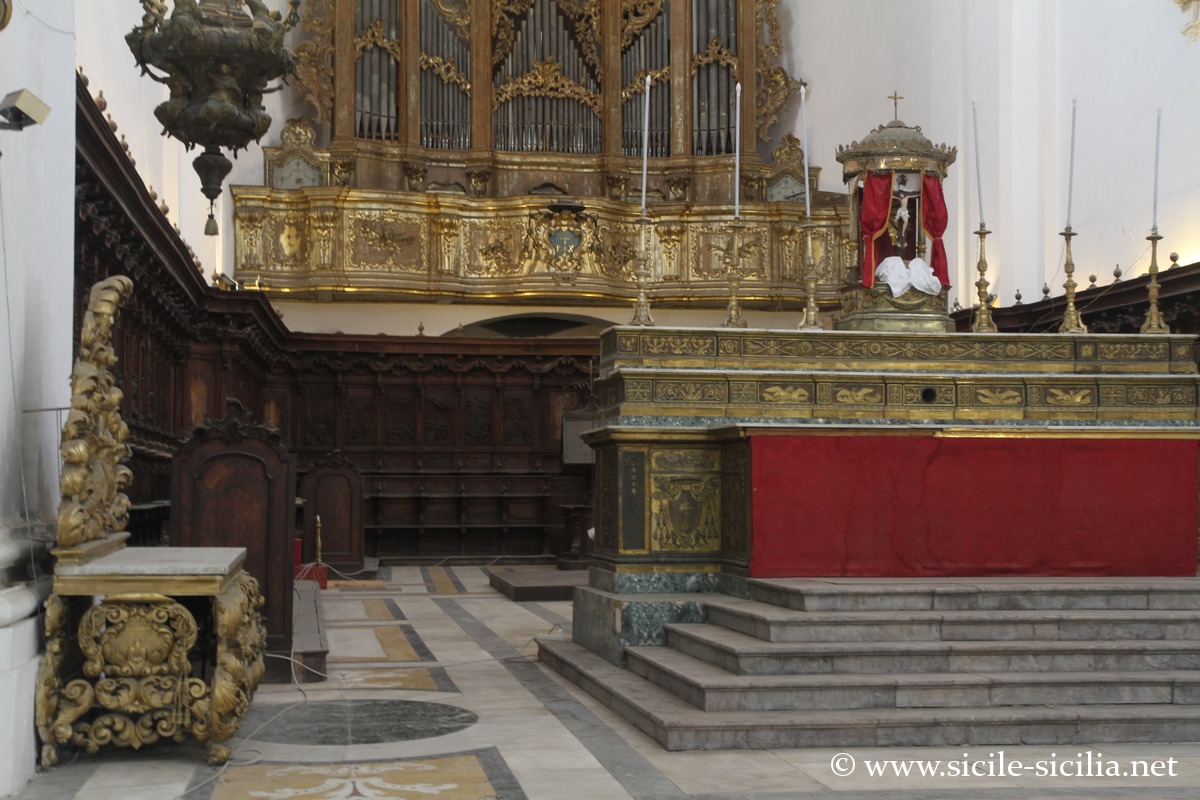
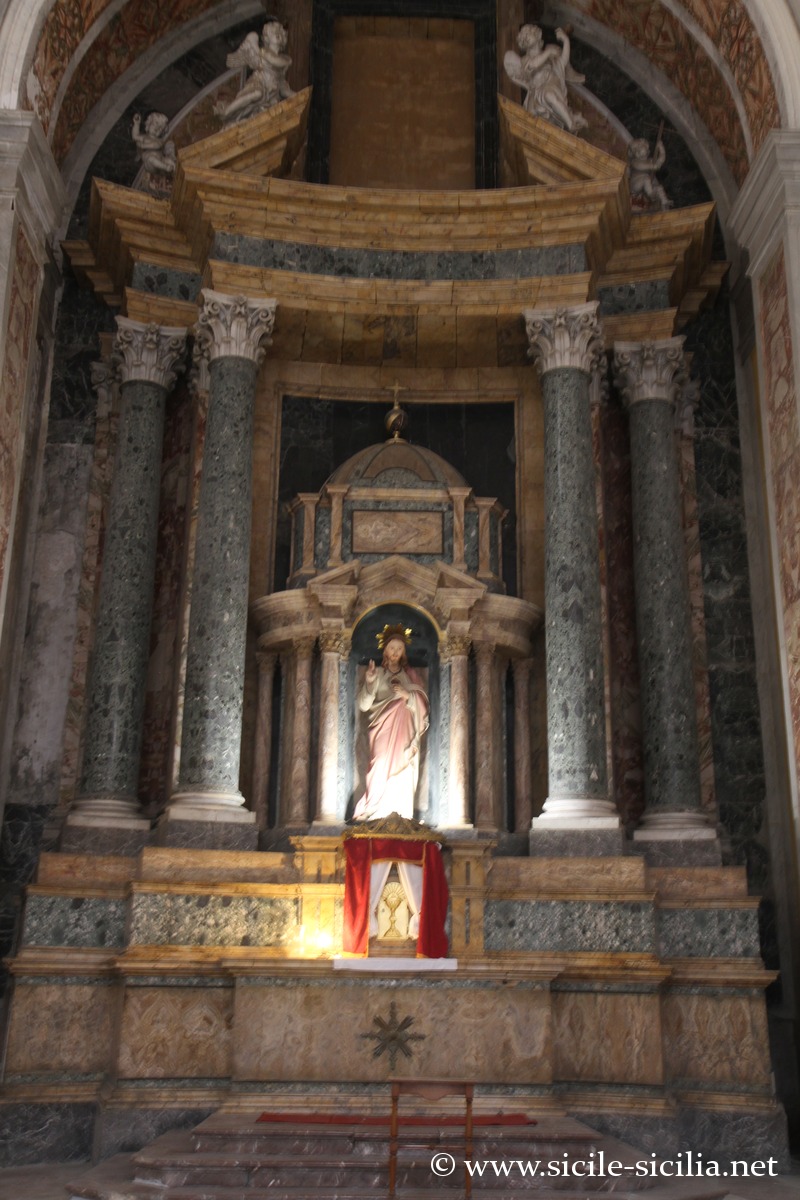
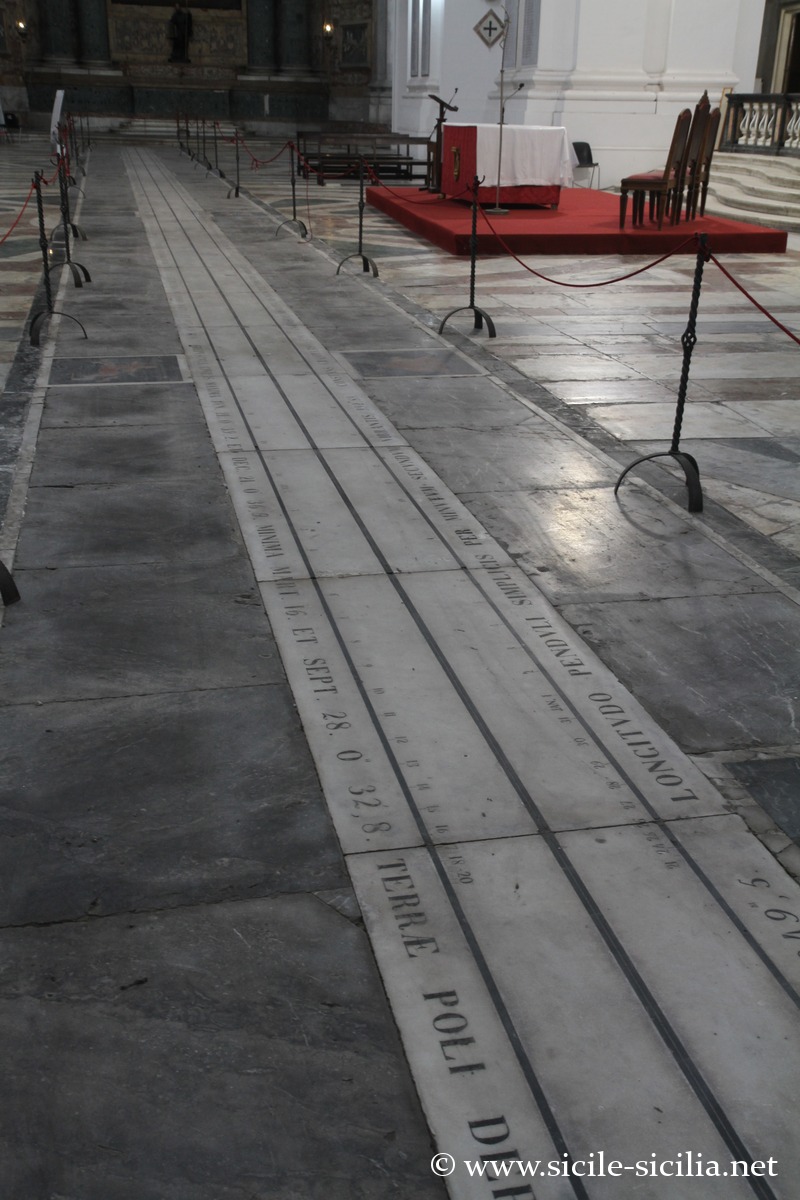
At the centre of the chancel is the great high altar surrounded by a carved wooden choir. There is also a famous monumental organ, an 18th-century carved wooden choir, and the great meridian line of 1841, 39 metres long.
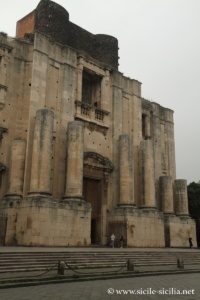
Church of San Nicolo 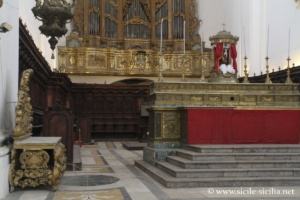
Choir of the church of San Nicolo 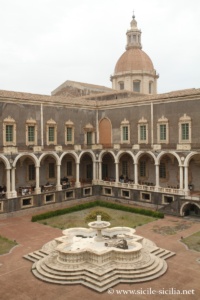
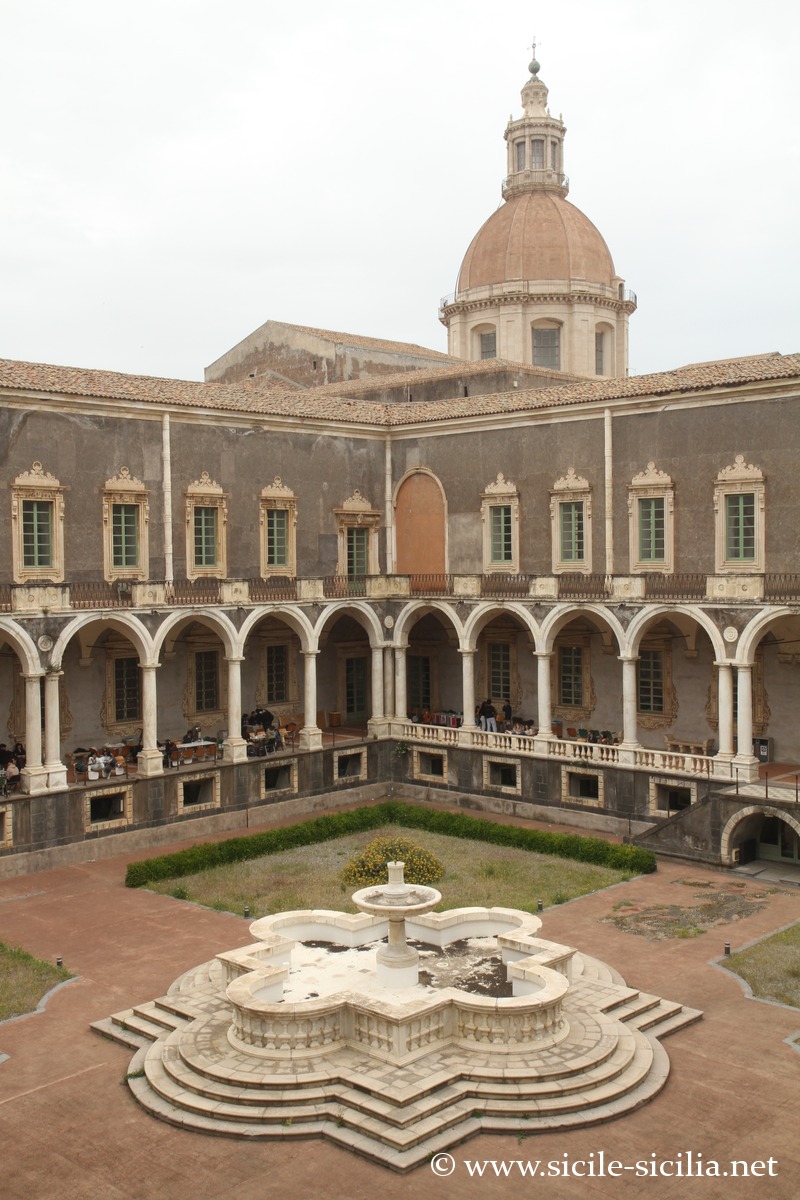
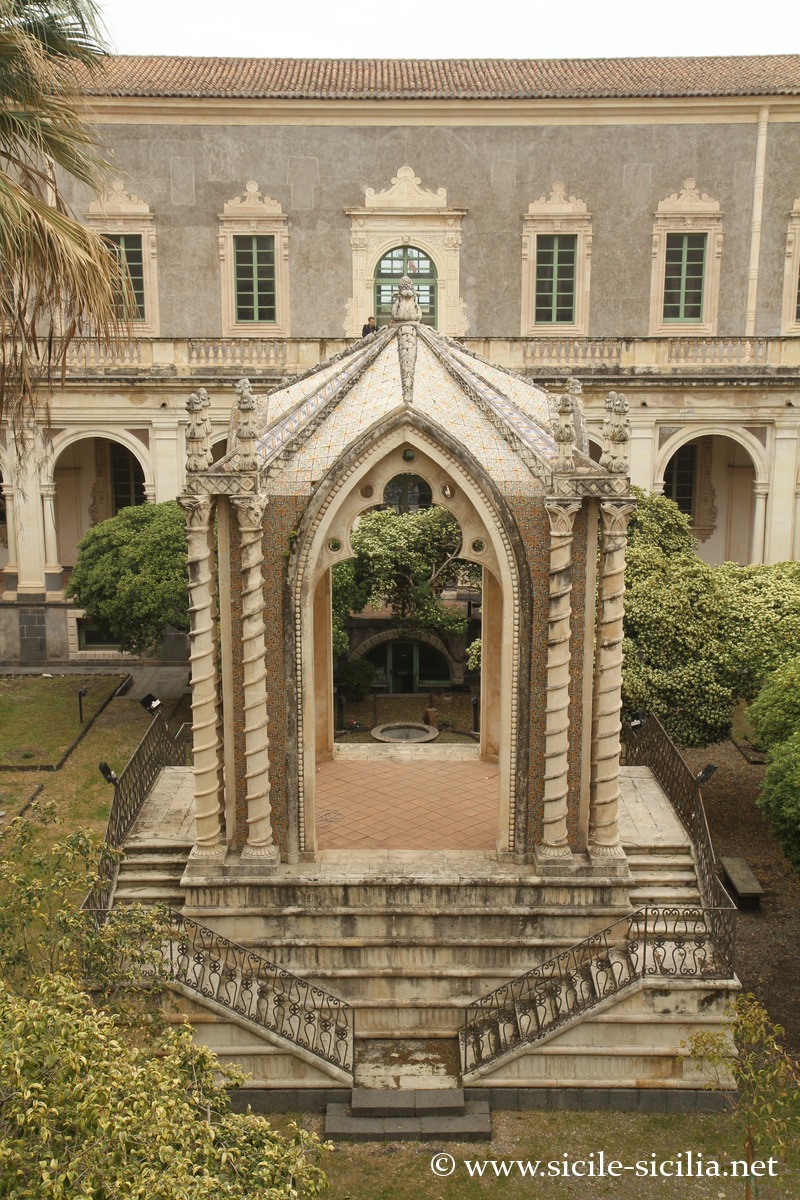
Marble Cloister, monastery of San Nicolo
Benedictine monastery of Catania
The Benedictine monastery of San Nicolò l’Arena was founded in 1558 by a group of monks from Nicolosi who wished to be closer to the city. The original structure underwent several reconstructions after the disasters of the late 17th century, including the eruption of Etna in 1669 and the earthquake of 1693.
The eruption partially covered the first monastery, creating a lava bed nearly 12 metres thick on which the current complex was later rebuilt. This geological stratification is still visible in the basements.
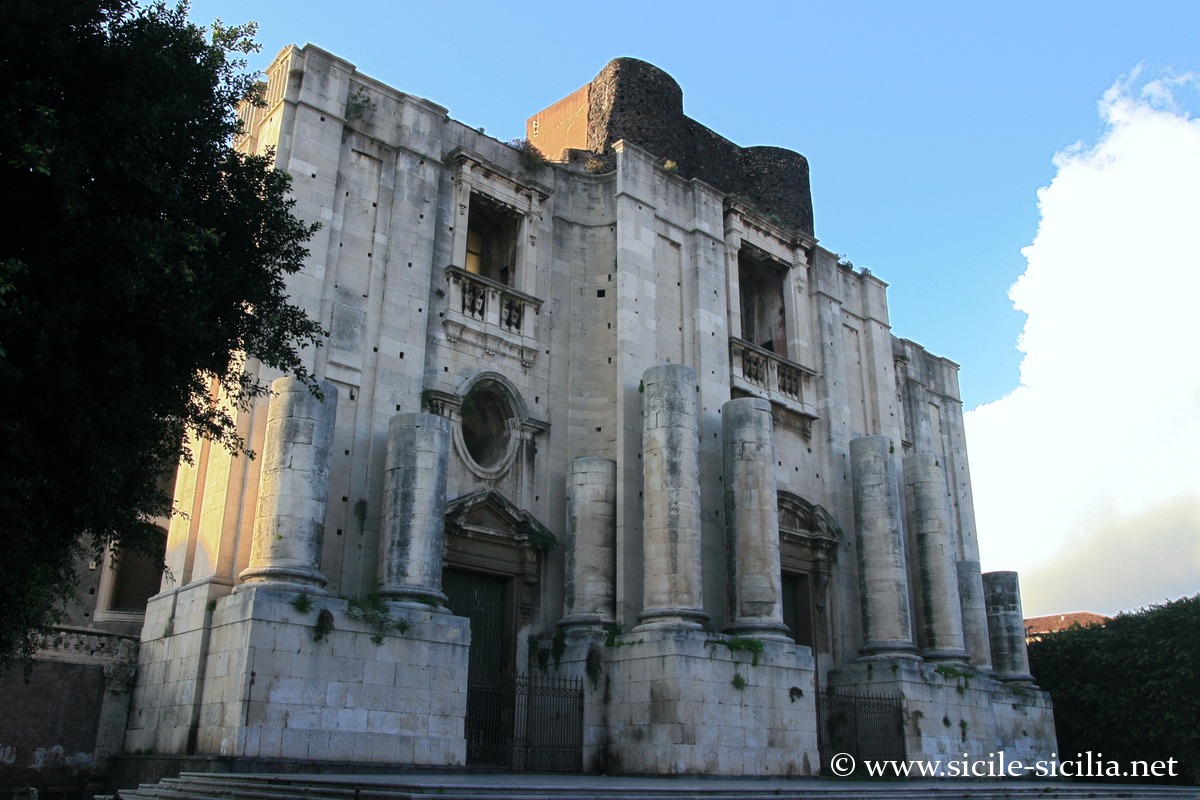
Church of Saint Nicholas of the Arena
Great Sicilian architects worked on its restoration, among them Francesco Battaglia, Stefano Ittar, Giovanni Battista Vaccarini, Antonino Santangelo and Placido Palazzotto. Among them, Vaccarini undertook major works from 1739 onwards, including the design of the great monumental staircase, the library, the kitchens and the refectory. The architectural style of the complex illustrates the evolution of Sicilian Baroque towards Neoclassicism, visible in the sobriety of certain wings and the monumentality of the interior spaces.
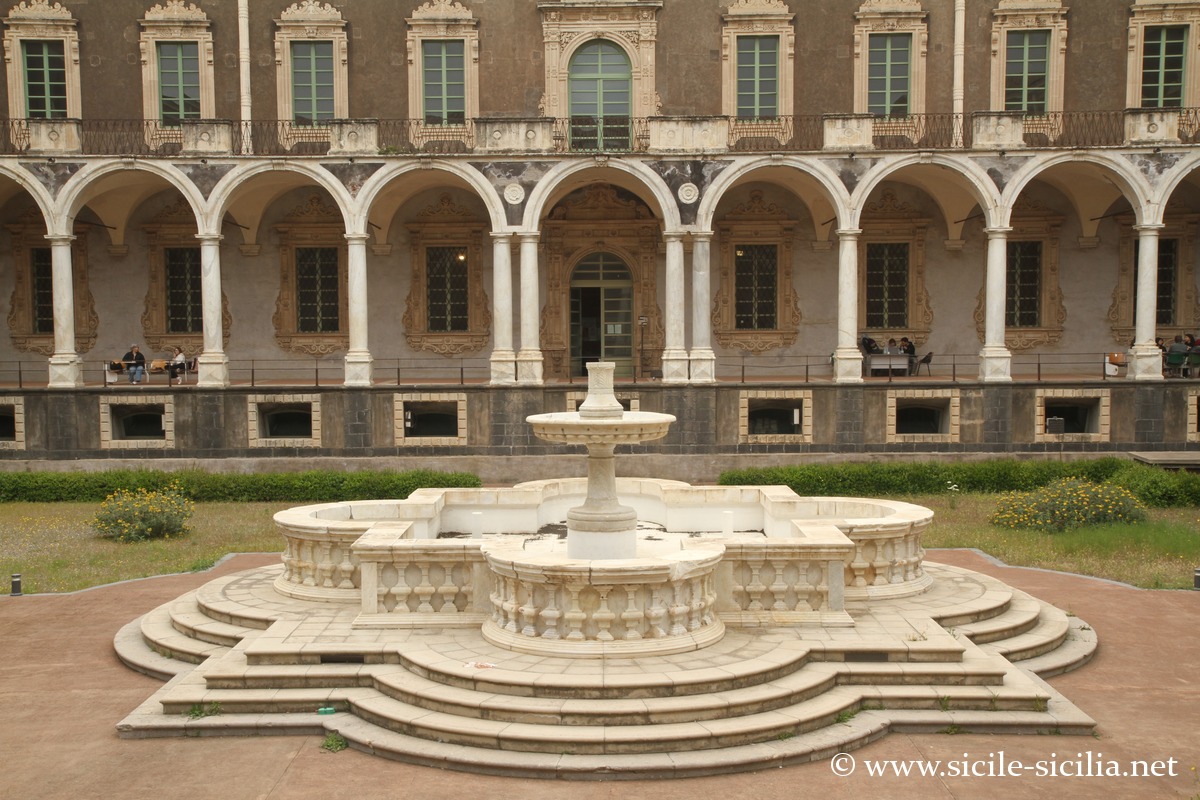
The monastery is organised around two main cloisters: the Chiostro di Marmo (marble cloister), dating from the late 16th century, and the Chiostro di Ponente, designed after the 1693 earthquake. The first is distinguished by its paving of white and black stone from Comiso and its Ionic columns, while the second, larger one adopts a square plan with a perimeter gallery and today houses the university library.
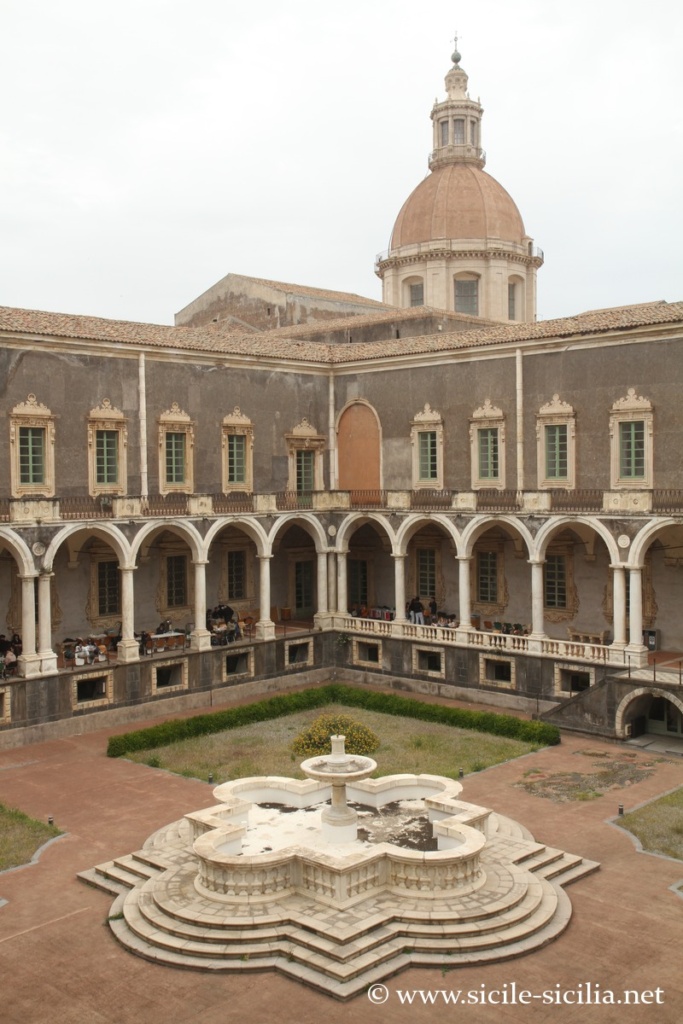

Marble Cloister, monastery of San Nicolo 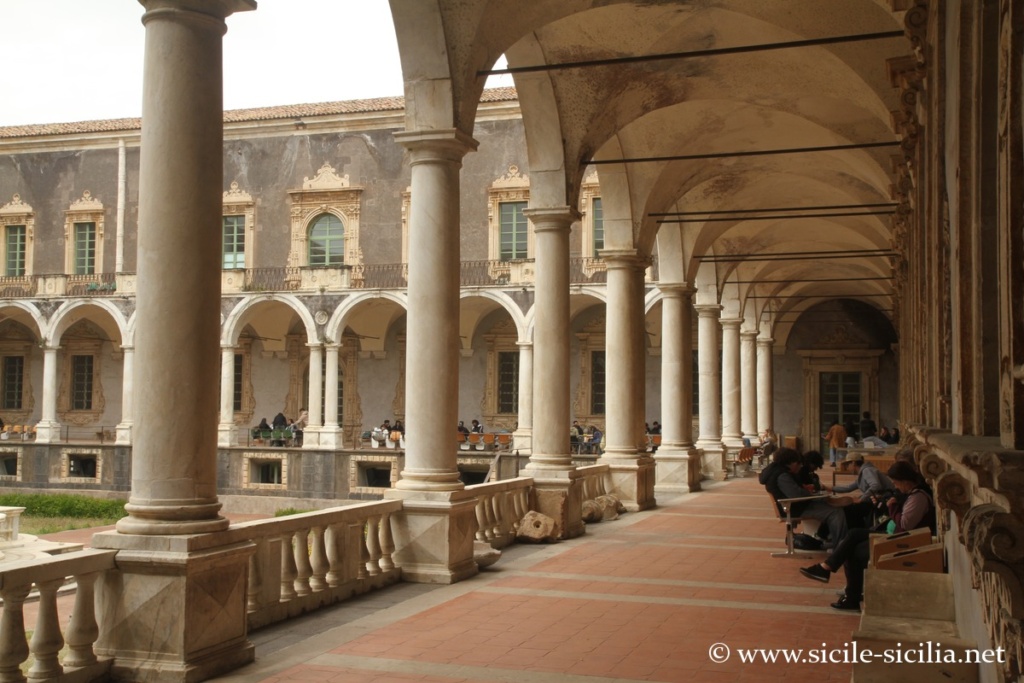

Marble Cloister, monastery of San Nicolo 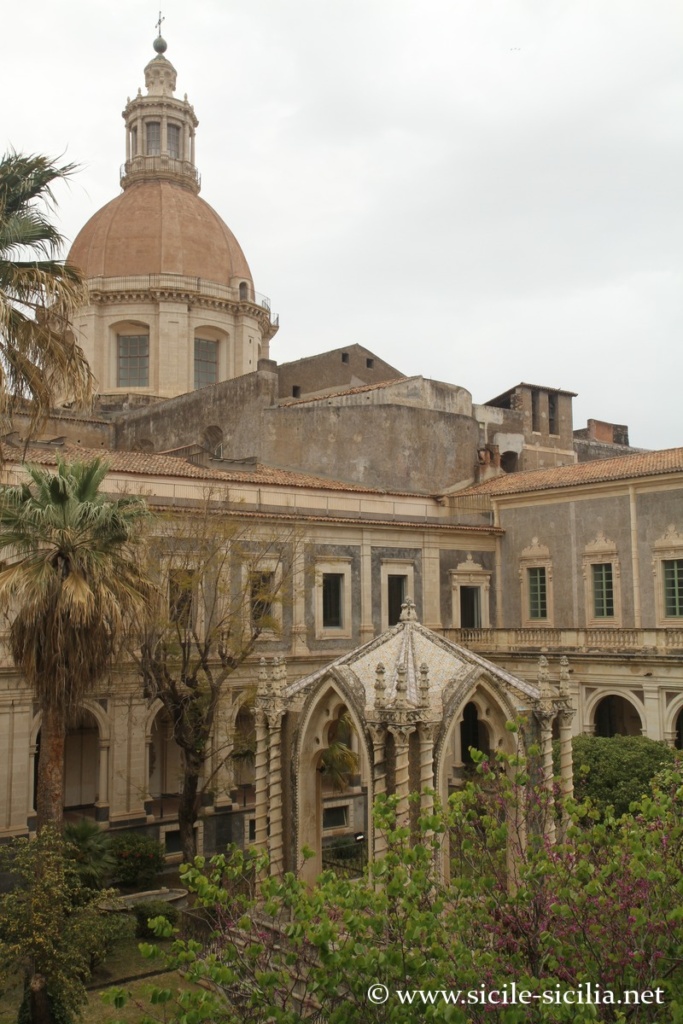
Cloister of Levante, monastery San Nicolo 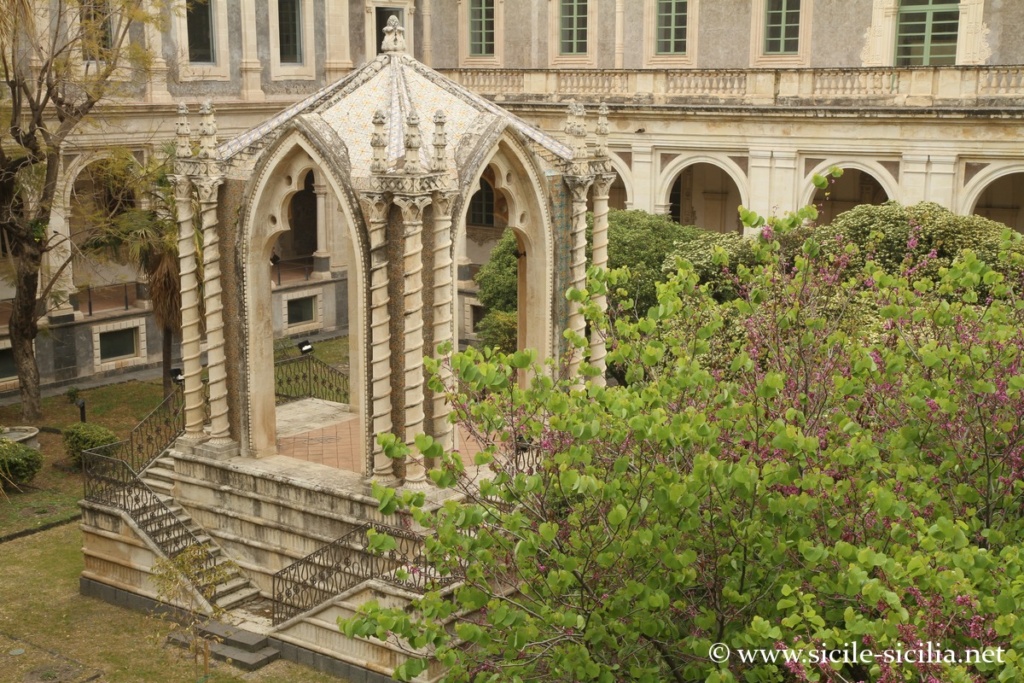
Cloister of Levante, monastery San Nicolo
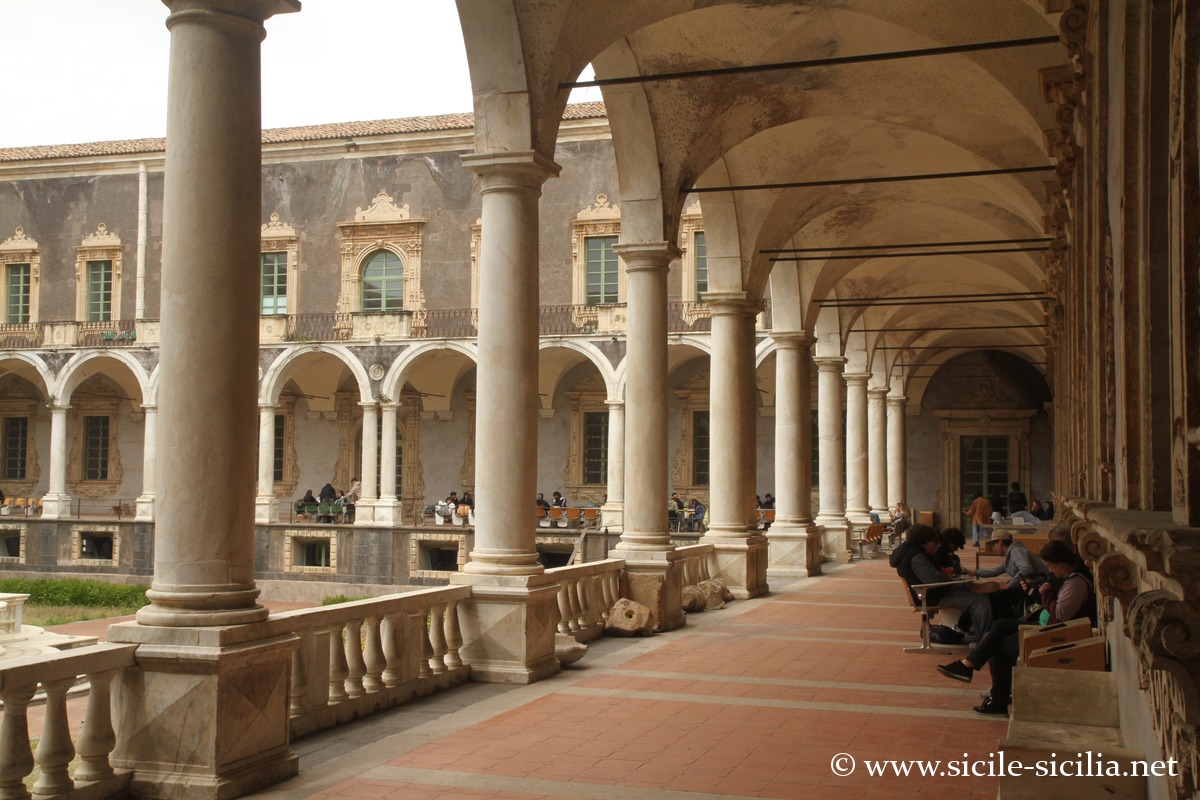
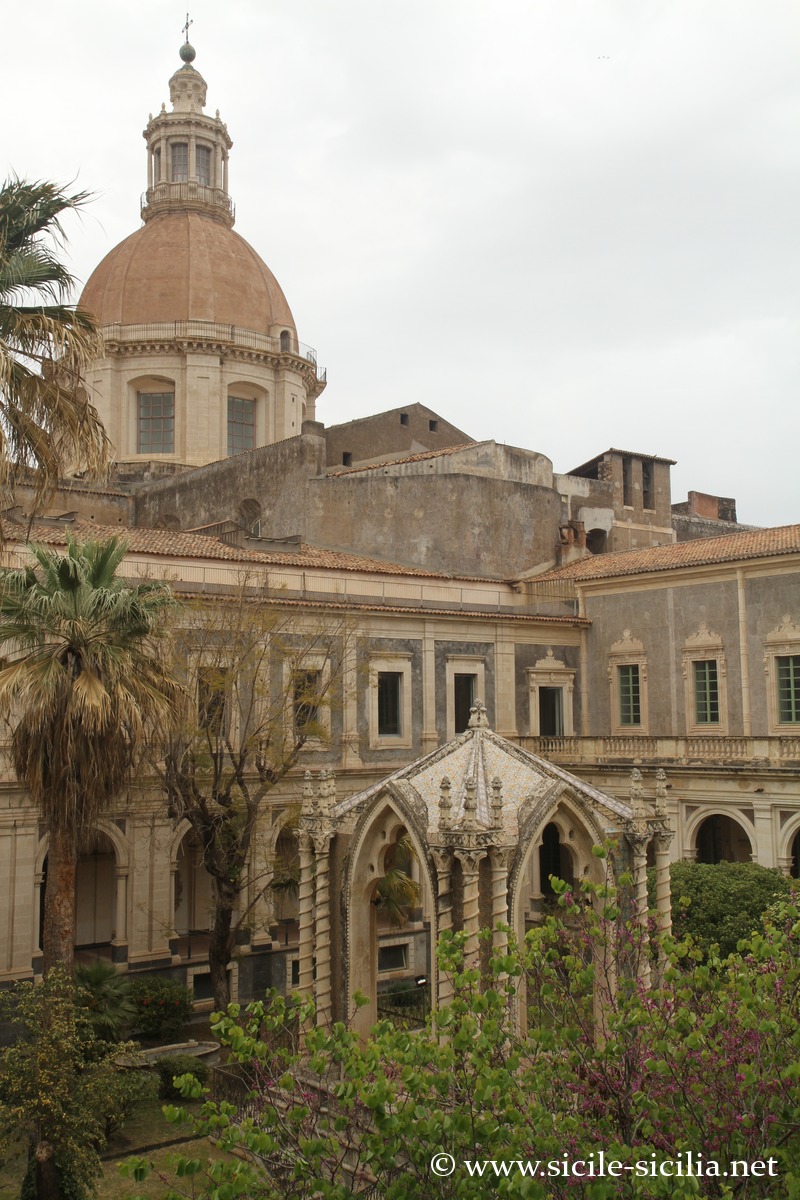
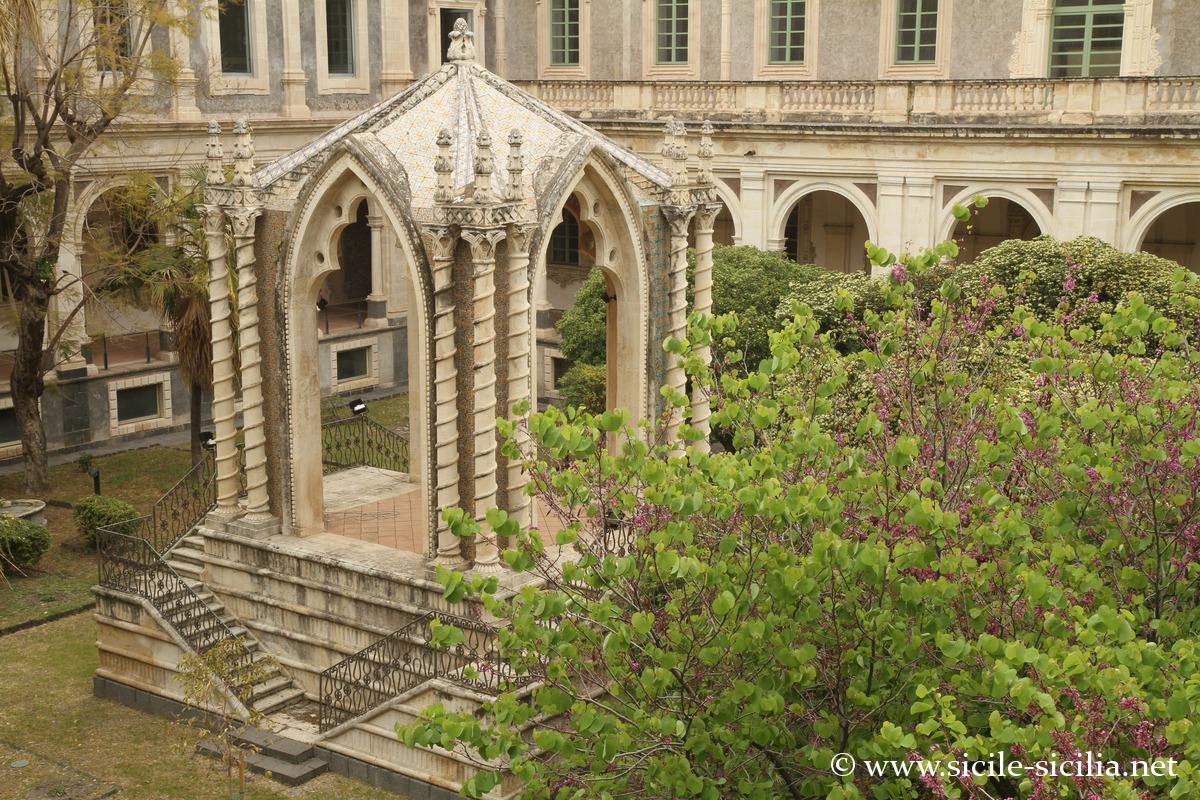
In 1866, the buildings were confiscated by the crown and incorporated into state property. In 1977, they were entrusted to the University of Catania, which installed the Dipartimento di Scienze Umanistiche there.
Inside, one discovers the charming garden of the Novices, laid out on the base of the lava bed nearly 12 metres thick. This suspended space links the two cloisters and offers a view of the ancient structures beneath. Outside extends the pleasant garden of Via Biblioteca, a transitional place between the monastery and the surrounding urban fabric.
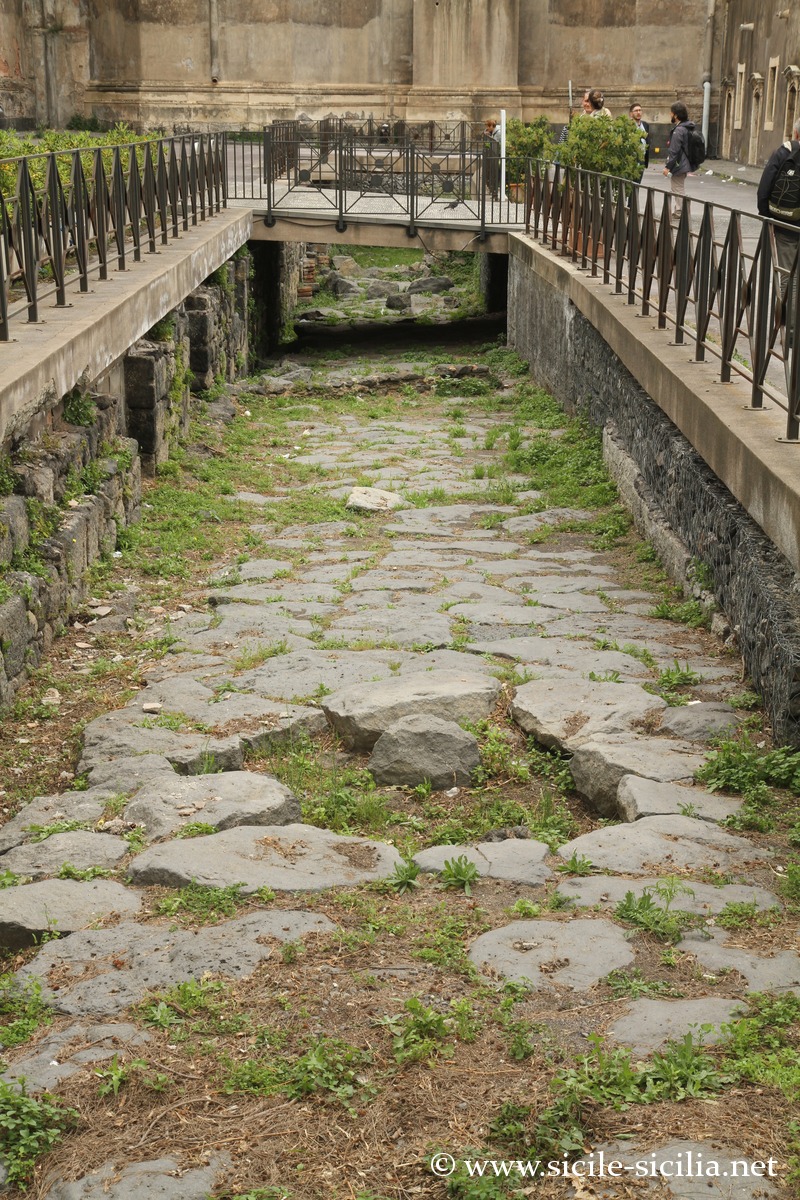
During the most recent restorations, Greco-Roman remains were brought to light, with the Decumano Massimo (Roman paved street) in the basement. Two well-preserved Roman domus from a 1st-century AD quarter are also visible in the monastery’s basement, one with mosaics, the other with fragments of painted plaster, which have been integrated into the archaeological tour of the complex.
Fabbrica Museum
The Museo della Fabbrica occupies the space of the former refectory and kitchens of the monastery, closely linked to the history and architecture of the complex. It is arranged over two levels: the upper level features a large square hall with a central edicule once used as a cooking area, while the lower level traces the construction and reconstruction phases of the monastery, illustrating the history of the building site, stone-cutting techniques, original materials and the transformations undergone after the earthquakes. A model of the monastery before 1693 is exhibited there.
Gallery

Church of San Nicolo 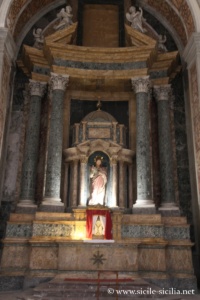

Church of San Nicolo 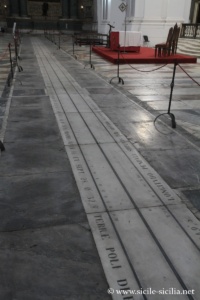
Meridian line, San Nicolo 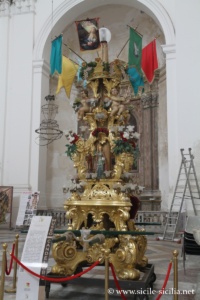
Church of San Nicolo 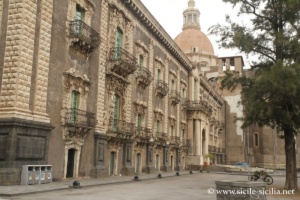
Benedictine monastery of San Nicolo l’Arena 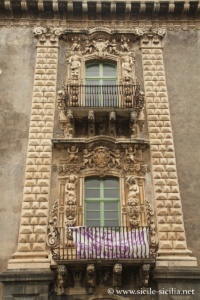
Benedictine monastery of San Nicolo l’Arena 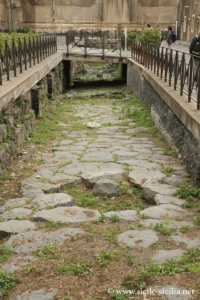
Remains of paving, San Nicolo l’Arena 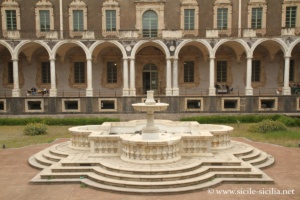
Marble Cloister, monastery of San Nicolo 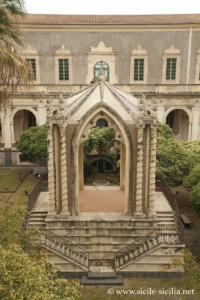
Cloister of Levante, monastery San Nicolo
Where is the Benedictine Monastery of Catania
If you see this after your page is loaded completely, leafletJS files are missing.
Information
External sites
- Official website: www.monasterodeibenedettini.it
- Wikipedia page – Saint Nicholas of the Arena
- Monastero dei Benedettini – Information & prices / opening times (English version)
- Guided tours – Monastero dei Benedettini (English)
Articles about Catania
- Catania
 The second most populous city in Sicily after Palermo, Catania has ...
 - Hotels in Catania
 Hotels in Catania in Sicily, at the foot of Mount Etna. ...
 - Riviera of the Cyclops
 Along the coast north of Catania, the “Riviera dei Ciclopi” (Riviera ...
 - Catania Walking Tour Itinerary
 The interesting historic centre of Catania is marked by Baroque architecture, ...
 - Piazza del Duomo and Catania Cathedral
 In the heart of Catania, the Piazza Duomo is the starting ...
 - Churches of Catania
 Beyond this article dedicated to the churches of the city, also ...
 - Via Crociferi in Catania: the Baroque churches
 The Via Crociferi is called the “street of churches”, a monumental ...
 - Ancient sites of Catania
 The ancient remains of Catania bear witness to the importance of ...
 - Along the Via Etnea in Catania
 The Via Etnea is the main shopping street in the centre ...
 - Palaces of Catania to discover
 Beyond this page dedicated to the most remarkable palaces in Catania, ...
 - Bellini Square and Theatre in Catania
 Bellini Theatre Located towards the north-east of Piazza Duomo, on the square ...
 - Ursino Castle of Catania
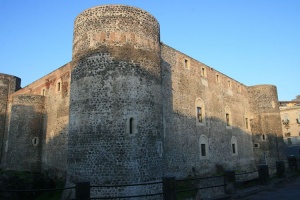 The Ursino Castle of Catania was built between 1239 and 1250 ...
 - Museums of Catania
 List of the main museums of Catania, including palaces, religious and ...
 - Other sites and places in Catania
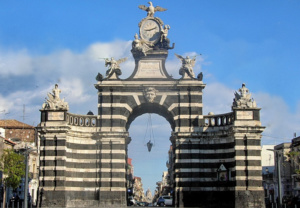 Porta Garibaldi in Catania In the south-west of Catania’s centre, more than ...
 - Discovering underground Catania
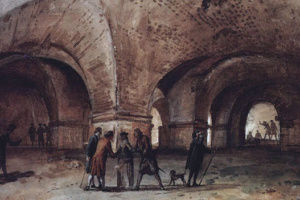 Lava flows have periodically covered entire districts of Catania, burying much ...
 - Catania Environs: Riviera and Countryside
 Mount Etna (overview) In the environs of Catania, the Etna park offers ...
 - Traditions and gastronomy in Catania
 Feast of Saint Agatha in Catania The main festival of Catania is ...
 - Activities in Catania, guided tours and excursions
 Booking activities in Catania and its surroundings, guided tours, tastings, outings ...
 - Around Catania
 Sicilian destinations near Catania, including Mount Etna rising to the northwest, ...