

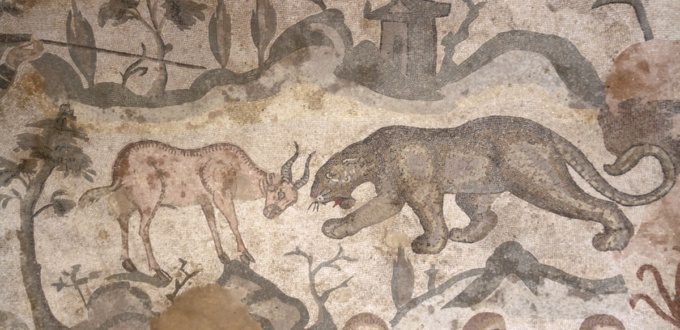
A few kilometres from the centre of Piazza Armerina, the Villa Romana del Casale (“Villa Romana del Casale” in Italian) is a sumptuous ancient residence, renowned for the exceptional extent of its carpet of polychrome mosaics. Among the best preserved of their kind, beyond their beauty and variety, these mosaics are also a precious testimony to the social organisation, economy and daily life of the Romans. They constitute an artistic jewel unique in the world, and the villa is inscribed on the UNESCO World Heritage List.
History of the villa and the excavations
The Roman villa of Casale dates from around the 4th century AD. It probably belonged to a powerful aristocratic family of Rome, perhaps to a governor. It is very vast with more than 3500 m² of surface area, almost entirely paved with splendid mosaics illustrating myths or the life of the era.
Two aqueducts served to supply the fountains and the baths of the establishment. Researchers believe that the villa was not isolated, and that other structures located in the surroundings met its needs. This is why excavation campaigns are regularly organised.
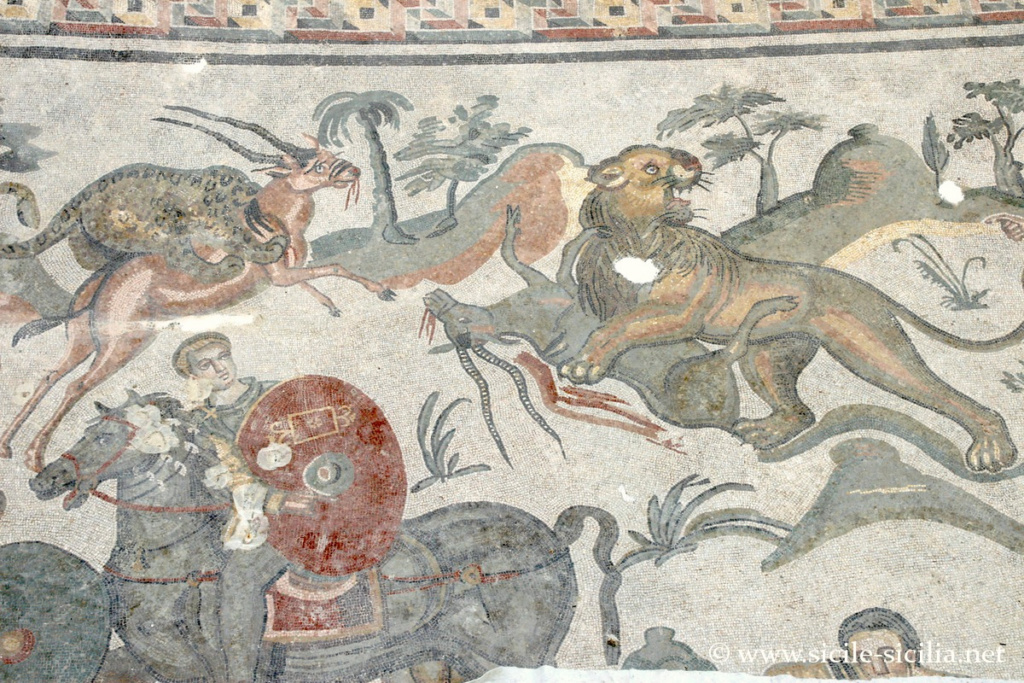
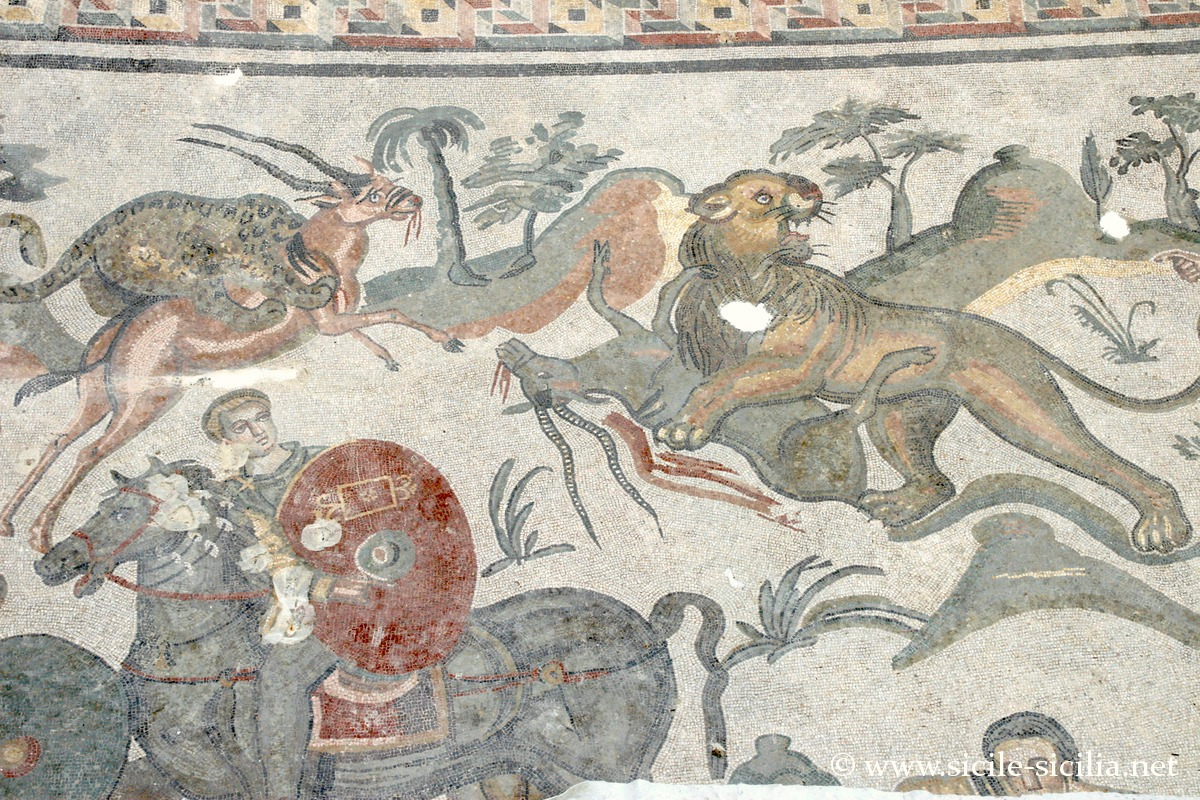
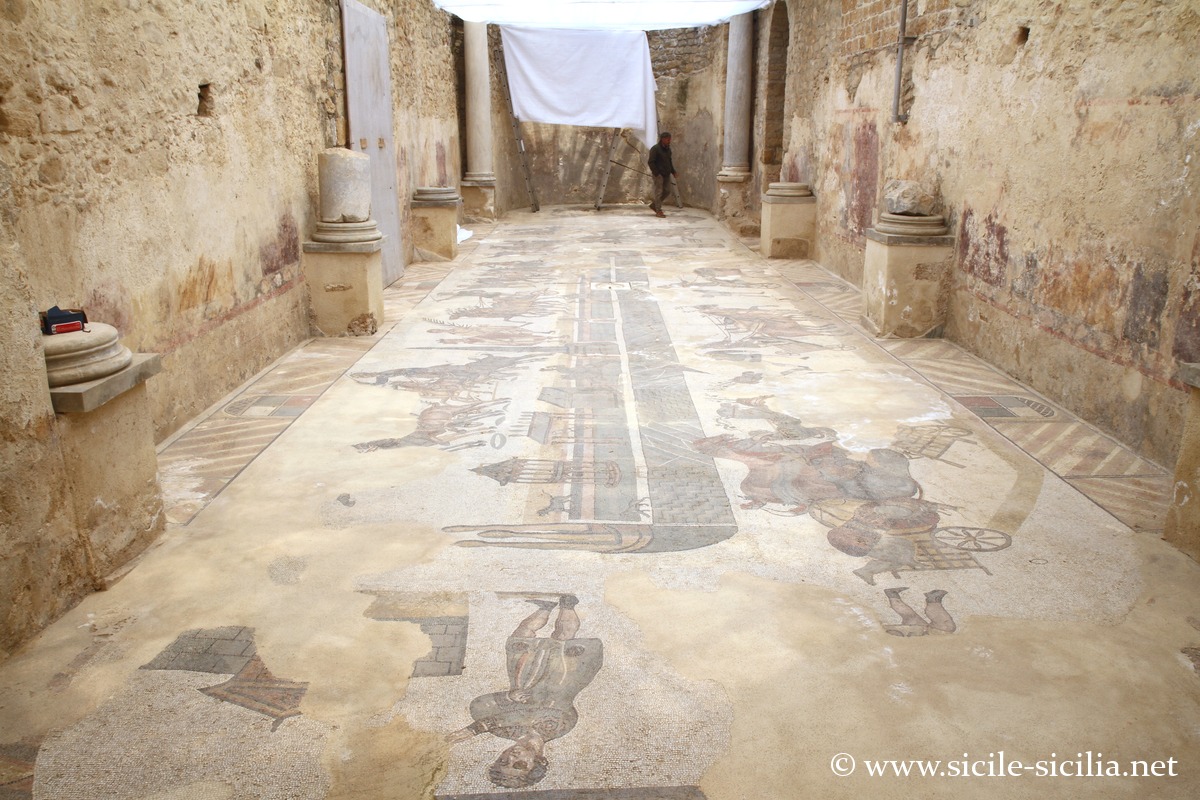
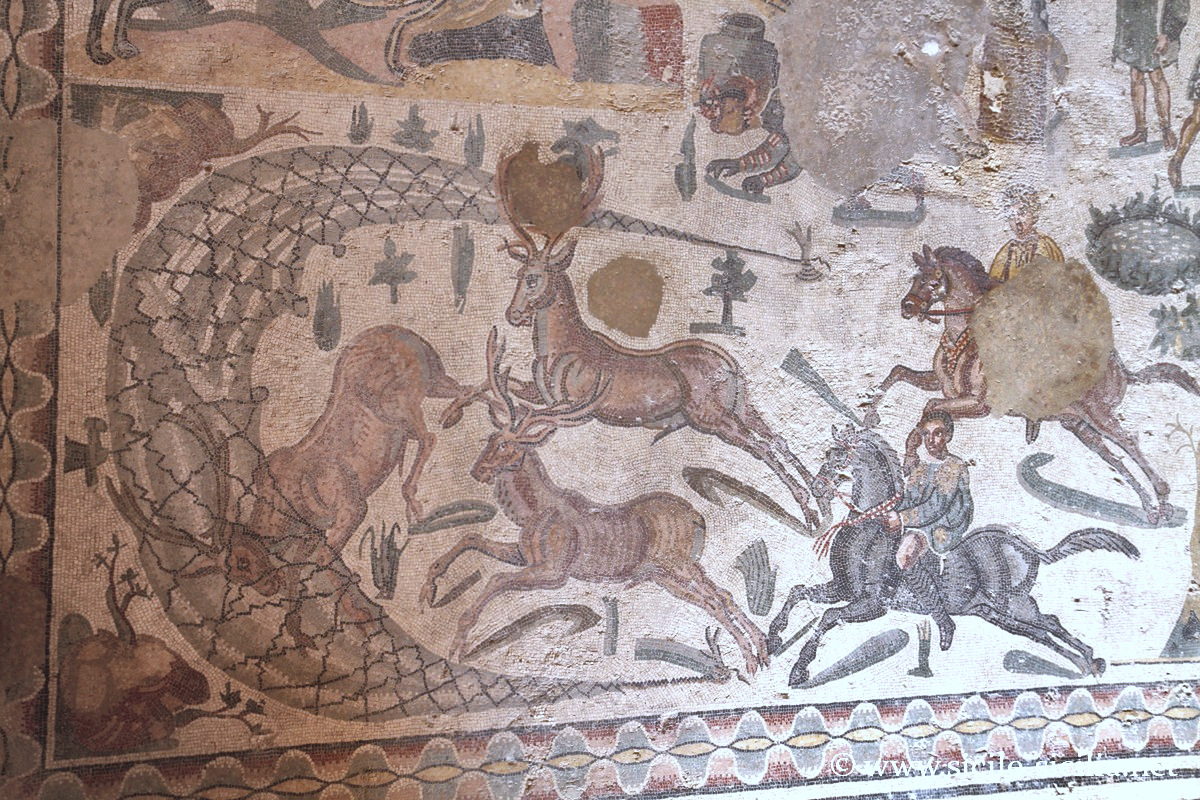
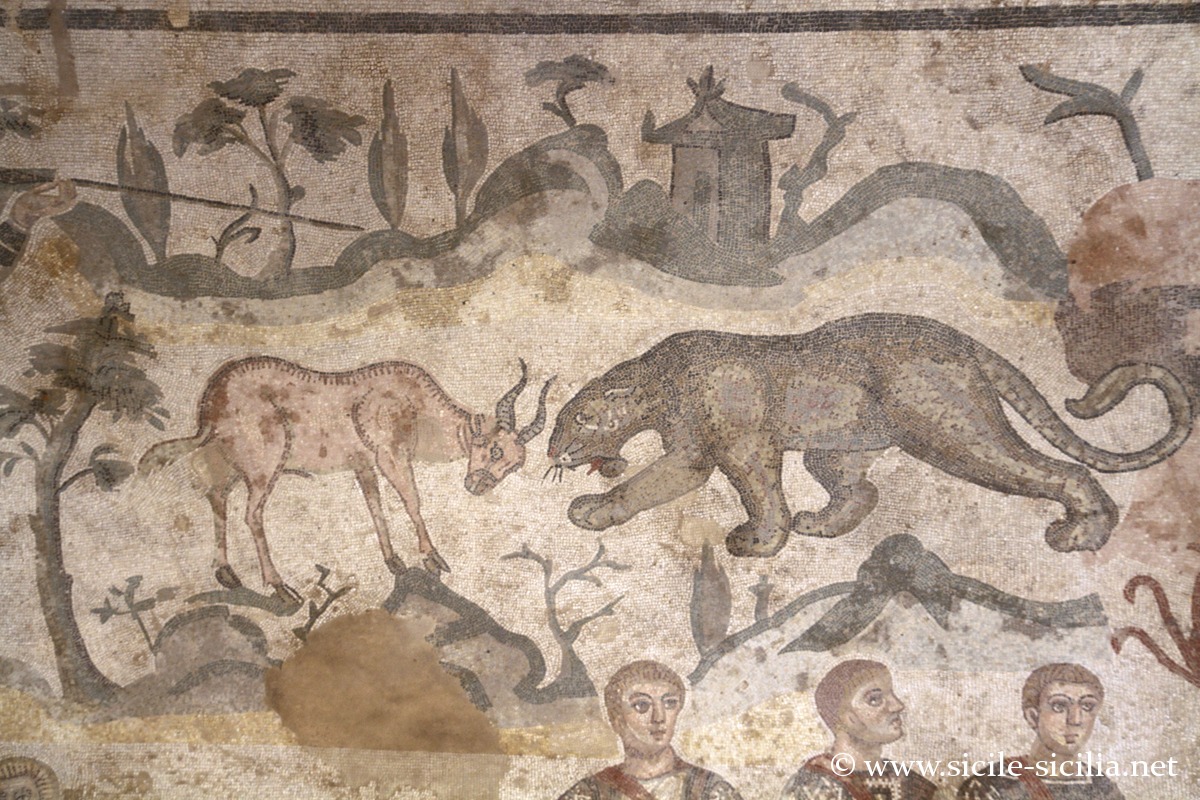
Scene of the Great Hunt, corridor 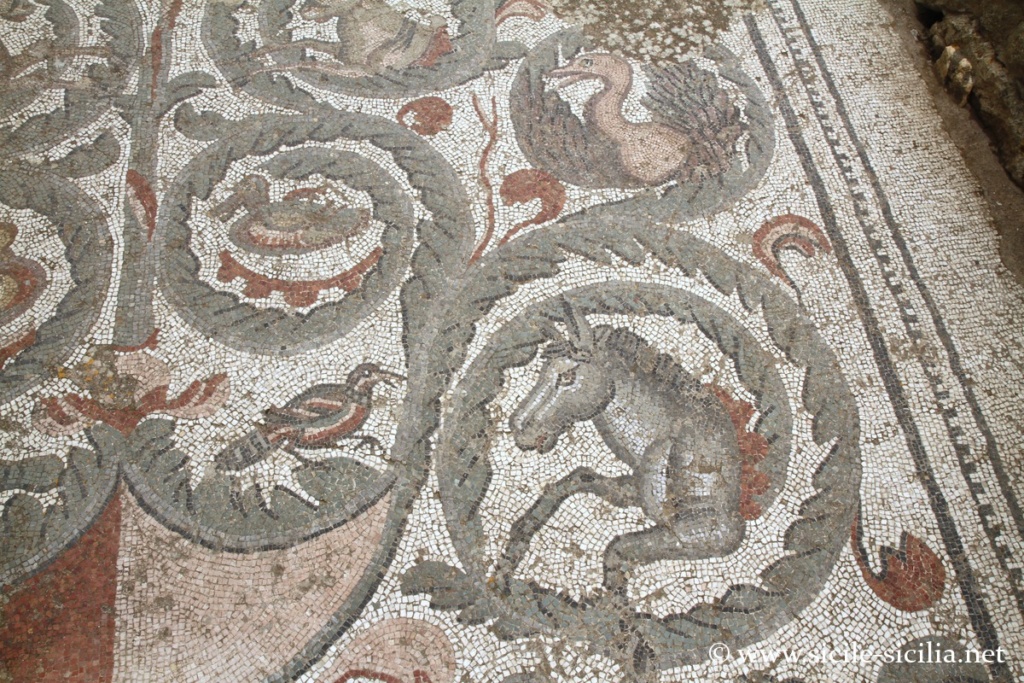
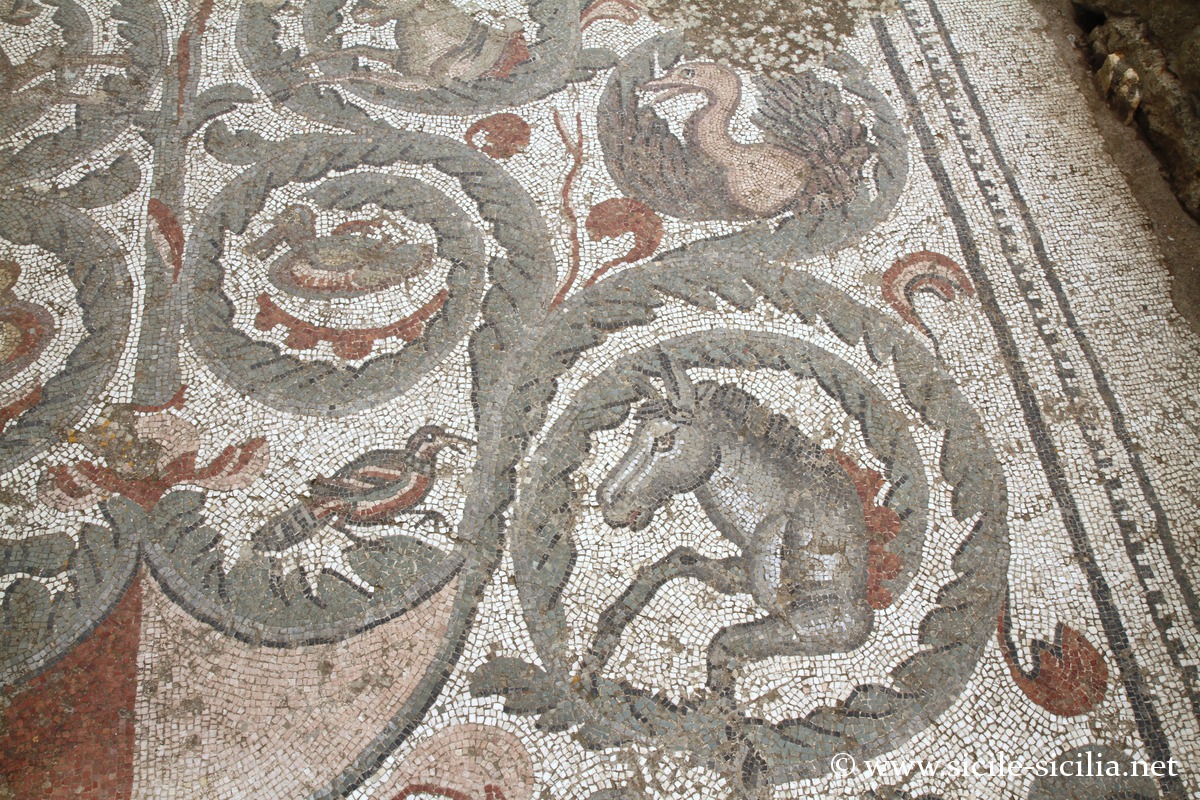
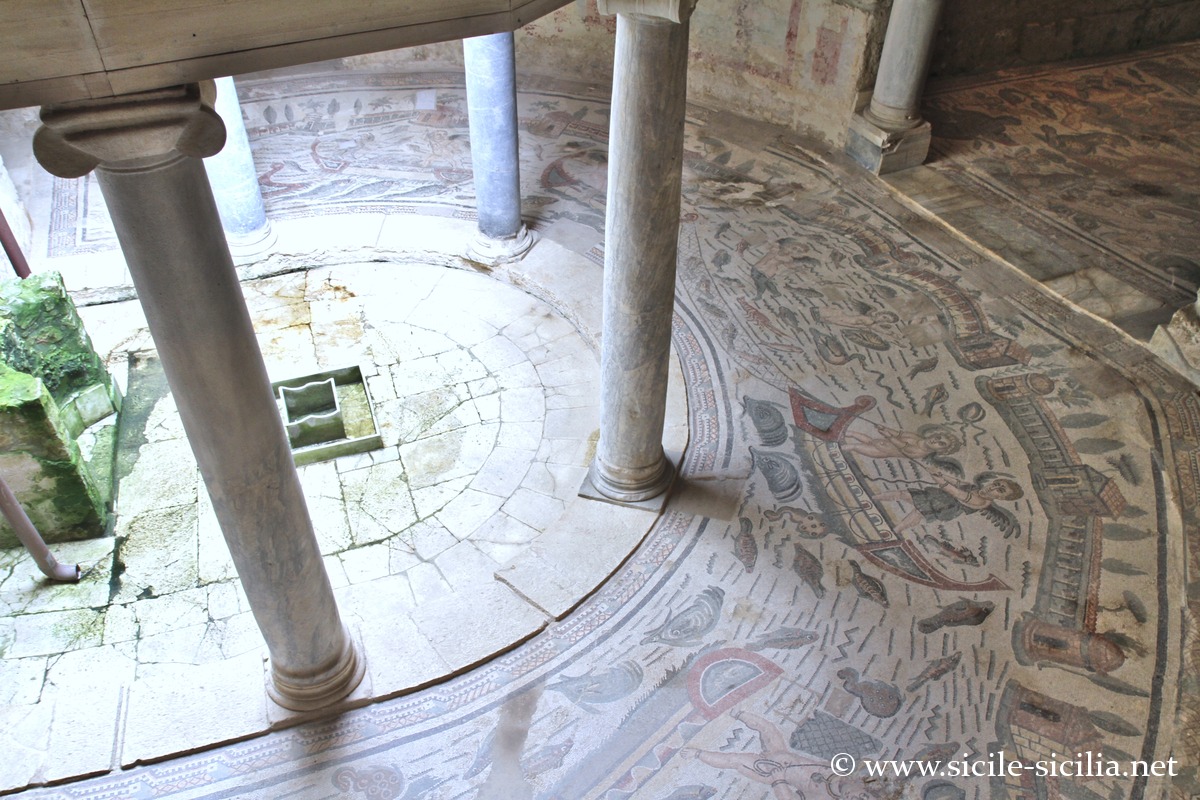
Mosaics of the oval peristyle 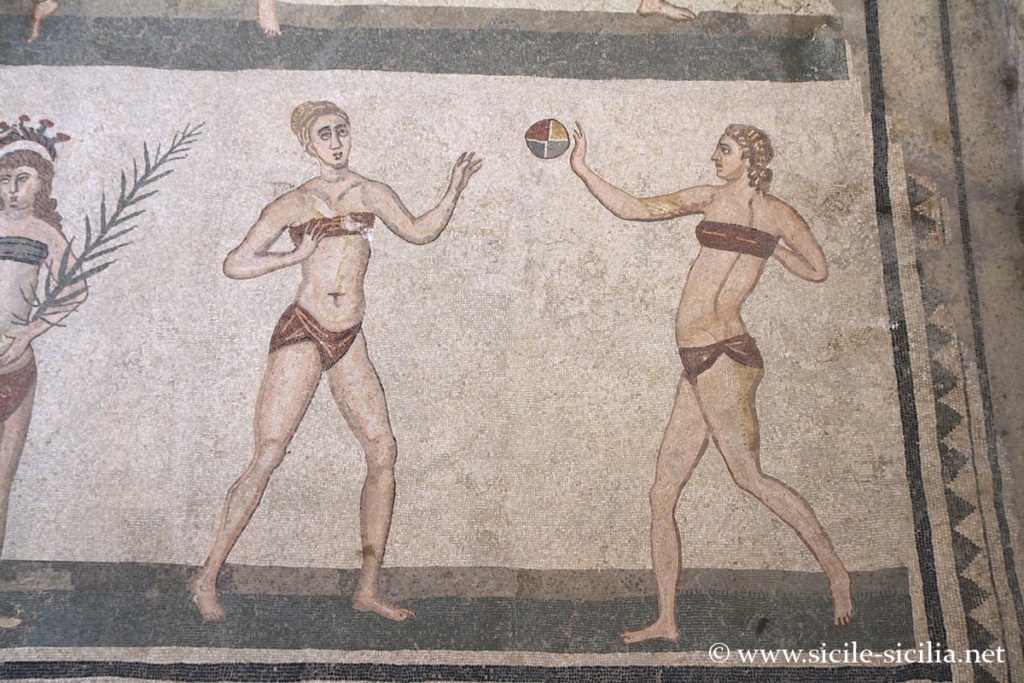
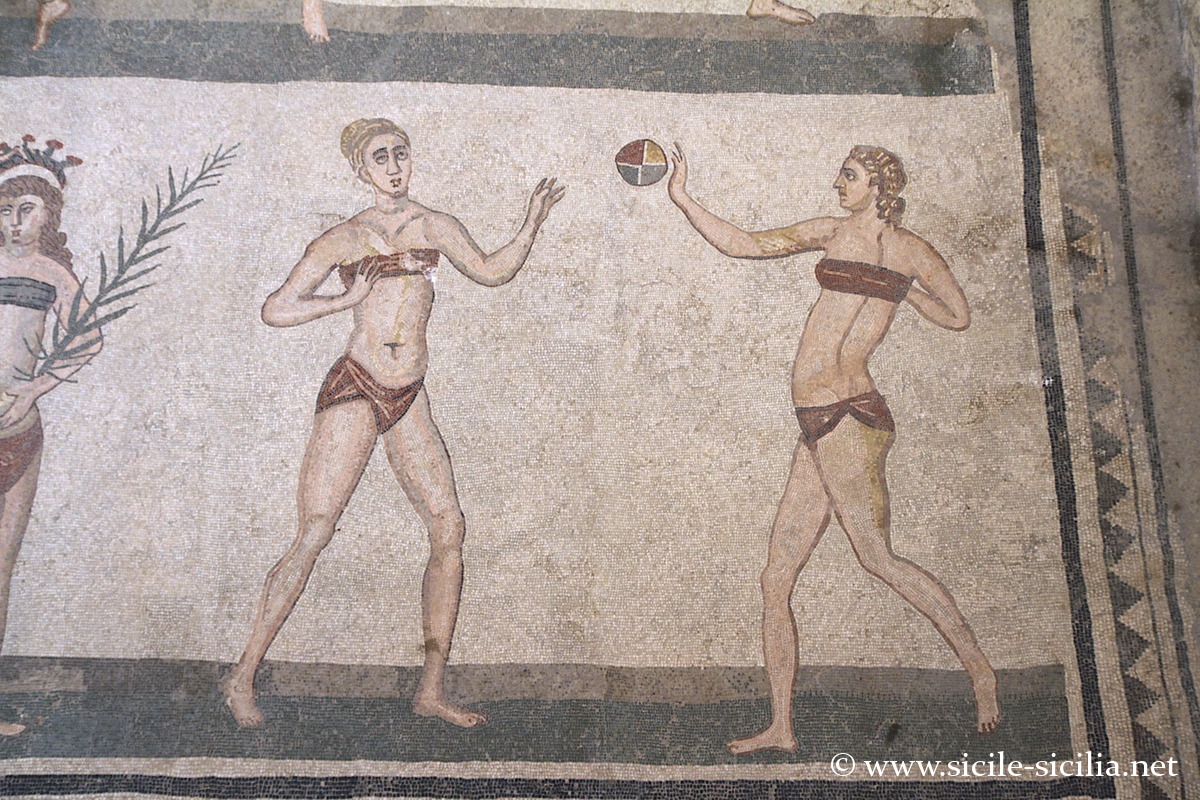
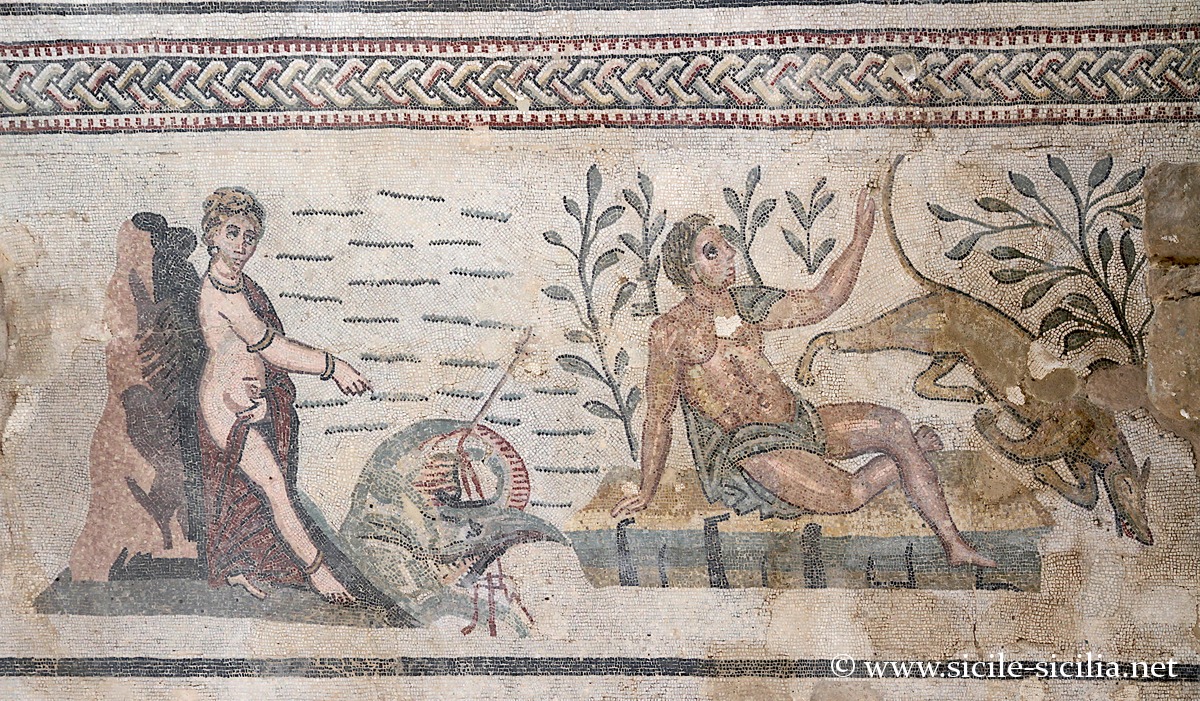
Room with the bikini girls, athletic games
The building remained occupied until the Middle Ages, until the 12th century when the Normans damaged it and a landslide covered it with several metres of earth. During the seven centuries that followed it remained thus underground, protected from looters and bad weather.
It was in the 18th century that the first attempts at excavations began with difficulty, ultimately unsuccessful. Excavations resumed after the Second World War.
The ground was brought to light in the middle of the 20th century, when numerous remains such as columns, statues or coins were also found. Major restoration works were completed in 2012.
Overview of the villa and its mosaics
The villa is divided into several areas:
- The monumental entrance with a courtyard
- The central body of the villa built around a courtyard with a garden and the basilica
- A complex around a vast hall with three apses preceded by a colonnade
- The thermal complex
- A part dedicated to representations with a peristyle
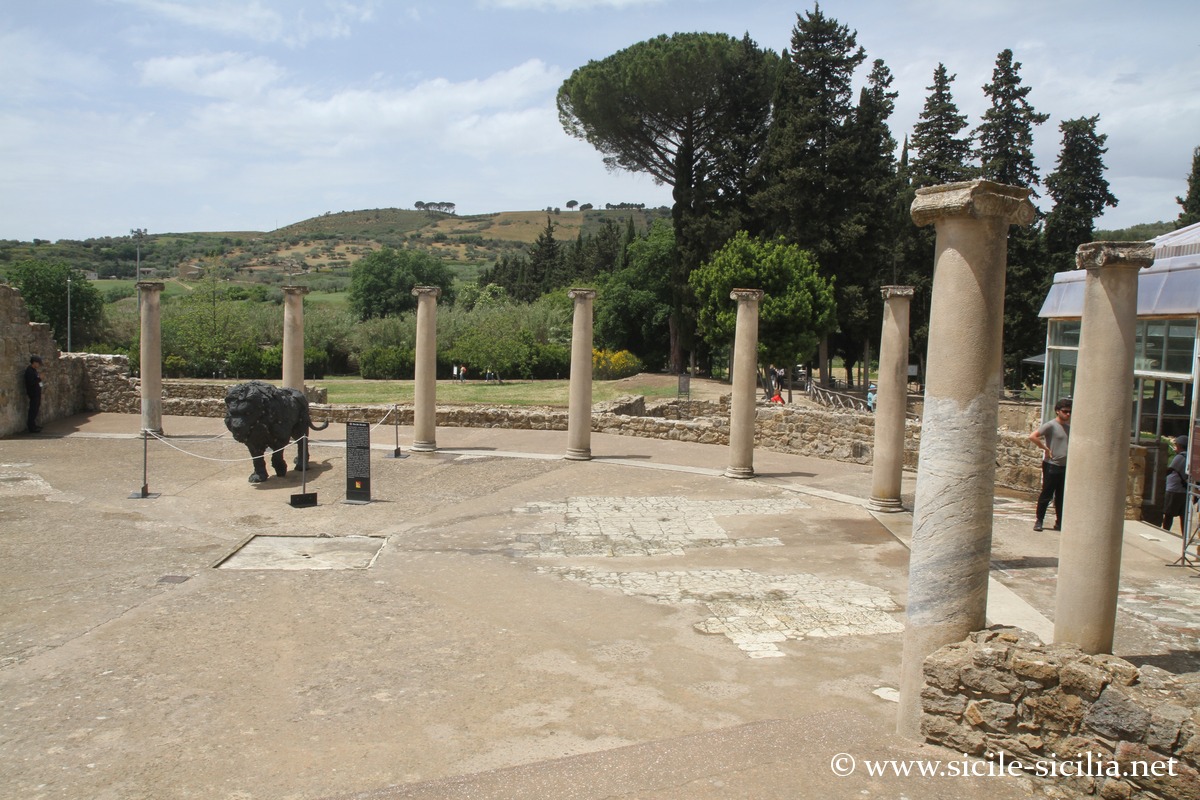
The visit allows you to discover the baths, the entrance courtyard with the porticoes and the triumphal arch, the vestibule and the portico of the peristyle, and numerous rooms.
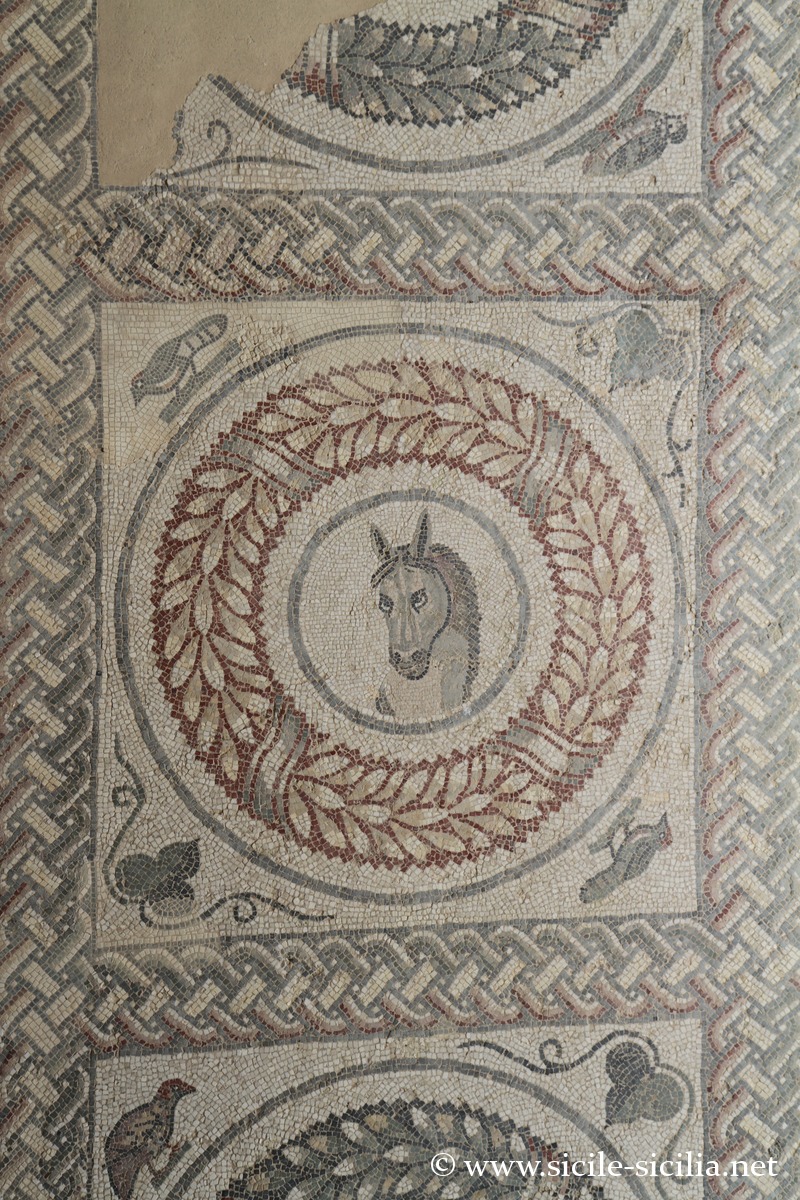
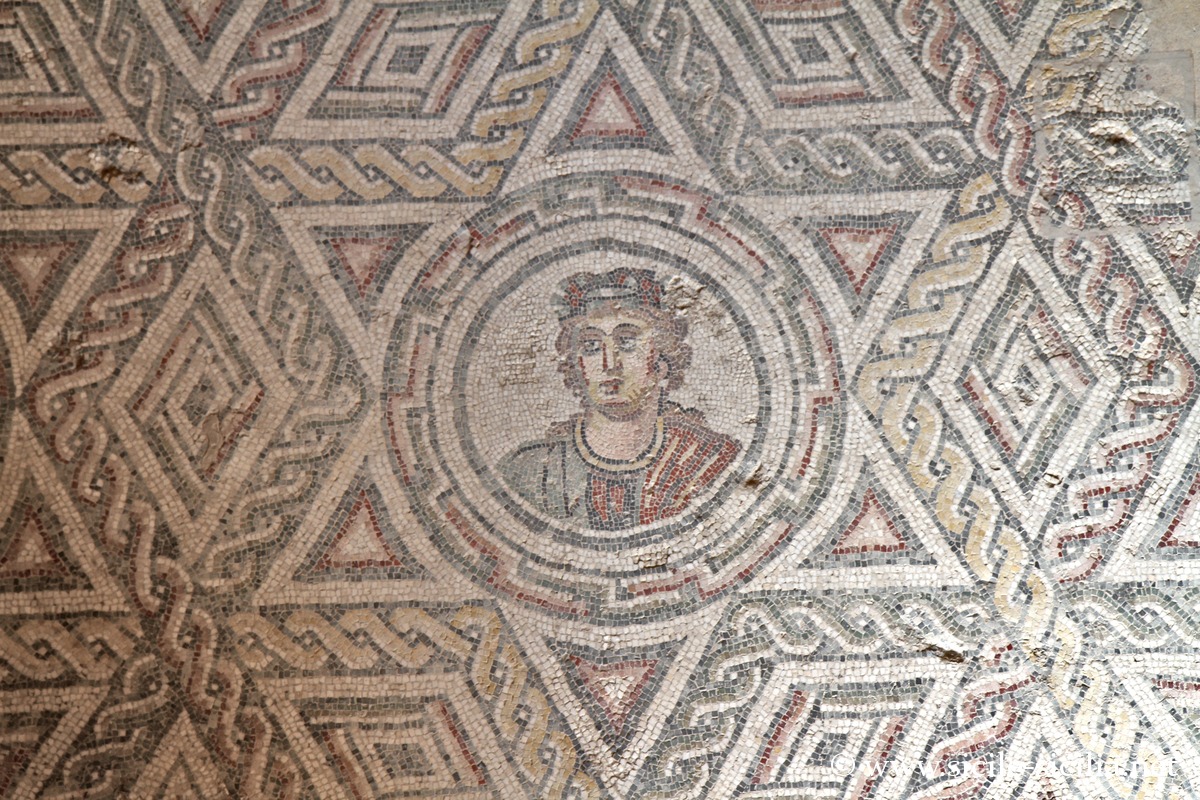
The style of the mosaics reveals obvious influences of African art, which suggests the participation of African craftsmen in their creation. One finds there different styles and narrative cycles: mythology and Homeric poems, scenes of nature, of flora and faithfully represented animals, or scenes of daily life of the Roman aristocracy.
Among the rooms of the town, let us mention the Room of the Small Hunt, the corridor of the Great Hunt with scenes of capturing wild animals, the Room of the Dancers, or that of the bikinis where young women doing sport dressed in bikinis are represented, including the ball players.
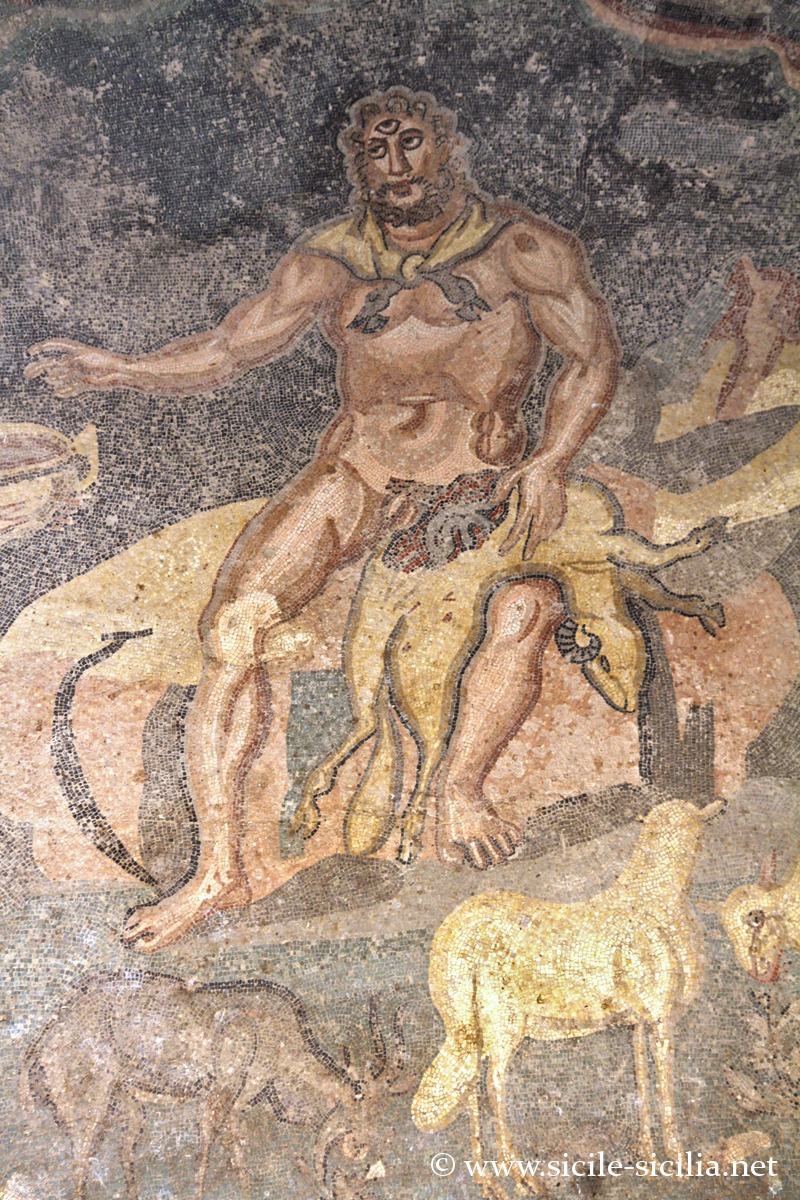
In the north-side apartments one discovers the mosaic of Ulysses with the animals and monsters of his 12 labours, including Polyphemus, the chamber with Cupid and Psyche, and in the south-side apartments is found the mosaic with the myth of Arion, the chamber of Eros and Pan, the triclinium and the basilica, etc.
One room represents a famous erotic scene.
→ See also the visit and the mosaics of the Villa del Casale
Where the Roman Villa of Casale is located: map
The Roman villa of Casale is located about 5 km south-west of Piazza Armerina, in the province of Enna, in the centre of Sicily. It is found along the provincial road SP90, well signposted from the town.
If you see this after your page is loaded completely, leafletJS files are missing.
Photo gallery

Polygonal courtyard 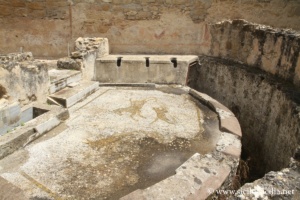
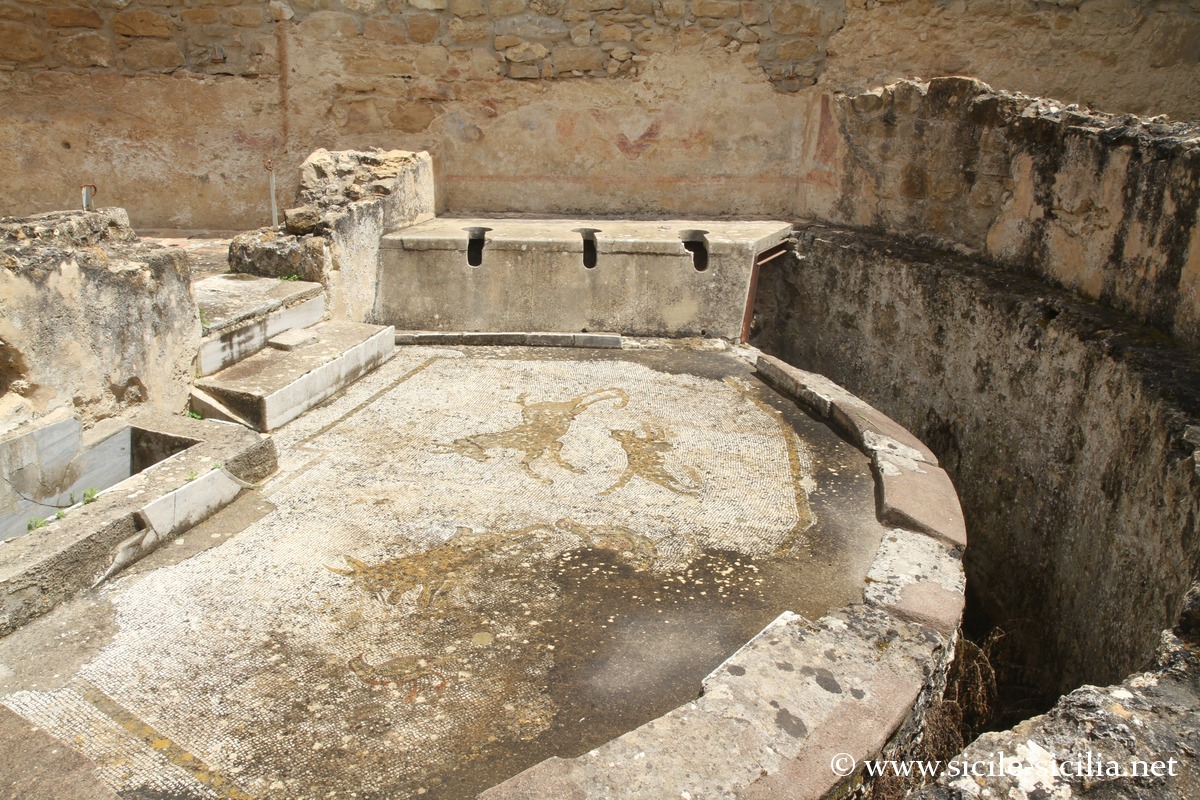
Latrines 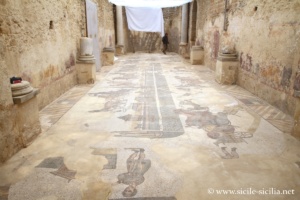
Palaestra 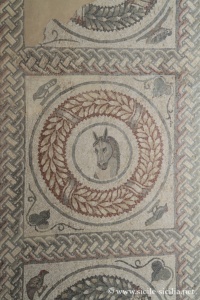

Peristyle 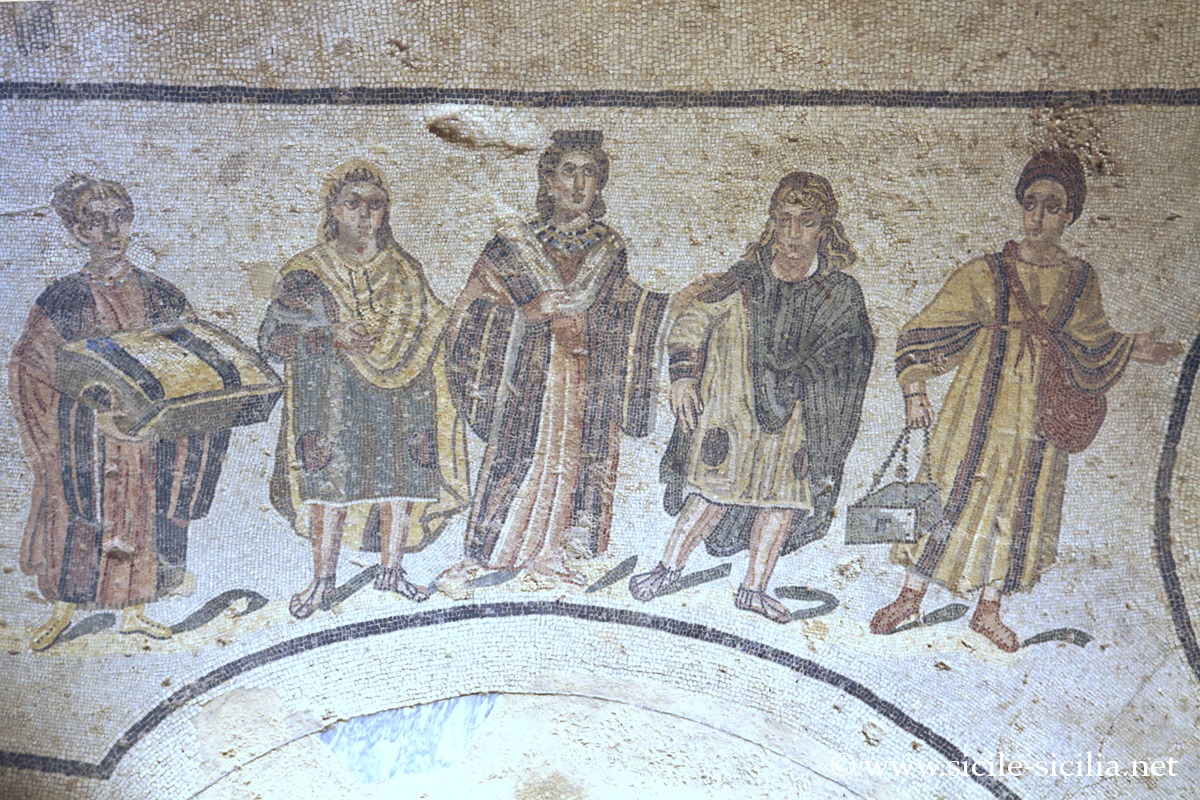

Vestibule of the domina 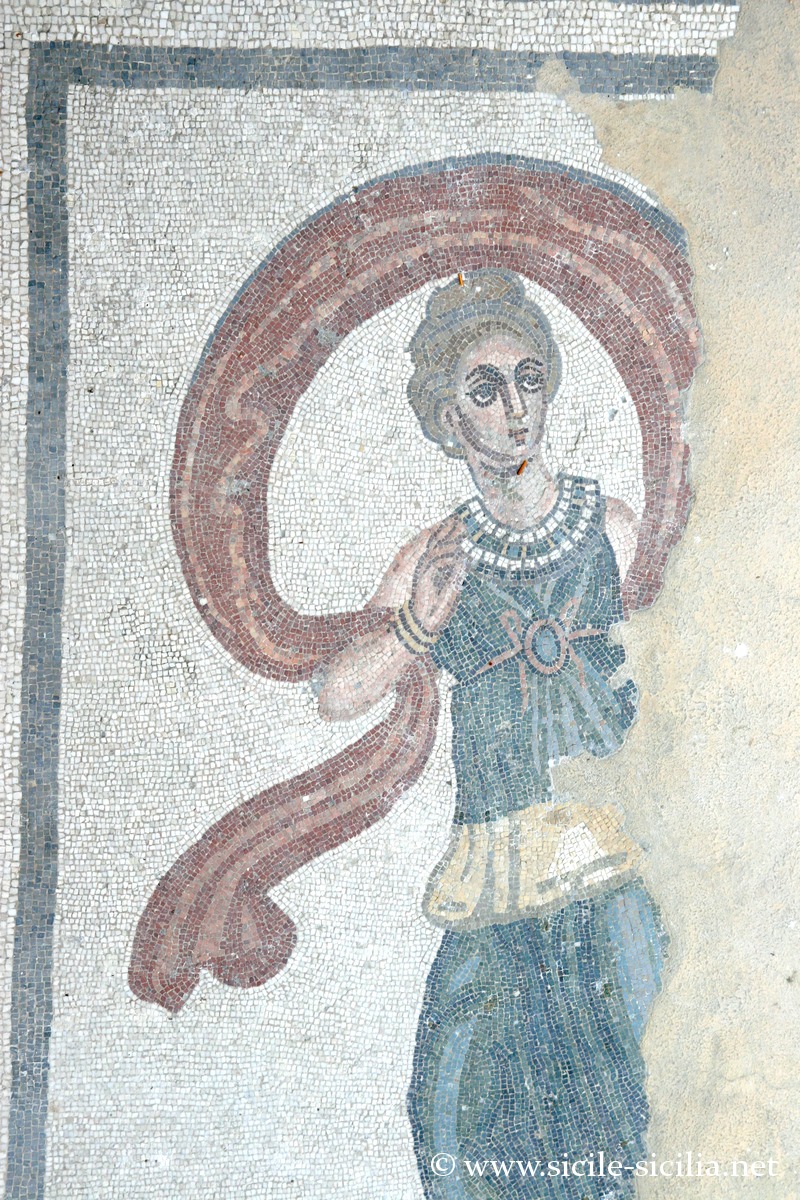

Room of the Dance 
Room of the Seasons 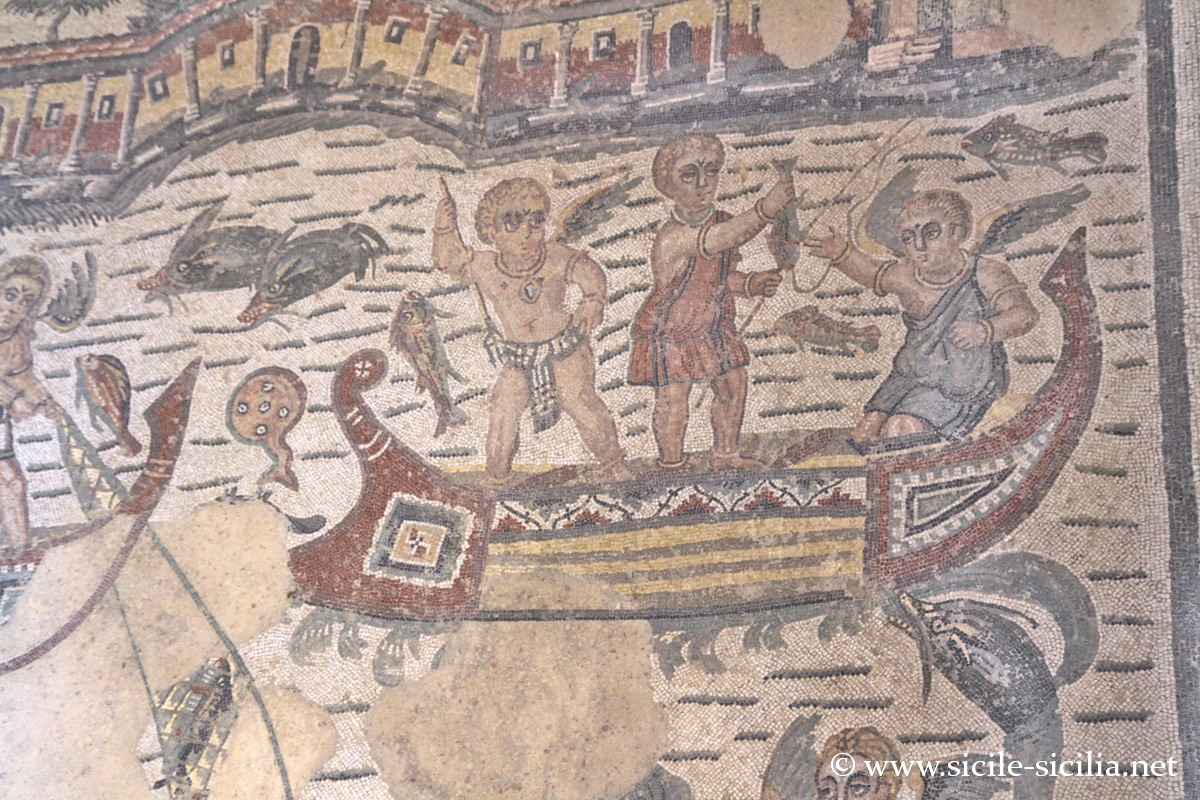
Room of the Fishing Cupids 
Room of the Small Hunt 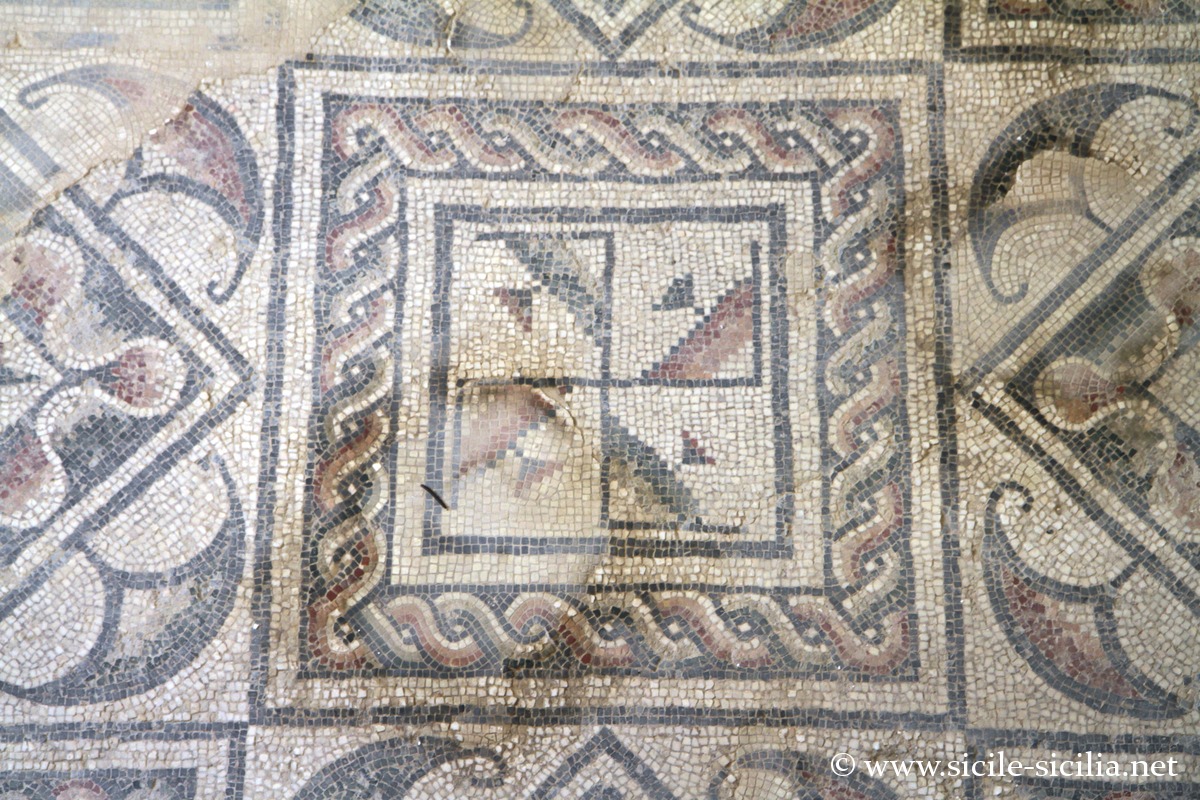
Room of the mosaics with quadrilaterals 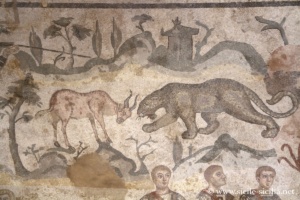
Corridor of the Great Hunt 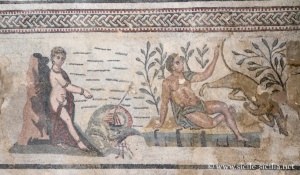

Triclinium 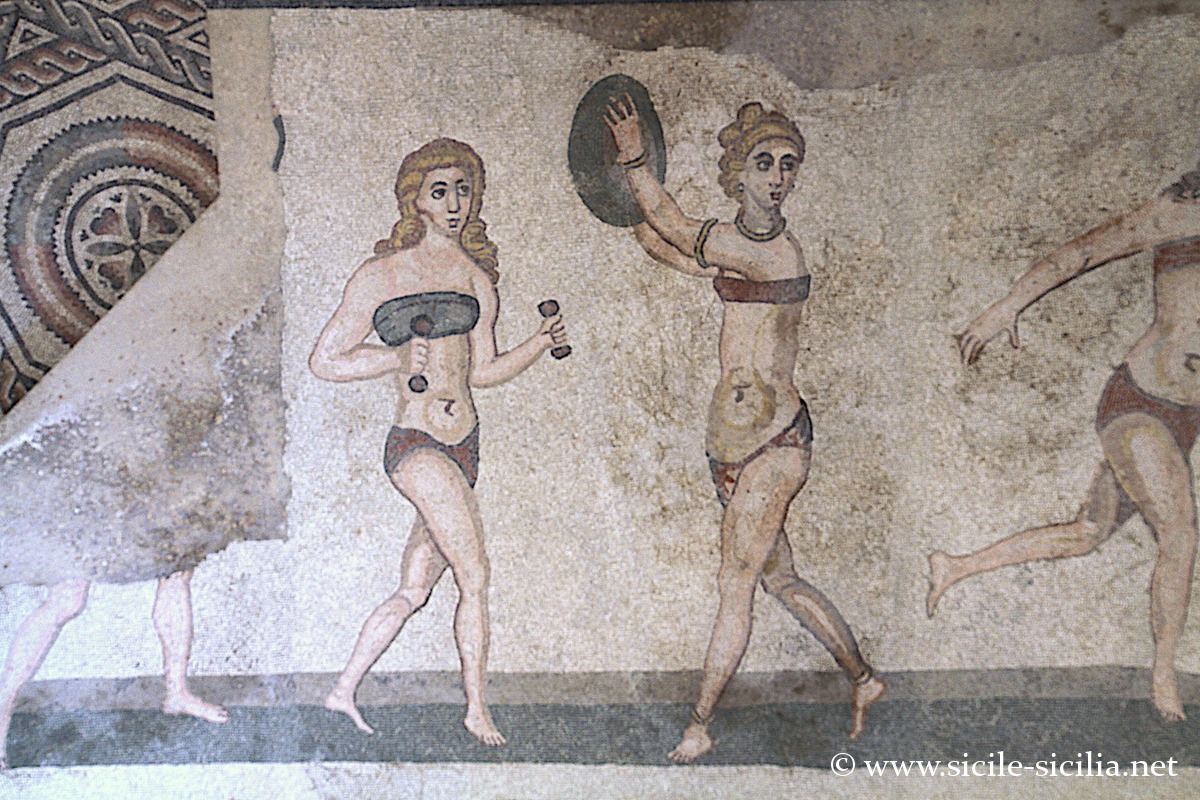
Room of the bikinis 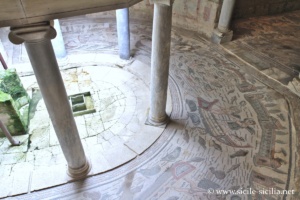
Hemicycle atrium 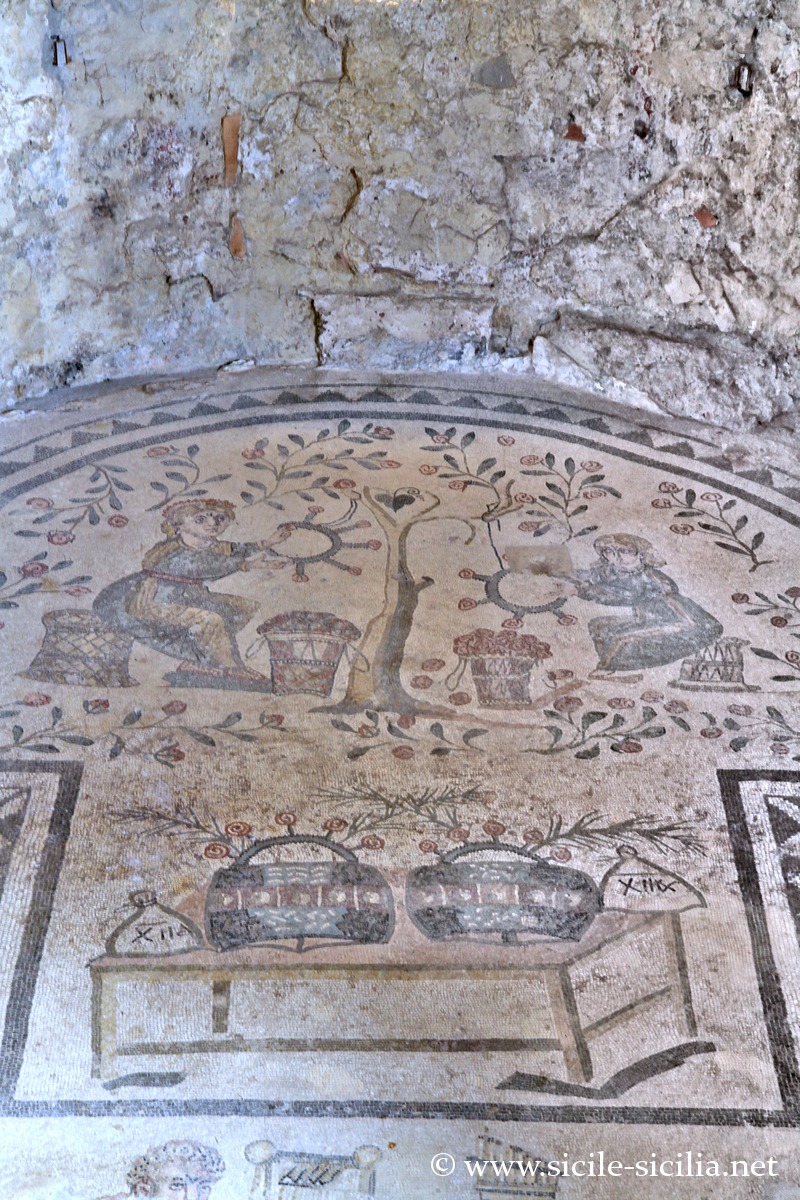
Room of the musicians and actors 
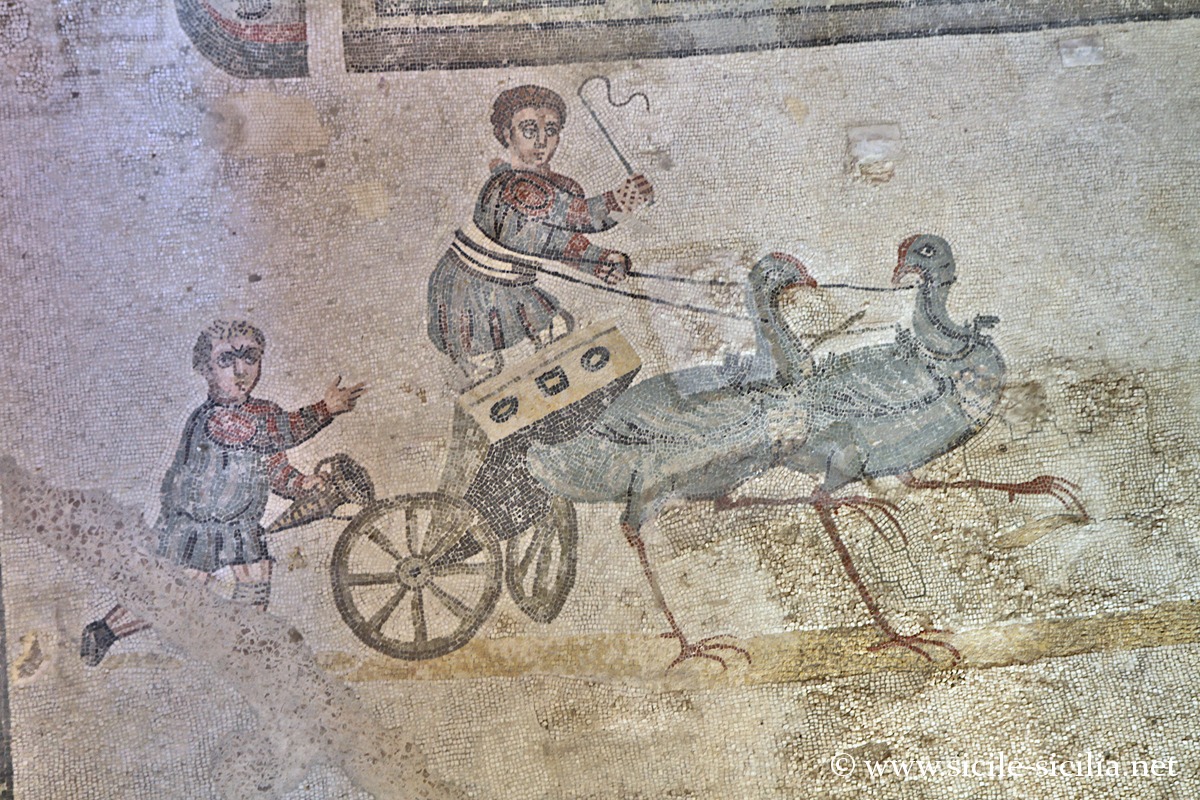
Room of the circus 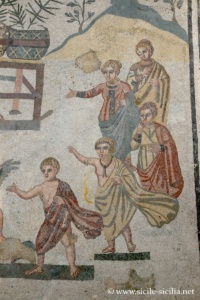
Room of Pan and Eros 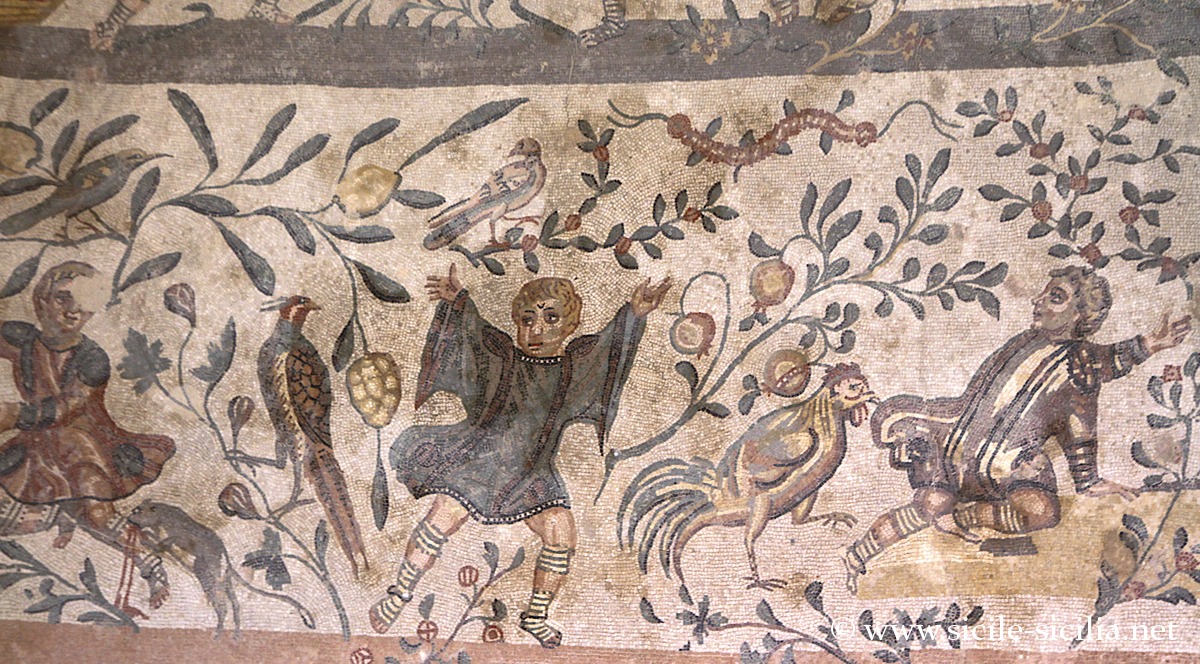

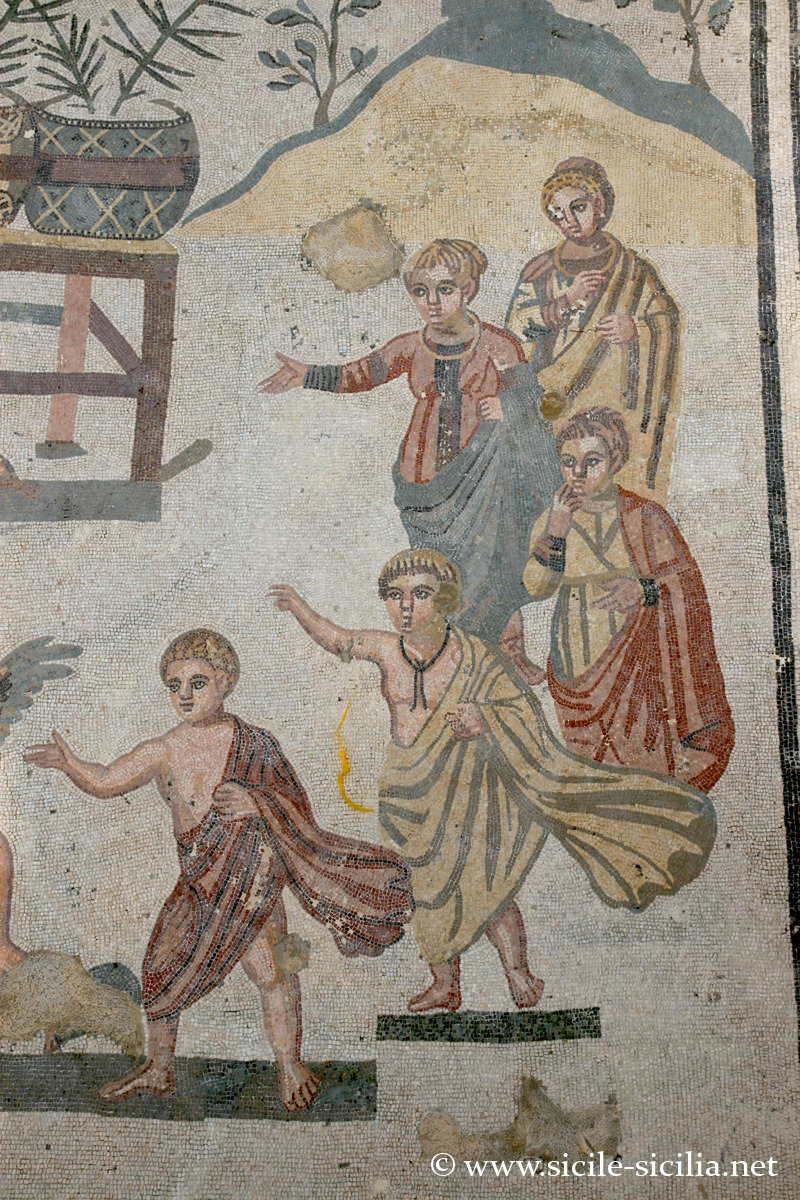
Room of the child hunters 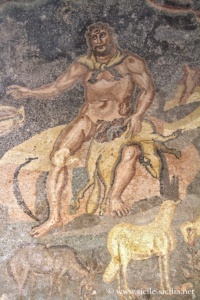
Room of Polyphemus 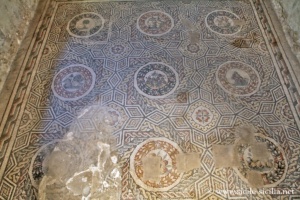
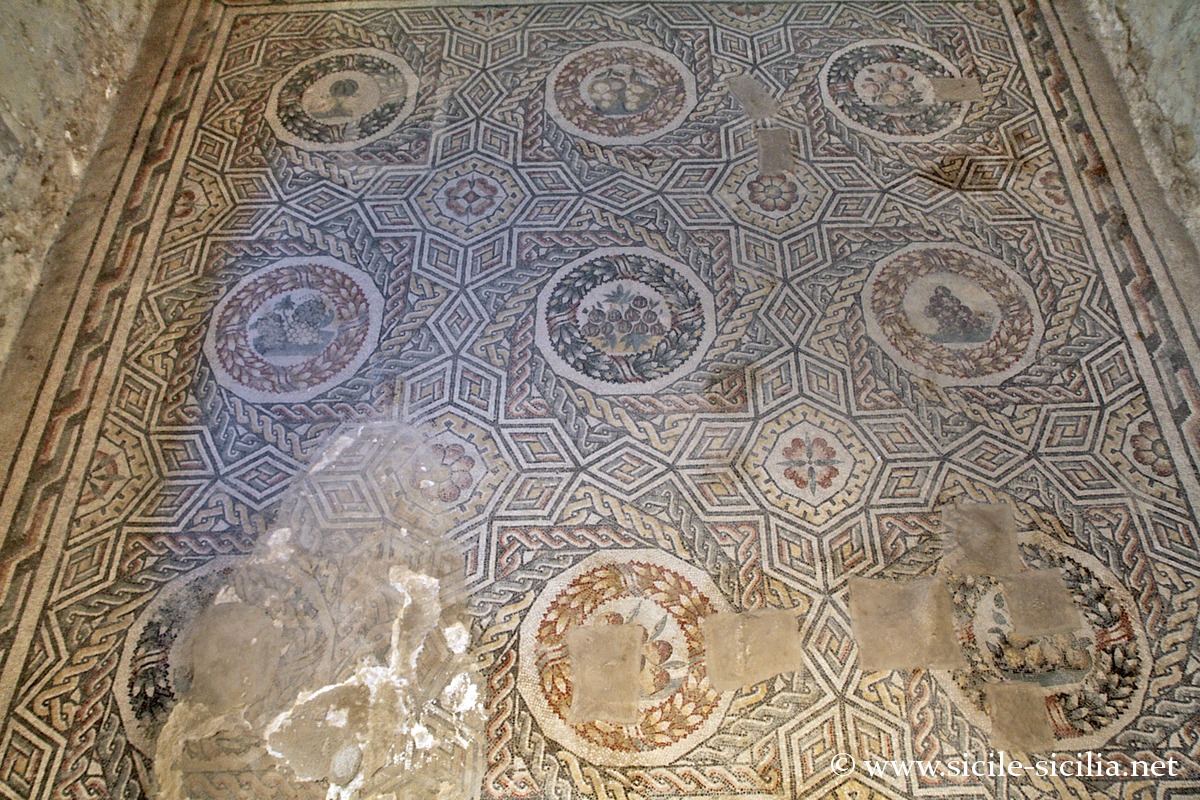
Room of the fruits
FAQ – Villa Romana del Casale
How long does it take to visit the Roman villa?
Allow about 1 h 30 to 2 hours for a complete visit, which consists mainly of admiring the mosaics.
What are the main rooms and mosaics to see?
The most remarkable spaces include the corridor of the Great Hunt (a 60 m long corridor illustrating the capture of exotic animals for the circus games), the Room of the Bikini Girls (female athletes in sporting scenes), and the Triclinium or Banquet Hall (the myths around the 12 labours of Hercules). The Great Basilica is distinguished by its apse plan and its polychrome pavements, while the Room of the Small Hunt or that of Pan and Eros are among the most beautiful.
Is the site accessible to people with reduced mobility?
A significant part of the route is accessible thanks to wooden walkways. However, some ancient sectors still present areas with uneven ground or that are narrow.
What to see near the villa of Piazza Armerina?
5 km away is the town of Piazza Armerina with its baroque cathedral, and nearly 15 km further one can discover one of the most interesting archaeological sites of Sicily at Morgantina (Aidone) as well as the corresponding archaeological museum at Aidone.
Information
Proposals for visits and activities
Visiting conditions
- Summer hours: 9:00 – 19:00 (last entry at 18:00)
- Winter hours: 9:00 – 17:00 (last entry at 16:00)
- Prices: full 14 € / reduced 7 € (18-24 years) / free for minors, teachers and people with disabilities
External sites
- Official site: www.villaromanadelcasale.it, all prices: www.villaromanadelcasale.it
- Wikipedia page
- Tourist sites and blogs: www.italia.it, www.piazzaarmerina.org, National Geographic article, details of the rooms on lasiciliainrete.it
- PDF tourist guide: www.villaromanadelcasale.it/wp-content/uploads/2021/07/guida_042012_FRA.pdf
Articles in the Piazza Armerina category
- Piazza Armerina
 Piazza Armerina is a pretty town of about 20,000 inhabitants, at 700 metres ...
 - Morgantina
 A few kilometres from Aidone lies the archaeological site of Morgantina, the remains ...
 - Aidone and Pietratagliata
 Located in the heart of the Heraean Mountains, the town of Aidone is ...
Comments in other languages
One useful thing to know: today, the visit is conducted almost entirely on raised walkways installed during recent restorations, such as in 2012. This protects the mosaics, but it does require a fairly guided route and slightly changes the perception of the spaces compared with someone visiting the house. In practice, arriving early in the morning or in the evening is preferable to avoid groups.
Arrive if possible before 9:30 a.m. to avoid the sometimes large groups. Otherwise, at 12:30 p.m. - 1:00 p.m., there is generally a lull!