
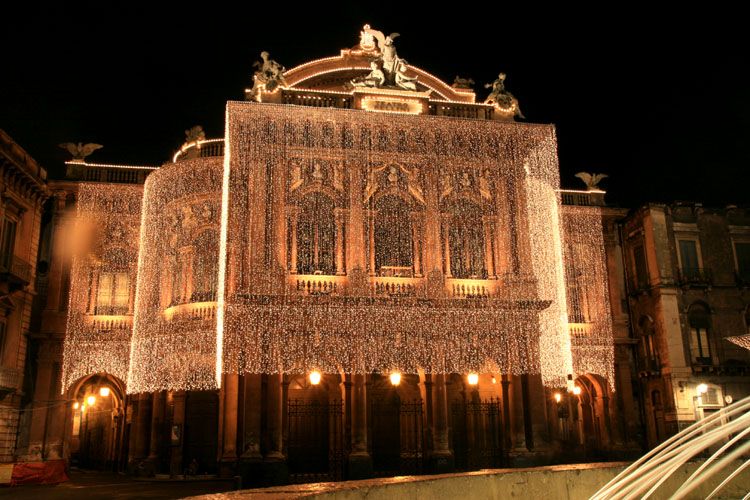
The interesting historic centre of Catania is marked by Baroque architecture, part of which has been inscribed, along with seven other towns of the Val di Noto, as a UNESCO World Heritage Site. Catania preserves traces of most of the cultures that succeeded one another there, including the Ostrogoths, the Arabs, the Normans, the Swabians, the Angevins, the Spanish, the Piedmontese and the Bourbons. The city, rebuilt after the 1693 earthquake, presents a harmonious urban ensemble, pleasant to explore on foot.
1- Around Piazza Duomo
The route begins at Piazza del Duomo, the monumental centre of the city. The square is surrounded by Baroque palaces, among them the Palazzo degli Elefanti, which now houses the town hall, and the Palazzo dei Chierici, which houses the Diocesan Museum. This museum provides access to the underground Amenano river and the vast ancient Achillian baths dating from Roman times.
In the centre of the square stands the famous Fountain of Vaccarini, topped by an Egyptian obelisk supported by an elephant carved from volcanic stone in Roman times – now the symbol of Catania, called “Liotru” by the locals. Nearby, the Amenano fountain, in white marble, recalls this underground river that once fed a lake to the west of the city, covered by the lava flow from the 1669 eruption of Etna.
From Piazza del Duomo, an adjacent street quickly leads to the traditional Pescheria market, one of the liveliest places in Catania. This fish market, particularly lively in the morning, also offers meat, fruit, vegetables and street food, in a popular and noisy atmosphere characteristic of Sicily.
On the north side of Piazza del Duomo stands the Church of the Badia di Sant’Agata, recognisable by its panoramic dome, from which there is a view over Piazza del Duomo and Via Etnea.
2- Loop to the east of the Piazza
A little further east is the Baroque Palazzo Biscari, one of the most beautiful buildings in the city, renowned for the richness of its interior decorations, its stuccoes and its frescoes. Opposite stands the Palazzo Platamone, or Palazzo della Cultura, now a cultural centre and exhibition venue. Then you reach the Teatro Bellini, an elegant 19th-century building dedicated to the composer born in the city, Vincenzo Bellini. It hosts operas and concerts throughout the year. The walk continues towards Via Etnea, passing through the elegant University Square and the Baroque Collegiate Church.
3- Via Etnea
Heading north from the square, Via Etnea stretches in a straight line towards the volcano Etna. It is the main artery of the city, lined with Baroque palaces and churches with facades of black volcanic stone and light stone, as well as numerous shops. Continuing along Via Etnea, you reach Piazza Stesicoro, surrounded by churches and palaces, where the imposing remains of the Roman amphitheatre from the 2nd century AD stand. A little further up, you can reach the Villa Bellini park, offering a pleasant green space and a view over the city and Etna. The descent towards Piazza Stesicoro then allows you to take Via Crociferi.
4- Descent along Via Crociferi
Can also be approached from Piazza Duomo heading west.
From Piazza Stesicoro, near the amphitheatre, you can pass by the church of Sant’Agata, take a glance at Vico Anfiteatro, then follow Via Penninello and the stairs of Villa Cerami. Then descend Via Crociferi, often called “the street of churches”, a true showcase of 18th-century Catania Baroque. There you will find in particular the churches of San Benedetto, San Francesco Borgia and San Giuliano, aligned in a composition of great architectural coherence. San Benedetto is a former Benedictine monastery transformed into a cultural site.
The descent ends at Piazza San Francesco d’Assisi, with its church.
5- District towards the monastery
Nearby, several major ancient remains are visible, including the Greco-Roman theatre and the odeon, partially integrated into more recent buildings, as well as the Baths of the Rotonda.
These monuments bear witness to ancient Catania, partially buried by successive eruptions and now integrated into the medieval and Baroque urban fabric.
Following this street, you reach Piazza Dante, dominated by the vast Church of Saint Nicholas and the Benedictine Monastery of San Nicolò l’Arena, one of the largest in Europe, covering more than 8 hectares and preserving remarkable cloisters. It now houses part of the University of Catania.
6- Towards Castello Ursino, then the port
Descending towards the south of the historic centre, you reach the Castello Ursino, an imposing fortress built in the 13th century under Frederick II of Swabia. Once located by the sea, it now lies inland, encircled by the 1669 lava flow. The castle now houses the municipal museum, which preserves sculptures, ancient objects and local works of art. The loop can be closed by crossing the squares, the Pescheria, then possibly heading towards the marina and fishing port.
Throughout the route and in the appendix
In the city you will notice many small kiosks, which appeared at the end of the 19th century, offering refreshments based on citrus fruits and sparkling water. They have become genuine meeting points in every neighbourhood. Finally, another aspect of Catania can be discovered underground, with the underground passages of the city, which house several ancient baths, hypogea and tombs, bearing witness to the historical stratification and the successive civilisations that shaped the city.
Information and links
Guided tour ideas
Articles about Catania
- Catania
 The second most populous city in Sicily after Palermo, Catania has faced terrible earthquakes and volcanic eruptions over the centuries, undergoing numerous ...
 - Hotels in Catania
 Hotels in Catania in Sicily, at the foot of Mount Etna. Apartments, accommodations or farm stays in the surrounding area, and bed ...
 - Riviera of the Cyclops
 Along the coast north of Catania, the “Riviera dei Ciclopi” (Riviera dei Ciclopi in Italian) stretches for about 12 kilometers between Aci ...
 - Piazza del Duomo and Catania Cathedral
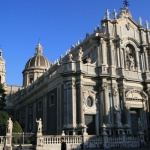 In the heart of Catania, the Piazza Duomo is the starting point for a tour of the city. The present square is ...
 - Churches of Catania
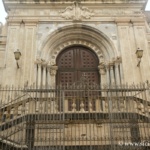
 Beyond this article dedicated to the churches of the city, also discover the main religious buildings with the articles on the Piazza ...
 - Via Crociferi in Catania: the Baroque churches
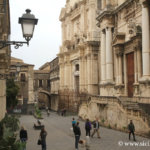 The Via Crociferi is called the “street of churches”, a monumental and emblematic street of Catania, very dense with Baroque architecture, not ...
 - Ancient sites of Catania
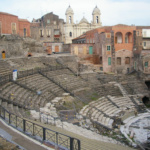 The ancient remains of Catania bear witness to the importance of the city during the Greek and Roman periods, when the ancient ...
 - Along the Via Etnea in Catania
 The Via Etnea is the main shopping street in the centre of Catania, a very long street lined with shops, ice cream ...
 - Palaces of Catania to discover
 Beyond this page dedicated to the most remarkable palaces in Catania, you can also find in the article dedicated to Via Etnea ...
 - Bellini Square and Theatre in Catania
 Bellini Theatre Located towards the north-east of Piazza Duomo, on the square of the same name, the Bellini Theatre (Teatro Massimo Vincenzo Bellini ...
 - Ursino Castle of Catania
 The Ursino Castle of Catania was built between 1239 and 1250 on the orders of Frederick II of Swabia by Riccardo da ...
 - Benedictine Monastery and San Nicolò of Catania
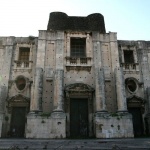 About 850 metres west of Piazza Duomo, Piazza Dante sits in front of a large Benedictine monastery, which was originally intended to ...
 - Museums of Catania
 List of the main museums of Catania, including palaces, religious and archaeological sites. Municipal Museum of Castello Ursino (overview) The Castello Ursino, built between ...
 - Other sites and places in Catania
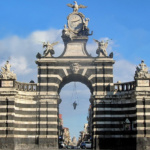 Porta Garibaldi in Catania In the south-west of Catania’s centre, more than a kilometre from Piazza Duomo, the Porta Garibaldi was built in ...
 - Discovering underground Catania
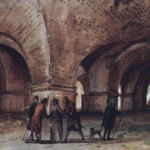 Lava flows have periodically covered entire districts of Catania, burying much of the city’s past, which will remain largely hidden forever. However, you ...
 - Catania Environs: Riviera and Countryside
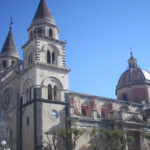 Mount Etna (overview) In the environs of Catania, the Etna park offers a spectacular discovery of the highest active volcano in Europe, with ...
 - Traditions and gastronomy in Catania
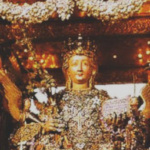 Feast of Saint Agatha in Catania The main festival of Catania is that of Saint Agatha, which lasts three days. After a month ...
 - Activities in Catania, guided tours and excursions
 Booking activities in Catania and its surroundings, guided tours, tastings, outings on the neighbouring volcano of Etna, etc.
 - Around Catania
 Sicilian destinations near Catania, including Mount Etna rising to the northwest, Taormina along the coast to the north, and to the south ...
External sites
- Tourism section of the municipality of Catania: www.comune.catania.it
- City museums: www.comune.catania.it
- Tourist map, itinerary (PDF): www.comune.catania.it
- Map of sites and museums: www.google.com/maps
- Itineraries: www.comune.catania.it