
A town with little tourism in the centre of Sicily, Caltanissetta is a provincial capital with nearly 60,000 inhabitants, yet endowed with a few treasures despite an unharmonious urban layout. It comes alive with festivities and processions during Holy Week, among the most authentic on the whole island.
Historical elements
Caltanissetta is built on a hill in the Salso valley that has been inhabited since antiquity by the Sicans, known under the name Nissa according to the testimony of Thucydides.
After the Greek, Roman and Byzantine periods, it was the Arabs who in the 9th century renamed it, prefixing its name with “kalat” (castle in Arabic). A historian rather indicates that the town was called Qal’at an-Nisa, which means “castle of the women”.
In the 19th and 20th centuries, it was the main Italian centre of sulphur mining, with mines where inhuman living conditions were documented by great writers such as Luigi Pirandello and Leonardo Sciascia. Caltanissetta is also the centre of production of Averna amaro since 1868, an herbal liqueur, whose recipe is said to be due to the monks of the Santo Spirito abbey.
Heritage and visit of Caltanissetta
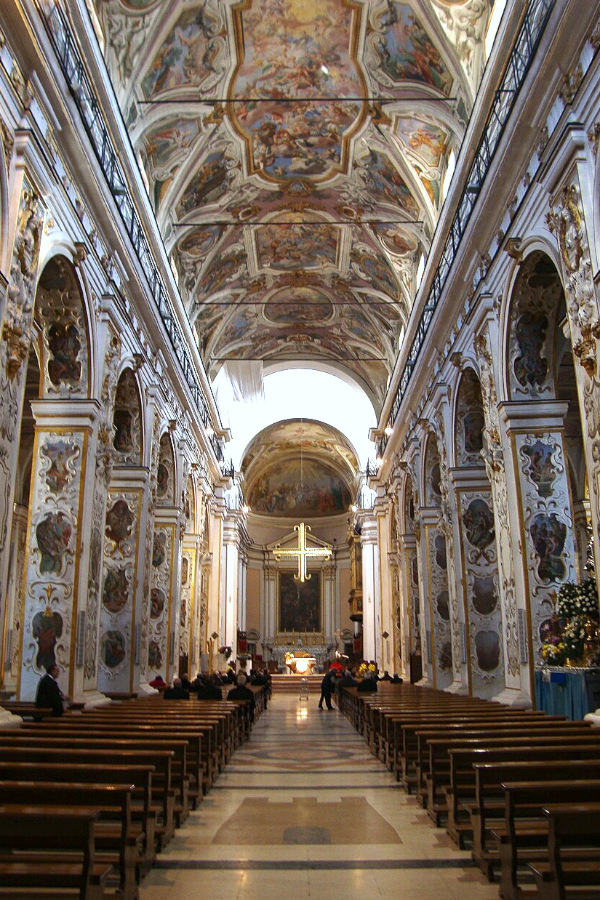
Interior of the cathedral of Caltanissetta
The heart of the town is Piazza Garibaldi where in the centre the Triton Fountain built at the end of the 19th century, was placed here in 1956, with its bronze horse led by a triton and threatened by two sea monsters.
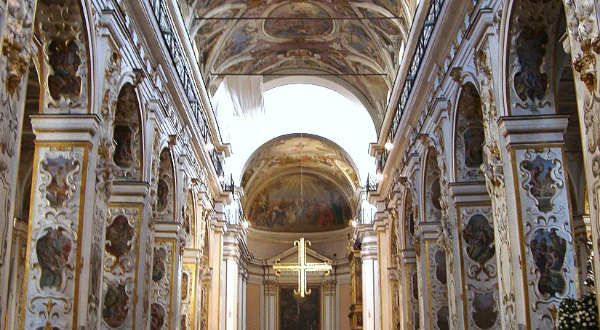
On the square, the baroque cathedral Santa Maria la Nova was built between 1570 and 1622. It is decorated with beautiful stuccos and frescoes by the Flemish painter Guglielmo Borremans on the vault, in trompe l’œil, and on the pillars (1718-1720). One can also admire paintings by the Tuscan painter Filippo Paladini or by Roggeri, a statue from 1627 by the sculptor Volsi representing the Archangel Saint Michael, etc.
Facing the cathedral, the 16th-century church of Saint Sebastian displays an eclectic 19th-century facade.
A little further east, Via San Domenico leads to the beautiful church of the same name from the 13th century, renovated in the 18th century. It preserves the Madonna del Rosario, a canvas by Filippo Paladini (1614).
Via Angeli leads further to the castle of Pietrarossa, at least to what remains of it, as it was already largely collapsed during an earthquake in 1527. The vestiges of its red brick towers dominate the valley from the top of the rock. Under the Aragonese, the Sicilian parliament (a kind of “Estates General”) gathered there several times.
At the foot of the latter, and adjoining its convent, the church of Santa Maria degli Angeli probably originated from a chapel of the castle dating back to around the 13th century.
From Piazza Garibaldi, two interesting streets depart: Corso Vittorio Emanuele II and Corso Umberto I.
On the first, the beautiful Regina Margherita theatre built in 1870 is dedicated to the wife of King Umberto of Savoy. It is one of the oldest on the island. To the east the street ends at the church of Santa Croce, with the former 16th-century Benedictine monastery. To the west are several historic palaces, including the 18th-century Palazzo Natale Cosentino or the 19th-century Palazzo Benintende.
At the intersection of these two corso, the Palazzo del Carmine dating back to the 14th century is the seat of the town hall. Further north, the Palazzo Moncada is an interesting 18th-century baroque building, of which only a part of the original building that surrounded a courtyard remains. An intermediate cornice is sculpted with anthropomorphic and animal figures. It now houses a theatre, a cinema and a municipal museum.
Further north on Corso Umberto I, Sant’Agata al Collegio is a beautiful church from the early 17th century preceded by a staircase. The interior stands out with its polychrome marbles, frescoes and paintings.
The town has several museums including the diocesan museum which exhibits more than five hundred works of art ranging from the 15th to the 21st century.
The mineralogical museum is devoted to mineralogy, palaeontology and sulphur mining.
The archaeological museum is located outside the centre near the Norman abbey of Santo Spirito (see further on, section surroundings).
The historic market “Strata ‘a Foglia” is held on Via Consultore Benintende, from Piazza Mercato Grazia to Via Berengario Gaetani, with its stalls of fruit and vegetables, cheeses, bakers, fishmongers, butchers, grocers, etc.
Gastronomy and traditions in Caltanissetta
The Holy Week, which precedes Easter, is very lively in Caltanissetta, marked among other things by the “procession of the Black Christ”.
In the gastronomy of this region of the Sicilian hinterland, the Cuddrureddra di Delia is a fried biscuit that was traditionally made during carnival. Another typical dessert of the region is the Arab cubaita, with caramel and sesame, or the Nisseno nougat with almonds, pistachios and honey.
Surroundings of Caltanissetta
3 km northeast of Caltanissetta, the abbey of Santo Spirito was founded by the Normans in 1095 on an old fortified Arab farm, in a paleochristian and Romanesque style with three small apses and a quadrangular tower of Arab inspiration, as well as arrow slits and pointed arches. It preserves a beautiful fresco of a blessing Christ (15th century), a Christ Pantocrator, and other remarkable works.
At 150 meters away, the regional archaeological museum of Caltanissetta preserves discoveries dating back to the Neolithic period from the archaeological areas of Sabucina, Gibil Gabib, Mount Capodarso and Mount San Giuliano (a hill north of the city), mainly from the Bronze Age.
You can also observe, from the outside, the Gessolungo mines (5 km northeast) and the Trabonella mines (8 km east near the Sabucina site).
Archaeological site of Sabucina
7 kilometers east of the city, Sabucina is an ancient site recently discovered, with the discovery in the ’60s of occupations dating back to the early Bronze Age (20th-16th centuries BC) up to the Roman period, passing through the Greek period.
Archaeological site of Gibil Gabib
5 km southeast, the site of Gibil Gabib, occupies three terraces on a hill overlooking the Salso valley. It was occupied in prehistory, in the late Bronze Age (Castelluccio culture) and by Greeks. Defensive walls and numerous movable remains were discovered there. Two necropolises are located at the foot of the hill.
Pietraperzia
Pietraperzia is located nearly 15 km southeast, situated at 476 m altitude on a limestone promontory. Its name would come from the Sicilian petri pirciati, meaning “pierced stones”, in reference to rocks pierced with prehistoric tombs. The village developed around a Norman castle, on an older fortress, then passed under the domination of the Barresi and then Branciforte families. Among the main monuments are the Chiesa Madre de Santa Maria (16th century) and the church of the Rosary, Baroque, as well as the former Dominican convent transformed into a town hall.
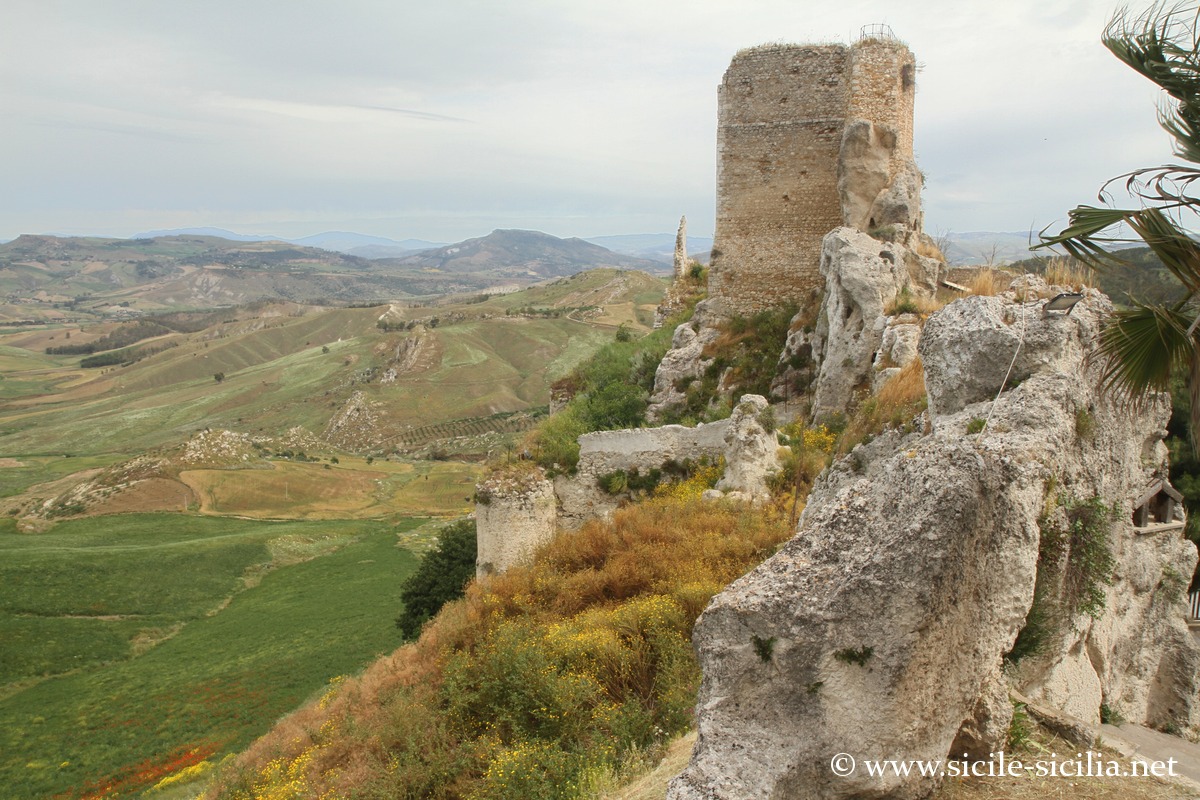
The Castello Barresi-Branciforte, in ruins, dominates the town: built in the 11th century by the Normans, it underwent Gothic-Catalan reconstructions, and its towers and bastions bear witness to medieval and Renaissance phases.
It was quite vast, with an area of about 20,000 m² protected by its ramparts more than 1,000 meters long. According to tradition, it would have had 365 rooms (one for each day), four floors (for the seasons) and twelve towers (for the months).
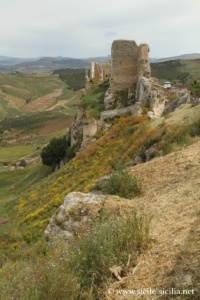
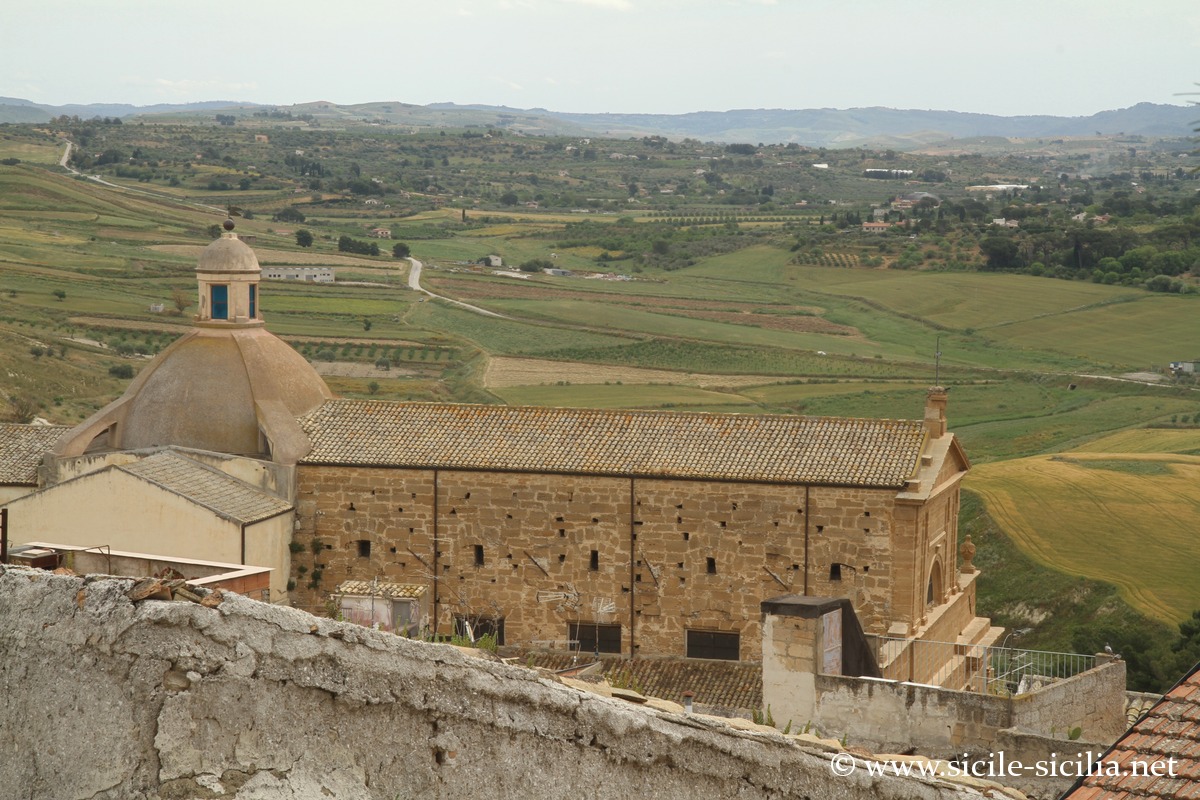
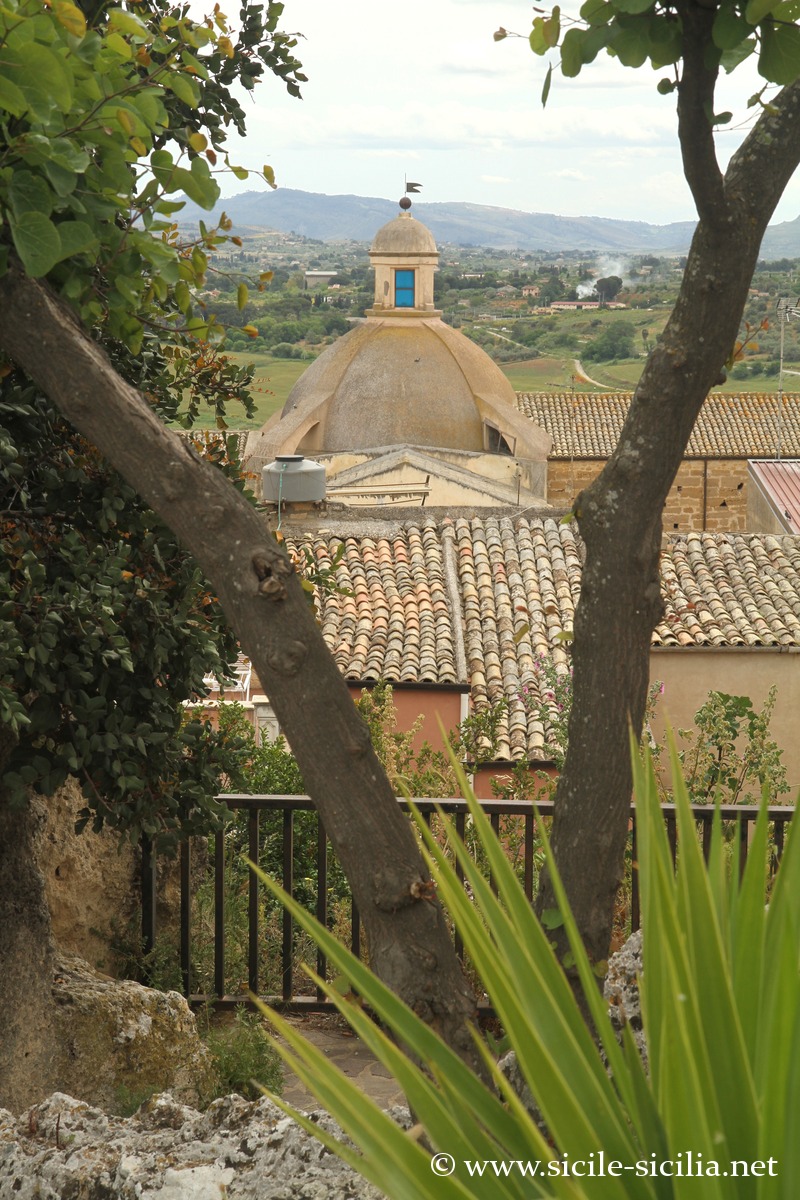
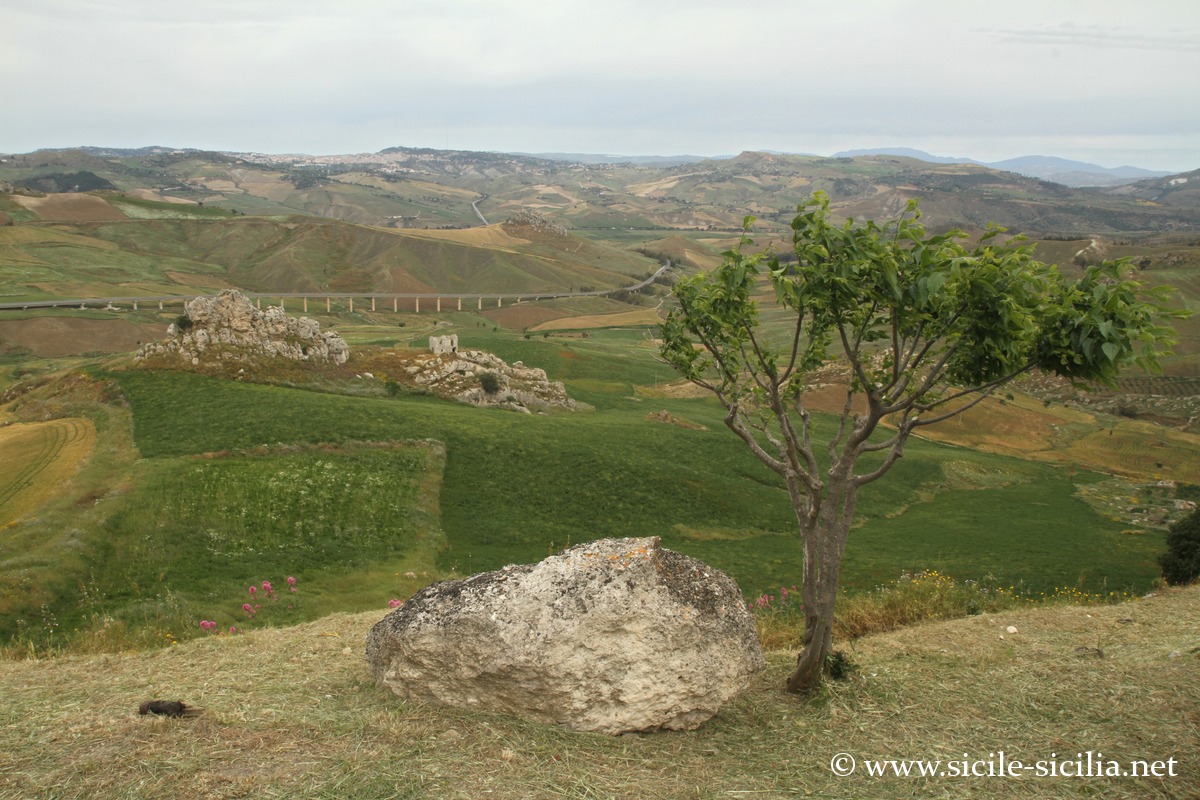
Castle and panorama of Pietraperzia 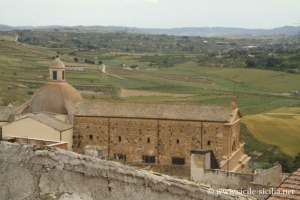
Castle and panorama of Pietraperzia 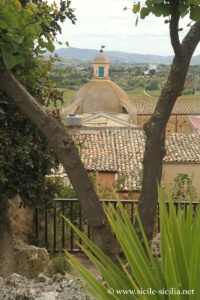
Castle and panorama of Pietraperzia 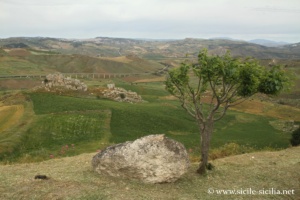

Castle and panorama of Pietraperzia 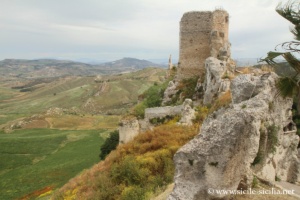
Castle and panorama of Pietraperzia
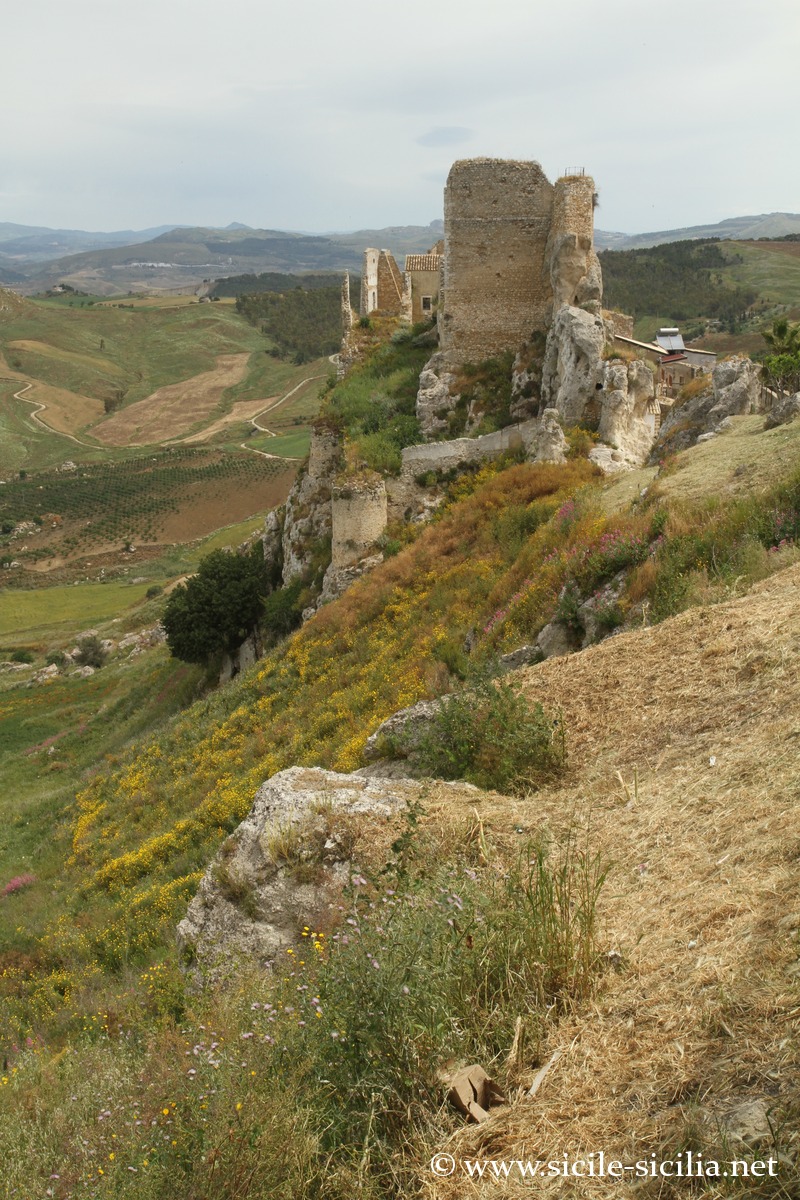
Other nearby towns
The tiny hamlet of Santa Rita, 20 km south, attracts a few tourists with its charm as an abandoned village and its traditional bakery.
- Mussomeli
Near Mussomeli (40 km west), perched atop an 80-meter-high spur, is the beautiful Manfredonico Chiaramontano castle, symbol of the power of the feudal barons, built in the 14th century by Manfred II Chiaramonte, in Gothic style with its typical pointed arches and mullioned windows. - Sutera
A little south of Mussomeli, the medieval village of Sutera is listed among “the most beautiful villages in Italy”. It is divided by three historic quarters, including that of Rabato, of Arab origin, brought to life each year by a traditional living nativity scene. It is a typical village of medieval towns, with its old stone houses, churches, courtyards, staircases, and alleys.
Sutera is dominated by the enormous San Paolino rock, accessible notably by a cable car. At the top, a sanctuary offers a superb view. - Enna
35 km to the east, Enna is nicknamed “belvedere of Sicily”. It is a small town whose heritage is interesting.
Parks and reserves
- 10 km to the east the nature reserve of Monte Capodarso and the Valley of the southern Imera, is one of the most beautiful areas of the surroundings.
- 20 km north, the Riserva Naturale Integrale Geologica di Contrada Scaleri, with its karst rocks.
- The nature reserve of Monte Conca, 50 km west, south of Mussomeli, is known for its beautiful caves.
- 20 km northwest, the Sfondato lake reserve.
Where Caltanissetta is located: map
If you see this after your page is loaded completely, leafletJS files are missing.
Information
External sites
- Wikipedia page: fr.wikipedia.org/wiki/Caltanissetta
- Portals and tourist sites: www.comune.caltanissetta.it, www.visitsicily.info, www.prolococaltanissetta.com
- Nature reserves: Monte Capodarso et Imera, Monte San Giuliano
- Archaeological sites: Sabucina, Gibil Gabib
Articles: Category Heraean Mountains
- Piazza Armerina
 Piazza Armerina is a pretty town of about 20,000 inhabitants, at 700 metres ...
 - Enna
 On a plateau at 948 metres above sea level, Enna is the capital ...
 - Hotels in Enna
 Hotels in Enna in Sicily and farm stays, bed and breakfasts and apartments ...
 - Visit of Enna, monuments and surroundings
 The heritage of the city of Enna is mainly concentrated along the Via ...
 - Villa Romana del Casale
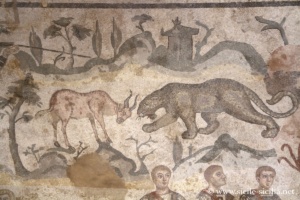 The Villa del Casale in Piazza Armerina is a unique example of a ...
 - Morgantina
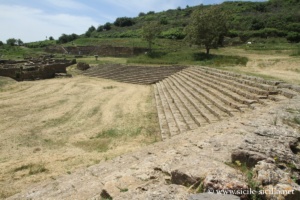 A few kilometres from Aidone lies the archaeological site of Morgantina, the remains ...
 - Assoro
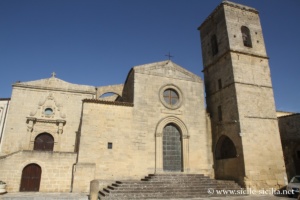 Assoro, perched on the steep hill of Monte Stella in the Heraean Mountains, ...
 - Aidone and Pietratagliata
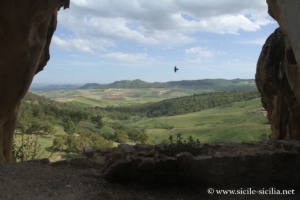 Located in the heart of the Heraean Mountains, the town of Aidone is ...
 - Leonforte
 In the Heraean Mountains, about 20 kilometres north-east of Enna, lie two pretty ...
 - Calascibetta and surroundings
 Calascibetta is a Sicilian village of nearly 4000 inhabitants located on a promontory ...
 - In the Surroundings of Enna
 Sicilian destinations near Enna: Piazza Armerina and the Roman villa of Casale 30 ...
Comments in other languages
The evocative remains of Pietraperzia Castle, to the southeast, are also well worth a detour